Crash of a Douglas DC-3 in Sylva: 3 killed

Date & Time: Oct 16, 1947
Type of aircraft:
Operator:
Flight Phase:
Flight Type:
Survivors:
No
Site:
Schedule:
Charlotte – Gainesville
Crew on board:
2
Crew fatalities:
Pax on board:
1
Pax fatalities:
Other fatalities:
Total fatalities:
3
Circumstances:
The aircraft departed Charlotte in a hurry because the pilot was afraid the cargo of baby chicks might suffocate due to high temperatures on the ground. Weather condition were not carefully checked. The crew were not able to locate their destination because of weather conditions and other station interference with their ADF. The DC-3 was found to have crashed into a mountain.
Source:
https://aviation-safety.net/database/record.php?id=19471016-1

Crash of a Douglas DC-3F in Malmö: 1 killed

Date & Time: Aug 9, 1947
Type of aircraft:
Operator:
Registration:
SE-BAY
Flight Type:
Survivors:
Yes
Schedule:
Amsterdam – Malmö
MSN:
19559
YOM:
1944
Location:
Country:
Region:
Crew on board:
5
Crew fatalities:
Pax on board:
0
Pax fatalities:
Other fatalities:
Total fatalities:
1
Circumstances:
On approach to Malmö-Bulltofta Airport, the aircraft was too high on the glide. Instead of making a go around, the captain decided to nose down, increase engine power and landed at high speed. Unable to stop within the remaining distance, the aircraft overran and hit an embankment before coming to rest. The aircraft was destroyed, a crew member was killed while four others were seriously injured.
Probable cause:
Wrong approach configuration.

Crash of a Douglas DC-3C off New York-La Guardia: 3 killed

Date & Time: Aug 8, 1947 at 1849 LT
Type of aircraft:
Operator:
Registration:
NX88787
Flight Type:
Survivors:
Yes
Schedule:
New York – Rochester
MSN:
19639
YOM:
1944
Crew on board:
5
Crew fatalities:
Pax on board:
0
Pax fatalities:
Other fatalities:
Total fatalities:
3
Captain / Total flying hours:
4934
Captain / Total hours on type:
2000.00
Copilot / Total flying hours:
4760
Copilot / Total hours on type:
1500
Aircraft flight hours:
2035
Circumstances:
The aircraft took off on runway 13 of La Guardia Airport at 1843LT, having been cleared on an instrument flight plan to Rochester, New York, with Toronto, Ontario, as an alternate. Approximately 2 minutes after take-off the flight called La Guardia Tower and reported that it was in the vicinity of the south end of Whitestone Bridge, approximately 2 1/2 miles northeast of La Guardia Airport. The flight advised that the oil pressure was low on one engine, and requested clearance to land on runway 22. The request was approved, and the tower informed the crew that the wind was calm. When asked if emergency equipment was desired to stand by, the flight replied in the negative. Shortly thereafter, NX88787 reported that it was on the final approach, and that it was over the sand barges, located approximately one-half mile off the approach end of runway 22. In reply the flight was again given clearance to land. The aircraft was first seen at an altitude of approximately 800 feet, and about 1,300 feet off the approach end of runway 22 with the landing gear extended. The flaps were lowered, and the aircraft started a steep descent to runway 22,but it passed over the approach end of the runway at an altitude of approximately 300 feet. The flight then requested and was granted permission by the tower to make a right turn, however, the aircraft continued straight ahead over the runway, gradually losing altitude. When one-third of the way down the runway, the right propeller was feathered. When over the intersection of runways 22 and 18 and at an altitude of 200 feet the flaps were raised, which resulted in an additional loss of altitude. During or directly after raising the flaps, a right turn was initiated, and the landing gear was observed to retract slowly. Competent witnesses stated that the right turn was made at a very slow speed, at a high angle of attack, and at an altitude appearing never to have exceeded 200 feet. Over Bowery Bay the aircraft on two occasions almost settled into the water. When in a flat right turn toward runway 13 it lost altitude to about 50 feet. Approximately 2,000 feet from the end of the runway, the landing gear started to extend, and became fully extended when the aircraft was aligned with runway 13. At this time the airplane attitude appeared to be that of a steep climb. The wings were seen to wobble slightly, then the left wing and nose dropped, and the airplane struck the water at an angle of approximately 20 degrees. The forward movement of the aircraft continued on the surface of the water for 40 to 50 feet, throwing up a great spray as the tail rose to a vertical position, after which the aircraft continued over on its back and sank in about 5 minutes.
Probable cause:
The Board determines that the probable cause of this accident was that, following an attempted landing, a miss-approach procedure was attempted for a second landing without sufficient air speed for single engine operation.
The following factors were considered as contributory:
- The oil screen cover plate gasket on the right engine was either fractured when installed immediately prior to the flight of August 8, 1947, or failed during the initial part of that flight,
- As a result of the fractured oil screen cover plate gasket, oil pressure for the right engine dropped below normal, and the crew feathered the right propeller,
- Insufficient air speed was maintained in a landing approach to runway 13 at the La Guardia Airport, after an attempted landing and "go around" had been made on runway 22, and as a result the airplane stalled and crashed into Bowery Bay.
Final Report:

Crash of a Douglas DC-3C near Melbourne: 14 killed

Date & Time: Jul 13, 1947 at 0430 LT
Type of aircraft:
Registration:
NC79024
Flight Phase:
Survivors:
Yes
Schedule:
Newark – Baltimore – Augusta – Miami – San Juan
MSN:
9887
YOM:
1943
Crew on board:
3
Crew fatalities:
Pax on board:
33
Pax fatalities:
Other fatalities:
Total fatalities:
14
Circumstances:
At 0134LT, the flight departed Augusta bound for Miami. The last communication from the crew was at 0303LT, the morning of July 13, at which time they reported to the Jacksonville Airway radio that they were at 2,000 feet. One and one-half hours later, the aircraft was observed approximately 2 1/2 miles west of Melbourne, Florida, flying southeast at an altitude of from 300 to 500 feet. The engines were heard to sputter and misfire as the aircraft proceeded ahead on a straight course. Altitude was gradually lost, the landing lights were turned on, and seconds later the aircraft struck the ground and crashed 4 miles southwest of Melbourne. Both pilots and twelve passengers were killed while all other occupants were injured, some of them seriously.
Probable cause:
The Board determines that the probable cause of this accident was the pilots flying for long periods of time without adequate rest resulting in their inability to remain fully awake and alert.
The following factors were considered as contributory:
- Proper records for the maintenance and the operation of the aircraft were not maintained from the date of certification,
- The carburetor on the left engine, and 10 spark plugs from both engines were found defective,
- The aircraft departed from Newark for subject flight with an overload of 2,047 pounds,
- The pilot and the co-pilot had less than 8 hours rest on the ground in a period of 37 hours and 45 minutes, 23 of which were spent in the air,
- No contact was made by the flight with any airway radio station to report an emergency,
- No attempt was made by the crew to land at the Melbourne-Eau Gallie airport, which was equipped for night landing, and located 3 miles east of the aircraft's flight path, and 6 miles north of the crash,
- The safety belts for the flight crew were not fastened nor did the flight crew warn the passengers to fasten theirs prior to the crash.
Final Report:

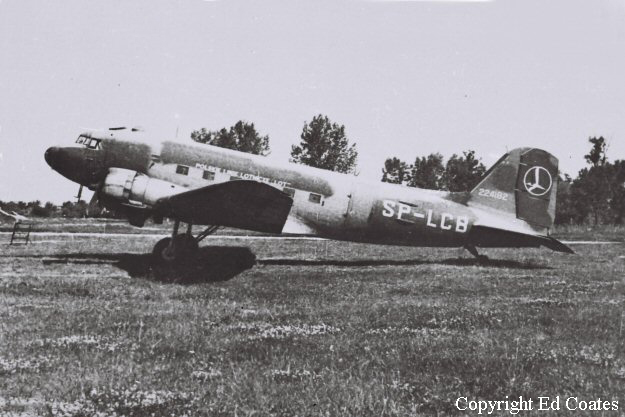
Crash of a Douglas DC-3 in Stockholm-Bromma

Date & Time: Jun 10, 1947
Type of aircraft:
Operator:
Registration:
SP-LCB
Survivors:
Yes
MSN:
10044
YOM:
1943
Country:
Region:
Crew on board:
0
Crew fatalities:
Pax on board:
0
Pax fatalities:
Other fatalities:
Total fatalities:
0
Circumstances:
Crashed on landing for unknown reason. There were no casualties.

Crash of a Douglas DC-3 on Mt Hestfjall: 25 killed

Date & Time: May 29, 1947 at 1248 LT
Type of aircraft:
Operator:
Registration:
TF-ISI
Flight Phase:
Survivors:
No
Site:
Schedule:
Reykjavik – Akureyri
MSN:
13389
YOM:
1944
Country:
Region:
Crew on board:
4
Crew fatalities:
Pax on board:
21
Pax fatalities:
Other fatalities:
Total fatalities:
25
Circumstances:
Enroute from Reykjavik to Akureyri, while flying in marginal weather conditions east of the city of Siglufjörður, the aircraft hit the slope of Mt Hestfjall located on the west coast of the Héðinsfjörður Bay. The aircraft was totally destroyed and all 25 occupants were killed. Up to date, worst airplane crash in Iceland History.

Crash of a DC-3 in Gainesville

Date & Time: May 16, 1947
Type of aircraft:
Operator:
Registration:
NC53011
Flight Type:
Survivors:
Yes
MSN:
4276
YOM:
1942
Crew on board:
2
Crew fatalities:
Pax on board:
0
Pax fatalities:
Other fatalities:
Total fatalities:
0
Circumstances:
The DC-3 cargo plane landed on a runway which was 4,200 feet long but the pilot made his approach too fast. Brakes were not used until within 300 feet of the end of the runway. The aircraft continued off the runway, down a rough incline and across a dirt road. It was considered as damaged beyond repair.
Source:
https://aviation-safety.net/database/record.php?id=19470516-1

Crash of a Douglas DC-3C in Newark: 2 killed

Date & Time: May 4, 1947
Type of aircraft:
Registration:
NC53196
Survivors:
Yes
Schedule:
Louisville – Newark
MSN:
19435
YOM:
1944
Crew on board:
3
Crew fatalities:
Pax on board:
9
Pax fatalities:
Other fatalities:
Total fatalities:
2
Circumstances:
The aircraft was approaching Newark Airport for landing. The airplane was too far to the right for an approach to runway 06 and the tower controller radioed that he was in line for an approach to runway 28. The approach was then made to runway 28 which is 7,100 feet long with an additional usable 500 feet at the end. The approach was fast, however and contact was not made with the runway until within the last 2,000 feet. The aircraft continued off the runway and ran into a drainage ditch where a fire broke out, which was quickly extinguished.
Source:
https://aviation-safety.net/database/record.php?id=19470504-0

Crash of a Douglas DC-3 in Shanghai: 3 killed

Date & Time: Apr 25, 1947
Type of aircraft:
Operator:
Registration:
B-141
Flight Phase:
Flight Type:
Survivors:
Yes
Site:
Country:
Region:
Crew on board:
2
Crew fatalities:
Pax on board:
0
Pax fatalities:
Other fatalities:
Total fatalities:
3
Circumstances:
Shortly after takeoff from Shanghai-Longhua Airport, while in initial climb, an engine failed. The aircraft stalled and crashed in an industrial area located near the airport. While both pilots were seriously injured, three people on the ground were killed.
Probable cause:
Engine failure.

Crash of a Douglas DC-3C in Columbus: 8 killed

Date & Time: Apr 22, 1947 at 1040 LT
Type of aircraft:
Operator:
Registration:
NC49657
Survivors:
No
Schedule:
Macon – Columbus
MSN:
9066
YOM:
1943
Crew on board:
3
Crew fatalities:
Pax on board:
5
Pax fatalities:
Other fatalities:
Total fatalities:
8
Captain / Total flying hours:
11091
Captain / Total hours on type:
1800.00
Aircraft flight hours:
2899
Circumstances:
On final approach to runway 05, while at a height of 10 feet, the DC-3 was hit by a private Vultee BT-13 registered NC55312 and carrying one pilot. Following the collision, both aircraft climbed to a height of 150 feet and then stalled and crashed in a huge explosion. Both aircraft were destroyed and all nine occupants were killed.
Probable cause:
The Board determines that the probable cause of this accident was the failure of the pilot in the BT-13 to fly a standard left hand pattern in his approach to the airport and to Keep a diligent lookout for other traffic.
Final Report: