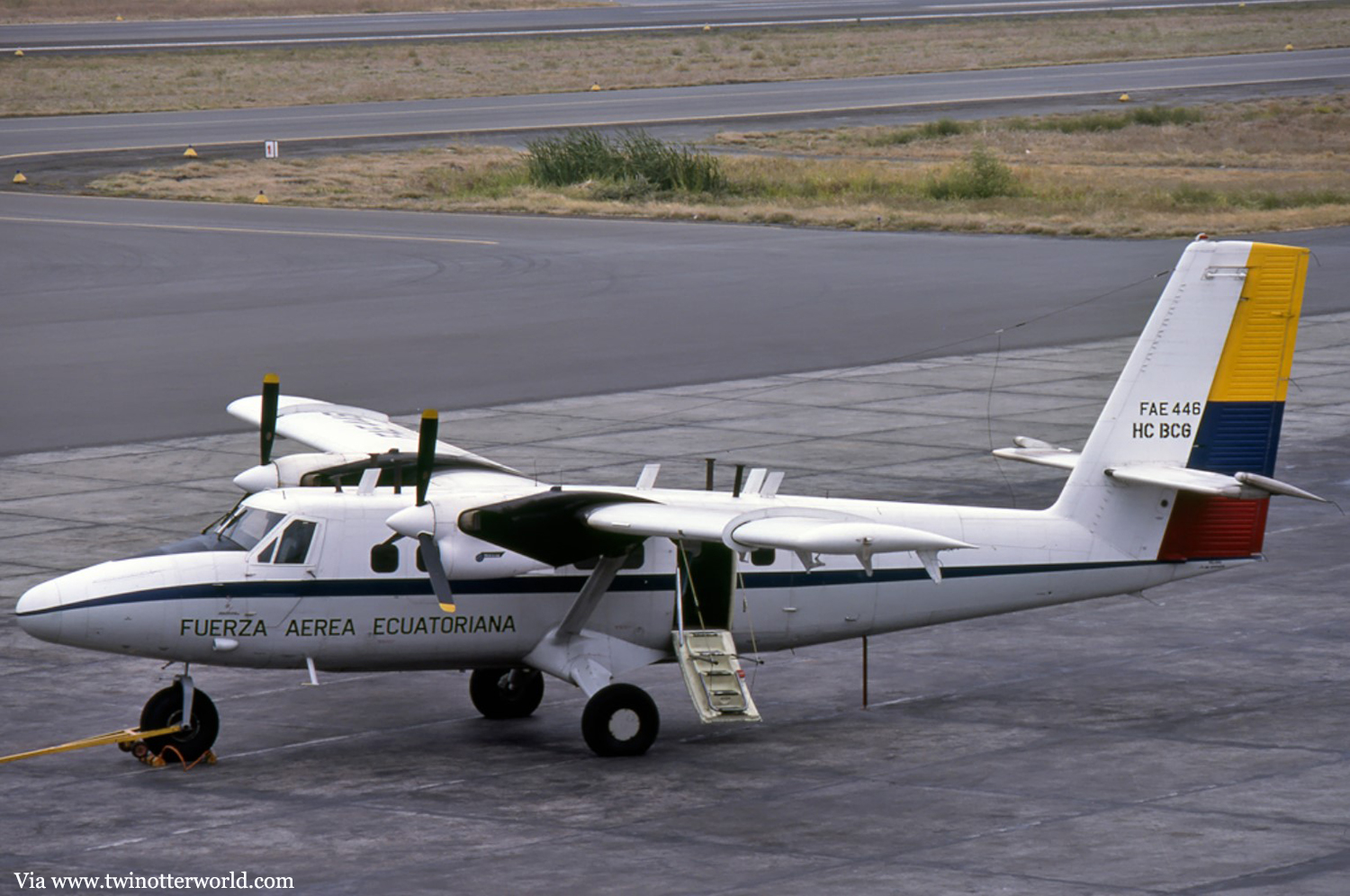
Crash of a De Havilland DHC-6 Twin Otter 300 near Loja: 14 killed

Date & Time: Nov 20, 1984
Operator:
Registration:
FAE446
Flight Phase:
Survivors:
No
Site:
Schedule:
Loja - Zumba
MSN:
446
YOM:
1975
Location:
Country:
Crew on board:
2
Crew fatalities:
Pax on board:
12
Pax fatalities:
Other fatalities:
Total fatalities:
14
Circumstances:
Few minutes after takeoff from Loja Airport, while climbing in poor weather conditions, the twin engine aircraft struck the slope of a mountain and crashed. All 14 occupants were killed. The aircraft had a dual registration: civil HC-BCG and military FAE446.

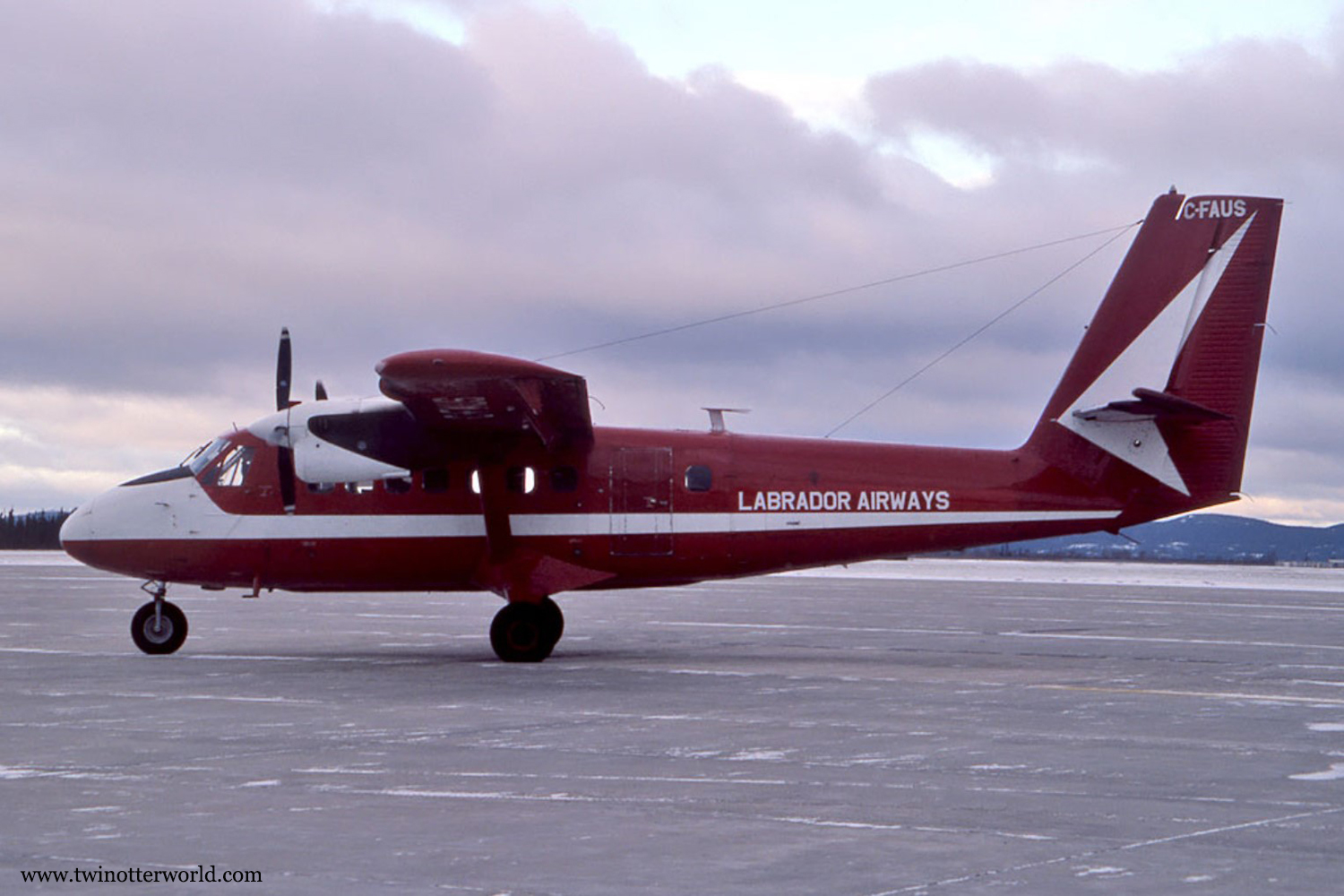
Crash of a De Havilland DHC-6 Twin Otter 100 in Goose Bay: 4 killed

Date & Time: Oct 11, 1984 at 1737 LT
Operator:
Registration:
C-FAUS
Flight Type:
Survivors:
No
Schedule:
Saint Anthony - Goose Bay
MSN:
34
YOM:
1967
Country:
Crew on board:
2
Crew fatalities:
Pax on board:
2
Pax fatalities:
Other fatalities:
Total fatalities:
4
Aircraft flight hours:
17585
Circumstances:
The Twin Otter departed Goose Bay on a medical evacuation flight to St. Anthony. The flight was uneventful and landed in St. Anthony at 15:24. At 16:02, the aircraft departed St. Anthony on a VFR flight back to Goose Bay. On board were the two pilots and the doctor and nurse. Approaching the Goose Bay Airport, weather became marginal, but the crew continued visual flight. The crew likely encountered near zero forward visibility in snow showers and fog; it is probable that they were able to maintain vertical contact with the ground and were confident they could continue flight with visual reference to the ground. The crew may not have been able to see terrain ahead and therefore may not have been able to determine if the aircraft would clear the hills, particularly, when steep hills were encountered. The plane struck a rock outcropping 100 feet below the summit of a 2,050-foot mountain. After bouncing twice, the Twin Otter had come to rest in a small, wooded gully, approximately 350 feet from the initial point of impact.
Probable cause:
It was determined that the flight was attempted in mountainous terrain in marginal weather conditions. The aircraft was flown at an altitude which did not provide terrain clearance, and the aircraft struck a mountain for undetermined reasons.

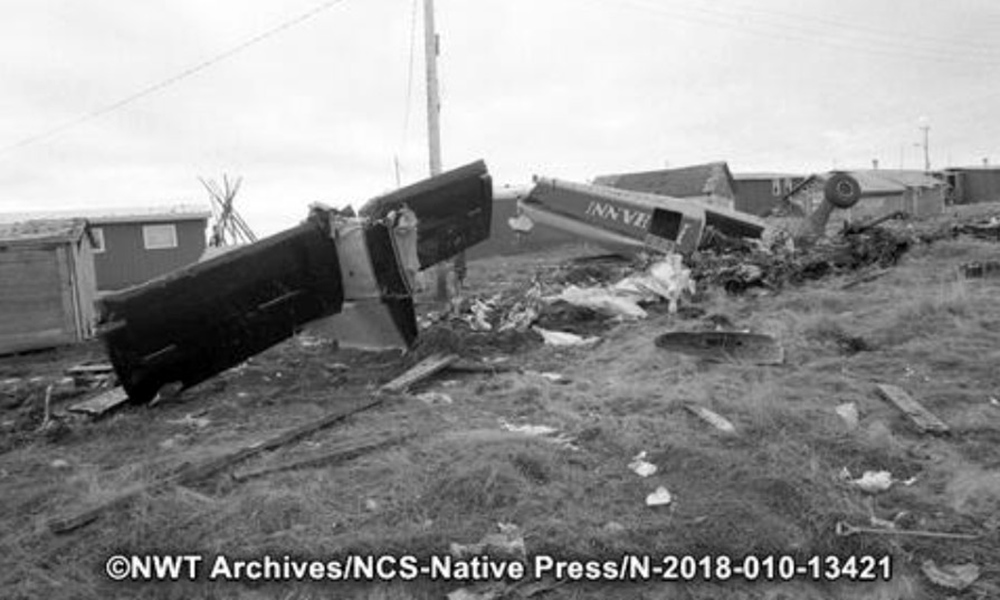
Crash of a De Havilland DHC-6 Twin Otter 200 in Fort Franklin: 7 killed

Date & Time: Oct 9, 1984 at 1730 LT
Registration:
C-FPPL
Survivors:
No
Schedule:
Fort Norman - Fort Franklin
MSN:
115
YOM:
1968
Flight number:
NAS097
Country:
Crew on board:
2
Crew fatalities:
Pax on board:
5
Pax fatalities:
Other fatalities:
Total fatalities:
7
Aircraft flight hours:
23645
Circumstances:
The aircraft departed Fort Norman at 16:51 and arrived overhead Fort Franklin at approximately 17:15. Because Fort Franklin was shrouded in fog, a local resident contacted the pilot on a portable VHF transceiver and advised him that there was little or no visibility. The pilot replied that he did not think he would be able to land. The resident drove to the airstrip and contacted the pilot again when he heard the aircraft returning. He advised the pilot that visibility was 200-300 feet. The pilot then asked if this was the vertical or horizontal visibility. At that moment the Twin Otter struck a 200-foot-high telecommunications tower while in controlled level fight. Part of the right wing broke off and the aircraft slowly rolled over before striking the ground. The decision of the pilot to continue the approach in foggy weather were possibly influenced by the effects of stress and a greater than usual personal need to complete the flight. The stress was probably caused by the fact that the pilot had been involved in four accidents since March 1984. Although he was a very experienced pilot, his previous employer terminated his employment on 31 August 1984. In their opinion, his ability to make operational decisions was in question. The pilot was hired by Nahanni Air Services one month later.
Probable cause:
The following findings were reported:
- The weather at Fort Franklin was unsuitable for the flight,
- The flight was continued into weather below that which is required for VFR flight,
- An approach to the aerodrome was attempted using the radar altimeter to provide terrain clearance,
- The pilot descended to an altitude below the height of the telecommunications tower,
- A lack of official weather observations and of communications facilities at Fort Franklin deprived the pilot of reliable local weather information on which to base his decisions,
- There exists in the more remote areas of Canada a different attitude with regard to the assessment of risk in flight operations; it is likely that this attitude influenced the decisions and actions of the pilot,
- The operational decisions of the pilot may have been influenced by the effects of stress and a greater than usual personal need to complete the flight,
- Company management may have had a better appreciation of the risk potential associated with the recent events in the pilot's life, if they had more awareness of the effects of stress on performance.

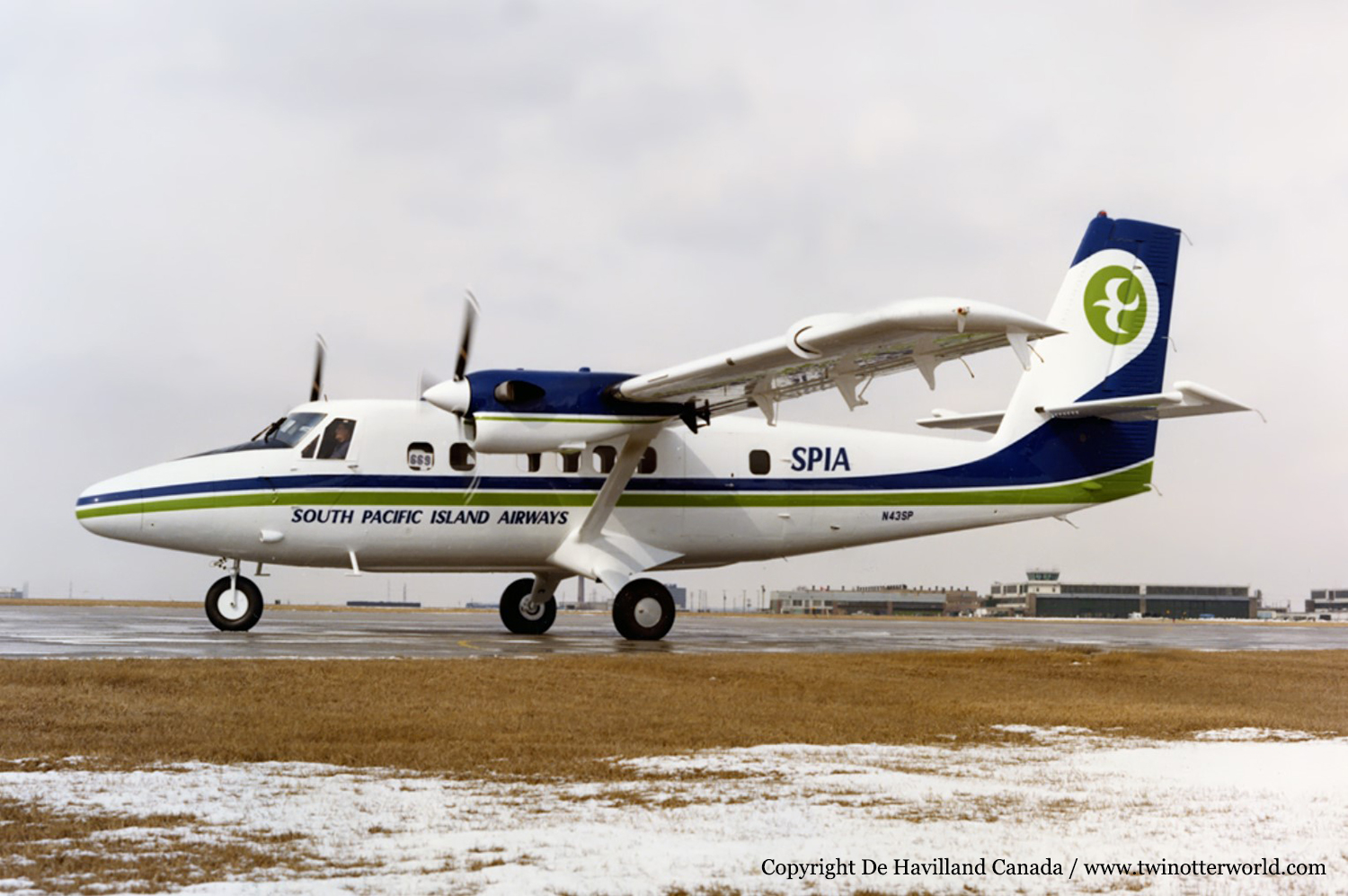
Crash of a De Havilland DHC-6 Twin Otter 300 in Tau: 1 killed

Date & Time: Jul 21, 1984 at 1340 LT
Operator:
Registration:
N43SP
Survivors:
Yes
Schedule:
Pago Pago - Tau
MSN:
669
YOM:
1980
Flight number:
HK513
Region:
Crew on board:
3
Crew fatalities:
Pax on board:
11
Pax fatalities:
Other fatalities:
Total fatalities:
1
Captain / Total flying hours:
5094
Captain / Total hours on type:
1020.00
Aircraft flight hours:
11281
Circumstances:
The aircraft crash landed after the pilot used flaps and power to semi control pitch after the elevator down control cable failed at about 300 feet agl on final approach. The left wing of the aircraft hit the terminal roof during the stall mush from 50 feet agl. The company is changing their aircraft control cables from steel to stainless steel to aid in the anti-corrosion and modifying their inspection period from 800 to 100 hours between inspections. The cable that separated failed from corrosion. No evidence of fatigue cracking or mechanical wear was found. Corrosion products were found within 2 inches of the serapation on both cable pieces.
Probable cause:
Occurrence #1: airframe/component/system failure/malfunction
Phase of operation: approach - vfr pattern - base leg/base to final
Findings
1. (c) flt control syst, elevator control - corroded
2. (c) flt control syst, elevator control - failure,total
----------
Occurrence #2: in flight collision with terrain/water
Phase of operation: descent - uncontrolled
Final Report:

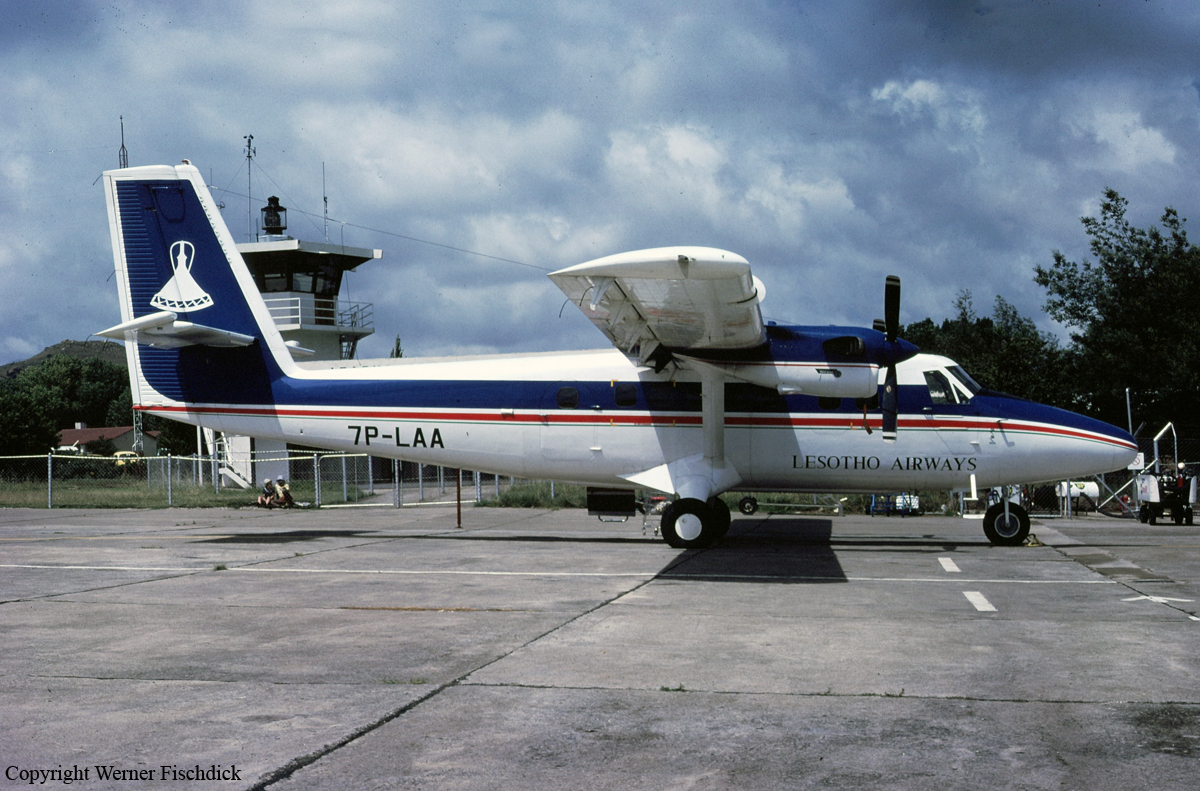
Crash of a De Havilland DHC-6 Twin Otter 300 in Mokhotlong

Date & Time: Jul 13, 1984
Operator:
Registration:
7P-LAA
Flight Phase:
Survivors:
Yes
Schedule:
Mokhotlong - Maseru
MSN:
622
YOM:
1979
Country:
Region:
Crew on board:
0
Crew fatalities:
Pax on board:
0
Pax fatalities:
Other fatalities:
Total fatalities:
0
Circumstances:
Shortly after takeoff, while in initial climb, one of the engine failed. The crew reduced his altitude and completed an emergency landing past the runway end. There were no casualties while the aircraft was damaged beyond repair.
Probable cause:
Engine failure during initial climb for unknown reasons.

Crash of a De Havilland DHC-6 Twin Otter 200 in Córdoba

Date & Time: May 25, 1984
Operator:
Registration:
T-83
Flight Type:
Survivors:
Yes
Schedule:
Comodoro Rivadavia – Córdoba
MSN:
170
YOM:
1968
Country:
Crew on board:
2
Crew fatalities:
Pax on board:
13
Pax fatalities:
Other fatalities:
Total fatalities:
0
Circumstances:
On approach to Córdoba-Pajas Blancas Airport, the crew encountered marginal weather conditions and was forced to initiate a go-around. During a second attempt to land, the aircraft was too low and crashed in a maize field, few km short of runway 18 threshold. All 15 occupants were rescued and the aircraft was damaged beyond repair.

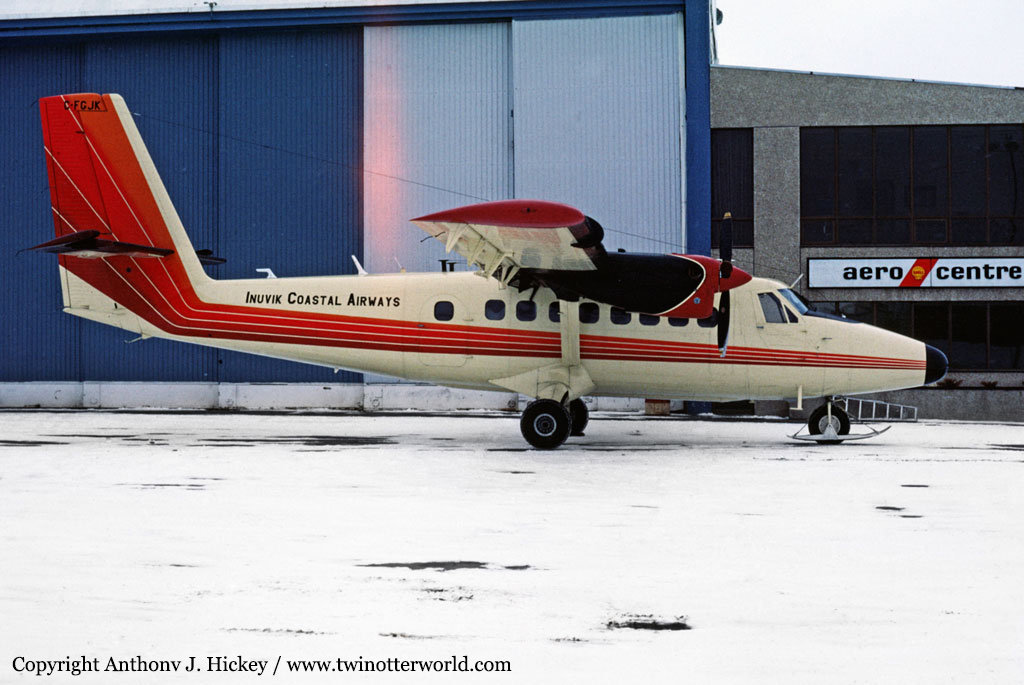
Crash of a De Havilland DHC-6 Twin Otter 200 in Paulatuk: 2 killed

Date & Time: Dec 17, 1983 at 1310 LT
Registration:
C-FGJK
Survivors:
Yes
Schedule:
Inuvik - Paulatuk
MSN:
213
YOM:
1969
Country:
Crew on board:
1
Crew fatalities:
Pax on board:
11
Pax fatalities:
Other fatalities:
Total fatalities:
2
Circumstances:
On approach to Paulatuk Airport, the pilot encountered marginal weather conditions with strong cross winds and blowing snow. On short final, while making a transition from visual to instruments flight rules, the pilot decided to initiate a go-around when the left wing struck the ground. Out of control, the aircraft veered to the left and came to rest. The pilot and a passenger were killed while 10 other occupants were injured.
Probable cause:
It was determined that the accident was the consequence of the combination of the following factors:
- The Paulatuk aerodrome runway is not oriented to correspond with the prevailing winds,
- Environment Canada does not produce an aerodrome forecast for Paulatuk,
- As the aircraft landed, the crosswind from the right increased appreciably reducing visibility in blowing snow,
- During the overshoot, as the pilot was making the transition from visual to instrument flight conditions, control of the aircraft was lost,
- The aircraft was overloaded by 840 lbs.

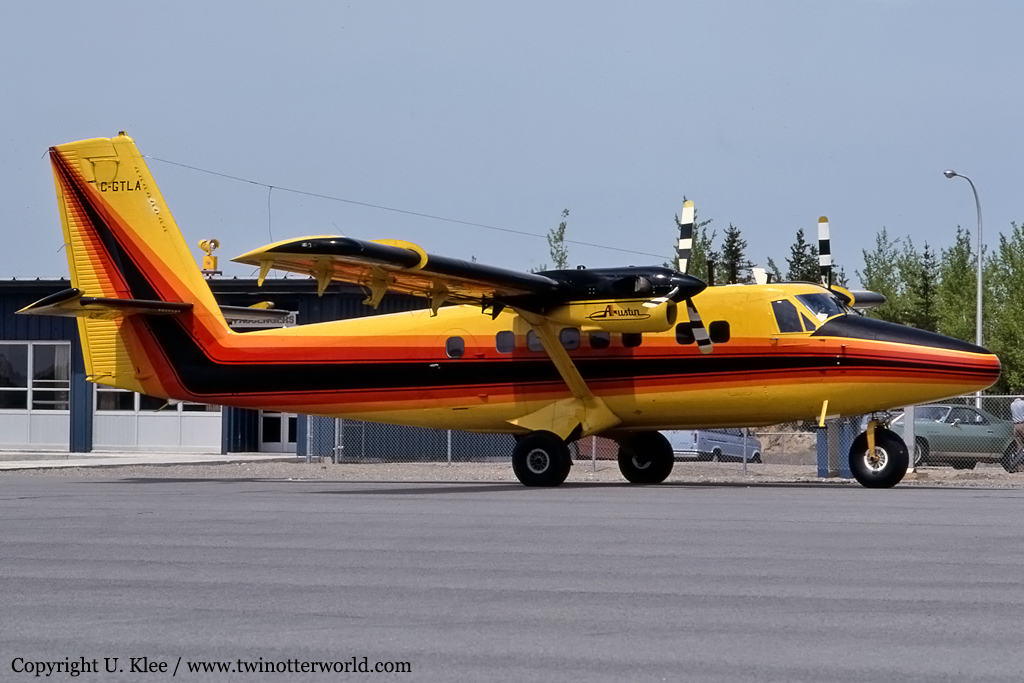
Crash of a De Havilland DHC-6 Twin Otter 300 in Landsdowne House: 4 killed

Date & Time: Nov 23, 1983
Operator:
Registration:
C-GTLA
Survivors:
Yes
Schedule:
Sandy Lake – Landsdowne House – Thunder Bay
MSN:
632
YOM:
1979
Country:
Crew on board:
2
Crew fatalities:
Pax on board:
5
Pax fatalities:
Other fatalities:
Total fatalities:
4
Circumstances:
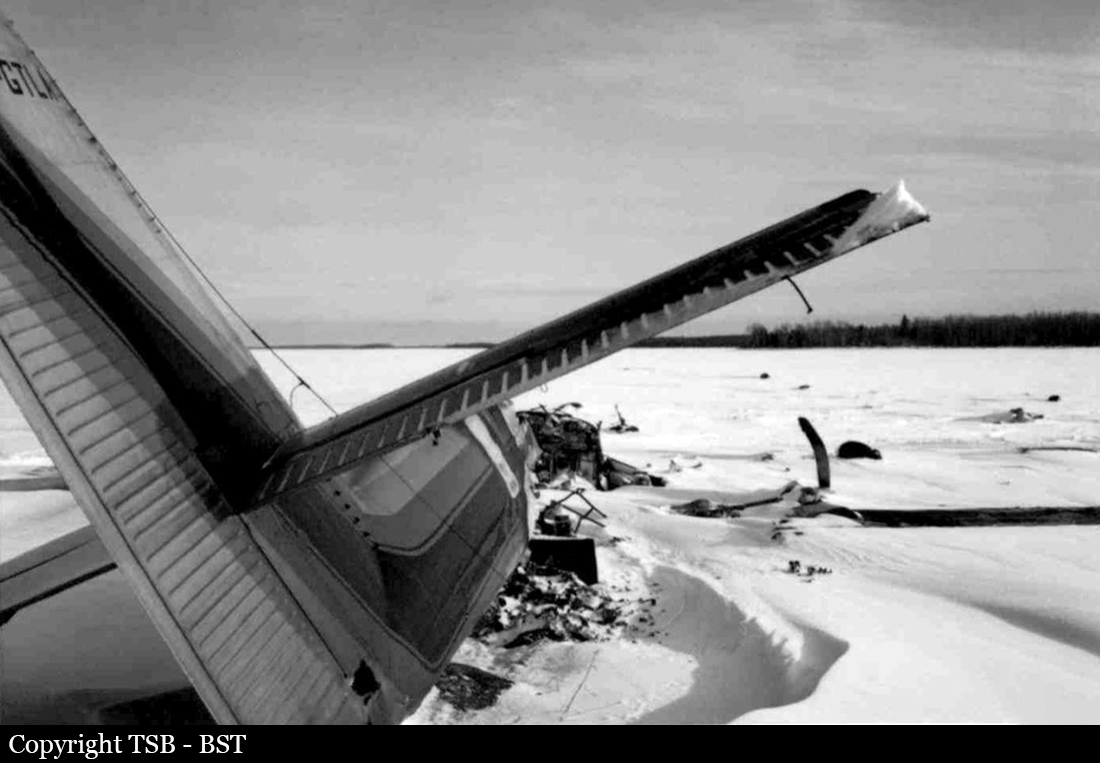
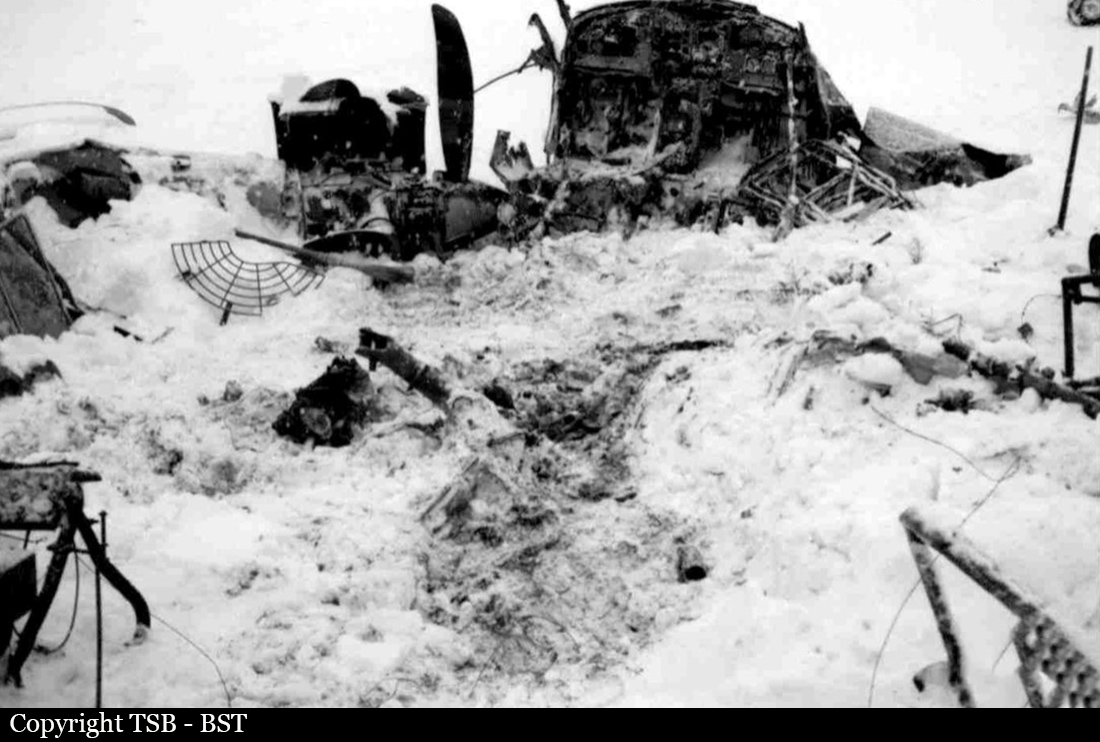
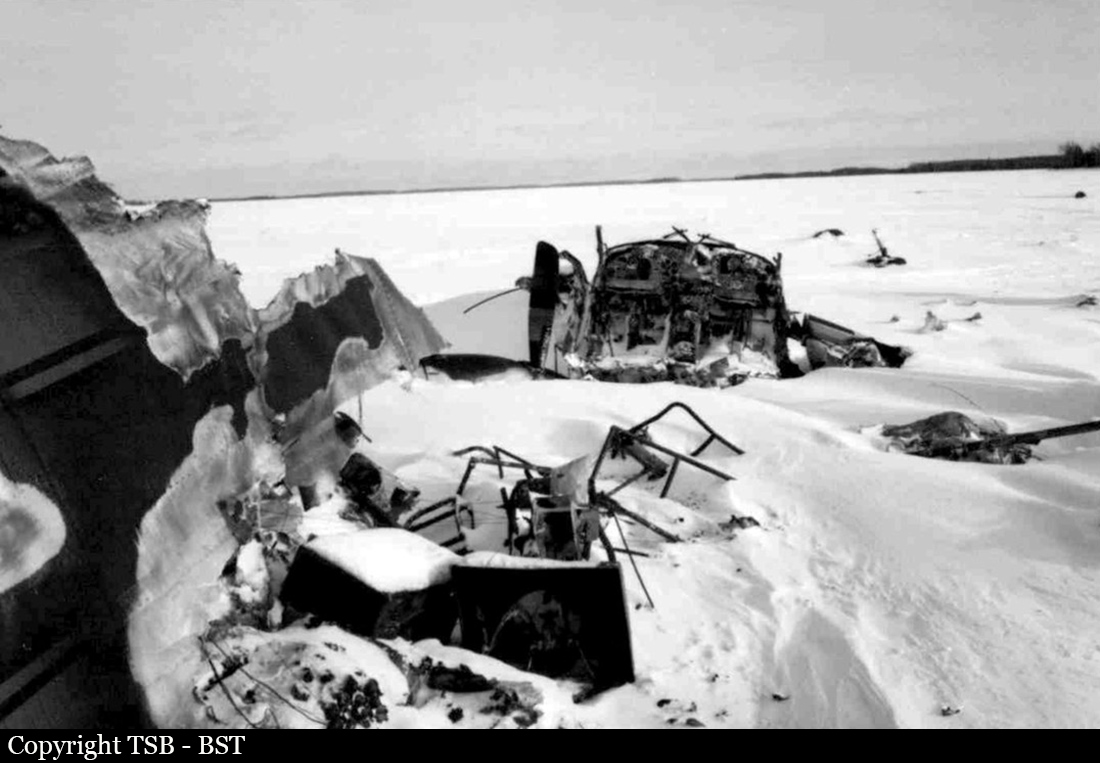
The Twin Otter was completing a schedule service from Sandy Lake to Thunder Bay with an intermediate stop in Landsdowne House, carrying five passengers and two pilots. On approach, the crew encountered marginal weather conditions and the captain decided to initiate a go-around procedure. A second circuit was completed without losing sight of the airfield. During the second attempt to land, the pilot-in-command reported 'runway in sight' and the copilot called for radioaltimer at 200 feet altitude. On short final, the captain reported he was encountering whiteout conditions when the airplane struck the snow-covered and icy surface of the lake about 1,200 feet short of runway threshold. Upon impact, the nose gear was torn off then the aircraft struck rocky terrain and eventually came to rest in flames about 600 feet short of runway. A passenger was seriously injured while both pilots escaped with minor injuries. Four passengers were killed in the accident.
Probable cause:
The accident occurred during a visual approach in reduced visibility and difficult weather conditions (white conditions). Investigations were unable to determine the exact cause of the accident resulting in a controlled flight into terrain.

Crash of a De Havilland DHC-6 Twin Otter 300 in Lonkin: 9 killed

Date & Time: Oct 8, 1983
Operator:
Registration:
XY-AEE
Flight Phase:
Survivors:
Yes
Schedule:
Lonkin - Myitkyina
MSN:
512
YOM:
1976
Country:
Region:
Crew on board:
3
Crew fatalities:
Pax on board:
11
Pax fatalities:
Other fatalities:
Total fatalities:
9
Circumstances:
After takeoff from Lonkin Airport, while in initial climb, the crew initiated a turn to the left when the left engine failed. The airplane lost height, struck trees and crashed few hundred meters from the runway end. Five passengers were seriously injured while nine other occupants were killed.
Probable cause:
Failure of the left engine during initial climb for unknown reasons.