Crash of a De Havilland DHC-6 Twin Otter 300 in El Poleo: 2 killed

Date & Time: Oct 11, 1987
Operator:
Registration:
HK-2920
Survivors:
Yes
Schedule:
Ocaña – El Poleo
MSN:
419
YOM:
1974
Country:
Crew on board:
2
Crew fatalities:
Pax on board:
7
Pax fatalities:
Other fatalities:
Total fatalities:
2
Circumstances:
While approaching El Poleo, the crew encountered limited visibility due to poor weather conditions. On final, the aircraft was too low and struck the top of a hill located few km from the landing area. Both pilots were killed while all seven passengers were rescued.

Crash of a De Havilland DHC-6 Twin Otter 100 in Maudsley Lake

Date & Time: Jun 13, 1987
Operator:
Registration:
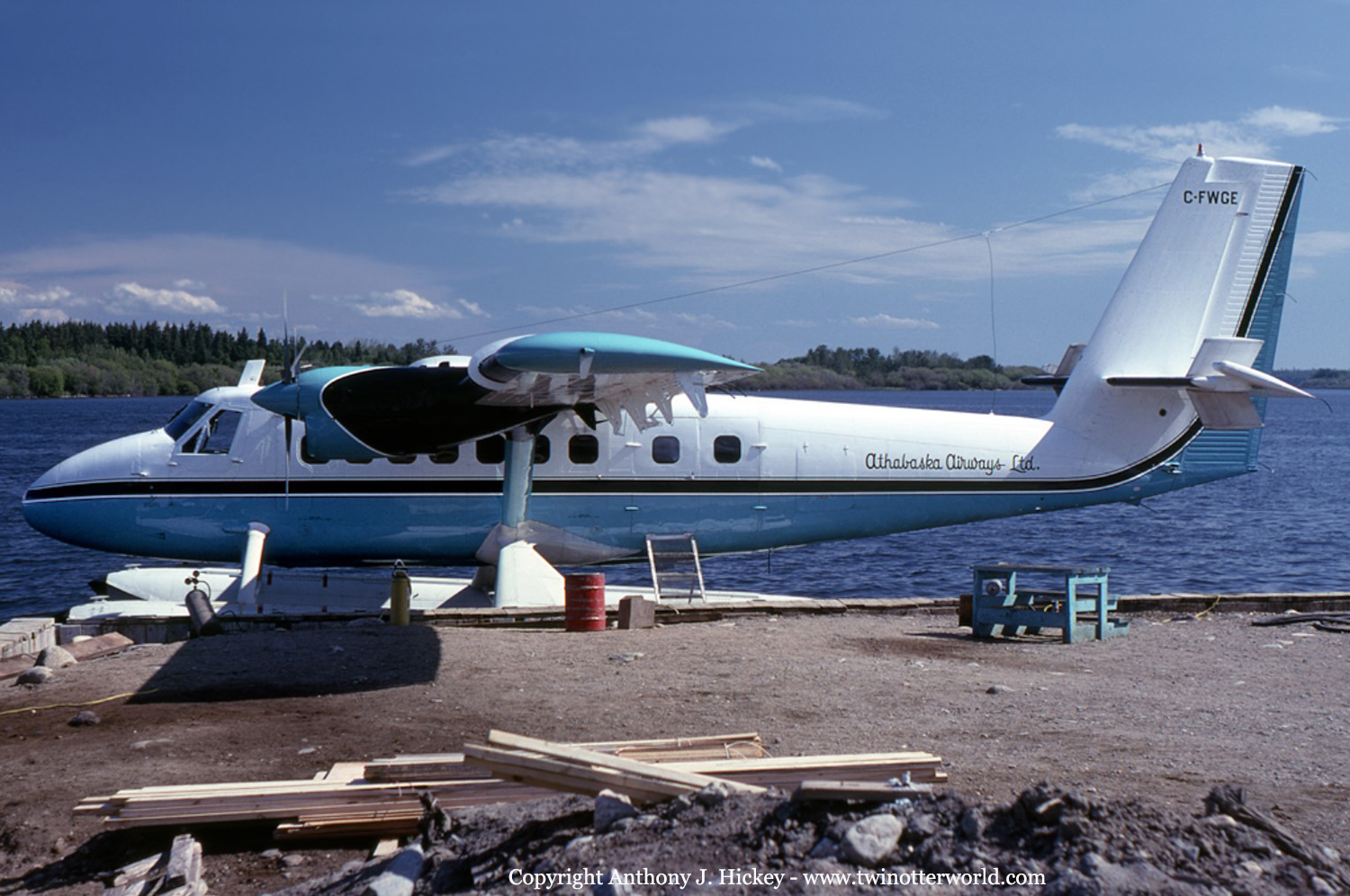
C-FWGE
Survivors:
Yes
MSN:
58
YOM:
1967
Country:
Crew on board:
2
Crew fatalities:
Pax on board:
7
Pax fatalities:
Other fatalities:
Total fatalities:
0
Circumstances:
The float equipped aircraft landed hard at Maudsley Lake and bounced. The captain initiated a go-around when the aircraft struck trees and crashed. All nine occupants were injured and the aircraft was damaged beyond repair.

Crash of a De Havilland DHC-6 Twin Otter 100 in Ilaga: 7 killed

Date & Time: May 25, 1987
Operator:
Registration:
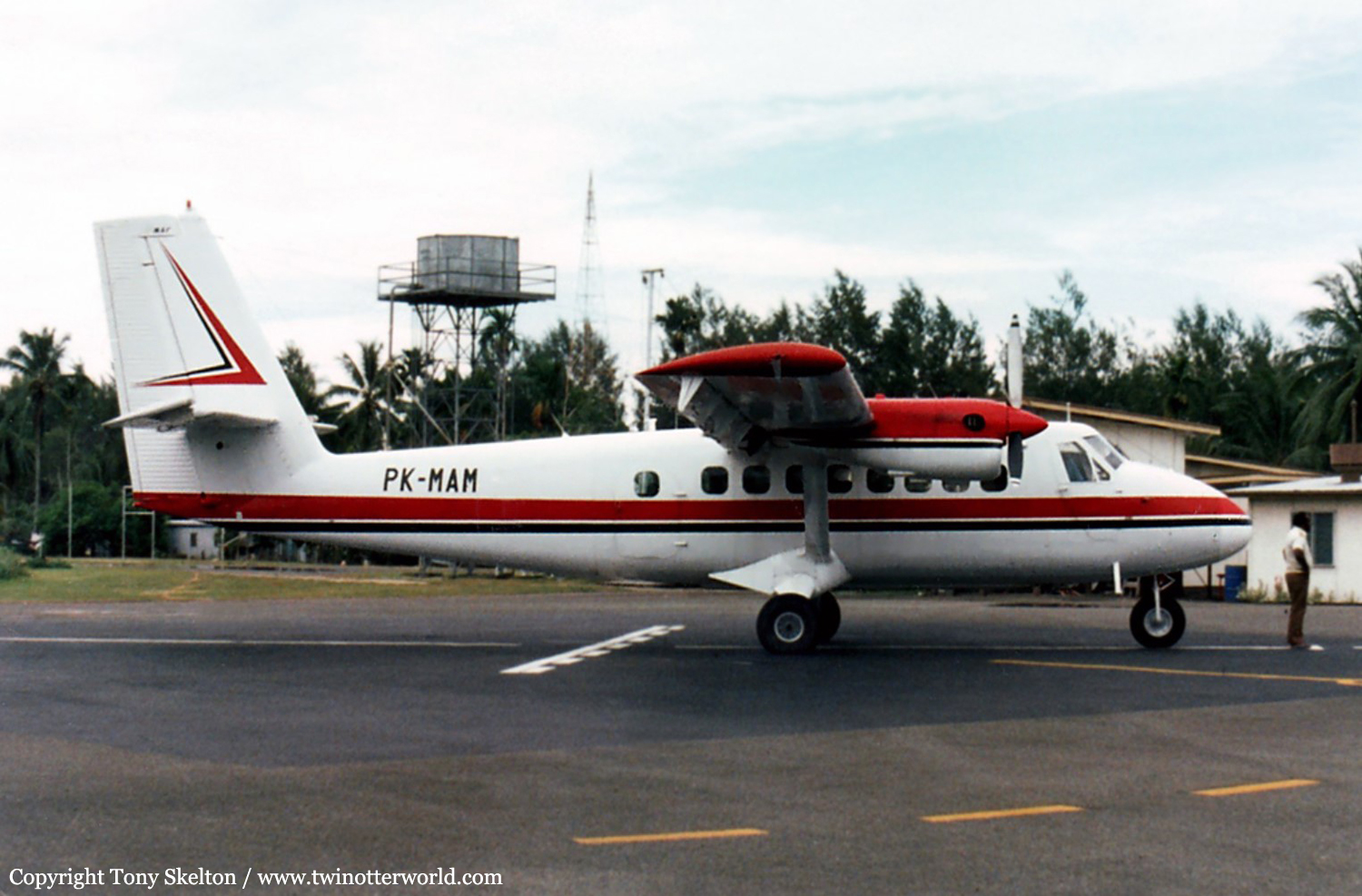
PK-MAM
Survivors:
Yes
Schedule:
Wamena – Ilaga
MSN:
76
YOM:
1967
Country:
Region:
Crew on board:
2
Crew fatalities:
Pax on board:
28
Pax fatalities:
Other fatalities:
Total fatalities:
7
Circumstances:
Crashed in unknown circumstances while on approach to Ilaga Airport. Seven occupants were killed and 23 others were injured.

Crash of a De Havilland DHC-6 Twin Otter 300 in Ruteng: 8 killed

Date & Time: May 23, 1987
Operator:
Registration:
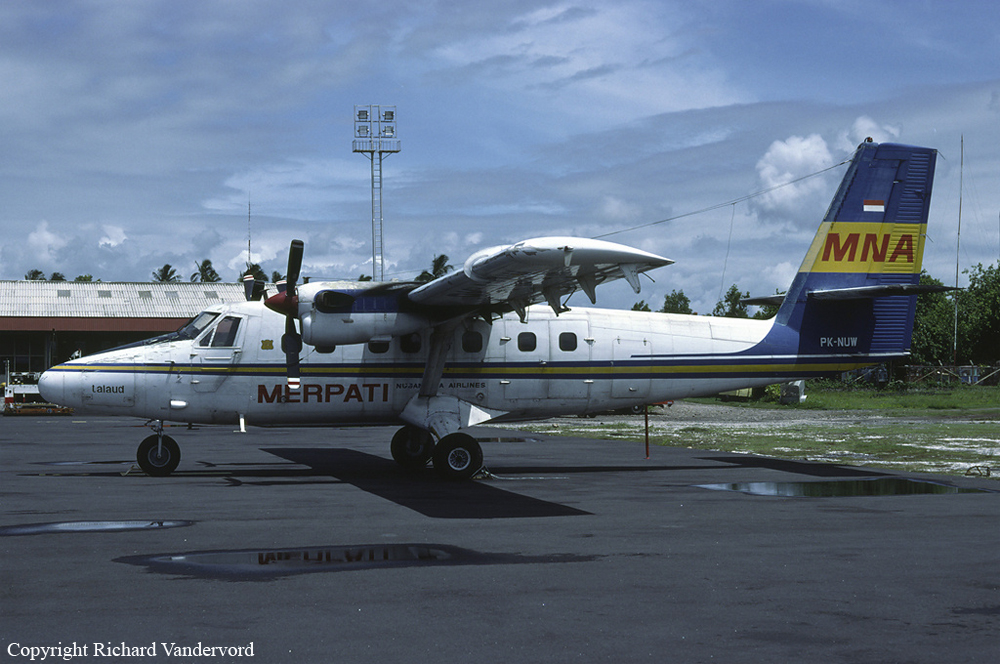
PK-NUW
Survivors:
No
MSN:
474
YOM:
1975
Country:
Region:
Crew on board:
2
Crew fatalities:
Pax on board:
6
Pax fatalities:
Other fatalities:
Total fatalities:
8
Circumstances:
On final approach in poor weather conditions, the aircraft struck trees, stalled and crashed in the jungle few km from the airport. All eight occupants were killed.

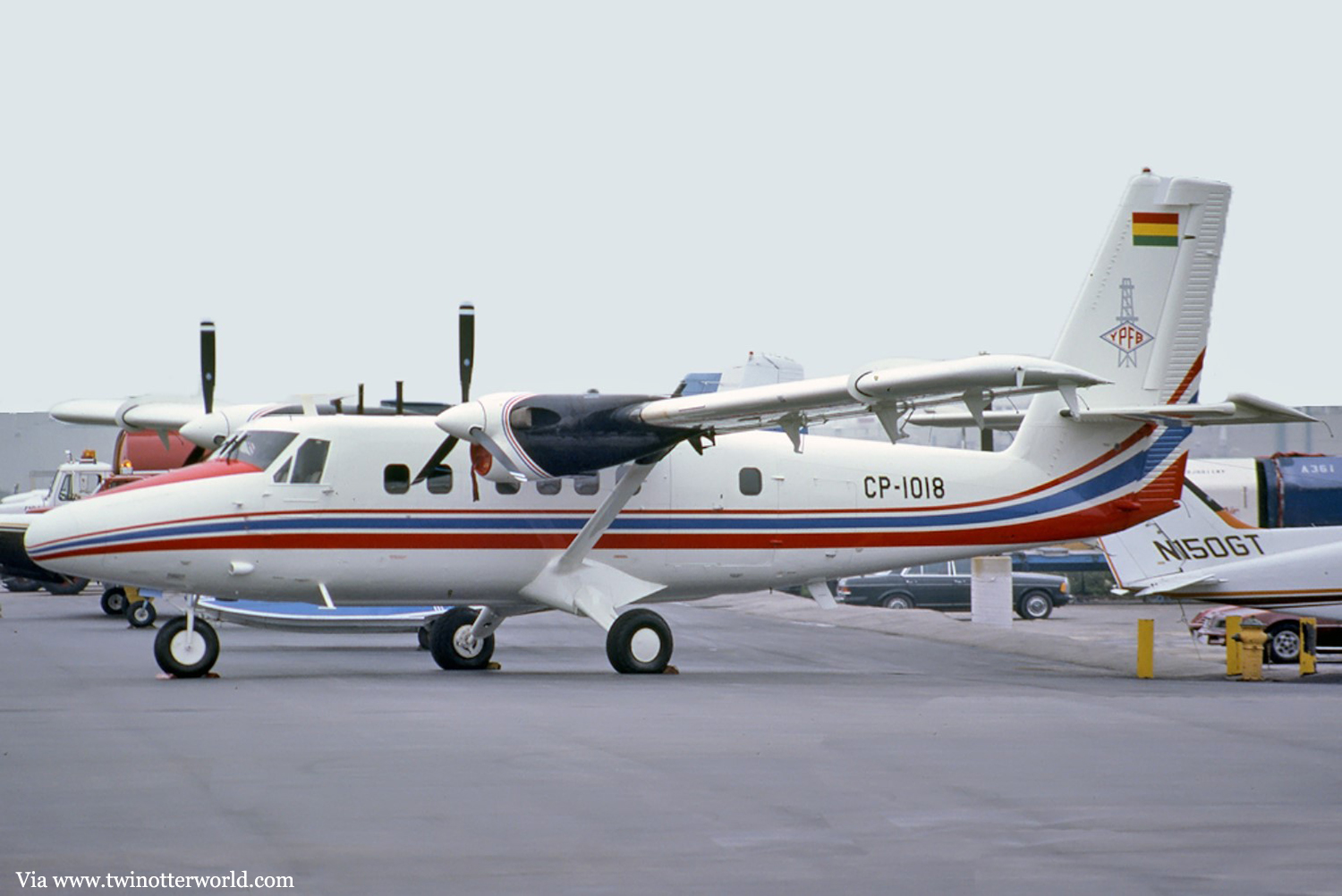
Crash of a De Havilland DHC-6 Twin Otter 300 in Santa Cruz: 14 killed

Date & Time: May 20, 1987
Operator:
Registration:
CP-1018
Survivors:
Yes
Site:
Schedule:
Camiri - Santa Cruz
MSN:
363
YOM:
1973
Country:
Crew on board:
3
Crew fatalities:
Pax on board:
13
Pax fatalities:
Other fatalities:
Total fatalities:
14
Circumstances:
While approaching Santa Cruz-El Trompillo Airport, the crew encountered poor weather conditions with low clouds and rain showers. Too low, the airplane struck wooded and hilly terrain few km from the airport. Two passengers were rescued while 14 other occupants were killed.

Crash of a De Havilland DHC-6 Twin Otter 300 off Felvoru

Date & Time: Feb 7, 1987
Registration:
8Q-GIA
Survivors:
Yes
Schedule:
Male – Felvoru
MSN:
341
YOM:
1972
Region:
Crew on board:
2
Crew fatalities:
Pax on board:
14
Pax fatalities:
Other fatalities:
Total fatalities:
0
Circumstances:
Upon landing on relative rough sea, the right float was torn off. The aircraft came to rest and partially sank few dozen meters offshore. All 16 occupants were rescued, some of them were slightly injured. The aircraft was written off.

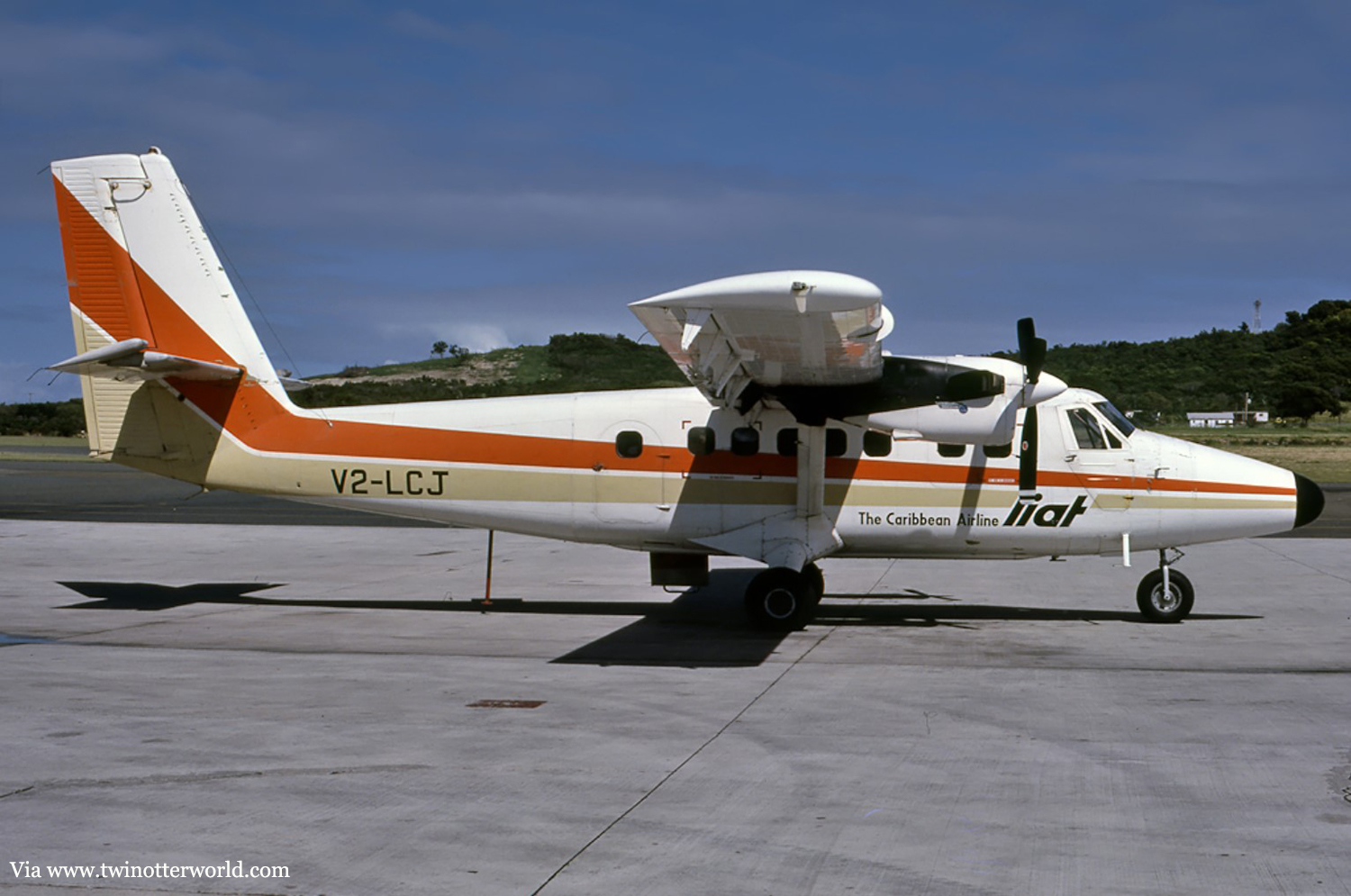
Crash of a De Havilland DHC-6 Twin Otter 310 off Kingstown: 13 killed

Date & Time: Aug 4, 1986 at 0023 LT
Operator:
Registration:
V2-LCJ
Survivors:
No
Schedule:
Castries - Kingstown
MSN:
785
YOM:
1982
Crew on board:
2
Crew fatalities:
Pax on board:
11
Pax fatalities:
Other fatalities:
Total fatalities:
13
Circumstances:
The crew started the approach to Kingstown-Arnos Vale Airport by night and poor weather conditions. On final, the twin engine aircraft went out of control and crashed in the sea few km offshore. All 13 occupants were killed.

Crash of a De Havilland DHC-6 Twin Otter 300 in Dembi Dolo

Date & Time: Jun 22, 1986 at 0408 LT
Operator:
Registration:
ET-AIQ
Survivors:
Yes
Schedule:
Addis Ababa - Dembidolo
MSN:
819
YOM:
1985
Country:
Region:
Crew on board:
3
Crew fatalities:
Pax on board:
17
Pax fatalities:
Other fatalities:
Total fatalities:
0
Circumstances:
On approach to Dembidolo by night and stratus clouds, the crew failed to realize his altitude was too low. While facing a mountain, the crew increased engine power to gain height but the aircraft stalled, lost altitude and crashed on a hilly terrain located few km from the airfield. All 20 occupants were injured while the aircraft was damaged beyond repair.

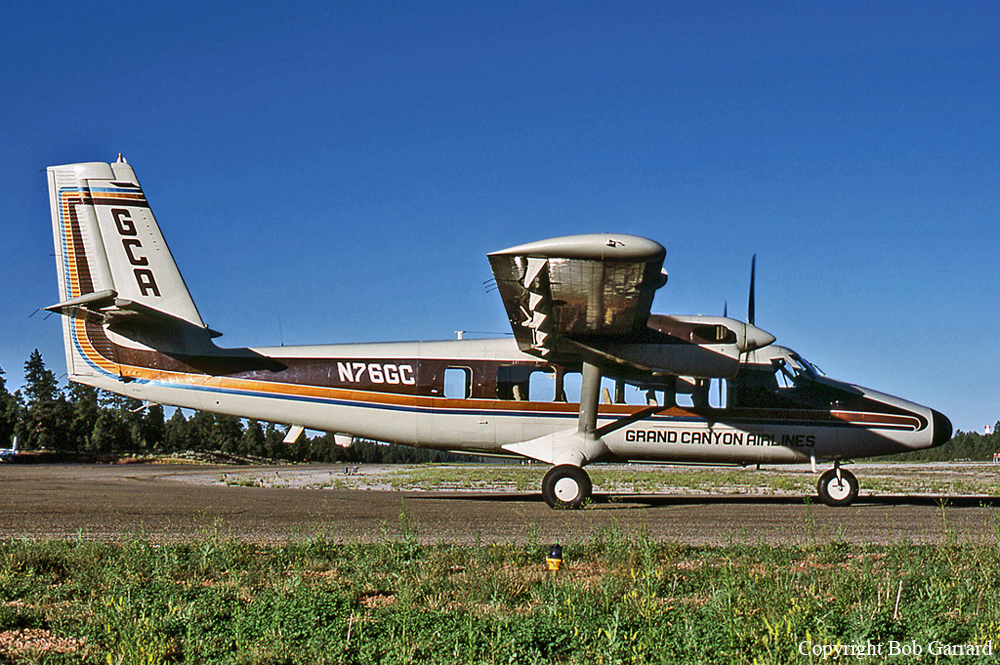
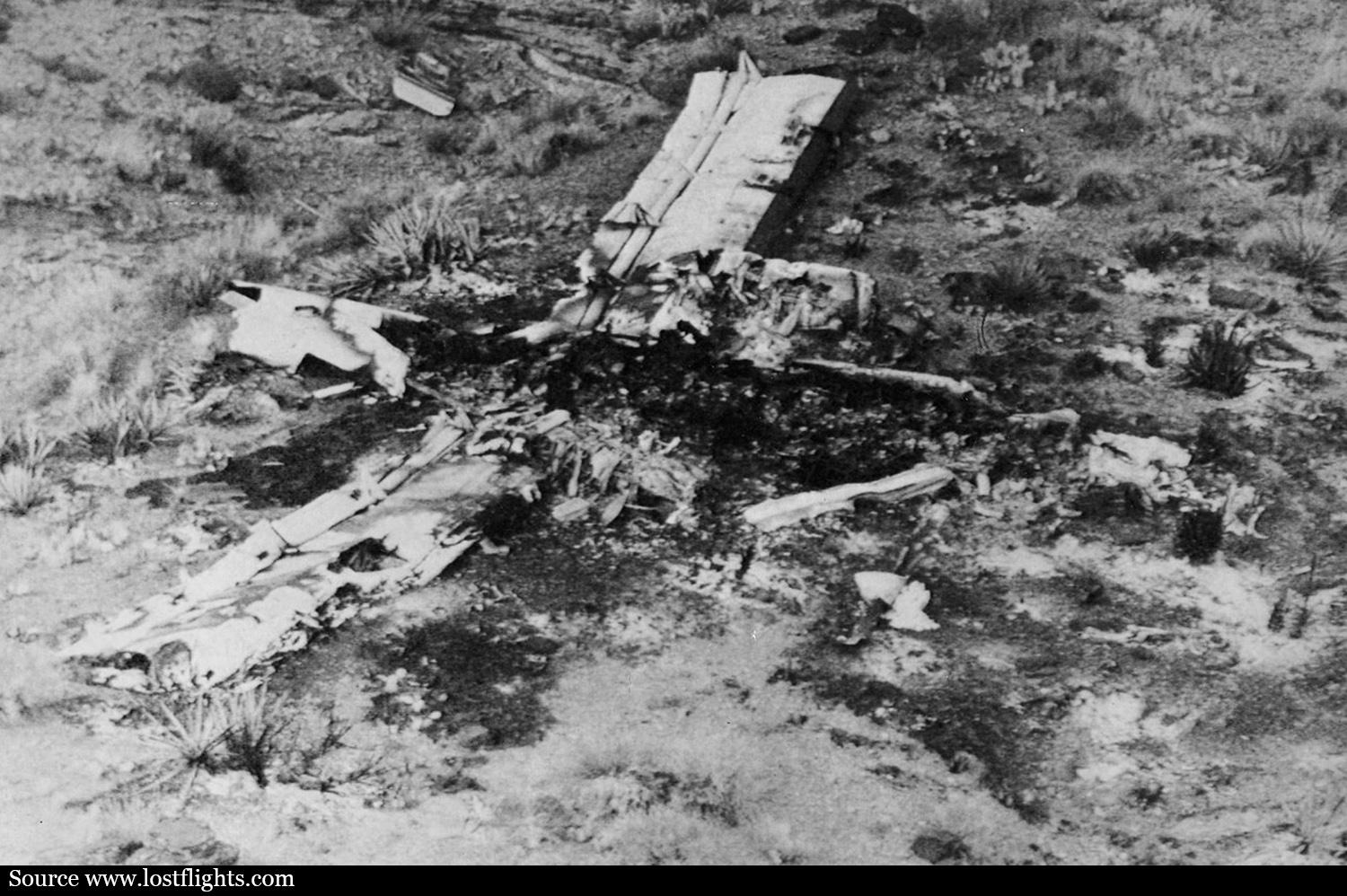
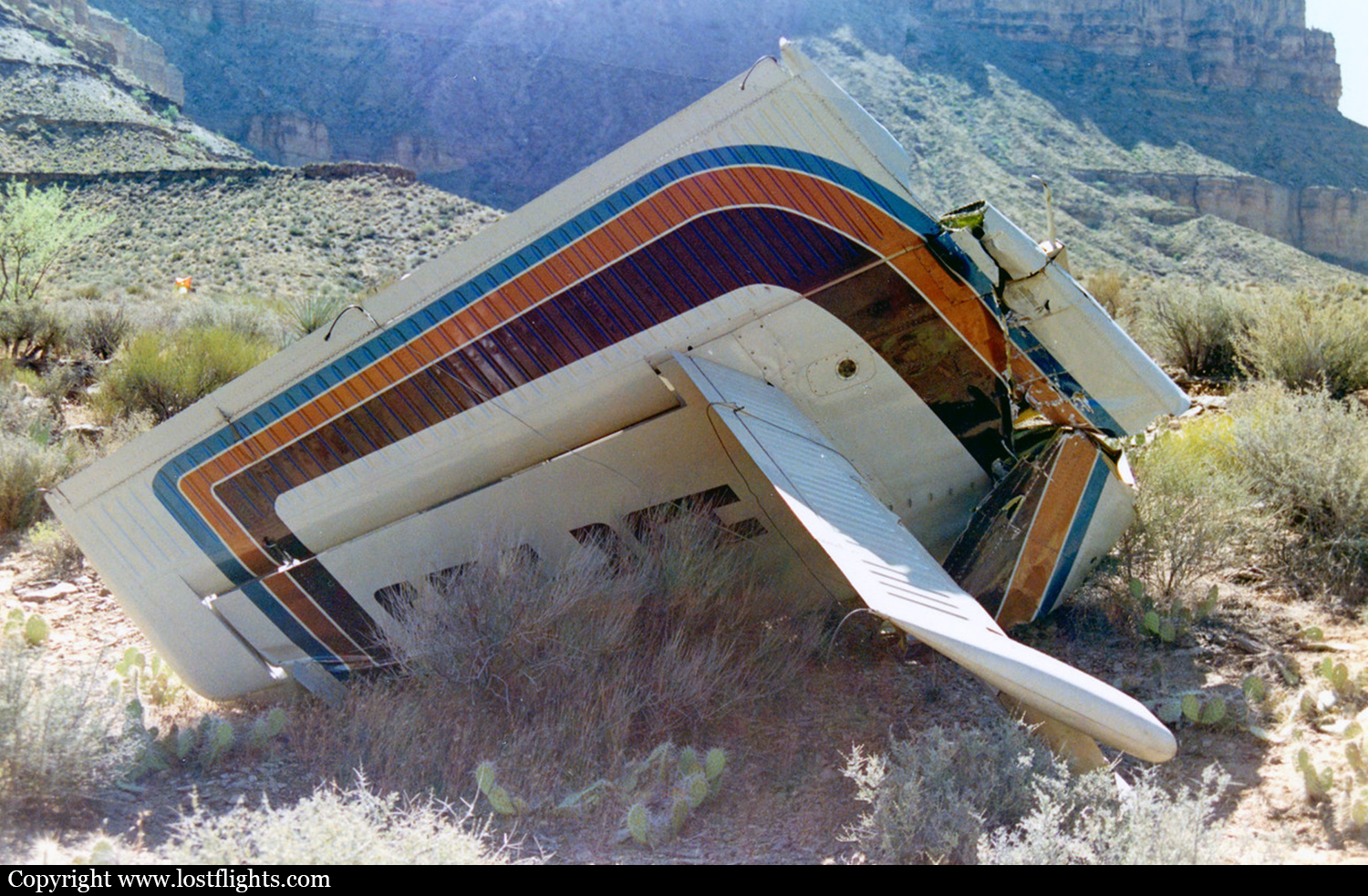
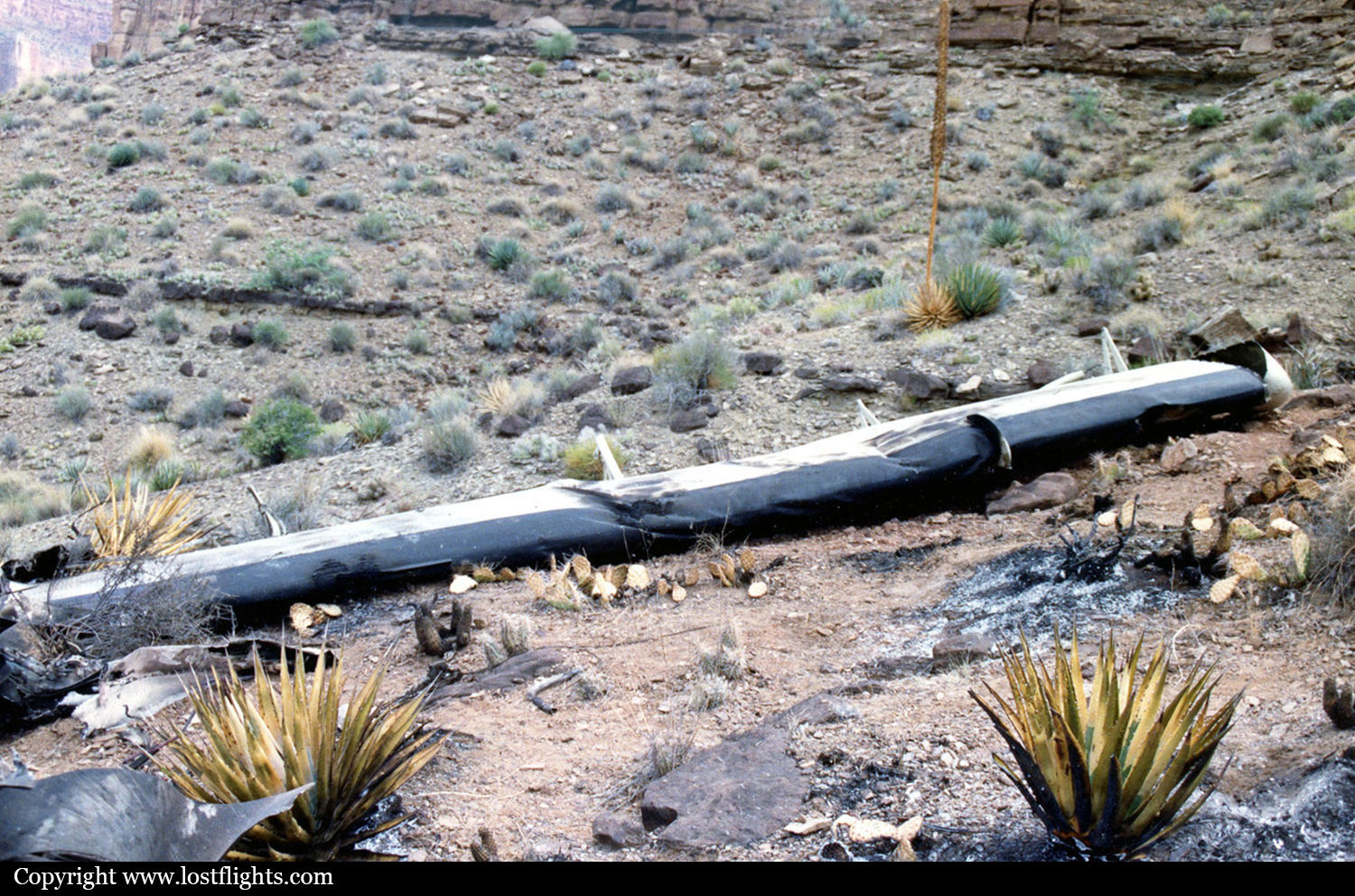
Crash of a De Havilland DHC-6 Vista Liner 300 in Grand Canyon: 20 killed

Date & Time: Jun 18, 1986 at 0933 LT
Operator:
Registration:
N76GC
Flight Phase:
Survivors:
No
Site:
Schedule:
Grand Canyon - Grand Canyon
MSN:
248
YOM:
1969
Flight number:
YR06
Crew on board:
2
Crew fatalities:
Pax on board:
18
Pax fatalities:
Other fatalities:
Total fatalities:
20
Captain / Total flying hours:
5970
Captain / Total hours on type:
1556.00
Copilot / Total flying hours:
4450
Copilot / Total hours on type:
1076
Aircraft flight hours:
30569
Circumstances:
On June 18, 1986, at 0855 mountain standard time, a Grand Canyon Airlines DHC-6, N76GC (Twin Otter), call sign Canyon 6, took off from runway 21 of the Grand Canyon Airport. The flight, a scheduled air tour over Grand Canyon National Park, was to be about 50 minutes in duration. Shortly thereafter, at 0913, a Helitech Bell 2068 (Jet Ranger), NGTC, call sign Tech 2, began its approximate 30-minute, on-demand air tour of the Grand Canyon. It took off from its base at a heliport adjacent to State route 64 in Tusayan, Arizona, located about 5 miles south of the main entrance to the south rim of the National Park. Visual meteorological conditions prevailed. The two aircraft collided at an altitude of 6,500 feet msl in the area of the Tonto Plateau. There were 18 passengers and 2 flightcrew members on the DHC-6 and 4 passengers and 1 flightcrew member on the Bell 206B. All 25 passengers and crew members on both aircraft were killed as a result of the collision. Because of the lack of cockpit voice recorders and flight data recorders in both aircraft, as well as the lack of radar data, no assessment of the flight path of either aircraft could be made. As a result, the reason for the failure of the pilots of each aircraft to “see and avoid” each other cannot be determined. Consequently, the issues highlighted in this report concern primarily the oversight of the Federal Aviation Administration (FAA) on Grand Canyon-based scenic air tours or sightseeing flights and the actions of the National Park Service to influence these operations. Because of an exemption to 14 Code of Federal Regulations (CFR) Part 135, local scenic air tours were conducted under 14 CFR Part 91. This investigation revealed that there was no FAA oversight on the routes and altitudes of Grand Canyon-based scenic air tour operators. This was contrary to the intent of Safety Recommendation A-84-52. Further, the National Park Service, through its authority under a 1975 law, was conducting a study to determine the effects of aircraft noise on the Grand Canyon and, at the same time, influencing the selection of air tour routes. The routes of the rotary-wing operators were ‘moved as a noise conservation measure to where they converged with those of Grand Canyon Airlines at the location of the accident. Other safety issues concern the lack of regulations to limit flight and duty times of pilots conducting scenic air tour flights, and the lack of a requirement for the pilots of such flights to use intercoms or public address systems when narrating during the flights. All 20 occupants of the Twin Otter were killed, among them 11 citizen from The Netherlands and two Swiss.
Probable cause:
The National Transportation Safety Board determines that the probable cause of this accident was the failure of the flightcrews of both aircraft to “see and avoid” each other for undetermined reasons. Contributing to the accident was the failure of the Federal Aviation Administration to exercise its oversight responsibility over flight operations in the Grand Canyon airspace and the actions of the National Park Service to influence the selection of routes by Grand Canyon scenic air tour operators. Also contributing to the accident was the modification and configuration of the routes of the rotary-wing operators resulting in their intersecting with the routes of Grand Canyon Airlines near Crystal Rapids.
Final Report:

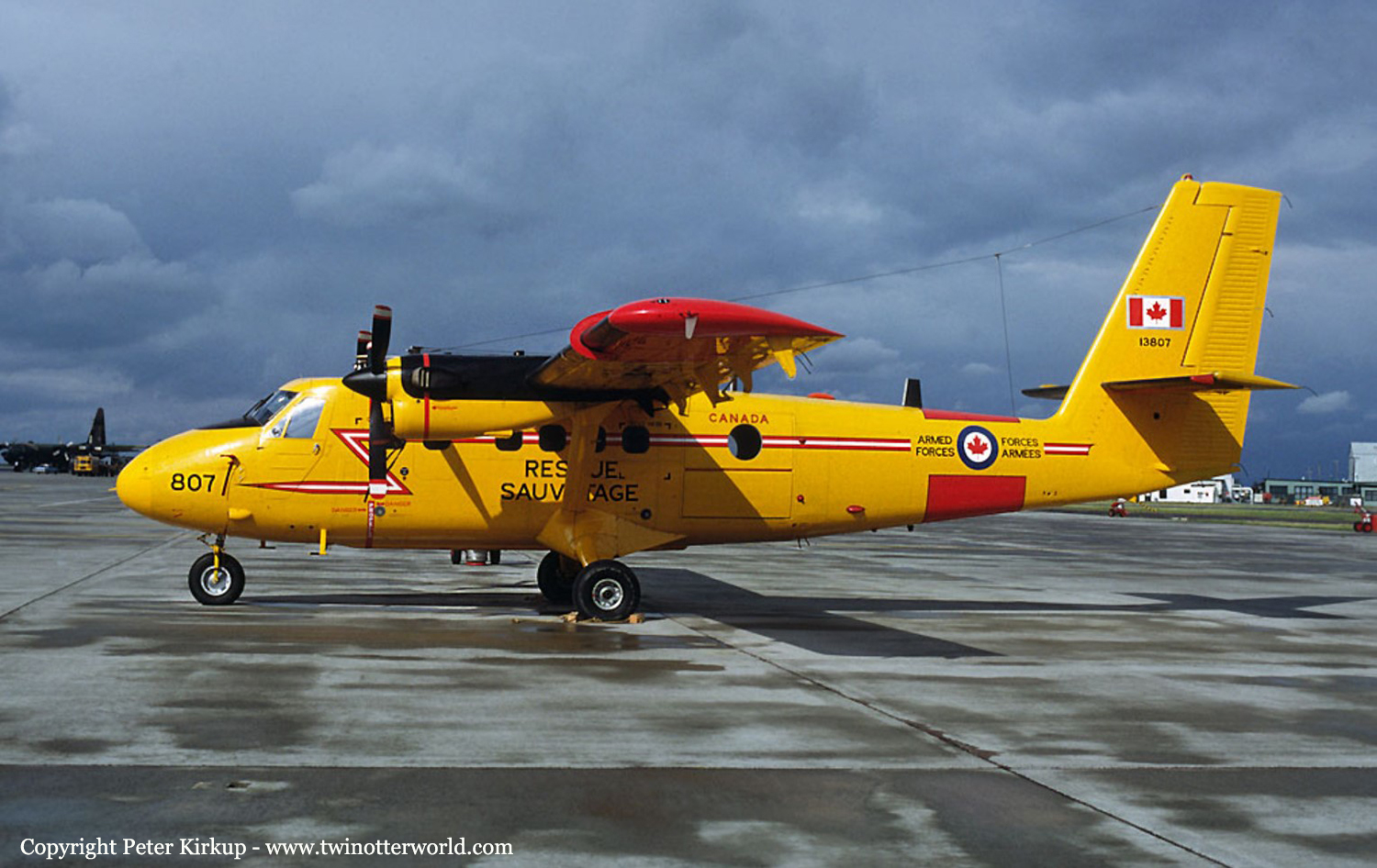
Crash of a De Havilland CC-138 Twin Otter 300 near Calgary: 8 killed

Date & Time: Jun 14, 1986 at 1452 LT
Operator:
Registration:
13807
Flight Phase:
Survivors:
No
Site:
Schedule:
Calgary - Calgary
MSN:
309
YOM:
1971
Flight number:
Rescue 807
Location:
Country:
Crew on board:
3
Crew fatalities:
Pax on board:
5
Pax fatalities:
Other fatalities:
Total fatalities:
8
Captain / Total flying hours:
9828
Captain / Total hours on type:
954.00
Copilot / Total flying hours:
2183
Copilot / Total hours on type:
1346
Aircraft flight hours:
13537
Circumstances:
The aircraft, with a crew of three and five civilian spotters, was engaged in an Air Search Mission in the Kananaskis area west of Calgary, after two airplanes were missing. The weather was good and the terrain consisted of hills and valleys with peaks up to 7,000 feet. The search profile was a 500 feet AGL contour search. Two hours and 20 minutes after takeoff, the aircraft impacted at 5,900 feet ASL on the west slope of 6,200 foot feature. The aircraft was destroyed by impact and post crash fire, and all occupants sustained fatal injuries.
Crew:
Cpt D. Wayne Plumbtree, pilot,
Cpt E. M. Kates, copilot,
Sgt Brian G. Burkitt, flight engineer.
Passengers:
Mr. D. Hall,
Mr. J. Schindler,
Mr. C. Masur,
Mr. C. Grant,
Miss P. McLean.
Probable cause:
The following causal factors were identified:
Personnel - Pilot - Visual illusion
- The pilot at the controls of the aircraft carried out an overhead recce of the valley. The lighting conditions, absence of shadows and lack of contrast in the valley was such that the rock outcrop was masked by the surrounding rockface. The valley, in the absence of this rock outcrop, was large enough to permit the flight operation to be conducted.
Personnel - Pilot - Expectancy
- The low contrast terrain created the visual illusion experienced during the initial contour at approximately 7,000 feet ASL so that the pilot did not expect to see the rock outcrop during the final flight path at 6,100 feet ASL. Therefore, the pilot was slow to recognize and react to the environmental cues which indicated the hazards of the valley.
Personnel - Pilot - Pressing
- The crew of the aircraft were attempting to complete 500 and 1/2 search coverage of their area. To obtain this coverage, the crew believed they had to fly into the valley in order to complete their mission.
Personnel - Supervision - 418 Squadron
- Squadron supervisory staff did not ensure that current, qualified aircrew were assigned to this mission and that the mission was properly authorized.
The following findings have been determined:
- Neither pilot was current in accordance with CFACM 60-2604.
- The search mission was not authorized in accordance with 418 Squadron Flying Orders.
Final Report: