Crash of a Curtiss C-46E-1-CS in Columbus: 2 killed

Date & Time: May 16, 1948 at 2042 LT
Type of aircraft:
Operator:
Registration:
NC59489
Flight Type:
Survivors:
No
Schedule:
Newark – Chicago – Denver – Burbank – San Francisco
MSN:
2938
YOM:
1945
Crew on board:
2
Crew fatalities:
Pax on board:
0
Pax fatalities:
Other fatalities:
Total fatalities:
2
Captain / Total flying hours:
2580
Captain / Total hours on type:
600.00
Copilot / Total flying hours:
4675
Copilot / Total hours on type:
1354
Aircraft flight hours:
5641
Circumstances:
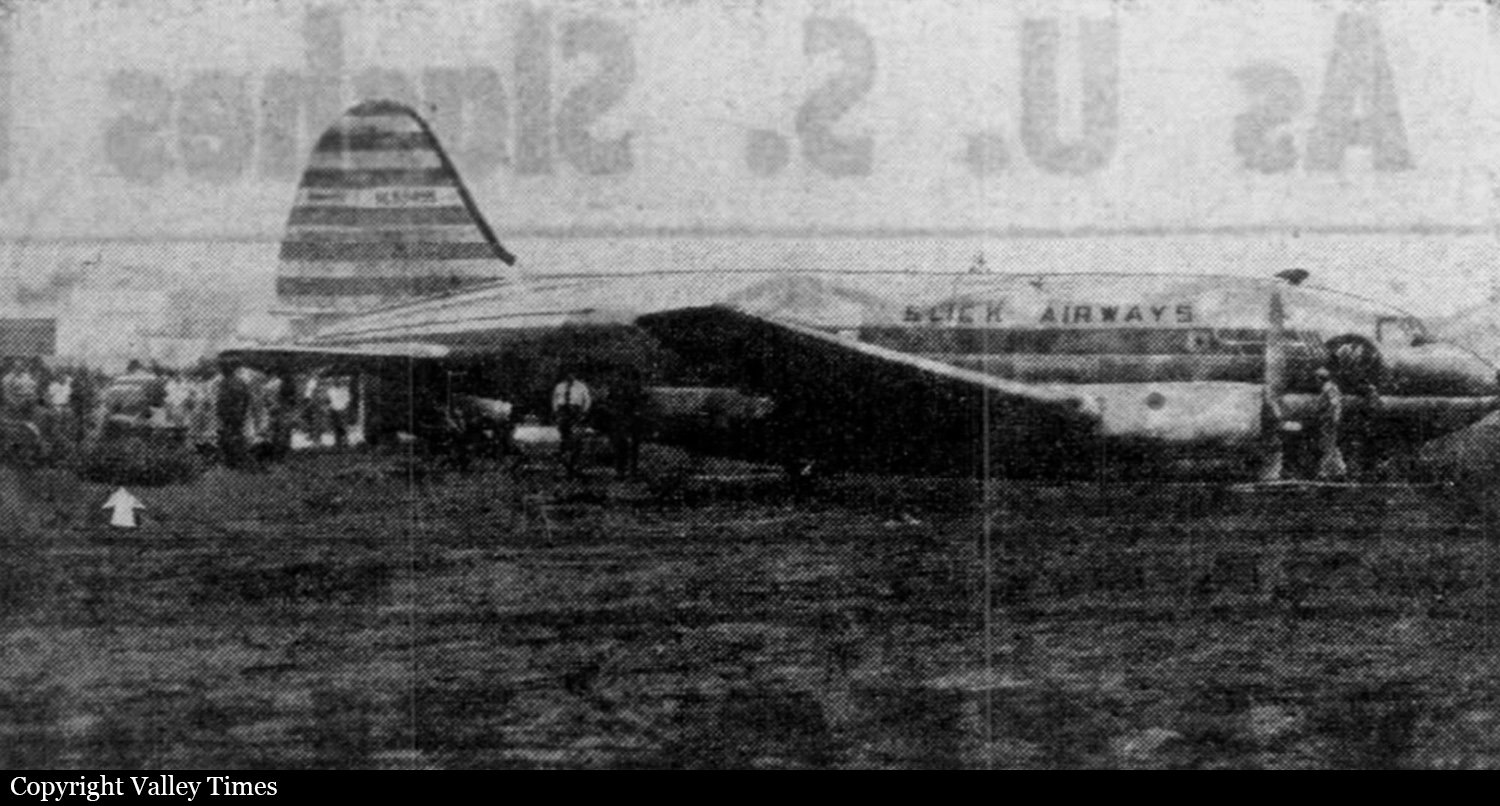
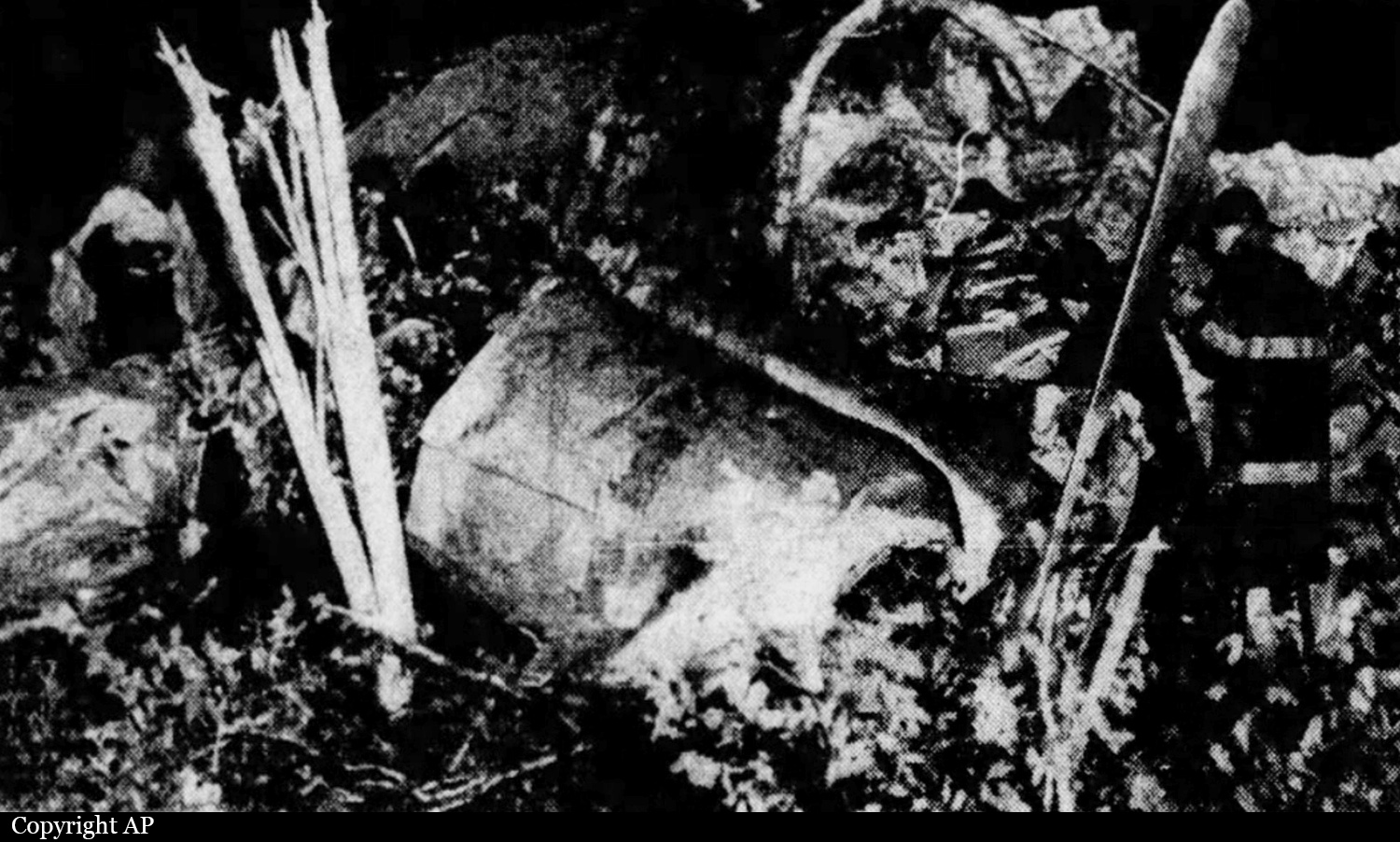
The flight departed from Newark, New Jersey, at 1733 May 16, 1948, for Chicago, Illinois, Denver, Colorado, Burbank, and San Francisco, California. In addition to a crew consisting of Captain William R. McCauley and Copilot Jack R. Foote, the flight carried 5,280 pounds of fuel, and 10,263 pounds of cargo. According to the hourly weather reports available to the crew in Newark prior to departure, thunderstorm activity which existed over the vicinity of Goshen and Fort Wayne, Indiana, was moving eastward. Chicago Municipal Airport was reported to have a ceiling of 2,000 feet. The flight plan specified a cruising altitude of 4,000 feet to Chicago, the first intended point of landing. South Bend, Indiana, was designated as the alternate airport. No unusual incident was reported for approximately the first two hours of the trip, then, at 1931 the flight reported over Cleveland, Ohio, at 4,000 feet, stating that there was extreme turbulence approximately five miles east of the Cleveland Airport. At this time the flight acknowledged receipt of a weather report from Toledo, Ohio, to the effect that light thunderstorms with cloud to cloud lightning were moving northeasterly from Toledo. At 2013 the flight reported at 4,000 feet over Mansfield, Ohio, 58 miles south southwest of Cleveland. The crew stated that they had changed course to the south to avoid thunderstorms, and intended to proceed to Columbus, Ohio, in accordance with visual flight rules. A special weather observation taken at Cleveland at 2003 which reported a ceiling of 2,000 feet, visibility 10 miles, light rain, wind from the northwest at 30 miles per hour with strong gusts, and cloud to cloud and cloud to ground lightning was transmitted to the flight Cleveland Radio also transmitted a weather observation taken at Columbus at 1930 which reported an unlimited ceiling, visibility of 15 miles, and wind from the south at 14 miles per hour. After acknowledging receipt of this weather information, the flight stated "For your information advise no one to go through the turbulence we just went through." The next position report was received at 2032 at which time the flight reported being five miles north of Columbus. Following this report it was cleared by Columbus Tower for landing. In reply the flight stated to the tower, "We are declaring an emergency. Our rudder is locked, and I don’t think we will have any directional control on the ground." A landing approach was made for runway twenty-three, 4,490 feet long. Information concerning wind direction and velocity was transmitted repeatedly by the tower to the flight throughout the course of the approach. Although the first touchdown on runway 23 appeared normal, power was immediately applied and the aircraft took off. The crew then informed the tower that they wished to land directly into the wind, which at that time was from the south at five to ten miles per hour. They were accordingly cleared to land on runway eighteen, 3,580 feet long. The second approach appeared normal, and a touchdown was made on the runway without any apparent difficulty, but power was again applied and the flight took off again. When the flight reached a point 2 1/2 miles east of the field in its left circle of the field, it was observed to spin to the ground. Flames were observed immediately after the crash.
Probable cause:
The Board determines that the probable cause of this accident was the in-flight failure of the fuselage carry-in structure beneath the fin, due to extreme turbulence.
The following factors were considered as contributory:
- The aircraft was flown through severe turbulence approximately one-half hour before the accident,
- The rivets and fuselage skin immediately beneath the vertical fin failed during flight,
- The separation of the fuselage skin allowed the vertical fin to rock across its longitudinal axis until the fuselage carry-in structure beneath the fin failed completely,
- The failure of the vertical fin caused loss of control of the aircraft, and it crashed.
Final Report:

Crash of a Curtiss R5C-1 Commando off Qingdao

Date & Time: Apr 30, 1948
Type of aircraft:
Operator:
Registration:
39535
Flight Phase:
Flight Type:
Survivors:
Yes
MSN:
26753
YOM:
1944
Country:
Region:
Crew on board:
0
Crew fatalities:
Pax on board:
0
Pax fatalities:
Other fatalities:
Total fatalities:
0
Circumstances:
Crashed in unknown circumstances into the sea some 5 km off Qingdao. All occupants were rescued while the aircraft was recovered nine hours later but written off.

Crash of a Curtiss C-46A Commando in Mexico City: 2 killed

Date & Time: Apr 23, 1948
Type of aircraft:
Operator:
Registration:
RX-138
Flight Phase:
Flight Type:
Survivors:
Yes
Schedule:
Burbank – Mexico City – Panama City
Country:
Crew on board:
2
Crew fatalities:
Pax on board:
0
Pax fatalities:
Other fatalities:
Total fatalities:
2
Circumstances:
Shortly after lift off, the aircraft went out of control and crashed in flames. The copilot was killed while the captain was seriously injured. He died from his injuries few hours later. The crew was on its way from Burbank to Israel to deliver the aircraft to the Israel Air Force. Four other similar aircraft were performing the same trip at the same time. At the time of the accident, the aircraft was still under the Panamanian register by LAPSA - Lineas Aéreas de Panama.
Crew:
William Guy Gerson, pilot,
Ernest Glen King, copilot.
Probable cause:
Failure of one engine just after rotation.

Crash of a Curtiss R5C-1 Commando in China

Date & Time: Apr 5, 1948
Type of aircraft:
Operator:
Registration:
39550
Flight Phase:
Flight Type:
Survivors:
Yes
MSN:
30327
YOM:
1944
Location:
Country:
Region:
Crew on board:
0
Crew fatalities:
Pax on board:
0
Pax fatalities:
Other fatalities:
Total fatalities:
0
Circumstances:
The crew was forced to make an emergency landing for unknown reason. The aircraft came to rest in marsh field and was damaged beyond repair. There were no casualties.

Crash of a Curtiss C-46F Commando in Mukden: 11 killed

Date & Time: Jan 20, 1948
Type of aircraft:
Operator:
Flight Phase:
Flight Type:
Survivors:
Yes
Location:
Country:
Region:
Crew on board:
3
Crew fatalities:
Pax on board:
51
Pax fatalities:
Other fatalities:
Total fatalities:
11
Circumstances:
Shortly after takeoff from Mukden Airport, while climbing in heavy snow falls to a height of 60 feet, the aircraft stalled and crashed near the runway. Eleven passengers were killed while 43 other occupants were injured. The crew was in charge to evacuate some people fleeing the regime recently introduced in Mukden.
Probable cause:
It is believed that the aircraft stalled because it was overloaded.

Crash of a Curtiss C-46E-1-CS in Burbank

Date & Time: Sep 17, 1947 at 1112 LT
Type of aircraft:
Operator:
Registration:
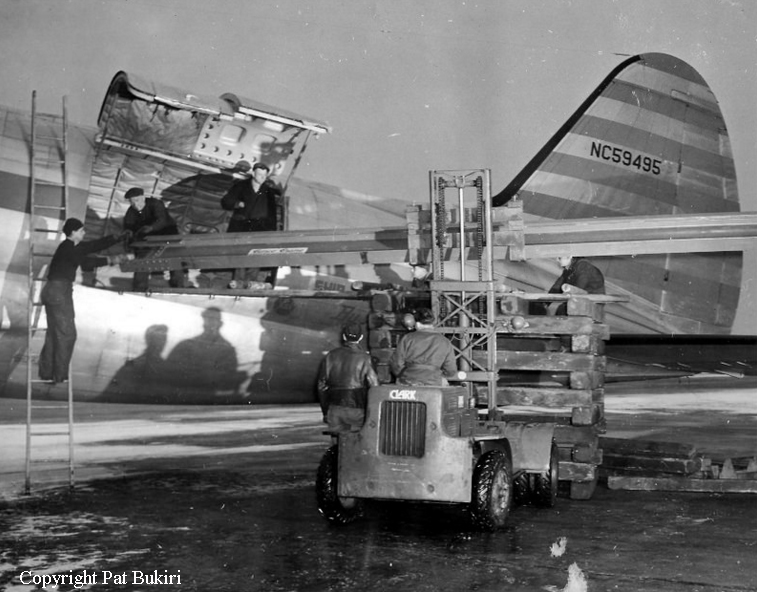
NC59495
Flight Type:
Survivors:
Yes
Schedule:
Denver – Hollywood
MSN:
2937
YOM:
1945
Crew on board:
2
Crew fatalities:
Pax on board:
0
Pax fatalities:
Other fatalities:
Total fatalities:
0
Captain / Total flying hours:
3311
Captain / Total hours on type:
1201.00
Copilot / Total flying hours:
3422
Copilot / Total hours on type:
258
Aircraft flight hours:
3811
Circumstances:
Just before reaching Las Vegas, however, a distance of 268 miles from Burbank, Captain Clark stated that his fuel quantity gauges indicated that he had 360 gallons of fuel remaining. Since he believed this to be sufficient to reach destination, he did not land at Las Vegas which was generally used as a fueling stop for Slick Airways. From Las Vegas to Palmdale, lighter winds were encountered resulting in a ground speed averaging 180 miles per hour. Palmdale was flown over at 1025, at which time the aircraft had been in the air a total of 5 hours and 18 minutes. Three minutes after passing over Palmdale, which was clear, the left engine fuel pressure dropped to 3 pounds, the red fuel warning light came on, and the left engine stopped. Fuel selector valves were changed, and as a result power was restored to the left engine. Captain Clark suspected a fuel leak. He inspected the aircraft for visible loss of fuel or fire, found none, and continued on to Burbank. As the flight approached Newhall California, Burbank reported a ceiling of 1,600 feet with visibility of two and one-half miles. The flight was instructed by the Los Angeles Airways Traffic Control Center to hold on the northwest course of the Burbank range, and advised that the approach clearance Into Burbank could be expected at approximately 1052. Captain Clerk informed the Burbank control tower that he was losing fuel and wanted to land as soon as possible, however, he declined to declare an emergency. Shortly after this, the left engine stopped for the second time, but power was again restored by changing the positions of the fuel selector valves. At 1056, approach clearance into Burbank was given, and at 1058, the flight reported inbound over the Chatsworth fan marker, approximately 14 miles from the Lockheed Air Terminal. The ceiling over Burbank had by this time lowered to 1,000 feet, and rain showers had reduced visibility to about one mile. As the flight descended below 1,600 feet only intermittent bursts of power could be secured from the left engine. The “letdown” was continued, the Burbank radio range station and the Lockheed Air Terminal were passed. Upon completion of a right turn to return to the range station the right engine stopped, and the propeller was immediately feathered. At an altitude of 200 to 400 feet, Captain Clark recognized almost immediately underneath him a hangar on the Lockheed Air Terminal. He executed a sharp right turn of approximately 270 degrees, and landed on the north-south taxi way about 400 feet before crossing Runway 7, a distance of approximately 1,900 feet from the south boundary of the airport. Brakes were applied, but the aircraft could not be brought to a stop within the airport boundaries. It came to rest only after skidding across a highway and railroad line adjacent to the south boundary of the airport.
Probable cause:
The Board determines that the probable cause of this accident was the exhaustion of fuel prior to landing at Burbank, California, due to failure of the pilot to compute properly his fuel consumption, and to provide for a safe fuel reserve.
The following factors were considered as contributory:
- With the exception of “constant pressure charts” no weather data at altitudes of 15,000 to 17,000 feet, the intended altitudes of flight, was available to the flight crew prior to the time of their take-off from Denver, Colorado,
- Head winds of unexpected velocities were encountered en route which resulted in an average ground speed of 148 miles per hour instead of the ground speed of 170 miles per hour used in the flight plan to estimate time en route,
- During the course of the flight the crew made no computation of fuel consumed based on time in the air and on the company's fuel consumption data,
- The flight encountered instrument weather conditions over the Burbank, California area, and was required to wait for an instrument approach clearance to the Lockheed Air Terminal for approximately 10 minutes. No emergency, however, was declared.
Final Report:

Crash of a Curtiss C-46E-1-CS on Mt Blue Bell Knoll: 3 killed

Date & Time: Aug 21, 1947 at 0611 LT
Type of aircraft:
Operator:
Registration:
NC59488
Flight Phase:
Flight Type:
Survivors:
No
Site:
Schedule:
Denver – Los Angeles
MSN:
2935
YOM:
1945
Crew on board:
2
Crew fatalities:
Pax on board:
1
Pax fatalities:
Other fatalities:
Total fatalities:
3
Captain / Total flying hours:
6052
Captain / Total hours on type:
324.00
Copilot / Total flying hours:
3826
Copilot / Total hours on type:
312
Circumstances:
While flying at an altitude of 10,000 feet in marginal weather conditions, the aircraft hit the slope of Mt Blue Bell Knoll located north of Boulder, Utah. The aircraft was destroyed by impact forces and all three occupants were killed.
Probable cause:
Upon the basis of all available evidence, the Board determines that the probable cause of this accident was the continuation of the flight into instrument weather conditions over mountainous terrain at an altitude too low to clear the mountains en route.
Final Report:

Crash of a Curtiss C-46E-1-CS in Denver: 2 killed

Date & Time: Feb 14, 1947 at 0420 LT
Type of aircraft:
Operator:
Registration:
NC59486
Flight Type:
Survivors:
No
Schedule:
Chicago – Omaha – Denver
MSN:
2944
YOM:
1945
Crew on board:
2
Crew fatalities:
Pax on board:
0
Pax fatalities:
Other fatalities:
Total fatalities:
2
Captain / Total flying hours:
4999
Captain / Total hours on type:
605.00
Copilot / Total flying hours:
5542
Copilot / Total hours on type:
992
Aircraft flight hours:
2418
Circumstances:
While on final approach to runway 21 in poor weather conditions, the aircraft was too low and hit a hill located less than one mile from the runway threshold. The aircraft was destroyed and both crew members were killed.
Probable cause:
The Board determines that the probable cause of this accident was the momentary loss of control or overcontrol by the pilot at a critically low altitude in the final stages of an ILS approach. A contributing factor was the failure of the safety pilot to remain alert to the altitude of the aircraft.
Final Report:

Crash of a Curtiss C-46 near Hangzhou: 26 killed

Date & Time: Jan 28, 1947
Type of aircraft:
Operator:
Flight Phase:
Survivors:
No
Schedule:
Shanghai – Hangzhou – Chongqing
Country:
Region:
Crew on board:
3
Crew fatalities:
Pax on board:
23
Pax fatalities:
Other fatalities:
Total fatalities:
26
Circumstances:
About 30 minutes after its departure from Hangzhou Airport, the twin engine aircraft crashed in unknown circumstances. 25 occupants were killed while a passenger was seriously injured and evacuated to a local hospital. The only survivor died from his injuries few hours later. Several foreign citizens were among the victims. As this accident was the eighth in China since last December 15, 1946, the State Secretary of Transport decided to suspend the operations of all Chinese operators for few days.

Crash of a Curtiss C-46 in Qingdao: 43 killed

Date & Time: Jan 5, 1947
Type of aircraft:
Operator:
Registration:
XT-T51
Survivors:
No
Site:
Schedule:
Shanghai – Qingdao – Beijing
Country:
Region:
Crew on board:
5
Crew fatalities:
Pax on board:
38
Pax fatalities:
Other fatalities:
Total fatalities:
43
Circumstances:
The descent to Qingdao Airport was performed in poor weather conditions with low clouds and low visibility. On final approach, while too low, the aircraft hit the slope of a mountain and crashed, killing all 43 occupants. According to the US Authorities, the cloud base was very low and the weather conditions at the time of the accident were below minima published by the US Navy. Due to low visibility, the crew was unable to distinguish the mountain and was completing the approach at a too low altitude without any visual contact with the ground.