Country
code

São Paulo

Crash of a Mitsubishi MU-2B-25 Marquise in São Paulo

Date & Time: Jul 10, 1998
Type of aircraft:
Operator:
Registration:
PT-LTC
Flight Phase:
Survivors:
Yes
MSN:
314
YOM:
1975
Country:
Crew on board:
2
Crew fatalities:
Pax on board:
3
Pax fatalities:
Other fatalities:
Total fatalities:
0
Circumstances:
During the takeoff roll at São Paulo-Congonhas Airport, the crew encountered an engine failure and decided to abort. The airplane was stopped on the main runway and all five occupants escaped uninjured. However, debris punctured a fuel tank and the aircraft caught fire and was severely damaged by fire and later written off.
Probable cause:
Uncontained failure on takeoff for unknown reasons.

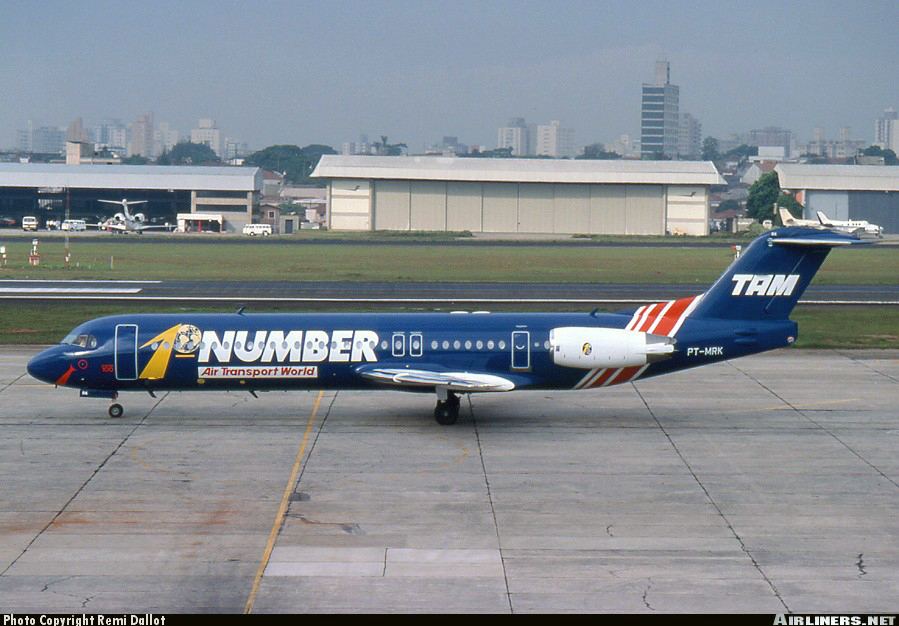
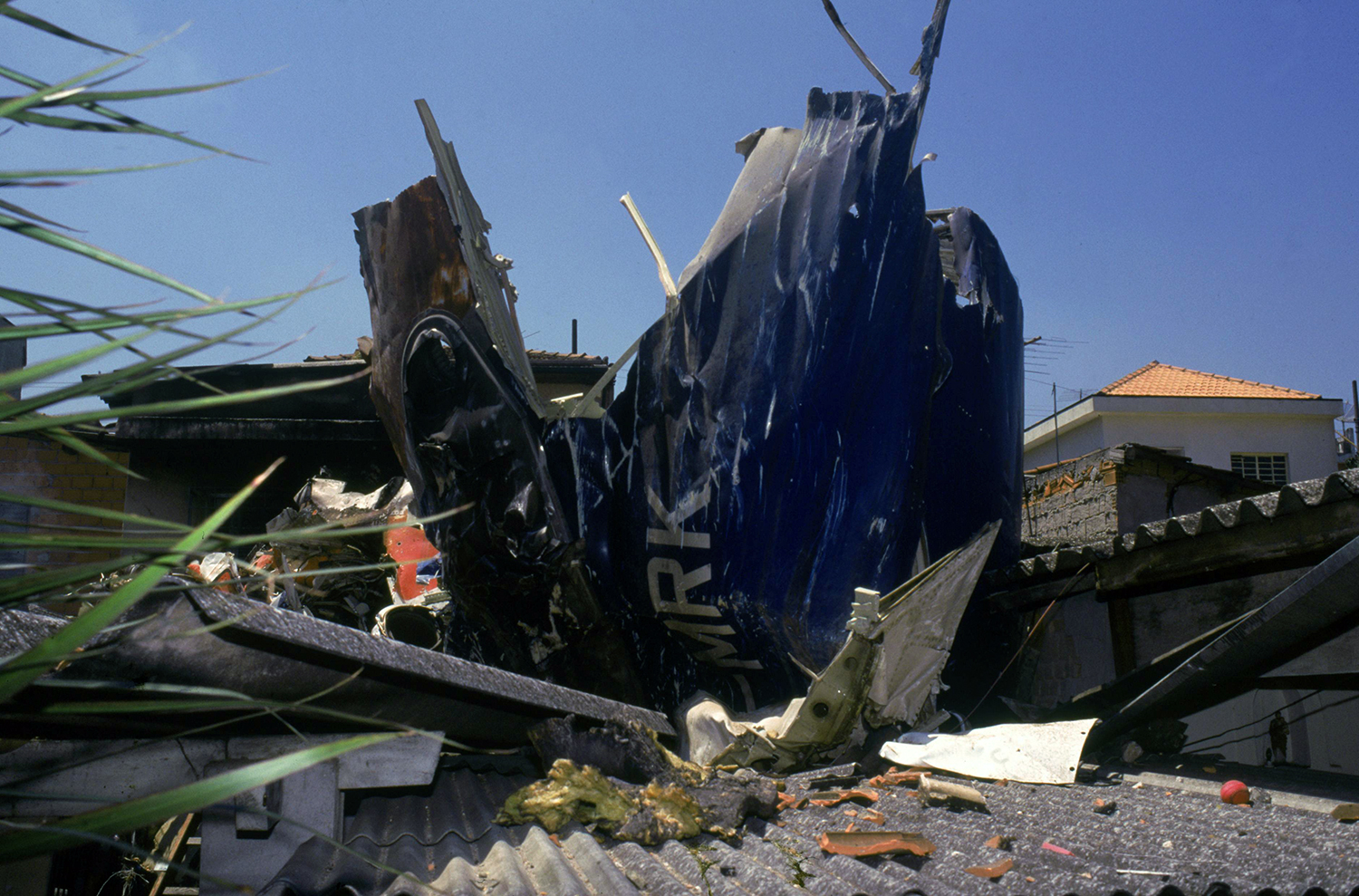
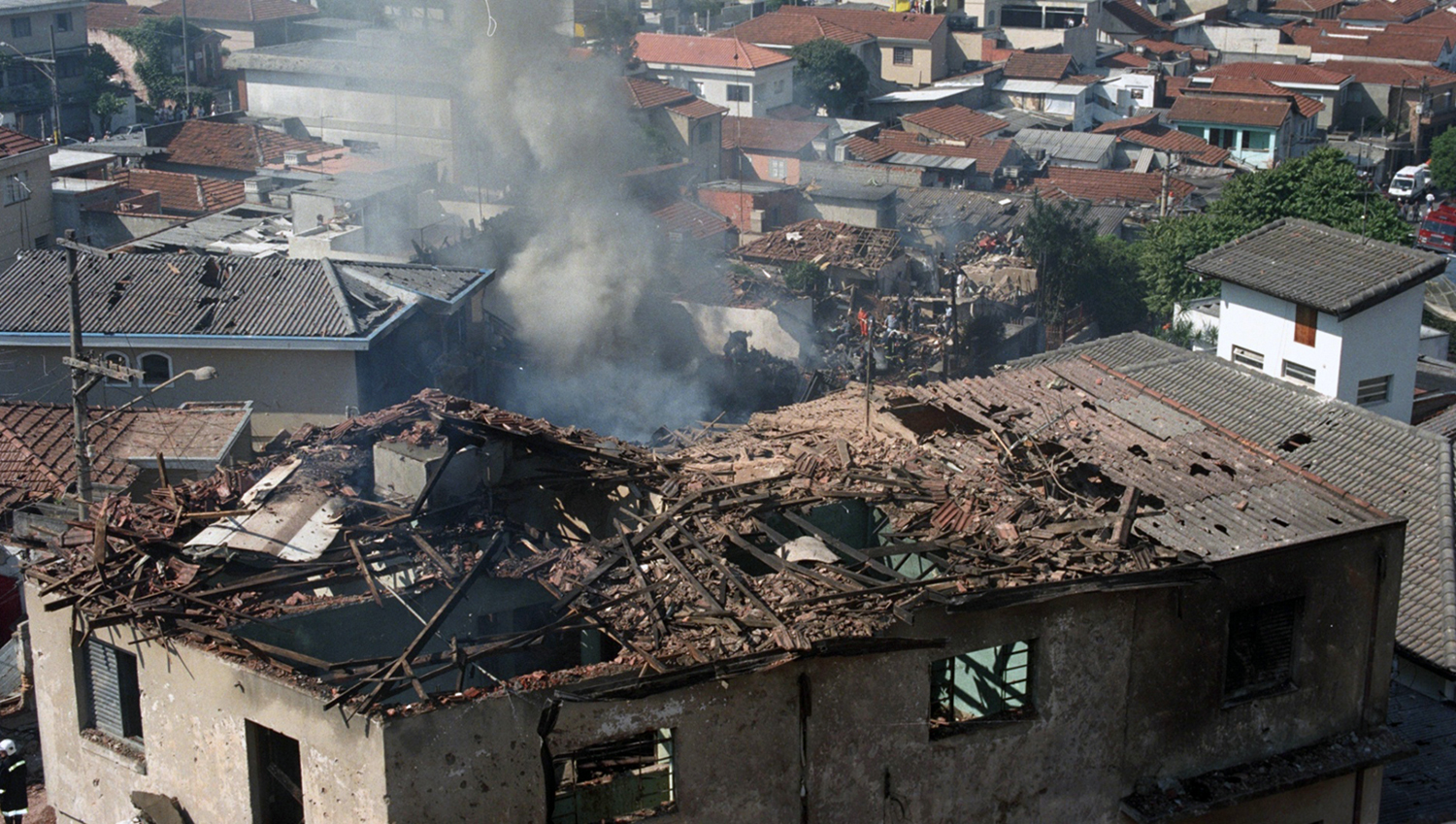
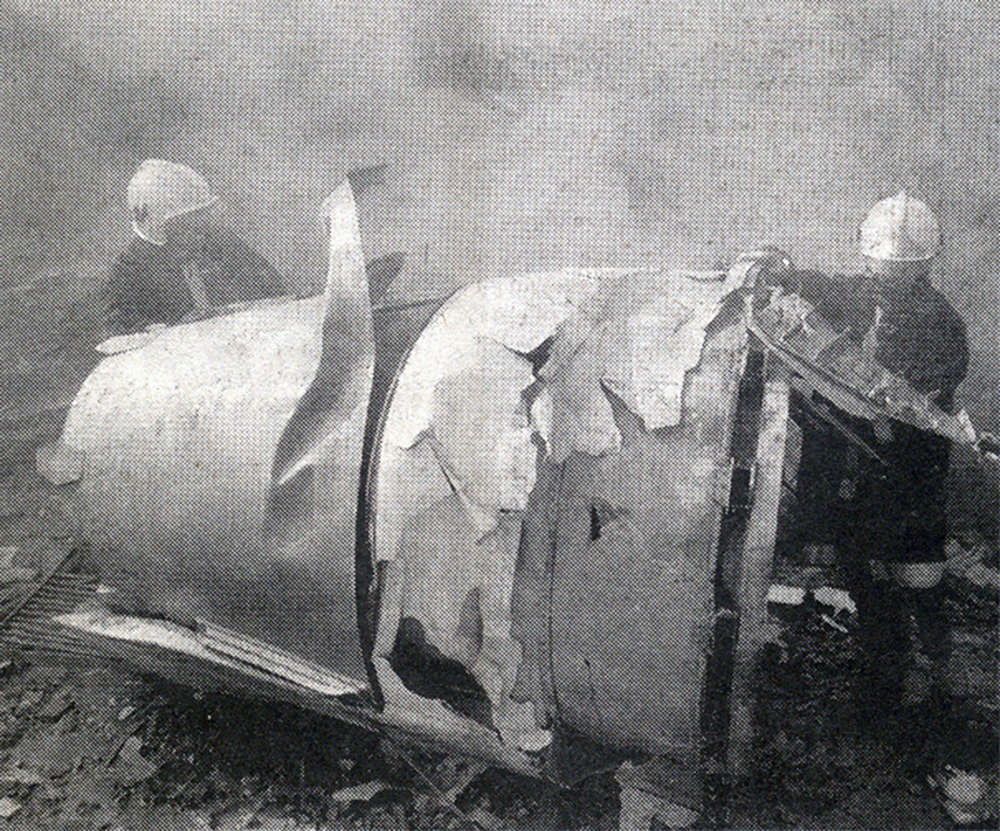
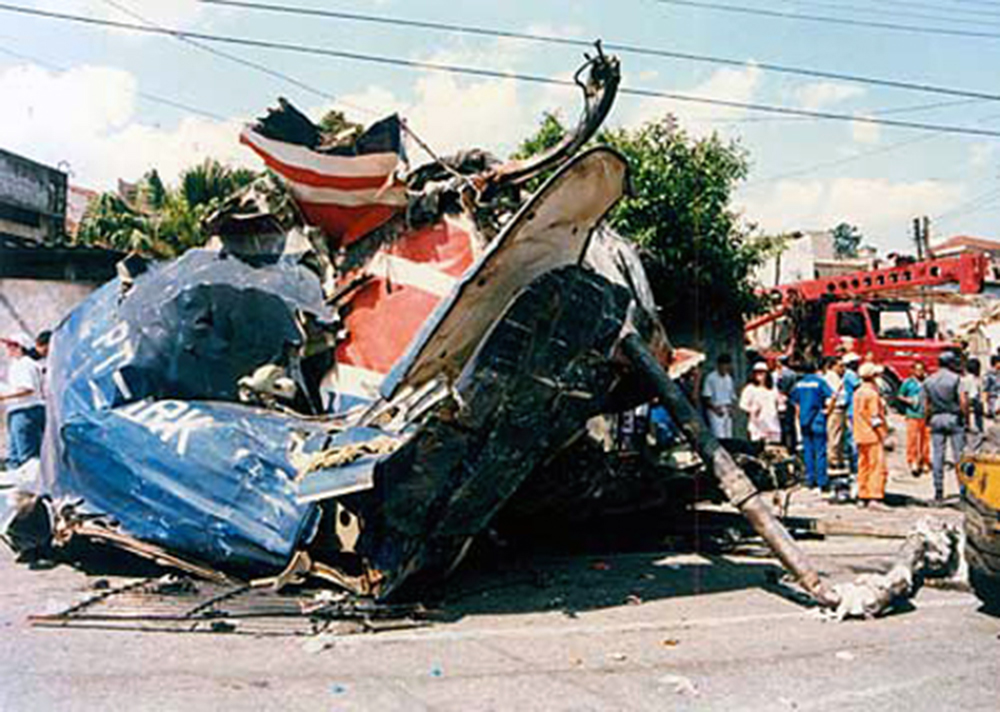
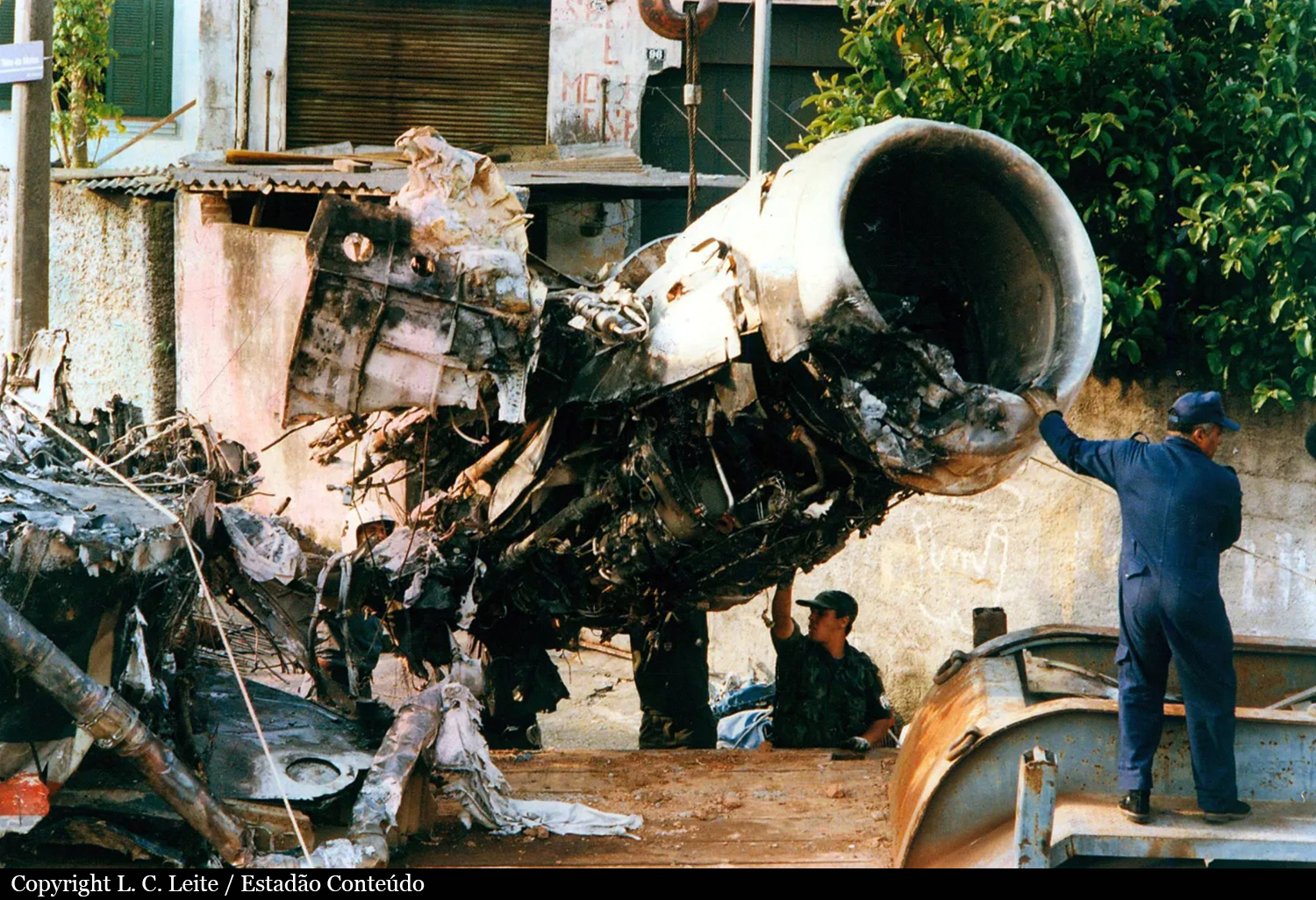
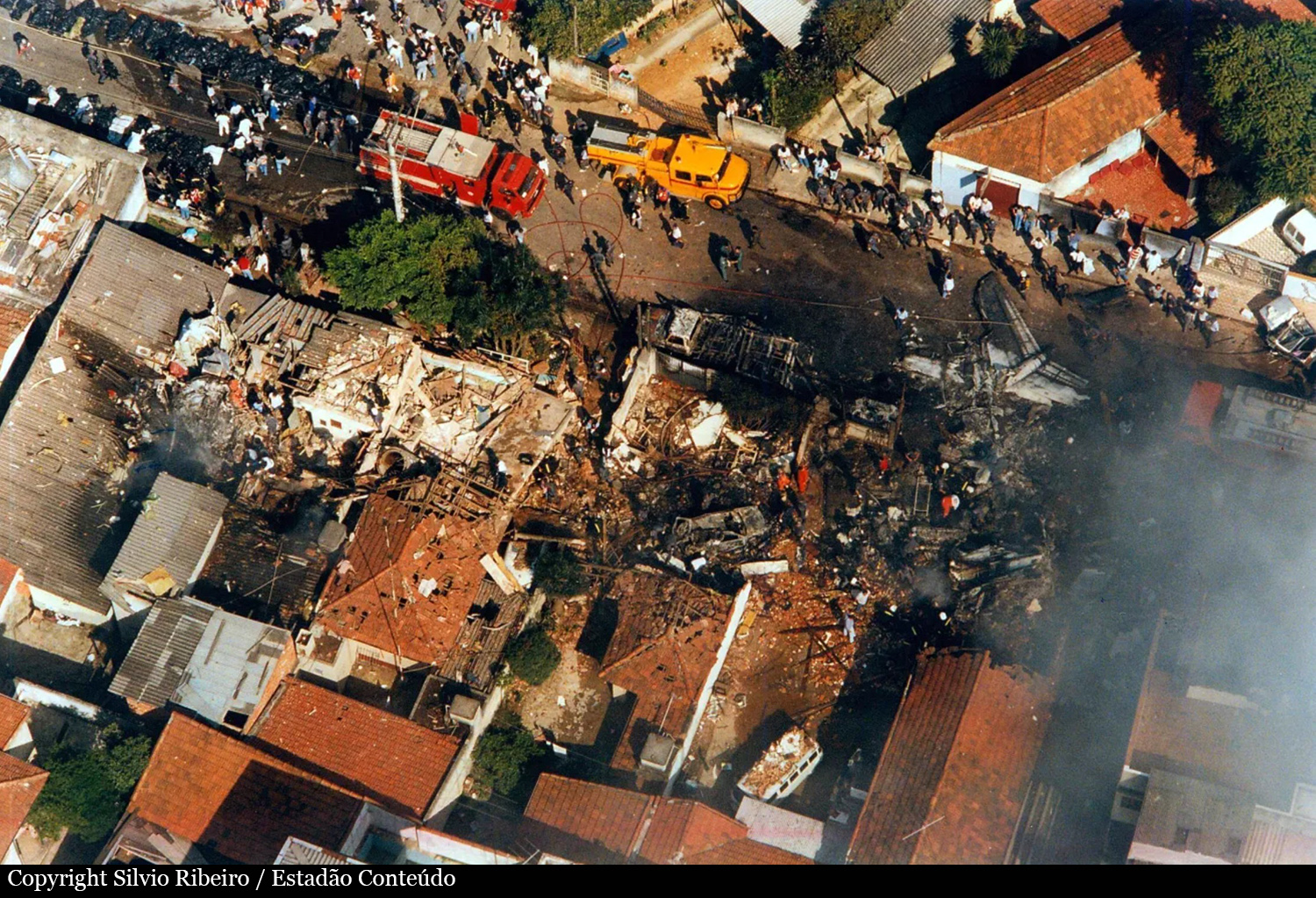
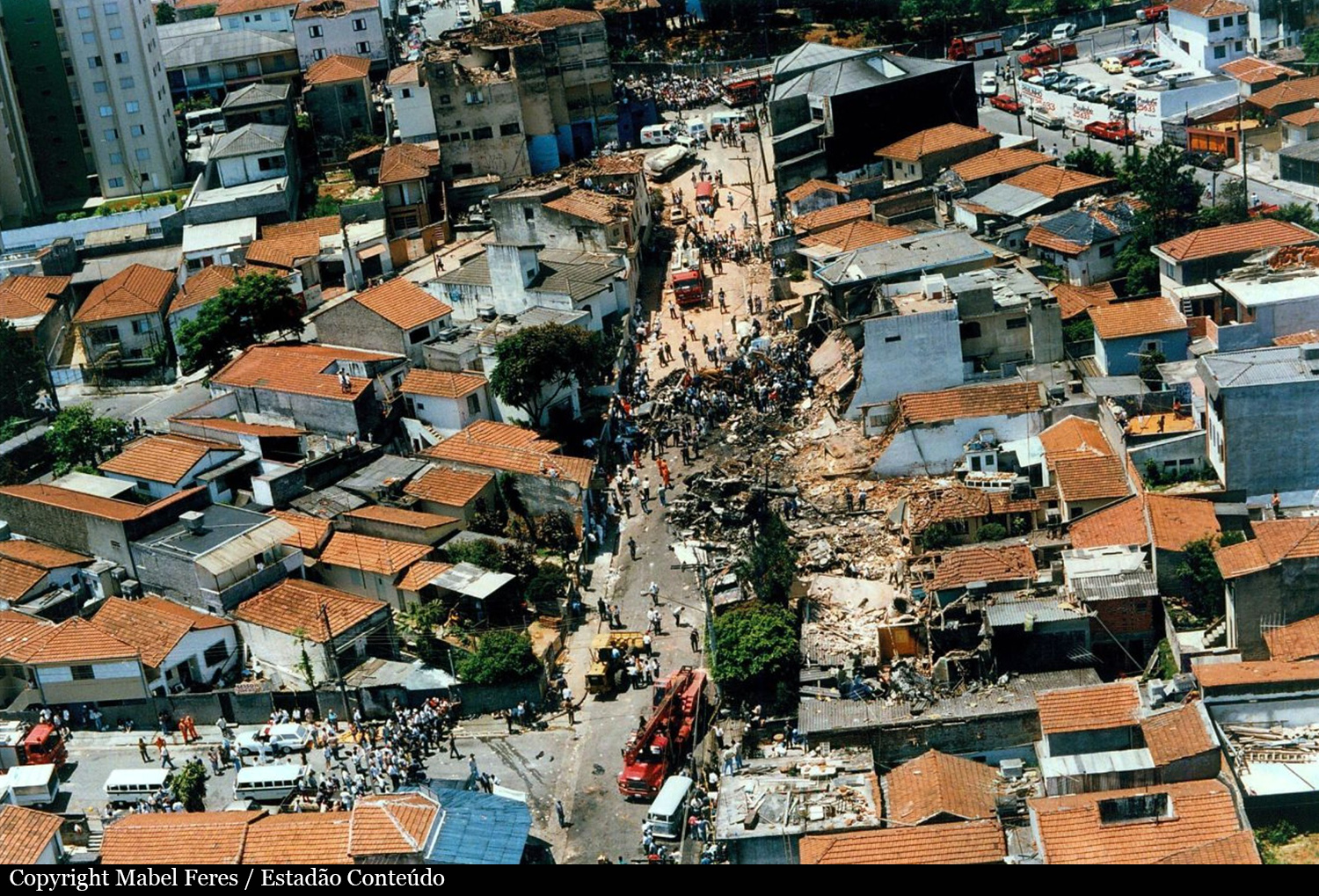
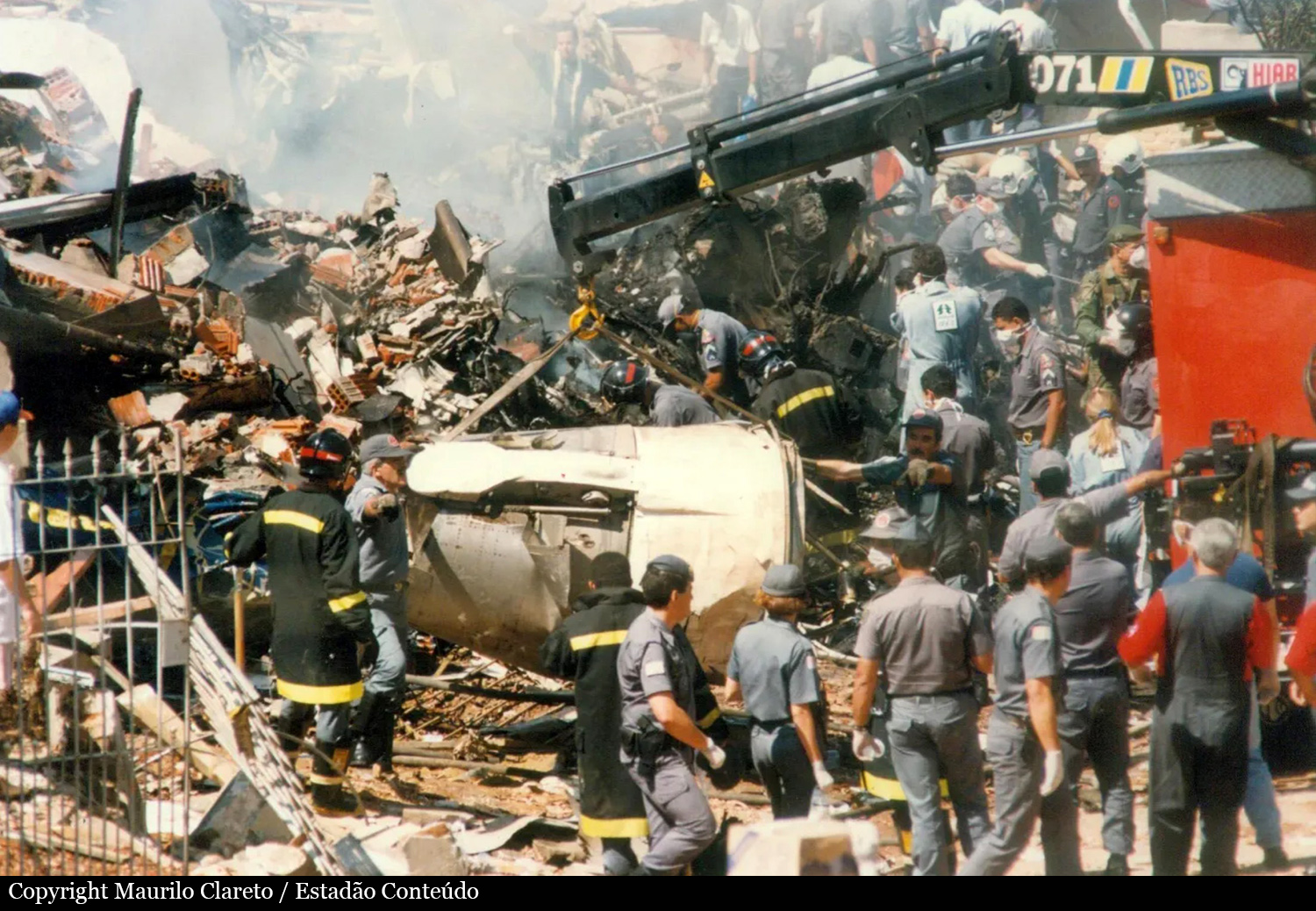
Crash of a Fokker 100 in São Paulo: 99 killed

Date & Time: Oct 31, 1996 at 0827 LT
Type of aircraft:
Operator:
Registration:
PT-MRK
Flight Phase:
Survivors:
No
Site:
Schedule:
São Paulo – Rio de Janeiro
MSN:
11440
YOM:
1993
Flight number:
KK402
Country:
Crew on board:
6
Crew fatalities:
Pax on board:
89
Pax fatalities:
Other fatalities:
Total fatalities:
99
Captain / Total flying hours:
6433
Captain / Total hours on type:
2392.00
Copilot / Total flying hours:
3000
Copilot / Total hours on type:
230
Aircraft flight hours:
8171
Circumstances:
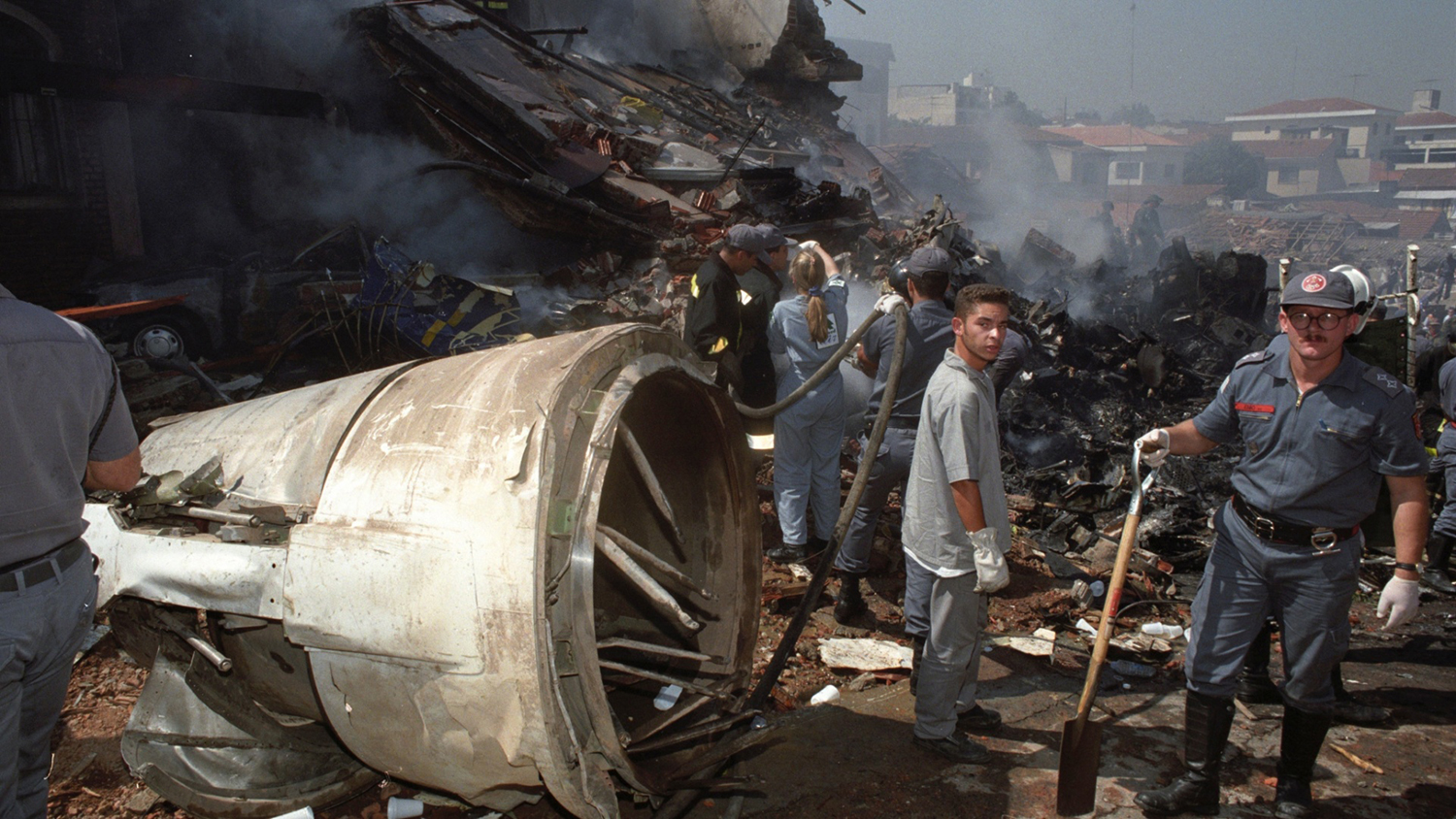
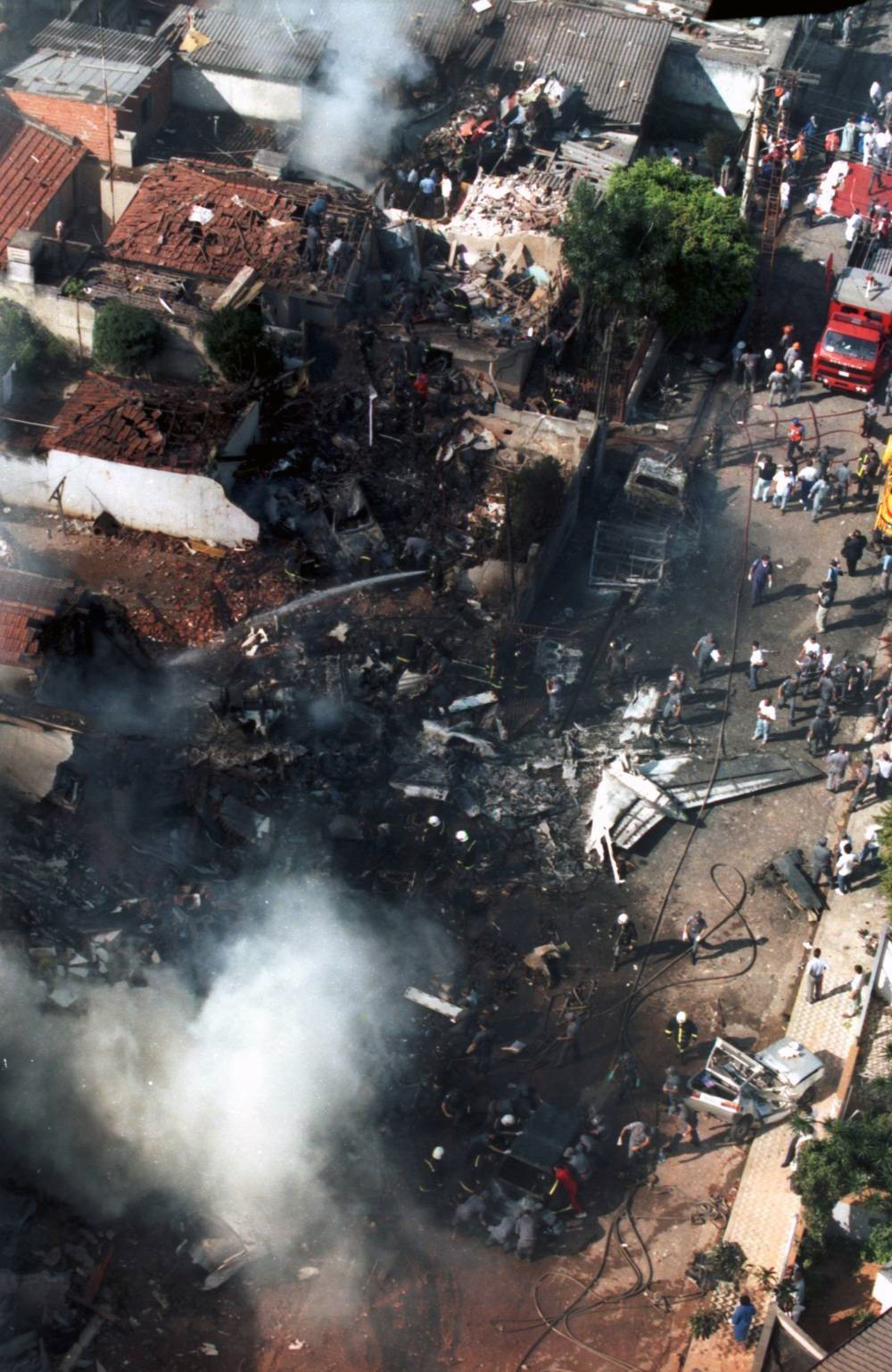
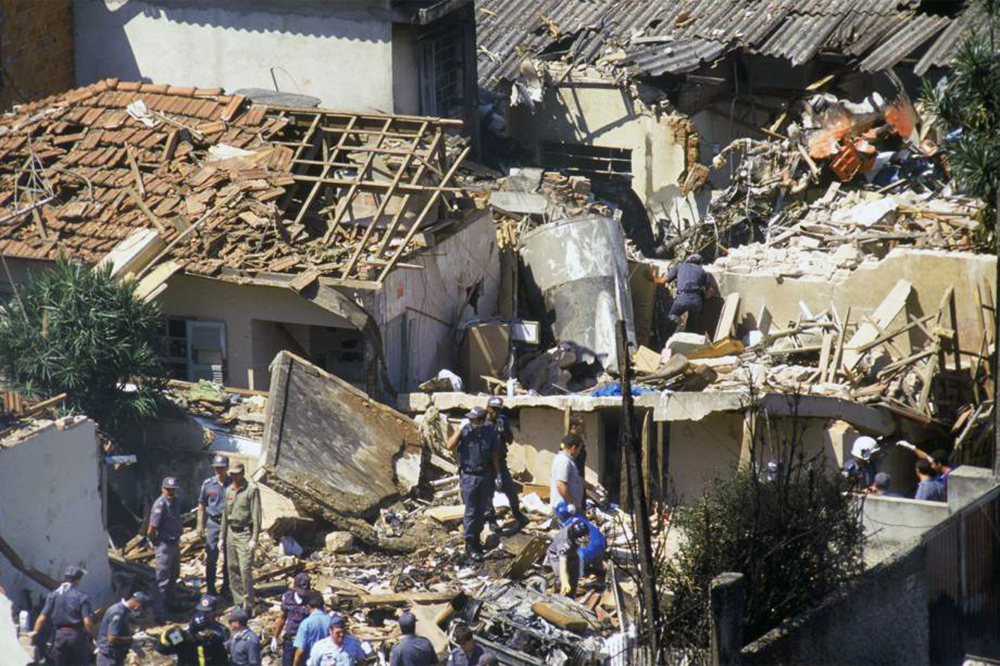
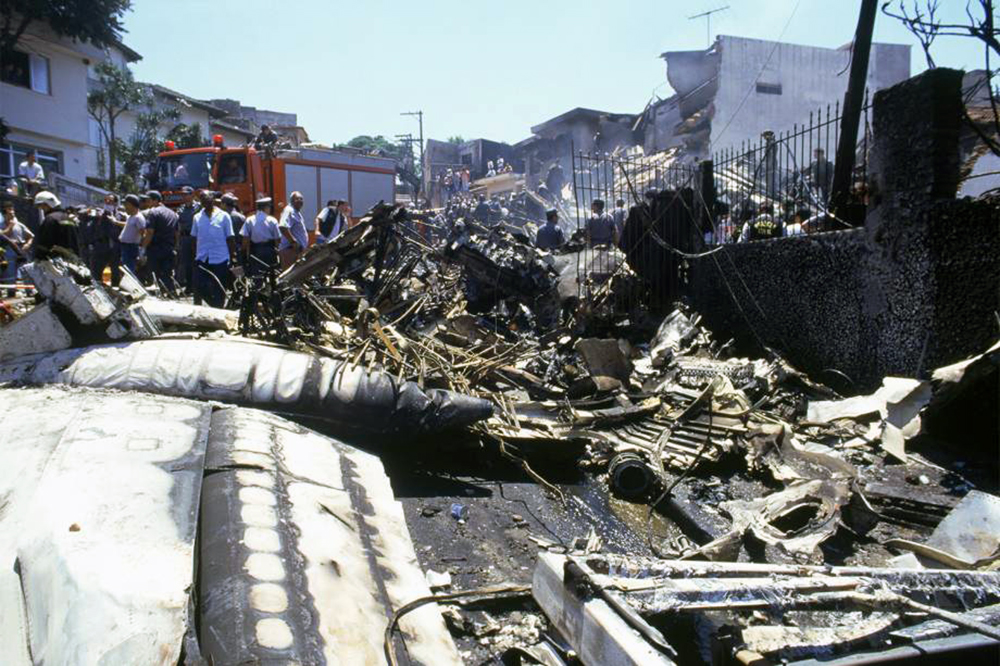
TAM flight 402 was a regular flight between São Paulo (CGH) and Rio de Janeiro (SDU). At 08:25 the flight received clearance for takeoff from runway 17R. Wind was given as 060 degrees. At 08:26:00 the throttles were advanced for takeoff power. Ten seconds later a double beep was heard. The captain said "O auto-throttle tá fora" and the copilot adjusted the throttles manually and informed the captain: "thrust check". With this information he confirmed that the takeoff power had been adjusted and verified. At 08:26:19 the airplane accelerated through 80 kts. At 08:26:32 the copilot indicated "V one". Two seconds later the airplane rotated at a speed of 131 kts. At 08:26:36 the air/ground switch transited from "ground" "to "air". The speed was 136 kts and the airplane was climbing at an angle of 10 degrees. At that same moment a shock was felt and the EPR of engine no. 2 dropped from 1.69 to 1.34, indicating the loss of power. In fact, the no. 2 engine thrust reverser had deployed. An eye witness confirmed to have seen at least two complete cycles of opening and closing of the no. 2 thrust reverser buckets during the flight. The loss of power on the right side caused the plane to roll to the right. The captain applied left rudder and left aileron to counteract the movement of the plane. The copilot advanced both thrust levers, but they retarded again almost immediately, causing the power of the no. 1 engine to drop to 1.328 EPR and engine no. 2 to 1,133 EPR. Both crew members were preoccupied by the movement of the throttles and did not know that the thrust reverser on the no. 2 engine had deployed. The throttles were forced forward again. At 08:26:44 the captain ordered the autothrottle to be disengaged. One second later the no. 2 thrust lever retarded again and remained at idle for two seconds. The airspeed fell to 126 kts. At 08:26:48 the copilot announced that he had disengaged the autothrottles. He then jammed the no. 2 thrust lever fully forward again. Both engines now reached 1,724 EPR. With the thrust reverser deployed, the airspeed declined at 2 kts per second. At 08:26:55 the stick shaker activated, warning of an impeding stall. The airplane rolled to a 39 degree bank angle and the GPWS activated: "Don't sink!". Seven seconds later the airplane impacted a building and crashed into a heavily populated neighborhood.
Probable cause:
The following findings were reported:
a. Contributing Factors
Psychological Aspect - Contributed
a) organizational aspect
The lack of information, instructions in writing and practice, contributed to the non-recognition of the abnormality during its unfolding.
b) Individual aspect
The unusual occurrence of the quick reduction of the lever, on a particularly difficult phase of the operation (transition from take-off run to flight); the nonoccurrence of failure discriminating (sound and visual) warnings, and the lack of cognizance and specific training for such abnormality bring on surprise and distraction of the crew members' attention.
- The release of the restriction of the lever of engine 2 at the idle detent without the occurrence of the abnormality warnings strengthened the tendency (in at least one of the crew members) to try to recover the power on the engine.
- The lack of warnings and the difficulties that are characteristic of such abnormality have diverted the crew members' concentration from the procedures provided for, to concentrate it on the solution of the abnormality, initially imagined as being an auto-throttle failure, and later the recovery of thrust
- The occurrence of auto-throttle failure warnings (before the 80 Kt) and the lack of specific reverse opening warnings (Master Caution and RSVS UNLK) have strengthened, in the crew members, the belief that they were experiencing an autothrottle failure (illusion).
b. Material Factor
(1). Desing Deficiency - Contributed
The reverser fault tree chart made recently by the manufacturer considering the Post-Mod version, even not taking into account a dormant fail, has indicated that the probability of an inadvertent opening of the reversers is of the order of 10"6. The Post-Mod version does not meet the airworthiness requirements of FAR/RBHA 25.1309.
On two phases of the complete reversers cycle, at the beginning of the opening and at the end of the shell closing, it is possible to apply power higher than IDLE with the shells partially open, which does not meet RBHA/FAR 25.933.
The reverser unlocked indication system is inhibited at speeds higher than 80 Kt and up to the height of 1000 feet, exactly at an instant when the pilots would need such information most.
The SECONDARY LOCK ACTUATORS (S/N 874 and S/N 870) that equipped the aircraft that suffered the accident, on the operational tests proposed and carried out, presented a performance much below the minimum acceptable to assure the safety and reliability of the system.
The applicable FAR 25.993(a)(3) requirements determine that each [reverse] system is to be provided with means to prevent the engine from producing power higher than idle power upon a failure on the reverse system [not stipulating the type of failure]. Such requirement has not been complied with, both in relation to the control system, which permitted the shells to open in flight, and in relation to protection, which became non-existent when the separation of the FEEDBACK CABLE occurred due to the unpredicted pilot's action on the lever, with the intention of recovering the power of the affected engine.
The TURNBUCKLE is installed on the side to which the connection moves when the reverser is commanded to open, i.e., the same side towards which the connection moves when the situation occurs in which the lever is forcibly held forward while the reverser is opening (deploying).
The THRUST SELECTOR VALVE may be moved with less than 2% of the normal functioning pressure, when the selector valve is de-energized, which was the condition at the time of the accident.
The inductive loads as those of SEC. LCK. ACTUATOR are detrimental to the contacts that command them, particularly on de-energization, in case there is no protection diode, which is apparently the case of SEC. LCK. ACTUATOR.
The THRUST REVERSER ACTUATOR, in the Post-Mod configuration, incorporated to the assembly line by the manufacturer, remains de-energized during the periods in which there is no commanding by the pilot, and this way it stays in an unstable and dangerous situation.
Design faults, an insufficient assessment of the fault tree diagram as compared to FAR 25.1309 and 25.933, and in the guidance to the operator not to train the abnormality that occurred on that phase, have indirectly contributed to the sequence of events that led to place the crew facing an unprecedented situation, without possibilities of recognizing and responding properly to avoid the loss of control.
c. Operational Factor
(1). Little experience on the aircraft - Indeterminate
Limitation of information and aids to the pilot. He had 230:00 total flight hours on this aircraft model, however the condition under which the unusual abnormality presented itself renders indeterminate the degree of experience that may be expected from a crew member to face such condition.
(2). Deficient Application of Control - Indeterminate
For three times, the thrust lever of engine 2 has been reduced and advanced. Such interventions on that lever have brought on the reduction of the thrust lever of the left hand engine, impairing the aircraft's performance. The non-return of the left hand lever to take-off thrust immediately, and the another four seconds delay in attaining such thrust, have contributed to deteriorate even more the aircraft's climbing capability.
The condition under which the unusual abnormality presented itself to the crew, and the lack of warning signals, has rendered the intentionality of the action indeterminate, and furthermore it was not possible to determine which of the two crew members has actuated the levers.
(3). Deficient Judgement - Indeterminate
The lack of cognizance, on the part of the crew members, for insufficiency of warning signals and information about the abnormality, has been a determinant for them to abandon the normal sequence of procedures, such as retracting the landing gear and actuating the Auto-Pilot, in order to take the initiatives of prioritizing the solution of an unusual situation installed in the cockpit, below safety height and that eventually brought on the loss of control of the aircraft, whereby it has also not been possible to determine which one of them took the initiative. Such facts render such aspect indeterminate.
d. Other Aspects
(1). External Inspection - Contributor
There is no condition of seeing the 'Secondary Lock' open, during the external inspection.
(2). Performing Action Below 400 feet - Contributor
Doctrinally, any action by a crew facing any abnormality in the cockpit environment below 400 feet is NOT RECOMMENDABLE.
The crew tried to manage the 'abnormality' concurrently with the control of the aircraft below 400 feet. Under such risk condition, a power reduction occurred on the other engine, compromising the aircraft's performance. As a consequence, the crew was obligated to prioritize the thrust needs to the detriment of other procedures.
(3). Inadequate Action In Face of an Unpredicted Failure - Contributor.
Based on the data collected on the SSFDR about the FUEL FLOW and EPR parameters, the lever of engine no. 2 was brought to the maximum power position, after the locking of said lever at the IDLE position.
Such locking occurred immediately after the lift-off, when the lever was reduced by itself to the 'IDLE' position, staying locked for about three (3) seconds. However, the system itself released the lever, inducing the copilot to bring it to the full power position, even after having informed the pilot about its locking.
It should be pointed out that the pilot has not requested such action after having been informed about the locking, as well as that the copilot has not asked whether such action should be done or not.
The airplane has not provided means for both pilots to be able to imagine how untimely such attitude would become at that extremely critical moment of the flight. In case the action has not been performed by the copilot, the suspicion falls upon the pilot, induced by the same reasons presented before.
Final Report:

Crash of an Embraer XC-95B Bandeirante in Queluz: 8 killed

Date & Time: Aug 30, 1996 at 0947 LT
Type of aircraft:
Operator:
Registration:
2315
Flight Phase:
Flight Type:
Survivors:
No
Site:
Schedule:
São José dos Campos - São José dos Campos
MSN:
110-289
YOM:
1980
Country:
Crew on board:
2
Crew fatalities:
Pax on board:
6
Pax fatalities:
Other fatalities:
Total fatalities:
8
Circumstances:
The twin engine aircraft departed São José dos Campos Airport at 0840LT on a test flight on behalf of the Brazilian Aeronautics Institute of Technology. On board were six passengers and two pilots. About an hour into the flight, the aircraft struck a mountain located near Queluz. The aircraft was destroyed and all eight occupants were killed.

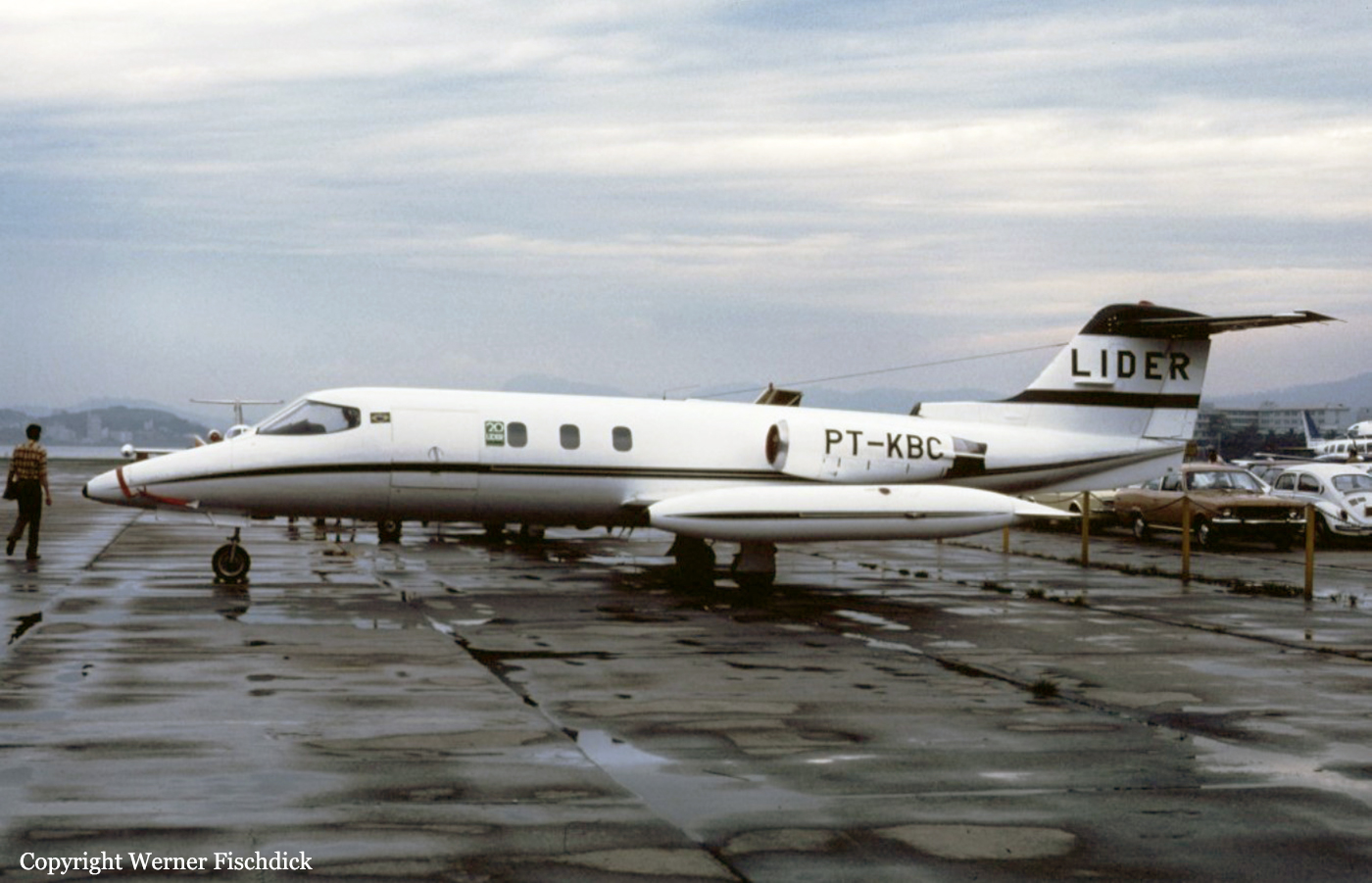
Crash of a Learjet 25C in Ribeirão Preto: 2 killed

Date & Time: Jun 4, 1996 at 1320 LT
Type of aircraft:
Registration:
PT-KBC
Flight Phase:
Flight Type:
Survivors:
Yes
Schedule:
São Paulo – Uberaba – Ribeirão Preto
MSN:
25-165
YOM:
1974
Country:
Crew on board:
2
Crew fatalities:
Pax on board:
2
Pax fatalities:
Other fatalities:
Total fatalities:
2
Captain / Total flying hours:
3500
Captain / Total hours on type:
250.00
Copilot / Total flying hours:
2000
Copilot / Total hours on type:
420
Circumstances:
The crew departed São Paulo on a training flight to Ribeirão Preto with an intermediate stop in Uberaba. On approach to Ribeirão Preto-Leite Lopes Airport, the instructor decided to reduce power on the left engine to simulate a failure and to complete a touch-and-go manoeuvre. After touchdown, the left engine power lever remained in the idle position so the captain took over control and attempted to take off as he judged it impossible to stop on the remaining runway. The aircraft took off but landed back about 92 metres past the runway end. Out of control, it collided with a truck and a tree and came to rest, bursting into flames. A man in the truck as well as one pilot were killed while three other pilots were injured. The aircraft was destroyed.
Probable cause:
The following findings were reported:
- There are indications of the presence of psychological variables that may have influenced the instructor's decision to perform the touch-and-go manoeuvre.
- There was inadequate supervision, at the technical and operational level, by the aircraft operating company, due to the lack of training, inadequate instruction and absence of flight simulator training.
- There was an error made by the pilots due to the inadequate use of the crew resources in the cockpit intended for the operation of the aircraft, due to an ineffective fulfillment of the tasks assigned to each of the crew and the non-observance of the operational rules.
- Even though the crew was qualified for the type of flight, there was inadequate planning regarding the absence of a takeoff and landing briefing.
- There was an error made by the copilot, when the delay in reducing the power levers, as soon as the locking of the left engine lever was established during the dash on the ground, with an inadequate assessment of the situation in this regard.
- There was the participation of the training process received, due to quantitative and qualitative deficiency, which did not attribute to pilots the full technical conditions to be developed in the activity, regarding the lack of simulator training, lack of a company training program that included CRM and local flights, among others.
- There are indications that the difficulties reported by the pilots in relation to the throttle were caused by the rupture of fibers in the cable that transfers its control to the FCU. This cable slides inside a corrugated cover and can be jammed if any fiber in the cable breaks.
Final Report:

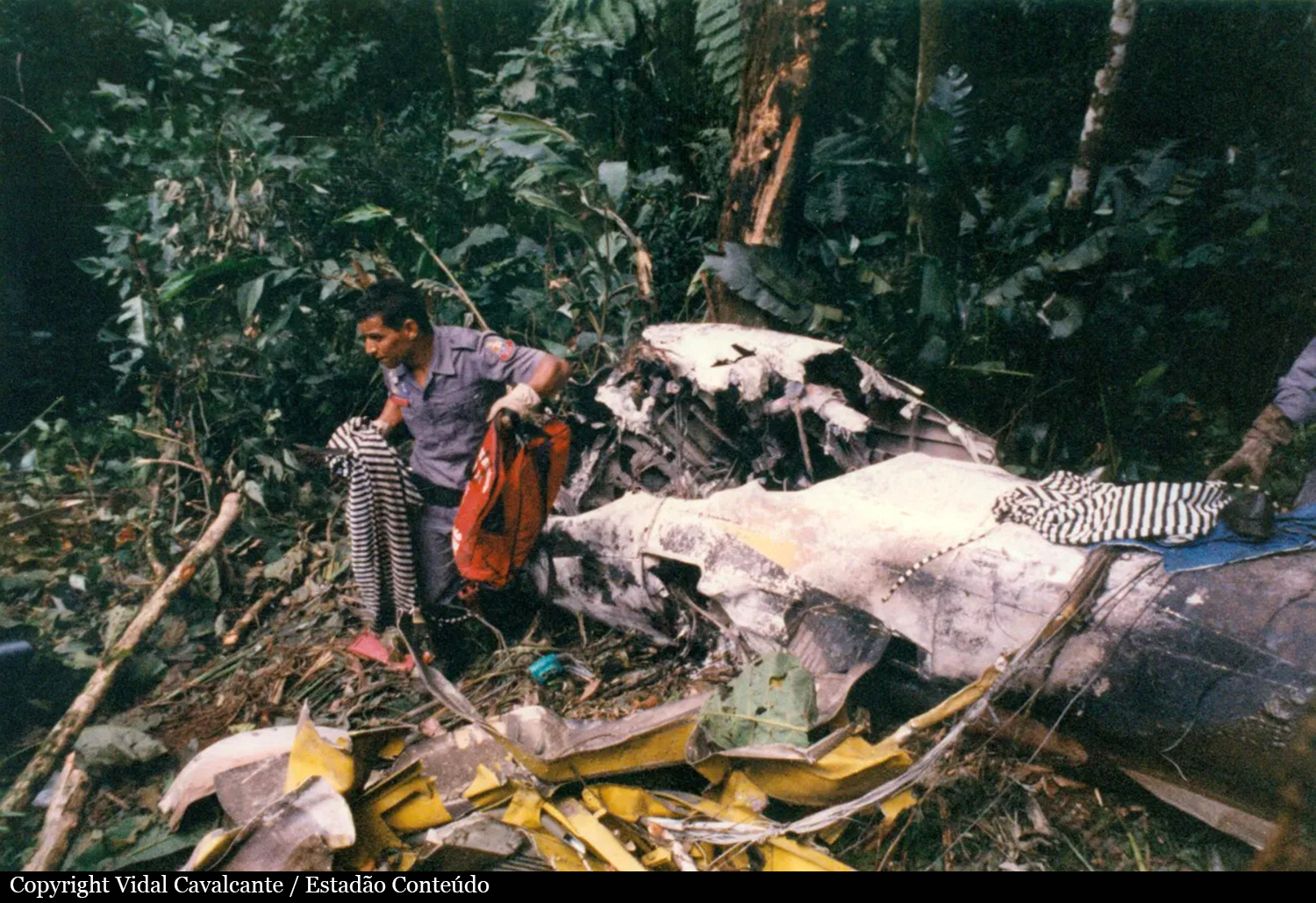
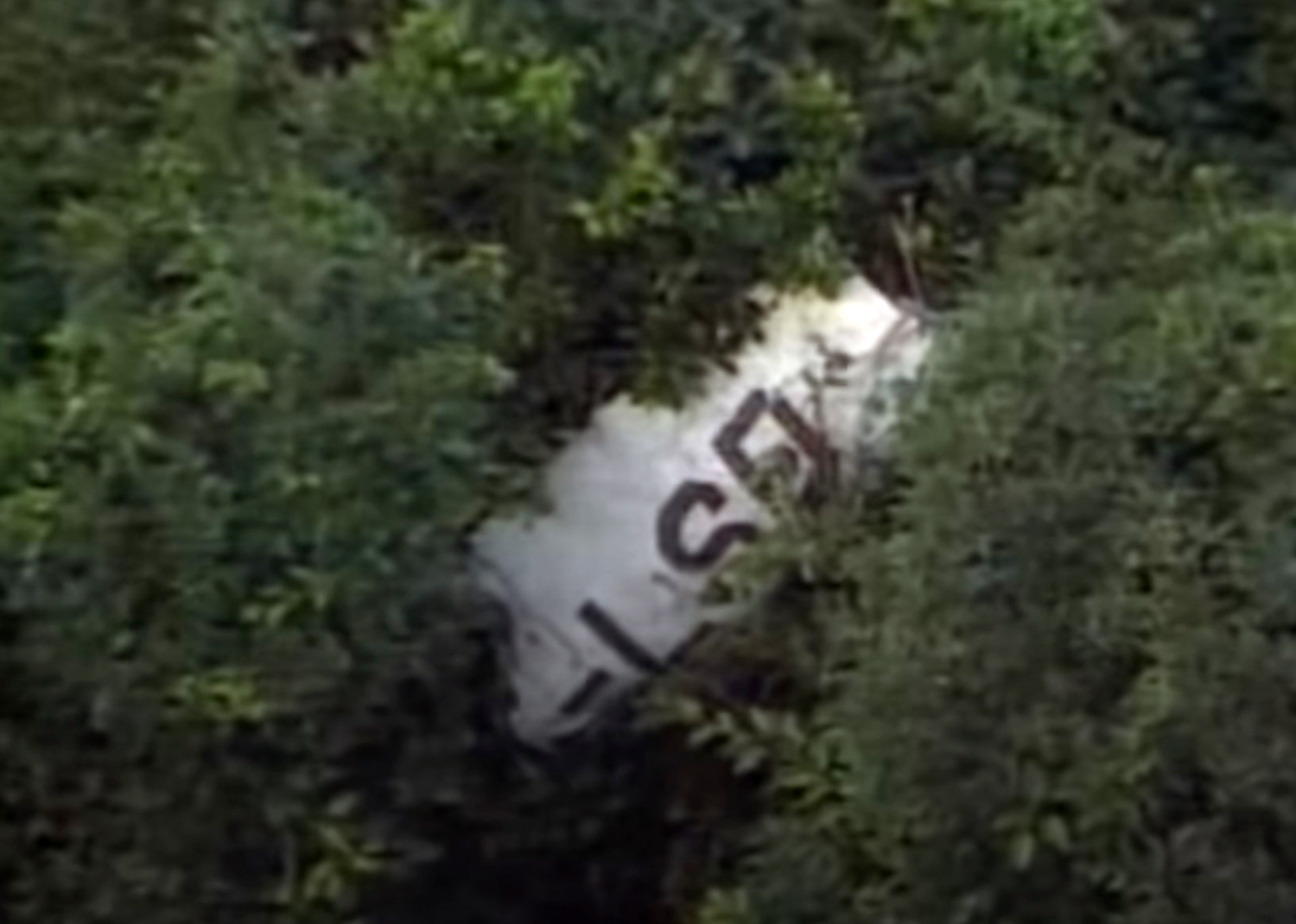
Crash of a Learjet 25D in São Paulo: 9 killed

Date & Time: Mar 2, 1996 at 2316 LT
Type of aircraft:
Registration:
PT-LSD
Survivors:
No
Site:
Schedule:
Brasília – São Paulo
MSN:
25-243
YOM:
1978
Country:
Crew on board:
2
Crew fatalities:
Pax on board:
7
Pax fatalities:
Other fatalities:
Total fatalities:
9
Captain / Total flying hours:
2500
Captain / Total hours on type:
220.00
Copilot / Total flying hours:
330
Copilot / Total hours on type:
57
Aircraft flight hours:
6123
Circumstances:
The twin engine aircraft was completing a charter flight from Brasília to São Paulo, carrying seven members of the pop music group 'Mamonas Assassinas' and two pilots. On approach in limited visibility due to the night, absence of ground lights and clouds, the crew initiated a go-around as his position was erroneous (too high and the glide and excessive speed). The captain initiated a turn to the left when shortly later, at an altitude of 3,280 feet, the aircraft struck trees and crashed in a dense wooded area located about 11 km from the airport. The aircraft was destroyed by impact forces and all nine occupants were killed.
Probable cause:
The following findings were reported:
- The crew was tired due to a long duty period of 16 hours and 30 minutes without rest time,
- The captain showed excess of self-confidence,
- Physical fatigue worsened the level of situational stress of the crew,
- Lack of crew training programme,
- Poor crew coordination,
- Poor approach and landing planning,
- Lack of visibility, lack of ground lights (environment) and low clouds,
- The crew failed to follow the missed approach procedures,
- The copilot was inexperienced,
- Instead of a right turn to 092° and continue to 6,000 feet, the captain initiated a left turn, causing the aircraft to struck obstacles.
Final Report:

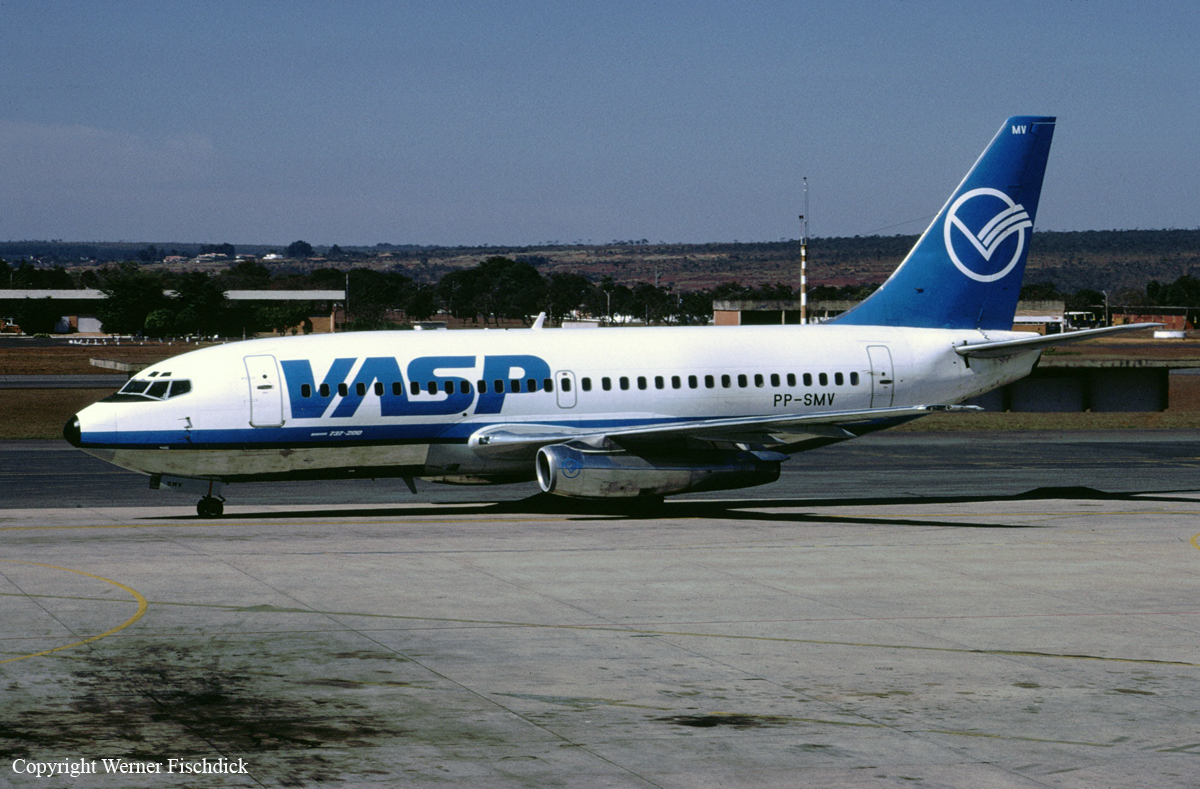
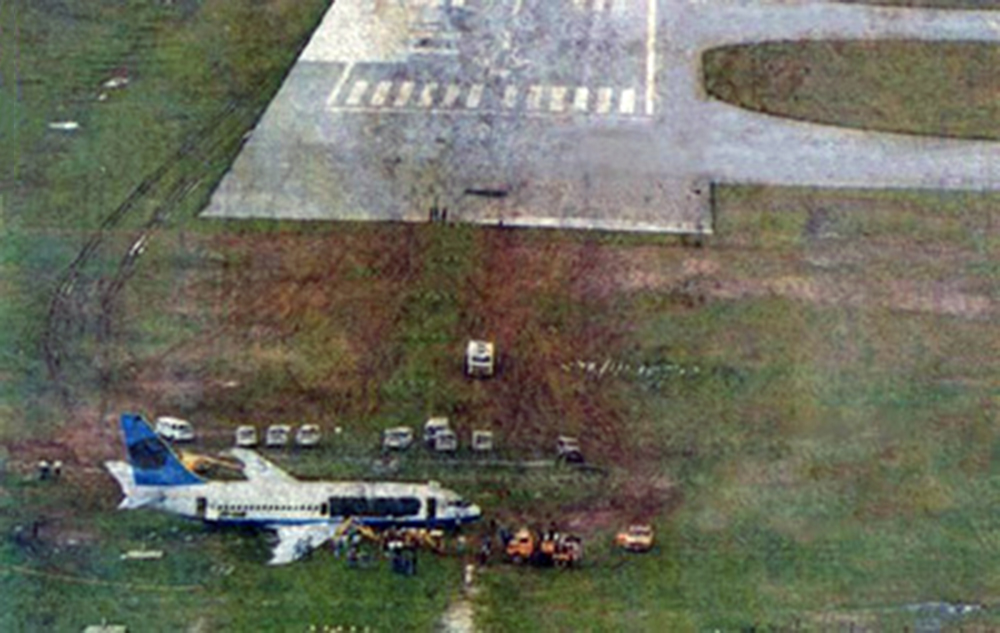
Crash of a Boeing 737-2A1 in São Paulo

Date & Time: Feb 2, 1995 at 0008 LT
Type of aircraft:
Operator:
Registration:
PP-SMV
Survivors:
Yes
Schedule:
São Paulo – Buenos Aires
MSN:
20968
YOM:
1974
Country:
Crew on board:
7
Crew fatalities:
Pax on board:
121
Pax fatalities:
Other fatalities:
Total fatalities:
0
Captain / Total flying hours:
8000
Captain / Total hours on type:
6500.00
Copilot / Total flying hours:
4500
Copilot / Total hours on type:
2500
Circumstances:
Following a night takeoff from São Paulo-Guarulhos Airport, en route to Buenos Aires, the captain informed ATC about technical problems and was cleared to return for an emergency landing. The aircraft landed at a speed of 185 knots with flaps down to 15° on wet runway 09L. Unable to stop within the remaining distance, the aircraft overran, lost its undercarriage and came to rest 200 metres further. All 128 occupants were evacuated safely, among them two passengers were slightly injured. The aircraft was written off.
Probable cause:
It was determined that the n°3 leading edge flap actuator attachment fitting on the wing front spar had fractured due to corrosion. The actuator came away and caused the failure of some hydraulic lines and damage to the thrust control cables. Some 1981 Boeing Service Bulletins had not been complied with. One of these included the replacement of the aluminium leading edge flap actuator attachment fitting with a steel one; this had not been done. The following contributing factors were reported:
- Excessive workload on approach and landing due to the emergency situation,
- Poor approach planning,
- Lack of visibility due to the night,
- Poor crew coordination,
- Poor crew resources management,
- The crew forgot to lower the flaps electrically on approach, causing the speed to be 32 knots in excess,
- Poor aircraft maintenance and supervision,
- Failures in the supervision of the Company's operating sector.
Final Report:

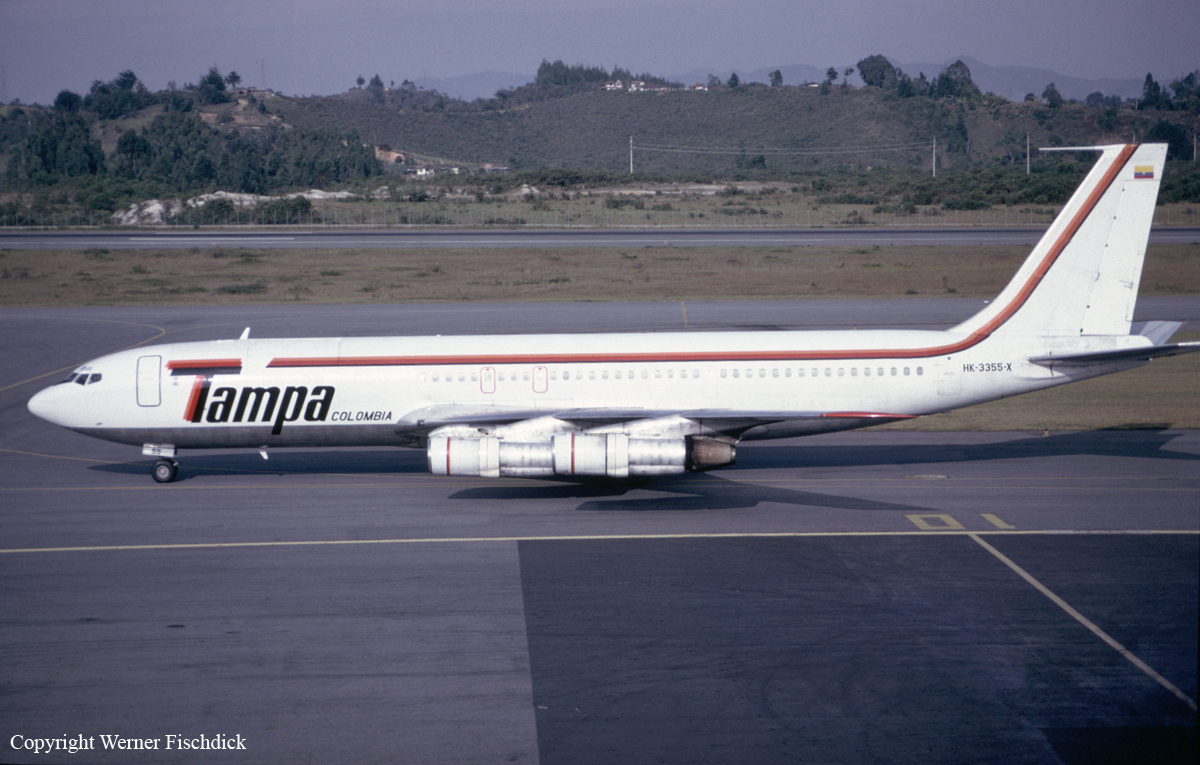
Crash of a Boeing 707-324C in São Paulo

Date & Time: Oct 9, 1994 at 1742 LT
Type of aircraft:
Operator:
Registration:
HK-3355X
Flight Type:
Survivors:
Yes
Schedule:
Campinas - Santa Cruz
MSN:
18886
YOM:
1965
Country:
Crew on board:
5
Crew fatalities:
Pax on board:
0
Pax fatalities:
Other fatalities:
Total fatalities:
0
Circumstances:
After takeoff from Campinas-Viracopos Airport, while climbing, the crew informed ATC about technical problems and was cleared to divert to São Paulo-Guarulhos Airport for an emergency landing. On final, both main landing gears were lowered but apparently not locked while the nose gear remained stuck in its main wheel. Upon touchdown on runway 09L, the aircraft sank on its belly and slid for few dozen metres before coming to rest. All five occupants escaped uninjured while the aircraft was damaged beyond repair.
Probable cause:
It was determined that the hydraulic pump n°2 on the engine n°3 failed after takeoff, causing an oil leak and a loss of hydraulic pressure. The undercarriage could be lowered but not locked down while the crew attempted to lower the nose gear manually but doing so, caused the locking pin to obstruct and damage the landing gear extension system. It was also reported that several seals located on hydraulic lines were broken and have not been replaced during the last C check.

Crash of a Cessna 550 Citation S/II in São Paulo

Date & Time: Dec 1, 1992 at 1205 LT
Type of aircraft:
Operator:
Registration:
PT-LKT
Flight Type:
Survivors:
Yes
Schedule:
São Paulo - São Paulo
MSN:
550-0117
YOM:
1986
Country:
Crew on board:
2
Crew fatalities:
Pax on board:
2
Pax fatalities:
Other fatalities:
Total fatalities:
0
Circumstances:
The aircraft departed São Paulo-Congonhas Airport for a local training flight, carrying two pilots under supervision and two instructors. Weather conditions were marginal with ceiling down to 300 metres, horizontal visibility 3 km with rain. After touchdown on wet runway 17R, the aircraft was unable to stop within the remaining distance. It overran, went down an embankment and came to rest. All four occupants escaped uninjured while the aircraft was destroyed.

Crash of a Learjet 25C near Iguape: 6 killed

Date & Time: Jul 28, 1992 at 0911 LT
Type of aircraft:
Registration:
PT-LHU
Flight Phase:
Survivors:
No
Schedule:
Curitiba - Rio de Janeiro
MSN:
25-099
YOM:
1972
Country:
Crew on board:
2
Crew fatalities:
Pax on board:
4
Pax fatalities:
Other fatalities:
Total fatalities:
6
Captain / Total flying hours:
6520
Captain / Total hours on type:
9.00
Copilot / Total flying hours:
1950
Copilot / Total hours on type:
9
Aircraft flight hours:
5655
Circumstances:
The twin engine aircraft departed Curitiba-Afonso Pena Airport at 0850LT on an 'on demand' taxi flight to Rio de Janeiro, carrying four passengers and two pilots. Once the assigned altitude of 33,000 feet was reached, the crew failed to reduce the engine power when, 3 minutes and 10 seconds later, the stick puller activated. The aircraft climbed to 33,900 feet then entered an uncontrolled descent. With a rate of descent of 18,000 feet per minute, the aircraft crashed in a near vertical attitude in a field. All six occupants were killed.
Probable cause:
The exact cause of the accident could not be determined with certainty. However, the following findings were reported:
- a. Human Factor
(1) Undetermined Physiological Aspect
Given the characteristics of the accident, which resulted in the destruction of the bodies, making it impossible to carry out examinations, it cannot be specified whether it contributed or not. However one cannot rule out the possibility that one of the crew members has been affected by a sudden illness (2nd Hypothesis of the Analysis).
(2) Psychological Aspect - Undetermined
It may have influenced, to the extent that the commander was operating an aircraft in which he had little experience and little knowledge, and which was demonstrated by the insecurity in the operation, reported to other pilots.
b. Material Factor
(1) Design Deficiency - Undetermined
Despite the information provided by representatives of Learjet Corp. who participated in the investigations, that the compensator engine ('pitch trim') with which this aircraft was equipped, had already undergone the modifications determined by the Federal Aviation Administration (FAA), one cannot help but wonder about a possible firing and locking of the 'pitch trim' engine in the extreme position (3rd Hypothesis of the Analysis). This aspect was hampered as the destruction suffered by the aircraft made a detailed analysis of the pitch trim system impossible.
c. Operational Factor
(1) Disabled Instruction - Contributed.
The commander and the co-pilot received a less than desired instruction, in quantitative and qualitative terms. As a result, the pilots did not acquire the full technical conditions necessary for the proper operation of the aircraft. The failure to perform the standard procedure to be followed in the emergency that led to the accident, i.e. the lowering of the landing gear, attests to the poor instruction given.
(2) Deficient Application of Controls: - Contributed
The pilots did not adjust the engine power properly after leveling and, after the aircraft started to abruptly descend, as a result, the 'overspeed' occurred, they could not avoid the loss of control.
(3) Weak Cockpit Coordination - Contributed.
The pilots made inadequate use of the aircraft's resources for its operation.
(4) Forgetfulness - Contributed.
This aspect is in accordance with the previous one, since the lowering of the undercarriage is part of the standard procedure to be performed in cases of overspeed.
(5) Little Flight Experience in the Aircraft - Contributed
The captain, despite having 6,500 hours of flight time, had already intended to fly another jet plane, but had flown little on Learjet. The other pilot, in turn, had had less experience in jet flying as a co-pilot, and in the Learjet, specifically, flew less than the commander.
As a result, when they were faced with an emergency that required rapid identification in order to take the necessary measures to remedy it, they lacked the necessary experience.
(6) Deficient Supervisor - contributed.
The air taxi company, to which the pilots belonged, was in a hurry to train this new crew. This resulted in inadequate operational training for the pilots, which demonstrates poor supervision of the company. The Civil Aviation System, through the regional body that deals directly with general aviation, failed to carry out proper oversight, as it did not detect the errors in the statements of instruction, and allowed the checks of the captain and the co-pilot to be carried out without reaching the minimum amount of flight hours and landings on that aircraft.
Final Report:

Crash of an Embraer C-95C Bandeirante near Guaratinguetá: 16 killed

Date & Time: Nov 29, 1991 at 0815 LT
Type of aircraft:
Operator:
Registration:
2333
Flight Type:
Survivors:
No
Site:
Schedule:
Brasília - Guaratinguetá
MSN:
110-473
YOM:
1988
Country:
Crew on board:
3
Crew fatalities:
Pax on board:
13
Pax fatalities:
Other fatalities:
Total fatalities:
16
Circumstances:
The twin engine airplane departed Brasília at 0600LT on a flight to Guaratinguetá, carrying high ranking officers who should take part to a military parade. On approach to Guaratinguetá Airport, the crew encountered marginal weather conditions when the aircraft struck the slope of Mt Pico dos Marins located 33 km northeast of the airport. The aircraft was destroyed by impact forces and all 16 occupants were killed.
Probable cause:
Controlled flight into terrain after the crew decided to continue the descent under VFR mode in IMC conditions. It was reported that the wrong approach configuration adopted by the crew caused the aircraft to enter a valley which was not mentioned on approach charts. Due to poor visibility because of low clouds, the crew was unable to distinguish the mountain struck by the aircraft. The crew was misled by external factors inherent to weather conditions.