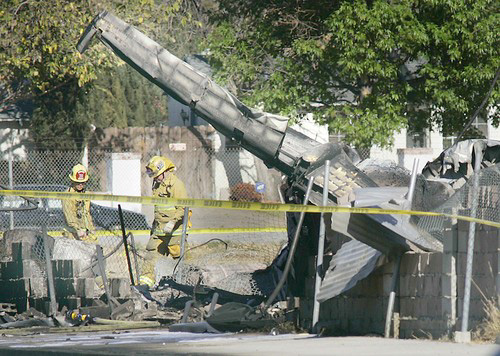
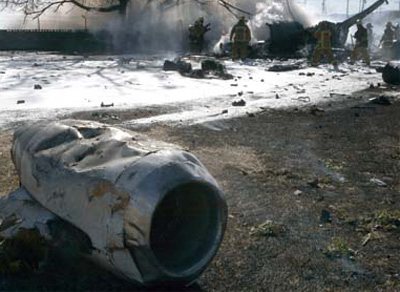
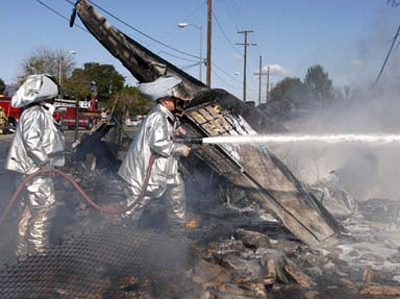
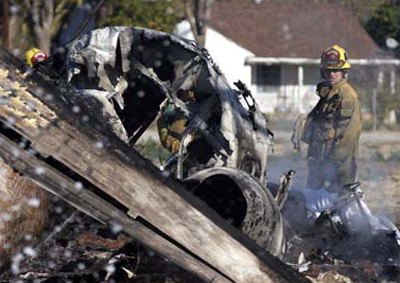
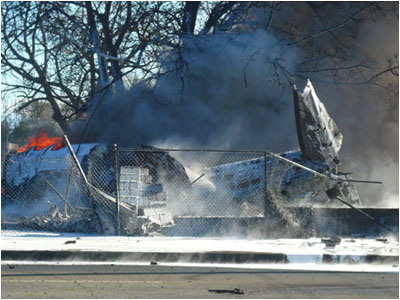
Crash of a Beechcraft A100 King Air in Chino: 2 killed

Date & Time: Nov 6, 2007 at 0918 LT
Type of aircraft:
Operator:
Registration:
N30GC
Flight Phase:
Survivors:
No
Schedule:
Chino - Visalia
MSN:
B-177
YOM:
1973
Crew on board:
1
Crew fatalities:
Pax on board:
1
Pax fatalities:
Other fatalities:
Total fatalities:
2
Captain / Total flying hours:
3136
Aircraft flight hours:
11849
Circumstances:
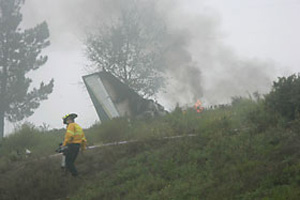
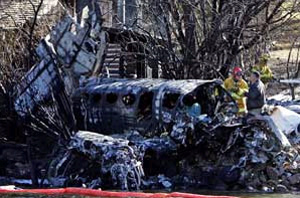
The reported weather at the time of the accident was calm winds, a 1/4-mile visibility in fog and a vertical visibility of 100 feet. Shortly after takeoff for the instrument-flight-rules flight, the airplane made a slight turn to the left and impacted the tops of 25-foot trees about a 1/2 mile from the runway. An enhanced ground proximity warning system was installed on the airplane and data extraction from the system indicated that the airplane achieved an initial positive climb profile with a slight turn to the left and then a descent. A witness reported hearing the crash and observed the right wing impact the ground and burst into flames. The airplane then cartwheeled for several hundred feet before coming to rest inverted. The airframe, engines, and propeller assemblies were inspected with no mechanical anomalies noted that would have precluded normal flight.
Probable cause:
The pilot's failure to maintain a positive climb rate during an instrument takeoff. Contributing to the accident was the low visibility.
Final Report:
Crash of a Cessna 340 in Garberville: 3 killed

Date & Time: Nov 6, 2007 at 0855 LT
Type of aircraft:
Operator:
Registration:
N5049Q
Survivors:
No
Schedule:
Redding – Garberville
MSN:
340-0016
YOM:
1971
Crew on board:
1
Crew fatalities:
Pax on board:
2
Pax fatalities:
Other fatalities:
Total fatalities:
3
Captain / Total flying hours:
18500
Aircraft flight hours:
7691
Circumstances:
The pilot arrived in the vicinity of his destination airport, which was located in a narrow river valley. The airport was located within a large area of Visual Flight Rules (VFR) conditions with clear skies and almost unlimited visibility, but the pilot discovered that the airport was covered by a localized dense layer of fog about 200 to 250 feet thick. There were no instrument approaches to the non-controlled airport. Witnesses reported that the pilot flew at low-level up the valley, and eventually entered the fog as the flight approached the airport. About one mile prior to reaching the airport, the pilot attempted to climb out of the valley, but the airplane began impacting trees on the rising terrain. The airplane eventually sustained sufficient damage from impacting the trees that it descended into the terrain. Post-accident inspection of the airframe and engines found no evidence of a mechanical failure or malfunction.
Probable cause:
The pilot's intentional visual flight rules (VFR) flight into instrument meteorological conditions (IMC), and his failure to maintain clearance from the trees and terrain during climb. Contributing to the accident were the weather conditions of fog and a low ceiling, and the mountainous/hilly terrain.
Final Report:

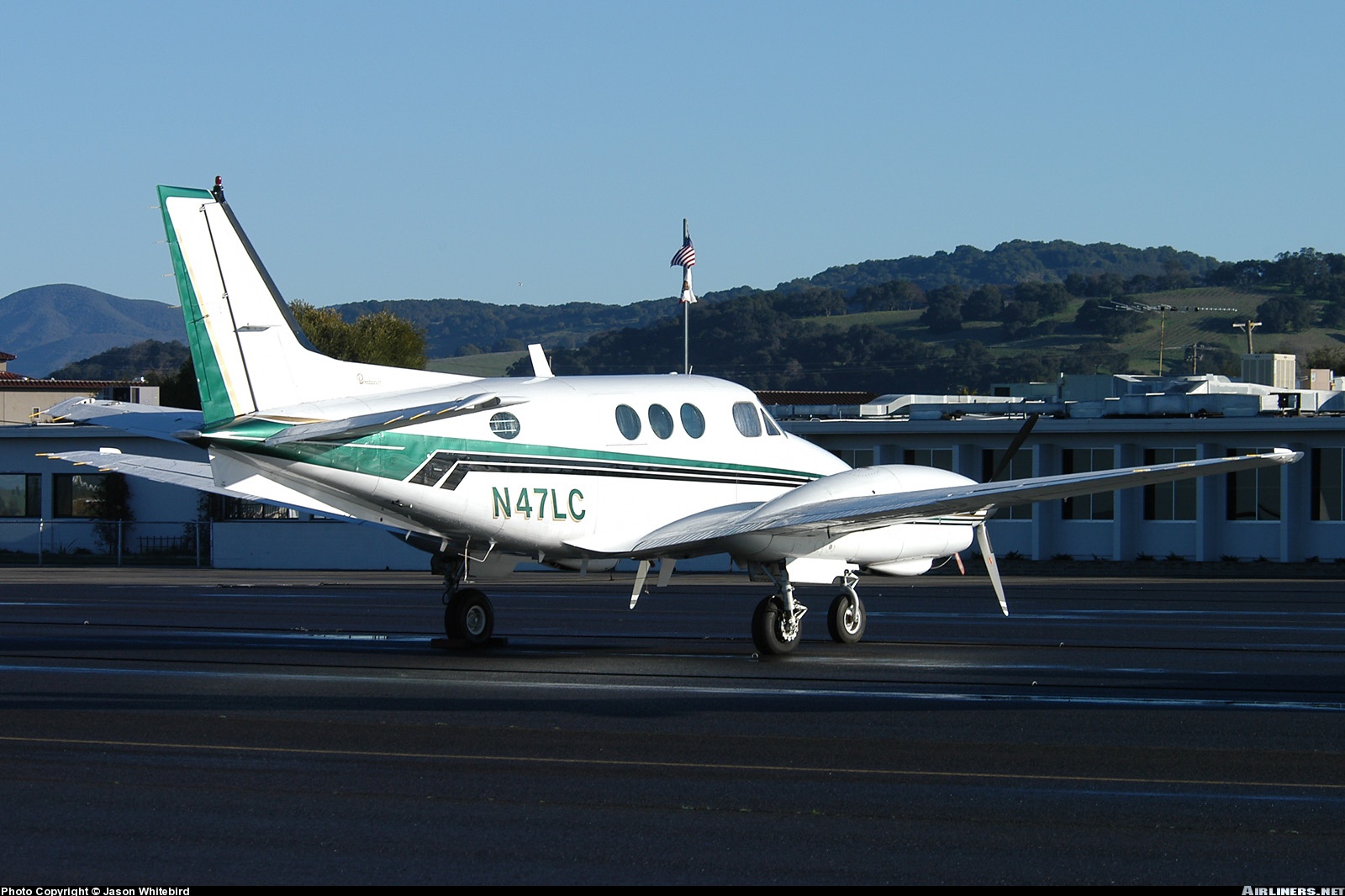
Crash of a Beechcraft E90 King Air in Carlsbad: 2 killed

Date & Time: Jul 3, 2007 at 0606 LT
Type of aircraft:
Registration:
N47LC
Flight Phase:
Flight Type:
Survivors:
No
Schedule:
Carlsbad - Tucson
MSN:
LW-64
YOM:
1973
Crew on board:
1
Crew fatalities:
Pax on board:
1
Pax fatalities:
Other fatalities:
Total fatalities:
2
Captain / Total flying hours:
1177
Captain / Total hours on type:
284.00
Aircraft flight hours:
9032
Circumstances:
The airport is on a plateau, and the surrounding terrain is lower than the runway. After departing runway 24, the airplane collided with the top conductor of a telephone line an estimated 2,500 feet from the departure end of the runway. The airport elevation was 331 feet msl and the estimated elevation of the line was 245 feet. The debris path was along a magnetic bearing of 270 degrees. Both left and right engines displayed contact signatures to their internal components that were characteristic of the engines producing power at the time of impact. Fire consumed the cabin and cockpit precluding a meaningful examination of instruments and systems. An aviation routine weather report (METAR) issued about 13 minutes before the accident stated that the winds were calm, visibility was 1/4 mile in fog; and skies were 100 feet obscured. An examination of the pilot's logbook indicated that the pilot had a total instrument flight time of 268 hours as of June 21, 2007. In the 90 prior days he had flown 11 hours in actual instrument conditions and logged 20 instrument approaches.
Probable cause:
The pilot's failure to maintain clearance from wires during an instrument takeoff attempt. Contributing to the accident were fog, reduced visibility, and the low ceiling.
Final Report:

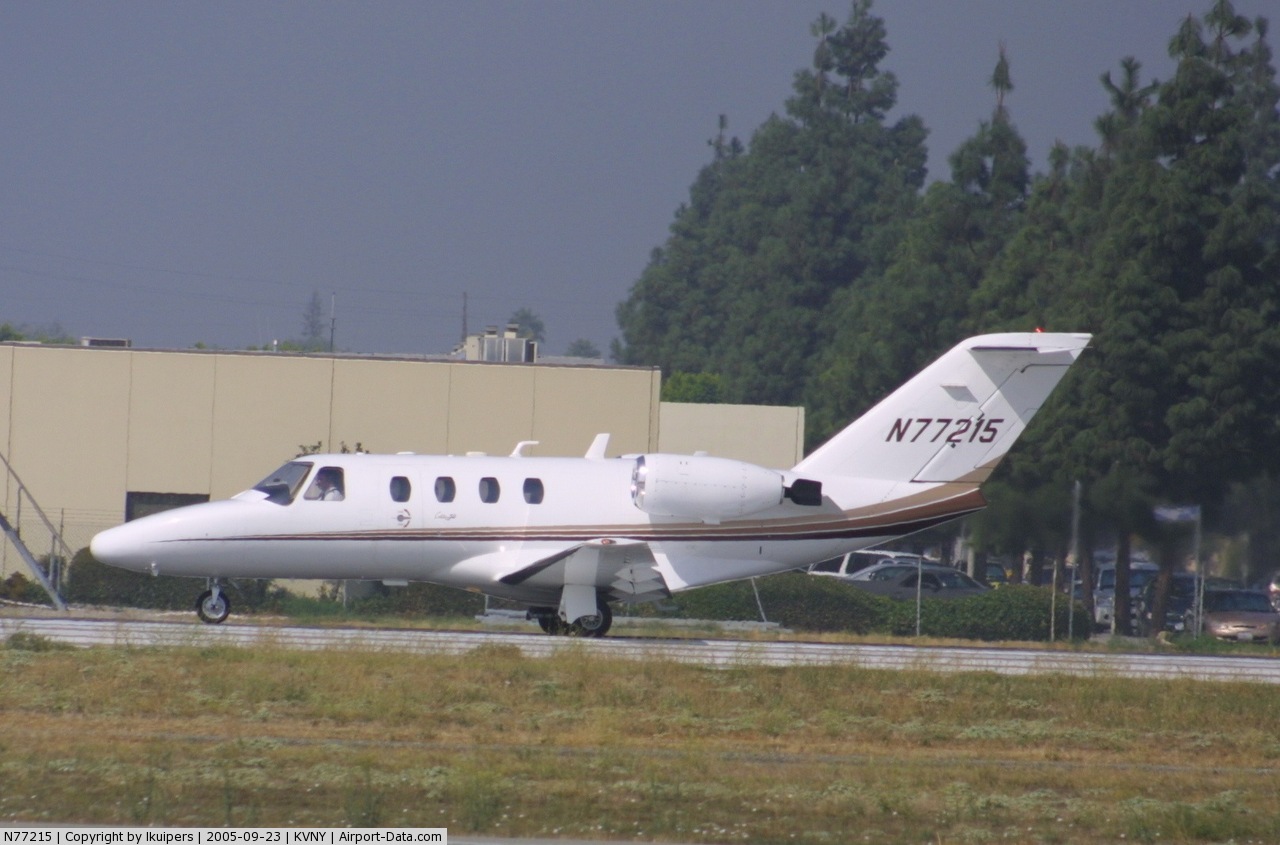
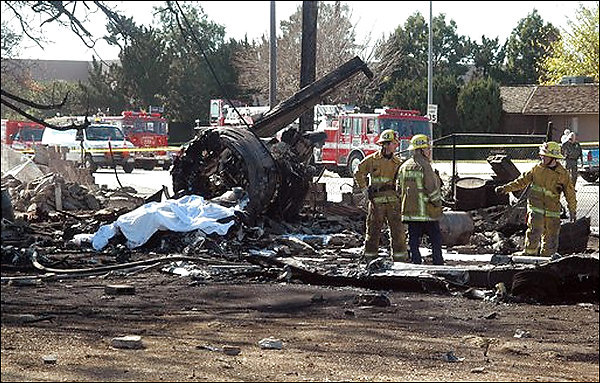
Crash of a Cessna 525 CJ1 in Van Nuys: 2 killed

Date & Time: Jan 12, 2007 at 1107 LT
Type of aircraft:
Operator:
Registration:
N77215
Flight Phase:
Flight Type:
Survivors:
No
Site:
Schedule:
Van Nuys - Long Beach
MSN:
525-0149
YOM:
1996
Crew on board:
2
Crew fatalities:
Pax on board:
0
Pax fatalities:
Other fatalities:
Total fatalities:
2
Captain / Total flying hours:
38000
Captain / Total hours on type:
800.00
Aircraft flight hours:
3001
Circumstances:
Line personnel reported that as the airplane was being fueled, the second pilot loaded more than one bag in the left front baggage compartment. With fueling complete, line personnel saw the second pilot pull the front left baggage door down, but not lock or latch it. Witnesses near midfield of the 8,001-foot long runway, reported that the airplane was airborne, and the front left baggage door was closed. Witnesses near the end of the runway, reported that the airplane was about 200 feet above ground level (agl) and they noted that the front left baggage door was open and standing straight up. All of the witnesses reported that the airplane turned slightly left, leveled off, and was slow. The airplane began to descend, and the wings were slightly rocking before it stalled, broke right, and collided with the terrain. Investigators found no anomalies with the airframe or engines that would have precluded normal operation. The forward baggage doors' design incorporates a key lock in the lower center of each door, and two latches in the left and right bottom section of the doors. There are two hinges in the upper left and right sections of the door. The handles latched the door to the door frame in the fuselage. The key would be in the horizontal position in an unlocked condition, and in the vertical position in a locked condition. The front left baggage door was found within the main wreckage debris field and had sustained mechanical and thermal damage. The key lock was in the horizontal position. Several instances of a baggage door opening in flight have been recorded in Cessna Citation airplanes. In some cases, the door separated, and in others it remained attached. The crews of these other airplanes returned to the airport and landed successfully.
Probable cause:
The pilot's failure to maintain an adequate airspeed during the initial climb resulting in an inadvertent stall/spin. Contributing to the accident were the second pilots inadequate preflight, failure to properly secure the front baggage door, and the front left baggage door opening in flight, which likely distracted the first pilot.
Final Report:
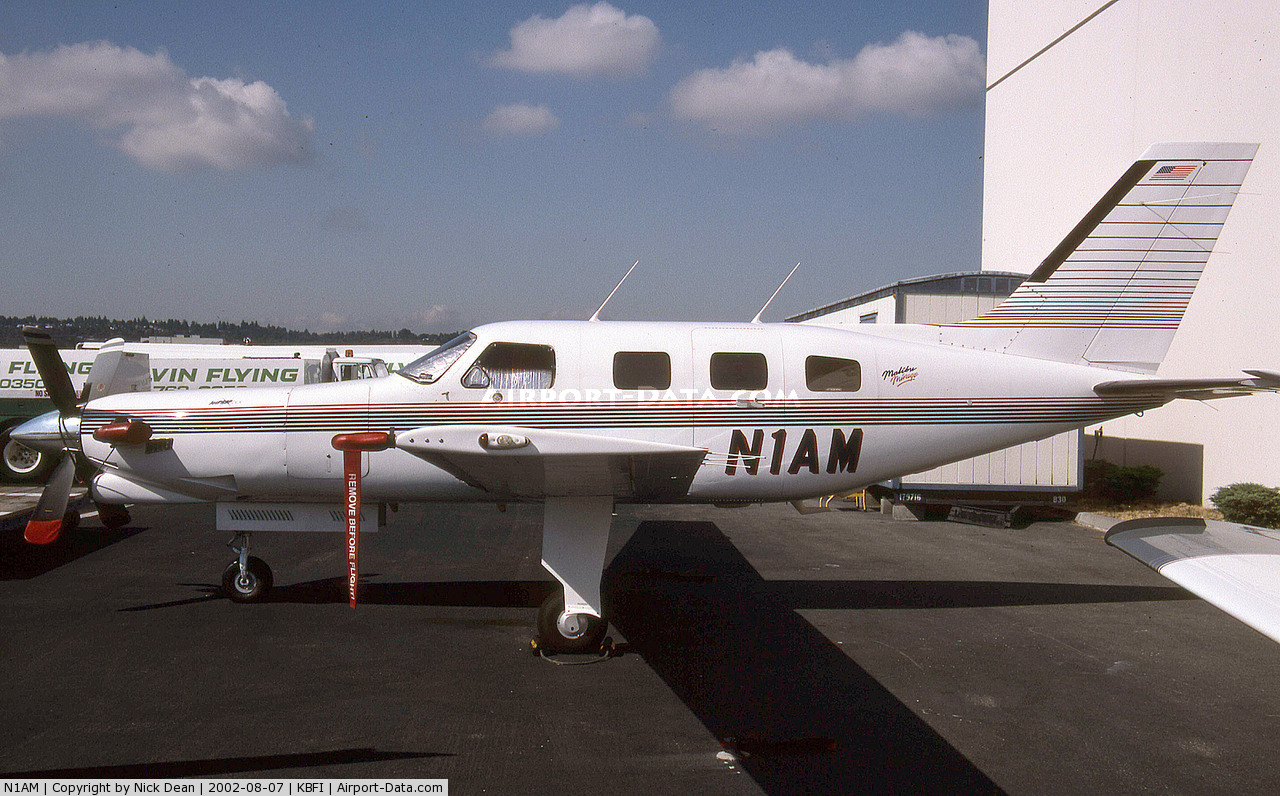
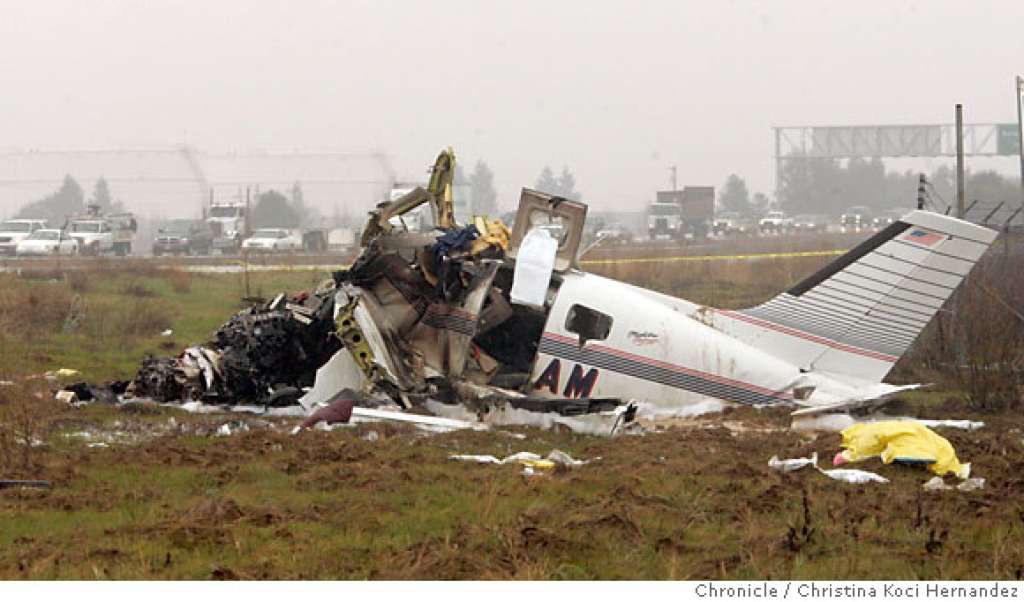
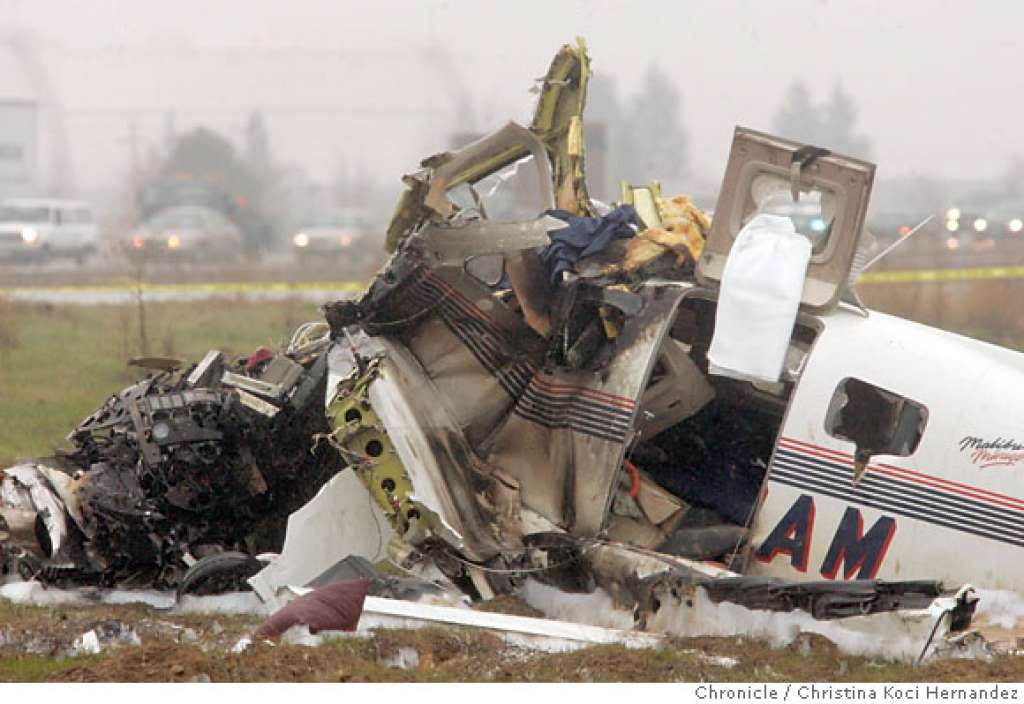
Crash of a Piper PA-46-350P Malibu Mirage in Concord: 4 killed

Date & Time: Dec 21, 2006 at 1101 LT
Registration:
N1AM
Flight Type:
Survivors:
No
Schedule:
San Diego – Concord
MSN:
46-22061
YOM:
1989
Crew on board:
1
Crew fatalities:
Pax on board:
3
Pax fatalities:
Other fatalities:
Total fatalities:
4
Captain / Total flying hours:
3628
Captain / Total hours on type:
25.00
Aircraft flight hours:
2470
Circumstances:
While on an instrument approach for landing, the local tower air traffic controller observed on the BRITE radar repeater scope that the airplane passed the outer marker (OM), 600 feet below the permissible crossing altitude. The controller issued a low altitude alert to the pilot and cleared him to land. The controller also reminded the pilot that the minimum descent altitude for the Localizer Directional Aid (LDA) approach was 440 feet, and provided instructions for the missed approach. At that point the pilot reported that he had the airport in sight and acknowledged the landing instructions. The controller again cleared the pilot to land on the prescribed runway for the instrument approach, and the pilot acknowledged the landing clearance. Shortly thereafter the controller instructed the pilot to execute the missed approach as the radar track showed that the airplane was off course. The pilot was instructed to initiate a climbing left turn to the VOR. The pilot said he had the airport in sight and that he saw one of the cross runways and wanted to land. The controller told the pilot that circling to that runway was not an authorized procedure for the LDA approach and again instructed the pilot to perform the missed approach. A witness stated that he was working on a storage container, about 50 feet in height, when the airplane passed overhead. He estimated the airplane to be about 50 feet higher than the storage container. The airplane made a turn westbound and the witness looked away for a second. When he looked back the airplane was in a nose and left wing down attitude and then it impacted the ground. Another witness located on the airport's north-northeast corner also observed the airplane flying toward the airport. He reported simultaneously hearing the engine power up and observed the left wing stall prior to it impacting the ground. Both witnesses reported that they did not hear anything wrong with the engine. Examination of the airframe, power plant, and propeller revealed no mechanical anomalies that would have precluded normal operation. Internal damage signatures in the engine and propeller were consistent with the production of significant power at the time of impact. A review of the weather in the area revealed that while light rain and mist were occurring near the accident site, no meteorological phenomena existed that would have adversely affected the flight. The pilot and two passengers were killed while a third passenger, a boy aged 12, was seriously injured. He died from his injuries few hours later.
Probable cause:
Failure of the pilot to follow the prescribed instrument approach procedures and to maintain an adequate airspeed while maneuvering in the airport environment that led to a stall.
Final Report:
Crash of a Cessna 421B Golden Eagle II in Big Bear Lake: 3 killed

Date & Time: Nov 14, 2006 at 1013 LT
Registration:
N642BD
Flight Phase:
Survivors:
No
Schedule:
Big Bear Lake - Las Vegas
MSN:
421B-0658
YOM:
1974
Crew on board:
1
Crew fatalities:
Pax on board:
2
Pax fatalities:
Other fatalities:
Total fatalities:
3
Captain / Total flying hours:
4700
Aircraft flight hours:
4556
Circumstances:
Witnesses said that it appeared that the left engine sustained a loss of power just after rotation and liftoff. The airplane initially had a positive rate of climb, but then immediately yawed to the left as it cleared 30-foot-high power lines that were perpendicular across the flight path. The airport is at the east end of a lake in a mountain valley; the airplane departed to the west and was flying over the lake. The airplane was about 2 miles from the runway when witnesses observed dark smoke coming from the left engine, and the smoke increased significantly as the flight continued. The airplane banked hard left with the wings perpendicular to the ground, and then nosed in vertically. The landing gear remained down throughout the accident sequence. On site examination revealed that the top spark plugs for the left engine were black and sooty. A detailed examination revealed that the left turbocharger turbine wheel shaft fractured and separated. Extreme oxidation of the fracture surfaces prevented identification of the failure mode; however, the oxidation was the result of high temperature exposure indicating that the fracture occurred while the turbocharger was at elevated temperature during operation. The multiple planes exhibited by the fracture also were not consistent with a ductile torsional failure as would be expected from a sudden stoppage of either rotor. No evidence of a mechanical malfunction was noted to the right engine. The Cessna Owners Manual for the airplane notes that the most critical time for an engine failure is a 2-3 second period late in the takeoff while the airplane is accelerating from the minimum single-engine control speed of 87 KIAS to a safe single-engine speed of 106 KIAS. Although the airplane is controllable at the minimum control speed, the airplane's performance is so far below optimum that continued flight near the ground is improbable. Once 106 KIAS is achieved, altitude can more easily be maintained while the pilot retracts the landing gear and feathers the propeller. The best single-engine rate-of-climb is 108 KIAS with flaps up below 18,000 feet msl. Section VI of the manual provides operational data for single-engine climb capability. The data was only valid for the following conditions: gear and flaps retracted, inoperative propeller feathered, wing banked 5 degrees toward the operating engine, 39.5 inches of manifold pressure if below 18,000 feet, and mixture at recommended fuel flow.
Probable cause:
Failure of the turbine wheel shaft in the left turbocharger during the takeoff initial climb for undetermined reasons, and the pilot's failure to attain and maintain safe single engine airspeed that led to a loss of control.
Final Report:

Crash of a Cessna 560 Citation Encore in Upland: 1 killed

Date & Time: Jun 24, 2006 at 2226 LT
Type of aircraft:
Registration:
N486SB
Flight Type:
Survivors:
Yes
Schedule:
San Diego - Upland
MSN:
560-0580
YOM:
2001
Crew on board:
1
Crew fatalities:
Pax on board:
2
Pax fatalities:
Other fatalities:
Total fatalities:
1
Captain / Total flying hours:
2951
Captain / Total hours on type:
268.00
Aircraft flight hours:
2513
Circumstances:
The airplane touched down at night about 1,400 feet down the 3,864-foot runway and overran the runway surface, coming to rest about 851 feet beyond the departure end. The pilot was operating the airplane using a single-pilot waiver that he obtained two months prior to the accident. The airplane was certified by the Federal Aviation Administration with a flight crew of two. The pilot was returning from a personal event with his family, and landing at his home airport when the accident occurred. Witnesses stated that the pilot’s approach into the airport was not consistent with previous approaches in which the airplane would touch down directly on the runway numbers. They also stated that they heard the thrust reversers deploy, and then return to the stowed position. The airplane flight manual states that once the thrust reversers have been deployed, a pilot should not attempt to restow the thrust reversers and take off. Two sink rate warnings were issued during the approach to landing which should have alerted the pilot of the unstabilized approach. Performance calculations showed that the airplane would have required an additional 765 to 2,217 feet of runway for a full stop landing.
Probable cause:
The pilot's unstabilized approach to the runway and failure to obtain the proper touchdown point, which resulted in a runway overrun.
Final Report:

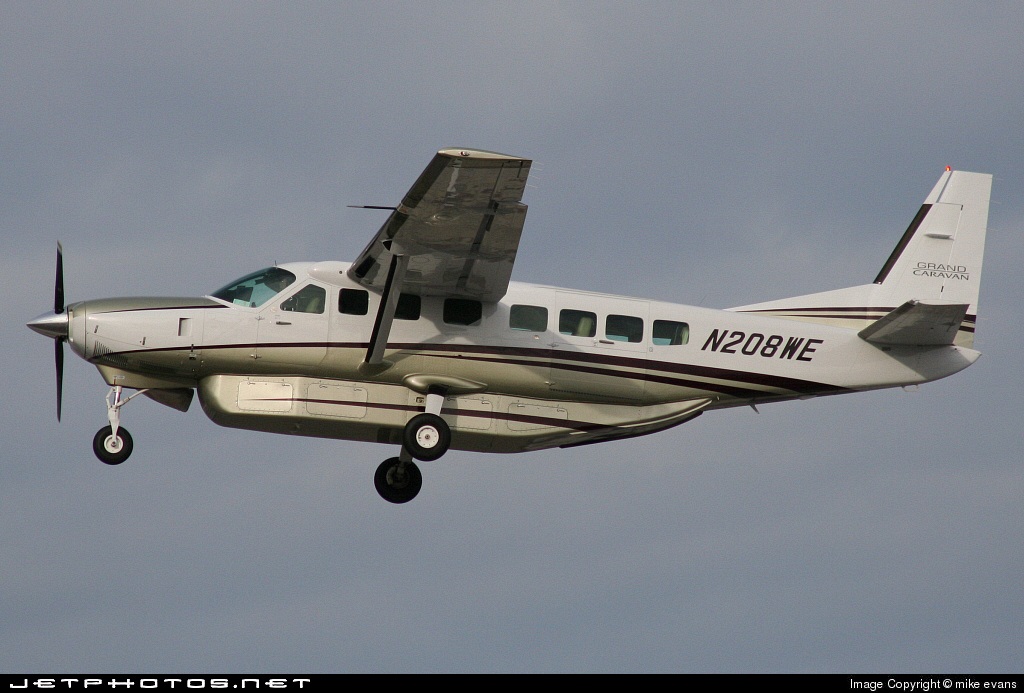
Crash of a Cessna 208B Grand Caravan in Oak Glen: 2 killed

Date & Time: Mar 28, 2006 at 1655 LT
Type of aircraft:
Operator:
Registration:
N208WE
Flight Phase:
Flight Type:
Survivors:
No
Site:
Schedule:
Thermal - Ontario
MSN:
208B-1171
YOM:
2006
Crew on board:
2
Crew fatalities:
Pax on board:
0
Pax fatalities:
Other fatalities:
Total fatalities:
2
Captain / Total flying hours:
2300
Copilot / Total flying hours:
1792
Copilot / Total hours on type:
740
Aircraft flight hours:
52
Circumstances:
The airplane was operated by the manufacturer and was on a sales demonstration itinerary. On the accident flight the airplane was being repositioned following a demonstration and the two pilots included a commercially licensed manufacturer's sales pilot and a private licensed regional sales distributor. One of the two pilots onboard requested, and received, an abbreviated weather briefing prior to departure, the details of which included an airman's meteorological information notice (AIRMET) for occasional moderate rime ice. He then filed an instrument flight rules flight plan for a route passing over mountainous terrain, with a published Minimum En route Altitude (MEA) for the airway that was above the predicted icing level. The flight plan was not activated and the pilots told a TRACON controller who was providing VFR advisories that they intended to continue under visual flight rules through a mountain pass and open their IFR flight plan after reaching the other side of the pass where the MEA was lower. A review of the mode C reported altitudes flown by the pilots and an analysis of the cloud bases and tops revealed that the flight was likely in at least intermittent, if not mostly solid, instrument meteorological conditions as it flew through the pass. As the flight approached the other end of the pass, the controller advised the pilots that the radar showed they were heading into rising terrain. The controller asked, "Do you have the terrain in sight?" One of the pilots responded, "we're maneuvering away from the terrain right now." After that, radar contact was lost. Recorded radar data showed that the airplane made a righthand turn toward rising terrain while continuing to climb to an approximate altitude of 8,800 feet mean sea level (msl). The last minute of radar data showed the airplane at altitudes of 8,000 feet msl, 8,800 feet msl, and 8,600 feet msl. The last radar return was at an altitude of 7,300 feet msl. An aircraft performance study was accomplished using recorded radar data and aerodynamic data provided by Cessna. Based on the radar data and other relevant information, as the aircraft turned toward the rising terrain, the bank angle steadily increased, until a very abrupt change in pitch consistent with a stall occurred, and the airplane departed controlled flight and descended at a very steep nose down attitude into the mountainous terrain. The airplane wreckage was subsequently located at an elevation of 6,073 feet. Nearby ground witnesses first noticed the sound of the airplane, that then suddenly changed to a high pitched increasing rpm. Witnesses then saw the accident airplane coming out of the clouds almost straight nose down. The witnesses described the weather as cold with drizzling rain and reduced visibility due to the clouds. Examination of the wreckage revealed no evidence of mechanical malfunction or failure.
Probable cause:
The pilot's continued flight into instrument meteorological weather conditions and his subsequent failure to maintain an adequate airspeed while maneuvering, that led to a stall/spin.
Final Report:

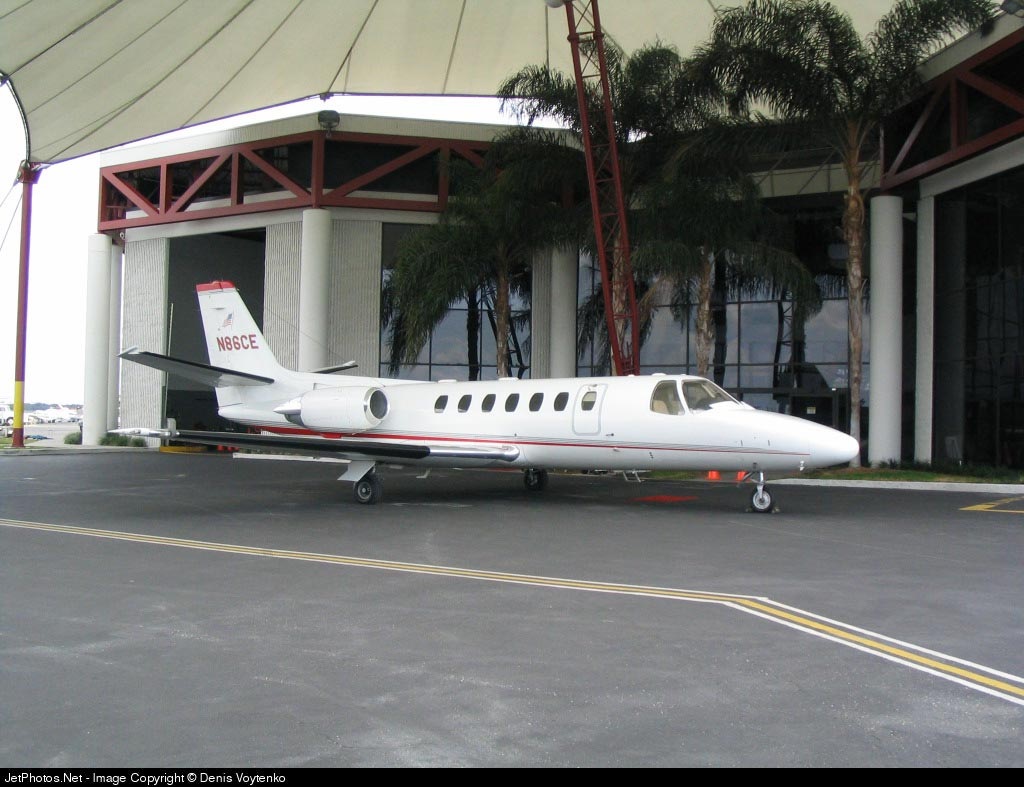
Crash of a Cessna 560 Citation V in Carlsbad: 4 killed

Date & Time: Jan 24, 2006 at 0640 LT
Type of aircraft:
Operator:
Registration:
N86CE
Survivors:
No
Schedule:
Sun Valley - Carlsbad
MSN:
560-0265
YOM:
1994
Crew on board:
2
Crew fatalities:
Pax on board:
2
Pax fatalities:
Other fatalities:
Total fatalities:
4
Captain / Total flying hours:
17000
Copilot / Total flying hours:
7500
Aircraft flight hours:
4720
Circumstances:
Air traffic control cleared the flightcrew for the instrument landing system (ILS) approach to runway 24, which was 4,897 feet long. The flightcrew then reported that they had the runway in sight, cancelled their instrument flight rules (IFR) clearance, and executed a visual flight rules (VFR) approach in VFR conditions to the airport. The reported winds favored a landing toward the east, onto the opposite runway (runway 6). During the approach, after a query from the first officer, the captain indicated to the first officer that he was going to "...land to the east," consistent with the reported winds. However, the final approach and subsequent landing were made to runway 24, which produced a six-knot tailwind. During the approach sequence the captain maintained an airspeed that was approximately 30 knots higher than the correct airspeed for the aircraft's weight, resulting in the aircraft touching down about 1,500 feet further down the runway than normal, and much faster than normal. The captain then delayed the initiation of a go-around until the first officer asked if they were going around. Although the aircraft lifted off the runway surface prior to departing the paved overrun during the delayed go-around it impacted a localizer antenna platform, whose highest non-frangible structure was located approximately 304 feet past the end of the runway, and approximately two feet lower than the terrain at the departure end of the runway. The aircraft continued airborne as it flew over downsloping terrain for about 400 more feet before colliding with the terrain and a commercial storage building that was located at an elevation approximately 80 feet lower than the terrain at the end of the runway. The localizer antenna platform was located outside of the designated runway safety area, and met all applicable FAA siting requirements. The captain had type 2 diabetes, for which he took oral medication and monitored blood sugar levels. He did not reveal his history of diabetes to the FAA. The captain's post-accident toxicology testing was consistent with an elevated average blood sugar level over the previous several months; however, no medical records of the captain's treatment were available, and the investigation could not determine if the captain's diabetes or treatment were potentially factors in the accident. The captain of the accident flight was the sole owner of a corporation that was asked by the two owners of the accident airplane to manage the airplane for them under a Part 91 business flight operation. The two owners were not pilots and had no professional aviation experience, but they desired to be flown to major domestic airports so that they could transfer and travel internationally via commercial airlines. One of the two owners stated that the purpose of the accident flight was to fly a businessman to a meeting, and to also transport one of the owner's wives to visit family at the same destination. According to one of the owners, the businessman was interested in being a third owner in the accident airplane, so the owner permitted the businessman to fly. The owner also stated that the accident pilot told him that the passenger would pay for expenses directly related to the operation of the airplane for the flight (permitted under FAA Part 91 rules), and an "hourly fee" (prohibited under FAA Part 91 rules); however, no documentation was found to corroborate this statement for the accident flight or previous flights.
Probable cause:
The captain's delayed decision to execute a balked landing (go-around) during the landing roll. Factors contributing to the accident include the captain's improper decision to land with a tailwind, his excessive airspeed on final approach, and his failure to attain a proper touchdown point during landing.
Final Report:

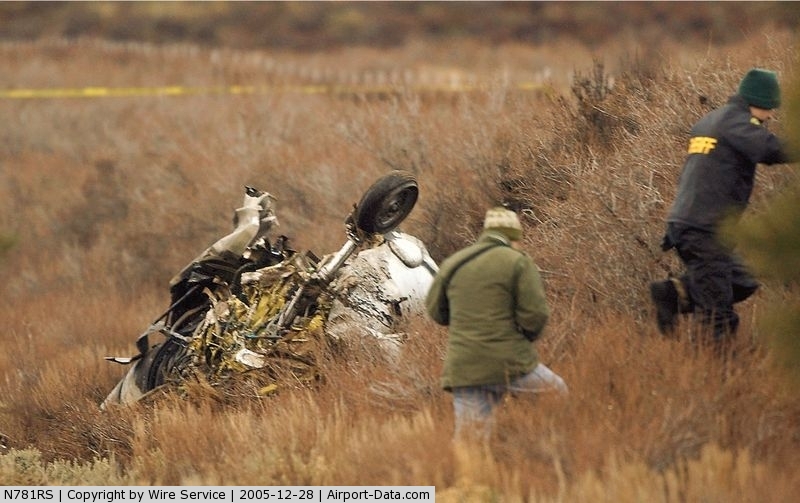
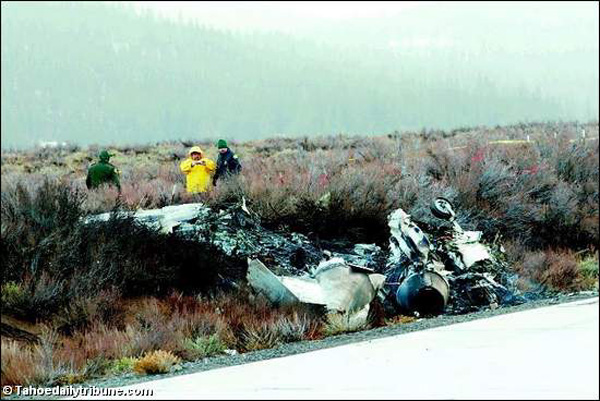
Crash of a Learjet 35A in Truckee: 2 killed

Date & Time: Dec 28, 2005 at 1406 LT
Type of aircraft:
Operator:
Registration:
N781RS
Flight Type:
Survivors:
No
Schedule:
Twin Falls - Truckee - Carlsbad - Monterrey
MSN:
35-218
YOM:
1978
Crew on board:
2
Crew fatalities:
Pax on board:
0
Pax fatalities:
Other fatalities:
Total fatalities:
2
Captain / Total flying hours:
4880
Captain / Total hours on type:
2200.00
Copilot / Total flying hours:
1650
Copilot / Total hours on type:
56
Aircraft flight hours:
9244
Circumstances:
The airplane collided with the ground during a low altitude, steep banked, base-to-final left turn toward the landing runway during a circling instrument approach. The airplane impacted terrain 1/3-mile from the approach end of runway 28, and north of its extended centerline. A witness, located in the airport's administration building, made the following statement regarding his observations: "I saw the aircraft in and out of the clouds in a close base for [runway] 28. I then saw the aircraft emerge from a cloud in a base to final turn [and] it appeared to be approximately 300-400 feet above the ground. The left wing was down nearly 90 degrees. The aircraft appeared north of the [runway 28] centerline. The aircraft pitched nose down approximately 30-40 degrees and appeared to do a 1/2 cartwheel on the ground before exploding." ATC controllers had cleared the airplane to perform a GPS-A (circling) approach. The published weather minimums for category C and D airplanes at the 5,900-foot mean sea level airport was 3 miles visibility, and the minimum descent altitude was 8,200 feet mean sea level (msl). Airport weather observers noted that when the accident occurred, the visibility was between 1 1/2 and 5 miles. Scattered clouds existed at 1,200 feet above ground level (7,100 feet msl), a broken ceiling existed at 1,500 feet agl (7,400 feet msl) and an overcast condition existed at 2,400 feet agl (8,300 feet msl). During the approach, the first officer acknowledged to the controller that he had received the airport's weather. The airplane overflew the airport in a southerly direction, turned east, and entered a left downwind pattern toward runway 28. A 20- to 30-knot gusty surface wind existed from 220 degrees, and the pilot inadequately compensated for the wind during his base leg-to-final approach turning maneuver. The airplane was equipped with Digital Electronic Engine Controls (DEEC) that recorded specific data bits relating to, for example, engine speed, power lever position and time. During the last 4 seconds of recorded data (flight), both of the power levers were positioned from a mid range point to apply takeoff power, and the engines responded accordingly. No evidence was found of any preimpact mechanical malfunction. The operator's flight training program emphasized that during approaches consideration of wind drift is essential, and a circling approach should not be attempted in marginal conditions.
Probable cause:
The pilot's inadequate compensation for the gusty crosswind condition and failure to maintain an adequate airspeed while maneuvering in a steep turn close to the ground.
Final Report: