Crash of a Grumman G-21A Goose off Unalaska: 2 killed

Date & Time: Aug 11, 1996 at 1615 LT
Type of aircraft:
Operator:
Registration:
N660PA
Flight Phase:
Survivors:
No
Schedule:
Anderson Bay - Dutch Harbor
MSN:
B138
YOM:
1945
Location:
Crew on board:
1
Crew fatalities:
Pax on board:
1
Pax fatalities:
Other fatalities:
Total fatalities:
2
Captain / Total flying hours:
20000
Captain / Total hours on type:
8000.00
Aircraft flight hours:
13381
Circumstances:
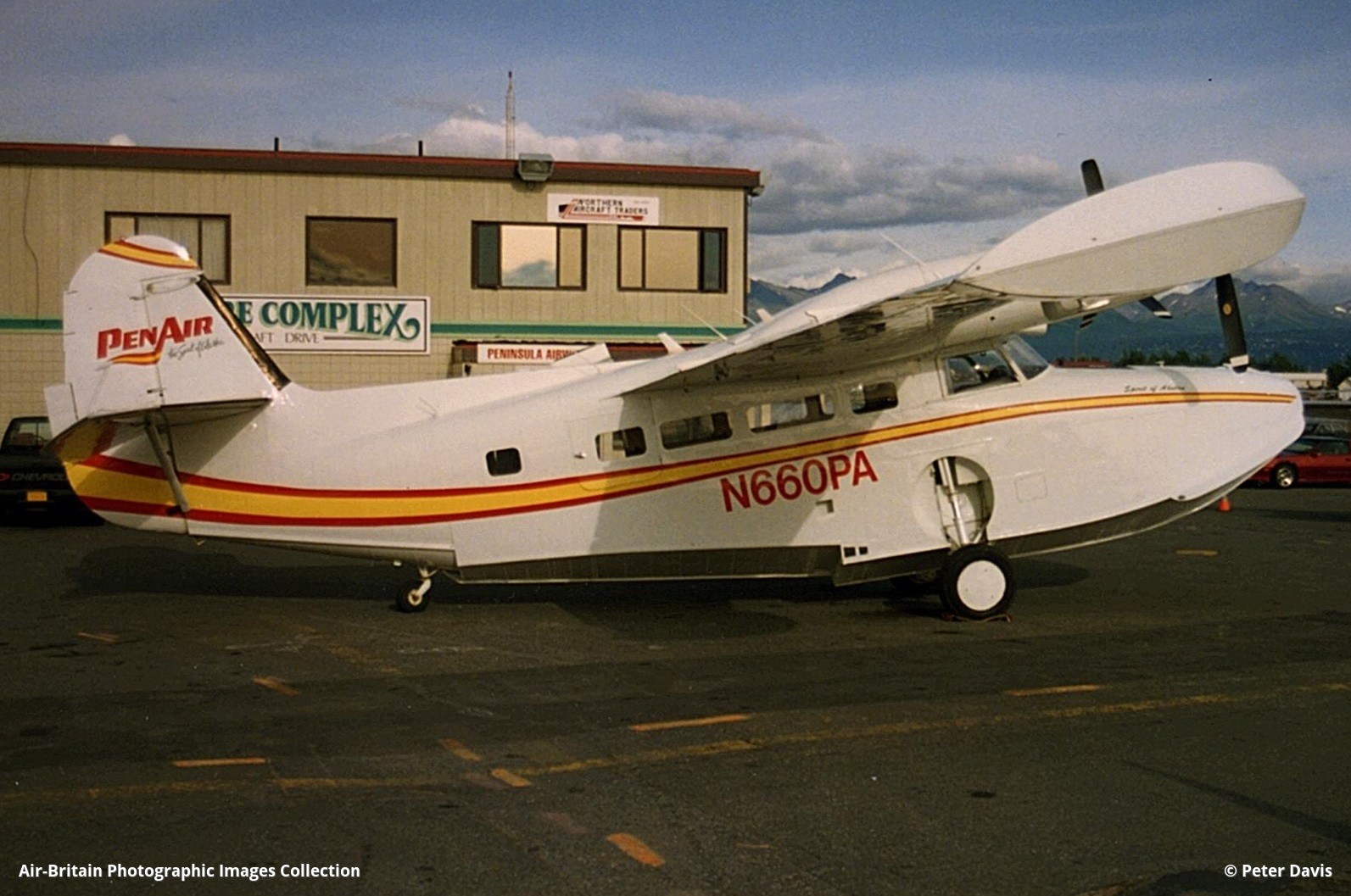
On August 11, 1996, about 1615 Alaska daylight time, an amphibious Grumman G21-G, N660PA, is presumed to have been involved in a fatal accident about 20 miles south of Dutch Harbor, Alaska. The airplane was being operated as a visual flight rules (VFR) cross-country on demand passenger flight under Title 14 CFR Part 135 when the accident occurred. The airplane, registered to and operated by Peninsula Airways Inc., Anchorage, Alaska, is presumed to have been destroyed. The certificated airline transport pilot, and the sole passenger are presumed to have received fatal injuries. Low ceilings were reported in the area of departure by the operator. VFR company flight following procedures were in effect. The flight originated from Anderson Bay, on the Island of Unalaska, about 1610.
Probable cause:
Due to lack of evidences, the exact cause of the accident could not be determined.
Final Report:

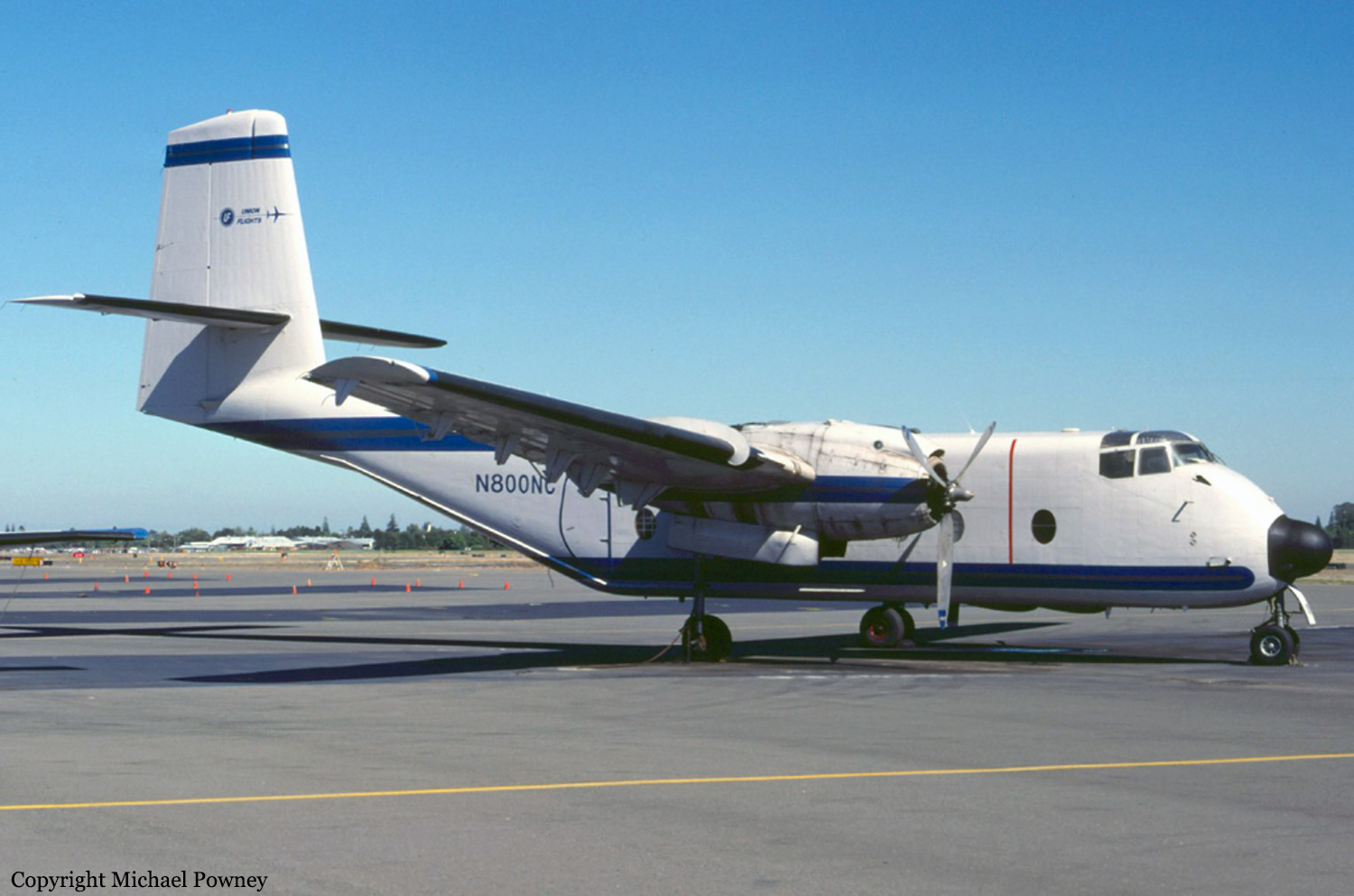
Crash of a De Havilland DHC-4A Caribou in New Stuyahok

Date & Time: Aug 2, 1996 at 1100 LT
Type of aircraft:
Operator:
Registration:
N800NC
Flight Type:
Survivors:
Yes
Schedule:
Anchorage - New Stuyahok
MSN:
98
YOM:
1963
Crew on board:
2
Crew fatalities:
Pax on board:
0
Pax fatalities:
Other fatalities:
Total fatalities:
0
Captain / Total flying hours:
15670
Captain / Total hours on type:
850.00
Aircraft flight hours:
14638
Circumstances:
The airplane's nose gear collapsed during a landing roll on a gravel airstrip. Subsequent examination of the nose gear locking mechanism disclosed a failed hydraulic drag strut locking actuator.
Probable cause:
The collapse of the nose gear precipitated by the failure of the hydraulic nose gear drag strut locking actuator.
Final Report:

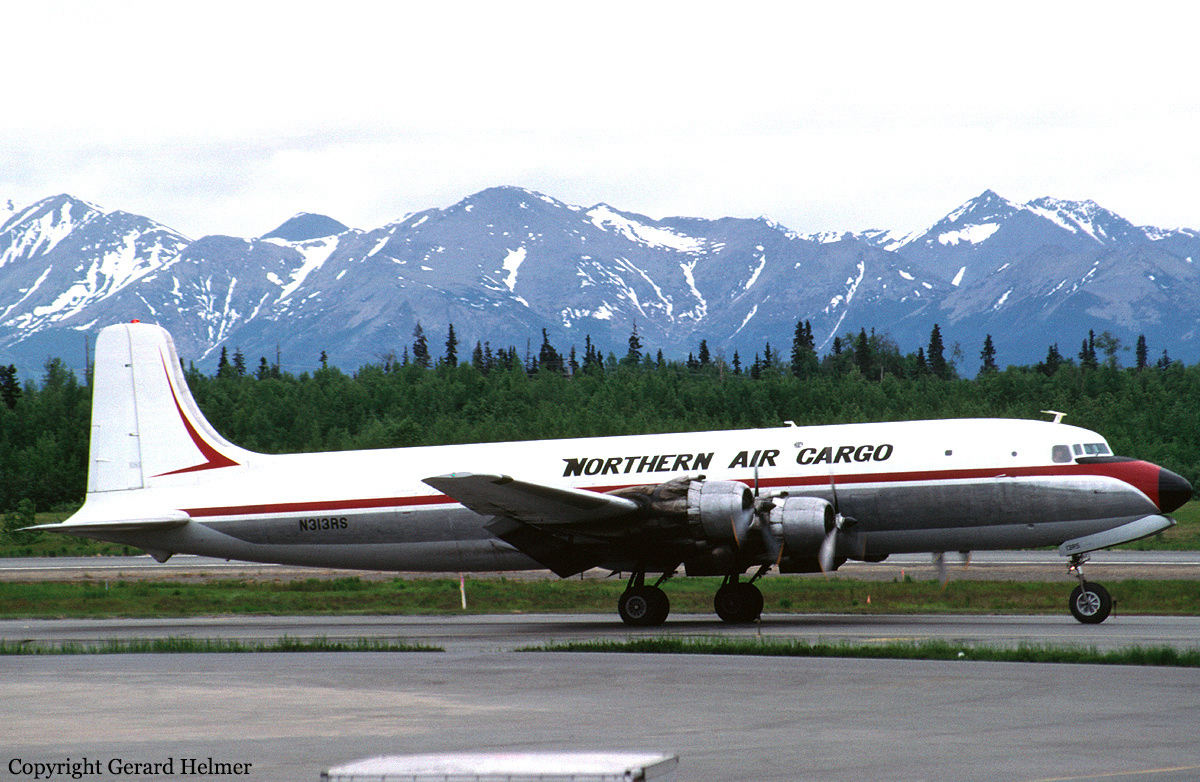
Crash of a Douglas DC-6A in Russian Mission: 4 killed

Date & Time: Jul 20, 1996 at 1506 LT
Type of aircraft:
Operator:
Registration:
N313RS
Flight Type:
Survivors:
No
Schedule:
Emmonak – Aniak
MSN:
44663
YOM:
1955
Flight number:
HU033
Crew on board:
3
Crew fatalities:
Pax on board:
1
Pax fatalities:
Other fatalities:
Total fatalities:
4
Captain / Total flying hours:
14200
Captain / Total hours on type:
7200.00
Aircraft flight hours:
38248
Circumstances:
The cargo flight was en route, when a fire erupted in or near the #3 engine. During subsequent emergency procedures, the flight crew pulled the fire handle first. Later, they feathered the #3 engine. The fire did not extinguish. During an attempt to land at a rural, intermediate airstrip, while the airplane was in the traffic pattern, witnesses saw fire coming from the area of the #3 engine. They stated the right wing buckled upward, and the airplane crashed. Examination of the wreckage revealed a failure of the master rod in the front bank of cylinders of the #3 engine. Metallurgical tests revealed a crack in the top of the master rod head, which had resulted from corrosion pits. The side of the master rod head was measured and found to be out of round. The master rod shank also fractured due to fatigue. The operator's training procedures and the Douglas Aircraft emergency checklist procedures, required that the engine's propeller be feathered first, and then the fire extinguishing system to be activated. According to information derived from the airplane's cockpit voice recorder, the flight crew reversed that order. The effectiveness of the fire suppression system is diminished if the propeller is not feathered first.
Probable cause:
Fatigue failure of the master connecting rod, which originated from corrosion pitting, subsequently compromised the engine crankcase, and resulted in a fire; and failure of the flight crew to follow emergency procedures by pulling the fire handle before feathering the propeller, which diminished the effectiveness of the fire suppression system.
Final Report:

Crash of a De Havilland DHC-2 Beaver near Elfin Cove: 1 killed

Date & Time: Jul 19, 1996 at 1530 LT
Type of aircraft:
Operator:
Registration:
N54LA
Flight Type:
Survivors:
No
Site:
Schedule:
Hoonah – Elfin Cove – Juneau
MSN:
724
YOM:
1954
Crew on board:
1
Crew fatalities:
Pax on board:
0
Pax fatalities:
Other fatalities:
Total fatalities:
1
Captain / Total flying hours:
2999
Captain / Total hours on type:
616.00
Aircraft flight hours:
11047
Circumstances:
The pilot of the air taxi cargo flight departed his base of operations in Juneau, Alaska for a series of flights in southeast Alaska that would ultimately return him to Juneau. On the accident leg of the intended round robin, the pilot was en route from Hoonah to Elfin Cove. The flight would originate and end at sea level, and traverse a mountain pass, with minimum obstruction clearance in the pass estimated at 500 feet msl. The airplane collided with steeply rising terrain at the 1,250-foot level about one mile south of the proposed flight path. The airplane was partially consumed by a post impact fire. The operator initiated a helicopter search within two hours of the time of the accident. The helicopter pilot and his passenger both reported that the area where the accident airplane was eventually located was obscured in low clouds, and that many of the other valleys and mountain sides were covered in clouds. Low clouds persisted in the area of the crash site for the following two days.
Probable cause:
The pilot's decision to continue VFR flight into instrument meteorological conditions, and his failure to maintain adequate clearance from rising terrain. Factors associated with the accident were the rising terrain and clouds.
Final Report:

Crash of a Swearingen SA227AC Metro III in Saint George

Date & Time: May 3, 1996 at 1630 LT
Type of aircraft:
Operator:
Registration:
N670PA
Survivors:
Yes
Schedule:
Saint Paul - Saint George
MSN:
AC-613
YOM:
1985
Flight number:
KS661
Crew on board:
2
Crew fatalities:
Pax on board:
11
Pax fatalities:
Other fatalities:
Total fatalities:
0
Captain / Total flying hours:
19100
Captain / Total hours on type:
5500.00
Aircraft flight hours:
17167
Circumstances:
According to passenger's accounts, the airplane was flying low and approached the runway at an angle. The airplane made a right turn and dragged the right wing on the runway's surface. The airplane landed hard and sheared off the right main landing gear and the nose gear. The weather reported by AWOS was 300 foot overcast with a visibility of 2.5 miles with fog. The Captain stated the airplane drifted to the left side of the runway due to the crosswind, and he executed a right turn to realign with the runway. The cockpit voice recorder indicated that the stall warning horn sounded as the First Officer called for the application of power.
Probable cause:
Failure of the captain to maintain proper altitude and wingtip clearance, while aligning the airplane with the runway before landing. His delay in aligning the aircraft with the runway was a related factor.
Final Report:

Crash of a Cessna 207 Skywagon in Kotzebue

Date & Time: Apr 17, 1996 at 1253 LT
Operator:
Registration:
N6282H
Flight Phase:
Flight Type:
Survivors:
Yes
Schedule:
Kotzebue - Selawik
MSN:
207-0465
YOM:
1978
Crew on board:
1
Crew fatalities:
Pax on board:
0
Pax fatalities:
Other fatalities:
Total fatalities:
0
Captain / Total flying hours:
1815
Captain / Total hours on type:
175.00
Aircraft flight hours:
15367
Circumstances:
The pilot was departing a remote airport to begin a VFR cargo flight. The departure path took the airplane over ice covered terrain. The airport was considered to be below basic VFR conditions with light snow and fog, and the visual conditions in the area were considered to be 'flat' with the visibility from 2 to 3 miles. The pilot received a special VFR clearance out of the control zone by a flight service station specialist. After departure, witnesses observed the airplane climb to an estimated 500 feet above the ground and turn to the right. Shortly thereafter, the airplane banked to the right about 90 degrees, then descended to the ground in a wing and nose low attitude. A postaccident inspection of the airframe and engine did not reveal any mechanical malfunction.
Probable cause:
Failure of the pilot to maintain sufficient altitude/clearance above terrain, after becoming spatially disoriented, while maneuvering after takeoff. Factors relating to the accident were: fog, snow, partial obscuration, 'flat' conditions of light, and the lack of a distinct horizon over ice/snow covered terrain.
Final Report:

Crash of a Beechcraft G18S in Nome

Date & Time: Dec 18, 1995 at 1316 LT
Type of aircraft:
Operator:
Registration:
N340K
Flight Phase:
Flight Type:
Survivors:
Yes
Schedule:
Nome - Gambell
MSN:
BA-605
YOM:
1962
Location:
Crew on board:
1
Crew fatalities:
Pax on board:
0
Pax fatalities:
Other fatalities:
Total fatalities:
0
Captain / Total flying hours:
8500
Captain / Total hours on type:
450.00
Aircraft flight hours:
6886
Circumstances:
The pilot was attempting to transport by-pass mail from Nome to Gambell, Alaska. The pilot stated that the takeoff run was normal until he rotated the nose of the airplane to lift off. The pilot said the airplane pitched up and he had to apply full forward control yoke pressure while he adjusted the pitch trim to nose down. The airplane rolled to the left and the pilot used the rudders to level the wings prior to impact. The information provided by the company, the FAA, and the post office, indicate that the airplane weighed 10,114 pounds at the time of the takeoff. The certificated maximum gross weight was 10,100 pounds. A weight and balance calculation, based upon information obtained from the company and the placarded limits on the airplane, showed a center of gravity of 121.9 inches. The center of gravity limits shown in the airplane manual are 113 to 120.5 inches. The wreckage examination showed that the elevator trim indicator was indicating full nose up trim.
Probable cause:
The pilot exceeding the weight and balance limitations of the airplane and improperly utilizing the airplane's elevator trim by selecting full nose up trim.
Final Report:

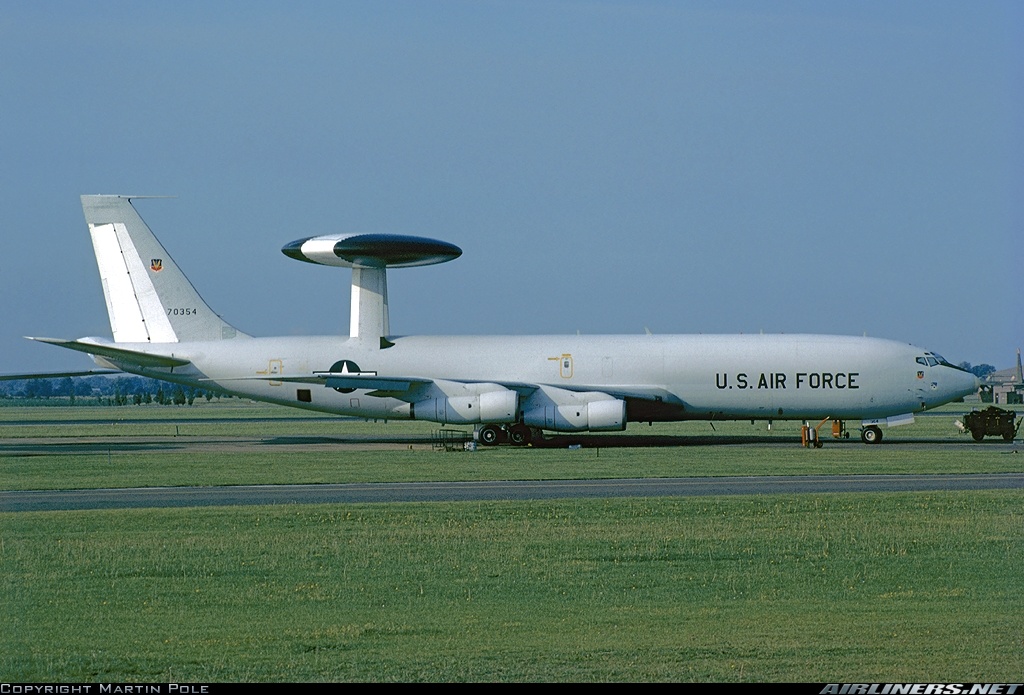
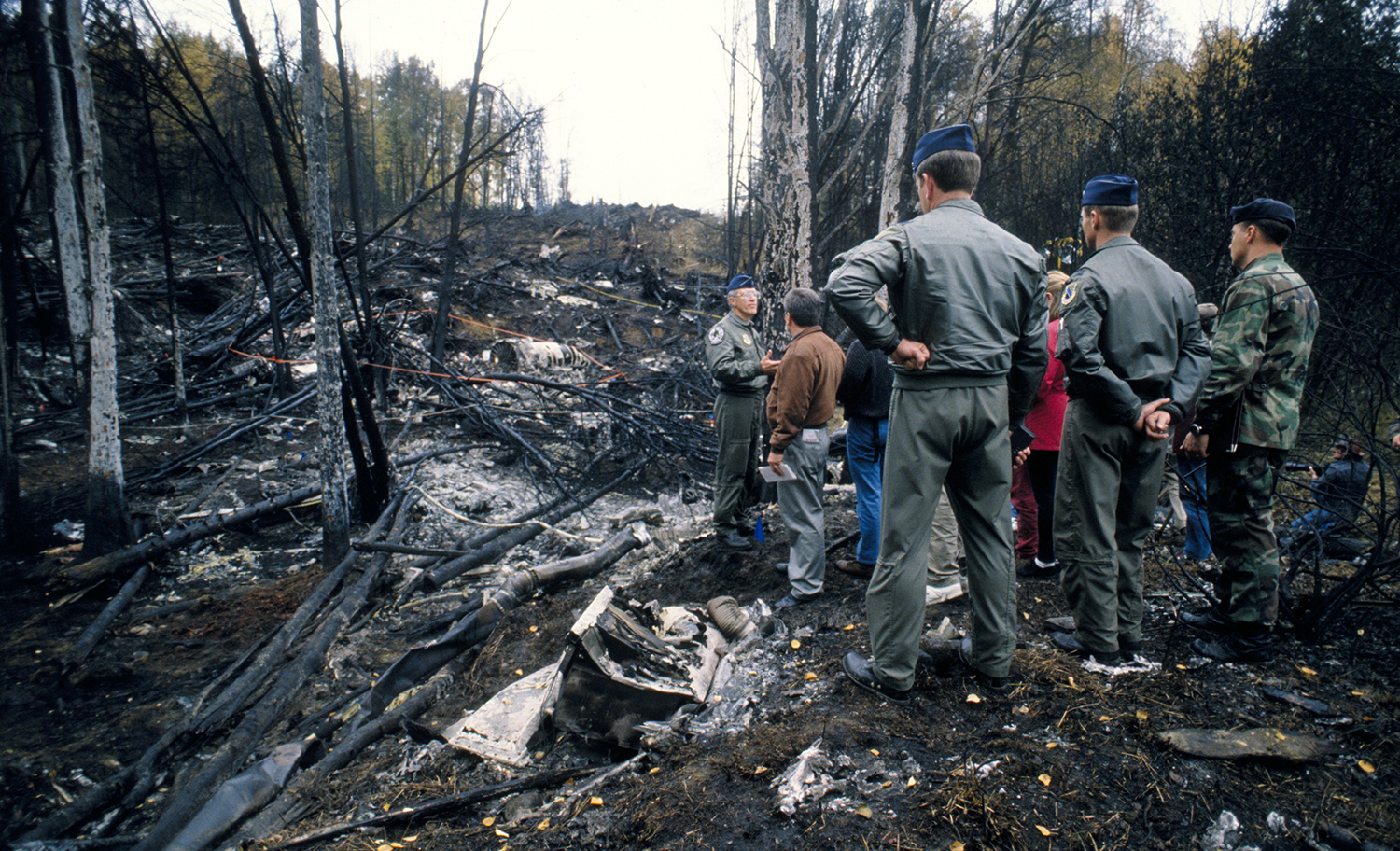
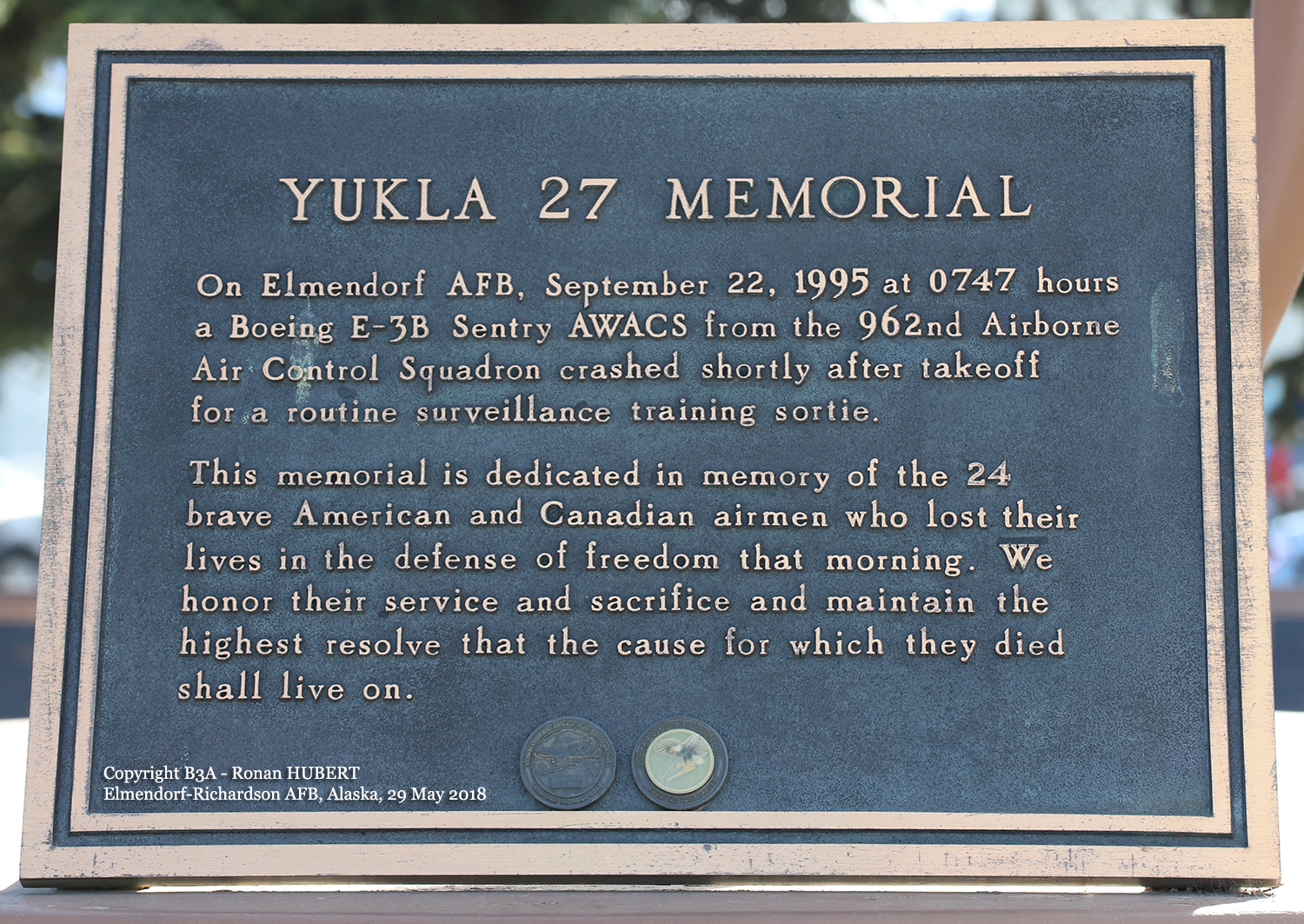
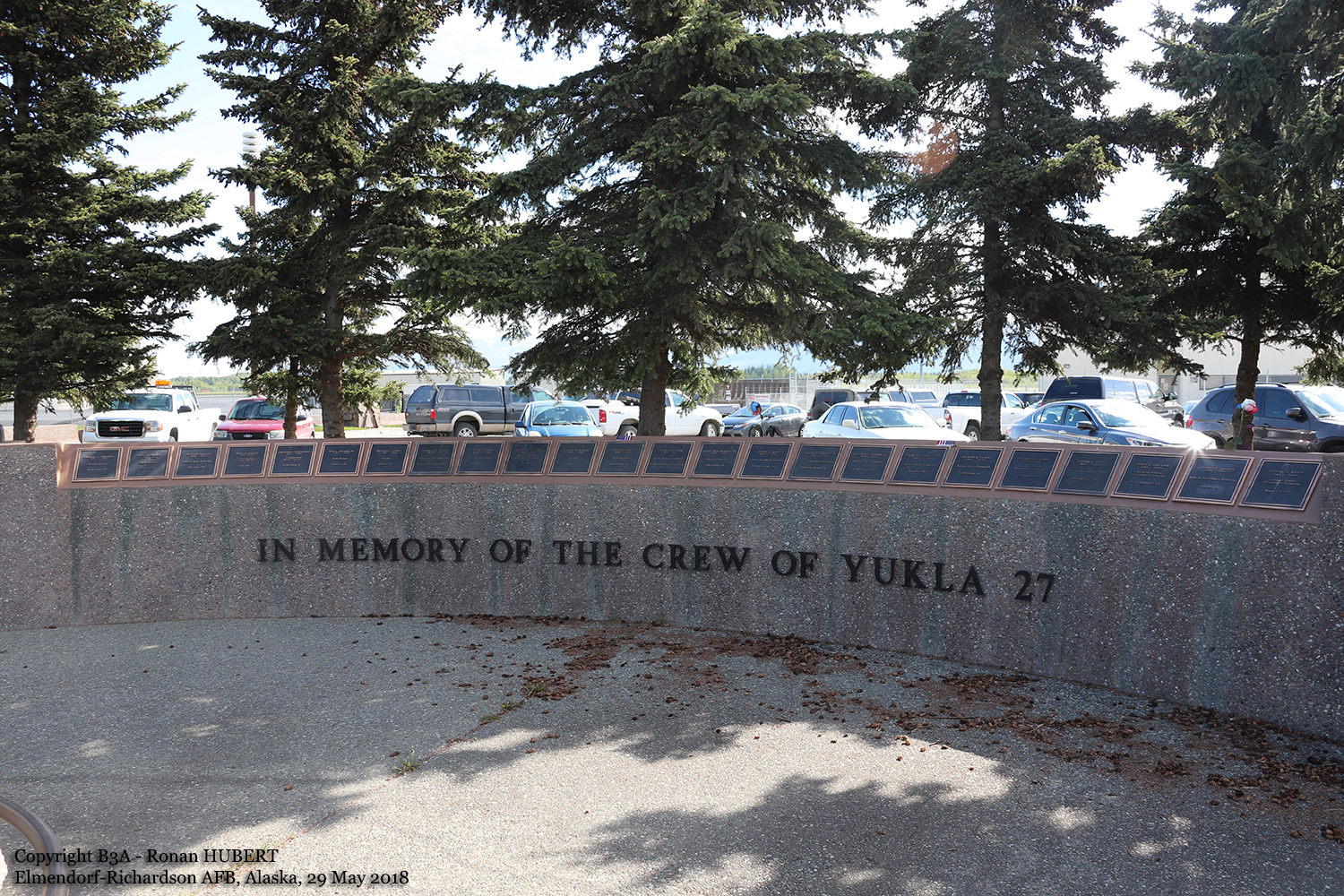
Crash of a Boeing E-3B Sentry at Elmendorf AFB: 24 killed

Date & Time: Sep 22, 1995 at 0747 LT
Type of aircraft:
Operator:
Registration:
77-0354
Flight Phase:
Survivors:
No
Schedule:
Elmendorf - Elmendorf
MSN:
21554
YOM:
1978
Flight number:
Yukla 27
Crew on board:
4
Crew fatalities:
Pax on board:
20
Pax fatalities:
Other fatalities:
Total fatalities:
24
Circumstances:
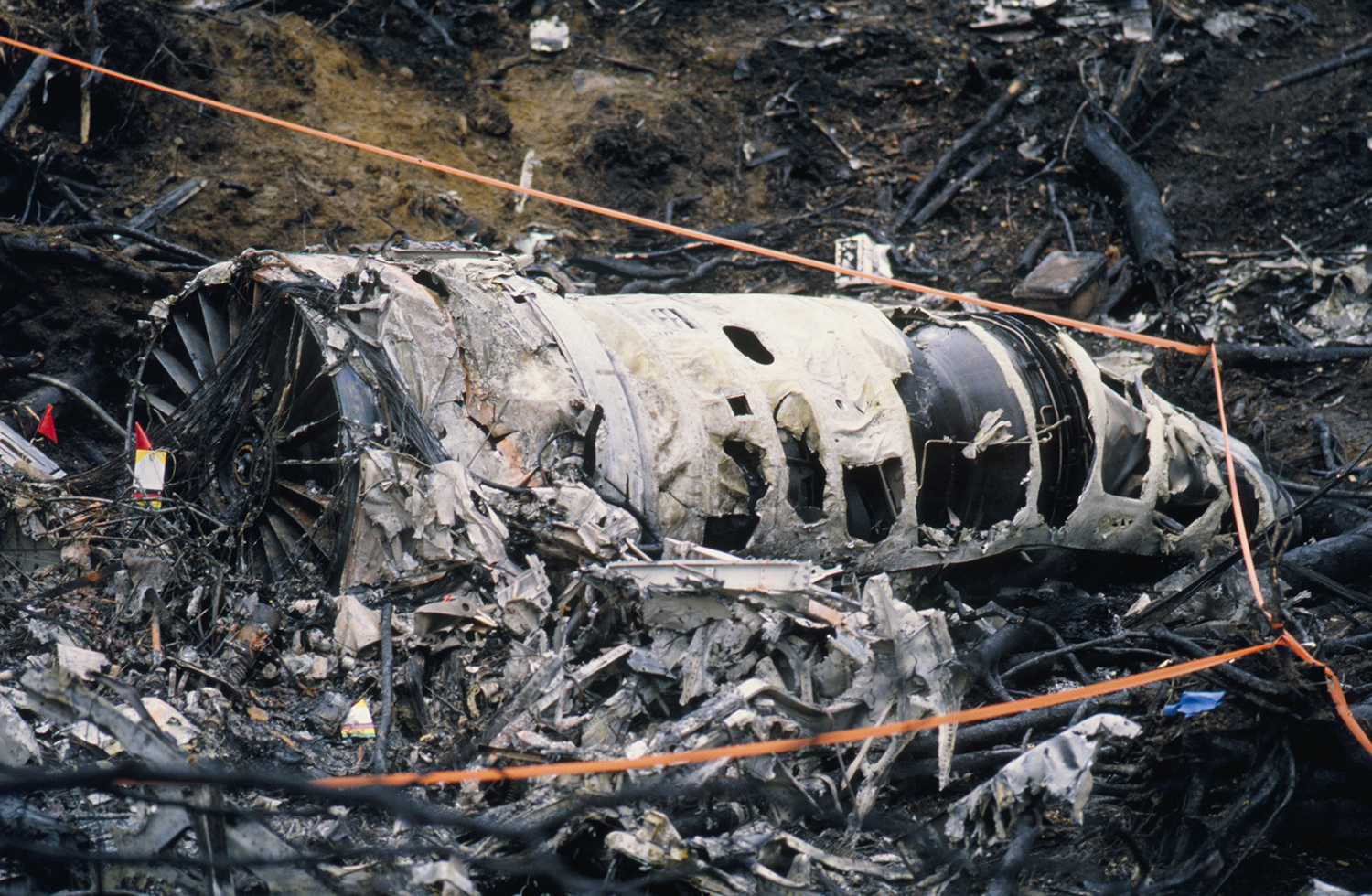
The aircraft was dispatched out from Elmendorf AFB on an AWACS survey mission under call sign Yukla 27, carrying 20 passengers and four crew members. Shortly after takeoff from runway 05, while in initial climb, the aircraft collided with a flock of Canada geese that struck both left engines n°1 and 2. The aircraft climbed to a maximum height of about 250 feet when the engine n°1 failed and the engine n°2 exploded. The aircraft entered an uncontrolled left roll, causing the left wing to struck trees. Out of control, it crashed in a huge explosion in a wooded area located about a mile from the runway end. The aircraft disintegrated on impact and all 24 occupants were killed. Numerous dead geese were found at the crash site.
Probable cause:
It was determined that the loss of control and subsequent crash was the consequence of a collision with Canada geese during initial climb. Investigations revealed that a USAF Lockheed C-130 just took off from the same runway about two minutes prior to the accident. At that time, numerous geese were standing near the runway end and were probably disturbed by the C-130 low pass. All geese took off and remained hovering at low height. This phenomenon was spotted by the tower controller who failed to warn the Sentry crew accordingly. It was also determined that there was no efficient program to detect and deter bird hazard at Elmendorf AFB.

Crash of a Short SC.7 Skyvan 3 Variant 200 near Farewell: 1 killed

Date & Time: Sep 1, 1995 at 1200 LT
Type of aircraft:
Operator:
Registration:
N30GA
Flight Phase:
Flight Type:
Survivors:
No
Site:
Schedule:
Farewell - Anchorage
MSN:
1839
YOM:
1968
Location:
Crew on board:
1
Crew fatalities:
Pax on board:
0
Pax fatalities:
Other fatalities:
Total fatalities:
1
Captain / Total flying hours:
11389
Captain / Total hours on type:
2200.00
Aircraft flight hours:
15798
Circumstances:
The pilot had departed a remote airstrip on the return portion of a cargo flight. An instrument flight plan was on file with the ARTCC. After departure, the pilot attempted to contact ARTCC to open his flight plan but communications were not established. The airplane struck mountainous terrain about 6 miles south of the departure airport. Radar data showed that after departure, the airplane climbed westbound and then turned southbound toward higher terrain. It circled southwest of the airport and turned eastbound while climbing to 5,300 feet msl. The airplane then turned southbound again toward the accident site. The last recorded radar data was at 5,200 feet msl. The airplane struck a ridgeline about 4,800 feet msl. Airmets were in effect for IFR conditions, low ceilings, mountain obscurations, rain, fog, and icing in clouds and in precipitation. A witness reported that when the airplane arrived at the airport, the airframe had a coating of ice. When the airplane departed, snow was falling at the airport.
Probable cause:
The pilot's continued vfr flight into instrument meteorological conditions. The weather was a factor.
Final Report:

Crash of a Cessna 421C Golden Eagle III off Middleton Island: 4 killed

Date & Time: Jul 29, 1995 at 1150 LT
Registration:
N800DD
Flight Phase:
Flight Type:
Survivors:
No
Schedule:
Juneau - King Salmon
MSN:
421C-0469
YOM:
1978
Crew on board:
1
Crew fatalities:
Pax on board:
3
Pax fatalities:
Other fatalities:
Total fatalities:
4
Captain / Total flying hours:
2000
Aircraft flight hours:
4912
Circumstances:
The flight departed Juneau, Alaska on a VFR flight to King Salmon, Alaska. When the flight was 50 miles southwest of the Yakutat VOR, the pilot requested an IFR clearance. He was cleared direct to Middleton Island VOR, then direct to King Salmon VOR. When the flight was 20 miles northwest of Middleton Island, the pilot contacted ARTCC and indicated his right engine had come apart. The pilot attempted to fly to and land at Middleton Island, Alaska. During the flight, the airplane consistently lost altitude. He flew past the island and was southeast of the island, when radar contact was lost. The airplane was not recovered. Flight crew of rescue aircraft stated they saw bubbles, an oil slick, and airplane debris in the ocean approximately 3 miles south of the Middleton Island Airport. The 1126 adt weather at the airport was in part: 600 feet broken, visibility 5 miles, wind from 117° at 17 gusting 25 knots.
Probable cause:
Mechanical loss of engine power for undetermined reason(s), and subsequent in-flight collision with water (or ditching at sea).
Final Report: