Crash of a Cessna 207A Skywagon in Nome: 2 killed

Date & Time: Jun 27, 1997 at 1633 LT
Operator:

Registration:
N207SP
Survivors:
No
Schedule:
Brevig Mission - Nome
MSN:
207-0412
YOM:
1977
Location:
Crew on board:
1
Crew fatalities:
Pax on board:
1
Pax fatalities:
Other fatalities:
Total fatalities:
2
Captain / Total flying hours:
1745
Captain / Total hours on type:
200.00
Aircraft flight hours:
12771
Circumstances:
The flight was landing under special VFR conditions. Special VFR operations are permitted with a visibility of 1 mile, and clear of clouds. The airport was the pilot's base of operations. The flight had held outside the airport surface area for 26 minutes, waiting for a special VFR clearance. While outside the airport surface area, the pilot was required to maintain 500 feet above the ground and 2 miles visibility. While holding, the weather at the airport was reported as 300 feet overcast. The visibility decreased from 4 miles to 1 mile in mist. The pilot was new to the area of operations, having worked at the company for 24 days, during which he accrued 69 hours of flight time. Four minutes after receiving clearance to enter the surface area for landing, the airplane collided with a 260 feet tall radio antenna tower at 222 feet above the ground. The tower was located 3.85 nautical miles east of the airport. The radio tower was not considered by the FAA to be an object affecting navigable airspace, but was depicted as an obstruction on the VFR sectional chart for the area. The tower was equipped with obstruction lighting for night illumination, and was painted alternating aviation orange and white for daytime marking. One minute after the collision, the overcast was reported at 200 feet, and the visibility was 5/8 mile.
Probable cause:
The pilot's continued VFR flight into instrument meteorological conditions, and his failure to maintain adequate clearance from an obstruction (antenna tower). Factors in the accident were low ceilings and visibility, and the pilot's lack of familiarity with the geographic area.
Final Report:
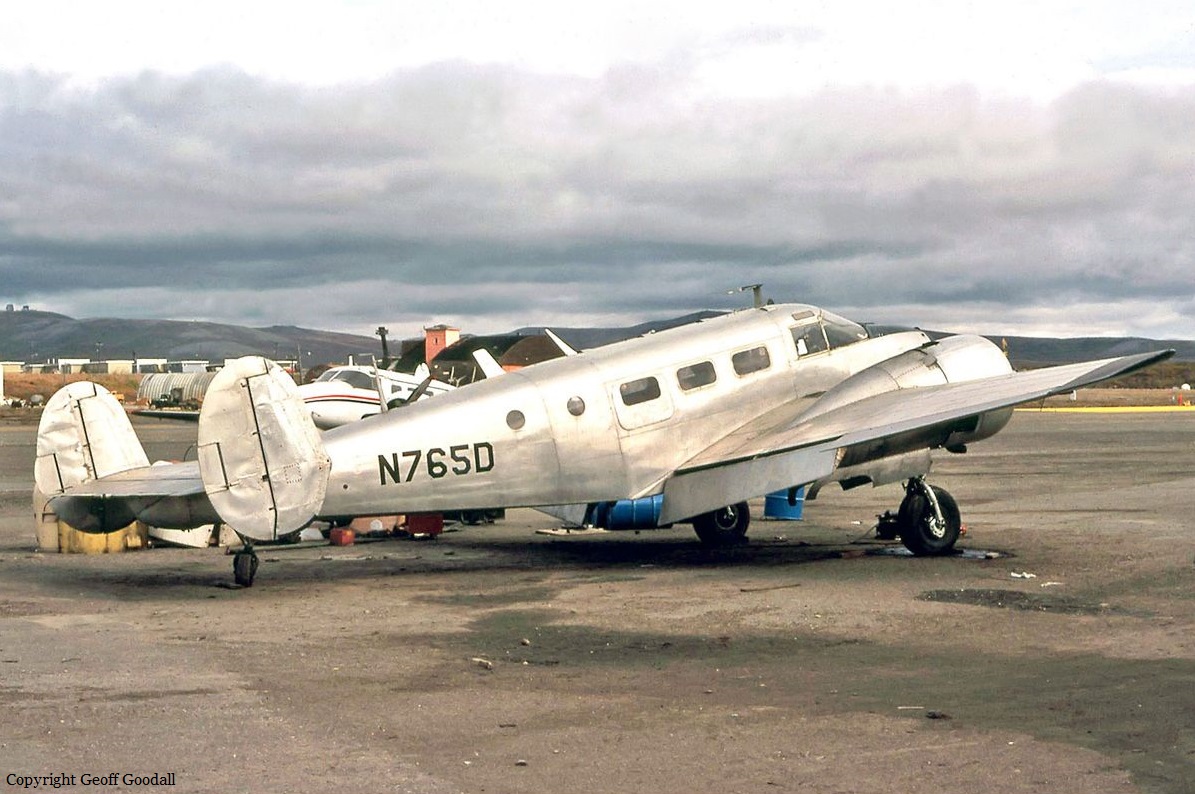

Crash of a Beechcraft D18S in Willow

Date & Time: Jun 25, 1997 at 1130 LT
Type of aircraft:
Operator:
Registration:
N765D
Flight Phase:
Flight Type:
Survivors:
Yes
Schedule:
Willow - Sleetmute
MSN:
A-818
YOM:
1952
Location:
Crew on board:
1
Crew fatalities:
Pax on board:
0
Pax fatalities:
Other fatalities:
Total fatalities:
0
Captain / Total flying hours:
8000
Captain / Total hours on type:
35.00
Aircraft flight hours:
8600
Circumstances:
The pilot took off from a 4400-foot-long gravel airstrip with a near gross weight load of cargo. He said that shortly after lift-off the airplane felt 'sluggish', and he believes the left engine began to lose power. He said the airplane would not climb, and he elected to bring both engines to idle and land on the remaining runway. The airplane touched down a short distance from the end of the runway, and continued off the end and into the woods. A fire erupted, and the airplane was destroyed by fire. The pilot is unsure if the fire occurred in the air, or shortly after the airplane went off the end of the runway. The engines were extensively damaged by fire, and were not examined. FAA inspectors on scene said there was no obvious signs of catastrophic engine failure.
Probable cause:
The loss of engine power for an undetermined reason.
Final Report:

Crash of a Cessna 208B Grand Caravan in Wainwright: 5 killed

Date & Time: Apr 10, 1997 at 2030 LT
Type of aircraft:
Operator:
Registration:
N408GV
Survivors:
No
Schedule:
Barrow - Wainwright
MSN:
208B-0455
YOM:
1995
Flight number:
HAG502
Crew on board:
1
Crew fatalities:
Pax on board:
4
Pax fatalities:
Other fatalities:
Total fatalities:
5
Captain / Total flying hours:
3660
Captain / Total hours on type:
60.00
Aircraft flight hours:
1700
Circumstances:
The pilot had contacted the FSS 11 times on the day of the accident to obtain weather briefings. The conditions were below VFR minimums, which were required to conduct the passenger carrying commercial flight in a single-engine airplane. The conditions later improved and the pilot departed under a special VFR clearance. The pilot performed two approaches at the destination airport in IMC that were consistent with the two GPS approaches that were available there. Weather data and witnesses indicate that daylight conditions, low clouds and poor visibility prevailed, with cloud tops at 1,000 feet. After the second approach, the pilot radioed that he was heading back to the departure airport because he could not see the airport. No distress calls or unusual engine noises were heard. The airplane subsequently flew north of the airport and away from the departure airport at an altitude beneath the minimum radar coverage of 2,200 feet. It impacted the frozen Arctic Ocean in a right bank and at a 60-degree nose-down attitude about three miles away from the location of the pilot's last radio transmission. An examination of the airplane (before it sank through cracking ice) revealed no pre-impact mechanical malfunctions. An examination of the propeller revealed that it was under a power setting consistent with a maneuvering airspeed at the time of impact. An examination of the autopilot annunciator filament revealed that the autopilot was not engaged at impact. The airplane was nearly full of fuel and over its published maximum gross weight at impact. Small pieces of clear ice, about 1/4-inch thick, were found on portions of the tail surfaces. Interviews with operator employees and the pilot's wife revealed that the pilot may have felt pressure from himself and passengers to complete the flight.
Probable cause:
The pilot's intentional VFR flight into instrument meteorological conditions and his failure to maintain altitude/clearance from terrain. Factors contributing to the accident were the weather conditions.
Final Report:

Crash of a Cessna 207A Skywagon in Nunapitchuk: 1 killed

Date & Time: Mar 25, 1997 at 1123 LT
Operator:
Registration:
N800GA
Flight Phase:
Flight Type:
Survivors:
No
Schedule:
Scammon Bay - Bethel
MSN:
207-0495
YOM:
1979
Crew on board:
1
Crew fatalities:
Pax on board:
0
Pax fatalities:
Other fatalities:
Total fatalities:
1
Captain / Total flying hours:
2437
Captain / Total hours on type:
1136.00
Aircraft flight hours:
10193
Circumstances:
The pilot of Cessna 207A, N800GA, was returning to his company base, passing about 2 miles north of a remote airstrip that was along the route of flight. The airstrip did not have any control tower. [Communications around an uncontrolled airport are conducted on a common traffic advisory frequency (CTAF)]. The pilot of a Short SC7, N451SA, announced his departure from the same airstrip on the CTAF, and took off in a northerly direction. He then began a climbing right turn toward the same destination as the Cessna 207A was proceeding. The two airplanes collided in mid-air, about 1.49 nautical miles east-northeast of the airstrip, which was about 18.3 miles west of their destination. They were observed spiraling downward from about 800 ft above the ground. Both airplanes were found lying flat and upright on a frozen lake, entangled together at the accident site. The Cessna's burned wreckage was lying on top of (and positioned toward the aft third of) the burned wreckage of the Short SC7.
Probable cause:
Inadequate visual look-out by the pilots of both airplanes, which resulted in their failure to see-and-avoid each other's airplanes.
Final Report:

Crash of a Short SC.7 Skyvan 3 Variant 100 in Nunapitchuk: 1 killed

Date & Time: Mar 25, 1997 at 1123 LT
Type of aircraft:
Operator:
Registration:
N451SA
Flight Phase:
Flight Type:
Survivors:
No
Schedule:
Nunapitchuk - Bethel
MSN:
1972
YOM:
1980
Crew on board:
1
Crew fatalities:
Pax on board:
0
Pax fatalities:
Other fatalities:
Total fatalities:
1
Captain / Total flying hours:
3170
Captain / Total hours on type:
130.00
Aircraft flight hours:
7473
Circumstances:
The pilot of Cessna 207A, N800GA, was returning to his company base, passing about 2 miles north of a remote airstrip that was along the route of flight. The airstrip did not have any control tower. [Communications around an uncontrolled airport are conducted on a common traffic advisory frequency (CTAF)]. The pilot of a Short SC7, N451SA, announced his departure from the same airstrip on the CTAF, and took off in a northerly direction. He then began a climbing right turn toward the same destination as the Cessna 207A was proceeding. The two airplanes collided in mid-air, about 1.49 nautical miles east-northeast of the airstrip, which was about 18.3 miles west of their destination. They were observed spiraling downward from about 800 ft above the ground. Both airplanes were found lying flat and upright on a frozen lake, entangled together at the accident site. The Cessna's burned wreckage was lying on top of (and positioned toward the aft third of) the burned wreckage of the Short SC7.
Probable cause:
inadequate visual look-out by the pilots of both airplanes, which resulted in their failure to see-and-avoid each other's airplanes.
Final Report:

Crash of a De Havilland DHC-4A Caribou in Sparrevohn: 1 killed

Date & Time: Jan 29, 1997 at 2310 LT
Type of aircraft:
Operator:
Registration:
N702SC
Flight Type:
Survivors:
Yes
Schedule:
Saint Mary's - Kenai
MSN:
126
YOM:
1963
Crew on board:
2
Crew fatalities:
Pax on board:
0
Pax fatalities:
Other fatalities:
Total fatalities:
1
Captain / Total flying hours:
4987
Captain / Total hours on type:
220.00
Aircraft flight hours:
13923
Circumstances:
The CFR Part 135 cargo flight departed at night on an IFR flight with a load of mining equipment. Route of flight was over remote/mountainous terrain. About 2 hours after takeoff, while cruising at 12,000' feet msl, the right engine and propeller began to overspeed. The captain feathered the #2 engine and declared an emergency. He began to divert to an alternate destination, about 120 miles away in an area of lower terrain, but the aircraft would not maintain altitude (single engine service ceiling, as loaded, was about 8,700 feet). The captain increased power to the left engine, but it began to produce banging and coughing noises. The captain elected to perform an emergency landing at a nearby, remote, military airfield (A/F). The A/F was located in mountainous terrain and had a one-way, daylight only approach. The captain lowered the gear and flaps, and began a visual approach while attempting to keep the runway end identifier lights (REIL) in view. The aircraft encountered severe turbulence, and the captain applied full throttle to the left engine in an attempt to climb. The REIL disappeared from view, and the aircraft collided with snow covered terrain about 2 miles west of the A/F. Ground personnel at the A/F reported high winds and blowing snow with limited visibility. Postcrash exam of the right engine revealed a loss of the propeller control system hydraulic oil. Flight at 12,000 feet was conducted without crew oxygen. The crew had exceeded their maximum allowable duty day without adequate crew rest.
Probable cause:
Loss of the right engine propeller control oil, which led to an overspeed of the right engine and propeller, and necessitated a shut-down of the right engine; and failure of the pilot to maintain adequate altitude/distance from terrain during visual approach for a precautionary landing at an alternate airport. Factors relating to the accident were: fluctuation of the left engine power, premature lowering of the airplane flaps, and an encounter with adverse weather conditions (including high winds, severe turbulence, and white-out conditions) during the approach.
Final Report:

Crash of a De Havilland DHC-2 Beaver I in Port Johnson: 1 killed

Date & Time: Dec 12, 1996 at 0905 LT
Type of aircraft:
Operator:
Registration:
N67694
Flight Phase:
Survivors:
Yes
Schedule:
Port Johnson – Ketchikan
MSN:
924
YOM:
1956
Crew on board:
1
Crew fatalities:
Pax on board:
1
Pax fatalities:
Other fatalities:
Total fatalities:
1
Captain / Total flying hours:
17800
Captain / Total hours on type:
8500.00
Aircraft flight hours:
20640
Circumstances:
According to the passenger, he and the pilot had just taken off, and as they were climbing out over an open water portion of a bay, the pilot said, 'here comes a gust.' Reportedly, the pilot added engine power, and the airplane began descending. The right wing started to dip, and the nose started to drop. The pilot had the control yoke turned all the way to the left, then yelled that they were going in. The airplane crashed in the water, and the passenger exited the airplane through the windshield. He did not see the pilot. The deceased pilot was found still strapped in his seat several days later, when a portion of the wreckage was recovered.
Probable cause:
The pilot's inadequate compensation for wind conditions, and failure to maintain adequate airspeed, which resulted in an inadvertent stall and collision with terrain (water). A factor associated with the accident was the gusty wind condition.
Final Report:

Crash of a Cessna 208B Grand Caravan in Bethel: 1 killed

Date & Time: Nov 26, 1996 at 1101 LT
Type of aircraft:
Registration:
N4704B
Flight Phase:
Flight Type:
Survivors:
No
Schedule:
Bethel - Kwigillingok
MSN:
208B-0199
YOM:
1989
Flight number:
ATS1604
Location:
Crew on board:
1
Crew fatalities:
Pax on board:
0
Pax fatalities:
Other fatalities:
Total fatalities:
1
Captain / Total flying hours:
3623
Captain / Total hours on type:
474.00
Aircraft flight hours:
3711
Circumstances:
The pilot was departing on a cargo flight. Just after takeoff, a company dispatcher attempted to contact the pilot by radio. The pilot replied, 'stand by.' No further communication was received from the pilot. The airplane was observed by ATC personnel in a left turn back toward the airport at an estimated altitude of 200 feet above the ground. The angle of bank during the turn increased, and the nose of the airplane suddenly dropped toward the ground. The airplane struck the ground in a nose and left wing low attitude about 1 mile west of the airport. The terrain around the airport was relatively flat, snow covered tundra. The airplane was destroyed. A postaccident examination of the engine did not reveal any mechanical malfunction. Power signatures in the engine indicated it was developing power. A postaccident examination of the propeller assembly revealed one of three composite blades had rotated in its blade clamp 17/32 inch; however, the propeller manufacturer indicated blade contact with the ground would try to drive the propeller from a high blade angle toward a low blade angle. Movement toward a low blade angle would compress the propeller feathering springs, while movement toward a high blade angle would result in a hydraulic lock condition as oil in the system is compressed. The propeller manufacturer indicated they had no reports of composite blade slippage in the blade clamps.
Probable cause:
Failure of the pilot to maintain control of the airplane, while maneuvering to reverse direction after takeoff, after encountering an undetermined anomaly. The undetermined anomaly was a related factor.
Final Report:

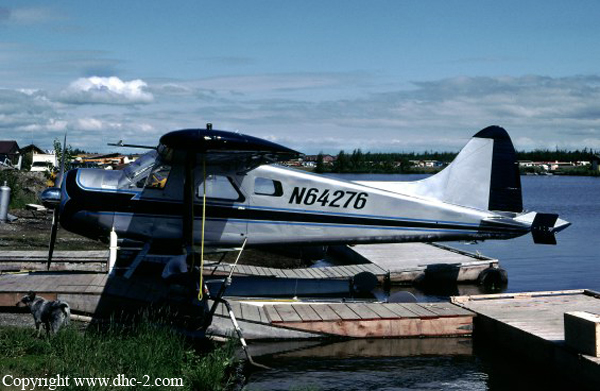
Crash of a De Havilland DHC-2 Beaver near Ketchikan: 3 killed

Date & Time: Oct 13, 1996 at 1455 LT
Type of aircraft:
Registration:
N64276
Flight Phase:
Survivors:
No
Site:
Schedule:
Ketchikan - Rowena Lake
MSN:
1025
YOM:
1957
Crew on board:
1
Crew fatalities:
Pax on board:
2
Pax fatalities:
Other fatalities:
Total fatalities:
3
Captain / Total flying hours:
17000
Captain / Total hours on type:
8500.00
Aircraft flight hours:
12475
Circumstances:
The pilot and two passengers departed for a remote area on an on-demand charter flight in a float-equipped airplane. An emergency locator transmitter signal was heard in the area of the intended destination about 55 minutes after departure. The flight was reported overdue and search personnel located the wreckage at an elevation of about 2,850 feet in mountainous terrain about 2 and 1/2 hours after departure. The airplane collided with terrain below the top of a steep ridge. Search personnel reported the weather conditions in the area included low ceilings. The conditions deteriorated during subsequent rescue operations. The area forecast included an AIRMET for marginal VFR conditions with mountain obscuration due to clouds and precipitation.
Probable cause:
Continued flight by the pilot into adverse weather condition, and his failure to maintain adequate altitude/clearance from mountainous terrain. Factors related to the accident were the high/mountainous terrain, and weather conditions that included low ceilings.
Final Report:

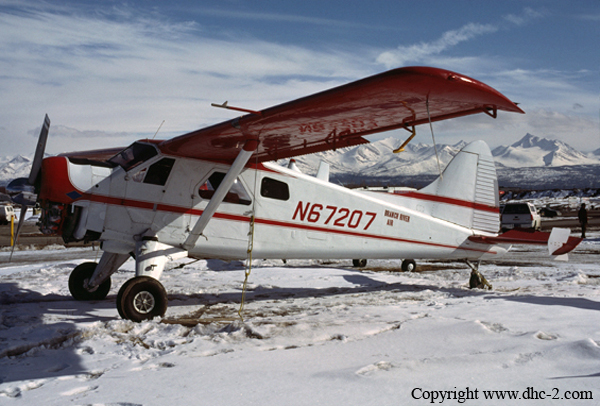
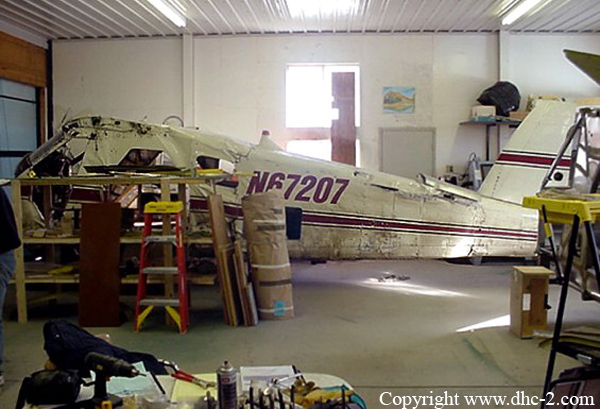
Crash of a De Havilland DHC-2 Beaver in Lake Brooks

Date & Time: Sep 24, 1996 at 1015 LT
Type of aircraft:
Operator:
Registration:
N67207
Flight Phase:
Survivors:
Yes
Schedule:
Lake Brooks - King Salmon
MSN:
305
YOM:
1952
Crew on board:
1
Crew fatalities:
Pax on board:
3
Pax fatalities:
Other fatalities:
Total fatalities:
0
Captain / Total flying hours:
5000
Captain / Total hours on type:
1000.00
Aircraft flight hours:
10869
Circumstances:
The pilot and three passengers were departing a remote lake in a float equipped airplane. The pilot positioned the hydraulic actuated flaps to 20 degrees. After takeoff, about 150 ft above the water, the pilot positioned the flap lever to the 'UP' position in preparation of pumping the flaps up, but said he did not move the pump handle. Turbulence was present during the takeoff, and during a left turn, the pilot encountered a severe gust at the time he positioned the flap lever. The airplane stalled in a left turn that steepened to almost a 90 degree bank. The airplane descended and the left wing contacted the surface of the lake. The left wing was torn off the fuselage, and the floats were crushed upward. Both flaps are activated by a common torque tube connected to a double-acting flap actuating cylinder. At the accident scene, the right wing flap and right aileron were observed to be extended to an intermediate position. The weather conditions included 20 kts of wind, turbulence, and rain. The pilot expressed a concern that the flaps may have retracted without being pumped to the up position. An examination of the flap system and the ratchet valve assembly was conducted after the airplane was recovered and the wings were removed. Leakage of hydraulic fluid and air was observed through the ratchet valve. Additional testing of the ratchet valve at an overhaul facility did not reveal any leakage.
Probable cause:
Failure of the pilot to maintain sufficient airspeed during the initial climb after takeoff, which resulted in an inadvertent stall and collision with the terrain (water). Turbulence was a related factor.
Final Report: