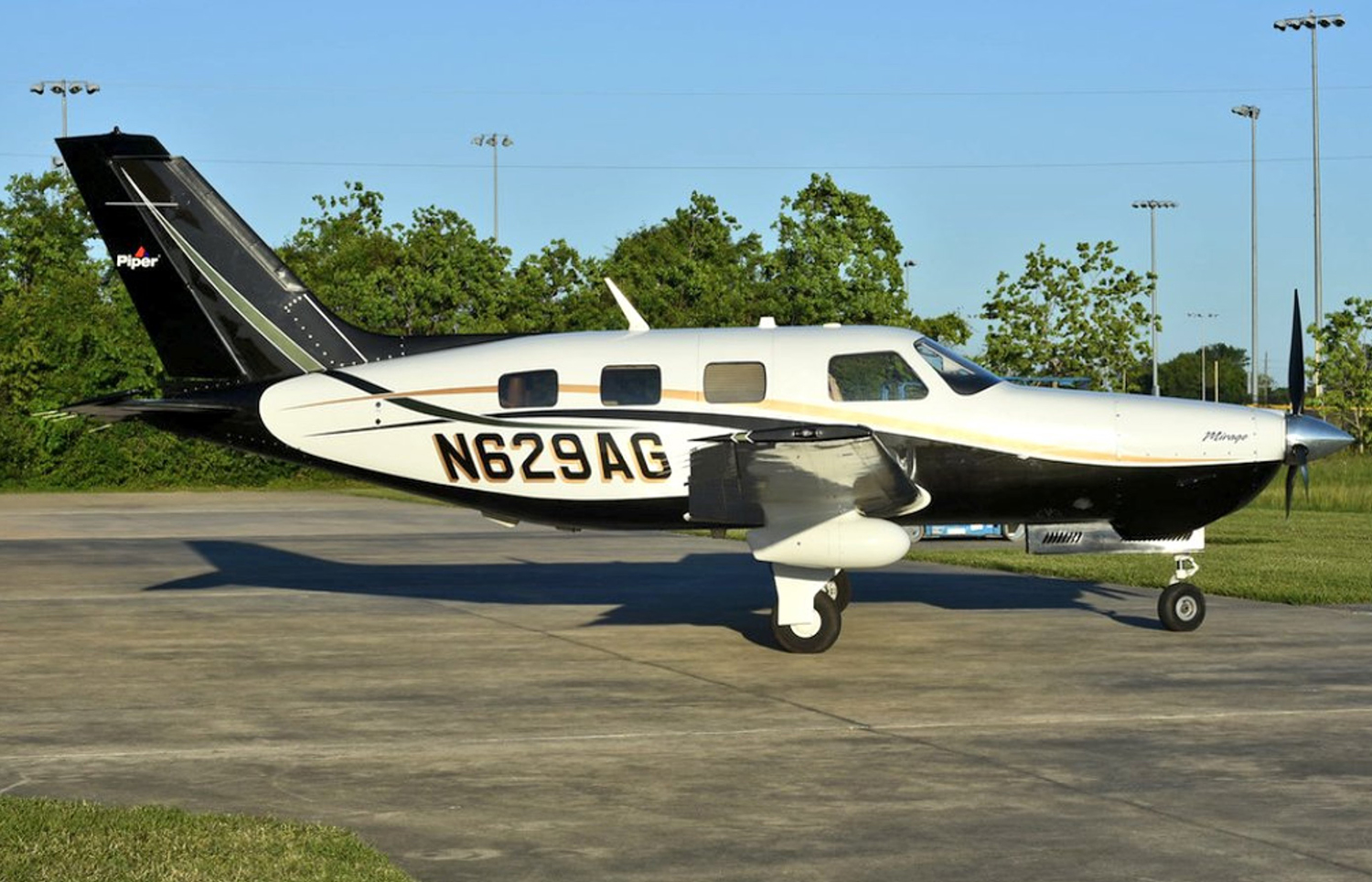
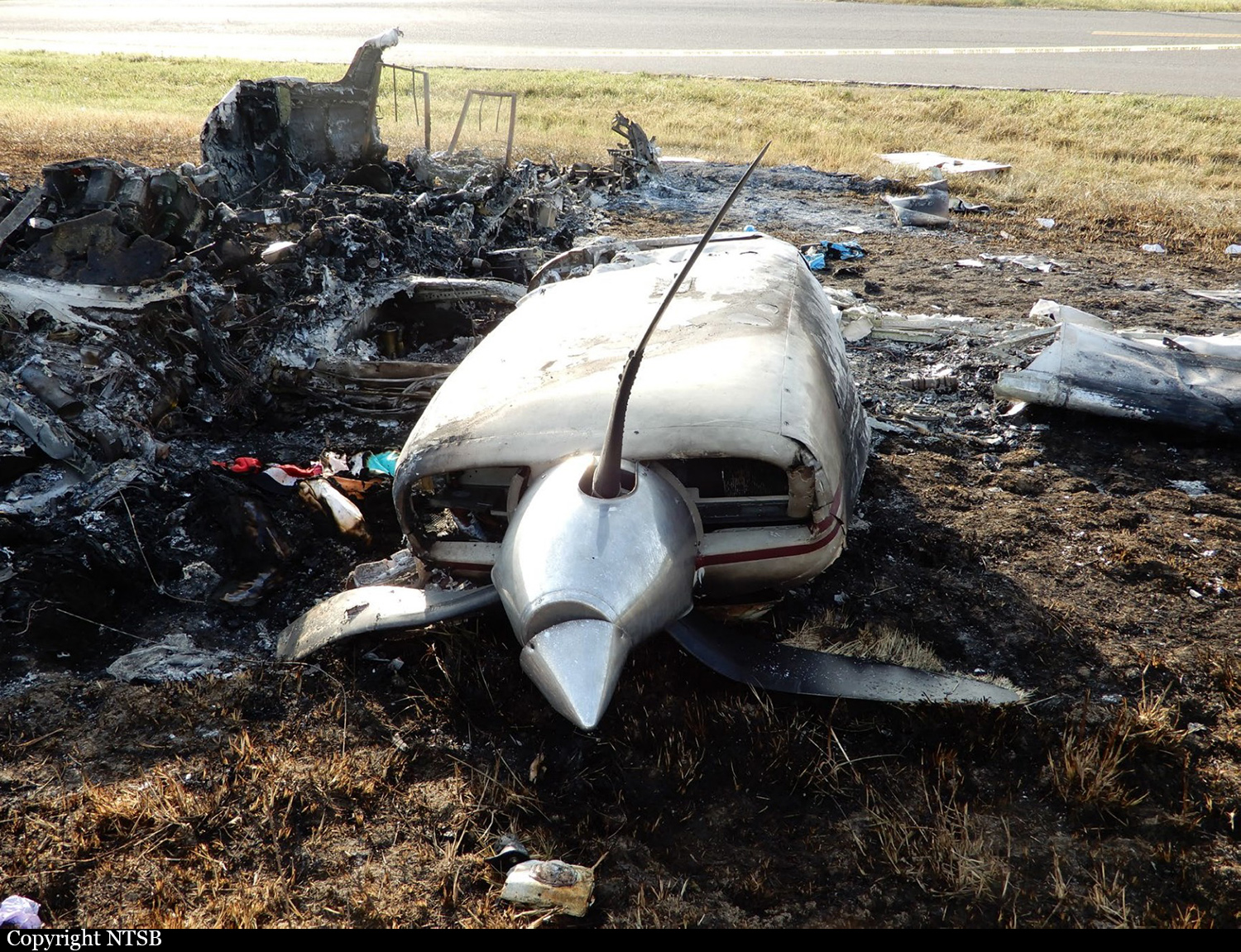
Crash of a Piper PA-46-350P Malibu Mirage in Anderson: 4 killed

Date & Time: Sep 6, 2024 at 0952 LT
Operator:
Registration:
N629AG
Flight Type:
Survivors:
No
Schedule:
Fort Dodge - Anderson
MSN:
46-36605
YOM:
2013
Crew on board:
1
Crew fatalities:
Pax on board:
3
Pax fatalities:
Other fatalities:
Total fatalities:
4
Circumstances:
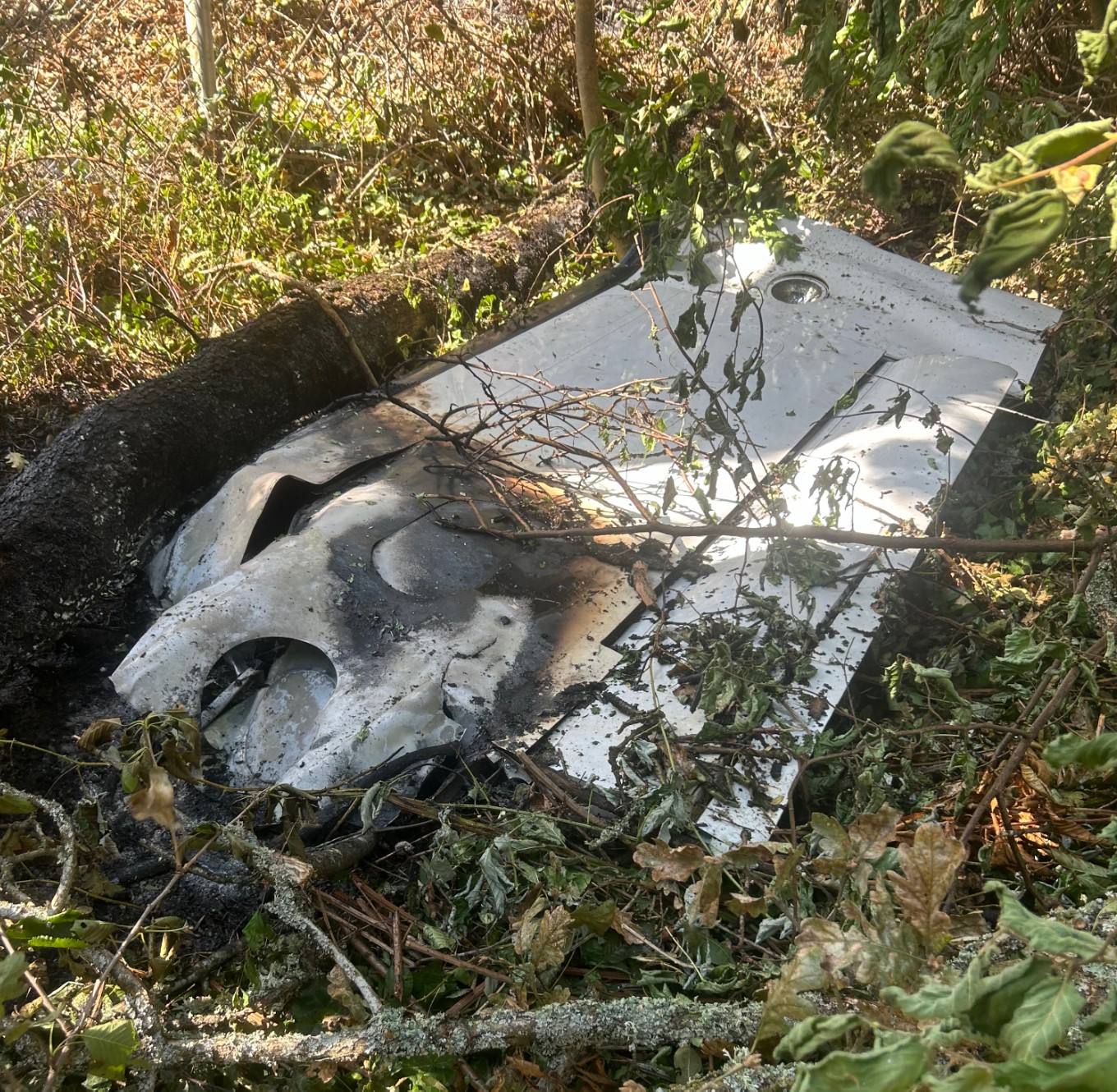
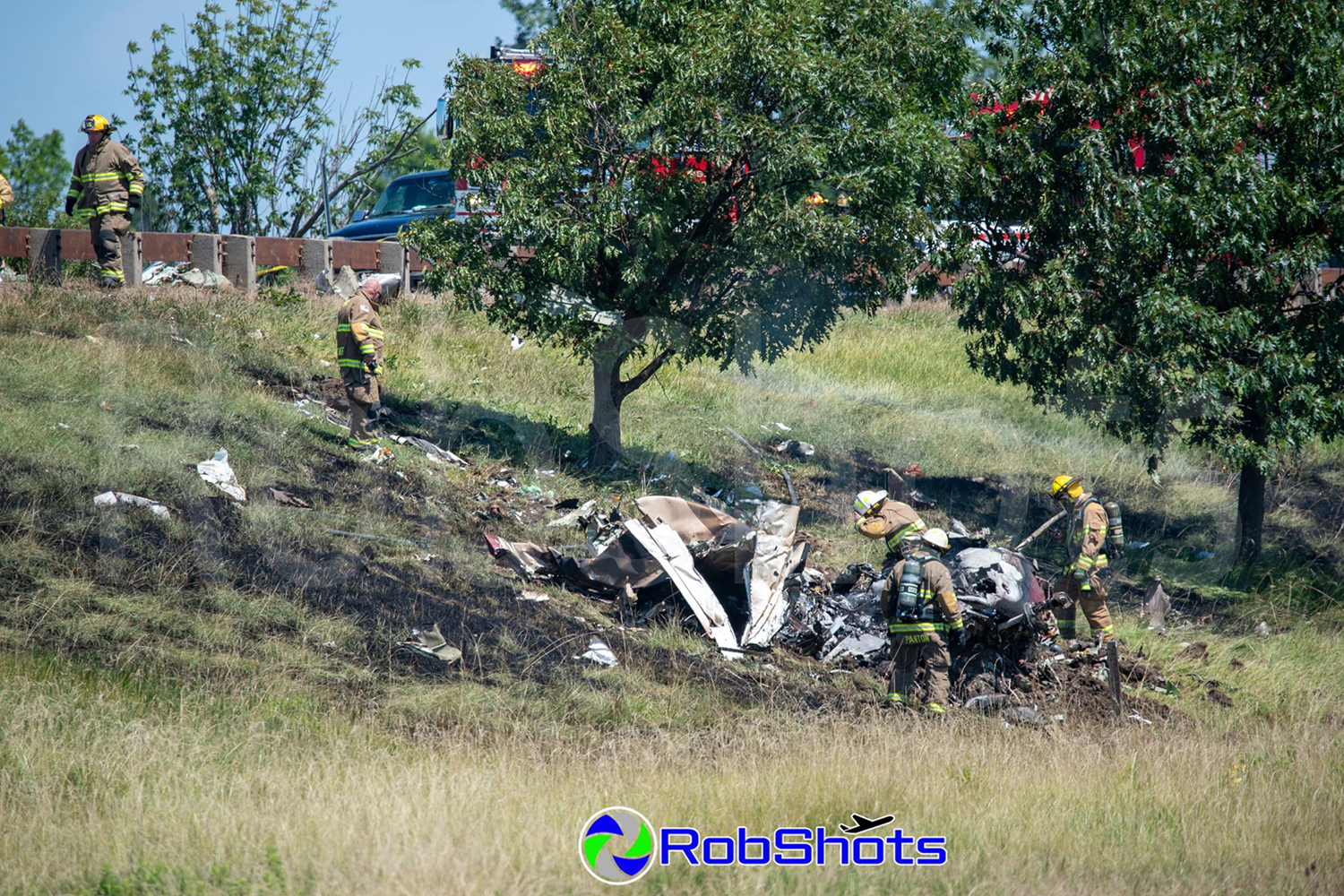
On final approach to Anderson-Darlington Field Airport, the pilot initiated a go-around procedure, probably because his altitude was too high. Control was lost and the single engine airplane crashed in an open field located three miles from the airfield, bursting into flames. All four occupants were killed.

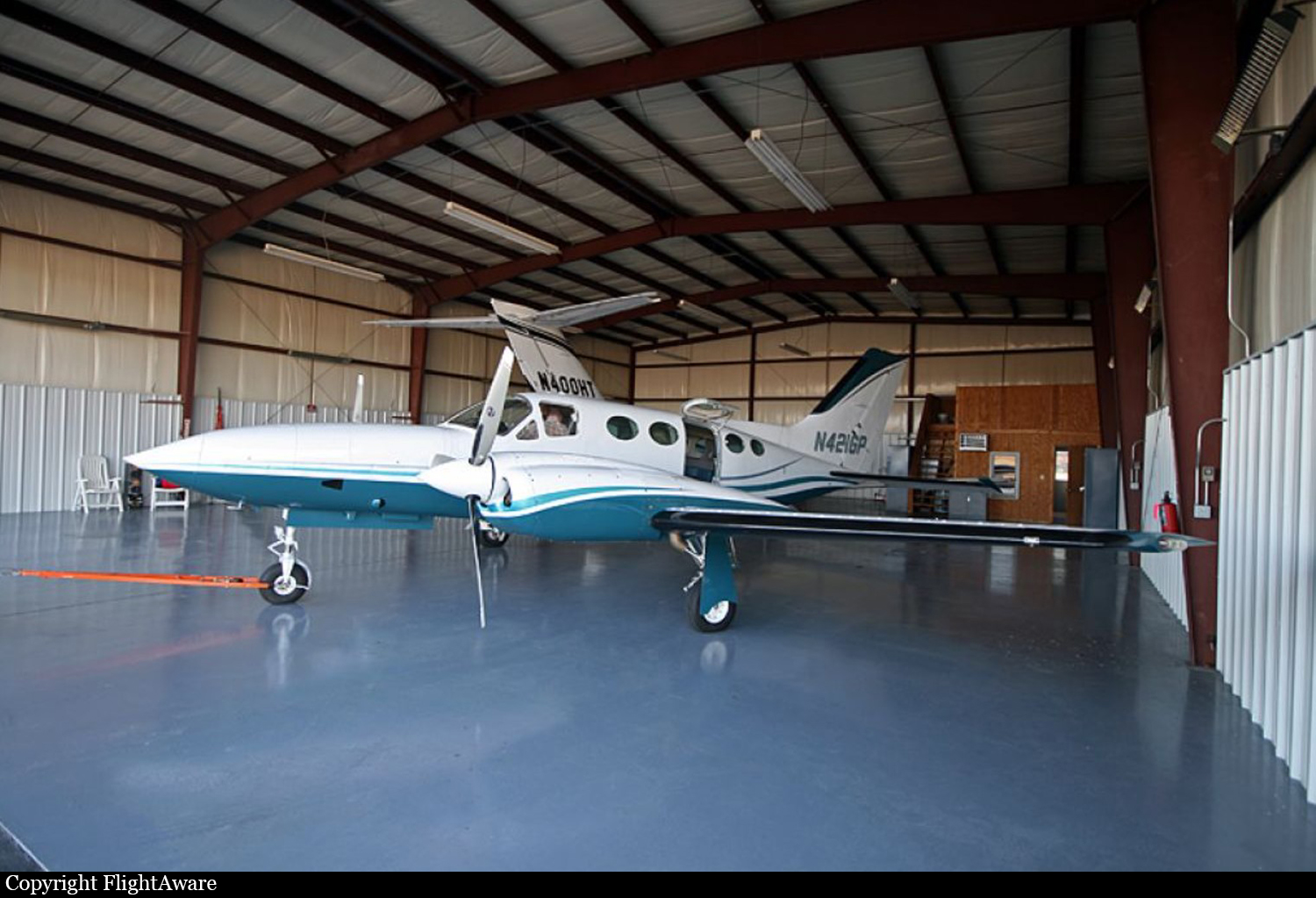
Crash of a Cessna 421C Golden Eagle III Troutdale: killed

Date & Time: Aug 31, 2024 at 1020 LT
Registration:
N421GP
Flight Phase:
Flight Type:
Survivors:
No
Site:
Schedule:
Troutdale - Saint George
MSN:
421C-0259
YOM:
1977
Crew on board:
2
Crew fatalities:
Pax on board:
0
Pax fatalities:
Other fatalities:
Total fatalities:
3
Circumstances:
After takeoff from runway 25 at Troutdale Airport, the twin engine airplane climbed to an altitude of 1,700 feet when the pilot was contacted by ATC about the fact that his altitude was well above the VFR altitude restrictions for the Gresham-Troutdale area. The pilot reported handling problem when the airplane entered an uncontrolled descent and crashed onto a house located in Fairview, about two km southwest from runway 07 threshold, bursting into flames. Both occupants as well as one people in the house were killed. The airplane was en route to Saint George, Utah.

Crash of a Cessna 550 Citation II in Odessa: 2 killed

Date & Time: Aug 20, 2024 at 0700 LT
Type of aircraft:
Operator:
Registration:
N689VP
Flight Phase:
Flight Type:
Survivors:
No
Site:
Schedule:
Odessa - Ellington
MSN:
550-0689
YOM:
1991
Crew on board:
2
Crew fatalities:
Pax on board:
0
Pax fatalities:
Other fatalities:
Total fatalities:
2
Circumstances:
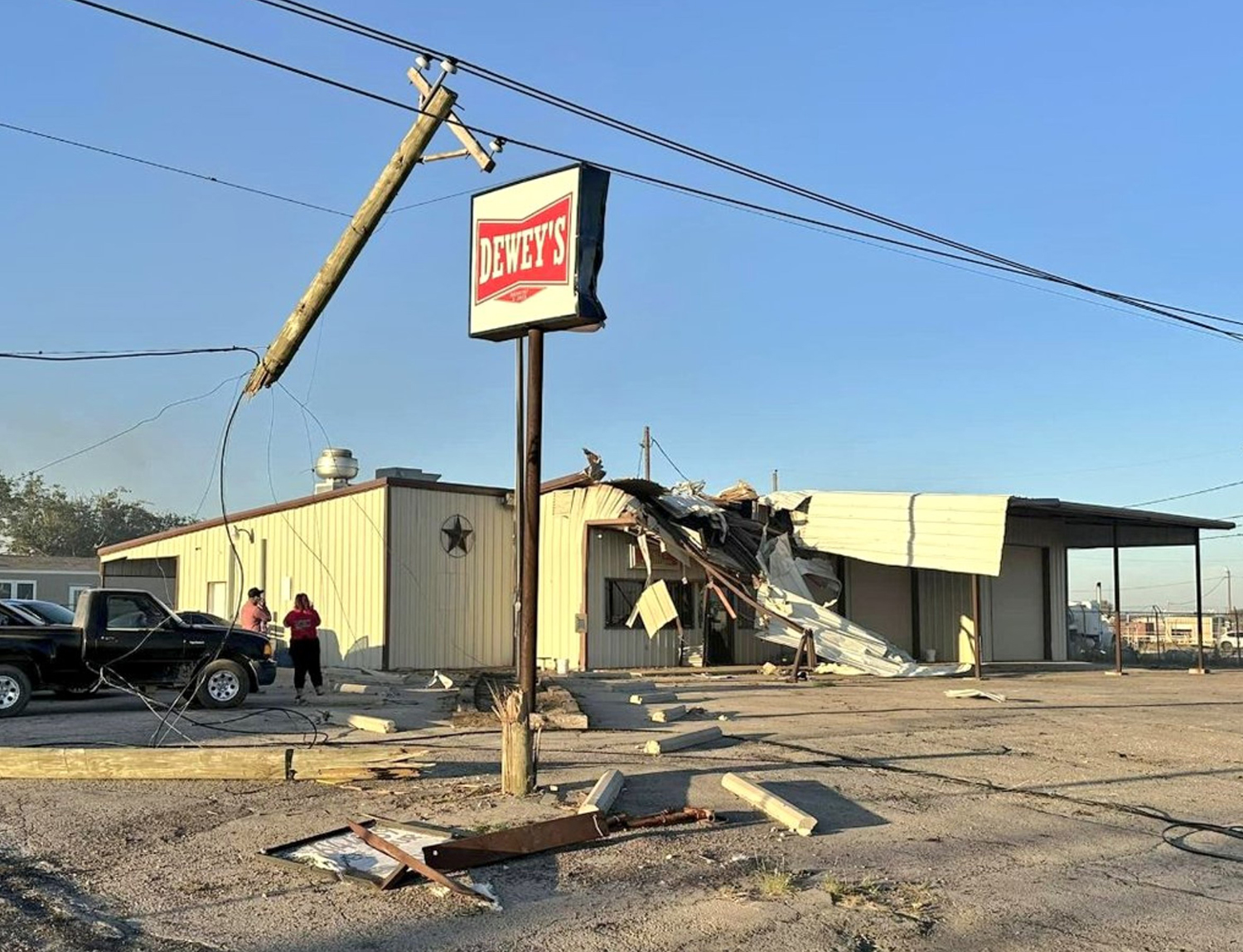
The crew was completing a flight from Odessa to Ellington Field, near Houston. After takeoff from runway 16, while in initial climb, the twin engine airplane collided with a poweline located about 270 metres past the runway end. The airplane descended to the right and crashed onto a garage located 150 metres further, bursting into flames. The airplane was totally destroyed and both occupants were killed.

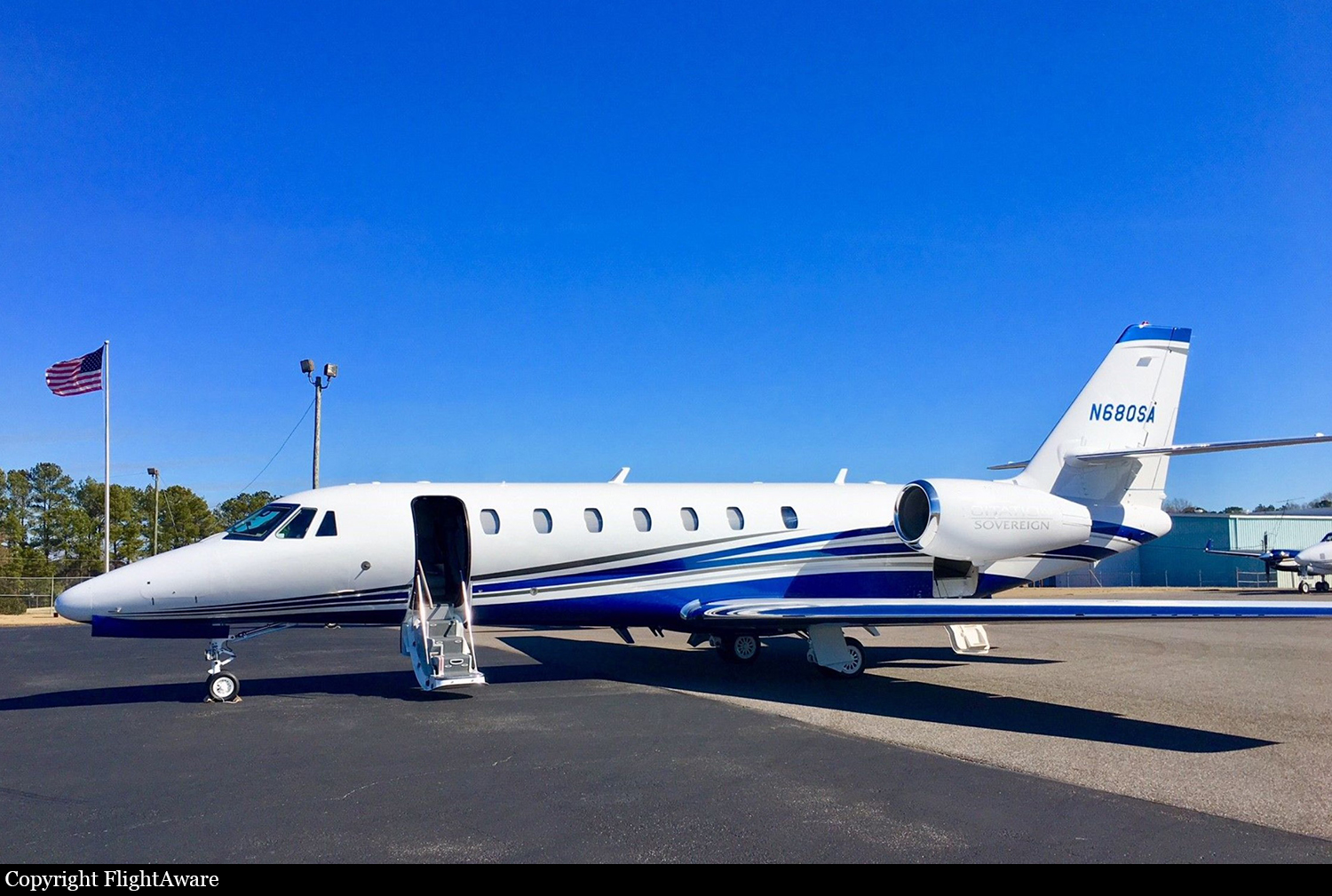
Crash of a Cessna 680 Citation Sovereign in Washington

Date & Time: Aug 18, 2024 at 1639 LT
Operator:
Registration:
N680SA
Flight Type:
Survivors:
Yes
Schedule:
Goldsboro - Washington
MSN:
680-0237
YOM:
2008
Crew on board:
2
Crew fatalities:
Pax on board:
0
Pax fatalities:
Other fatalities:
Total fatalities:
0
Captain / Total flying hours:
19750
Captain / Total hours on type:
2650.00
Copilot / Total flying hours:
894
Copilot / Total hours on type:
186
Aircraft flight hours:
2288
Circumstances:
The business jet landed on the runway at the completion of a visual approach with the landing gear retracted. The airplane slid to a stop, and a post-crash fire ensued which resulted in the airplane sustaining substantial damage. The two pilots, the sole occupants, egressed the airplane successfully without injury. In telephone interviews and written statements, the pilots each stated that there were no mechanical deficiencies with the airplane that would have precluded deployment of the landing gear and a successful landing. The first officer further stated that the gear warning was only audible in the left seat (Captain’s) headset and was not heard in her headset (right seat) or the overhead speaker, and that the communications panel had a “history” of problems. Review of the cockpit voice recorder (CVR) confirmed the limitations of the airplane’s communication system, that the crew was aware of them, and that they discussed and debated how to mitigate the system’s limitations. The review also revealed that during the flights on the day of the accident, the performance of Before-Starting-Engines, Engine Start, Before Taxi, Before Takeoff, Before Landing and other tasks did not comport with the manufacturer’s checklists and were sometimes performed without any verbal communication between crew members. The CVR recording further revealed that the captain removed his headset due to a 500Hz “squeal” that he failed to identify as the gear warning horn, and consequently missed the repeating, “too low, gear” aural warning that followed.
Probable cause:
The flight crew’s failure to properly configure the airplane before landing and the captain’s subsequent failure to recognize the landing gear aural warning, which resulted in a gear-up landing. Contributing to the accident was the flight crew’s inadequate checklist use and crew coordination, and the known diminished capability of the airplane’s communication system.
Final Report:

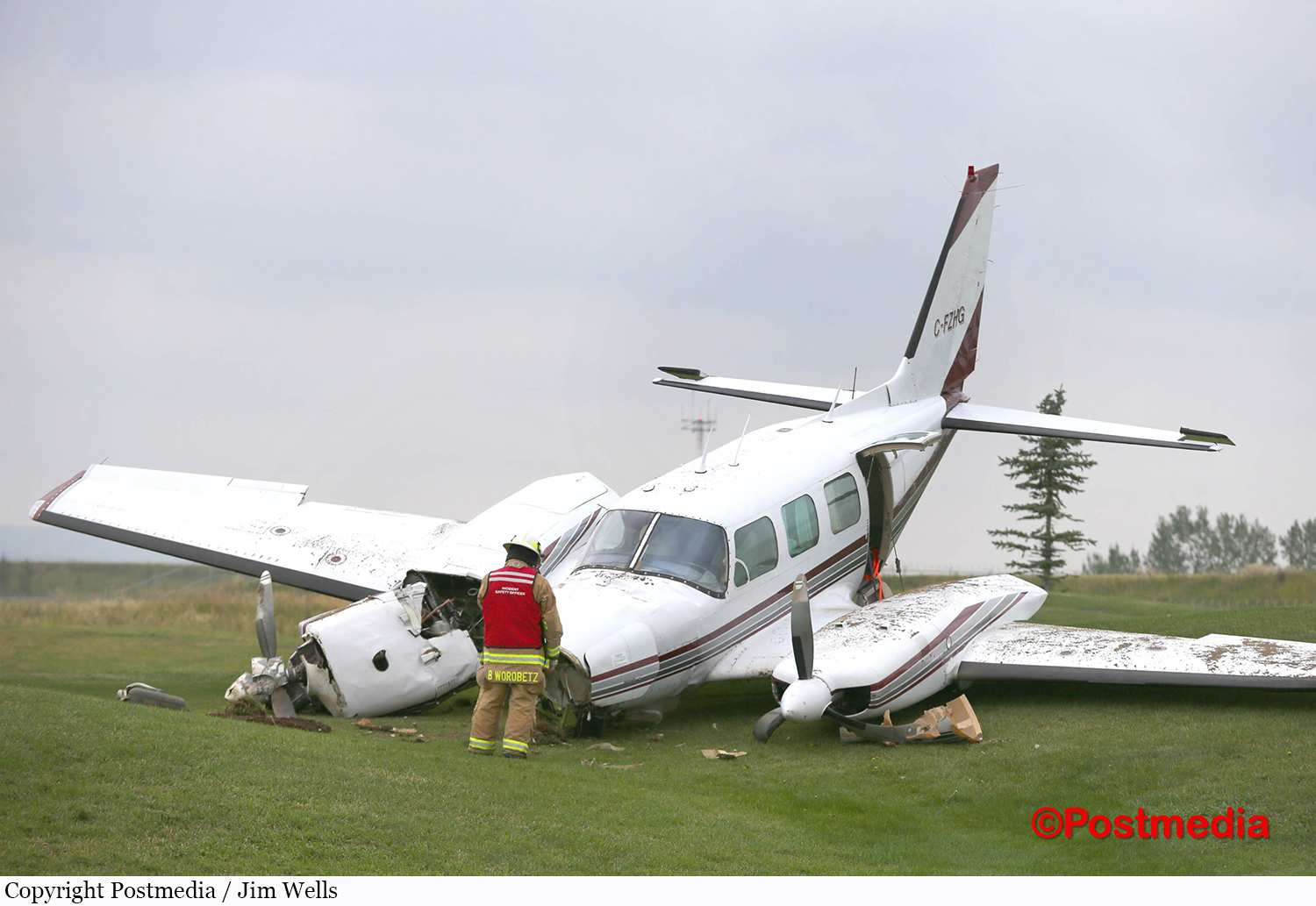
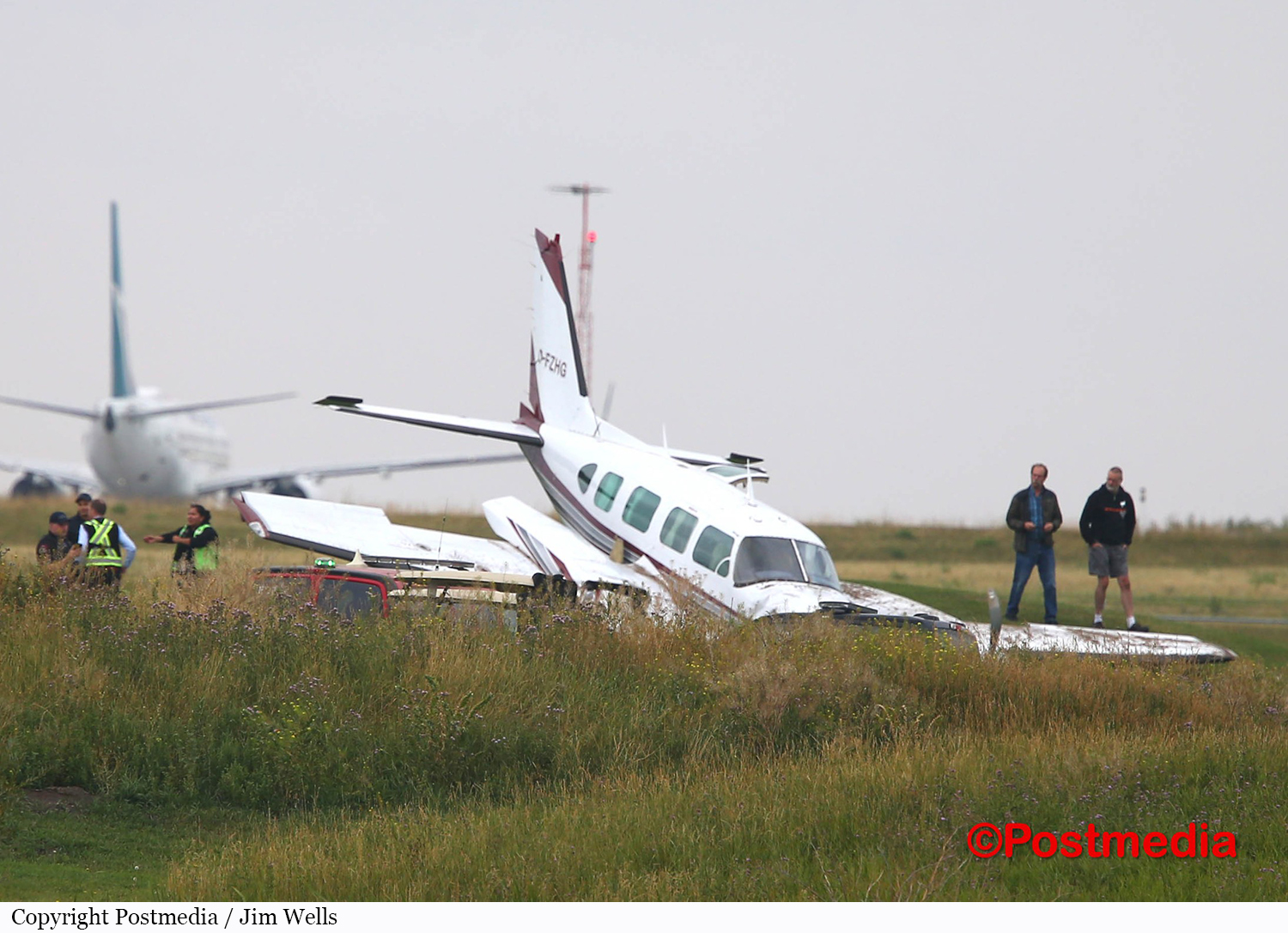
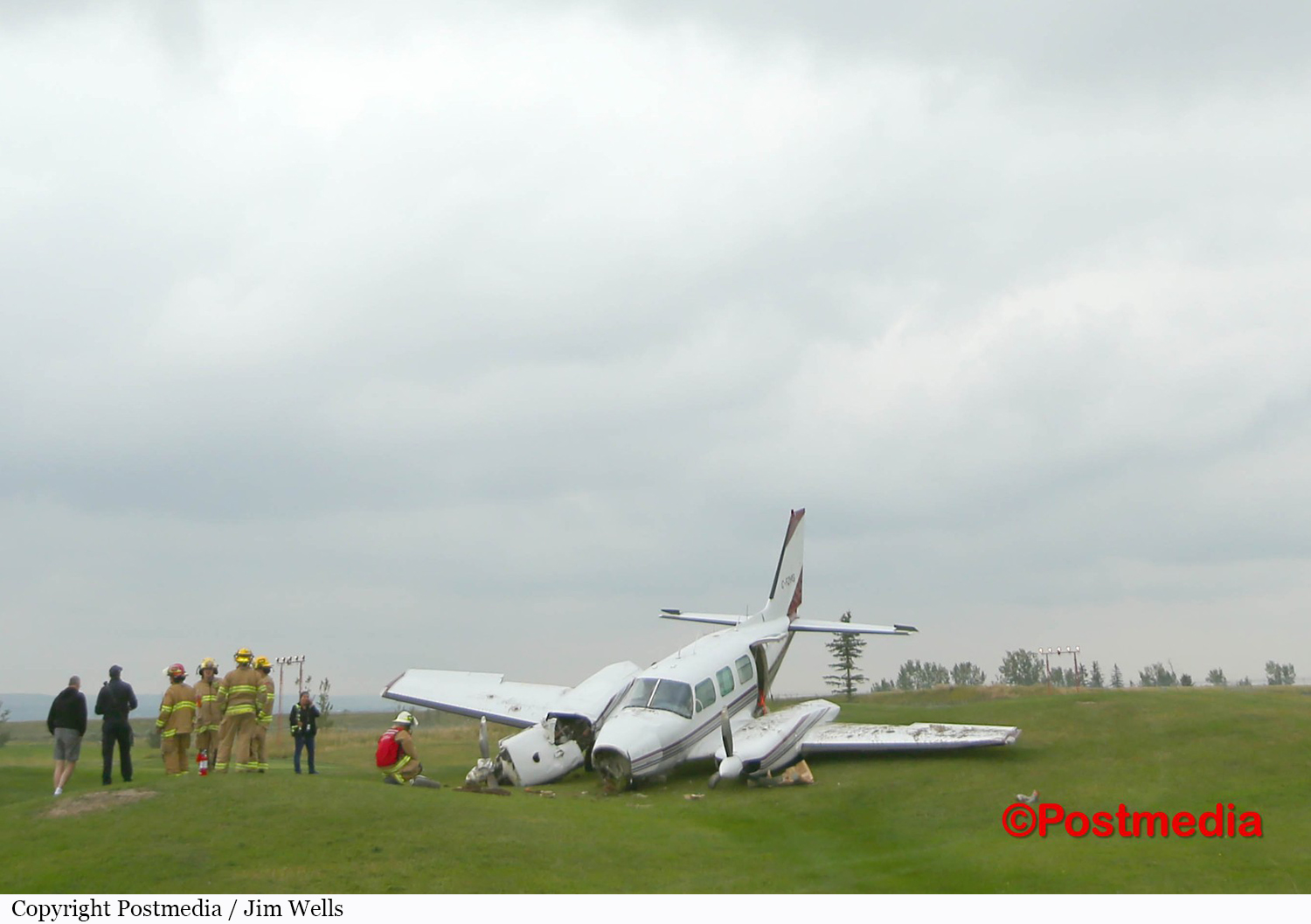
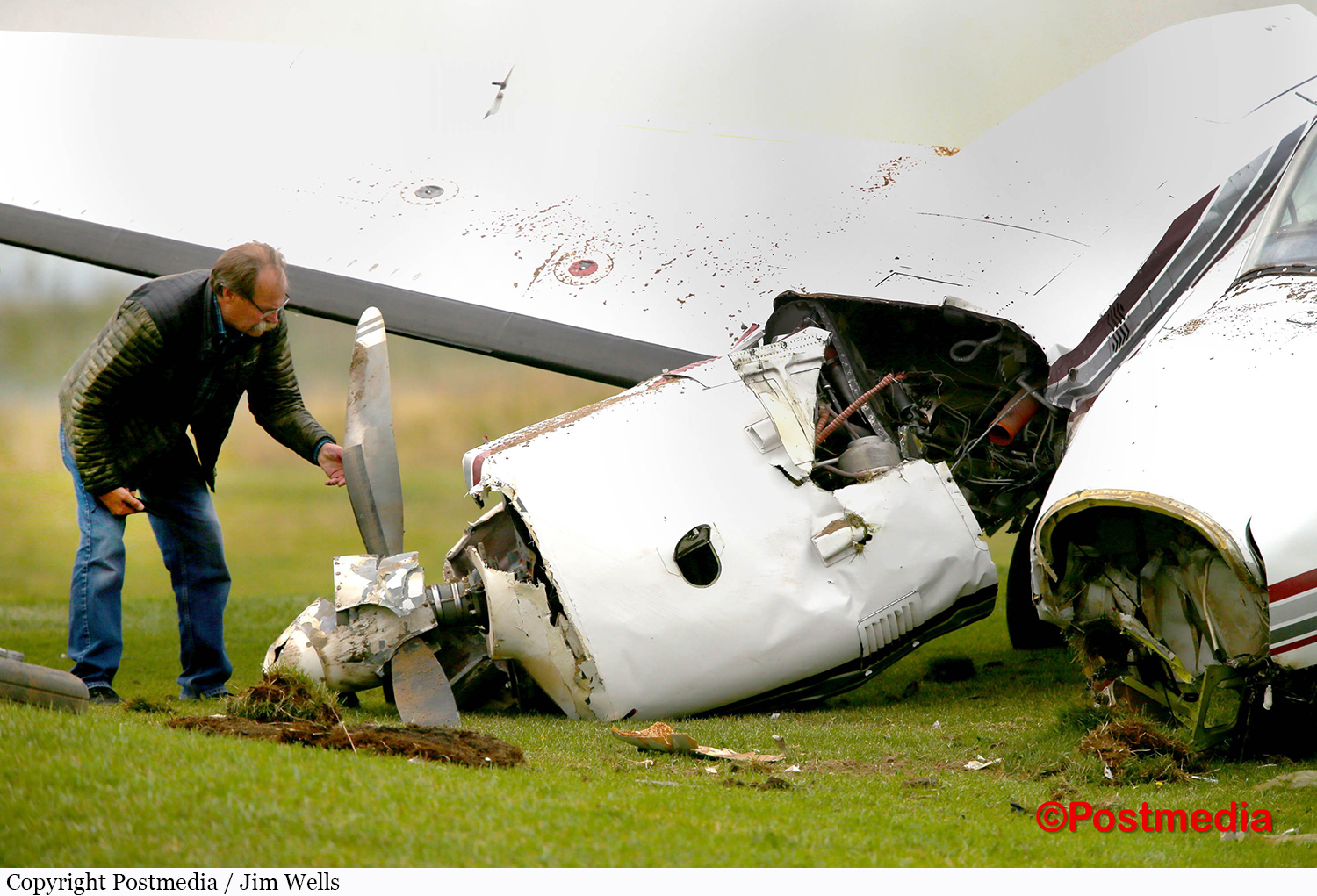
Crash of a Piper PA-31-310 Navajo B in Calgary

Date & Time: Aug 16, 2024 at 1244 LT
Type of aircraft:
Operator:
Registration:
C-FZHG
Flight Type:
Survivors:
Yes
Schedule:
Jasper – Calgary
MSN:
31-753
YOM:
1971
Location:
Country:
Crew on board:
1
Crew fatalities:
Pax on board:
0
Pax fatalities:
Other fatalities:
Total fatalities:
0
Circumstances:
A Piper PA-31 Navajo operated by Airborne Energy Solutions Inc. was conducting a round robin instrument flight rules flight from Calgary International Airport (CYYC), AB, to Hinton/Entrance Aerodrome (CEE4), AB, and back to CYYC with only the pilot on board. The plan was to conduct the flight without refueling in CEE4. Prior to departure from CEE4, the pilot determined there was sufficient fuel for the return flight to CYYC. While in cruise, with the left engine being supplied by the left outboard tank, the pilot observed the left engine fuel pressure start to fluctuate, and the engine operation became erratic. The pilot then selected the left engine to run on the left inboard fuel tank. Concerned about the fuel quantity in the left-wing fuel tanks, the pilot elected to cross feed the left engine from the right-side fuel system. During the final approach into CYYC the right engine stopped running. The pilot secured the right engine, feathered the propeller, declared a Mayday with ATS and elected to continue the approach. Two to three minutes later, the left engine stopped operating, and the pilot proceeded to perform a forced approach onto a golf course located directly south of the approach end for Runway 35R. The aircraft came to a rest approximately 1/2 nm south of the threshold for Runway 35R. The pilot received minor injuries; however, the aircraft was substantially damaged. There was no post-accident fire. On site post-accident examination of the aircraft found the left-hand fuel selector in the outboard position, the right-hand fuel selector in the off position and the cross-feed valve in the off (normal) position. The aircraft was subsequently removed from the golf course and transported to a secure location for further investigation. The investigation found that there was no fuel remaining in the left inboard, left outboard and left nacelle fuel tanks. The right nacelle tank was empty, however approximately 24 USG were recovered from the right inboard, and approximately 29 USG were recovered from the right outboard fuel tanks.

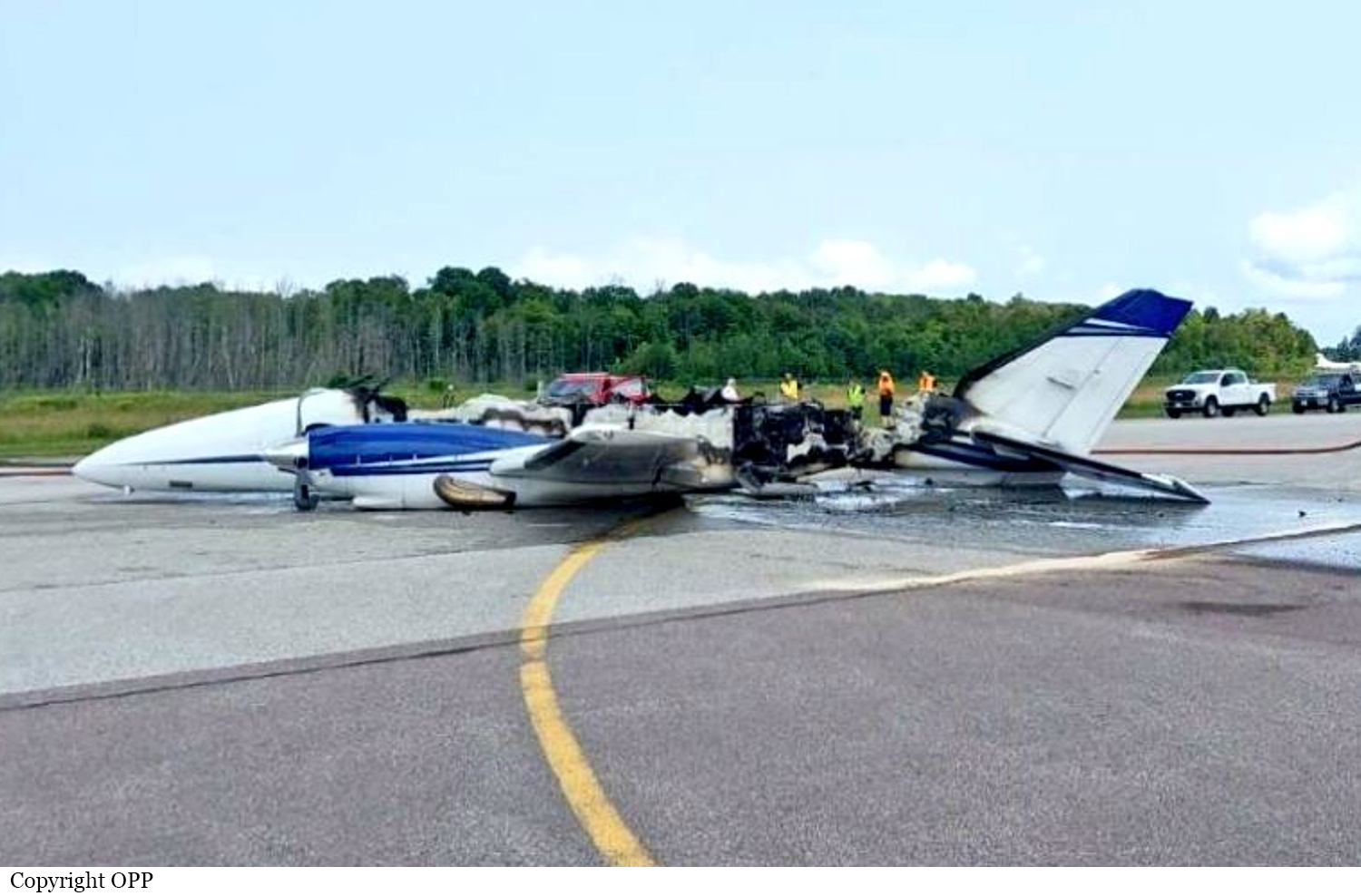
Crash of a Beechcraft B100 King Air in Lake Simcoe

Date & Time: Aug 13, 2024 at 1225 LT
Type of aircraft:
Operator:
Registration:
C-FTFT
Flight Type:
Survivors:
Yes
Schedule:
Toronto - Lake Simcoe
MSN:
BE-49
YOM:
1978
Flight number:
TOR804
Country:
Crew on board:
3
Crew fatalities:
Pax on board:
0
Pax fatalities:
Other fatalities:
Total fatalities:
0
Circumstances:
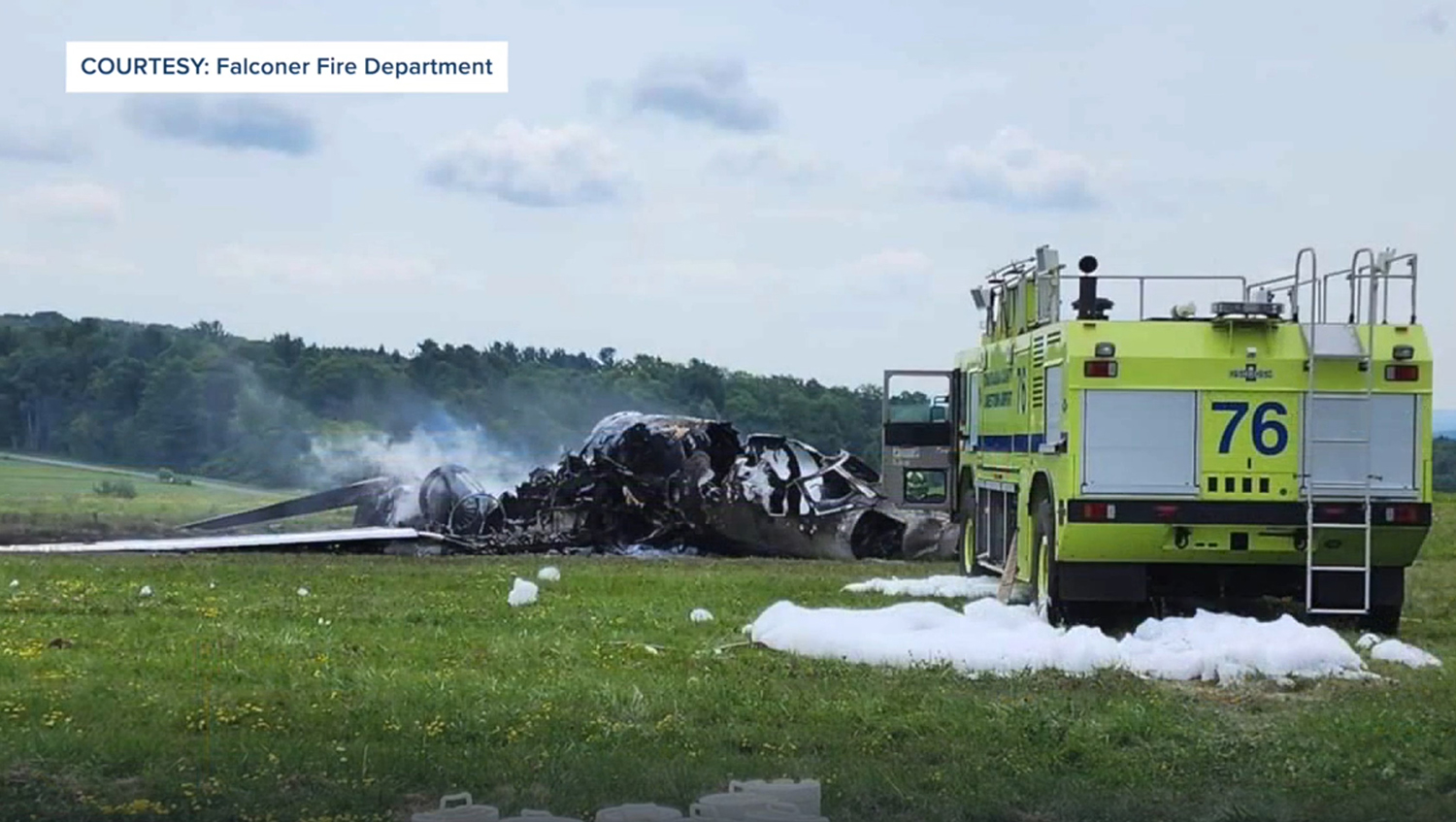
The crew departed Toronto-Lester Bowles Pearson Airport in the morning to perform training at Lake Simcoe Regional Airport under flight number TOR804. After performing several approaches and touch-and-go, the crew was completing an approach to runway 28 when the airplane belly landed. It slid for few dozen metres before coming to a halt, bursting into flames. All three crew members evacuated safely but the airplane was totally destroyed by fire.

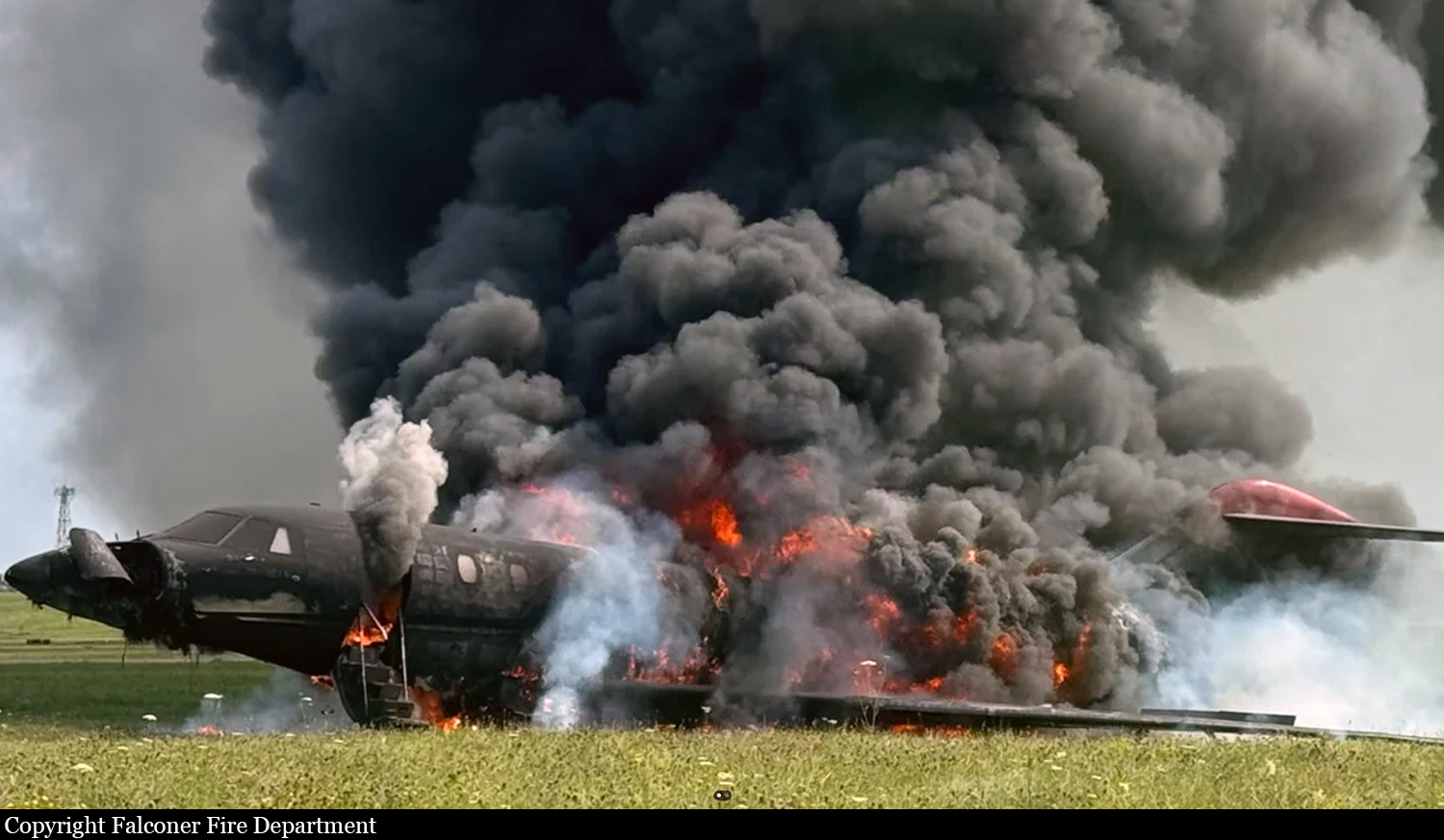
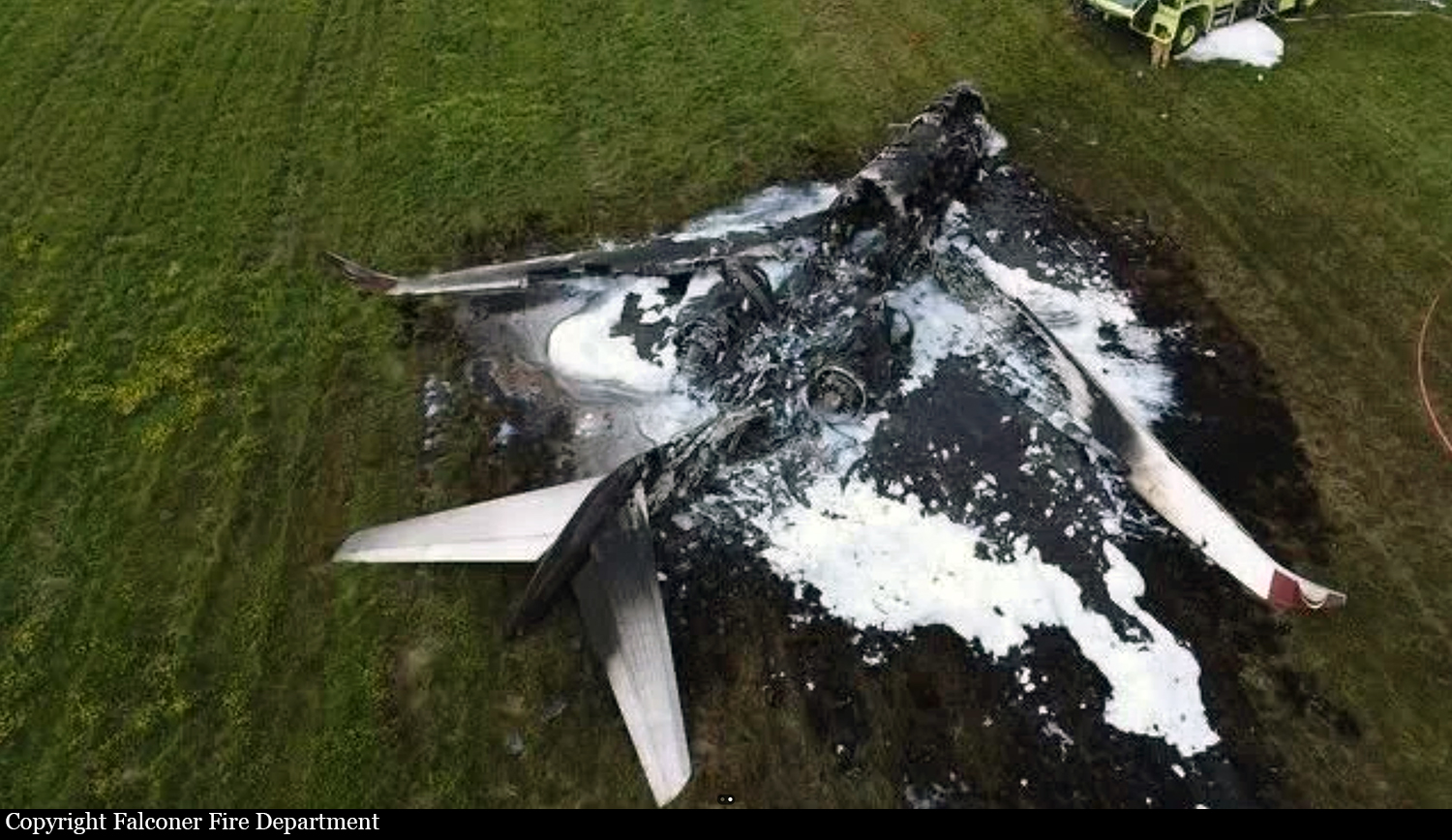
Crash of a Cessna 750 Citation X in Jamestown

Date & Time: Aug 5, 2024 at 1012 LT
Type of aircraft:
Operator:
Registration:
N750GB
Flight Type:
Survivors:
Yes
Schedule:
Dunkirk – Fort Lauderdale
MSN:
750-0504
YOM:
2014
Crew on board:
2
Crew fatalities:
Pax on board:
0
Pax fatalities:
Other fatalities:
Total fatalities:
0
Circumstances:
The airplane departed Dunkirk-Chautauqua County Airport, State of New York, on a ferry flight to Fort-Lauderdale-Executive Airport, carrying a crew of two. After he reached the altitude of 10,000 feet, the crew reported technical problems with the onboard electric system and elected to divert to Jamestown-Chautauqua County Airport. On final approach to runway 25, at an airspeed of 157 knots and with a rate of descent of 1,000 feet per minute, the airplane impacted the ground at runway threshold and went out of control. It caught fire, veered off runway to the left and came to rest in a grassy area, bursting into flames. Both crew members were rescued with various injuries. The airplane was totally destroyed by fire.

Crash of a Pilatus PC-12/47E near Gillette: 7 killed

Date & Time: Jul 26, 2024 at 1305 LT
Type of aircraft:
Registration:
N357HE
Flight Phase:
Flight Type:
Survivors:
No
Schedule:
Nebraska City - Billings
MSN:
1203
YOM:
2010
Crew on board:
1
Crew fatalities:
Pax on board:
6
Pax fatalities:
Other fatalities:
Total fatalities:
7
Circumstances:
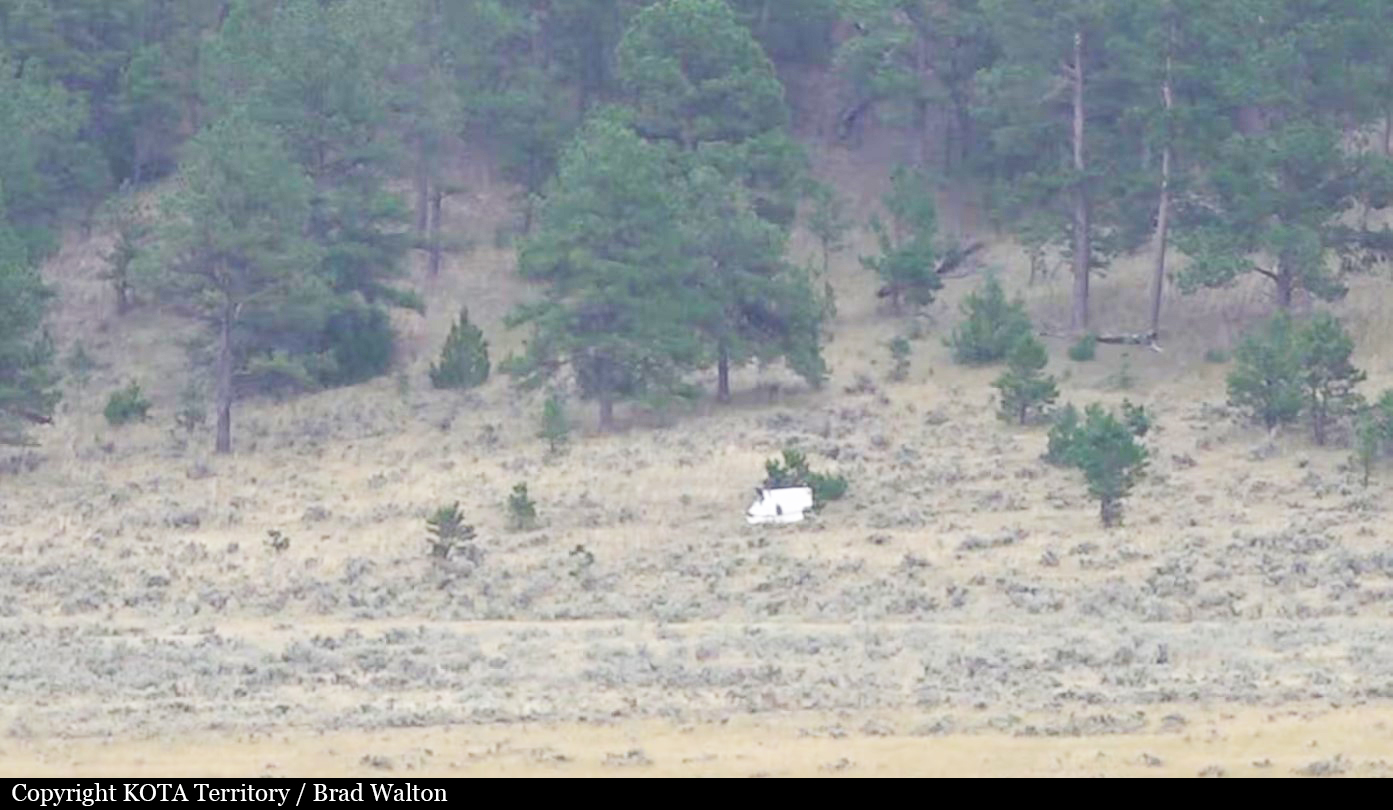
The single engine airplane departed Nebraska City Airport on a flight to Billings, carrying six passengers and one pilot. While cruising at FL260, the pilot informed ATC he was losing control of the airplane that entered a dive and crashed in a dense wooded area located about 50 km north of the Northeast Wyoming Regional Airport located near Gillette. The airplane disintegrated and all seven occupants were killed, among them three members of the Southern Gospel band 'The Nelons'

Crash of a Cessna 208B Grand Caravan in Youngstown: 1 killed

Date & Time: Jul 20, 2024 at 1250 LT
Type of aircraft:
Operator:
Registration:
N1259K
Survivors:
No
Schedule:
Youngstown - Youngstown
MSN:
208B-0974
YOM:
2002
Crew on board:
1
Crew fatalities:
Pax on board:
0
Pax fatalities:
Other fatalities:
Total fatalities:
1
Circumstances:
The single engine airplane was returning to its base at Youngstown-Windsor Airfield following a local skydiving mission. On approach to the grassy runway, the airplane went out of control, impacted a road and crashed below in a pasture. The airplane was totally destroyed and the pilot, sole on board, was killed.

Crash of a Beechcraft B60 Duke in Youngstown: 3 killed

Date & Time: Jul 19, 2024 at 1904 LT
Type of aircraft:
Operator:
Registration:
N23553
Flight Type:
Survivors:
No
Schedule:
Plattsburgh - Columbus
MSN:
P-453
YOM:
1978
Crew on board:
1
Crew fatalities:
Pax on board:
2
Pax fatalities:
Other fatalities:
Total fatalities:
3
Captain / Total flying hours:
1123
Captain / Total hours on type:
46.00
Aircraft flight hours:
4579
Circumstances:
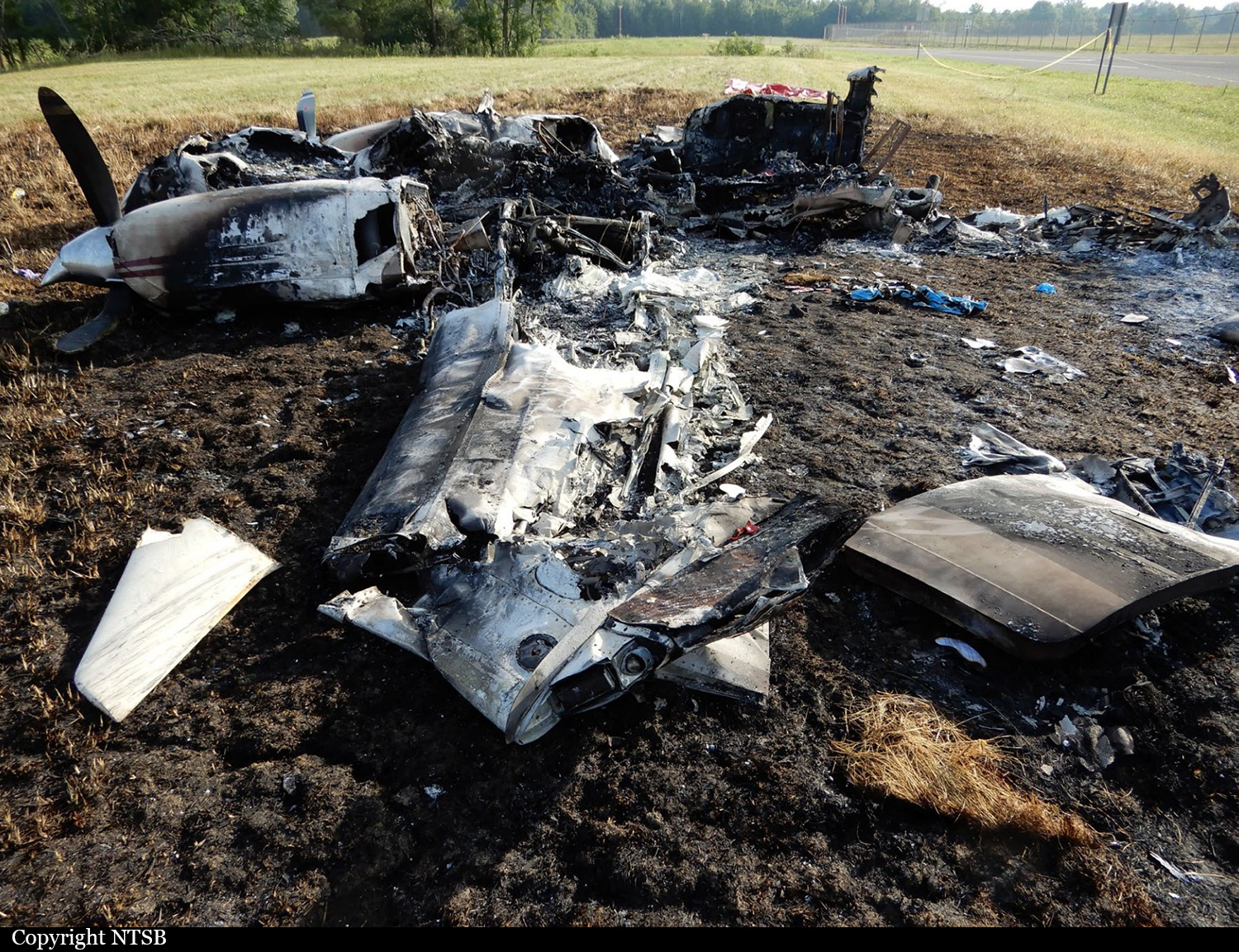
During the cruise portion of the cross-country flight, the pilot/owner informed air traffic control that the airplane’s left engine had lost power and he could not maintain altitude. The controller offered information on a nearby airport; however, the pilot requested, and then proceeded to, an airport farther away with a 9,003-ft-long runway. After twice circling the approach end of the runway to the left while descending, the pilot proceeded down the runway well above a normal glide path. A witness reported that the airplane never touched down, and track data showed that the airplane’s ground speed increased while over the runway. Airport surveillance video showed the airplane pitch up and to the left at the departure end of the runway. It continued into a left, descending turn until it impacted the ground about ¼ mile west of the departure end of the runway. Given this information, it is most likely that the pilot was unsuccessful in achieving an appropriate altitude and airspeed, which likely resulted in the pilot performing a single-engine go-around. During the subsequent climb and maneuvering, he lost control of the airplane, which resulted in an uncontrolled descent and impact with terrain. The wreckage was destroyed by impact forces and a postimpact fire. The left engine’s propeller blades were feathered and showed no indications of powered rotation at impact, while the right engine’s propeller blades showed damage signatures consistent with powered rotation at impact. A postaccident examination of the left engine revealed severe detonation damage of the No. 4 cylinder piston. Further examination of the left engine fuel servo revealed a significant amount of sand-like contamination in the servo inlet filter, which matched the properties of polyethylene terephthalate (PET), which is a thermoplastic polymer of the polyester family commonly found in fuel system components. The examination of the right engine fuel servo revealed that it was also contaminated with the same substance. The right engine’s spark plugs and one of its cylinders also displayed signatures consistent with a lean fuel to air ratio. Given this evidence, it is likely that the engines were operating with unpredictable fuel to air ratios due to the fuel system contamination, which likely contributed to the detonation in the left engine and pilot’s description that the engine lost power. The investigation was unable to determine how or when the PET was introduced into the fuel system due to the postimpact fire damage.
Probable cause:
The pilot’s loss of airplane control during a single-engine go-around. Also contributing to the accident was fuel system contamination, which resulted in detonation and a total loss of left engine power.
Final Report: