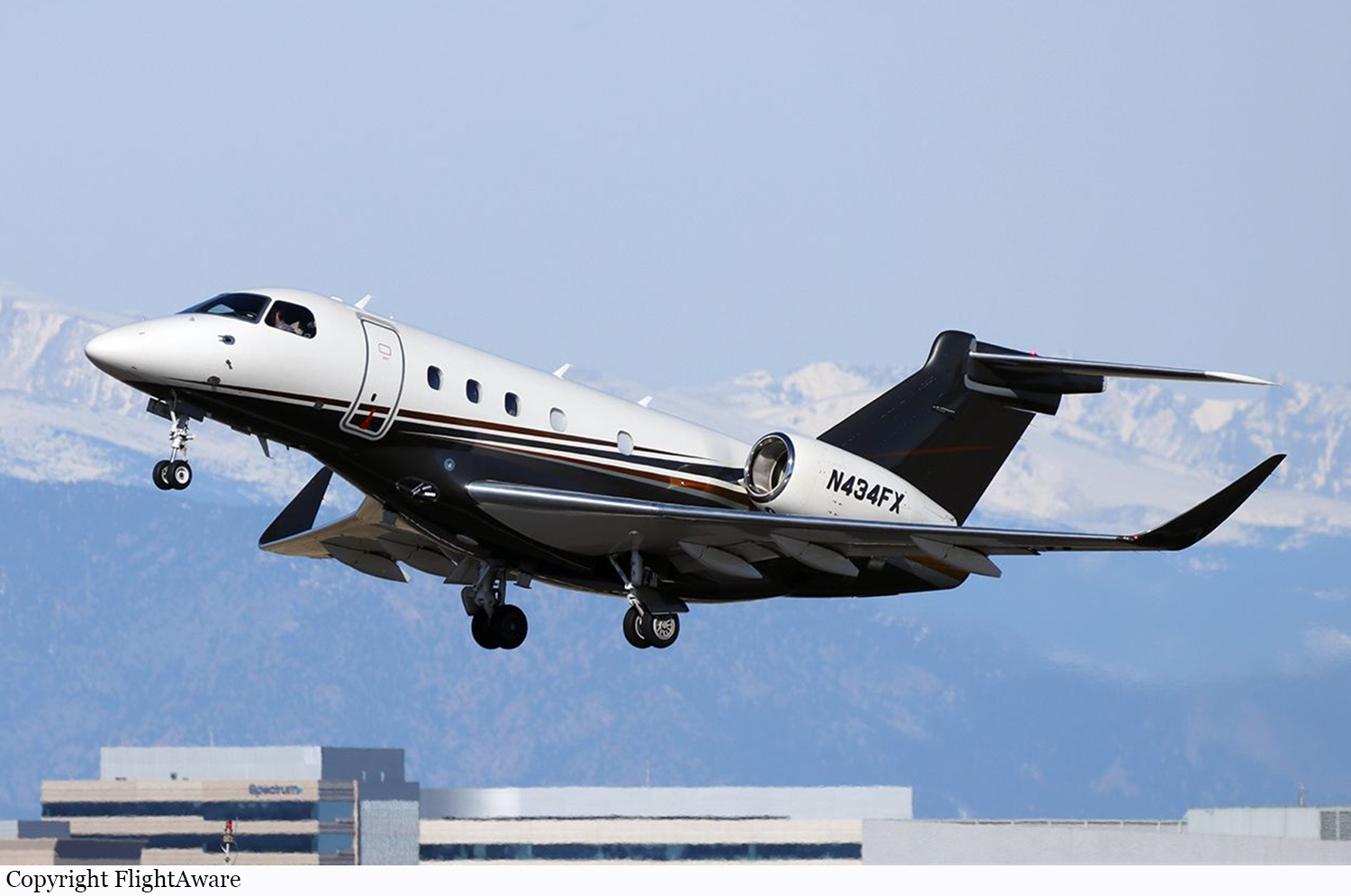
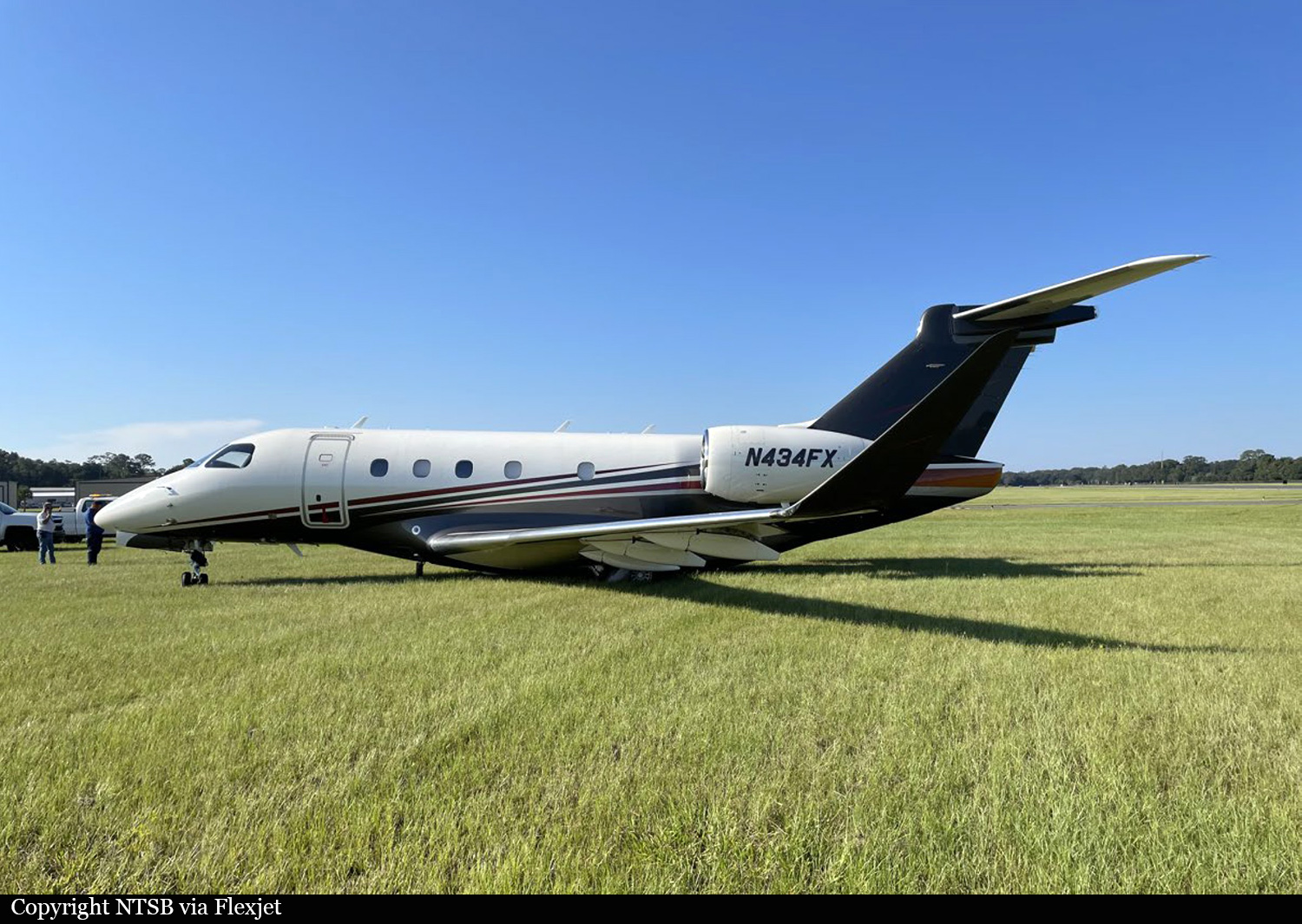
Crash of an Embraer EMB-545 Praetor 500 in Brunswick

Date & Time: Sep 21, 2023 at 1436 LT
Operator:

Registration:
N434FX
Survivors:
Yes
Schedule:
White Plains – Brunswick
MSN:
550-10073
YOM:
2020
Flight number:
LXJ434
Crew on board:
2
Crew fatalities:
Pax on board:
6
Pax fatalities:
Other fatalities:
Total fatalities:
0
Captain / Total flying hours:
10900
Captain / Total hours on type:
1872.00
Copilot / Total flying hours:
16686
Copilot / Total hours on type:
306
Aircraft flight hours:
3424
Circumstances:
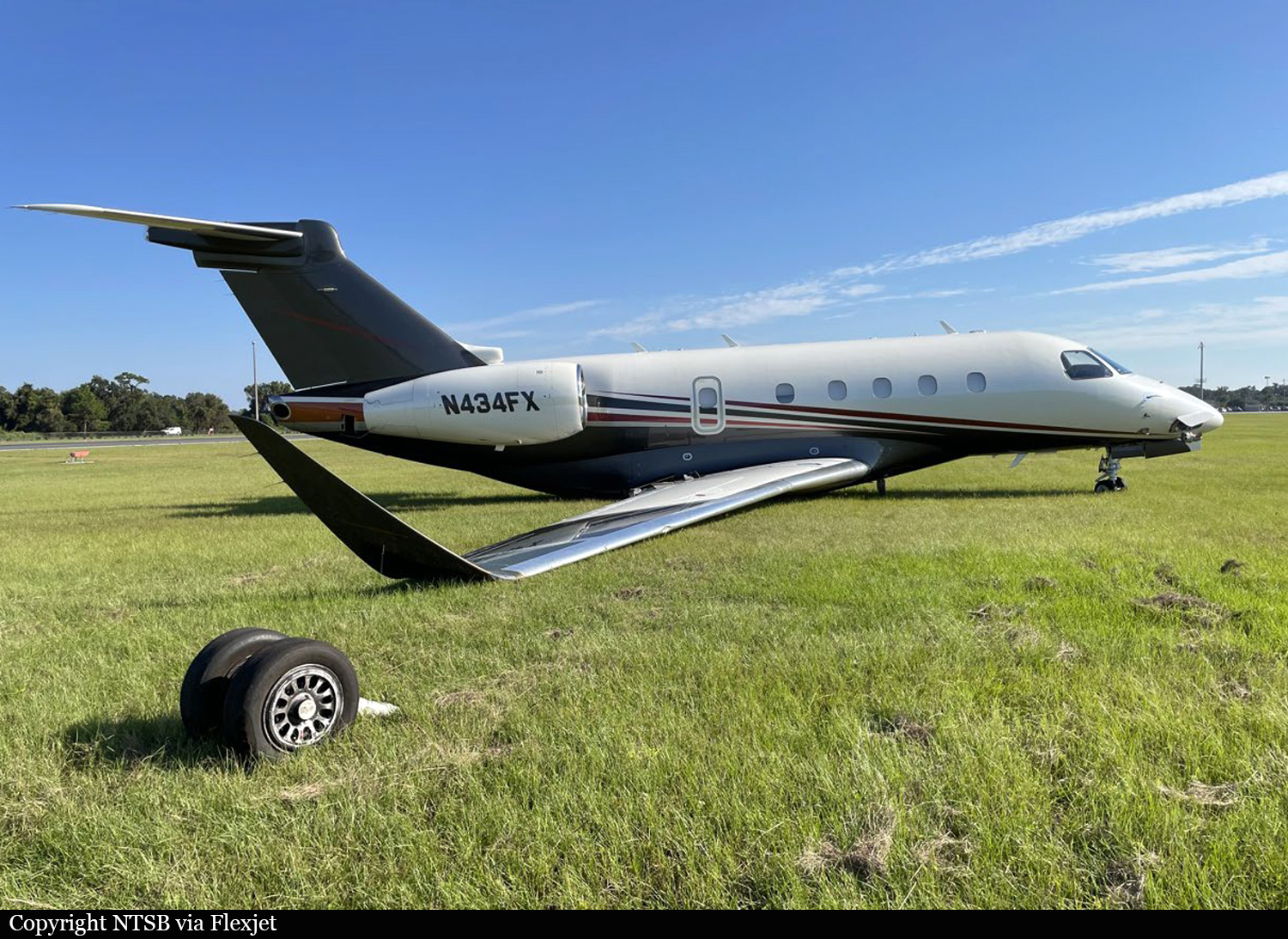
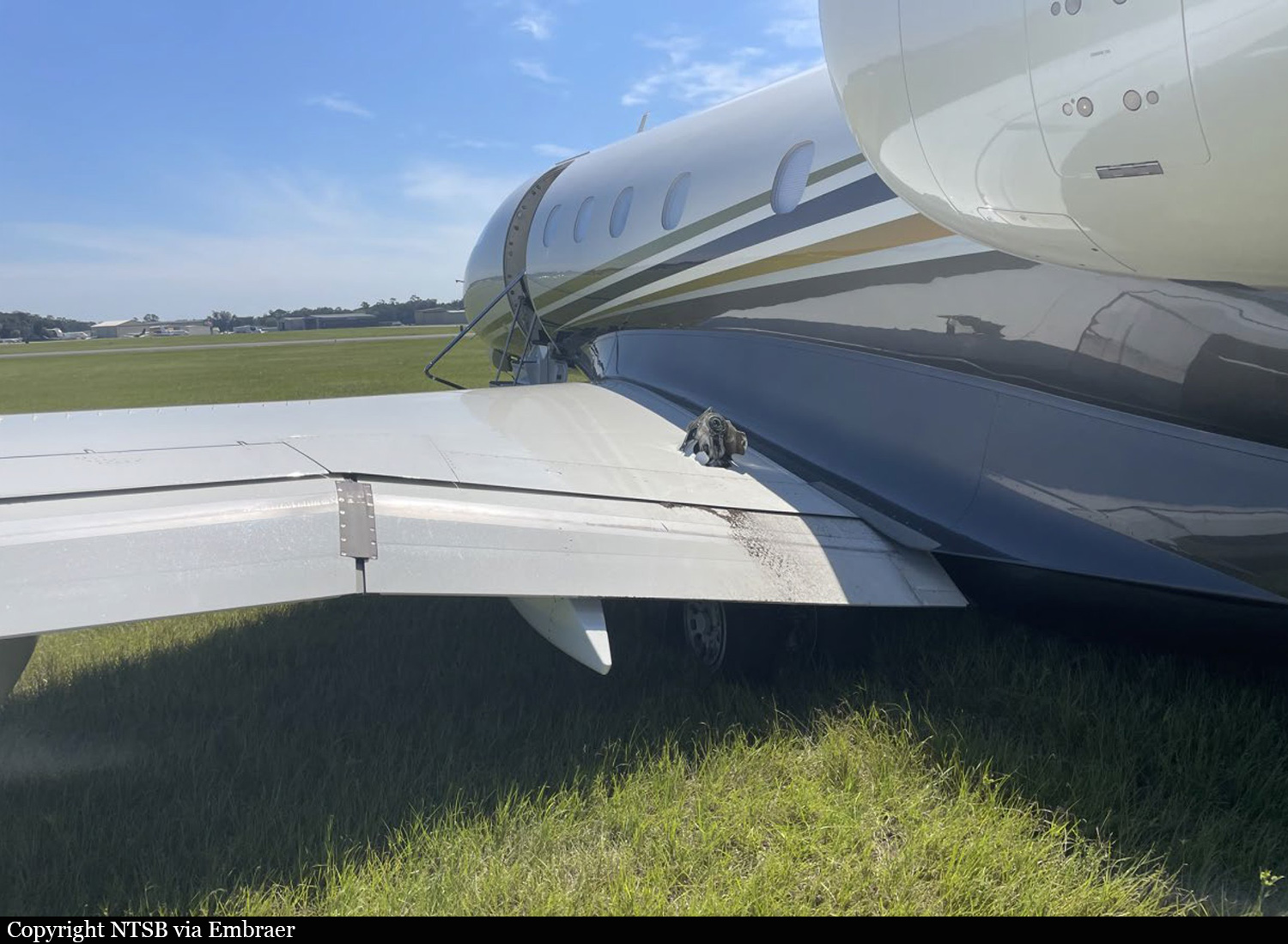
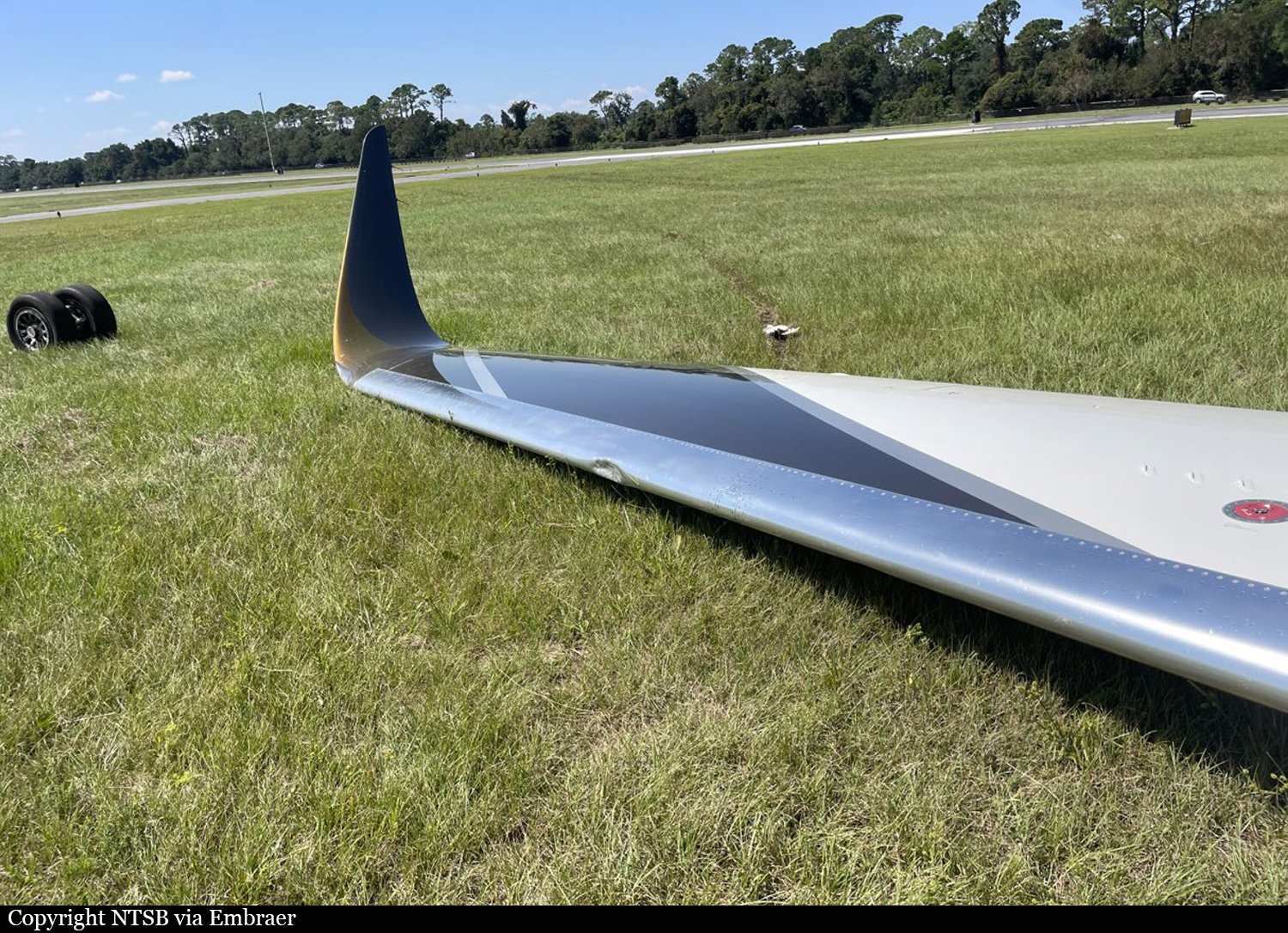
On September 21, 2023, about 1436 eastern daylight time, an Embraer SA EMB-545 MOD airplane, N434FX, operated by Flexjet LLC as Flexjet flight 434, was substantially damaged when it was involved in an accident near St. Simons Island, Georgia. The pilot, copilot, and the six passengers were not injured. The airplane was operated as a Title 14 Code of Federal Regulations (CFR) Part 91K fractional flight. The airplane departed Westchester County Airport (HPN), White Plains, New York, at 1239 destined for St. Simons Island Airport (SSI), St. Simons Island. According to the flight crew, the departure and en route phase of the flight were uneventful, and they performed the checklists in accordance with procedures. The pilot (who was flying from the left seat) stated that he chose to fly the GPS runway 4 approach (versus flying a visual pattern) to allow more time for alignment and setup for landing. He said that he selected the “flaps 3” configuration due to the gusting wind component to be prepared in case it shifted to a crosswind and that the autothrottle was in use. The copilot said they had the runway in sight from 10 miles out, and he made the “500-ft stable, 20-kt headwind” callout when the airplane was descending through 500 ft agl. The NTSB airplane performance study determined that the FDR data and CVR audio for the airplane were consistent with a stable approach up to this point. The flight crew reported that all checklists and callouts were conducted. The FDR data showed that the fly-by-wire system was operating in normal mode, and the airplane’s autopilot was disconnected at 1435:49, when the airplane was about 500 ft. The pilot said that, when the airplane was about 100 to 150 ft agl, it crossed over a tree line, and he felt an “uplift,” then the airplane began to porpoise. The pilot tried to make pitch corrections using the sidestick control, but the airplane did not respond as commanded. The copilot said that the airplane was over the runway displaced threshold when it started pitching up and down. He looked over at the pilot’s hand on the sidestick, and he could see the pilot moving it back and forth in what seemed to him to be ”very aggressive” inputs. The copilot then said something like, “Take it easy there,” and the pilot replied that the airplane was not responding. The copilot estimated that the airplane was about 50 ft above the runway when he asked the pilot something along the lines of, “Would you like me to try?” The copilot said that he pulled back on his sidestick, and it felt like nothing happened. The copilot said that, at this point, it seemed like they were “along for the ride” and that he needed to brace himself for impact. The NTSB airplane performance study determined that, about 1436:19 (13 seconds before touchdown), when the airplane was about 162 ft radio altitude, the airplane’s AOA increased suddenly, likely due to a wind gust. The airplane’s AOA limiter protection system (aerodynamic stall prevention system) engaged, and the airplane’s AOA reduced. The FDR data for the pilot’s sidestick control showed that the pilot provided airplane-nose-up and airplane-nose-down pitch commands (as well as roll commands) and that the AOA limiter protection, which remained engaged until touchdown, limited the airplane’s response to the pilot’s pitch commands. (See the Tests and Research section for more information about the NTSB airplane performance study and systems functions during the accident flight.) In their postaccident statements, neither flight crew member indicated any awareness that the AOA limiter protection had engaged. The CVR transcript showed that, at 1436:28 (4 seconds before touchdown), the flight crew received a terrain awareness and warning system (TAWS) “sink rate” aural alert and reacted in surprise. During the 3 seconds before touchdown, the pilot commanded full airplane-nose-up pitch, and the fly-by-wire control system responded with about 3° airplane-nose-up elevator (full elevator deflection ranges from 25° up to 15° down). During the flare, the airplane was subjected to a horizontal gust which which resulted in a reduction of about 8 kts of indicated airspeed. During the 1.5 seconds before touchdown, the copilot also commanded full airplane-nose-up pitch, and the system responded with 5.5° airplane-nose-down elevator about 0.5 second before touchdown. The airplane impacted the ground at 1436:32. The copilot said that the airplane touched down “hard” before the runway threshold on centerline, and he thought that it bounced and then touched down again. He said the airplane was listing and drifting to the right as it skidded down the runway. The copilot remarked to the pilot that the airplane was not decelerating very much, and the pilot said that he was trying to get it stopped. The copilot then pulled the emergency brake handle, but nothing happened, so he put it back down. The airplane then went off the right side of the runway, hit a concrete base for a sign, then skidded mostly sideways before coming to rest on the grass to the right of the runway. After the airplane came to a stop, the copilot opened the cockpit door to check on the passengers and advised the pilot to shut down the engines so he could open the cabin door and deplane the passengers. The pilot shut down the engines, and all occupants deplaned through the main cabin door.
Probable cause:
The control laws of the angle of attack limiter protection system, which precluded the system from disengaging during an approach in gusting wind conditions, limiting the flight crew’s ability to control the airplane’s pitch and resulting in a hard landing.
Final Report:
Crash of an Embraer EMB-110P1 Bandeirante in Barcelos: 14 killed

Date & Time: Sep 16, 2023 at 1500 LT
Operator:
Registration:
PT-SOG
Survivors:
No
Schedule:
Manaus – Barcelos
MSN:
110-490
YOM:
1990
Country:
Crew on board:
2
Crew fatalities:
Pax on board:
12
Pax fatalities:
Other fatalities:
Total fatalities:
14
Circumstances:
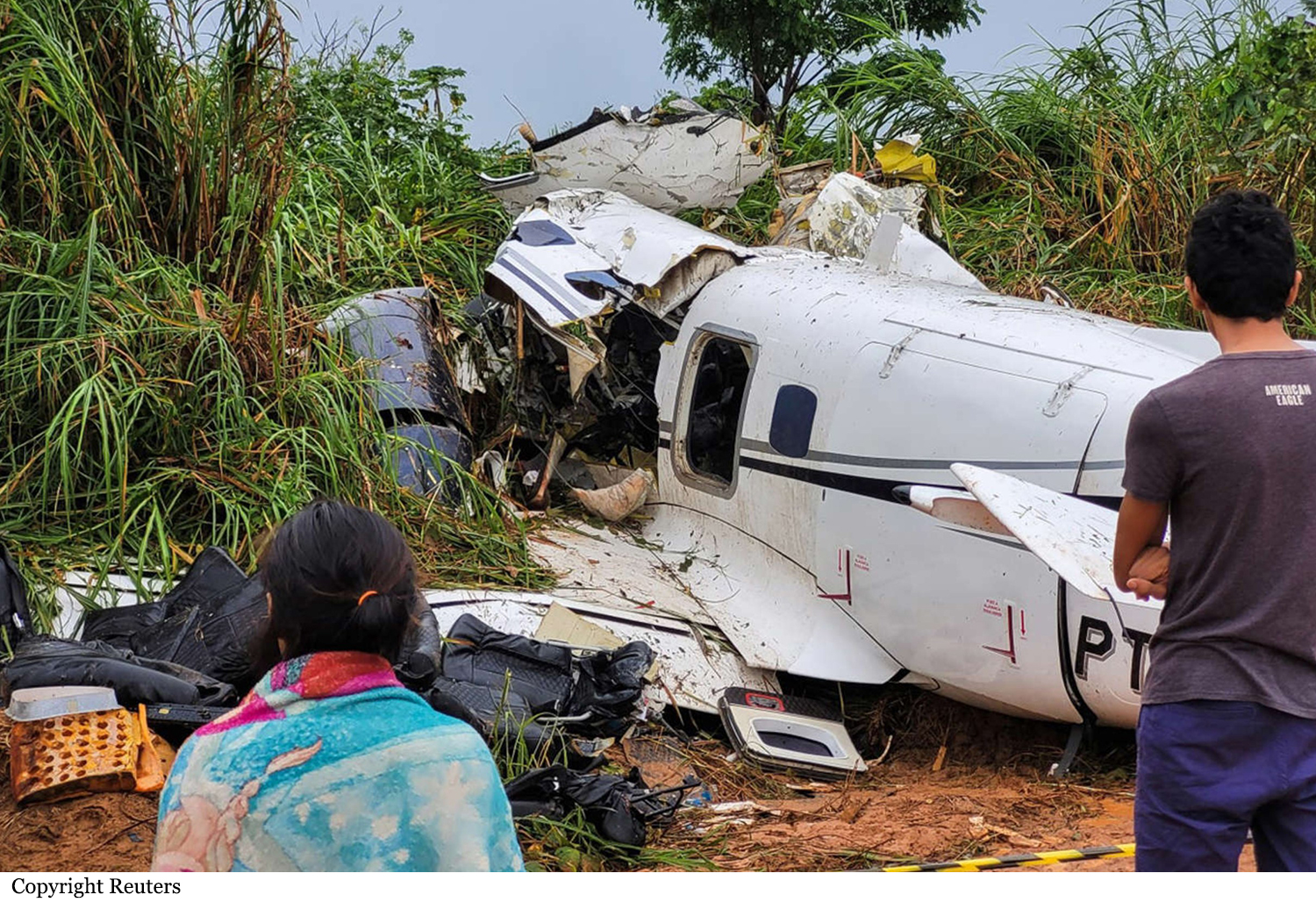
On final approach to Barcelos Airport, the crew encountered poor weather conditions with reduced visibility due to heavy rain falls. On short final, the crew decided to initiate a go around procedure when the airplane apparently stalled and crashed on an embankment located near runway 09/27. The airplane was destroyed and all 14 occupants were killed. All 12 passengers were Brazilian tourists flying to Barcelos to practice sport fishing on the Río Negro. The airplane departed Manaus-Eduardo Gomes Airport on this charter flight approximately two hours prior to the accident.

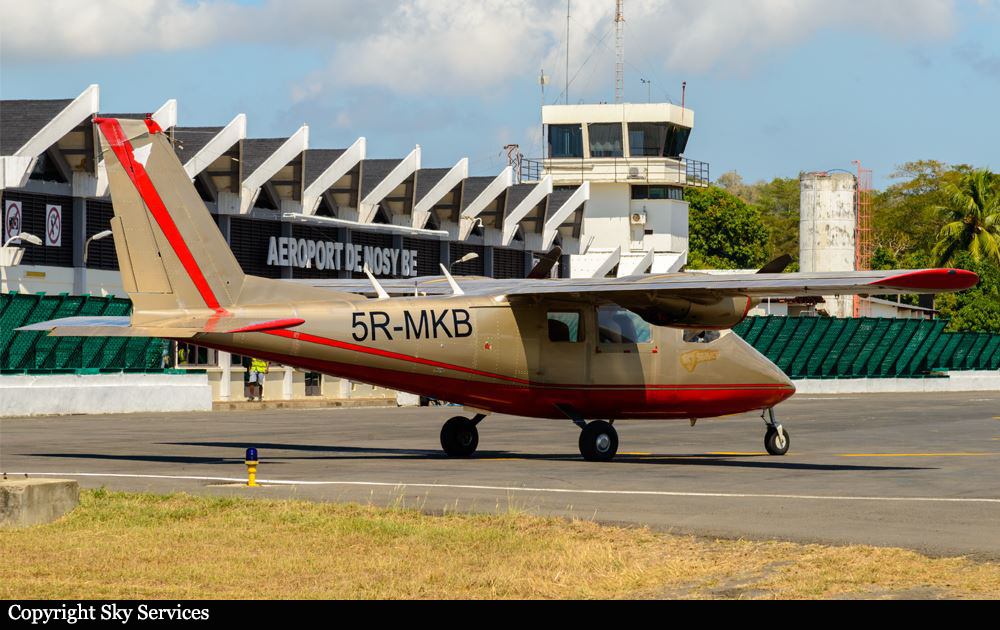
Crash of a Partenavia P.68C Victor in Besakoa: 1 killed

Date & Time: Aug 24, 2023 at 1510 LT
Type of aircraft:
Operator:
Registration:
5R-MKB
Flight Phase:
Survivors:
Yes
Schedule:
Besakoa - Moramba
Country:
Region:
Crew on board:
1
Crew fatalities:
Pax on board:
4
Pax fatalities:
Other fatalities:
Total fatalities:
2
Circumstances:
Shortly after takeoff from Besakoa Airfield, the twin engine airplane crashed, bursting into flames. A passenger was killed and four other occupants were injured and evacuated to Antananarivo. The airplane was en route to Moramba.

Crash of a Raytheon 390 Premier I in Kuala Lumpur: 10 killed

Date & Time: Aug 17, 2023 at 1449 LT
Type of aircraft:
Operator:
Registration:
N28JV
Survivors:
No
Schedule:
Langkawi - Kuala Lumpur
MSN:
RB-97
YOM:
2004
Country:
Region:
Crew on board:
2
Crew fatalities:
Pax on board:
6
Pax fatalities:
Other fatalities:
Total fatalities:
10
Captain / Total flying hours:
6275
Captain / Total hours on type:
36.00
Copilot / Total flying hours:
9298
Copilot / Total hours on type:
3
Aircraft flight hours:
3142
Circumstances:
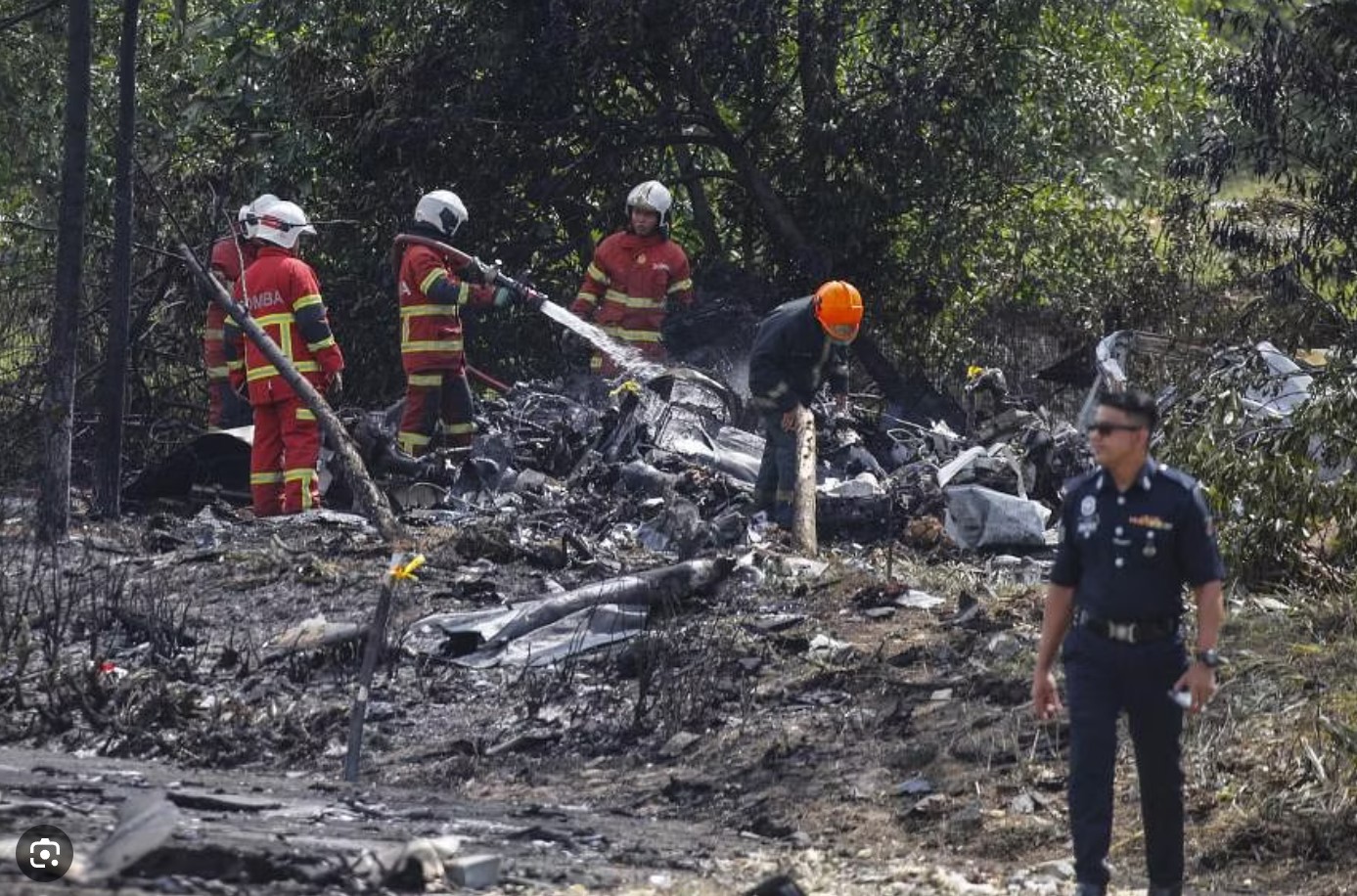
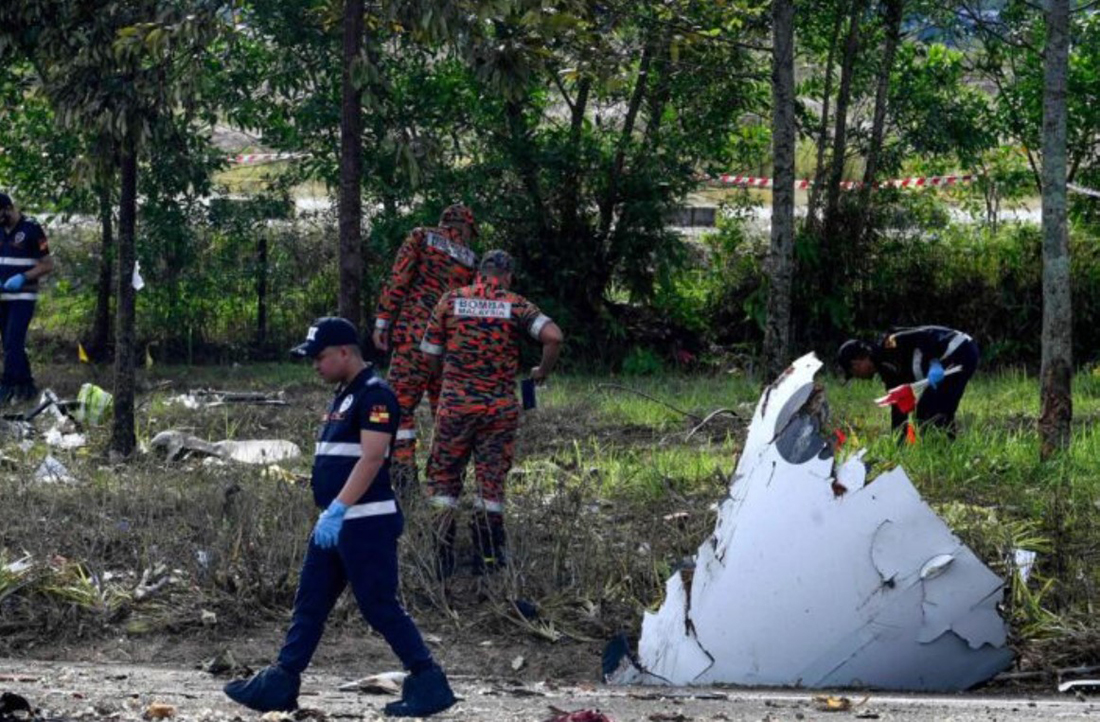
N28JV departed WMKL with eight persons on board at approximately 1408 LT, heading to WMSA. At around 1446 LT, N28JV contacted the WMSA air traffic tower controller to report it was established on the NBD Runway 15 approach and requested landing clearance. At 1448:36 LT, N28JV was cleared to land on Runway 15. The flight acknowledged the clearance at 1448:41 LT. No further radio transmissions were heard from the flight. Automatic Dependent Surveillance–Broadcast (ADS-B) data indicated that at 1447:24 LT, at an altitude of 2,600 feet, the aircraft began a speed reduction and descent. At approximately 1449:06 LT, at an altitude of 1,025 feet, the aircraft initiated a right turn, continuing until about 1449:14 LT, when it was at an indicated height of 550 feet. This was the last recorded data transmission from the accident flight, which was near the accident location. The ground speed during the right turn ranged between 146 and 154 knots. The aircraft crashed at Persiaran Elmina, Elmina, Shah Alam. The airplane was destroyed following the ground impact and subsequent fire. All eight occupants and two ground bystanders were fatally injured.
Probable cause:
The accident was primarily caused by the inadvertent extension of the lift dump spoilers by the flight crew while performing the Before Landing checklist.
The following contributing factors were identified:
- Inadvertent Extension of Lift Dump Spoilers: The primary cause of the accident was the inadvertent extension of the lift dump spoilers, most likely by the Second-in-Command, during the Before Landing checks. This action led to a sudden loss of lift, resulting in catastrophic loss of control and the subsequent crash.
- Deviation from Seating Protocols: The seating arrangement of the crew deviated from established protocols, with the Pilot-in-Command occupying the right hand seat and the Second-in-Command in the left-hand seat, contrary to the Airplane Flight Manual. This deviation likely contributed to ineffective crew resource management and communication.
- Inadequate Crew Training and Awareness: Insufficient crew training and awareness regarding the operation of the lift dump system were contributing factors to the accident. The Second-in-Command's unfamiliarity with the specific risks associated with the lift dump system led to the inadvertent extension of the spoilers.
- Regulatory Grey Areas and Oversight Gaps: Regulatory grey areas and organisational practices compromised safety oversight and compliance. The aircraft operator's failure to obtain necessary approvals for non-scheduled air services and comply with Malaysian regulations highlighted gaps in operational oversight.
- Communication and Decision-Making: Ineffective communication and decision-making processes were evident during critical phases of the flight. The absence of specific briefings or warnings about the lift dump system operation and the decision to deviate from standard seating protocols underscored deficiencies in communication and decision-making.
Final Report:

Crash of an Antonov AN-26 in Port Sudan: 9 killed

Date & Time: Jul 23, 2023
Type of aircraft:
Operator:
Flight Phase:
Survivors:
Yes
Country:
Region:
Crew on board:
4
Crew fatalities:
Pax on board:
6
Pax fatalities:
Other fatalities:
Total fatalities:
9
Circumstances:
The airplane crashed shortly after takeoff from Port Sudan and was destroyed by fire. A child was rescued while nine other occupants were killed.

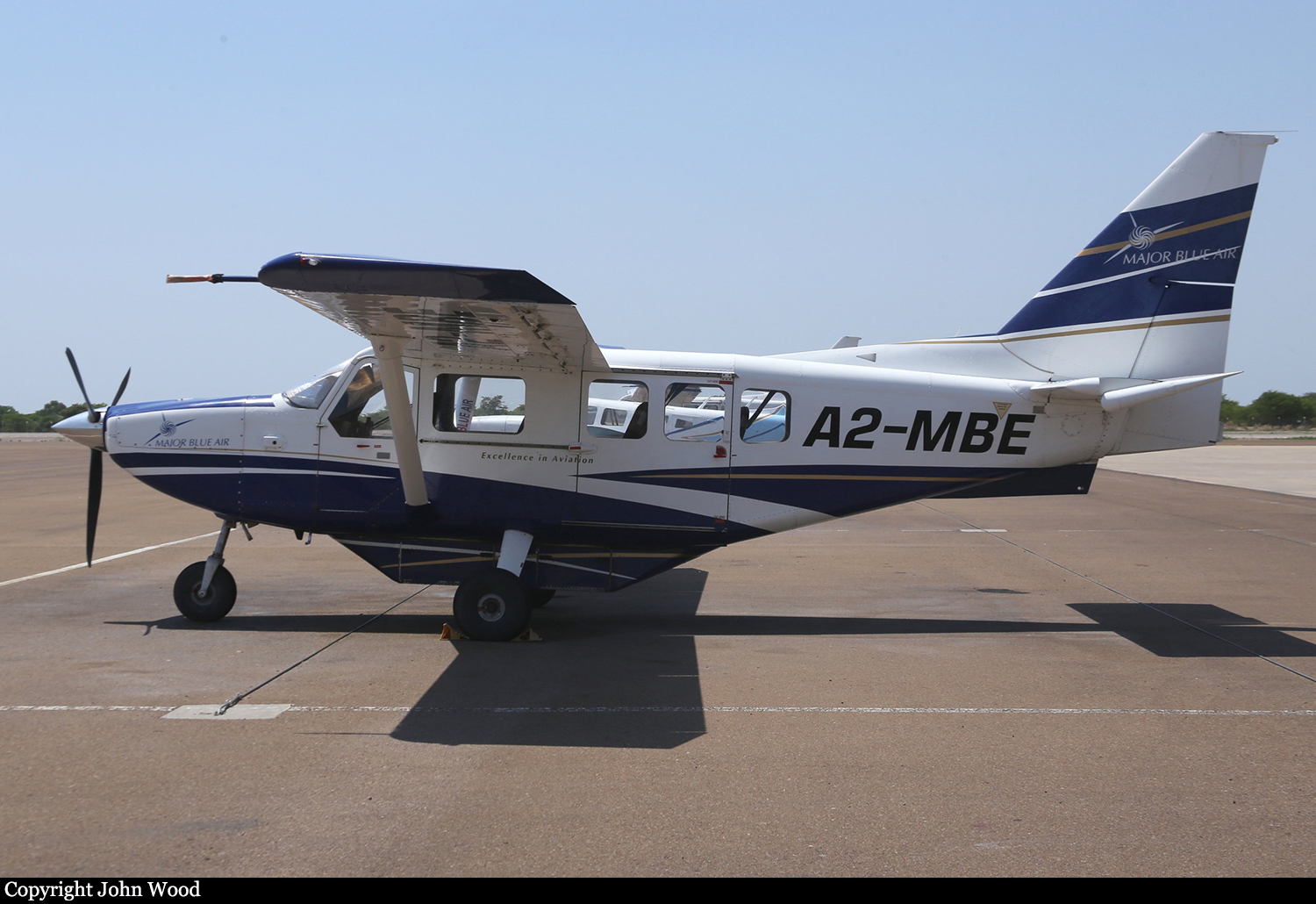
Crash of a GippsAero GA8 Airvan in Ghanzi: 2 killed

Date & Time: Jun 29, 2023
Type of aircraft:
Operator:
Registration:
A2-MBE
Flight Phase:
Survivors:
Yes
MSN:
GA8-12-179
YOM:
2012
Country:
Region:
Crew on board:
2
Crew fatalities:
Pax on board:
2
Pax fatalities:
Other fatalities:
Total fatalities:
2
Circumstances:
Shortly after takeoff, the single engine airplane went out of control and crashed, bursting into flames. Both pilots were seriously injured and both passengers, an American couple, were killed.

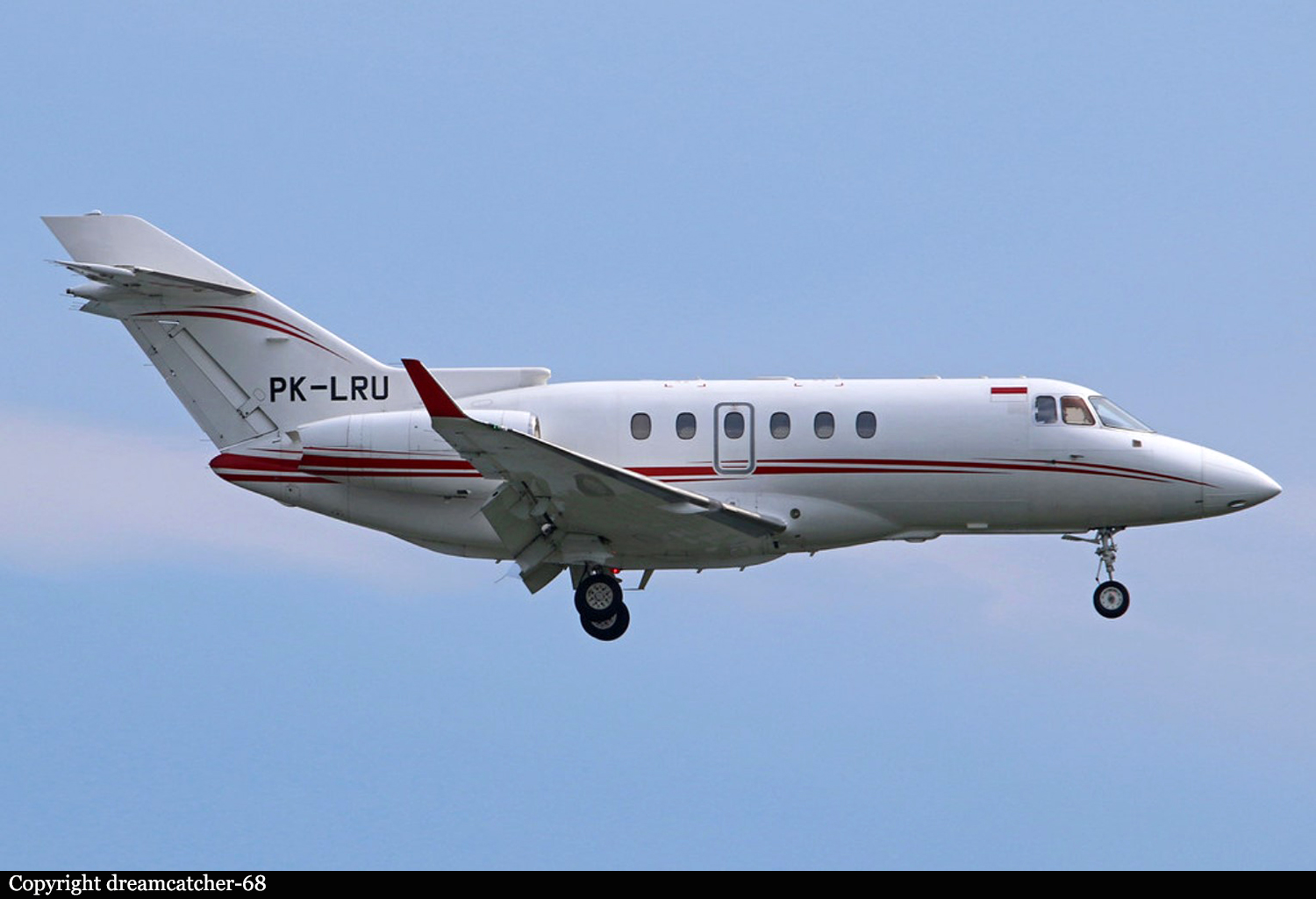
Crash of a Hawker 900XP in Maleo

Date & Time: May 11, 2023 at 1500 LT
Type of aircraft:
Operator:
Registration:
PK-LRU
Survivors:
Yes
Schedule:
Jakarta - Maleo
MSN:
HA-0212
YOM:
2012
Country:
Region:
Crew on board:
4
Crew fatalities:
Pax on board:
4
Pax fatalities:
Other fatalities:
Total fatalities:
0
Captain / Total flying hours:
9375
Captain / Total hours on type:
700.00
Copilot / Total flying hours:
7706
Copilot / Total hours on type:
1002
Aircraft flight hours:
1586
Aircraft flight cycles:
1106
Circumstances:
The airplane departed Jakarta-Halim Perdanakusuma Airport on a charter flight to Maleo, carrying four passengers and four crew members. Following an uneventful flight at FL390, the crew started the descent to Maleo-Morowali Airport Runway 23. After touchdown, the airplane was unable to stop within the remaining distance, overran, rolled for about 200 metres and came to rest against a wooded hill. All eight occupants evacuated safely, among them four Chinese passengers. The crew consisted of two pilots, one stewardess and one technician. Runway 05/23 at Maleo Airport is 1,000 metres long. It is believed that the airplane was operated by Lionair Charter Division.

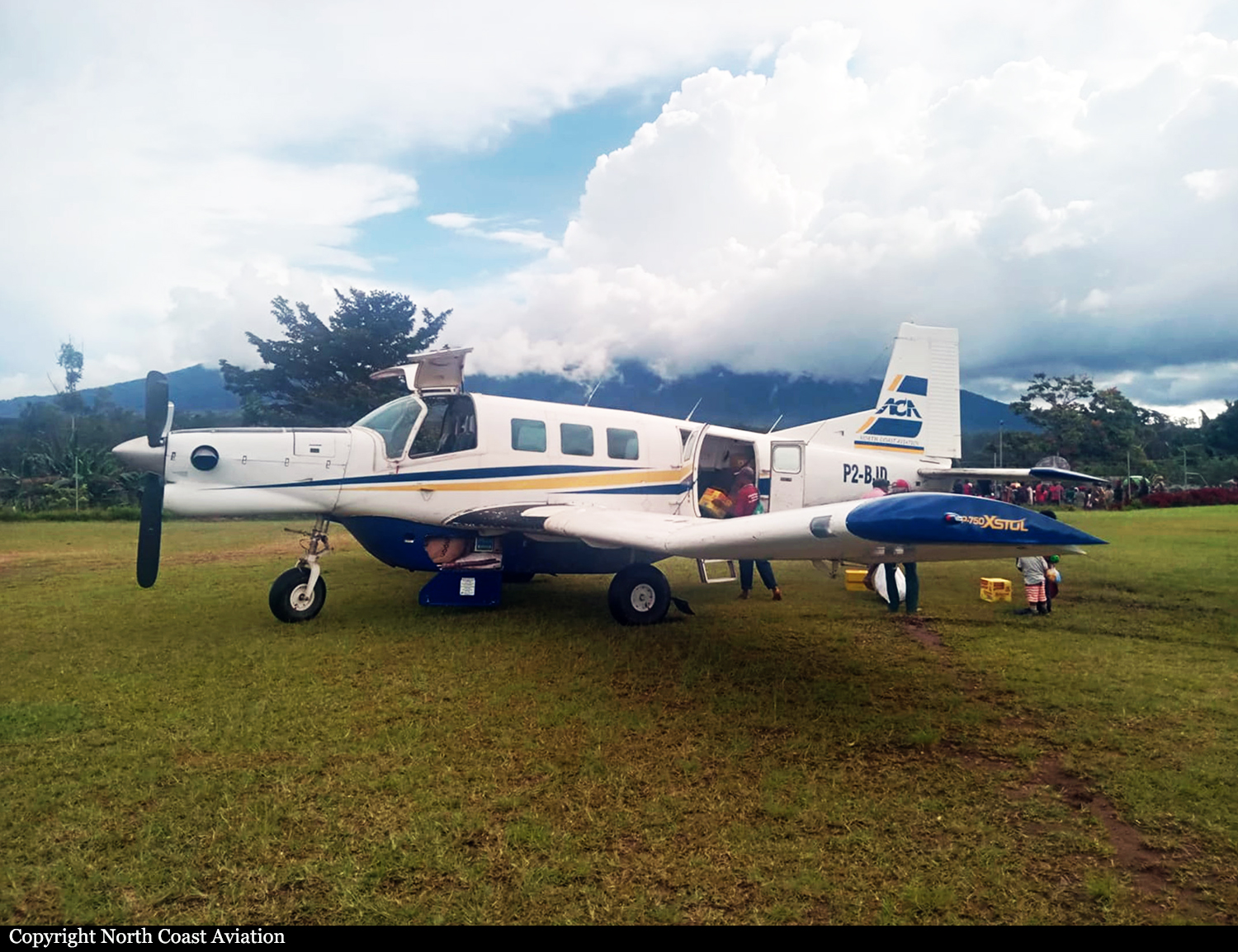
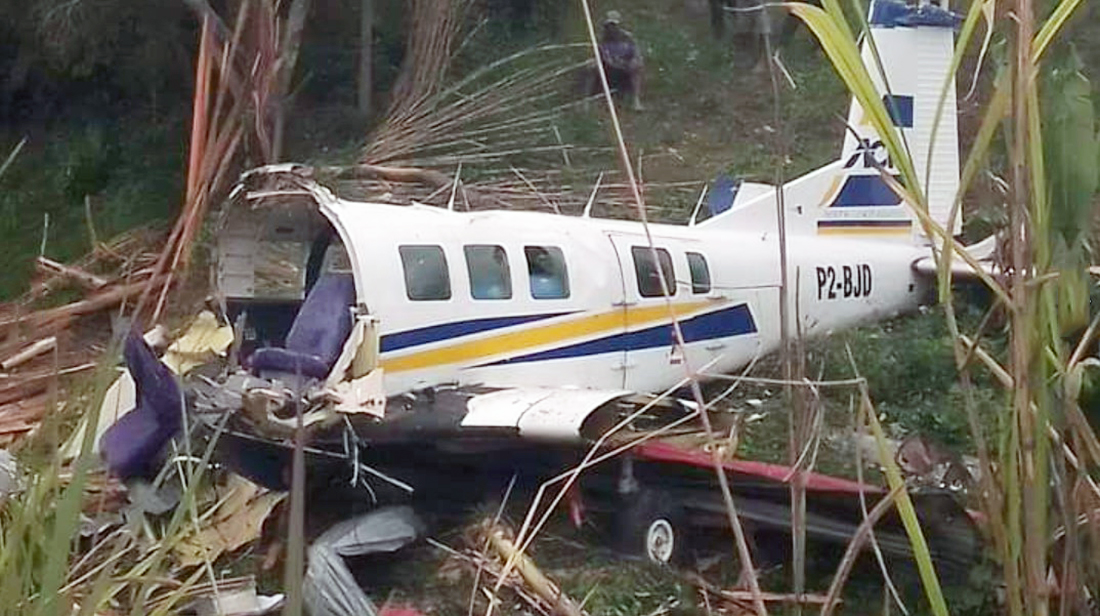
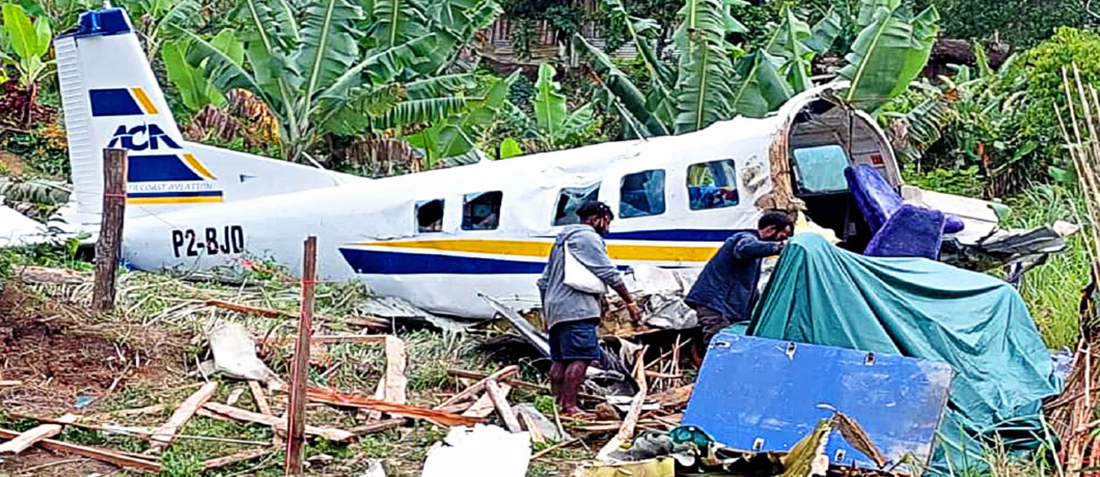
Crash of a Pacific Aerospace PAC 750XL in Kudjip

Date & Time: Feb 9, 2023 at 1250 LT
Operator:
Registration:
P2-BJD
Flight Phase:
Survivors:
Yes
Schedule:
Giramben - Simbai
MSN:
124
YOM:
2005
Location:
Region:
Crew on board:
1
Crew fatalities:
Pax on board:
3
Pax fatalities:
Other fatalities:
Total fatalities:
0
Captain / Total flying hours:
3582
Captain / Total hours on type:
1885.00
Aircraft flight hours:
13811
Aircraft flight cycles:
17220
Circumstances:
The flight was planned to depart Giramben at 12:40, and track North for Simbai Airstrip, Madang Province at 9,000 ft AMSL. According to the pilot, the aircraft was loaded by NCA ground handlers following his instructions. The manifest was completed by one of the ground handler, who stated that the aircraft was loaded by the other ground handlers while he was completing the manifest in the vehicle, due to no proper shed for him to work from. The pilot also stated that at the time the loading was completed, and the passengers had boarded the aircraft, he observed that the winds were variable, blowing directly from the North and from the East as well. Recorded data showed that the aircraft commenced taxiing at 12:44. During the take-off roll, at the expected airborne point, about 500 m down the runway, as the aircraft accelerated with the airspeed approaching 60 knots, the right wheel hit a soft spot on the strip which dramatically reduced the momentum and speed of the aircraft, as described by the pilot. Eyewitnesses reported seeing the aircraft getting airborne briefly and got back on the ground again. The pilot recalled that by the time the aircraft got back on the ground he realized that he had passed the nominated committal point, which was identified during onsite activities to be about 540 m from the threshold of runway 16. The pilot opted to continue with the take-off roll, with full power hoping that the aircraft would regain speed on the remaining part of the strip to get airborne again. The pilot recalled reaching the end of the runway and getting airborne again with an airspeed of 50 kts airborne again, however, the right wheel got caught on the barbed wire of the perimeter fence that ran across to the runway, and subsequently impacted terrain. The pilot stated that he had lost consciousness at the time of the initial impact and therefore, had no recollection from thereon. The investigation found that the aircraft got airborne about 19 m past the end of runway 16. However, the aircraft’s main landing gears got caught on the perimeter fencing wire, subsequently impacting ground about 100 m from the end of the runway, then continued with the momentum and came to rest, in a local village garden about 160 m from the end of the runway. The aircraft was destroyed by impact forces. The pilot and passengers were rescued by the locals and taken to Nazarene General Hospital, Jiwaka Province, for treatment. The pilot, male adult and infant passengers sustained serious injuries, and the female passenger sustained minor injuries.
Probable cause:
The following factors were identified:
- The pilot did not complete a trim sheet for the flight.
- The manifest was completed by a ground handler who was not present at the time the cargo was being loaded by other ground handlers. The manifest was not signed by the ground handler who completed it, nor was it authorized by the pilot before departure.
- Pilot’s lack of supervision of the aircraft’s loading process to ensure cargo is loaded correctly and in accordance with the prescribed limitations and to prevent calculation errors. As a result, it was likely that the aircraft was overweight when it departed.
- Wet strip surface conditions that caused significant resistance during the take-off roll and impeded the aircraft’s ability to reach its required lift off airspeed.
- Pilot’s decision to continue the take-off roll after passing the committal.
- Training deficiencies of ground handlers and the pilot.
- The lack of adequate Quality Assurance systems oversight on the operator’s operating standard procedures.
Final Report:

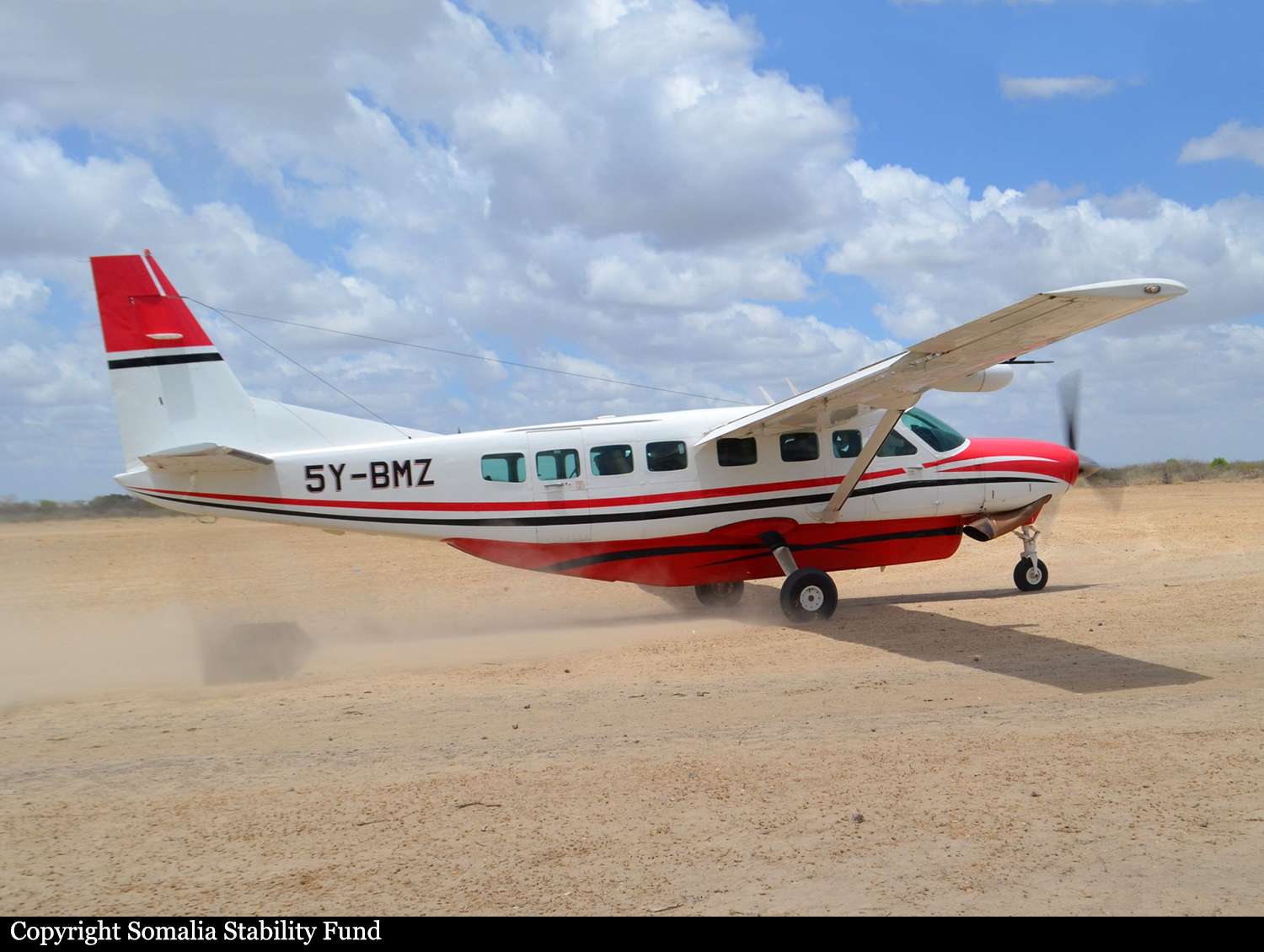
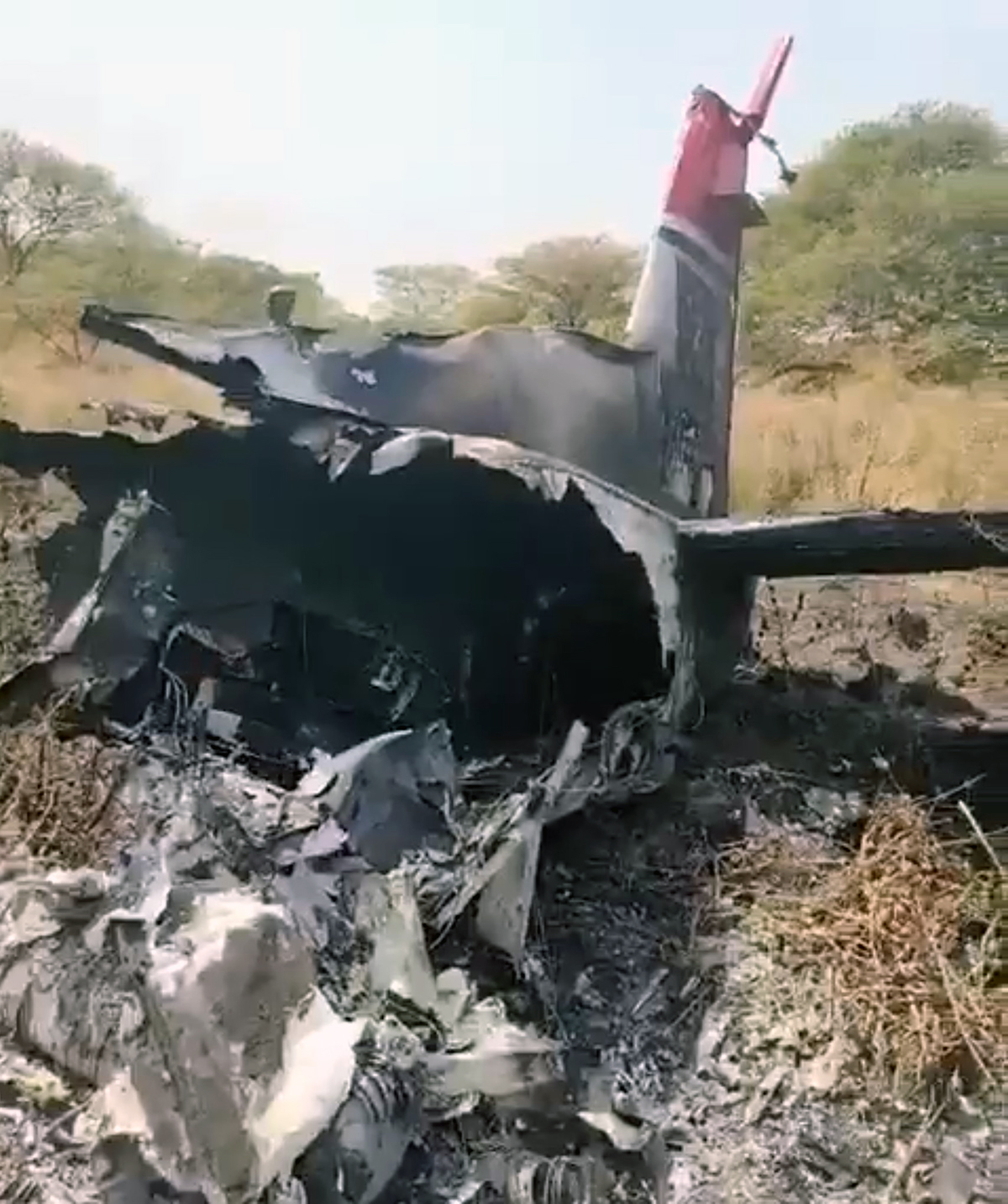
Crash of a Cessna 208B Grand Caravan in Nasir: 1 killed

Date & Time: Feb 6, 2023
Type of aircraft:

Operator:
Registration:
5Y-BMZ
Flight Phase:
Survivors:
Yes
MSN:
208B-0367
YOM:
1994
Country:
Region:
Crew on board:
0
Crew fatalities:
Pax on board:
0
Pax fatalities:
Other fatalities:
Total fatalities:
1
Circumstances:
After liftoff from Nasir Airfield, the single engine airplane encountered difficulties to gain height. It rolled to the right, impacted terrain and crashed in an open field, bursting into flames. All occupants evacuated but an elderly passenger later died from injuries sustained. The airplane was totally destroyed by a post crash fire.

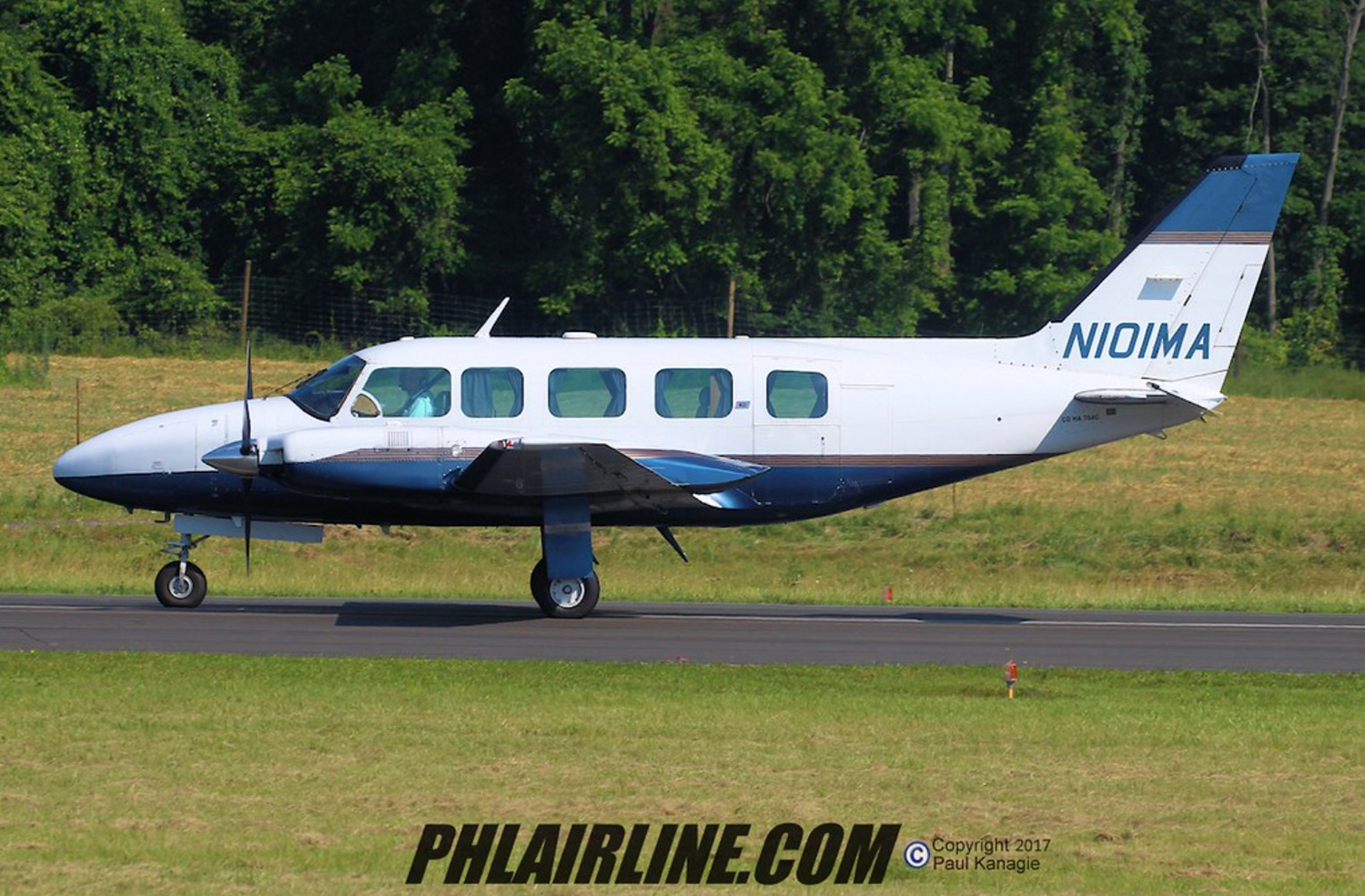
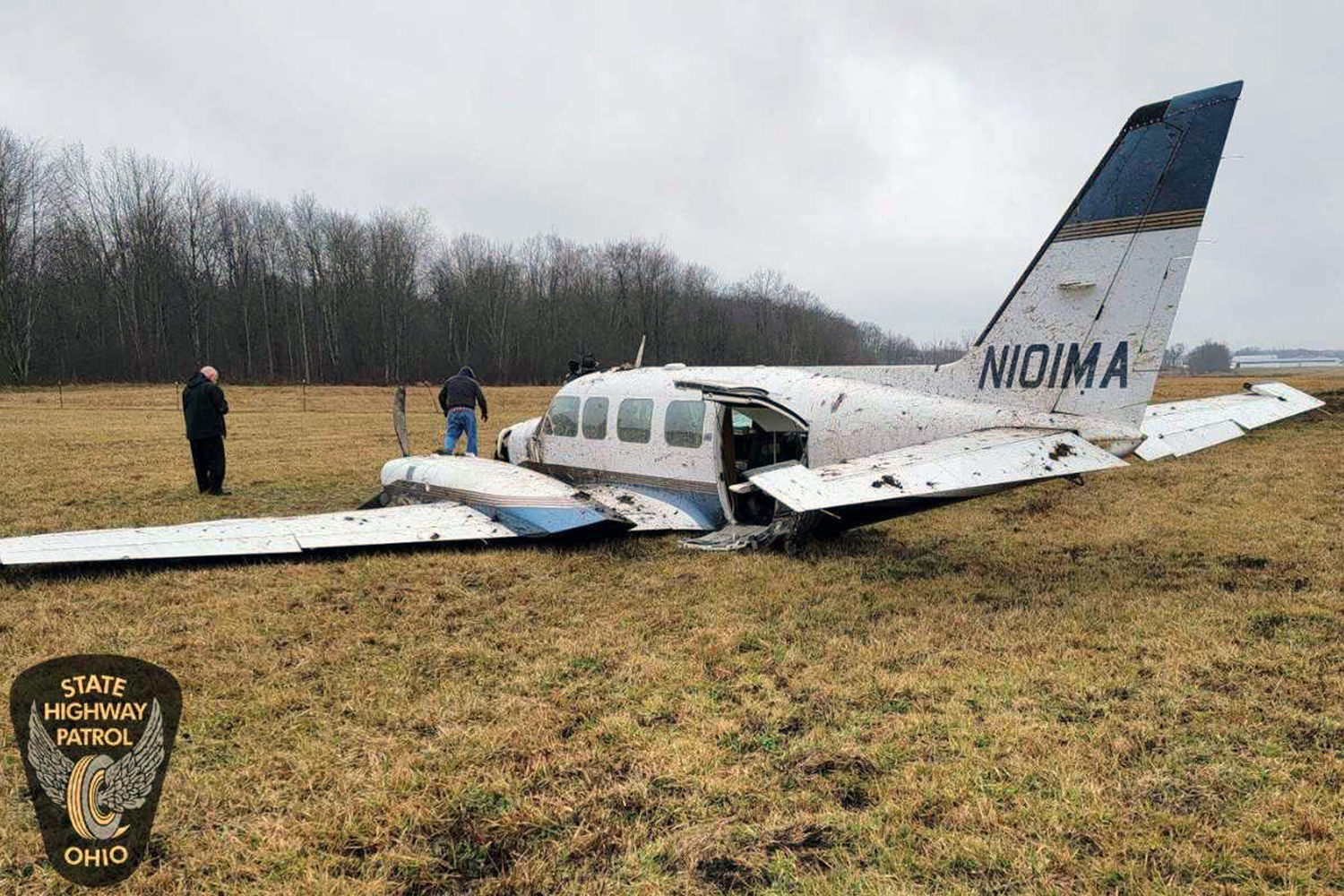
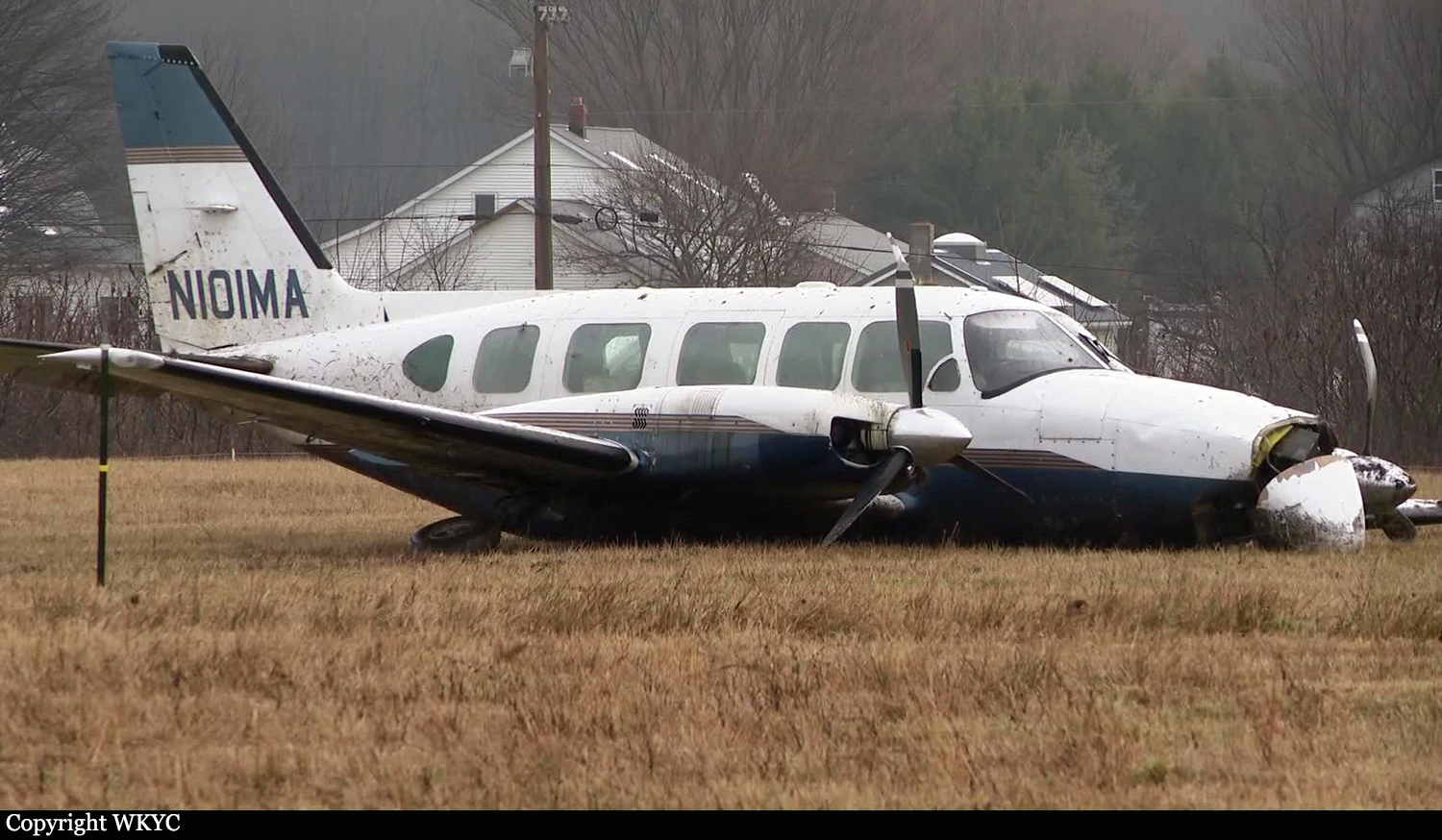
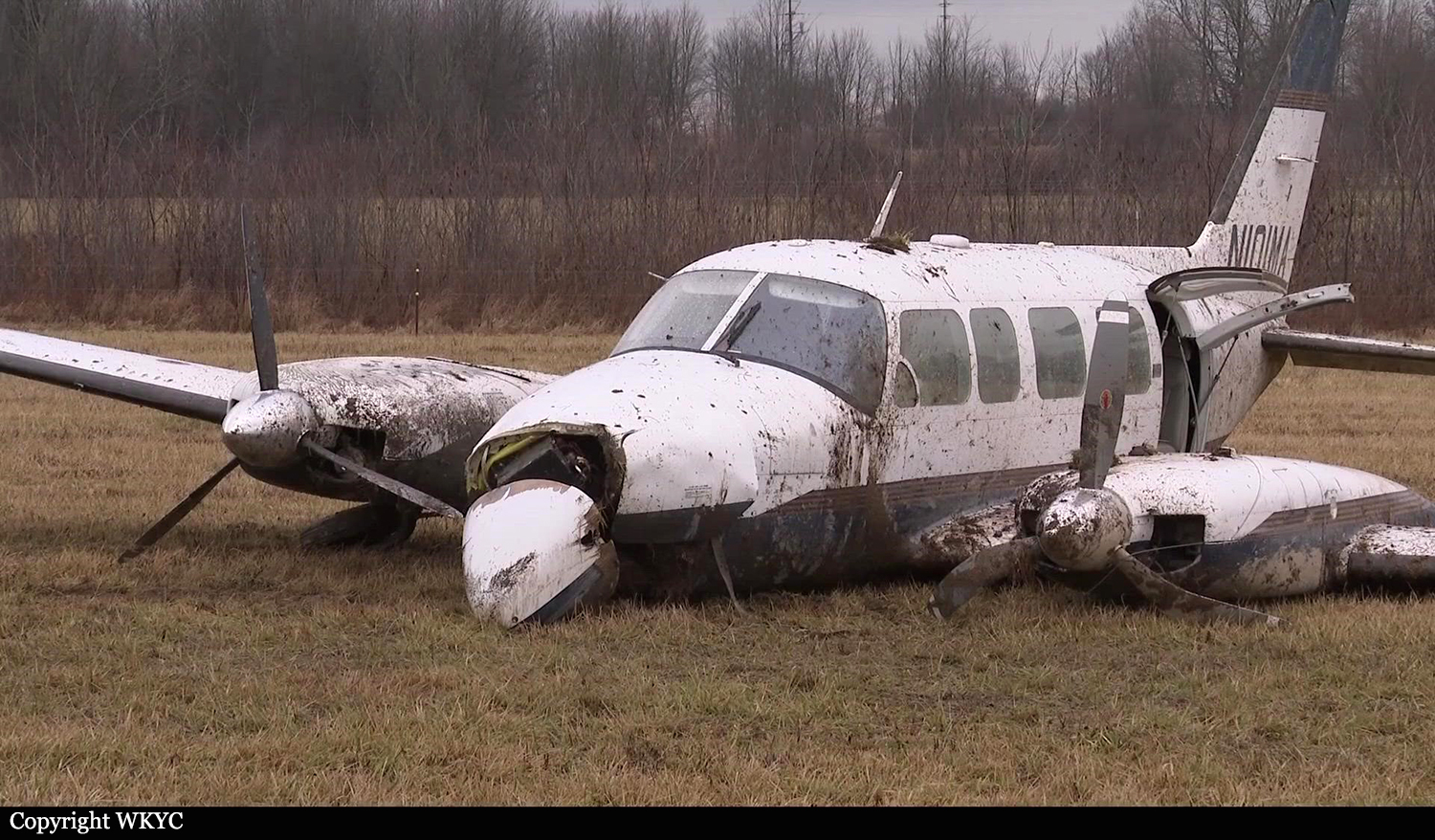
Crash of a Piper PA-31-350 Navajo Chieftain in Middlefield

Date & Time: Jan 18, 2023 at 0903 LT
Registration:
N101MA
Survivors:
Yes
Schedule:
Youngstown – Detroit – Minneapolis
MSN:
31-7752186
YOM:
1977
Crew on board:
1
Crew fatalities:
Pax on board:
5
Pax fatalities:
Other fatalities:
Total fatalities:
0
Captain / Total flying hours:
9275
Captain / Total hours on type:
750.00
Aircraft flight hours:
17154
Circumstances:
While enroute in instrument meteorological (IMC) conditions, the pilot of the twin-engine, piston-powered airplane declared an emergency following a loss of power to the right engine. The pilot secured the engine and was provided vectors by air traffic control for an instrument approach procedure at the nearest airport, which he successfully completed. The pilot reported that he flew the approach and landing with the wing flaps retracted and visually acquired the runway about 500 ft above the ground. The airplane touched down on the first third of the runway at 120 knots. The pilot knew he would not be able to stop the airplane on the 3,500-ft long runway but committed to the landing rather than risking a single-engine go-around in IMC. After landing, the airplane continued beyond the departure end of the runway and impacted a berm, collapsing the landing gear and resulting in substantial damage to the airplane. Examination of the engine revealed catastrophic damage consistent with detonation and oil starvation. The damage to the No. 5 cylinder was consistent with a subsequent over pressurization of the crankcase, which likely expelled the crankshaft nose seal and the oil supply. Detonation of the cylinder(s) can create excessive crankcase pressures capable of expelling the crankshaft nose seal. The crankshaft nose seal displacement likely created a rapid loss of oil and the resulting oil starvation of the engine. The fractured connecting rod and high-temperature signatures were consistent with oil starvation. No source or anomaly that would result in engine detonation was identified. According to the Pilot’s Operating Handbook (POH) for the accident airplane, during a single engine inoperative approach, the pilot should maintain an airspeed of 116 kts indicated (KIAS) or above until landing is assured. Once landing is assured, the pilot should extend the gear and flaps, slowly retard the power on the operative engine, and land normally. The airplane’s best single-engine rate of climb speed (blue line) was 106 KIAS, and its minimum controllable airspeed with one engine inoperative (Vmca) was 76 KIAS. The maximum speed for full flap extension (40°) was 132 KIAS. The POH also stated that a single-engine go-around should be avoided if at all possible. The pilot’s decision to commit to the landing was reasonable given the circumstances and the guidance provided by the POH; however, it is likely that his decision to conduct the landing without flaps and the airplane’s excessive airspeed at touchdown resulted in the runway overrun.
Probable cause:
A runway overrun during a precautionary landing following a total loss of right engine power due to detonation and subsequent oil starvation. Contributing was the pilot’s failure to lower the flaps and the excessive airspeed at touchdown.
Final Report: