Crash of a Beechcraft B200 Super King Air in Poplar

Date & Time: Jan 18, 2023 at 0818 LT
Operator:

Registration:
N200EJ
Survivors:
Yes
Schedule:
Billings - Poplar
MSN:
BB-1884
YOM:
2004
Location:
Crew on board:
2
Crew fatalities:
Pax on board:
1
Pax fatalities:
Other fatalities:
Total fatalities:
0
Captain / Total flying hours:
4242
Captain / Total hours on type:
2068.00
Copilot / Total flying hours:
10301
Copilot / Total hours on type:
4137
Aircraft flight hours:
4538
Circumstances:
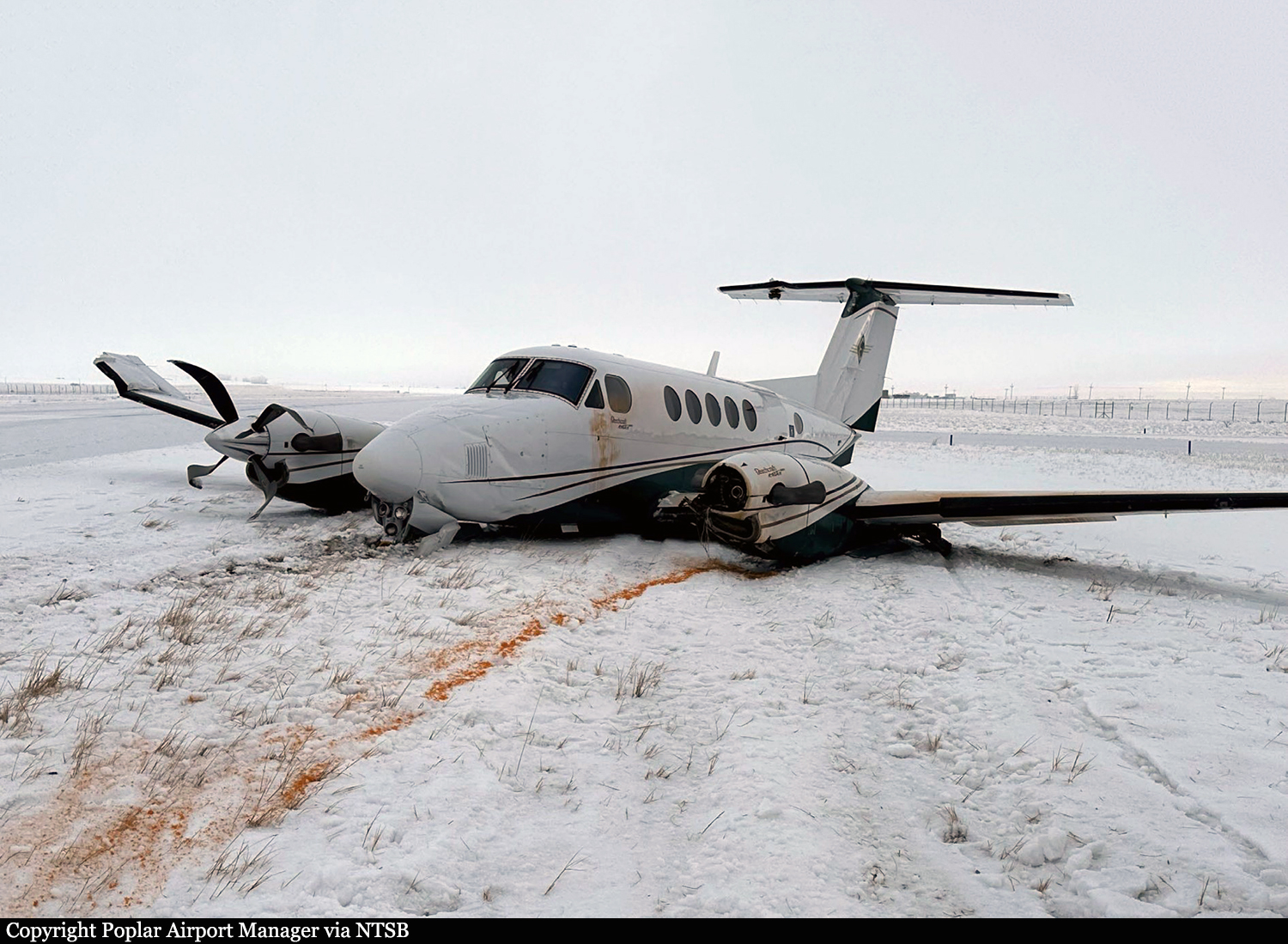
The pilot reported that while on approach for landing, the airplane started to lose altitude quickly. After the co-pilot noticed the high decent rate and the slow airspeed, he advised the pilot to add power. However, the airplane continued to descend and impacted terrain in a right wing and nose low attitude, about 30 yards short of the runway approach threshold, which resulted in substantial damage to the right wing. The pilot reported that there were no preaccident mechanical failures or malfunctions with the airplane that would have precluded normal operation.
Probable cause:
The pilot’s failure to maintain adequate airspeed and descent rate during the landing approach, which resulted in an impact with terrain short of the runway threshold.
Final Report:

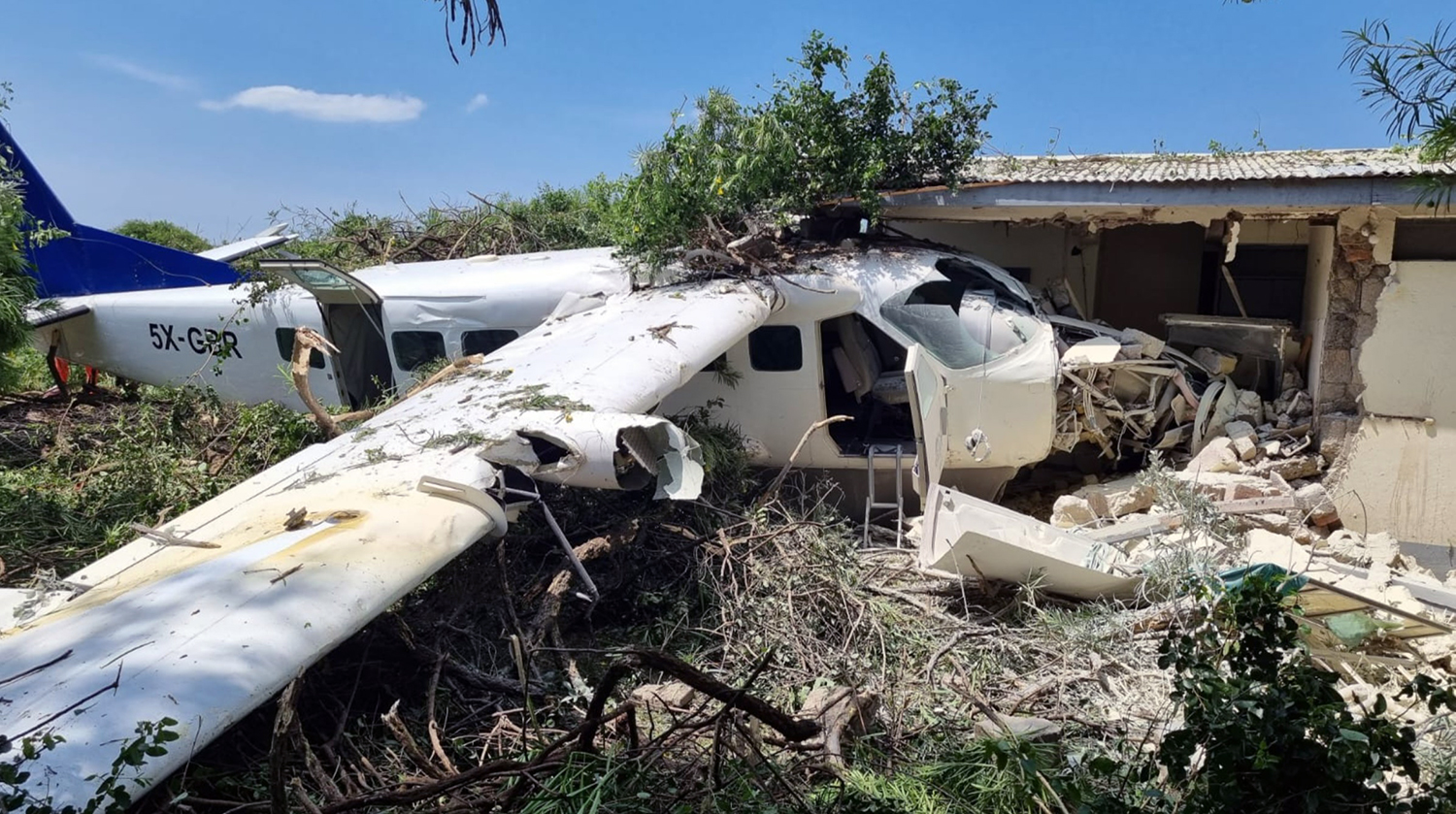
Crash of a Cessna 208B Grand Caravan in Mweya

Date & Time: Dec 31, 2022 at 1315 LT
Type of aircraft:
Operator:
Registration:
5X-GBR
Survivors:
Yes
Location:
Country:
Region:
Crew on board:
2
Crew fatalities:
Pax on board:
3
Pax fatalities:
Other fatalities:
Total fatalities:
0
Circumstances:
After landing at Mweya Airstrip located in the Queen Elizabeth National Park, the single engine airplane was unable to stop within the remaining distance. It overran and collided with a house. All five occupants escaped uninjured and the aircraft was damaged beyond repair. It just completed a charter flight with three European citizens and two pilots on board.

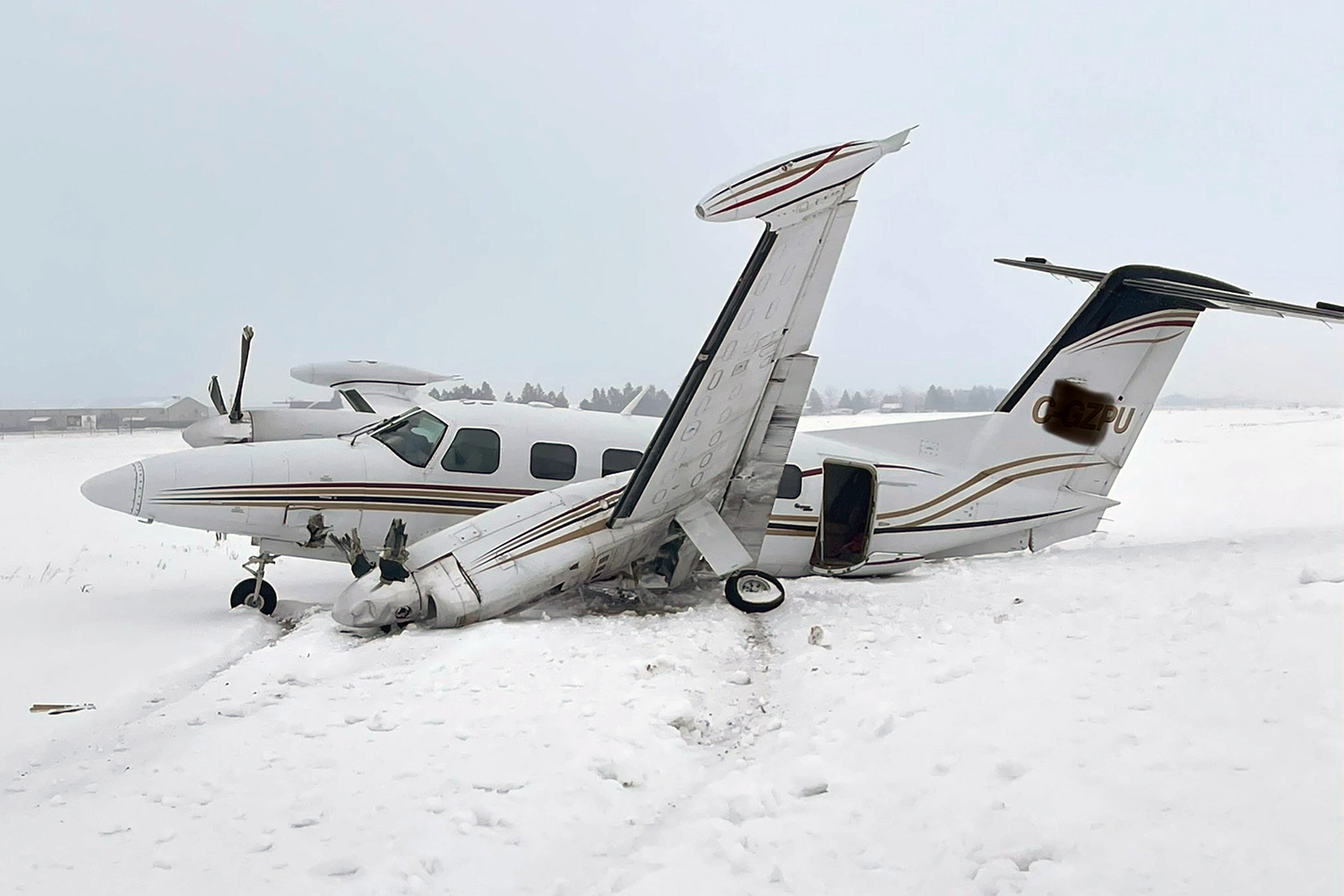
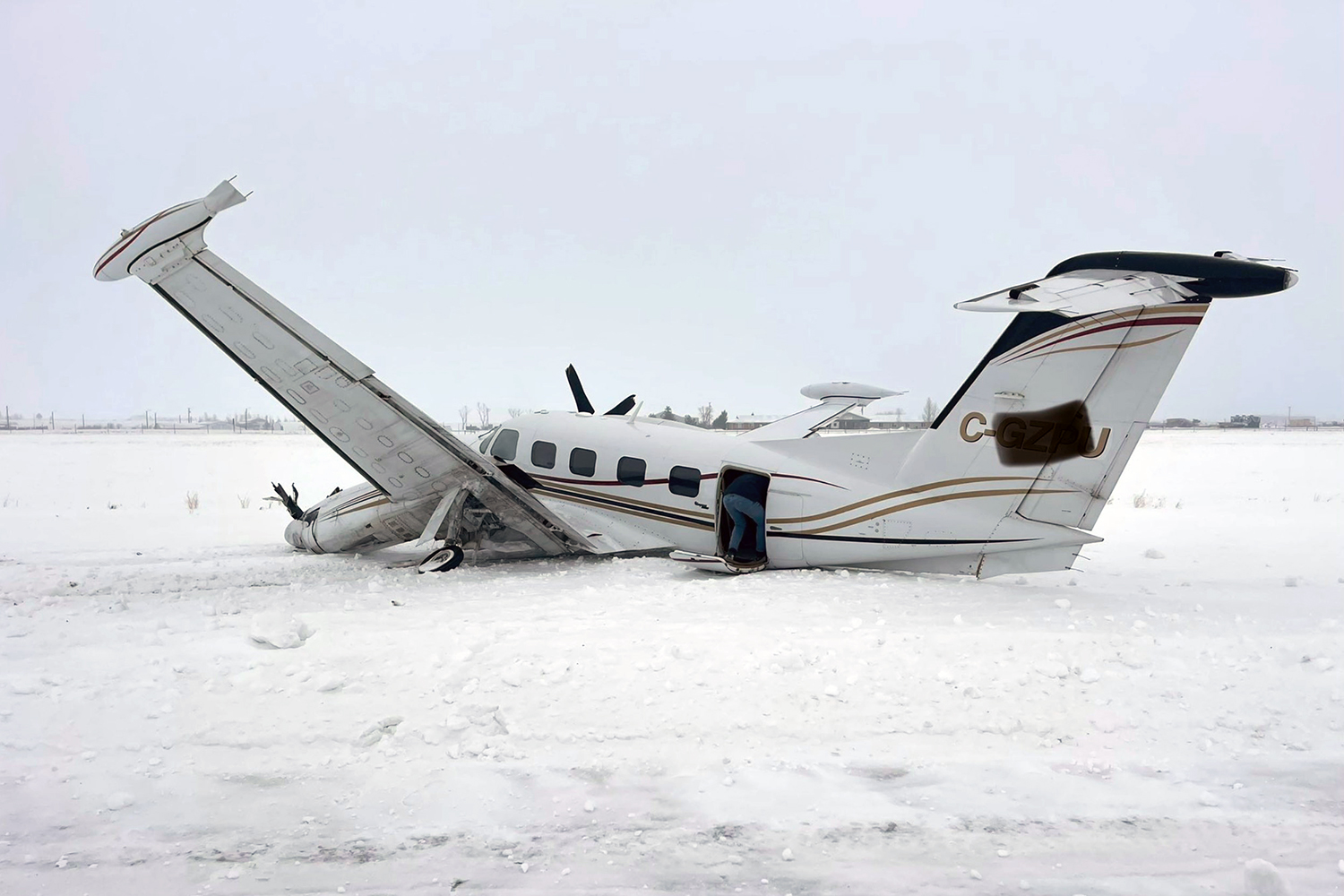
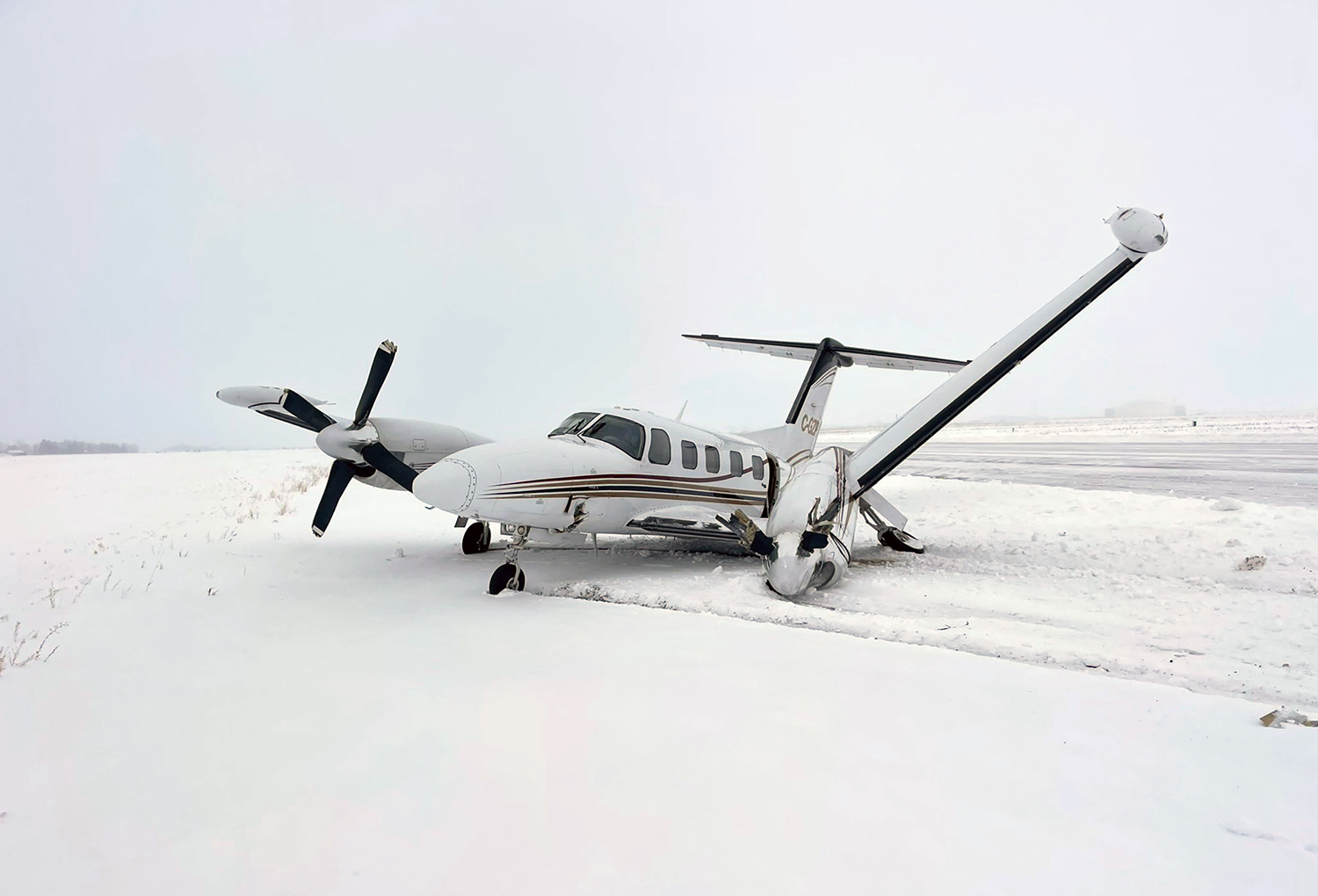
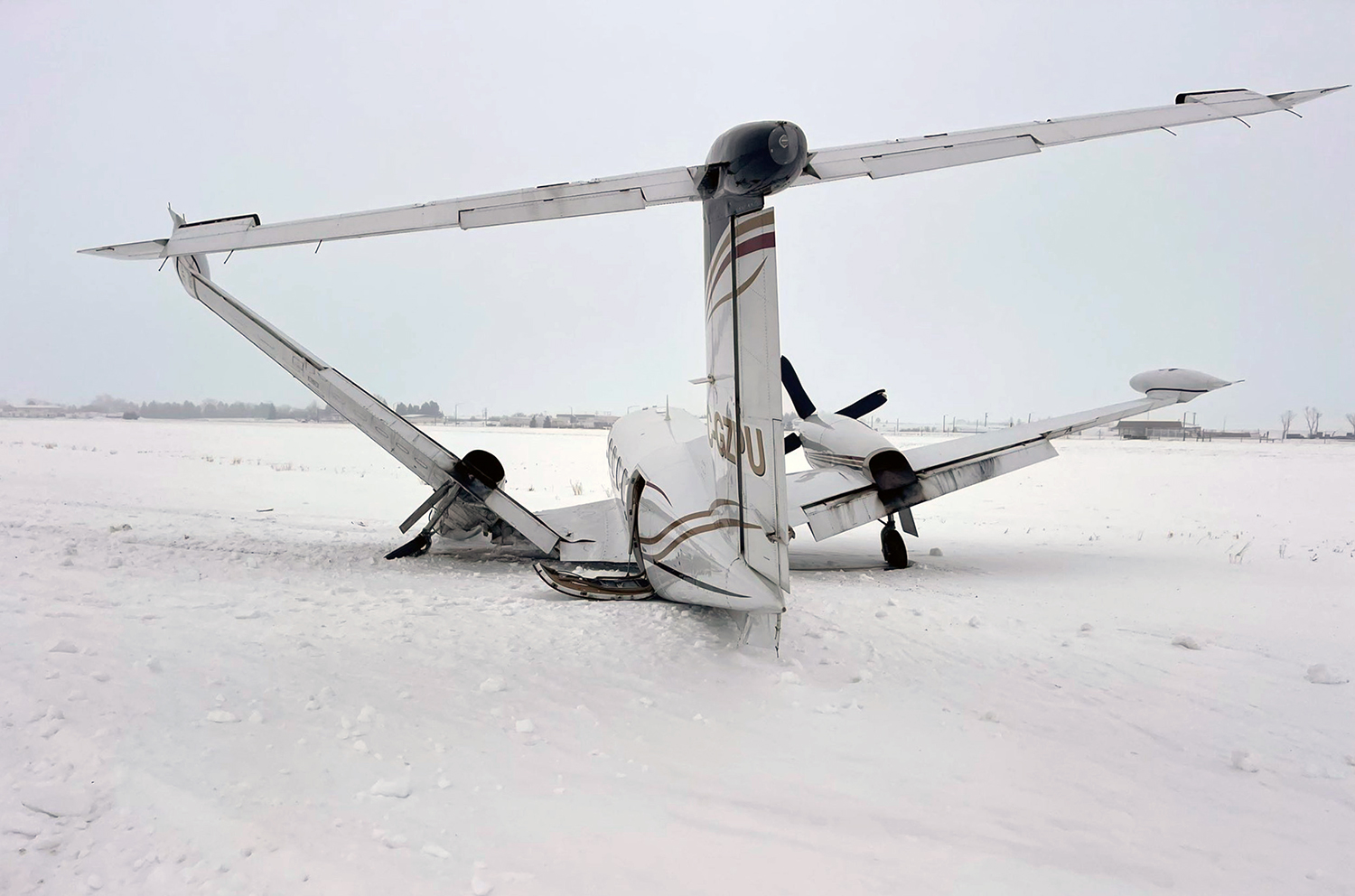
Crash of a Piper PA-42-1000 Cheyenne 400LS in Lewistown

Date & Time: Dec 13, 2022 at 1006 LT
Type of aircraft:
Operator:
Registration:
C-GZPU
Survivors:
Yes
Schedule:
Great Falls – Lewistown
MSN:
42-5527011
YOM:
1984
Crew on board:
2
Crew fatalities:
Pax on board:
2
Pax fatalities:
Other fatalities:
Total fatalities:
0
Circumstances:
The flight crew reported that, the instrument approach was flown on autopilot to about 700 ft above ground level until the runway was visually in sight. They were 300 ft off the runway centerline, and 1 nautical mile from the runway threshold. The visual glideslope indicator was inoperative, and the runway markings were obscured due to dry light snow. The airplane subsequently landed hard on the unusable portion of the runway, about 800 ft short of the landing threshold, and the left mail landing gear tire blew, causing the propeller to strike the runway. The airplane veered off the runway substantially damaging the left wing. The pilots reported that there were no preaccident mechanical failures or malfunctions with the airplane that would have precluded normal operation.
Probable cause:
The pilot’s improper landing flare, which resulted in a hard landing. Contributing to the accident was the out of service visual glideslope indicator and snow obscuring the runway markings.
Final Report:

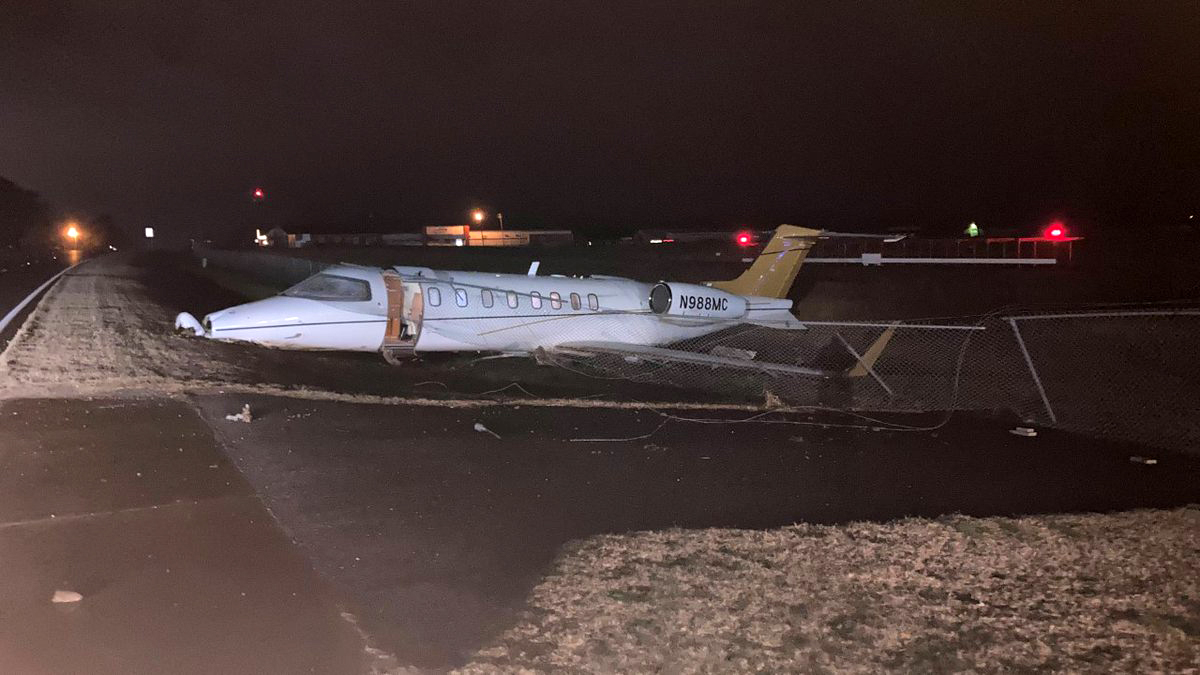
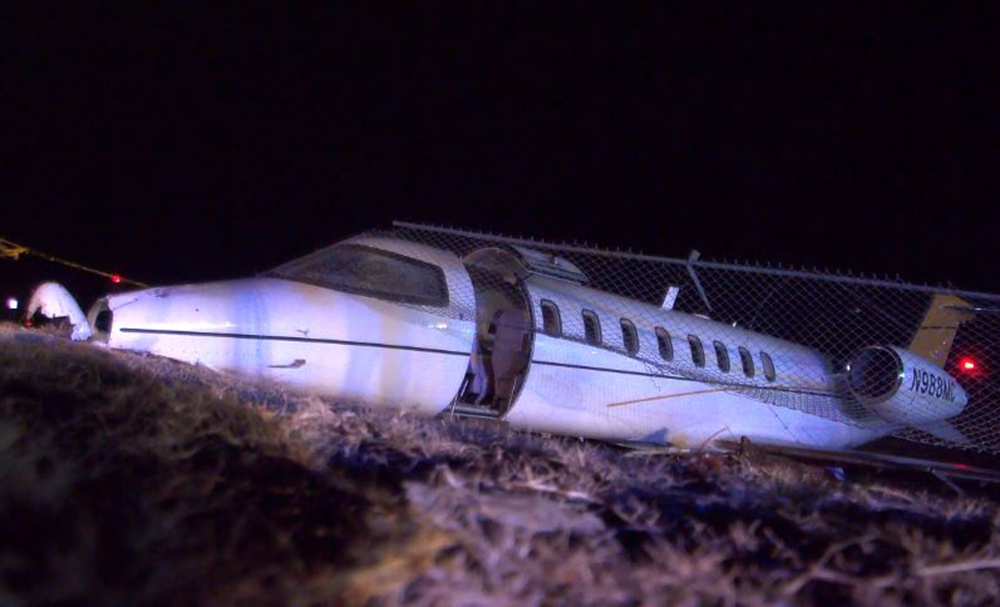
Crash of a Learjet 45 in Batesville

Date & Time: Nov 29, 2022 at 1910 LT
Type of aircraft:
Operator:
Registration:
N988MC
Survivors:
Yes
Schedule:
Waterloo – Batesville
MSN:
45-352
YOM:
2007
Flight number:
DHR003
Crew on board:
2
Crew fatalities:
Pax on board:
6
Pax fatalities:
Other fatalities:
Total fatalities:
0
Captain / Total flying hours:
3910
Captain / Total hours on type:
1560.00
Copilot / Total flying hours:
505
Copilot / Total hours on type:
263
Aircraft flight hours:
2490
Circumstances:
The two pilots were conducting a business flight with six passengers when the accident occurred. During the night arrival the captain flew a visual approach with excessive airspeed
and the airplane crossed the runway threshold more than 50 knots above approach speed (Vref). The before-landing checklist was not completed, and the flaps were at an incorrect 20° position instead of 40°. The airplane touched down near the midfield point of the 6,022 ft non grooved runway, which was wet due to earlier precipitation. The captain initially applied intermittent braking, then applied continuous braking starting about 2,069 ft from the end of the runway. The captain did not deploy the thrust reversers. The airplane exited the runway above 100 knots ground speed, then continued into a ditch and airport perimeter fence, which resulted in substantial damage to the forward fuselage. Examination of the airplane revealed no mechanical anomalies that would have precluded normal operation. The operator’s flight manual directed that all approaches were to be flown using the stabilized approach concept. For a visual approach, this included establishing and maintaining the proper approach speed and correct landing configuration at least 500 ft above the airport elevation. Neither pilot recognized the requirement to execute a go-around due to the excessive approach speed or the long landing on a wet runway, which resulted in the runway excursion.
Probable cause:
The crew’s failure to execute a go-around during the unstable approach and long landing, which resulted in a runway excursion.
Final Report:
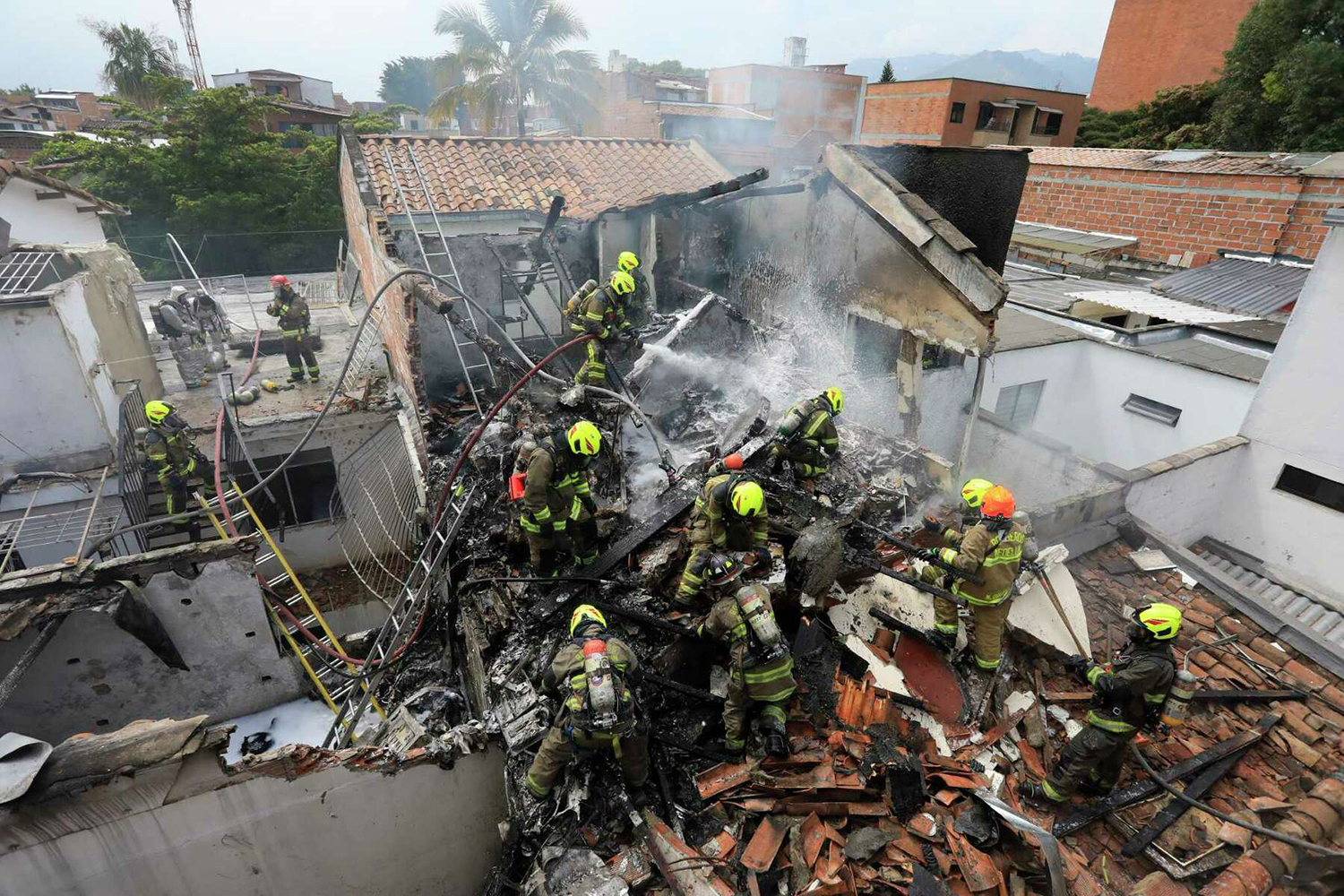
Crash of a Piper PA-31-350 Navajo Chieftain in Medellín: 8 killed

Date & Time: Nov 21, 2022 at 1014 LT
Operator:
Registration:
HK-5121
Flight Phase:
Survivors:
No
Site:
Schedule:
Medellín – Pizarro
MSN:
31-7652004
YOM:
1976
Country:
Crew on board:
2
Crew fatalities:
Pax on board:
6
Pax fatalities:
Other fatalities:
Total fatalities:
8
Captain / Total flying hours:
3194
Captain / Total hours on type:
407.00
Copilot / Total flying hours:
535
Copilot / Total hours on type:
402
Aircraft flight hours:
19790
Circumstances:
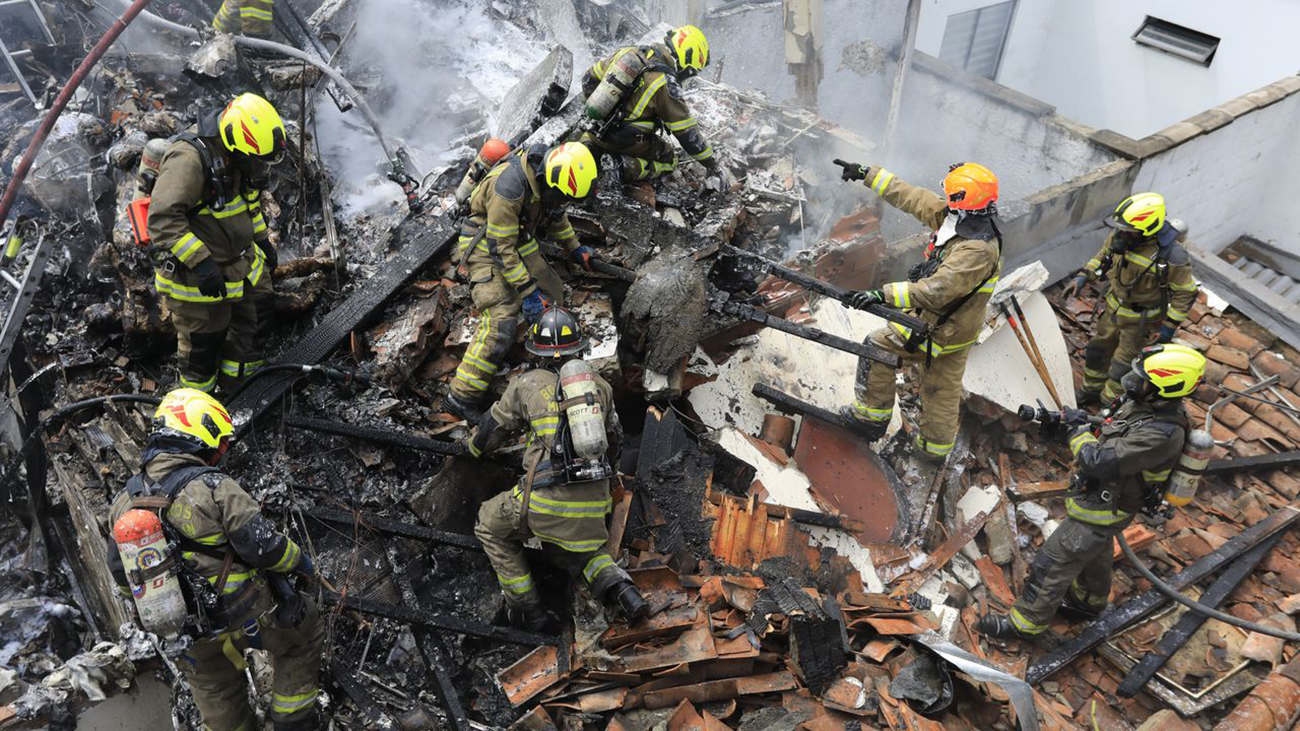
The twin engine airplane was chartered by the Grupo San Germán Express to carry a team of six people from Medellín to Pizarro, Chocó. Shortly after takeoff from Medellín-Enrique Olaya Herrera Airport Runway 02, while in initial climb, the crew declared an emergency and informed ATC about an engine failure. The airplane entered a left turn then lost altitude and crashed onto a house located in the district of Belén Rosales, 523 metres west or runway 20 threshold and 2,325 metres from the departure point, bursting into flames. The house and the aircraft were destroyed and all 8 occupants were killed.
Crew:
Julián Aladino, pilot,
Sergio Guevara Delgado, copilot.
Passengers:
Jorge Cantillo Martínez,
Dubán Ovalle Quintero,
Anthony Mosquera Blanquiceth,
Pedro Pablo Serna,
Melissa Pérez Cuadros,
Nicolás Jiménez.
Probable cause:
The accident was the consequence of the combination of the following factors:
- A loss of control in flight as a result of a decrease in minimum control speed and drag, caused by a loss of power on the left engine (n°1);
- A failure of the propeller feathering system on engine n°1, caused by an excessive amount of grease accumulated in the blade coupling section, which prevented the propeller from being feathered quickly (or feathering at all) when the crew attempted to do so. The uncontrolled rotation of the propeller (spinning) created significant drag and made it more difficult to control the aircraft.
- The confirmed loss of power on the left engine, of undetermined origin, was probably caused by a turbocharger malfunction;
- An excess aircraft weight (approximately 770 lb or 349 kg above the MTOW), contributed to the aircraft's inability to accelerate and climb.
The following contributing factors were identified:
- Deficient operator processes in the preventive maintenance of the propellers, failing to detect and allowing the accumulation of grease in the blade coupling section, a circumstance that delayed or prevented the propeller from feathering in a critical phase of flight.
- Failure by the operator to comply with the requirements established by Supplement Type STC SA00192SE in order to operate aircraft HK-5121 with an increased MTOW of 7,352 lb, consisting of:
• Incorporating an FMS (flight manual supplement) into the operation to ensure that no more than four vortex-generating flaps (or blades) were missing.
• Not extending the length of the aircraft's wings or installing winglets.
- Failure by the Operator to comply with the procedures for preparing the Weight and Balance form, by not recording the exact weight of each of the occupants and, instead, using average weights that led to a Takeoff Weight (TOW) lower than the actual weight.
- The operator's lack of knowledge of the impact on the aircraft's MTOW, the altitude of the aerodrome, and the ambient temperature, which at Olaya Herrera aerodrome is lower than the operating MTOW of 7,000 lb corresponding to operation in standard atmosphere.
- The operator did not have a risk analysis for each of the company's operating aerodromes, establishing weight limits for takeoff, taking into account the aircraft's performance charts, the specific operating conditions, and the possible failure of an engine during takeoff or initial climb.
Final Report:

Crash of a De Havilland DHC-3 Otter in Pluto Lake

Date & Time: Oct 13, 2022 at 0929 LT
Type of aircraft:
Operator:
Registration:
C-FDDX
Survivors:
Yes
Schedule:
Mistissini - Pluto Lake
MSN:
165
YOM:
1956
Country:
Crew on board:
1
Crew fatalities:
Pax on board:
0
Pax fatalities:
Other fatalities:
Total fatalities:
0
Captain / Total flying hours:
1938
Captain / Total hours on type:
600.00
Aircraft flight hours:
17489
Circumstances:
On 12 October 2022, the True North Airways Inc. de Havilland DHC-3 Otter aircraft on floats (registration C-FDDX, serial number 165) was conducting a visual flight rules flight, with 1 pilot on board, from Mistissini Water Aerodrome (CSE6), Quebec, to Pluto Lake, Quebec, where it would deliver cargo and pick up passengers. At approximately 0929 Eastern Daylight Time, while manoeuvring for landing on Pluto Lake, the aircraft collided with the surface of the water. The pilot sustained serious injuries. The passengers, who had been waiting near the lake for the aircraft’s arrival, transported the pilot to a nearby cabin from where he was later taken to hospital by a search and rescue helicopter. The emergency locator transmitter activated. There was significant damage to the aircraft.
Probable cause:
3.1 Findings as to causes and contributing factors
These are conditions, acts or safety deficiencies that were found to have caused or contributed to this occurrence.
Due to the visual cues of the landing area that were visible to the pilot, the close proximity of the landing site where passengers were waiting, and the natural tendency to continue a plan under changing conditions, the pilot continued the approach despite visibility in the local area being below the minimum required for visual flight rules flight.
Owing to the reduced visibility, the pilot’s workload, while he was manoeuvring for landing, was high and his attention was focused predominantly outside the aircraft in order to keep the landing area in sight. As a result, a reduction in airspeed went unnoticed.
During the aircraft’s turn from base to final, the increased wing loading, combined with the reduced airspeed, resulted in a stall at an altitude too low to permit recovery.
The pilot was not wearing the shoulder harness while at the controls and operating the aircraft because he found it uncomfortable and other aircraft he flew were not equipped with one. As a result, during impact with the water, the pilot received serious injuries.

3.2 Findings as to risk
These are conditions, unsafe acts or safety deficiencies that were found not to be a factor in this occurrence but could have adverse consequences in future occurrences.
If aircraft stall warning systems do not provide multiple types of alerts warning the pilot of an impending stall, there is an increased risk that a visual stall warning alone will not be salient enough and go undetected when the pilot’s attention is focused outside the aircraft or during periods of high workload.
If aircraft operators do not ensure that their contact information on file with the Canadian Beacon Registry is accurate, there is a risk that search and rescue operations may be delayed.
If companies do not employ robust flight-following procedures, there is a risk that, after an accident, potentially life-saving search and rescue services will be delayed.

3.3 Other findings
These items could enhance safety, resolve an issue of controversy, or provide a data point for future safety studies.
The occurrence aircraft was carrying dangerous goods on board, even though the operator was not authorized to do so on its DHC-3 Otter aircraft.
For unknown reasons, the pilot encountered difficulty inflating his personal flotation device, and because of his proximity to the shore, he removed it to make it easier to swim.
Final Report:

Crash of a Britten-Norman BN-2A-21 Islander on Moa Island

Date & Time: Oct 3, 2022 at 1338 LT
Type of aircraft:
Operator:
Registration:
VH-WQA
Flight Phase:
Survivors:
Yes
Schedule:
Saibai Island - Horn Island
MSN:
494
YOM:
1975
Country:
Region:
Crew on board:
1
Crew fatalities:
Pax on board:
6
Pax fatalities:
Other fatalities:
Total fatalities:
0
Captain / Total flying hours:
2400
Captain / Total hours on type:
250.00
Aircraft flight hours:
14081
Circumstances:
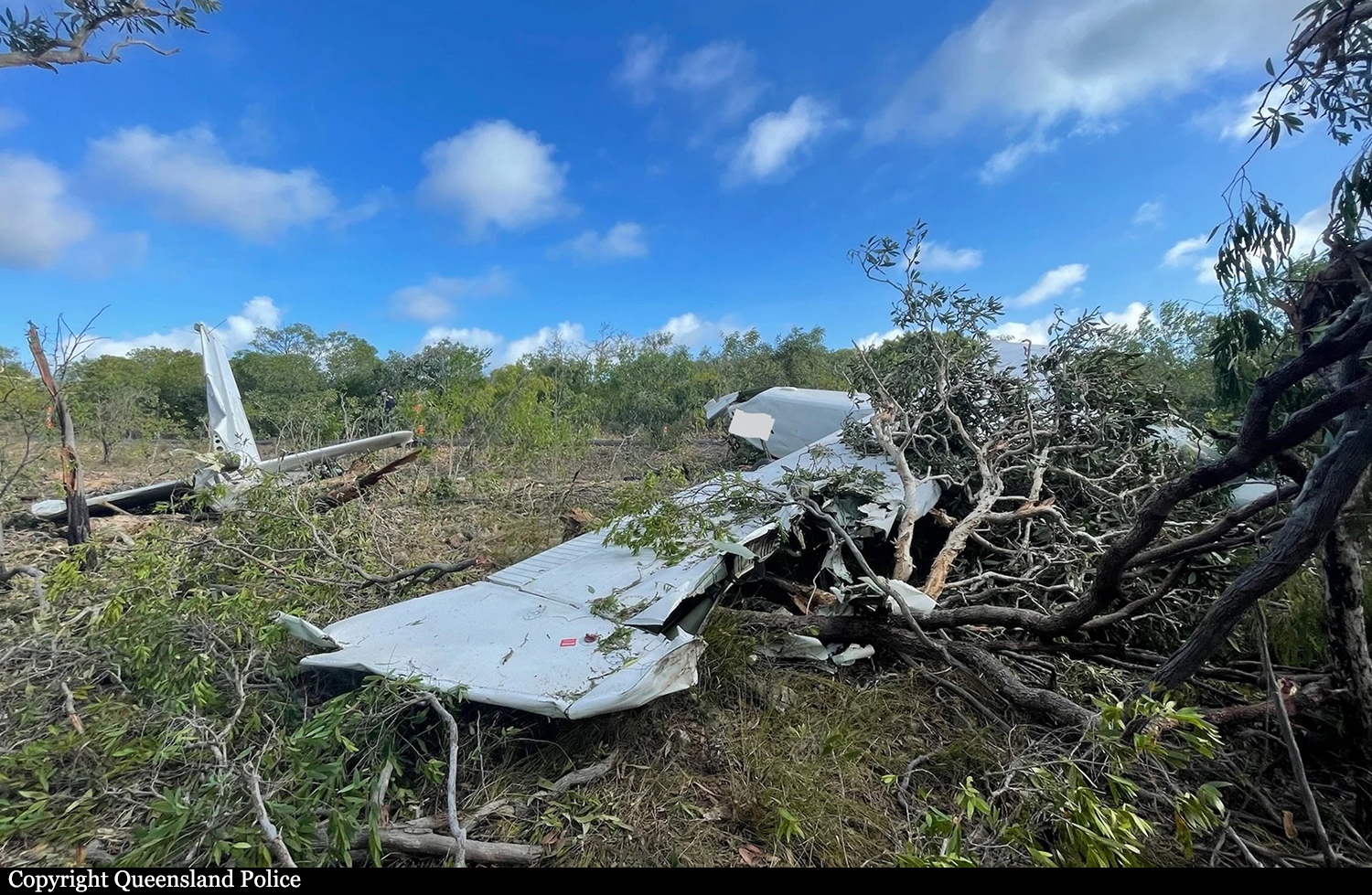
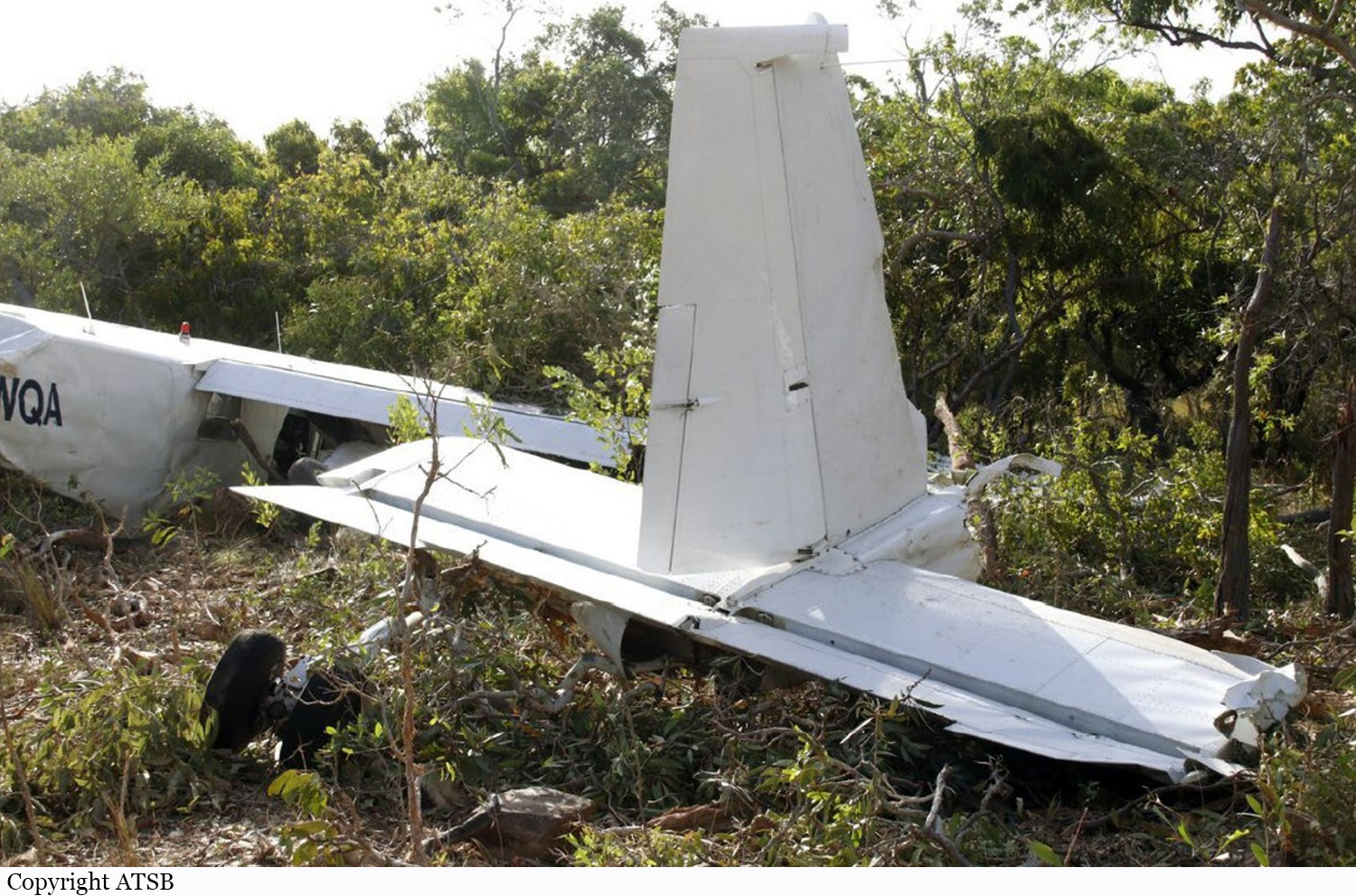
On the afternoon of 3 October 2022, a Pilatus Britten-Norman Islander BN2A-21, registered VHWQA and operated by Torres Strait Air, was conducting a non-scheduled passenger air transport flight from Saibai Island Airport, Queensland (QLD) to Horn Island Airport, QLD. There was 1 pilot and 6 passengers (students) on board. About 19 km NE of Moa Island both engines began to surge. The pilot diverted towards Kubin Airport on Moa Island. As the aircraft passed to the south of the township of Saint Pauls, the pilot determined there was insufficient altitude remaining to reach the airport. As a result, the pilot conducted a forced landing on a road 7 km ENE of Kubin Airport. There were no reported injuries to the pilot or the passengers. The aircraft was substantially damaged.
Probable cause:
The ATSB found that the dual engine speed fluctuations and associated power loss was probably the result of fuel starvation. The mechanism was not conclusively determined, however it was identified that the pilot did not operate the aircraft's fuel system in accordance with the aircraft flight manual, and that the configuration and location of the aircraft’s fuel controls and tank quantity gauges were probably not conducive to rapid and accurate interpretation. The aircraft manufacturer released a service letter in June 2022 that detailed an optional modification to centralize the fuel system controls and gauges, however this modification was not fitted to VH-WQA. The ATSB considered that these factors increased the risk of inadvertent fuel tank selection.
Final Report:
Crash of a Cessna 208B Grand Caravan in Porto Trombetas: 1 killed

Date & Time: Sep 10, 2022
Type of aircraft:
Operator:
Registration:
PT-MES
Flight Phase:
Survivors:
Yes
Schedule:
Porto Trombetas - Ayaramã
MSN:
208B-0507
YOM:
1996
Country:
Crew on board:
1
Crew fatalities:
Pax on board:
4
Pax fatalities:
Other fatalities:
Total fatalities:
1
Circumstances:
After takeoff from Porto Trombetas Airport, the pilot encountered engine problems and attempted an emergency landing. The airplane crashed in a wooded area and was destroyed. The pilot was killed and all four passengers were injured. They were en route to Ayaramã to provide dental assistance to locals. On board were one dentist, one assistant, one nurse and one employee of the Brazilian Institute for Geography and Statistics.

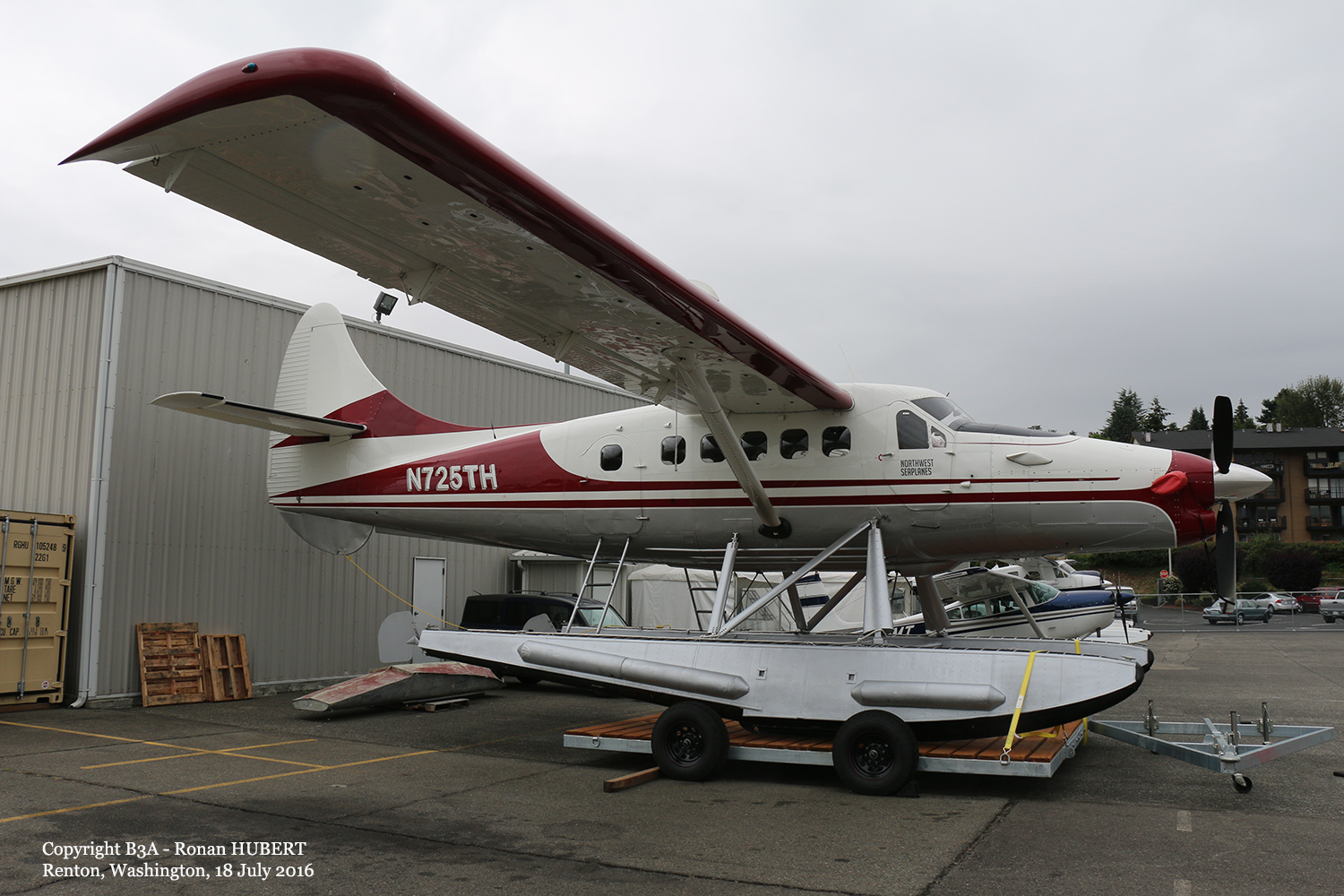
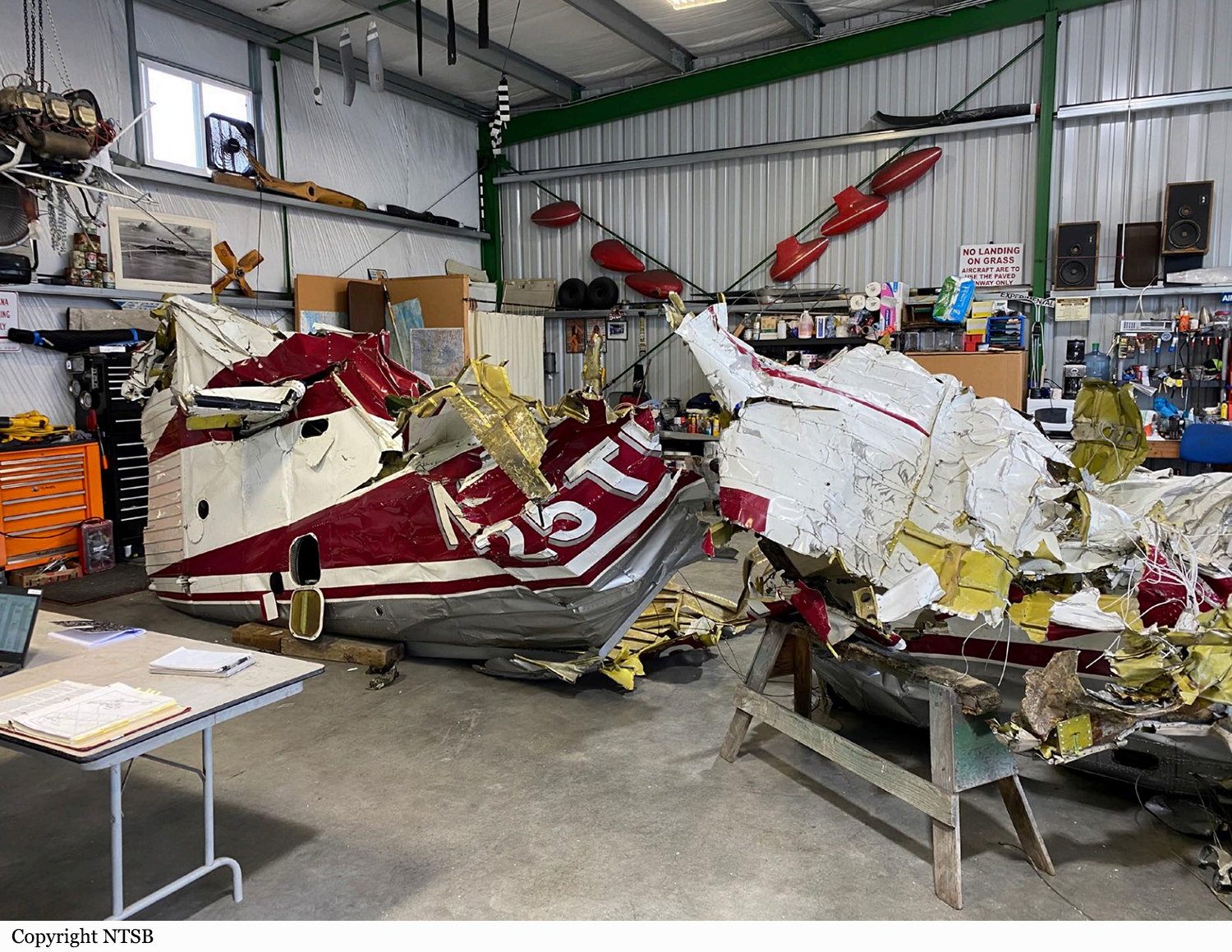
Crash of a De Havilland DHC-3T Otter into the Mutiny Bay: 10 killed

Date & Time: Sep 4, 2022 at 1509 LT
Type of aircraft:
Operator:
Registration:
N725TH
Flight Phase:
Survivors:
No
Schedule:
Friday Harbor – Renton
MSN:
466
YOM:
1967
Crew on board:
1
Crew fatalities:
Pax on board:
9
Pax fatalities:
Other fatalities:
Total fatalities:
10
Captain / Total flying hours:
3686
Captain / Total hours on type:
1300.00
Aircraft flight hours:
24430
Circumstances:
On September 4, 2022, about 1509 Pacific daylight time, a float-equipped de Havilland DHC-3 (Otter), N725TH, was destroyed when it impacted the water in Mutiny Bay, near Freeland, Washington, and sank. The pilot and nine passengers were fatally injured. The airplane was owned by Northwest Seaplanes, Inc., and operated as a Title 14 Code of Federal Regulations (CFR) Part 135 scheduled passenger flight by West Isle Air dba Friday Harbor Seaplanes. The flight originated at Friday Harbor Seaplane Base (W33), Friday Harbor, Washington, with an intended destination of Will Rogers Wiley Post Memorial Seaplane Base (W36), Renton, Washington. Visual meteorological conditions prevailed at the time of the accident. The accident pilot was scheduled to fly the accident airplane on three multiple leg roundtrips on the day of the accident. The first roundtrip flight was uneventful; it departed from W36 about 0930, made four stops, and returned about 1215. The accident occurred during the pilot’s second trip of the day. A review of recorded automatic dependent surveillance–broadcast (ADS-B) data revealed that the second roundtrip departed 36 about 1253 and arrived at Lopez Seaplane Base, (W81), Lopez Island, Washington, about 1328.2 The data showed that the flight then departed W81 and landed at Roche Harbor Seaplane Base (W39) about 1356. The airplane departed W39 about 1432, arrived at W33 about 1438, and departed about 1450. According to ADS-B data, after the airplane departed W33, it flew a southerly heading before turning south-southeast. The en route altitude was between 600 and 1,000 ft above mean sea level (msl), and the groundspeed was between 115 and 135 knots. At 1508:40, the altitude was 1,000 ft msl, and the groundspeed had decreased to 111 knots. Based on performance calculations, at 1508:43, the airplane pitched up about 8° and then abruptly pitched down about 58°. The data ended at 1508:51, when the airplane’s altitude was 600 ft msl and the estimated descent rate was more than 9,500 ft per minute (the flightpath of the airplane is depicted in figure. Witnesses near the accident site reported, and security camera video confirmed, the airplane was in level flight before it entered a slight climb and then pitched down. One witness described the descent as “near vertical” and estimated the airplane was in an 85° nose-down attitude before impact with the water. Several witnesses described the airplane as “spinning,” “rotating,” or “spiraling” during portions of the steep descent. One witness reported hearing the engine/propeller and noted that he did not hear any “pitch change” in the sounds. The airplane continued in a nose-low, near-vertical descent until it impacted water in Mutiny Bay.
Probable cause:
It was determined that the probable cause of this accident was the in-flight unthreading of the clamp nut from the horizontal stabilizer trim actuator barrel due to a missing lock ring, which resulted in the horizontal stabilizer moving to an extreme trailing-edge-down position rendering the airplane’s pitch uncontrollable.
Final Report:

Crash of a Cessna 207A Turbo Stationair 8 into Lake Powell: 2 killed

Date & Time: Aug 13, 2022 at 1619 LT
Operator:
Registration:
N9582M
Flight Phase:
Survivors:
Yes
Schedule:
Page - Page
MSN:
207-0705
YOM:
1981
Crew on board:
1
Crew fatalities:
Pax on board:
6
Pax fatalities:
Other fatalities:
Total fatalities:
2
Captain / Total flying hours:
550
Captain / Total hours on type:
35.00
Aircraft flight hours:
17307
Circumstances:
On August 13, 2022, about 1619 mountain standard time, a Cessna T207A airplane, N9582M, was substantially damaged when it was involved in an accident near Page, Arizona. The pilot received minor injuries, two passengers were fatally injured, two passengers were seriously injured, and one passenger received minor injuries. The airplane was operated as a Title 14 Code of Federal Regulations Part 91 air tour flight. According to witnesses, the accident airplane was the first airplane in a flight of 5 airplanes on a scenic tour of the Lake Powell area at a cruise altitude of about 1,000 ft to 2,000 ft above ground level. After nearly 30 minutes of flight and after making a turn back towards the airport, the accident pilot made a distress call and reported his engine lost power and he was ditching the airplane in Lake Powell. The airplane became submerged in the water and the two passengers who were fatally injured did not exit the airplane. National Park Service boats, several nearby private boats, and a few helicopters responded to the accident site, which was located about 13 miles northeast of the Page Municipal Airport, (PGA), Page, Arizona. The boats assisted the survivors in the water. Once aboard a boat that recovered the survivors, witnesses overheard the pilot on the phone discussing that he had experienced an engine failure. An underwater remote observation vehicle surveyed the accident site a couple of days after the accident. All major components of the airplane were observed, and the airplane came to rest upright at the lake bottom about 100 ft below the surface.
Probable cause:
The total loss of engine power for undetermined reasons during low altitude cruise flight, which resulted in a water ditching. Contributing to the severity of the accident was the pilot’s failure to extend the flaps during the ditching, which increased the impact forces to the occupants.
Final Report: