Crash of a Douglas C-47A-70-DL off Rio de Janeiro: 6 killed

Date & Time: Sep 12, 1954 at 2007 LT
Operator:

Registration:
PP-CDJ
Survivors:
Yes
Schedule:
Rio de Janeiro – São Paulo
MSN:
19278
YOM:
1943
Country:
Crew on board:
4
Crew fatalities:
Pax on board:
26
Pax fatalities:
Other fatalities:
Total fatalities:
6
Circumstances:
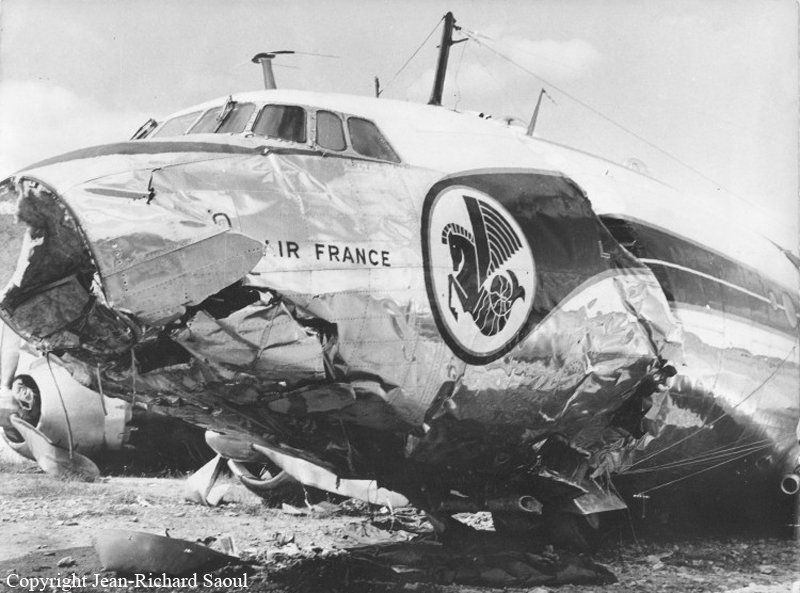
The aircraft left Rio de Janeiro-Santos Dumont Airport at the end of the afternoon, bound for São Paulo-Congonhas Airport. While descending to Congonhas, the crew encountered below minima weather conditions and decided to return to Santos Dumont. While approaching Rio, the left engine suffered severe vibrations and was shut down and its propeller was feathered. As the aircraft was too high on approach, the crew elected to make a go around when the airplane stalled and crashed into the Guanabara Bay. Six passengers were killed while 24 other occupants were rescued. The aircraft was lost.
Probable cause:
It was determined that the aircraft stalled and crashed during an attempt to go around when the power on the remaining engine was inadvertently reduced by the flying crew. It was reported that the crew was devolved by the loss of power on the left engine during the approach and that he was forced to shot it down. When the aircraft stalled, the distance from the water surface was insufficient to expect a recovery. A lack of reference to instruments on part of the flying crew and a lack of visibility were considered as contributory factors.

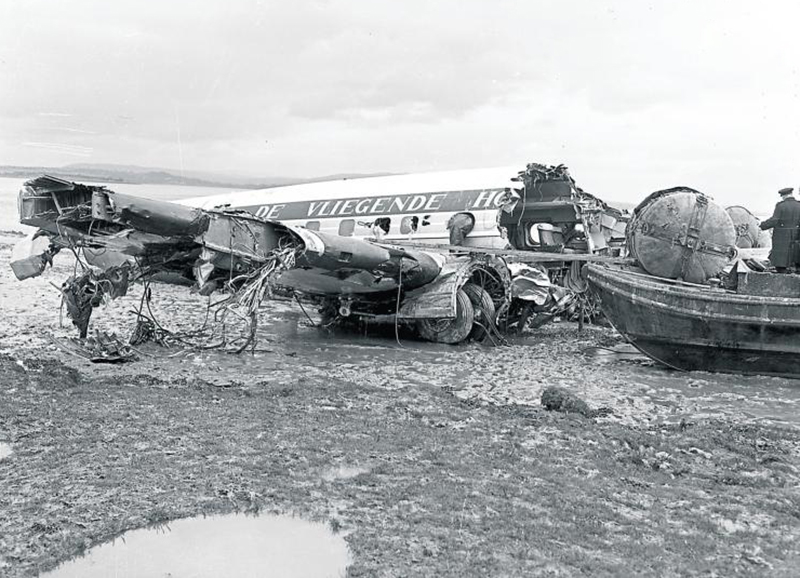
Crash of a Lockheed L-1049C-55-81S Super Constellation off Shannon: 28 killed

Date & Time: Sep 5, 1954 at 0239 LT
Operator:
Registration:
PH-LKY
Flight Phase:
Survivors:
Yes
Schedule:
Amsterdam – Shannon – New York
MSN:
4509
YOM:
1953
Flight number:
KL633
Location:
Country:
Region:
Crew on board:
10
Crew fatalities:
Pax on board:
46
Pax fatalities:
Other fatalities:
Total fatalities:
28
Captain / Total flying hours:
19000
Aircraft flight hours:
2498
Circumstances:
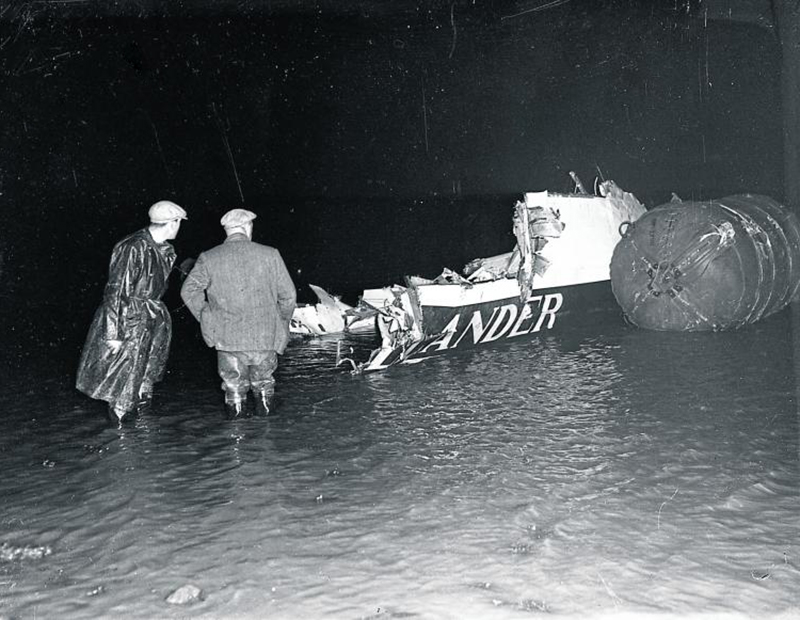
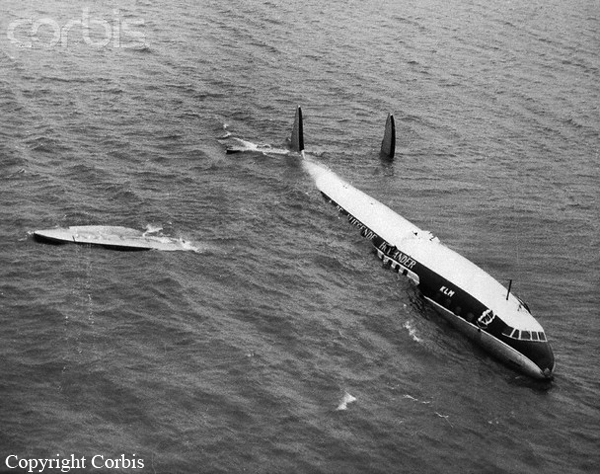
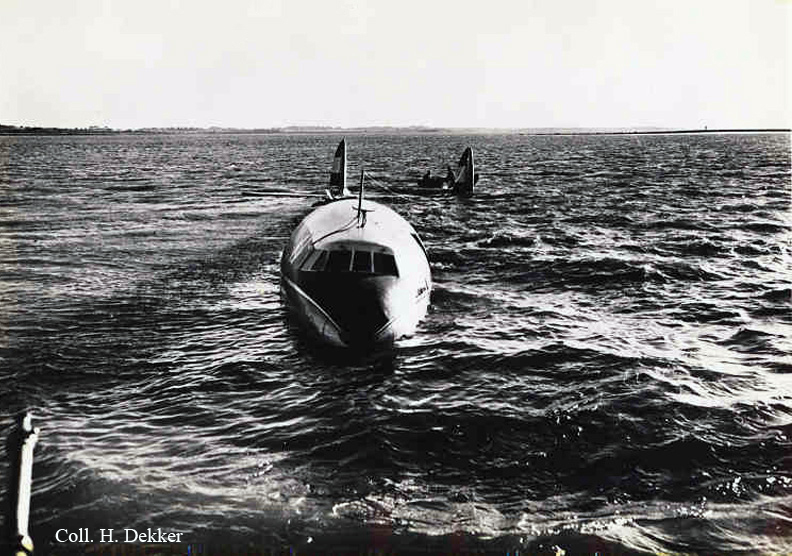
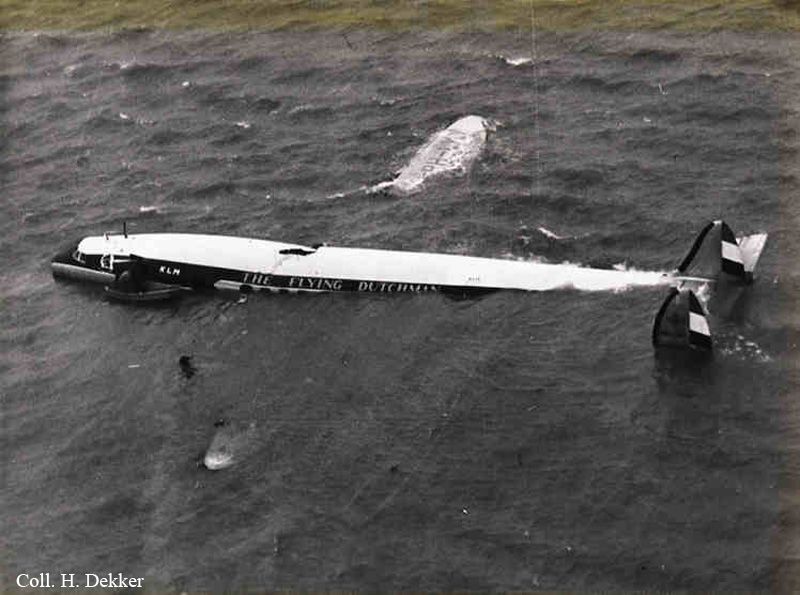
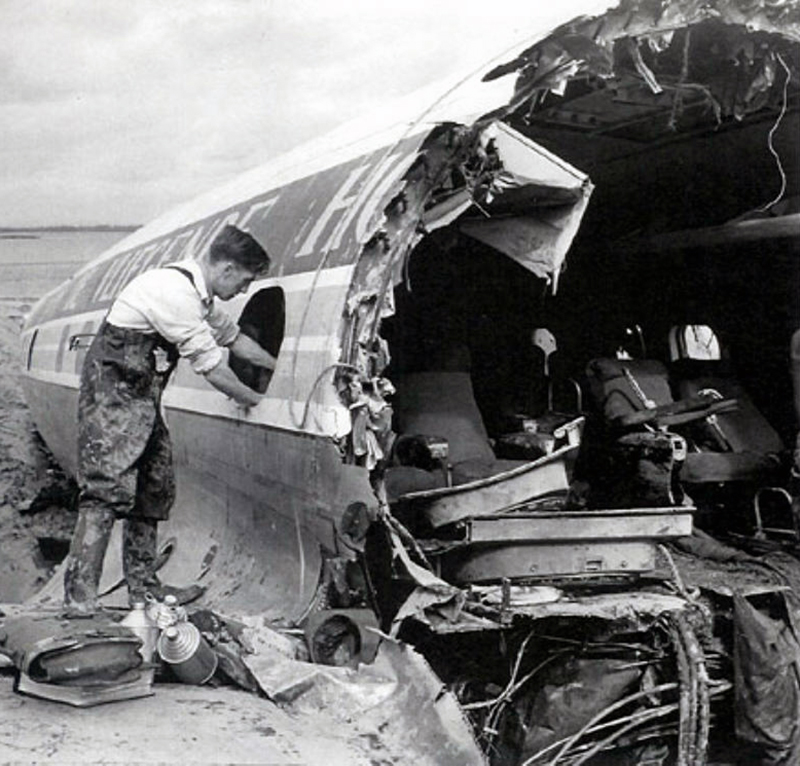
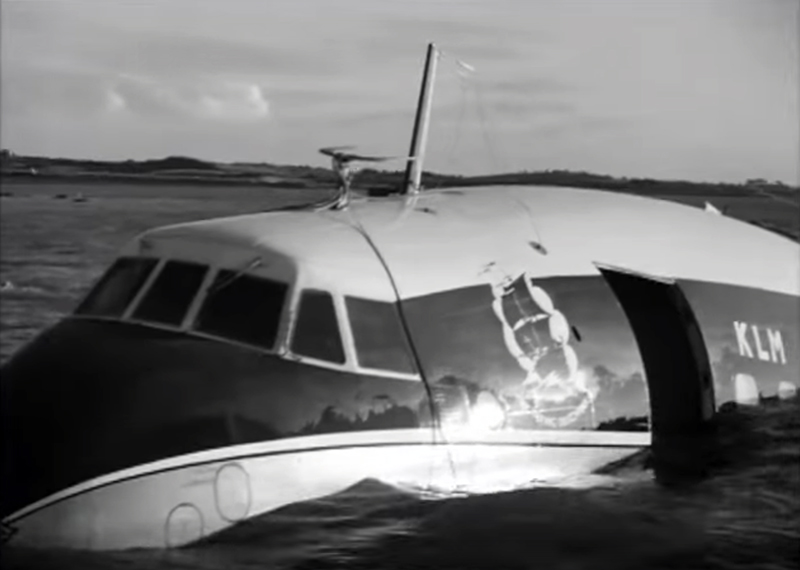
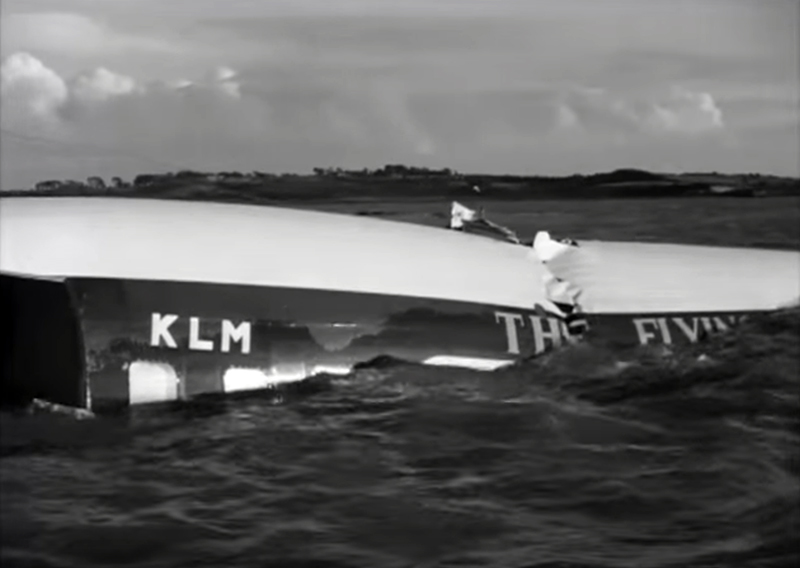
After a night takeoff from runway 32 at Shannon Airport, the four engine aircraft christened 'Triton' climbed to a maximum height of 260 feet and reached the speed of 155 knots when it went into a slight nose down attitude. It then started to descend until it crashed into the Shannon Estuary, about 8,170 feet from the departure end of runway 32. The crashed occurred approximately 35 seconds after liftoff. 28 occupants were killed while 28 others were rescued. The aircraft was destroyed.
Probable cause:
- Failure of the captain to correlate and interpret his instrument indications properly during flap retraction, resulting in necessary action not being taken in sufficient time. This failure was partially accounted for by the effect on instrument indications of inadvertent and unexpected gear re-extension,
- Loss of aircraft performance due to inadvertent landing gear re-extension,
- The captain failed to maintain sufficient climb to give him an opportunity of meeting unexpected occurrences.
Final Report:

Crash of a Douglas C-47B-10-DK in Hanoi

Date & Time: Sep 4, 1954
Operator:
Registration:
F-BEIO
Survivors:
Yes
MSN:
14815/26260
YOM:
1944
Country:
Region:
Crew on board:
0
Crew fatalities:
Pax on board:
0
Pax fatalities:
Other fatalities:
Total fatalities:
0
Circumstances:
Crash landed at Gia Lâm Airport in Hanoi. There were no casualties but the aircraft was written off.

Crash of a SNCASO SO.30 Bretagne near Hanoi

Date & Time: Aug 30, 1954
Type of aircraft:
Operator:
Registration:
F-BEHS
Flight Phase:
Survivors:
Yes
MSN:
41
Country:
Region:
Crew on board:
0
Crew fatalities:
Pax on board:
0
Pax fatalities:
Other fatalities:
Total fatalities:
0
Circumstances:
Enroute, the pilot was forced to attempt an emergency landing following technical problems. The aircraft crash landed near Hanoi and came to rest in a field. There were no injuries but the aircraft was written off.

Crash of a Beechcraft D18S in Luanda: 2 killed

Date & Time: Aug 28, 1954
Type of aircraft:
Operator:
Registration:
CR-LCJ
Survivors:
Yes
Schedule:
Lubango – Luanda
MSN:
A-568
YOM:
1951
Country:
Region:
Crew on board:
2
Crew fatalities:
Pax on board:
2
Pax fatalities:
Other fatalities:
Total fatalities:
2
Circumstances:
On final approach to Luanda Airport, the twin engine aircraft went out of control and crashed in Estrada de Catete, about 2 km north of the airfield. Both pilots were killed while both passengers were injured.
Probable cause:
Loss of control on final approach caused by an engine failure.

Crash of a Lisunov LI-2 in Yuzhno-Sakhalinsk: 26 killed

Date & Time: Aug 26, 1954 at 1050 LT
Type of aircraft:
Operator:
Registration:
CCCP-L4679
Survivors:
Yes
Site:
Schedule:
Khabarovsk – Yuzhno-Sakhalinsk
MSN:
68 03
YOM:
1949
Flight number:
SU971
Country:
Region:
Crew on board:
5
Crew fatalities:
Pax on board:
22
Pax fatalities:
Other fatalities:
Total fatalities:
26
Aircraft flight hours:
4219
Circumstances:
The crew started the approach to Yuzhno-Sakhalisnk from the southeast in marginal weather conditions due to low clouds. At an altitude of 400 meters, the aircraft hit tree tops and crashed inverted in a wooded area located on the slope of Mt Komissarskaya (714 meters high) located 13,5 km southeast of the airport. The wreckage was found a day later and a passenger was found alive but seriously injured while all 26 other occupants were killed. The aircraft was totally destroyed upon impact.
Crew:
Vasily Trofimovich Degtyarenko, pilot,
Vladimir Parkhomenko, copilot,
Vyacheslav Fedorovitch Eliseikina, mechanic,
Daniel Epifanovich Raznotsvete, mechanic,
Piotr D. Novikov , radio navigator.
Probable cause:
The radio navigator mistook two outer markers when the crew started the approach to Yuzhno-Sakhalinsk Airport, and referred to the outer marker of the Korsakov Airbase (frequency 684 kHz) instead of the outer marker of the civil airport of Yuzhno-Sakhalinsk-Bolchaya Yelan (frequency 670 kHz). Investigations reported that these two outer markers were too close from each other (13,5 km) with close frequency as well, which contributed to the mistake. The following factors were also pointed out: lack of visibility caused by low clouds (the crew failed to distinguish the mountain); the crew failed to use the radio altimeter and an abnormal action on part of the crew regarding the direction finder unit.

Crash of a Lockheed L-749 Constellation in Gander

Date & Time: Aug 25, 1954 at 2145 LT
Operator:
Registration:
F-BAZI
Survivors:
Yes
Schedule:
Paris – Shannon – Gander – New York – Mexico City
MSN:
2513
YOM:
1947
Flight number:
AF075
Country:
Crew on board:
9
Crew fatalities:
Pax on board:
58
Pax fatalities:
Other fatalities:
Total fatalities:
0
Aircraft flight hours:
17036
Circumstances:
The crew started the approach to Gander Airport by night and in good weather conditions. Following a stabilized approach, the four engine aircraft landed normally on runway 32. After touchdown, the reverse thrust system were activated when the aircraft veered to the left. Despite several corrections on part of the flying crew such as braking action, movement on the nose wheel steering and power added on both left engines number one and two, the aircraft continued down the runway, overran, lost its undercarriage and came to rest into a ravine. While all 67 occupants were evacuated safely, the aircraft was damaged beyond repair.
Probable cause:
The approach configuration to Gander Airport was correct and the aircraft was stabilized until touchdown. No technical anomalies were found on the aircraft and all piloting techniques were normal. The analysis of the aircraft's path after touchdown did not show any trace of rough braking action. An exam of the pilot reports indicated that the aircraft was quite difficult to be maneuvered during a turn to the right. At the time of the accident, a lateral wind was blowing to 16 knots, which could be considered as a contributory factor.

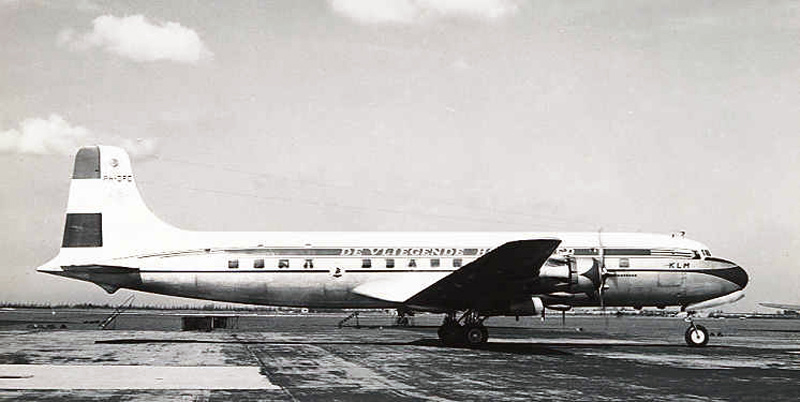
Crash of a Douglas DC-6B off Ijmuiden: 21 killed

Date & Time: Aug 23, 1954 at 1130 LT
Type of aircraft:
Operator:
Registration:
PH-DFO
Survivors:
No
Schedule:
New York – Shannon – Amsterdam
MSN:
43556
YOM:
1952
Flight number:
KL633
Country:
Region:
Crew on board:
9
Crew fatalities:
Pax on board:
12
Pax fatalities:
Other fatalities:
Total fatalities:
21
Aircraft flight hours:
6308
Circumstances:
While approaching Amsterdam-Schiphol Airport after an uneventful flight from New York via Shannon, the crew received the permission to descend to 5,500 feet and then 4,500 feet and 3,500 feet respectively. At 1130LT, the four engine aircraft christened 'Willem Bontekoe' disappeared from the radar screens after it crashed into the sea. About five minutes after the disappearance, ATC cleared the crew to descend to 2,500 feet but did not receive any feedback. SAR operations were hampered by poor weather conditions and first debris were found at 1610LT about 37 km northwest of Ijmuiden. None of the 21 occupants survived the crash and less than 50% of the aircraft was recovered.
Probable cause:
Investigations were unable to determine the exact cause of the accident. Nevertheless, a number of hypothesis as to the cause of the accident were developed. Some possibilities considered were:
- overheating of the electric system with heavy smoke development,
- explosion of one of the high pressure bottles,
- failure of a cockpit window,
- failure of the automatic pilot system.
However, no hypothesis could be formulated in which all occurrences and evidence could be made reasonably acceptable. Therefore, in November 1955, after a 15-months' period of intensive investigation, the conclusion had to be drawn that the cause of the accident could not be established.
Final Report:

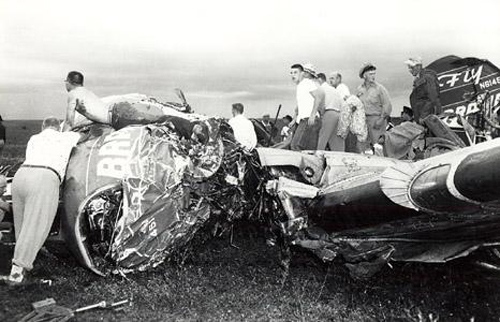
Crash of a Douglas C-47-DL near Mason City: 12 killed

Date & Time: Aug 22, 1954 at 1703 LT
Operator:
Registration:
N61451
Survivors:
Yes
Schedule:
Memphis – Little Rock – Fort Smith – Muskogee – Tulsa – Kansas City – Des Moines – Waterloo – Mason City – Austin – Rochester – Minneapolis
MSN:
4630
YOM:
1942
Flight number:
BN152
Location:
Crew on board:
3
Crew fatalities:
Pax on board:
16
Pax fatalities:
Other fatalities:
Total fatalities:
12
Captain / Total flying hours:
11077
Captain / Total hours on type:
8000.00
Copilot / Total flying hours:
5682
Copilot / Total hours on type:
2700
Aircraft flight hours:
23062
Probable cause:
The Board determines that the probable cause of this accident was that the flight while endeavouring to traverse a thunderstorm area encountered very heavy rain, divergent winds, and strong downdrafts that forced the aircraft to the ground. The following findings were reported:
- The flight was observed to enter and disappear in a thunderstorm,
- The aircraft crashed in an area where severe storm ground damage occurred,
- The US Weather Bureau Kansas City received the USAF severe weather advisories but considered their forecast in effect at the time to be adequate,
- The weather forecast issued by the Weather Bureau and Braniff did not indicate the severity of the storm that was encountered.
Final Report:

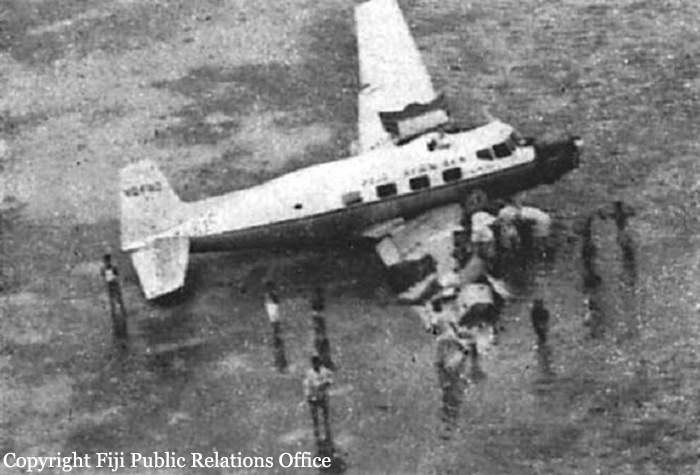
Crash of a De Havilland DHA-3 Drover 2 on Bau Island

Date & Time: Aug 18, 1954
Operator:
Registration:
VQ-FAO
Flight Phase:
Survivors:
Yes
Schedule:
Savusavu – Suva
MSN:
5005
YOM:
1950
Country:
Region:
Crew on board:
1
Crew fatalities:
Pax on board:
7
Pax fatalities:
Other fatalities:
Total fatalities:
0
Circumstances:
While cruising at an altitude of 2,500 feet on a flight from Savusavu to Suva, the pilot switched the fuel tank selector when all three engines lost power. He attempted an emergency landing on a sandbar on Bau Island but all undercarriage collapsed on landing and the aircraft came to rest. All eight occupants evacuated the cabin safely while the aircraft was later damaged beyond repair by salty water.
Source & photos via http://www.goodall.com.au
Probable cause:
All engines lost power due to an air lock in a fuel tank.