Crash of an ATR42-500 in Coari

Date & Time: May 30, 2014 at 2055 LT
Type of aircraft:
Operator:
Registration:
PR-TKB
Flight Phase:
Survivors:
Yes
Schedule:
Coari - Manaus
MSN:
610
YOM:
2000
Location:
Country:
Crew on board:
4
Crew fatalities:
Pax on board:
45
Pax fatalities:
Other fatalities:
Total fatalities:
0
Captain / Total hours on type:
2601.00
Copilot / Total flying hours:
5898
Copilot / Total hours on type:
548
Circumstances:
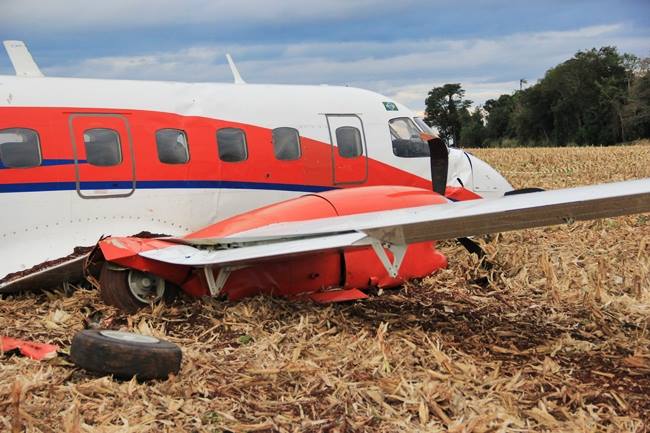
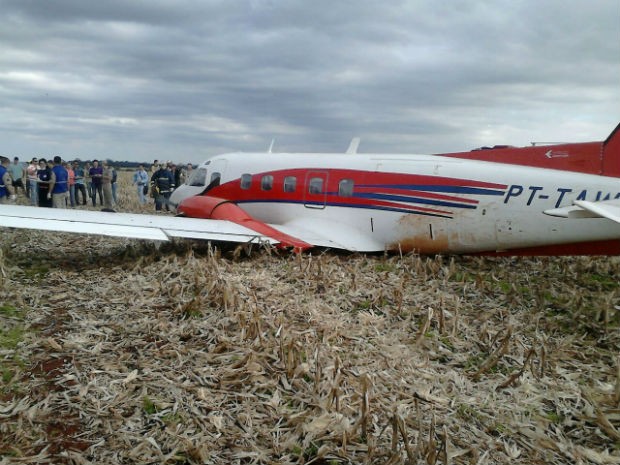
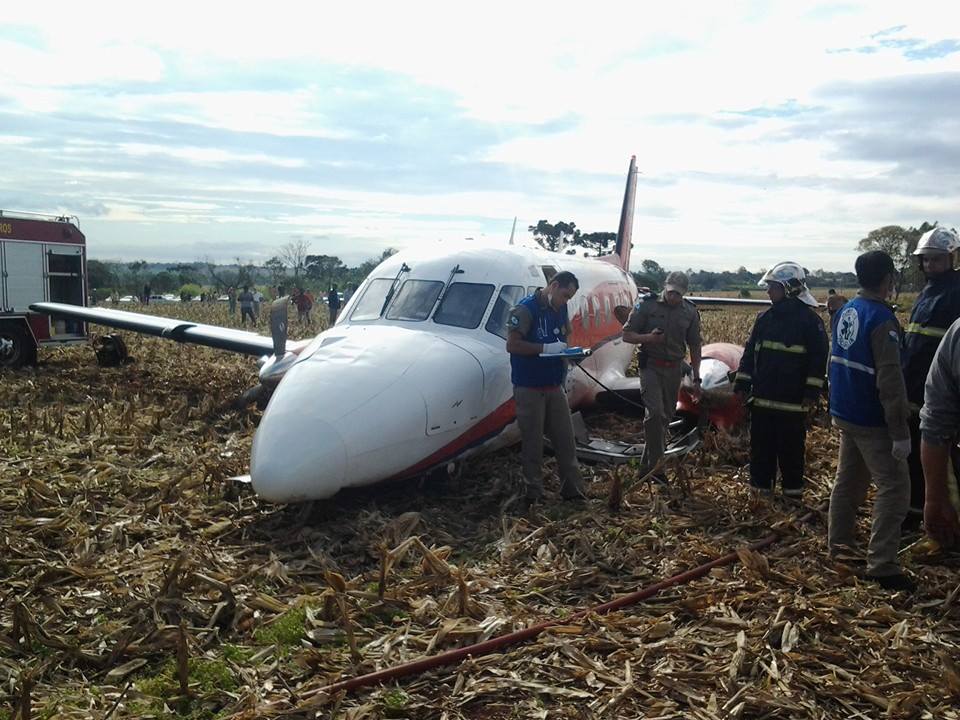
During the takeoff roll from Coari-Urucu Airport by night, the aircraft collided with a tapir that struck the right main gear. The crew continued the takeoff procedure and the flight to Manaus. After two hours and burning fuel, the aircraft landed at Manaus-Eduardo Gomes Airport. Upon touchdown, the right main gear collapsed and the aircraft veered to the right and came to rest. All 49 occupants evacuated safely while the aircraft was damaged beyond repair.
Probable cause:
Collision with a tapir during takeoff, causing severe damages to the right main gear.
The following findings were identified:
- The lack of isolation of the operational area allowed the land animal to enter the runway for landings and takeoffs, contributing to the accident.
- The crew did not notice the presence of the land animal on the runway early enough to abort the takeoff without extrapolating the runway limits and avoiding collision.
- The presence of the land animal (Tapirus terrestris) interfered with the operation and led to the collision of the right main landing gear.
Final Report:

Crash of a Fokker 100 in Zahedan

Date & Time: May 10, 2014 at 1300 LT
Type of aircraft:
Operator:
Registration:
EP-ASZ
Survivors:
Yes
Schedule:
Mashhad - Zahedan
MSN:
11421
YOM:
1992
Flight number:
EP853
Country:
Region:
Crew on board:
5
Crew fatalities:
Pax on board:
98
Pax fatalities:
Other fatalities:
Total fatalities:
0
Circumstances:
On approach to Zahedan Airport, the crew followed the checklist and configured the aircraft for landing when he realized that the left main gear remained stuck in its wheel well. The crew abandoned the landing manoeuvre and initiated a go-around procedure. During an hour, the crew followed a holding circuit to burn fuel and also to try to lower the left main landing gear but without success. Eventually, the crew was cleared to land on runway 35. After touchdown, the aircraft rolled for about 1,500 metres then veered off runway to the left before coming to rest in a sandy area. All 103 occupants evacuated safely and the aircraft was damaged beyond repair.

Crash of a Boeing 737-4Y0 in Kabul

Date & Time: May 8, 2014 at 1704 LT
Type of aircraft:
Operator:
Registration:
YA-PIB
Survivors:
Yes
Schedule:
New Delhi – Kaboul
MSN:
26077/2425
YOM:
1993
Flight number:
FG312
Location:
Country:
Region:
Crew on board:
10
Crew fatalities:
Pax on board:
122
Pax fatalities:
Other fatalities:
Total fatalities:
0
Circumstances:
Following an uneventful flight from New Delhi-Indira Gandhi Airport, the crew was cleared for an ILS approach to Kabul Airport Runway 29. On short final, the aircraft entered an area of heavy rain falls. The crew continued the approach and the aircraft landed after the touchdown zone. Unable to stop within the remaining distance, the aircraft overran, lost its undercarriage, collided with the ILS antenna and slid for 285 metres before coming to rest. All 132 occupants evacuated safely and the aircraft was damaged beyond repair.
Probable cause:
It was determined that the crew completed the landing too far down the runway, reducing the landing distance available. The following contributing factors were identified:
- The crew failed to follow SOP's,
- Poor crew recurrent training,
- The thrust reverse systems were activated too late after landing.

Crash of a Fokker 100 in Brasília

Date & Time: Mar 28, 2014 at 1742 LT
Type of aircraft:
Operator:
Registration:
PR-OAF
Survivors:
Yes
Schedule:
Petrolina – Brasília
MSN:
11415
YOM:
1992
Flight number:
OC6393
Country:
Crew on board:
5
Crew fatalities:
Pax on board:
44
Pax fatalities:
Other fatalities:
Total fatalities:
0
Captain / Total flying hours:
4993
Captain / Total hours on type:
3060.00
Copilot / Total flying hours:
3357
Copilot / Total hours on type:
2844
Aircraft flight hours:
44449
Aircraft flight cycles:
32602
Circumstances:
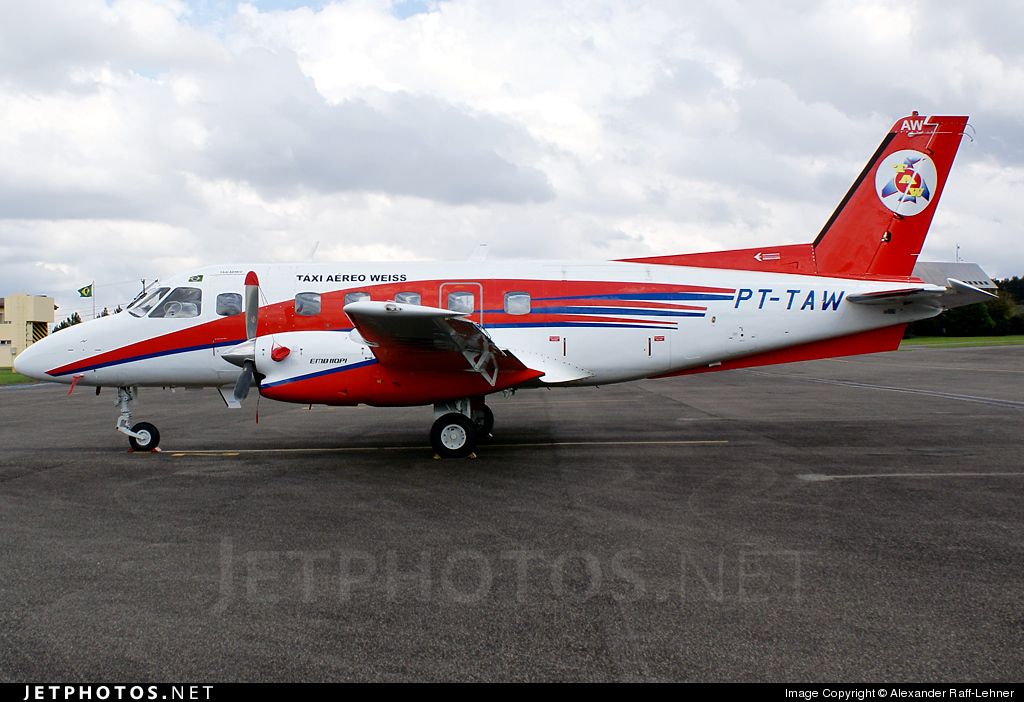
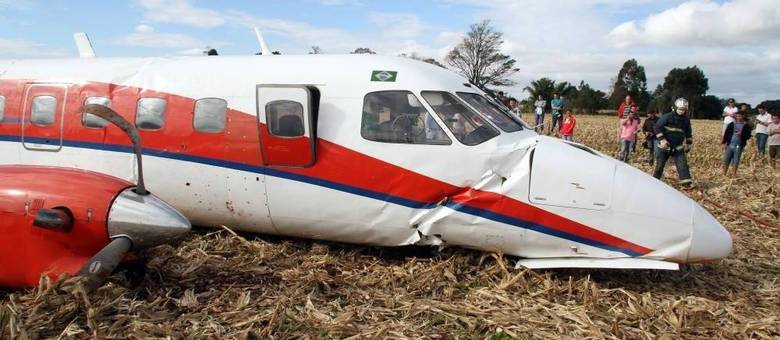
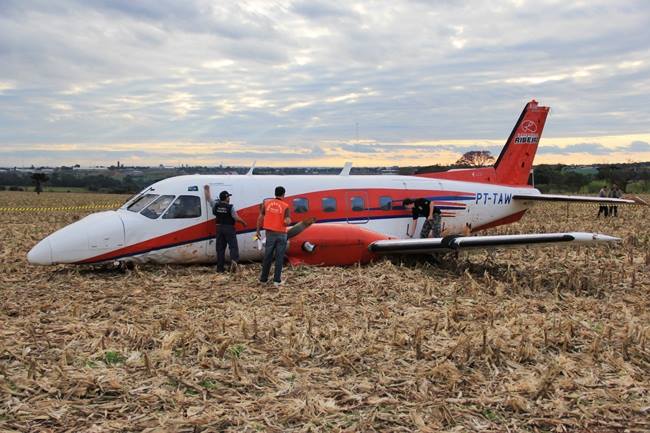
The aircraft took off from the Senador Nilo Coelho Aerodrome (SBPL), Petrolina - PE, to Presidente Juscelino Kubitschek International Airport (SBBR), Brasilia - DF, at 1752 (UTC), in order to complete the scheduled cargo and personnel flight O6 6393, with 5 crewmembers and 44 passengers on board. During the level flight, thirty minutes after takeoff, the aircraft presented low level in the hydraulic system 1. The crew performed the planned operational procedures and continued the flight to Brasilia, with the hydraulic system degraded. During the SBBR landing procedures, the crew used the alternative system for lowering the landing gears. The main landing gears lowered and locked, the nose landing gear unlocked, but did not lower. After coordination with the air traffic control, the aircraft was instructed to land on SBBR runway 11R. The landing took place at 2042 (UTC). After the touchdown, the aircraft covered a total distance of 900 meters until its full stop. The initial 750 meters were with the aircraft supported only by the main landing gears and the last 150 meters were with the aircraft supported by the main landing gears and by the lower part of the front fuselage. The aircraft stopped on the runway. Substantial damage to structural elements of the aircraft occurred near the nose section. The evacuation of the crewmembers and passengers was safe and orderly. The copilot suffered fractures in the thoracic spine. The other crewmembers and passengers left unharmed.
Probable cause:
The following findings were identified:
- It was found that there was a restriction on the articulation movement of the right nose landing gear door and that the weight of this landing gear was not sufficient to overcome such restriction.
Upon inspecting the hinges, it was found that there were no signs of recent lubrication, allowing the hypothesis of occurrence of any deviation or non-adherence to the inspection and lubrication requirements established by the manufacturer leading to a the scenario favorable to the right door movement restriction. The issue of the maintenance could also be related to some deviation, or nonadherence to the requirements established for the service of widening the holes of the hinges concerning the coating and corrosion protection of the worked surface. As a result, the area could have been more susceptible to corrosive processes.
- The maintenance program, established by the manufacturer, may have contributed to the occurrence by not establishing adequate preventive maintenance parameters for the landing gear doors that were modified by reworking the hinges, incorporating larger radial pins and widening the lobe holes.
- It was not possible to determine the causal root of the EDP1 gasket extrusion, which caused the leakage of hydraulic oil that caused the hydraulic system 1 to fail.
Final Report:

Crash of an Airbus A320-214 in Philadelphia

Date & Time: Mar 13, 2014 at 1822 LT
Type of aircraft:
Operator:
Registration:
N113UW
Flight Phase:
Survivors:
Yes
Schedule:
Philadelphia – Fort Lauderdale
MSN:
1141
YOM:
1999
Flight number:
US1702
Crew on board:
5
Crew fatalities:
Pax on board:
149
Pax fatalities:
Other fatalities:
Total fatalities:
0
Captain / Total flying hours:
23830
Captain / Total hours on type:
4457.00
Copilot / Total flying hours:
6713
Copilot / Total hours on type:
4457
Aircraft flight hours:
44230
Circumstances:
Before pushback from the gate, the first officer, who was the pilot monitoring, initialized the flight management computer (FMC) and mistakenly entered the incorrect departure runway (27R instead of the assigned 27L). As the captain taxied onto runway 27L for departure, he noticed that the wrong runway was entered in the FMC. The captain asked the first officer to correct the runway entry in the FMC, which she completed about 27 seconds before the beginning of the takeoff roll; however, she did not enter the FLEX temperature (a reduced takeoff thrust setting) for the newly entered runway or upload the related V-speeds. As a result, the FMC's ability to execute a FLEX power takeoff was invalidated, and V-speeds did not appear on the primary flight display (PFD) or the multipurpose control display unit during the takeoff roll. According to the captain, once the airplane was cleared for takeoff on runway 27L, he set FLEX thrust with the thrust levers, and he felt that the performance and acceleration of the airplane on the takeoff roll was normal. About 2 seconds later, as the airplane reached about 56 knots indicated airspeed (KIAS), cockpit voice recorder (CVR) data indicate that the flight crew received a single level two caution chime and an electronic centralized aircraft monitoring (ECAM) message indicating that the thrust was not set correctly. The first officer called "engine thrust levers not set." According to the operator's pilot handbook, in response to an "engine thrust levers not set" ECAM message, the thrust levers should be moved to the takeoff/go-around (TO/GA) detent. However, the captain responded by saying "they're set" and moving the thrust levers from the FLEX position to the CL (climb) detent then back to the FLEX position. As the airplane continued to accelerate, the first officer did not make a callout at 80 KIAS, as required by the operator's standard operating procedures (SOPs). As the airplane reached 86 KIAS, the automated RETARD aural alert sounded and continued until the end of the CVR recording. According to Airbus, the RETARD alert is designed to occur at 20 ft radio altitude on landing and advise the pilot to reduce the thrust levers to idle. The captain later reported that he had never heard an aural RETARD alert on takeoff, only knew of it on landing, and did not know what it was telling him. He further said that when the RETARD aural alert sounded, he did not plan to reject the takeoff because they were in a high-speed regime, they had no red warning lights, and there was nothing to suggest that the takeoff should be rejected. The first officer later reported that there were no V-speeds depicted on the PFD and, thus, she could not call V1 or VR during the takeoff. She was not aware of any guidance or procedure that recommended rejecting or continuing a takeoff when there were no V-speeds displayed. She further said she "assumed [the captain] wouldn't continue to takeoff if he did not know the V-speeds." The captain stated that he had recalled the V-speeds as previously briefed from the Taxi checklist, which happened to be the same V-speeds for runway 27L. The captain continued the takeoff roll despite the lack of displayed V-speeds, no callouts from the first officer, and the continued and repeated RETARD aural alert. FDR data show that the airplane rotated at 164 KIAS. However, in a postaccident interview, the captain stated that he "had the perception the aircraft was unsafe to fly" and that he decided "the safest action was not to continue," so he commenced a rejected takeoff. FDR data indicate that the captain reduced the engines to idle and made an airplane-nose-down input as the airplane reached 167 KIAS (well above the V1 speed of 157 KIAS) and achieved a 6.7 degree nose-high attitude. The airplane's pitch decreased until the nose gear contacted the runway. However, the airplane then bounced back into the air and achieved a radio altitude of about 15 ft. Video from airport security cameras show the airplane fully above the runway surface after the bounce. The tail of the airplane then struck the runway surface, followed by the main landing gear then the nose landing gear, resulting in its fracture. The airplane slid to its final resting position on the left side of runway 27L. The operator's SOPs address the conditions under which a rejected takeoff should be performed within both low-speed (below 80 KIAS) and high-speed (between 80 KIAS and V1) regimes but provide no guidance for rejecting a takeoff after V1 and rotation. Simulator testing performed after the accident demonstrated that increasing the thrust levers to the TO/GA detent, as required by SOPs upon the activation of the "thrust not set" ECAM message, would have silenced the RETARD aural alert. At the time of the accident, neither the operator's training program nor manuals provided to flight crews specifically addressed what to do in the event the RETARD alert occurred during takeoff; although, 9 months before the accident, US Airways published a safety article regarding the conditions under which the alert would activate during takeoff. The operator's postaccident actions include a policy change (published via bulletin) to its pilot handbook specifying that moving the thrust levers to the TO/GA detent will cancel the RETARD aural alert. Although simulator testing indicated that the airplane was capable of sustaining flight after liftoff, it is likely that the cascading alerts (the ECAM message and the RETARD alert) and the lack of V-speed callouts eventually led the captain to have a heightened concern for the airplane's state as rotation occurred. FDR data indicate that the captain made erratic pitch inputs after the initial rotation, leading to the nose impacting the runway and the airplane bouncing into the air after the throttle levers had been returned to idle. Airbus simulation of the accident airplane's acceleration, rotation, and pitch response to the cyclic longitudinal inputs demonstrated that the airplane was responding as expected to the control inputs. Collectively, the events before rotation (the incorrect runway programmed in the FMC, the "thrust not set" ECAM message during the takeoff roll, the RETARD alert, and the lack of required V-speeds callouts) should have prompted the flight crew not to proceed with the takeoff roll. The flight crewmembers exhibited a self-induced pressure to continue the takeoff rather than taking the time to ensure the airplane was properly configured. Further, the captain initiated a rejected takeoff after the airplane's speed was beyond V1 and the nosewheel was off the runway when he should have been committed to the takeoff. The flight crewmembers' performance was indicative of poor crew resource management in that they failed to assess their situation when an error was discovered, to request a delayed takeoff, to communicate effectively, and to follow SOPs. Specifically, the captain's decision to abort the takeoff after rotation, the flight crew's failure to verify the correct departure runway before gate departure, and the captain's failure to move the thrust levers to the TO/GA detent in response to the ECAM message were all contrary to the operator's SOPs. Member Weener filed a statement, concurring in part and dissenting in part, that can be found in the public docket for this accident. Chairman Hart, Vice Chairman Dinh-Zarr, and Member Sumwalt joined the statement.
Probable cause:
The captain's decision to reject the takeoff after the airplane had rotated. Contributing to the accident was the flight crew's failure to follow standard operating procedures by not verifying that the airplane's flight management computer was properly configured for takeoff and the captain's failure to perform the correct action in response to the electronic centralized aircraft monitoring alert.
Final Report:

Crash of an ATR42-300 in Churchill

Date & Time: Mar 9, 2014 at 1015 LT
Type of aircraft:
Operator:
Registration:
C-FJYV
Survivors:
Yes
Schedule:
Thompson – Churchill
MSN:
216
YOM:
1991
Country:
Crew on board:
3
Crew fatalities:
Pax on board:
2
Pax fatalities:
Other fatalities:
Total fatalities:
0
Circumstances:
Following an uneventful flight from Thompson, the crew completed the approach and landing at Churchill Airport. After touchdown, the crew started the braking procedure and was vacating the runway when the right main gear collapsed. This caused the right propeller and the right wing to struck the ground. The aircraft was stopped and all five occupants evacuated safely. The aircraft was damaged beyond repair.
Probable cause:
Failure of the right main gear for unknown reasons.

Crash of a Boeing 777-2H6ER in the Indian Ocean: 239 killed

Date & Time: Mar 8, 2014 at 0130 LT
Type of aircraft:
Operator:
Registration:
9M-MRO
Flight Phase:
Survivors:
No
Schedule:
Kuala Lumpur – Beijing
MSN:
28420/404
YOM:
2002
Flight number:
MH370
Country:
Region:
Crew on board:
12
Crew fatalities:
Pax on board:
227
Pax fatalities:
Other fatalities:
Total fatalities:
239
Captain / Total flying hours:
18423
Captain / Total hours on type:
8559.00
Copilot / Total flying hours:
2813
Copilot / Total hours on type:
39
Aircraft flight hours:
53471
Aircraft flight cycles:
7526
Circumstances:
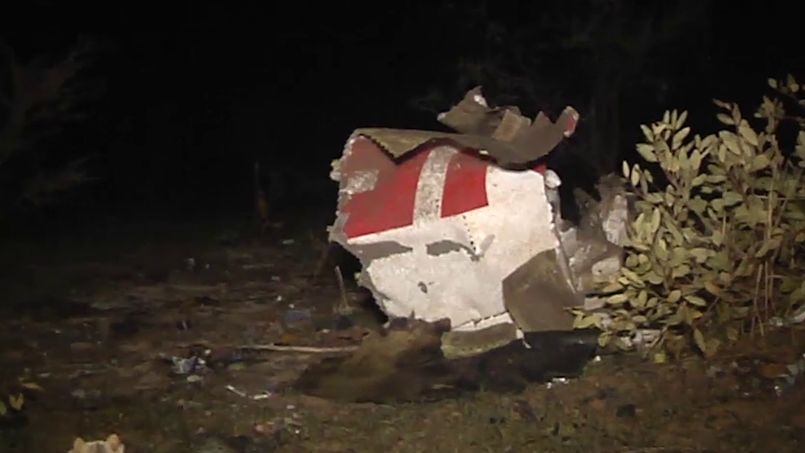
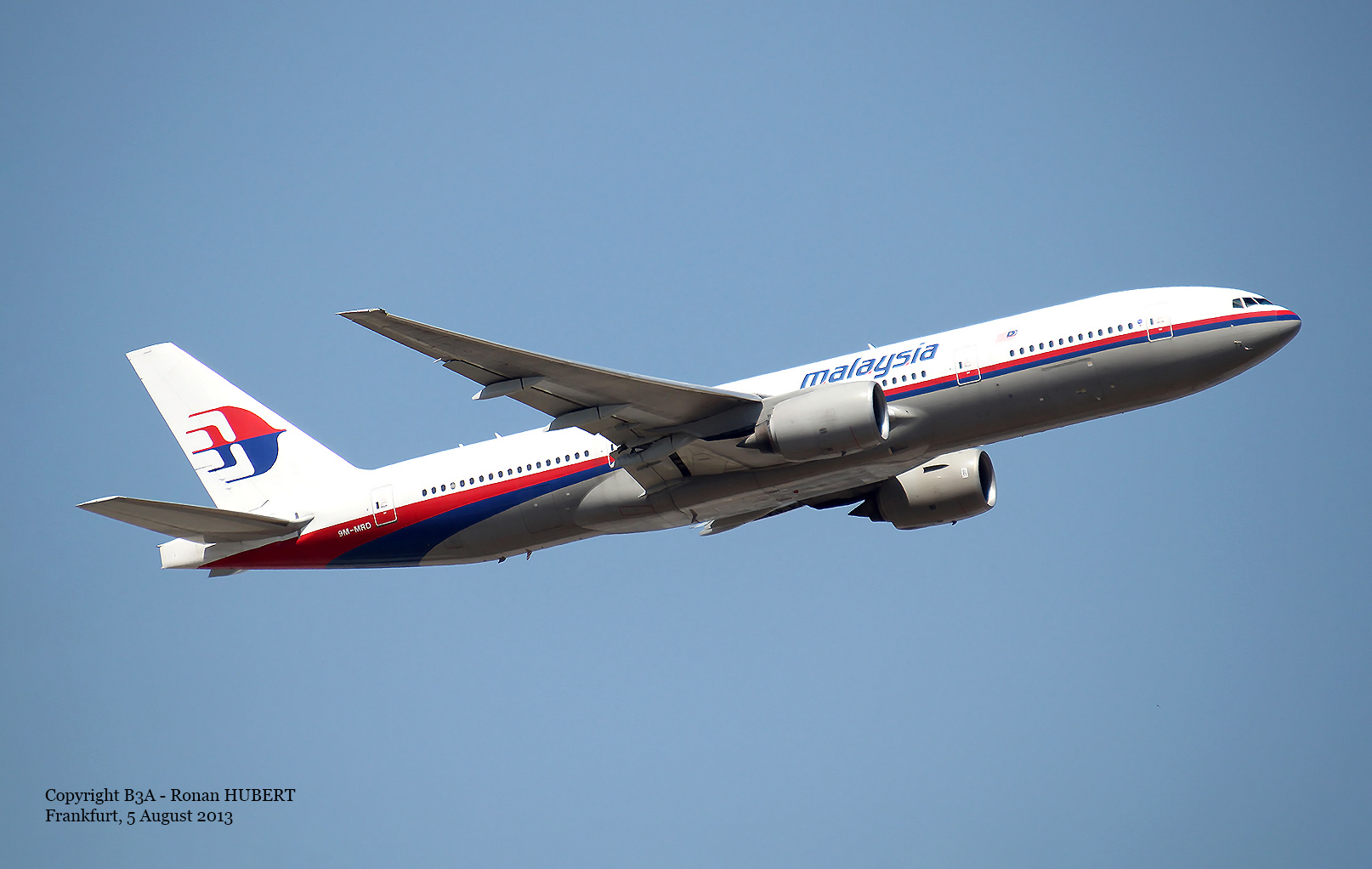
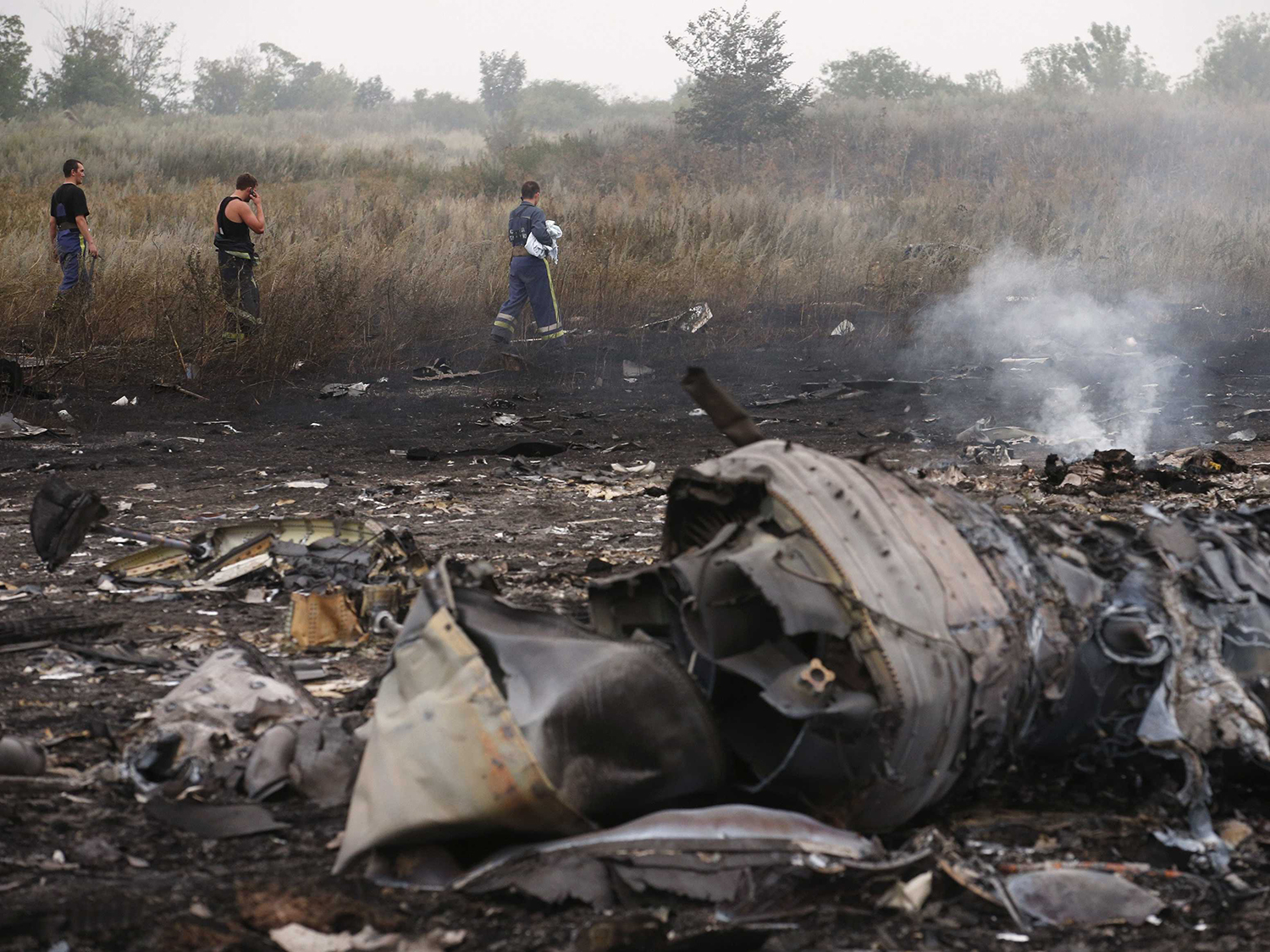
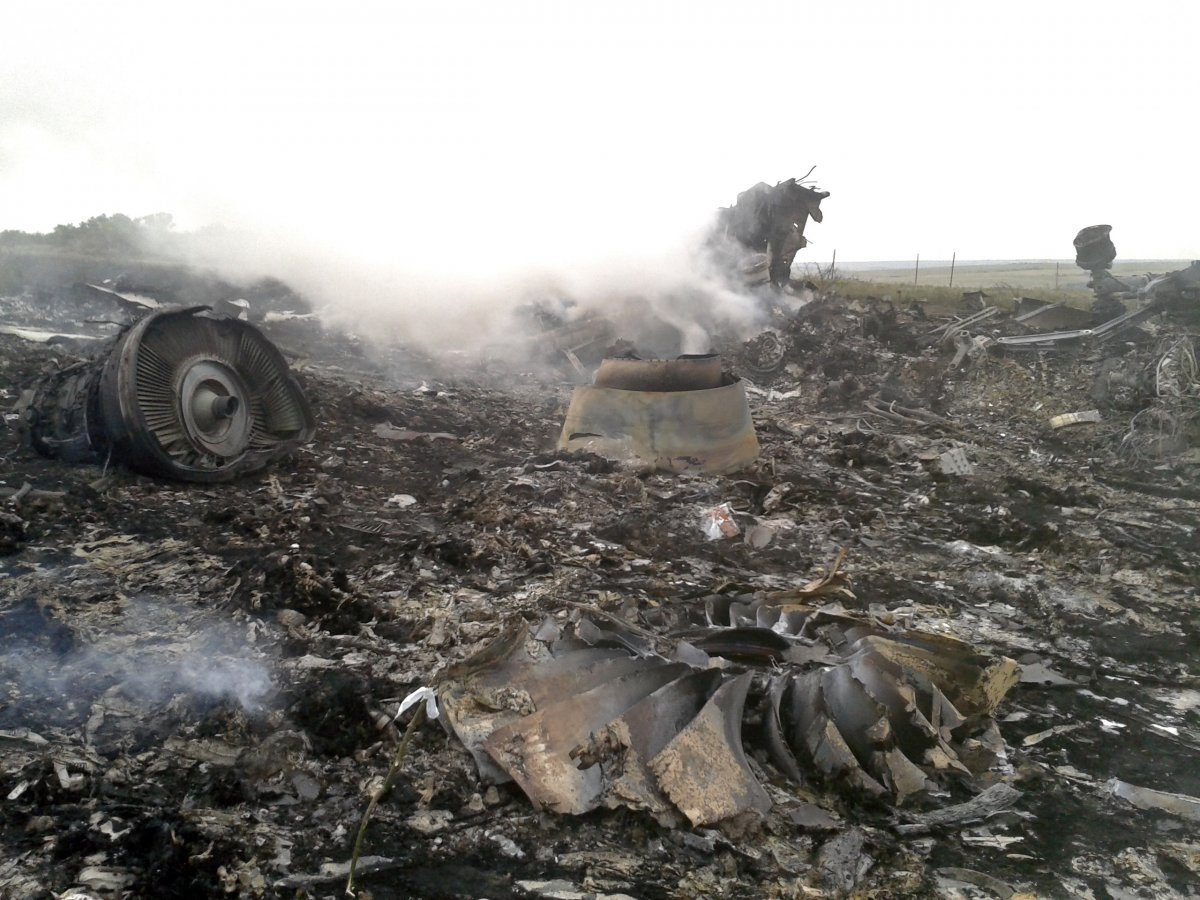
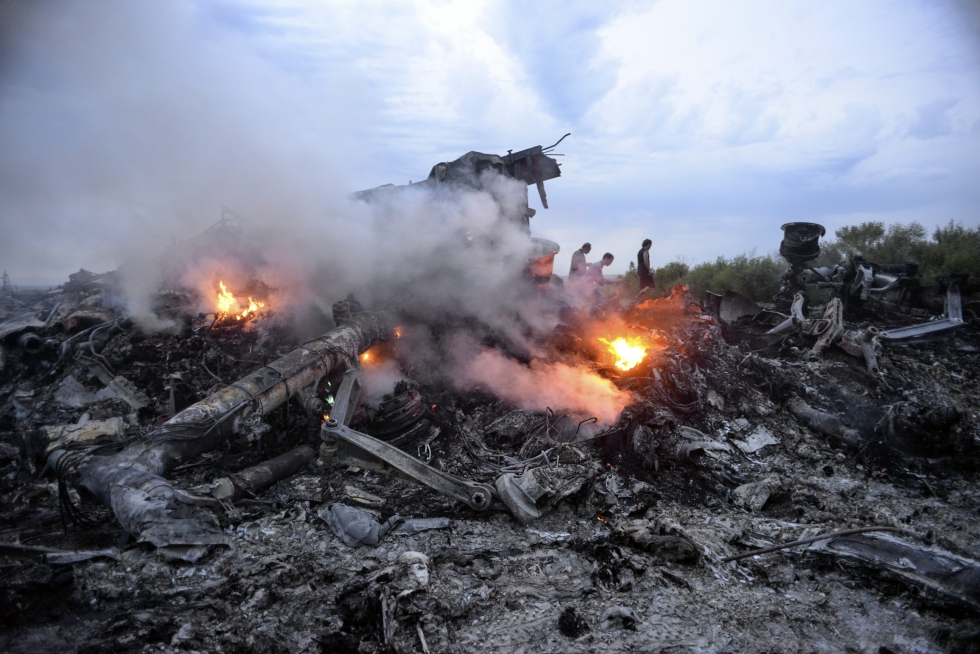
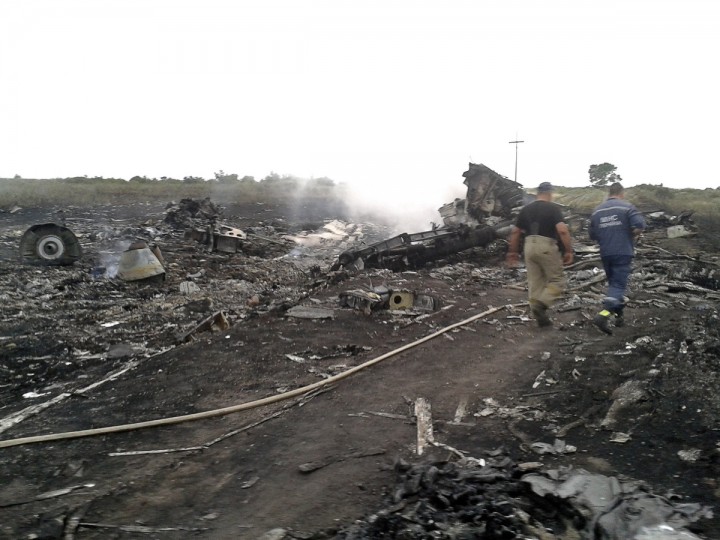
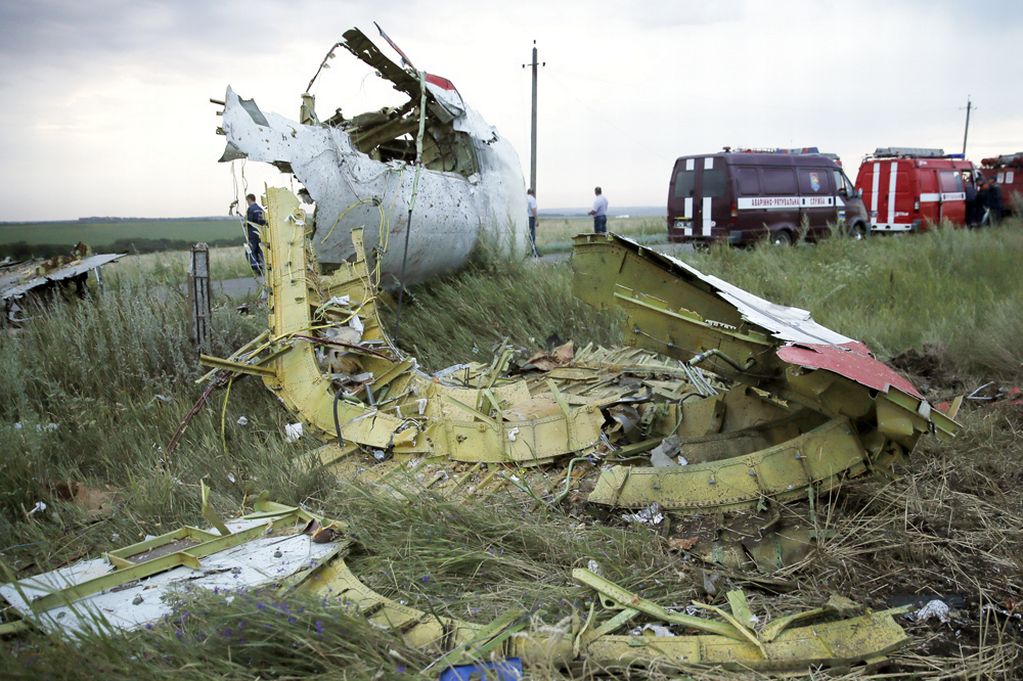
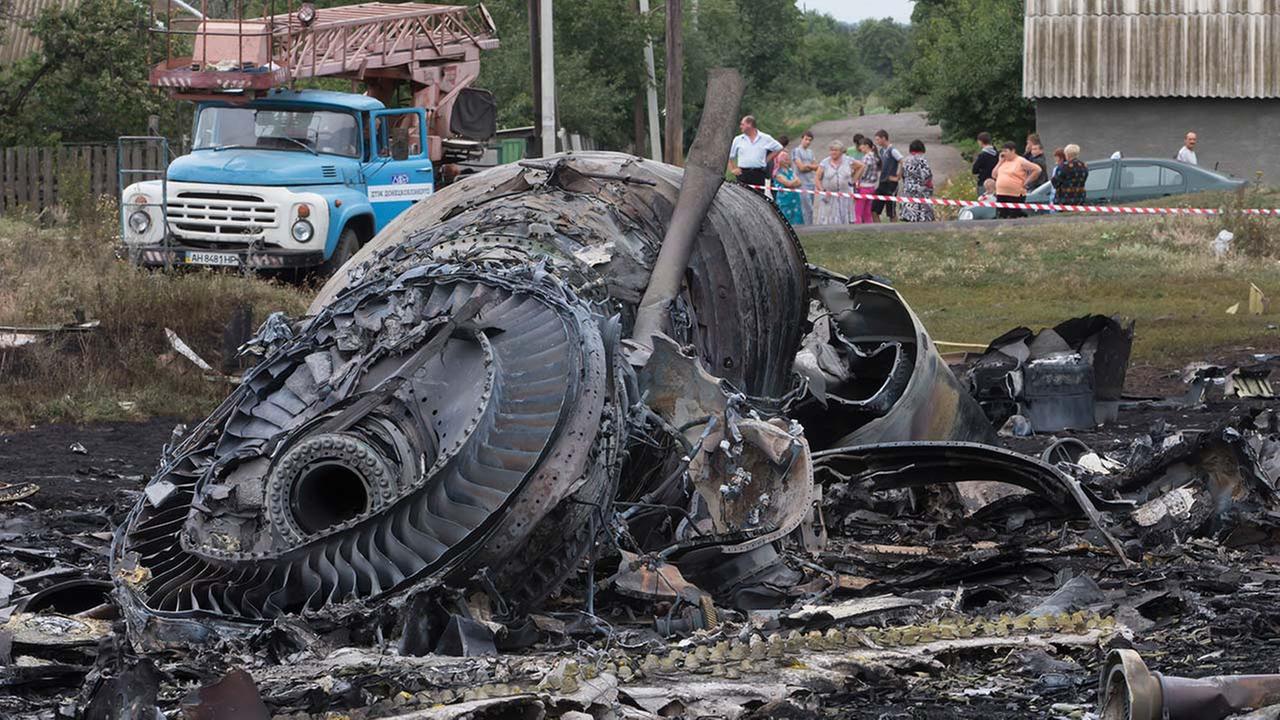
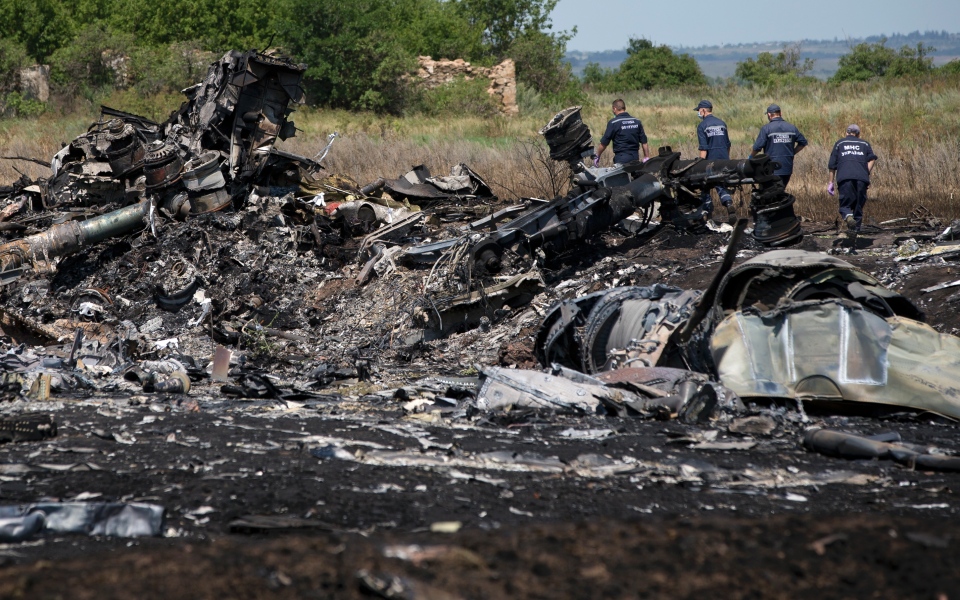
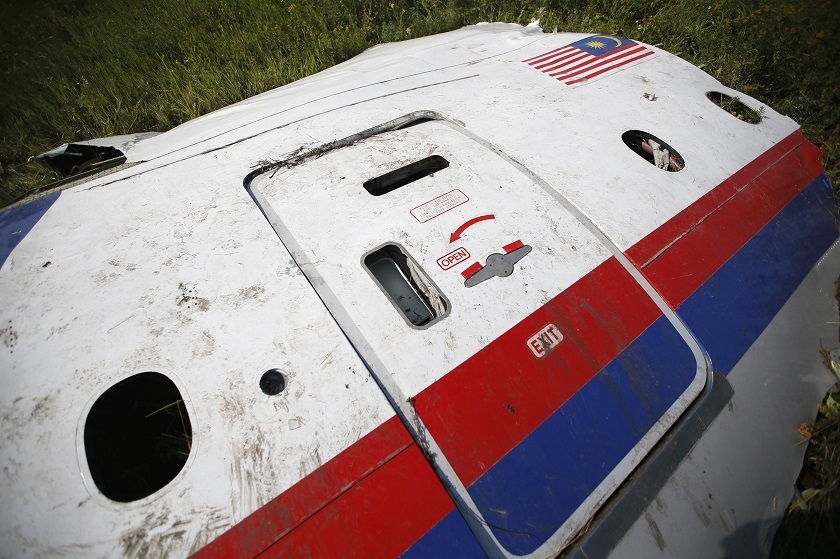
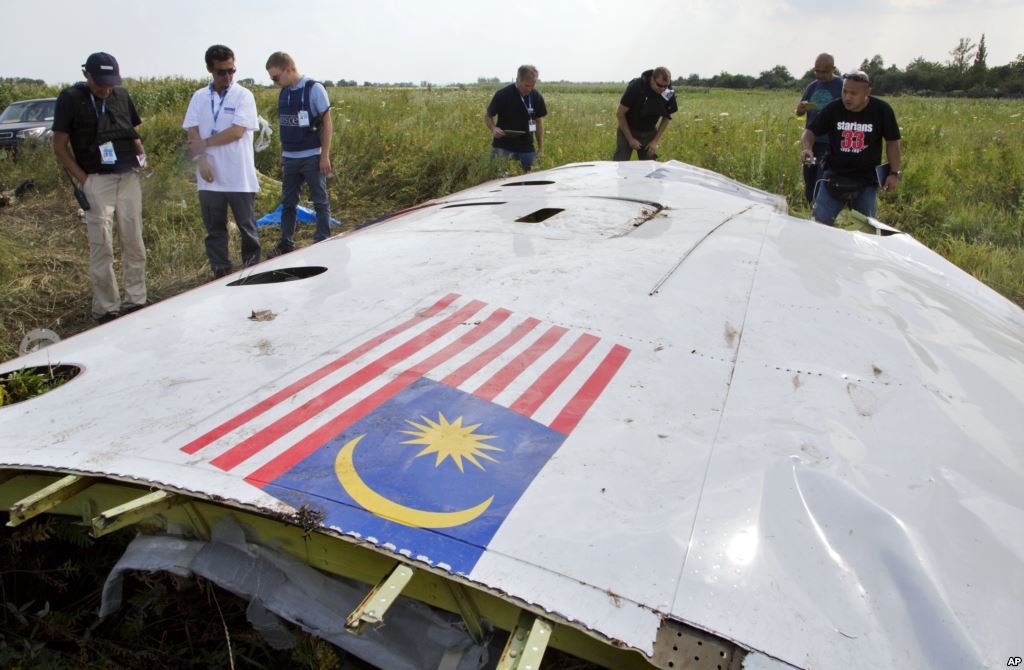
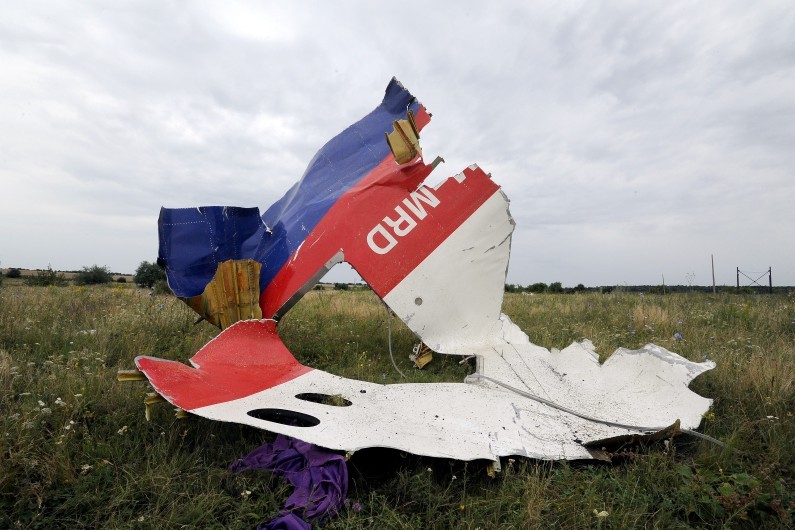
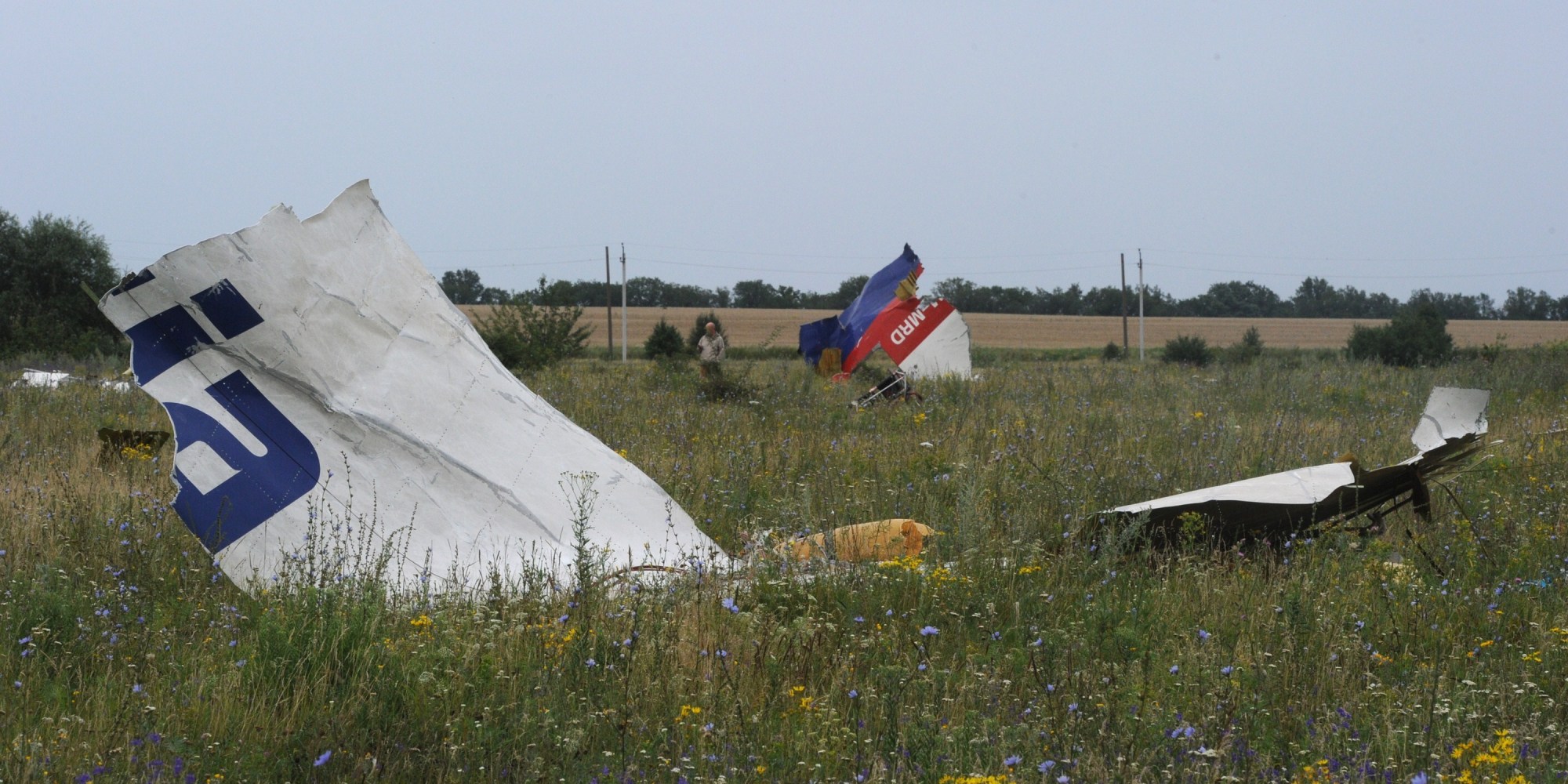
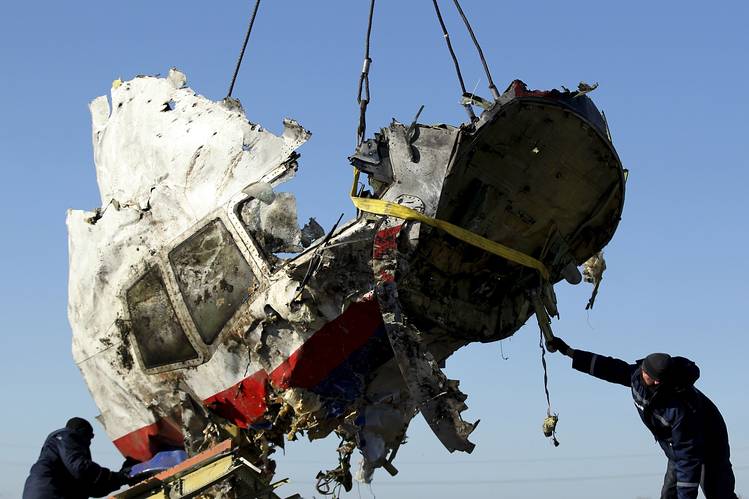
The Boeing 777-2H6ER took off from Kuala Lumpur Airport runway 32R at 0041LT bound for Beijing. Some 40 minutes later, while reaching FL350 over the Gulf of Thailand, radar contact was lost. At this time, the position of the aircraft was estimated 90 NM northeast of Kota Bharu, some 2 km from the IGARI waypoint. More than 4 days after the 'accident', no trace of the aircraft has been found. On the fifth day of operation, several countries were involved in the SAR operations, in the Gulf of Thailand, west of China Sea and on the Malacca Strait as well. All operations are performed in coordination with China, Thailand, Vietnam, Malaysia and Philippines. No distress call or any kind of message was sent by the crew. The last ACARS message was received at 0107LT and did not contain any error, failure or technical problems. At 0119LT was recorded the last radio transmission with the crew saying "All right, good night". At 0121LT, the transponder was switched off and the last radar contact was recorded at 0130LT. Several hypothesis are open and no trace of the aircraft nor the occupant have been found up to March 18, 2014. It is now understood the aircraft may flew several hours after it disappeared from radar screens, flying on an opposite direction from the prescribed flight plan, most probably to the south over the Indian Ocean. No such situation was ever noted by the B3A, so it is now capital to find both CVR & DFDR to explain the exact circumstances of this tragic event. Considering the actual situation, all scenarios are possible and all hypothesis are still open. On Mar 24, 2014, the Malaysian Prime Minister announced that according to new computations by the British AAIB based on new satellite data, there is no reasonable doubt that flight MH370 ended in the South Indian Ocean some 2,600 km west of Perth. Given the situation, the Malaysian Authorities believe that there is no chance to find any survivors among the 239 occupants.
***************************

According to the testimony of 6 Swiss Citizens making a cruise between Perth and Singapore via Jakarta, the following evidences were spotted on March 12 while approaching the Sunda Strait:
1430LT - latitude 6° S, longitude 105° E, speed 17,7 knots:
life jacket, food trays, papers, pieces of polystyrene, wallets,
1500LT:
a huge white piece of 6 meters long to 2,5 meters wide with other debris,
1530LT:
two masts one meter long with small flags on top, red and blue,
2030LT - latitude 5° S, longitude 107° E, speed 20,2 knots.

This testimony was submitted by these 6 Swiss Citizens to the Chinese and Australian Authorities.

On April 21, 2016, it was confirmed that this testimony was recorded by the Swiss Police and transmitted to the Swiss Transportation Safety Investigation Board (STSB), the State authority of the Swiss Confederation which has a mandate to investigate accidents and dangerous incidents involving trains, aircraft, inland navigation ships, and seagoing vessels. The link to the STSB is http://www.sust.admin.ch/en/index.html.

***************************

On July 29, 2015, a flaperon was found on a beach of the French Island of La Réunion, in the Indian Ocean. It was quickly confirmed by the French Authorities (BEA) that the debris was part of the Malaysian B777. Other debris have been found since, in Mozambique and South Africa.

On May 12, 2016, Australia's TSB reported that the part has been identified to be a "the decorative laminate as an interior panel from the main cabin. The location of a piano hinge on the part surface was consistent with a work-table support leg, utilised on the exterior of the MAB Door R1 (forward, right hand) closet panel". The ATSB reported that they were not able to identify any feature on the debris unique to MH-370, however, there is no record that such a laminate is being used by any other Boeing 777 customer.

***************************

On September 15, 2016, the experts from the Australian Transportation Safety Bureau (ATSB) have completed their examination of the large piece of debris discovered on the island of Pemba, off the coast of Tanzania, on June 20, 2016. Based on thorough examination and analysis, ATSB with the concurrence of the MH370 Safety Investigation Team have identified the following:
- Several part numbers, along with physical appearance, dimensions, and construction confirmed the piece to be an inboard section of a Boeing 777 outboard flap.
- A date stamp associated with one of the part numbers indicated manufacture on January 23, 2002, which was consistent with the May 31, 2002 delivery date for MH370,
- In addition to the Boeing part number, all identification stamps had a second 'OL' number that were unique identifiers relating to part construction,
- The Italian part manufacturer has confirmed that all numbers located on the said part relates to the same serial number outboard flap that was shipped to Boeing as line number 404,
- The manufacturer also confirmed that aircraft line number 404 was delivered to Malaysian Airlines and registered as 9M-MRO (MH370)

As such, the experts have concluded that the debris, an outboard flap originated from the aircraft 9M-MRO, also known as flight MH370. Further examination of the debris will continue, in hopes that further evidence may be uncovered which may provide new insight into the circumstances surrounding flight MH370.
Probable cause:
Due to lack of evidences the exact cause of the accident could not be determined.
Final Report:

Crash of an Embraer EMB-120RT Brasília in Lucapa

Date & Time: Feb 25, 2014 at 1000 LT
Type of aircraft:
Operator:
Registration:
D2-FFZ
Survivors:
Yes
Schedule:
Luanda – Lucapa
MSN:
120-212
YOM:
1990
Country:
Region:
Crew on board:
3
Crew fatalities:
Pax on board:
14
Pax fatalities:
Other fatalities:
Total fatalities:
0
Circumstances:
On final approach to Lucapa, the crew encountered technical problems and was forced to shut an engine down for unknown reason. After touchdown, the aircraft went out of control and veered off runway to the left. While contacting rough terrain, the aircraft lost its undercarriage and came to rest on its belly with severe damages to both wings, engines and fuselage. Three passengers were slightly injured.

Crash of a De Havilland DHC-6 Twin Otter 300 near Dihidanda: 18 killed

Date & Time: Feb 16, 2014 at 1330 LT
Operator:
Registration:
9N-ABB
Flight Phase:
Survivors:
No
Site:
Schedule:
Pokhara – Jumla
MSN:
302
YOM:
1971
Flight number:
RNA183
Country:
Region:
Crew on board:
3
Crew fatalities:
Pax on board:
15
Pax fatalities:
Other fatalities:
Total fatalities:
18
Captain / Total flying hours:
8373
Captain / Total hours on type:
8131.00
Copilot / Total flying hours:
365
Aircraft flight hours:
43947
Aircraft flight cycles:
74217
Circumstances:
On 16 February 2014, the Twin Otter (DHC6/300) aircraft with registration number 9N-ABB, owned and operated by Nepal Airlines Corporation (NAC), departed Kathmandu at 0610 UTC (1155 LT) on its schedule flight to Jumla carrying 18 persons on board including 3 crews. Detailed sectors to be covered by the flight No. RA 183/718 was Kathmandu–Pokhara–Jumla-Nepālganj (Night stop). Flight from Kathmandu to Pokhara completed in normal condition. After 17 minutes on ground at Pokhara airport and refueling 9N-ABB departed Pokhara at 0658 for Jumla. After Jumla flight, the aircraft was scheduled to Night stop at Nepālganj. Next day it was to do a series of shuttle flights from Nepālganj. Prevailing westerly weather had a severe impact on most of the domestic flights since last two days. A.M.E. of Engineering Department of NAC who had performed D.I. of 9N ABB had mentioned in his written report to the Commission that he had reminded the diversion of Bhojpur flight of NAC due weather and asked the Captain whether he had weather briefing of the Western Nepal or not. In response to the AME's query the Captain had replied casually that- "weather is moving from west to east and now west is improving". Pilots behavior was reported normal by the ground staffs of Kathmandu and Pokhara airports prior to the commencement of flight on that day. All the pre and post departure procedure of the flight were completed in normal manner. Before departure to Jumla from Pokhara, Pilots obtained Jumla and Bhairahawa weather and seems to be encouraged with VFR Weather at both stations. However, they were unable to make proper assessment of en route weather. PIC decided to remain south of track to avoid the terrain and weather. CVR read out revealed that pilots were aware and concerned about the icing conditions due to low outside air temperature. After around 25 minutes, probably maneuvering to avoid weather, the PIC instructed the co-pilot to plan a route further south of their position, to fly through the Dang valley. The copilot selected Dang in the GPS, on a bearing of 283°, and determined the required altitude was 8500ft. He then raised concerns that the aircraft may not have enough fuel to reach the planned destination. Approximately two and a half minutes before the accident, the PIC initiated a descent, and the copilot advised against this. As per CVR read out, last heading recorded by copilot, approximately one minute before the crash, was 280. The last one minute was a very critical phase of the flight during which PIC said I am entering (perhaps inside the cloud). At that time copilot called Bhairahawa Tower on his own and got latest Bhairahawa weather. While copilot was transmitting its last position report to Bhairahawa Control Tower (approximately 25 miles from Bhairahawa), PIC interrupted and declared to divert Bhairahawa. Bhairahawa Control Tower wanted the pilots to confirm their present position. But crews were very much occupied and copilot said STANDBY. Just few seconds before crash copilot had told PIC not to descend. Copilot also suggested PIC in two occasions - sir don't turn. Very unfortunately aircraft was crashed. The aircraft disintegrated on impact and all 18 occupants were killed.
Probable cause:
Controlled flight into terrain after the pilot-in-command lost situation awareness while cruising in IMC.
The following factors were considered as contributory:
- Deteriorated weather associated with western disturbance, unstable in nature and embedded CB,
- Inappropriate and insufficient crew coordination while changing course of action.
Final Report:

Crash of an Airbus A320-231 in Kulob

Date & Time: Feb 2, 2014 at 0736 LT
Type of aircraft:
Operator:
Registration:
EY-623
Survivors:
Yes
Schedule:
Moscow – Kulob
MSN:
428
YOM:
1994
Flight number:
ETJ704
Country:
Region:
Crew on board:
5
Crew fatalities:
Pax on board:
187
Pax fatalities:
Other fatalities:
Total fatalities:
0
Captain / Total flying hours:
18321
Captain / Total hours on type:
509.00
Copilot / Total flying hours:
2900
Copilot / Total hours on type:
1300
Aircraft flight hours:
54604
Aircraft flight cycles:
23974
Circumstances:
Following an uneventful flight from Moscow-Domodedovo Airport, the crew was cleared to land on runway 01 at Kulob Airport. In heavy snow falls, the aircraft landed 230 metres past the runway threshold at a speed of 255 km/h. After touchdown, the crew started the braking procedure when, after a course of 520 metres, the right main gear contacted a snow berm. Simultaneously, both engines impacted a snow berm (up to 95 cm high) and stopped due to the high quantity of snow ingested. The aircraft veered to the right, lost its nose gear and came to rest in snow, 20 metres to the right of the runway and 1,190 metres from its threshold. All 192 occupants evacuated safely and the aircraft was damaged beyond repair.
Probable cause:
The accident with A320-231 EY-623 aircraft was caused by the aircraft collision with snow parapet during landing on unprepared RWY that was cleared to 22 m in width (45 m RWY total width), and with 50-95 cm snow parapets along the cleared part that resulted in front gear leg destruction and engines flameout followed by aircraft runway overrun to the right. The accident was caused by the consequence of the following factors combination:
- flight operation officer decision for aircraft clearance on unprepared RWY,
- having unprepared RWY by the time of the aircraft arrival the aerodrome service didn't put temporary restrictions, didn't make the appropriate note in the "Aerodrome airworthiness log", didn't take any measures to prevent the aircraft landing on unprepared RWY.
Final Report: