Crash of a Cessna 207 Skywagon in Marion: 1 killed

Date & Time: Jan 26, 1973 at 1850 LT
Registration:
N1582U
Flight Type:
Survivors:
Yes
Schedule:
Fremont - Marion
MSN:
207-0182
YOM:
1970
Crew on board:
1
Crew fatalities:
Pax on board:
1
Pax fatalities:
Other fatalities:
Total fatalities:
1
Captain / Total flying hours:
2094
Captain / Total hours on type:
9.00
Circumstances:
While on a VOR approach to Marion Airport, the pilot encountered limited visibility and descended below the MDA when the single engine airplane struck trees and crashed. The pilot was injured while the passenger was killed.
Probable cause:
Improper IFR operation on part of the pilot. The following factors were reported:
- Low ceiling and fog,
- Descended below MDA on VOR approach.
Final Report:

Crash of a Beechcraft C-45H Expeditor in Miami

Date & Time: Jan 20, 1973 at 0634 LT
Type of aircraft:
Operator:
Registration:
N3721
Flight Phase:
Flight Type:
Survivors:
Yes
Schedule:
Miami - Freeport
MSN:
AF-873
YOM:
1954
Crew on board:
1
Crew fatalities:
Pax on board:
1
Pax fatalities:
Other fatalities:
Total fatalities:
0
Captain / Total flying hours:
5432
Captain / Total hours on type:
878.00
Circumstances:
Shortly after takeoff from Opa Locka Airport, while in initial climb, the airplane stalled and crashed. Both occupants were seriously injured and the aircraft was destroyed.
Probable cause:
Inadequate preflight preparation on part of the pilot who failed to follow the approved procedures and to maintain flying speed. The following factors were reported:
- Improperly loaded aircraft,
- Fog,
- The aircraft was overloaded by approximately 441 pounds.
Final Report:

Crash of a Cessna 421A Golden Eagle I in Palm Springs: 3 killed

Date & Time: Jan 16, 1973 at 1604 LT
Type of aircraft:
Registration:
N42J
Survivors:
No
Schedule:
Phoenix - Palm Springs
MSN:
421A-0185
YOM:
1968
Crew on board:
1
Crew fatalities:
Pax on board:
2
Pax fatalities:
Other fatalities:
Total fatalities:
3
Captain / Total flying hours:
2190
Circumstances:
On approach to Palm Springs Airport, the twin engine airplane went out of control and crashed in an isolated area. The wreckage was found a day later and all three occupants were killed.
Probable cause:
Improper IFR operation on part of the pilot who conducted improper or non-standard IFR approach for unknown reason.
Final Report:

Crash of a Beechcraft C90 King Air in Cedar Rapids: 5 killed

Date & Time: Jan 3, 1973 at 1722 LT
Type of aircraft:
Operator:
Registration:
N936K
Survivors:
No
Schedule:
Omaha - Cedar Rapids
MSN:
LJ-539
YOM:
1972
Crew on board:
2
Crew fatalities:
Pax on board:
3
Pax fatalities:
Other fatalities:
Total fatalities:
5
Captain / Total flying hours:
4225
Captain / Total hours on type:
25.00
Circumstances:
The crew started an ILS approach to Cedar Rapids Airport in poor weather conditions when control was lost. The airplane dove into the ground and crashed in an open field located few miles from the airport. The twin engine airplane was totally destroyed and all five occupants have been killed. It was determined that in poor weather conditions, the left wing, left engine and tail separated in flight, causing the aircraft to be uncontrollable.
Probable cause:
Improper in-flight decisions on part of the pilot-in-command who exceeded the designed stress limits of the aircraft. The following factors were reported:
- Overload failure,
- Separation in flight,
- Low ceiling, fog and snow,
- Turbulences associated with clouds and thunderstorms,
- Began the descent to ILS approach too late,
- It is believed that the crew expedited the descent,
- The left wing, the left engine and the tail separated in flight.
Final Report:

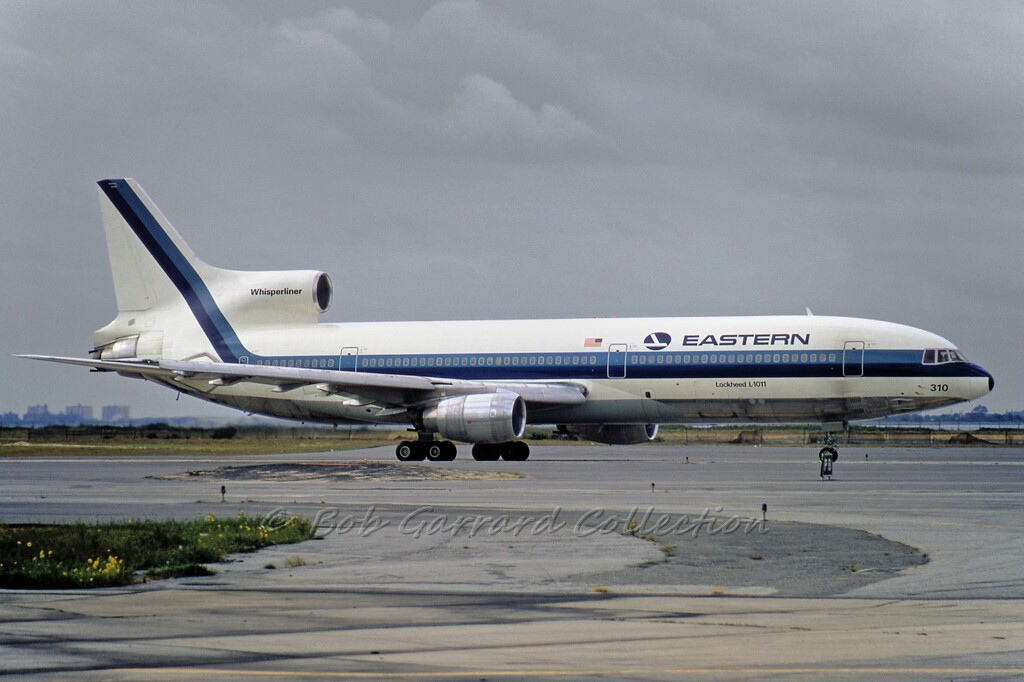
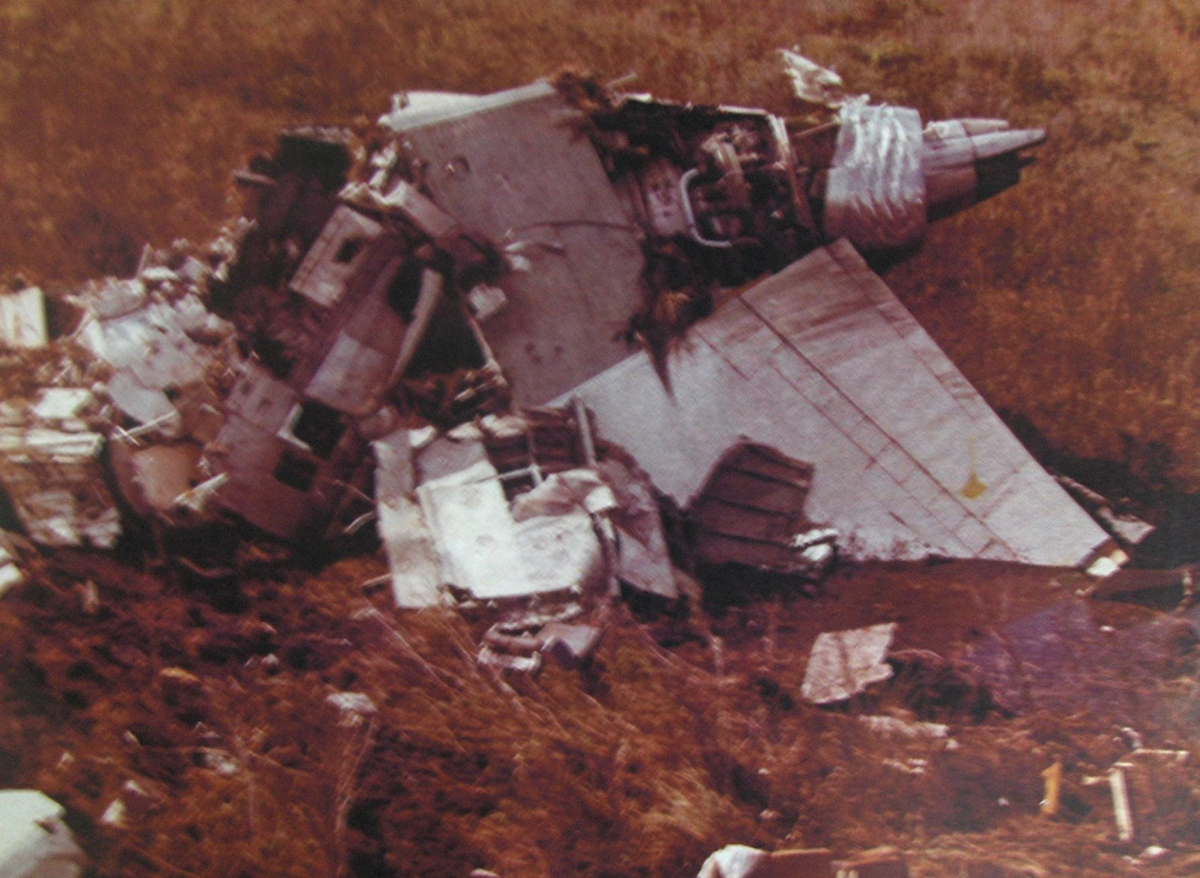
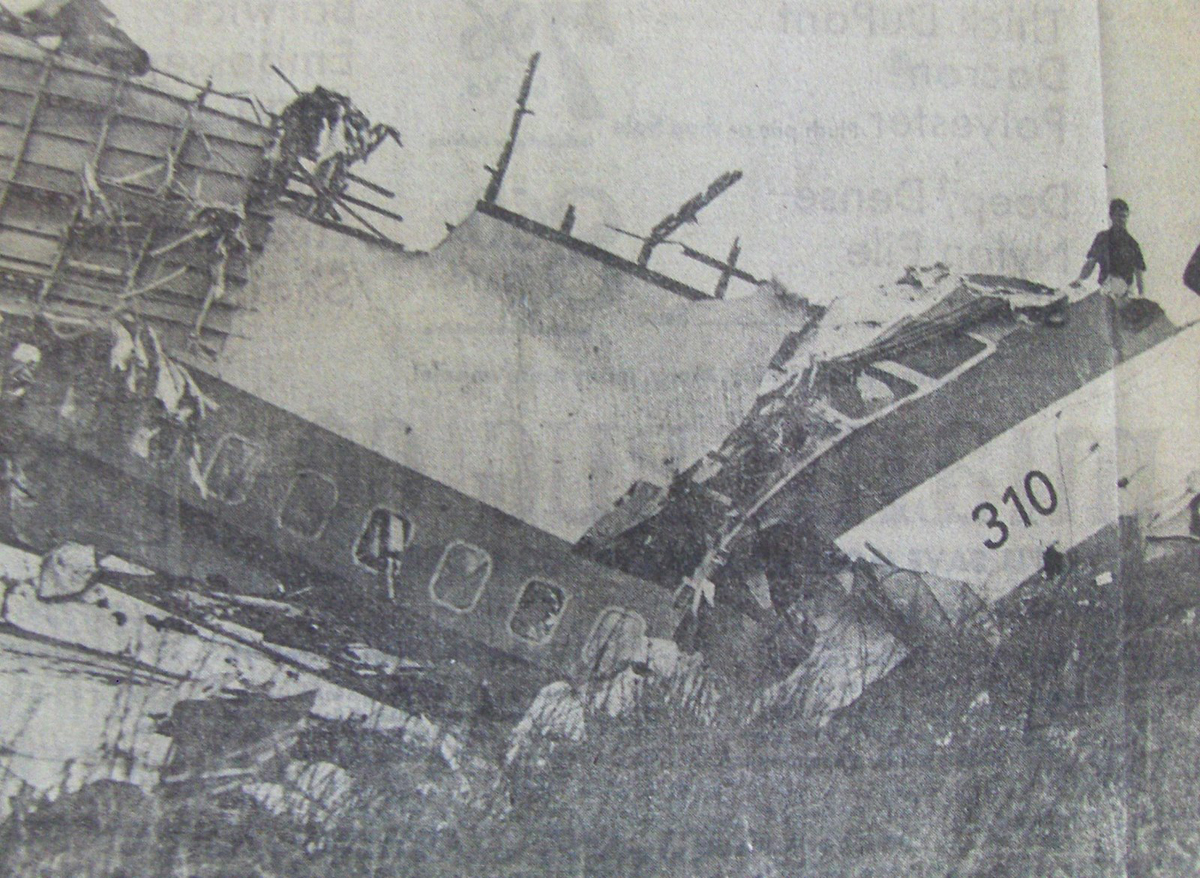
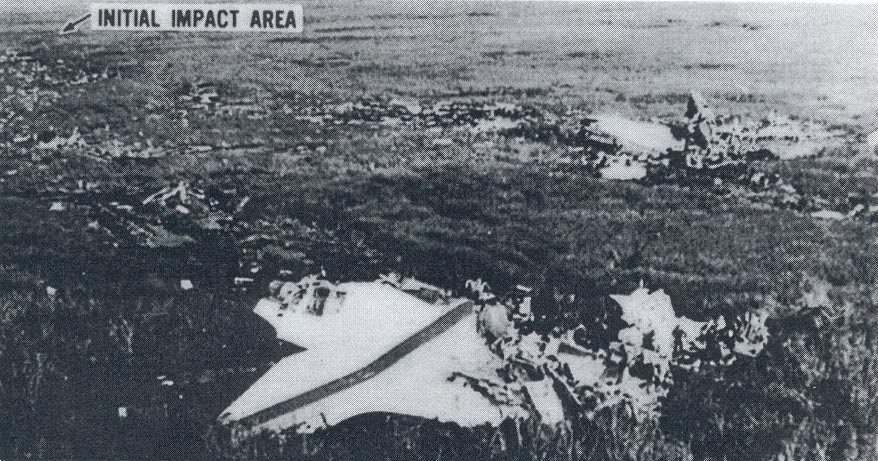
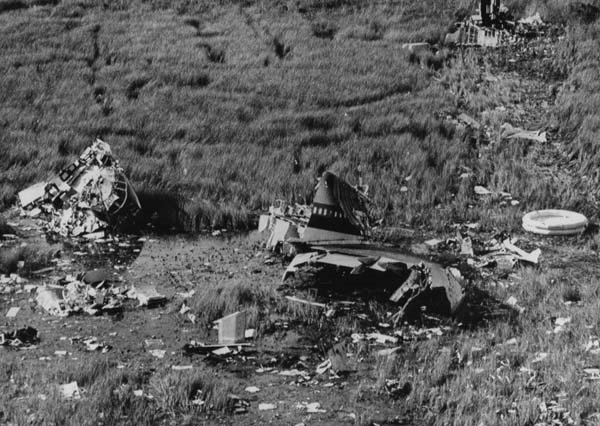
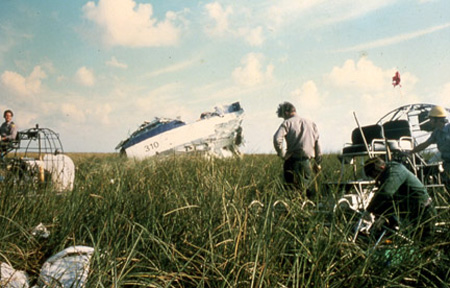
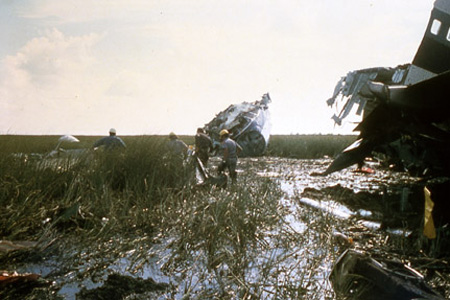
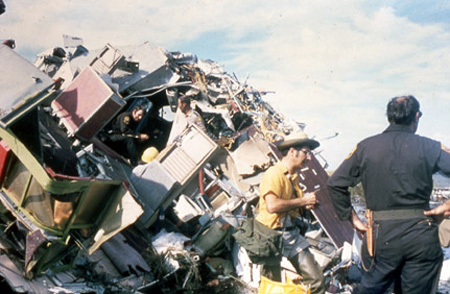
Crash of a Lockheed L-1011-385 TriStar 1 in the Everglades National Park: 99 killed

Date & Time: Dec 29, 1972 at 2342 LT
Type of aircraft:
Operator:
Registration:
N310EA
Survivors:
Yes
Schedule:
New York - Miami
MSN:
N193A-1011
YOM:
1972
Flight number:
EA401
Crew on board:
13
Crew fatalities:
Pax on board:
163
Pax fatalities:
Other fatalities:
Total fatalities:
101
Captain / Total flying hours:
29700
Captain / Total hours on type:
280.00
Copilot / Total flying hours:
5800
Copilot / Total hours on type:
306
Aircraft flight hours:
986
Aircraft flight cycles:
502
Circumstances:
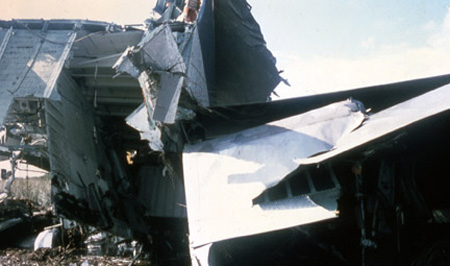
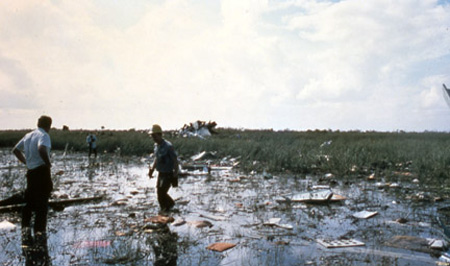
The flight from New York-JFK was uneventful and the crew started the descent to Miami-Intl Airport by night and good weather conditions. On approach, the captain instructed 'gear down' but all three green lights failed to illuminate properly. The second officer was instructed to enter the forward electronics bay but the problem could not be resolved. The crew informed ATC about the situation and was cleared to climb to 2,000 feet. The crew then discussed to try to find a solution but failed to realize that the airplane was continuing to descend. When a warning sounded in the cockpit indicating a +/- 250 feet deviation from the selected altitude, none of the crew members react to the warning sound and no action was taken. At 2341LT, the crew was instructed by ATC to turn heading 180 and a minute later, the first officer realized that something was wrong with the altitude. Seven seconds later, while turning in a left angle of 28°, the left engine struck the ground then the aircraft crashed in the Everglades National Park, about 20 miles short of runway threshold, and disintegrated on impact. 77 people were rescued while 99 others were killed, among them five crew members. More than a week later, two survivors died from their injuries.
Probable cause:
Failure of the flight crew to monitor the flight instruments during the final 4 minutes of flight, and to detect an unexpected descent soon enough to prevent impact with the ground. Preoccupation with a malfunction of the nose landing gear position indicating system distracted the crew's attention from the instruments and allowed the descent to go unnoticed. The following findings were reported:
- There was no failure or malfunction of the structure, powerplants, systems, or components of the aircraft before impact, except that both bulbs in the nose landing gear position indicating system were burned out.
- The aircraft struck the ground in a 28' left bank with a high rate of sink.
- There was no fire until the integrity of the left wing fuel tanks was destroyed after the impact.
- The tumor in the cranial cavity of the captain did not contribute to the accident.
- The autopilot was utilized in basic CWS.
- The flight crew was unaware of the low force gradient input required to effect a change in aircraft attitude while in CWS.
- The company training program met the requirements of the Federal Aviation Administration.
- The three flight crewmembers were preoccupied in an attempt to ascertain the position of the nose landing gear.
- The second officer, followed later by the jump seat occupant, went into the forward electronics bay to check the nose gear down position indices.
- The second officer was unable visually to determine the position of the nose gear.
- The flight crew did not hear the aural altitude alert which sounded as the aircraft descended through 1,750 feet msl.
- There were several manual thrust reductions during the final descent.
- The speed control system did not affect the reduction in thrust.
- The flight crew did not monitor the flight instruments during the final descent until seconds before impact.
- The captain failed to assure that a pilot was monitoring the progress of the aircraft at all times
Final Report:


Crash of a Beechcraft 65-B80 Queen Air in Kent: 4 killed

Date & Time: Dec 29, 1972 at 1645 LT
Type of aircraft:
Operator:
Registration:
N9867
Flight Type:
Survivors:
No
Schedule:
San Antonio - Kent
MSN:
LD-114
YOM:
1963
Crew on board:
1
Crew fatalities:
Pax on board:
3
Pax fatalities:
Other fatalities:
Total fatalities:
4
Captain / Total flying hours:
28000
Captain / Total hours on type:
80.00
Circumstances:
The pilot was completing a last turn to reach the approach path when the twin engine airplane stalled and crashed in flames. The airplane was destroyed and all four occupants have been killed.
Probable cause:
The pilot failed to maintain flying speed, causing the aircraft to stall. The aircraft was apparently turning from base leg to final approach and was in a clean configuration.
Final Report:

Crash of a Lockheed L-1329 JetStar 6 in Saranac Lake: 3 killed

Date & Time: Dec 27, 1972 at 2202 LT
Type of aircraft:
Operator:
Registration:
N400M
Survivors:
No
Schedule:
Grand Island - Saranac Lake
MSN:
5008
YOM:
1961
Crew on board:
3
Crew fatalities:
Pax on board:
0
Pax fatalities:
Other fatalities:
Total fatalities:
3
Captain / Total flying hours:
20128
Captain / Total hours on type:
1800.00
Circumstances:
The crew started the approach to Saranac Lake-Adirondack Airport by night and encountered poor visibility due to fog and snow showers. Unable to locate the runway, the captain decided to abandon the approach and initiated a go-around. Few minutes later, a second attempt to land was also abandoned for similar reasons. During a third attempt, the airplane passed below the MDA and once at an altitude of 2,140 feet, it struck trees and crashed in a wooded area located about 2 miles short of runway threshold. The aircraft was destroyed and all three crew members were killed.
Probable cause:
Improper IFR operation on part of the crew. The following factors were reported:
- Low ceiling, fog and snow showers,
- Weather conditions considerably worse than forecast,
- Obscuration.
Final Report:

Crash of a Beechcraft H18S in Bloomington: 2 killed

Date & Time: Dec 21, 1972 at 1219 LT
Type of aircraft:
Operator:
Registration:
N800G
Survivors:
No
Schedule:
Saint Louis - Bloomington
MSN:
BA-661
YOM:
1964
Crew on board:
1
Crew fatalities:
Pax on board:
1
Pax fatalities:
Other fatalities:
Total fatalities:
2
Captain / Total flying hours:
5341
Captain / Total hours on type:
1464.00
Circumstances:
On final approach to Bloomington Airport, the pilot lost control of the airplane that nosed down and crashed in flames few hundred yards short of runway threshold. The twin engine aircraft was destroyed and both occupants were killed.
Probable cause:
The pilot failed to maintain flying speed after suffering physical impairment. The following factors were reported:
- Airframe ice,
- Icing conditions including sleet and freezing rain,
- Carbon monoxide poisoning,
- Fog,
- Known icing conditions,
- Circling approach to land,
- Carbon monoxide level 35% from undetermined source.
Final Report:

Crash of a Convair CV-880-22-2 in Chicago

Date & Time: Dec 20, 1972 at 1800 LT
Type of aircraft:
Operator:
Registration:
N8807E
Flight Phase:
Survivors:
Yes
Schedule:
Tampa - Chicago
MSN:
22-00-29
YOM:
1960
Flight number:
DL954
Crew on board:
7
Crew fatalities:
Pax on board:
86
Pax fatalities:
Other fatalities:
Total fatalities:
0
Captain / Total flying hours:
5500
Captain / Total hours on type:
2400.00
Copilot / Total flying hours:
3600
Copilot / Total hours on type:
500
Aircraft flight hours:
37640
Circumstances:
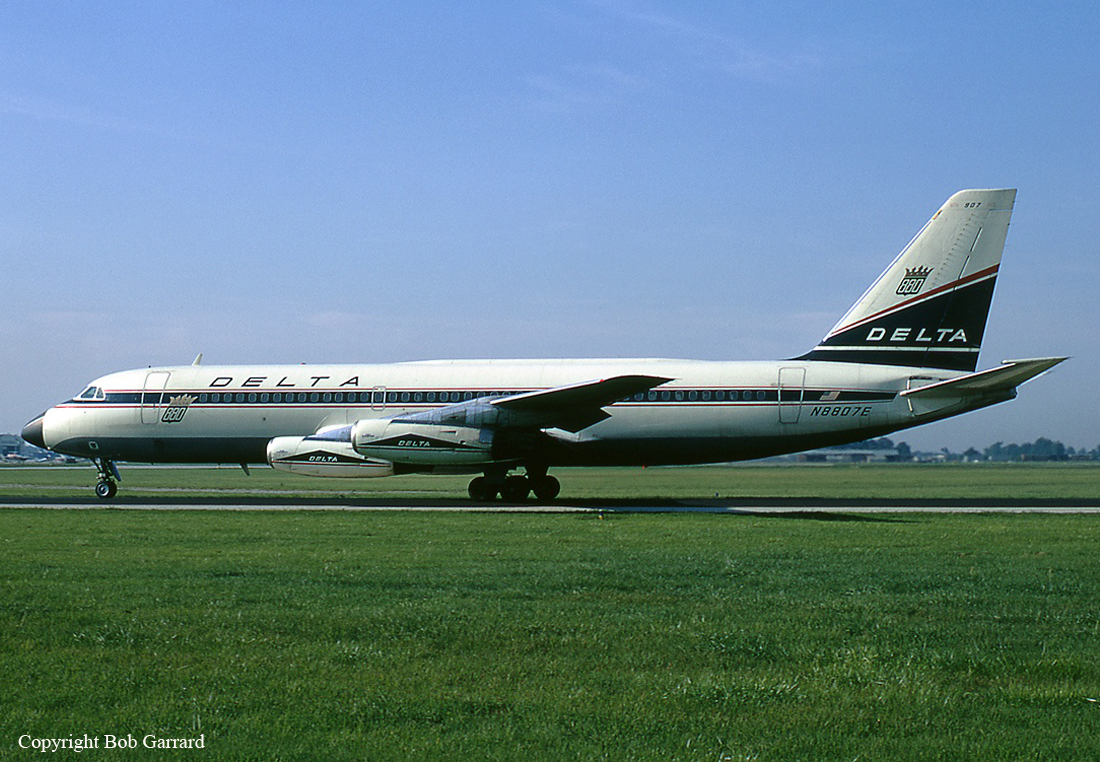
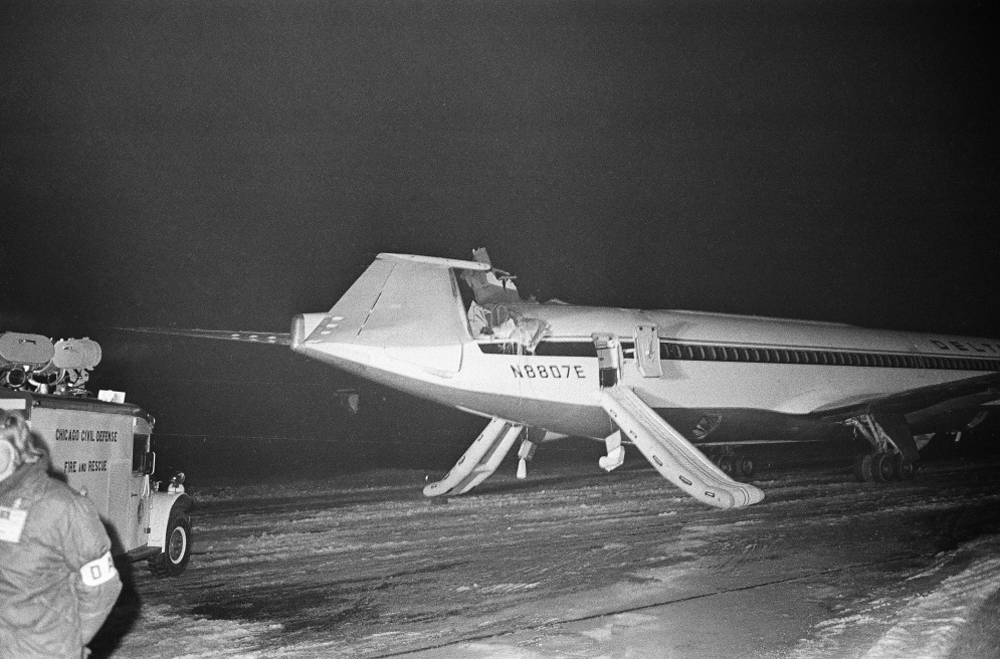
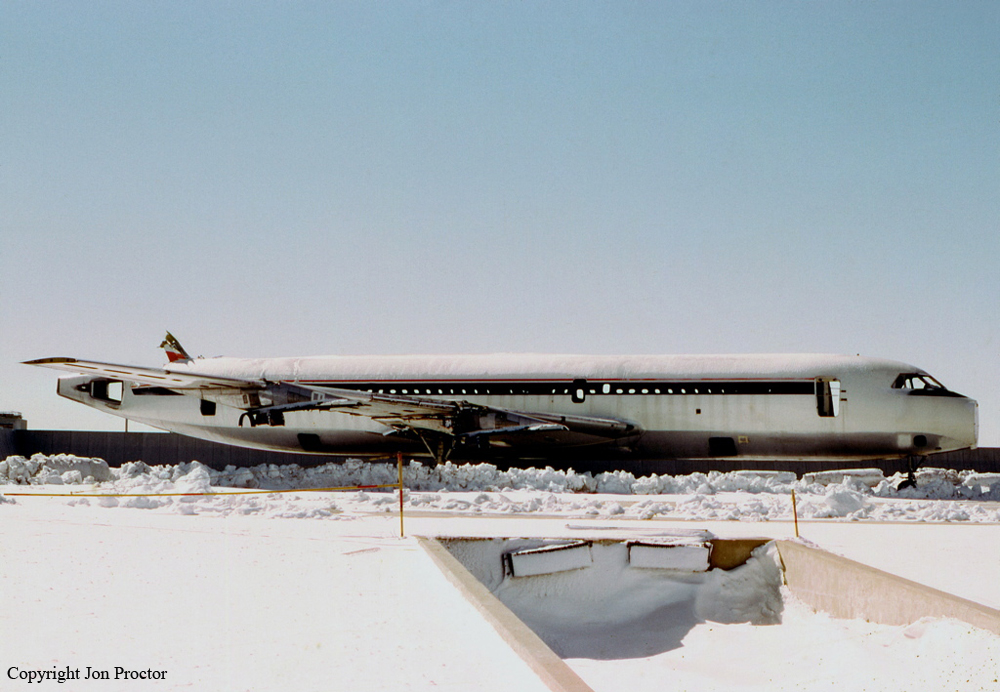
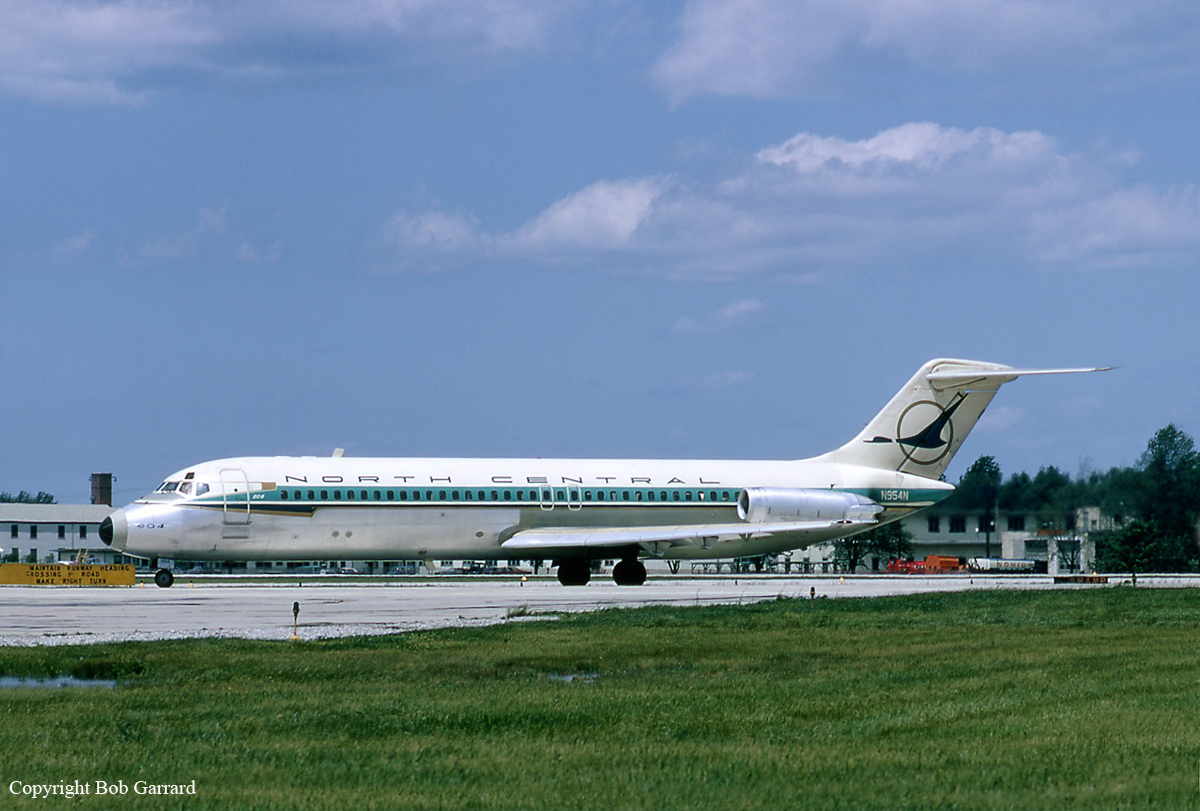
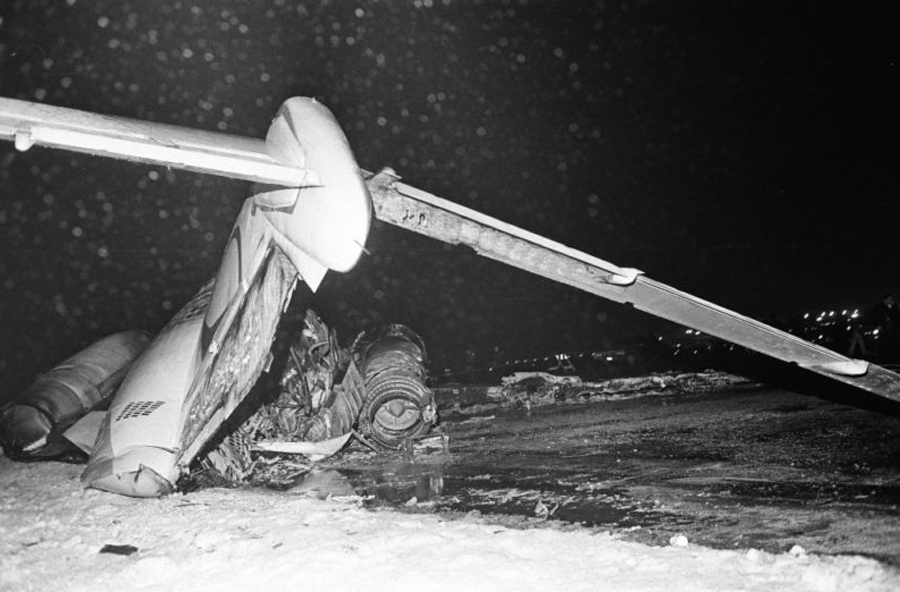
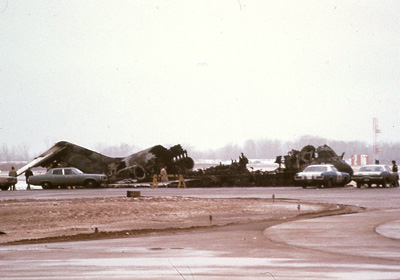
Flight DL954 from Tampa landed uneventfully at Chicago-O'Hare Airport. The crew was cleared to taxi to the gate and to cross runway 27L when the airplane was struck by a North Central Airlines Douglas DC-9-31 registered N954N. En route to Duluth via Madison, the DC-9 was carrying 41 passengers and a crew of four and his pilot just received the clearance to take off from runway 27L. One of the DC-9's wing struck the tail of the Convair that stopped immediately. out of control, the DC-9 veered off runway and came to rest in flames. The Convair was damaged beyond repair and the DC-9 was destroyed by a post crash fire. Among the 93 occupants on board the Convair, 10 were injured. Among the 45 occupants on board the DC-9, 10 were killed and 35 were injured, some of them seriously.
Probable cause:
Failure of the air traffic control system to ensure separation of aircraft during a period of restricted visibility. This failure included the following:
- The controller omitted a critical word which made his transmission to the flight crew of the Delta CV-880 ambiguous,
- The controller did not use all the available information to determine the location of the CV-880,
- The CV-880 flight crew did not request clarification of the controller's communications.
Final Report:

Crash of a Douglas DC-9-31 in Chicago: 10 killed

Date & Time: Dec 20, 1972 at 1800 LT
Type of aircraft:
Operator:
Registration:
N954N
Flight Phase:
Survivors:
Yes
Schedule:
Chicago – Madison – Duluth
MSN:
47159
YOM:
1967
Flight number:
NC575
Crew on board:
4
Crew fatalities:
Pax on board:
41
Pax fatalities:
Other fatalities:
Total fatalities:
10
Captain / Total flying hours:
20261
Captain / Total hours on type:
3455.00
Copilot / Total flying hours:
4537
Copilot / Total hours on type:
1601
Aircraft flight hours:
11812
Circumstances:
The crew was cleared to takeoff from runway 27L. During the takeoff roll completed by night and a visibility limited to 250 feet due to fog, the captain called for rotation and the copilot, the pilot-in-command, started the rotation when one of the wing struck the tail of a Delta Airlines Convair CV-880. Registered N8807E, the Convair just landed at O'Hare Airport on flight DL954 from Tampa and its crew was cleared to cross runway 27L to roll to the gate. The collision caused the tail of the Convair to be torn off. Out of control, the DC-9 landed back onto the runway then veered off and came to rest in flames. The Convair was damaged beyond repair and the DC-9 was destroyed by a post crash fire. While 10 people on board the Convair were injured, 10 passengers on board the DC-9 were killed and 35 others were injured, some of them seriously.
Probable cause:
Failure of the air traffic control system to ensure separation of aircraft during a period of restricted visibility. This failure included the following:
- The controller omitted a critical word which made his transmission to the flight crew of the Delta CV-880 ambiguous,
- The controller did not use all the available information to determine the location of the CV-880,
- The CV-880 flight crew did not request clarification of the controller's communications.
Final Report: