Crash of a De Havilland L-20 Beaver in Alaska: 2 killed

Date & Time: Aug 16, 1954
Type of aircraft:
Operator:
Flight Phase:
Flight Type:
Survivors:
No
Schedule:
Puntilla Lake – Farewell
Location:
Crew on board:
1
Crew fatalities:
Pax on board:
1
Pax fatalities:
Other fatalities:
Total fatalities:
2
Circumstances:
Crashed in unknown circumstances in a mountainous area while completing a supply mission between Puntilla Lake and Farewell. Both occupants, a pilot and a passenger, were killed.

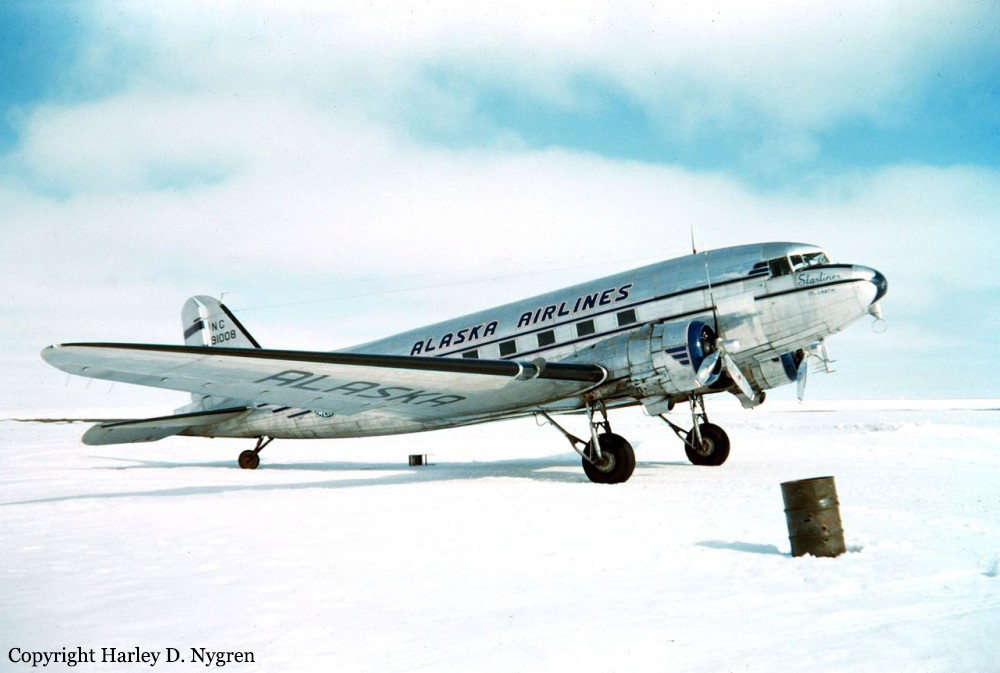
Crash of a Douglas DC-3C near McGrath: 2 killed

Date & Time: Aug 8, 1954 at 1540 LT
Type of aircraft:
Operator:
Registration:
N91008
Flight Phase:
Flight Type:
Survivors:
No
Site:
Schedule:
McGrath – Colorado Creek
MSN:
13977/25422
YOM:
1944
Location:
Crew on board:
2
Crew fatalities:
Pax on board:
0
Pax fatalities:
Other fatalities:
Total fatalities:
2
Circumstances:
While flying about 25 miles northwest of McGrath in marginal weather conditions, the aircraft hit the slope of a mountain. As it failed to arrive, SAR operations were conducted and the wreckage was found few hours later. Both crew members were killed in the crash.

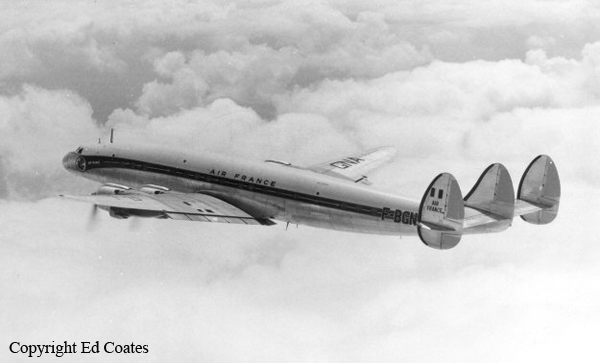
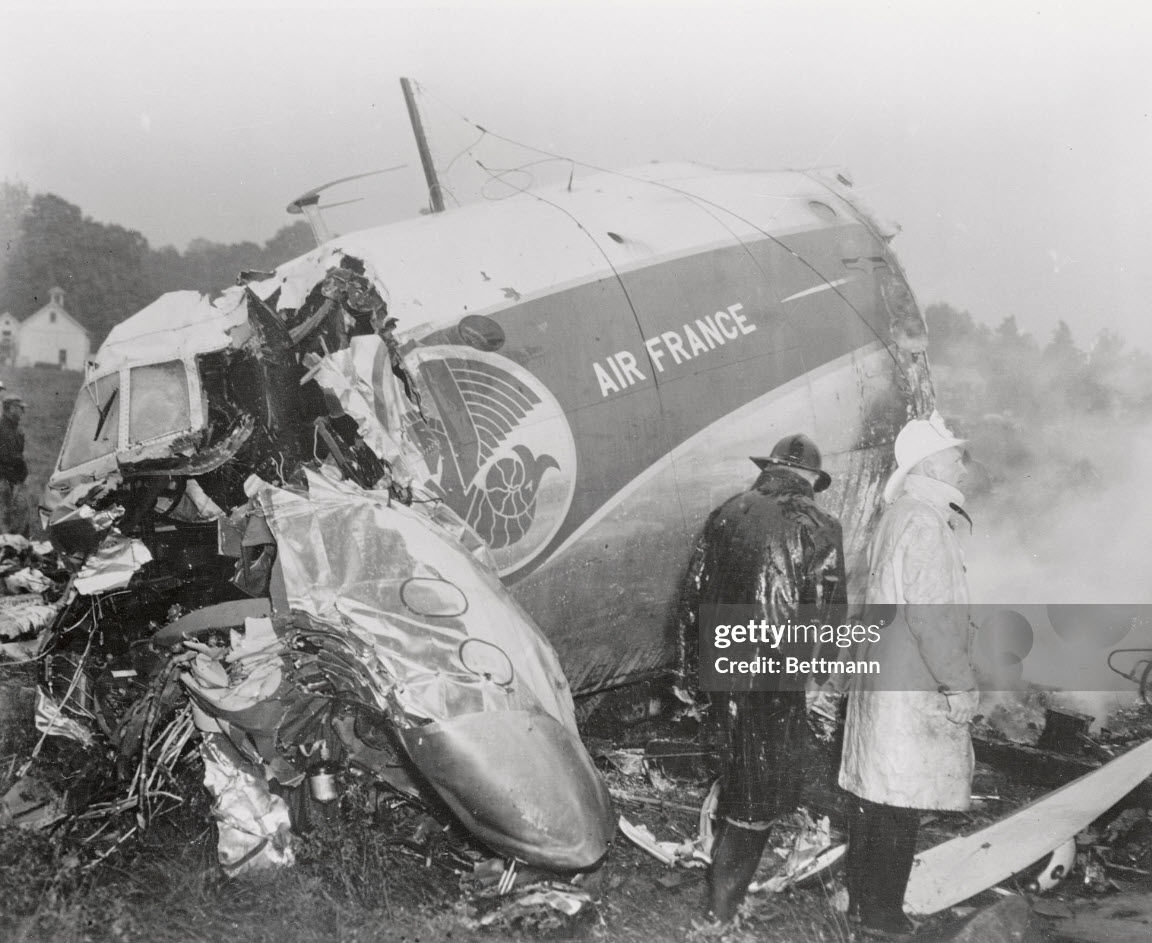
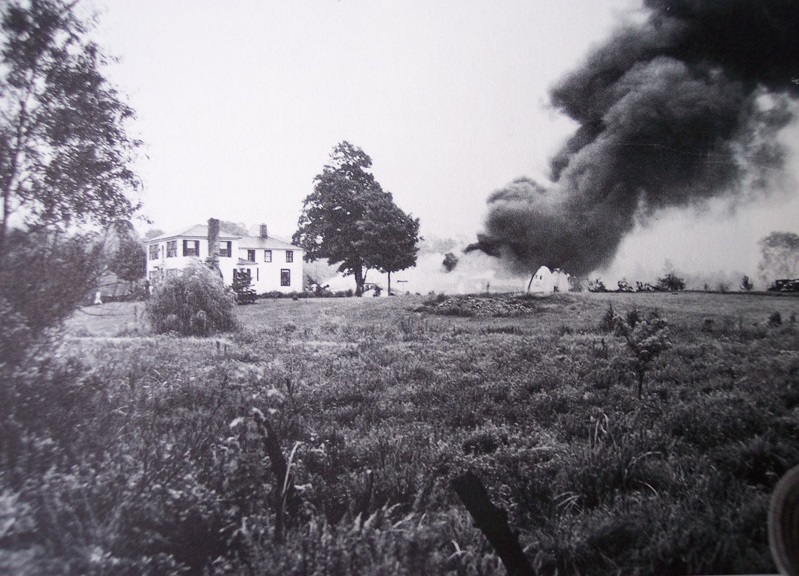
Crash of a Lockheed L-1049C Super Constellation in Preston City

Date & Time: Aug 3, 1954 at 0840 LT
Operator:
Registration:
F-BGNA
Survivors:
Yes
Schedule:
Paris – Shannon – New York
MSN:
4510
YOM:
1953
Flight number:
AF075
Crew on board:
8
Crew fatalities:
Pax on board:
29
Pax fatalities:
Other fatalities:
Total fatalities:
0
Captain / Total flying hours:
11959
Captain / Total hours on type:
453.00
Copilot / Total flying hours:
10679
Copilot / Total hours on type:
453
Aircraft flight hours:
2479
Circumstances:
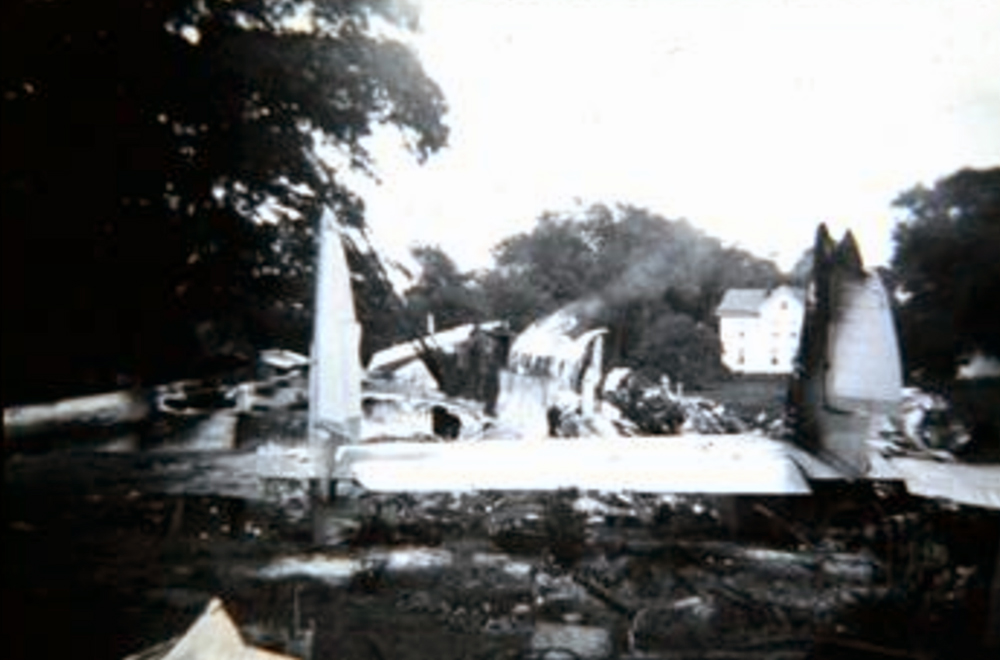
Air France Flight 075 originated at Orly Field, Paris, August 2, 1954, with a crew consisting of Captain Jean Caboche, Copilot Jean Roussean, Navigator Jacques Geffard., First Flight Engineer Albert Grandvaux, Second Flight Engineer Jean-Baptiste *** Stewardess Francine Dono, First Steward Michael Gallet, and Second Steward Jean Capron. The dispatch office had prepared two flight plans - one for a stop at Gander, Newfoundland, the other with a stop at Shannon, Ireland. Owing to marginal weather at Gander with the forecast indicating no improvement, the captain chose the latter plan. The flight departed Paris at 2024 and arrived Shannon at 2247. Fuel tanks were filled and the pilots ware briefed on weather for the nonstop flight to New York. Flight 075 departed Shannon at 0003 the next morning (August 3), estimating 11 hours 49 minutes an route, with fuel for nearly 14 hours. The gross weight at takeoff, 126,100 pounds, was less than the maximum allowable 133,000, and the load was correctly distributed relative to the canter of gravity of the aircraft. The Atlantic crossing was uneventful. Routine position reports were made en route and the flight periodically received weather reports for points along the route and at the destination. Stronger headwinds than had been anticipated were encountered near the North American continent, resulting in lower ground speed and somewhat higher fuel consumption per mile. The flight had approximately 600 gallons of fuel left at 1230 when it reported over Scotland Intersection (15 statute miles southwest of New York International Airport) and received clearance for an ILS approach. It was then 38 minutes behind its original flight plan estimate made at Shannon and had approximately 100 gallons less fuel than anticipated. During the approach, which was being monitored by New York International Airport radar, the flight encountered unexpected heavy turbulence, heavy rain, and a low ceiling, and the captain discontinued the approach at 1237 (0737 e. s. t.) when near his minimum prescribed altitude of 200 feet. The heavy turbulence made control of the aircraft difficult and when the missed approach was made, the captain found himself left of the localizer and below of glide path. The tower, which was immediately advised of the missed approach, told the flight to turn right to 130 degrees (the missed approach course), proceed to Scotland Intersection, and climb to 2,500 feet. Approximately three minutes after the missed approach and while on the 130-degrees course, the flight requested clearance to Boston. Such clearance was issued nine minutes later, as soon as possible consistent with other traffic. Meanwhile, the flight had reported being low on fuel but when asked if an emergency as being declared replied, "Negative, negative, not yet." At the approximate time clearance to Boston was received the flight engineer advised the captain that they had fuel of one more hour of flight. Thirty-three minutes after being cleared to Boston, the flight, at that time in the vicinity of Providence, Rhode Island, called Providence Tower, declared an emergency, and requested weather information. Providence weather, which was marginal, was furnished and the flight was cleared for an approach. However, the pilots found that their navigation kit did not contain an approach plate for Providence Airport and they advised they were not landing there. The captain then descended through a break in the overcast, circled two or three times, and landed with the gear retracted in a field at Preston City, Connecticut. It came to rest in flames in a garden and was destroyed by a post crash fire. All 37 occupants were evacuated safely. Nevertheless, 12 occupants were injured, among them both pilots.
Probable cause:
The Board determines that the probable cause of this accident was inadequate in-flight planning, in that the captain did not make a firm selection of a suitable airport within range of the fuel remaining at the time of the missed approach, necessitating an off-airport landing. The following findings were reported:
- All fuel tanks were filled to capacity during the scheduled stop at Shannon,
- Owing to headwinds the flight had approximately 100 gallons less fuel than anticipated when it arrived over Scotland Intersection, southwest of New York International Airport,
- In the ILS approach to New York International Airport during instrument weather conditions, the flight encountered an unexpected severe local storm with greater turbulence, heavier rain, and a lower ceiling than weather reports had led them to anticipate, and the captain discontinued the approach at 1237,
- The captain decided not to attempt another approach to New York International Airport and instead requested clearance to Boston at 1240 while climbing on the missed approach course,
- The flight was asked by New York International Airport Approach Control if an emergency was being declared, but the copilot replied in the negative,
- An IFR clearance to Boston was issued by New York ARTC at approximately 1249, the flight in the interim having been routed toward Boston via Mitchel range station,
- When the flight reported over Mitchel range station at 1250, the flight engineer advised the captain, upon the latter's request, that there was fuel for one more hour of flight,
- Difficulties with communications after being cleared from ARTC frequency prevented the flight from receiving the dispatcher's suggestion to proceed to Bridgeport or Hartford,
- Testimony of the pilots indicated that the captain intended to land at an intermediate airport between New York and Boston if he could find one with sufficiently good weather conditions,
- There were no language difficulties in conversations with the flight,
- There was sufficient fuel available to fly to Boston or any intermediate airport, but the fuel remaining over Boston, had the flight continued to that point, would have allowed only about 17 minutes of flight thereafter,
- Flight 075 declared an emergency at 1322 (0822 e. a. t.) in its first contact with Providence Tower/INSAC, indicated intention to land at Providence, was cleared for an approach, and then at 1329, advised that they were not landing there,
- The flight descended through a break in the overcast and made an emergency landing at about 1340 (0840 e. s. t. ) in a field and without loss of life.
Final Report:

Crash of a Ford 4 in Kelleys Island

Date & Time: Jul 31, 1954 at 1923 LT
Type of aircraft:
Operator:
Registration:
N9610
Flight Phase:
Survivors:
Yes
MSN:
4-AT-053
YOM:
13
Crew on board:
2
Crew fatalities:
Pax on board:
12
Pax fatalities:
Other fatalities:
Total fatalities:
0
Circumstances:
Suffered an accident while taking off from Kelleys Island-Landing Field. There were no casualties but the aircraft was damaged beyond repair.

Crash of a De Havilland DH.104 Dove 2A in Walden Ridge: 6 killed

Date & Time: Jul 23, 1954
Type of aircraft:
Registration:
N4278C
Flight Phase:
Survivors:
No
Site:
Schedule:
Pontiac – Tampa
MSN:
04366
YOM:
1952
Crew on board:
2
Crew fatalities:
Pax on board:
4
Pax fatalities:
Other fatalities:
Total fatalities:
6
Circumstances:
While on a charter flight from Pontiac to Tampa, the crew encountered marginal weather conditions over Tennessee. Too low, the twin engine airplane impacted trees and crashed in a wooded area in Walden Ridge, west of Spring City. All six occupants were killed.
Crew:
Gordon Wyrick, pilot,
Lawrence Durham, pilot.
Passengers:
Gordon E. Paxson,
Howard Anthony,
Laurel Brown,
Florence Brown.
Probable cause:
Controlled flight into terrain.

Crash of a Douglas C-124C Globemaster II at Fort Campbell AFB

Date & Time: Jul 2, 1954
Operator:
Registration:
51-5210
Flight Type:
Survivors:
Yes
MSN:
43620
YOM:
1951
Crew on board:
0
Crew fatalities:
Pax on board:
0
Pax fatalities:
Other fatalities:
Total fatalities:
0
Circumstances:
Crashed on landing. No casualties.

Crash of a De Havilland L-20A Beaver at Otis AFB

Date & Time: Jul 2, 1954
Type of aircraft:
Operator:
Registration:
52-6077
Flight Phase:
Flight Type:
Survivors:
Yes
MSN:
439
YOM:
1953
Crew on board:
1
Crew fatalities:
Pax on board:
0
Pax fatalities:
Other fatalities:
Total fatalities:
0
Circumstances:
Crashed on takeoff for unknown reason. The pilot, sole on board, was injured.

Crash of a Boeing KC-97G-25-BO Stratotanker near Norton AFB: 14 killed

Date & Time: Jun 27, 1954 at 0308 LT
Type of aircraft:
Operator:
Registration:
52-2654
Flight Phase:
Flight Type:
Survivors:
No
Site:
Schedule:
Altus – March
MSN:
16685
YOM:
1952
Crew on board:
7
Crew fatalities:
Pax on board:
7
Pax fatalities:
Other fatalities:
Total fatalities:
14
Circumstances:
The crew was completing a flight from Altus, Oklahoma, to the March AFB located southeast of Riverside, California. While approaching March AFB, the crew was informed by ATC about poor weather at destination and was then vectored to Norton AFB in San Bernardino. While cruising by night at an altitude of 3,000 feet, the airplane hit the slope of Mt Box Springs located between the cities of Riverside and San Bernardino. The airplane disintegrated on impact and all 14 occupants were killed.

Crash of a Douglas C-124C Globemaster II at Larson AFB

Date & Time: Jun 25, 1954
Operator:
Registration:
51-7272
Flight Type:
Survivors:
Yes
MSN:
43724
YOM:
1951
Crew on board:
0
Crew fatalities:
Pax on board:
0
Pax fatalities:
Other fatalities:
Total fatalities:
0
Circumstances:
Crash landed at Larson AFB. No casualties.

Crash of a Douglas C-47A-25-DK in Atlanta

Date & Time: Jun 15, 1954 at 1745 LT
Operator:
Registration:
N51359
Flight Phase:
Flight Type:
Survivors:
Yes
Schedule:
Atlanta – Chattanooga – Knoxville – Cincinnati – Chicago
MSN:
13759
YOM:
1944
Flight number:
DL134X
Crew on board:
2
Crew fatalities:
Pax on board:
0
Pax fatalities:
Other fatalities:
Total fatalities:
0
Captain / Total flying hours:
6014
Captain / Total hours on type:
4575.00
Copilot / Total flying hours:
6803
Copilot / Total hours on type:
6800
Aircraft flight hours:
18827
Circumstances:
As the aircraft became airborne the landing gear was retracted. Light rain was encountered at this time. When the air-craft had climbed to 200 to 250 feet, power was reduced to 35 inches of manifold pressure and a shallow right turn was begun. Before a reduction in r.p.m. was made the aircraft began to settle and the airspeed was observed to decrease rapidly from above 105 to 80 knots. The nose was immediately lowered to level flight, & the turn stopped, and full power applied. When this was done, the air-speed returned to about 100 knots and the settling appeared to lessen considerably. The increased airspeed with the attendant better flying characteristics was monetary, however, as the airspeed abruptly dropped to 60 knots and the airplane again began to settle. As the aircraft continued to settle and it became obvious that it was going to strike the ground, the first officer attempted to raise tile nose. Upon feeling the aircraft strike the ground, both throttles were closed. The aircraft then skidded to a stop in a wooded area approximately 600 feet north-west of the far end of runway 21. The airplane was destroyed and both pilots were injured.
Probable cause:
The Board determines that the probable cause of this accident was a rapid loss of airspeed immediately following takeoff caused by unexpected, strong gusts or divergent winds accompanying a local rain shower. The following findings were reported:
- At the time of takeoff a large thunderstorm was 8 to 10 miles south of the airport and a local rain shower was approaching the southeast end of runway,
- The aircraft took off from runway 21 and climbed to approximately 200 to 250 feet,
- A portion of the rain shower was encountered which contained strong gusts,
- While in the rain shower the aircraft lost airspeed and settled to the ground.
Final Report: