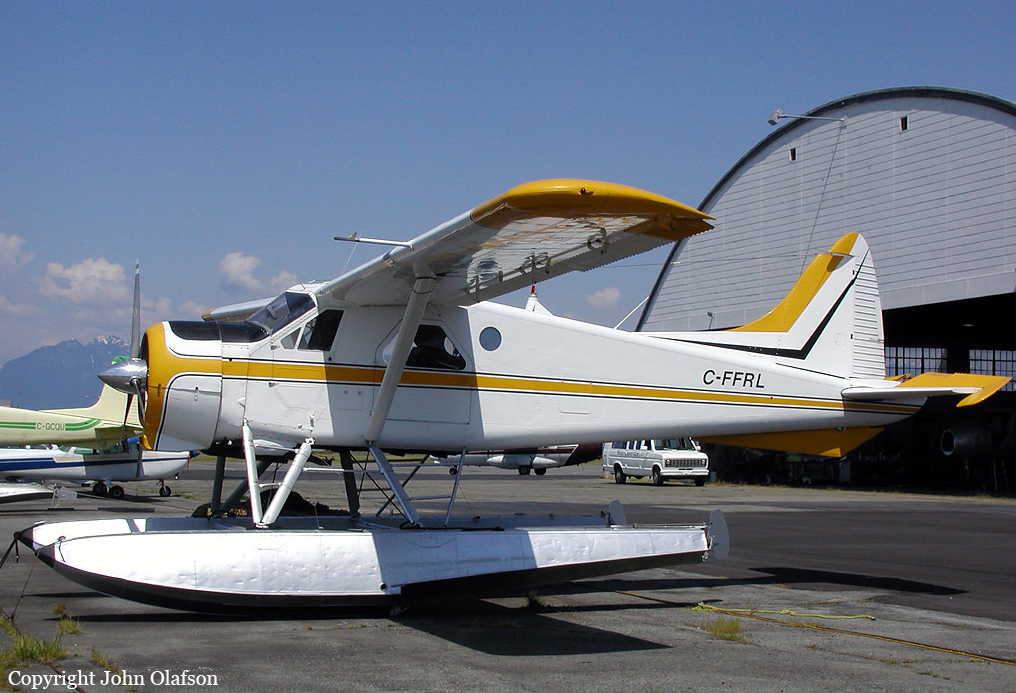
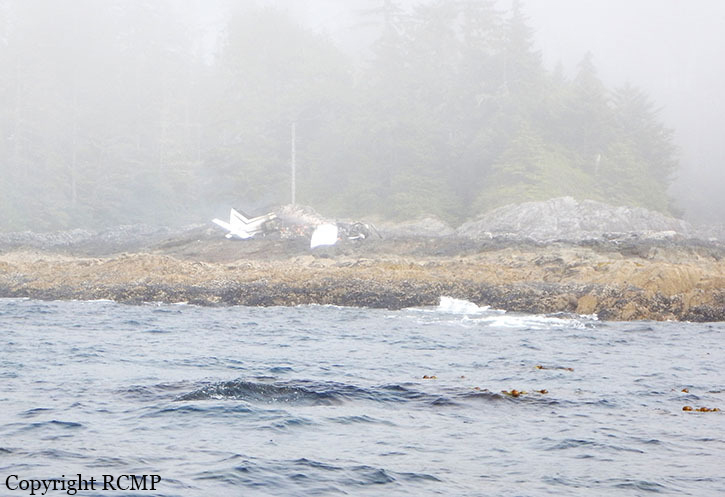
Crash of a De Havilland DHC-2 Beaver near Saint John Harbour

Date & Time: Jul 11, 2014 at 1550 LT
Type of aircraft:
Registration:
C-FFRL
Flight Phase:
Flight Type:
Survivors:
Yes
Schedule:
St John Harbour - Sandspit
MSN:
482
YOM:
1953
Country:
Crew on board:
1
Crew fatalities:
Pax on board:
3
Pax fatalities:
Other fatalities:
Total fatalities:
0
Circumstances:
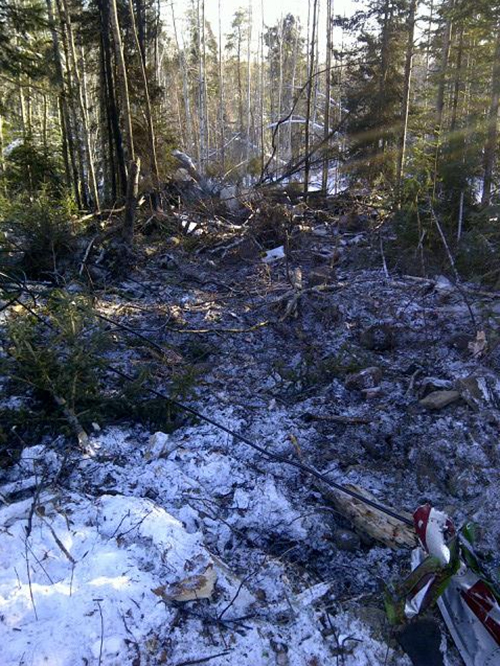
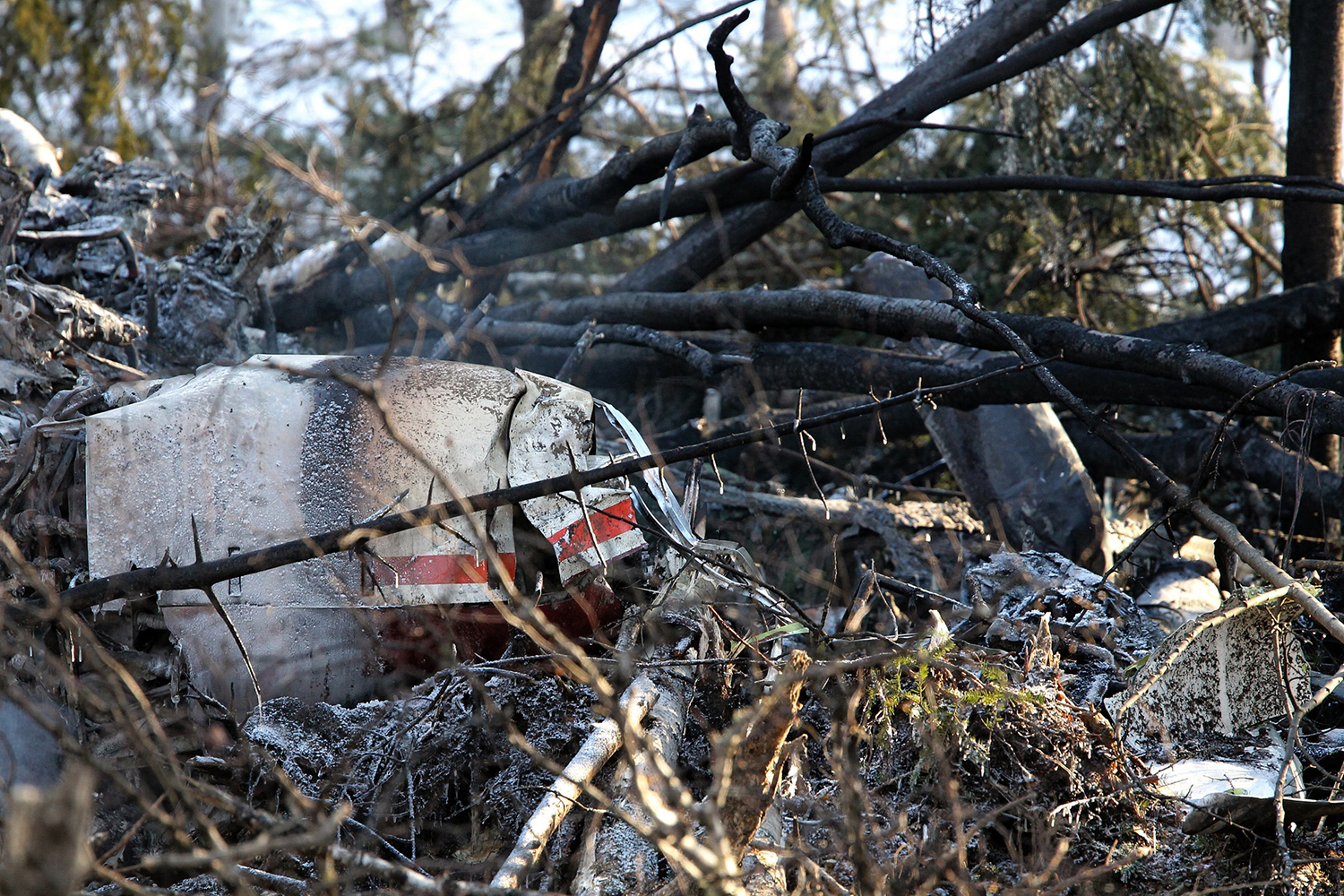
Shortly after take off from Saint John Harbour, the single engine aircraft went out of control and crashed on the shore of the Athlone Island, bursting into flames. The aircraft was destroyed by impact forces and a post crash fire and all four occupants were injured.

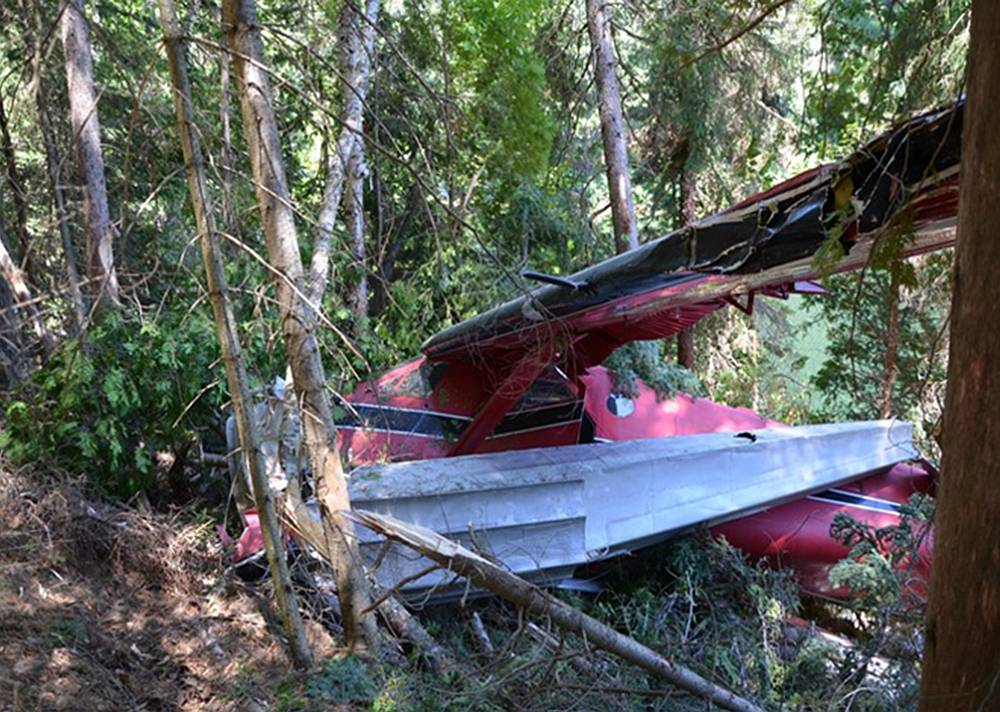
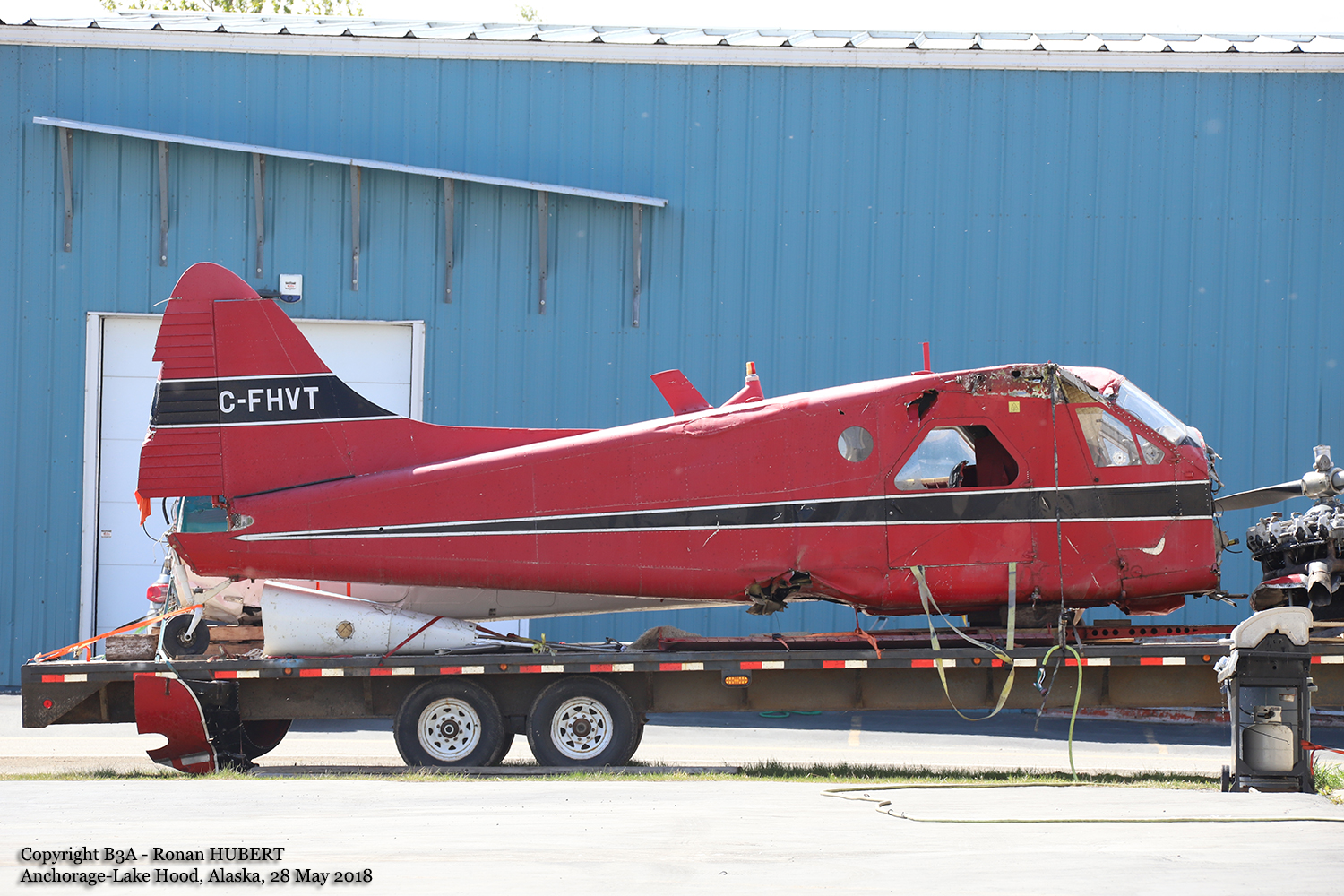
Crash of a De Havilland DHC-2 Beaver near Kennedy Lake

Date & Time: Jun 25, 2014 at 1425 LT
Type of aircraft:
Operator:
Registration:
C-FHVT
Survivors:
Yes
Schedule:
Sudbury - Kennedy Lake
MSN:
284
YOM:
1952
Country:
Crew on board:
1
Crew fatalities:
Pax on board:
2
Pax fatalities:
Other fatalities:
Total fatalities:
0
Captain / Total flying hours:
3500
Captain / Total hours on type:
1000.00
Circumstances:
The Sudbury Aviation Limited float-equipped de Havilland DHC-2 Beaver aircraft (registration C-FHVT, serial number 284) was on approach to Kennedy Lake, Ontario, with the pilot and 2 passengers on board, when the aircraft rolled to the left prior to the flare. The pilot attempted to regain control of the aircraft by applying full right rudder and right aileron. The attempt was unsuccessful and the aircraft struck rising tree-covered terrain above the shoreline. The aircraft came to a stop on its right side and on a slope. The pilot and the passenger in the rear seat received minor injuries. The passenger in the right front seat was not injured. All were able to walk to the company fishing camp on the lake. There was no fire and the 406 megahertz emergency locator transmitter (ELT) was manually activated by one of the passengers. One of the operator's other aircraft, a Cessna 185, flew to the lake after C-FHVT became overdue. A search and rescue aircraft, responding to the ELT, also located the accident site. Radio contact between the Cessna 185 and the search and rescue aircraft confirmed that their assistance would not be required. The accident occurred at 1425 Eastern Daylight Time.
Probable cause:
Prior to touchdown in a northerly direction, the aircraft encountered a gusty westerly crosswind and the associated turbulence. This initiated an un-commanded yaw and left wing drop indicating an aerodynamic stall. The pilot was unsuccessful in recovering full control of the aircraft and it impacted rising terrain on the shore approximately 30 feet above the water surface.
Final Report:
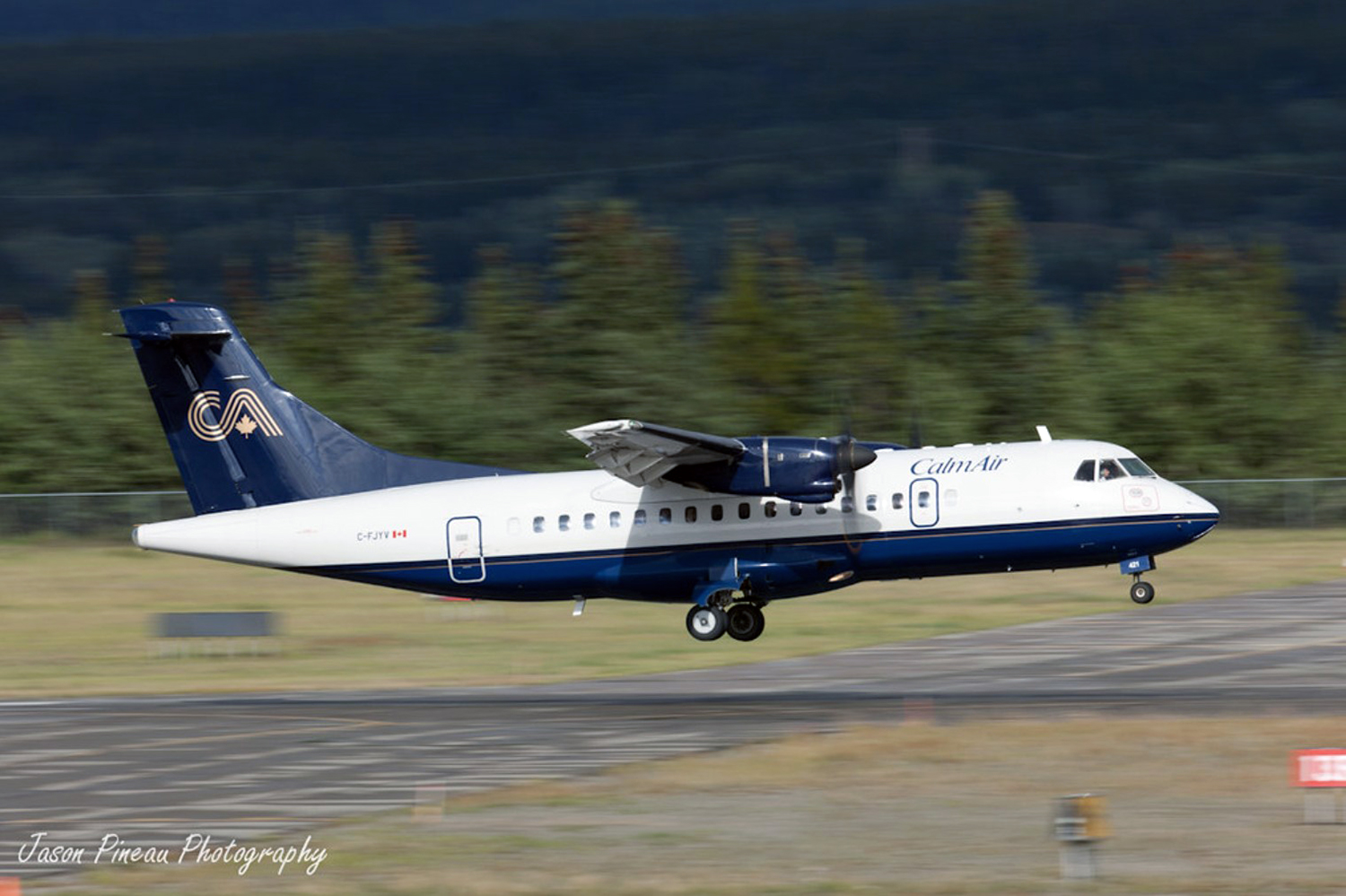
Crash of an ATR42-300 in Churchill

Date & Time: Mar 9, 2014 at 1015 LT
Type of aircraft:
Operator:
Registration:
C-FJYV
Survivors:
Yes
Schedule:
Thompson – Churchill
MSN:
216
YOM:
1991
Country:
Crew on board:
3
Crew fatalities:
Pax on board:
2
Pax fatalities:
Other fatalities:
Total fatalities:
0
Circumstances:
Following an uneventful flight from Thompson, the crew completed the approach and landing at Churchill Airport. After touchdown, the crew started the braking procedure and was vacating the runway when the right main gear collapsed. This caused the right propeller and the right wing to struck the ground. The aircraft was stopped and all five occupants evacuated safely. The aircraft was damaged beyond repair.
Probable cause:
Failure of the right main gear for unknown reasons.

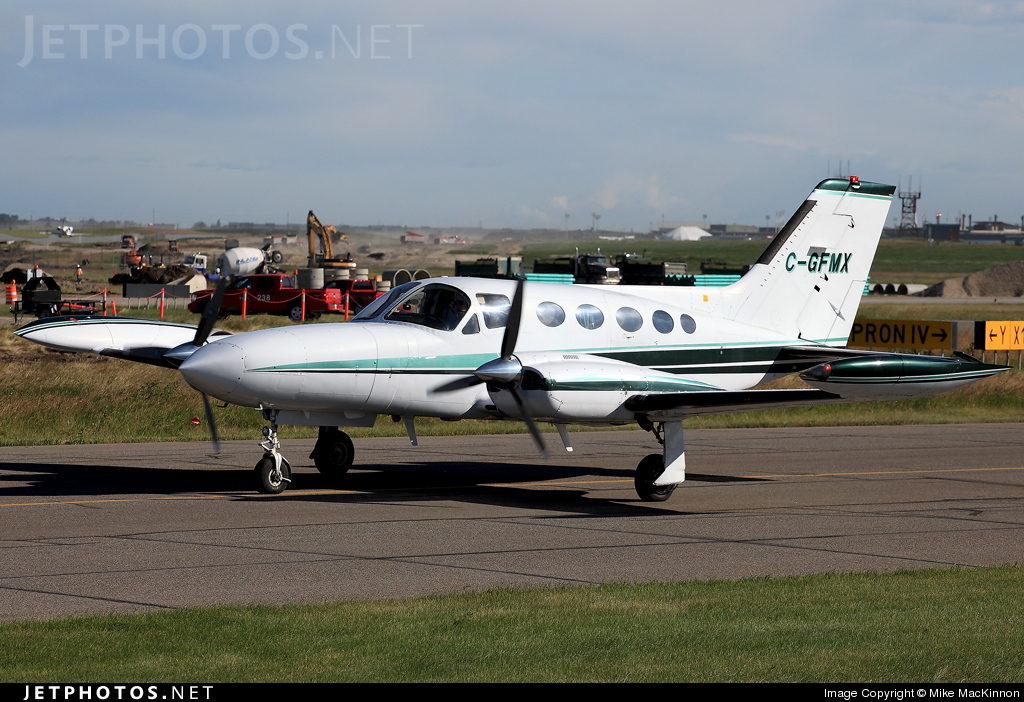
Crash of a Cessna 421B Golden Eagle II on Vargas Island: 2 killed

Date & Time: Dec 14, 2013 at 1425 LT
Operator:
Registration:
C-GFMX
Flight Type:
Survivors:
No
Site:
Schedule:
Abbotsford - Tofino
MSN:
421B-0939
YOM:
1975
Country:
Crew on board:
1
Crew fatalities:
Pax on board:
1
Pax fatalities:
Other fatalities:
Total fatalities:
2
Aircraft flight hours:
8500
Circumstances:
The twin engine aircraft was performing a flight from Abbotsford to Tofino with two people on board (a father aged 51 and his son aged 25). On approach to Tofino Airport, on Vancouver Island, the aircraft impacted ground and crashed on Vargas Island, off Tofino. The burnt wreckage was found the following day and both occupants were killed.

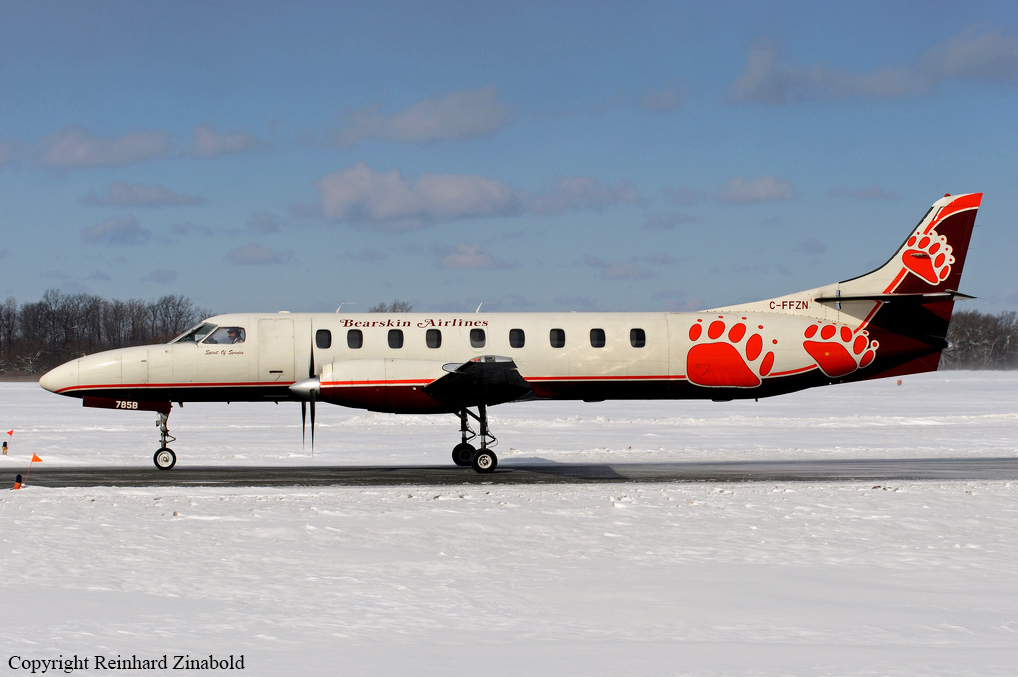
Crash of a Swearingen SA227AC Metro III in Red Lake: 5 killed

Date & Time: Nov 10, 2013 at 1829 LT
Type of aircraft:
Operator:
Registration:
C-FFZN
Survivors:
Yes
Schedule:
Sioux Lookout - Red Lake
MSN:
AC-785B
YOM:
1991
Flight number:
BLS311
Country:
Crew on board:
2
Crew fatalities:
Pax on board:
5
Pax fatalities:
Other fatalities:
Total fatalities:
5
Captain / Total flying hours:
5150
Captain / Total hours on type:
3550.00
Copilot / Total flying hours:
2200
Copilot / Total hours on type:
1060
Aircraft flight hours:
35474
Circumstances:
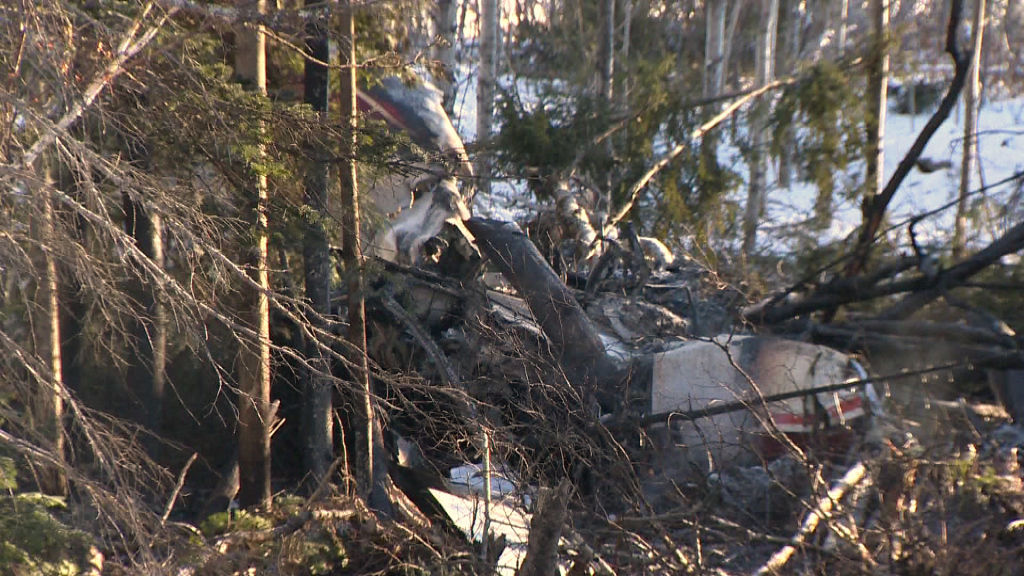
Flight from Sioux Lookout was uneventful till the final descent to Red Lake completed by night and in light snow with a ceiling at 2,000 feet and visibility 8 SM. On final approach to runway 26, crew reported south of the airport and declared an emergency. Shortly after this mayday message, aircraft hit power cables and crashed in flames in a dense wooded area located 800 meters south of the airport. Two passengers seating in the rear were seriously injured while all five other occupants including both pilots were killed.
Probable cause:
A first-stage turbine wheel blade in the left engine failed due to a combination of metallurgical issues and stator vane burn-through. As a result of the blade failure, the left engine continued to operate but experienced a near-total loss of power at approximately 500 feet above ground level, on final approach to Runway 26 at the Red Lake Airport. The crew were unable to identify the nature of the engine malfunction, which prevented them from taking timely and appropriate action to control the aircraft. The nature of the engine malfunction resulted in the left propeller being at a very low blade angle, which, together with the landing configuration of the aircraft, resulted in the aircraft being in an increasingly high drag and asymmetric state. When the aircraft’s speed reduced below minimum control speed (VMC), the crew lost control at an altitude from which a recovery was not possible.
Final Report:

Crash of a Cessna 208B Grand Caravan in the Hudson Bay: 1 killed

Date & Time: Sep 25, 2013 at 1400 LT
Type of aircraft:
Operator:
Registration:
C-FEXV
Flight Phase:
Flight Type:
Survivors:
No
Schedule:
Sault Sainte Marie - Sault Sainte Marie
MSN:
208B-0482
YOM:
1995
Flight number:
MAL8988
Country:
Crew on board:
1
Crew fatalities:
Pax on board:
0
Pax fatalities:
Other fatalities:
Total fatalities:
1
Circumstances:
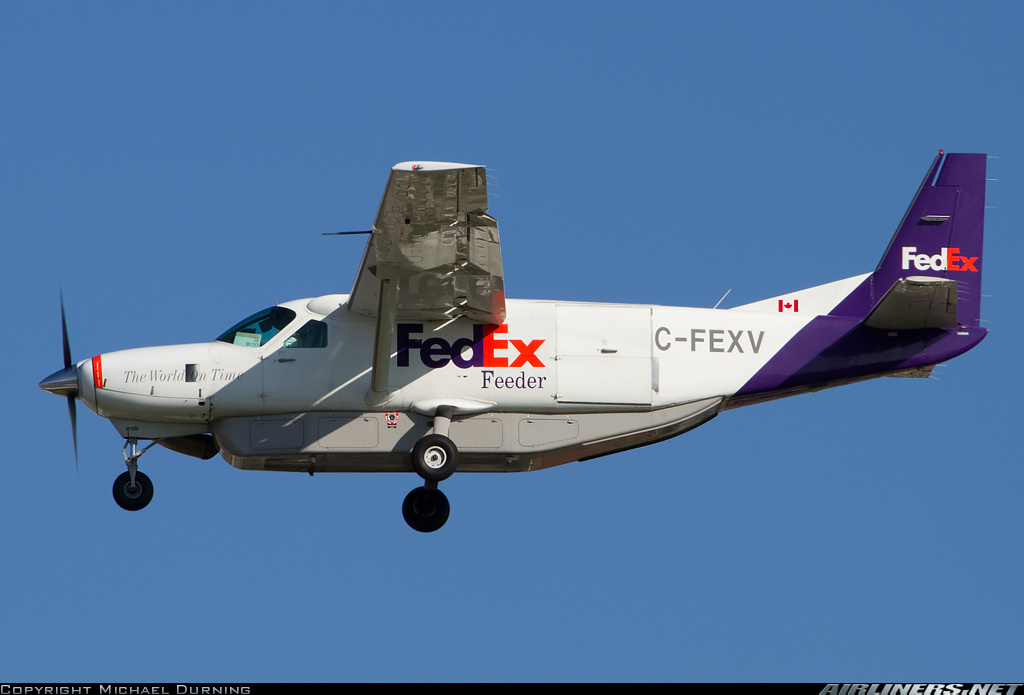
On behalf of Morningstar Air Express, the pilot departed Sault Sainte Marie Airport, south Ontario, in the morning, for a local training flight. For unknown reasons, the pilot did not maintain any radio contact with his base or ATC and continued to the north for about 1,200 km when the aircraft crashed in unknown circumstances in the Hudson Bay, some 500 km east of Churchill, Manitoba. The aircraft was destroyed and the pilot was killed.
Probable cause:
The exact cause of the accident remains unknown.

Crash of a De Havilland DHC-3 Otter near Ivanhoe Lake: 1 killed

Date & Time: Aug 22, 2013 at 1908 LT
Type of aircraft:
Operator:
Registration:
C-FSGD
Flight Phase:
Flight Type:
Survivors:
No
Schedule:
Scott Lake Lodge - Ivanhoe Lake
MSN:
316
YOM:
1959
Country:
Crew on board:
1
Crew fatalities:
Pax on board:
0
Pax fatalities:
Other fatalities:
Total fatalities:
1
Captain / Total flying hours:
1600
Captain / Total hours on type:
248.00
Circumstances:
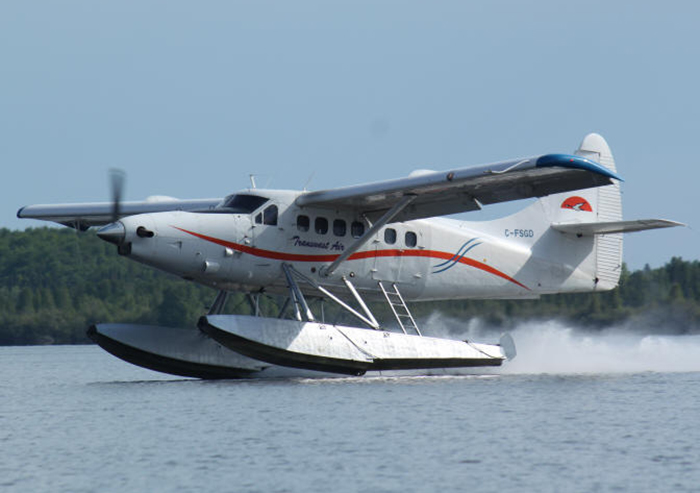
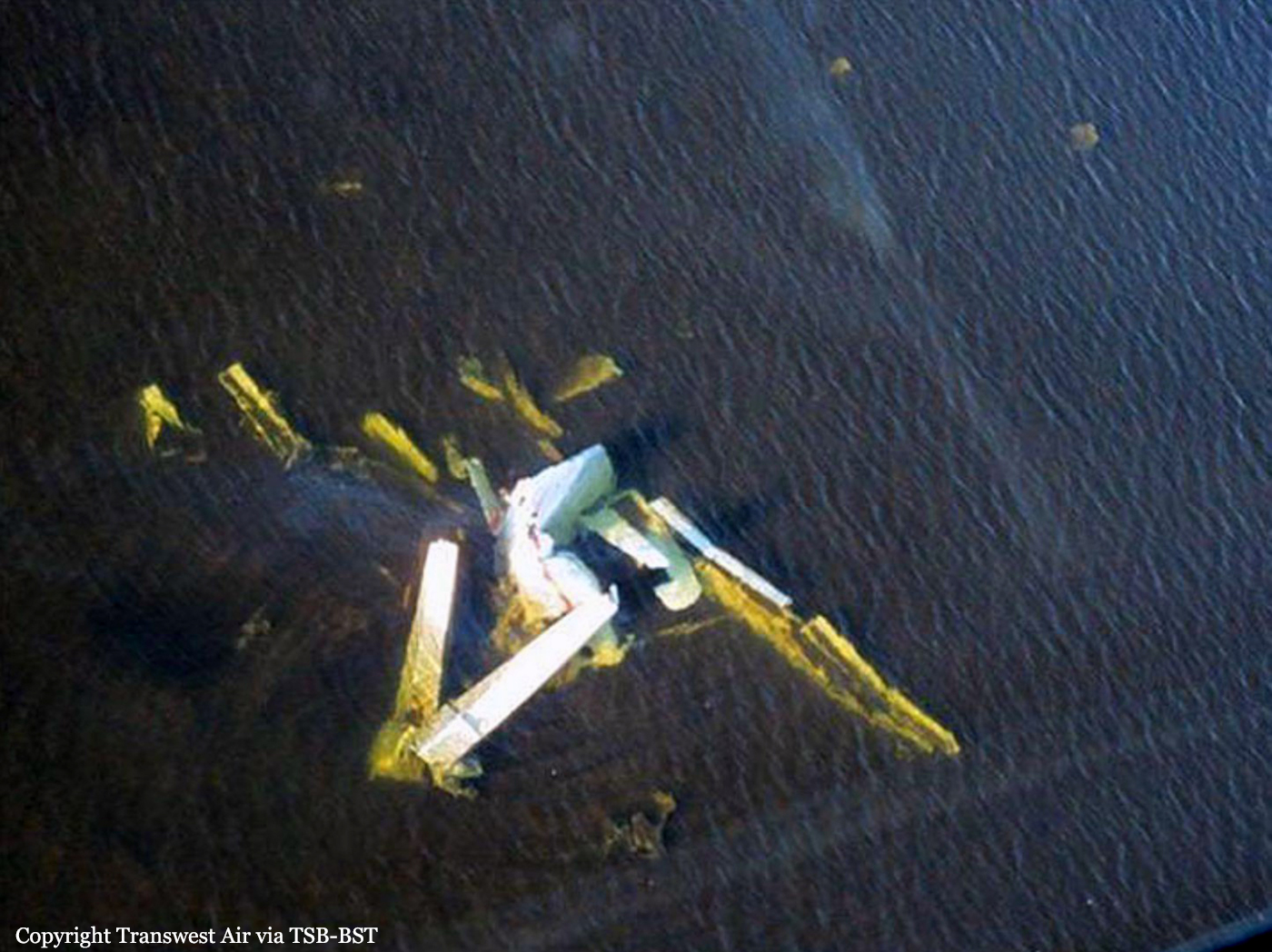
The float-equipped Transwest Air Limited Partnership DHC-3 turbine Otter (registration C-FSGD, serial number 316) departed Scott Lake, Northwest Territories, at approximately 1850 Central Standard Time on a 33-nautical mile, day, visual flight rules flight to Ivanhoe Lake, Northwest Territories. The aircraft did not arrive at its destination, and was reported overdue at approximately 2100. The Joint Rescue Coordination Centre Trenton was notified by the company. There was no emergency locator transmitter signal. A search and rescue C-130 Hercules aircraft was dispatched; the aircraft wreckage was located on 23 August 2013, in an unnamed lake, 10 nautical miles north of the last reported position. The pilot, who was the sole occupant of the aircraft, sustained fatal injuries.
Probable cause:
Findings as to causes and contributing factors:
1. During approach to landing on the previous flight, the right-wing leading-edge and wing tip were damaged by impact with several trees.
2. The damage to the aircraft was not evaluated or inspected by qualified personnel prior to take-off.
3. Cumulative unmanaged stressors disrupted the pilot’s processing of safety-critical information, and likely contributed to an unsafe decision to depart with a damaged, uninspected aircraft.
4. The aircraft was operated in a damaged condition and departed controlled flight likely due to interference between parts of the failing wing tip, acting under air loads, and the right aileron.
Findings as to risk:
Not applicable.
Other findings:
1. The emergency locator transmitter did not activate, due to crash damage and submersion in water.
2. The aircraft was not fitted with FM radio equipment that is usually carried by aircraft servicing the lodge. Lodge personnel did not have a means to contact the pilot once the aircraft moved away from the dock.
Final Report:
Crash of a Douglas DC-3C in Yellowknife

Date & Time: Aug 19, 2013 at 1712 LT
Type of aircraft:
Operator:
Registration:
C-GWIR
Survivors:
Yes
Schedule:
Yellowknife - Hay River
MSN:
9371
YOM:
1943
Flight number:
BFL168
Country:
Crew on board:
3
Crew fatalities:
Pax on board:
21
Pax fatalities:
Other fatalities:
Total fatalities:
0
Captain / Total flying hours:
13000
Captain / Total hours on type:
4300.00
Copilot / Total flying hours:
500
Copilot / Total hours on type:
125
Circumstances:
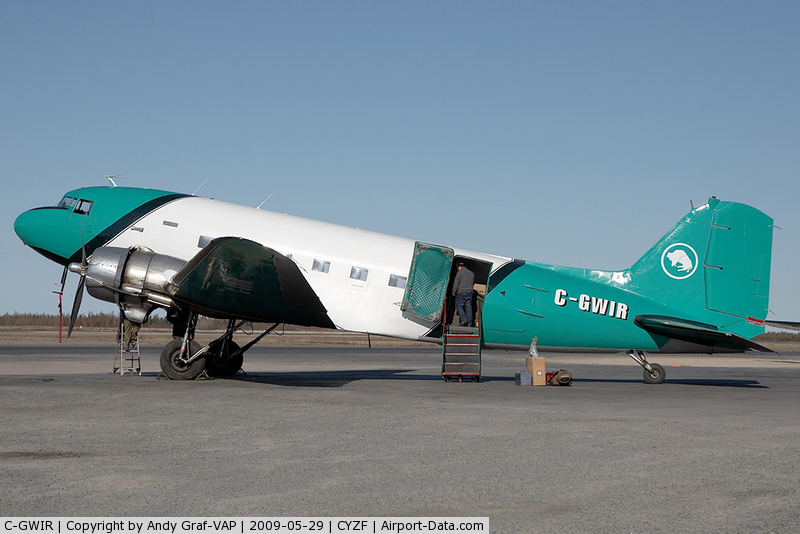
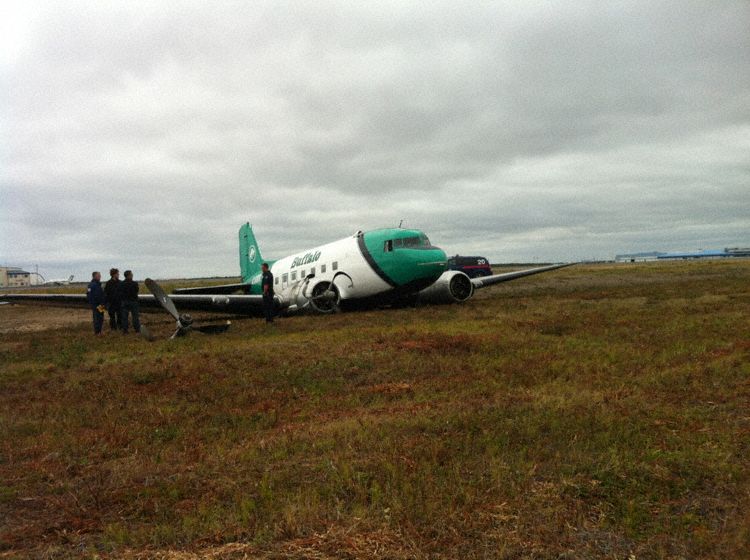
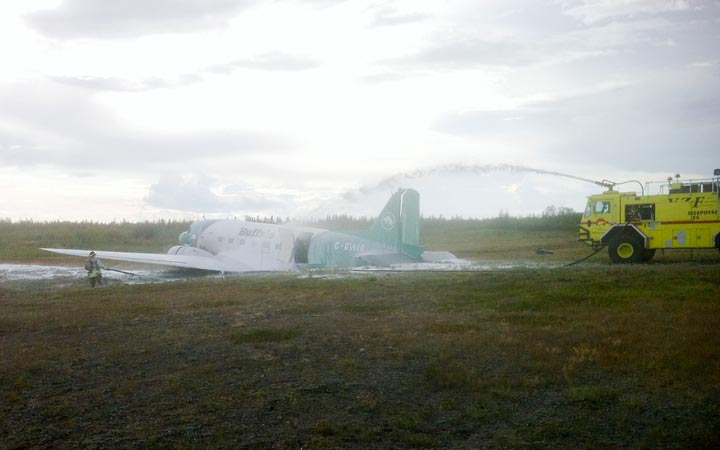
On 19 August 2013, a Buffalo Airways Ltd. Douglas DC-3C (registration C-GWIR, serial number 9371) was operating as a scheduled passenger flight from Yellowknife, Northwest Territories, to Hay River, Northwest Territories. After lift-off from Runway 16 at 1708 Mountain Daylight Time, there was a fire in the right engine. The crew performed an emergency engine shutdown and made a low-altitude right turn towards Runway 10. The aircraft struck a stand of trees southwest of the threshold of Runway 10 and touched down south of the runway with the landing gear retracted. An aircraft evacuation was accomplished and there were no injuries to the 3 crew members or the 21 passengers. There was no post-impact fire and the 406 MHz emergency locator transmitter did not activate.
Probable cause:
Findings as to causes and contributing factors:
1. An accurate take-off weight and balance calculation was not completed prior to departure, resulting in an aircraft weight that exceeded its maximum certified takeoff weight.
2. The right engine number 1 cylinder failed during the take-off sequence due to a preexisting fatigue crack, resulting in an engine fire.
3. After the right propeller’s feathering mechanism was activated, the propeller never achieved a fully feathered condition likely due to a seized bearing in the feathering pump.
4. The windmilling right propeller caused an increase in drag which, combined with the overweight condition, contributed to the aircraft’s inability to maintain altitude, and the aircraft collided with terrain short of the runway.
5. The operator’s safety management system was ineffective at identifying and correcting unsafe operating practices.
6. Transport Canada’s surveillance activities did not identify the operator’s unsafe operating practices related to weight and balance and net take-off flight path calculations. Consequently, these unsafe practices persisted.
Findings as to risk:
1. If companies do not adhere to operational procedures in their operations manual, there is a risk that the safety of flight cannot be assured.
2. If Transport Canada does not adopt a balanced approach that combines inspections for compliance with audits of safety management processes, unsafe operating practices may not be identified, thereby increasing the risk of accidents.
3. If cockpit or data recordings are not available to an investigation, this may preclude the identification and communication of safety deficiencies to advance transportation safety.
Other findings:
1. Current Canadian Aviation Regulations permit a transport category piston-powered aircraft to carry passengers without a flight data recorder or cockpit voice recorder.
2. The crew resource management component of the flight attendant’s training had not been completed.
Final Report:
Crash of a De Havilland DHC-2 Beaver I in Hesquiat Lake: 2 killed

Date & Time: Aug 16, 2013 at 1023 LT
Type of aircraft:
Operator:
Registration:
C-GPVB
Flight Phase:
Survivors:
Yes
Schedule:
Hesquiat Lake - Gold River
MSN:
871
YOM:
1956
Country:
Crew on board:
1
Crew fatalities:
Pax on board:
5
Pax fatalities:
Other fatalities:
Total fatalities:
2
Captain / Total flying hours:
17000
Circumstances:
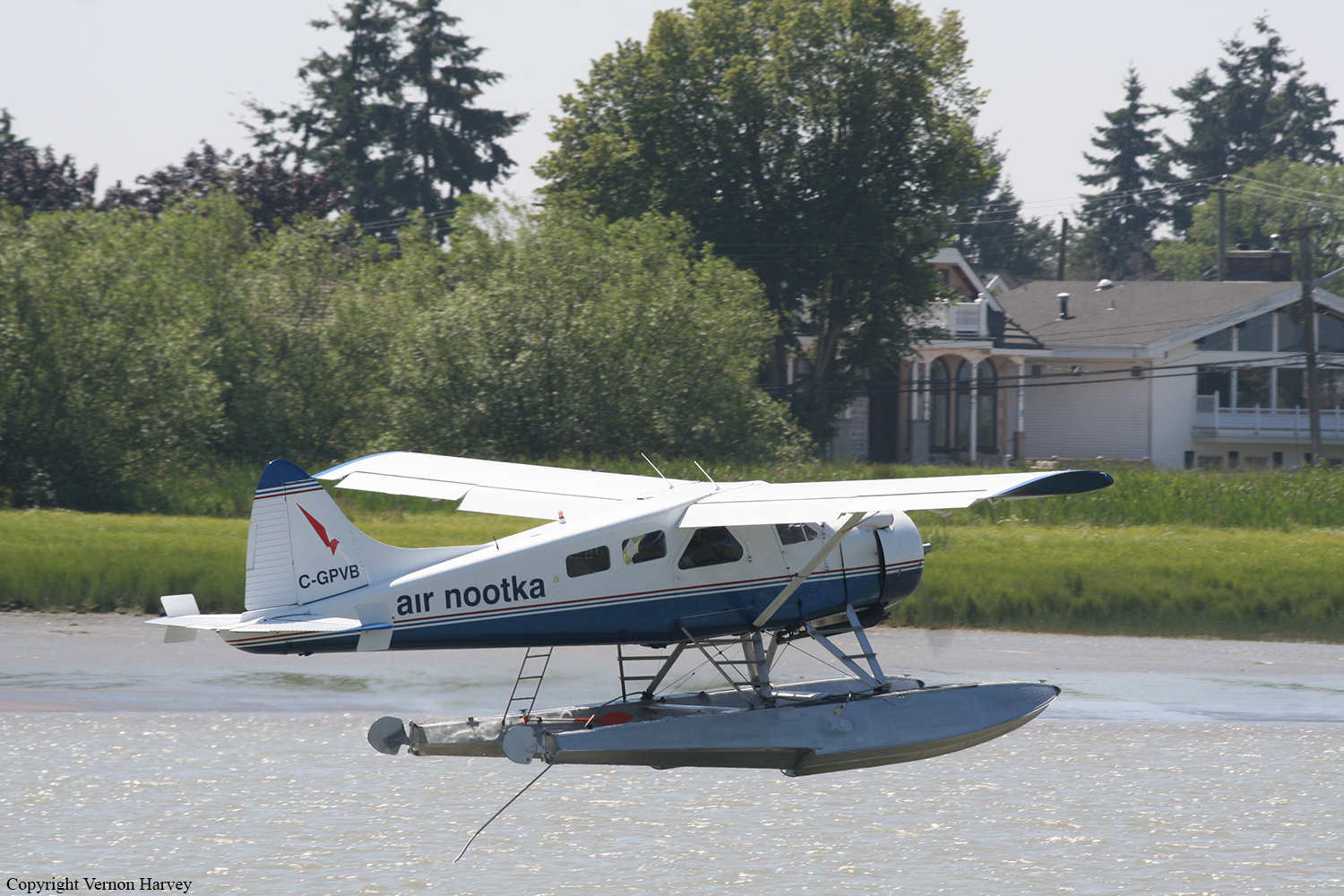
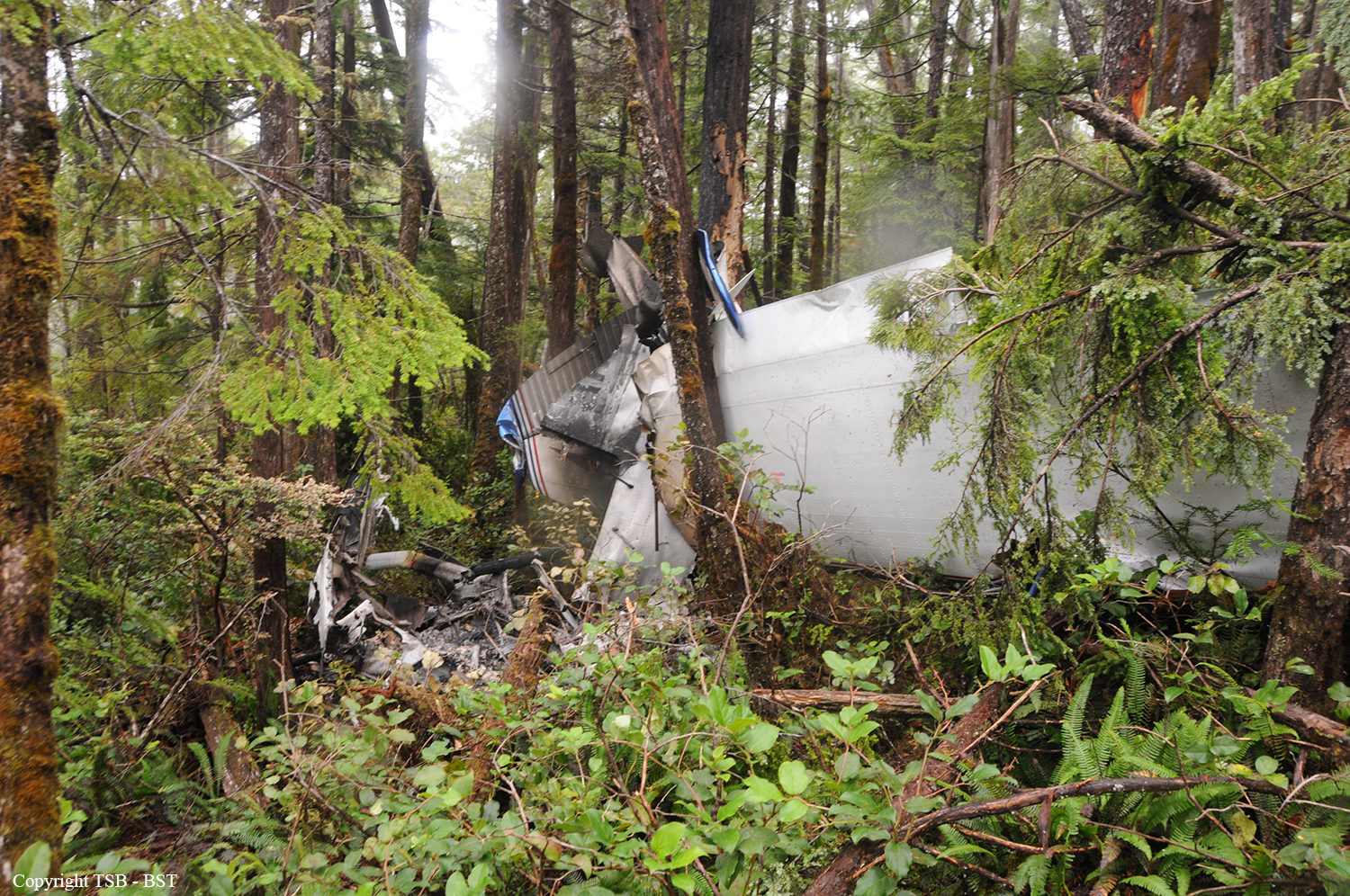
At 1015 Pacific Daylight Time, the de Havilland DHC-2 (Beaver) floatplane (registration CGPVB, serial number 871), operated by Air Nootka Ltd., departed Hesquiat Lake, British Columbia, with the pilot and 5 passengers for Air Nootka Ltd.’s water aerodrome base near Gold River, British Columbia. Visibility at Hesquiat Lake was about 2 ½ nautical miles in rain, and the cloud ceiling was about 400 feet above lake and sea level. Approximately 3 nautical miles west of the lake, while over Hesquiat Peninsula, the aircraft struck a tree top at about 800 feet above sea level and crashed. Shortly after the aircraft came to rest, a post-crash fire developed. All 6 persons on board survived the impact, but the pilot and 1 passenger died shortly after. A brief 406 megahertz emergency locator transmitter signal was transmitted, and a search and rescue helicopter recovered the survivors at about 1600.
Probable cause:
Findings as to causes and contributing factors:
1. The pilot flew just above the tree tops into instrument meteorological conditions and rising terrain, and the aircraft struck a tree that was significantly taller than the others.
2. The pilot and 1 passenger did not exit the aircraft before it was consumed in the postimpact fire.
3. Air Nootka did not have effective methods to monitor its pilots’ in-flight decision making and associated practices. As a result, Air Nootka had no way to detect and correct unsafe behavior or poor decision making such as occurred on this flight.
Findings as to risk:
1. If aircraft are not fitted with technology to reduce fuel leakage or to eliminate ignition sources, the risk of post-impact fire is increased.
2. If aircraft are not equipped with shoulder harnesses for all seating positions then there is an increased risk of injuries.
3. If aircraft are not equipped with some alternate means of escape such as push-out windows, then there is a risk that post-crash structural deformation will jam doors shut and restrict exit for the occupants.
4. If companies operating under self-dispatch do not monitor their operations, they risk not being able to identify unsafe practices that are a hazard to flight crew and passengers.
5. If flight data recordings are not available to an investigation, this may preclude the identification and communication of safety deficiencies to advance transportation safety.
Final Report:
Crash of a Canadair CL-415 in Moosehead Lake

Date & Time: Jul 3, 2013 at 1415 LT
Type of aircraft:
Operator:
Registration:
C-FIZU
Flight Phase:
Flight Type:
Survivors:
Yes
Schedule:
Wabush - Wabush
MSN:
2076
YOM:
2010
Country:
Crew on board:
2
Crew fatalities:
Pax on board:
0
Pax fatalities:
Other fatalities:
Total fatalities:
0
Captain / Total flying hours:
12500
Captain / Total hours on type:
120.00
Copilot / Total flying hours:
1700
Copilot / Total hours on type:
138
Aircraft flight hours:
461
Circumstances:
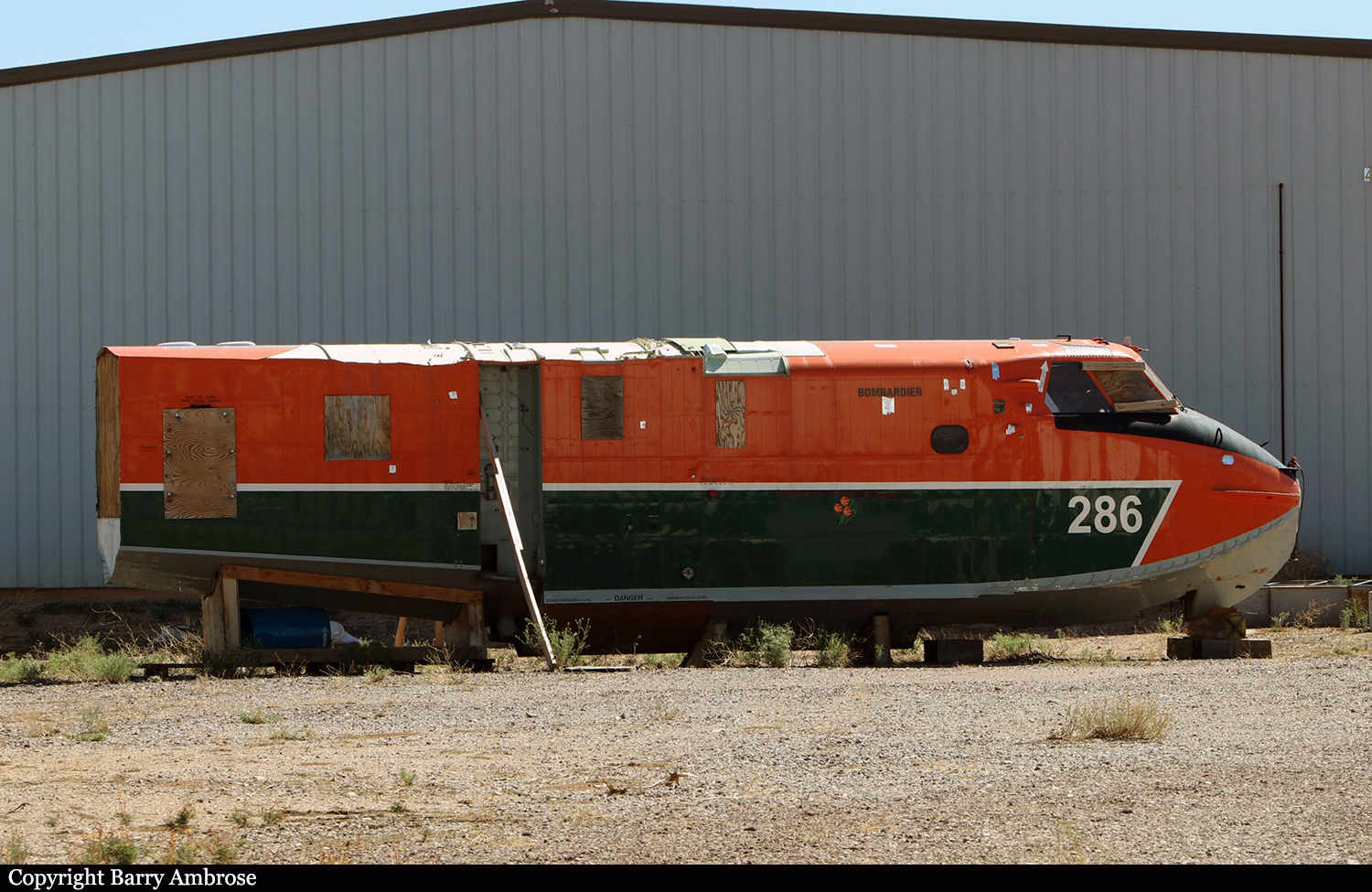
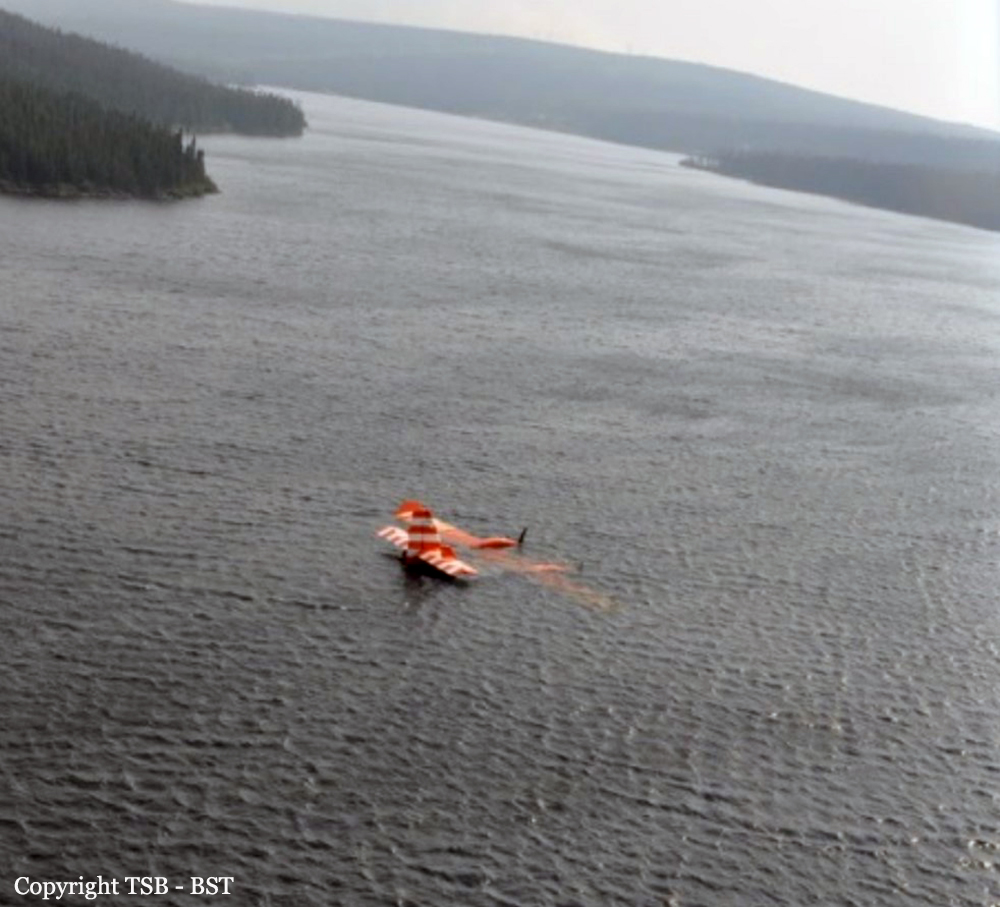
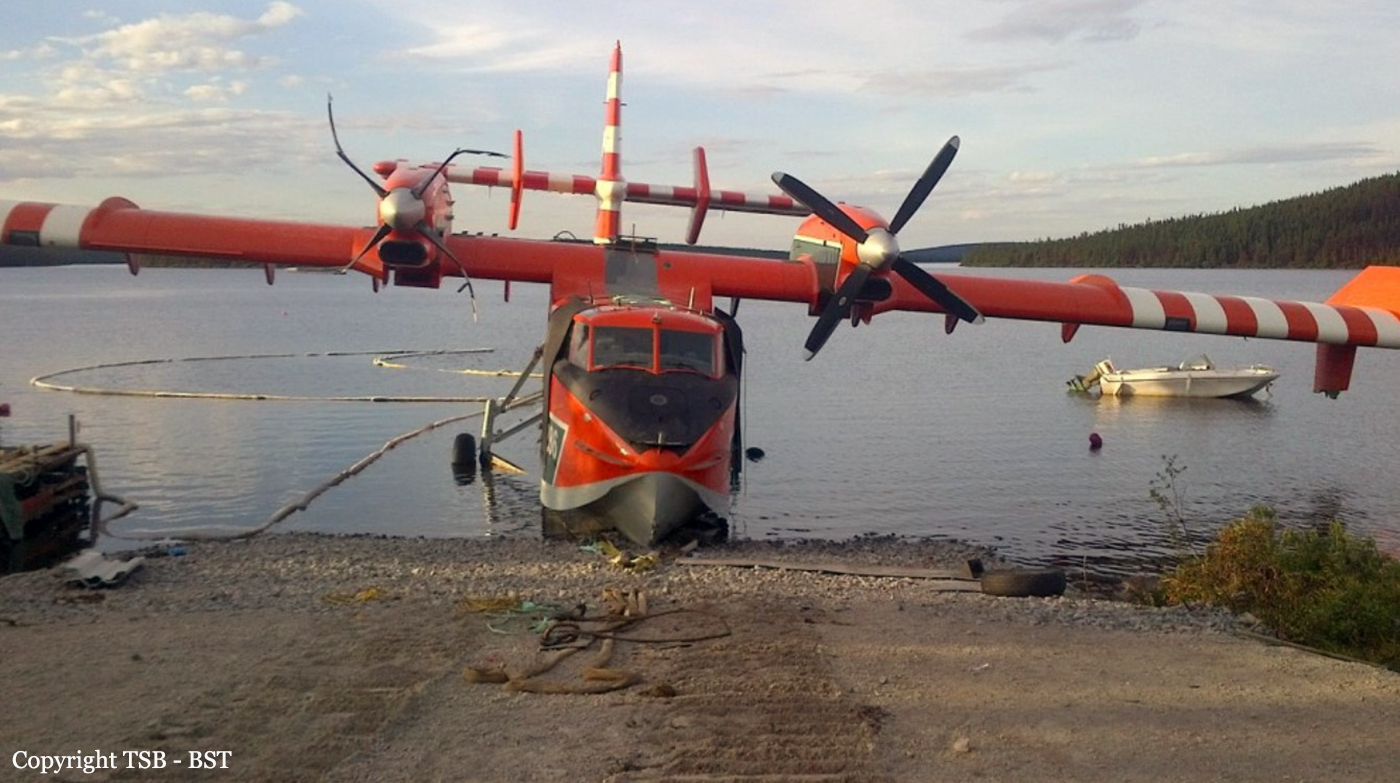
On 03 July 2013, at about 1415 Atlantic Daylight Time, the Government of Newfoundland and Labrador Air Services Division Bombardier CL-415 amphibious aircraft (registration C-FIZU, serial number 2076), operating as Tanker 286, departed Wabush, Newfoundland and Labrador, to fight a nearby forest fire. Shortly after departure, Tanker 286 touched down on Moosehead Lake to scoop a load of water. About 40 seconds later, the captain initiated a left-hand turn and almost immediately lost control of the aircraft. The aircraft water-looped and came to rest upright but partially submerged. The flight crew exited the aircraft and remained on the top of the wing until rescued by boat. There was an insufficient forward impact force to activate the onboard 406-megahertz emergency locator transmitter. There were no injuries to the 2 crew members. The aircraft was destroyed. The accident occurred during daylight hours.
Probable cause:
Findings as to causes and contributing factors:
- It is likely that the PROBES AUTO/MANUAL switch was inadvertently moved from the AUTO to the MANUAL selection when the centre pedestal cover was removed.
- The PROBES AUTO/MANUAL switch position check was not included on the Newfoundland and Labrador Government Air Services CL-415 checklist.
- The flight crew was occupied with other flight activities during the scooping run and did not notice that the water quantity exceeded the predetermined limit until after the tanks had filled to capacity.
- The flight crew decided to continue the take-off with the aircraft in an overweight condition.
- The extended period with the probes deployed on the water resulted in a longer take-off run, and the pilot flying decided to alter the departure path to the left.
- The left float contacted the surface of the lake during initiation of the left turn. Aircraft control was lost and resulted in collision with the water.
Findings as to risk:
- If safety equipment is installed in a manner that hampers its access and removal, then there is an increased risk that occupants may not be able to retrieve the safety equipment in a timely manner to ensure their survival.
- If individuals are not trained on safety equipment installed on the aircraft, then there is an increased risk that the individuals may not be aware of how to effectively use the equipment.
- If a checklist does not include a critical item, and flight crews are expected to rely on their memory, then there is a risk that that item will be missed, which could jeopardize the safety of flight.
- If flight crews do not adhere to standard operating procedures, then there is a risk that errors and omissions can be introduced, which could jeopardize the safety of flight.
- If a person is not restrained during flight and the aircraft either makes an abrupt manoeuvre or loses control, then that person is at a much greater risk of injury or death.
- If an overweight take-off is carried out, there may be an adverse effect on the aircraft’s performance, which could jeopardize the safety of flight.
- If companies do not have procedures for recording overweight take-offs and flight crews do not report them, then the overall condition of the aircraft’s structures will not be accurately known, which could jeopardize the safety of flight.
- If organizations do not use formal and documented processes to manage operational risks, there is an increased risk that hazards will not be identified and mitigated.
- If organizations do not have measures in place to raise awareness of the potential impact of stress on performance or to promote the early recognition and mitigation of stress, then there is an increased risk that errors will occur when an individual is affected by stress that has become chronic.
Other findings:
- Utilizing the locking position of the PROBES AUTO/MANUAL switch for the MANUAL selection allows the switch to be inadvertently moved from the AUTO to the MANUAL position.
Final Report: