Crash of a Cessna 421C Golden Eagle III in Tofino: 2 killed

Date & Time: Jul 18, 2024 at 1243 LT
Operator:
Registration:
N264DC
Flight Phase:
Flight Type:
Survivors:
Yes
Schedule:
Tofino - Portland
MSN:
421C-1248
YOM:
1982
Country:
Crew on board:
1
Crew fatalities:
Pax on board:
2
Pax fatalities:
Other fatalities:
Total fatalities:
2
Captain / Total flying hours:
828
Captain / Total hours on type:
113.00
Aircraft flight hours:
2795
Circumstances:
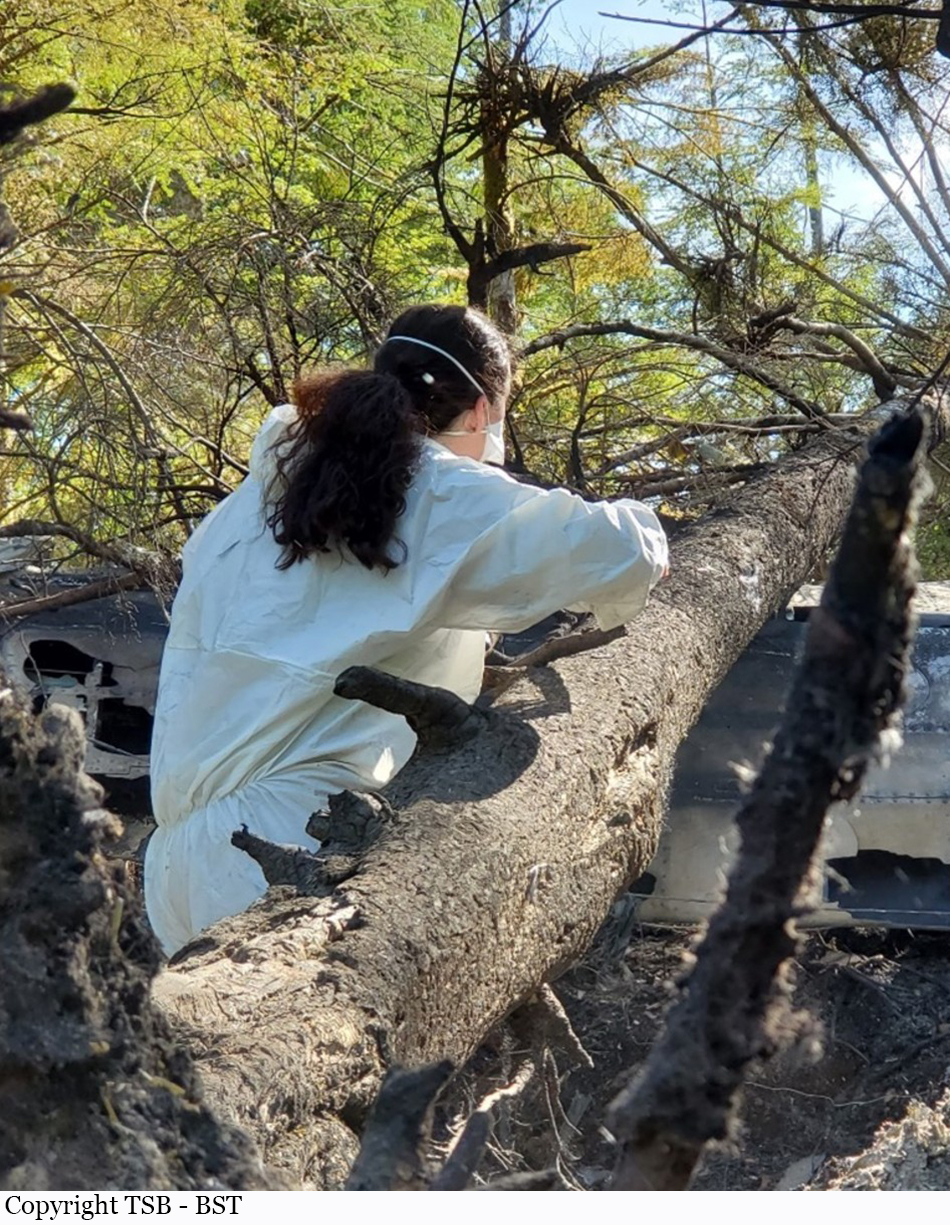
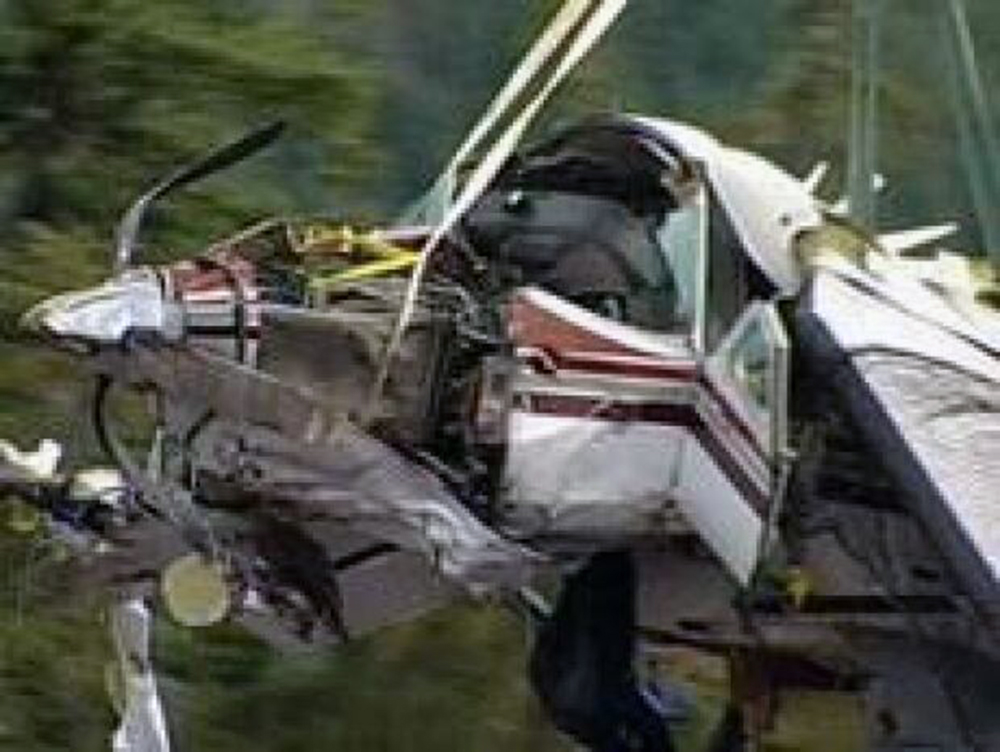
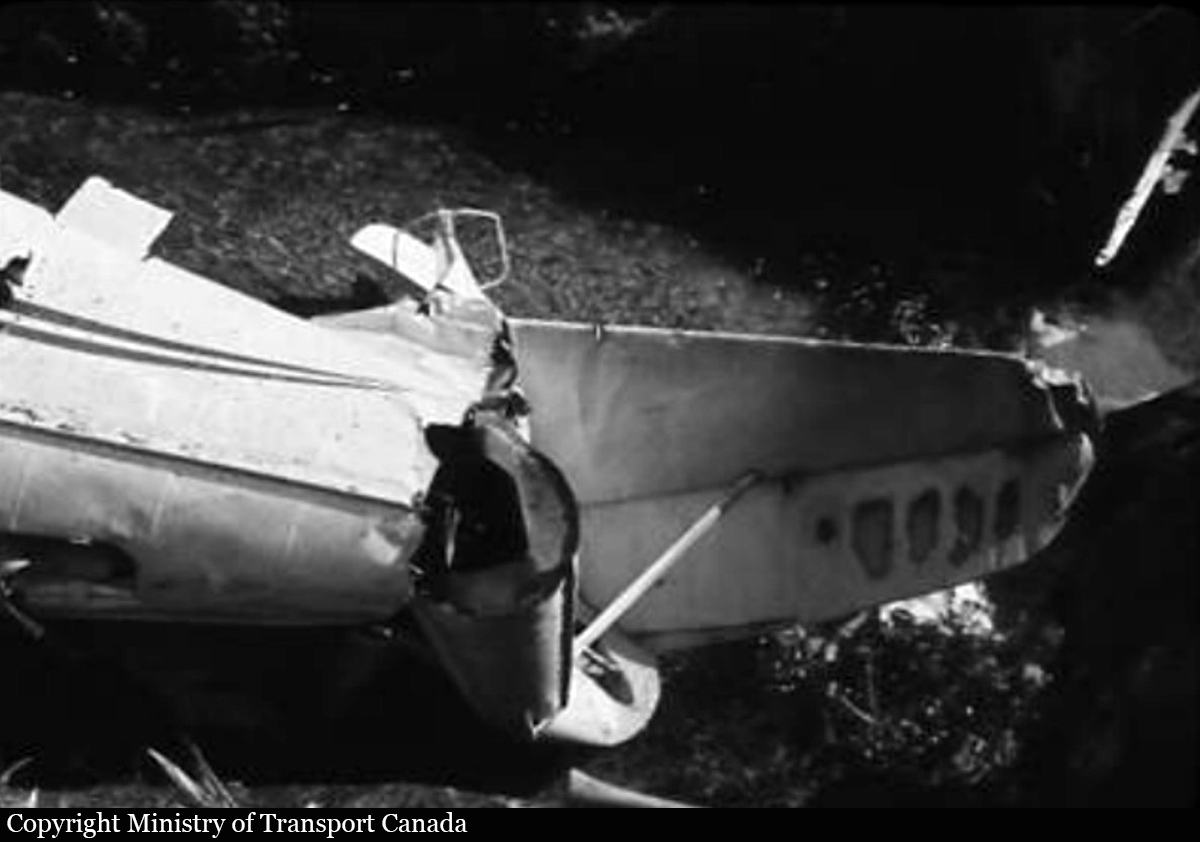
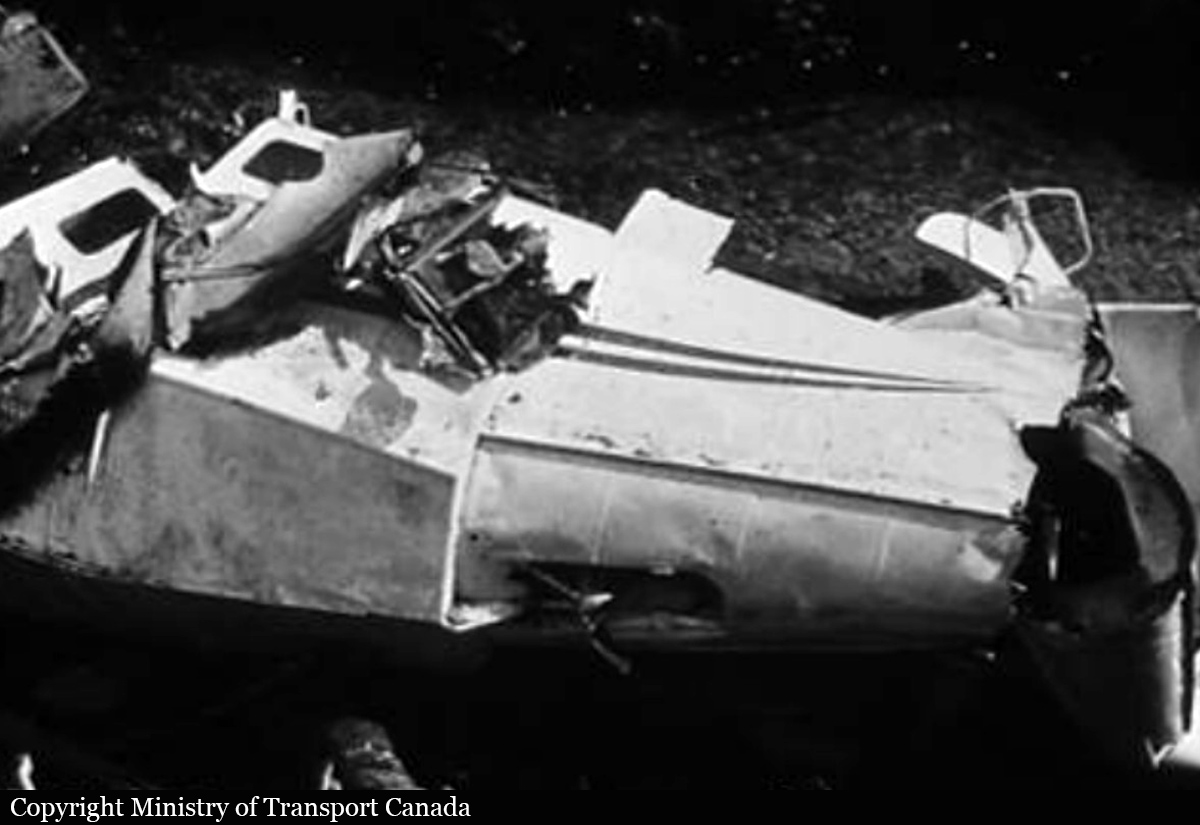
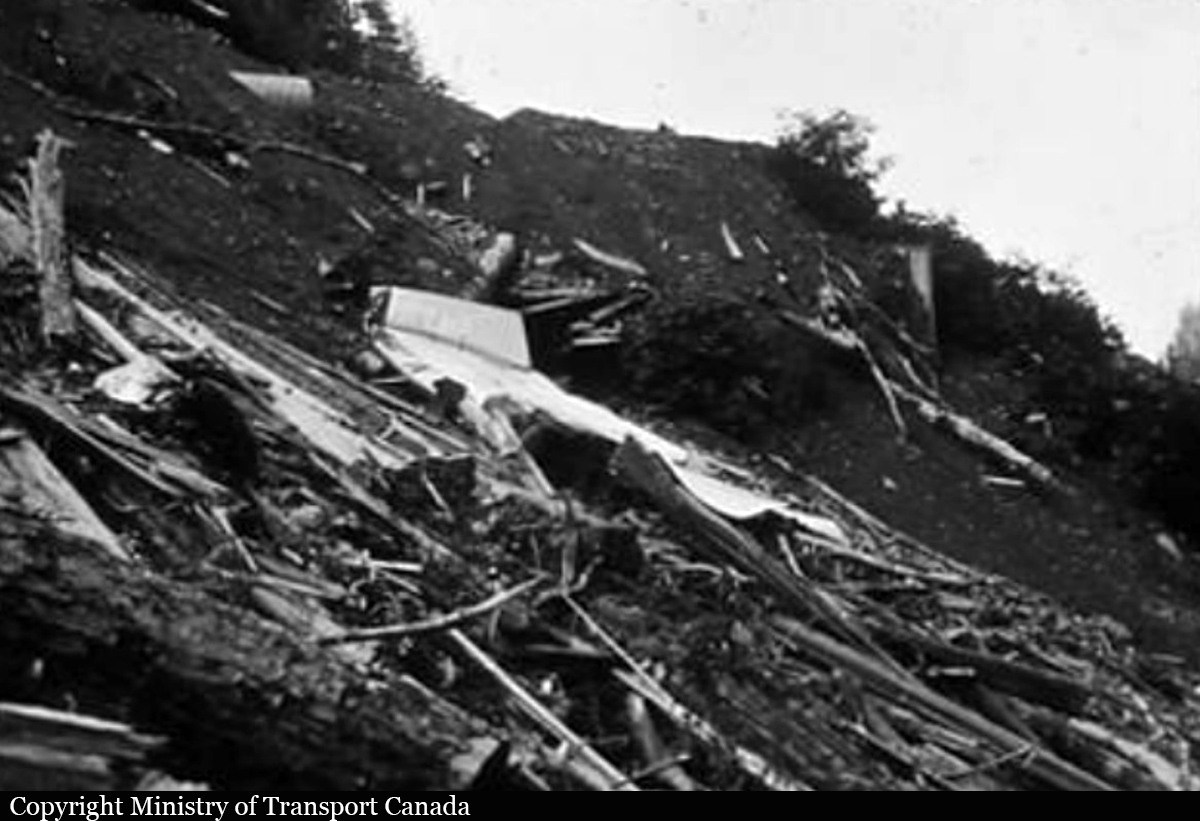
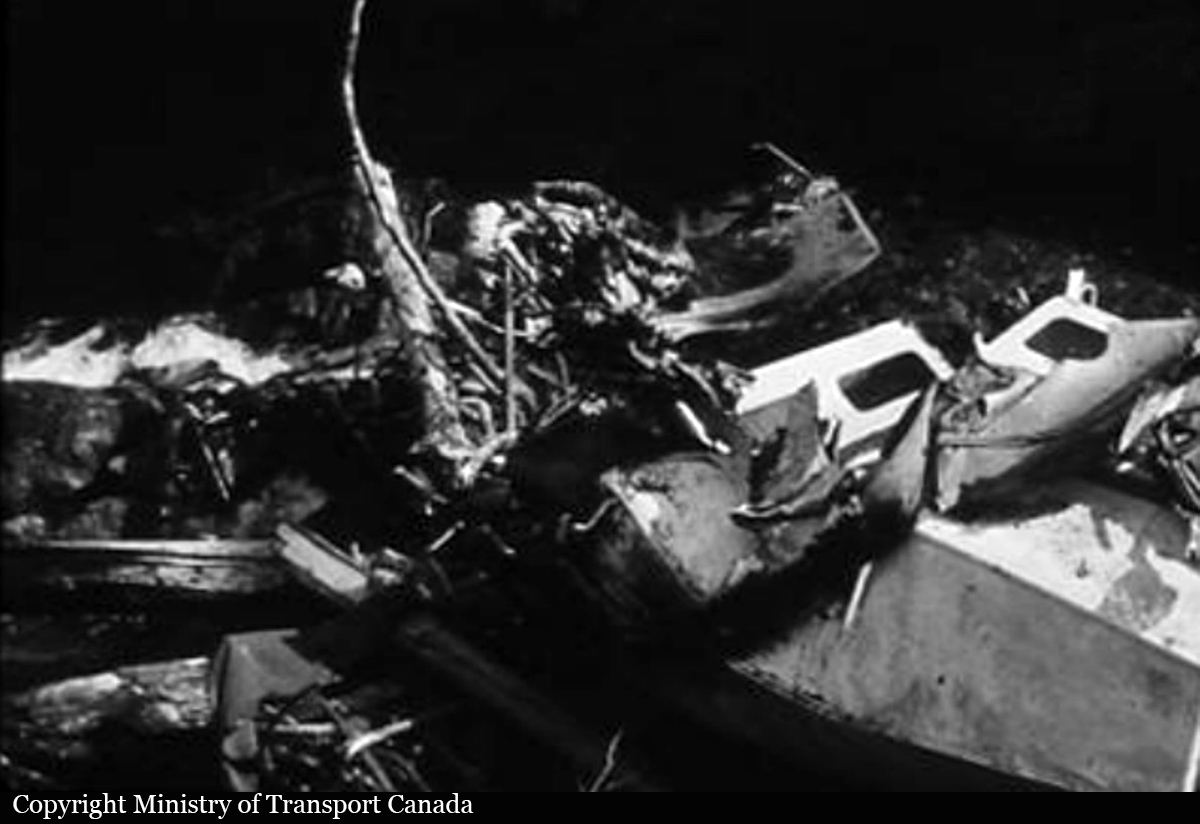
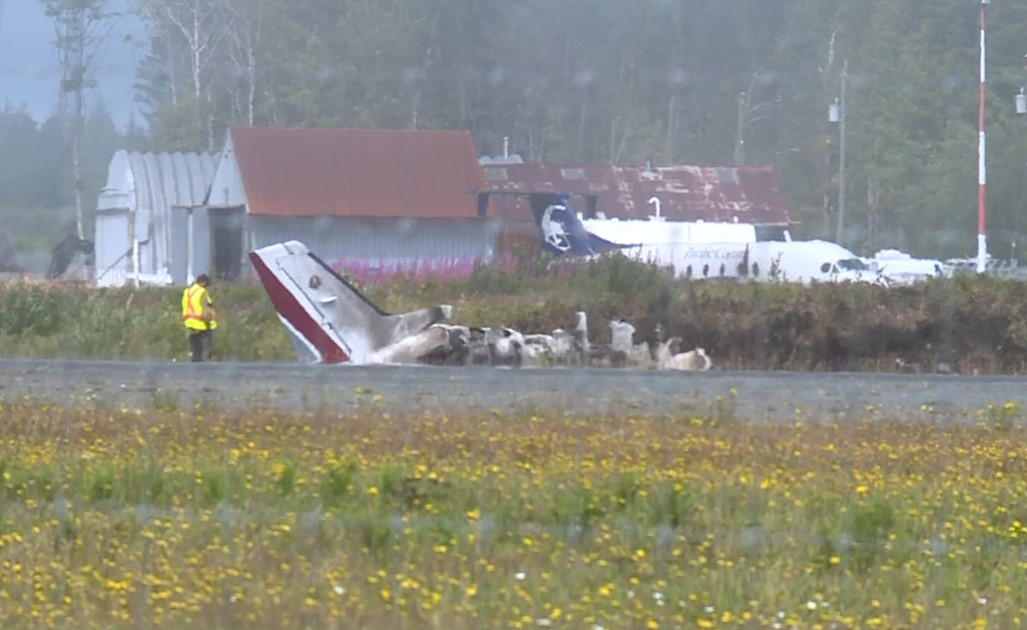
The privately registered Cessna 421C aircraft was conducting a recreational instrument flight rules (IFR) flight from Tofino-Long Beach Airport (CYAZ), British Columbia (BC), to Portland International Airport (KPDX), Oregon, United States, carrying one pilot and two passengers. The aircraft departed runway 16 at approximately 1242LT. Shortly after takeoff, the aircraft occupants observed flames coming from the top of the right engine cowling. The aircraft turned east, joined the left downwind leg for runway 25, and levelled off at approximately 320 feet above ground level (AGL). The aircraft subsequently performed a descending steep turn toward the threshold of runway 25 but overshot the runway centreline to the north. During this turn, the aircraft’s rate of descent increased significantly. At 1243LT, approximately one minute after takeoff, the aircraft impacted the ground north of runway 25 in a wings-level attitude with the landing gear extended and the flaps partially extended. The initial point of impact was approximately 206 feet past the runway threshold and 157 feet north of the paved surface of runway 25. Post impact, the main landing gear separated from the aircraft while the aircraft travelled approximately 450 feet along the ground before coming to rest. When the aircraft was at approximately the mid-point of the distance travelled on the ground, it caught fire. One passenger received serious injuries but was able to exit the aircraft. The pilot and the 2nd passenger were fatally injured. The aircraft was destroyed by the post-impact fire. The Canadian Mission Control Centre did not receive an emergency locator transmitter (ELT) signal from the aircraft.
Probable cause:
An in-flight fire, located in the right engine nacelle, occurred just after takeoff. The fire characteristics were consistent with a turbocharger exhaust fire resulting from a disconnected turbocharger exhaust pipe. It is unknown if the aircraft fire warning system activated.
Final Report:

Crash of a Quest Kodiak 100 near Tofino: 2 killed

Date & Time: Jun 21, 2023 at 1337 LT
Type of aircraft:
Registration:
C-GKTX
Flight Type:
Survivors:
Yes
Site:
Schedule:
Masset - Tofino
MSN:
100-0010
YOM:
2009
Country:
Crew on board:
1
Crew fatalities:
Pax on board:
3
Pax fatalities:
Other fatalities:
Total fatalities:
2
Captain / Total flying hours:
1200
Captain / Total hours on type:
250.00
Circumstances:
At 1121LT on 20 June 2023, the privately registered Quest Kodiak 100 amphibious float-equipped aircraft (registration C-GKTX, serial number 100-0010) departed Masset Airport (CZMT), British Columbia (BC), on an instrument flight rules (IFR) flight to Tofino/Long Beach Airport (CYAZ), BC, with 1 pilot and 3 passengers on board. While enroute, at 1246, the pilot contacted air traffic control to cancel IFR and continued the flight under visual flight rules (VFR). The aircraft continued the flight to the planned final destination, which was a cabin approximately 60 nautical miles northwest of CYAZ. The aircraft followed an inlet (Tahsis Narrows) toward the destination and continued for a straight-in landing on the water, near the cabin. On initial touchdown, both floats touched the surface of the water simultaneously. The aircraft bounced and, as the aircraft approached the surface of the landing area the 2nd time in a level attitude, the left float reportedly made contact with either a boat wake or object. 2 The force of the contact resulted in the aircraft bouncing to a height of approximately 30 feet and banking to the right. The pilot initiated a go-around. At 1337, during the initial climb over land, the aircraft contacted trees and then impacted the terrain. The pilot and 1 passenger were fatally injured, 1 passenger received serious injuries, and 1 passenger received minor injuries. There was a post-impact fire. The aircraft was destroyed. The emergency locator transmitter signal was received by the Joint Rescue Coordination Centre in Victoria, BC. The Canadian Coast Guard, Canadian Armed Forces search and rescue, the RCMP (Royal Canadian Mounted Police), and fire personnel responded.
Probable cause:
It is possible that the accident was the consequence of wind shear and downdrafts.
Final Report:

Crash of a Cessna 421B Golden Eagle II on Vargas Island: 2 killed

Date & Time: Dec 14, 2013 at 1425 LT
Operator:
Registration:
C-GFMX
Flight Type:
Survivors:
No
Site:
Schedule:
Abbotsford - Tofino
MSN:
421B-0939
YOM:
1975
Country:
Crew on board:
1
Crew fatalities:
Pax on board:
1
Pax fatalities:
Other fatalities:
Total fatalities:
2
Aircraft flight hours:
8500
Circumstances:
The twin engine aircraft was performing a flight from Abbotsford to Tofino with two people on board (a father aged 51 and his son aged 25). On approach to Tofino Airport, on Vancouver Island, the aircraft impacted ground and crashed on Vargas Island, off Tofino. The burnt wreckage was found the following day and both occupants were killed.

Crash of a Cessna 208B Grand Caravan near Port Alberni: 3 killed

Date & Time: Jan 21, 2006 at 1420 LT
Type of aircraft:
Operator:
Registration:
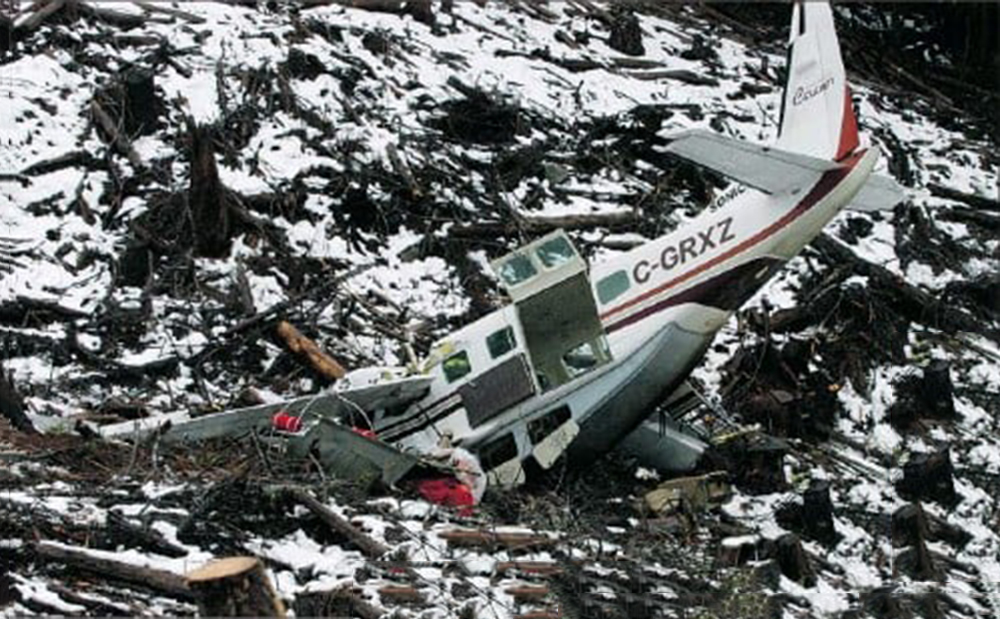
C-GRXZ
Flight Phase:
Survivors:
Yes
Schedule:
Tofino – Vancouver
MSN:
208B-0469
YOM:
1995
Flight number:
RXX604
Country:
Crew on board:
1
Crew fatalities:
Pax on board:
7
Pax fatalities:
Other fatalities:
Total fatalities:
3
Captain / Total flying hours:
2480
Captain / Total hours on type:
750.00
Circumstances:
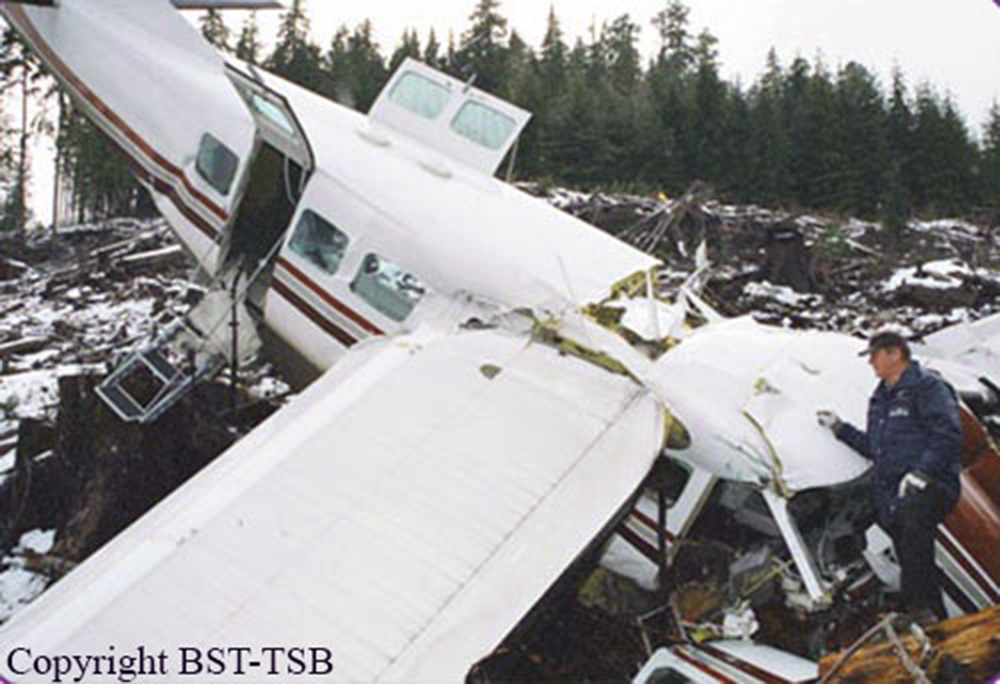
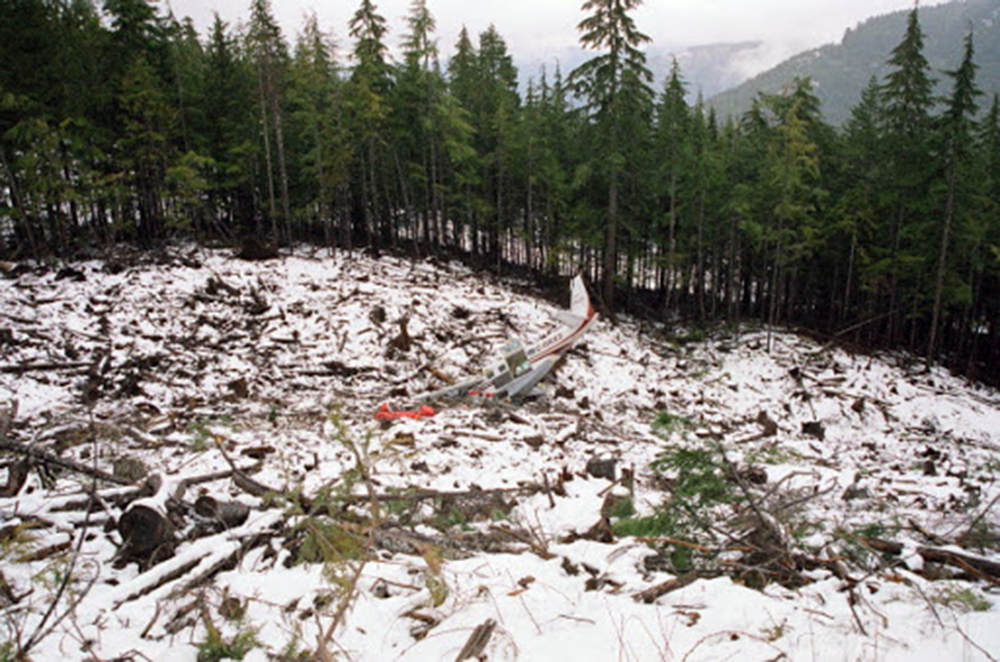
The Cessna 208B aircraft (registration C-GRXZ, serial number 208B0469) was en route at 9000 feet above sea level, from Tofino, British Columbia, to Vancouver International Airport, British Columbia, when the engine failed. The pilot began a glide in the direction of the Port Alberni Regional Airport before attempting an emergency landing on a logging road. The aircraft struck trees during a steep right-hand turn and crashed. The accident occurred at about 1420 Pacific standard time, approximately 11 nm south-southeast of the Port Alberni Regional Airport. Five passengers survived with serious injuries; the pilot and the other two passengers were fatally injured.
Probable cause:
Findings as to Causes and Contributing Factors:
1. The engine lost power when a compressor turbine blade failed as a result of the overstress extension of a fatigue-generated crack. The fracture initiated at a metallurgical anomaly in the parent blade material and progressed, eventually resulting in blade failure due to overstress rupture.
2. The combination of aircraft position at the time of the engine failure, the lack of equipment enabling the pilot to locate and identify high terrain, and the resultant manoeuvring required to avoid entering instrument flight conditions likely prevented the pilot from attempting to glide to the nearest airfield.
Findings as to Risk:
1. Single-engine instrument flight rules (SEIFR) operations in designated mountainous regions have unique obstacle risks in the event of an engine failure. Canadian equipment requirements for such operations do not currently include independent terrain mapping, such as terrain awareness and warning systems (TAWS).
2. Airline operators are not currently required to conduct any additional route evaluation or structuring to ensure that the risk of an off-field landing is minimized during SEIFR operations.
3. Pilots involved in commercial SEIFR operations do not receive training in how to conduct a forced landing under instrument flight conditions; such training would likely improve a pilotís ability to respond to an engine failure when operating in instrument meteorological conditions (IMC).
4. Mean time between failure (MTBF) calculations do not take into account In Flight Shut Downs (IFSDs) not directly attributable to the engine itself; it may be more appropriate to monitor all IFSD events.
5. The design of the Cessna 208B Caravan fuel shutoff valves increases the risk that the valves will open on impact, allowing fuel spillage and increasing the potential for fire.
Other Finding:
1. Sonicblue Airways was not providing downloaded engine parameter data for engine condition trend monitoring (ECTM) evaluation at appropriate intervals.
Final Report:

Crash of a De Havilland DHC-3 Otter in Cameron Lake

Date & Time: May 8, 1991 at 1010 LT
Type of aircraft:
Operator:
Registration:
C-FQRI
Flight Phase:
Survivors:
Yes
Schedule:
Vancouver – Tofino
MSN:
326
YOM:
1959
Country:
Crew on board:
1
Crew fatalities:
Pax on board:
10
Pax fatalities:
Other fatalities:
Total fatalities:
0
Circumstances:
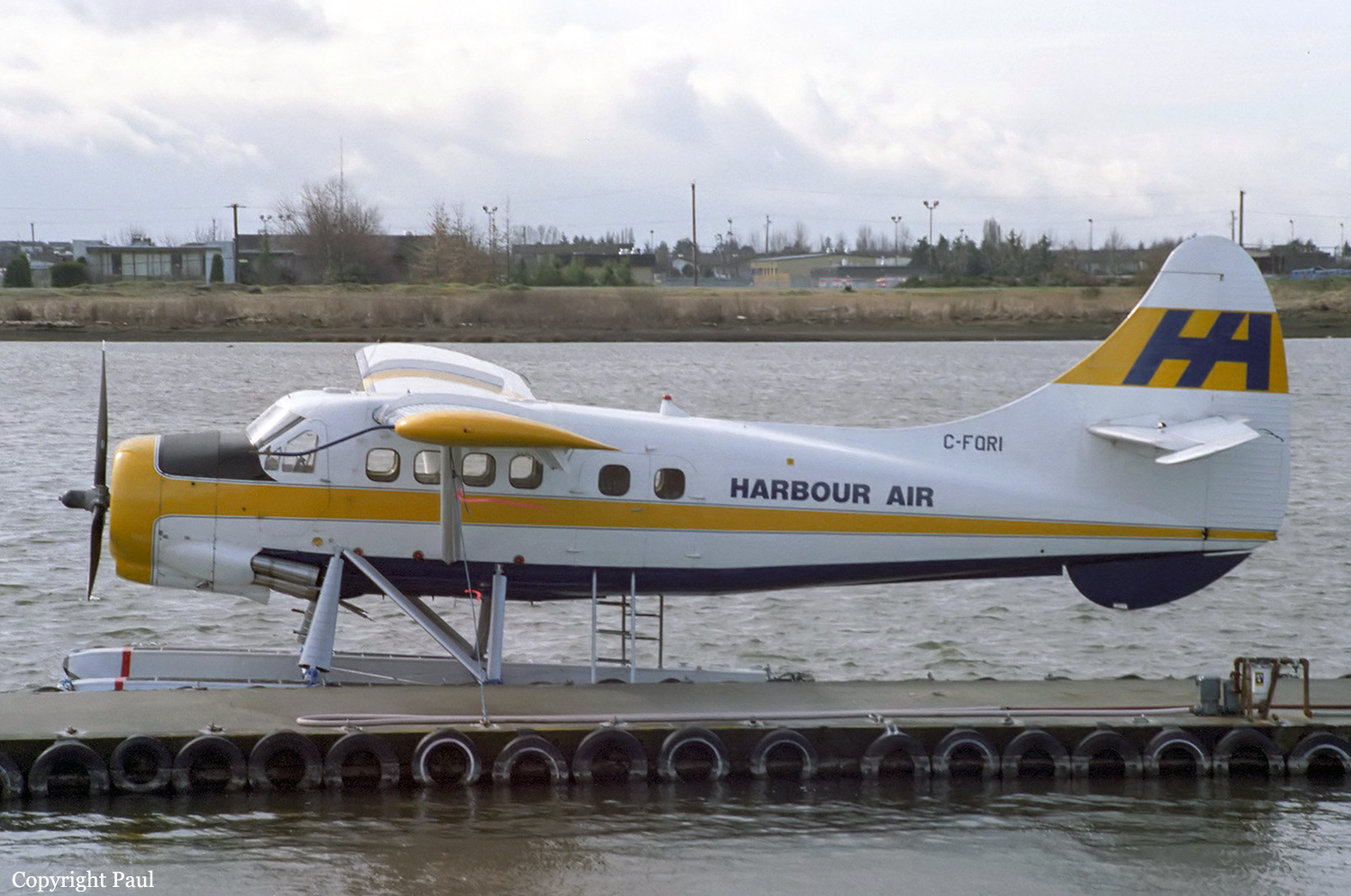
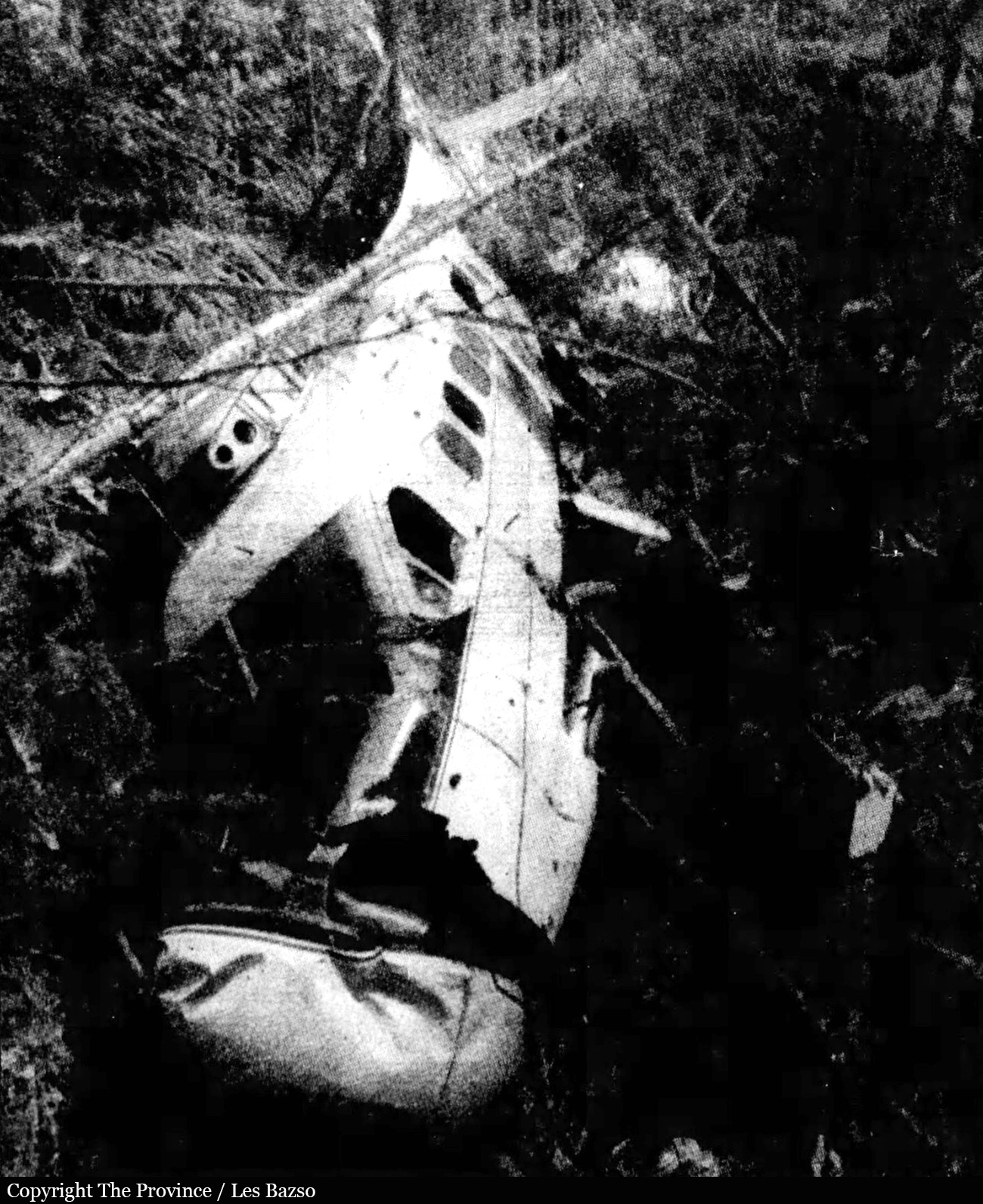
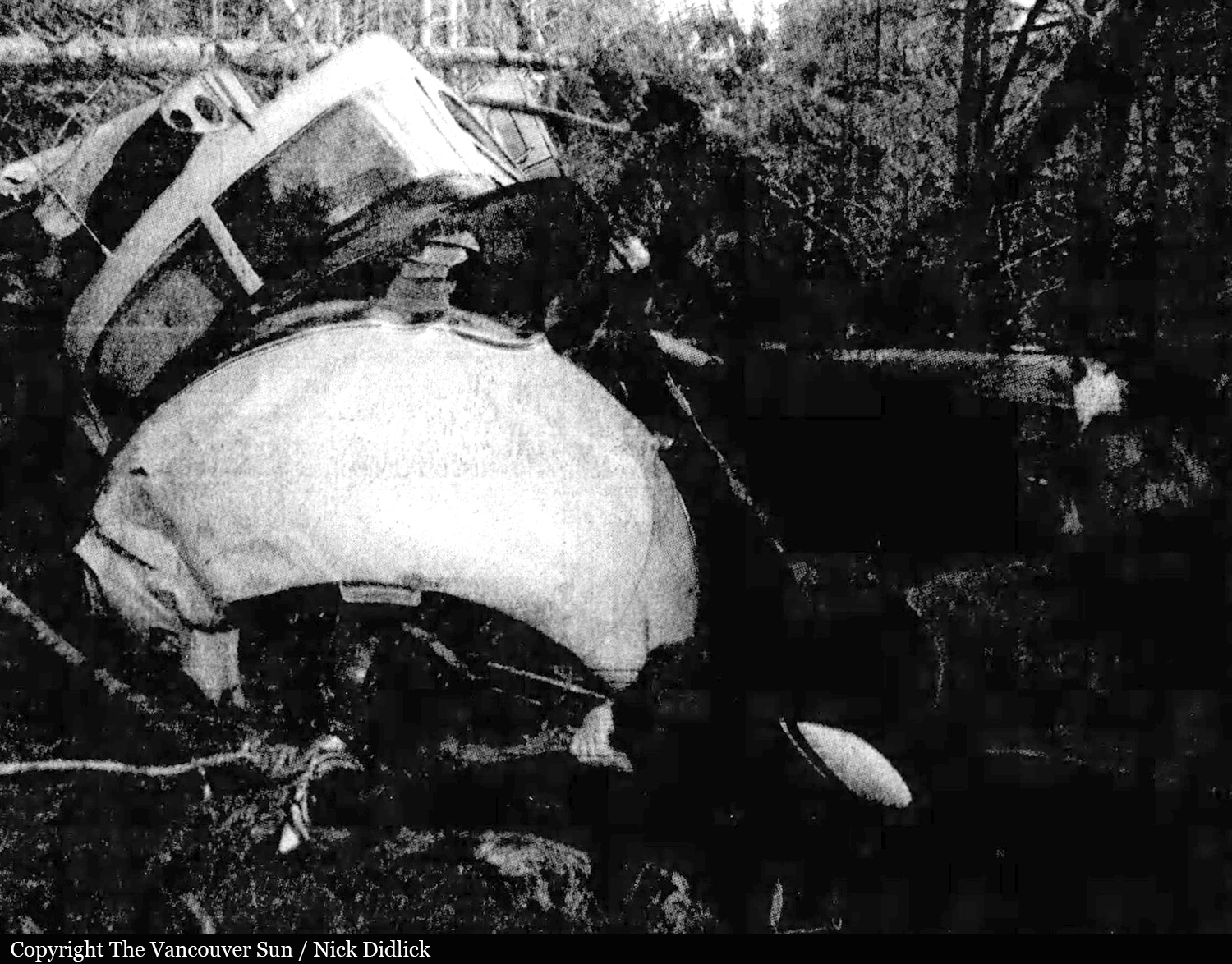
The pilot was supposed to proceed under VFR mode to the west but as weather conditions deteriorated with low clouds, he decided to continue to the south. While flying between two mountains, the single engine aircraft encountered atmospheric turbulences and the pilot elected to return when the aircraft lost height and struck trees. Upon impact, both wings were torn off and the aircraft crashed in a wooded area. All 11 occupants were injured, four of them seriously.

Crash of a Grumman G-21A Goose near Mt Hooper: 11 killed

Date & Time: Sep 9, 1974 at 1215 LT
Type of aircraft:
Registration:
C-FPVE
Flight Phase:
Survivors:
No
Site:
Schedule:
Tofino - Vancouver
MSN:
1200
YOM:
1942
Country:
Crew on board:
1
Crew fatalities:
Pax on board:
10
Pax fatalities:
Other fatalities:
Total fatalities:
11
Captain / Total flying hours:
3750
Captain / Total hours on type:
450.00
Circumstances:
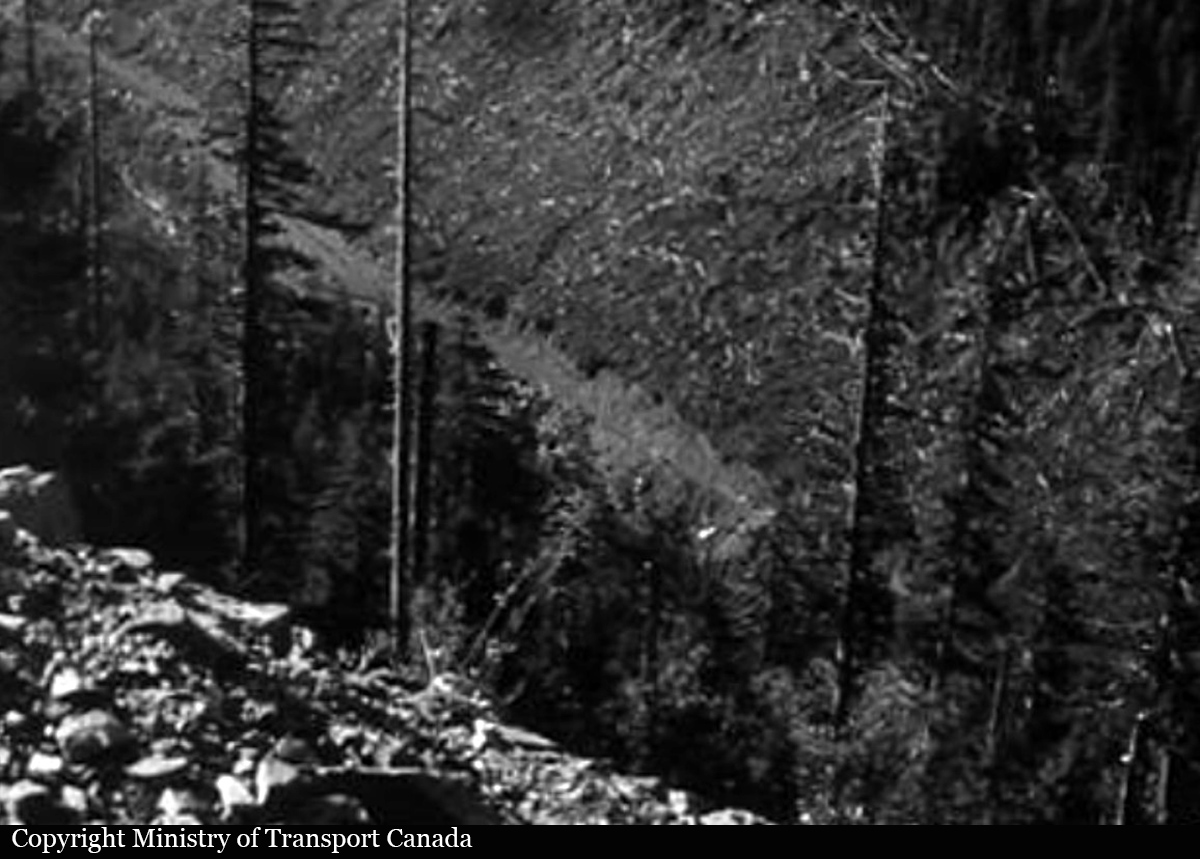
The flight was a VFR scheduled flight from Tofino to Vancouver. The airplane was carrying 10 passengers and one pilot. While cruising southwest of Nanaimo, the pilot encountered marginal weather conditions with a cloud ceiling at 2,800 feet. The airplane entered a valley then the pilot attempted a steep right turn at 45° when the airplane impacted trees and crashed in hilly terrain some 5 km west of Mt Hooper. The airplane was destroyed and all 11 occupants were killed.
Crew:
J. R. Ferguson, pilot.
Probable cause:
It is concluded that:
- The pilot entered the valley at a lower altitude than normal due to a low ceiling and that he expected to find the pass open.
- He commenced his turn immediately on viewing the pass area; being at a high cruise speed and with flaps up his turning radius was high and brought him into a part of the valley where a 250° turn was necessary to leave the valley.
- The pilot lowered the nose of the aircraft during the turn to avoid a stall. The aircraft lost height due to the turn, and struck the ground after 250° of a turn was completed.
Final Report:

Crash of a Noorduyn Norseman off Vancouver Island: 7 killed

Date & Time: Aug 4, 1951
Type of aircraft:
Operator:
Registration:
CF-GRQ
Flight Phase:
Survivors:
No
Schedule:
Zeballos – Tofino
MSN:
328
YOM:
1944
Country:
Crew on board:
1
Crew fatalities:
Pax on board:
6
Pax fatalities:
Other fatalities:
Total fatalities:
7
Circumstances:
On a flight from Zeballos to Tofino, the single engine aircraft disappeared. As it failed to arrive, SAR operations were conducted but eventually suspended few days later as no trace of the aircraft nor the seven occupants was found. It is believed the aircraft may have crash into the sea off the Vancouver Island.

Crash of a Noorduyn Norseman off Tofino

Date & Time: Dec 29, 1945
Type of aircraft:
Operator:
Registration:
CF-BDD
Survivors:
Yes
MSN:
11
YOM:
1937
Country:
Crew on board:
0
Crew fatalities:
Pax on board:
0
Pax fatalities:
Other fatalities:
Total fatalities:
0
Circumstances:
Crashed while landing in the Tofino's harbor. Floats were sheared off while landing on glassy water. There were no injuries but the aircraft was written off.

Crash of a Consolidated B-24L-1-FO Liberator VIII near Bamfield: 14 killed

Date & Time: Jul 13, 1945 at 1655 LT
Operator:
Registration:
11121
Flight Phase:
Flight Type:
Survivors:
No
Site:
Schedule:
Patricia Bay – Comox – Tofino – Patricia Bay
MSN:
3986
YOM:
1944
Country:
Crew on board:
7
Crew fatalities:
Pax on board:
7
Pax fatalities:
Other fatalities:
Total fatalities:
14
Circumstances:
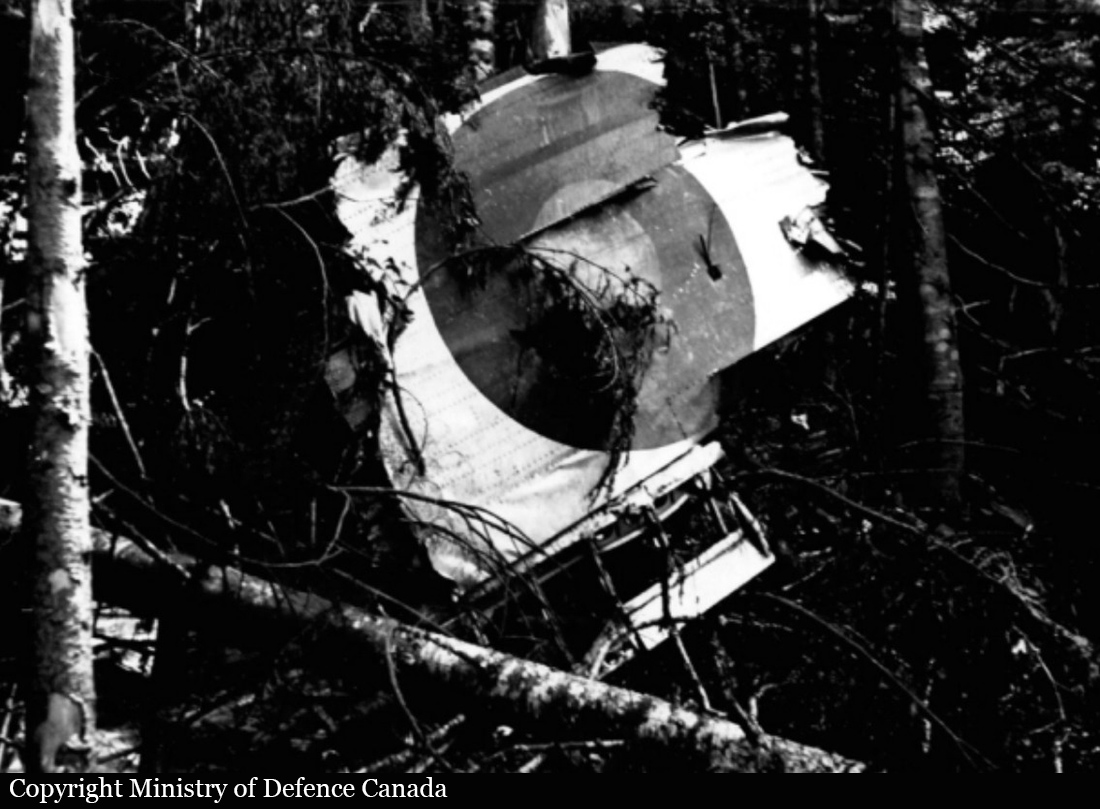
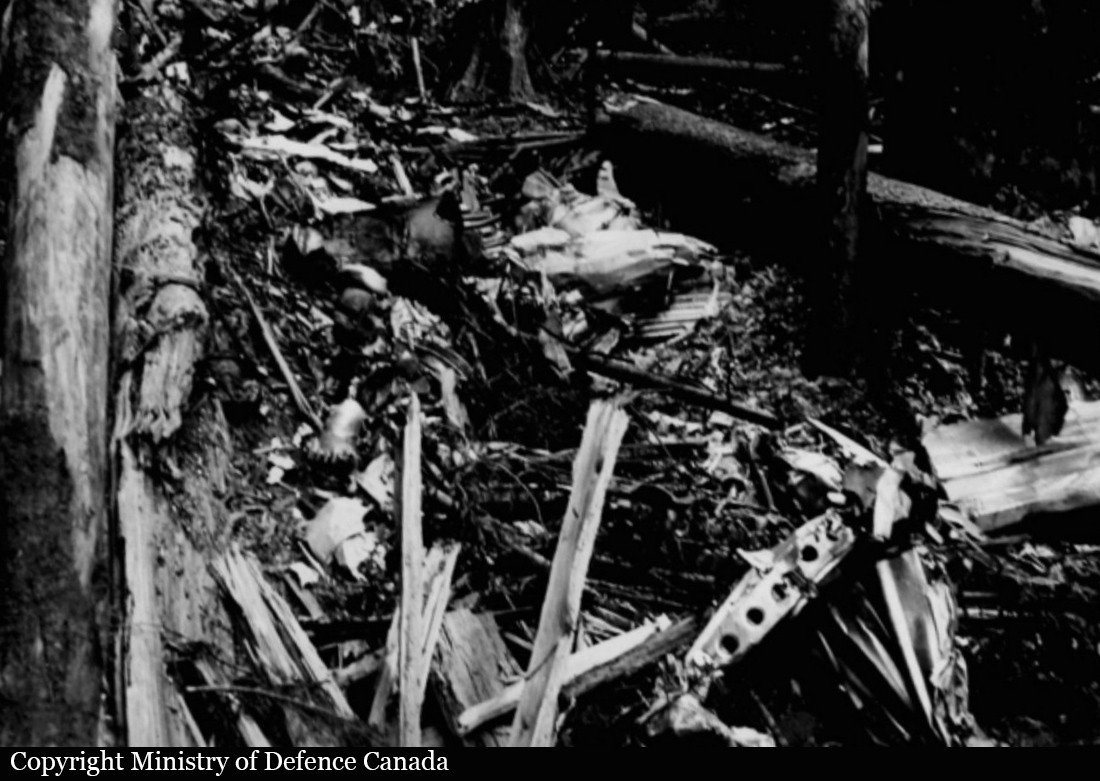
The airplane departed Tofino at 1643LT on the last leg of routine cross country exercise with an ETA in Patricia Bay at 17h41. On board were seven passengers and seven crew members. The last recorded communication with the crew was at 1655LT. While cruising at an altitude of 2,800 feet in limited visibility due to clouds, the aircraft collided with trees and crashed in a dense wooded and hilly terrain some 12 km east southeast of Bamfield, in the Somerset Range. The wreckage was found for days later, on July 17, in an isolated area. All 14 occupants were killed.
Crew (11th Squadron):
F/O William Edward Davies, pilot,
F/O Robert Joseph Martello, pilot,
F/Sgt Donald William Hope, flight engineer,
F/O Nicholas Maxwell Popovich, navigator,
F/O Harry Alexander Lowe, wireless operator,
W/O Victor Gilbert Crosson, wireless operator,
W/O Joseph Bertrand Presse, wireless operator,
Passengers:
Sgt Pamela Gladys Bennett,
Cpl Norman Marshall Johnson,
Cpl William Hrysko,
Cpl Nora Johnston,
Lac Rraymond Vallentine Kitely,
Lac L. H. Tull,
Law Margaret Mann.
Probable cause:
Controlled flight into terrain.
Final Report:

Crash of a Canadian Vickers PBV-1A Canso A off Tofino

Date & Time: Feb 8, 1945
Operator:
Registration:
11007
Flight Phase:
Flight Type:
Survivors:
Yes
Schedule:
Tofino – Vancouver
MSN:
CV-285
Country:
Crew on board:
12
Crew fatalities:
Pax on board:
0
Pax fatalities:
Other fatalities:
Total fatalities:
0
Circumstances:
Shortly after takeoff from Tofino, the seaplane lost height and crashed 5 km east of Tofino. All 12 crew members were rescued while the aircraft was lost.
Probable cause:
Loss of control caused by an engine failure.