Crash of an Embraer EMB-110P1 Bandeirante off Fernando de Noronha: 12 killed

Date & Time: Sep 20, 1990 at 1940 LT
Operator:

Registration:
PT-FAW
Flight Phase:
Flight Type:
Survivors:
No
Schedule:
Fernando de Noronha - Recife
MSN:
110-368
YOM:
1981
Country:
Crew on board:
2
Crew fatalities:
Pax on board:
10
Pax fatalities:
Other fatalities:
Total fatalities:
12
Circumstances:
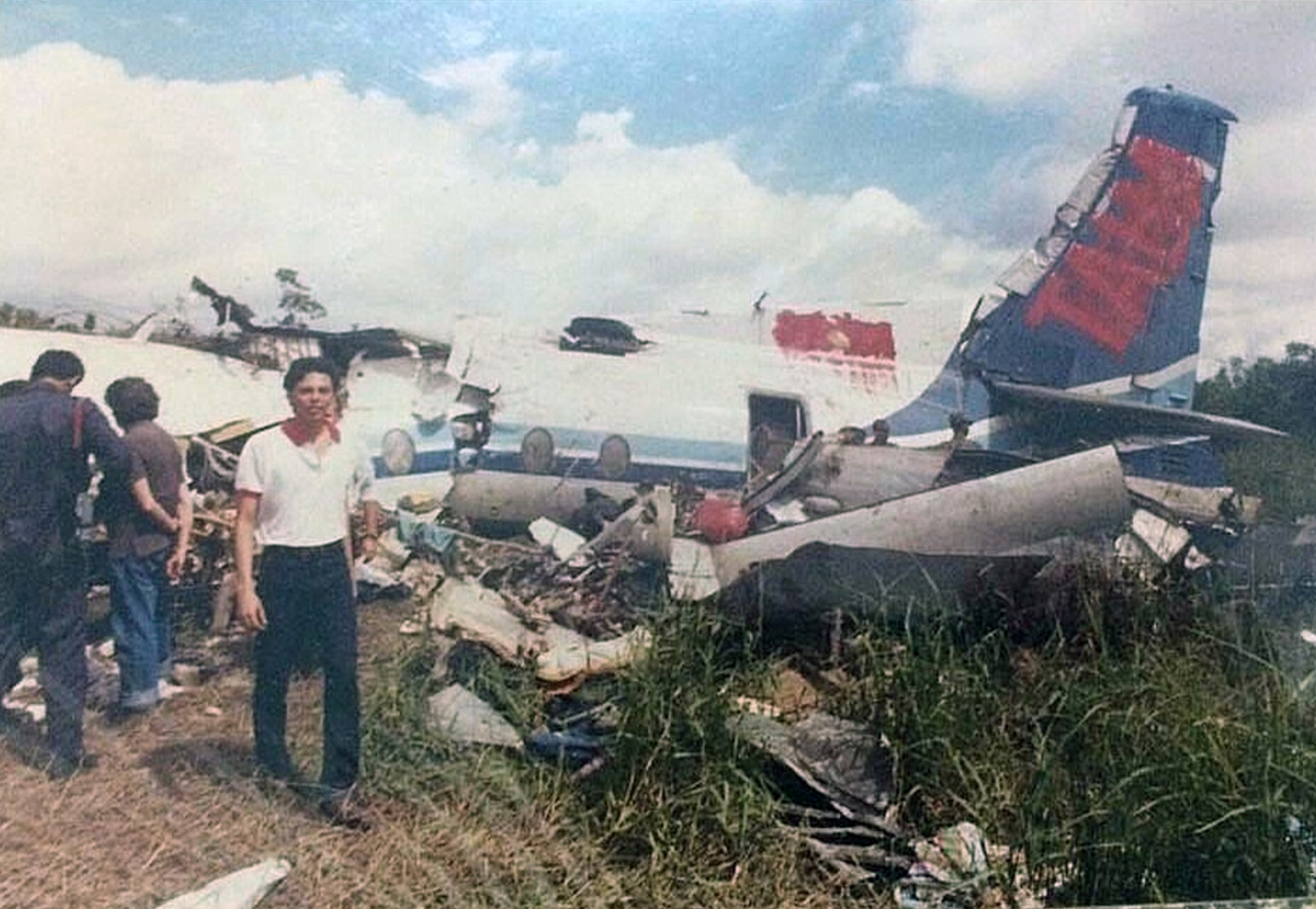
The copilot was preparing the flight as the captain came late in the cockpit. The crew precipitated the departure and after takeoff from runway 12, while climbing by night, the aircraft rolled to the right, entered an uncontrolled descent and crashed in the Atlantic Ocean few hundred meters offshore. The aircraft was destroyed upon impact and all 12 occupants were killed.
Probable cause:
The accident was the consequence of the combination of the following factors:
- The crew suffered a spatial disorientation during initial climb,
- The operator was not equipped with effective systems for monitoring and training of personnel,
- Deficiencies in instruction,
- Poor crew coordination,
- The crew probably failed to follow the pre-takeoff checklist,
- Lack of crew experience on the type of aircraft,
- The inadequate assessment of certain operational aspects during the mission and the use of own piloting standards.
Final Report:

Crash of a Beechcraft 65-B80 Queen Air in Sitío da Velha: 3 killed

Date & Time: Sep 15, 1990 at 1430 LT
Type of aircraft:
Registration:
PT-LGE
Flight Phase:
Flight Type:
Survivors:
No
Schedule:
Uaicas - Pião
MSN:
LD-374
YOM:
1967
Country:
Crew on board:
1
Crew fatalities:
Pax on board:
2
Pax fatalities:
Other fatalities:
Total fatalities:
3
Captain / Total hours on type:
300.00
Circumstances:
En route from Uaicas to Pião, the pilot encountered problems with the right engine and decided to divert to Sítio da Velha Airport where he landed without further problems. On ground, one of the passenger who was a mechanic proceeded to a control of the right engine but did not find any anomalies. It was decided to take off but one of the passenger decided not to board. Shortly after takeoff, while climbing to a height of about 200 feet, the aircraft banked right and crashed few hundred meters from the runway end, bursting into flames. All three occupants were killed.
Probable cause:
It was determined that the right engine failed due to fuel exhaustion, the fuel tank being empty.

Crash of a Fairchild-Hiller FH-227B in Altamira: 22 killed

Date & Time: Jun 6, 1990 at 0529 LT
Type of aircraft:
Operator:
Registration:
PT-ICA
Survivors:
Yes
Schedule:
Belém – Altamira – Santarem – Itaituba – Alta Floresta – Cuiabá
MSN:
570
YOM:
1967
Flight number:
TAB814
Location:
Country:
Crew on board:
3
Crew fatalities:
Pax on board:
39
Pax fatalities:
Other fatalities:
Total fatalities:
22
Circumstances:
The approach to Altamira Airport was completed by night and marginal weather conditions. Despite the visibility was limited with the presence of fog bank on final, the crew decided to continue under VFR mode. On short final, the aircraft was too low, struck trees and crashed 850 meters short of runway 07. Both pilots and 20 passengers were killed while 22 other occupants were injured.
Probable cause:
The accident was the consequence of the following factors:
- Adverse weather conditions,
- Poor approach planning,
- Poor judgement,
- Poor flight discipline as the crew failed to follow ATC instructions,
- Influence of environment as the region was conducive to the formation of fog,
- The captain had sufficient rest time but his last sleep period was less than five hours,
- The captain was going through a period in which he showed boredom, aggressiveness and demotivation.

Crash of a Beechcraft C90A King Air in Manaus: 7 killed

Date & Time: May 30, 1990 at 1500 LT
Type of aircraft:
Operator:
Registration:
N31434
Survivors:
No
Schedule:
Pitinga - Manaus
MSN:
LJ-1186
YOM:
1988
Country:
Crew on board:
2
Crew fatalities:
Pax on board:
5
Pax fatalities:
Other fatalities:
Total fatalities:
7
Circumstances:
The approach to Manaus-Eduardo Gomes was completed in heavy rain falls. On short final, the crew failed to realize his altitude was too low when the aircraft struck an element of the approach light system and crashed 200 meters short of runway, bursting into flames. All seven occupants were killed.

Crash of a Rockwell Aero Commander 560 in Porto Velho: 5 killed

Date & Time: May 21, 1990
Registration:
PT-JFZ
Flight Type:
Survivors:
No
MSN:
560-0185
YOM:
1955
Country:
Crew on board:
1
Crew fatalities:
Pax on board:
4
Pax fatalities:
Other fatalities:
Total fatalities:
5
Circumstances:
Crashed on final approach to Porto Velho Airport for unknown reasons. All five occupants were killed. It is believed all occupants were intoxicated at the time of the accident.

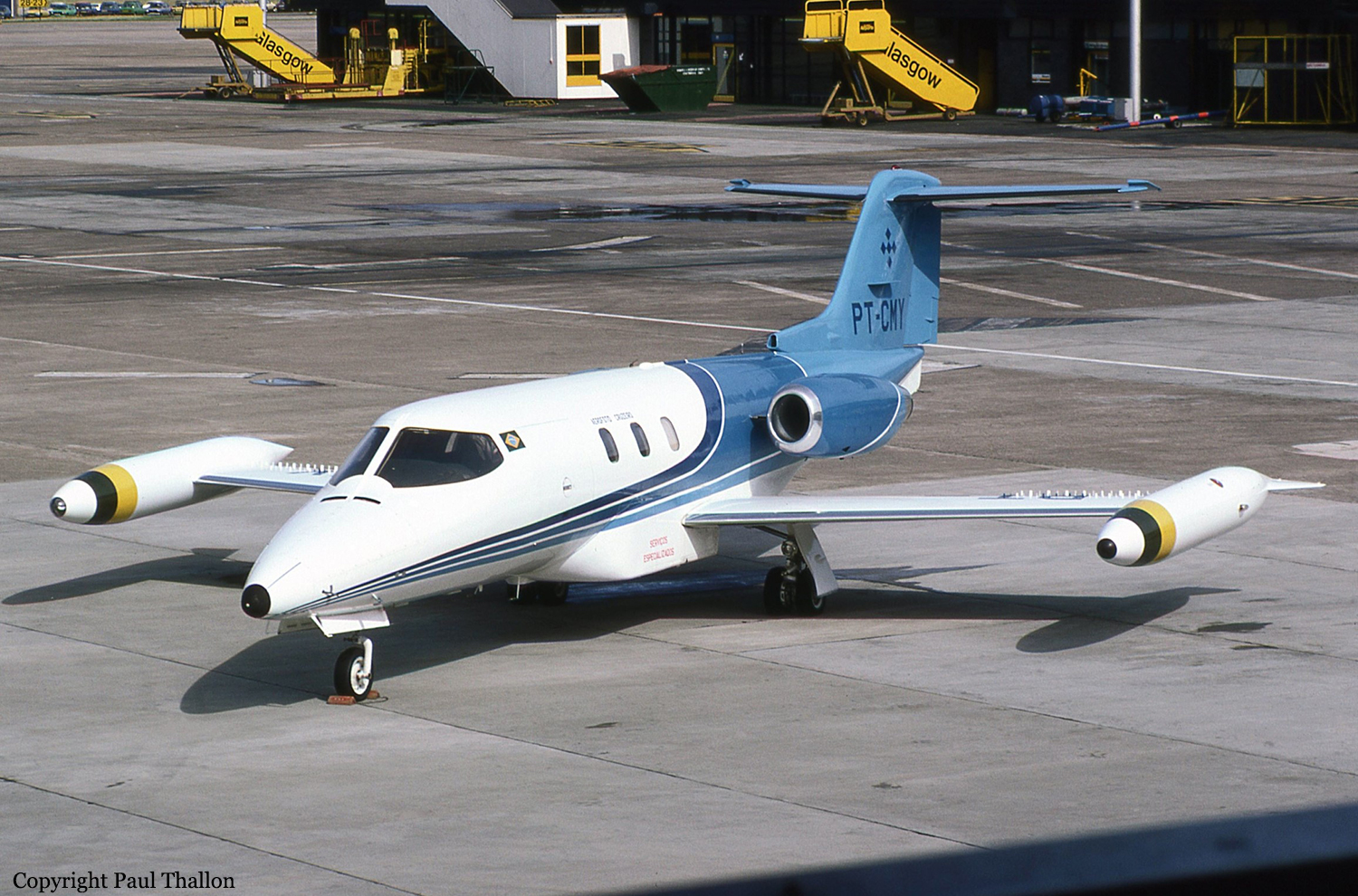
Crash of a Learjet 25C in Juiz de Fora: 2 killed

Date & Time: Apr 6, 1990 at 1503 LT
Type of aircraft:
Registration:
PT-CMY
Flight Type:
Survivors:
Yes
Schedule:
Rio de Janeiro – Juiz de Fora – Belo Horizonte – Monte Carlos
MSN:
25-108
YOM:
1973
Country:
Crew on board:
2
Crew fatalities:
Pax on board:
2
Pax fatalities:
Other fatalities:
Total fatalities:
2
Captain / Total flying hours:
9987
Captain / Total hours on type:
225.00
Copilot / Total flying hours:
2140
Copilot / Total hours on type:
9
Circumstances:
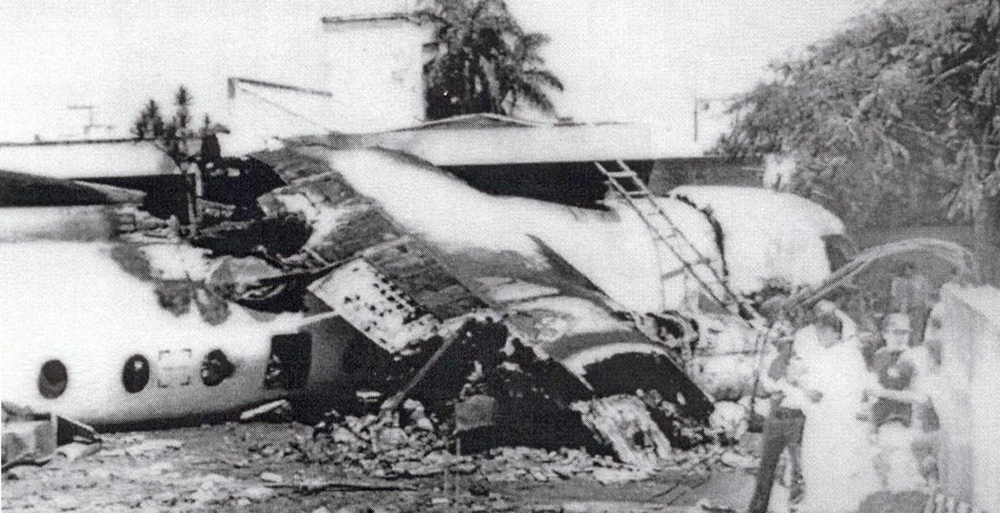
The airplane departed Rio de Janeiro-Santos Dumont Airport at 1440LT on a cargo flight to Monte Carlos with intermediate stops in Juiz de Fora and Belo Horizonte, carrying two passengers, two pilots and a load of bank notes. Because the crew failed to prepare the flight according to procedures, the aircraft departed Santos Dumont with a total weight in excess of 711 kilos. Following a poor flight and approach planning, the crew failed to make the appropriate landing calculations and upon arrival, the total weight of the aircraft was 946 kilos above the max landing weight. The aircraft landed on wet runway 21 and after touchdown, the spoilers did not deployed. Unable to stop within the remaining distance, the aircraft overran, went down a 20 metres ravine and came to rest, bursting into flames. The captain and a passenger were killed while both other occupants were injured. The aircraft was destroyed.
Probable cause:
The following contributing factors were identified:
• Human Factor - Psychological Aspect - It contributed to the occurrence of the accident due to managerial failures, allowing an aircraft to be used improperly and assigning pilots without the necessary training and experience.
• Deficient Instruction - There are indications that it contributed. Given the errors committed in conducting the flight, regarding incorrect and deficient planning, lack of knowledge or disregard for the limitations of the aircraft, considering the conditions existing at the time of the accident, it is believed that there was deficient instruction during the transition phase from other equipment to this one.
• There was inadequate follow-up during the instruction given to the student, due to the failure to complete the flight evaluation forms.
• Poor Cockpit Coordination - the copilot, by participating in the landing operation merely as a spectator, undeniably demonstrates poor coordination among the crew.
• Poor Judgment - the decision to perform the landing under the existing conditions at the time of the accident (wet runway, excess weight, center of gravity outside limits, etc.) demonstrates a completely deficient judgment on the part of the captain. At the time of the accident, runway 03/21 was 1,303 metres long and in light of the above elements, a distance of 3,285 metres was required for the plane to land.
• Poor Planning - this was the determining factor in the occurrence of the accident, as the failure in weight and balance calculations, as well as incorrect loading, culminated in the loss of control during the landing operation, since the aircraft exceeded all operational limits at that moment.
• Deficient Supervision - despite the commander having extensive flight experience, the number of flight hours on the aircraft type proved insufficient for the role of commander, as the data collected during the investigation showed that he did not possess the necessary technical knowledge, compromising his decisions as commander. The copilot, in turn, was still in training. What the pilot knew concretely, in relation to the mission he was to execute, was only the route to be flown. These aspects are consistent with serious supervision failures and the absence of flight safety doctrine in the company.
Final Report:

Crash of a Fokker F27 Friendship 200 in Bauru: 3 killed

Date & Time: Feb 12, 1990 at 0929 LT
Type of aircraft:
Operator:
Registration:
PT-LCG
Survivors:
Yes
Schedule:
São Paulo – Bauru – Araçatuba
MSN:
10206
YOM:
1962
Country:
Crew on board:
3
Crew fatalities:
Pax on board:
38
Pax fatalities:
Other fatalities:
Total fatalities:
3
Circumstances:
The aircraft departed São Paulo-Congonhas Airport on a domestic schedule flight to Araçatuba with an intermediate stop in Bauru. The pilot-in-command was a captain under training, accompanied by an instructor and a third pilot. Because the Brasilia ARTCC frequency was congested, the crew was cleared to initiate the descent from FL140 at a distance of 50 km from Bauru Airport instead of the standard 74 km. This caused the aircraft to approach at an excessive speed and as the captain estimated the situation as unsafe, he prefered to initiate a go-around but the instructor decided to continue. Due to a lack of coordination between the captain and the instructor, it was not clear who would perform the landing but finally, the instructor took over control. Following a rate of descent of 2,500 feet per minute, the aircraft landed at a speed of 130 knots some 775 meters past the runway 32 threshold. After touchdown, the aircraft floated, causing the left and right main gear to land alternatingly. The instructor realized that he would not be able to stop the aircraft within the remaining distance so he decided to initiate a go-around procedure and added full power. As this was against the published procedure and due to a lack of sufficient air in the engine in combination with a high angle of attack, the aircraft stalled after the engine failed to develop enough power. The aircraft crashed 600 meters past the runway end, struck vehicles and houses and came to rest in flames. One of the pilot and two people in car were killed. All other occupants were rescued, among them three were seriously injured. The aircraft was destroyed.
Probable cause:
The accident was the consequence of a poor approach planning and wrong approach configuration.
The following contributing factors were reported:
- Deficiencies in crew training,
- Deficiencies in flight controls,
- Poor crew coordination,
- Poor judgment,
- Poor planning,
- Lack of supervision.

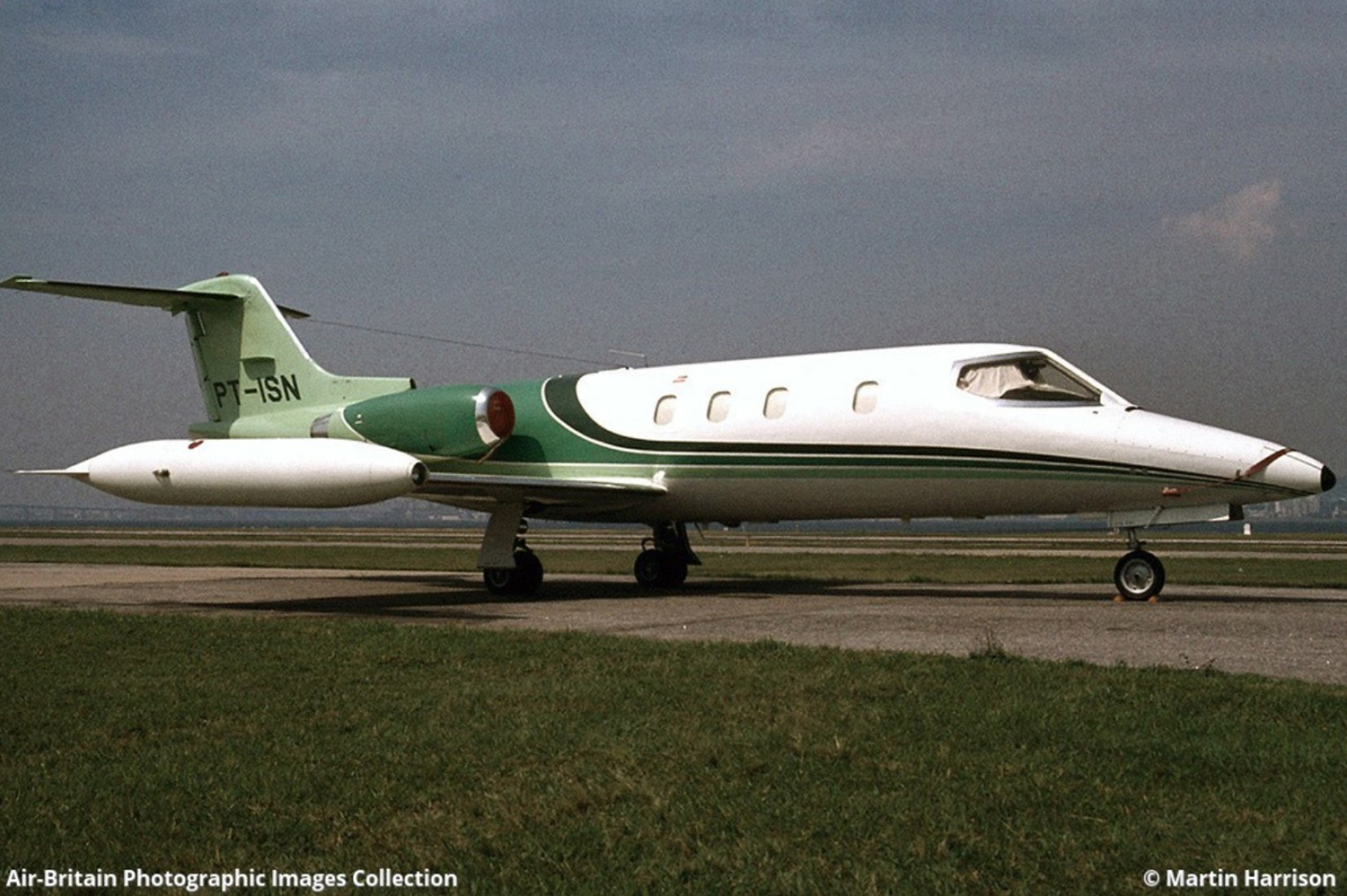
Crash of a Learjet 25C in Ribeirão das Neves: 5 killed

Date & Time: Nov 5, 1989 at 0002 LT
Type of aircraft:
Registration:
PT-ISN
Survivors:
No
Site:
Schedule:
Rio de Janeiro – Belo Horizonte
MSN:
25-113
YOM:
1973
Country:
Crew on board:
2
Crew fatalities:
Pax on board:
2
Pax fatalities:
Other fatalities:
Total fatalities:
4
Circumstances:
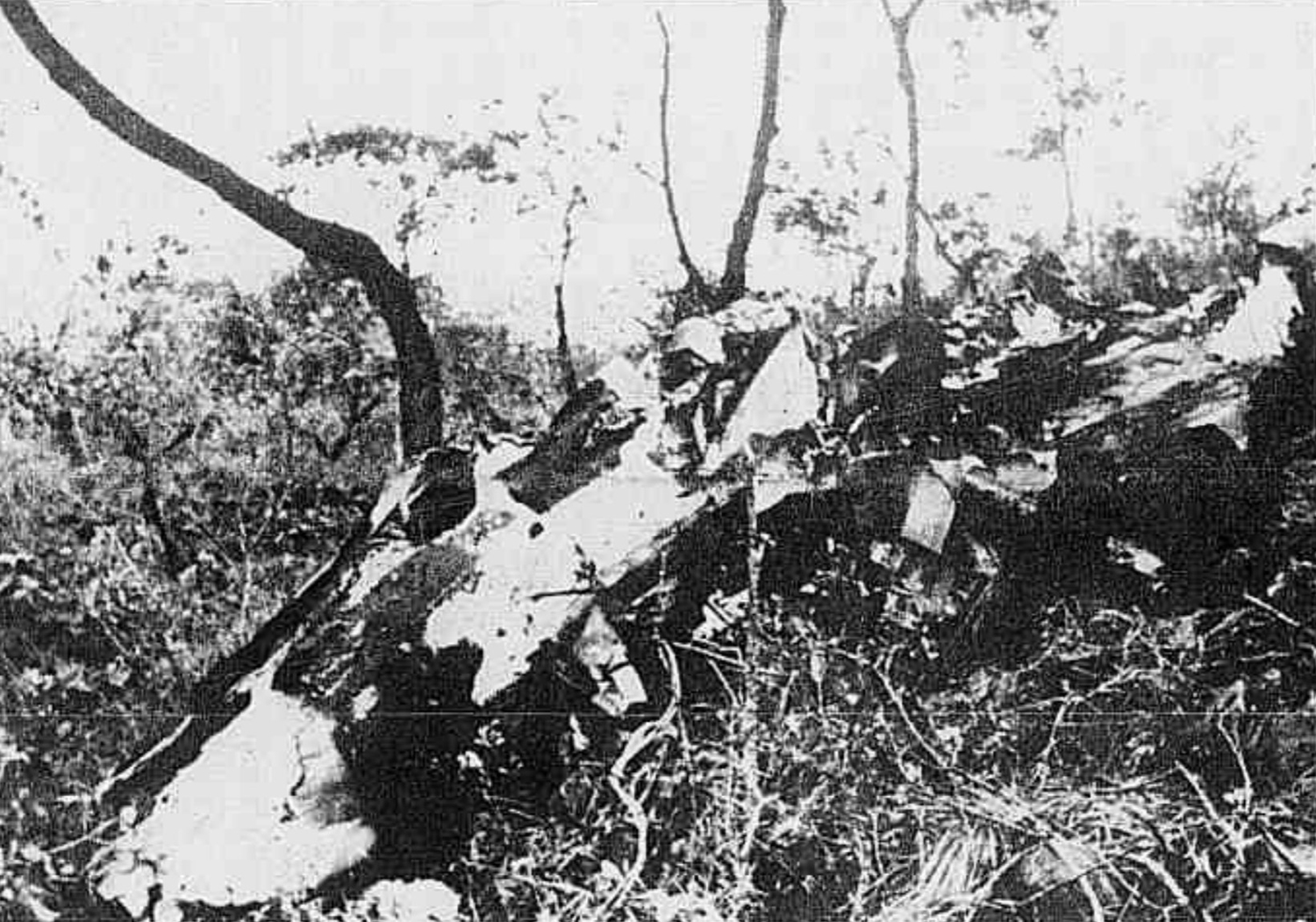
While approaching Belo Horizonte-Pampulha Airport, the crew encountered poor weather conditions with heavy rain falls. Two minutes before landing, the aircraft struck trees and crashed on a hilly terrain located 15 km short of runway 13, near Ribeirão das Neves. All four occupants were killed.
Crew:
César Augusto da Costa e Silva, pilot,
João Bosco Monteiro Barros, copilot.
Passengers.
Alexandrino Horta,
Pedro Ernani Goulart.

Crash of a Boeing 737-241 near São José do Xingu: 12 killed

Date & Time: Sep 3, 1989 at 2045 LT
Type of aircraft:
Operator:
Registration:
PP-VMK
Flight Phase:
Survivors:
Yes
Schedule:
São Paulo – Marabá – Belém
MSN:
21006
YOM:
1975
Flight number:
RG254
Country:
Crew on board:
6
Crew fatalities:
Pax on board:
48
Pax fatalities:
Other fatalities:
Total fatalities:
12
Captain / Total flying hours:
6928
Captain / Total hours on type:
980.00
Copilot / Total flying hours:
884
Copilot / Total hours on type:
442
Aircraft flight hours:
33373
Circumstances:
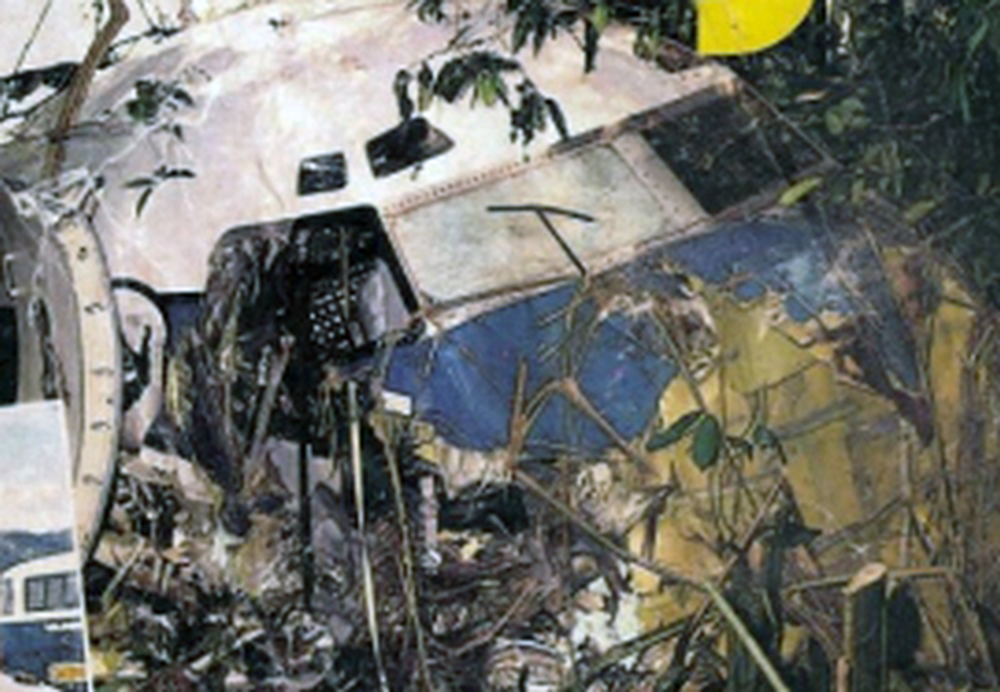
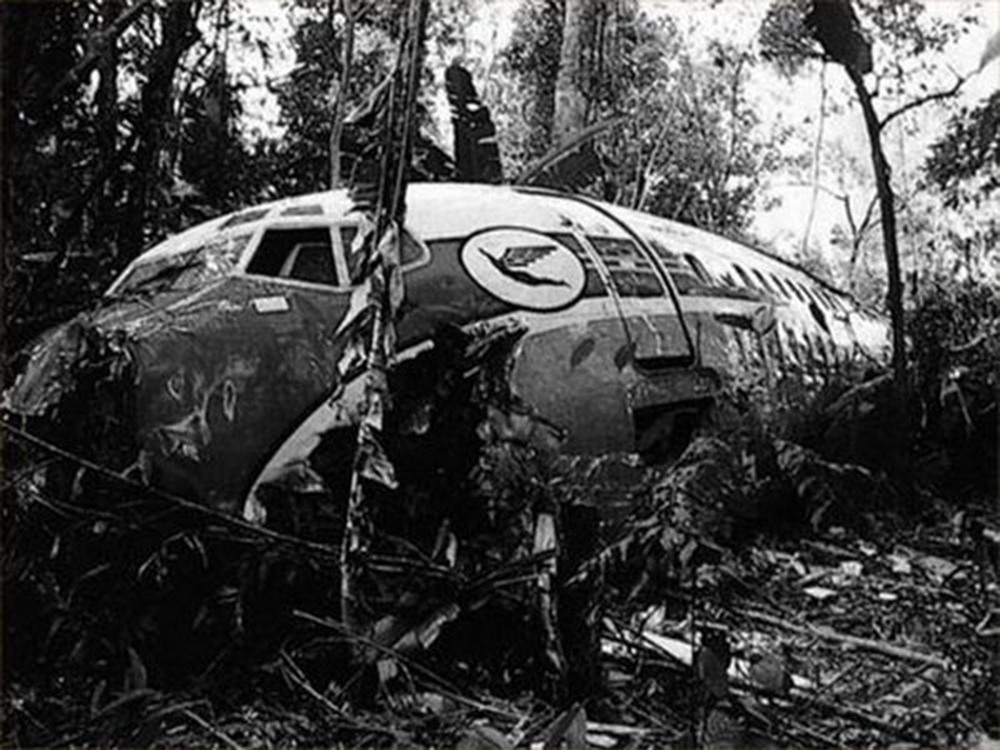
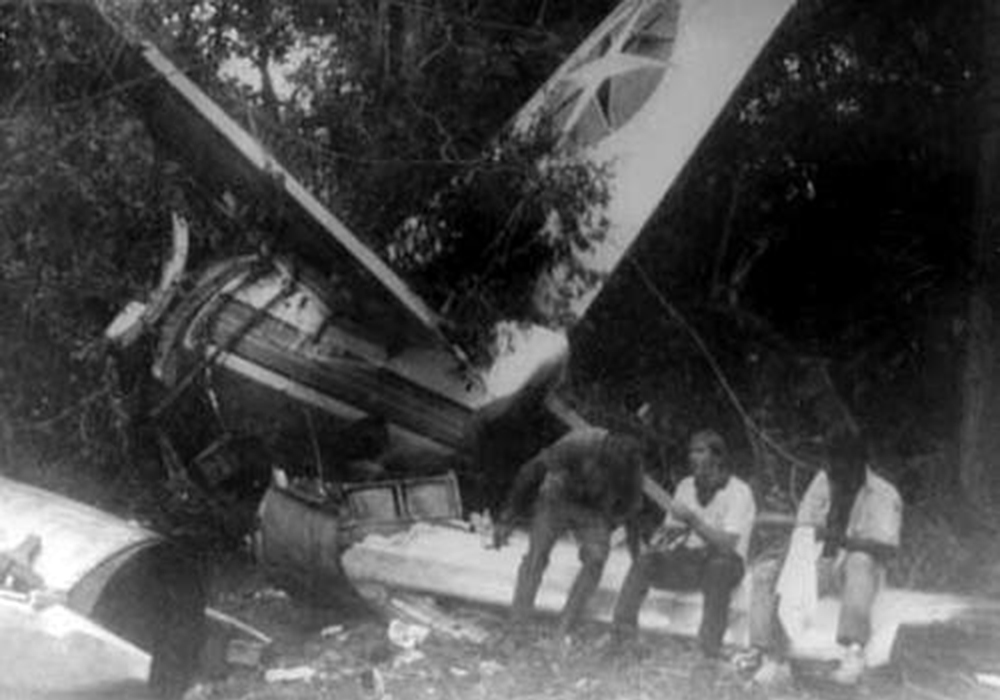
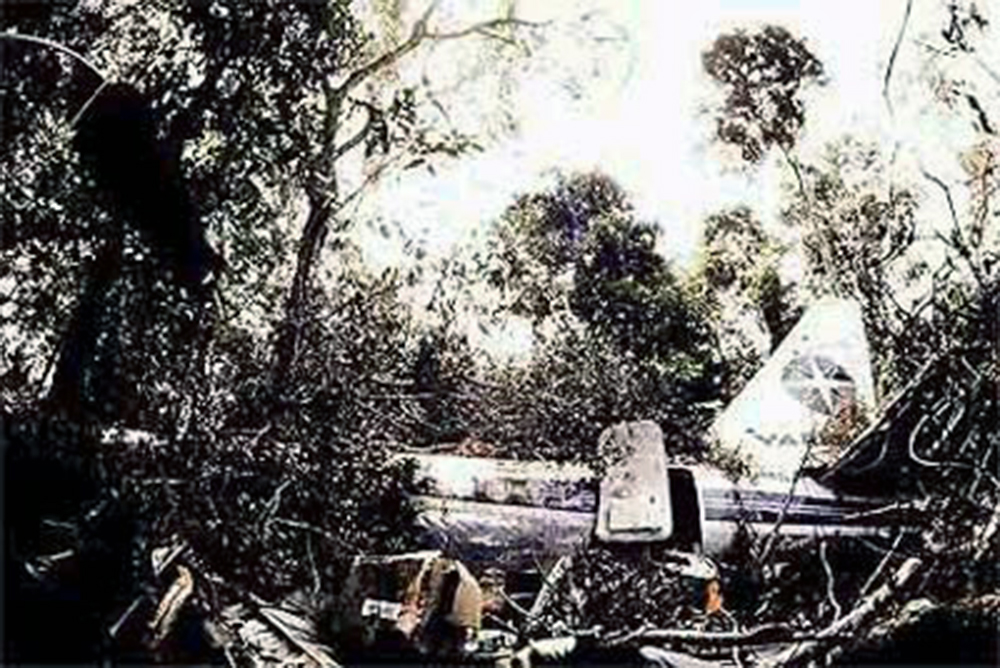
Following a wrong flight preparation and erroneous computer setting regarding the route, the crew computerized 027° instead of 270°. After takeoff from Marabá Airport at 1725LT, the crew was cleared to climb to FL290 and maintained heading of 270° for 40 minutes. The flight was then cleared to descend to FL200 by Belém ACC. However, the crew failed to find navigational aids and lost radio contact. Course was changed to 090 degrees as the aircraft further descended down to FL40. The crew then followed a river, heading 165 degrees. Because of the sunset and haze the pilot's had difficulty navigating. Also, they failed to establish radio contact on several frequencies and failed to find navaids in the area. After the crew found the NDB, both engines stopped due to fuel exhaustion. The captain elected to make an emergency landing when the aircraft crashed in the jungle about 60 km from São José do Xingu. Rescue teams arrived on site 44 hours later. 42 occupants were injured while 12 passengers were killed. The aircraft was destroyed. It appeared that the computerized flight plan used a four digit representation of the magnetic bearing with the last digit being a tenth of a degree without any decimal separator. A course of '027.0' was presented as '0270'.
Probable cause:
A. Human Factor
1) Physiological aspect - Did not contribute to the accident.
2) Psychological aspect - The following psychological variables contributed to the accident:
a) Misleading perception - In the reading of the plan and incorrect heading insertion by the commander.
b) Reinforcement - In the reading and incorrect heading insertion by the co-pilot and heading conference placed by the commander.
c) Marginal attention and level of attention - The non-recognition of conditions that would mean being far from the objective: request for "VHF bridge" when other aircraft were talking normally with the Control; "reception" of commercial stations, and non-receipt of destination NDB, etc.
d) Predisposition - Maintaining the urge to go to the established objective (Belém).
e) Predisposition duration - Maintenance of FL040 for a long time.
f) Reinforcement of predisposition - Reception of boundaries when selecting Belem's radio frequencies.
g) Attention Fixing - Permanent search for headings, radio contacts or river contours, as an alternative, to reach the fixed goal.
h) Blocks - Delays in identifying the initial headings error and plotting itself in navigation.
i) Geographical position error.
B. Material Factor - Did not contribute to the accident.
C. Operational Factor
1) Poor supervision - Inadequate graphical representation of the Computer Flight Plan.
2) Poor cockpit coordination - No supervision of cockpit activities. Actions were not supervised, but imitated.
3) Poor support staff - Lack of radio contact by the operator's Flight Coordination with the aircraft in flight, after the significant landing delay in Belém, thus breaking the chain of events of the accident.
4) Pilot aspect characterized by environmental influence - Difficulties of visualization due to sunset and dry fog: Radio aid markings received from great distances, originating from the ionospheric propagation of electromagnetic waves.
5) Pilot aspect characterized by poor planning - Lack of route letters to cross the flight plan information.
6) Pilot aspect characterized by poor judgment - Inadequate evaluation and use of radio-navigation equipment, resulting in the pursuit of markings without causing tuning and identification.
7) Pilot aspect characterized by other operational factors - Operational doctrine firming.
Final Report:

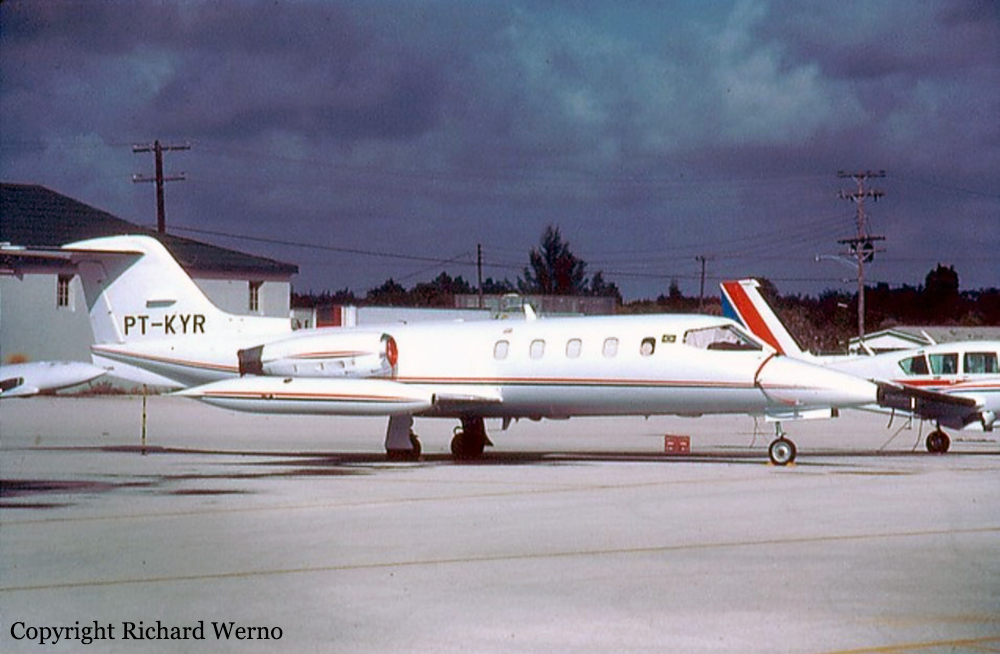
Crash of a Learjet 25D in Belém: 4 killed

Date & Time: Aug 5, 1989 at 1904 LT
Type of aircraft:
Registration:
PT-KYR
Survivors:
No
Schedule:
Goiânia – Belém
MSN:
25-266
YOM:
1979
Country:
Crew on board:
2
Crew fatalities:
Pax on board:
2
Pax fatalities:
Other fatalities:
Total fatalities:
4
Captain / Total flying hours:
4336
Captain / Total hours on type:
36.00
Copilot / Total flying hours:
2304
Copilot / Total hours on type:
380
Circumstances:
Following an uneventful flight from Goiânia, the crew started the descent to Belém-Val de Cans Airport runway 06 via heading 243° then reported 6 nm from the airport at an altitude of 2,000 feet. Eleven seconds later, the aircraft went out of control and crashed in a wooded area located on the Oncas Island, few km short of runway 06 threshold. The aircraft was totally destroyed upon impact and all four occupants were killed.
Probable cause:
It is believed that the loss of control may have been the result of windshear that existed in the approach path of runway 06.
The following contributing factors were reported:
- The crew did not have sufficient training and experience to manage a windshear situation and thus, was unable to take the appropriate corrective actions,
- Poor crew coordination,
- The captain's experience on this type of aircraft was low,
- Poor supervision,
- Lack of safety culture by the operator.
Final Report: