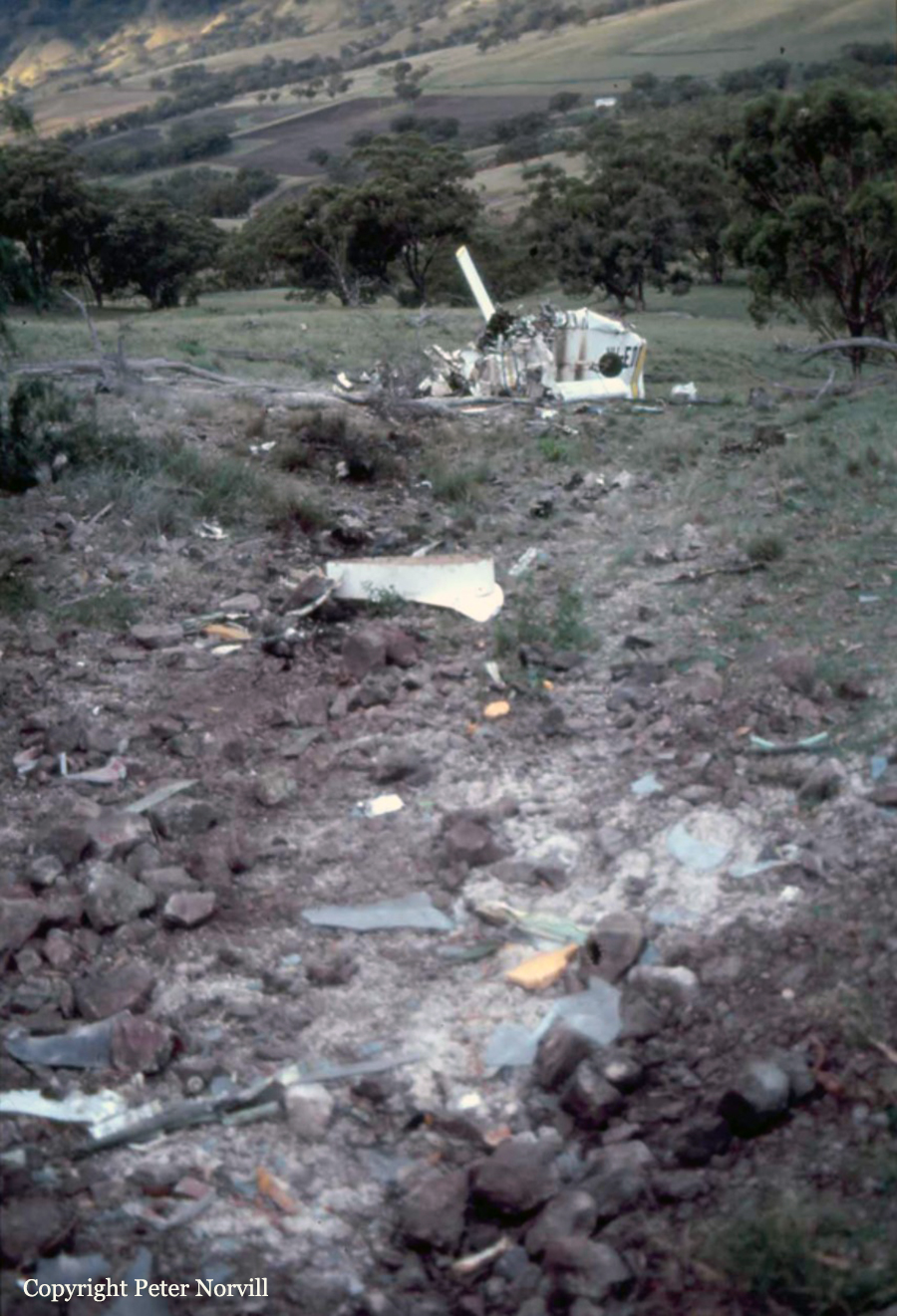
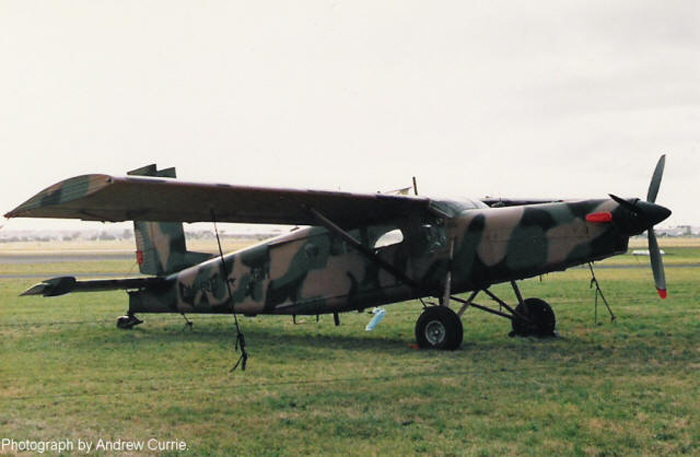
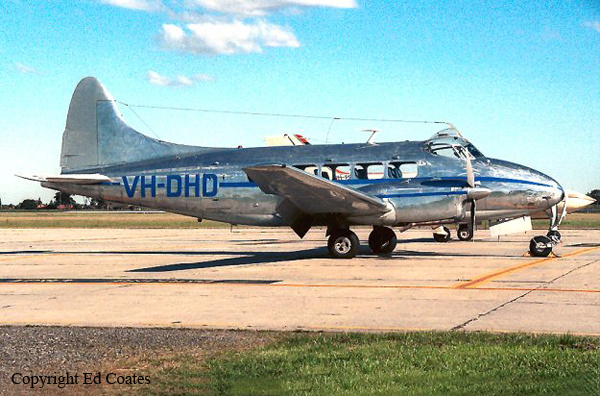
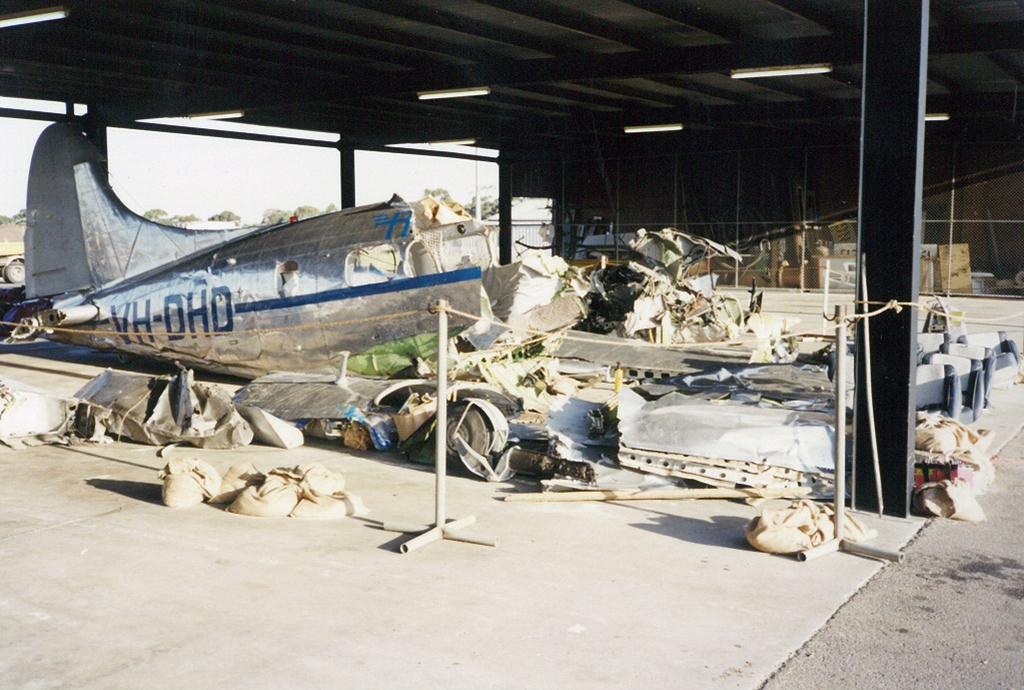
Crash of a De Havilland DH.104 Dove 5 in Melbourne

Date & Time: Dec 3, 1993 at 2037 LT
Type of aircraft:
Operator:
Registration:
VH-DHD
Flight Phase:
Survivors:
Yes
Site:
Schedule:
Melbourne - Melbourne
MSN:
04104
YOM:
1948
Country:
Region:
Crew on board:
2
Crew fatalities:
Pax on board:
8
Pax fatalities:
Other fatalities:
Total fatalities:
0
Captain / Total flying hours:
18154
Captain / Total hours on type:
1500.00
Aircraft flight hours:
21259
Circumstances:
The pilot had planned to conduct a night charter flight over Melbourne and Port Phillip Bay, starting from and returning to Essendon Airport. Dinner was to be served in flight. The pilot gave a safety briefing to the passengers before starting the engines. He completed engine runups and pre-takeoff checks, including selecting 20° of flap. At 2036 ESuT, in daylight, the pilot initiated takeoff on runway 17 using standard take-off power setting of 7.5 lb/in2 of boost and 3,000 RPM. Wind conditions were light and variable, visibility was about 10 km and the temperature was 19°C. The aircraft became airborne and, just as it achieved the take-off safety speed of 84 kts, at a height not above 50 ft, the right engine lost power. The aircraft yawed right. The pilot reported to the investigation team that he briefly noticed a reading of 3 lb of boost on the MAP gauge and assessed the problem as a possible partial right engine failure. He then selected the landing gear up but it did not retract. He cycled the landing gear selector once and the gear then retracted. By this time several seconds had elapsed and the airspeed had decayed to 76 kts. The pilot then assessed the airspeed as too low to retract the flaps and left them at 20°. The airspeed continued to decay until VMCA, 72 kts, was reached. When indicated airspeed had further decayed to 68 kts, the pilot reduced power on the left engine to avoid an uncontrollable roll to the right. He was able to maintain wings level and attempted to track the aircraft toward a street but was unable to maintain height. The aircraft collided with powerlines and then struck the roofs of several houses before coming to rest, on its left side, against the front wall of a house. About one minute had elapsed from initiation of takeoff until the accident. The pilot and all but one of the passengers remained conscious throughout the accident sequence. All occupants were evacuated, some without assistance and others with the assistance of the pilot, other passengers, emergency services personnel or bystanders.
Probable cause:
The following factors were reported:
- The right engine fuel control unit fuel pump failed causing the engine to fail at a critical phase of flight.
- Maintenance inspections did not detect the abnormal wear on the thrust face of the right engine fuel control unit fuel pump.
- The landing gear did not retract on the first attempt and aircraft performance decayed while the pilot resolved this problem.
- The pilot was probably forced to abandon the emergency procedures to concentrate on maintaining control of the aircraft.
- The aircraft was unable to maintain altitude and airspeed with the right propeller windmilling and 20° of flap.
- The investigation identified organisational factors concerning deficiencies in the manuals and procedures available to, and used by, the operator for the operation and maintenance of the accident aircraft.
Final Report:
Crash of a Piper PA-31-350 Navajo Chieftain in Launceston: 6 killed

Date & Time: Sep 17, 1993 at 1943 LT
Operator:
Registration:
VH-WGI
Survivors:
Yes
Schedule:
Melbourne - Launceston
MSN:
31-7305075
YOM:
1973
Country:
Region:
Crew on board:
1
Crew fatalities:
Pax on board:
9
Pax fatalities:
Other fatalities:
Total fatalities:
6
Captain / Total flying hours:
701
Captain / Total hours on type:
3.00
Aircraft flight hours:
8712
Circumstances:
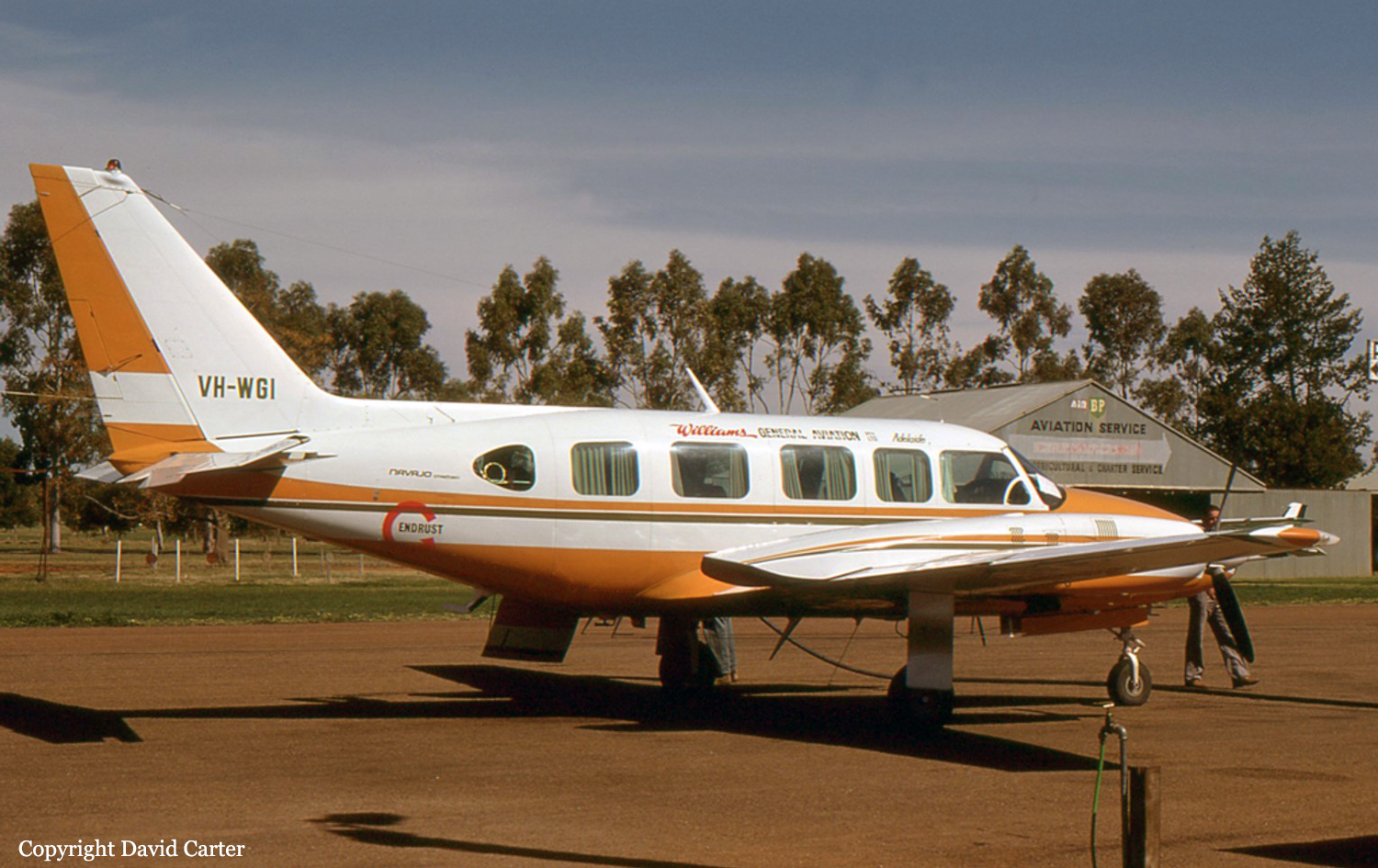
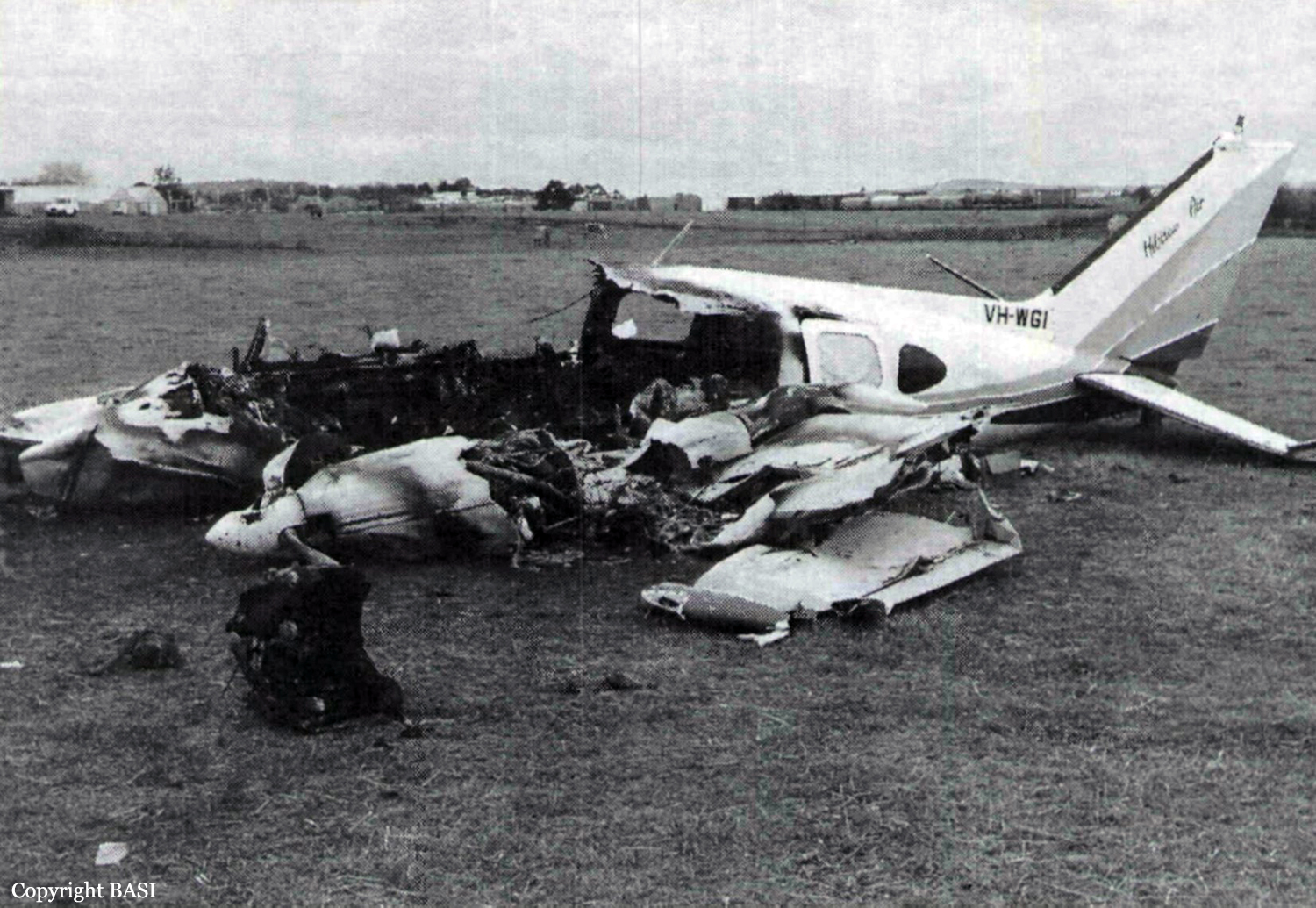
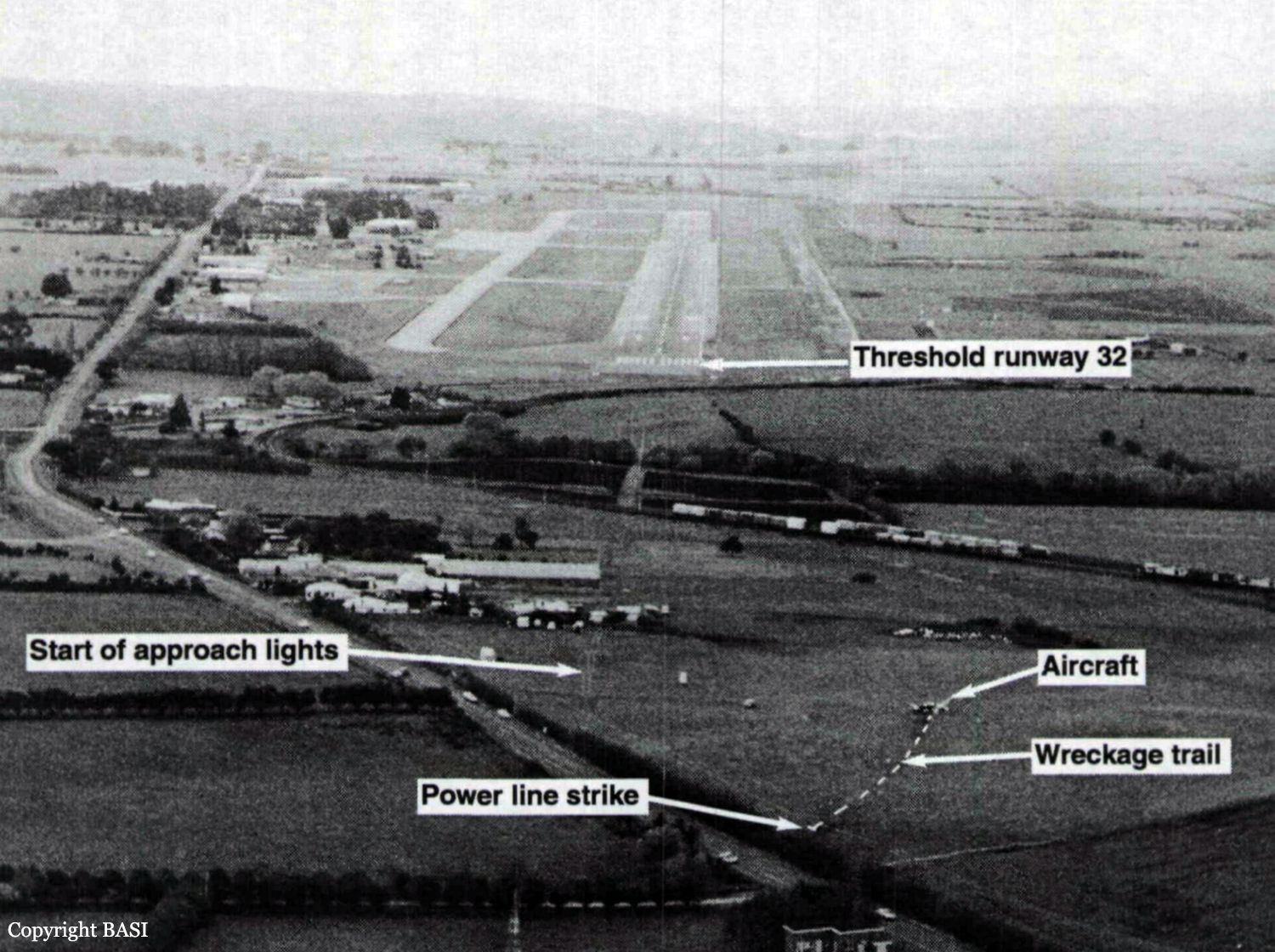
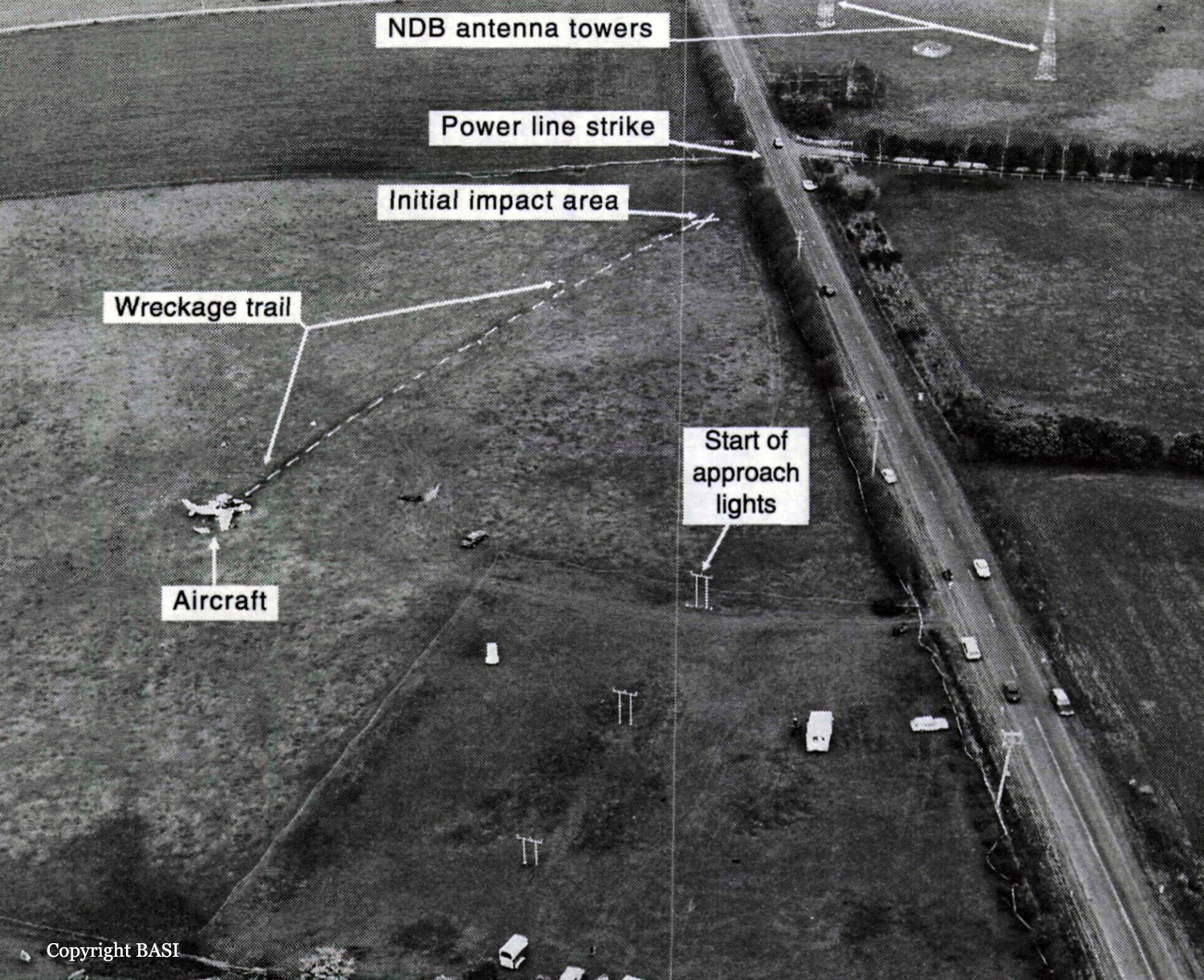
Members of a football club had planned to visit Launceston, travelling by light aircraft. Three aircraft were needed to carry the group, with all passengers and pilots contributing to the cost of the aircraft hire. One of the club members, who was a pilot, organised the required aircraft and additional pilots for departure from Moorabbin Airport on the afternoon of 17 September 1993. The operator from whom the aircraft were hired, who also employed the organising pilot as an instructor, arranged for one Piper PA-23 (VH-PAC), a Piper PA-31-310 (VH-NOS) and a Piper PA-31-350 (VH-WGI) to be available for the trip, with the organising pilot to fly VH-WGI. On the day of the flight the pilot of VH-WGI carried out pre-flight inspections, obtained the weather forecasts and submitted flight plans for all three aircraft. The flight plans for the two PA-31 aircraft were for flights operated in accordance with IFR procedures. The PA-23 was to operate in accordance with VFR procedures. The TAF for Launceston predicted 2 octas of stratocumulus cloud, base 2,000 ft and 3 octas of stratocumulus cloud, base 3,500 ft. The flight plan for VH-WGI (see fig. 2) indicated that the aircraft would track Moorabbin Wonthaggi-Bass-Launceston and cruise at an altitude of 9,000 ft. A cruise TAS of 160 kts, total plan flight time of 90 minutes, endurance 155 minutes and Type of Operation 'G' (private category flight) were specified. No alternate aerodrome was nominated and none was required. The estimated time of departure was 1730. The flight plan was submitted to the CAA by facsimile at 1529. Last light at Launceston was 1919. VH-WGI departed Moorabbin at 1817 and climbed to an en-route cruise altitude of 9,000 ft. The pilot was required to report at Wonthaggi but passed this position at 1832 without reporting. Melbourne ATC tried unsuccessfully to contact the pilot because of this missed report. Later, the Melbourne radar controller noticed the aircraft deviating left of track but was unable to make contact. Communications were re-established at 1858 when the pilot called Melbourne FS saying he had experienced a radio problem. By this time the aircraft heading had been corrected to regain track. At 1927 the pilot called Launceston Tower and was cleared for a DME arrival along the inbound track of the Launceston VOR 325 radial. The Launceston ATIS indicated 2 octas of cloud at 800 ft, QNH 1,012 hPa, wind 320° at 5-10 kts, temperature +10° and runway 32 in use. At 1930 the ADC advised the pilot that the 2 octas of cloud were clear of the inbound track, but that there was some lower cloud forming just north of the field, possibly on track. He informed the pilot that there was a chance he might not be visual by the VOR, in which case he would need to perform an ILS approach via the Nile locator beacon. The ADC contacted the airport meteorological observer at 1933, inquiring as to what the 1930 searchlight check of cloud height had revealed. He was told the observation indicated 7 octas of cloud at about 800 ft. At 1935.52 (time in hours, minutes and seconds) the ADC asked the pilot for his DME (distance) and level. The pilot responded that he was at 12 DME and 3,300 ft. The ADC told the pilot that conditions were deteriorating with probably 4 octas at 800 ft at the field. He then told the pilot he would hopefully get a break in the cloud, but then restated that if he was not visual by the VOR to make a missed approach, track to Nile and climb to 3,000 ft. At 1939.45 the pilot was again asked for his DME and level. He indicated that he was at 1,450 ft and 2-3 DME. He then also confirmed that he was still in IMC. There were three other aircraft inbound for Launceston and the ADC made an all-stations broadcast that conditions were deteriorating at Launceston, with 4 octas at 800 ft, and to expect an ILS approach. At 1940.56 the pilot stated that he was overhead the field, but did not have it sighted and was going around. At 1941.07 the pilot reported that he had the airfield in sight and at 1941.16 that he was positioned above the final approach for runway 32. Fifteen seconds later the pilot reported that he was opposite the tower and was advised by the ADC that he was cleared for a visual approach, or a missed approach to Nile as preferred. The pilot indicated he would take the visual approach and was then told to manoeuvre as preferred for runway 32. This was acknowledged at 1941.48. No further communications were received from the pilot. The ADC made a broadcast to two other inbound aircraft at 1942.32, advising that VH-WGI was in the circuit ahead of them, that it had become visual about half a mile south of the VOR, that it was manoeuvring for a visual approach and was just in and out of the base of the cloud. After the pilot of VH-WGI reported over the field, and the aircraft first appeared out of cloud, witnesses observed it track to about the south-east end of the aerodrome at a height of about 500-800 ft. It then turned left to track north-west on the north-east side of the main runway and approximately over the grass runway. The aircraft was seen to be travelling at high speed, and passing through small areas of cloud. North of the main terminal building a left turn was initiated onto a close downwind leg for runway 32. The aircraft appeared to descend while on this leg. As the base turn was started, at a height estimated as 300-500 ft, the aircraft briefly went through cloud. Some of the witnesses reported that the engine noise from the aircraft during the approach was fairly loud, suggestive of a high power setting. Late on a left base leg the aircraft was observed to be in a steep left bank, probably in the order of 60°, at a height of about 200 ft. It then descended rapidly and struck a powerline with the right wing, approximately 28 ft AGL, resulting in an airport electrical power failure at 1943.02. Almost simultaneously the left wing struck bushes. A short distance beyond the powerlines the aircraft struck the ground and slid to a stop. A fierce fire broke out immediately. Airport fire services responded to the accident and the fire was quickly extinguished. Six of the occupants received fatal injuries and the others, including the pilot, were seriously injured.
Probable cause:
The following findings were reported:
1. The actual weather at Launceston at the time of arrival of VH-WGI was significantly worse than forecast.
2. The pilot did not have the required recent experience to conduct either an IFR flight or an ILS approach. The operator's procedures did not detect this deficiency.
3. The pilot's inexperience and limited endorsement training did not adequately prepare him for IFR flight in the conditions encountered.
4. The CAA did not specify adequate endorsement training or minimum endorsement time requirements for aircraft of the class of the PA-31-350, particularly in regard to the endorsement of inexperienced pilots.
5. An absence of significant decision-making training requirements contributed to the poor decision-making action by the pilot who decided to continue with a visual circling approach at Launceston in conditions that were unsuitable for such an approach.
6. As a consequence of continuing the approach, the pilot subjected himself to an overwhelming workload. This was due to a combination of adverse weather conditions, his lack of training and experience in IFR approach procedures on the type, and a misinterpretation of (or non-compliance with) the AIP/DAP-IAL instructions, a combination which appears to have influenced the pilot to fly a close-in, descending circuit at low altitude. The carriage of alcohol-affected passengers may have also added to the level of difficulty.
7. Because of workload, and possibly also due to distractions, the pilot inadvertently allowed the aircraft to enter a rapid descent at a critical stage of the approach, at an altitude from which recovery could not be effected.
Final Report:

Crash of a Piper PA-31-310 Navajo near Brisbane: 1 killed

Date & Time: Jul 20, 1993 at 1546 LT
Type of aircraft:
Operator:
Registration:
VH-UFO
Flight Phase:
Flight Type:
Survivors:
No
Schedule:
Brisbane – Caboolture
MSN:
31-7712060
YOM:
1977
Country:
Region:
Crew on board:
1
Crew fatalities:
Pax on board:
0
Pax fatalities:
Other fatalities:
Total fatalities:
1
Captain / Total flying hours:
531
Captain / Total hours on type:
35.00
Circumstances:
The aircraft, with only the pilot on board, was being flown from Archerfield to Caboolture via the light aircraft lane to the west of Brisbane in company with another aircraft. About five minutes after departing Archerfield, the pilot radioed that he was experiencing problems with both engines and that he was in an emergency situation. The pilot of the other aircraft advised him that there were suitable forced landing areas in and around a nearby golf course. However, the aircraft continued and slowly lost altitude before rolling inverted and diving steeply into the ground. Ground witnesses reported hearing loud backfiring and fluctuating engine RPM from the aircraft. These sounds were accompanied by erratic rolling and yawing of the aircraft before it rolled to the left and inverted. The right wing was severed outboard of the engine as the aircraft impacted a large tree before crashing onto a road.
Probable cause:
Wreckage examination revealed that the fuel selectors for both engines were set at the auxiliary tank positions, causing fuel for each engine to be drawn from the corresponding auxiliary tank in each wing. It was established that the aircraft had been refuelled to full main tanks prior to the flight. Further, the pilot had advised in a telephone conversation with an engineer before the flight that the contents of both auxiliary tanks was 60 litres or less. All fuel tanks except the left auxiliary tank were ruptured during the impact sequence. About one litre of fuel was recovered from this
tank. Examination of the aircraft engines indicated that the right engine was under power at impact while the left engine was not. The mechanical condition of the engines indicated that they were capable of normal operation.
The following factors are considered relevant to the development of the accident:
- The pilot did not use a written checklist.
- The pilot operated the aircraft with the auxiliary tanks selected when the fuel contents of these tanks was low.
- The pilot failed to conduct a forced landing.
Final Report:
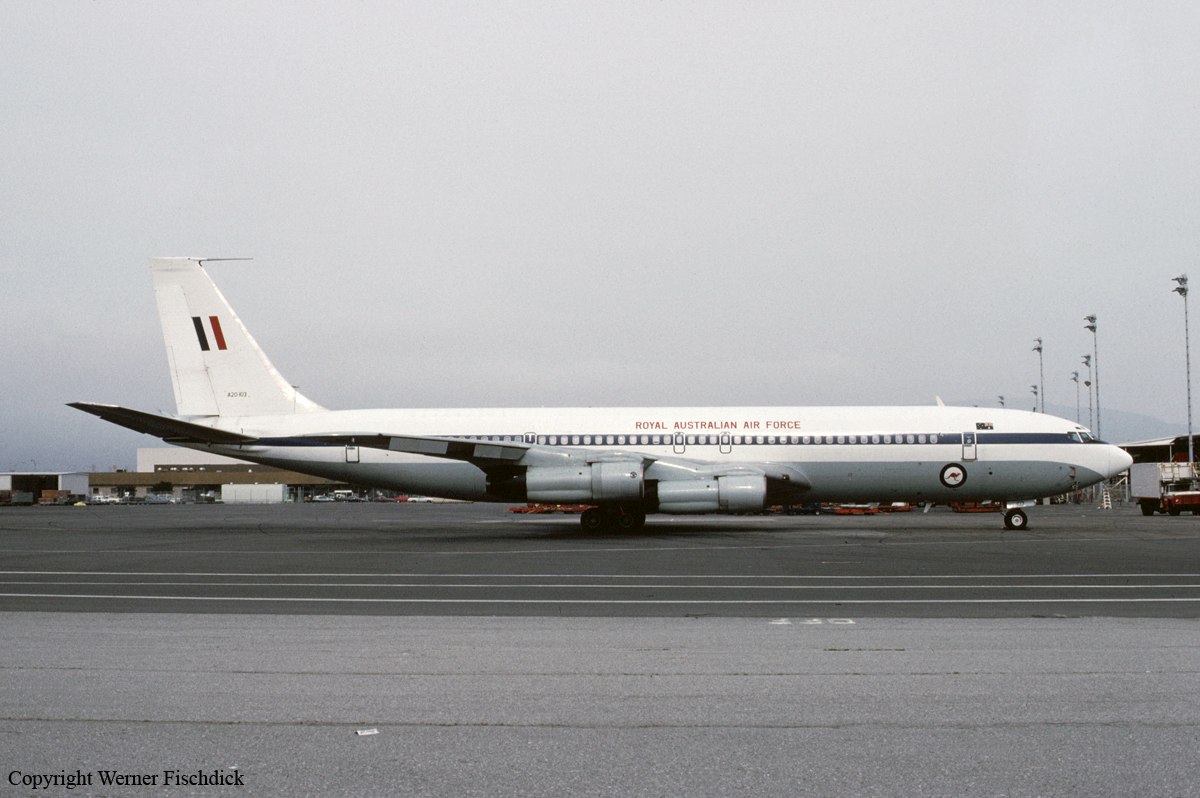
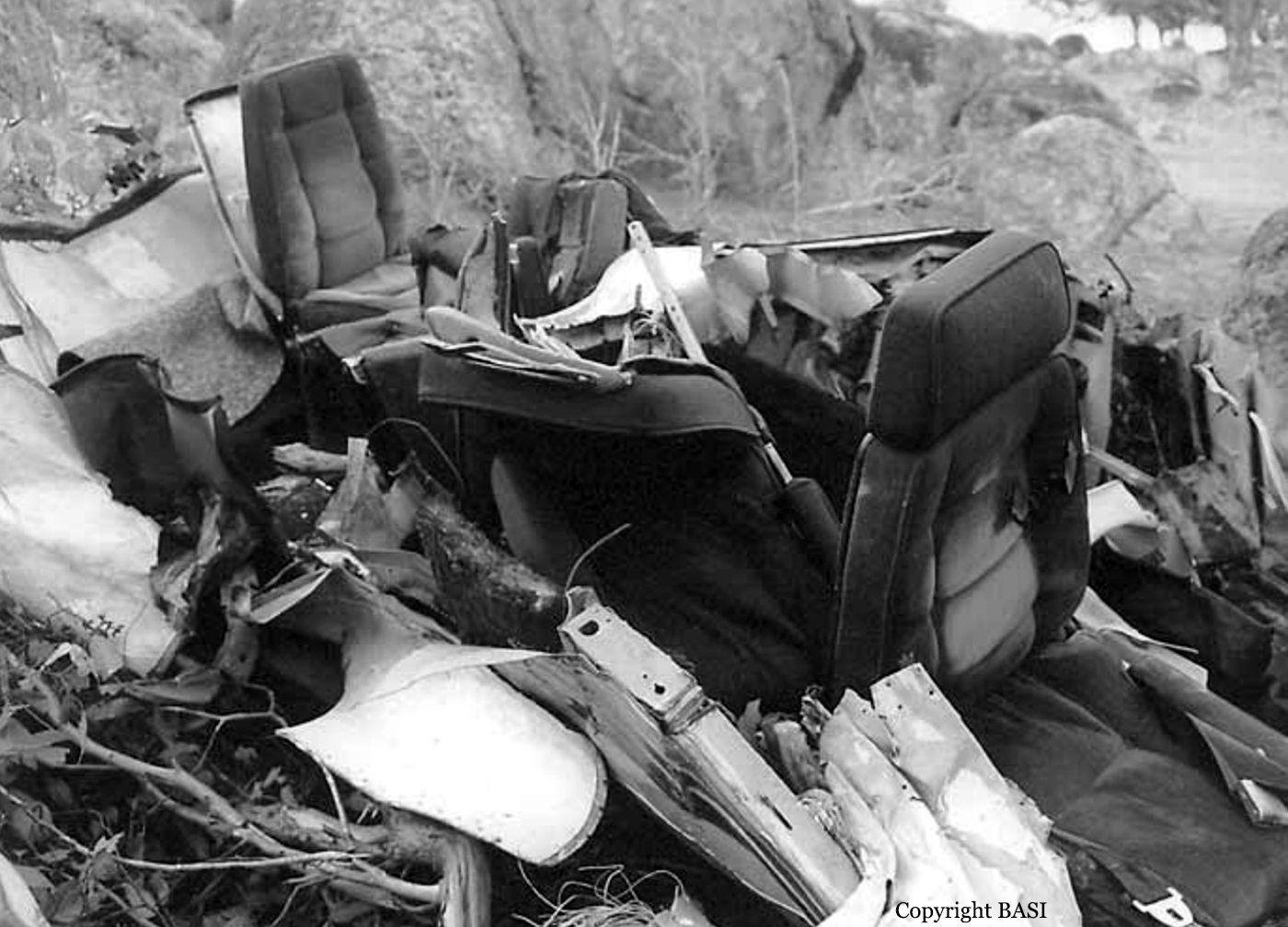
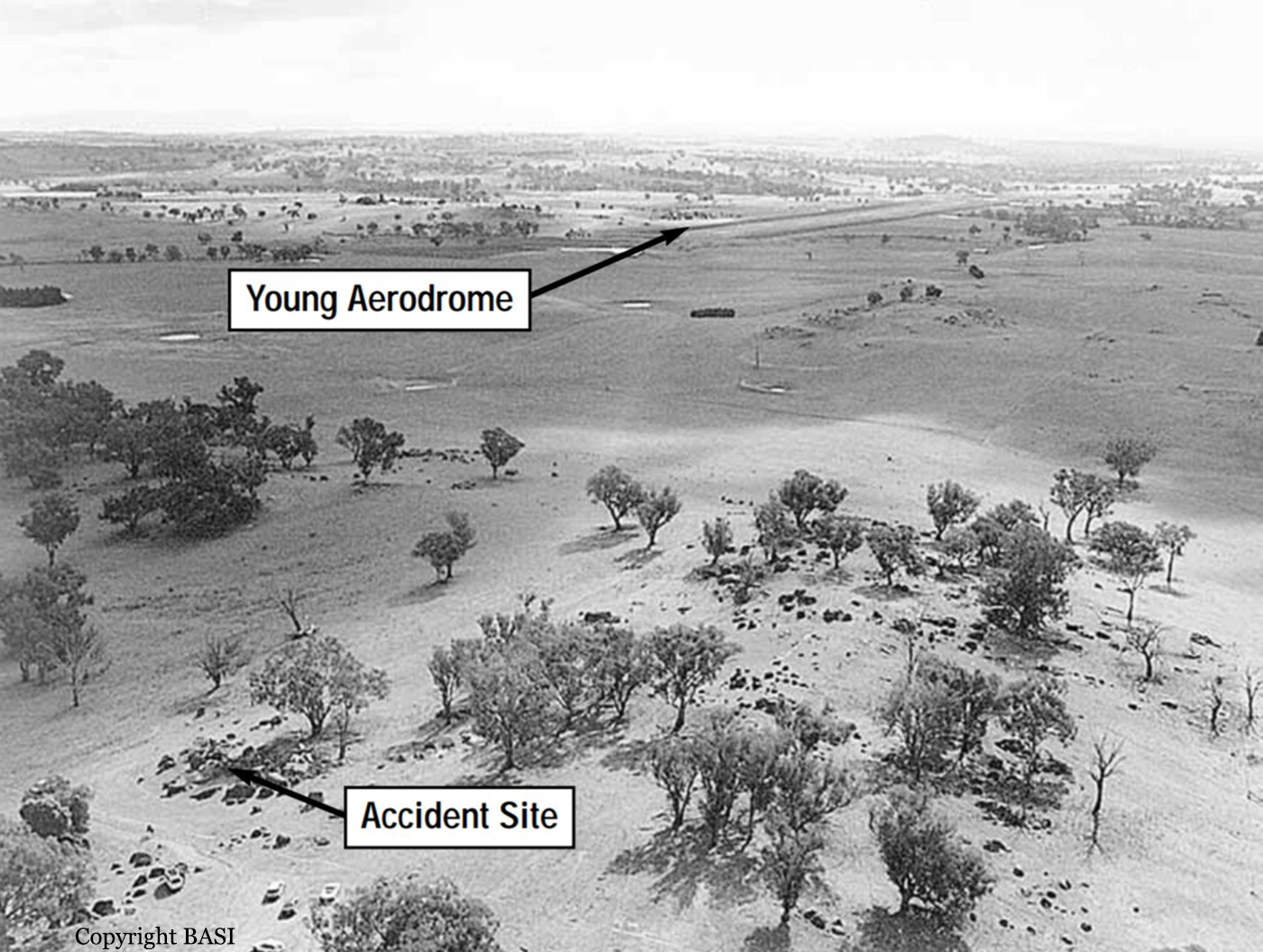
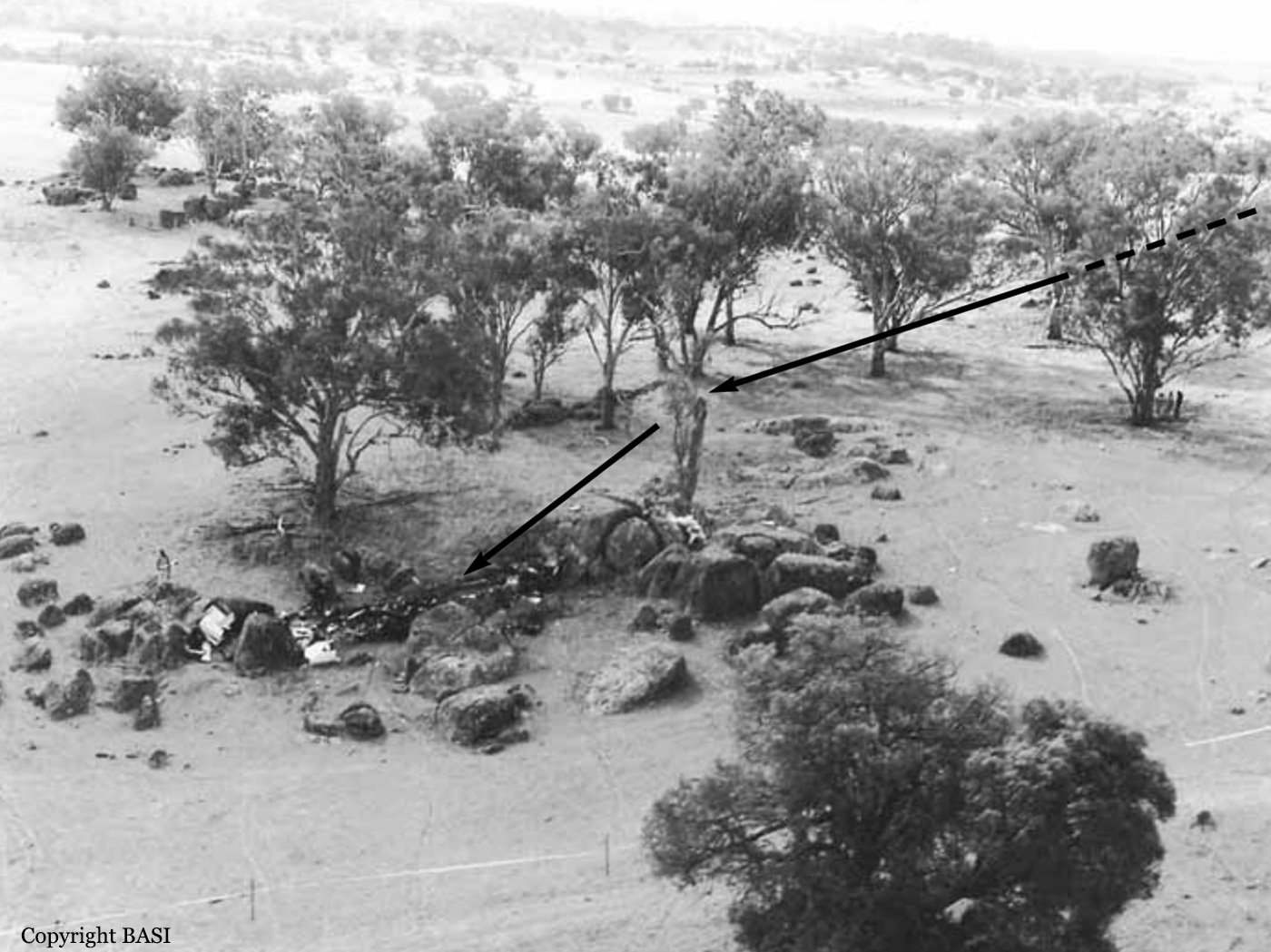
Crash of a Piper PA-31-350 Navajo Chieftain in Young: 7 killed

Date & Time: Jun 11, 1993 at 1918 LT
Registration:
VH-NDU
Survivors:
No
Schedule:
Sydney – Cowra – Young – Cootamundra
MSN:
31-8152083
YOM:
1981
Flight number:
OB301
Country:
Region:
Crew on board:
2
Crew fatalities:
Pax on board:
5
Pax fatalities:
Other fatalities:
Total fatalities:
7
Captain / Total flying hours:
1822
Captain / Total hours on type:
337.00
Copilot / Total flying hours:
954
Copilot / Total hours on type:
43
Aircraft flight hours:
3936
Circumstances:
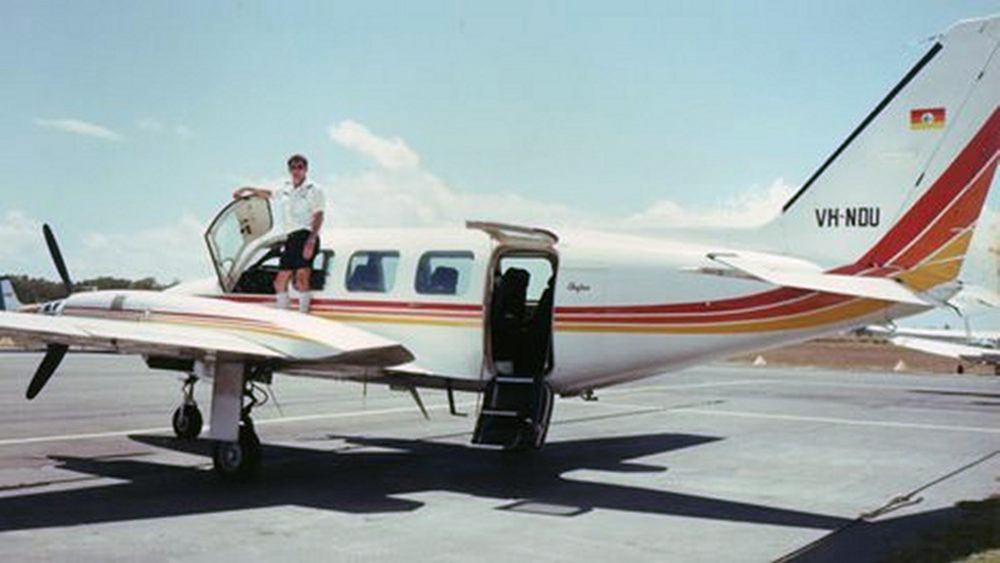
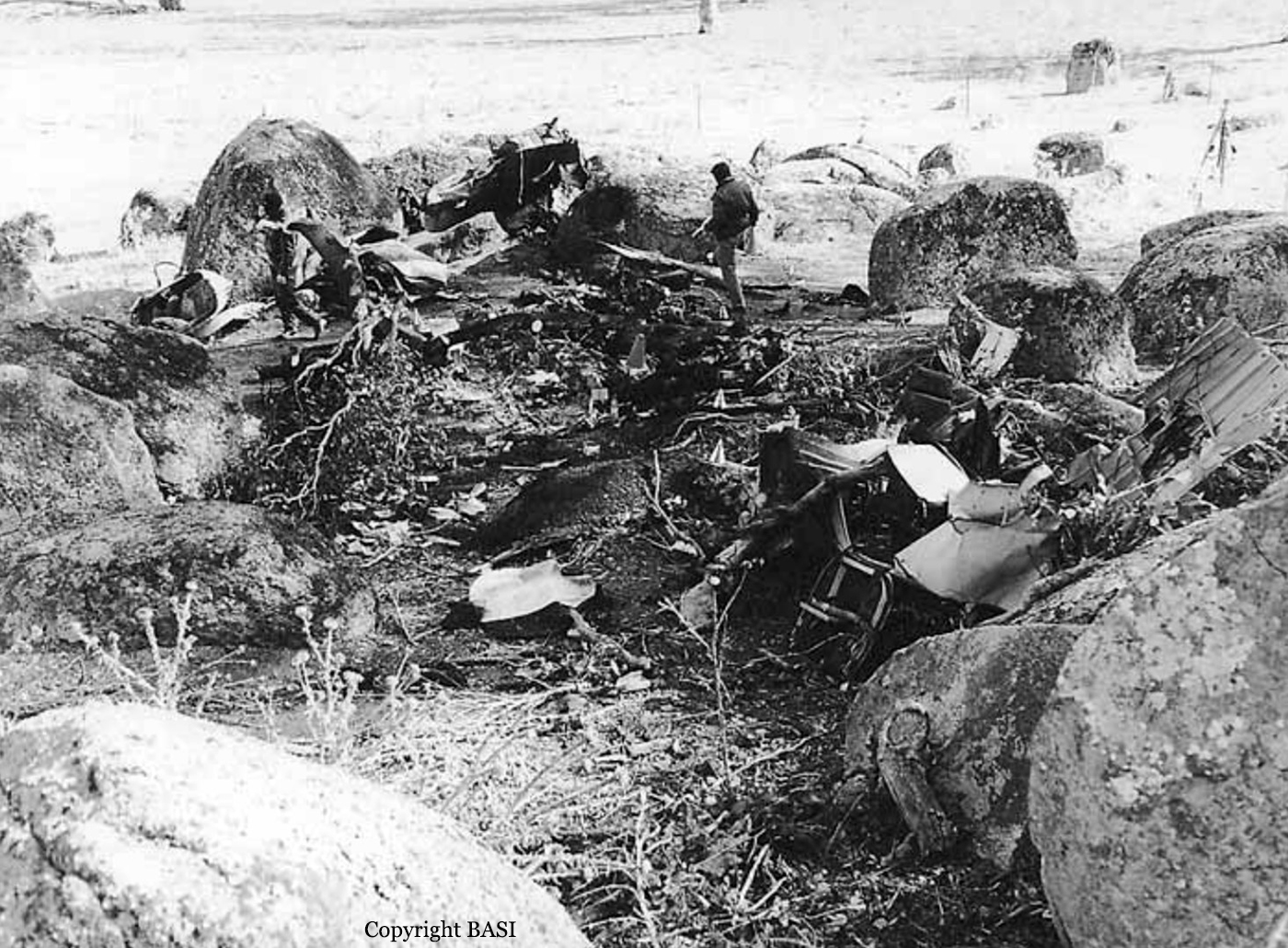
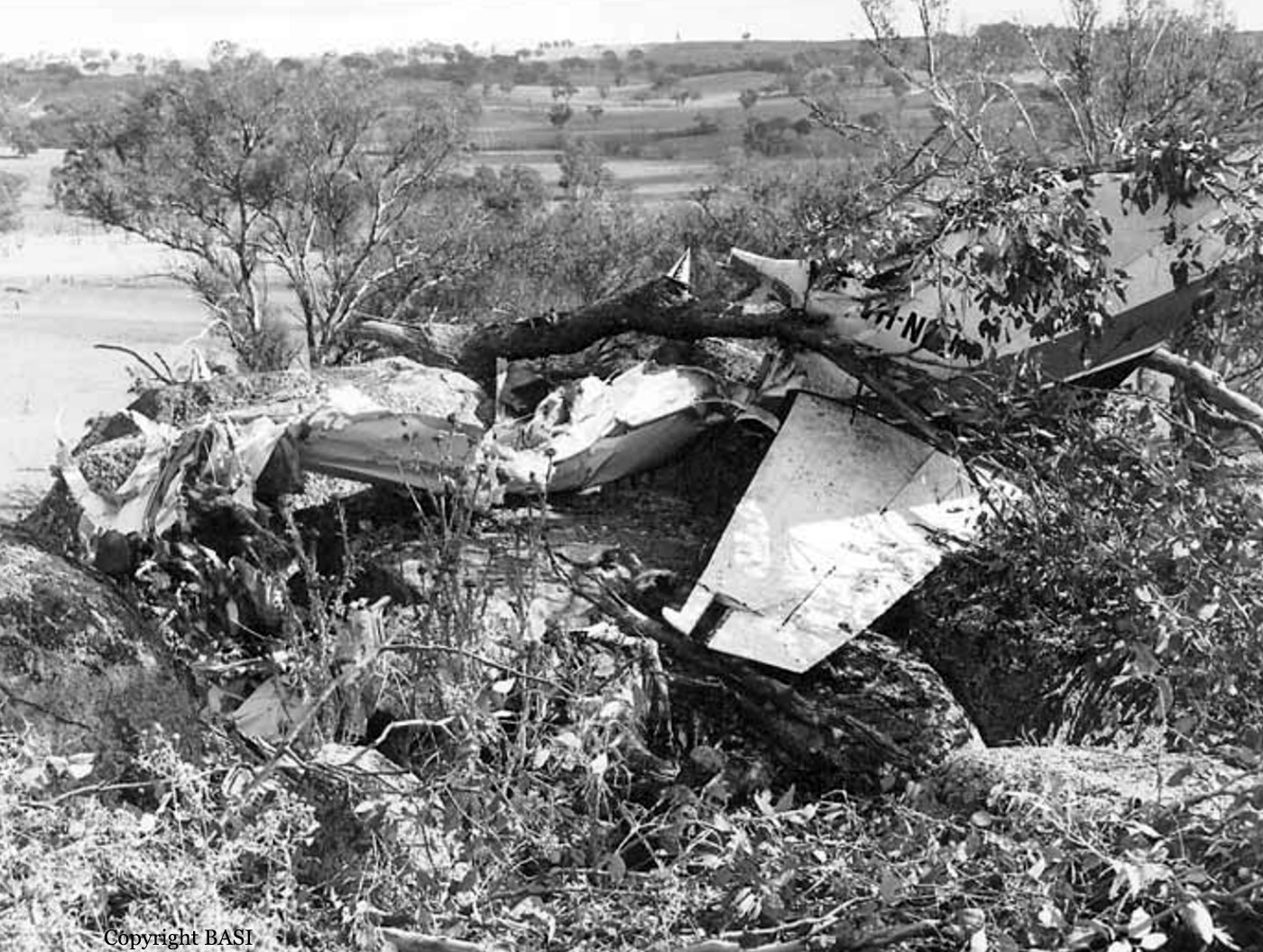
At about 1500 hours EST, 11 June 1993, a standard company flight plan held by the CAA at the Melbourne flight briefing facility was activated. The plan indicated that Piper PA-31-350 aircraft VH-NDU would be conducting flight OB 301, a regular public transport service from Sydney (Kingsford Smith) airport to Cootamundra NSW, with intermediate landings at Cowra and Young. The flight was planned to be operated in accordance with IFR procedures, with a scheduled departure time from Sydney of 1720. The aircraft was to be crewed by two pilots. Prior to departure, the company scheduled a second aircraft to operate the Sydney–Cowra sector. Consequently, VH-NDU was required to land only at Young and Cootamundra. At that time of the year, the 1720 departure time meant that the flight would be conducted entirely at night. VH-NDU departed Sydney at 1738 carrying five passengers, with a fuel endurance of about 253 minutes. The pilot-in-command occupied the left cockpit seat. The aircraft initially tracked via the direct Sydney to Cowra route and climbed to a cruising altitude of 8,000 feet. At 1801 the pilot reported to Sydney FIS that the aircraft was now tracking direct to Young, and would report at Riley, an en route reporting point located 62 NM from Young on the Katoomba– Young track. FIS advised the area QNH was 1003 hPa. At 1814 the pilot reported the aircraft was at Riley and estimated arrival at Young at 1835. By 1820 the pilot had reported on descent to Young, with in-flight conditions of cloud and heavy rain. Recorded radar data later showed that the aircraft passed 13.5 NM to the south-east of Riley, south of the direct Katoomba–Young track. At about 18.5 NM north-east of Rugby, the aircraft turned right and initially tracked about 280° before turning left to track direct to Young. When queried by FIS at 1836, the pilot amended the estimate for his arrival at Young to 1838. At 1842, after prompting from FIS, the pilot reported at Young that he was commencing an NDB approach, and would call again on the hour or in the circuit. Shortly after 1845 witnesses at Young aerodrome saw the lights of an aircraft, which they believed to be VH-NDU, pass low overhead after approaching from the east. Some minutes later the same aircraft was seen to pass over the aerodrome from the opposite direction and appear to climb away towards the east. On both occasions the runway and aerodrome lights were not illuminated, although the aerodrome was equipped with PAL and it was the responsibility of the pilot-in-command to activate it. At 1850 FIS advised VH-NDU of the proximity of Cessna 310 aircraft, VH-XMA, which was estimating arrival at Young at 1900. VH-XMA subsequently reported holding in visual conditions at about 8 NM north of Young. The pilot of VH-NDU reported at 1903 that he was on another overshoot at Young, about to commence another approach, and would report again at 1915. FIS provided additional traffic on Piper PA31 aircraft, VH-XML, which was also estimating Young at 1915. At about this time witnesses reported seeing the runway lights illuminate. VH-XMA then proceeded to Young and landed on runway 01 at about 1912. At 1916 VH-NDU reported in the Young circuit area and cancelled SARWATCH. A pilot witness said that the aircraft passed over the northern end of the aerodrome from a westerly direction before turning right and taking up a heading consistent with a right downwind leg for a landing on runway 01. The aircraft was then seen to turn right and pass to the south of the aerodrome before entering what appeared to be a right downwind leg for runway 19. When abeam the aerodrome the aircraft again turned right and overflew the aerodrome to enter a second right downwind leg for runway 01. Another witness thought the aircraft (VH-NDU) was significantly lower than another aircraft approaching from the east (VH-XML). Shortly after VH-NDU turned onto an apparent base leg the navigation lights were lost to sight. Almost immediately a fireball was observed, consistent with the final position of the aircraft (see figure 2). At 1918 the pilot of VH-XMA telephoned the 000 emergency services number and reported the accident to the Goulburn Ambulance Control Centre. By 1920 this information had been relayed to the Young Ambulance Service, the Young Police, and the Young SES. An off-duty Fire Brigade officer, who was waiting at the aerodrome, drove into Young and alerted the Fire Brigade at 1930. The emergency services initially travelled to Young Aerodrome but were unable to gain immediate access to the accident site, which was located on a hill some 2.2 km to the south-south-east of the aerodrome, in an area remote from roads and lighting. Access was finally gained from a road located south of the accident site. An ambulance reached the aircraft wreckage at 1952 and the crew were able to rescue and resuscitate the only survivor, who was critically injured, and transport her to the Young Hospital. She died at Camperdown Children’s Hospital at 0510 the next morning.
Probable cause:
Significant factors
1. The cloudbase in the Young circling area was below the minimum circling altitude, associated with dark night conditions and limited ground lighting.
2. The workload of the pilot-in-command was substantially increased by the effects of aircraft equipment deficiencies, with a possible consequent degrading of his performance as a result of skill fatigue.
3. The instrument approach and landing charts did not provide the flight crew with terrain information adequate for the assessment of obstacle clearance during a circling approach.
4. The Monarch operations manual did not provide the flight crew with guidance or procedures for the safe avoidance of terrain at Young during a night-circling approach.
5. The aircraft descended below the minimum circling altitude without adequate monitoring of obstacle clearance by the crew.
6. The visual cues available to the flight crew were insufficient as a sole source of height judgement.
7. There were organisational deficiencies in the management and operation of RPT services by Monarch.
8. There were organisational deficiencies in the safety regulation of Monarch RPT operations by the CAA.
Final Report:
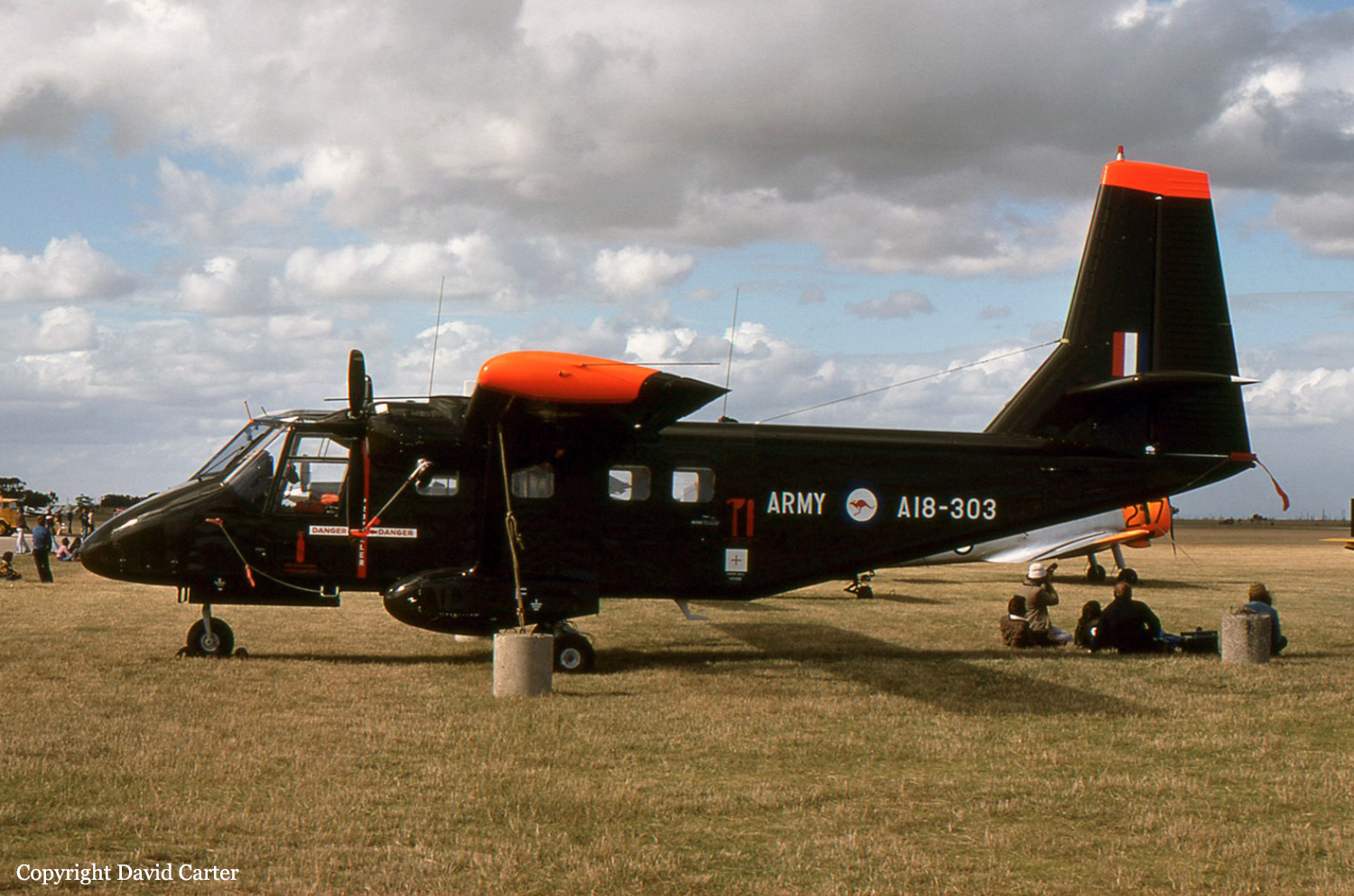
Crash of a Piper PA-31-350 Navajo Chieftain in Innemincka

Date & Time: May 29, 1993 at 1258 LT
Registration:
VH-LIC
Flight Phase:
Survivors:
Yes
Schedule:
Port Augusta – Innamincka – Durham Downs
MSN:
31-7652173
YOM:
1976
Country:
Region:
Crew on board:
1
Crew fatalities:
Pax on board:
3
Pax fatalities:
Other fatalities:
Total fatalities:
0
Captain / Total flying hours:
2930
Captain / Total hours on type:
966.00
Circumstances:
The pilot was conducting a scheduled passenger service flight from Port Augusta with a stop at Innamincka. A commercial pilot, travelling as a non-paying passenger, occupied the co-pilot's seat to observe the operation. Two additional passengers were on board the aircraft for the entire flight. After landing at Innamincka, the aircraft was refuelled by the pilot in command and the oil levels of both engines were checked by the observer, who experienced difficulty securing the combination oil filler cap-dipsticks. He asked the pilot for instructions and, although some advice was given, the pilot did not check the security of the dipsticks. Take-off was commenced towards the north into a 10-15 knot wind with a surface temperature of about 20 degrees C. Shortly after lift-off, at the first power reduction, the observer in the co-pilot's seat advised that there was oil seeping back along the cowl from the right side oil filler hatch. The pilot reported that he increased power to both engines but believed there was no response from the right. He began an immediate left turn to complete a circuit and attempted to secure the right engine and feather the propeller. The aircraft then began a roll to the right, the nose dropped and the aircraft impacted the ground. As the aircraft rolled right and the nose dropped, the pilot reported that he had secured the left engine and feathered the propeller. The observer in the co-pilot seat reported hearing a continuous stall warning horn as the right wing began to drop. All occupants, although injured, were able to vacate the aircraft through the main cabin door. The pilot provided assistance to the passengers and then returned to the airport to summon help.
Probable cause:
Examination of the wreckage revealed that the aircraft impacted the ground in a nose down, right wing low attitude while turning right. The landing gear collapsed due to impact forces and the right wing separated. Deceleration and impact forces were severe. The right propeller was found in the fine pitch range with no damage to the uppermost blade and the other two bent backwards. The right engine oil filler cap-dipstick was found to be correctly installed in the oil filler neck. There was a pattern of engine oil over the rear of the engine and inside the cowl originating from the oil filler neck. The left engine was partially torn from its mountings and displaced about 90 degrees to the right. Its propeller was in the fully feathered position. The oil filler cap-dipstick was on the ground adjacent to the engine. An oil spill pattern similar to that on the right engine was evident.
Significant Factors:
- The pilot-in-command reacted inappropriately to a perceived engine problem shortly after take-off.
- Control of the aircraft was lost at a height insufficient to effect a recovery.
Final Report:

Crash of a Swearingen SA226AC Metro II in Mackay

Date & Time: Apr 14, 1993 at 0525 LT
Type of aircraft:
Operator:
Registration:
VH-UZS
Flight Type:
Survivors:
Yes
Schedule:
Brisbane - Mackay
MSN:
TC-320
YOM:
1979
Country:
Region:
Crew on board:
1
Crew fatalities:
Pax on board:
0
Pax fatalities:
Other fatalities:
Total fatalities:
0
Captain / Total flying hours:
2670
Captain / Total hours on type:
181.00
Circumstances:
The aircraft was operating a freight charter flight, cruising normally at an altitude of 20,000 ft (FL200), when, about 150 km south-east of Mackay, the left engine lost power and could not be restarted. During the subsequent landing on runway 14 at Mackay, the pilot attempted a single engine go-around when he suddenly had the (mistaken) impression that the landing gear was not down. He temporarily lost control of the aircraft but recovered to touch down on the flight strip to the left of the runway, some 500 m before the runway end. During the landing roll, the landing gear collapsed and the aircraft sustained substantial damage.
Probable cause:
The report concludes that the engine power loss was caused by failure of the fuel pump high pressure relief valve. The pilot, believing that the landing gear was still retracted, initiated action to avoid a wheels-up landing. This action was initiated too late in the landing approach for a successful outcome.
Final Report:

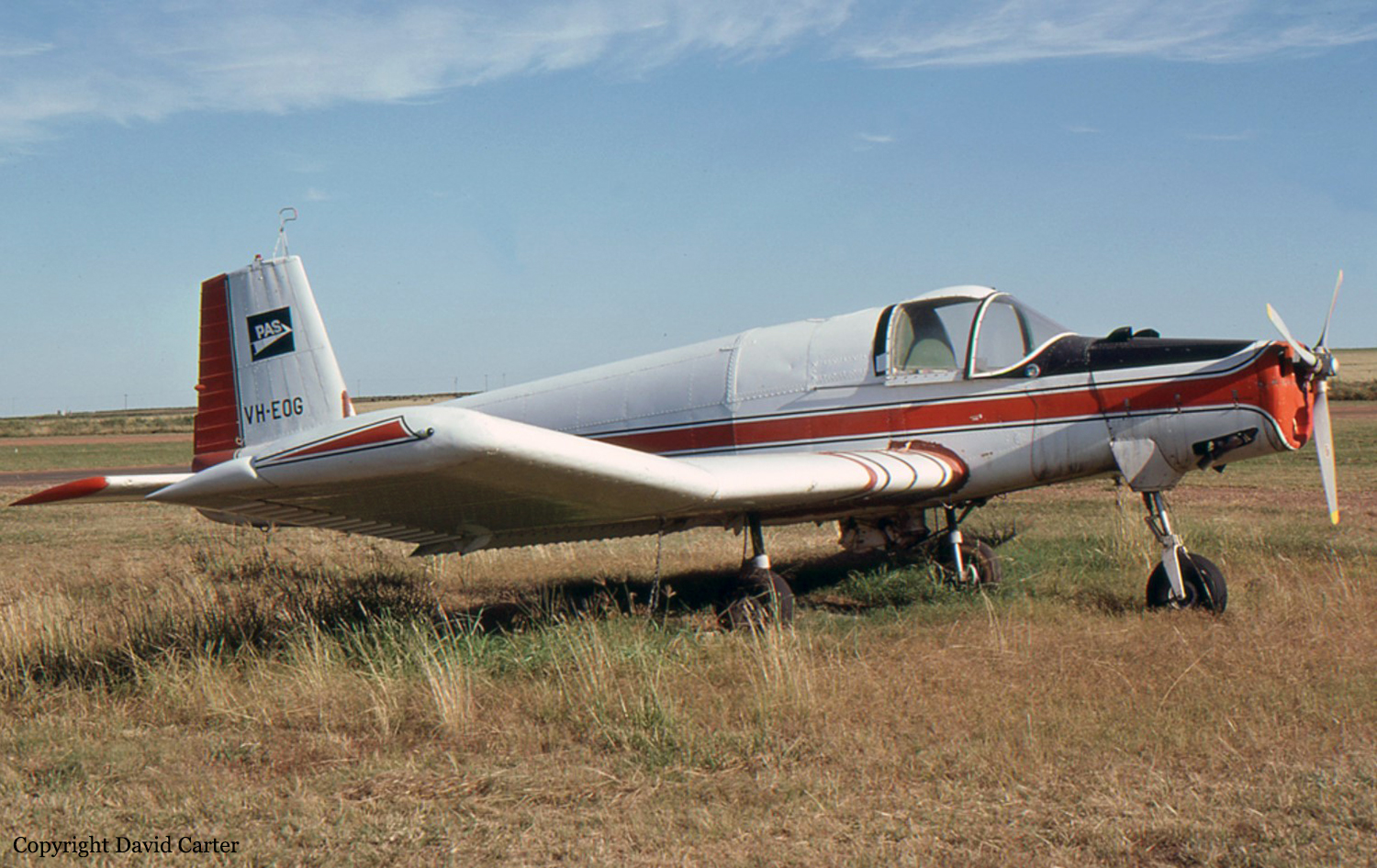
Crash of a Fletcher FU24-954 in Coogah: 1 killed

Date & Time: Mar 16, 1992
Type of aircraft:
Operator:
Registration:
VH-EOG
Flight Phase:
Survivors:
No
Site:
MSN:
3
YOM:
1954
Country:
Region:
Crew on board:
1
Crew fatalities:
Pax on board:
0
Pax fatalities:
Other fatalities:
Total fatalities:
1
Circumstances:
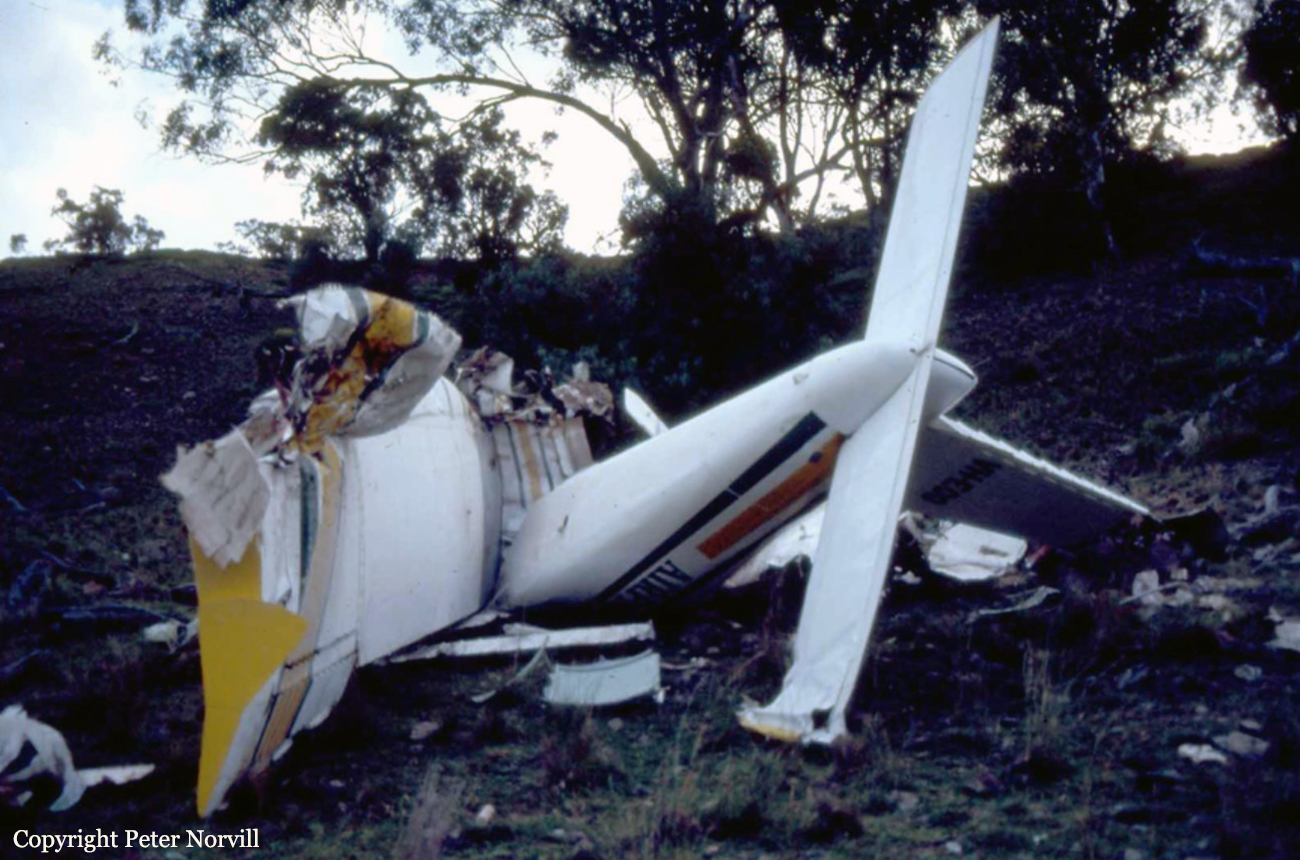
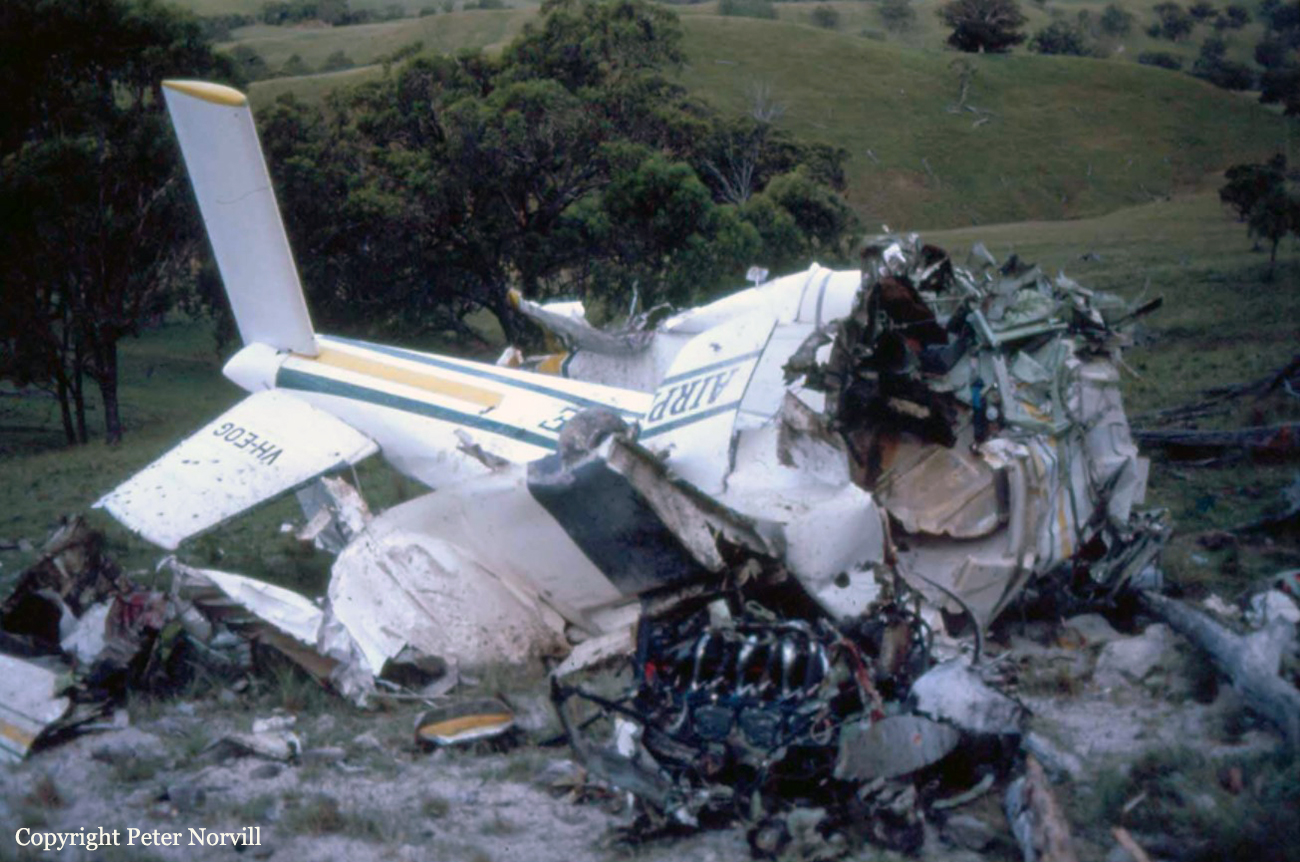
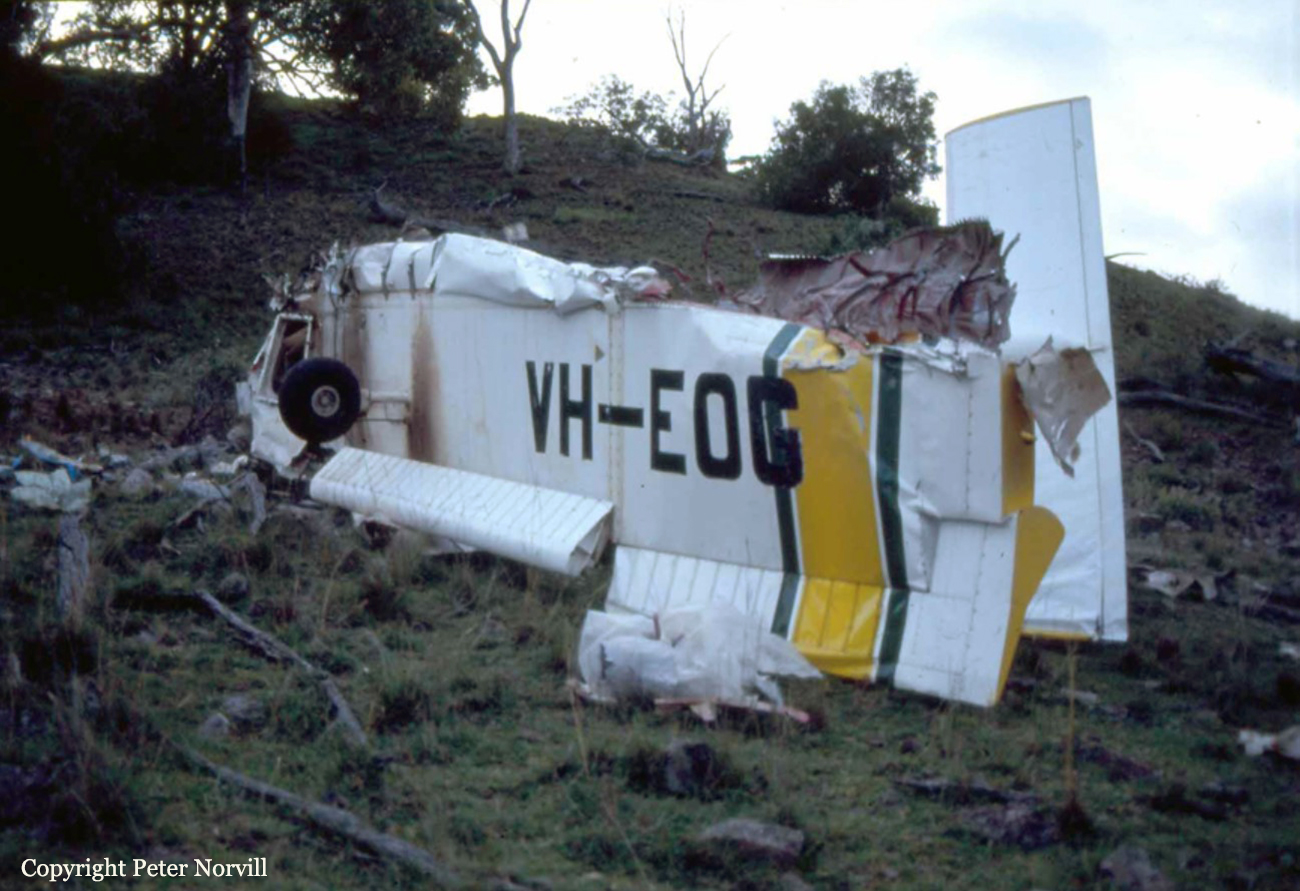
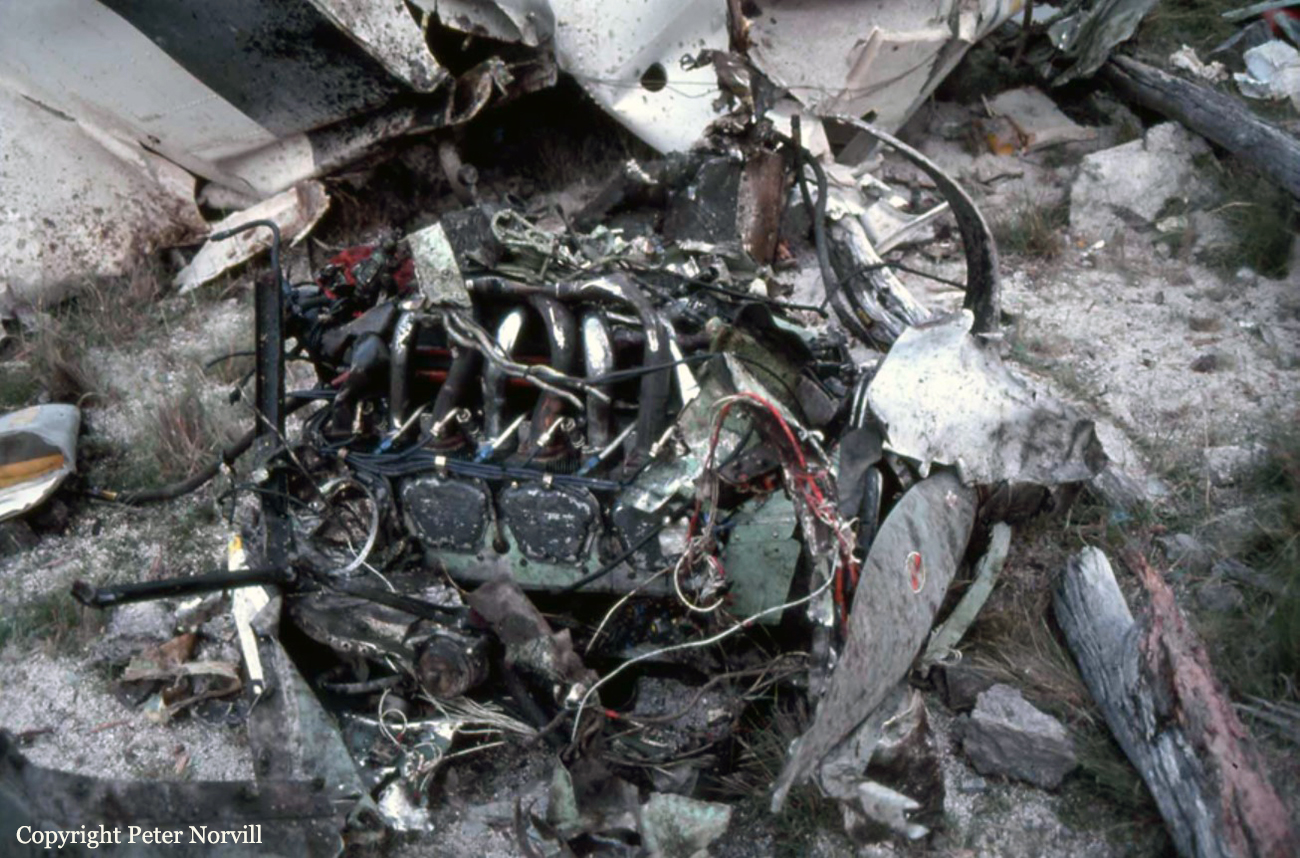
Crashed in unknown circumstances in a hilly terrain while engaged in a superphosphate spraying mission. The pilot, sole on board, was killed.

Crash of a Pilatus PC-6/B1-H2 Turbo Porter in Jaspers Brush: 2 killed

Date & Time: Nov 12, 1991
Operator:
Registration:
A14-683
Flight Phase:
Survivors:
Yes
Schedule:
Jaspers Brush - Jaspers Brush
MSN:
683
YOM:
1968
Country:
Region:
Crew on board:
1
Crew fatalities:
Pax on board:
9
Pax fatalities:
Other fatalities:
Total fatalities:
2
Aircraft flight hours:
7415
Circumstances:
Crashed in unknown circumstances after takeoff from Jaspers Brush Airfield. Two occupants were killed and eight others were injured.

Crash of a Boeing 707-368C off Woodside Beach: 5 killed

Date & Time: Oct 29, 1991 at 1147 LT
Type of aircraft:
Operator:
Registration:
A20-103
Flight Phase:
Flight Type:
Survivors:
No
Schedule:
Richmond - §Avalon
MSN:
21103
YOM:
1975
Flight number:
Windsor 380
Country:
Region:
Crew on board:
5
Crew fatalities:
Pax on board:
0
Pax fatalities:
Other fatalities:
Total fatalities:
5
Circumstances:
The aircraft departed Richmond on a flight to Avalon, carrying five crew members. While cruising at an altitude of 5,000 feet along the coast, the aircraft lost height and plunged in the sea. The wreckage was found about one km off Woodside Beach and all five occupants were killed. At the time of the accident, weather conditions were good.
Crew:
Cpt Mark Lewin, pilot,
F/Lt Tim Ellis, copilot,
F/Lt Mark Duncan, pilot,
W/O Jon Fawcett, flight engineer,
W/O Al Gwynne, loadmaster.
Probable cause:
The Board of Inquiry concluded that the instructor devised a demonstration of asymmetric flight that was 'inherently dangerous and that was certain to lead to a sudden departure from controlled flight' and that he did not appreciate this. The Board noted there were deficiencies in the acquisition and documentation of 707 operational knowledge within the RAAF combined with the absence of effective mechanisms to prevent the erosion of operational knowledge at a time when large numbers of pilots were resigning from the air force. There was no official 707 QFI conversion course and associated syllabus and no adequate QFI instructors' manual. There were deficiencies in the documented procedures and limitations pertaining to asymmetric flight in the 707 and a lack of fidelity in the RAAF 707 simulator in the flight regime in which the accident occurred, which, assuming such a requirement existed, required actual practise in flight. 'The captain acted with the best of intentions but without sufficient professional knowledge or understanding of the consequences of the situation in which he placed the aircraft,' the Board said.

Crash of a GAF Nomad N.22B near Tenterfield: 4 killed

Date & Time: Sep 9, 1991
Type of aircraft:
Operator:
Registration:
A18-303
Flight Phase:
Flight Type:
Survivors:
No
Schedule:
Oakey - Melbourne
MSN:
003
YOM:
1975
Country:
Region:
Crew on board:
4
Crew fatalities:
Pax on board:
0
Pax fatalities:
Other fatalities:
Total fatalities:
4
Circumstances:
The crew was completing a training mission consisting of touch-and-go at Ag Strip located 20 km east of Tenterfield. After takeoff, while in initial climb, the twin engine aircraft struck a tree, stalled and crashed, bursting into flames. All four crew members were killed.
Crew:
Maj Lynn Hummerston,
Cpl Peter McCarthy +2 PNGDF pilots.
Probable cause:
As the aircraft was totally destroyed and due to lack of evidences, the exact cause of the accident could not be determined.