Crash of a Swearingen SA227AC Metro III in Tamworth: 2 killed

Date & Time: Sep 16, 1995 at 1957 LT
Type of aircraft:
Operator:
Registration:
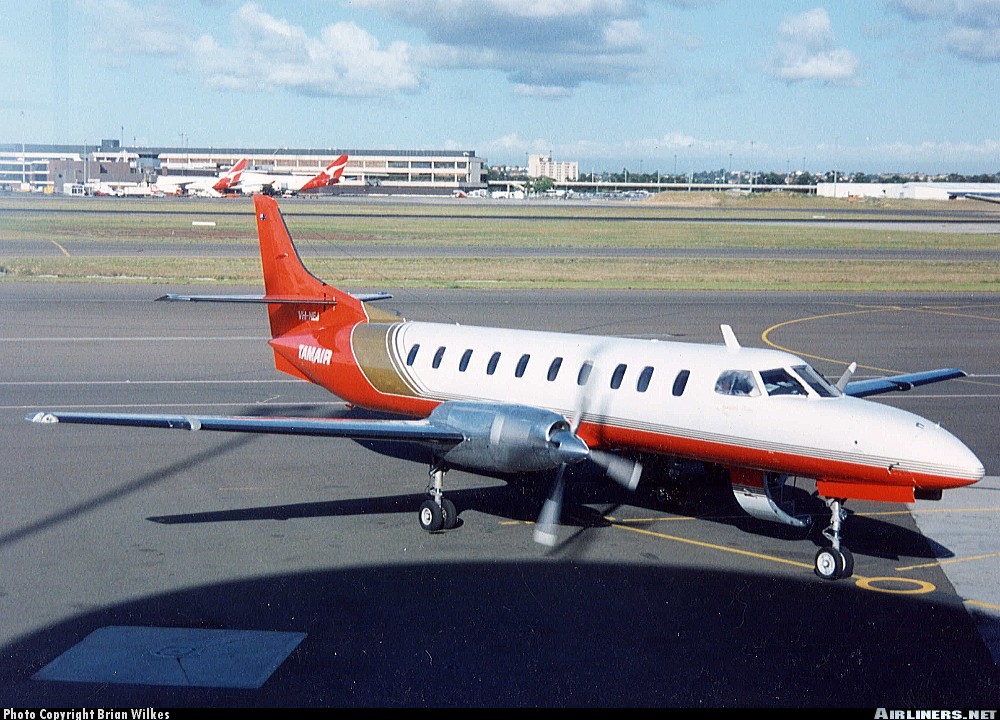
VH-NEJ
Flight Phase:
Flight Type:
Survivors:
Yes
Schedule:
Tamworth - Tamworth
MSN:
AC-629B
YOM:
1985
Country:
Region:
Crew on board:
3
Crew fatalities:
Pax on board:
0
Pax fatalities:
Other fatalities:
Total fatalities:
2
Captain / Total flying hours:
4132
Captain / Total hours on type:
1393.00
Copilot / Total flying hours:
1317
Copilot / Total hours on type:
1
Aircraft flight hours:
15105
Circumstances:
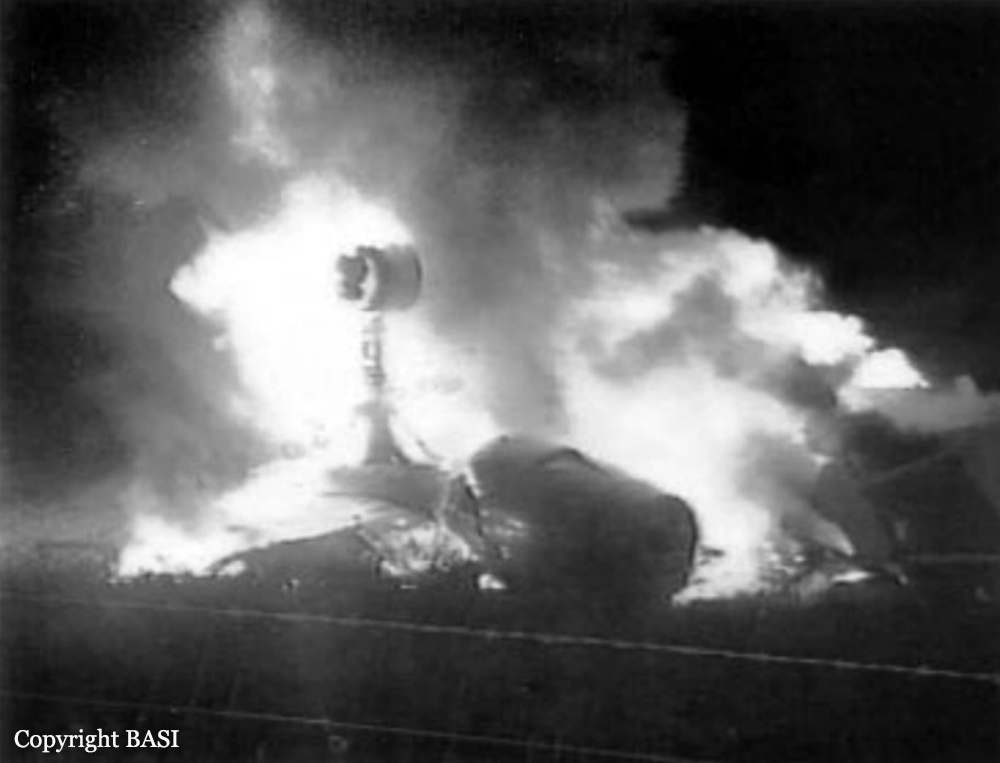
Two company pilots were undergoing first officer Metro III type-conversion flying training. Both had completed Metro III ground school training during the week before the accident. A company check-and-training pilot was to conduct the type conversions. This was his first duty period after 2 weeks leave. Before commencing leave, he had discussed the training with the chief pilot. This discussion concerned the general requirements for a co-pilot conversion course compared to a command pilot course but did not address specific sequences or techniques. The three pilots met at the airport at about 1530 EST on 16 September 1995. During the next 2 hours and 30 minutes approximately, the check-and-training pilot instructed the trainees in daily and pre-flight inspections, emergency equipment and procedures, and cockpit procedures and drills (including the actions to be completed in the event of an engine failure), as they related to the aircraft type. The briefing did not include detailed discussion of aircraft handling following engine failure on takeoff. The group began a meal break at 1800 and returned to the aircraft at about 1830 to begin the flying exercise. The check-and-training pilot was pilot in command for the flight and occupied the left cockpit seat. One trainee occupied the right (co-pilot) cockpit seat while the other probably occupied the front row passenger seat on the left side. This person had the use of a set of head-phones to listen to cockpit talk and radio calls. The aircraft departed Tamworth at 1852, some 40 minutes after last light. Witnesses described the night as very dark, with no moon. Under these conditions, the Tamworth city lighting, which extended to the east from about 2 km beyond the end of runway 12, was the only significant visual feature in the area. The co-pilot performed the takeoff, his first in the Metro III. For about the next 30 minutes, he completed various aircraft handling exercises including climbing, descending, turning (including steep turns), and engine handling. No asymmetric flight exercises were conducted. The check-and-training pilot then talked the co-pilot through an ILS approach to runway 30R with an overshoot and landing on runway 12L. The landing time was 1940. The aircraft had functioned normally throughout the flight. After clearing the runway, the aircraft held on a taxiway for 6 minutes, with engines running. During this period, the crew discussed the next flight which was to be flown by the same co-pilot. The check-and-training pilot stated that he was going to give the co-pilot a V1 cut. The co-pilot objected and then questioned the legality of night V1 cuts. The check-and-training pilot replied that the procedure was now legal because the company operations manual had been changed. The co-pilot made a further objection. The check-and-training pilot then said that they would continue for a Tamworth runway 30R VOR/DME approach and asked the co-pilot to brief him on this approach. The crew discussed the approach and the check-and-training pilot then requested taxi clearance. The aircraft was subsequently cleared to operate within a 15-NM radius of Tamworth below 5,000 ft. The crew then briefed for the runway 12L VOR/DME approach. The plan was to reconfigure the aircraft for normal two-engine operations after the V1 cut and then complete the approach. The crew completed the after-start checks, the taxi checks, and then the pre-take-off checks. The checks included the co-pilot calling for one-quarter flap and the check-and-training pilot responding that one-quarter flap had been selected. The crew briefed the take-off speeds as V1 = 100 kts, VR = 102 kts, V2 = 109 kts, and Vyse = 125 kts for the aircraft weight of 5,600 kg. Take-off torque was calculated as 88% and watermethanol injection was not required. The aircraft commenced the take-off roll at 1957.05. About 25 seconds after brakes release, the check-and-training pilot called 'V1', and less than 1 second later, 'rotate'. The aircraft became airborne at 1957.32. One second later, the check-and-training pilot reminded the co-pilot that the aircraft attitude should be 'just 10 degrees nose up'. After a further 3 seconds, the check-and-training pilot retarded the left engine power lever to the flight-idle position. Over the next 4 seconds, the recorded magnetic heading of the aircraft changed from 119 degrees to 129 degrees. The co-pilot and then the check-and-training pilot called that a positive rate of climb was indicated and the landing gear was selected up 15 seconds after the aircraft became airborne. The landing gear warning horn began to sound at approximately the same time. After 19 seconds airborne, and again after 30 seconds, the check-and-training pilot reminded the co-pilot to hold V2. Three seconds later, the check-and-training pilot said that the aircraft was descending. The landing gear warning horn ceased about 1 second later. By this time, the aircraft had gradually yawed left from heading 129 degrees, through the runway heading of 121 degrees, to 107 degrees. After being airborne for 35 seconds, the aircraft struck a tree approximately 350 m beyond, and 210 m left of, the upwind end of runway 12L. It then rolled rapidly left, severed power lines and struck other trees before colliding with the ground in an inverted attitude and sliding about 70 m. From the control tower, the aerodrome controller saw the aircraft become airborne. As it passed abeam the tower, the controller directed his attention away from the runway. A short time later, all lighting in the tower and on the airport failed and the controller noticed flames from an area to the north-east of the runway 30 threshold. Within about 30 seconds, when the emergency power supply had come on line, the controller attempted to establish radio contact with the aircraft. When no response was received, he initiated call-out of the emergency services.
Probable cause:
The following factors were reported:
1. There was no enabling legislative authority for AIP (OPS) para. 77.
2. CASA oversight, with respect to the company operations manual and specific guidance concerning night asymmetric operations, was inadequate.
3. The company decided to conduct V1 cuts at night during type-conversion training.
4. The check-and-training pilot was assigned a task for which he did not possess adequate experience, knowledge, or skills.
5. The check-and-training pilot gave the co-pilot a night V1 cut, a task which was inappropriate for the co-pilot's level of experience.
6. The performance of the aircraft during the flight was adversely affected by the period the landing gear remained extended after the simulated engine failure was initiated and by the control inputs of the co-pilot.
7. The check-and-training pilot did not recognise that the V1 cut exercise should be terminated and that he should take control of the aircraft.
Final Report:
Crash of an IAI-1124 Westwind in Alice Springs: 3 killed

Date & Time: Apr 27, 1995 at 1957 LT
Type of aircraft:
Operator:
Registration:
VH-AJS
Flight Type:
Survivors:
No
Schedule:
Darwin – Katherine – Alice Springs – Adélaïde – Sydney
MSN:
221
YOM:
1978
Country:
Region:
Crew on board:
2
Crew fatalities:
Pax on board:
1
Pax fatalities:
Other fatalities:
Total fatalities:
3
Captain / Total flying hours:
10108
Captain / Total hours on type:
2530.00
Copilot / Total flying hours:
3747
Copilot / Total hours on type:
85
Aircraft flight hours:
11508
Circumstances:
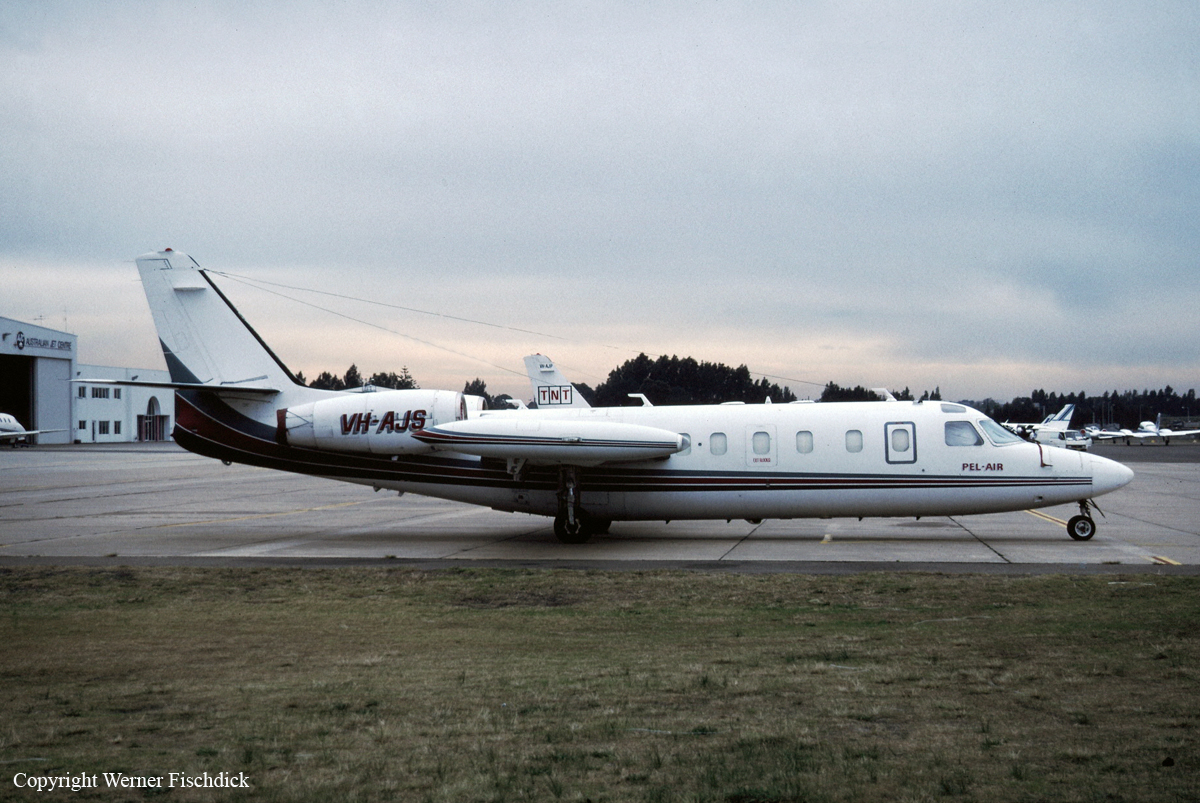
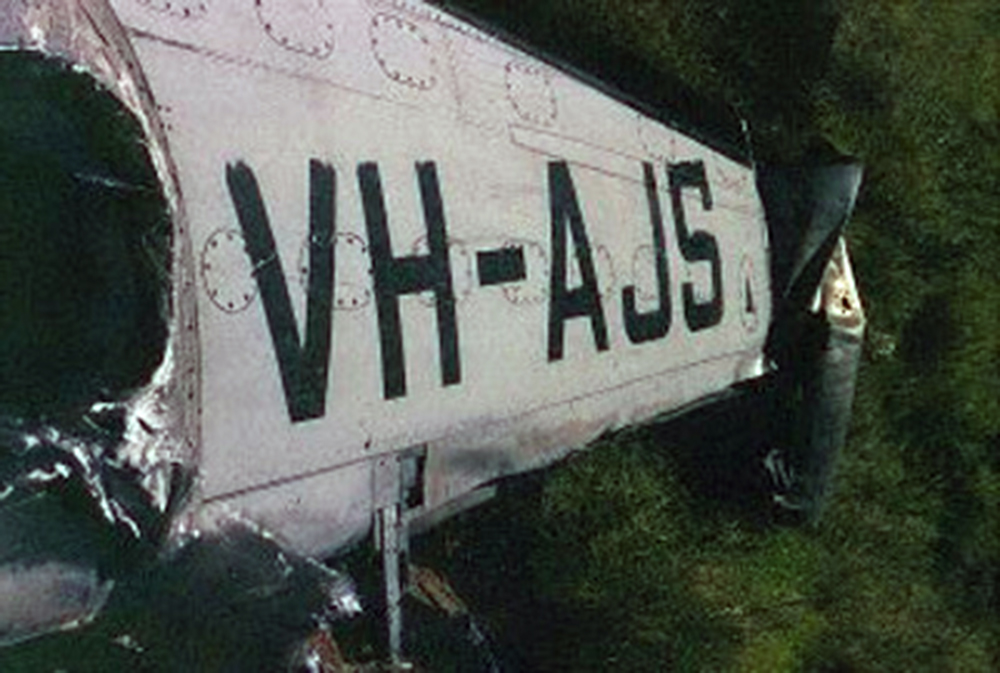
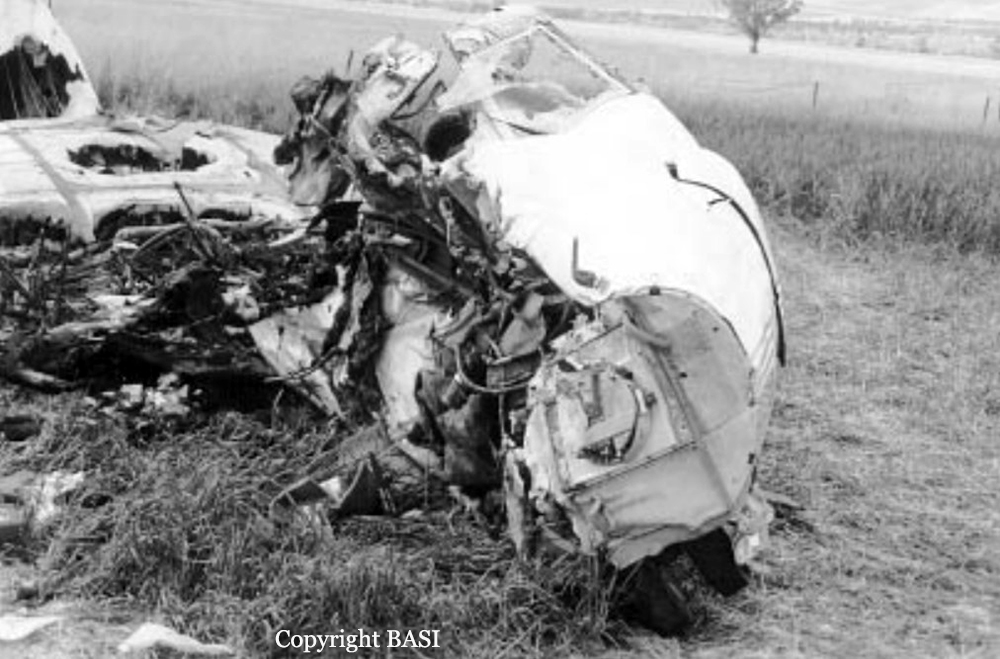
The aircraft was on a scheduled freight service from Darwin via Tindal, Alice Springs, and Adelaide to Sydney under the IFR. The flight from Darwin to Tindal was apparently normal, and the aircraft departed Tindal slightly ahead of schedule at 1834 CST. The pilot in command occupied the left cockpit seat. At 1925, the aircraft reported at position DOLPI (200 miles north of Alice Springs) Flight Level 330, to Melbourne Control. Another Westwind aircraft was en route Darwin–Alice Springs and was more than 40 miles ahead of VH-AJS. Information from the aircraft cockpit voice recording confirmed that the pilot in command was flying the aircraft. At about 1929, he began issuing instructions to the co-pilot to program the aircraft navigation system in preparation for a locator/NDB approach to Alice Springs. The pilot in command asked the co-pilot to enter an offset position into the area navigation (RNAV) system for an 11-mile final for runway 12. The co-pilot entered the bearing as 292 degrees Alice Springs. (This was the outbound bearing from Alice Springs NDB to Simpson’s Gap locator indicated on the locator/NDB approach chart.) The pilot in command stated that he had wanted the bearing with respect to the runway, 296 degrees, entered but said that the setting could be left as 292 degrees. He then instructed the co-pilot to set Alice Springs NDB frequency on ADF 1, Simpson’s Gap locator on ADF 2, and to preset the Temple Bar locator frequency on ADF 2 so that it could be selected as soon as the aircraft passed overhead Simpson’s Gap. He indicated his intention to descend to 4,300 feet until overhead Simpson’s Gap, and said that the co-pilot should then set 3,450 feet on the altitude alert selector. On passing Temple Bar, the co-pilot was to set 2,780 feet on the altitude alert selector which the pilot in command said would be used as the minimum for the approach. At 1940, the co-pilot contacted Adelaide Flight Service (FIS) and was given the Alice Springs weather, including the local QNH. At 1945, he advised Adelaide FIS that the aircraft was leaving Flight Level 330 on descent. At about 30 miles from Alice Springs, the pilot in command turned the aircraft right to track for the offset RNAV position 292 degrees/11 miles Alice Springs. The crew set local QNH passing 16,000 feet and then completed the remaining transition altitude checks. These included selecting landing and taxi lights on. At 1949, the co-pilot advised Adelaide FIS that the aircraft was transferring frequency to the Alice Springs MTAF. At 1953, the aircraft passed Simpson’s Gap at about 4,300 feet and the copilot set 3,500 feet in the altitude alert selector. About 15 seconds later, the pilot in command told the co-pilot that, after the aircraft passed overhead the next locator, he was to set the ‘minima’ in the altitude alert selector. At 1954 , the pilot in command called that the aircraft was at 3,500 feet. A few seconds later, the co-pilot indicated that the aircraft was over the Temple Bar locator and that they could descend to 2,300 feet. The pilot in command repeated the 2,300 feet called by the co-pilot and asked him to select the landing gear down. The crew then completed the pre-landing checks. Eleven seconds later, the co-pilot reported that the aircraft was 300 feet above the minimum descent altitude. This was confirmed by the pilot in command. About 10 seconds later, there were two calls by the co-pilot to pull up. Immediately after the second call, the aircraft struck the top of the Ilparpa Range (approximately 9 kilometres north-west of Alice Springs Airport), while heading about 105 degrees at an altitude of about 2,250 feet in a very shallow climb. At approximately 1950, witnesses in a housing estate on the north-western side of the Ilparpa Range observed aircraft lights approaching from the north-west. They described the lights as appearing significantly lower than those of other aircraft they had observed approaching Alice Springs from the same direction. The lights illuminated buildings as the aircraft passed overhead and then they illuminated the northern escarpment of the range. This was followed almost immediately by fire/explosion at the top of the range.
Probable cause:
The following factors were considered significant in the accident sequence:
1. There were difficulties in the cockpit relationship between the pilot in command and the co-pilot.
2. The level of crew resource management demonstrated by both crew members during the flight was low.
3. The Alice Springs locator/NDB approach was unique.
4. The briefing for the approach conducted by the pilot in command was not adequate.
5. When asked for the ‘minima’ by the pilot in command, the co-pilot called, and the pilot in command accepted, an incorrect minimum altitude for the aircraft category and for the segment of the approach.
6. The technique employed by the pilot in command in flying the approach involved a high cockpit workload.
7. The crew did not use the radio altimeter during the approach.
Final Report:

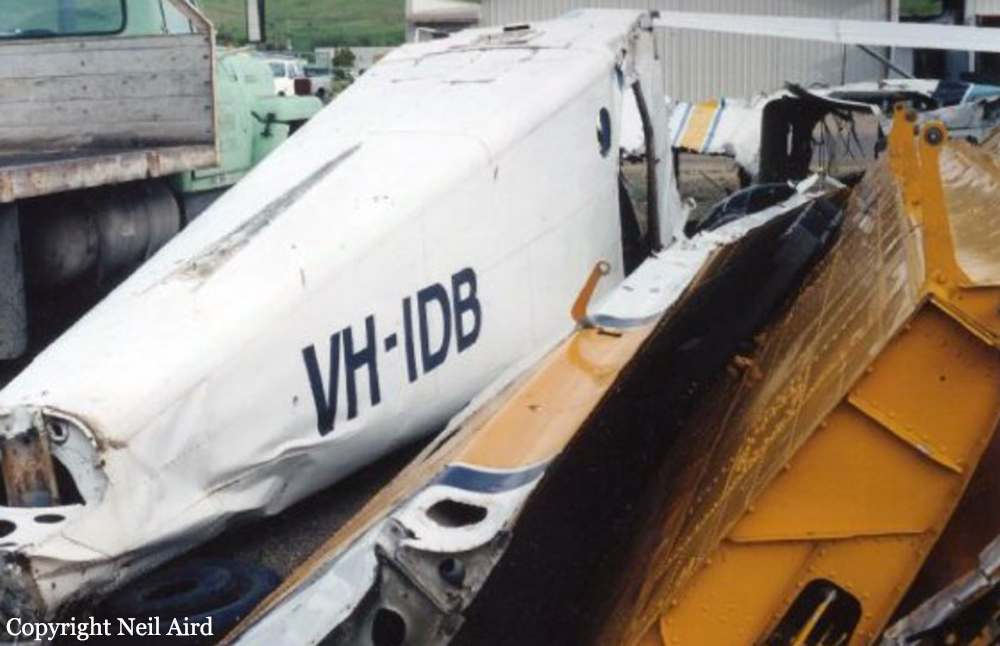
Crash of a De Havilland DHC-2 Beaver near Yea

Date & Time: Mar 16, 1995 at 1400 LT
Type of aircraft:
Operator:
Registration:
VH-IDB
Flight Phase:
Survivors:
Yes
Schedule:
Yea - Yea
MSN:
883
YOM:
1956
Location:
Country:
Region:
Crew on board:
1
Crew fatalities:
Pax on board:
0
Pax fatalities:
Other fatalities:
Total fatalities:
0
Captain / Total flying hours:
1468
Captain / Total hours on type:
244.00
Circumstances:
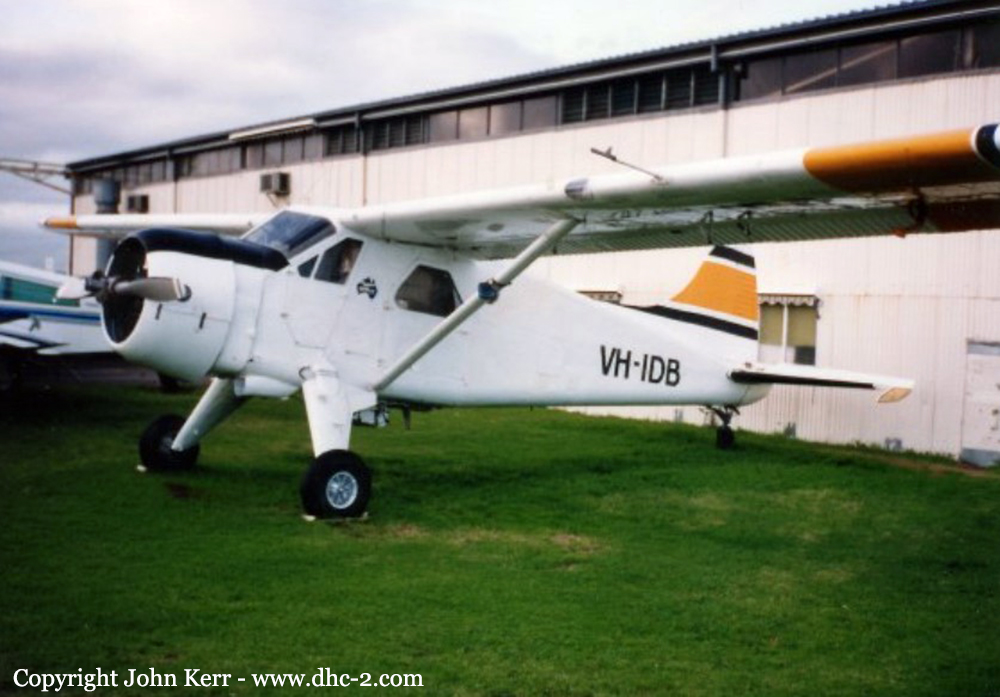
The pilot reported that the flight departed from an agricultural strip located in a valley surrounded by hills. The aircraft carried a full load of superphosphate to be spread on a property approximately one mile from the strip. The pilot had previously surveyed the property and the flight path. He had selected a route that took him up through a valley between hills and then over a low ridge to the property. After take off the pilot set climb power and selected climb flap in order to follow his predetermined route to the property. The pilot advised that as the aircraft flew towards the low ridge it appeared to be descending rather than climbing. He elected to carryout a partial dump and to apply extra flap to clear a clump of trees. The speed deteriorated to 60 knots from the initial climb speed of 70 knots. The pilot did not increase power. Some 300 metres later another partial dump was carried out to clear another tree. As that tree was cleared the pilot again initiated a partial dump and turned to the right in an endeavour to escape from a rapidly deteriorating situation. Immediately the turn was initiated the right wing dropped and the aircraft stalled, impacting the ground onto the right wing and cartwheeled to a stop some 50 metres from the initial impact. The company chief pilot examined the accident site and advised that the flight path through the valley was in a classic false horizon situation whereby the surrounding hills caused the pilot to consider that the flight path was over flat terrain whilst in reality the terrain was rising approximately 5 degrees up to the ridge. The chief pilot also advised that the aircraft would not have been able to outclimb the terrain at high gross weight with only cruise power set.
Probable cause:
Examination of the wreckage did not disclose any pre-impact factors that may have contributed to the accident. Weather and pilot workload were not considered to be factors in this accident.
The pilot had flown approximately 1200 hours on agricultural operations and 244 hours on the type. His loss of situational awareness could be due in part to his relatively low experience.
The following factors were considered relevant to the development of the accident:
- At high weight, and with climb power applied, the pilot flew the aircraft on an inappropriate flight path into rising terrain.
- The pilot did not take appropriate remedial actions when the aircraft could not outclimb the terrain and the aircraft speed deteriorated.
- The pilot lost control of the aircraft while attempting a turn at low speed.
Final Report:

Crash of a Mitsubishi MU-2B-30 Marquise in Melbourne: 1 killed

Date & Time: Dec 21, 1994 at 0324 LT
Type of aircraft:
Registration:
VH-IAM
Flight Type:
Survivors:
No
Schedule:
Sydney – Melbourne
MSN:
517
YOM:
1970
Country:
Region:
Crew on board:
1
Crew fatalities:
Pax on board:
0
Pax fatalities:
Other fatalities:
Total fatalities:
1
Captain / Total flying hours:
5000
Captain / Total hours on type:
150.00
Circumstances:
The aircraft departed Sydney for Melbourne International airport at 0130 on 21 December 1994. En-route cruise was conducted at flight level 140. Melbourne Automatic Terminal Information Service (ATIS) indicated a cloud base of 200 feet for the aircraft's arrival and runway 27 with ILS approaches, was in use. Air Traffic Control advised the pilot of VH-UZB, another company MU2 that was also en-route from Sydney to Melbourne, and the pilot of VH-IAM while approaching the Melbourne area, that the cloud base was at the ILS minimum and that the previous two aircraft landed off their approaches. VH-UZB was slightly ahead of VH-IAM and made a 27 ILS approach and landed. In response to an inquiry from the Tower controller the pilot of VH-UZB then advised that the visibility below the cloud base was 'not too bad'. This information was relayed by the Tower controller to the pilot of VH-IAM, who was also making a 27 ILS approach about five minutes after VH-UZB. The pilot acknowledged receipt of the information and was given a landing clearance at 0322. At 0324 the Approach controller contacted the Tower controller, who had been communicating with the aircraft on a different frequency, and advised that the aircraft had faded from his radar screen. Transmissions to VH-IAM remained unanswered and search-and-rescue procedures commenced. Nothing could be seen of the aircraft from the tower. A ground search was commenced but was hampered by the darkness and reduced visibility. The terrain to the east of runway 27 threshold, in Gellibrand Hill Park, was rough, undulating and timbered. At 0407 the wreckage was found by a police officer. Due to the darkness and poor visibility the policeman could not accurately establish his position. It took approximately another 15-20 minutes before a fire vehicle could reach the scene of the burning aircraft. The fire was then extinguished.
Probable cause:
The following factors were reported:
1. The company's training system did not detect deficiencies in the pilot's instrument flying skills.
2. The cloud base was low at the time of the accident and dark night conditions prevailed.
3. The pilot persisted with an unstabilised approach.
4. The pilot descended, probably inadvertently, below the approach minimum altitude.
5. The pilot may have been suffering from fatigue.
Final Report:

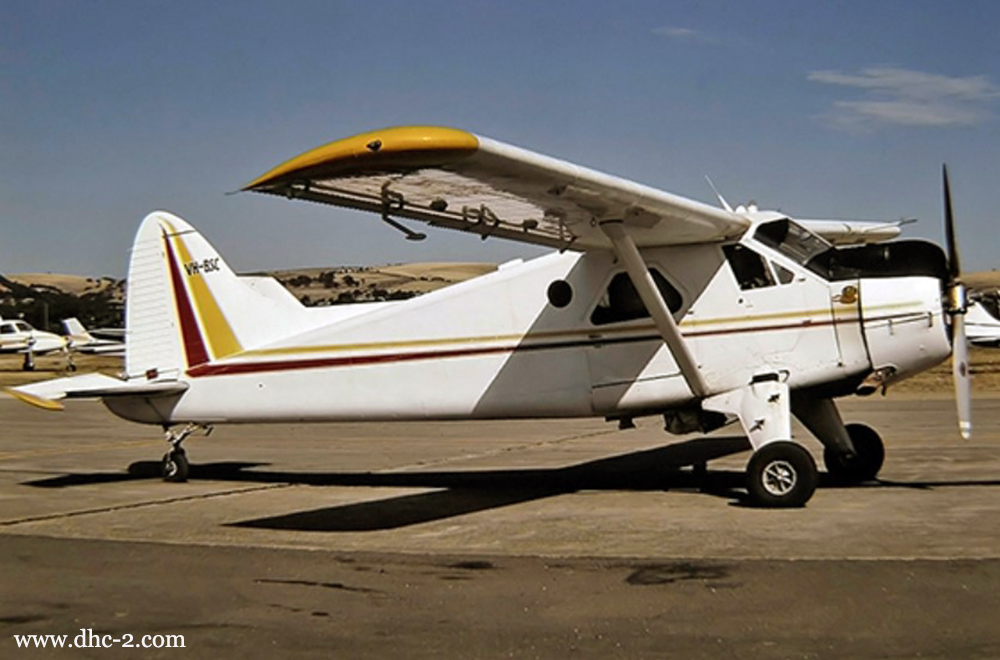
Crash of a De Havilland DHC-2 Beaver in Cooplacurripa: 1 killed

Date & Time: Dec 19, 1994 at 1940 LT
Type of aircraft:
Operator:
Registration:
VH-BSC
Flight Phase:
Survivors:
No
Schedule:
Cooplacurripa - Cooplacurripa
MSN:
1617
YOM:
1966
Country:
Region:
Crew on board:
1
Crew fatalities:
Pax on board:
0
Pax fatalities:
Other fatalities:
Total fatalities:
1
Captain / Total flying hours:
800
Captain / Total hours on type:
350.00
Circumstances:
The aircraft was operating from an agricultural airstrip 600 feet above mean sea level, spreading superphosphate over moderately steep undulating terrain. The duration of each flight was 6-7 minutes. The accident flight was the seventh and probably intended to be the last for the day. A witness, who was situated under the flight path, reported that the aircraft was tracking east-north-east in what appeared to be normal flight. Her attention was distracted for a few moments and when she next saw the aircraft it was in a near vertical dive with the upper surface of the wings facing her. The aircraft then struck the hillside and burst into flames. Examination of the wreckage did not reveal any pre-existing defect which may have contributed to the accident. Impact marks on the propeller indicated that the engine was operating at impact. The superphosphate load remained in the hopper and the emergency dump system actuating lever was in the closed position. Inspection indicated that the dump system was serviceable prior to impact. Calculations indicated that at the time of the accident the aircraft, although heavily loaded, was operating within the flight manual maximum weight limitation. A light north-easterly wind was observed at the airstrip. However, at the accident site, which was about 250 feet higher, the wind was a moderate west-north-westerly. Sky conditions were clear with a visibility of 30 km. The aircraft probably experienced windshear and turbulence as it encountered a quartering tailwind approaching the ridgeline. The result would have been a reduction in climb performance and it is likely that the pilot attempted to turn the aircraft away from the rising terrain. During the turn it appears that the aircraft stalled and that the pilot was unable to regain control before it struck the ground.
Probable cause:
The reason the pilot did not dump the load when the climb performance was reduced could not be determined.
The following factors were determined to have contributed to the accident:
1. Shifting wind conditions conducive to windshear and turbulence were present in the area.
2. The aircraft was climbing at near to maximum allowable weight.
3. Control of the aircraft was lost with insufficient height available to effect a recovery.
Final Report:

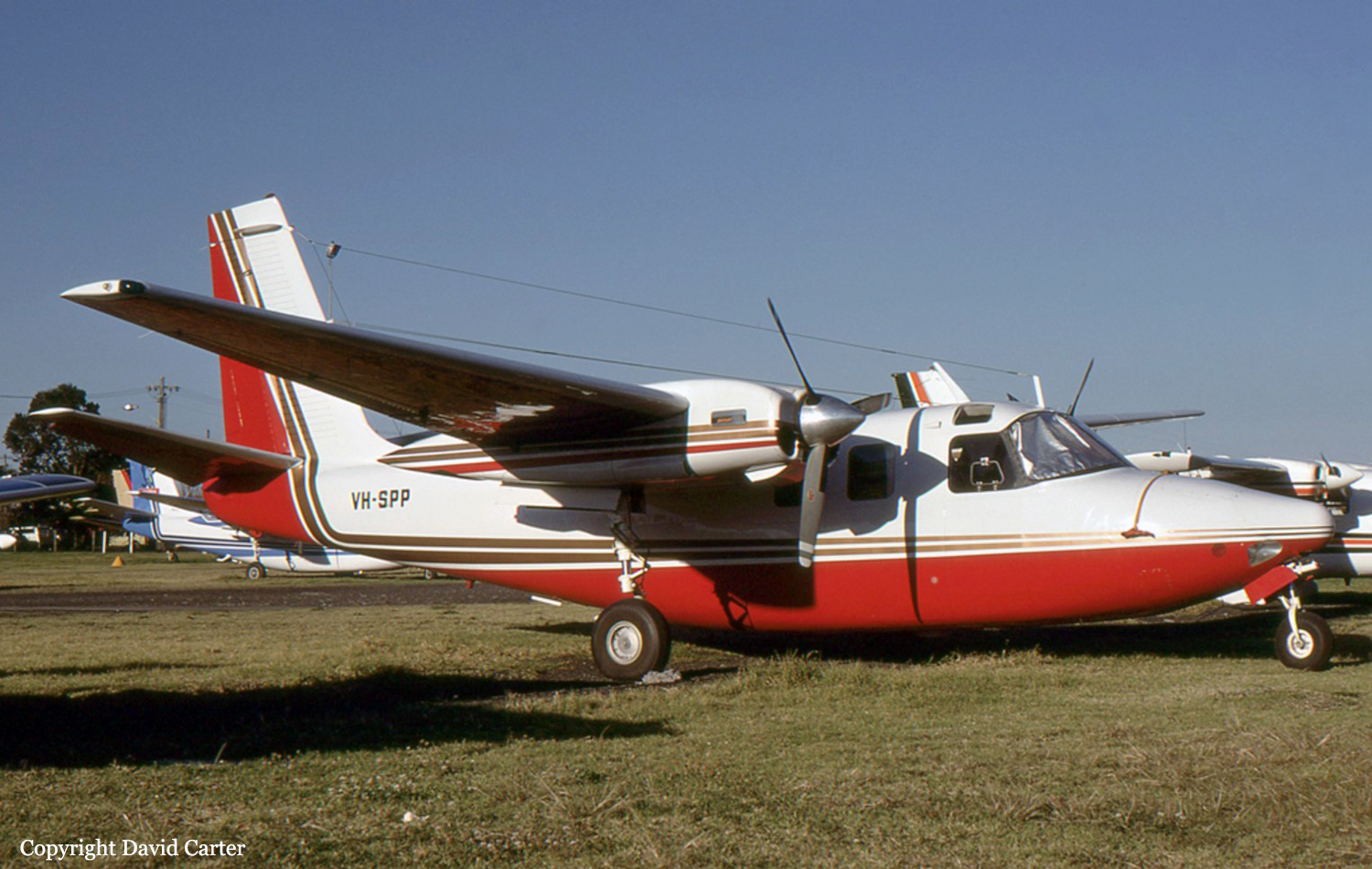
Crash of a Rockwell Grand Commander 680F near Cloncurry: 2 killed

Date & Time: Nov 9, 1994 at 1015 LT
Operator:
Registration:
VH-SPP
Flight Phase:
Survivors:
No
Schedule:
Cloncurry - Cloncurry
MSN:
680-1128-74
YOM:
1961
Country:
Region:
Crew on board:
2
Crew fatalities:
Pax on board:
0
Pax fatalities:
Other fatalities:
Total fatalities:
2
Captain / Total flying hours:
11400
Captain / Total hours on type:
710.00
Aircraft flight hours:
7546
Circumstances:
The aircraft was engaged in aero-magnetic survey operations in an area which extended from approximately 40–130 km south of Cloncurry. The task involved flying a series of north-south tie lines spaced 2 km apart at a height above ground of 80 m and a speed of 140 kts. At this speed, each tie line occupied about 20 minutes of flight time. The flight was planned to depart Cloncurry at 0700–0730 EST and was to return by 1230 to prepare data collected during the flight for transfer to the company’s head office. An employee of the operating company saw the crew (pilot and equipment operator) preparing to depart the motel for the airport at about 0500. No person has been found who saw the crew at the aerodrome or who saw or heard the aircraft depart. At about 1000, three witnesses at a mining site in the southern section of the survey area saw a twin-engine aircraft at low level heading in a northerly direction. One of these witnesses, about 1.5 hours later, saw what he believed was the same aircraft flying in an easterly direction about 1 km from his position. Between 1000 and 1030, two witnesses at a mine site some 9 km north of the survey area (and about 5 km west of the accident site) heard an aircraft flying in a north-south direction, apparently at low level. On becoming aware that the aircraft had not returned to Cloncurry by 1230, a company employee at Cloncurry initiated various checks at Cloncurry and other aerodromes in the area, with Brisbane Flight Service, and with the company’s head office later in the afternoon. At about 2030, the employee advised the company chief pilot that the aircraft was overdue. The chief pilot contacted the Civil Aviation Authority Search and Rescue organisation at about 2045 and search-and-rescue action was initiated. The burnt-out wreckage of the aircraft was found early the following morning approximately 9 km north of the survey area.
Probable cause:
For reason(s) which could not be conclusively established, the pilot shut off the fuel supply to the left engine and feathered the left propeller. For reason(s) which could not be conclusively established, the pilot lost control of the aircraft.
Final Report:
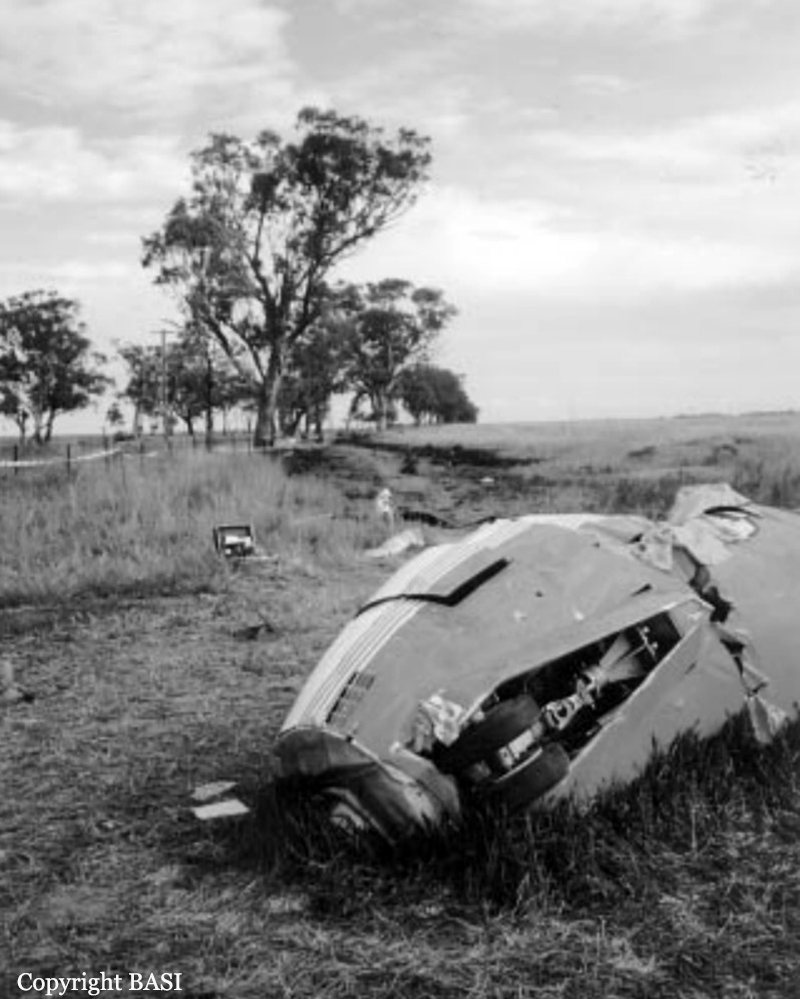
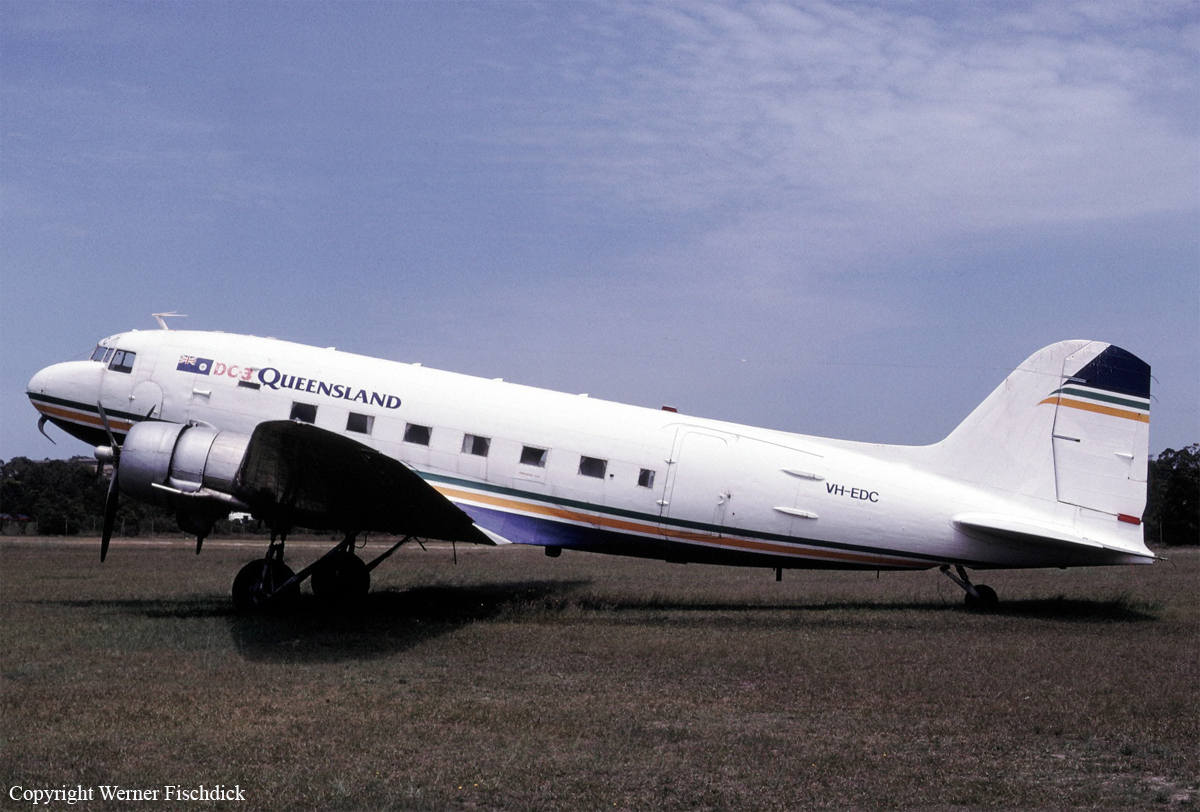
Crash of a Douglas C-47A-20-DK off Sydney

Date & Time: Apr 24, 1994 at 0910 LT
Registration:
VH-EDC
Flight Phase:
Survivors:
Yes
Schedule:
Sydney - Norfolk Island - Lord Howe Island
MSN:
12874
YOM:
1944
Country:
Region:
Crew on board:
4
Crew fatalities:
Pax on board:
21
Pax fatalities:
Other fatalities:
Total fatalities:
0
Captain / Total flying hours:
9186
Captain / Total hours on type:
927.00
Copilot / Total flying hours:
500
Copilot / Total hours on type:
250
Aircraft flight hours:
40195
Circumstances:
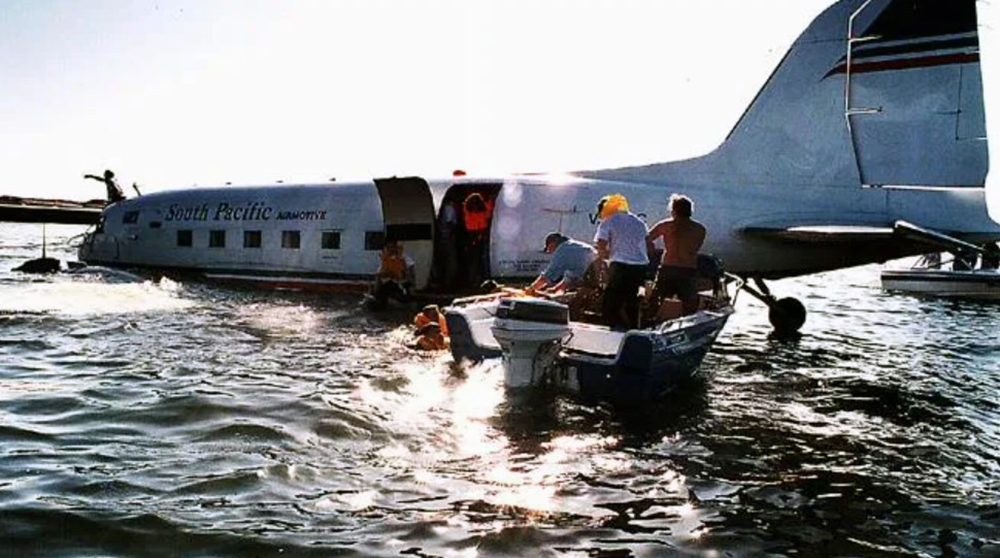
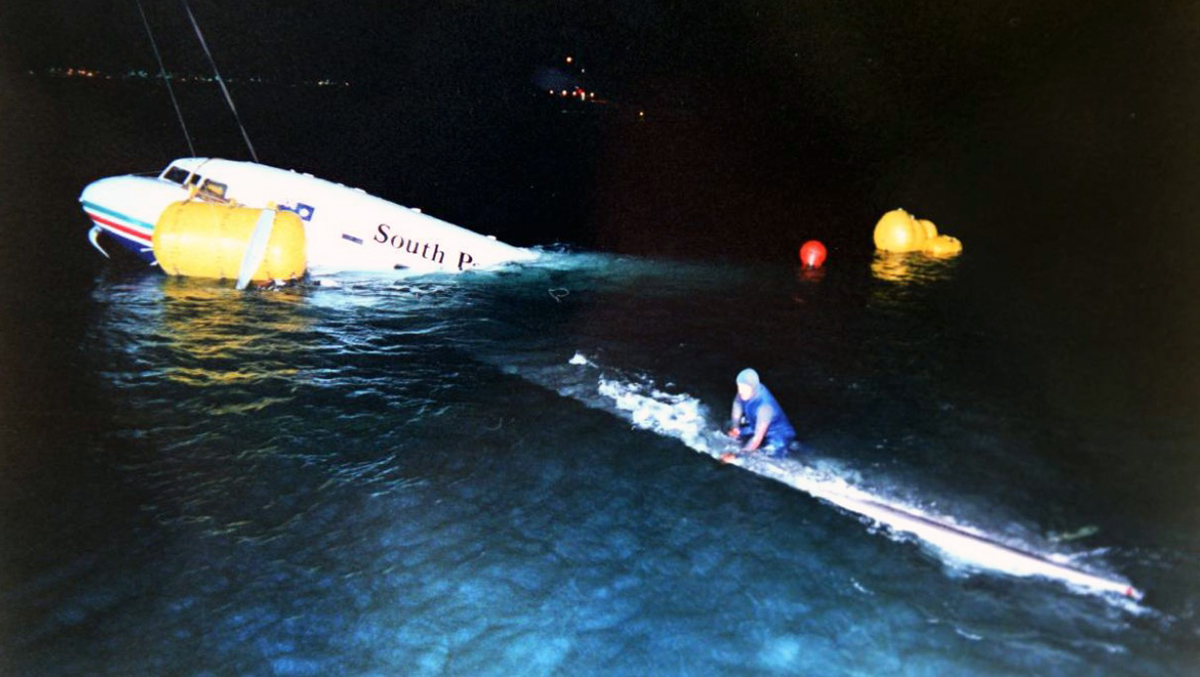
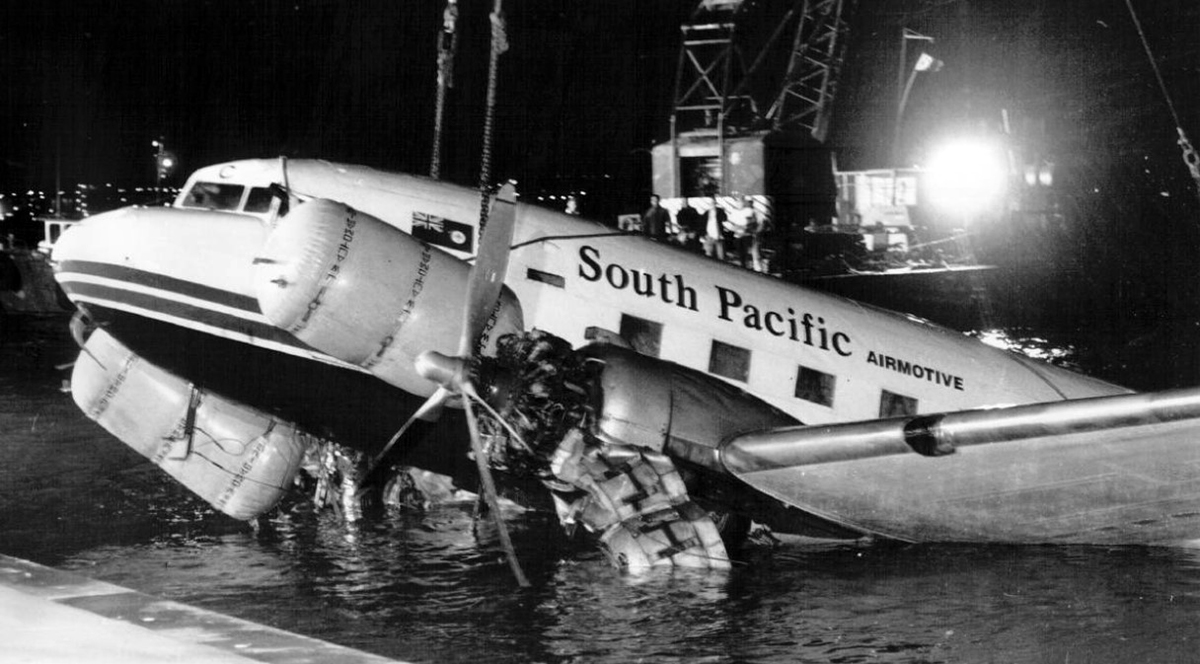
This accident involved a DC-3 aircraft which was owned and operated by South Pacific Airmotive Pty Ltd, who were based at Camden, NSW. It was flown on commercial operations under an Air Operators Certificate held by Groupair, who were based at Moorabbin, Vic. The aircraft had been chartered to convey college students and their band equipment from Sydney to Norfolk Island to participate in Anzac Day celebrations on the island. A flight plan, submitted by the pilot in command, indicated that the aircraft was to proceed from Sydney (Kingsford-Smith) Airport to Norfolk Island, with an intermediate landing at Lord Howe Island to refuel. The flight was to be conducted in accordance with IFR procedures, with a departure time from Sydney of 0900. The aircraft, which was carrying 21 passengers, was crewed by two pilots, a supernumerary pilot and a flight attendant. Preparations for departure were completed shortly before 0900, and the aircraft was cleared to taxi for runway 16 via taxiway Bravo Three. The pilot in command occupied the left control position. The co-pilot was the handling pilot for the departure. The aircraft was cleared for takeoff at 0907:53. The crew subsequently reported to the investigation team that all engine indications were normal during the take-off roll and that the aircraft was flown off the runway at 81 kts. During the initial climb, at approximately 200 ft, with flaps up and the landing gear retracting, the crew heard a series of popping sounds above the engine noise. Almost immediately, the aircraft began to yaw left and at 0909:04 the pilot in command advised the TWR that the aircraft had a problem. The co-pilot determined that the left engine was malfunctioning. The crew subsequently recalled that the aircraft speed at this time had increased to at least 100 kts. The pilot in command, having verified that the left engine was malfunctioning, closed the left throttle and initiated propeller feathering action. During this period, full power (48 inches Hg and 2,700 RPM) was maintained on the right engine. However, the airspeed began to decay. The handling pilot reported that he had attempted to maintain 81 KIAS but was unable to do so. The aircraft diverged to the left of the runway centreline. The co-pilot and the supernumerary pilot subsequently reported that almost full right aileron had been used to control the aircraft. They could not recall the skid-ball indication. The copilot reported that he had full right rudder or near full right rudder applied. When he first became aware of the engine malfunction, the pilot in command assessed that, although a landing back on the runway may have been possible, the aircraft was capable of climbing safely on one engine. However, when he determined that the aircraft was not climbing, and that the airspeed had reduced below 81 kts, the pilot in command took control, and at 0909:38 advised the TWR that he was ditching the aircraft. He manoeuvred the aircraft as close as possible to the southern end of the partially constructed runway 16L. The aircraft was ditched approximately 46 seconds after the pilot in command first advised the TWR of the problem. The four crew and 21 passengers successfully evacuated the aircraft before it sank. They were taken on board pleasure craft and transferred to shore. After initial assessment, they were transported to various hospitals. All were discharged by 1430 that afternoon, with the exception of the flight attendant, who had suffered serious injuries.
Probable cause:
The following factors were considered significant in the accident sequence.
1. Compliance with the correct performance charts would have precluded the flight.
2. Clear and unambiguous presentation of CAA EROPs documentation should have precluded the flight.
3. The aircraft weight at takeoff exceeded the MTOW, the extent of which was unknown to the crew.
4. An engine malfunction and resultant loss of performance occurred soon after takeoff.
5. The operations manual take-off safety speed used by the crew was inappropriate for the overloaded condition of the aircraft.
6. The available single-engine aircraft performance was degraded when the co-pilot mishandled the aircraft controls.
7. The pilot in command delayed taking over control of the aircraft until the only remaining option was to conduct a controlled ditching.
8. There were organisational deficiencies in the management and operation of the DC-3 involving both Groupair and SPA.
9. There were organisational deficiencies in the safety regulation of both Groupair and SPA by the CAA district offices at Moorabbin and Bankstown.
10. There were organisational deficiencies relating to safety regulation of EROPS by the CAA.
Final Report:

Crash of a Britten-Norman BN-2A-21 Islander in Weipa: 6 killed

Date & Time: Mar 21, 1994 at 1754 LT
Type of aircraft:
Registration:
VH-JUU
Flight Phase:
Survivors:
No
Schedule:
Weipa - Aurukun
MSN:
632
YOM:
1971
Country:
Region:
Crew on board:
1
Crew fatalities:
Pax on board:
5
Pax fatalities:
Other fatalities:
Total fatalities:
6
Captain / Total flying hours:
321
Captain / Total hours on type:
6.00
Circumstances:
On the day before the accident, the aircraft flew from Aurukun to Weipa with the chief pilot occupying the left pilot seat and the pilot involved in the accident occupying the right pilot seat. At Weipa the chief pilot left the aircraft, instructing the other pilot to fly some practice circuits before returning the aircraft to Aurukun. Before commencing the circuits and the return flight to Aurukun, the aircraft's two main tanks each contained 100 L of fuel and the two wing tip tanks each contained about 90 L of fuel. On the day of the accident the pilot added 200 L of fuel at Aurukun to the aircraft's tanks and then flew the aircraft and the passengers to Weipa. About 50 minutes before sunset, the aircraft taxied for departure from runway 30 for the 25-minute return flight to Aurukun. When the aircraft was about 300 ft above ground level after takeoff, a witness reported that all engine sounds stopped and that the aircraft attitude changed from a nose-high climb to a more level attitude. A short time later, the noise of engine power surging was heard. The aircraft rolled left and entered a spiral descent. It struck level ground some 350 m beyond the departure end of runway 30 and 175 m to the left of the extended centreline. All six occupants were killed.
Probable cause:
Significant factors:
- The pilot mismanaged the aircraft fuel system.
- Both engines suffered a total power loss due to fuel starvation.
- The right engine regained power probably as a result of a change in aircraft attitude.
- The pilot lost control of the aircraft.
- Recovery was not possible in the height available.
Final Report:

Crash of a Swearingen SA226AT Merlin IVA in Tamworth: 1 killed

Date & Time: Mar 9, 1994 at 1734 LT
Operator:
Registration:
VH-SWP
Flight Type:
Survivors:
No
Schedule:
Inverell – Glen Innes – Armidale – Tamworth – Sydney
MSN:
AT-033
YOM:
1975
Country:
Region:
Crew on board:
1
Crew fatalities:
Pax on board:
0
Pax fatalities:
Other fatalities:
Total fatalities:
1
Captain / Total flying hours:
2782
Captain / Total hours on type:
335.00
Circumstances:
VH-SWP was operating on a standard company flight plan for the route Bankstown-Tamworth-Armidale-Glen Innes-Inverell and return, and the flight plan indicated the flight would be conducted in accordance with IFR procedures. The classification of the flight was shown as non-scheduled commercial air transport although the aircraft was operating to a company schedule, and departure and flight times for each route segment were indicated on the flight plan. The aircraft departed Bankstown at about 0640 and proceeded as planned to Inverell where the pilot rested until his departure that afternoon for the return journey. The schedule required an Armidale departure at 1721. At 1723 the pilot reported to Sydney Flight Service that he was departing Armidale for Tamworth. The planned time for the flight was 17 minutes. Although the flight-planned altitude for this sector was 6,000 ft, the pilot was unable to climb immediately because a slower aircraft, which had departed Armidale for Tamworth two minutes earlier, was climbing to that altitude. In addition, there was opposite direction traffic at 7,000 ft. The next most suitable altitude was 8,000 ft, but separation from the other two aircraft, which were also IFR, had to be established by the pilot before further climb was possible. The published IFR lowest safe altitude for the route was 5,400 ft. The pilot subsequently elected to remain at 4,500 ft in visual meteorological conditions (VMC) and at 1727 requested an airways clearance from Tamworth Tower. A clearance was issued by ATC to the pilot to track direct to Tamworth at 4,500 ft visually. At about 1732 the pilot requested a descent clearance. He was cleared to make a visual approach with a clearance limit of 5 NM by distance measuring equipment (DME) from Tamworth, and was requested to report at 8 DME from Tamworth. The pilot acknowledged the instructions and reported leaving 4,500 ft on descent. Transmissions from ATC to the pilot less than two minutes later were not answered. The aircraft was not being monitored on radar by ATC, nor was this a requirement. At about 1740, reports were received by the police and ATC of an explosion and possible aircraft accident near the mountain range 8 NM north-east of Tamworth Airport. The aircraft wreckage was discovered at about 2115 by searchers on the mountain range.Soon after the aircraft was reported missing, a search aircraft pilot, who had extensive local flying experience, reported to ATC that the top of the range (where the accident occurred) was obscured by cloud, and that there was very low cloud in the valley nearby.
Probable cause:
The following findings were reported:
- The pilot was making a visual approach in weather conditions unsuitable for such an approach.
- The pilot had not flown this route before.
- The aircraft was flown below the lowest safe altitude in conditions of poor visibility.

Crash of a Rockwell Grand Commander 690 off Sydney: 1 killed

Date & Time: Jan 14, 1994 at 0114 LT
Registration:
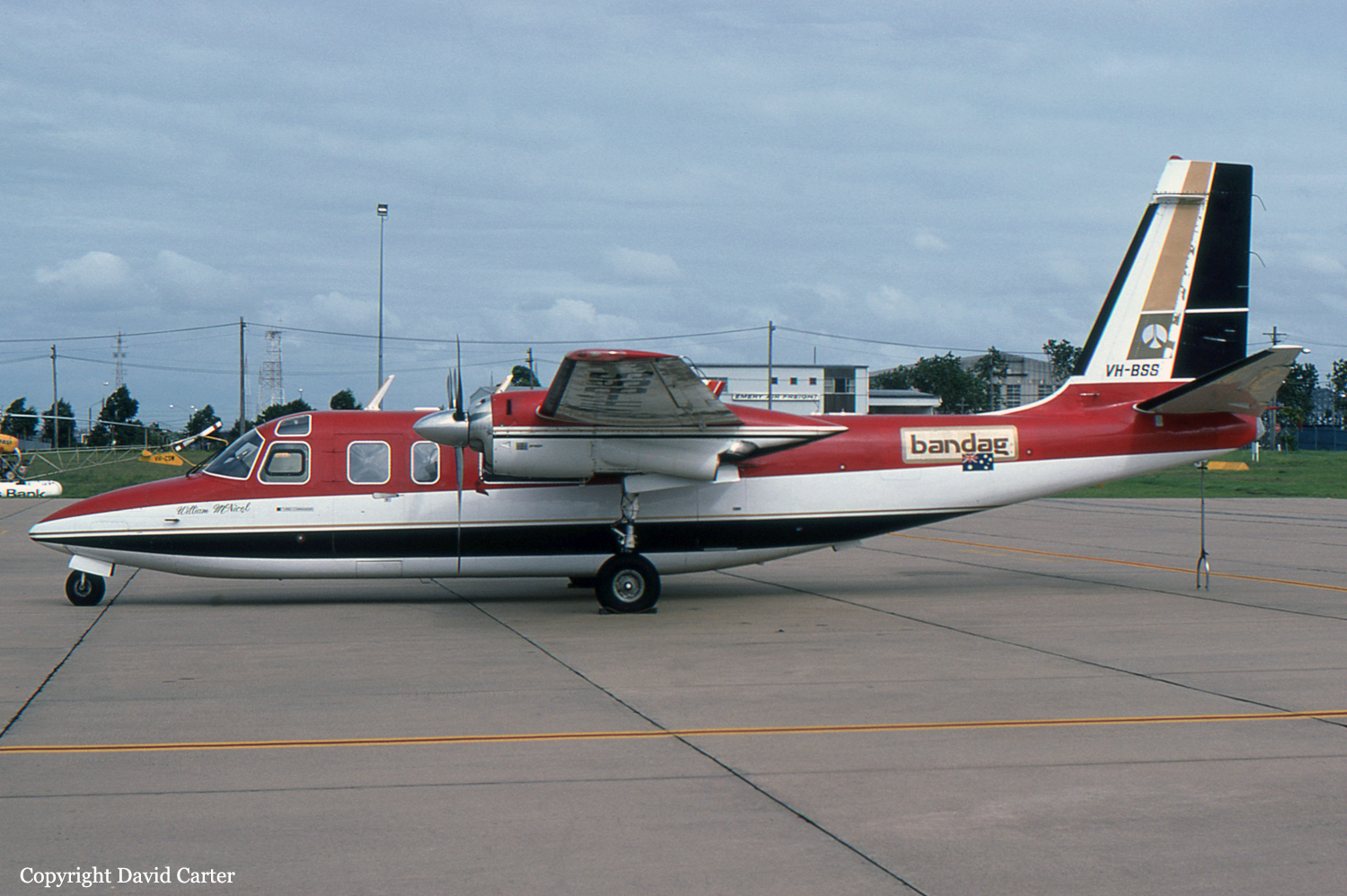
VH-BSS
Flight Type:
Survivors:
No
Schedule:
Canberra - Sydney
MSN:
690-11044
YOM:
1972
Country:
Region:
Crew on board:
1
Crew fatalities:
Pax on board:
0
Pax fatalities:
Other fatalities:
Total fatalities:
1
Captain / Total flying hours:
1800
Captain / Total hours on type:
50.00
Aircraft flight hours:
7975
Circumstances:
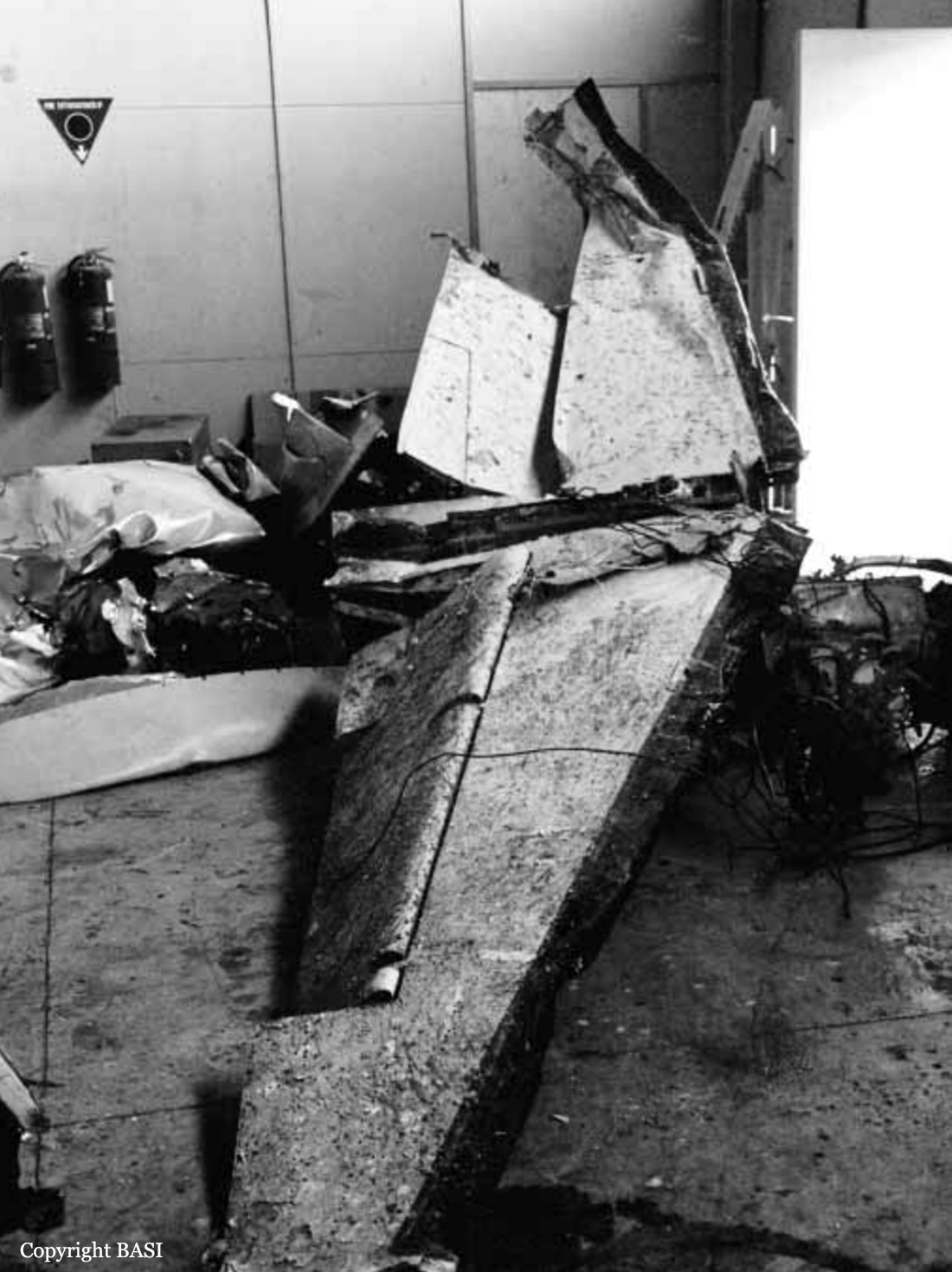
On 14 January 1994 at 0114, Aero Commander 690 aircraft VH-BSS struck the sea while being radar vectored to intercept the Instrument Landing System approach to runway 34 at Sydney (Kingsford-Smith) Airport, NSW. The last recorded position of the aircraft was about 10 miles to the south-east of the airport. At the time of the accident the aircraft was being operated as a cargo charter flight from Canberra to Sydney in accordance with the Instrument Flight Rules. The body of the pilot who was the sole occupant of the aircraft was never recovered. Although wreckage identified as part of the aircraft was located on the seabed shortly after the accident, salvage action was not initially undertaken. This decision was taken after consideration of the known circumstances of the occurrence and of the costs of salvage versus the potential safety benefit that might be gained from examination of the wreckage. About 18 months after the accident, the wing and tail sections of the aircraft were recovered from the sea by fishermen. As a result, a detailed examination of that wreckage was carried out to assess the validity of the Bureau’s original analysis that the airworthiness of the aircraft was unlikely to have been a factor in this accident. No evidence was found of any defect which may have affected the normal operation of the aircraft. The aircraft descended below the altitude it had been cleared to by air traffic control. From the evidence available it was determined that the circumstances of this accident were consistent with controlled flight into the sea.
Probable cause:
Findings
1. The pilot held a valid pilot licence, endorsed for Aero Commander 690 aircraft.
2. The pilot held a valid multi-engine command instrument rating.
3. There was no evidence found to indicate that the performance of the pilot was adversely affected by any physiological or psychological condition.
4. The aircraft was airworthy for the intended flight, despite the existence of minor anomalies in maintenance and serviceability of aircraft systems.
5. The aircraft carried fuel sufficient for the flight.
6. The weight and balance of the aircraft were estimated to have been within the normal limits.
7. Recorded radio communications relevant to the operation of the aircraft were normal.
8. Relevant ground-based aids to navigation were serviceable.
9. At the time of impact the aircraft was capable of normal flight.
10. The aircraft was fitted with an altitude alerting system.
11. The aircraft was not fitted with a ground proximity warning system.
12. The aircraft was equipped with a transponder which provided aircraft altitude information to be displayed on Air Traffic Control radar equipment.
3.2 Significant factors
1. The pilot was relatively inexperienced in single-pilot Instrument Flight Rules operations on the type of aircraft being flown.
2. The aircraft was being descended over the sea in dark-night conditions.
3. The workload of the pilot was significantly increased by his adoption of a steep descent profile at high speed, during a phase of flight which required multiple tasks to be completed in a limited time prior to landing. Radio communications with another company aircraft during that critical phase of flight added to that workload.
4. The pilot probably lost awareness of the vertical position of the aircraft as a result of distraction by other tasks.
5. The aircraft was inadvertently descended below the altitude authorized by Air Traffic Control.
6. The secondary surveillance radar system in operation at the time provided an aircraft altitude readout which was only updated on every sixth sweep of the radar display.
7. The approach controller did not notice a gross change of aircraft altitude shortly after a normal radio communication with the pilot.
Final Report: