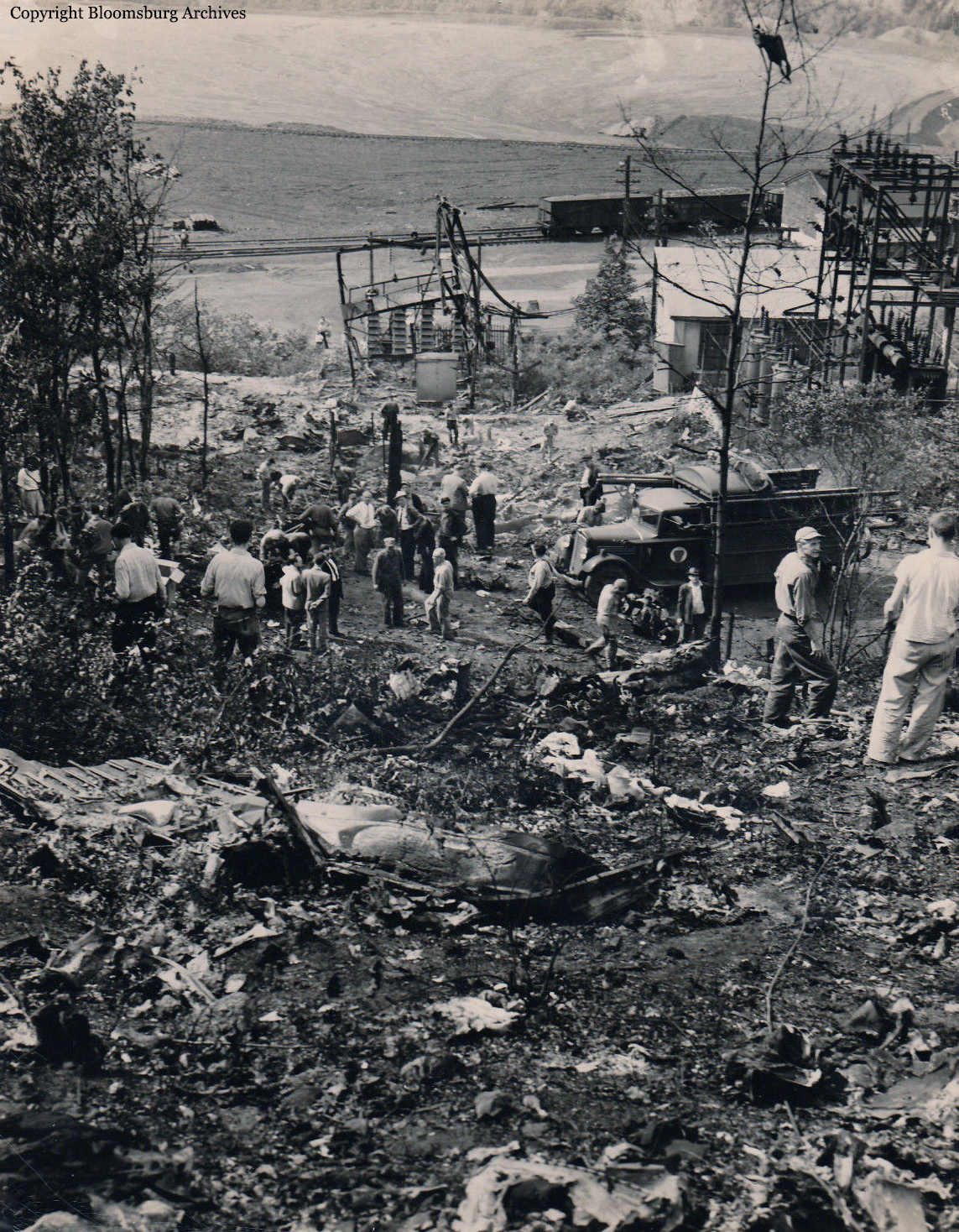
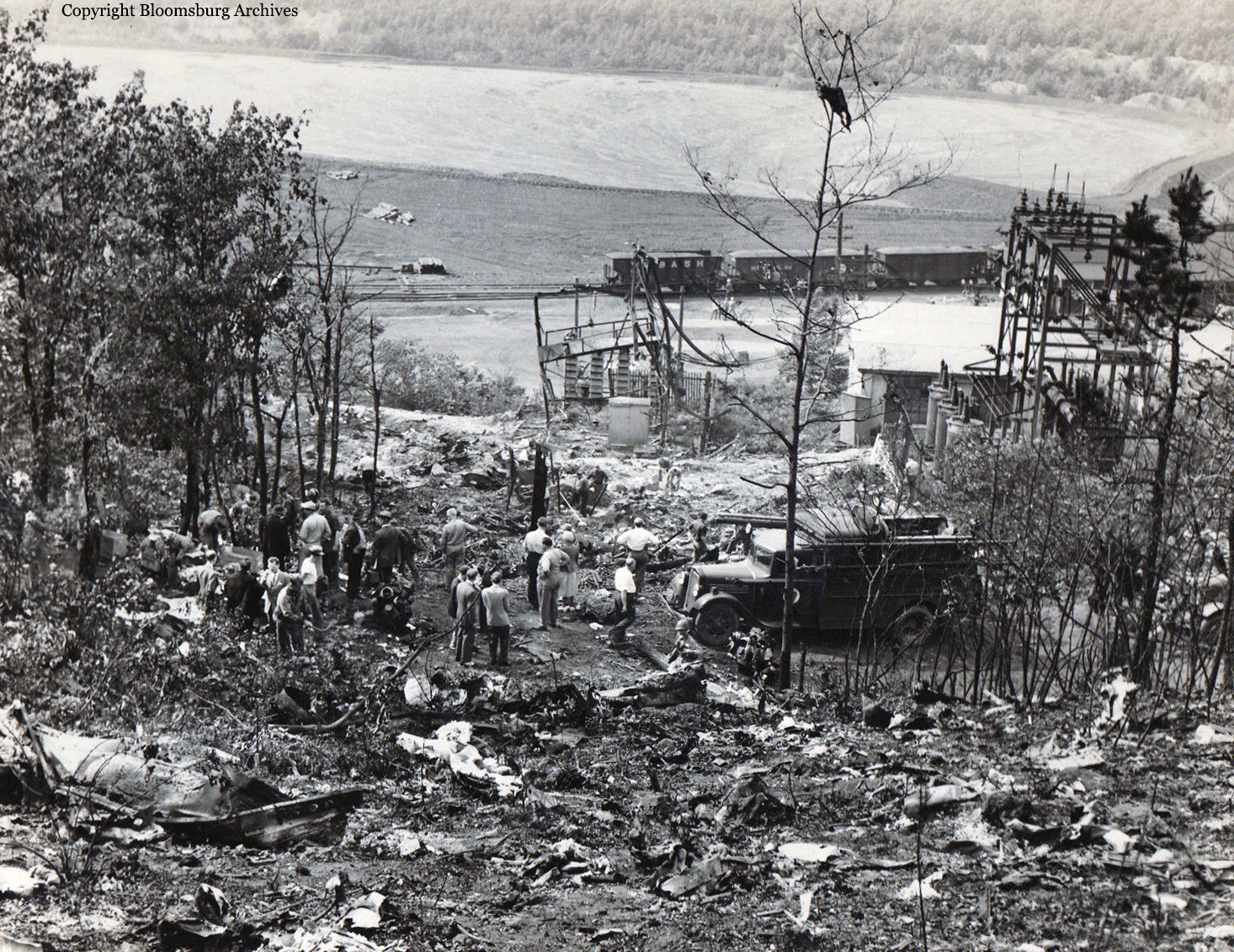
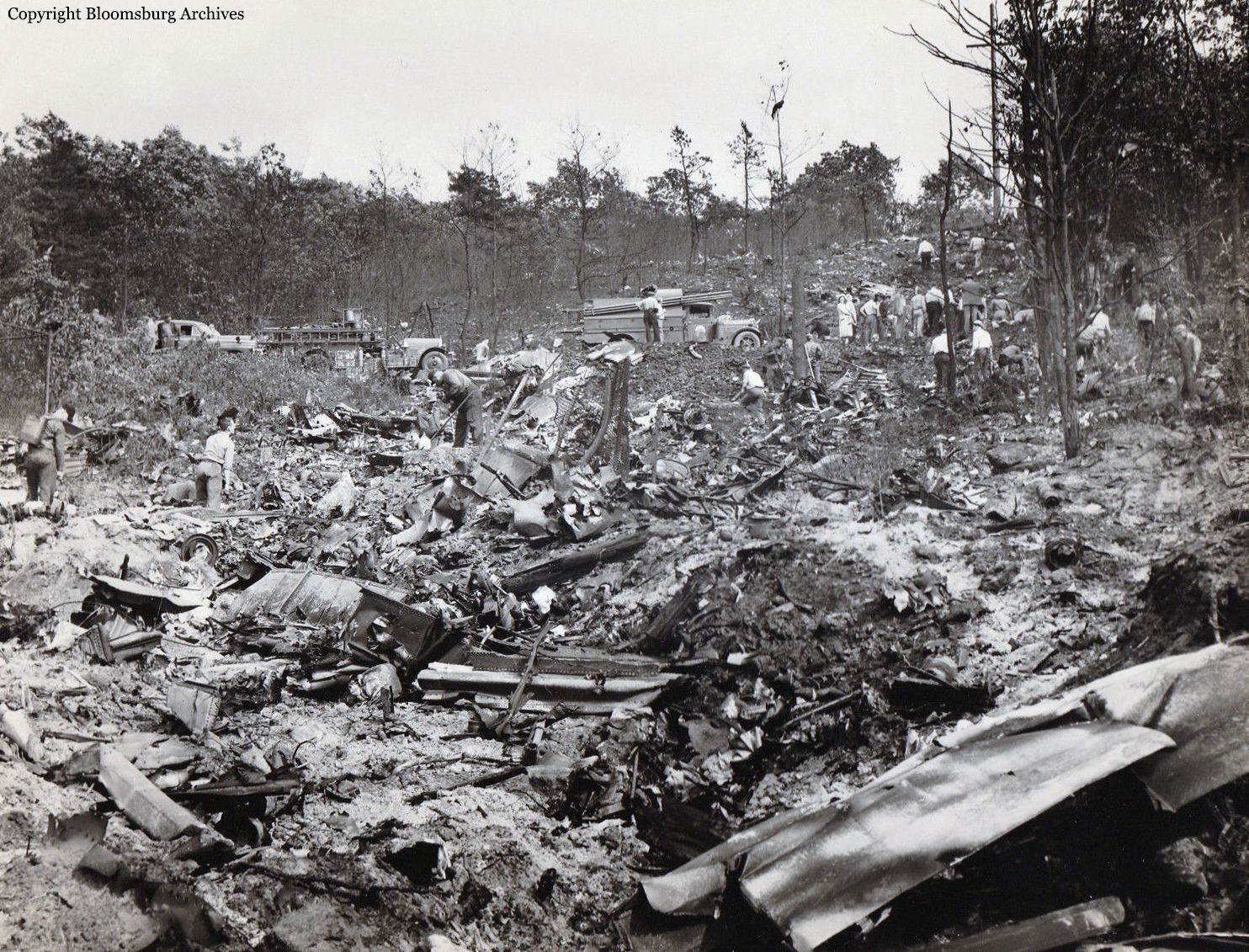
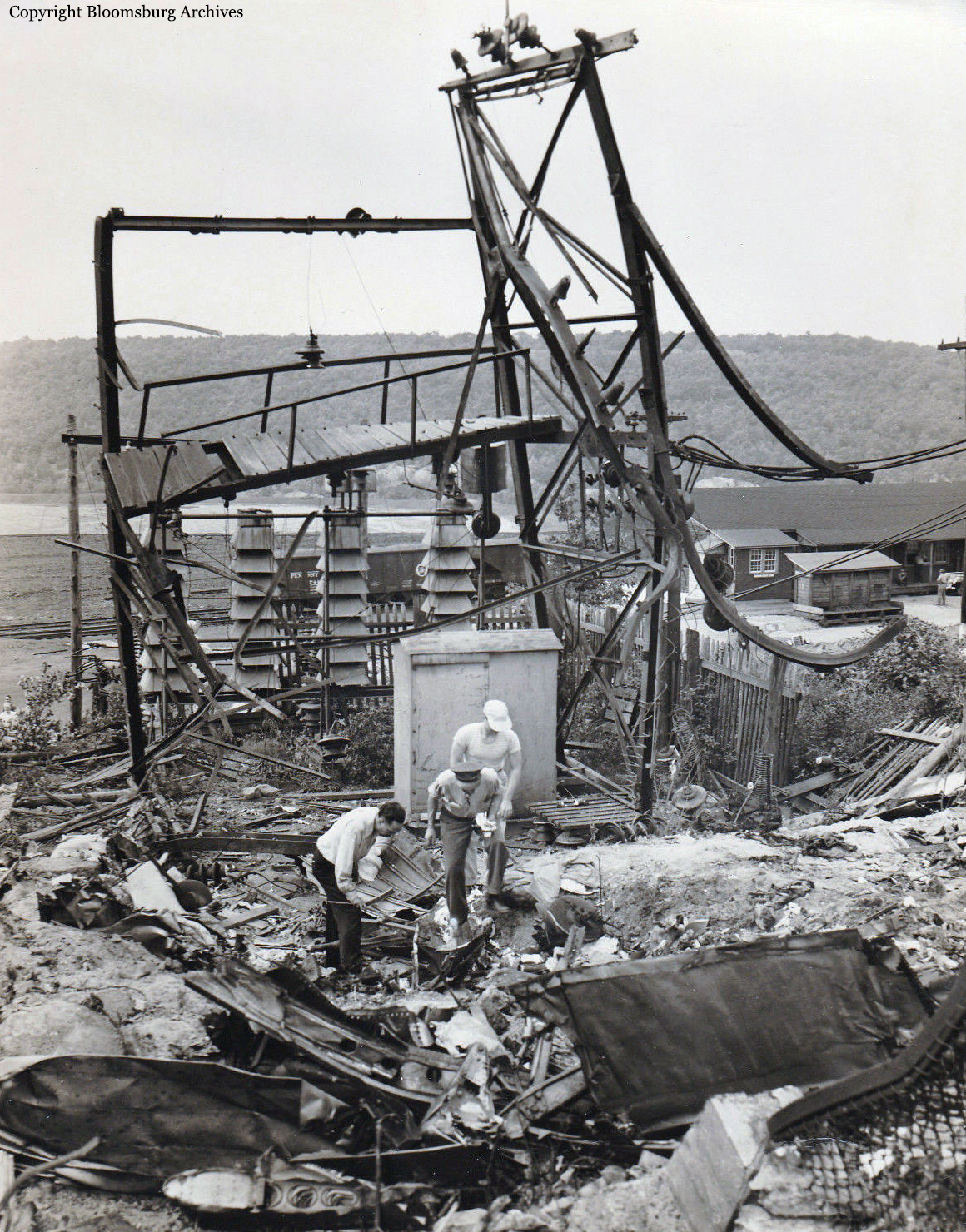
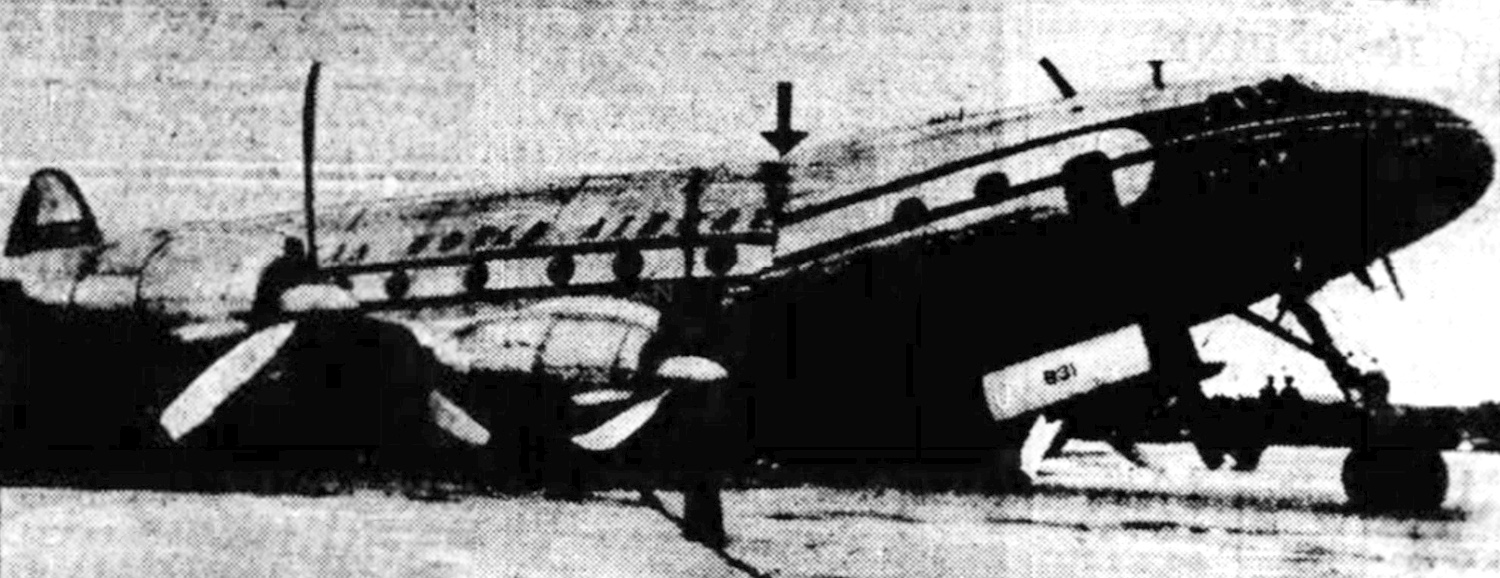
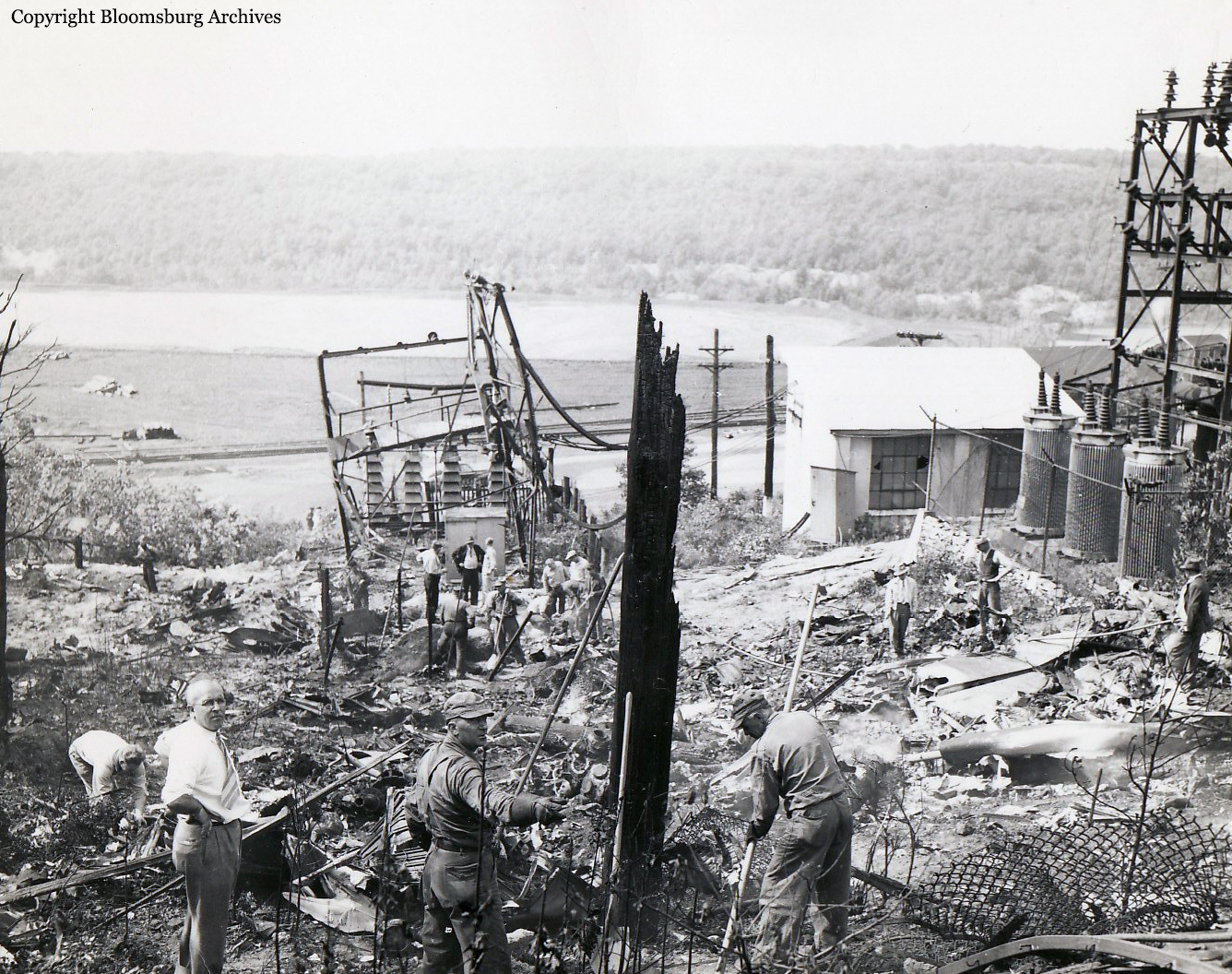
Crash of a Douglas DC-6 in Mount Carmel: 43 killed

Date & Time: Jun 17, 1948 at 1241 LT
Type of aircraft:
Operator:
Registration:
NC37506
Flight Phase:
Survivors:
No
Schedule:
San Diego – Los Angeles – Chicago – New York
MSN:
42871
YOM:
1947
Flight number:
UA624
Crew on board:
4
Crew fatalities:
Pax on board:
39
Pax fatalities:
Other fatalities:
Total fatalities:
43
Captain / Total flying hours:
7310
Captain / Total hours on type:
30.00
Copilot / Total flying hours:
3289
Copilot / Total hours on type:
129
Aircraft flight hours:
1245
Circumstances:
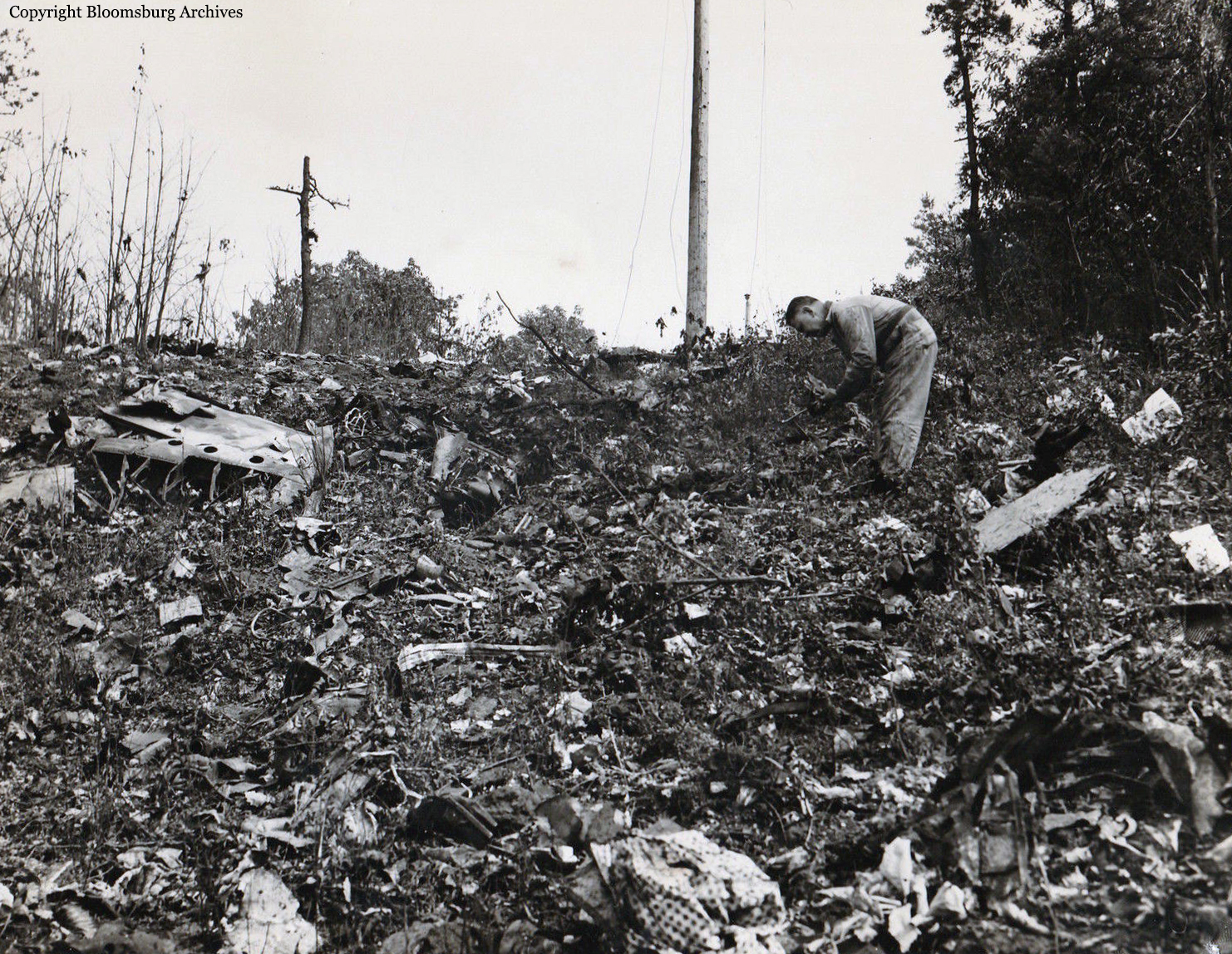
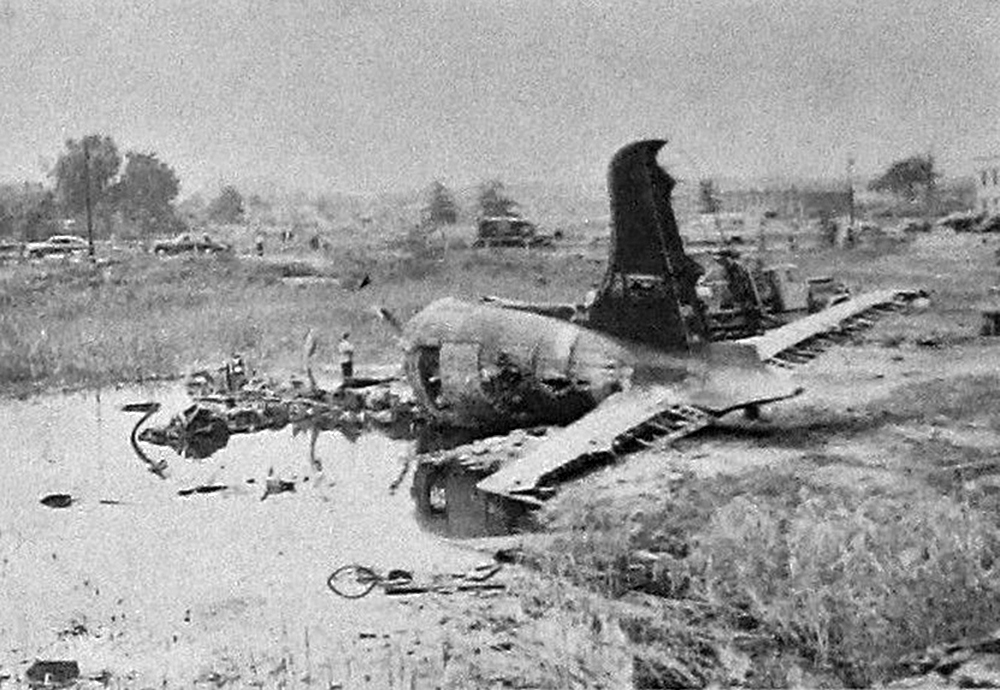
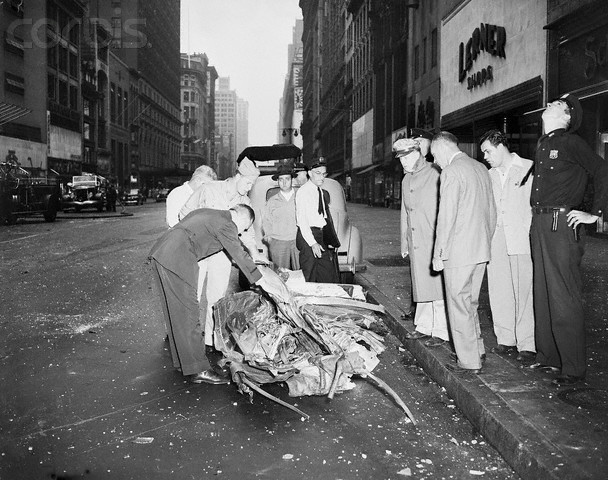
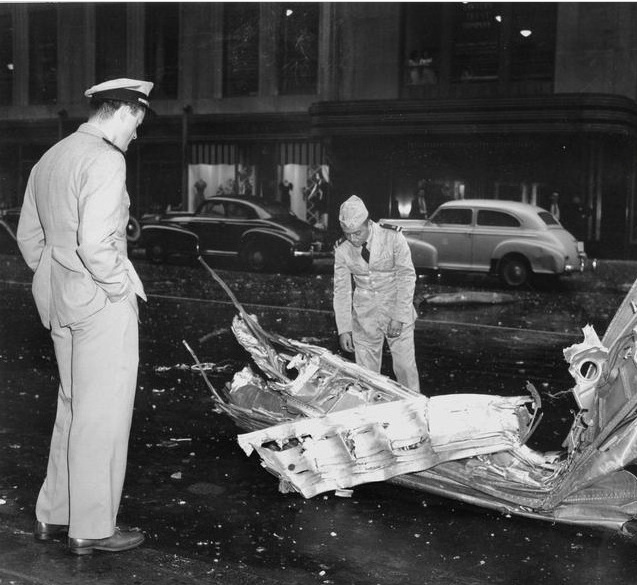
The airplane arrived in Chicago at 0952LT, en route from Los Angeles to New York City. At Chicago, the airplane was given a routine station inspection, serviced, loaded, and the flight departed for New York with a new crew at 1044. Aboard were 39 passengers, a crew of four, 2,568 pounds of cargo and 1,800 gallons of fuel, all properly loaded. The resulting total airplane weight was within the certificated gross weight. The airplane climbed en route to its planned altitude of 17,000 feet, proceeding on course, and at 1155 the captain reported to the company radio at LaGuardia Field, that the airplane was mechanically "okay” for a return trip. A routine report was made over Phillipsburg, PA, approximately 500 miles east of Chicago, at 1223, and at 1227 the crew made a routine acknowledgment of a clearance to descend en route to an altitude between 13,000 and 11,000 feet. Four minutes later, at 1231, the company radio operator at LaGuardia Field heard a voice which did not identify itself calling loudly and urgently. Another United crew in a DC-3, flying over the same route behind Flight 624 and at a different altitude, heard what they termed “screaming voices” calling "New York." Then, after an unintelligible transmission, “This is an emergency descent." Inasmuch as all other air carrier flights in the vicinity at this time were accounted for, this transmission undoubtedly emanated from Flight 624. The airplane was first observed by ground witnesses 31 miles northwest of the scene of the accident flying a southeasterly heading toward Shamokin, PA. The airplane flew over the Sunbury Airport, at approximately 4,000 feet above the ground on a southeasterly heading. Immediately north of Shamokin the airplane, then only 500 to 1,000 feet above the ground, described a shallow left turn. The course was toward constantly rising terrain, the hills around Sunbury being 900 feet in elevation and the hills around Shamokin being approximately 1,600 feet in elevation. Five miles east or beyond Shamokin the airplane, flying only 200 feet above the ground, entered a right climbing turn. As it passed to the north of Mount Carmel, the climbing turning attitude increased sharply. The airplane then struck a hillside at an elevation of 1,649 feet. The aircraft disintegrated on impact and all 43 occupants were killed.
Probable cause:
The Board determines that the probable cause of this accident was the incapacitation of the crew by a concentration of CO2 gas in the cockpit.
The following factors were considered as contributing:
- A fire warning caused the crew to discharge at least one bank of the CO2 fire extinguisher bottles in the forward cargo pit (the forward underfloor baggage compartment),
- Six 15-pound CO2 bottles and six discharge valves were found in the wreckage, however, both the bottles and the valves (which had become separated from their respective bottles upon impact) were so damaged that no conclusions could be drawn as to how many of such bottles had been discharged prior to impact,
- At the time of impact, the emergency cabin pressure relief valves were closed, and the control mechanism for such valves was in the closed position,
- Except for the apparent failure of the fire detection instrument referred to in finding No. 5, supra, the investigation revealed no mechanical failure of the aircraft or fire in flight,
- The emergency procedure for the operation of the DC-6 fire extinguisher system was established after flight tests were conducted in a descent configuration of 300 miles per hour, with landing gear and flaps up, no flight tests were conducted prior to the accident in a descent configuration of 160 miles per hour with gear and flaps down, which configuration was also approved for DC-6 operations,
- At the time of impact the landing gear was in the “up" position, thus indicating that the aircraft had descended in the configuration of 300 miles per hour. The extensive breakage of the aircraft precluded any positive determination as to the position of the flaps,
- After the release of CO2 gas hazardous concentrations of the gas entered into the cockpit,
- Due to the physiological and toxic effects of high concentrations of CO2 gas in the cockpit, which would probably not have occurred had the cabin pressure relief valves been open, the members of the flight crew of the aircraft were rendered physically and mentally incapable of performing their duties.
The following comment was added to the conclusion:
A fire in flight permits little opportunity for the exercise of detached and thoughtful consideration of emergency procedure. Immediate action is required if a fire is to be controlled. Too little consideration has been given to the psychological and physical limitations of crew members in time of stress and danger as related to the complexity of emergency fire procedure. It is not safe to assume that the pilot and co-pilot, under emergency pressure, will always adhere rigidly to the sequence of steps outlined in the CAA Approved Airplane Operating Manual. The possibility of human error under great mental stress is well documented in air transport experience and the design of aircraft controls, especially those of an emergency character, should take into consideration the natural limitations of human nature. These limitations argue against involved procedures applicable in emergencies. In harmony with this objective, the Douglas Aircraft Company has designed and is testing a modified fire extinguishing system which will permit all necessary steps to be executed by the movement of one control. An additional vent is also being designed to reduce CO2 concentration in the cockpit. Seven days after the Mt Carmel accident, the Director of Aviation Safety of the CAA directed telegrams to all CAA regional administrators calling attention to his telegram of June 10, 1948, referred to above, and advising that further investigation had disclosed the existence of the CO2 concentration condition found in Constellation aircraft by the Chillicothe tests in other makes of aircraft. The telegram concluded "Hence, flight crews of all aircraft should be advised to wear oxygen masks and utilize emergency cockpit smoke clearance procedures when carbon dioxide is released into any fuselage compartment from other than portable extinguishers.” All scheduled U S air carriers operating DC-6s have equipped the airplanes with demand type full face oxygen masks for the use of the crew.
Final Report:
Crash of a Douglas C-54G-1-DO Skymaster on the Mt Sanford: 30 killed

Date & Time: Mar 12, 1948 at 2114 LT
Type of aircraft:
Operator:
Registration:
NC95422
Flight Phase:
Survivors:
No
Site:
Schedule:
Shanghai – Anchorage – New York
MSN:
35966
YOM:
1945
Flight number:
NW4422
Crew on board:
6
Crew fatalities:
Pax on board:
24
Pax fatalities:
Other fatalities:
Total fatalities:
30
Captain / Total flying hours:
4453
Captain / Total hours on type:
733.00
Copilot / Total flying hours:
8324
Copilot / Total hours on type:
728
Aircraft flight hours:
3306
Circumstances:
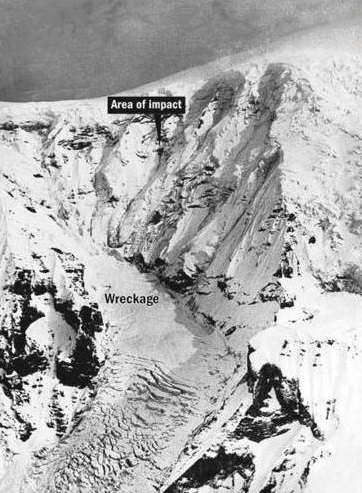
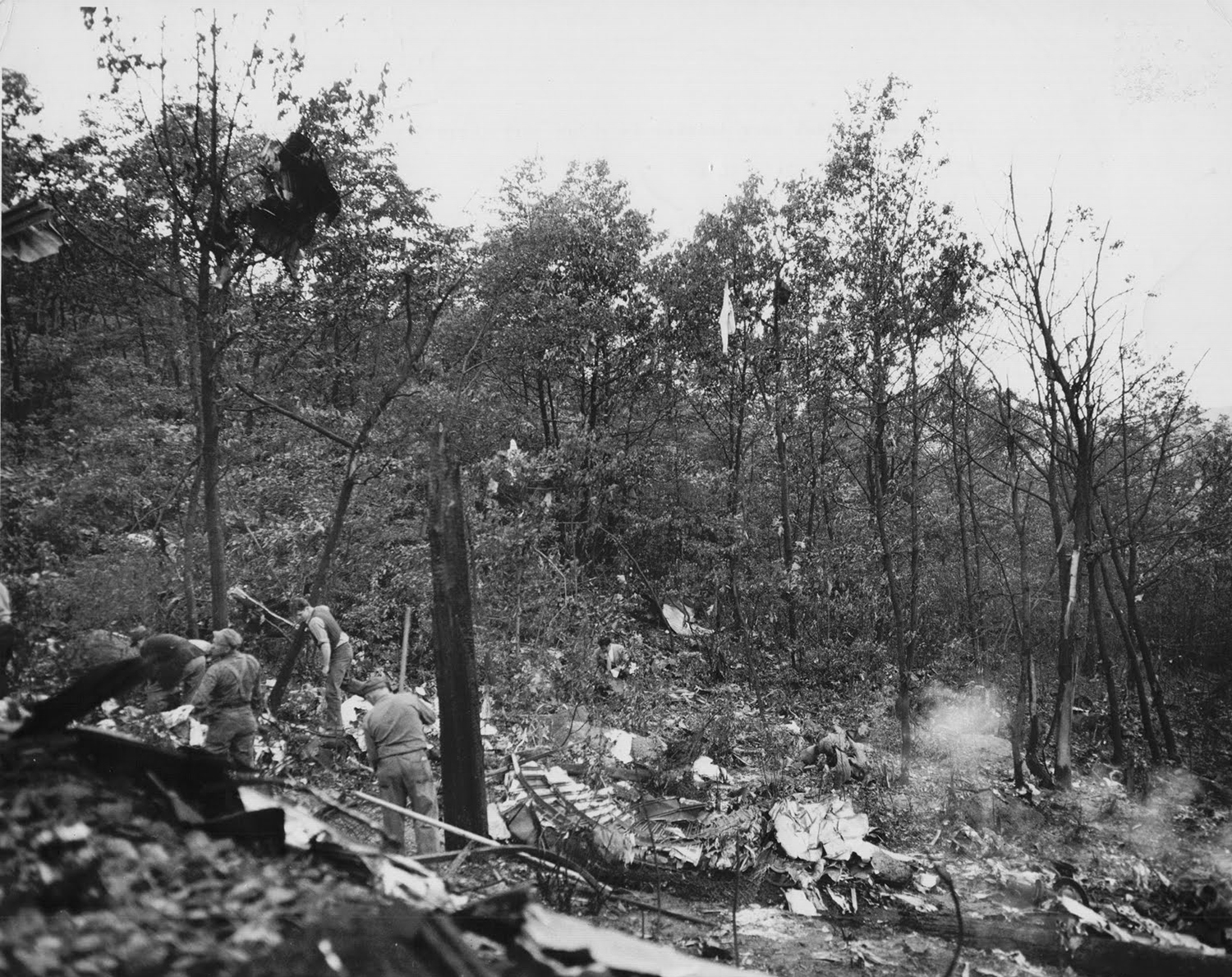
Take-off from Anchorage was accomplished at 2012, March 12, 1948, and the flight proceeded en route. 2 At 2028 the flight reported over the Wasilla Intersection, which is the intersection of the north course of the Anchorage radio range and the east course of the Skwentna radio range. This intersection is located 35 miles north 3 of Anchorage. Three minutes later, at 2031, the flight reported that it was at its cruising altitude of 11,000 feet. At 2042 the flight reported over Sheep Mountain, a non-directional radio beacon located 85 miles airways distance, 31 degrees, from Anchorage. At 2103 the flight reported being over the Gulkana radio range station, 159 miles, 34 degrees, from Anchorage, and at this time it estimated that it would be over Northway, Alaska, 283 miles from Anchorage, at 2136. Gulkana did not establish communication with the flight. However, the flight repeated its clearance into the Fairbanks area back to Northway, indicating that the flight could receive on 400 kcs, the frequencies for both the Northway radio range and communication. Shortly before the position report of 2103, the flight was observed flying an easterly heading approximately 4 miles south of the Gulkana radio range station. Approximately 42 miles, 51 degrees, from the Gulkana radio range station is Mt. Sanford, the elevation of which is 16,208 feet. In order to provide a safe lateral distance from Mt. Sanford for aircraft flying the route, the airway from Gulkana east is deflected to the north, its course being 23 degrees. Fifteen minutes after the flight was observed flying easterly from Gulkana a fire was observed on the western slope of Mt. Sanford. Except for a repeat transmission of the flight's Gulkana position report, overheard by Northway Radio 124 miles northeast of Gulkana and approximately one minute before the fire was observed on Mt. Sanford, no communication was received from the flight after 2103. Northwest Airlines, at 2150, requested from Anchorage Radio the reported time of the flight over Northway, at which time Anchorage Radio advised that neither the Northway nor the Gulkana stations had been able to contact the flight, and that a fire had been reported on Mt. Sanford. Radio facilities over the route were immediately alerted. Since all attempts to contact the flight were unsuccessful, it was concluded that the flight had struck Mt. Sanford and burned.
Probable cause:
The Board determines that the probable cause of this accident was the pilot's failure to see Mt. Sanford, which was probably obscured by clouds or the aurora borealis or both while flying a course off the airway.
Final Report:
Crash of a Douglas DC-3C off New York-La Guardia: 3 killed

Date & Time: Aug 8, 1947 at 1849 LT
Type of aircraft:
Operator:
Registration:
NX88787
Flight Type:
Survivors:
Yes
Schedule:
New York – Rochester
MSN:
19639
YOM:
1944
Crew on board:
5
Crew fatalities:
Pax on board:
0
Pax fatalities:
Other fatalities:
Total fatalities:
3
Captain / Total flying hours:
4934
Captain / Total hours on type:
2000.00
Copilot / Total flying hours:
4760
Copilot / Total hours on type:
1500
Aircraft flight hours:
2035
Circumstances:
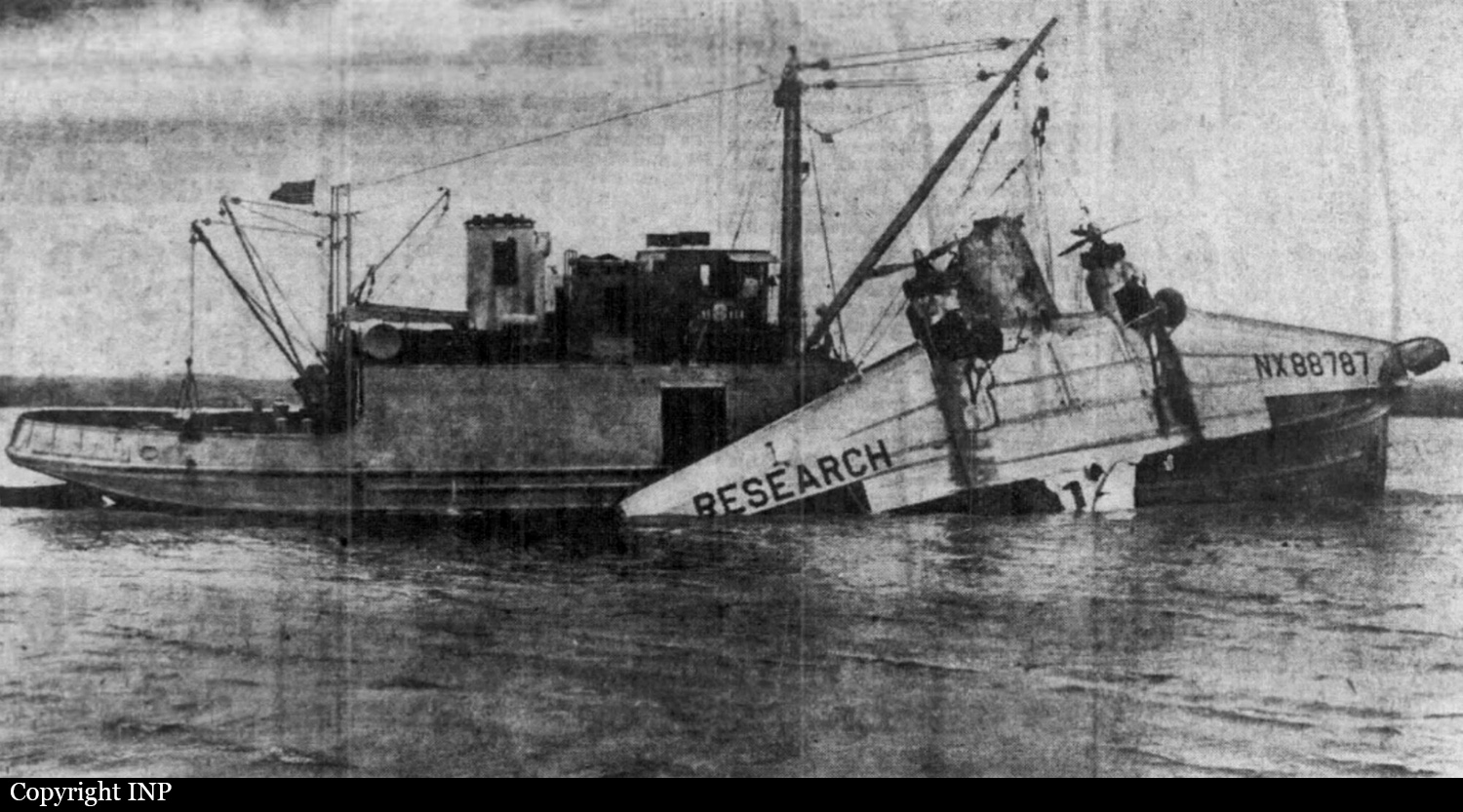
The aircraft took off on runway 13 of La Guardia Airport at 1843LT, having been cleared on an instrument flight plan to Rochester, New York, with Toronto, Ontario, as an alternate. Approximately 2 minutes after take-off the flight called La Guardia Tower and reported that it was in the vicinity of the south end of Whitestone Bridge, approximately 2 1/2 miles northeast of La Guardia Airport. The flight advised that the oil pressure was low on one engine, and requested clearance to land on runway 22. The request was approved, and the tower informed the crew that the wind was calm. When asked if emergency equipment was desired to stand by, the flight replied in the negative. Shortly thereafter, NX88787 reported that it was on the final approach, and that it was over the sand barges, located approximately one-half mile off the approach end of runway 22. In reply the flight was again given clearance to land. The aircraft was first seen at an altitude of approximately 800 feet, and about 1,300 feet off the approach end of runway 22 with the landing gear extended. The flaps were lowered, and the aircraft started a steep descent to runway 22,but it passed over the approach end of the runway at an altitude of approximately 300 feet. The flight then requested and was granted permission by the tower to make a right turn, however, the aircraft continued straight ahead over the runway, gradually losing altitude. When one-third of the way down the runway, the right propeller was feathered. When over the intersection of runways 22 and 18 and at an altitude of 200 feet the flaps were raised, which resulted in an additional loss of altitude. During or directly after raising the flaps, a right turn was initiated, and the landing gear was observed to retract slowly. Competent witnesses stated that the right turn was made at a very slow speed, at a high angle of attack, and at an altitude appearing never to have exceeded 200 feet. Over Bowery Bay the aircraft on two occasions almost settled into the water. When in a flat right turn toward runway 13 it lost altitude to about 50 feet. Approximately 2,000 feet from the end of the runway, the landing gear started to extend, and became fully extended when the aircraft was aligned with runway 13. At this time the airplane attitude appeared to be that of a steep climb. The wings were seen to wobble slightly, then the left wing and nose dropped, and the airplane struck the water at an angle of approximately 20 degrees. The forward movement of the aircraft continued on the surface of the water for 40 to 50 feet, throwing up a great spray as the tail rose to a vertical position, after which the aircraft continued over on its back and sank in about 5 minutes.
Probable cause:
The Board determines that the probable cause of this accident was that, following an attempted landing, a miss-approach procedure was attempted for a second landing without sufficient air speed for single engine operation.
The following factors were considered as contributory:
- The oil screen cover plate gasket on the right engine was either fractured when installed immediately prior to the flight of August 8, 1947, or failed during the initial part of that flight,
- As a result of the fractured oil screen cover plate gasket, oil pressure for the right engine dropped below normal, and the crew feathered the right propeller,
- Insufficient air speed was maintained in a landing approach to runway 13 at the La Guardia Airport, after an attempted landing and "go around" had been made on runway 22, and as a result the airplane stalled and crashed into Bowery Bay.
Final Report:

Crash of a Douglas DC-4 in La Guardia: 43 killed

Date & Time: May 29, 1947 at 1905 LT
Type of aircraft:
Operator:
Registration:
NC30046
Flight Phase:
Survivors:
Yes
Schedule:
New York – Cleveland
MSN:
18324
YOM:
1944
Flight number:
UA521
Crew on board:
4
Crew fatalities:
Pax on board:
44
Pax fatalities:
Other fatalities:
Total fatalities:
43
Captain / Total flying hours:
8703
Captain / Total hours on type:
336.00
Copilot / Total flying hours:
2323
Copilot / Total hours on type:
256
Aircraft flight hours:
5950
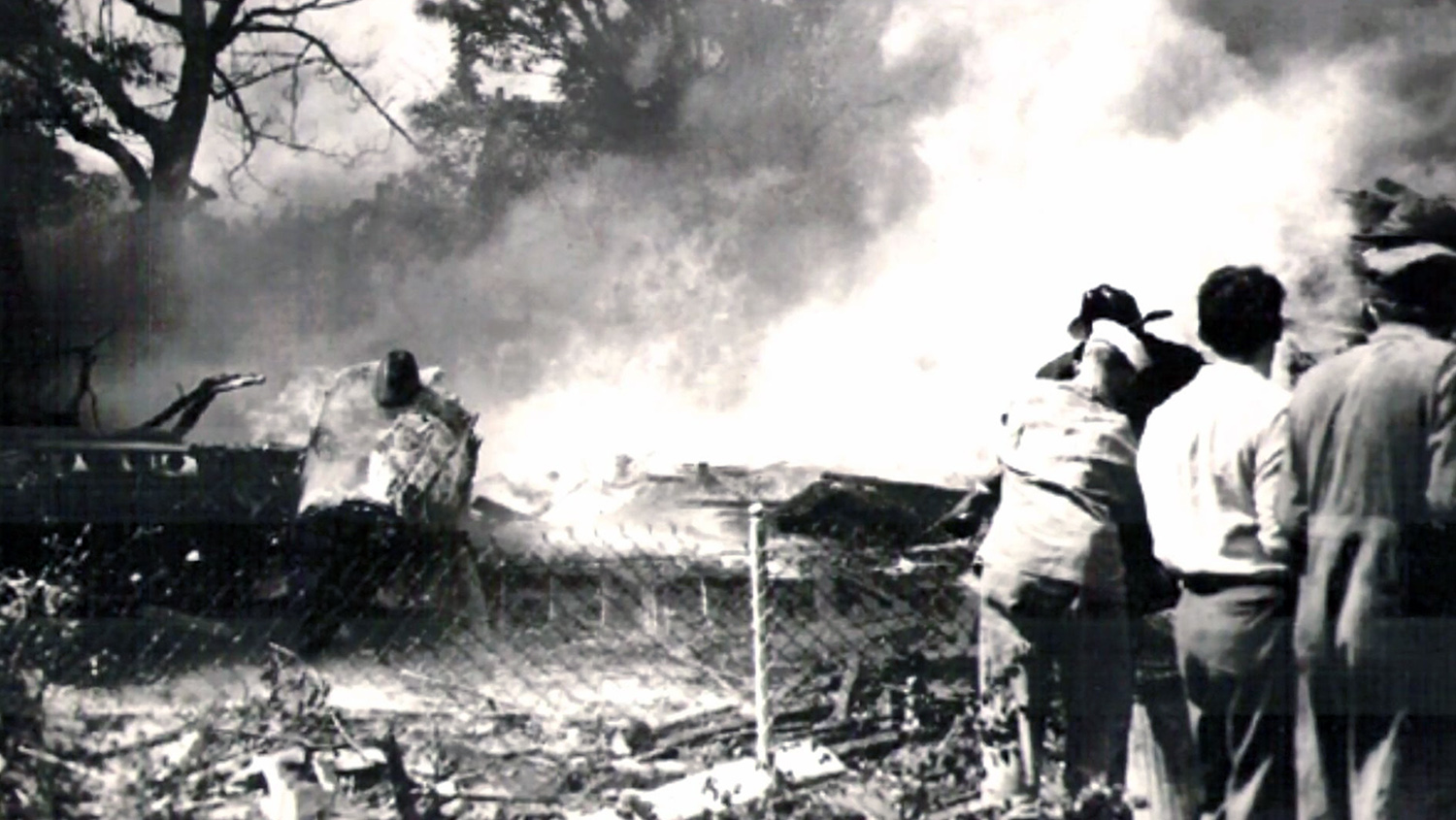
Circumstances:
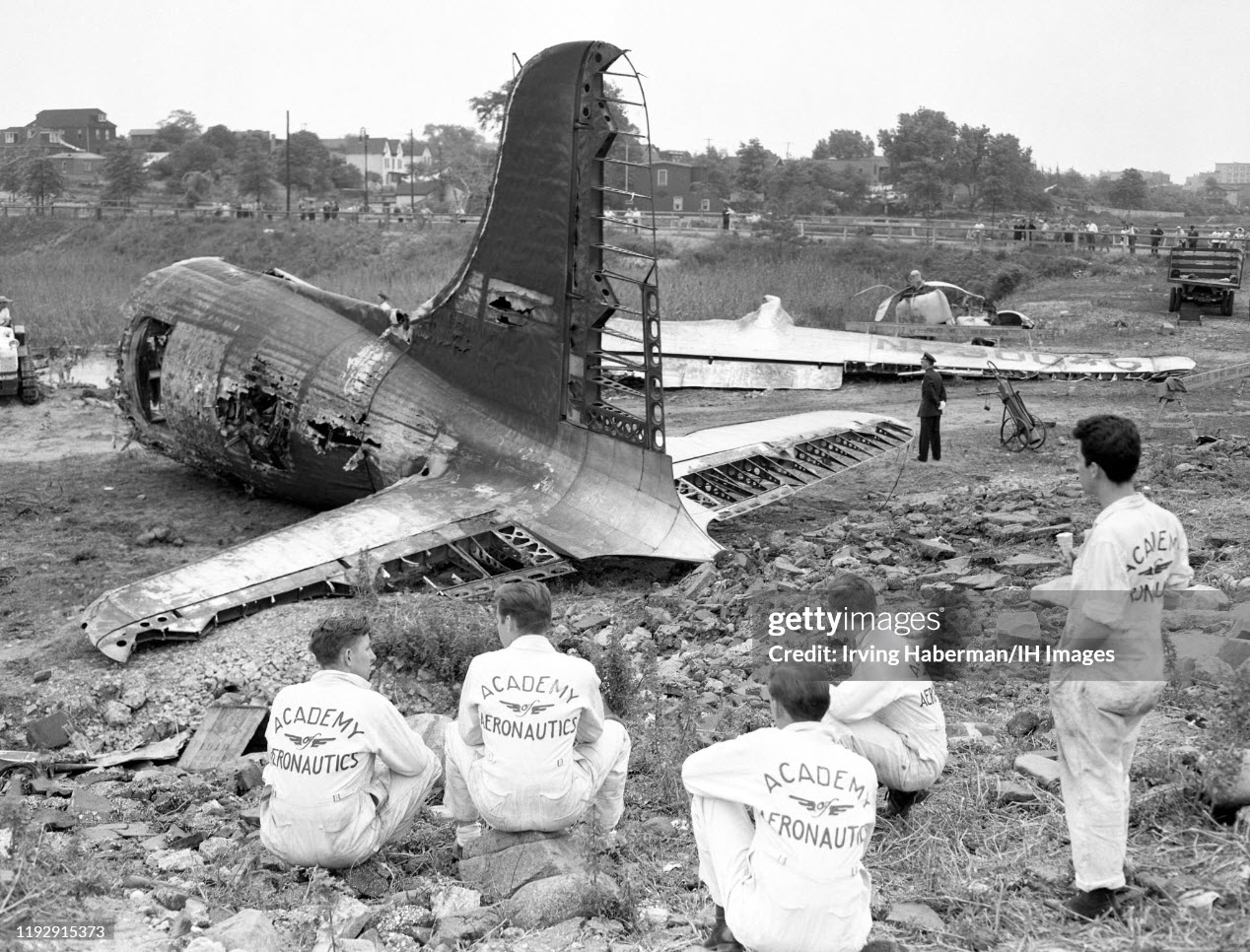
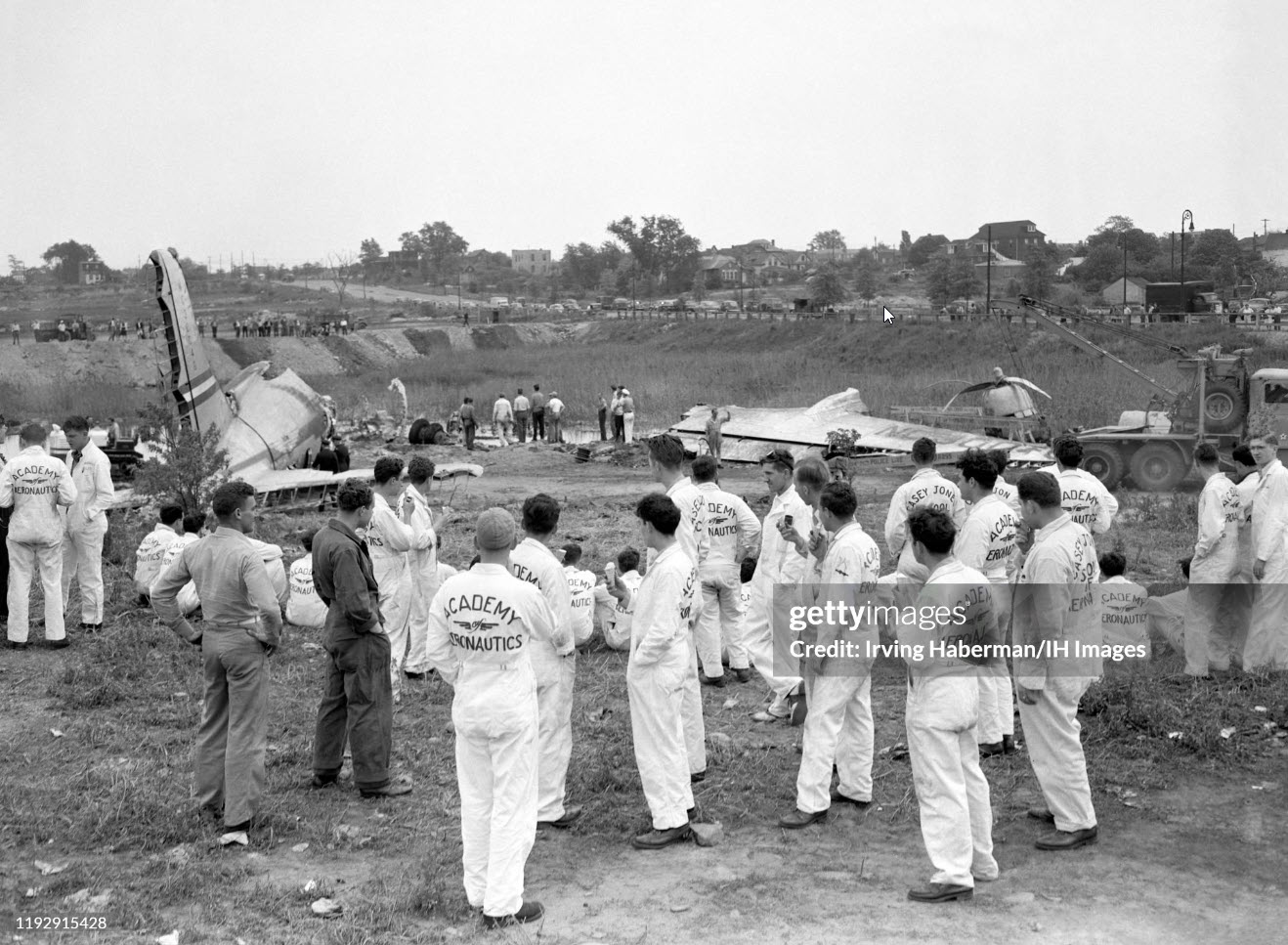
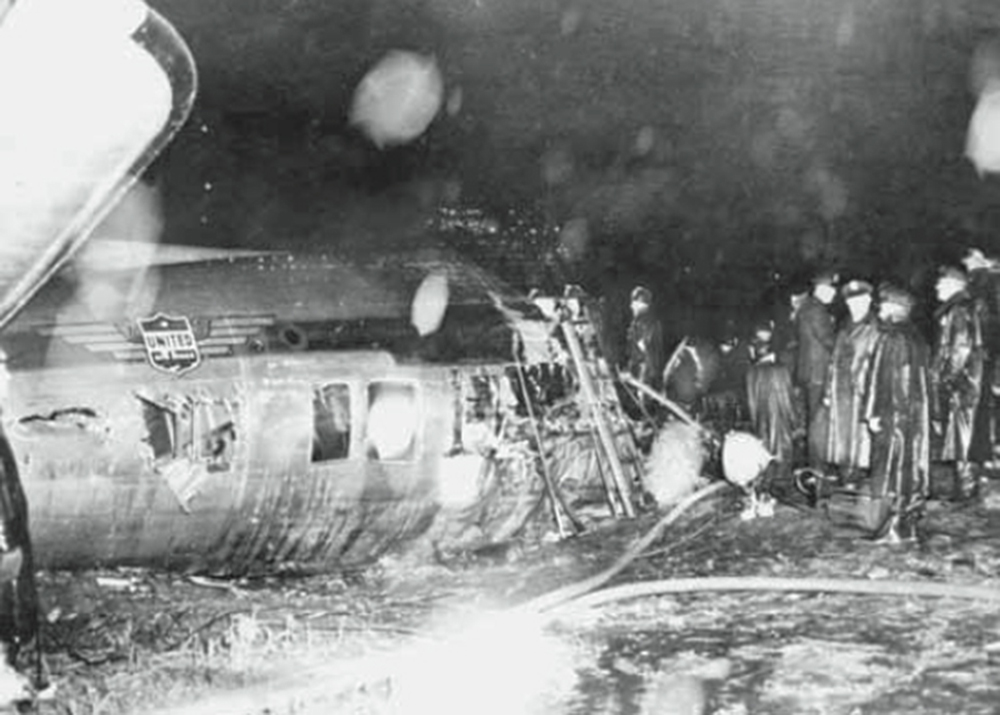
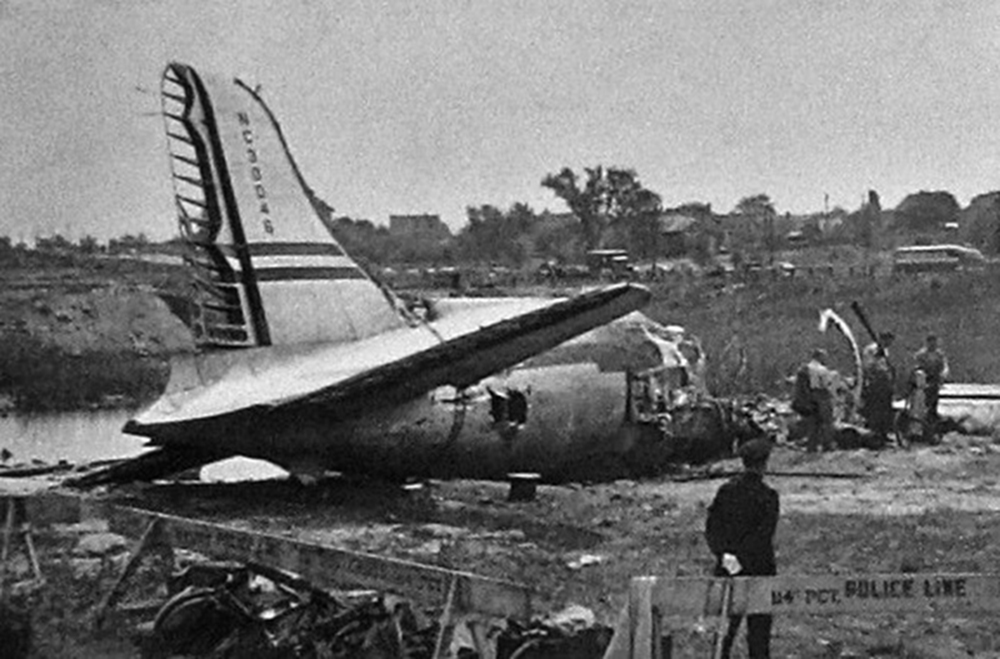
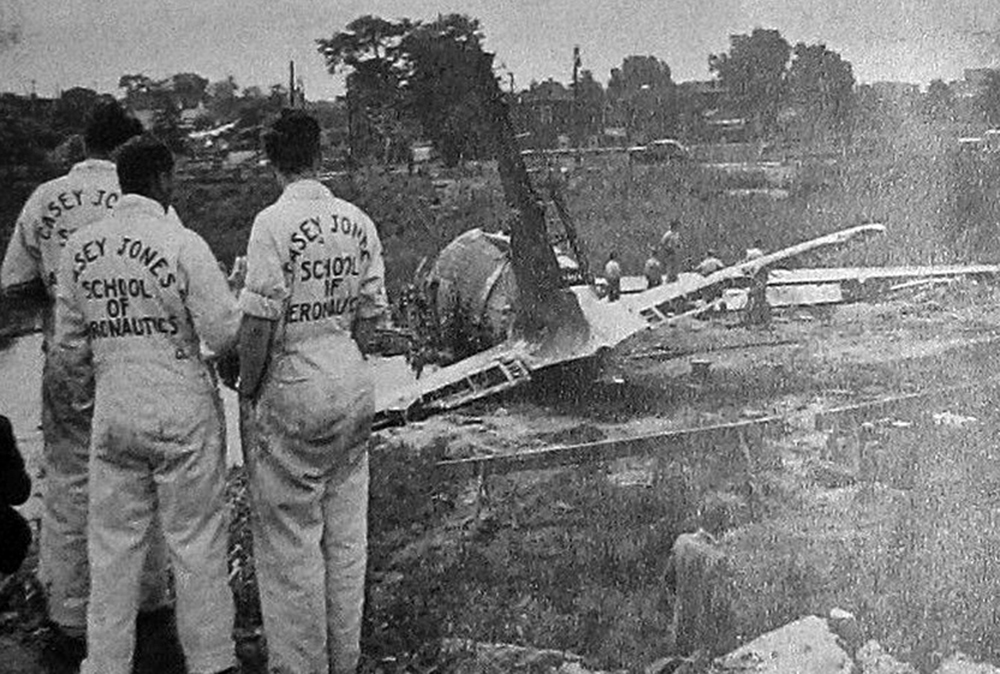
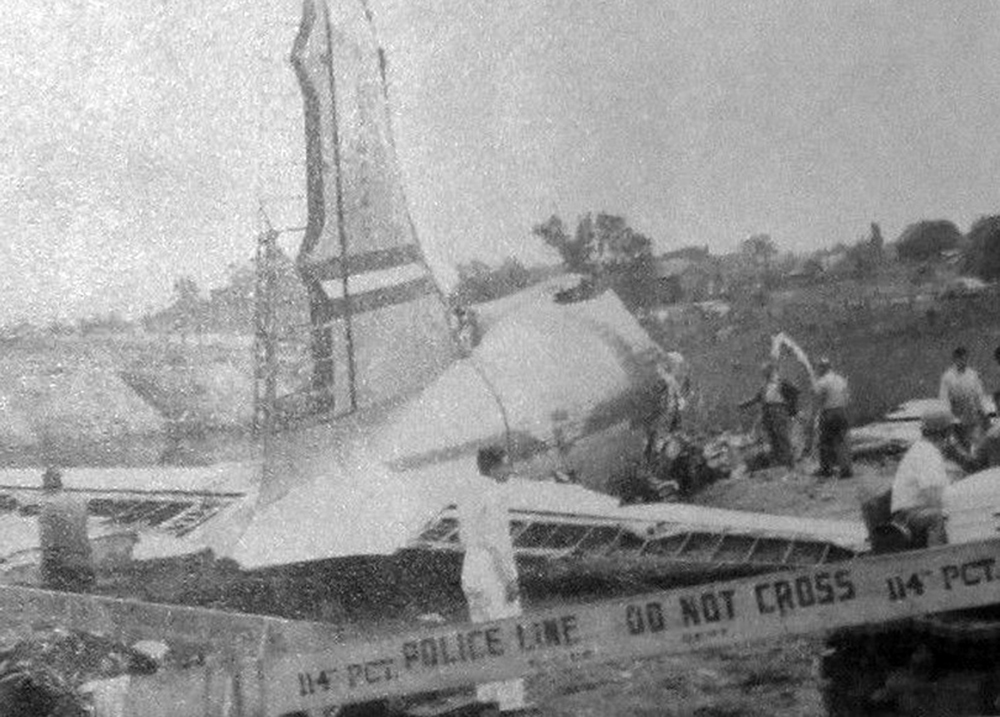
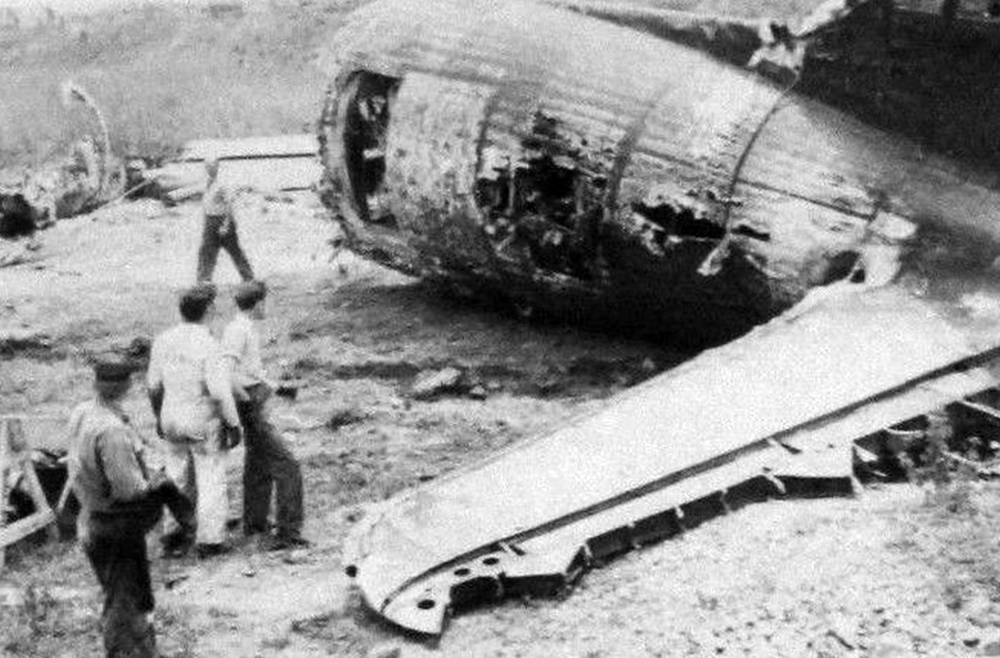
Flight 521 taxied from its parked position, rolled onto Runway 18, and without pause or hesitation accelerated for take-off. The throttles were advanced. Air speed increased to above 90 miles per hour. Captain Baldwin applied back pressure to the control column, but the "feel" of the controls was "heavy," and the aircraft did not respond. As the aircraft raced toward the boundary of the field, Captain Baldwin decided to discontinue his take-off. About 1,000 feet from the south and of the runway he applied brakes, ordering the co-pilot at the same time to cut the engines. A ground-loop was attempted by heavy application of left brake. The aircraft, however, proceeded to roll straight ahead. Then, in the both brakes locked it continued over the remainder of the runway, crashed through the fence at the airport boundary, and half-bounced, half-flew across the Grand Central Parkway. The aircraft finally came to rest immediately east of the Casey Jones School of Aeronautics, a distance of 800 feet from the end of Runway 18 and 1,700 feet from the point at which brakes were first applied. It was almost immediate enveloped in flames. The captain, another crew member and three passengers were rescued while 43 other occupants were killed.
Probable cause:
The Board determines that the probable cause of this accident was either the failure of the pilot to release the gust lock before take-off, or his decision to discontinue the take-off because of apprehension resulting from rapid use of a short runway under a possible calm wind condition.
Final Report:
Crash of a Lockheed L-049 Constellation in Shannon

Date & Time: Sep 24, 1946
Operator:
Registration:
NC88831
Survivors:
Yes
Schedule:
New York – Shannon – London
MSN:
2031
YOM:
1945
Location:
Country:
Region:
Crew on board:
10
Crew fatalities:
Pax on board:
26
Pax fatalities:
Other fatalities:
Total fatalities:
0
Circumstances:
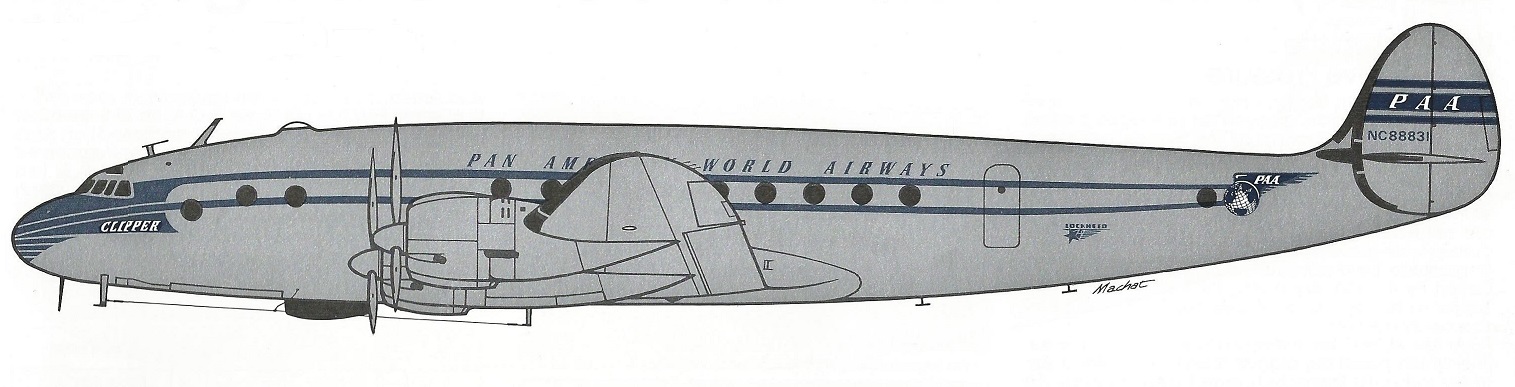
Following an uneventful flight from New York-La Guardia, the crew completed the approach and landed properly. After touchdown, the captain requested the copilot for flaps up when the aircraft sank on its belly, skidded for several yards and came to rest, broken in two. All 36 occupants were evacuated safely while the aircraft was written off.
Probable cause:
It was determined that the accident was caused by a misinterpretation from the copilot that raised the landing gear instead of the flaps, causing the aircraft to fail on its belly.

Crash of a Lockheed L-049 Constellation in Washington

Date & Time: Mar 29, 1946 at 1234 LT
Operator:
Registration:
NC86510
Survivors:
Yes
Schedule:
Paris – Shannon – Gander – New York – Washington
MSN:
2034
YOM:
1945
Flight number:
TW955
Crew on board:
3
Crew fatalities:
Pax on board:
9
Pax fatalities:
Other fatalities:
Total fatalities:
0
Captain / Total flying hours:
6200
Captain / Total hours on type:
155.00
Copilot / Total flying hours:
11000
Copilot / Total hours on type:
53
Aircraft flight hours:
489
Circumstances:
The flight was cleared to Washington National Airport by the Washington control tower and Instructed to use Runway 21 However, because it had been necessary to bear to the left when northeast of the airport to a position from which approach to Runway 21 was, not practicable, the flight was asked by Washington Tower if it desired to use a right-hand. Pattern for Runway 36 The flight replied that it desired clearance for Runway 27, and, as the wind was calm, Washington Tower approved this request. The flight approached the field from the northeast and while over the east bank of the Potomac River approximately 2/3 of a mile from the boundary of the airport, turned to the right and started a descent in final approach to Runway 27. According to the testimony of the pilots, Initial contact was made with the runway between 800 and 1,000 feet from the approach end and the aircraft continued down the runway with less than normal deceleration, Approximately 600 feet from the far end of the runway the pilot attempted a turn to the right. After turning approximately 30 degrees, the aircraft rolled beyond the runway end and struck a concrete transformer housing. The aircraft whipped approximately 90 degrees to the right and came to rest across a drainage ditch with its empennage extending over the highway which adjoins the airport. All twelve occupants were evacuated safely while the aircraft was damaged beyond repair.
Probable cause:
The Board determines that the probable cause of this accident was the poor judgement of the flight crew in attempting to land from a position which did not afford sufficient time to accomplish a satisfactory approach. A contributing factor was the peer landing technique of the pilot in falling to reduce the air sufficiently for a safe landing. A further contributing factor was the lack of knowledge on the part of the crew concerning the poor braking action of rubber tires on a wet runway.
Final Report:
Crash of a Douglas DC-3-201E in Cheshire: 17 killed

Date & Time: Jan 18, 1946 at 1103 LT
Type of aircraft:
Operator:
Registration:
NC19970
Flight Phase:
Survivors:
No
Schedule:
La Guardia - Boston
MSN:
3254
YOM:
1940
Flight number:
EA105
Crew on board:
3
Crew fatalities:
Pax on board:
14
Pax fatalities:
Other fatalities:
Total fatalities:
17
Captain / Total flying hours:
7826
Captain / Total hours on type:
3226.00
Copilot / Total flying hours:
2252
Copilot / Total hours on type:
492
Aircraft flight hours:
22028
Circumstances:
About thirty minutes into the flight, a fire erupted in the left engine. The crew was unable to extinguish the fire that spread quickly to the entire engine and nacelle that detached, causing the wing to partially collapse. The aircraft went out of control, dove into the ground and crashed in flames in a field located in Cheshire. All 17 occupants were killed.
Probable cause:
The probable cause of this accident was the failure of the left wing in flight due to an engine fire caused by the failure of a fuel line connection.
Final Report:
Crash of a Douglas DC-3-201 in La Guardia: 1 killed

Date & Time: Dec 30, 1945 at 2113 LT
Type of aircraft:
Operator:
Registration:
NC18123
Survivors:
Yes
Schedule:
Jacksonville – Savannah – Columbia – Raleigh – Richmond – Washington DC – Philadelphia – La Guardia
MSN:
1999
YOM:
1937
Flight number:
EA014
Crew on board:
3
Crew fatalities:
Pax on board:
11
Pax fatalities:
Other fatalities:
Total fatalities:
1
Captain / Total flying hours:
8057
Captain / Total hours on type:
4957.00
Copilot / Total flying hours:
967
Copilot / Total hours on type:
215
Aircraft flight hours:
21348
Circumstances:
Following an uneventful flight from Philadelphia, the crew started the descent by night to La Guardia Airport in unfavorable weather conditions. A first attempt to land was aborted and during the second one, the aircraft was too high when it passed over the runway threshold. The captain reduced engine power and the initial contact with the runway occurred well down on runway at an airspeed considerably above the stalling speed of the aircraft. The aircraft bounded approximately 20 feet in the air and remained airborne for several hundred feet before again contacting the runway. After another shorter bounce, the aircraft remained on the runway and brakes were applied in an attempt to stop. However, due to the airspeed, which was still relatively high, and the snow and slush which covered the runway, little deceleration was accomplished. The aircraft continued off the end of the runway, demolished a small wooden building which housed the localizer transmitter, and came to rest in the Flushing Bay, approximately 200 feet beyond the field boundary. The aircraft was destroyed, 13 occupants were rescued while a passenger was drowned.
Probable cause:
The Board determines that the probable cause of this accident was the decision of the pilot in attempting a landing from an approach which was too high and too fast.
Final Report:
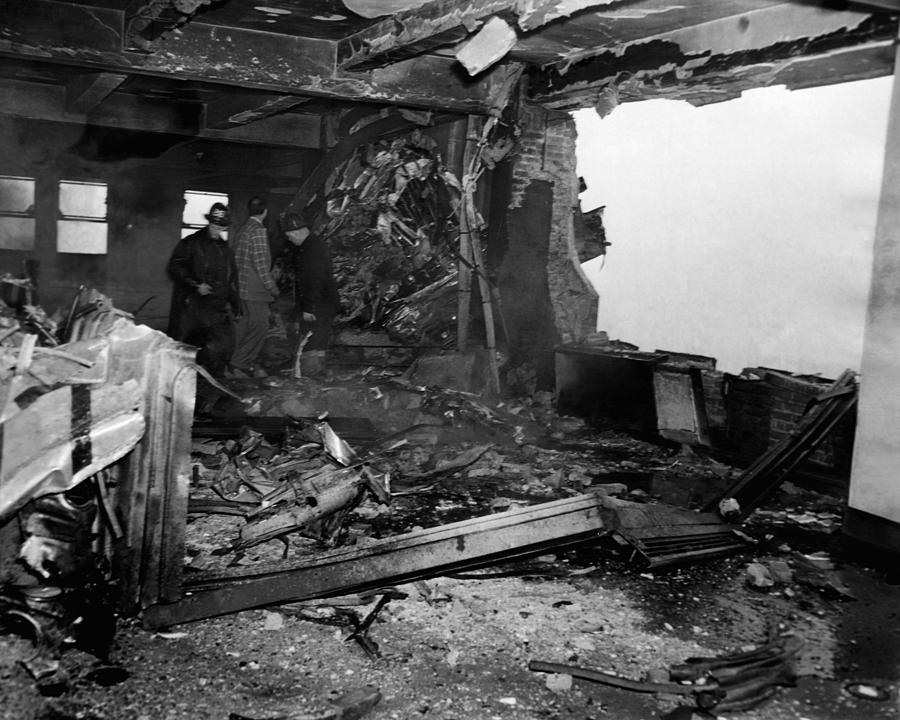
Crash of a North American B-25D-20 Mitchell in New York: 14 killed

Date & Time: Jul 28, 1945 at 0949 LT
Operator:
Registration:
41-30577
Flight Phase:
Flight Type:
Survivors:
No
Site:
Schedule:
Bedford – La Guardia
MSN:
87-8742
Crew on board:
3
Crew fatalities:
Pax on board:
0
Pax fatalities:
Other fatalities:
Total fatalities:
14
Circumstances:
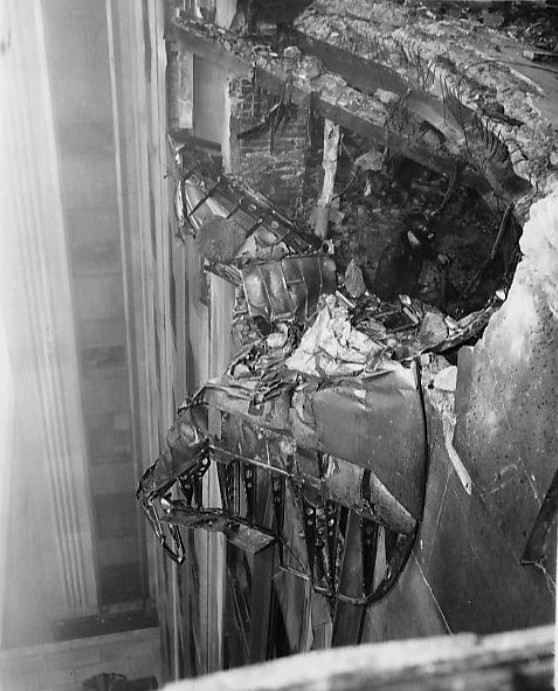
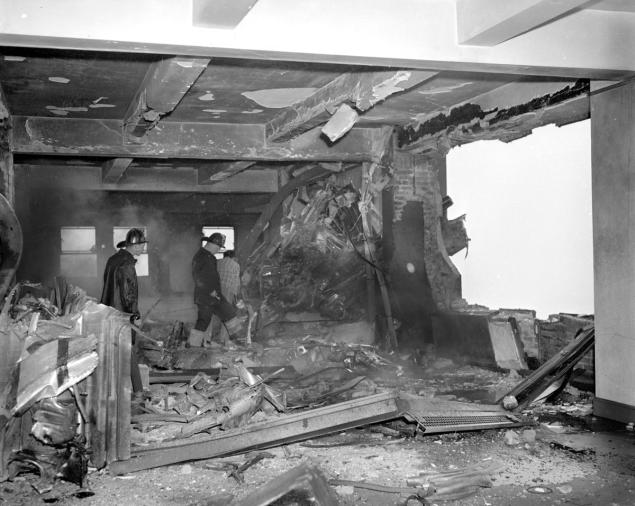
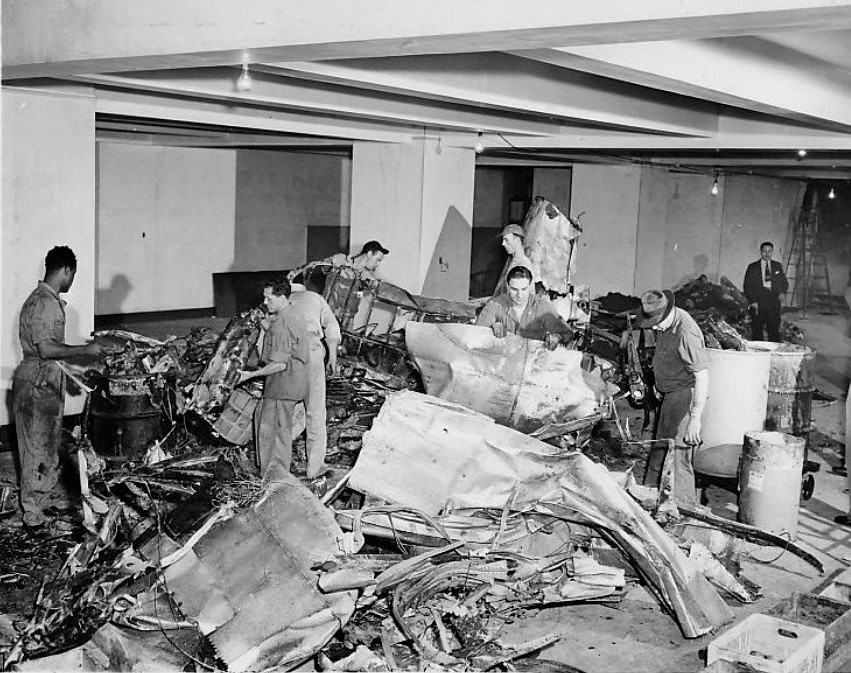
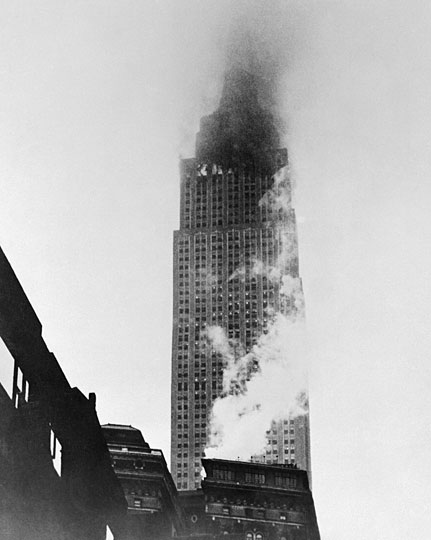
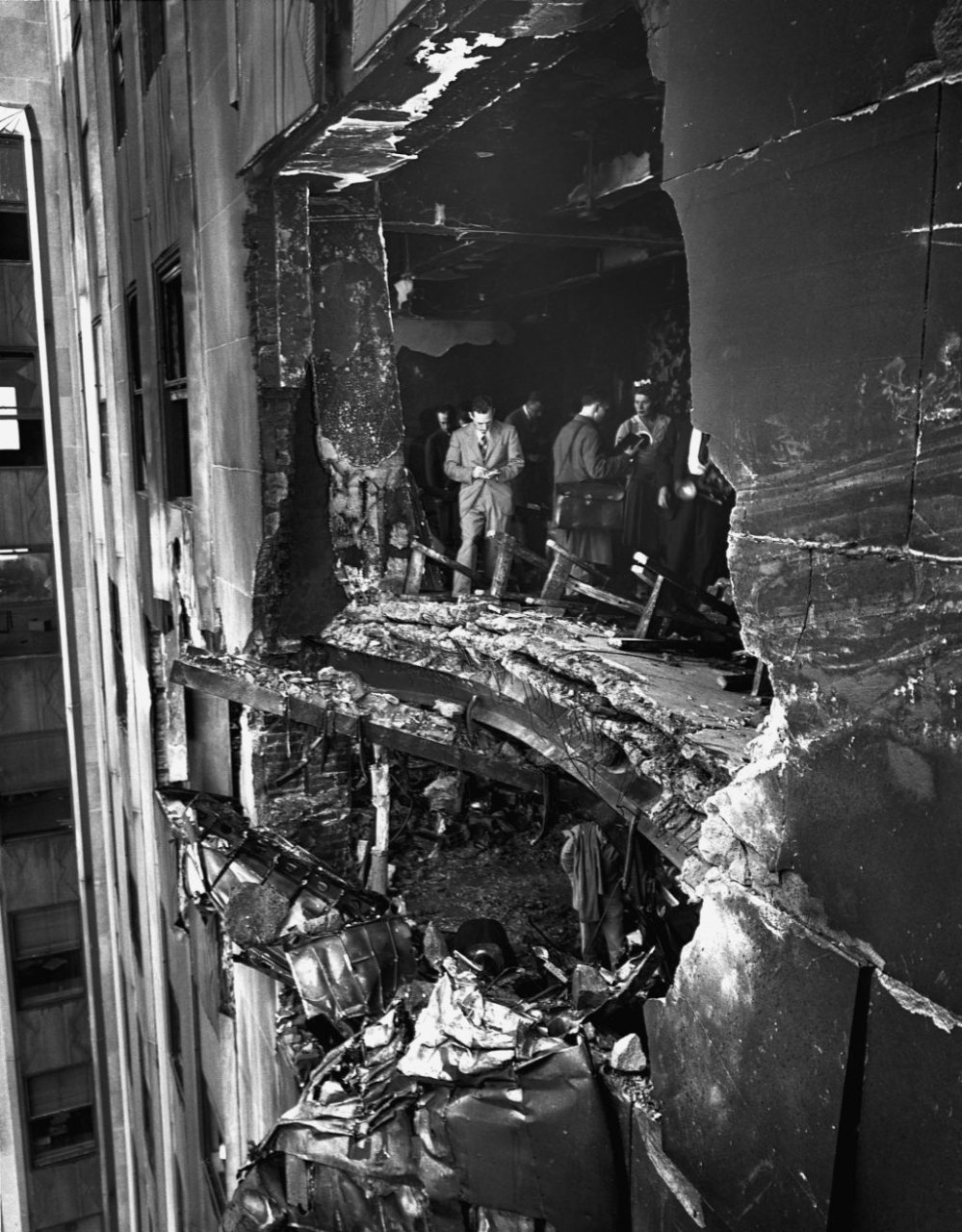
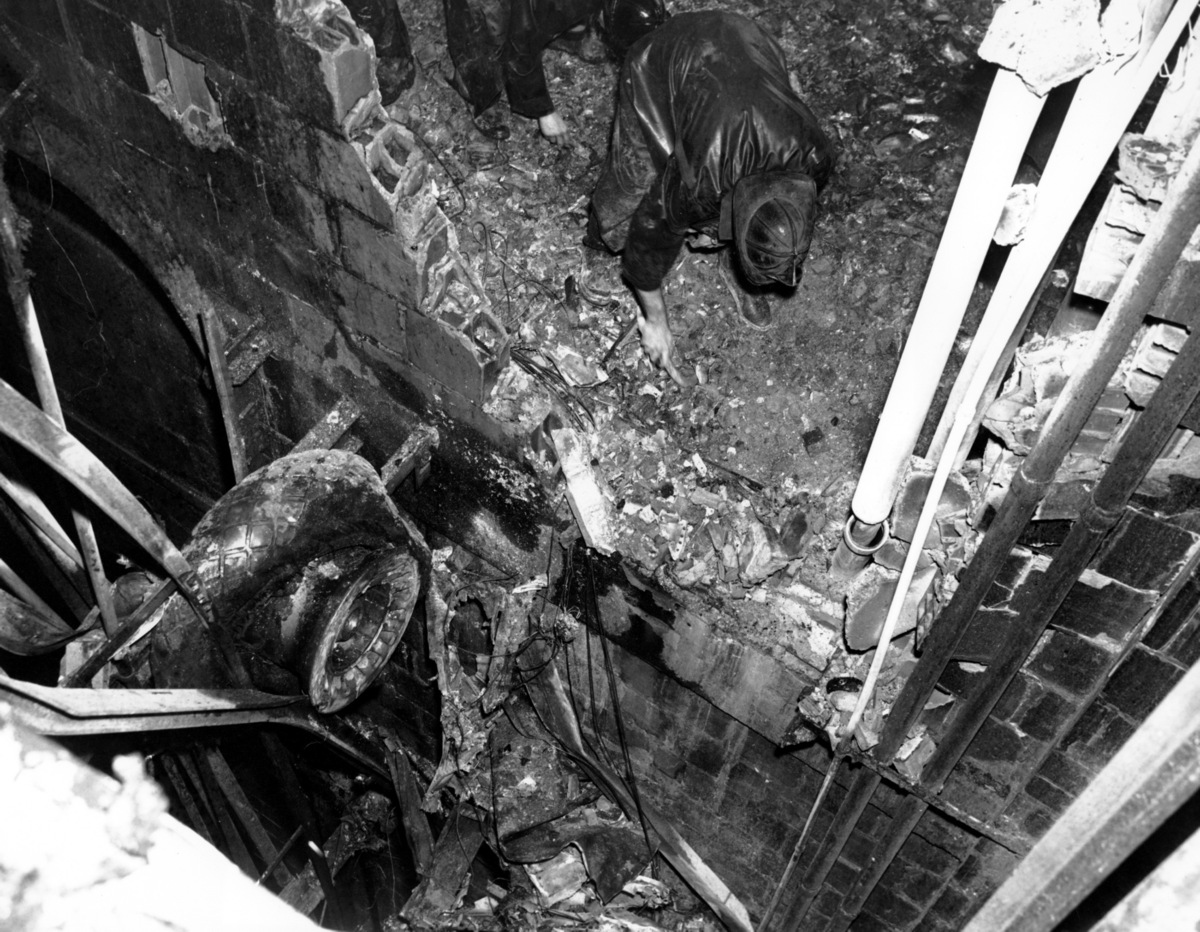
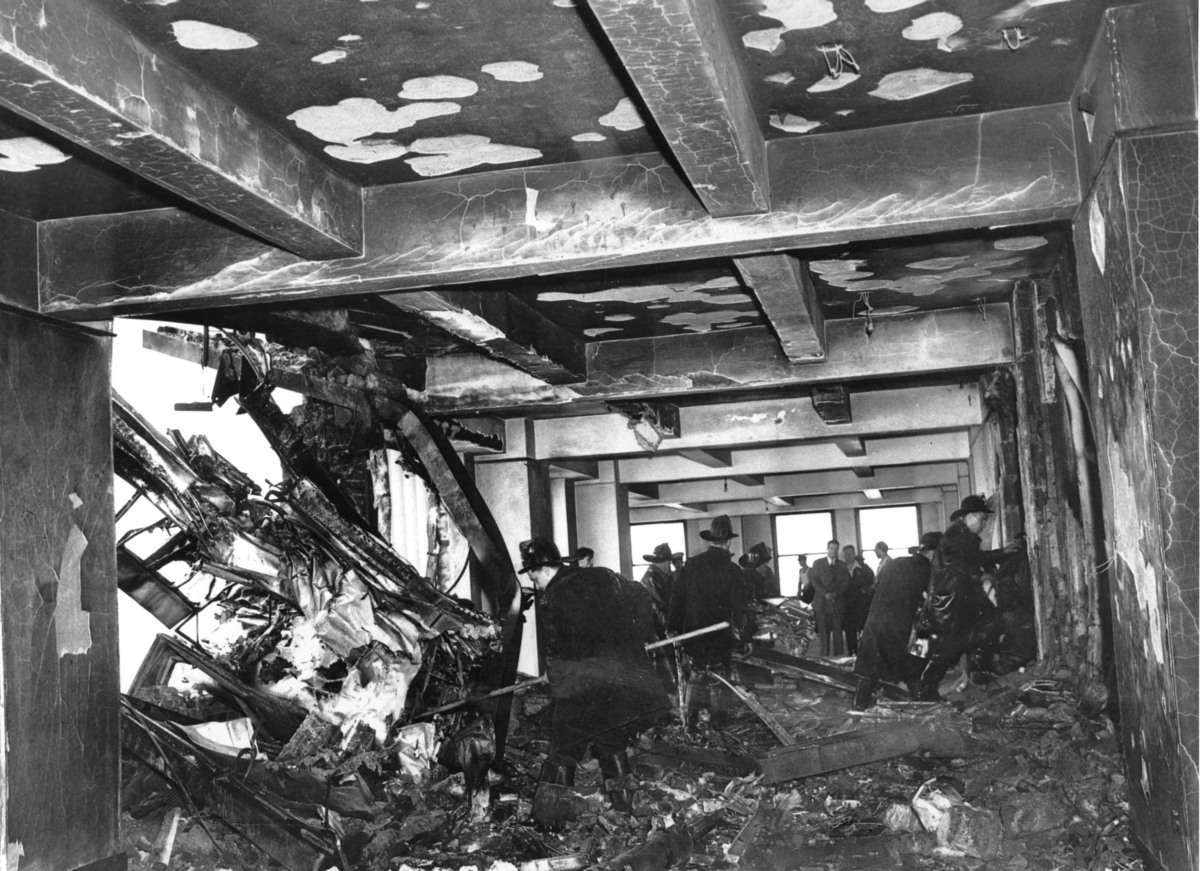
The crew departed Bedford on a routine flight to New York-La Guardia Airport. While approaching New York, weather conditions worsened and the visibility was poor due to fog. Despite the fact that the crew was advised by ATC to modify his route, the captain continued over New York at a too low altitude when the aircraft hit the 79th Floor of the Empire State Building. A fire erupted and the aircraft disintegrated in the building, killing all three crew members and 11 people in the building. 25 other people were injured and lots of debris fell onto the 34th Street. The aircraft was christened 'Old John Feather Merchant'.
Probable cause:
Crew error.

Crash of a Douglas C-54A-1-DO Skymaster in New York

Date & Time: Jul 13, 1945
Type of aircraft:
Operator:

Registration:
42-107437
Flight Type:
Survivors:
Yes
MSN:
7456
YOM:
1943
Crew on board:
6
Crew fatalities:
Pax on board:
0
Pax fatalities:
Other fatalities:
Total fatalities:
0
Circumstances:
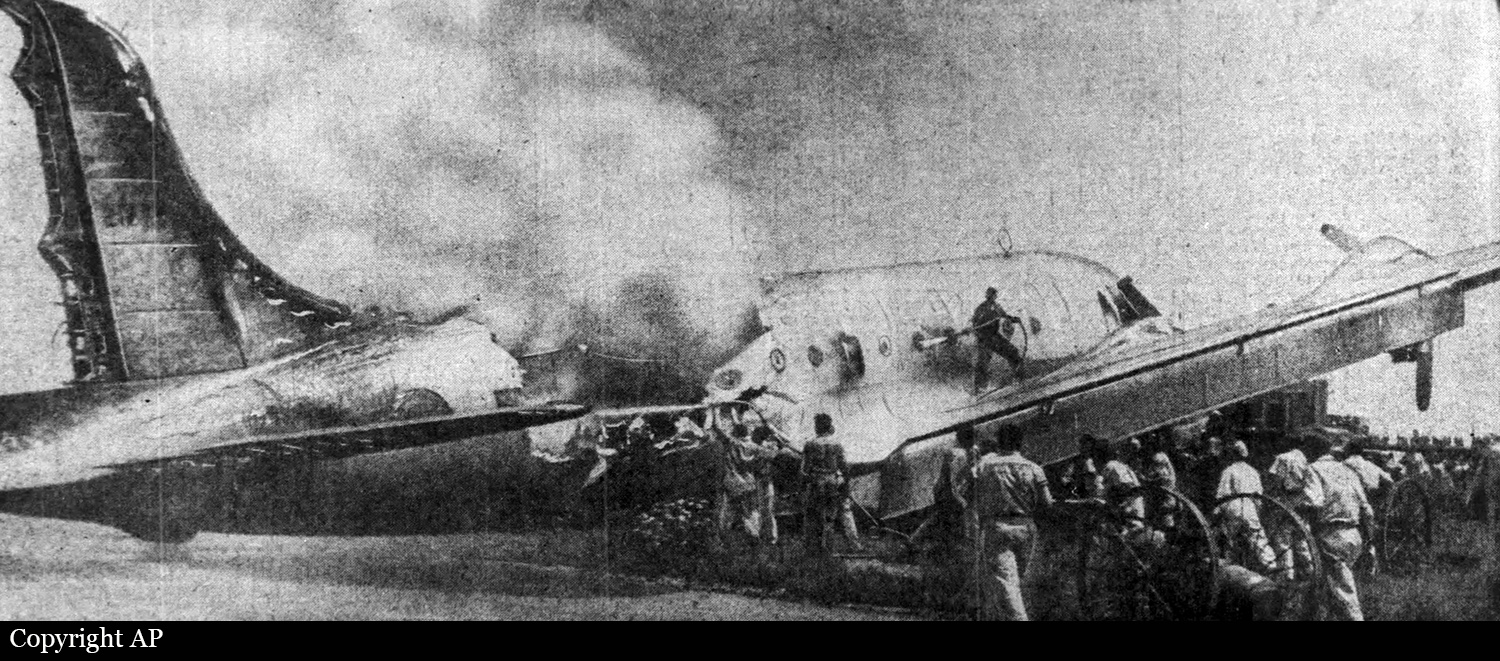
The crew was performing a test flight when one of the engine caught fire in flight. After landing at LaGuardia Airport, the airplane ground looped and came to rest, bursting into flames. All six crew members escaped unhurt.
Probable cause:
Engine fire in flight.