Zone

Crash of a Learjet 75 in Morristown

Date & Time: Apr 2, 2022 at 1119 LT
Type of aircraft:
Operator:
Registration:
N877W
Survivors:
Yes
Schedule:
Atlanta – Morristown
MSN:
45-496
YOM:
2014
Crew on board:
2
Crew fatalities:
Pax on board:
2
Pax fatalities:
Other fatalities:
Total fatalities:
0
Captain / Total flying hours:
8834
Captain / Total hours on type:
1599.00
Copilot / Total flying hours:
9582
Copilot / Total hours on type:
5146
Aircraft flight hours:
3290
Circumstances:
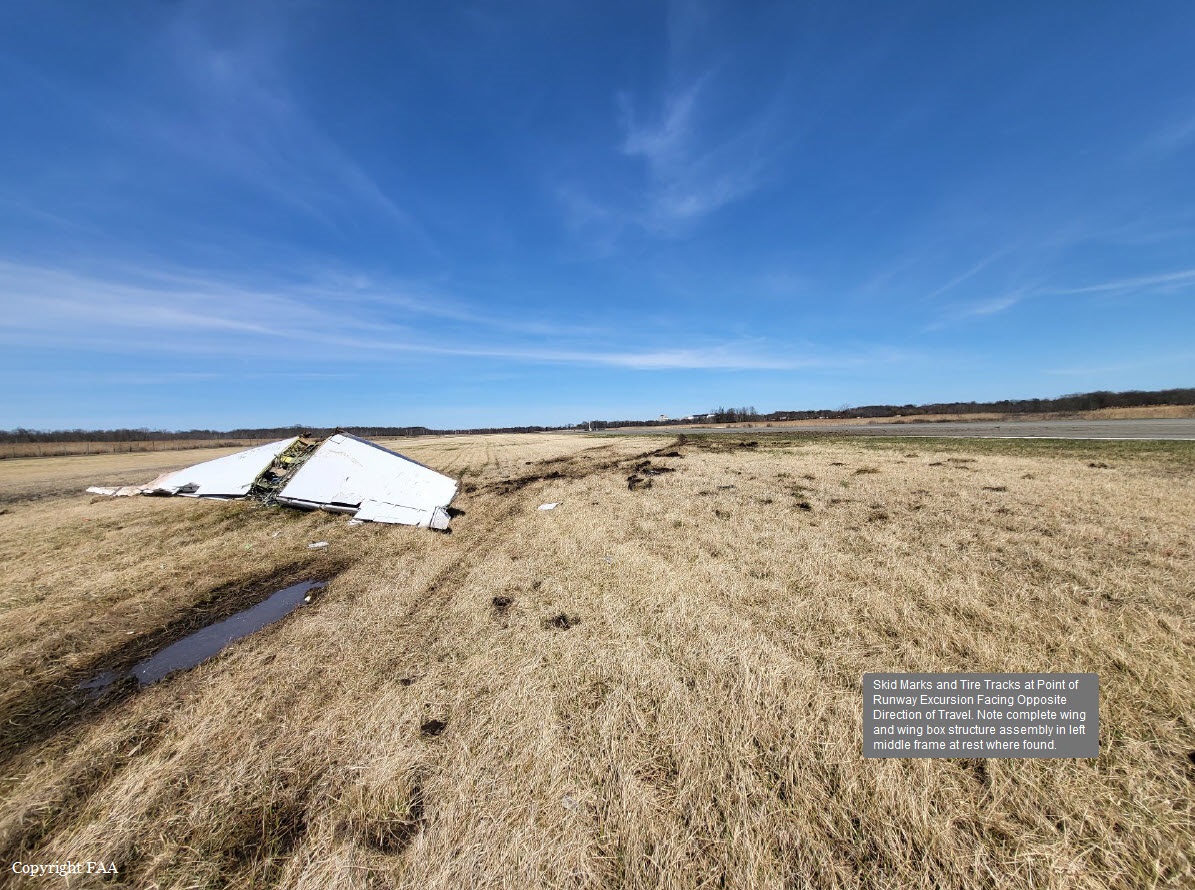
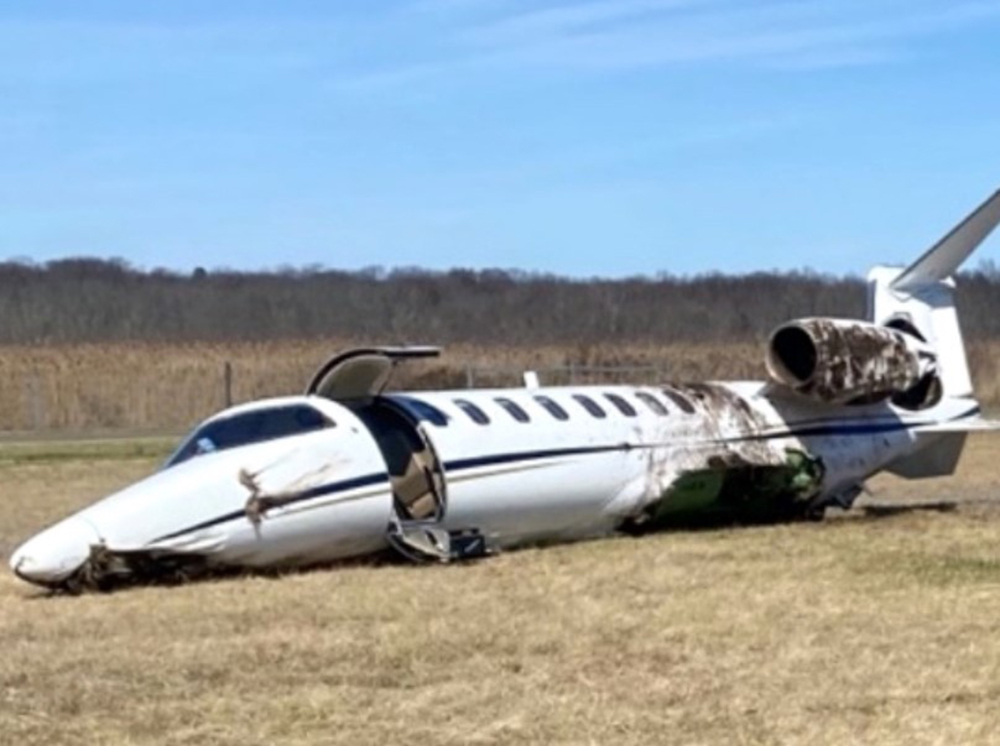
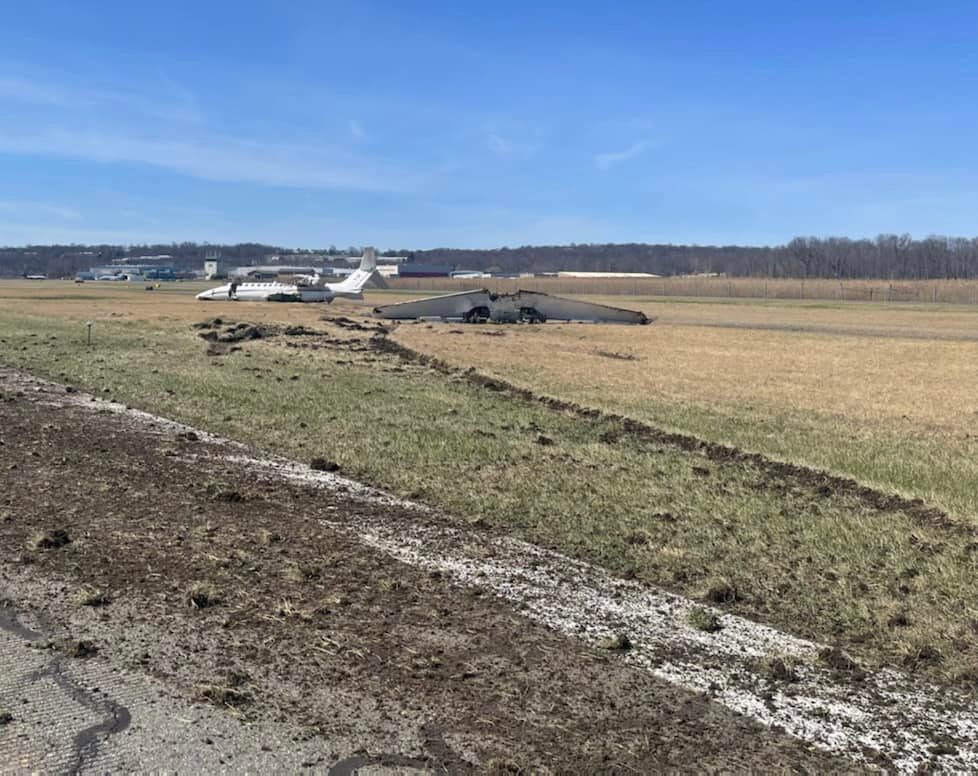
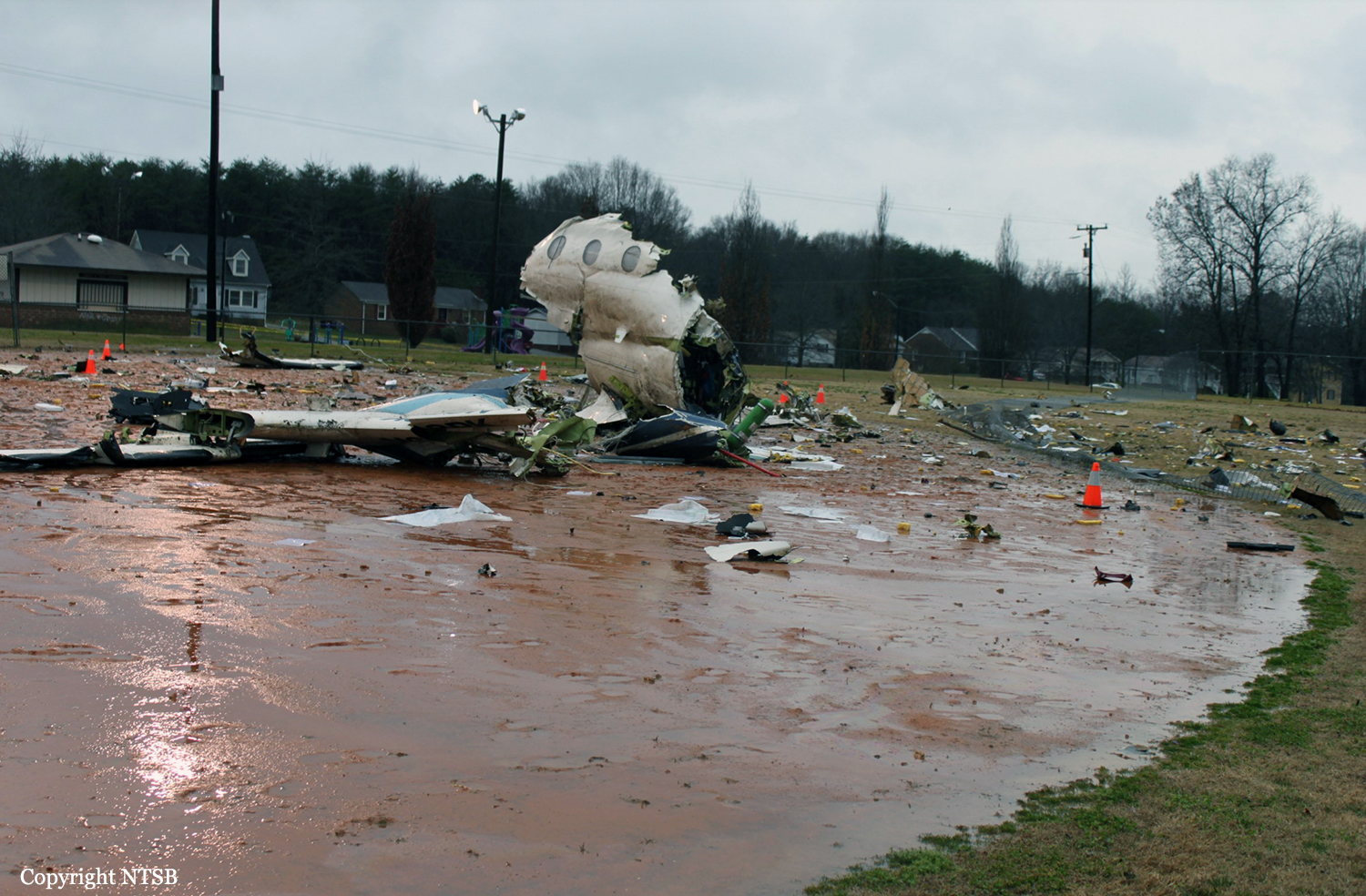
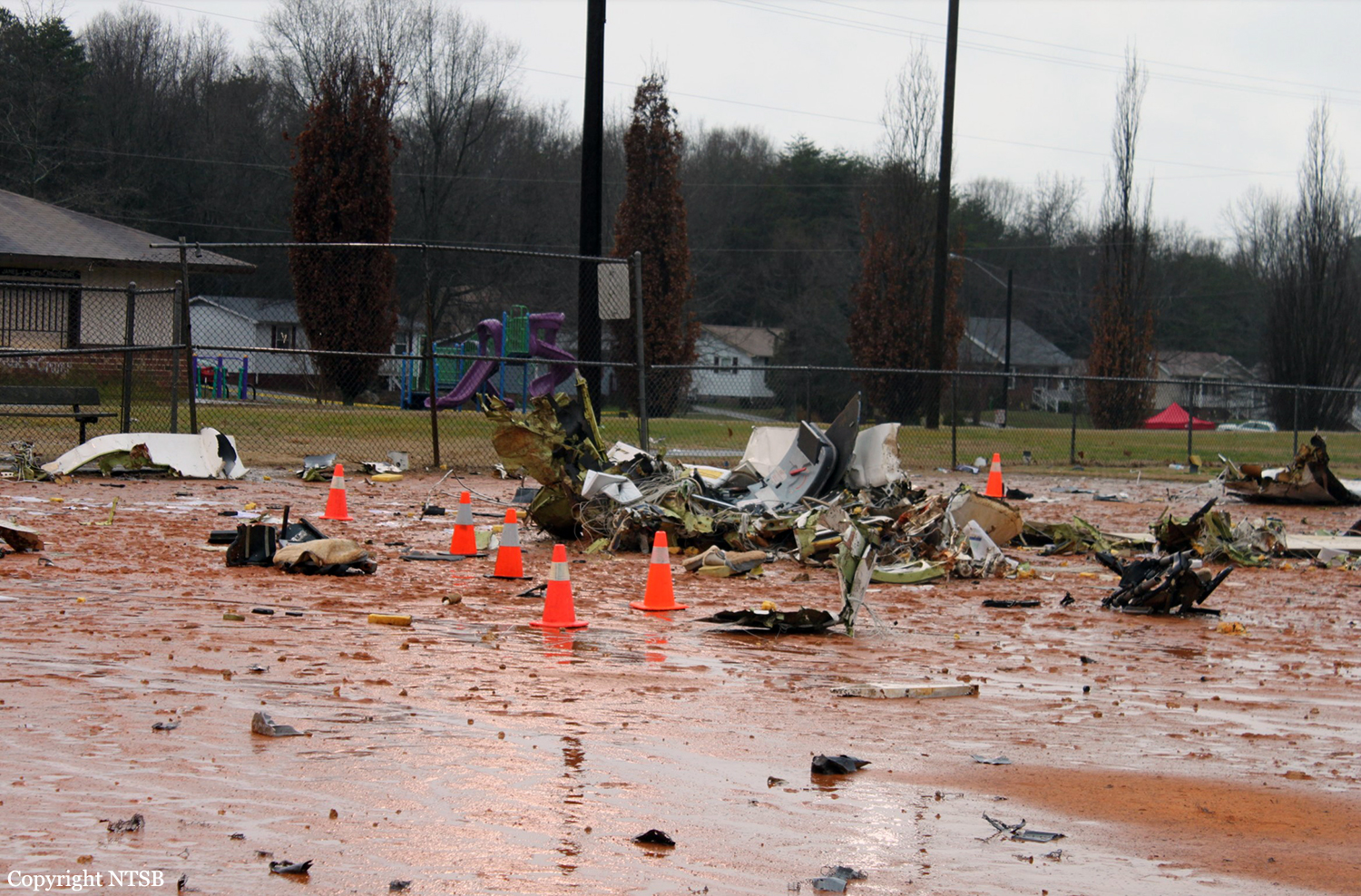
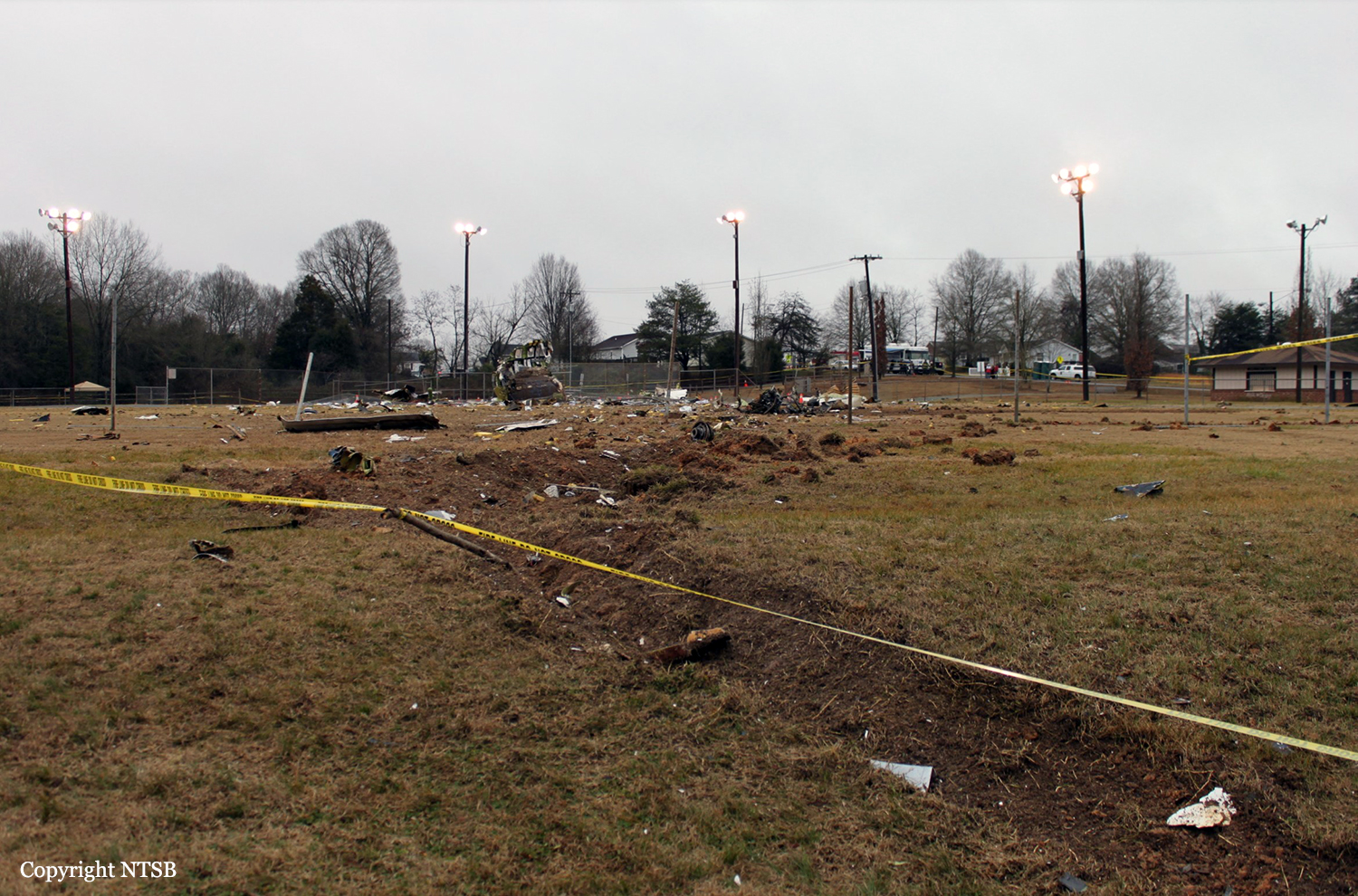
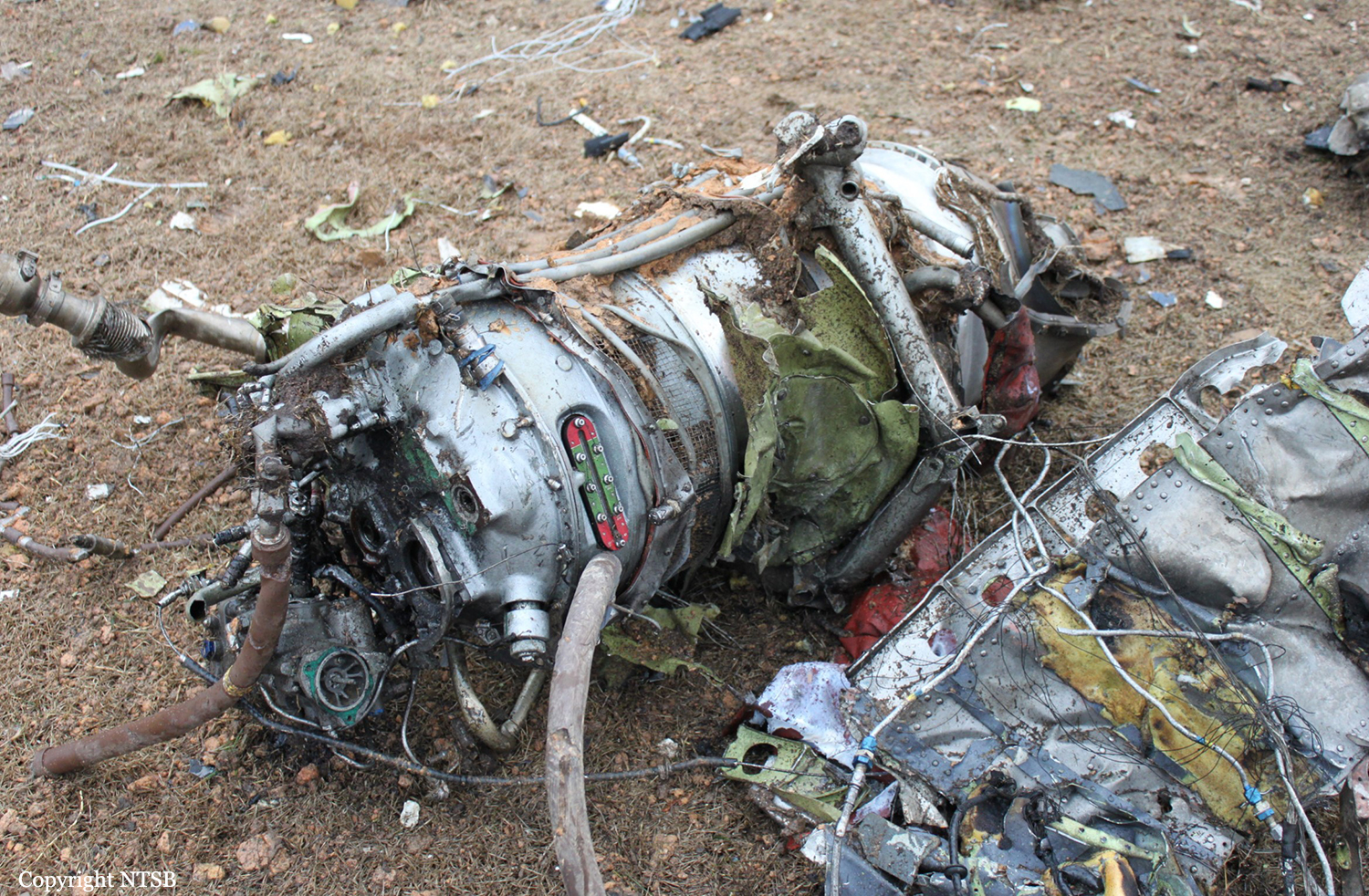
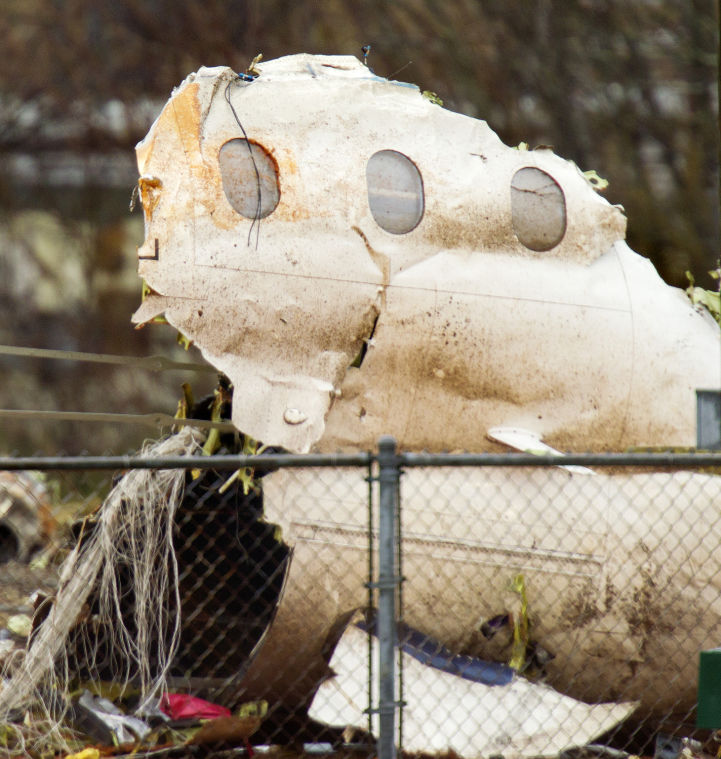
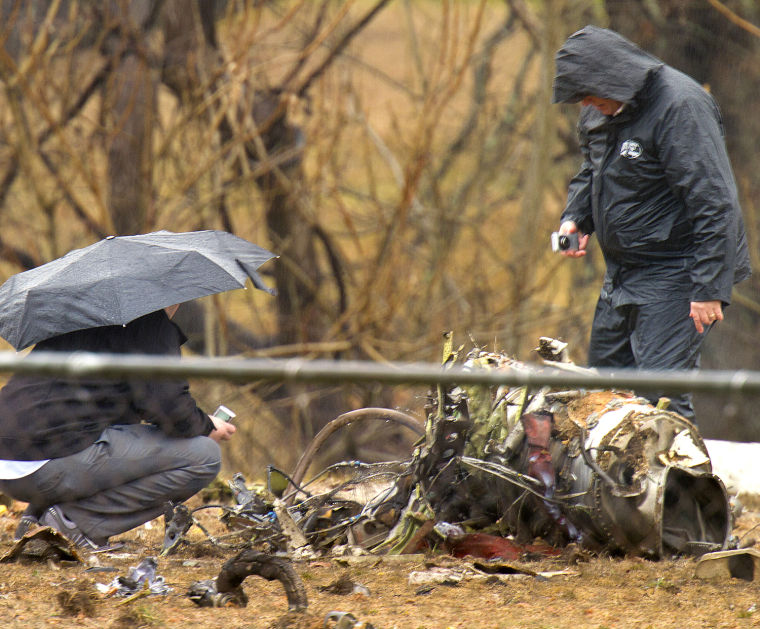
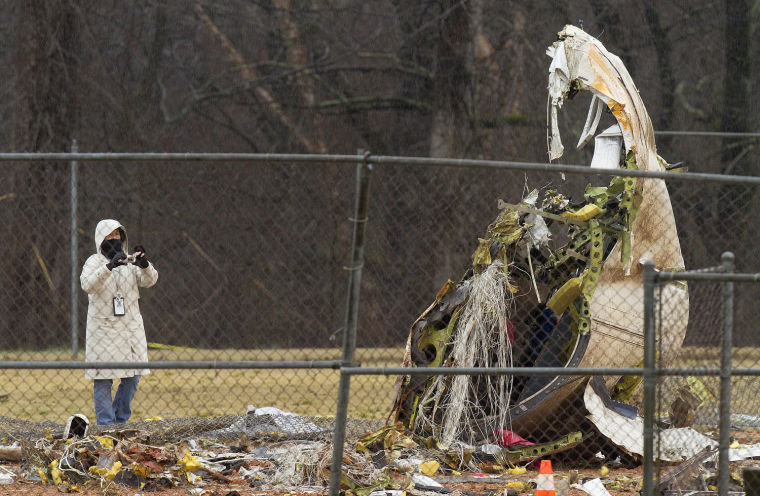
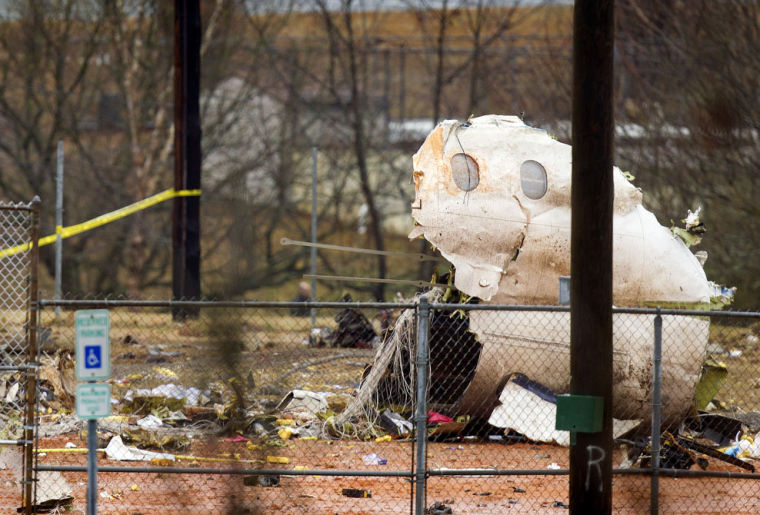
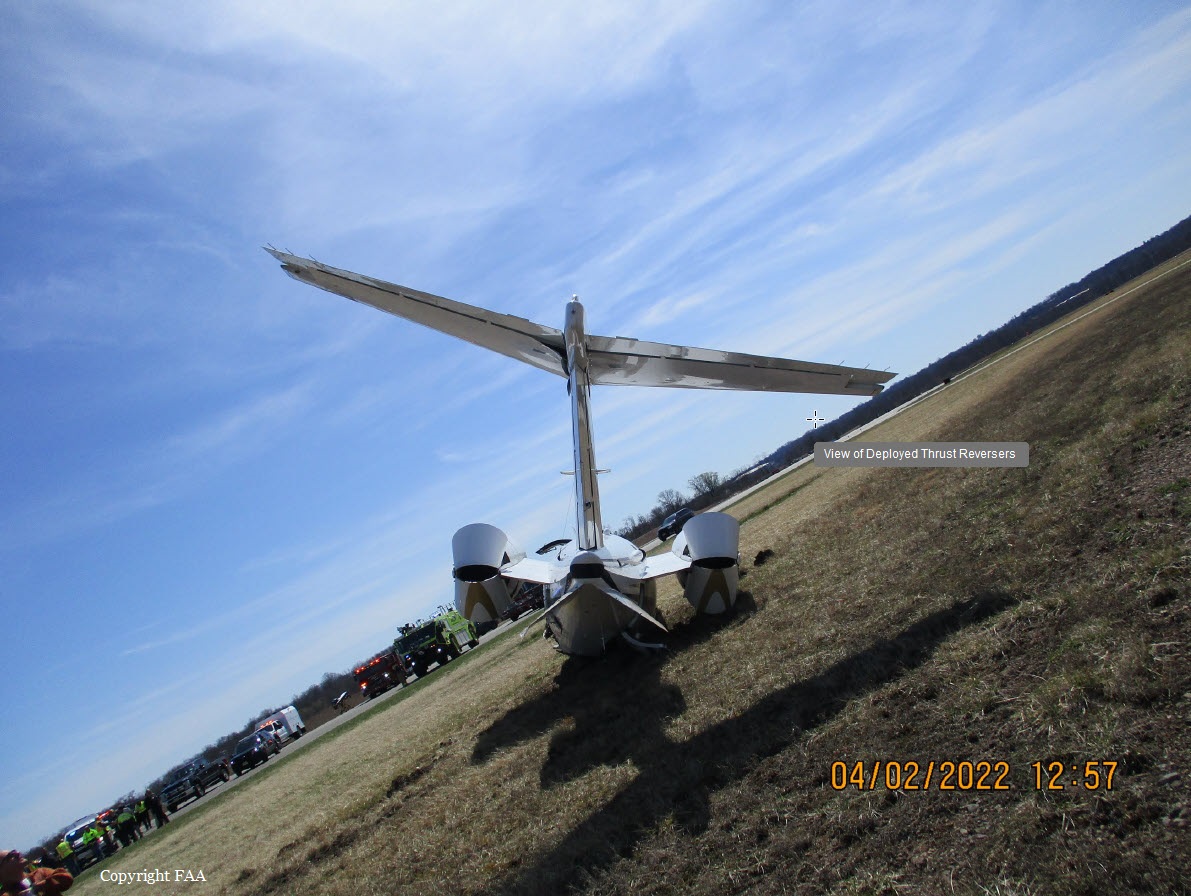
The flight crew of the jet obtained weather information for the destination airport, which indicated quartering tailwind conditions for the runway in use at the time, with wind at 3 knots gusting to 16 knots. The crew determined the wind to be within limitations. The cockpit voice recorder transcript and airport surveillance video indicated that the landing approach was normal. The captain, who was the pilot flying, stated that, after touchdown, the thrust reversers were deployed and the airplane turned “sharply to the right.” He reported that remedial control inputs were ineffective in maintaining directional control. Airport surveillance video footage of the landing roll and accident sequence showed that, about 9 seconds into the landing roll, the airplane turned sharply to its right. The airplane departed the runway, its left wingtip struck the ground, the entire wing structure (left wing/right wing/wingbox) separated from the airplane as one assembly, and the fuselage continued a short distance before it came to rest upright. The thrust reversers on each engine were deployed and their extended positions were about equal. A windsock could be seen in the surveillance video footage nearly parallel to the ground, indicating nearly a direct crosswind to the landing runway that would have been towards the airplane’s right side. Recorded wind shortly after the accident was consistent with a 90° right crosswind for the landing runway at 6 knots with gusts to 14 knots. A detailed examination of the airplane and system components revealed that all flight control, steering, and braking systems and their actuator components operated as designed. Although the copilot's yaw force sensor did not meet manufacturer acceptance testing during post accident examination, this would not have affected the directional controllability of the airplane. Based on the available information, it is likely that the pilot’s compensation for the crosswind conditions was inadequate, which resulted in a loss of directional control and runway excursion.
Probable cause:
The captain’s inadequate compensation for crosswind conditions, which resulted in a loss of directional control.
Final Report:

Crash of a Pilatus PC-12/45 in Burlington: 1 killed

Date & Time: Jan 16, 2013 at 0556 LT
Type of aircraft:
Operator:
Registration:
N68PK
Flight Phase:
Survivors:
No
Schedule:
Burlington - Morristown
MSN:
265
YOM:
1999
Flight number:
SKQ53
Crew on board:
1
Crew fatalities:
Pax on board:
0
Pax fatalities:
Other fatalities:
Total fatalities:
1
Captain / Total flying hours:
6369
Captain / Total hours on type:
315.00
Aircraft flight hours:
4637
Circumstances:
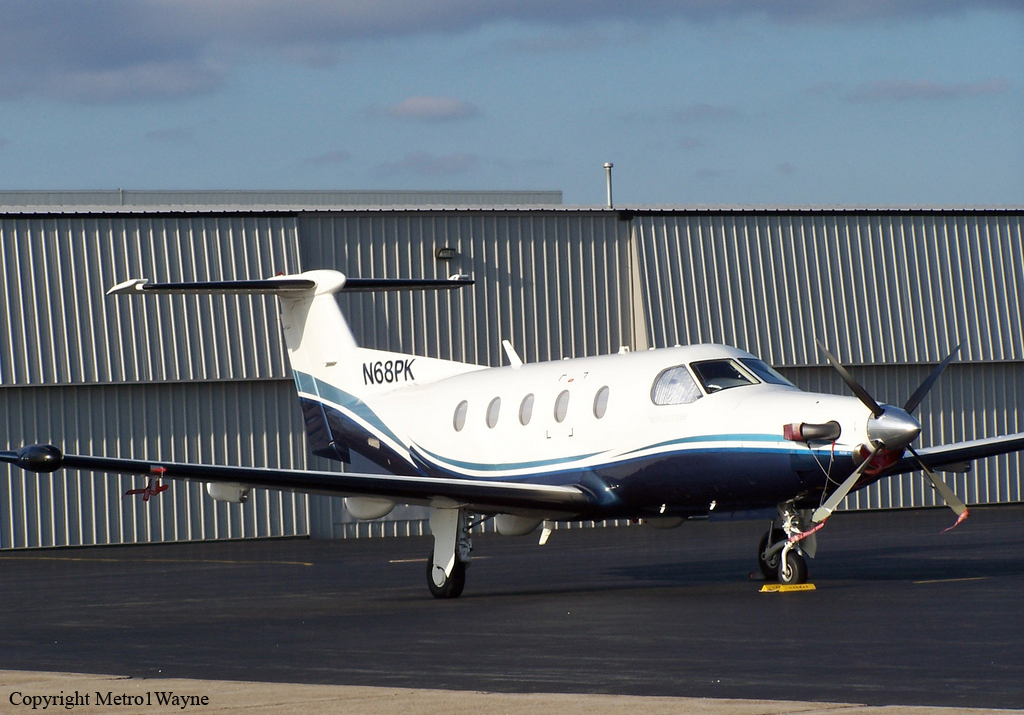
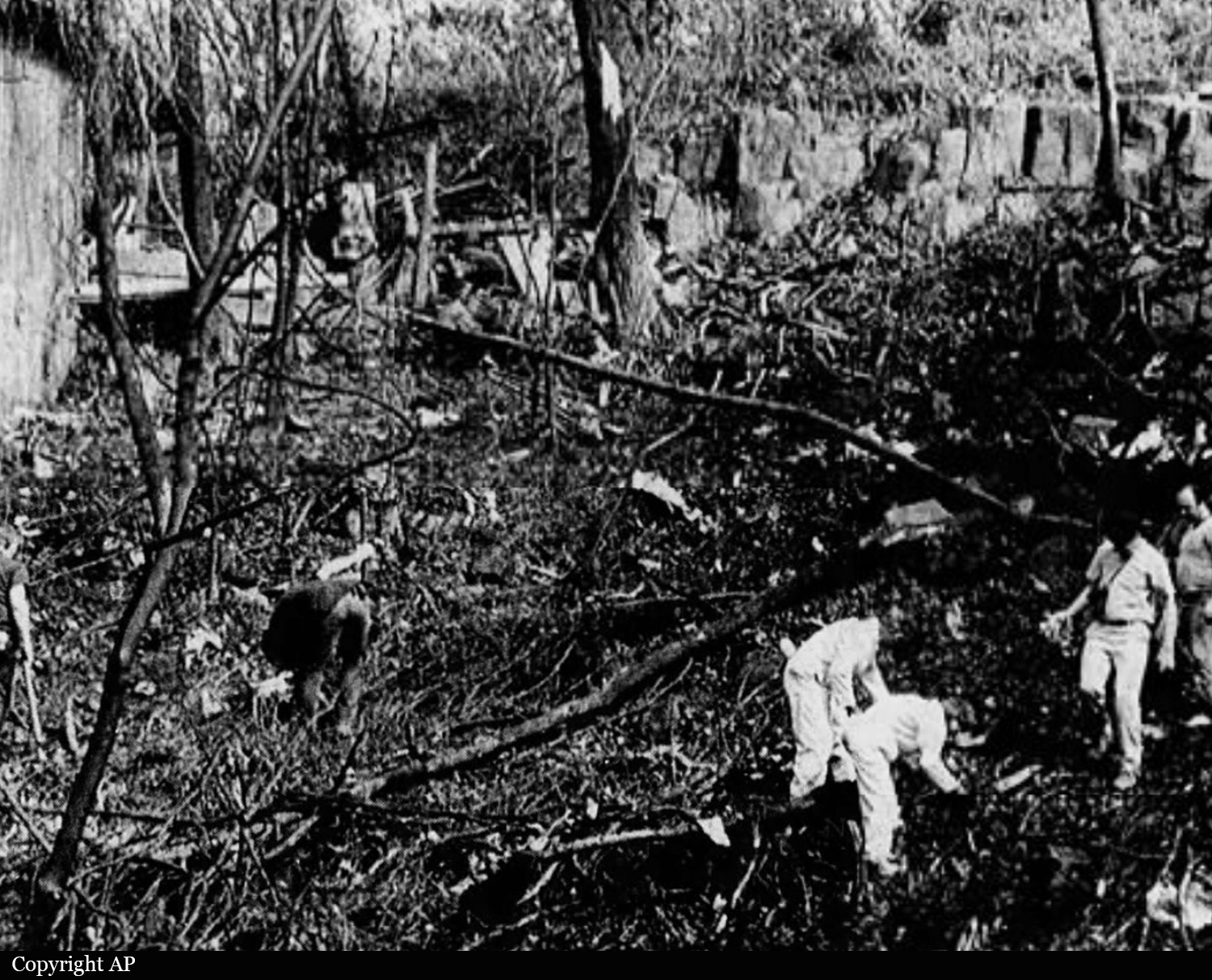
The pilot departed in night instrument flight rules (IFR) conditions on a medical specimen transport flight. During the climb, an air traffic controller told the pilot that the transponder code he had selected (2501) was incorrect and instructed him to reset the transponder to a different code (2531). Shortly thereafter, the airplane reached a maximum altitude of about 3,300 ft and then entered a descending right turn. The airplane’s enhanced ground proximity warning system recorded a descent rate of 11,245 ft per minute, which triggered two “sink rate, pull up” warnings. The airplane subsequently climbed from an altitude of about 1,400 ft to about 2,000 ft before it entered another turning descent and impacted the ground about 5 miles northeast of the departure airport. The airplane was fragmented and strewn along a debris path that measured about 800-ft long and 300-ft wide. Postaccident examination of the airplane did not reveal any preimpact mechanical malfunctions that would have precluded the pilot from controlling the airplane. The engine did not display any evidence of preimpact anomalies that would have precluded normal operation. An open resistor was found in the flight computer that controlled the autopilot. It could not be determined if the open resistor condition existed during the flight or occurred during the impact. If the resistor was in an open condition at the time of autopilot engagement, the autopilot would appear to engage with a mode annunciation indicating engagement, but the pitch and roll servos would not engage. The before taxiing checklist included checks of the autopilot system to verify autopilot function before takeoff. It could not be determined if the pilot performed the autopilot check before the accident flight or if the autopilot was engaged at the time of the accident. The circumstances of the accident are consistent with the known effects of spatial disorientation. Dark night IFR conditions prevailed, and the track of the airplane suggests a loss of attitude awareness. Although the pilot was experienced in night instrument conditions, it is possible that an attempt to reset the transponder served as an operational distraction that contributed to a breakdown in his instrument scan. Similarly, if the autopilot’s resistor was in an open condition and the autopilot had been engaged, the pilot’s failure to detect an autopilot malfunction in a timely manner could have contributed to spatial disorientation and the resultant loss of control.
Probable cause:
The pilot's failure to maintain airplane control due to spatial disorientation during the initial climb after takeoff in night instrument flight rules conditions.
Final Report:

Crash of a Learjet 35A in Morristown: 1 killed

Date & Time: Jul 26, 1988 at 0740 LT
Type of aircraft:
Operator:
Registration:
N442NE
Flight Type:
Survivors:
Yes
Schedule:
Allentown - Morristown
MSN:
35-442
YOM:
1981
Crew on board:
2
Crew fatalities:
Pax on board:
0
Pax fatalities:
Other fatalities:
Total fatalities:
1
Captain / Total flying hours:
4810
Captain / Total hours on type:
2100.00
Aircraft flight hours:
4274
Circumstances:
The crew was positioning the aircraft in preparation for a revenue flight and executing a non-directional beacon (NDB) approach to runway 05. The captain reported that the copilot was flying the aircraft. However, the captain stated that he took control of the aircraft during the approach and made some control corrections before returning control of the aircraft to the copilot. Radar data indicated that aircraft control was erratic throughout the approach and that the airspeed and descent rates were high (3,000 fpm sink rate) shortly before the accident. The aircraft struck a fence short of the runway and impacted the ground. The captain said he realized the aircraft was drifting left of course but did not correct it. He said he told the copilot to add power twice during the approach. The copilot's training history indicated difficulty in control, scan of instruments, and with instrument procedures. Company management described the captain as passive and the copilot as aggressive. Supervision of training and operations by management and surveillance of the company by the FAA was considered inadequate by NTSB.
Probable cause:
Occurrence #1: loss of control - in flight
Phase of operation: approach - faf/outer marker to threshold (ifr)
Findings
1. (c) flight controls - improper use of - copilot/second pilot
2. Overconfidence in personal ability - copilot/second pilot
3. (f) inadequate recurrent training - copilot/second pilot
4. (f) inadequate surveillance of operation - faa (organization)
5. (f) airspeed - improper - copilot/second pilot
6. (f) proper descent rate - exceeded - copilot/second pilot
7. (c) supervision - inadequate - pilot in command
8. (f) interpersonal relations - pilot in command
9. Insufficient standards/requirements,airman - company/operator mgmt
----------
Occurrence #2: in flight collision with terrain/water
Phase of operation: approach - faf/outer marker to threshold (ifr)
Final Report:

Crash of a Learjet 35A in Teterboro: 4 killed

Date & Time: May 24, 1988 at 0316 LT
Type of aircraft:
Registration:
N500RW
Flight Phase:
Flight Type:
Survivors:
No
Schedule:
Teterboro - Morristown
MSN:
35-148
YOM:
1978
Crew on board:
2
Crew fatalities:
Pax on board:
2
Pax fatalities:
Other fatalities:
Total fatalities:
4
Captain / Total flying hours:
8910
Captain / Total hours on type:
759.00
Aircraft flight hours:
4735
Circumstances:
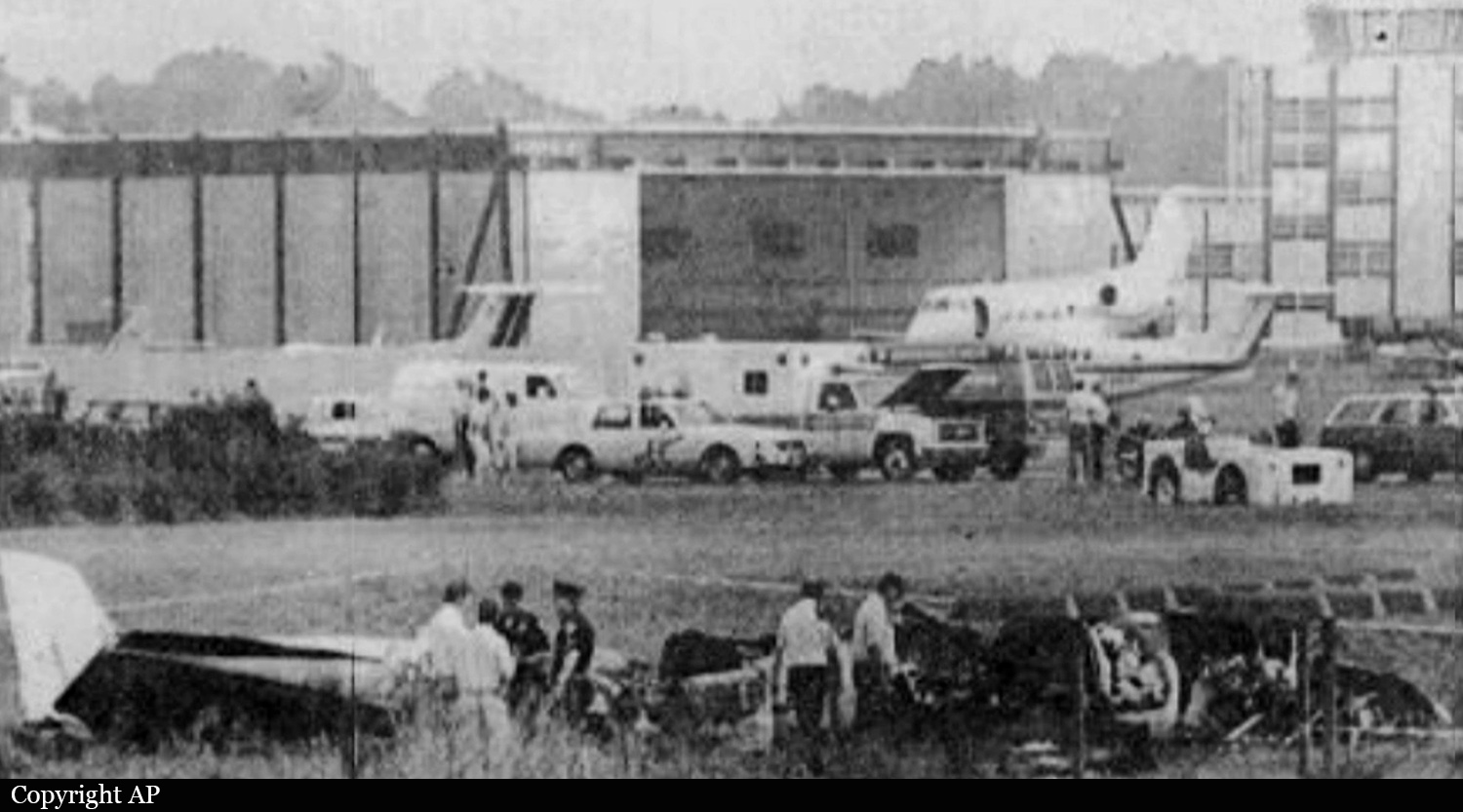
Witnesses reported a normal takeoff. Radar indicated the aircraft turned right as cleared and began cruise at 1900 feet, heading northwest at 235 knots. 65 seconds after calling clear of the control zone the aircraft's radar track ended. The aircraft was fragmented by the impact with all flight control surfaces and aircraft extremities found at the impact site. Pitch trim was found in the normal cruise setting with gear, flaps, and spoilers in the retracted position. Examination of the engines indicated operation at impact. Aircraft struck the terrain in approx 80° nose down, wings level attitude and heading opposite to the previous direction of flight. In flight simulator tests, with the aircraft initially in level flight at 1,900 feet and then rolled inverted and the pitch control moved aft, the aircraft attitude was similar to the attitude at impact. There were two unauthorized passengers on board, one was the copilot's wife. The impact point was in a very small region of uncontrolled airspace very near the copilot's and relative's homes. The copilot was new to jet operations. The aircraft departed with several discrepancies uncleared. All four occupants were killed.
Probable cause:
Occurrence #1: in flight collision with terrain/water
Phase of operation: maneuvering
Findings
1. (f) light condition - dark night
2. (c) maneuver - attempted - pilot in command
3. (c) judgment - poor - pilot in command
4. (c) altitude - misjudged - pilot in command
5. (f) lack of total experience in type operation - pilot in command
6. (f) lack of total experience in type operation - copilot/second pilot
7. Operation with known deficiencies in equipment - attempted - company maintenance personnel
Final Report:

Crash of a Beechcraft C90 King Air in Warwick: 2 killed

Date & Time: Nov 27, 1985 at 0541 LT
Type of aircraft:
Registration:
N220F
Flight Type:
Survivors:
No
Schedule:
Morristown - Warwick
MSN:
LJ-981
YOM:
1981
Crew on board:
2
Crew fatalities:
Pax on board:
0
Pax fatalities:
Other fatalities:
Total fatalities:
2
Captain / Total flying hours:
13005
Captain / Total hours on type:
200.00
Aircraft flight hours:
1472
Circumstances:
The aircraft crashed about nine miles short of the runway during an ILS approach to Warwick, RI in IMC weather. The aircraft had been cleared to descend from 13,000 to 3,000 feet. The aircraft crashed outside the outer marker. The copilot had reported the aircraft as inside the outer marker. The crew did not report any aircraft problems. The approach procedure requires that the flight cross the outer marker at 1,800 feet msl five miles from touchdown. Minimum weather is 200 feet ceiling and 1/2 mile visibility. Surface observation at time of the accident was 300 feet overcast with 1 1/2 mile visibility. Post accident exam of the wreckage failed to disclose any malfunctions or failures in the equipment. Both occupants were killed.
Probable cause:
Occurrence #1: in flight collision with object
Phase of operation: approach - iaf to faf/outer marker (ifr)
Findings
1. Object - tree(s)
2. (c) ifr procedure - not used - pilot in command
3. (c) decision height - below - pilot in command
4. Altitude - not maintained - pilot in command
Final Report:

Crash of a Dassault Falcon 50 in Teterboro: 3 killed

Date & Time: Nov 10, 1985 at 1722 LT
Type of aircraft:
Operator:
Registration:
N784B
Flight Type:
Survivors:
No
Site:
Schedule:
Morristown - Teterboro
MSN:
118
YOM:
1982
Crew on board:
2
Crew fatalities:
Pax on board:
0
Pax fatalities:
Other fatalities:
Total fatalities:
3
Captain / Total flying hours:
8265
Captain / Total hours on type:
817.00
Circumstances:
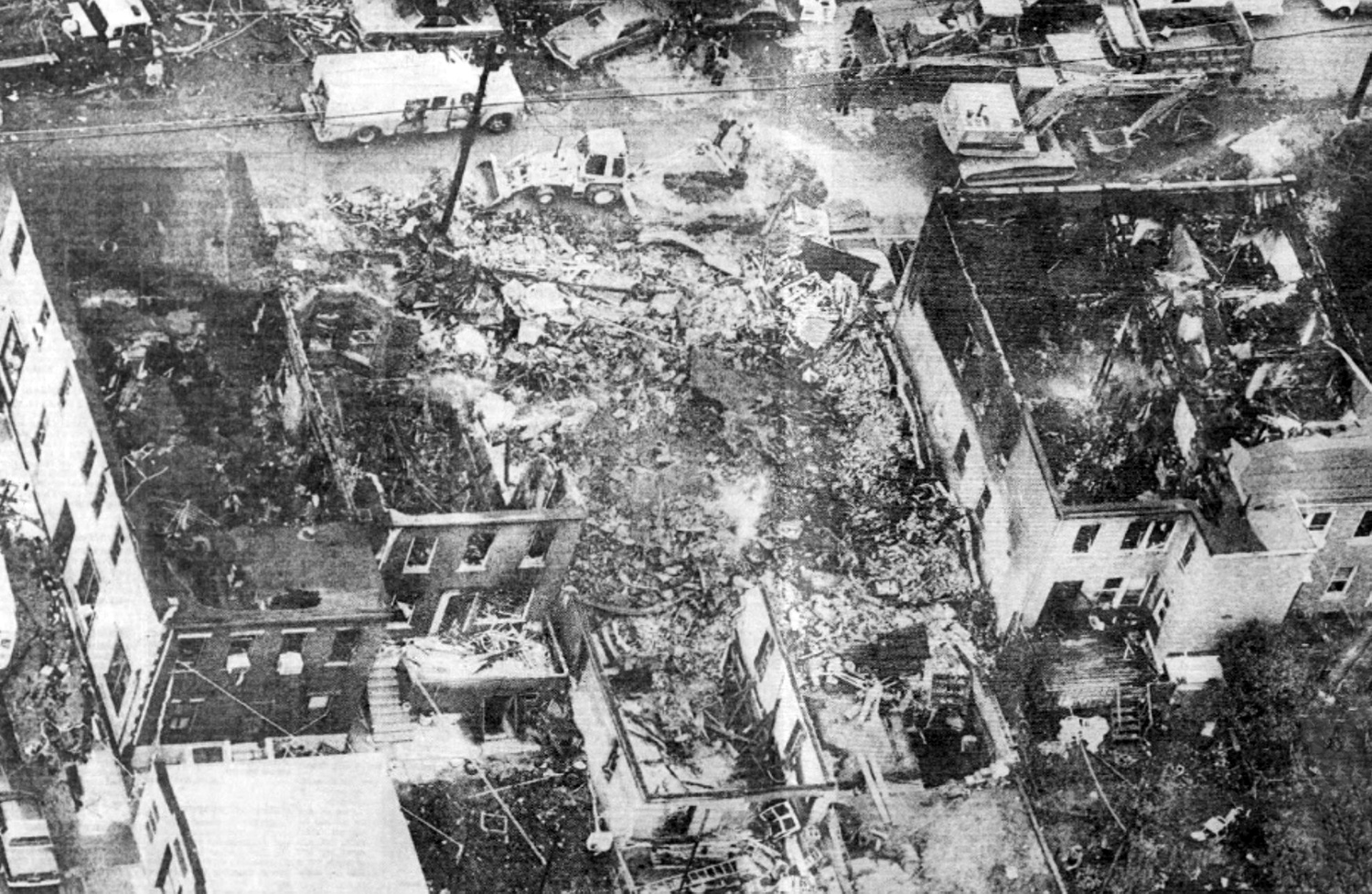
A Dassault Falcon 50 jet (N784B) and an Air Pegasus Piper PA-28-181 Archer (N1977H) collided about 1500 feet over the towns of Fairview and Cliffside Park, New Jersey, USA. The Falcon 50 was cleared for a standard instrument approach procedure in visual meteorological conditions and was in a left turn to position itself on the downwind leg to runway 19 at the Teterboro Airport, and the PA-28 was transiting the airport traffic area from west to east when they collided. The accident occurred 4 1/2 miles east-southeast at the edge of the airport traffic area in visual meteorological conditions. Both airplanes had been in radio contact with the Teterboro control tower. The flightcrew, the only occupants aboard the Falcon 50, and the pilot and two passengers onboard the PA-28 were killed. The Falcon 50 crashed into an apartment building killing one resident and seriously injuring two bystanders.
Probable cause:
A breakdown in air traffic control coordination which resulted in an air traffic conflict and the inability of the DA50 flightcrew to ‘see and avoid' the other aircraft due to:
- An erroneous and inadequate traffic advisory and
- The physiological limitations of human vision and reaction time at night.
Air traffic control management contributed to the accident by failing to insure that controllers were following prescribed procedures and by failing to recognize and correct operational deficiencies.
Final Report:

Crash of a Cessna 402C in Keene: 2 killed

Date & Time: Feb 3, 1984 at 1713 LT
Type of aircraft:
Operator:
Registration:
N6814G
Flight Phase:
Survivors:
No
Site:
Schedule:
Concord - Morristown
MSN:
402C-0647
YOM:
1982
Crew on board:
2
Crew fatalities:
Pax on board:
0
Pax fatalities:
Other fatalities:
Total fatalities:
2
Captain / Total flying hours:
4300
Captain / Total hours on type:
3700.00
Aircraft flight hours:
368
Circumstances:
The pilot had filed an IFR flight plan; however, he took off in VFR conditions and did not activate the flight plan. Radar data showed that the latter part of the flight was flown at 6,300 feet, then at 1712:39 est, a descent was begun. One minute later, the flight was last recorded at 3,700 feet. Subsequently, the aircraft crashed near the top of a 3,165 feet mountain. The elevation of the crash site was about 3,000 feet. The terrain was rocky and covered with ice and snow when the investigators arrived at the crash site. Approximately 8 miles west-northwest at Keene, NH, the 1755 est weather was, in part, 3,200 feet broken, 5,500 feet overcast, visibility 10 miles, wind from 130° at 10 knots. The elevation of the Dillant-Hopkins Airport at Keene was 487 feet. Both occupants were killed.
Probable cause:
Occurrence #1: in flight encounter with weather
Phase of operation: cruise - normal
Findings
1. (f) weather condition - clouds
2. Descent - initiated - pilot in command
3. (f) weather condition - low ceiling
----------
Occurrence #2: in flight collision with terrain/water
Phase of operation: maneuvering
Findings
4. (f) light condition - dusk
5. (c) in-flight planning/decision - improper - pilot in command
6. (f) visual/aural detection - pilot in command
7. (f) terrain condition - high terrain
8. (c) proper altitude - not maintained - pilot in command
9. (f) terrain condition - mountainous/hilly
10. (f) terrain condition - snow covered
Final Report:

Crash of a Cessna 402B in Indianapolis

Date & Time: Jul 28, 1978 at 1219 LT
Type of aircraft:
Registration:
N4167G
Flight Phase:
Survivors:
Yes
Schedule:
Indianapolis - Morristown
MSN:
402B-1214
YOM:
1976
Crew on board:
1
Crew fatalities:
Pax on board:
1
Pax fatalities:
Other fatalities:
Total fatalities:
0
Captain / Total flying hours:
5259
Captain / Total hours on type:
87.00
Circumstances:
During the takeoff run, the pilot decided to abort for unknown reason. The twin engine airplane was unable to stop within the remaining distance, overran, went through a fence and came to rest. Both occupants were injured.
Probable cause:
Collision with fence posts after an aborted takeoff for unknown reasons. The following contributing factors were reported:
- Spontaneous improper action,
- Delayed action in aborting takeoff,
- PIlot's decision to abort unknown.
Final Report:

Crash of a Cessna 402B in West Stockbridge: 4 killed

Date & Time: Nov 16, 1973 at 1800 LT
Type of aircraft:
Registration:
N50YL
Flight Phase:
Flight Type:
Survivors:
No
Schedule:
Pittsfield - Morristown
MSN:
402B-0350
YOM:
1973
Crew on board:
1
Crew fatalities:
Pax on board:
3
Pax fatalities:
Other fatalities:
Total fatalities:
4
Captain / Total flying hours:
935
Captain / Total hours on type:
400.00
Circumstances:
While in cruising altitude on a flight from Pittsfield to Morristown, the pilot informed ATC about an in-flight fire and that smoke spread in the cockpit and the cabin. He was cleared to divert to the nearest airport when, few seconds later, the twin engine airplane entered a dive and eventually crashed in flames in an open field located in West Stockbridge. The aircraft disintegrated on impact and all four occupants were killed.
Probable cause:
The right engine caught fire in flight for undetermined reason. The following factors were reported:
- Uncontrolled descent,
- Smoke in cockpit,
- Fire in cabin, cockpit and baggage compartment,
- In-flight fire in the right engine compartment,
- Cause of fire undetermined due to fire damage to aircraft.
Final Report:

Crash of a Rockwell Shrike Commander 500S in Morristown

Date & Time: Dec 10, 1971 at 1843 LT
Registration:
N9128N
Survivors:
Yes
Schedule:
Islip – Morristown
MSN:
500-3093
YOM:
1971
Crew on board:
1
Crew fatalities:
Pax on board:
1
Pax fatalities:
Other fatalities:
Total fatalities:
0
Captain / Total flying hours:
2811
Captain / Total hours on type:
28.00
Circumstances:
On final approach to Morristown Airport by night, the pilot encountered limited visibility. While completing the landing checklist, the airplane lost height and struck tree tops. The pilot increased engine power to make a go-around when the airplane lost height and crashed. Both occupants were seriously injured and the aircraft was destroyed.
Probable cause:
The accident was caused by the diverted attention of the pilot from operation. The following factors were reported:
- The pilot failed to see and avoid objects or obstructions,
- High obstructions,
- Fog,
- Diverted attention while completing the landing checklist, lost contact with runway.
Final Report: