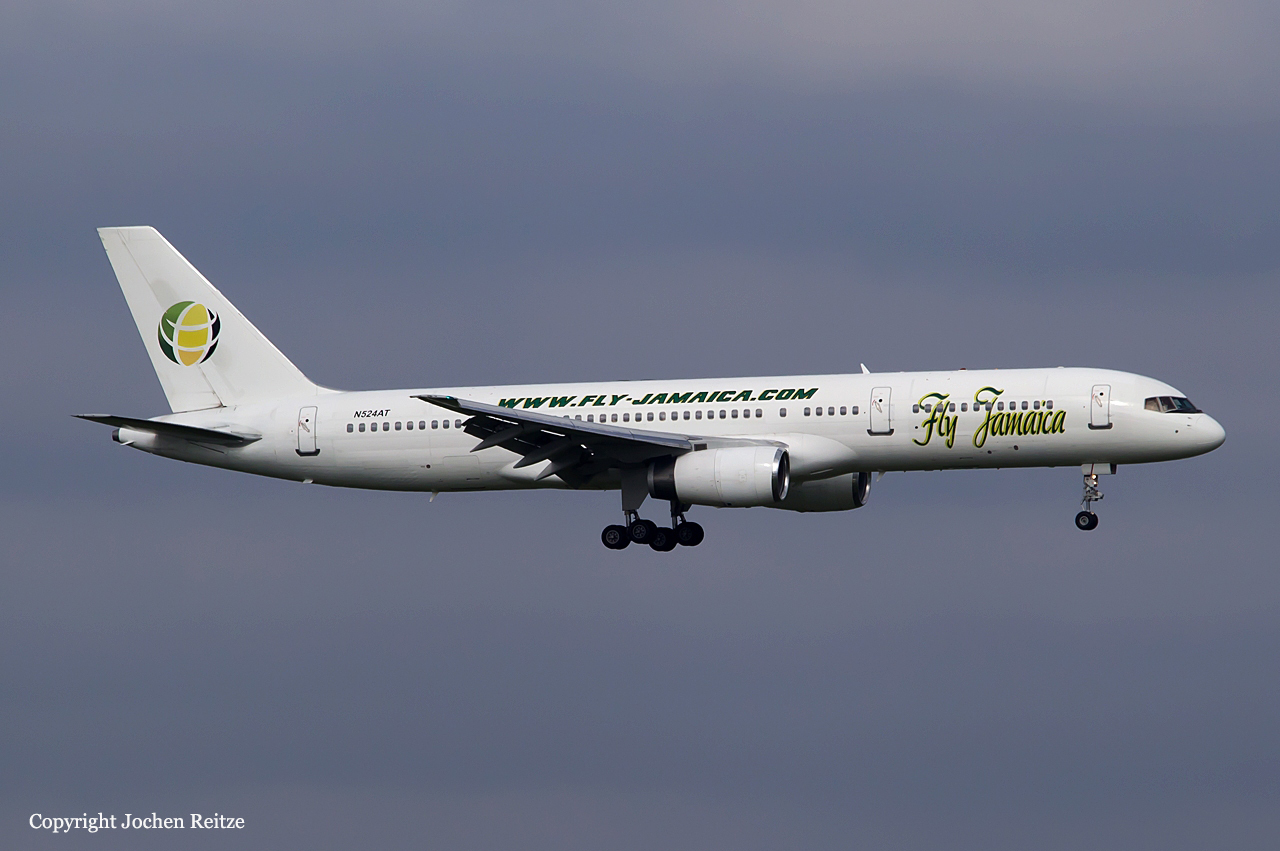
Crash of a Boeing 757-23N in Georgetown: 1 killed

Date & Time: Nov 9, 2018 at 0253 LT
Type of aircraft:
Operator:
Registration:
N524AT
Survivors:
Yes
Schedule:
Georgetown – Toronto
MSN:
30233/895
YOM:
1999
Flight number:
FJA256
Country:
Crew on board:
8
Crew fatalities:
Pax on board:
120
Pax fatalities:
Other fatalities:
Total fatalities:
1
Captain / Total flying hours:
11755
Copilot / Total flying hours:
4331
Copilot / Total hours on type:
317
Aircraft flight hours:
43420
Aircraft flight cycles:
13367
Circumstances:
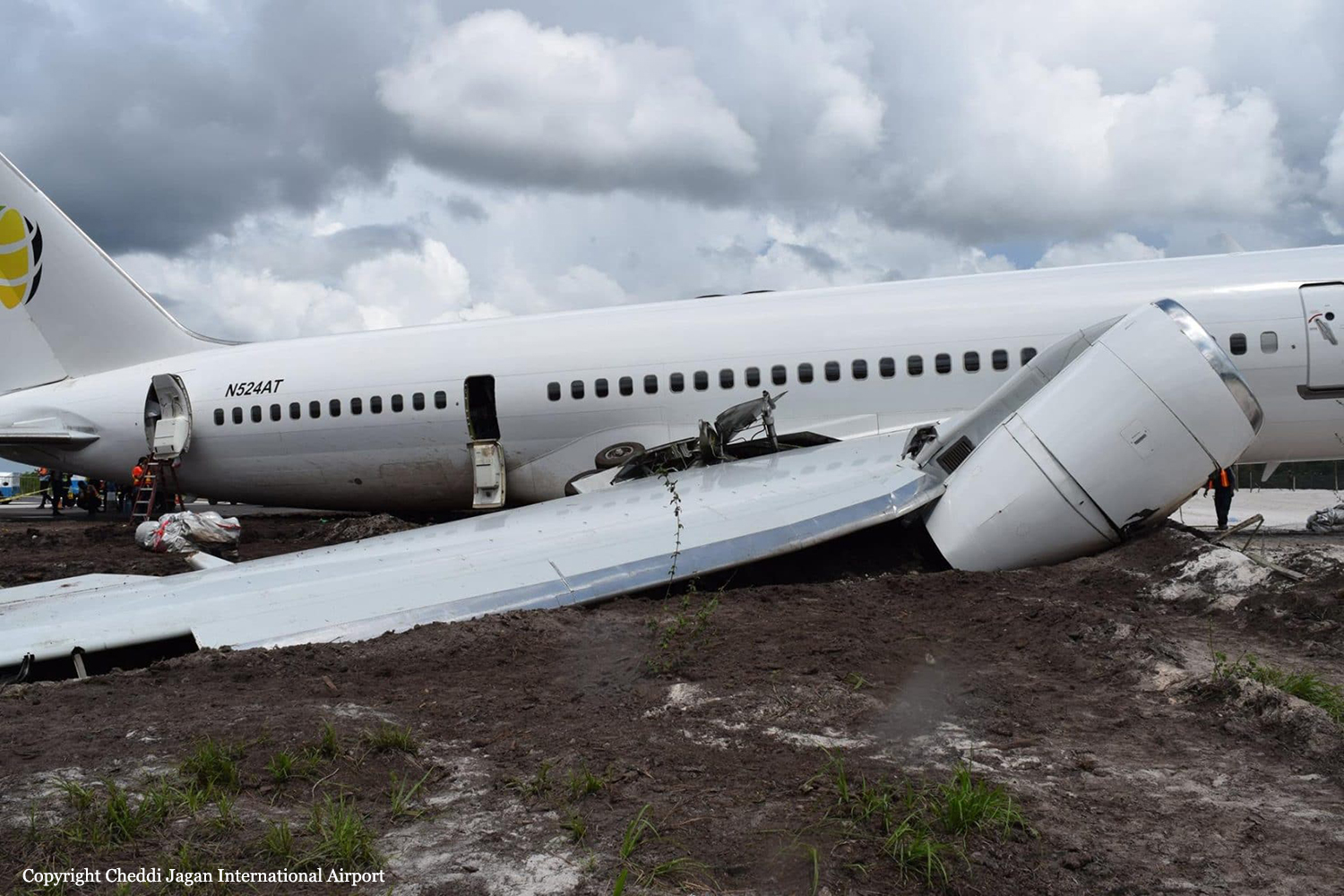
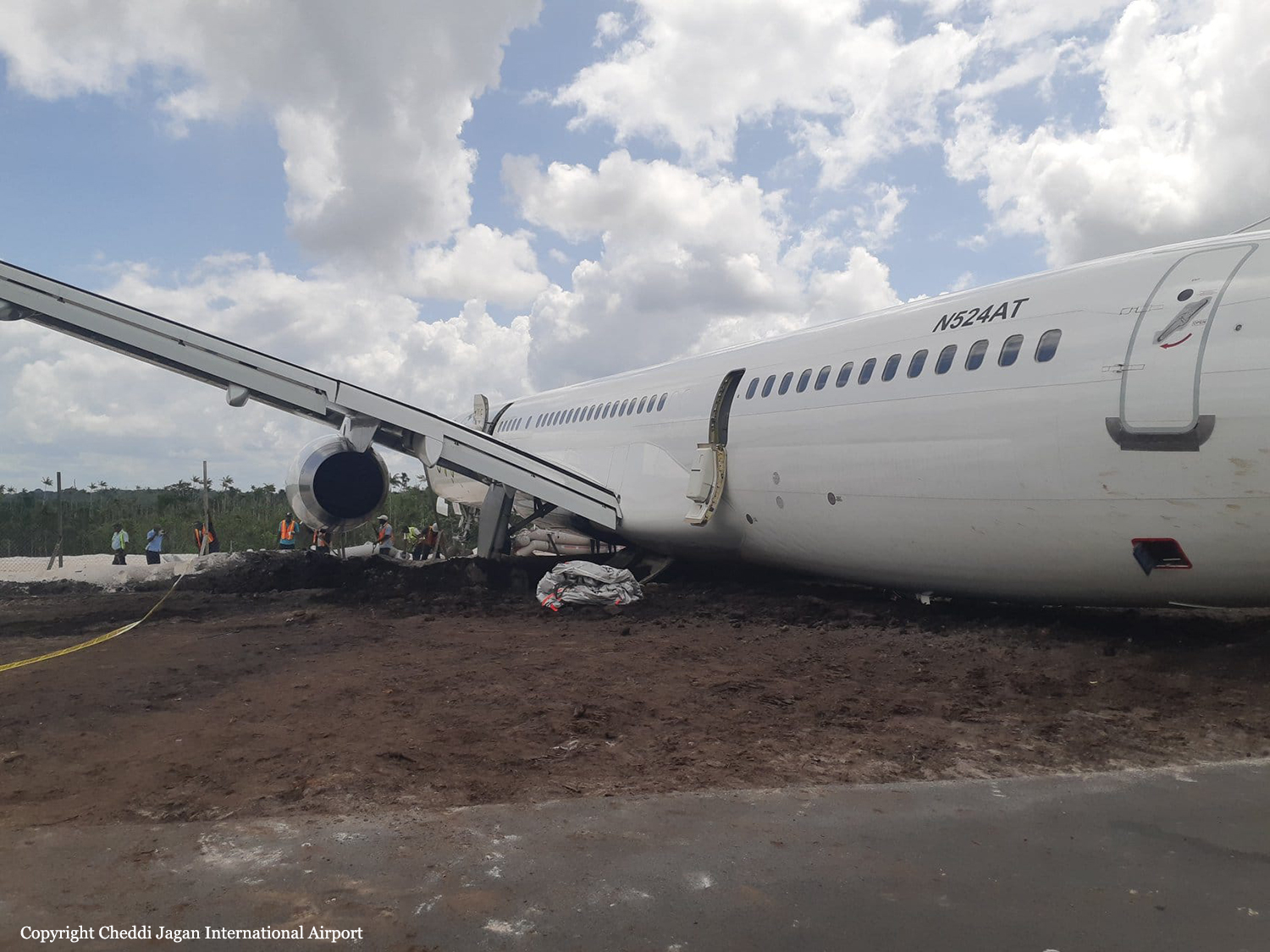
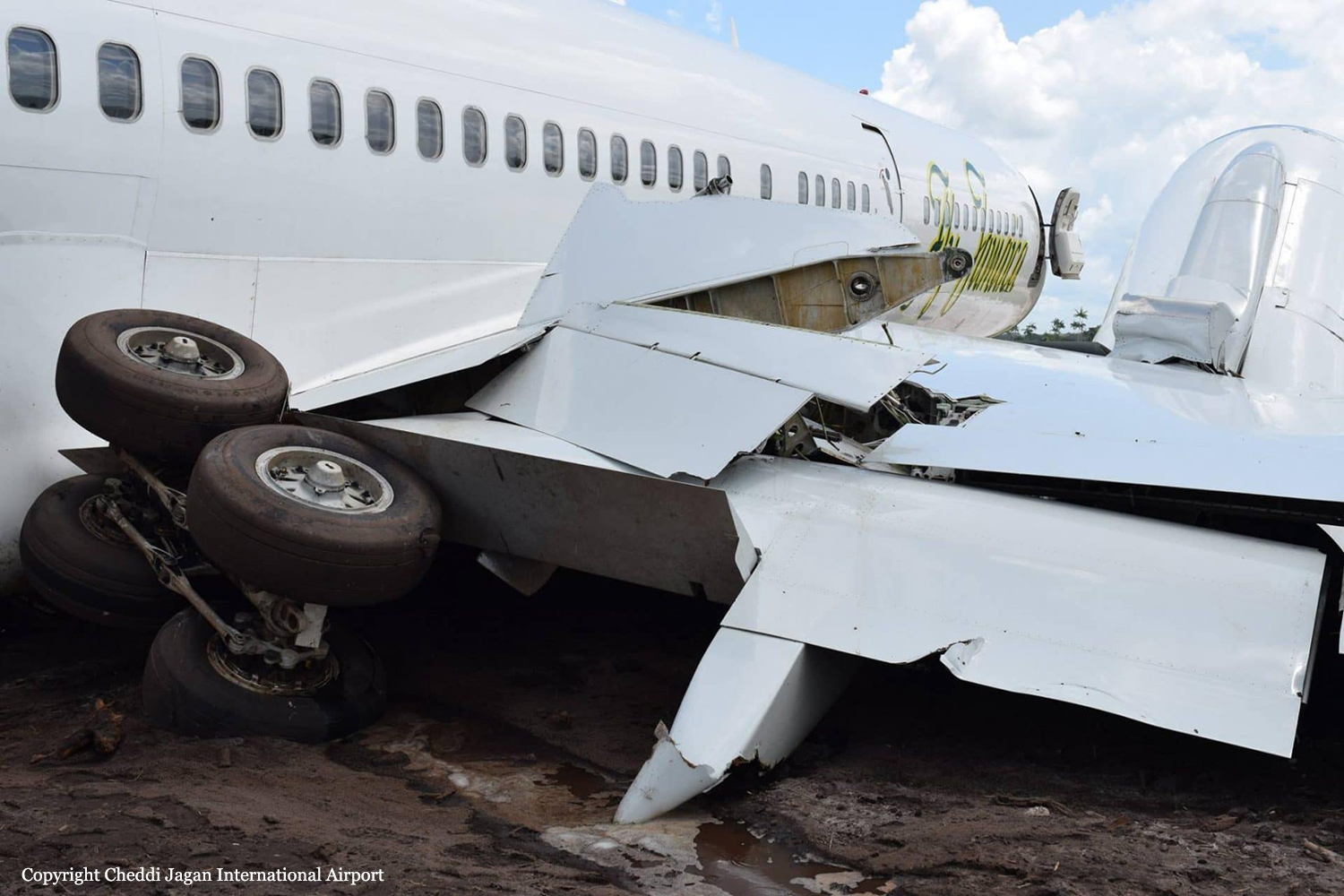
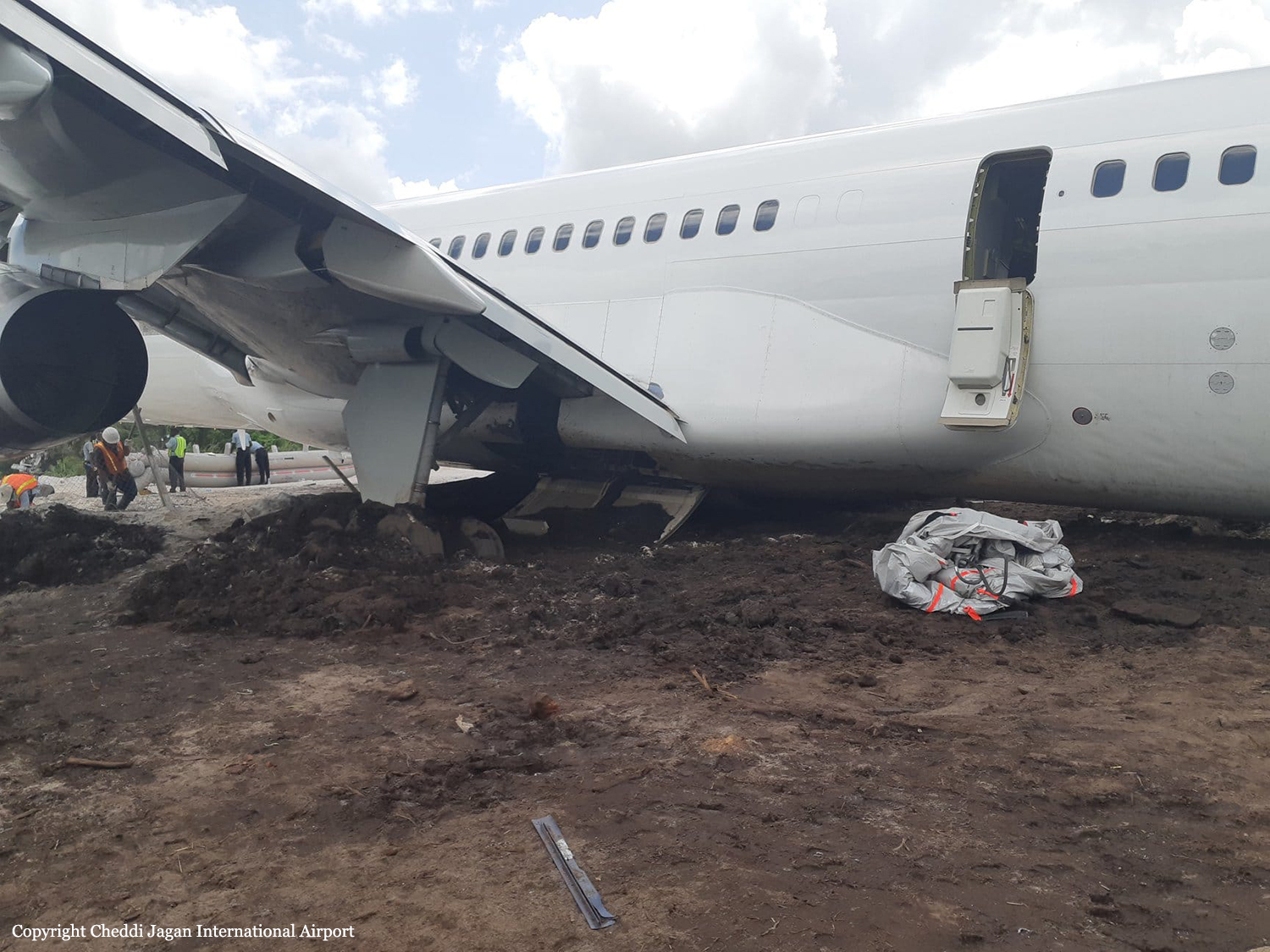
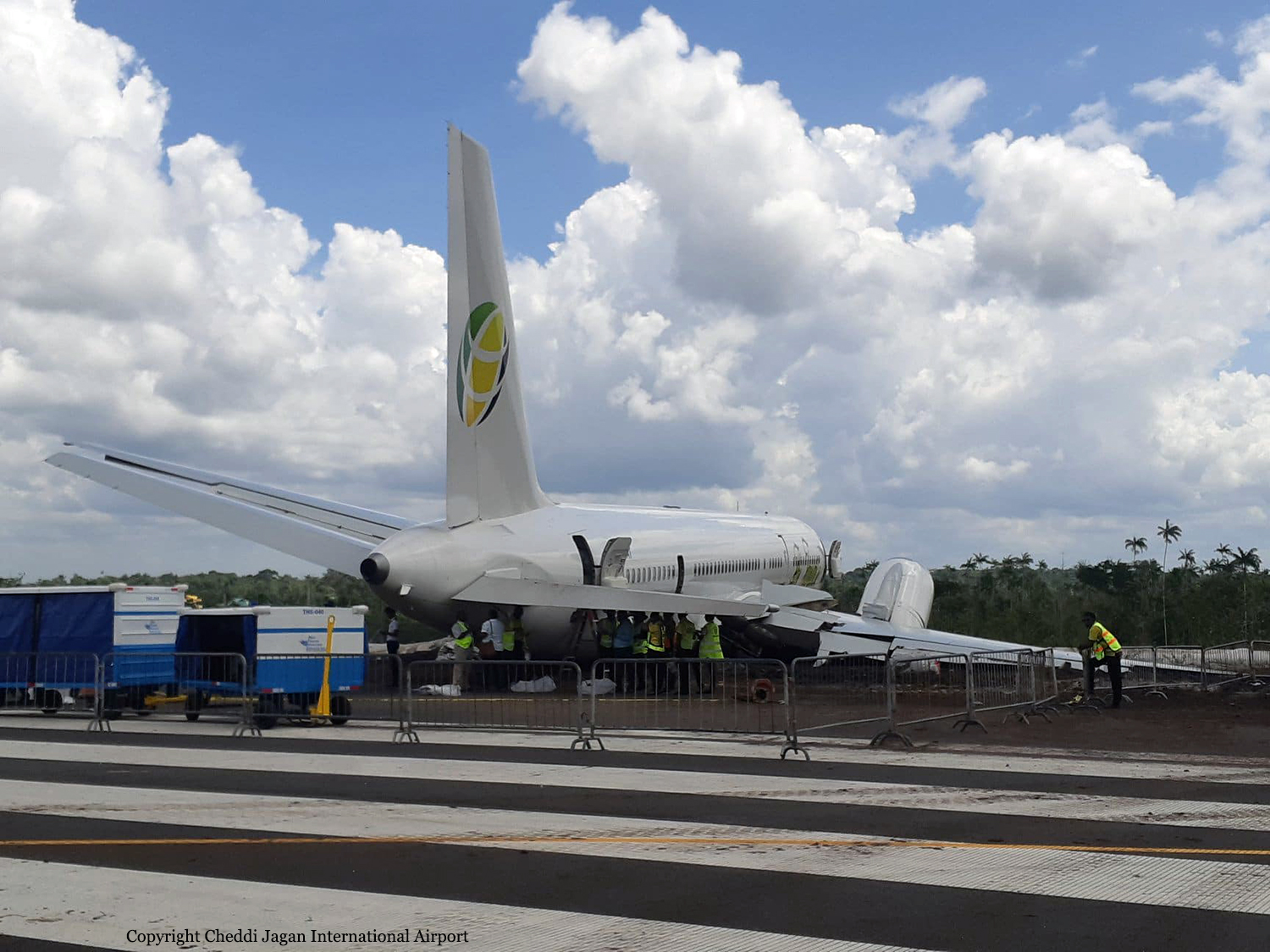
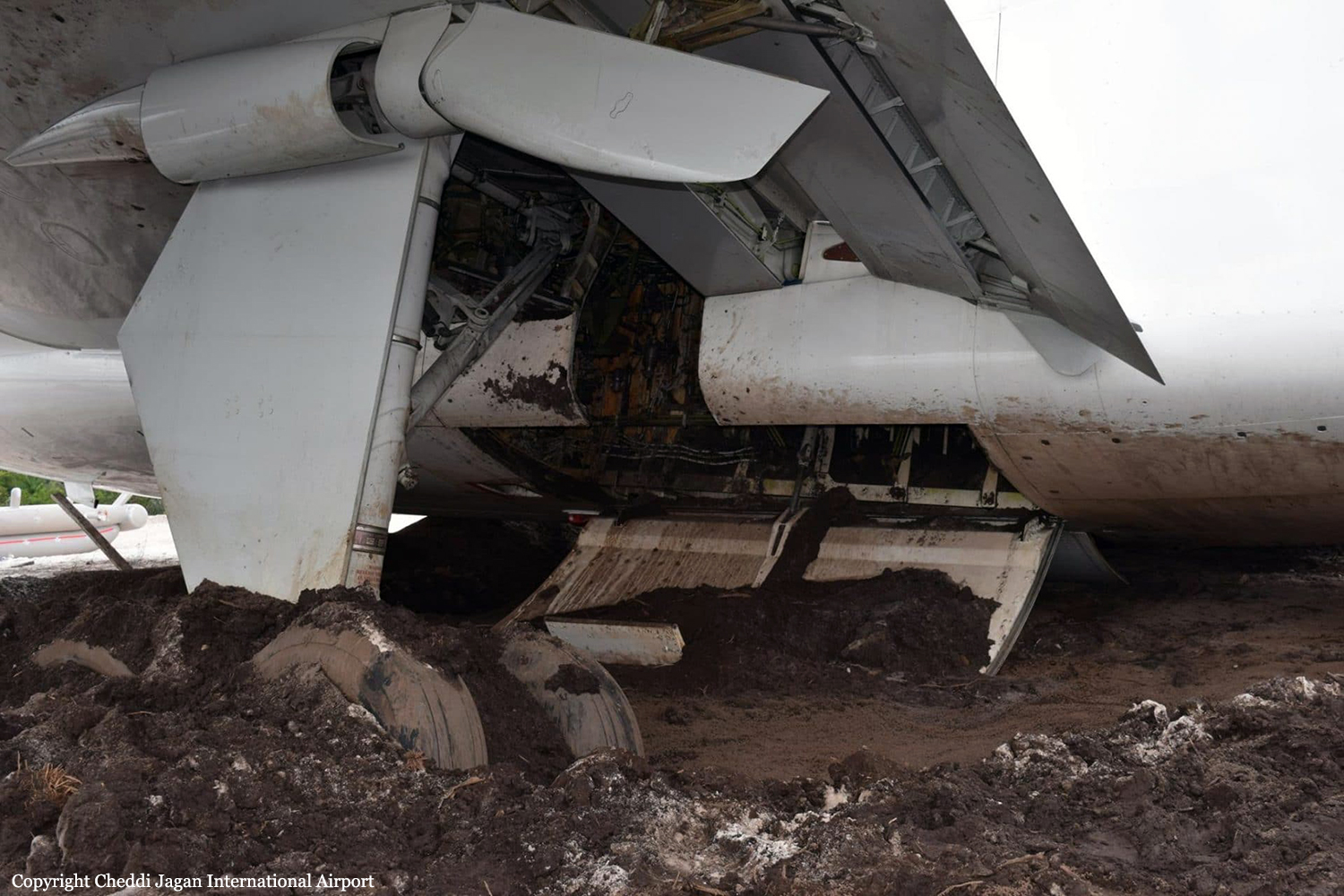
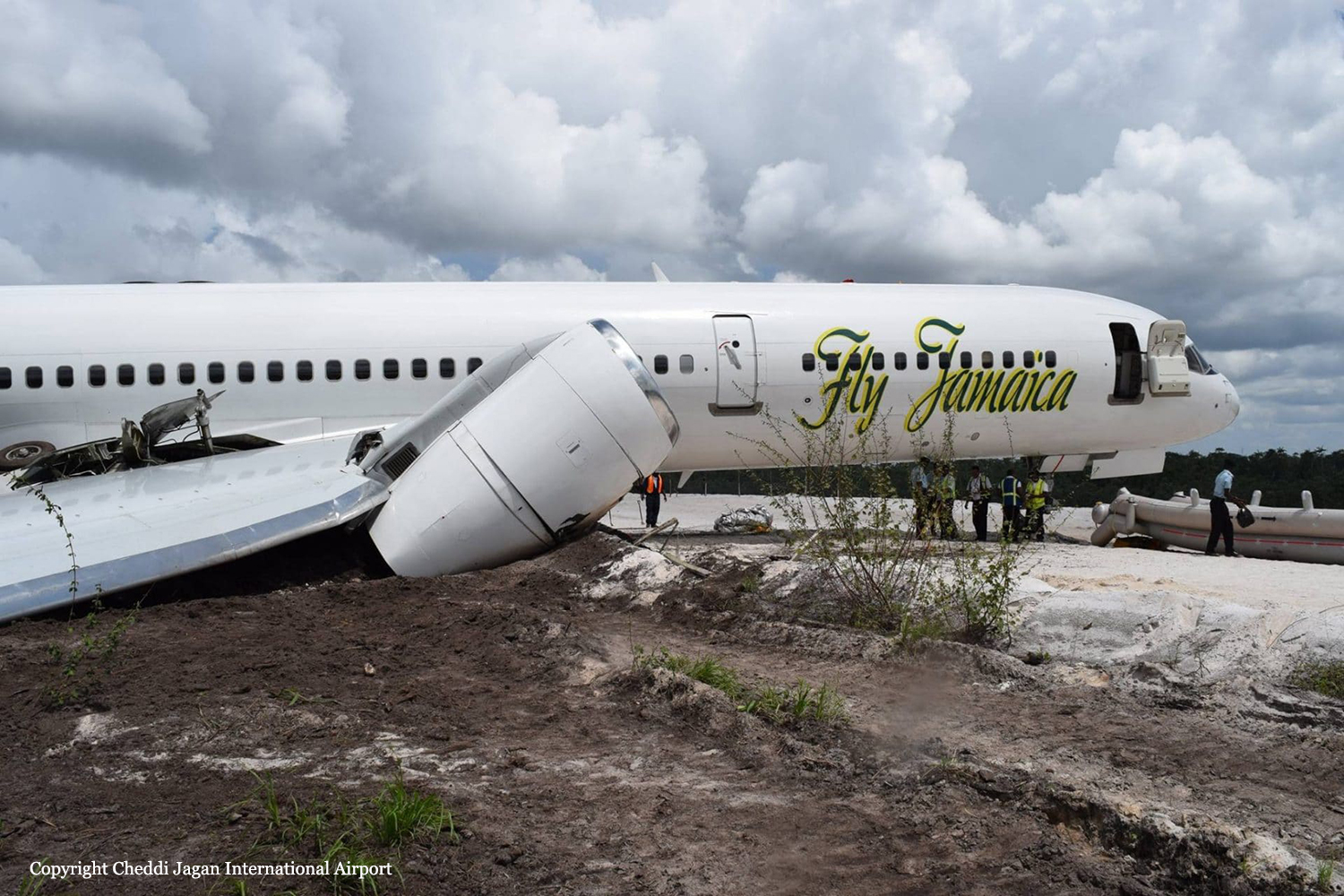
On 9th November 2018, a Boeing B757-200 aircraft, registration N524AT operating as FJA256, departed SYCJ, Timehri, East Bank Demerara, Guyana, at 06:10 hrs with one hundred and twenty passengers, eight Crew Members; and eight hours and one minute of fuel on board. The aircraft was destined for CYYZ, Toronto, Canada. At approximately 06:21 hrs, when the aircraft was 75 nm northwest of SYCJ, at an altitude of 20,000 feet, the Captain reported a loss of hydraulic fluid. He requested Air Traffic Control clearance to stop climb at 20,000 feet and indicated the intention to return to SYCJ for a landing. The Captain's request was approved. He did not declare an emergency. However, after advising the Captain, the Air Traffic Controller on duty activated local emergency stand-by at the airport. The aircraft returned to SYCJ 'Holding Area' where it was configured for landing. The aircraft landed at 06:53 hrs. The final approach and touchdown appeared to be normal. As indicated by the FDR, the aircraft slowed to a speed of 60 kts. Halfway down the runway, the aircraft veered towards the right, departed the runway, and came to a stop approximately 1,400 ft beyond the end of, and perpendicular to, the active runway. The nose of the aircraft was extended over the airport fence and its nose wheel was about 30 ft short of a steep 'drop off.' The aircraft was stopped when its starboard undercarriage became embedded in thick, loose sand that was being used for the ongoing runway expansion project. The Aerodrome Rescue and Fire Fighting Service was on standby and responded immediately. The aircraft sustained major (significant) structural damages. The aircraft was evacuated via the aircraft Slides. There were reports of ten passengers suffering minor injuries and one elderly passenger subsequently died five days after the accident.
Probable cause:
Loss of hydraulic fluid, failure of the pressure switch and subsequent total failure of the hydraulic system (firstly the left and subsequently the right) which affected the deployment of some spoilers, thrust reversers and efficacy of the main brakes caused the aircraft to continue the landing roll at a high-speed resulting in an overrun and excursion and severe damage to the aircraft.
The following contributing factors were identified:
a) Flight Crew lost main brakes after 'pumping the brakes' several times which bled off main brake pressure, and their failure to use accumulator brake that was available at the time to stop the aircraft after losing the main brakes.
b) Setting the flaps to 20o instead of landing flap configuration. This resulted in a higher landing speed and roll and with the combination of loss of main brake pressure due to "pumping" the brakes rather than applying and holding the brakes made it difficult to stop the aircraft on the runway.
c) Maintenance deficiencies and inadequate maintenance actions regarding the hydraulic system. Leaking hydraulic system. FDR readings indicated a trend of hydraulic system difficulties, more so, during the previous 6 flights before the accident. These maintenance lapses may have led to further deterioration and loss of the hydraulic systems.
d) Poor FJA maintenance quality assurance and quality control may have led to the maintenance deficiencies which may have contributed to the ineffective resolution of the hydraulic system leakages and other hydraulic system maintenance issues indicated by the FDR.
e) FJA management's lackadaisical attitude and bypassing recommendations from the Director of Maintenance and Quality Assurance Manager may have led to bad culture, unsafe practices and may have furthered improper maintenance.
(e) Management's interference may have had an adverse effect on maintenance and safety practices generally.
f) The soft mud and loose sand in the overrun area contributed to damage to the aircraft during the excursion.
Final Report:
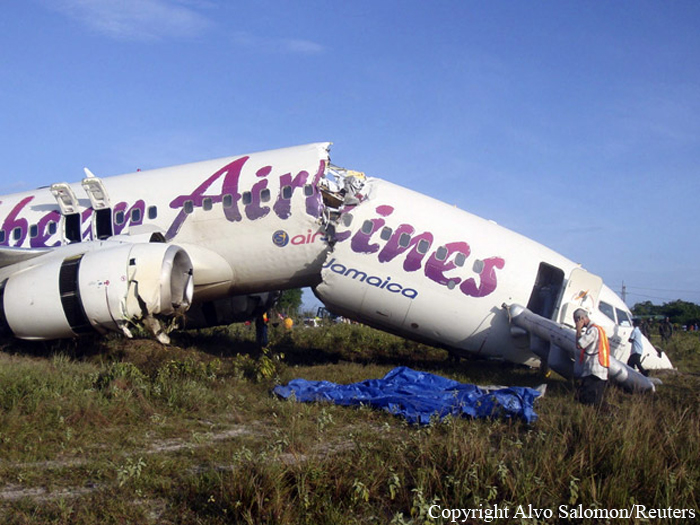
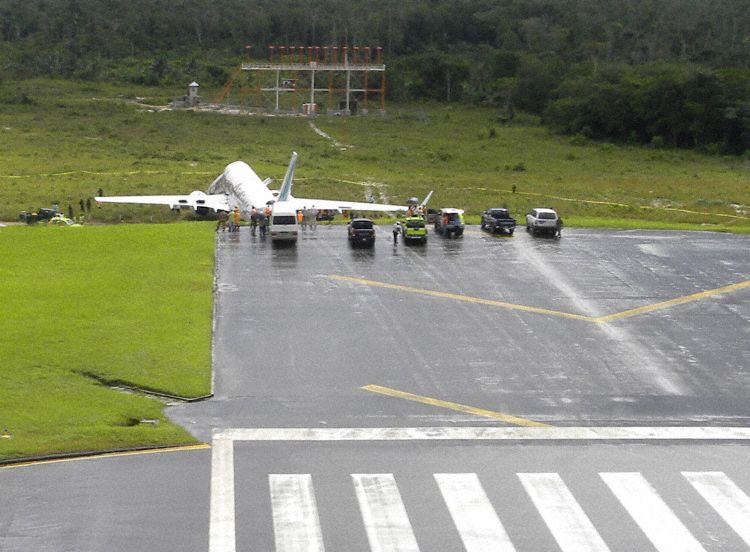
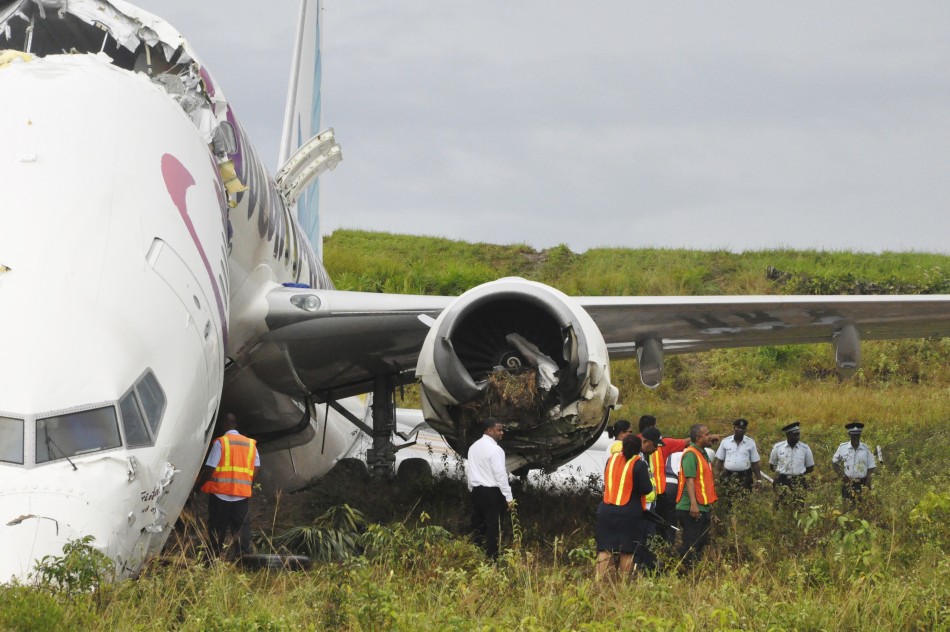
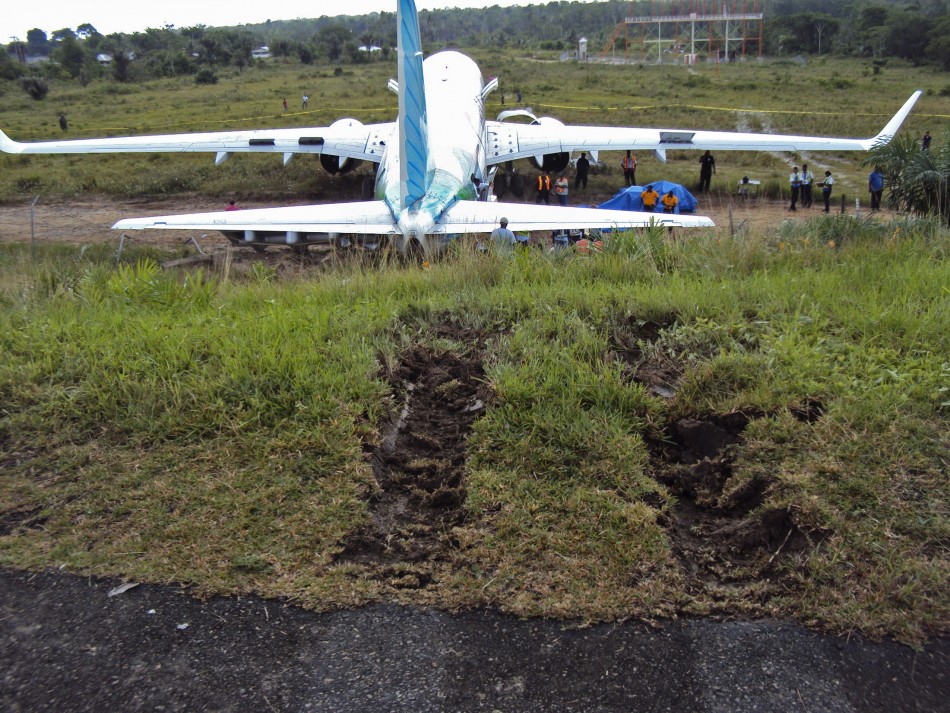
Crash of a Boeing 737-8BK in Georgetown

Date & Time: Jul 30, 2011 at 0132 LT
Type of aircraft:
Operator:
Registration:
9Y-PBM
Survivors:
Yes
Schedule:
New York - Port of Spain - Georgetown
MSN:
29635/2326
YOM:
2007
Flight number:
BW523
Country:
Crew on board:
6
Crew fatalities:
Pax on board:
157
Pax fatalities:
Other fatalities:
Total fatalities:
0
Captain / Total flying hours:
9600
Captain / Total hours on type:
5000.00
Copilot / Total flying hours:
1400
Copilot / Total hours on type:
350
Aircraft flight hours:
14861
Circumstances:
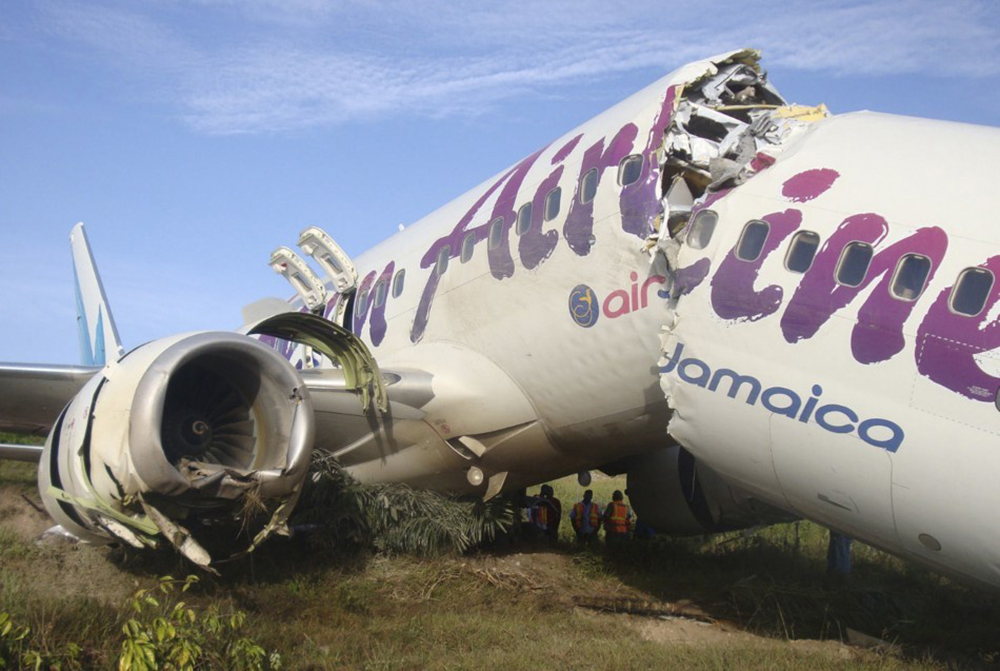
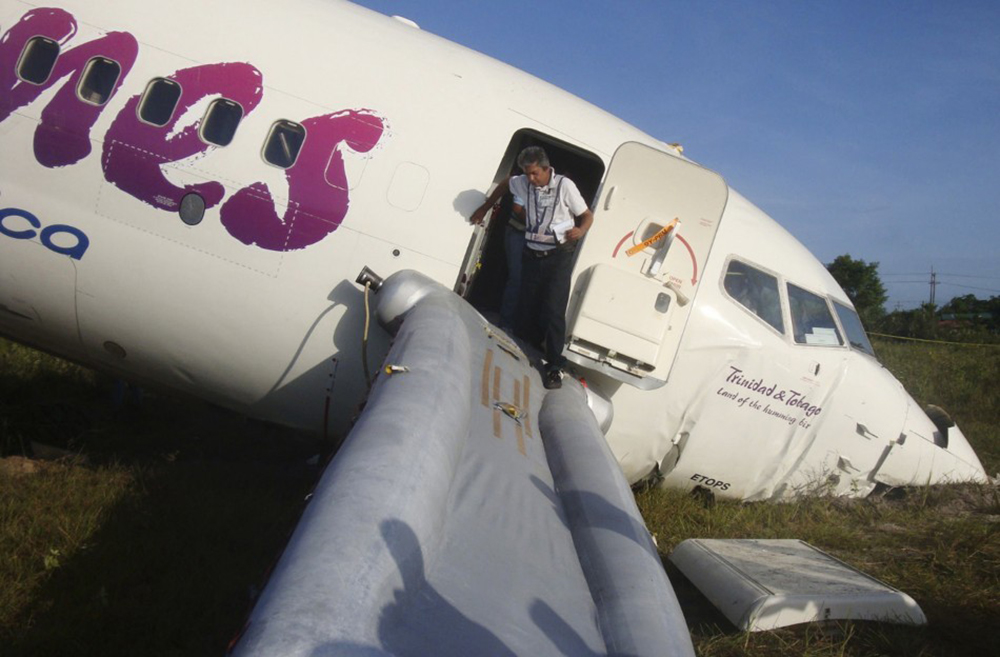
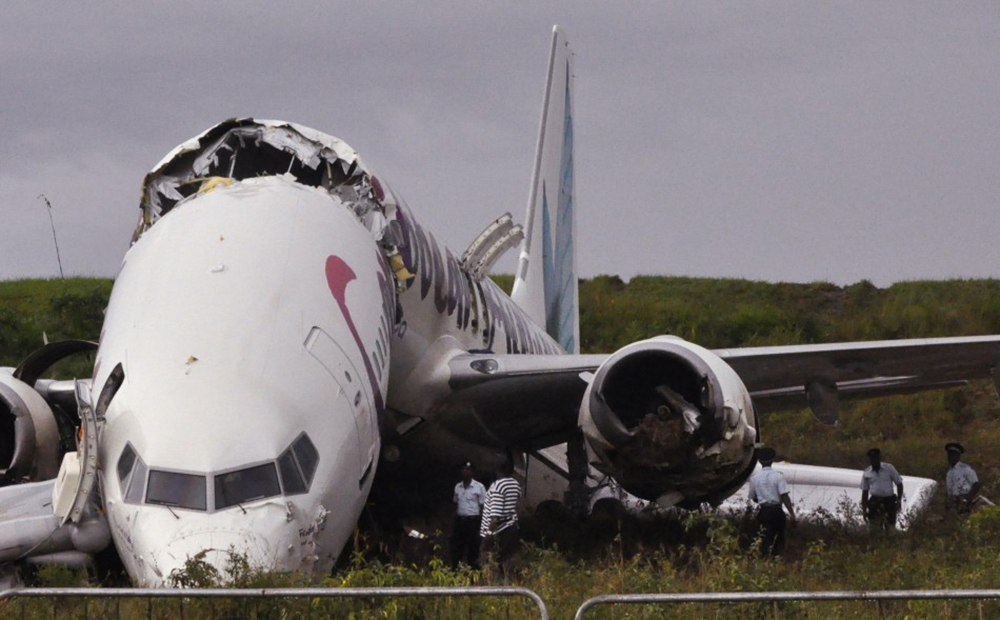
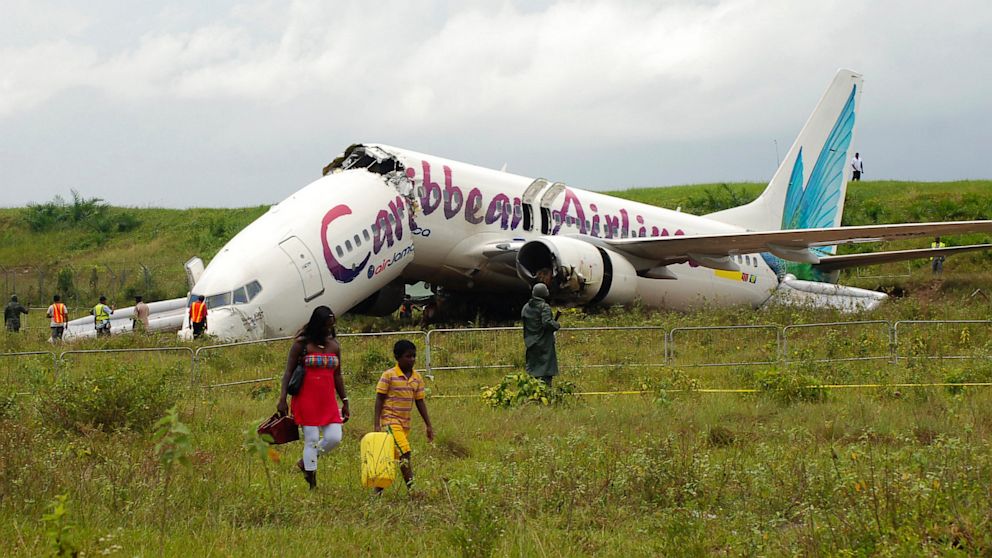
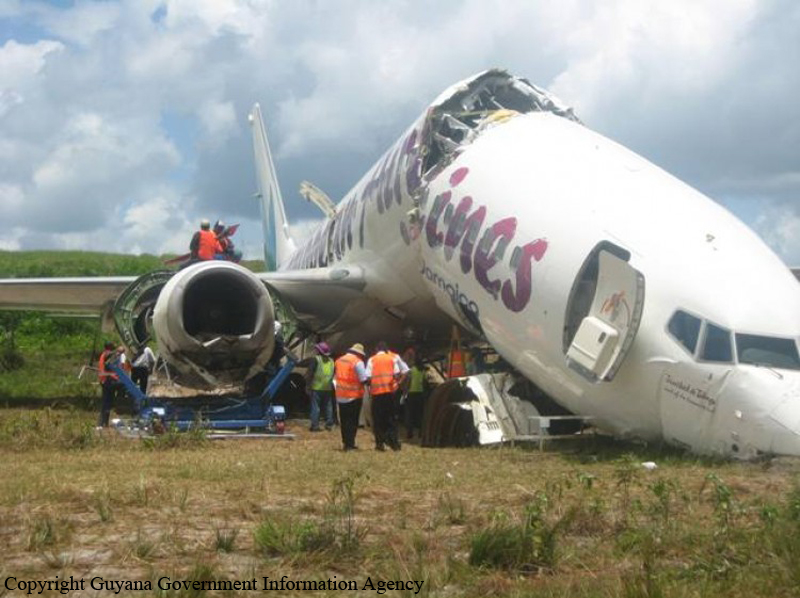
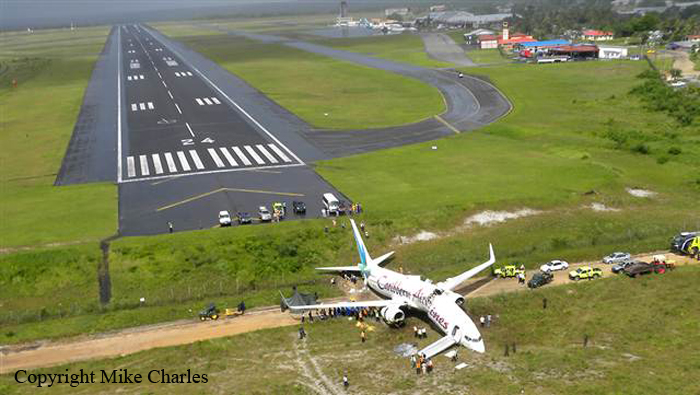
The flight originated in New York as BW 523, and made a passenger and fuel stop in Port-of-Spain, Trinidad where there was also a change of crew comprising two pilots and four flight attendants before proceeding to Georgetown, Guyana. The flight departed Piarco at 04:36UTC. The aircraft proceeded to Georgetown from Port of Spain at Flight Level (FL) 330, was given descent clearance and was cleared for an RNAV (GPS) approach to RWY 06, landing at 05:32 UTC. There were no reported anomalies in the en-route profile, although during the transition from cruise to approach to RWY 06 the aircraft deviated to avoid some thunderstorm cells north and east of the Airport. The reported visibility was 9,000m. Light rain was encountered during the approach. The pilot reported that after visual contact was made and after crossing the Final Approach Fix (FAF), he disengaged the auto pilot and configured the aircraft for landing. The Flight Data Recorder (FDR) indicated that the flight was normal until the aircraft was approaching the runway. Even before the aircraft was over the threshold, the captain commented that he was not landing here. As the flight continued over the runway, comments on the Cockpit Voice Recorder (CVR), revealed that the captain indicated to the First Officer (FO) that the aircraft was not touching down. A go-around call was made by the Captain and acknowledged by the First Officer, however three seconds elapsed and the aircraft subsequently touched down approximately 4700ft from the threshold of RWY06, leaving just over 2700 feet of runway surface remaining. Upon touchdown, brake pressure was gradually increased and maximum brake pressure of 3000psi was not achieved until the aircraft was 250ft from the end of the runway or 450ft from the end of the paved area. The ground spoilers were extended on touchdown. The thrust reversers were partially deployed after touchdown. The aircraft did not stop and overran the runway. It then assumed a downward trajectory followed by a loud impact.
Probable cause:
The probable cause of the accident was that the aircraft touched down approximately 4,700 feet beyond the runway threshold, some 2,700 feet from the end of the runway, as a result of the Captain maintaining excess power during the flare, and upon touching down, failure to utilize the aircraft’s full deceleration capability, resulted in the aircraft overrunning the remaining runway and fracturing the fuselage.
Contributory Factors:
The Flight Crew’s indecision as to the execution of a go-around, failure to execute a go-around after the aircraft floated some distance down the runway and their diminished situational awareness contributed to the accident.
Final Report:

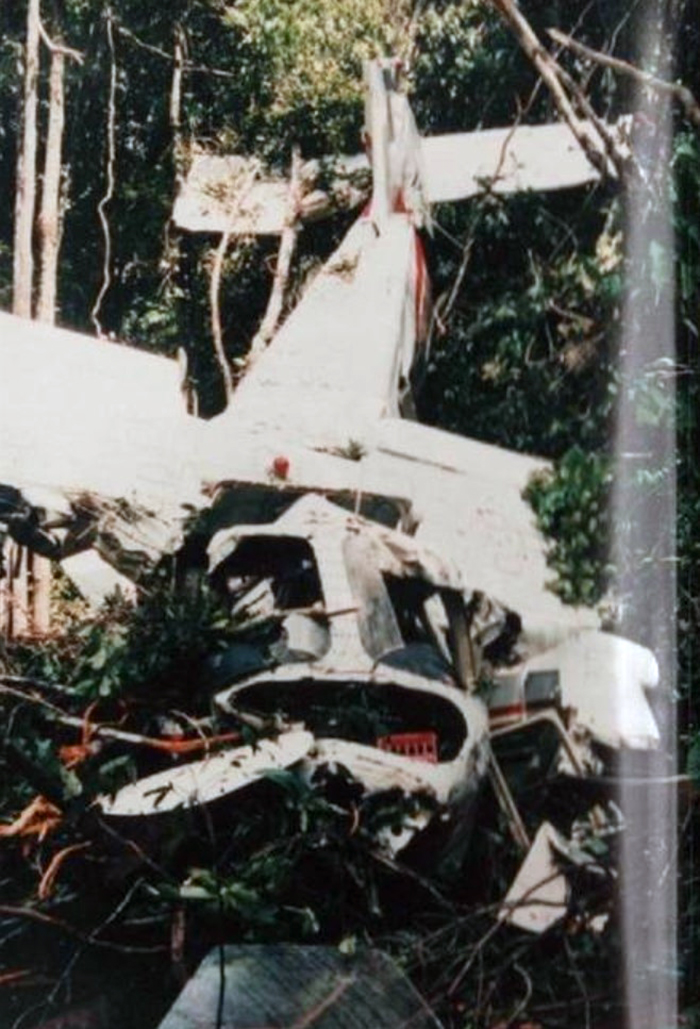
Crash of a Britten-Norman BN-2A-27 near Georgetown

Date & Time: Sep 15, 1994
Type of aircraft:
Registration:
8R-GGU
Flight Type:
Survivors:
Yes
Schedule:
Georgetown-Cheddi Jagan - Georgetown-Ogle
MSN:
251
YOM:
1971
Country:
Crew on board:
1
Crew fatalities:
Pax on board:
0
Pax fatalities:
Other fatalities:
Total fatalities:
0
Circumstances:
Sole on board, the pilot was completing a cargo flight from Georgetown-Cheddi Jagan Airport to Georgetown-Ogle Airport. While descending to Ogle Airport by night, the twin engine aircraft crashed in unknown circumstances in a wooded area located few km south of Georgetown. The wreckage was found few hours later. The aircraft was destroyed and the pilot Gerry Gouveia was seriously injured. The accident occurred somewhere in September 1994 (exact date unknown).

Crash of a Piper PA-31-310 Navajo near Georgetown: 2 killed

Date & Time: Jan 5, 1991
Type of aircraft:
Registration:
9Y-PIA
Flight Phase:
Survivors:
No
Schedule:
Georgetown - Piarco
MSN:
31-8012080
YOM:
1980
Country:
Crew on board:
1
Crew fatalities:
Pax on board:
1
Pax fatalities:
Other fatalities:
Total fatalities:
2
Circumstances:
Few minutes after takeoff from Georgetown-Timehri Airport, while climbing in poor weather conditions, the twin engine aircraft went out of control and crashed 15 km south of the airport. The aircraft was destroyed and both occupants were killed.

Crash of a Cessna 401 in Georgetown: 2 killed

Date & Time: Jun 4, 1989
Type of aircraft:
Registration:
N4042Q
Flight Phase:
Flight Type:
Survivors:
No
Country:
Crew on board:
1
Crew fatalities:
Pax on board:
1
Pax fatalities:
Other fatalities:
Total fatalities:
2
Circumstances:
After takeoff, while in initial climb, the twin engine aircraft crashed in unknown circumstances. Both occupants were killed.

Crash of a Martin B-26B-4 Marauder in Georgetown

Date & Time: Mar 15, 1943
Type of aircraft:
Operator:
Registration:
41-17993
Flight Phase:
Flight Type:
Survivors:
Yes
Country:
Crew on board:
0
Crew fatalities:
Pax on board:
0
Pax fatalities:
Other fatalities:
Total fatalities:
0
Circumstances:
Crashed on takeoff from Atkinson Field while on a ferry flight to 320th BG. All crew survived.

Crash of a Boeing B-17F-40-BO Flying Fortress into the Atlantic Ocean: 10 killed

Date & Time: Mar 13, 1943
Operator:
Registration:
42-5203
Flight Phase:
Flight Type:
Survivors:
No
Schedule:
Georgetown – Belém
MSN:
3742
YOM:
1942
Country:
Region:
Crew on board:
10
Crew fatalities:
Pax on board:
0
Pax fatalities:
Other fatalities:
Total fatalities:
10
Circumstances:
The airplane departed Georgetown-Atkinson Airport on a flight to Belém while being transferred to the European theater. It failed to arrive at destination and was lost without trace. Probably disappeared in the Atlantic Ocean but also possible that it crashed somewhere in Suriname, French Guyana or Brasil.
Crew:
1st Lt James K. Taylor,
1st Lt Lawrence J. Warm,
1st Lt Joseph L. Bambrough,
2nd Lt Leon Fletcher Jr.,
S/Sgt Vincent W. Callahan,
S/Sgt Jack L. Garland,
S/Sgt Wayne H. Pointer,
S/Sgt Marvin R. Radtke,
T/Sgt Frank X. Coolican,
T/Sgt Gordon N. Howe.

Crash of a Martin B-26B-4 Marauder off Suriname: 5 killed

Date & Time: Mar 12, 1943
Type of aircraft:
Operator:
Registration:
41-18021
Flight Phase:
Flight Type:
Survivors:
No
Schedule:
Georgetown – Belém
Country:
Crew on board:
5
Crew fatalities:
Pax on board:
0
Pax fatalities:
Other fatalities:
Total fatalities:
5
Circumstances:
En route from Georgetown to Belém, the airplane crashed in unknown circumstances into the Atlantic Ocean off the coast of Suriname. Lost without trace.
Crew:
1st Lt Orville P. Cobb, pilot,
2nd Lt Robert P. Baker,
2nd Lt Howard L. Burden,
Sgt Kenneth V. McClung.

Crash of a Douglas A-20C-10-DO Havoc at Atkinson AFB: 1 killed

Date & Time: Mar 3, 1943
Operator:
Registration:
42-33271
Flight Phase:
Flight Type:
Survivors:
No
MSN:
6733
YOM:
1941
Country:
Crew on board:
1
Crew fatalities:
Pax on board:
0
Pax fatalities:
Other fatalities:
Total fatalities:
1
Circumstances:
The airplane crashed on takeoff from Atkinson AFB and was destroyed. A crew member was killed.
Crew:
2nd Lt Wallace E. McClean.

Crash of a Douglas A-20B-DL Havoc near Macapá: 3 killed

Date & Time: Jan 20, 1943 at 1315 LT
Operator:
Registration:
41-3361
Flight Phase:
Flight Type:
Survivors:
No
Schedule:
Georgetown – Belém
MSN:
5691
YOM:
1941
Location:
Country:
Crew on board:
3
Crew fatalities:
Pax on board:
0
Pax fatalities:
Other fatalities:
Total fatalities:
3
Circumstances:
The crew departed Atkinson Airfield in Georgetown, Guyana, at 1036LT, on a ferry flight to Belém. The airplane was last seen at 1310LT by a US pilot. As it failed to arrive at destination, SAR operations were initiated but eventually suspended on February 5 as no trace of the airplane nor the crew was found. It is believed that the airplane may crash around 1315LT in a jungle located near Macapá, State of Amapá.
Crew:
Lt H. L. McClelland, pilot,
Pvt J. N. Gordon, air gunner,
Sgt G. R. McCollum, air gunner.
Final Report: