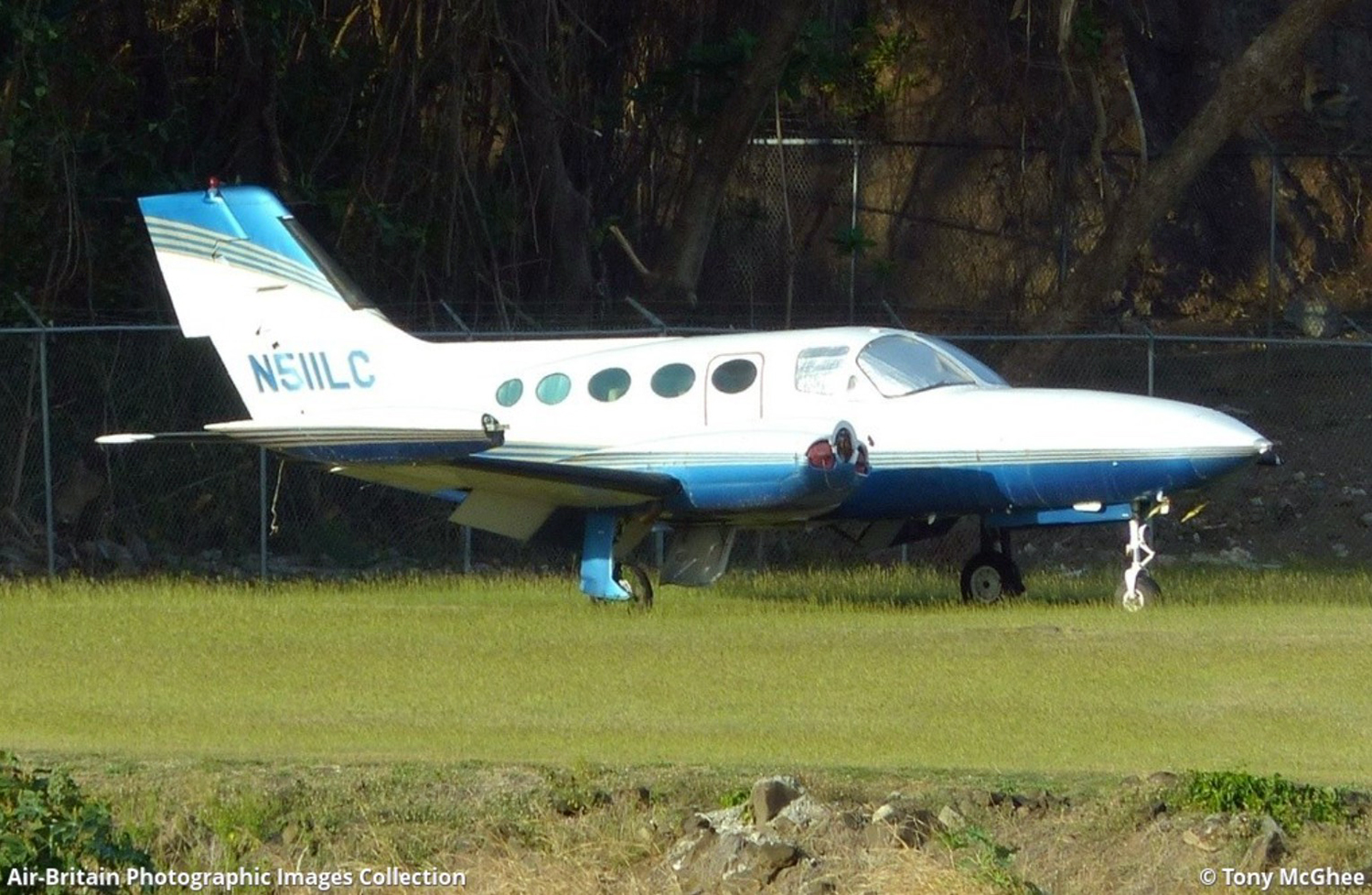
Crash of a Cessna 421B Golden Eagle II in Castries

Date & Time: Apr 13, 2011 at 1140 LT
Operator:
Registration:
N511LC
Flight Type:
Survivors:
Yes
Schedule:
Bridgetown – Castries
MSN:
421B-0423
YOM:
1973
Country:
Crew on board:
1
Crew fatalities:
Pax on board:
0
Pax fatalities:
Other fatalities:
Total fatalities:
0
Circumstances:
Following an uneventful flight from Bridgetown-Grantley Adams Airport, the pilot landed at Castries-George F. L. Charles (Vigie) Airport. Upon touchdown, the left main gear collapsed. The aircraft veered off runway and came to rest against a fence. The pilot was uninjured and the aircraft was damaged beyond repair.

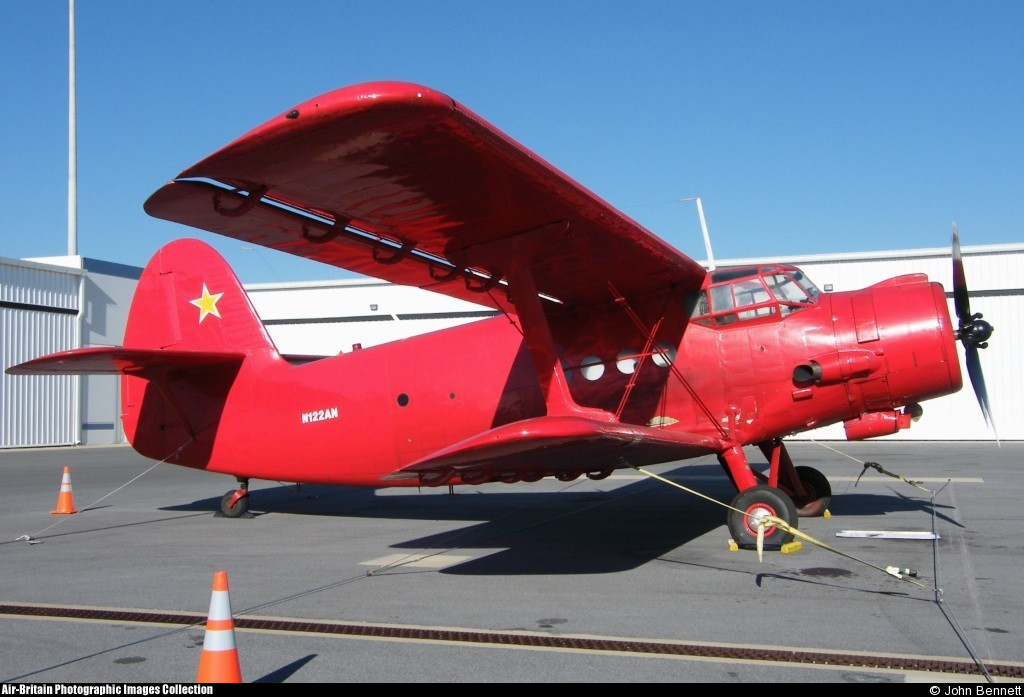
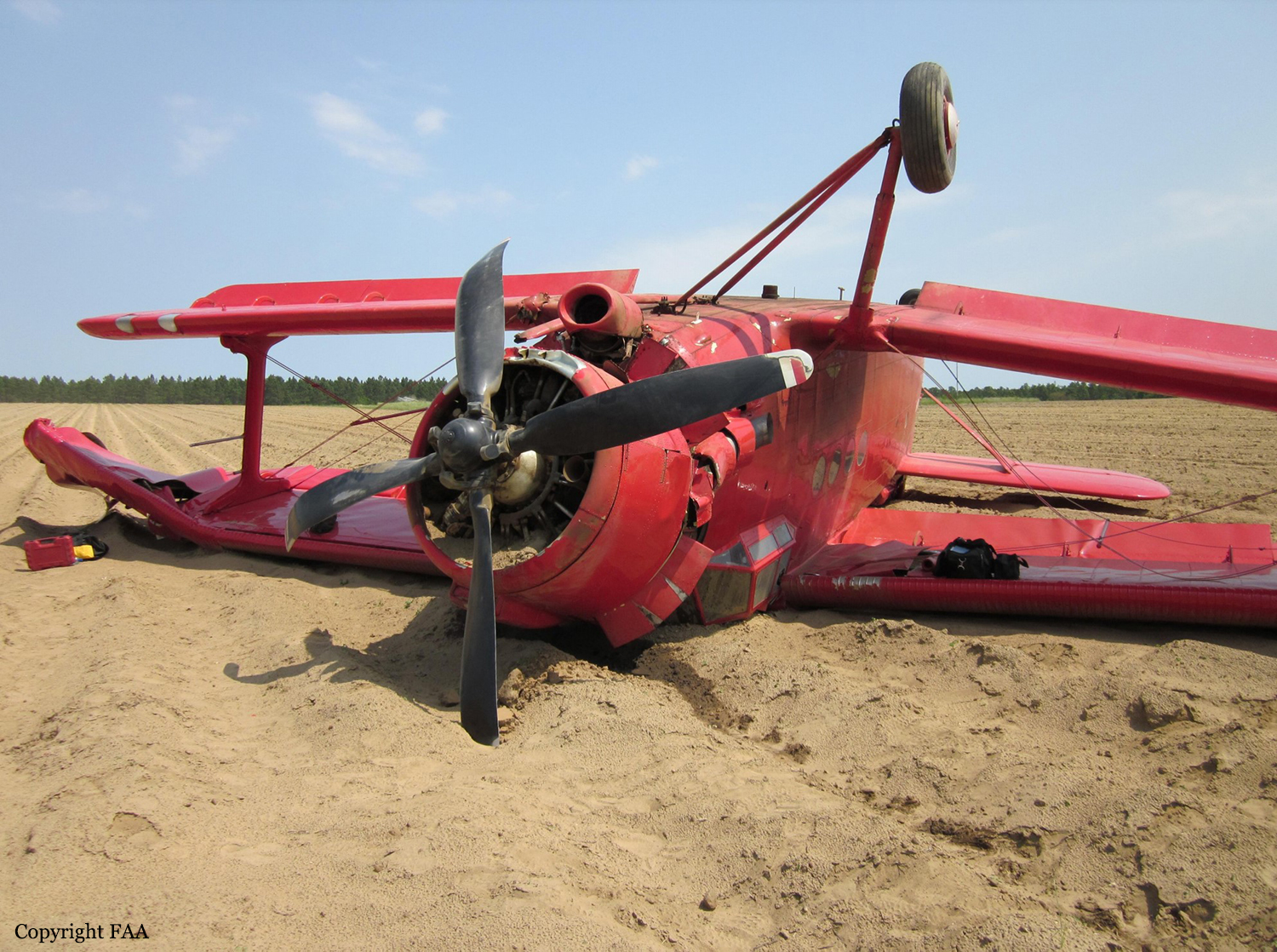
Crash of a PZL-Mielec AN-2TP in Loxley

Date & Time: Apr 11, 2011 at 1216 LT
Type of aircraft:
Operator:
Registration:
N122AN
Flight Phase:
Flight Type:
Survivors:
Yes
Schedule:
Destin – DeRidder
MSN:
1G176-31
YOM:
1977
Location:
Crew on board:
1
Crew fatalities:
Pax on board:
2
Pax fatalities:
Other fatalities:
Total fatalities:
0
Captain / Total flying hours:
4888
Captain / Total hours on type:
21.00
Aircraft flight hours:
10371
Circumstances:
According to the pilot, during cruise flight the engine began to run rough and lose power. He heard a loud metallic sound; the engine vibrated violently and then lost power. He performed a forced landing to a farm field, and the airplane nosed over in the soft terrain, resulting in substantial damage to the wings. A postaccident inspection revealed that the crankshaft would not rotate. An internal inspection of the cylinders and spark plugs did not reveal a reason for the power loss. The oil system was examined and there were large amounts of metal particles in the oil. Due to a lack of suitable equipment and facilities, further disassembly of the engine was not attempted.
Probable cause:
A loss of engine power due to internal failure.
Final Report:

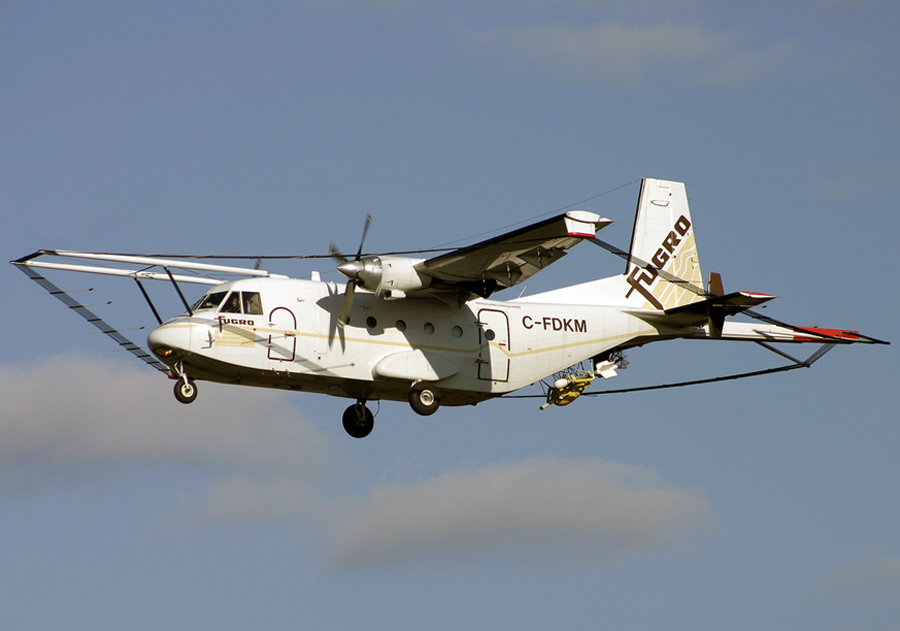
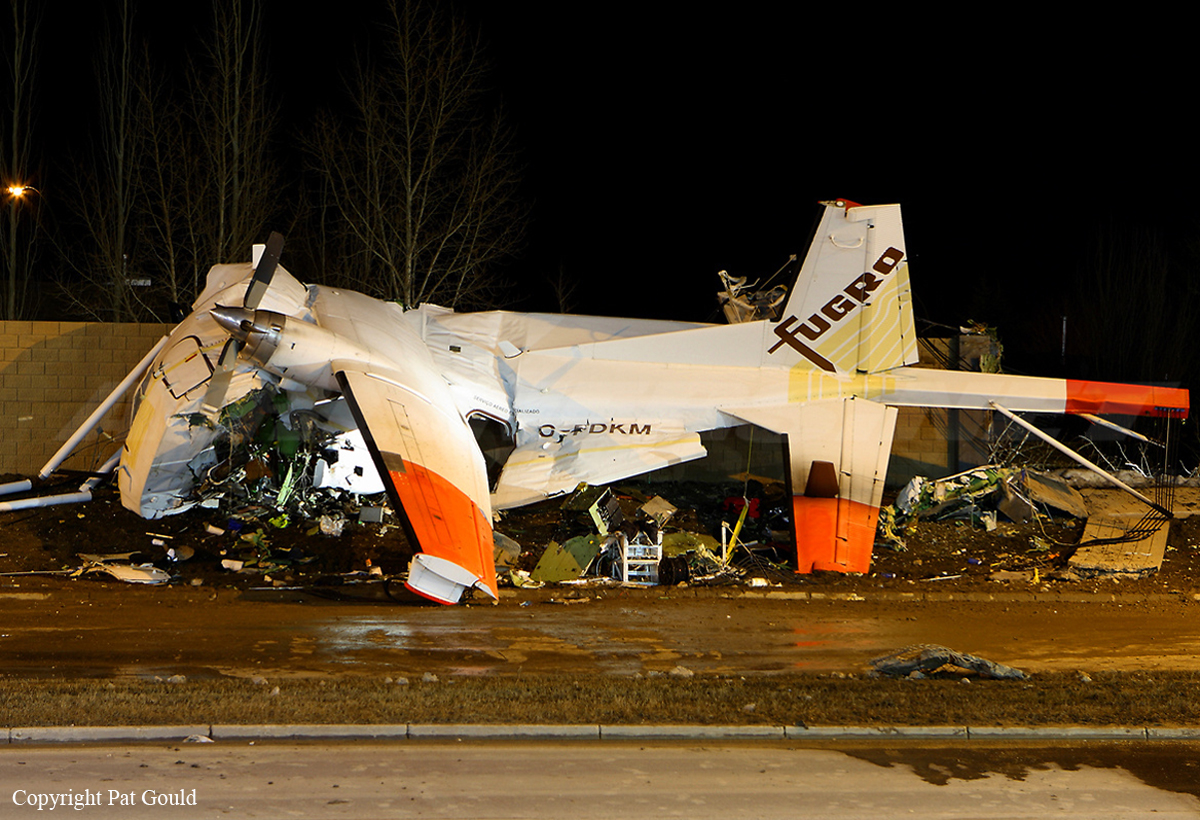
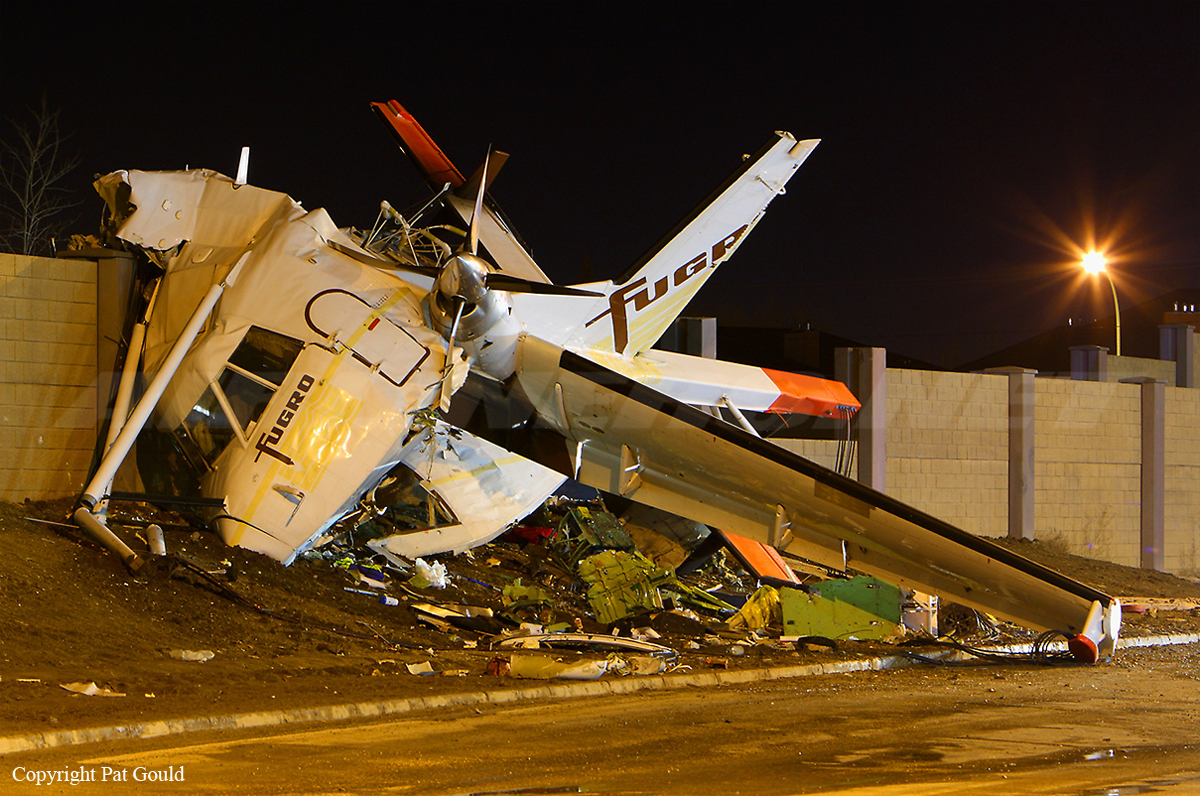
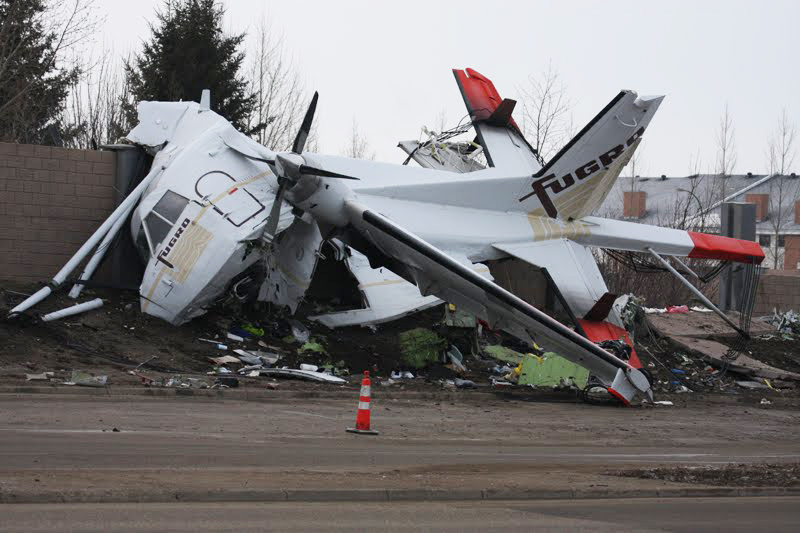
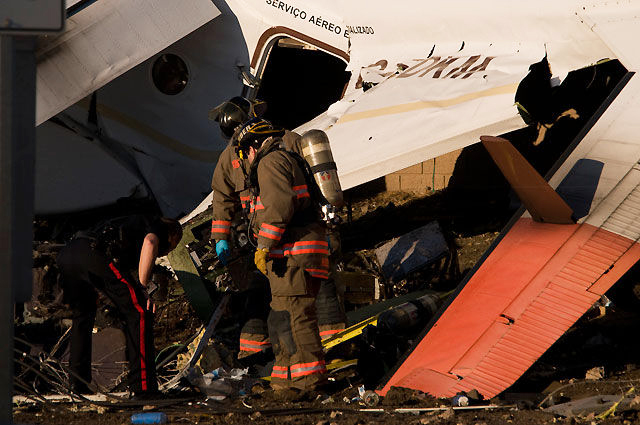
Crash of a Casa 212 Aviocar in Saskatoon: 1 killed

Date & Time: Apr 1, 2011 at 1830 LT
Type of aircraft:
Operator:
Registration:
C-FDKM
Survivors:
Yes
Site:
Schedule:
Saskatoon - Saskatoon
MSN:
196
YOM:
1981
Country:
Crew on board:
3
Crew fatalities:
Pax on board:
0
Pax fatalities:
Other fatalities:
Total fatalities:
1
Captain / Total flying hours:
7400
Captain / Total hours on type:
75.00
Copilot / Total flying hours:
7800
Copilot / Total hours on type:
1800
Aircraft flight hours:
21292
Circumstances:
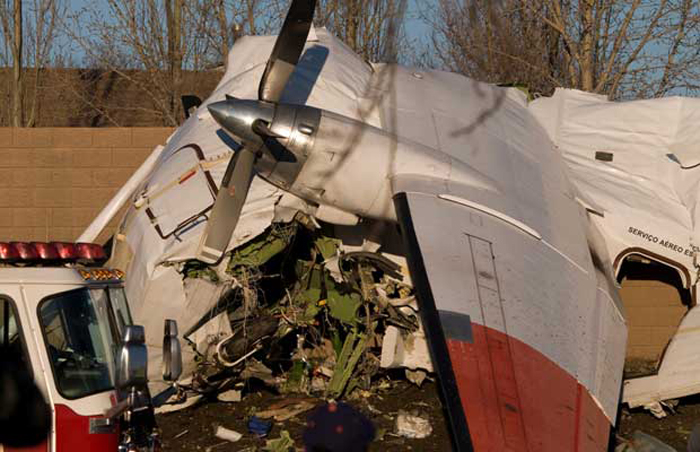
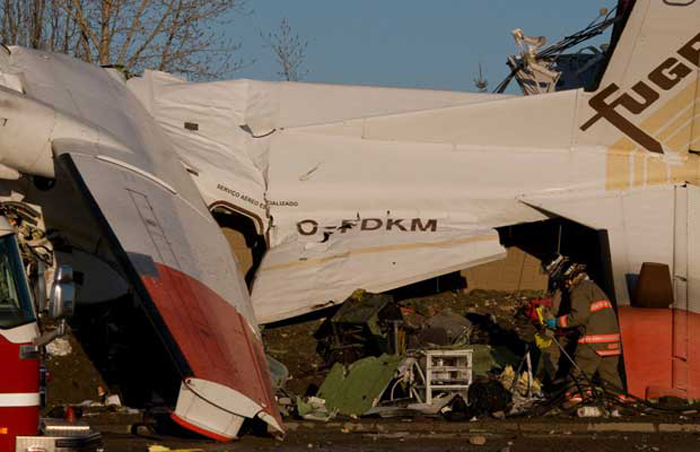
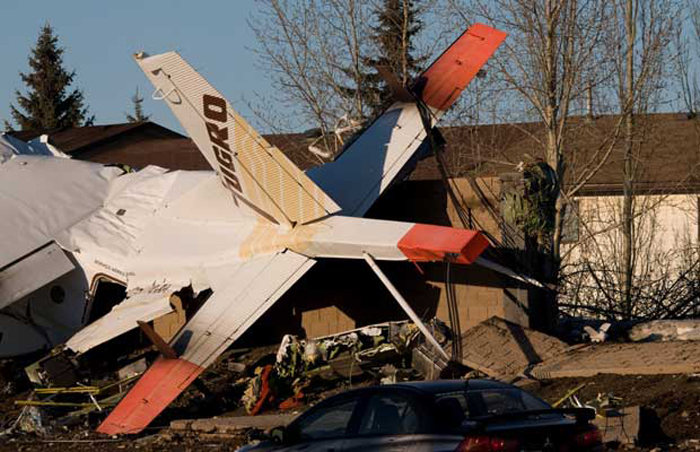
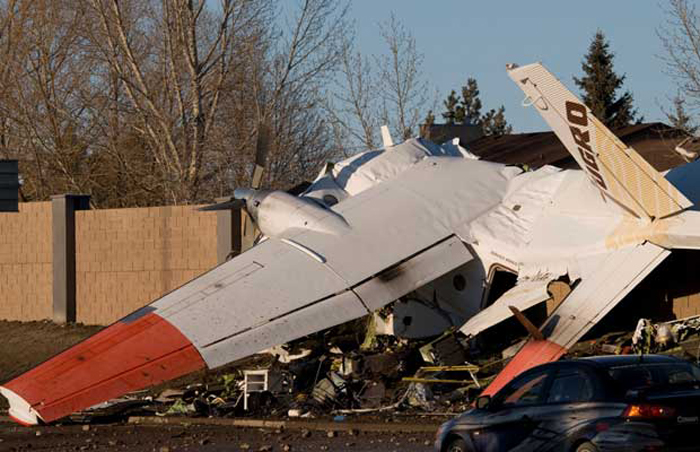
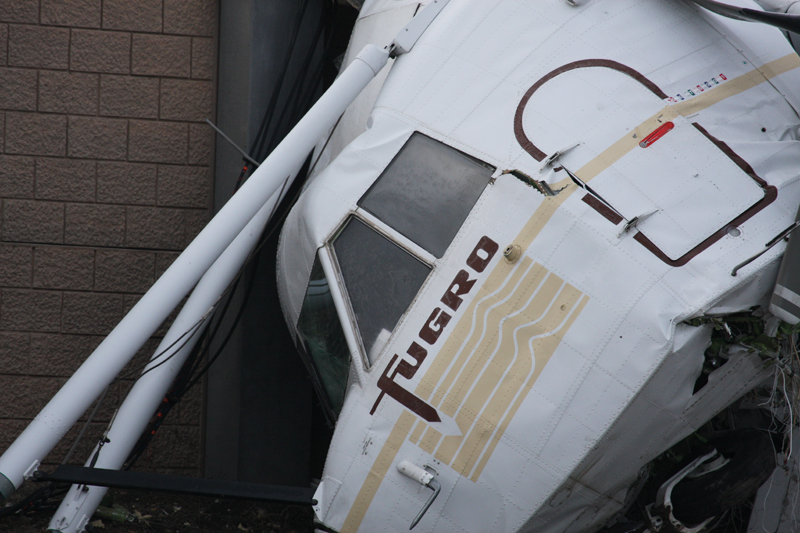
At 1503 Central Standard Time, the Construcciones Aeronauticas SA (CASA) C-212-CC40 (registration C-FDKM, serial number 196) operated by Fugro Aviation Canada Ltd., departed from Saskatoon/Diefenbaker International Airport, Saskatchewan, under visual flight rules for a geophysical survey flight to the east of Saskatoon. On board were 2 pilots and a survey equipment operator. At about 1814, the right engine lost power. The crew shut it down, carried out checklist procedures, and commenced an approach for Runway 27. When the flight was 3.5 nautical miles from the runway on final approach, the left engine lost power. The crew carried out a forced landing adjacent to Wanuskewin Road in Saskatoon. The aircraft impacted a concrete roadway noise abatement wall and was destroyed. The survey equipment operator sustained fatal injuries, the first officer sustained serious injuries, and the captain sustained minor injuries. No ELT signal was received.
Probable cause:
Conclusions
Findings as to Causes and Contributing Factors:
1. The right engine lost power when the intermediate spur gear on the torque sensor shaft failed. This resulted in loss of drive to the high-pressure engine-driven pump, fuel starvation, and immediate engine stoppage.
2. The ability of the left-hand No. 2 ejector pump to deliver fuel to the collector tank was compromised by foreign object debris (FOD) in the ejector pump nozzle.
3. When the fuel level in the left collector tank decreased, the left fuel level warning light likely illuminated but was not noticed by the crew.
4. The pilots did not execute the fuel level warning checklist because they did not perceive the illumination of the fuel level left tank warning light. Consequently, the fuel crossfeed valve remained closed and fuel from only the left wing was being supplied to the left engine.
5. The left engine flamed out as a result of depletion of the collector tank and fuel starvation, and the crew had to make a forced landing resulting in an impact with a concrete noise abatement wall.
Findings as to Risk:
1. Depending on the combination of fuel level and bank angle in single-engine uncoordinated flight, the ejector pump system may not have the delivery capacity, when the No. 1 ejector inlet is exposed, to prevent eventual depletion of the collector tank when the engine is operated at full power. Depletion of the collector tank will result in engine power loss.
2. The master caution annunciator does not flash; this leads to a risk that the the crew may not notice the illumination of an annunciator panel segment, in turn increasing the risk of them not taking action to correct the condition which activated the master caution.
3. When cockpit voice and flight data recordings are not available to an investigation, this may preclude the identification and communication of safety deficiencies to advance transportation safety.
4. Because the inlets of the ejector pumps are unscreened, there is a risk that FOD in the fuel tank may become lodged in an ejector nozzle and result in a decrease in the fuel delivery rate to the collector tank.
Other Findings:
1. The crew’s decision not to recover or jettison the birds immediately resulted in operation for an extended period with minimal climb performance.
2. The composition and origin of the FOD, as well as how or when it had been introduced into the fuel tank, could not be determined.
3. The SkyTrac system provided timely position information that would have assisted search and rescue personnel if position data had been required.
4. Saskatoon police, firefighters, and paramedics responded rapidly to the accident and provided effective assistance to the survivors.
Final Report:

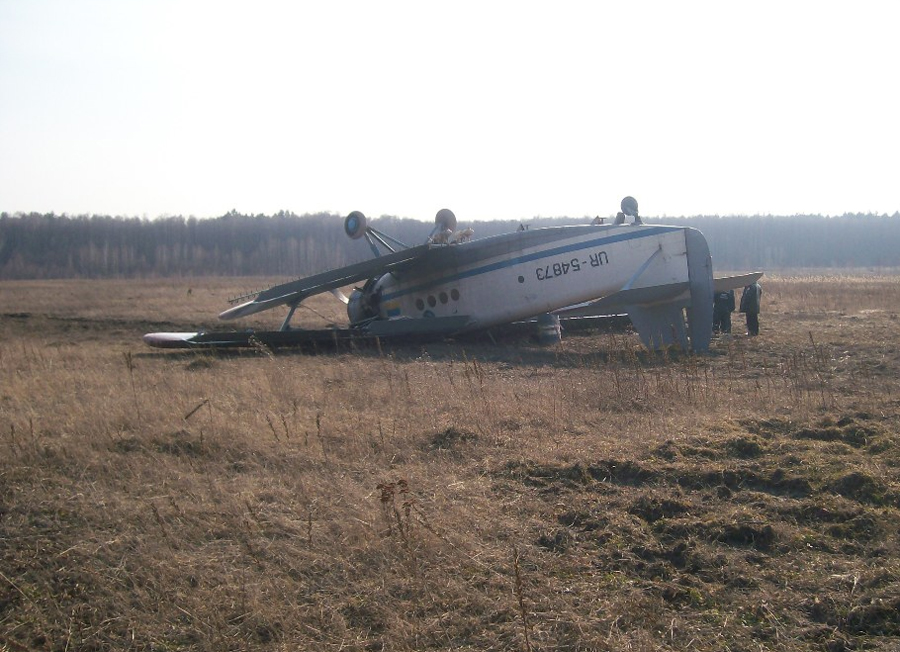
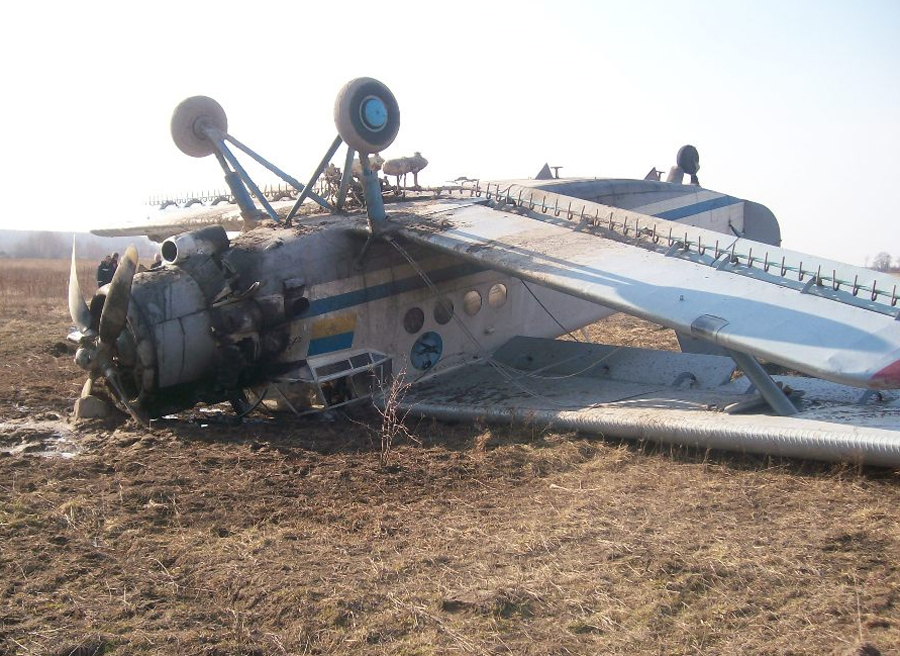
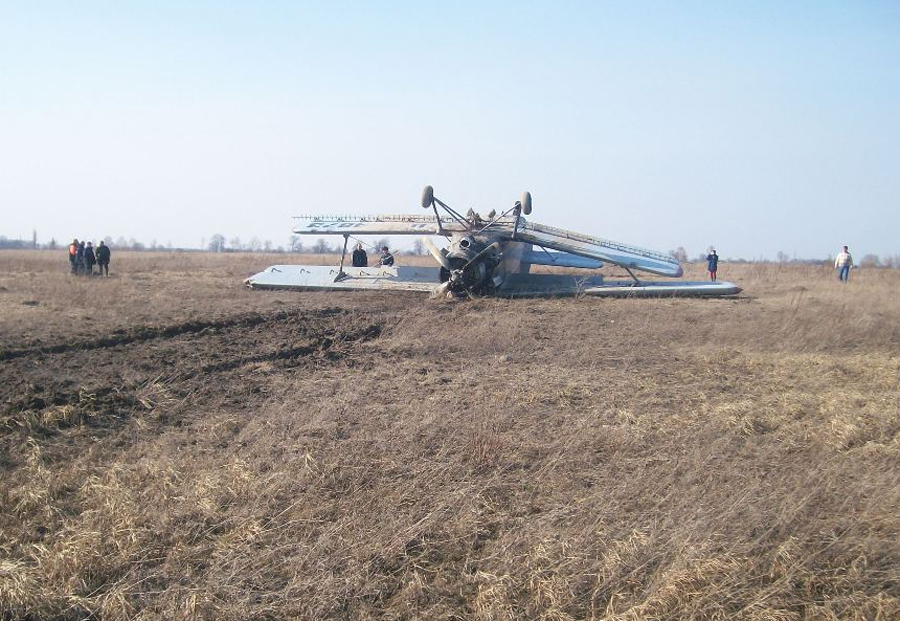
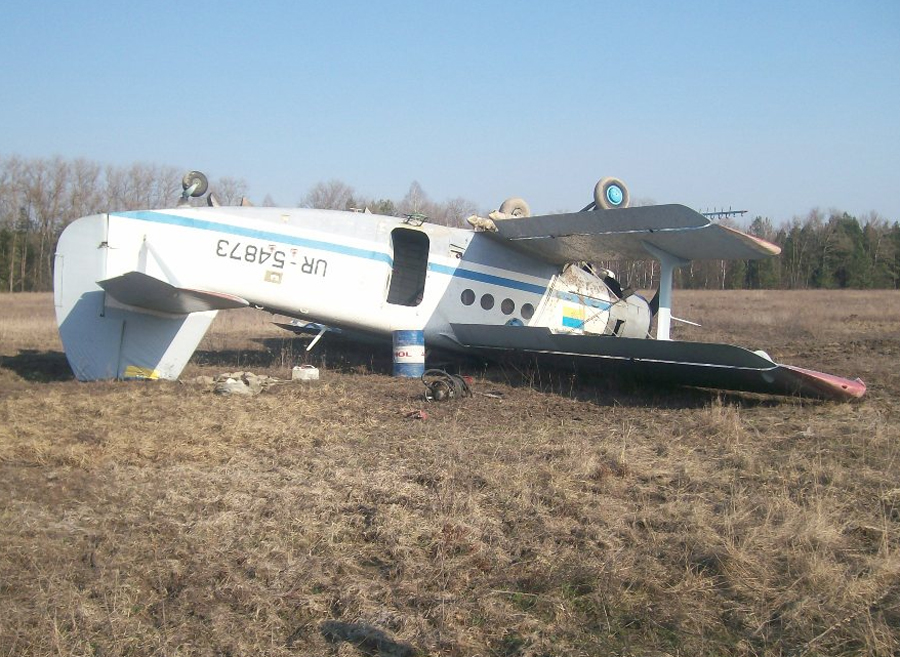
Crash of a PZL-Mielec AN-2R in Dibrova

Date & Time: Mar 30, 2011 at 1418 LT
Type of aircraft:
Operator:
Registration:
UR-54873
Flight Phase:
Survivors:
Yes
MSN:
1G185-33
YOM:
1979
Country:
Region:
Crew on board:
2
Crew fatalities:
Pax on board:
0
Pax fatalities:
Other fatalities:
Total fatalities:
0
Circumstances:
The crew was performing a crop spraying flight in Dibrova, some 60 km northwest from Zhytomyr. In flight, the engine caught fire and crew elected to make an emergency landing in an open field. Upon touchdown, the aircraft rolled for few metres then overturned and came to rest upside down. Both pilots escaped with minor injuries and the aircraft was damaged beyond repair.
Probable cause:
Emergency landing after the engine caught fire in flight for unknown reasons.

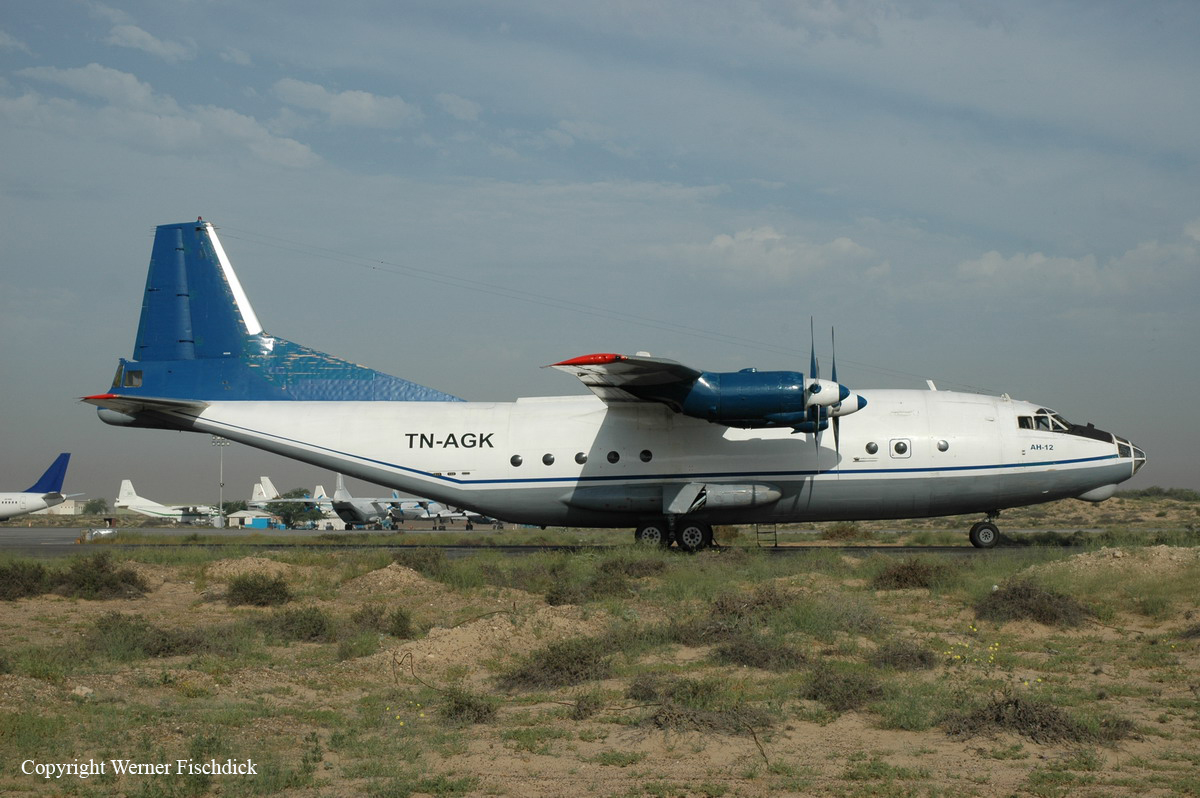
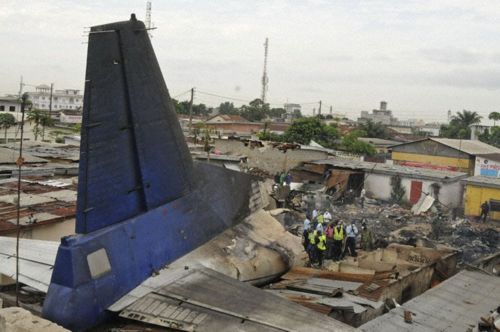
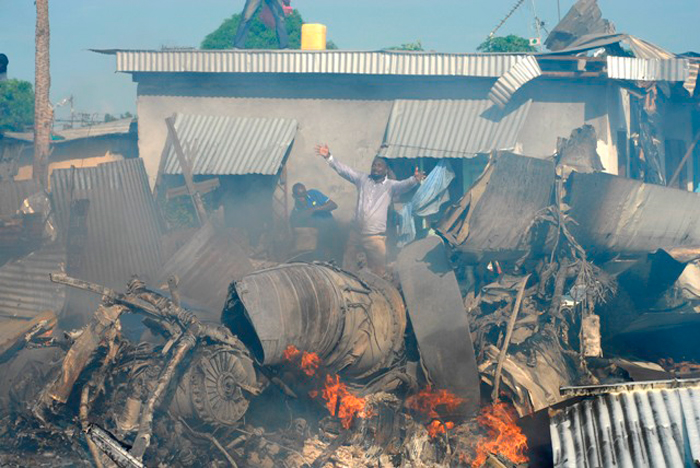
Crash of an Antonov AN-12BP in Pointe-Noire: 23 killed

Date & Time: Mar 21, 2011 at 1530 LT
Type of aircraft:
Operator:
Registration:
TN-AGK
Flight Type:
Survivors:
No
Site:
Schedule:
Brazzaville - Pointe-Noire
MSN:
40 20 06
YOM:
1963
Country:
Region:
Crew on board:
4
Crew fatalities:
Pax on board:
5
Pax fatalities:
Other fatalities:
Total fatalities:
23
Circumstances:
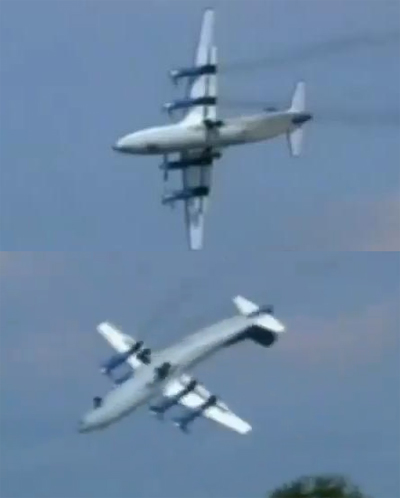
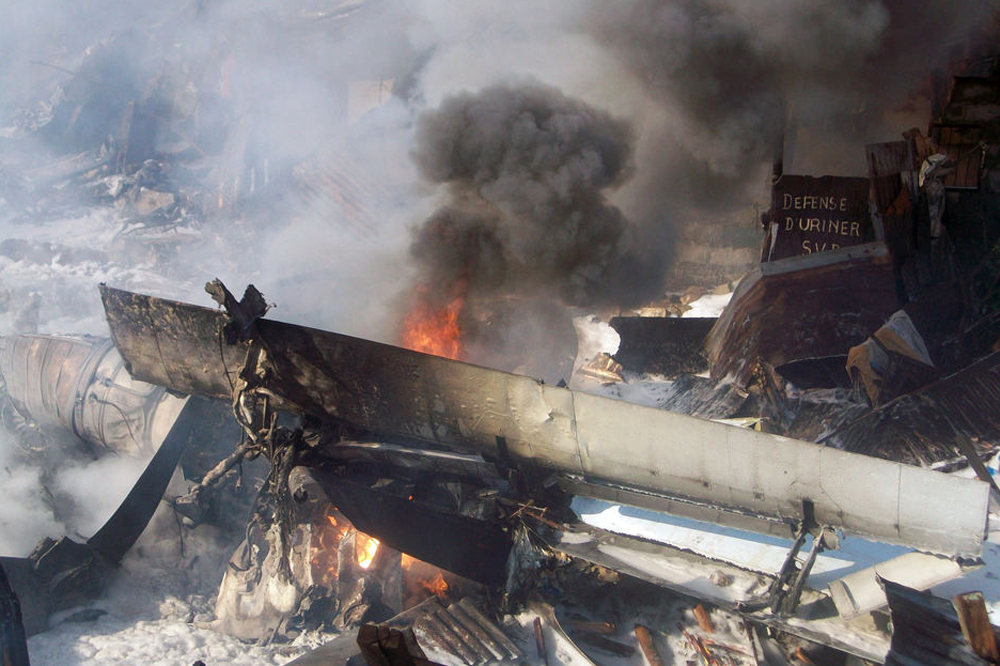
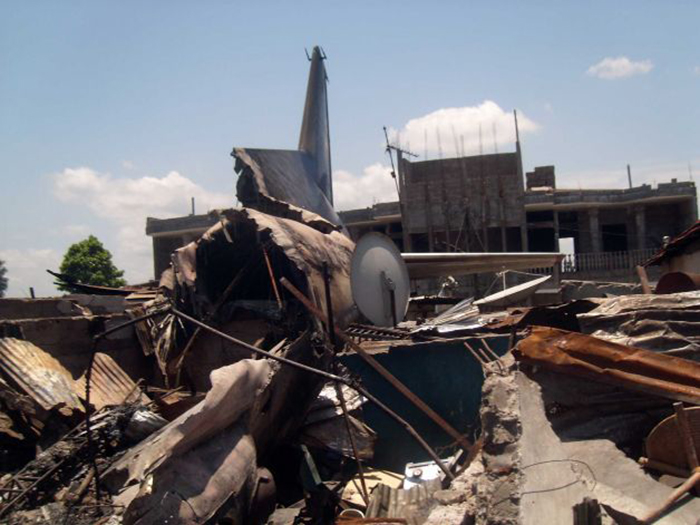
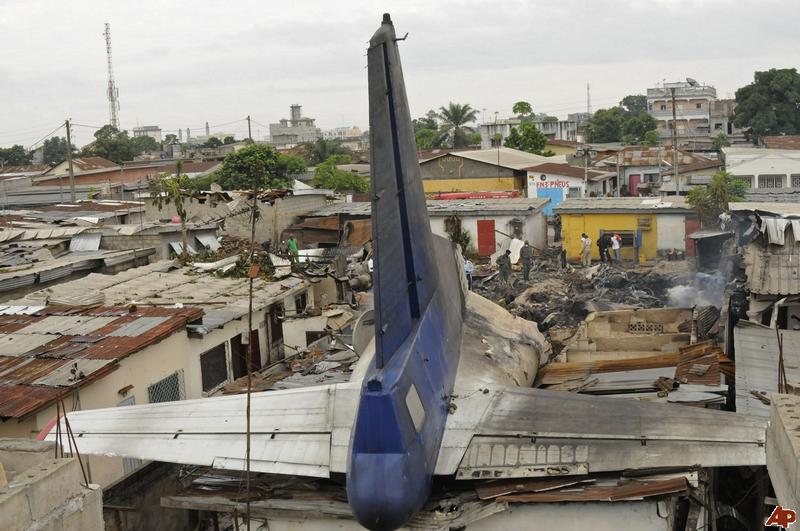
The four engine airplane departed Brazzaville-Maya Maya Airport on a cargo service to Pointe-Noire, carrying five passengers, four crew members and a load of 750 kilos of meat. On final approach to Pointe-Noire Airport runway 17, the aircraft rolled to the right, got inverted and crashed in the residential area of Mvoumvou located 4 kilometers short of runway. The aircraft was totally destroyed as well as several houses. All nine occupants and 14 people on the ground were killed.
Probable cause:
It is believed that the loss of control on final approach was the consequence of the failure of both right engines n°3 and 4.

Crash of a Cessna 411 in Carrasqueño: 3 killed

Date & Time: Mar 4, 2011
Type of aircraft:
Operator:
Registration:
XB-LWA
Flight Phase:
Flight Type:
Survivors:
Yes
Schedule:
Guadalajara – Mexico City
MSN:
411-0275
YOM:
1967
Country:
Crew on board:
2
Crew fatalities:
Pax on board:
4
Pax fatalities:
Other fatalities:
Total fatalities:
3
Circumstances:
Few minutes after takeoff from Guadalajara-Miguel Hidalgo y Costilla Airport, the crew informed ATC about technical problems and elected to make an emergency landing. While approaching a pasture, the twin engine airplane collided with a powerline and crashed, bursting into flames. Both pilots and two cows in the field were killed, and all four passengers were seriously injured (burns). Three days later, one of the survivor died from his injuries.

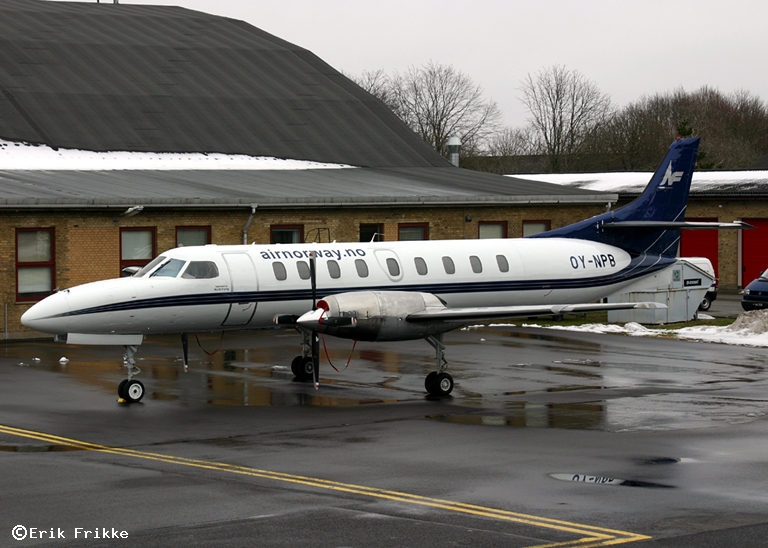
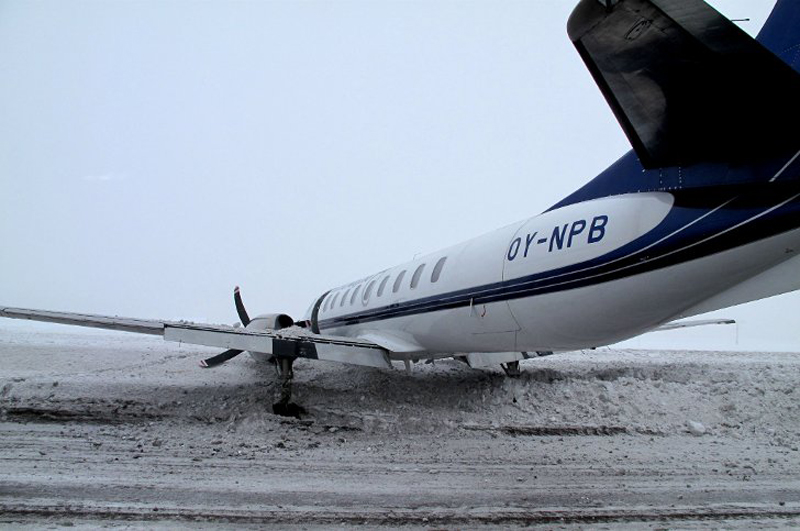
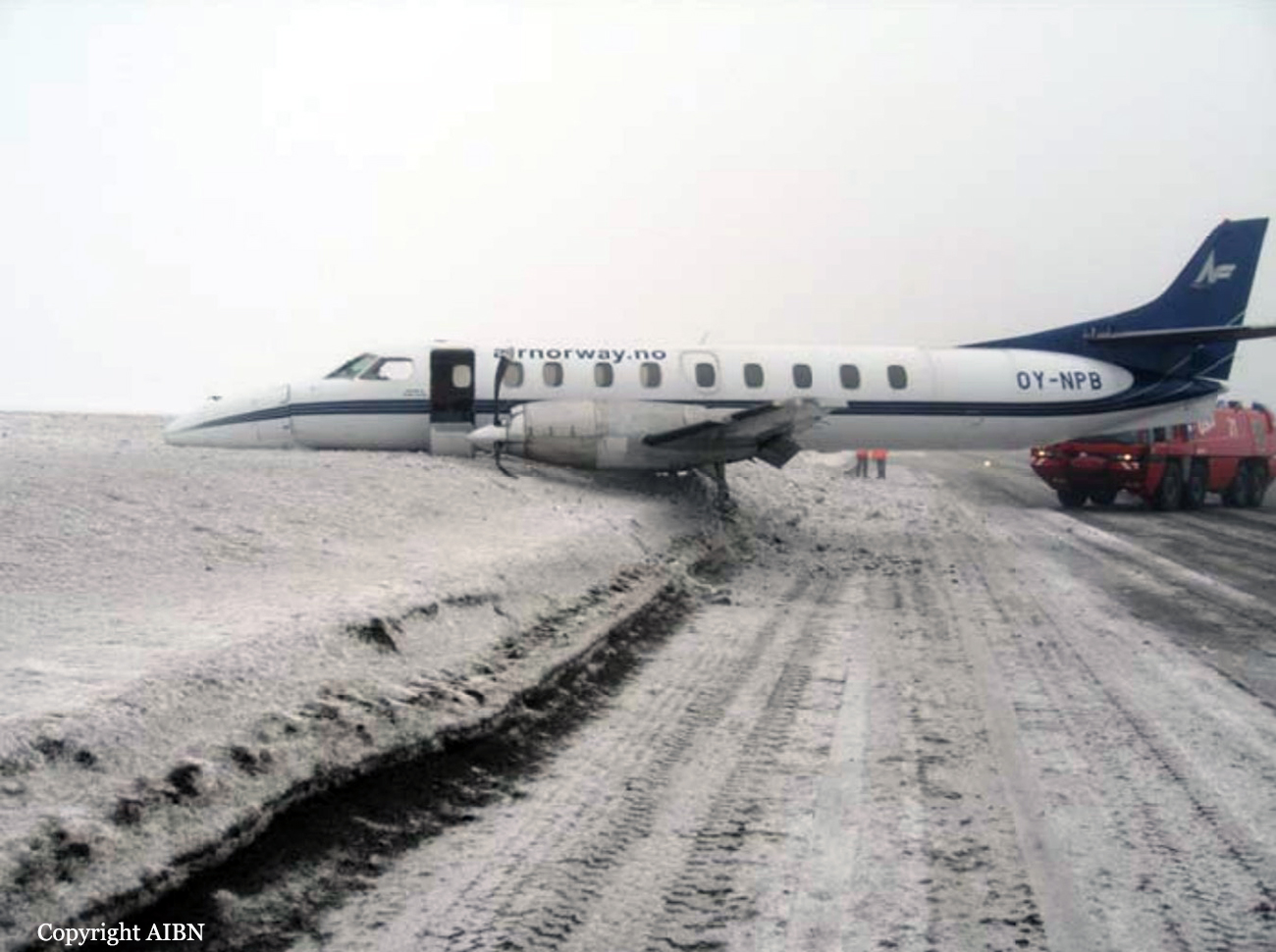
Crash of a Swearingen SA227AC Metro III in Oslo

Date & Time: Mar 2, 2011 at 0905 LT
Type of aircraft:
Operator:
Registration:
OY-NPB
Survivors:
Yes
Schedule:
Ørland - Oslo
MSN:
AC-420
YOM:
1981
Flight number:
NFA990
Country:
Region:
Crew on board:
2
Crew fatalities:
Pax on board:
9
Pax fatalities:
Other fatalities:
Total fatalities:
0
Captain / Total flying hours:
5187
Captain / Total hours on type:
2537.00
Copilot / Total flying hours:
2398
Copilot / Total hours on type:
1278
Aircraft flight hours:
24833
Aircraft flight cycles:
29491
Circumstances:
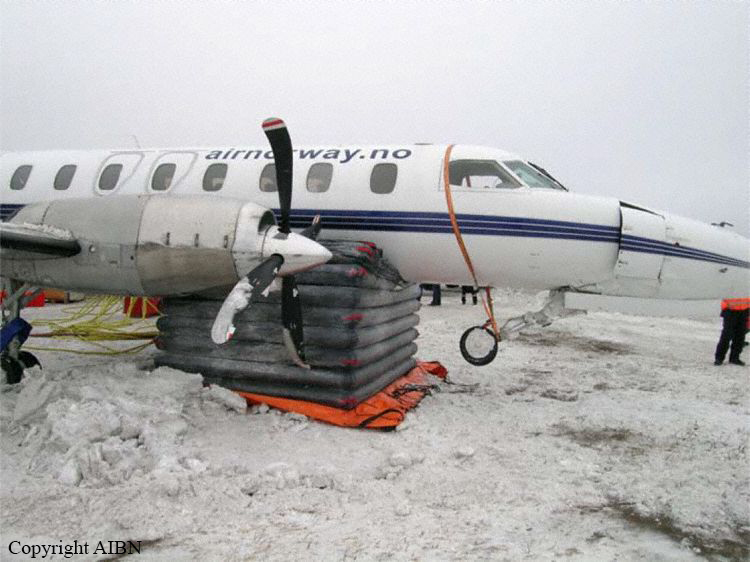
After touchdown on runway 19R at Oslo-Gardermoen Airport, while decelerating to a speed of 60 knots, the aircraft deviated to the right. At a speed of 40 knots, it impacted a snow berm then rotated to the right and came to rest in deep snow with its both propellers and the nose damaged. All 11 occupants evacuated safely while the aircraft was considered as damaged beyond repair.
Probable cause:
Comprehensive technical examination of the nose wheel steering on OY-NPB uncovered no single causal factor, but some indications of unsatisfactory maintenance. Irregularities that alone or in combination could have caused a temporary fault with the steering were present. The Accident Investigation Board believes that a temporary fault caused the nose wheel to unintentionally lock itself in a position towards the right. No other defects or irregularities that could explain why the aircraft veered off the runway were found. The AIBN reported that the same fault had occurred 6 days earlier as well, during that encounter the captain managed to disconnect nose wheel steering quickly enough to regain control. Maintenance could not replace the fault and the aircraft was released to service.
Final Report:

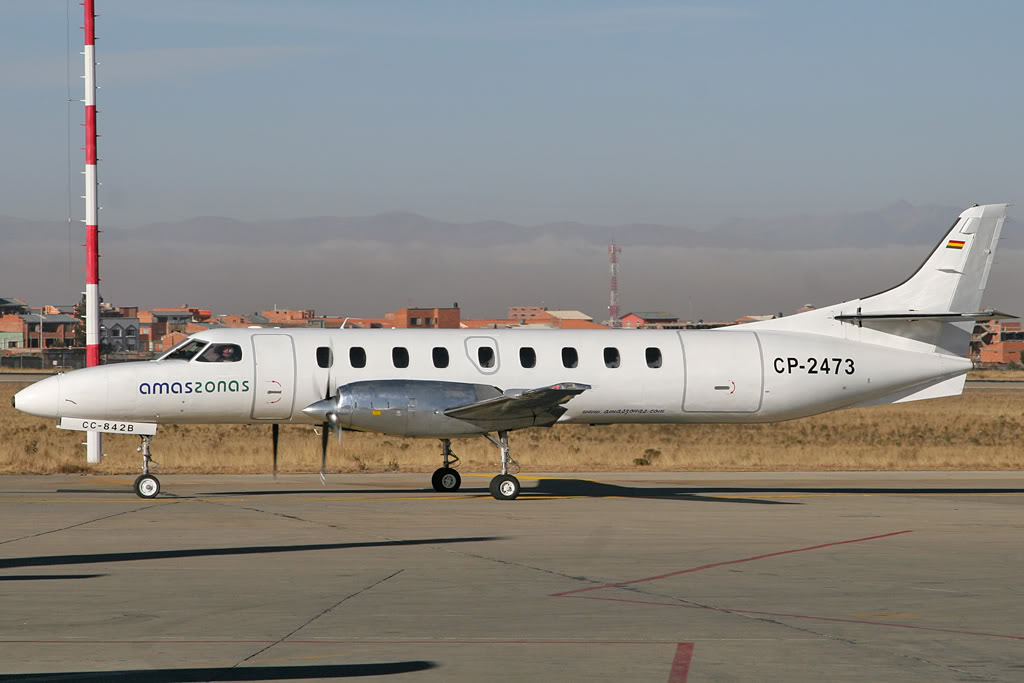
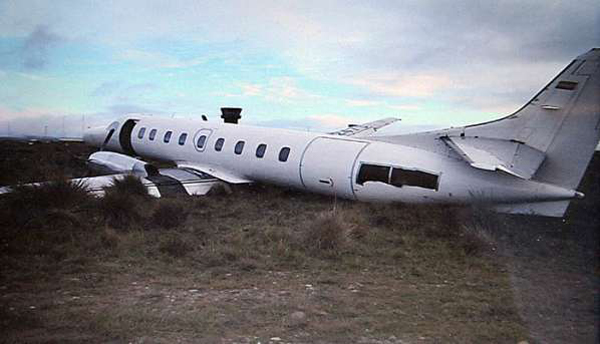
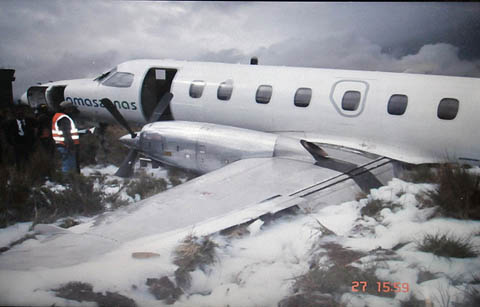
Crash of a Swearingen SA227DC Metro III in La Paz

Date & Time: Feb 27, 2011 at 1510 LT
Type of aircraft:
Operator:
Registration:
CP-2473
Survivors:
Yes
Schedule:
San Borja - Rurrenabaque
MSN:
DC-842B
YOM:
1993
Country:
Crew on board:
2
Crew fatalities:
Pax on board:
6
Pax fatalities:
Other fatalities:
Total fatalities:
0
Circumstances:
On approach to Rurrenabaque, following an uneventful flight from San Borja, the crew encountered problems with the landing gear which failed to lock down. As all three green lights were not ON on the cockpit panel, the Captain decided to divert to La Paz-El Alto Airport where rescue teams were alerted. After touchdown, the left main gear collapsed. The aircraft veered off runway to the left before coming to rest in a grassy area. All eight occupants escaped uninjured and the aircraft was damaged beyond repair.

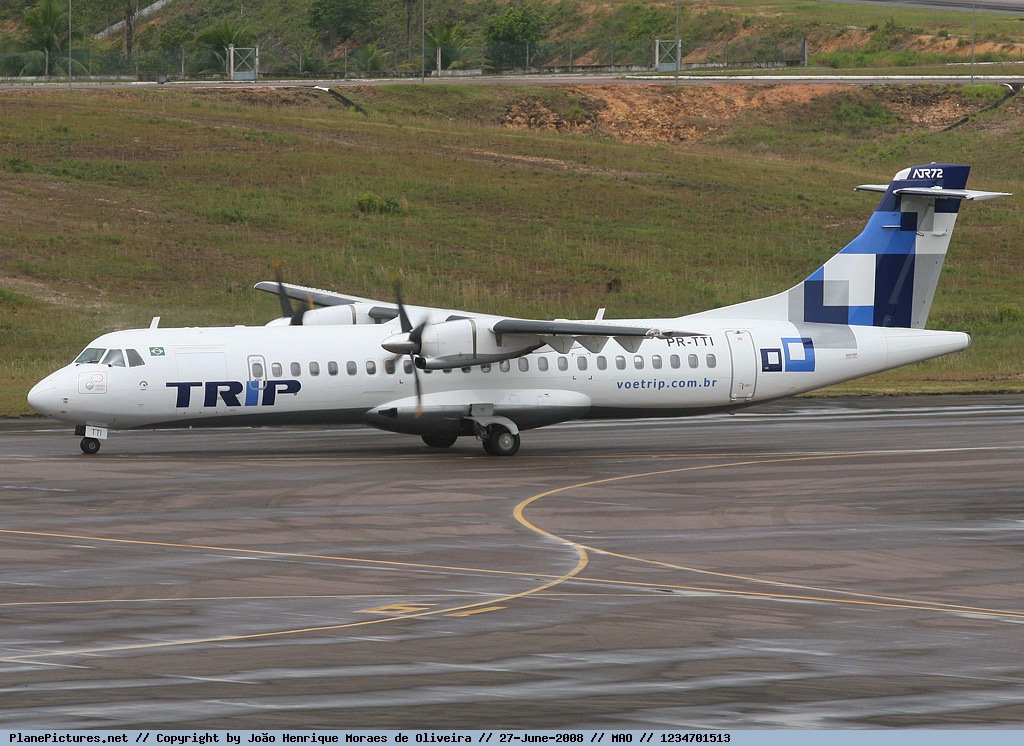
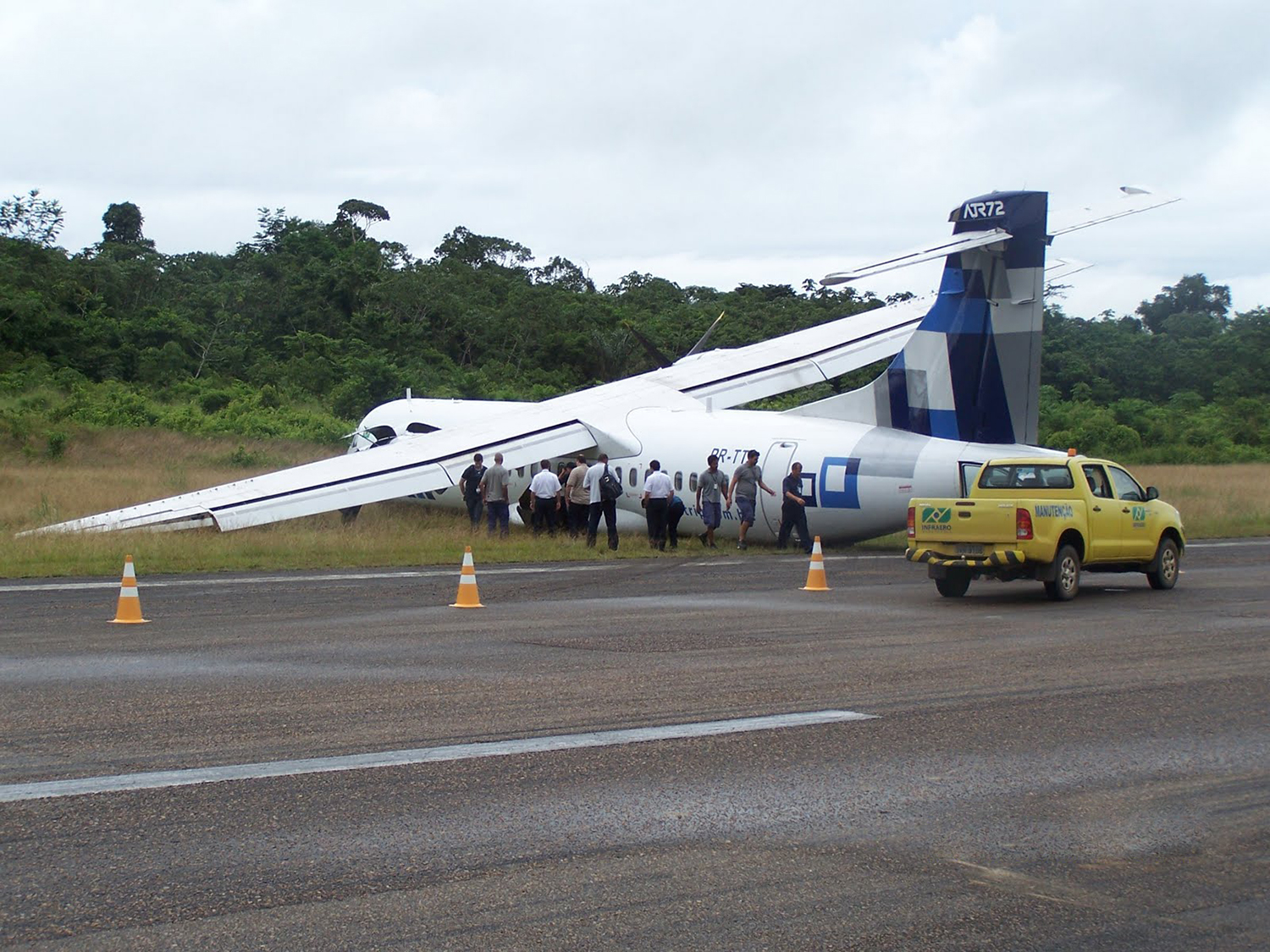
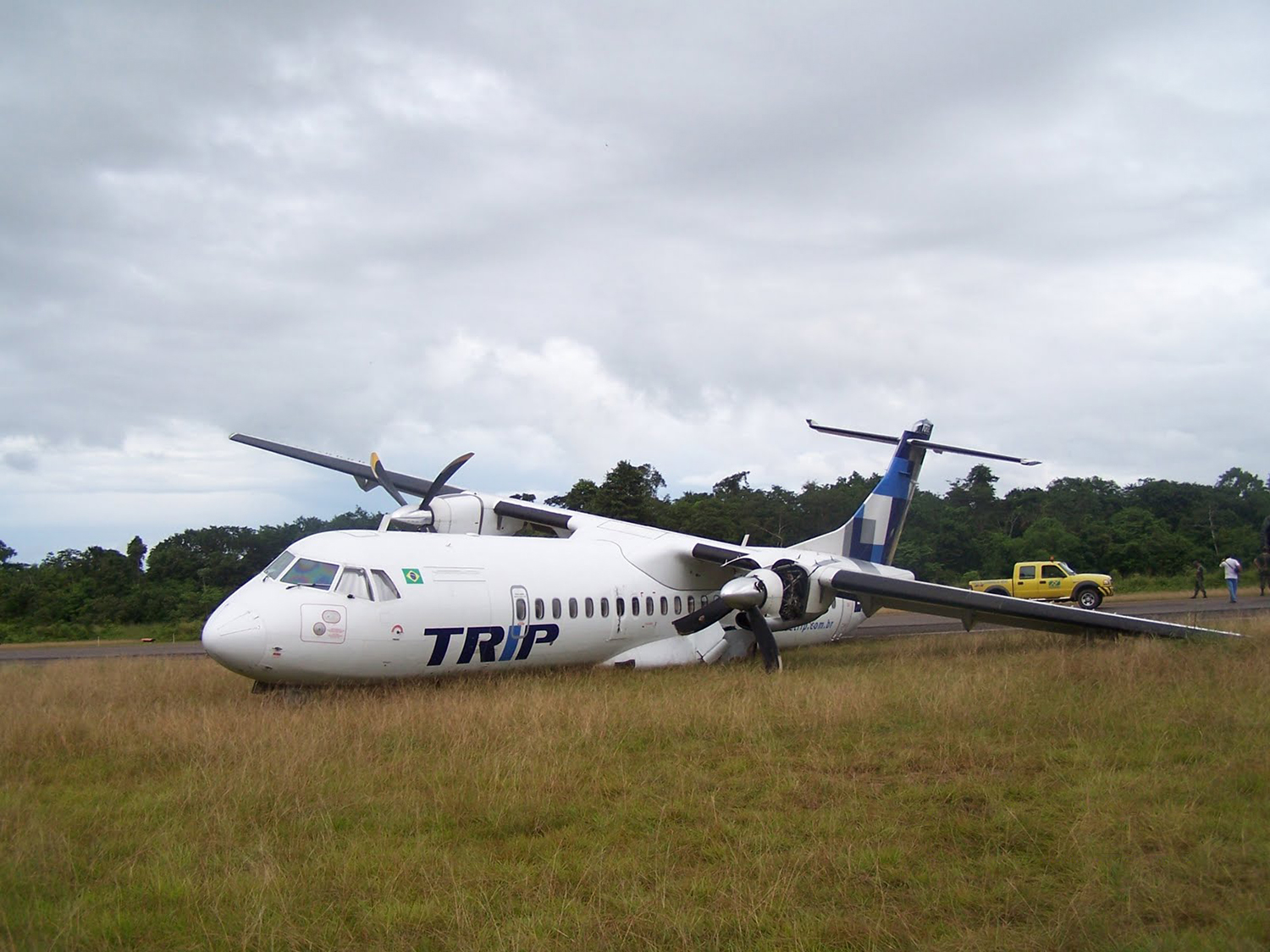
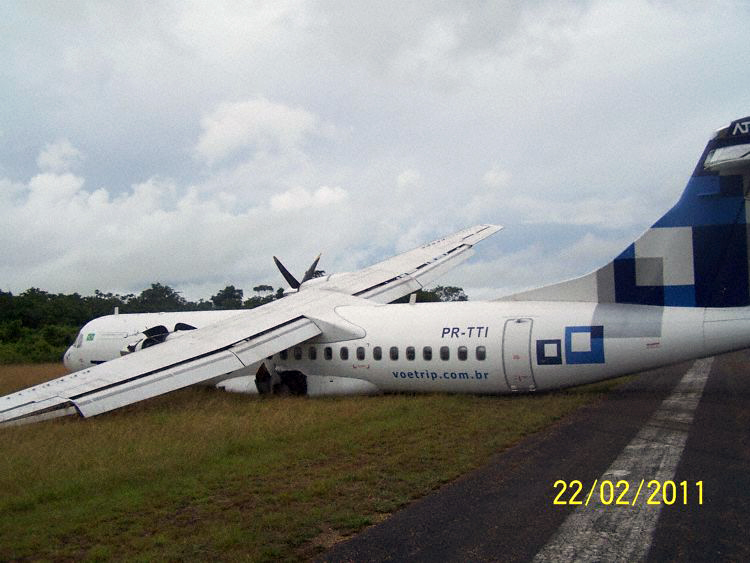
Crash of an ATR72-212 in Altamira

Date & Time: Feb 21, 2011 at 1845 LT
Type of aircraft:
Operator:
Registration:
PR-TTI
Survivors:
Yes
Schedule:
Belém - Altamira
MSN:
454
YOM:
1995
Flight number:
TIB5204
Location:
Country:
Crew on board:
4
Crew fatalities:
Pax on board:
47
Pax fatalities:
Other fatalities:
Total fatalities:
0
Captain / Total flying hours:
6000
Captain / Total hours on type:
2600.00
Copilot / Total flying hours:
1210
Copilot / Total hours on type:
50
Aircraft flight hours:
32886
Circumstances:
The aircraft departed Belém-Val de Cans Airport on a schedule service to Altamira with 47 passengers and 4 crew members on board. The approach for landing in Altamira was completed in VFR mode and the aircraft was stabilized. The touchdown on the runway was smooth, with gradual deceleration, in which only the 'ground idle' was used. After the '70 knots' callout, a strong noise was heard, and the left main gear collapsed with the aircraft deviating to the left. The aircraft veered off runway and came to rest in a grassy area. Among the 51 occupants, one passenger suffered minor injuries.
Probable cause:
The following findings were identified:
- The LEFT MAIN LANDING GEAR ASSEMBLY (PN D23189000-19 and SN MN1700) collapsed, failing with 5,130 cycles after the last overhaul.
- A specific component (pin) of the assembly connecting the landing gear to the airframe, the AFT PIVOT PIN (P / N D61000, S / N 25), broke on account of fatigue, whose onset was facilitated by a machining process carried out in the pin section transition region.
- The ANAC-approved ATR72 Series Aircraft Maintenance Program of the TRIP Linhas Aéreas company read that the LEFT MAIN LANDING GEAR ASSEMBLY had to undergo overhaul every eight years or 18,000 cycles.
- On 27 February 2009, the PR-TTI landing gear was removed and, on 09 March 2009, was sent to be overhauled by the AV Indústria Aeronáutica Ltda. It had 31,684 cycles since new and 18,095 cycles since the last overhaul.
- AV Indústria Aeronáutica Ltda. was homologated for conducting such inspection, as specified in the List attached to the Addendum, Revision no. 11, dated 05 January 2009, and accepted by means of the Official Document no. 0173/2009-GGAC/SAR, issued by the Civil Aviation Authority.
- The AV Indústria Aeronáutica Ltda. company disassembled the legs of the landing gear, and outsourced some of the tasks for not possessing technical knowledge and/or appropriate machinery (necessary for the process of reconditioning the AFT PIVOT PIN (D61000 SN 25).
- Two of the three companies outsourced by AV Indústria Aeronáutica Ltda. were not homologated by the Civil Aviation Authority.
- The AV Indústria Aeronáutica Ltda. company conducted external audits of the three companies involved in the overhaul.
- The audits carried out by AV Indústria Aeronáutica Ltda. were not sufficient to identify that the contractors lacked qualified personnel, manuals and the machinery necessary to work with aeronautical products.
- The AV Indústria Aeronáutica Ltda. Technical Manager did not supervise the overhaul inspections and services performed by the contracted companies.
- The AFT PIVOT PIN (D61000 SN 25) is part of the assembly that connects the landing gear to the airframe.
- All revision tasks were described in the manuals of the manufacturer.
- The AFT PIVOT PIN (D61000 SN 25) failure-analysis report stated that the PRTTI aircraft left main landing gear collapsed on account of fatigue, whose onset was facilitated by a machining process carried out in the section transition region of the pin.
- The manufacturer's maintenance manual did not refer to any machining work in that region of the pin.
- In only one stage of the pin reconditioning process was it possible to observe that a machining task was required, namely, the Grinding of chromium.
- The lack of capacitation and training of the subcontractors’ professionals for handling aircraft material hindered the execution of an efficient maintenance work as prescribed by the manufacturer's manual, culminating in inadequate machining during the maintenance process.
- The lack of an effective process of supervision, both on the part of TRIP Linhas Aéreas and on the part of the other contractors and subcontractors allowed the existing maintenance services’ latent failures not to be checked and corrected, in a way capable of subsidizing, in an adequate and safe manner, the execution of the landing gear maintenance service.
- The process of supervision of the TRIP Linhas Aéreas and the AV Indústria Aeronáutica Ltda. companies by the Civil Aviation Authority, prescribed by specific legislation in force, was not enough to mitigate the latent conditions present in the accident in question.
- According to the technical opinion issued by the DCTA, the AFT PIVOT PIN (D61000 and SN 25) presented fracture surfaces with ± 45º inclination, as well as a flat area with multiple initiations, indicative of a fracture mechanism related to fatigue. In examinations of the external surface of the pin, in a region close to the fatigue fracture, cracks were observed that had initiated from scratches created by an inadequate maintenance machining process. In the region where the overload-related fracture occurred, it was also possible to identify that the machining process had modified the profile of the part in the section transition region, by producing a depression. Thus, it can be said that the AFT PIVOT PIN (D61000 and SN 25) of the PR-TTI left main gear broke on account of fatigue, whose onset was facilitated by an inadequate machining process that had been performed in the section transition region of the pin.
Final Report:

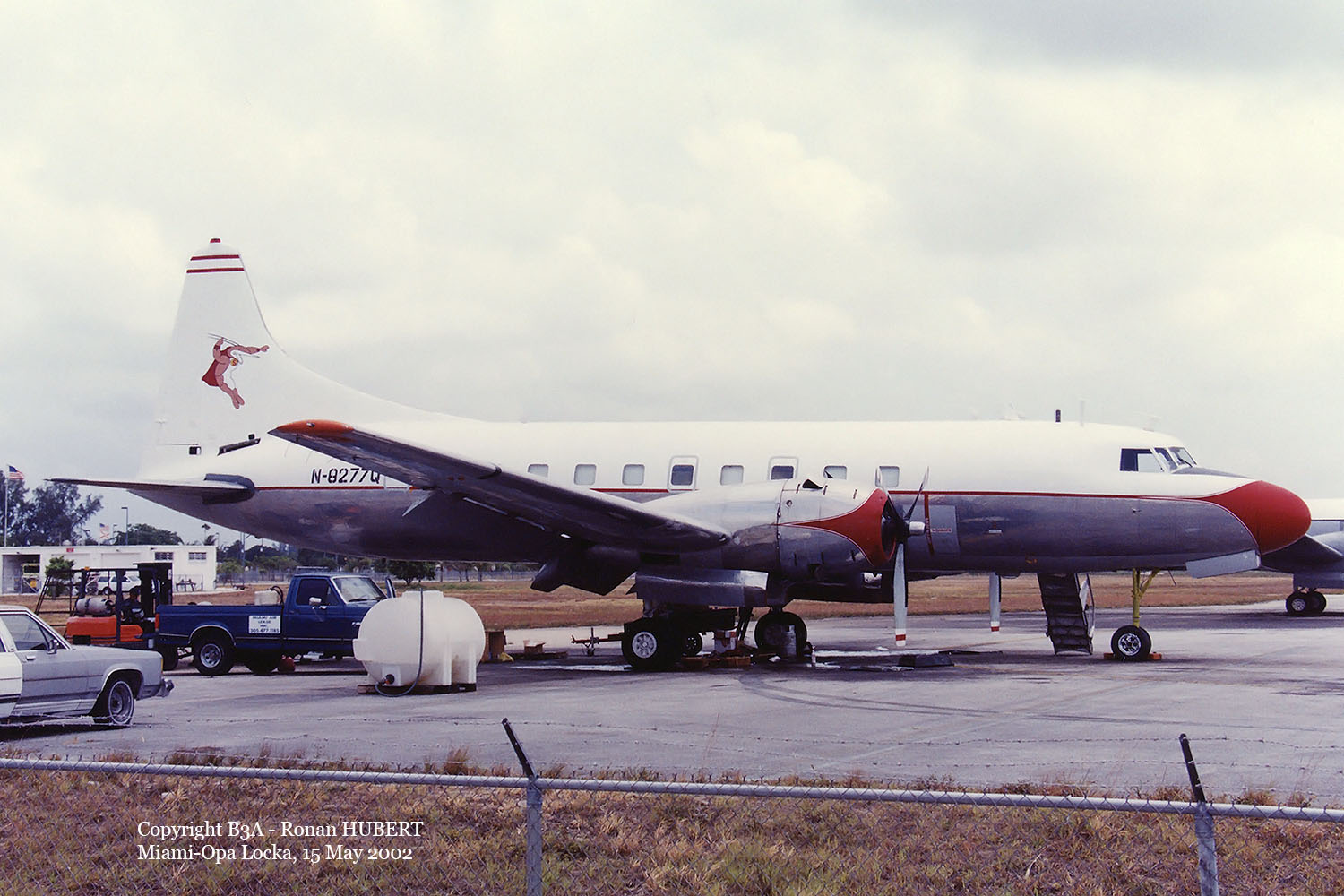
Crash of a Convair CV-340-71 in Charlotte Amalie

Date & Time: Jan 17, 2011 at 0756 LT
Type of aircraft:
Operator:
Registration:
N8277Q
Flight Type:
Survivors:
Yes
Schedule:
Charlotte Amalie - San Juan
MSN:
282
YOM:
1955
Crew on board:
2
Crew fatalities:
Pax on board:
0
Pax fatalities:
Other fatalities:
Total fatalities:
0
Captain / Total flying hours:
15130
Captain / Total hours on type:
6810.00
Copilot / Total flying hours:
9828
Copilot / Total hours on type:
237
Aircraft flight hours:
17279
Circumstances:
Before departing on the flight that preceded the accident flight, the flight crew performed an engine-run, including a magneto check, during which they noted backfiring from the left engine. The captain first attributed the issue to water contamination of the fuel but then attributed it to fouled spark plugs. An additional engine run resulted in no further backfiring, and the captain decided to depart on the cargo flight; no maintenance was requested or performed on the left engine before departure. When the airplane was near the destination airport, the left engine backfired once again. The flight continued to the destination airport where the airplane landed uneventfully and the cargo was off loaded; again, no maintenance was performed or requested for the left engine. For the accident flight, the first officer was the pilot flying and the captain was the pilot monitoring. During the takeoff, the local controller noted black smoke trailing the left engine and advised the flight crew; however, the captain attributed the smoke to normal operation for the airplane type and decided to continue the flight. Meanwhile, air traffic control communications for the flight were transferred to San Juan Combined En Route Approach Control (San Juan CERAP). The local controller who noted the black smoke continued to watch the airplane’s departure. When the airplane was about 1 mile west of the runway, the controller observed bright orange then red flames from behind the left engine and immediately informed the San Juan CERAP controller, who in turn immediately notified the flight crew. The captain assumed control of the airplane and directed the first officer to go to the cabin to visually inspect the left engine. The first officer returned to the cockpit and informed the captain that he observed fire, and they immediately executed the fire checklist and shut down the left engine. However, the fire continued because it was located in an area where fire suppression bottles could not reach. The pilots returned to the airport; fire rescue vehicles were pre-positioned along various portions of the runway. The airplane touched down on the runway centerline. Because the fire had damaged the left brake line, braking was asymmetrical, and the airplane departed the right side of the runway and came to rest adjacent to the airport perimeter fence.

Probable cause:
The National Transportation Safety Board determines the probable cause(s) of this accident to be:
The captain’s decision to continue the flight with the left engine backfiring, resulting in an engine fire shortly after takeoff. Contributing to the accident were the captain’s decision to continue the flight following a report of black smoke trailing the airplane and in-flight fire damage to the left wheel brake system, resulting in a loss of directional control during an emergency landing.
Final Report: