code

AR

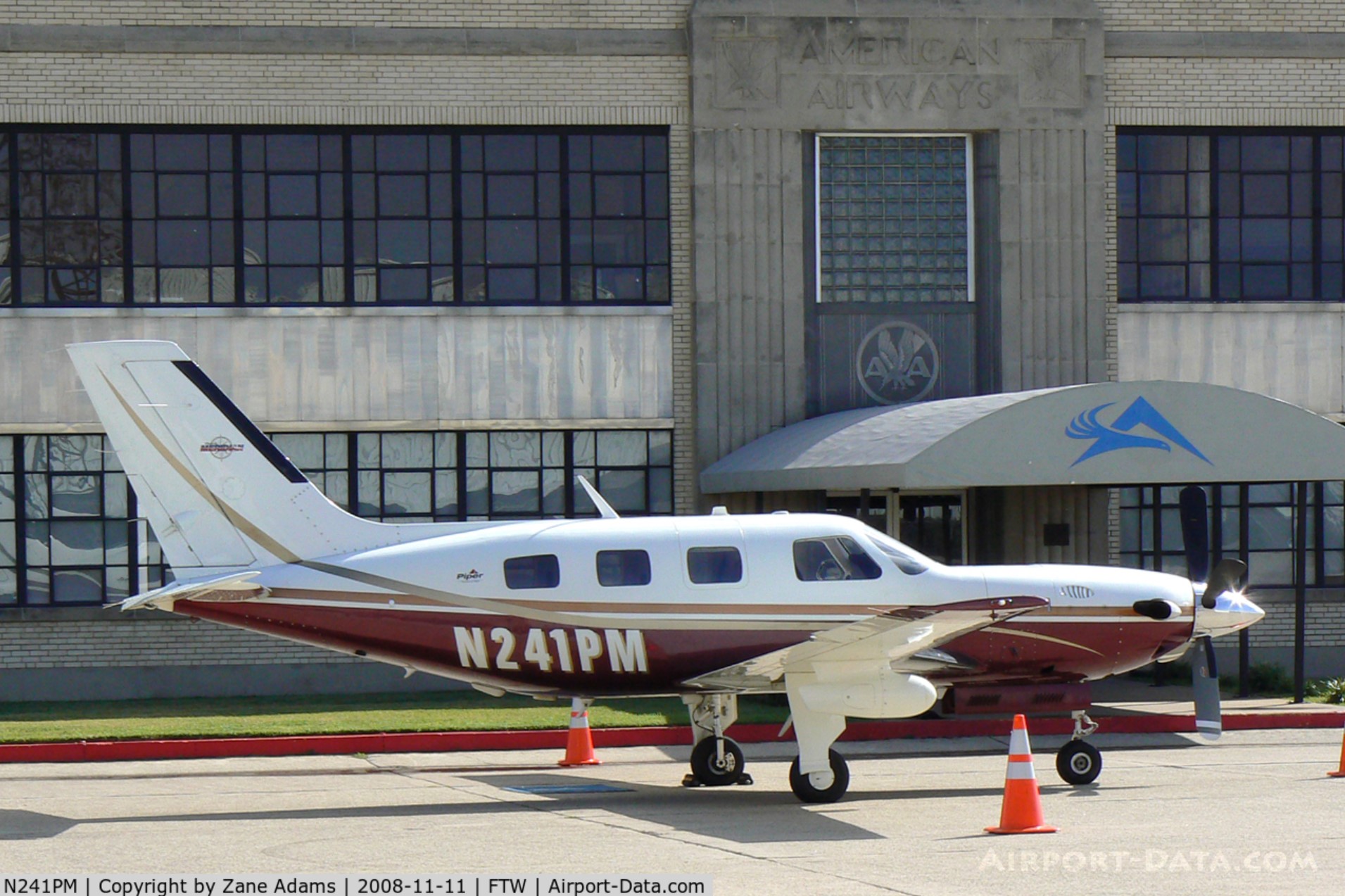
Crash of a Piper PA-46-500TP Malibu Meridian in Marianna: 2 killed

Date & Time: May 12, 2024 at 1957 LT
Registration:
N241PM
Flight Phase:
Flight Type:
Survivors:
No
Schedule:
Pensacola - Batesville
MSN:
46-97150
YOM:
2003
Crew on board:
1
Crew fatalities:
Pax on board:
1
Pax fatalities:
Other fatalities:
Total fatalities:
2
Circumstances:
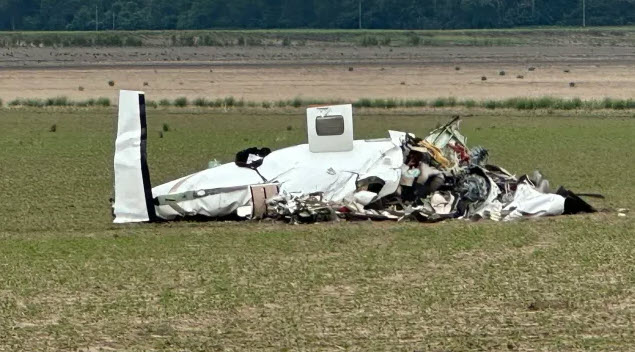
The single engine airplane departed Pensacola Regional Airport, Florida, on a private flight to Batesville, Arkansas, with two people on board. About 1,5 hour into the flight, while cruising at an altitude of 28,000 feet, the pilot initiated a descent when control was lost. The airplane crashed in an open field located southeast of Marianna and was destroyed. Both occupants were killed.

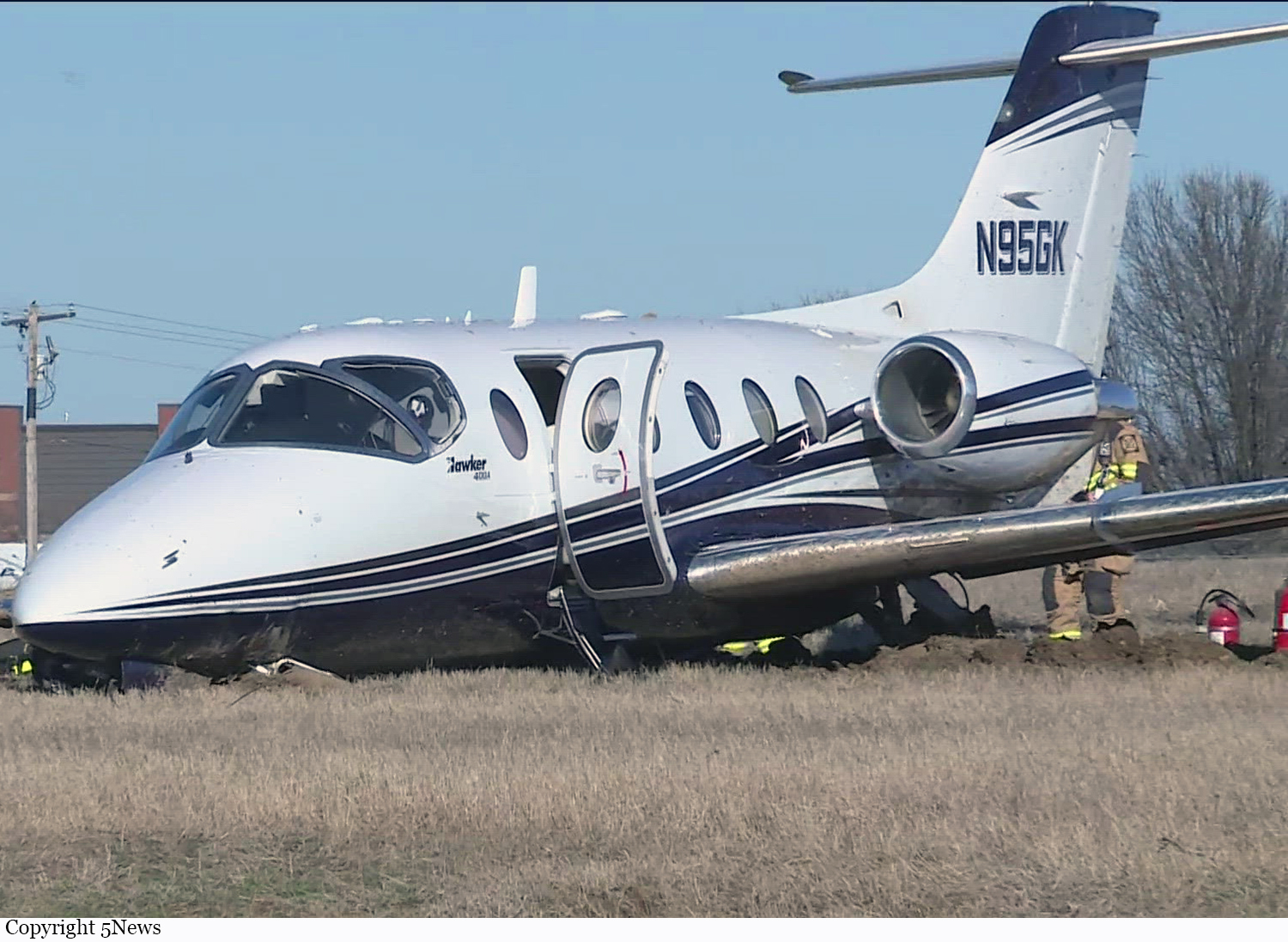
Crash of a Beechcraft BeechJet 400A in Bentonville

Date & Time: Feb 14, 2024 at 1410 LT
Type of aircraft:
Operator:
Registration:
N95GK
Flight Phase:
Survivors:
Yes
Schedule:
Bentonville – Concord
MSN:
RK-027
YOM:
1991
Crew on board:
2
Crew fatalities:
Pax on board:
7
Pax fatalities:
Other fatalities:
Total fatalities:
0
Captain / Total flying hours:
20000
Captain / Total hours on type:
2000.00
Copilot / Total flying hours:
961
Copilot / Total hours on type:
227
Aircraft flight hours:
11062
Circumstances:
During the takeoff the pilot pulled the airplane’s control yoke aft to rotate and the airplane lifted off the runway as normal. The nose of the airplane dropped, and the pilot applied additional backpressure on the yoke. The pilot reported he felt a “snap” followed by a lack of tension on the control yoke. The airplane pitched down and settled back on the runway. The pilot applied maximum braking and full thrust reverse; however, the airplane continued off the end of the runway. The pilot applied left rudder and brake to turn the airplane to avoid contacting a gas station. The landing gear collapsed during the turn, which resulted in substantial damage to the right wing when it struck the ground. Two passengers escaped with minor injuries and seven others occupants were unarmed. The airplane was damaged beyond repair. A postaccident examination of the airplane revealed the elevator control cable was fractured at a pulley bracket near the aft portion of the fuselage where the cable transitioned from a horizontal to a vertical orientation. A metallurgical examination found nearly all the wires of the cable had rubbing damage to varying extents around the sides of the wires near the fracture. The upper guard pin exhibited wear, scratch marks, and gouges. The pulley contained several isolated wire fragments. The damage on the cable, upper guard pin on the pulley, and the pulley assembly was consistent with the cable having been improperly routed on the wrong side of the upper guard pin. Over time, the cable likely rubbed against the upper guard pin until the cable was sufficiently damaged to produce failure under normal operating loads. A review of the maintenance logbook entries found that the elevator cable was replaced about a year before the accident and that the airplane flew about 316.5 hours before the cable separated.
Probable cause:
Improper rigging of the elevator cable over the upper guard pin, which resulted in a cable separation and loss of elevator control.
Final Report:

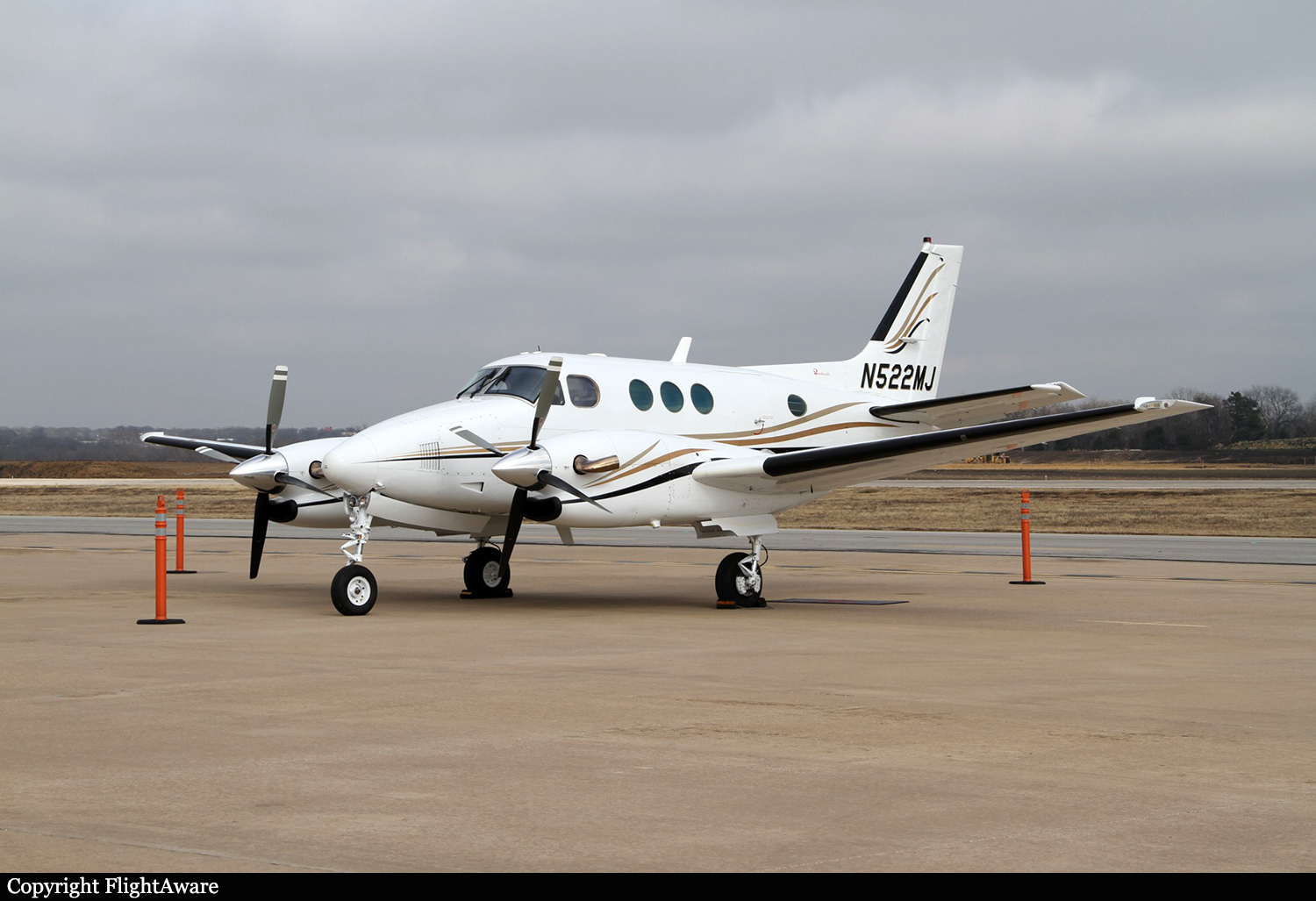
Crash of a Beechcraft E90 King Air near Fayetteville: 1 killed

Date & Time: May 17, 2023 at 1237 LT
Type of aircraft:
Operator:
Registration:
N522MJ
Flight Type:
Survivors:
No
Schedule:
University-Oxford – Fayetteville
MSN:
LW-80
YOM:
1973
Crew on board:
1
Crew fatalities:
Pax on board:
0
Pax fatalities:
Other fatalities:
Total fatalities:
1
Captain / Total flying hours:
4836
Aircraft flight hours:
4925
Circumstances:
The airplane was being flown to another airport for maintenance work on the autopilot system. Before the flight, the pilot and an avionics technician discussed a roll issue with the airplane’s autopilot and the pilot was advised not to use the autopilot until the issue was resolved. The avionics technician further advised the pilot to wait for good weather to make the flight, but the pilot reportedly had a function back home that he wanted to attend later, on the day of the accident. Recorded flight track data indicated that most of the flight was uneventful until the airplane began its descent toward the intended destination. During the descent, the airplane encountered overcast clouds that continued to the end of the flight. The pilot was subsequently cleared for an instrument approach to the destination airport. While maneuvering on the approach, the airplane descended below its assigned altitude and the controller issued a low-altitude alert to the pilot. The airplane briefly climbed before it entered a descending right turn that continued to the end of the recorded data. Calculations based on recorded flight data revealed the airplane was descending over 15,000 feet per minute shortly before impact. The airplane impacted the ground near the final recorded flight track data point, in a near vertical attitude, and was fragmented. Examination of the airplane, engines, and systems did not reveal any preimpact anomalies that would have precluded normal flight. Based on the available information, the pilot likely was not using the autopilot due to the known issue with the system and, as a result, was hand flying the airplane during the instrument approach. The pilot likely was accustomed to flying the airplane with the automation that the autopilot provided rather than by hand in single-pilot instrument meteorological conditions (IMC). Based on the recorded flight path, it is likely that the pilot became spatially disoriented and lost control of the airplane while intercepting the final approach course for the instrument approach. In addition, the pilot allowed his self-imposed pressure to influence his decision to complete the flight in less-than-ideal weather conditions without a functional autopilot. Although ethanol was detected in liver and muscle tissue, it is likely that some, or all, of the detected ethanol was from postmortem production. Thus, it is unlikely that ethanol contributed to the accident. Tadalafil, salicylic acid, famotidine, atenolol, and irbesartan were detected in liver and muscle tissue, but it is unlikely that these substances contributed to the accident.
Probable cause:
The pilot’s poor preflight decision to depart into known instrument meteorological conditions (IMC) without a functional autopilot system, which resulted in spatial disorientation and his failure to maintain aircraft control while flying in IMC during the instrument approach. Contributing to the accident was the pilot’s self-imposed pressure to conduct the flight.
Final Report:

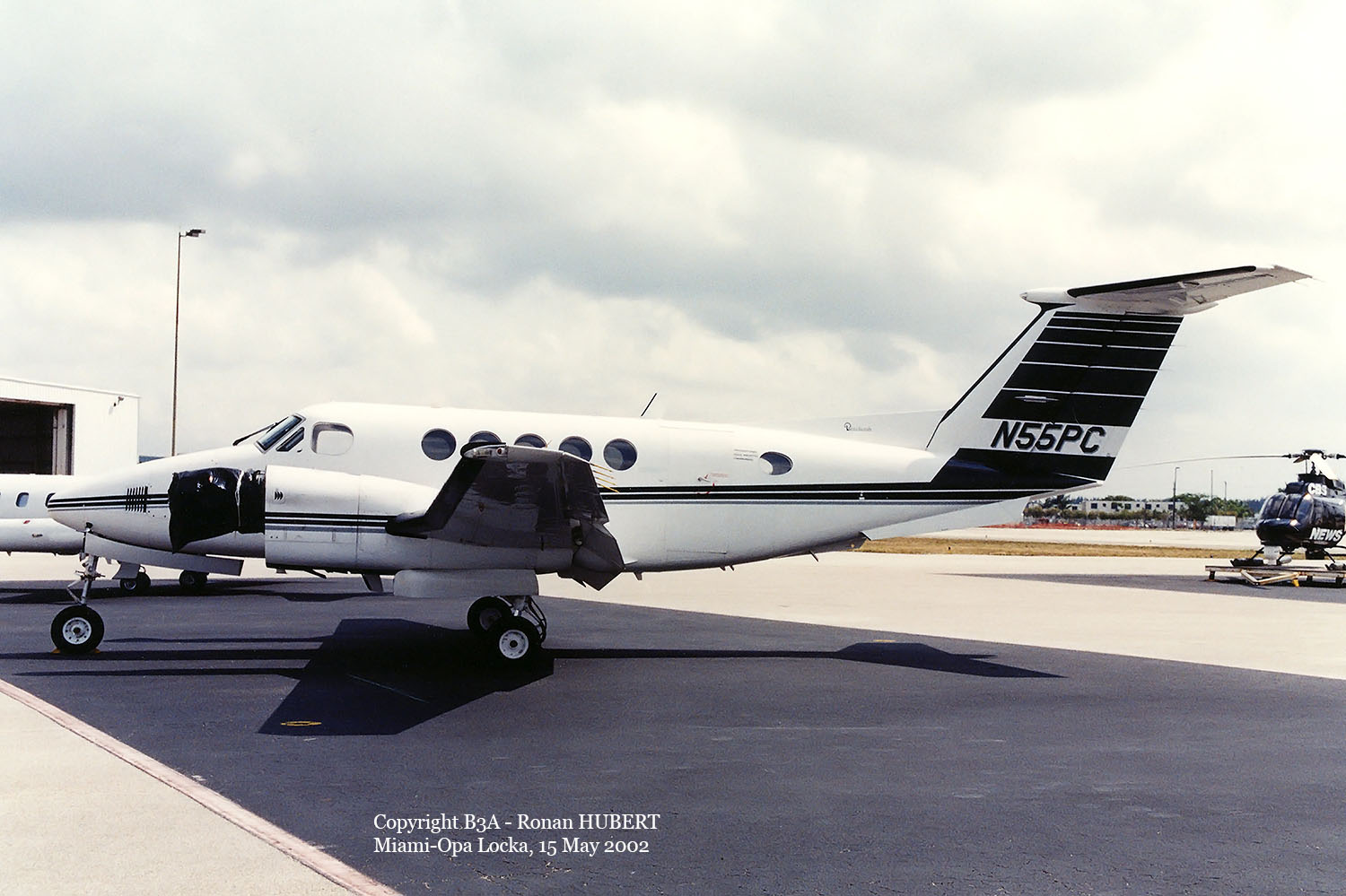
Crash of a Beechcraft B200 Super king Air in Little Rock: 5 killed

Date & Time: Feb 22, 2023 at 1156 LT
Operator:
Registration:
N55PC
Flight Phase:
Survivors:
No
Schedule:
Little Rock - Columbus
MSN:
BB-1170
YOM:
1983
Crew on board:
1
Crew fatalities:
Pax on board:
4
Pax fatalities:
Other fatalities:
Total fatalities:
5
Captain / Total flying hours:
10196
Captain / Total hours on type:
195.00
Aircraft flight hours:
10784
Circumstances:
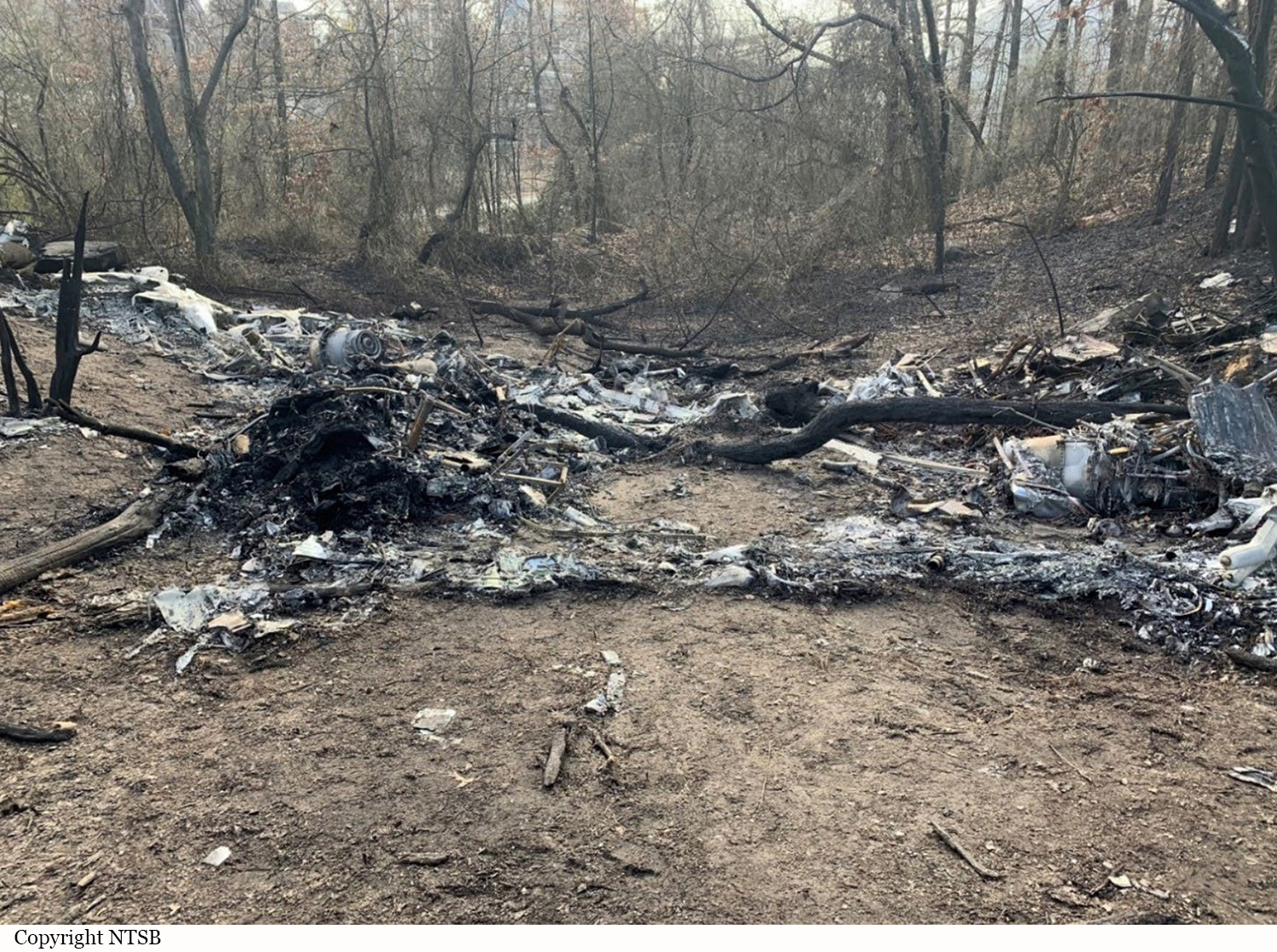
The pilot and four passengers were departing in the multi-engine turbopropeller-powered airplane when the accident occurred. Surveillance video indicated that the takeoff and initial climb appeared normal, however, the airplane than began to lose airspeed and altitude until the airplane entered a left roll and descended toward the ground. Just after the airplane went out of sight, the camera recorded a rising plume of smoke about 1 mile from of the departure end of the runway. Shortly after the plume of smoke appeared, the camera appeared to shake from wind, and recorded blowing debris and heavy rain on the ramp where the camera was located. Just before and during takeoff, the camera showed that the ramp was dry with no rain or noticeable wind. No radio or distress calls were heard from the pilot. Several witnesses saw the airplane’s takeoff and initial climb and they described the airplane as struggling to climb and reported that it entered a steep bank and descent toward the ground shortly after takeoff. The witnesses characterized the weather conditions as stormy and windy, with a weather front passing through the area. The wreckage of the airplane was found amidst heavily wooded terrain adjacent to a factory about 1 mile south of the departure end of runway 18 and a post-impact fire consumed most of the airplane. Detailed examinations of the airframe, engines, flight controls, and propellers did not reveal any pre-impact mechanical anomalies that would have precluded normal operations. Both engines and propellers exhibited evidence of rotation at the time of impact, and several large diameter tree branches at the accident site were found cut consistent with propeller blade strikes, also indicating that the engines were producing power at the time of impact. A performance study indicated that the airplane climbed to a maximum altitude of about 386 ft above ground level before it began to descend. Review of airplane performance from previous takeoffs from the same runway indicated that the airplane’s climb performance during the accident initial climb takeoff was diminished. The reason for the diminished performance could not be determined. Review of weather information indicated that the airplane departed about the time a line of extreme intensity precipitation was approaching, and weather reporting equipment at the airport indicated a wind shift associated with this oncoming line of precipitation. A wind shear alert was active in the control tower advising of 15 to 20 kt gains about 1 mile from the runway. Based on the observation weather data, it is likely that, during the initial climb, the airplane encountered wind with magnitudes between 20 and 30 kts that likely varied in direction about 50°, from a quartering headwind to a crosswind condition. In the minutes following the accident time, this wind continued to shift to a quartering tailwind condition for the departure runway and increased in magnitude to 30 to 40 kts. There was no evidence to suggest that the airplane encountered a microburst or downdraft. Based on available information, the performance study could not conclude why the airplane had diminished performance during the initial climb after takeoff. Although there was diminished performance during the initial climb, it could not be attributed to a airframe, engine, or system anomaly. Although the weather was deteriorating at the time of the accident, and there were wind shifts in the area, a weather study determined that the wind shifts likely contributed to, but did not cause the accident. The pilot’s autopsy was limited by injury but identified severe coronary artery disease. Within the limits of the autopsy, there was no evidence that a medical event contributed to the accident. The pilot’s toxicology testing detected a low level of ethanol in cavity blood only; however, the small amount of ethanol may have been produced postmortem. It is unlikely that the effects of ethanol contributed to the accident.
Probable cause:
The loss of control during initial climb for undetermined reasons. Contributing to the accident were the sudden wind shifts during the initial climb.
Final Report:

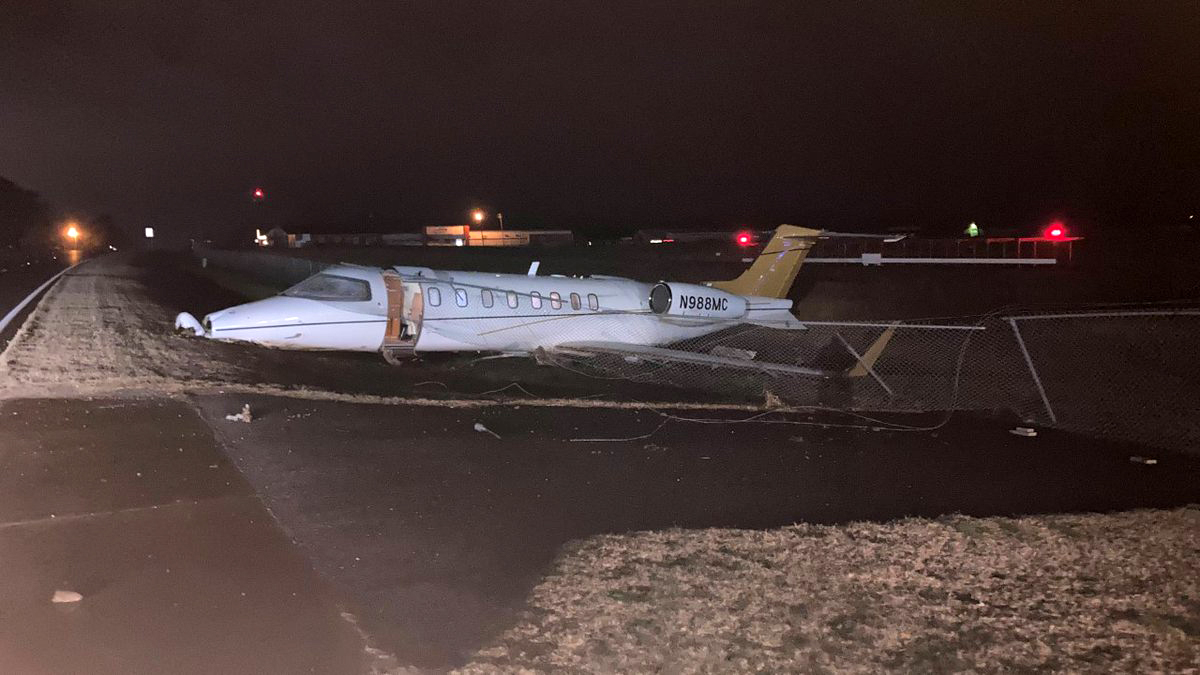
Crash of a Learjet 45 in Batesville

Date & Time: Nov 29, 2022 at 1910 LT
Type of aircraft:
Operator:
Registration:
N988MC
Survivors:
Yes
Schedule:
Waterloo – Batesville
MSN:
45-352
YOM:
2007
Flight number:
DHR003
Crew on board:
2
Crew fatalities:
Pax on board:
6
Pax fatalities:
Other fatalities:
Total fatalities:
0
Captain / Total flying hours:
3910
Captain / Total hours on type:
1560.00
Copilot / Total flying hours:
505
Copilot / Total hours on type:
263
Aircraft flight hours:
2490
Circumstances:
The two pilots were conducting a business flight with six passengers when the accident occurred. During the night arrival the captain flew a visual approach with excessive airspeed
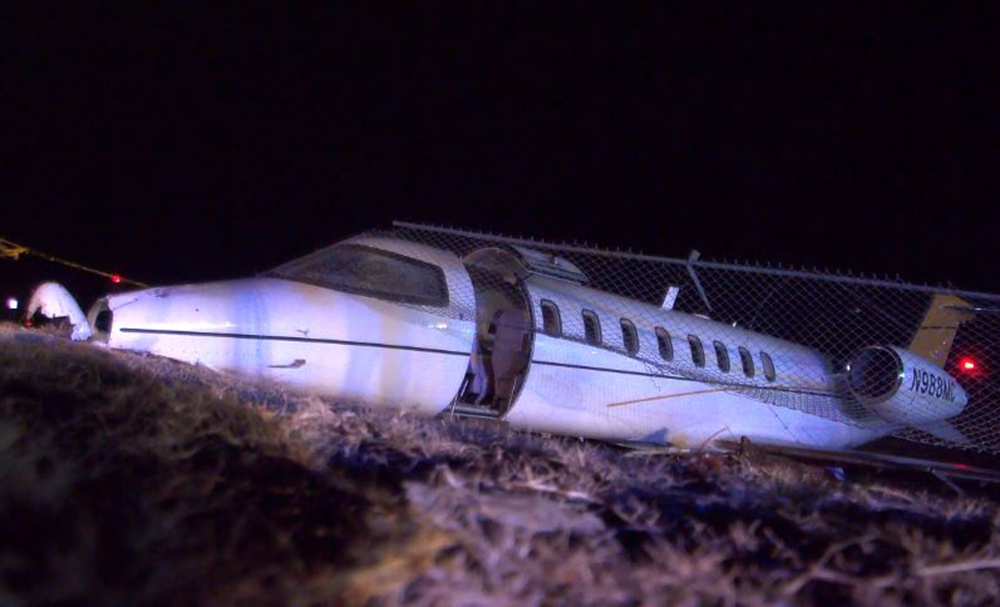
and the airplane crossed the runway threshold more than 50 knots above approach speed (Vref). The before-landing checklist was not completed, and the flaps were at an incorrect 20° position instead of 40°. The airplane touched down near the midfield point of the 6,022 ft non grooved runway, which was wet due to earlier precipitation. The captain initially applied intermittent braking, then applied continuous braking starting about 2,069 ft from the end of the runway. The captain did not deploy the thrust reversers. The airplane exited the runway above 100 knots ground speed, then continued into a ditch and airport perimeter fence, which resulted in substantial damage to the forward fuselage. Examination of the airplane revealed no mechanical anomalies that would have precluded normal operation. The operator’s flight manual directed that all approaches were to be flown using the stabilized approach concept. For a visual approach, this included establishing and maintaining the proper approach speed and correct landing configuration at least 500 ft above the airport elevation. Neither pilot recognized the requirement to execute a go-around due to the excessive approach speed or the long landing on a wet runway, which resulted in the runway excursion.
Probable cause:
The crew’s failure to execute a go-around during the unstable approach and long landing, which resulted in a runway excursion.
Final Report:

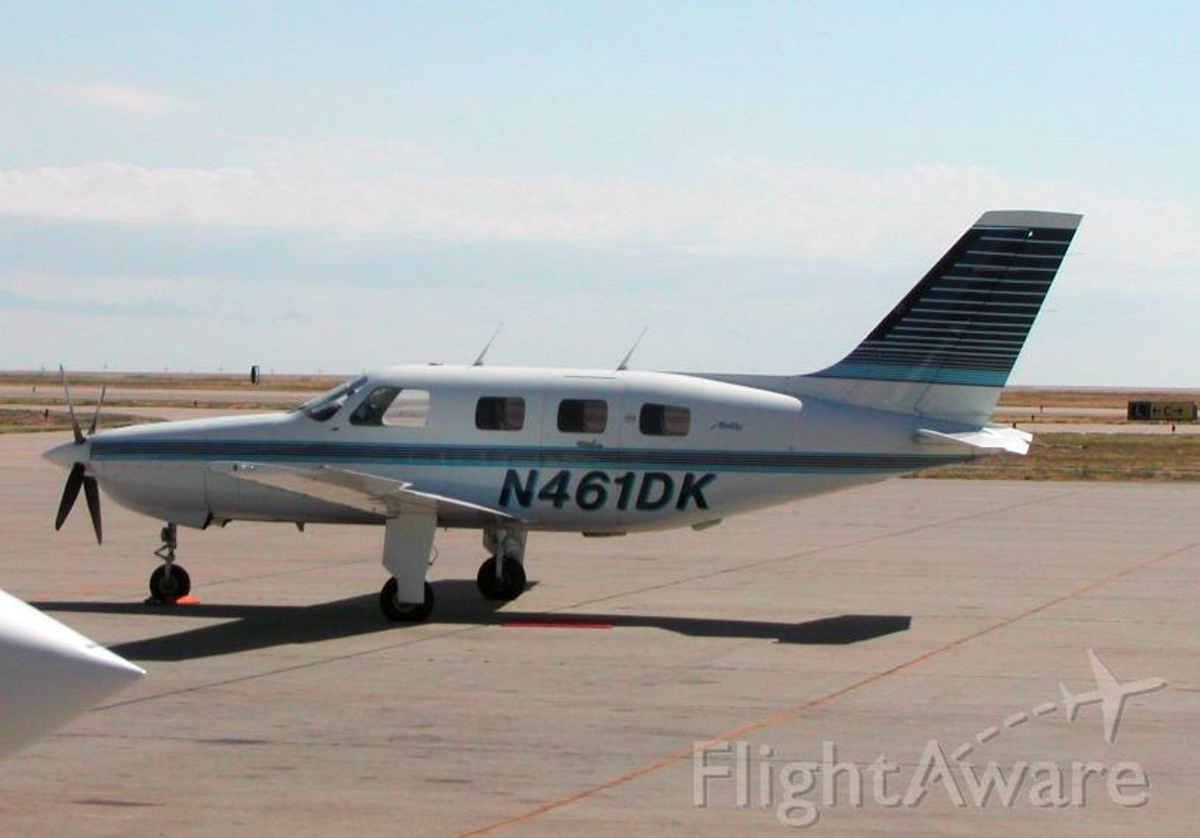
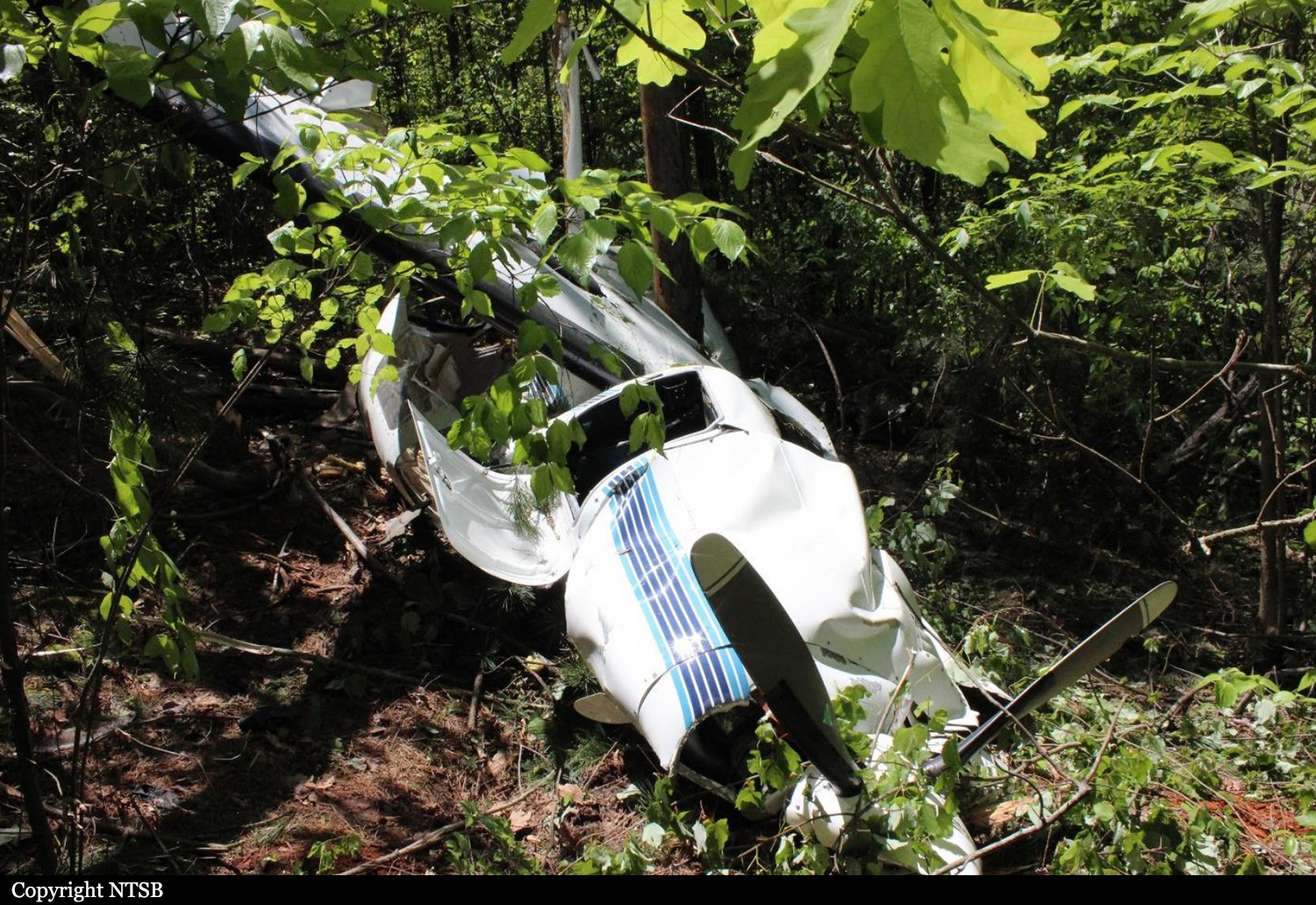
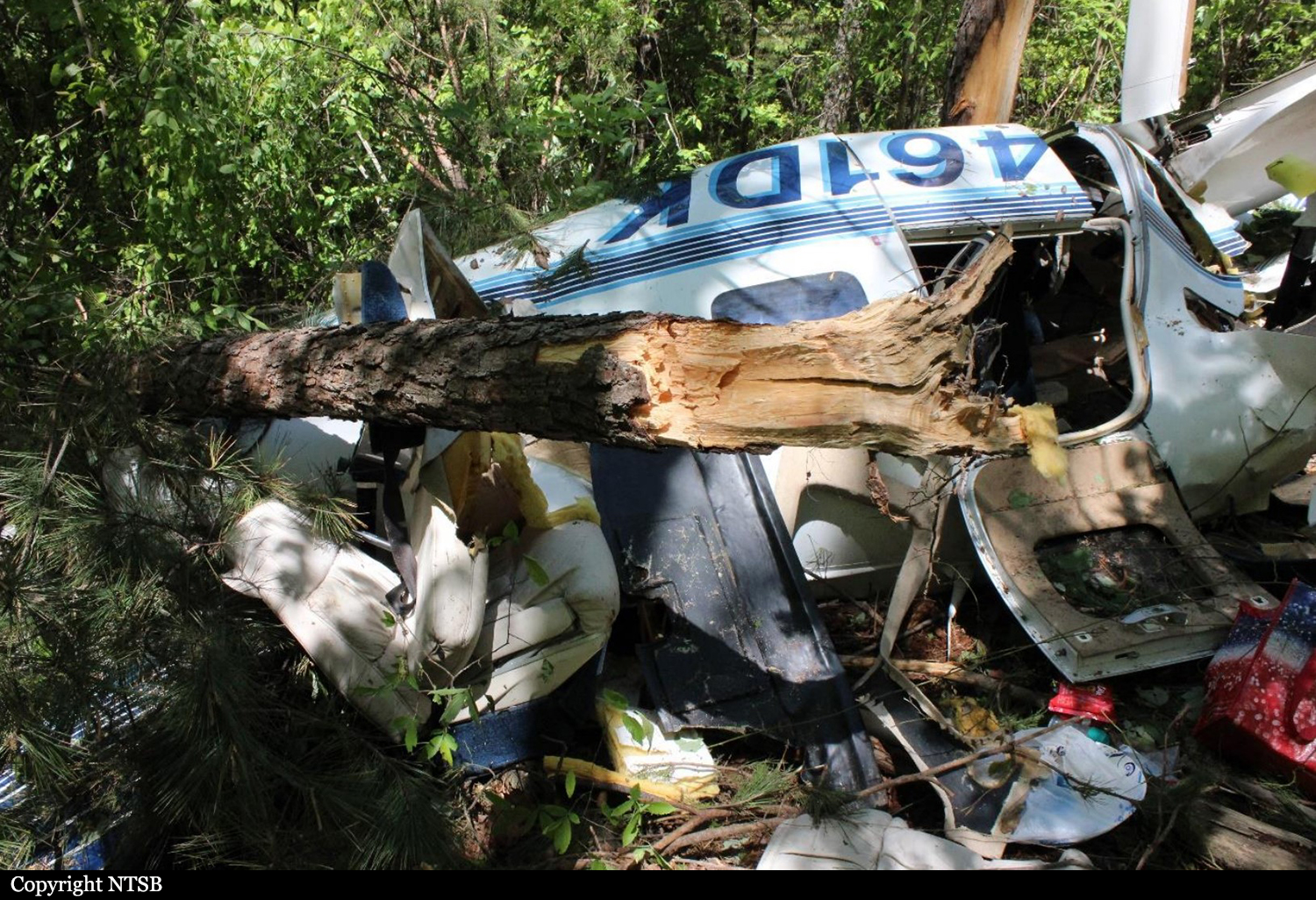
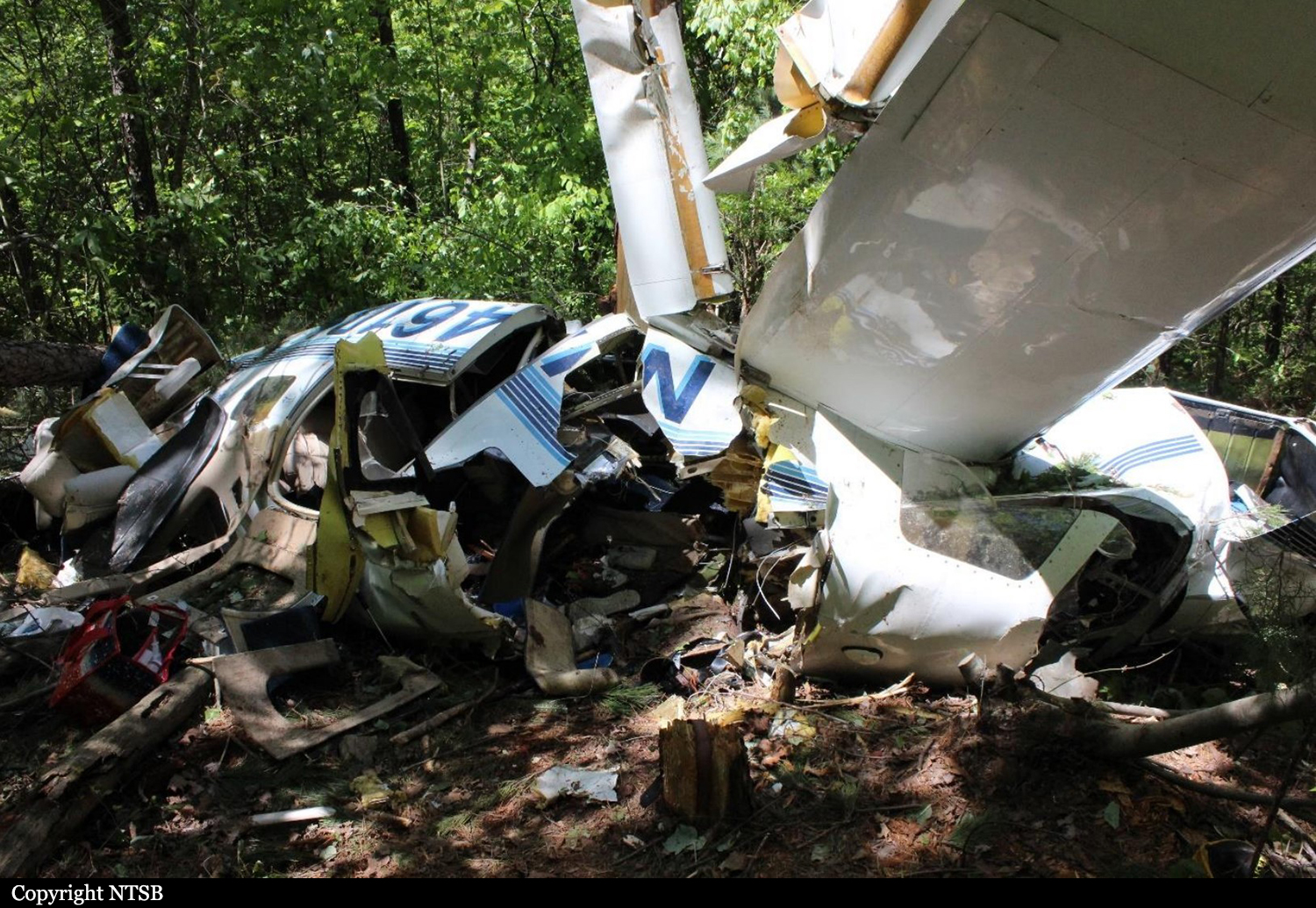
Crash of a Piper PA-46-310P Malibu in Danville: 4 killed

Date & Time: Apr 23, 2021 at 1701 LT
Operator:
Registration:
N461DK
Flight Phase:
Flight Type:
Survivors:
No
Site:
Schedule:
Muskogee – Williston
MSN:
46-8508102
YOM:
1985
Crew on board:
1
Crew fatalities:
Pax on board:
3
Pax fatalities:
Other fatalities:
Total fatalities:
4
Captain / Total flying hours:
1431
Circumstances:
The pilot was conducting an instrument flight rules cross-country flight and climbing to a planned altitude of 23,000 ft mean sea level (msl). According to air traffic control data, as the airplane climbed through 18,600 ft msl, its groundspeed was 171 knots, and a gradual reduction in groundspeed began. After reaching an altitude of about 20,200 ft msl, the airplane began a descent on a southeast heading. Just before the descent began, the airplane’s groundspeed had decreased to 145 knots. About 2 minutes after the descent began, the airplane turned right to a northeast heading on which it continued for about 30 seconds. The flightpath then became erratic before the data ended. The pilot made no distress calls and did not respond to repeated calls from the controller. The main wreckage of the airplane was located in densely forested terrain at an elevation of about 930 ft about 1,000 ft south of the last radar return. The outboard portion of the right wing, right aileron, right horizontal stabilizer, and right elevator were not located with the main wreckage and, despite ground and aerial searches with a small unmanned aircraft system, were not found. Examination of the wreckage indicated that the missing wing and tail sections separated in flight due to overload. Examination of the recovered airframe and engine did not reveal evidence of any pre-existing mechanical malfunctions or anomalies that would have precluded normal operation. Weather forecasts indicated that the accident site was in an area where moderate icing conditions up to 25,000 ft msl, embedded thunderstorms, and 2-inch hail were forecasted. Review of preflight weather information received by the pilot indicated that he was aware of the conditions forecast on the route of flight before initiating the flight. Meteorological data revealed that the airplane likely entered icing conditions that ranged from light to heavy as it climbed through 14,000 ft msl about 23 minutes after takeoff and remained in icing conditions for the remaining 16-minute duration of the flight. Freezing drizzle conditions were likely present along the flightpath. Although the airplane was equipped for flight in icing conditions, the pilot’s operating handbook contained a warning about flight into severe icing conditions, which stated that flight in freezing drizzle could result in ice build-up on protected surfaces exceeding the capability of the ice protection system. The airplane’s gradual loss of groundspeed as it climbed was consistent with ice accumulating on the airplane. It is likely that during the 16 minutes the airplane was operating in icing conditions, the capability of the ice protection system was exceeded, which resulted in a degradation of aircraft performance and subsequent aerodynamic stall. During the ensuing uncontrolled descent, the structural capability of the airplane was exceeded, which resulted in an inflight break up. A review of the pilot’s records revealed multiple certificate application failures for reasons that included inadequate knowledge of cross-country flight planning, aircraft performance, and stalls. Review of the pilot’s airman knowledge written tests found areas answered incorrectly over multiple exams included meteorology, aircraft performance, aeronautical decision-making, and stalls. The ethanol identified in the pilot’s cavity blood was most likely the result of postmortem production. Therefore, effects from ethanol did not play any role in this accident. The cargo was documented as it was removed from the airplane and remained secure until after it was weighed. Based upon the weight of the cargo, passengers, airplane, and fuel from the filed flight plan, at the time of departure, the airplane would have been about 361 lbs over maximum gross weight. According to the FAA Pilot’s Handbook of Aeronautical Knowledge, an overloaded airplane “may exhibit unexpected and unusually poor flight characteristics,” which include reduced maneuverability and an increased stall speed.
Probable cause:
The pilot’s improper decision to continue flight in an area of moderate-to-heavy icing conditions, which resulted in exceedance of the airplane’s anti-icing system capabilities, a degradation of aircraft performance, and subsequent aerodynamic stall.
Final Report:

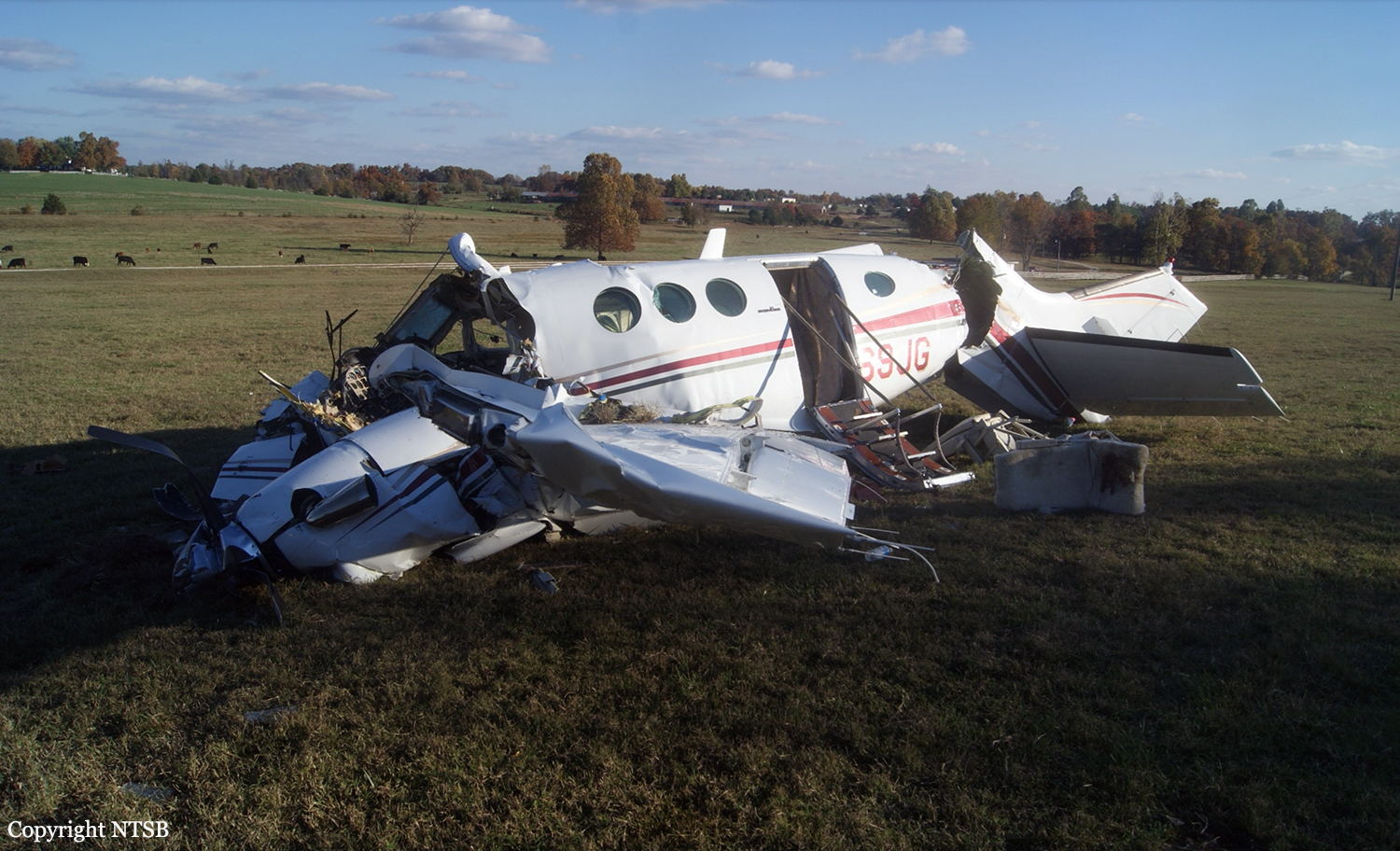
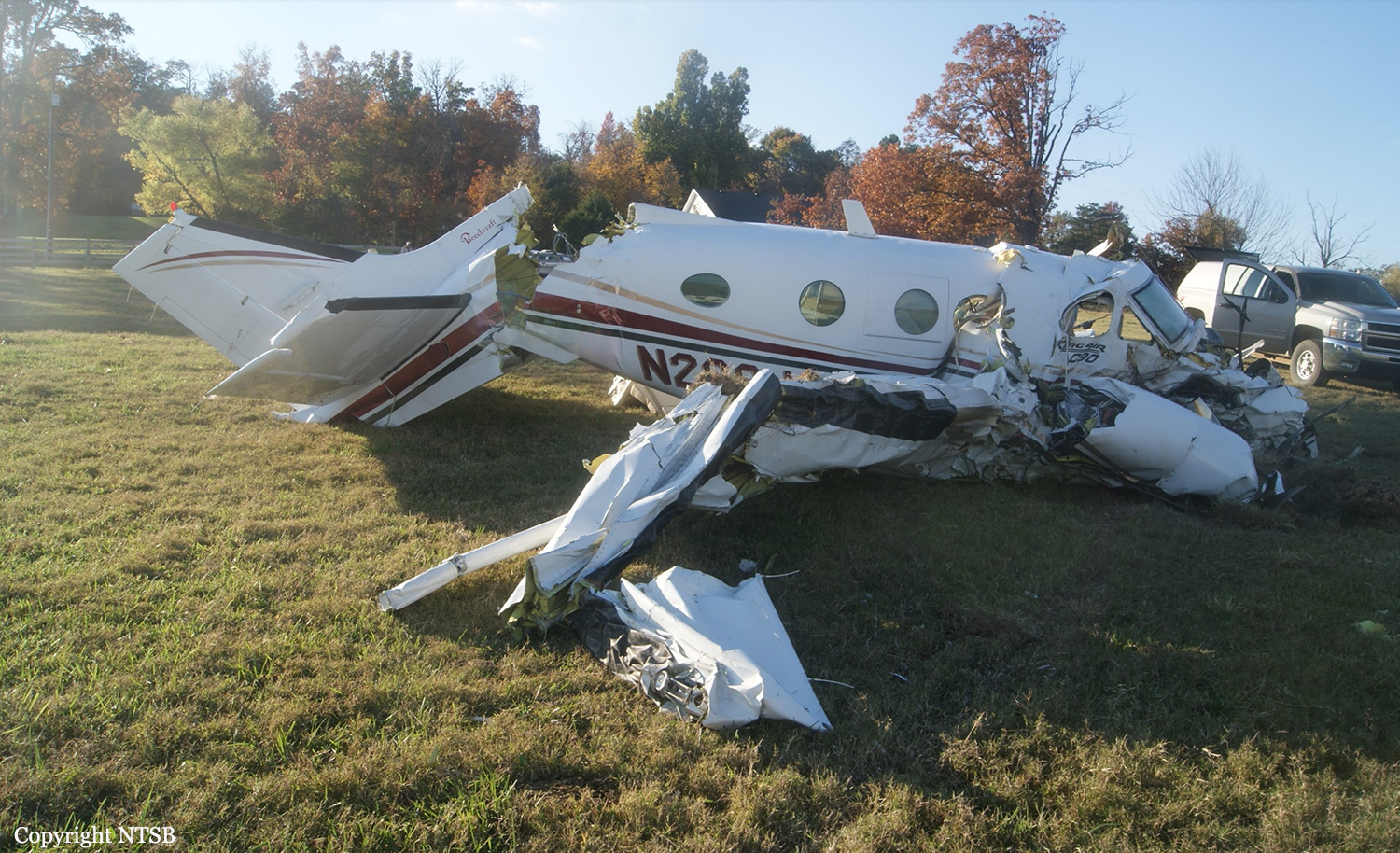
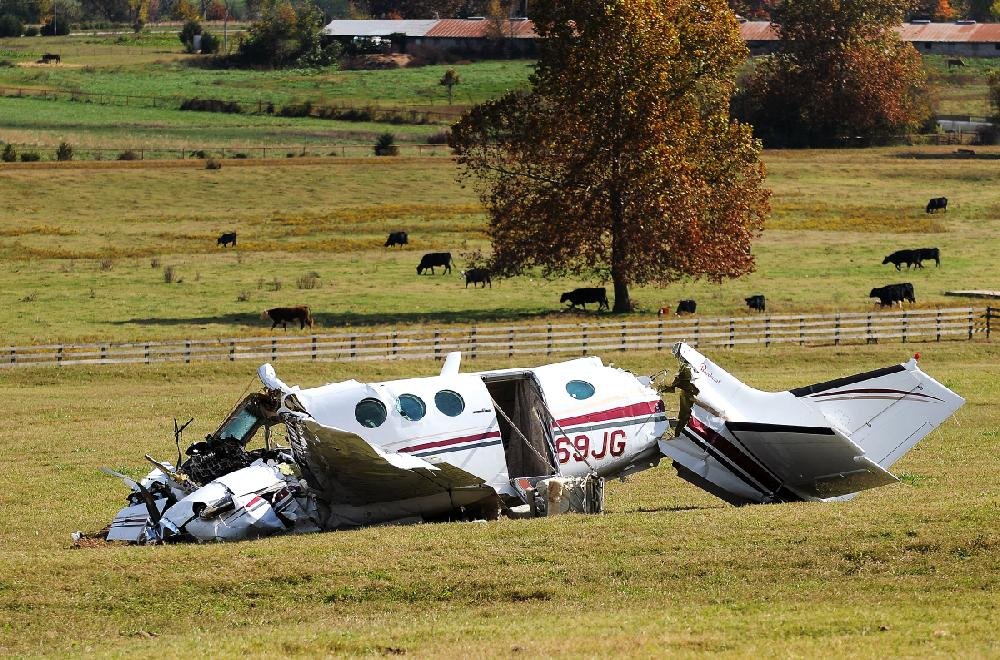
Crash of a Beechcraft C90 King Air in Springdale: 2 killed

Date & Time: Nov 1, 2013 at 1742 LT
Type of aircraft:
Operator:
Registration:
N269JG
Flight Type:
Survivors:
No
Schedule:
Pine Bluff - Bentonville
MSN:
LJ-949
YOM:
1981
Crew on board:
1
Crew fatalities:
Pax on board:
1
Pax fatalities:
Other fatalities:
Total fatalities:
2
Captain / Total flying hours:
3367
Captain / Total hours on type:
100.00
Aircraft flight hours:
11396
Circumstances:
As the airplane was descending toward its destination airport, the pilot reported to an air traffic controller en route that he needed to change his destination to a closer airport because the airplane was low on fuel. The controller advised him to land at an airport that was 4 miles away. Shortly after, the pilot contacted the alternate airport’s air traffic control tower (ATCT) and reported that he was low on fuel. The tower controller cleared the airplane to land, and, about 30 seconds later, the pilot advised that he was not going to make it to the airport. The airplane subsequently impacted a field 3.25 miles southeast of the airport. One witness reported hearing the engine sputter, and another witness reported that the engine “did not sound right.” Forty-foot power lines crossed the field 311 feet from the point of impact. It is likely that the pilot was attempting to avoid the power lines during the forced landing and that the airplane then experienced an inadvertent stall and an uncontrolled collision with terrain. About 1 quart of fuel was observed in each fuel tank. No evidence of fuel spillage was found on the ground; no fuel stains were observed on the undersides of the wing panels, wing trailing edges, or engine nacelles; and no fuel smell was observed at the accident site. However, the fuel totalizer showed that 123 gallons of fuel was remaining. Magnification of the annunciator panel light bulbs revealed that the left and right low fuel pressure annunciator lights were illuminated at the time of impact. An examination of the airframe and engines revealed no anomalies that would have precluded normal operation. About 1 month before the accident, the pilot had instructed the fixed-base operator at Camden, Arkansas, to put 25 gallons of fuel in each wing tank; however, it is unknown how much fuel was already onboard the airplane. Although the fuel totalizer showed that the airplane had 123 gallons of fuel remaining at the time of the crash, information in the fuel totalizer is based on pilot inputs, and it is likely the pilot did not update the fuel totalizer properly before the accident flight. The pilot was likely relying on the fuel totalizer instead of the fuel gauges for fuel information, and he likely reported his low fuel situation to the ATCT after the annunciator lights illuminated.
Probable cause:
A total loss of power to both engines due to fuel exhaustion. Also causal were the pilot’s reliance on the fuel totalizer rather than the fuel quantity gauges to determine the fuel on
board and his improper fuel planning.
Final Report: