Crash of a Mitsubishi MU-2B-26 Marquise in Southbridge

Date & Time: Jul 11, 1985 at 1700 LT
Type of aircraft:
Operator:
Registration:
N727MA
Survivors:
Yes
Schedule:
Manchester - Southbridge
MSN:
342
YOM:
1976
Crew on board:
2
Crew fatalities:
Pax on board:
1
Pax fatalities:
Other fatalities:
Total fatalities:
0
Captain / Total flying hours:
6615
Captain / Total hours on type:
1006.00
Aircraft flight hours:
26958
Circumstances:
During landing the aircraft impacted hard and skidded down the runway before it went off the left side of the runway. The left main wheel separated and the nose gear collapsed. Both pilots stated the landing approach was normal until the aircraft was approximately 15 feet above the runway at which time the aircraft abruptly descended and impacted hard with the runway. Prior to the impact, the aircraft was configured with 20° of flaps and landing gear was down and locked. The airspeed was 105 knots. Examination of the aircraft disclosed that the aft main gear doors were open and the nose down lock limit switch was defective. The switch is required to close the aft main gear door. The flight test by the mfg determined that opened aft main gear door has none to unnoticeable effect on stall speed. Aircraft speed at touchdown based on computations from prop slash marks was 86 knots. The stall speed of aircraft at prevailing weight and flaps configuration is below this speed, the aircraft weight was approximately 9,000 lbs.
Probable cause:
Occurrence #1: loss of control - in flight
Phase of operation: landing
Findings
1. (c) reason for occurrence undetermined
2. (c) proper descent rate - exceeded
----------
Occurrence #2: hard landing
Phase of operation: landing - flare/touchdown
Findings
3. (c) level off - not possible - pilot in command
----------
Occurrence #3: gear collapsed
Phase of operation: landing - flare/touchdown
Findings
4. Landing gear, main gear - overload
5. Landing gear, nose gear - overload

Crash of a Mitsubishi MU-2B-25 Marquise in West Point: 1 killed

Date & Time: Jan 4, 1985 at 1852 LT
Type of aircraft:
Registration:
N275MA
Flight Type:
Survivors:
No
Schedule:
Youngstown - West Point
MSN:
255
YOM:
1973
Crew on board:
1
Crew fatalities:
Pax on board:
0
Pax fatalities:
Other fatalities:
Total fatalities:
1
Captain / Total flying hours:
28818
Captain / Total hours on type:
1500.00
Aircraft flight hours:
45804
Circumstances:
After being delayed at least 2 days at Youngstown, OH, due to maintenance problems the pilot departed at approximately 1725 hours with the knowledge that the weather at his destination was ift to lifr. In addition, the pilot was scheduled for a vacation and had expressed hopes of departing on it that evening. The aircraft was seen circling West Point Municipal Airport in and out of low clouds, fog, and/or smoke from a nearby mill. Immediately before the aircraft collided with trees 6.5 miles west of the airport, a witness saw red lights, one on the rear and one close to the front of the aircraft, which was estimated to be flying at approximately tree top level. The pilot, sole on board, was killed.
Probable cause:
Occurrence #1: in flight encounter with weather
Phase of operation: circling (ifr)
Findings
1. (f) weather condition - below approach/landing minimums
2. (c) became lost/disoriented - inadvertent - pilot in command
3. Self-induced pressure - pilot in command
4. (f) weather condition - low ceiling
5. (f) weather condition - fog
6. (f) weather condition - obscuration
----------
Occurrence #2: in flight collision with object
Phase of operation: circling (ifr)
Findings
7. (f) light condition - dark night
8. (f) object - tree(s)
9. (c) missed approach - not performed - pilot in command
Final Report:

Crash of a Mitsubishi MU-2B-60 Marquise near Burlington: 1 killed

Date & Time: Apr 19, 1984 at 2022 LT
Type of aircraft:
Registration:
N466MA
Flight Phase:
Flight Type:
Survivors:
No
Schedule:
Burlington - Windsor Locks
MSN:
1540
YOM:
1981
Crew on board:
1
Crew fatalities:
Pax on board:
0
Pax fatalities:
Other fatalities:
Total fatalities:
1
Captain / Total flying hours:
5700
Captain / Total hours on type:
3200.00
Aircraft flight hours:
7890
Circumstances:
The aircraft was flown earlier in the day for a sales demonstration. On the return flight, when the landing gear were lowered, the pilot thought he heard a noise emitting from the gear, although cockpit indications were normal. The aircraft landed at Johnny Cake Airport and was refueled for a flight to Bradley Field where it is hangared. The pilot stated he intended to make the 22 miles flight with the gear down as a precaution. He also stated his intention to fly below the overcast because of delays of up to 45 minutes in obtaining IFR clearances. Moments after takeoff the aircraft collided with trees east of the airport. About one mile east of the airport is a north-south ridge. Another pilot, who departed 15-20 mins earlier, reported entering the overcast between 400 and 700 feet agl. Ground witnesses one mile southeast of the airport who heard the crash described the weather as heavy fog and mist. One witness estimated the ceiling as 100 feet agl. The pilot, sole on board, was killed.
Probable cause:
Occurrence #1: in flight encounter with weather
Phase of operation: cruise
Findings
1. (f) weather condition - low ceiling
2. (c) VFR flight into imc - initiated - pilot in command
----------
Occurrence #2: in flight collision with object
Phase of operation: cruise
Findings
3. (f) object - tree(s)
4. (c) altitude - inadequate - pilot in command
5. (f) light condition - dark night
Final Report:

Crash of a Mitsubishi MU-2B-20 Marquise in Ames

Date & Time: Jan 24, 1984 at 1055 LT
Type of aircraft:
Operator:
Registration:
N123AX
Survivors:
Yes
Schedule:
Chattanooga - Ames
MSN:
220
YOM:
1972
Location:
Crew on board:
1
Crew fatalities:
Pax on board:
3
Pax fatalities:
Other fatalities:
Total fatalities:
0
Captain / Total flying hours:
10785
Captain / Total hours on type:
327.00
Circumstances:
The aircraft landed in a crosswind on a snow and ice covered runway. During landing, directional control was lost and the aircraft collided with a snowbank. The pilot stated he attempted to use propeller reversing for braking and the aircraft started to slide to the left. All four occupants escaped uninjured while the aircraft was damaged beyond repair.
Probable cause:
Occurrence #1: loss of control - on ground/water
Phase of operation: landing - roll
Findings
1. (f) terrain condition - icy
2. (c) wrong runway - selected - pilot in command
3. (f) terrain condition - snow covered
4. (c) airspeed - improper - pilot in command
5. (f) weather condition - crosswind
6. (c) directional control - not maintained - pilot in command
7. (c) ground loop/swerve - not corrected - pilot in command
----------
Occurrence #2: on ground/water encounter with terrain/water
Phase of operation: landing - roll
Findings
8. (f) terrain condition - snowbank
9. Landing gear - overload
Final Report:

Crash of a Mitsubishi MU-2B Marquise near Ciudad Juárez: 13 killed

Date & Time: Nov 18, 1983 at 1030 LT
Type of aircraft:
Flight Type:
Survivors:
No
Schedule:
Chihuahua - Ciudad Juárez
Country:
Crew on board:
2
Crew fatalities:
Pax on board:
11
Pax fatalities:
Other fatalities:
Total fatalities:
13
Circumstances:
While approaching Ciudad Juárez Airport, the crew declared an emergency following an engine fire. The aircraft went out of control and crashed 10 km from the airport, bursting into flames. All 13 occupants were killed, among them the Mexican businessman Enrique Elías Miller.

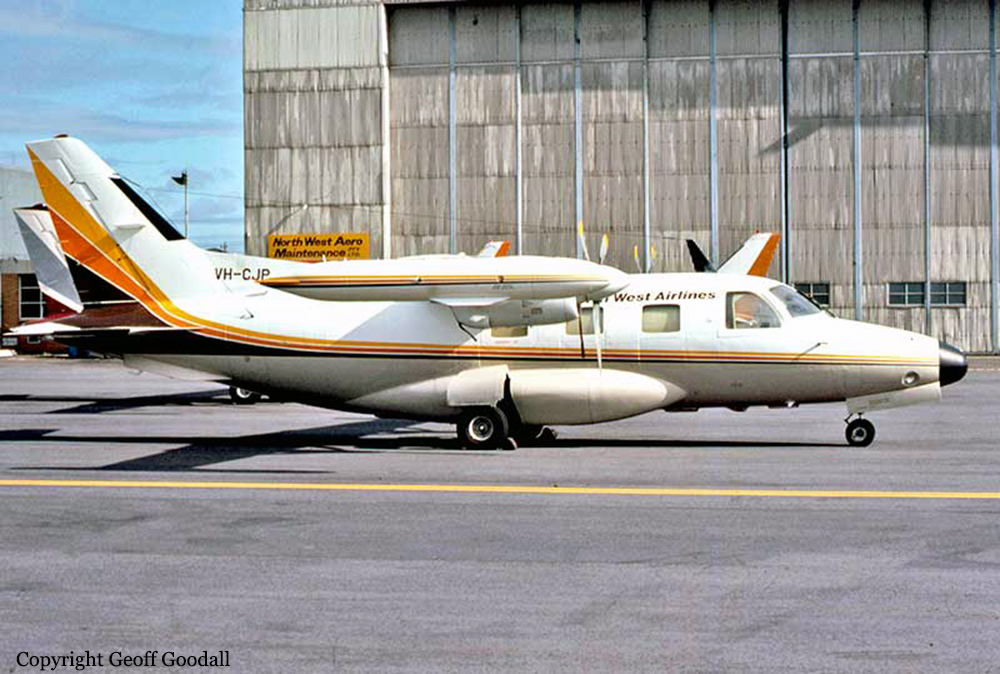
Crash of a Mitsubishi MU-2B-30 Marquise in Cairns

Date & Time: Nov 15, 1983 at 0625 LT
Type of aircraft:
Registration:
VH-CJP
Flight Type:
Survivors:
Yes
Schedule:
Townsville – Cairns
MSN:
505
YOM:
1970
Country:
Region:
Crew on board:
2
Crew fatalities:
Pax on board:
0
Pax fatalities:
Other fatalities:
Total fatalities:
0
Circumstances:
The aircraft was established on final by the pilot under check. A 5 knot downwind component prevailed. The flare was commenced higher than is normal and the airspeed decreased below the optimum. The pilot did not react to prompting by the the check-pilot but, at about 20 feet, retarded the throttles. The aircraft struck the runway heavily in a left wing low attitude and the left main and nose landing gear was torn off. Command responsibility for the flight was not discussed and the check-pilot was under the misapprehension that his role was only that of safety pilot. Due to flight rescheduling, the pilot under check slept for only two and a half hours prior to commencing duty. The autopilot was unserviceable and the pilot under check flew the aircraft by hand for most of the four flight legs. During the last leg the check-pilot twice simulated an engine failure. The second failure was simulated on final approach at about 7 DME. Power was reinstated shortly afterwards and the approach continued normally until close to the threshold. At this time the pilot under check had been on duty for five and a half hours and the check-pilot for over twelve hours. Overseas research has shown that subtle errors in visual perception may be induced by an event which causes stress, and that this condition may persist for several minutes after the event. Fatigue may aggravate the problem. The errors in perception are the result of changes in focal length of the lens of the eye caused by the physiological effects of the stress resulting from the event. The experimental research and information from accident data has provided evidence that the effect of the changes in focal length may cause a pilot on final approach to perceive a runway to be on a higher plane than it actually is. In this case, with the particular combination of factors prevailing at the time, it is possible that the imposition of a simulated engine failure on approach within a few minutes prior to the final landing of a long and fatiguing night's operations caused a stress reaction in the pilot under check. The level of stress induced in this fatigued pilot may have been sufficient to cause the kind of perceptual error described above. The runway would thus appear to the pilot slightly higher than it actually was. His judgement of flare height, being based on this false perception, would therefore be incorrect.
Probable cause:
Schedule changed; auto-pilot unserviceable; both pilots fatigued; command responsibility unresolved; pilot under check misjudged flare; check-pilot did not take over in time to recover control. Possible Factor Visual perception errors resulting from stress induced by the pilot's reaction to the simulated engine failure.
Final Report:

Crash of a Mitsubishi MU-2B-36A Marquise in Patterson: 3 killed

Date & Time: Oct 20, 1983 at 1040 LT
Type of aircraft:
Registration:
N444PA
Survivors:
No
Schedule:
Addison - Patterson
MSN:
691
YOM:
1977
Crew on board:
1
Crew fatalities:
Pax on board:
2
Pax fatalities:
Other fatalities:
Total fatalities:
3
Captain / Total flying hours:
3372
Captain / Total hours on type:
1211.00
Aircraft flight hours:
2237
Circumstances:
While descending into the Patterson area on an IFR flight plan, the pilot was cleared to hold and was advised that he would be the #2 aircraft for an approach to the Patterson Airport. A few minutes later the pilot asked how long the delay would be. He subsequently stated he had the airport, cancelled IFR and was going in VFR. A pilot who had just departed the airport heard a Mitsubishi call 'turning base.' He could not see an aircraft on base for runway 05. He called but did not receive a reply. The aircraft contacted trees along a heading of about 225°. The flaps were extended about 5° and the landing gear were extended. All three occupants were killed.
Probable cause:
Occurrence #1: in flight collision with object
Phase of operation: approach - VFR pattern - base turn
Findings
1. (f) weather condition - low ceiling
2. (c) altitude - misjudged - pilot in command
3. Object - tree(s)
Final Report:

Crash of a Mitsubishi MU-2B-60 Marquise in Bargo: 1 killed

Date & Time: May 24, 1983 at 0433 LT
Type of aircraft:
Operator:
Registration:
VH-MLU
Flight Phase:
Flight Type:
Survivors:
No
Schedule:
Sydney - Melbourne
MSN:
1527
YOM:
1981
Country:
Region:
Crew on board:
1
Crew fatalities:
Pax on board:
0
Pax fatalities:
Other fatalities:
Total fatalities:
1
Circumstances:
The aircraft was cleared via a Standard Instrument DEPARTURE with an unrestricted climb to Flight Level (FL) 220. The aircraft climbed on track at an average rate of 1300 ft/min until FL130. The rate of climb then reduced to 350 ft/min until FL140, when the rate of climb increased to 1800 ft/min. At FL160 the aircraft entered a near vertical descent and radar contact was lost one minute later at 3100 feet. The aircraft impacted the ground in a near vertical attitude. The pilot, sole on board, was killed.
Probable cause:
Despite an extensive investigation, the reason for the loss of control leading to this accident could not be determined. There have been several other reported occurrences involving sudden loss of control in this aircraft type and the United States Federal Aviation Administration has conducted a certification review of the type. The results of that review do not appear to indicate any factors relevant to this particular accident.
Final Report:

Crash of a Mitsubishi MU-2B-60 Marquise in Jeffersonville: 4 killed

Date & Time: Mar 24, 1983 at 0236 LT
Type of aircraft:
Registration:
N72B
Flight Phase:
Survivors:
No
Schedule:
Jacksonville - Atlanta
MSN:
735
YOM:
1979
Crew on board:
1
Crew fatalities:
Pax on board:
3
Pax fatalities:
Other fatalities:
Total fatalities:
4
Captain / Total flying hours:
3747
Captain / Total hours on type:
547.00
Circumstances:
The aircraft was on the return portion of a round trip flight, hauling canceled bank checks. When they boarded before takeoff, the pilot's wife, who was not a pilot, occupied the right front seat and his two daughter's, ages 4 and 6, were in the passenger seats. Previous legs of the flight were accomplished without incident. While en route on the 4th leg, a radar handoff was made from Jacksonville to Atlanta Center at 0225 est and the pilot reported at FL180. This was his last known transmission. At 0230, the ATC controller noted the aircraft was passing Macon VOR. Shortly thereafter, radar contact was lost and efforts to make radio contact were unsuccessful. Several persons in the vicinity heard the aircraft engines alternately at high speed, then demishing, before the accident. The wreckage was found scattered over a 2 miles area. An exam revealed the right wing had failed upward and the left wing and left horizontal stabilizer had failed downward from overload. There was evidence of course reversal and descent before breakup; light turbulence and icing at cruise alt. Reason for descent unknown. All four occupants were killed.
Probable cause:
The uncontrolled descent of the airplane for undetermined reasons and the overstress and breakup of the airplane structure during an attempted recovery by the pilot.
Final Report:

Crash of a Mitsubishi MU-2B-60 Marquise in North Adams: 2 killed

Date & Time: Mar 18, 1983 at 1155 LT
Type of aircraft:
Registration:
N473MA
Survivors:
No
Schedule:
Teterboro - North Adams
MSN:
1547
YOM:
1982
Crew on board:
2
Crew fatalities:
Pax on board:
0
Pax fatalities:
Other fatalities:
Total fatalities:
2
Captain / Total flying hours:
11450
Circumstances:
At 1145 the pilot reported VFR conditions and requested radar vectors to the airport. He was issued a cruise clearance of 5,000 feet and given a heading. 18 miles from the airport he reported visual contact with the ground. At 1151 he was asked if he was familiar with the area to which he responded negative. He was then advised of rising terrain in all quadrants, including a mountain '...to almost 3,700 feet, three miles south of the airport.' At 1154 the pilot was advised that the airport was less than a mile at 12 o'clock. The aircraft impacted a mountain two miles south of the airport at about 2,700 feet msl. A witness described the sky conditions as a low ceiling with clouds obscuring the mountain peaks. The airport is uncontrolled and has no published instrument approach procedure. Both occupants were killed.
Probable cause:
Occurrence #1: in flight encounter with weather
Phase of operation: maneuvering
Findings
1. (f) preflight planning/preparation - inadequate - pilot in command
2. (f) preflight briefing service - not obtained - pilot in command
3. (f) weather condition - low ceiling
4. (c) VFR flight into IMC - attempted - pilot in command
----------
Occurrence #2: in flight collision with terrain/water
Phase of operation: maneuvering
Findings
5. (f) terrain condition - mountainous/hilly
6. (f) lack of familiarity with geographic area - pilot in command
Final Report: