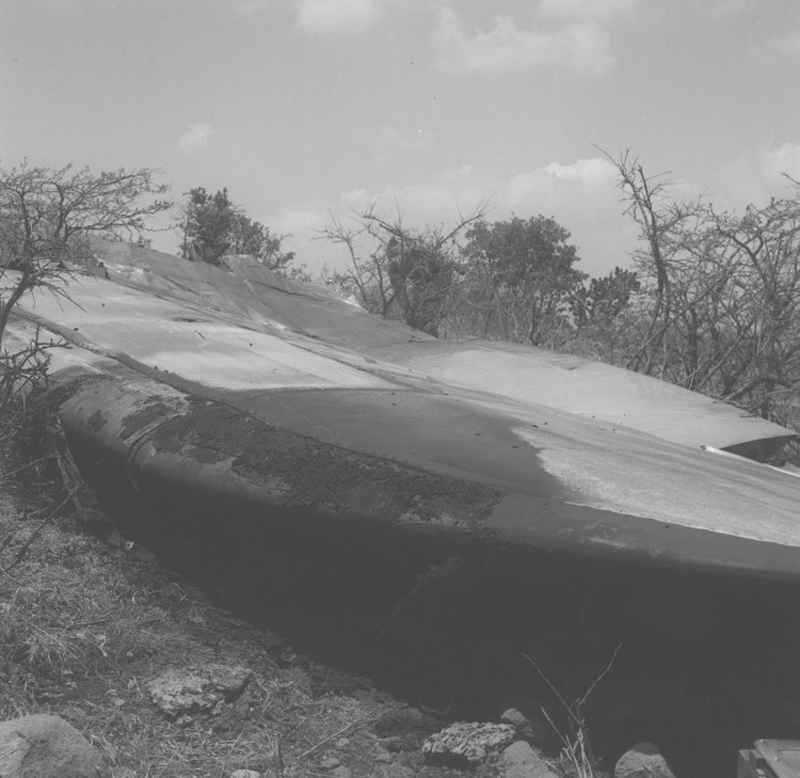
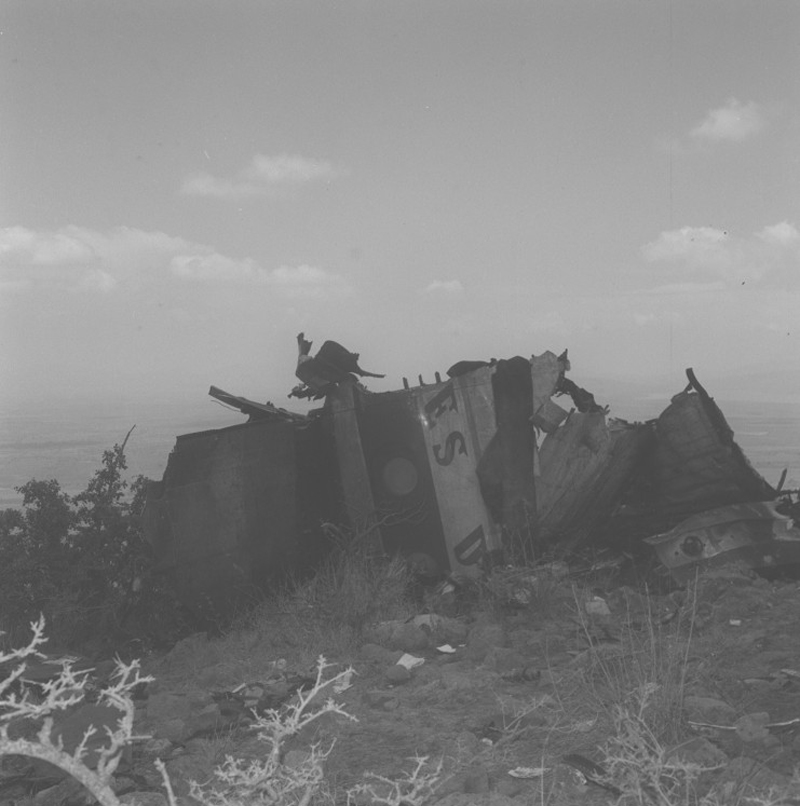
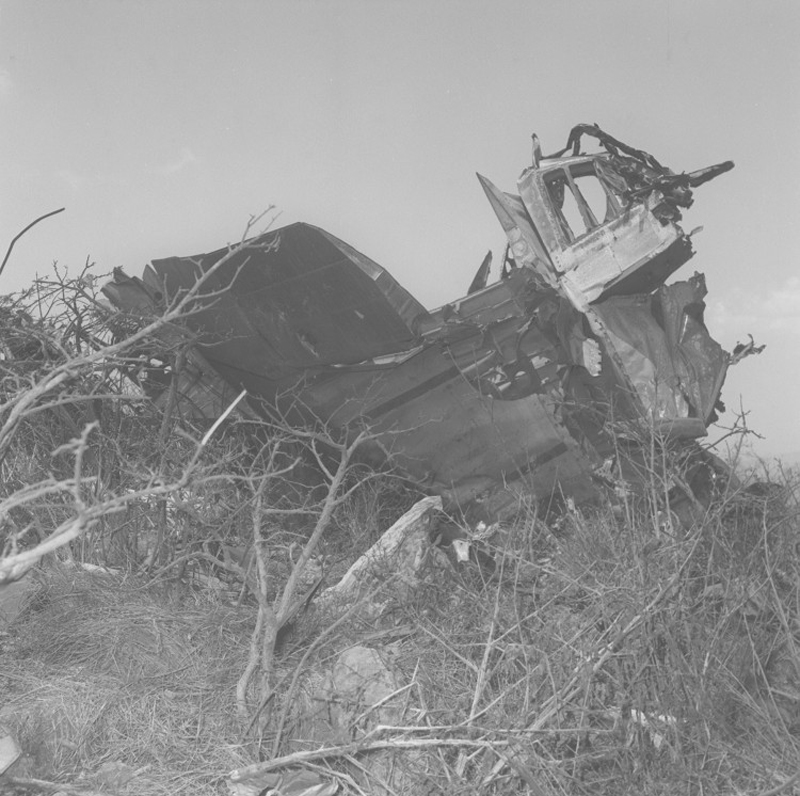
Crash of a Lockheed L-749 Constellation near Périllos: 12 killed

Date & Time: Jan 11, 1963
Registration:
F-BAZM
Flight Phase:
Survivors:
No
Site:
Schedule:
Toulouse - Toulouse
MSN:
2545
YOM:
1947
Country:
Region:
Crew on board:
12
Crew fatalities:
Pax on board:
0
Pax fatalities:
Other fatalities:
Total fatalities:
12
Circumstances:
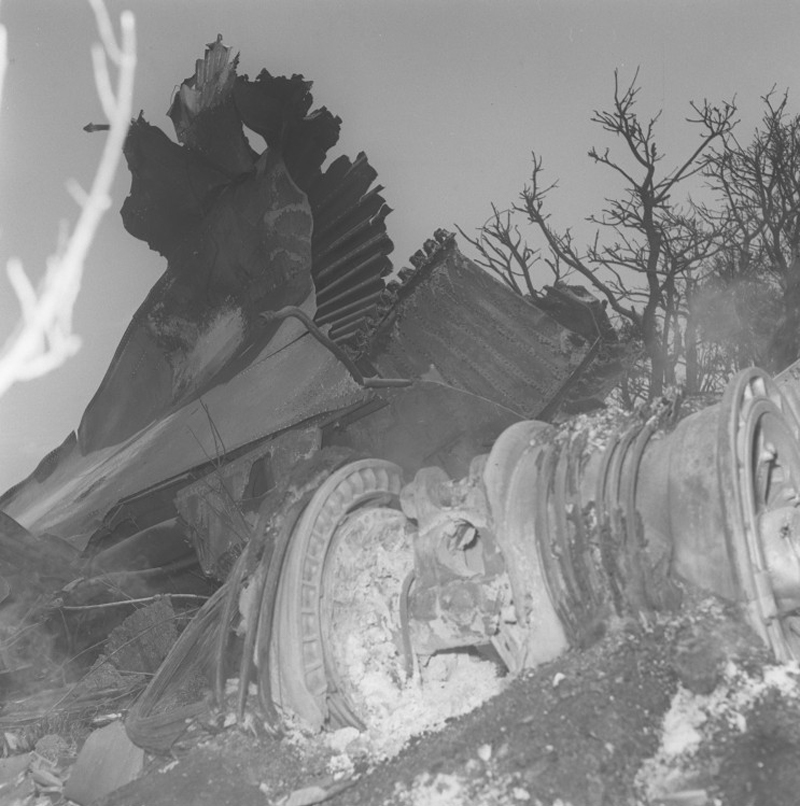
The crew departed Toulouse-Francazal Airbase for a routine flight on behalf of the Escadrille Aérienne de Recherche et de Sauvetage (EARS 99). En route, the four engine aircraft struck the slope of Mt Lapalme located near Périllos, some 26 km north of Perpignan. All 12 occupants were killed.


Crash of a Lockheed L-749A Constellation in Topham: 5 killed

Date & Time: Apr 26, 1962 at 1213 LT
Operator:
Registration:
N116A
Flight Type:
Survivors:
Yes
Schedule:
Topham - Topham
MSN:
2611
YOM:
1949
Country:
Region:
Crew on board:
4
Crew fatalities:
Pax on board:
2
Pax fatalities:
Other fatalities:
Total fatalities:
5
Captain / Total flying hours:
5867
Captain / Total hours on type:
3911.00
Copilot / Total flying hours:
8353
Copilot / Total hours on type:
524
Aircraft flight hours:
41481
Circumstances:
A Lockheed Constellation, Model L-749A, N 116A, owned by the United States Government and operated by the Federal Aviation Agency, crashed following a local training flight at Topham Field, Canton Island, April 26, 1962, at 1213 local time. All four FAA crew members were fatally injured. One of the two passengers, not an FAA employee, was also fatally injured. The other, an FAA physician, was seriously injured. The aircraft was destroyed. The purpose of the flight was to train the copilot in various maneuvers and flight configurations prior to being tested for an Airline Transport Pilot Rating, and to train a flight maintenance technician as a flight engineer.
Probable cause:
The Board finds that the probable cause of the accident was a loss of control during an attempted go around following initial touchdown, as the result of an undetected reversal of n°4 propeller.
Final Report:

Crash of a Lockheed L-749a Constellation into the Caribbean Sea: 3 killed

Date & Time: Nov 11, 1961
Registration:
HH-ABA
Flight Phase:
Flight Type:
Survivors:
No
Schedule:
San Juan – Managua
MSN:
2615
YOM:
1949
Country:
Region:
Crew on board:
3
Crew fatalities:
Pax on board:
0
Pax fatalities:
Other fatalities:
Total fatalities:
3
Circumstances:
En route from San Juan to Managua on a cargo flight, the airplane disappeared from radar screens and crashed in unknown circumstances into the Caribbean Sea. No trace of the aircraft nor the crew was found.
Probable cause:
Due to lack of evidences, it was not possible to determine the exact cause of the accident.

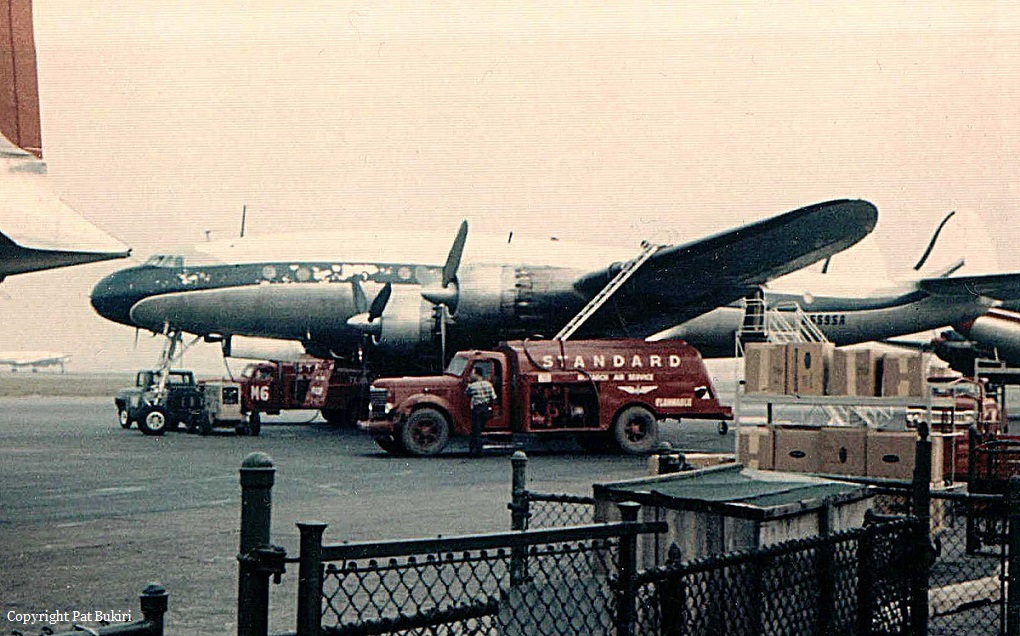
Ground accident of a Lockheed L-749A Constellation in Oakland

Date & Time: Jun 20, 1961
Registration:
N5595A
Flight Phase:
Survivors:
Yes
MSN:
2620
YOM:
1950
Crew on board:
0
Crew fatalities:
Pax on board:
0
Pax fatalities:
Other fatalities:
Total fatalities:
0
Circumstances:
The four engine aircraft was towed by ground personal when it collided with a parked Douglas DC-7C registered N312A and operated by Overseas National Airways. The circumstances of the occurrence remains unclear. There were no injuries but both airplanes were damaged beyond repair.

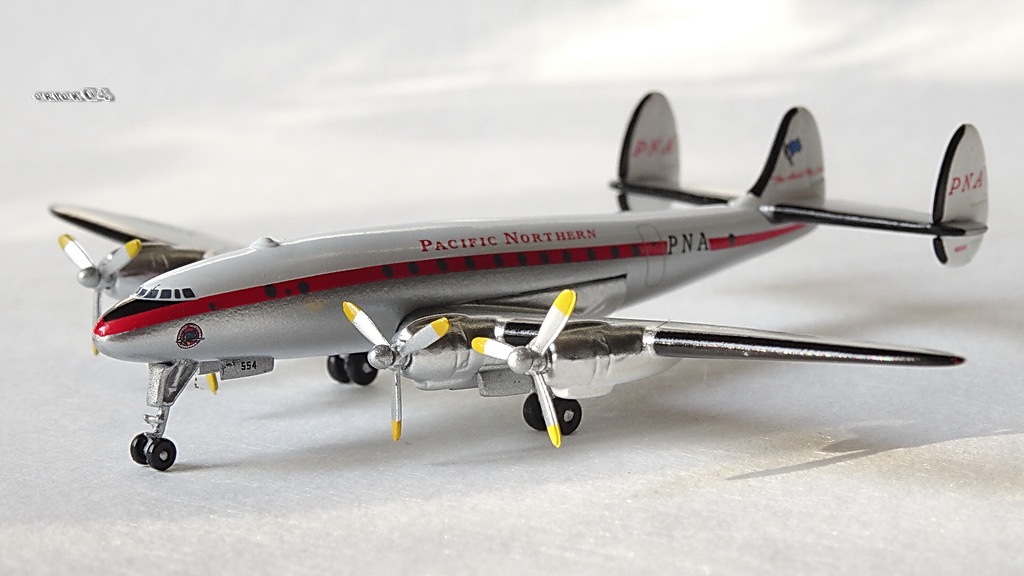
Crash of a Lockheed L-749A-79-32 Constellation on Mt Gilbert: 14 killed

Date & Time: Jun 14, 1960 at 0447 LT
Operator:
Registration:
N1554V
Flight Phase:
Survivors:
No
Site:
Schedule:
Seattle – Cordova – Anchorage
MSN:
2555
YOM:
1947
Flight number:
PN201
Crew on board:
5
Crew fatalities:
Pax on board:
9
Pax fatalities:
Other fatalities:
Total fatalities:
14
Captain / Total flying hours:
14460
Captain / Total hours on type:
4318.00
Copilot / Total flying hours:
2258
Copilot / Total hours on type:
563
Aircraft flight hours:
30560
Circumstances:
Pacific Northern Flight 201 failed to maintain its intended track after taking off from Cordova, Alaska, bound for Anchorage, Alaska. Mt. Gilbert is approximately 28 nautical miles to the right of the flight's first intended checkpoint and is 9,646 feet in elevation. At an altitude of 9,000 feet, crashed into the sheer face of Mt. Gilbert, killing all nine passengers and five crew members.
Probable cause:
The Board determines that the probable cause of this accident was the failure of the crew to use all available navigational aids in establishing the aircraft's position on Amber I Airway, thereby allowing the aircraft to deviate from course and fly over hazardous terrain. A contributing factor was the failure of Air Defense Radar, which had been tracking the aircraft, to notify either ARTCC or the crew that the aircraft was proceeding on a dangerous course.
Final Report:

Crash of a Lockheed L-749A Constellation in Philadelphia

Date & Time: Jan 3, 1960
Operator:
Registration:
N110A
Survivors:
Yes
MSN:
2531
YOM:
1947
Crew on board:
6
Crew fatalities:
Pax on board:
39
Pax fatalities:
Other fatalities:
Total fatalities:
0
Circumstances:
On landing, one of the main landing gear collapsed. The airplane slid for several yards before coming to rest on the runway. There were no injuries among the 45 occupants but the aircraft was later declared as damaged beyond economical repair.
Probable cause:
Gear collapsed on landing.

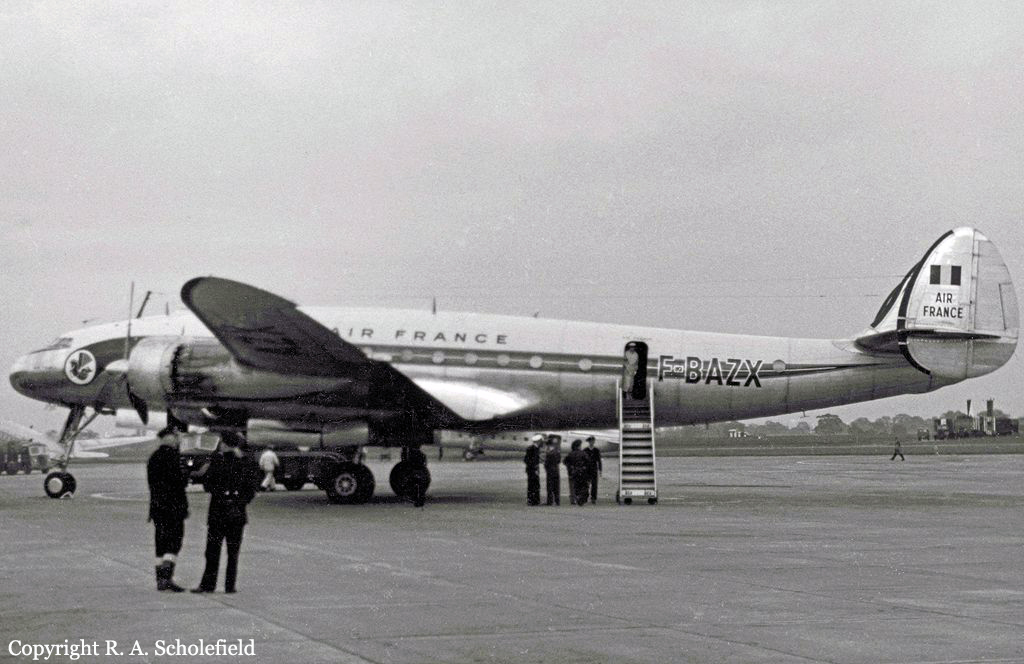
Crash of a Lockheed L-749A Constellation in Vienna

Date & Time: Dec 24, 1958 at 2159 LT
Operator:
Registration:
F-BAZX
Survivors:
Yes
Schedule:
Paris – Munich – Vienna
MSN:
2527
YOM:
1947
Country:
Region:
Crew on board:
6
Crew fatalities:
Pax on board:
28
Pax fatalities:
Other fatalities:
Total fatalities:
0
Circumstances:
Following an uneventful flight from Munich, the crew started an ILS approach to Vienna-Schwechat runway 30. On final, the captain made a visual circuit when ground contact was apparently lost, causing the airplane to lose height. On short final, the Constellation crash landed in a field 2,2 km short of runway 30 threshold and came to rest. All 34 occupants were rescued and the aircraft was damaged beyond repair.
Probable cause:
It is possible to establish that there was no question of a technical malfunction, and that the flight crew lost sight of the ground in the base leg turn, at which time the aircraft adopted an abnormal attitude for this manoeuvre which led to the crash. Presumably the accident could have been avoided through immediate discontinuation of the approach procedure (immediate changeover to climb - heading for radio beacon OEW) following loss of visibility.

Crash of a Lockheed L-749 Constellation near Guadalajara: 45 killed

Date & Time: Jun 2, 1958 at 2206 LT
Operator:
Registration:
XA-MEV
Flight Phase:
Survivors:
No
Site:
Schedule:
Guadalajara – Mexico City
MSN:
2665
YOM:
1951
Flight number:
AM111
Country:
Crew on board:
7
Crew fatalities:
Pax on board:
38
Pax fatalities:
Other fatalities:
Total fatalities:
45
Circumstances:
The aircraft took off from Guadalajara Airport on a scheduled flight to Mexico City, carrying 38 passengers and a crew of 7. It did not follow the established climb-out procedure and crashed at approximately 2206 hours local time against La Latilla mountain, approximately 13 km from the radio beacon west of Guadalajara Airport, killing all persons aboard.
Probable cause:
The aircraft did not climb out in accordance with previously approved procedures - the provisions of which are set out in the Airports Manual.
Final Report:

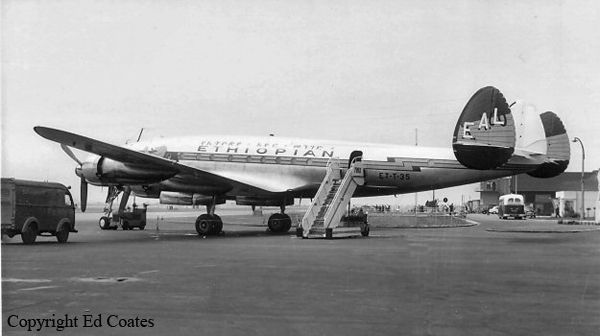
Crash of a Lockheed L-749 Constellation near Khartoum

Date & Time: Jul 10, 1957 at 0920 LT
Operator:
Registration:
ET-T-35
Flight Phase:
Survivors:
Yes
Site:
Schedule:
London – Athens – Khartoum – Addis Ababa
MSN:
2608
YOM:
1949
Flight number:
ET003
Country:
Region:
Crew on board:
6
Crew fatalities:
Pax on board:
14
Pax fatalities:
Other fatalities:
Total fatalities:
0
Circumstances:
The aircraft left Khartoum International Aerodrome at 0555 hours GMT on 10 July carrying a crew of 6 and 14 passengers and was cleared to cruise at 17 500 feet. At 0610 hours, at about 10 500 feet altitude, the number two engine fire warning light for zones 2 and 3 came on and the warning bell rang. The engine was feathered. The CO2 bottle was released and concurrently an explosion followed by a violent fire, made it necessary (at approximately 0620) to land the aircraft with gear up on a large flat cultivated area. There were no injuries to passengers or crew, but the aircraft was almost totally destroyed by fire which continued burning on the ground.
Probable cause:
This accident was due to the overheating of one of the brakes of the main landing gear during the aircraft's taxiing and take-off run. It was caused by a dragging brake and a leakage of hydraulic oil with resultant fire and tire blow out. The tire blow out resulted in damage to hydraulic oil and fuel lines within the confined area of No. 2 engine nacelle, between the rear of the engine fire wall and rear spar, and between the fuselage and left side of the landing gear wheel well doors.
Final Report:

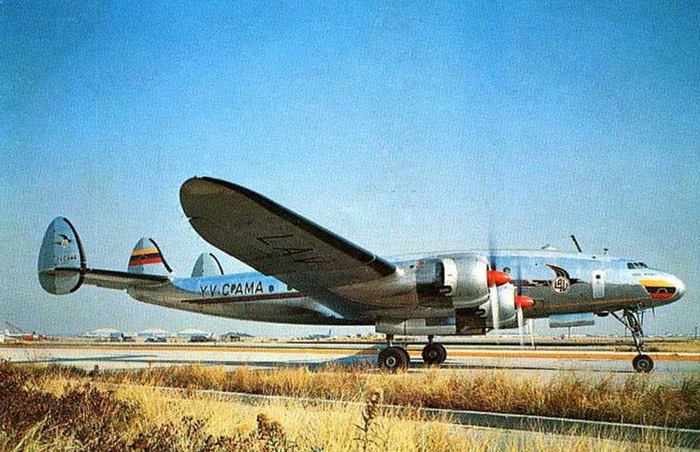
Crash of a Lockheed L-749-79-34 Constellation on Mt Naiguatá: 25 killed

Date & Time: Nov 27, 1956 at 0815 LT
Operator:
Registration:
YV-C-AMA
Survivors:
No
Site:
Schedule:
New York – Caracas
MSN:
2560
YOM:
1947
Flight number:
LV253
Country:
Crew on board:
7
Crew fatalities:
Pax on board:
18
Pax fatalities:
Other fatalities:
Total fatalities:
25
Circumstances:
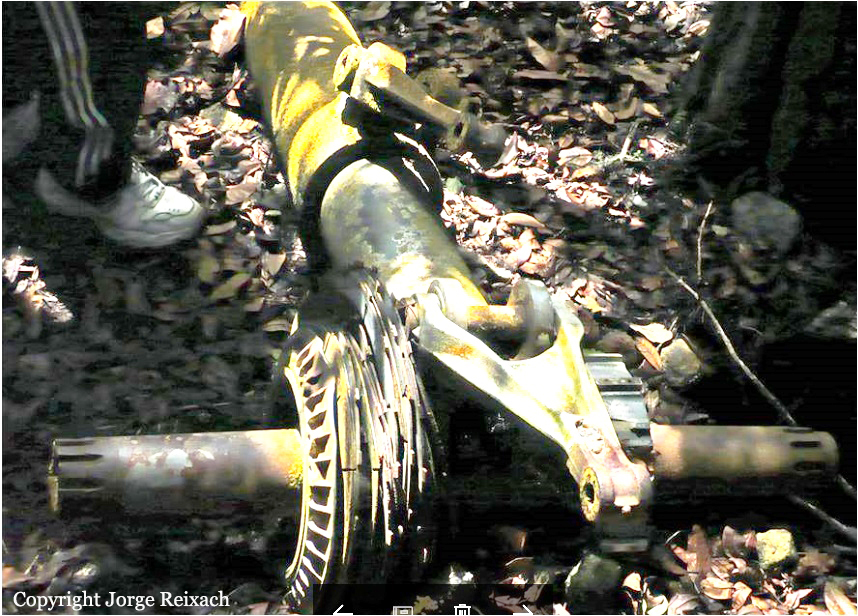
YV-C-AMA, on scheduled flight 253, took off from Idlewild Airport, NY, for Maiquetía, Venezuela, on 26 November with 7 crew and 18 passengers aboard. The flight plan gave an altitude of 17 000 ft, and the duration of the flight was estimated at 9 hours 48 minutes, with Barcelona and Curaçao as alternate airports. The pilot transmitted two position reports, the first, 75 miles northwest of Maiquetía, at 17 500 ft at 0751 hours, and the second, 14 minutes later, 35 miles northwest of Maiquetía at 7 000 ft. No further communication was received from YV-C-AMA after it had been cleared to change to tower frequency. Following the failure to report to the control tower, the aircraft was repeatedly called on all Maiquetía Control Centre frequencies at 0815 hours, with negative results. A state of emergency was declared at 0835 hours, and it was later established that the aircraft struck the western slope of peak El Avila located in the El Avila National Park at an altitude of 6 702 ft, killing all 25 occupants.
Probable cause:
The instrument flight training manuals show that the Linea Aeropostal Venezolana has approved a procedure for entering Maiquetía in semi-IFR conditions. This procedure consists in maintaining a minimum flight level of 10 000 ft as far as the station (Miq 292.5), then turning north over this point and continuing on a 360° heading for 4 minutes followed by a standard let-down to 1 200 ft above sea level until contact is established, and a return to the aerodrome under VFR. It is obvious that the pilot -in-command did not fully comply with this procedure, and, after accumulating errors in estimating his speed, endeavored to make a direct approach which proved fatal because his altitude at the time of his last report was insufficient to cross the Avila mountain range against which the impact occurred.
Final Report: