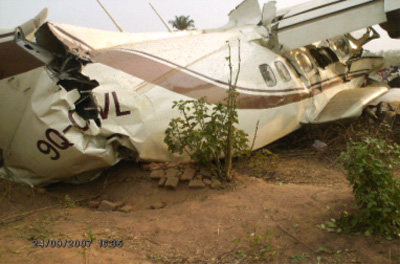
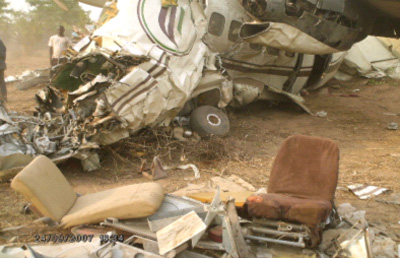
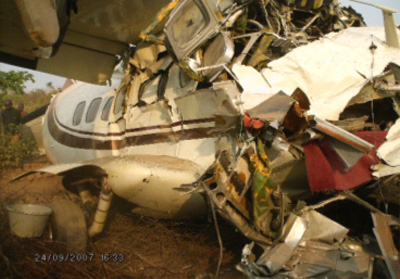
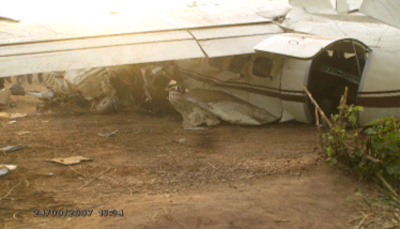
Crash of a Let L-410UVP in Malemba Nkulu: 1 killed

Date & Time: Sep 24, 2007 at 1300 LT
Type of aircraft:
Operator:
Registration:
9Q-CVL
Survivors:
Yes
Schedule:
Lubumbashi – Malemba Nkulu
MSN:
81 06 17
YOM:
1981
Region:
Crew on board:
3
Crew fatalities:
Pax on board:
4
Pax fatalities:
Other fatalities:
Total fatalities:
1
Circumstances:
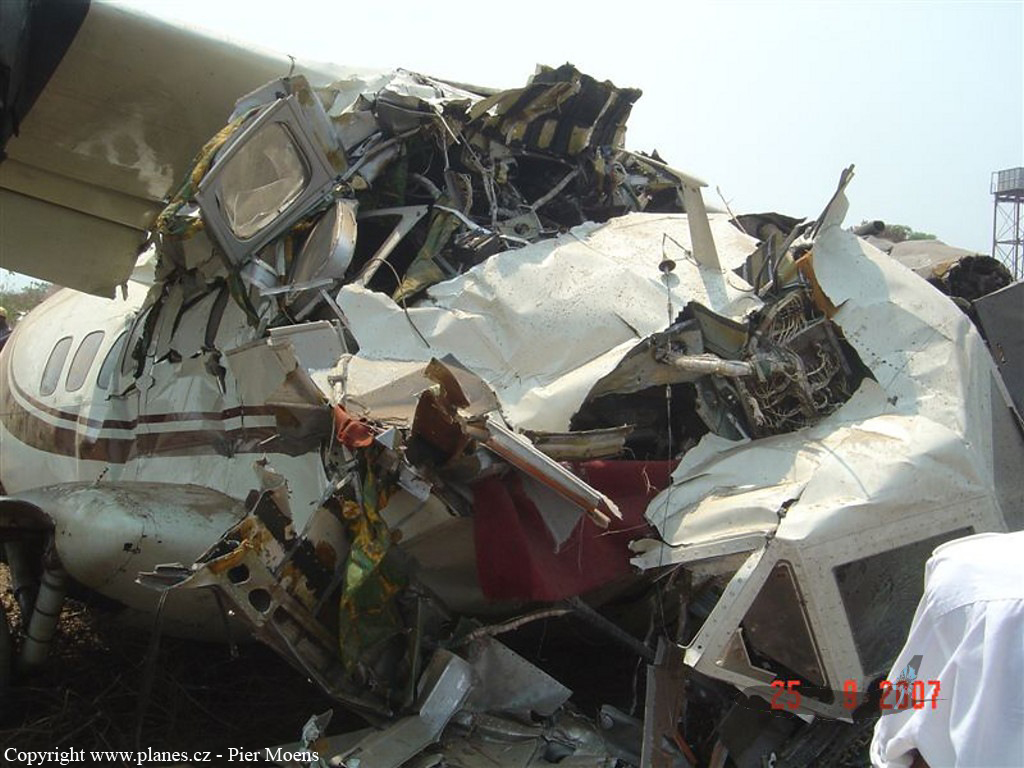
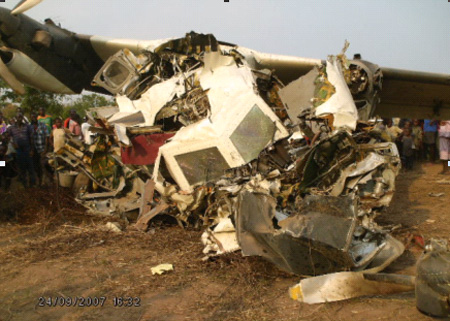
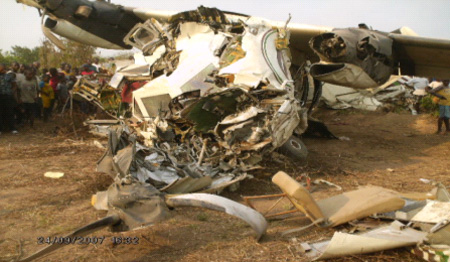
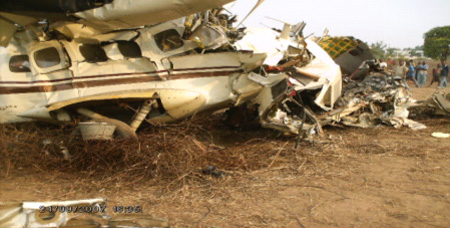
On final approach to Malemba Nkulu, the twin engine aircraft stalled and crashed in a cemetery located 500 metres short of runway. The copilot was killed while four passengers and the captain were seriously injured. The stewardess escaped unhurt. The aircraft was destroyed.

Crash of a Let L-410UVP in Bandundu

Date & Time: Jul 18, 2007
Type of aircraft:
Registration:
9Q-CIM
Flight Phase:
Survivors:
Yes
MSN:
83 09 35
YOM:
1983
Region:
Crew on board:
0
Crew fatalities:
Pax on board:
0
Pax fatalities:
Other fatalities:
Total fatalities:
0
Circumstances:
Shortly after takeoff from Bandundu Airport, while in initial climb, the twin engine aircraft collided with a flock of birds, stalled and crashed. There were no casualties but the aircraft was destroyed.
Probable cause:
Loss of control and subsequent crash on takeoff following a bird strike.

Crash of a Let L-410UVP-E3 near Brazzaville

Date & Time: Jun 26, 2007
Type of aircraft:
Registration:
9Q-CTM
Flight Phase:
Survivors:
Yes
MSN:
88 20 31
YOM:
1988
Country:
Region:
Crew on board:
0
Crew fatalities:
Pax on board:
0
Pax fatalities:
Other fatalities:
Total fatalities:
0
Circumstances:
En route, the crew encountered GPS problems and lost his orientation. An emergency landing was attempted when the aircraft crashed about 100 km from Brazzaville. There were no casualties.

Crash of a Let L-410UVP in Kamina: 1 killed

Date & Time: Jun 21, 2007
Type of aircraft:
Operator:
Registration:
9Q-CEU
Flight Phase:
Survivors:
Yes
Schedule:
Kamina – Lubumbashi
MSN:
84 12 14
YOM:
1984
Location:
Region:
Crew on board:
2
Crew fatalities:
Pax on board:
24
Pax fatalities:
Other fatalities:
Total fatalities:
1
Circumstances:
Shortly after takeoff from Kamina Airport, while in initial climb, the twin engine aircraft stalled and crashed in a swampy area. A parliamentary member of the DRC government was killed while all other occupants escaped with various injuries.

Crash of a Let L-410UVP in Walikale: 3 killed

Date & Time: May 17, 2007 at 1100 LT
Type of aircraft:
Operator:
Registration:
TN-AHE
Flight Phase:
Flight Type:
Survivors:
No
Schedule:
Walikale – Goma
MSN:
85 13 35
YOM:
1985
Region:
Crew on board:
2
Crew fatalities:
Pax on board:
1
Pax fatalities:
Other fatalities:
Total fatalities:
3
Circumstances:
The twin engine aircraft was performing a cargo flight from Walikale to Goma, carrying one passenger, two pilots and a load consisting of two tons of minerals (cassiterite). Three minutes after it departed a 700 metres long dirt road, one of the engine caught fire. The crew elected to return for an emergency landing when the aircraft went out of control and crashed in a wooded area. All 3 occupants were killed.

Crash of a Let L-410UVP in Ouani

Date & Time: Apr 9, 2007 at 1130 LT
Type of aircraft:
Operator:
Registration:
D6-CAK
Flight Phase:
Survivors:
Yes
Schedule:
Ouani - Bandar Es Eslam
MSN:
841219
YOM:
1984
Flight number:
KMZ611
Region:
Crew on board:
2
Crew fatalities:
Pax on board:
13
Pax fatalities:
Other fatalities:
Total fatalities:
0
Circumstances:
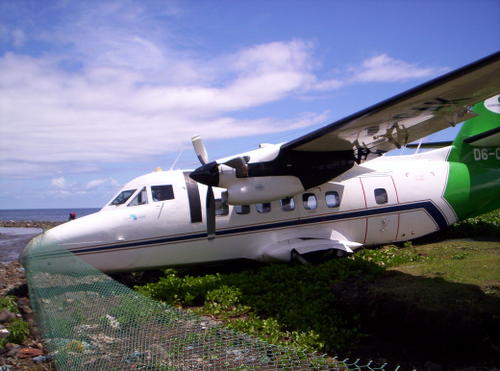
During the takeoff roll on runway 28, the pilot-in-command decided to reject takeoff and initiated an emergency braking procedure. The aircraft overran, turned to the left, lost its undercarriage and came to rest on a river bank. All 15 occupants escaped uninjured while the aircraft was damaged beyond repair.

Crash of a Let L-410UVP in Walikale: 1 killed

Date & Time: Nov 9, 2006 at 1600 LT
Type of aircraft:
Operator:
Registration:
9Q-CBQ
Survivors:
Yes
Site:
Schedule:
Walikale – Goma
MSN:
85 13 38
YOM:
1985
Region:
Crew on board:
2
Crew fatalities:
Pax on board:
2
Pax fatalities:
Other fatalities:
Total fatalities:
1
Circumstances:
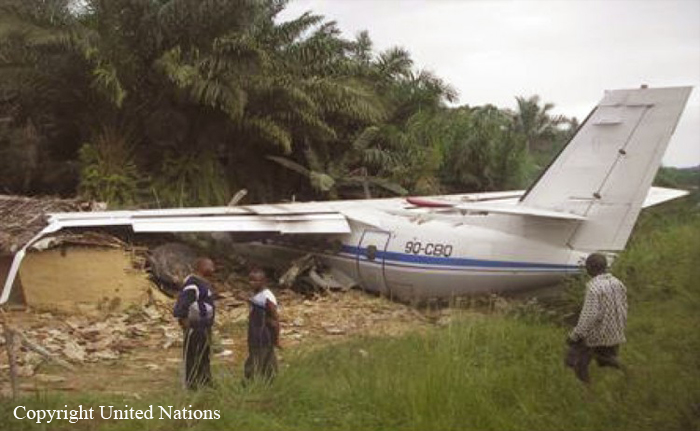
The twin engine aircraft departed Walikale to Goma from an asphalt road connecting Walikale to Mubi and Kisangani as there is no airport in Walikale. Few minutes after takeoff, engines problems forced the crew to return to Walikale but the road was reopened to traffic. On landing, the aircraft collided with several vehicles, veered off road and eventually collided with a house. All four occupant escaped with minor injuries while one people in a car was killed. The aircraft was damaged beyond repair.

Crash of a Let L-410UVP-E near La Venturosa

Date & Time: Aug 4, 2006
Type of aircraft:
Operator:
Registration:
YV-867CP
Flight Phase:
Flight Type:
Survivors:
Yes
MSN:
87 20 10
YOM:
1987
Country:
Crew on board:
0
Crew fatalities:
Pax on board:
0
Pax fatalities:
Other fatalities:
Total fatalities:
0
Circumstances:
The twin engine aircraft departed La Venturosa Airport on an illegal flight to Venezuela. It crashed in unknown circumstances about 145 km west-northwest of Puerto Ayacucho. There were no casualties.

Crash of a Let L-410UVP-E20 near Rio Bonito: 19 killed

Date & Time: Mar 31, 2006 at 1739 LT
Type of aircraft:
Operator:
Registration:
PT-FSE
Flight Phase:
Survivors:
No
Site:
Schedule:
Macaé – Rio de Janeiro
MSN:
91 25 32
YOM:
1991
Flight number:
TIM6865
Country:
Crew on board:
2
Crew fatalities:
Pax on board:
17
Pax fatalities:
Other fatalities:
Total fatalities:
19
Captain / Total flying hours:
10000
Captain / Total hours on type:
39.00
Copilot / Total flying hours:
5220
Copilot / Total hours on type:
1719
Aircraft flight hours:
2739
Aircraft flight cycles:
3960
Circumstances:
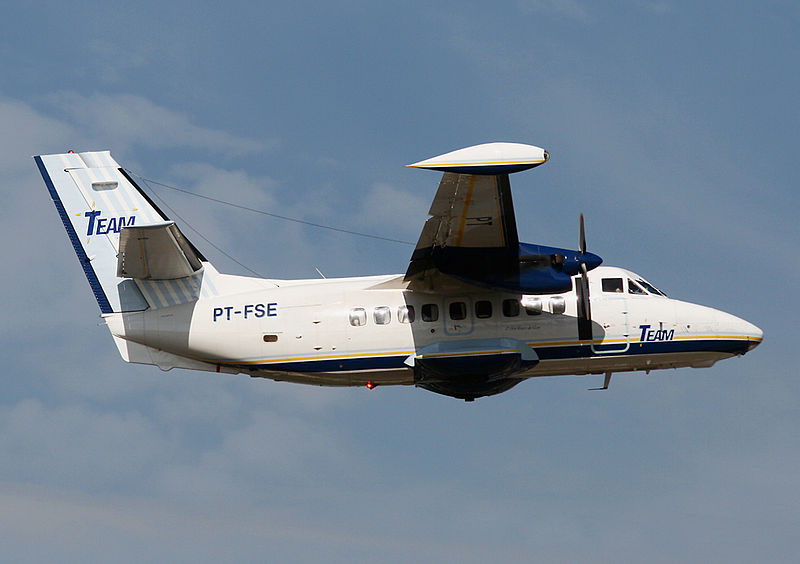
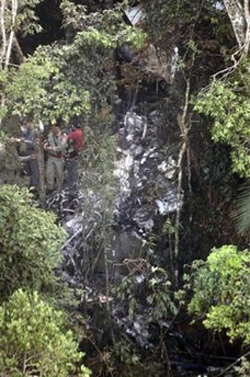
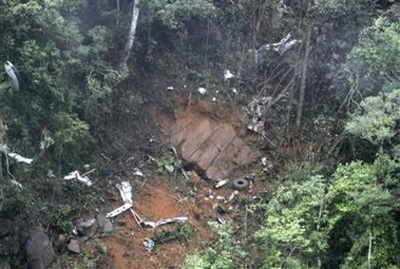
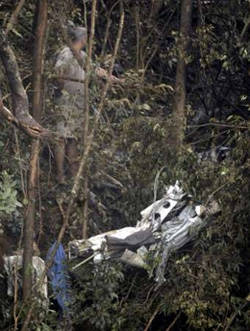
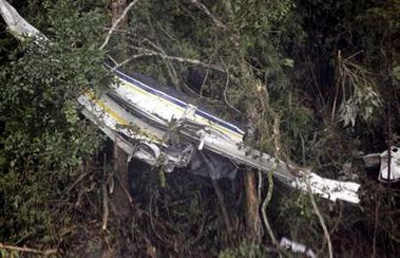
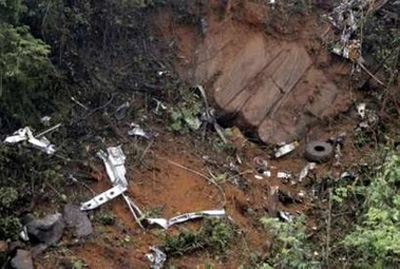
The twin engine aircraft departed Macaé Airport at 1719LT on a flight to Rio de Janeiro-Santos Dumont Airport with 17 passengers and two pilots on board. Few minutes later, the copilot cancelled the IFR flight plan and continued under VFR mode at an altitude of 4,500 feet. Approaching São Pedro da Aldeia, the copilot was cleared to descend to 2,000 feet to avoid poor weather conditions. Later, while approaching Saquarema, the crew initiated a left turn to avoid clouds when shortly later, at an altitude of 1,920 feet, the aircraft struck the Pedra Bonita Peak. The wreckage was found six km southeast of Rio Bonito in a dense wooded area. The aircraft was totally destroyed and all 19 occupants were killed.
Probable cause:
Controlled flight into terrain after the crew decided to continue under VFR mode in IMC conditions. The following contributing factors were identified:
- Overconfidence on part of the captain who was familiar with the area,
- The organizational culture of the company proved to be complacent by not inhibiting the adoption of procedures incompatible with flight safety, such as the low altitude flights made by the instructor captain,
- There was inadequate assessment of the situation by the crew, causing them to fly at a lower altitude than the safe limits under visual conditions unsuitable for visual flight, resulting in the collision of the aircraft with high ground,
- The use of human resources for the operation of the aircraft was unsuitable because of failure to comply with operational standards, leading the crew to perform a passenger flight to the lower altitude limits of safety, under inadequate visual conditions,
- The preparation for the flight proved inadequate because the crew did not have a meteorological analysis of the appropriate level of flight performed, considering that the conditions for the region were overshadowing the Serra do Mar and surrounding areas of low clouds and / or mist, especially on the slopes of the mountain,
- The weather conditions prevailing in the region made visual flight impossible, resulting in the concealment of the elevation at which the aircraft crashed,
- The pilots intentionally not complying with rules of air traffic and civil aviation rules, without grounds, performing flight at low altitude, under conditions of visibility below the limits established for VFR flight, colliding with high grounD,
- The company has not taken appropriate supervisory measures, enabling the existence of a culture of undeveloped flight safety, which prevented advance identification of actions taken by the crew and injured misconception exists in the CRM business, which represented a potential risk to their operations, as well as by the failure of some educational measures provided for in its PPAA (Plan for the Prevention of Aeronautical Accidents).
Final Report:

Crash of a Let L-410UVP-E19A in Bergamo: 3 killed

Date & Time: Oct 30, 2005 at 2204 LT
Type of aircraft:
Operator:
Registration:
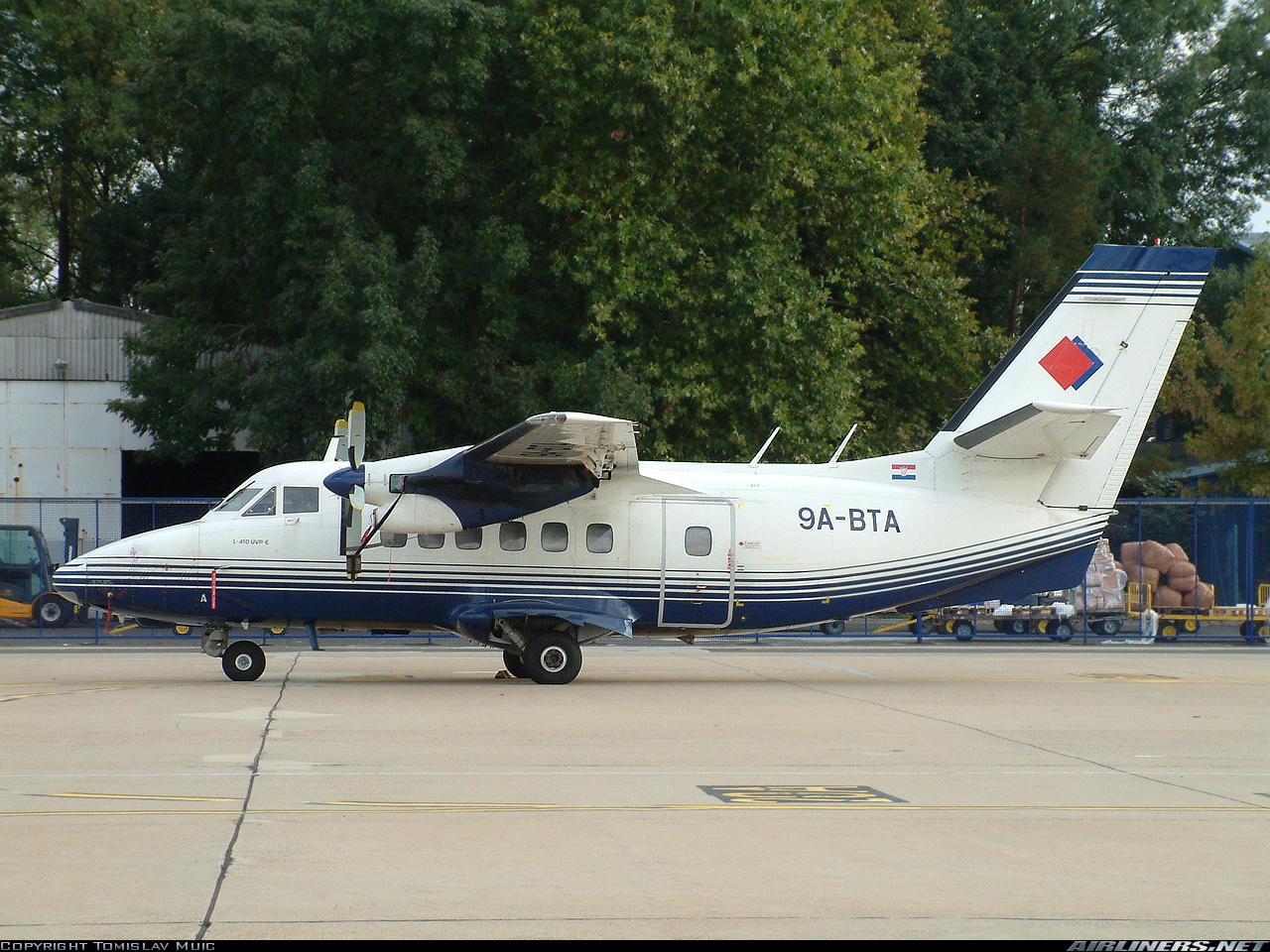
9A-BTA
Flight Phase:
Flight Type:
Survivors:
No
Schedule:
Bergamo - Zagreb
MSN:
91 25 38
YOM:
1991
Flight number:
TDR729
Country:
Region:
Crew on board:
2
Crew fatalities:
Pax on board:
1
Pax fatalities:
Other fatalities:
Total fatalities:
3
Captain / Total flying hours:
7780
Captain / Total hours on type:
760.00
Copilot / Total flying hours:
1272
Copilot / Total hours on type:
200
Aircraft flight hours:
7185
Circumstances:
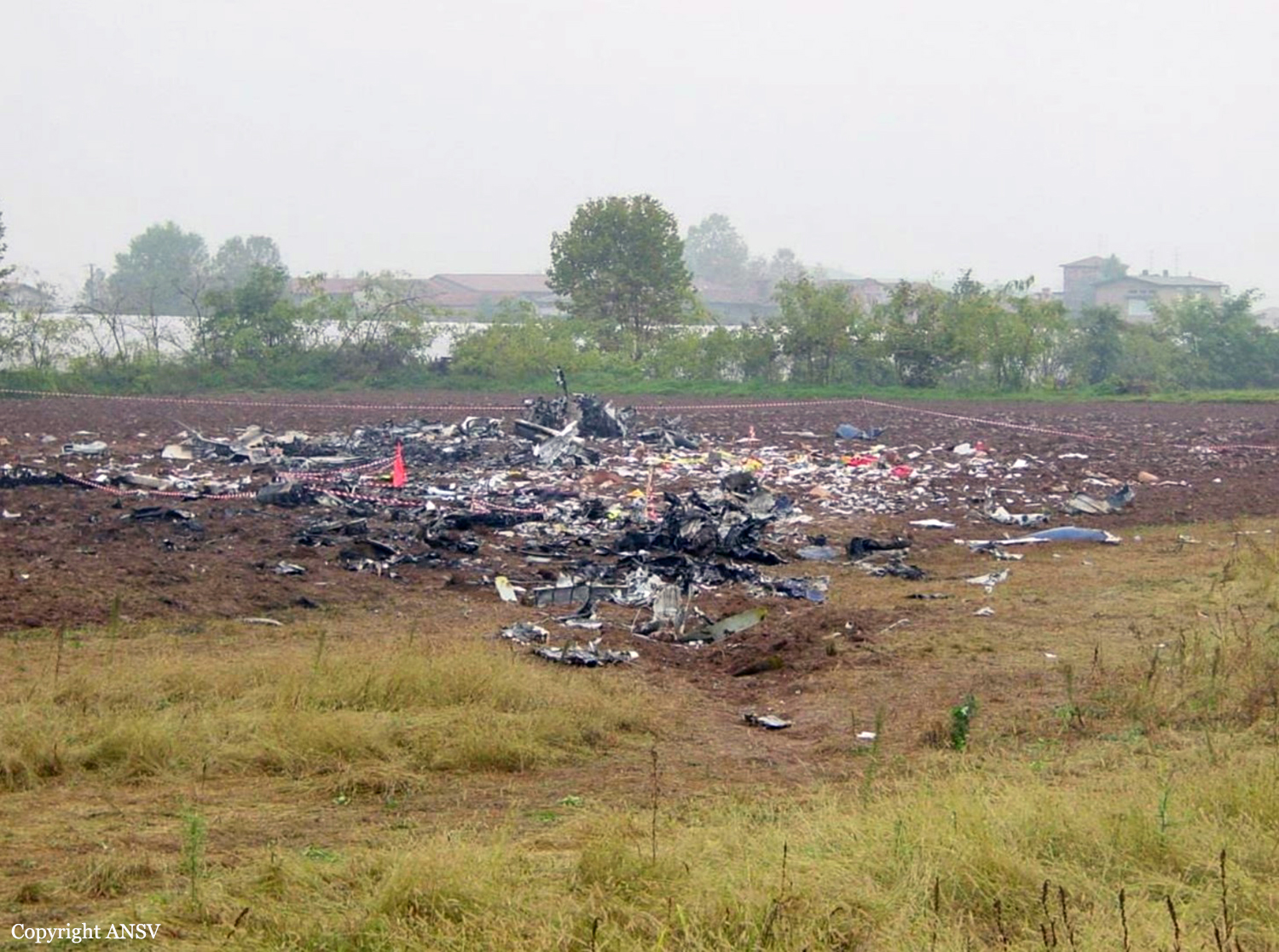
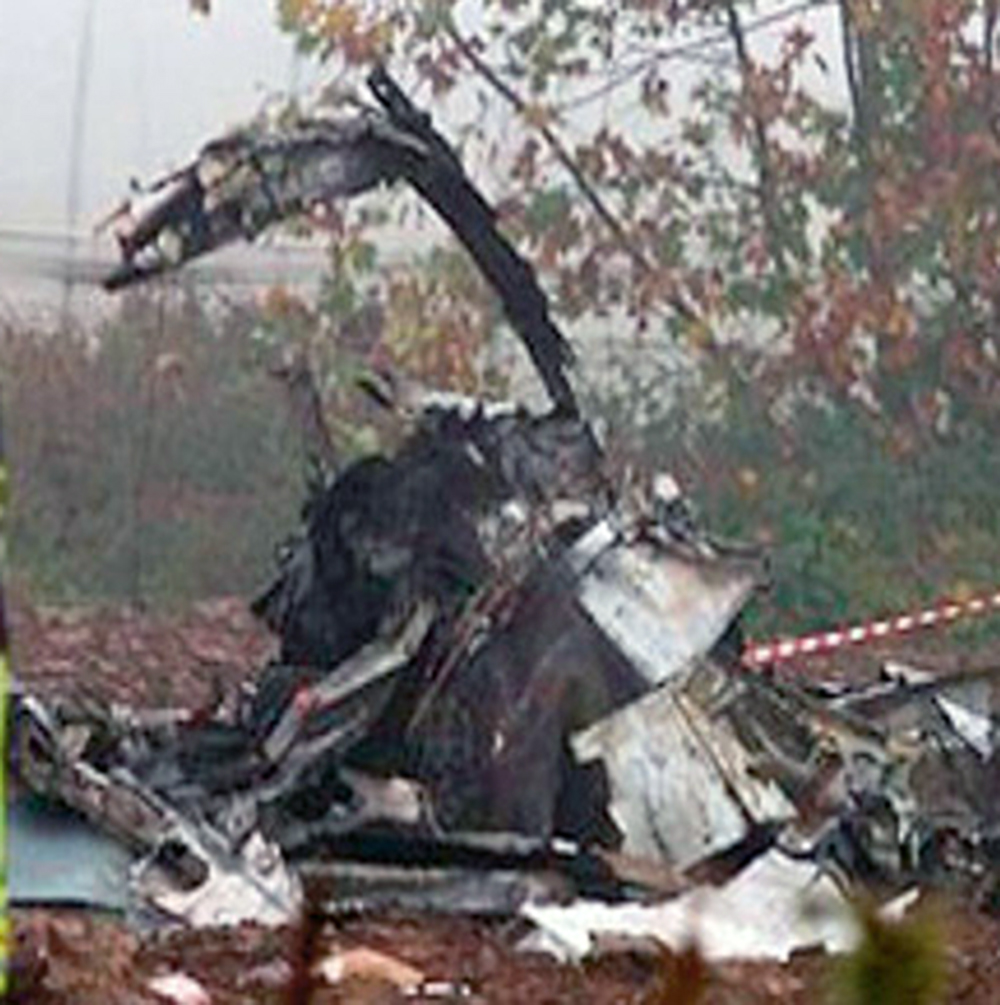
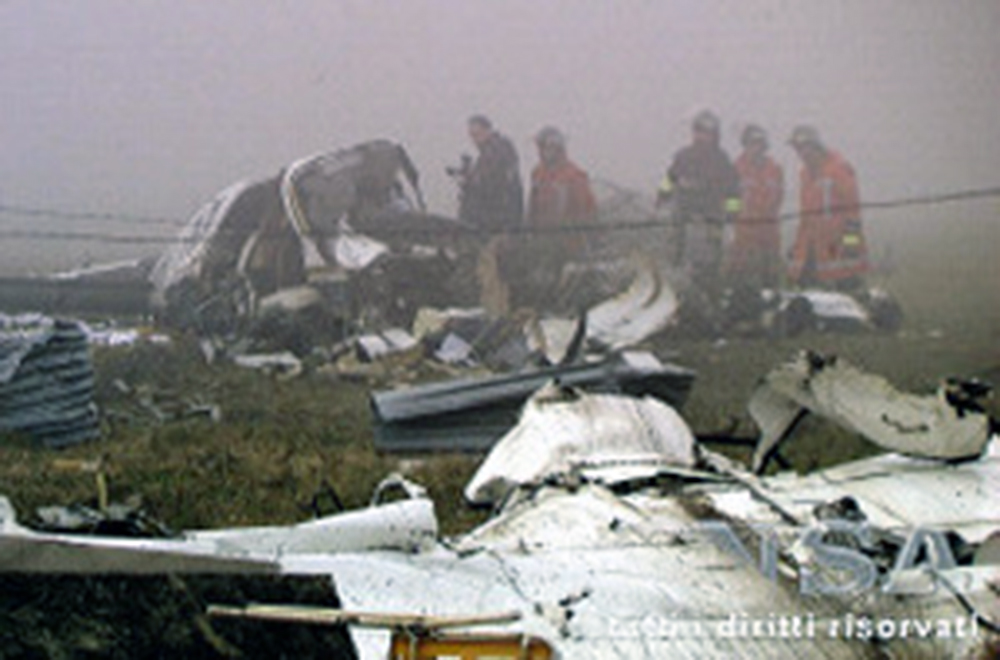
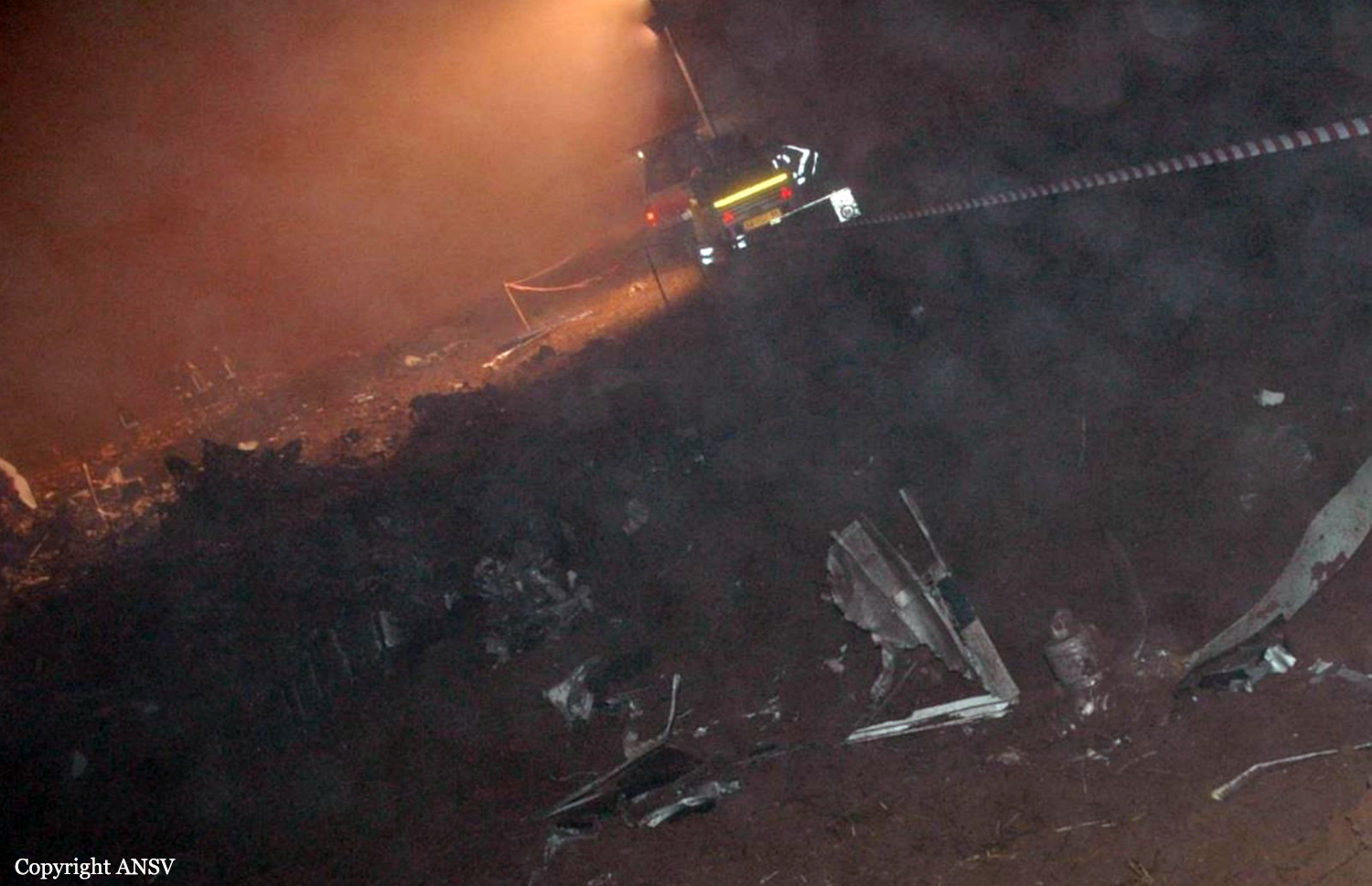
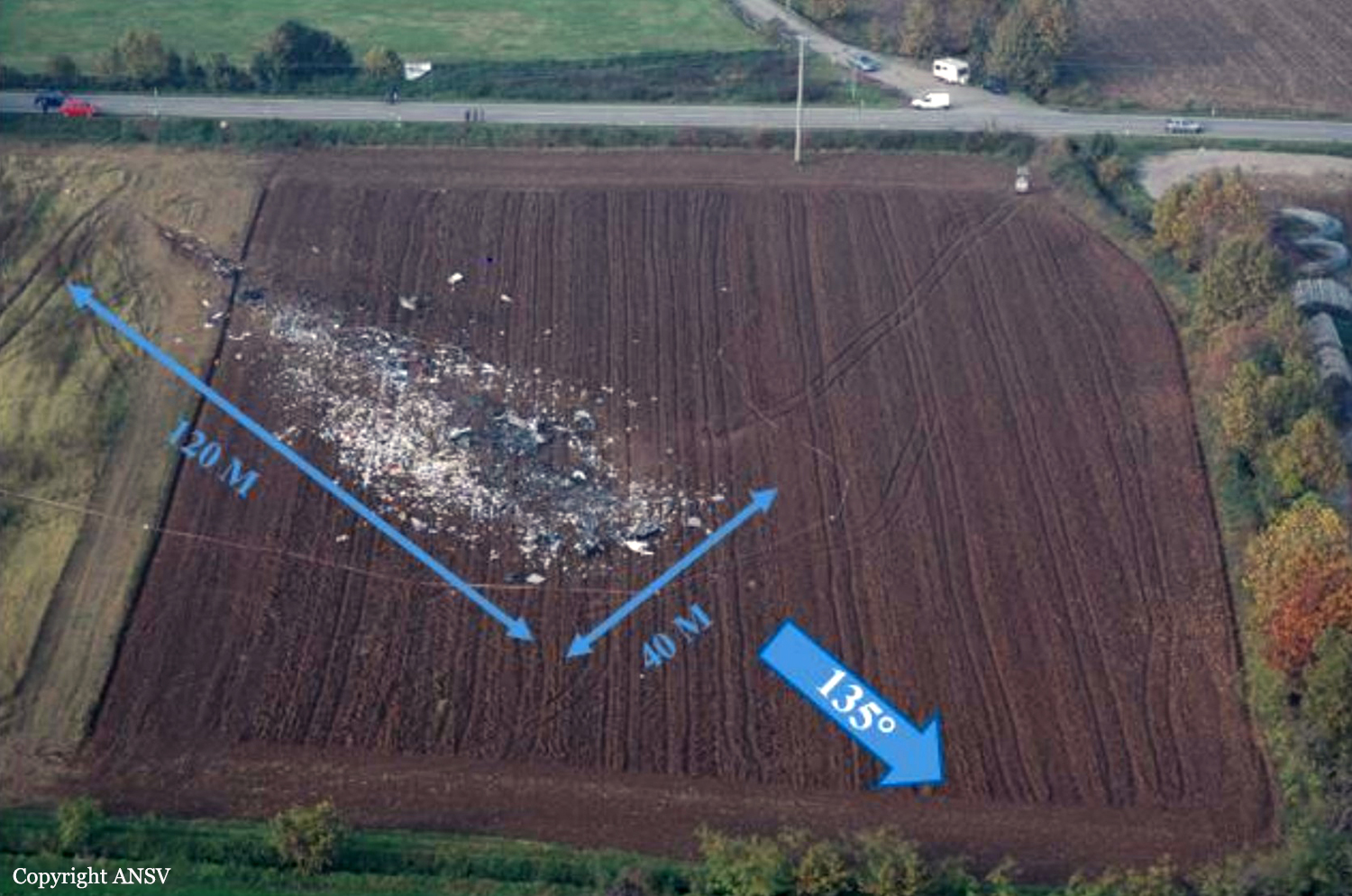
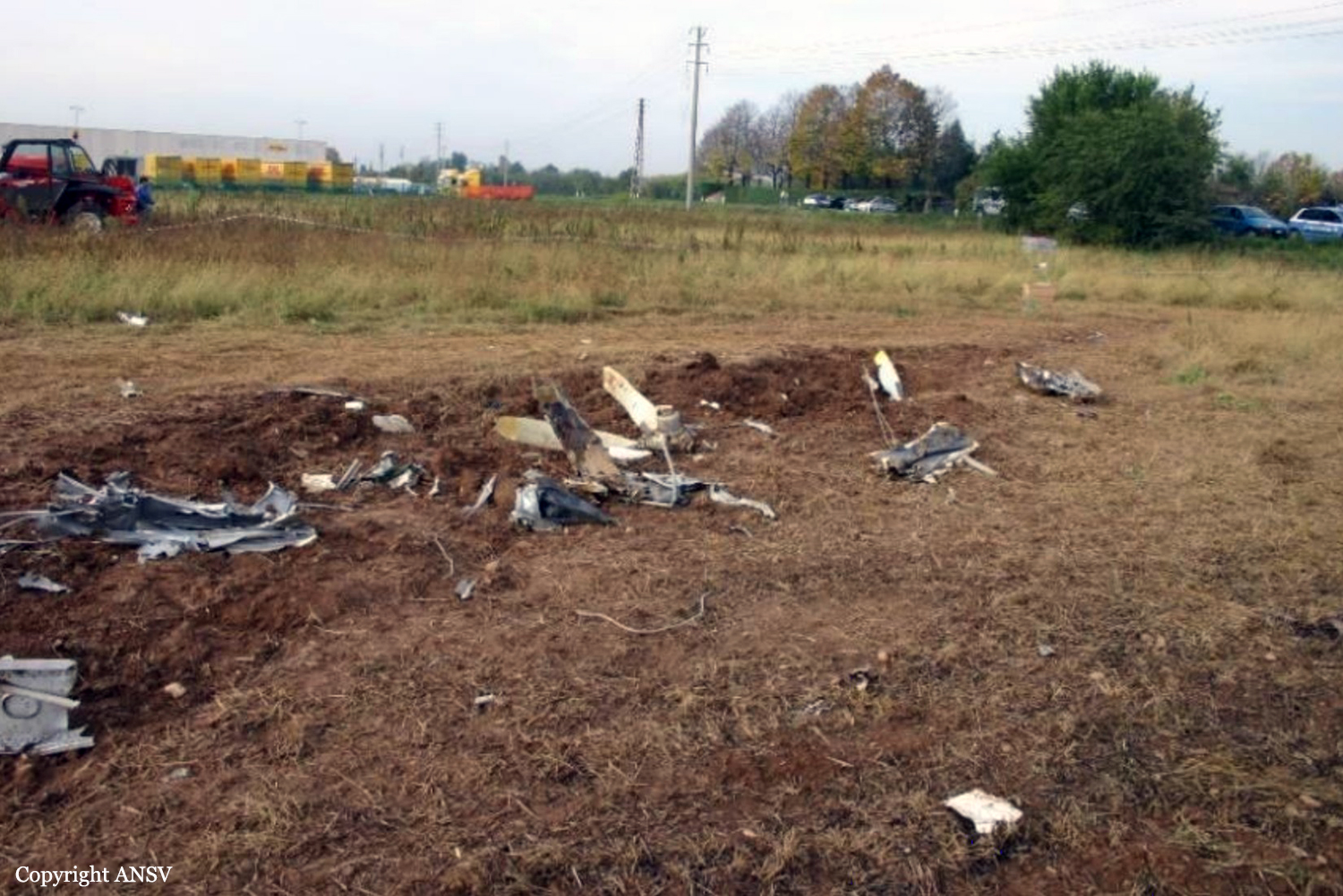
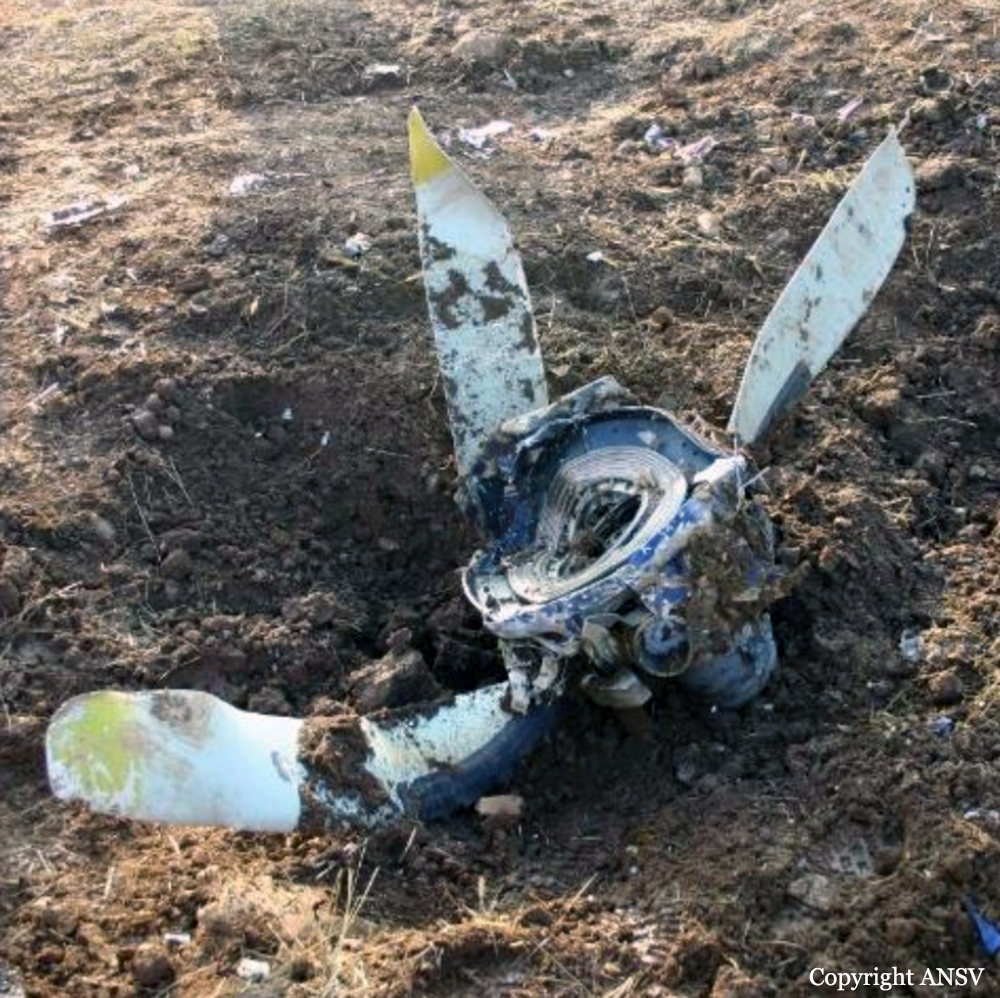
The twin engine aircraft departed Bergamo-Orio al Serio Airport on a night cargo service to Zagreb, carrying one passenger (the captain's wife), two pilots and a load of 1,600 kilos of small packages. After takeoff from runway 28, while climbing in foggy conditions, the aircraft entered a left turn then descended, collided with a powerline and crashed in an open field located one km north of the airfield. The aircraft disintegrated on impact and all three occupants were killed.
Probable cause:
As far as is established, documented and substantiated, the cause of the accident is due to a loss of control in flight of the aircraft. Although the cause of this loss of control could not be established with incontrovertible certainty, it can reasonably be assumed that it was caused by a deterioration in the situation awareness of the crew during the initial climb immediately after take-off. The loss of such situation awareness may have been contributed jointly or severally:
- The displacement or incorrect positioning of the load, which would have induced a moment of rotation on the longitudinal axis of the aircraft (roll) not immediately perceived and counteracted by the crew;
- Spatial disorientation, as a result of the possible optical illusion produced by the high speed "E" TWY lights, which, crossing the thick fog, could have induced the pilot to veer, thus causing the final loss of control of the aircraft. In addition, the limited flight experience of the co-pilot and the inadequate application of CRM techniques by the crew did not allow for a timely identification of the hazardous situation and the necessary actions to recover the aircraft.
Final Report: