Crash of a Douglas DC-3-277D in Dallas

Date & Time: Sep 15, 1943
Type of aircraft:
Operator:
Registration:
NC33657
Flight Phase:
Flight Type:
Survivors:
Yes
MSN:
4803
YOM:
1942
Crew on board:
2
Crew fatalities:
Pax on board:
0
Pax fatalities:
Other fatalities:
Total fatalities:
0
Circumstances:
Shortly after take off, while in initial climb, the aircraft stalled and crashed in an open field. Both pilots were injured and the aircraft was written off.

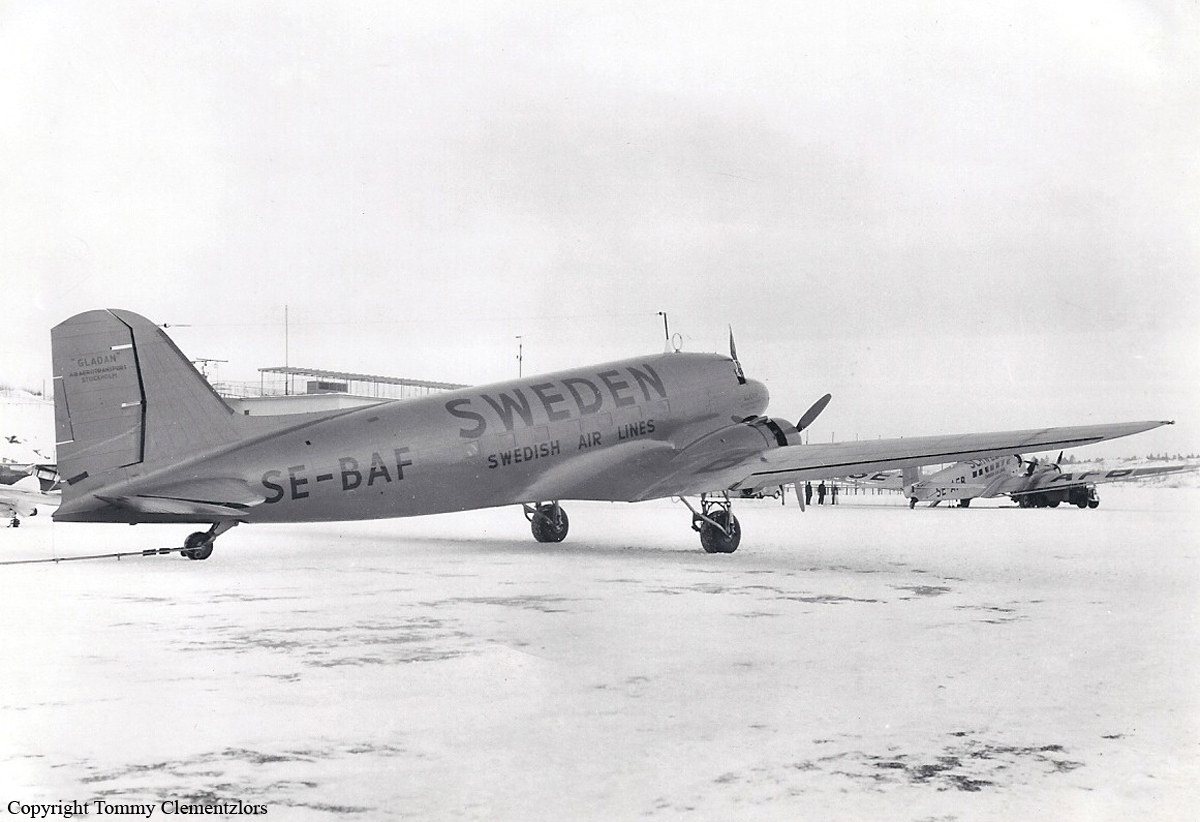
Crash of a Douglas DC-3-268 into the North Sea: 7 killed

Date & Time: Aug 27, 1943 at 2341 LT
Type of aircraft:
Operator:
Registration:
SE-BAF
Flight Phase:
Survivors:
No
Schedule:
Aberdeen – Stockholm
MSN:
2133
YOM:
1939
Location:
Country:
Region:
Crew on board:
4
Crew fatalities:
Pax on board:
3
Pax fatalities:
Other fatalities:
Total fatalities:
7
Circumstances:
The aircraft christened 'Gladan' left Aberdeen-Dyce Airport at 2023LT bound for Stockholm-Bromma. At 2341LT, eleven minutes after the last radio contact, while cruising at an altitude of 5,100 meters, the aircraft was shot down by the pilot of a German fighter and crashed into the North Sea some 70 km west of Hirsthals, Denmark. No trace of the aircraft was found.
Probable cause:
Shot down by a German fighter.

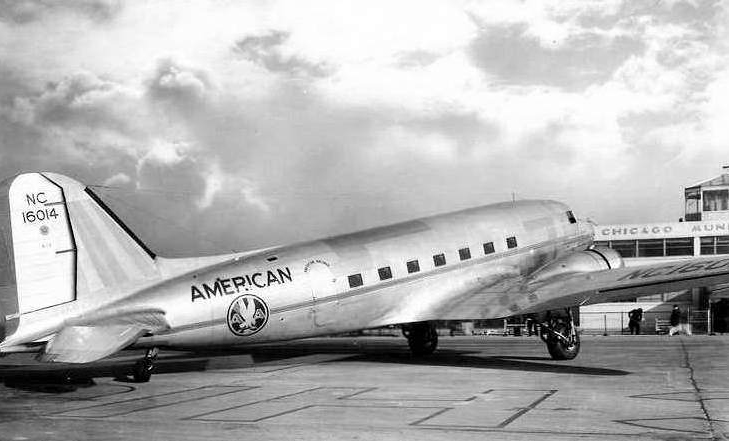
Crash of a Douglas DC-3-178 in Trammel: 20 killed

Date & Time: Jul 28, 1943 at 2243 LT
Type of aircraft:
Operator:
Registration:
NC16014
Flight Phase:
Survivors:
Yes
Schedule:
Cleveland – Columbus – Dayton – Cincinnati – Louisville – Nashville – Memphis
MSN:
1552
YOM:
1936
Flight number:
AA063
Crew on board:
4
Crew fatalities:
Pax on board:
18
Pax fatalities:
Other fatalities:
Total fatalities:
20
Captain / Total flying hours:
4315
Captain / Total hours on type:
2700.00
Copilot / Total flying hours:
970
Copilot / Total hours on type:
238
Aircraft flight hours:
17991
Circumstances:
Flight 63 originated at and left Cleveland about 5:42 p.m. EET cleared to Memphis on American's Route 22 with intermediate stops scheduled at Columbus, Dayton, Cincinnati, Louisville and Nashville. En route from Dayton to Cincinnati, the trip encountered adverse weather which, together with unreported Army traffic, made it seem advisable to return to Dayton. The situation at Cincinnati improved and after a delay of about 30 to 40 minutes the flight proceeded to Cincinnati end thence to Louisville, where it landed at 9:42 p.m. CWT2/. It was refueled and cleared to take off at 9:54 p.m. to fly at 4000 feet with estimated time of arrival at Nashville of 10:54 p.m. At 9:54 p.m., apparently just before take-off from Louisville, Captain Stiller requested Louisville to advise Nashville that he wanted to change his flight plan to proceed to Smiths Grove, Kentucky at 2500 feet. and continue to Nashville at 2000 feet. This change was subsequently approved by Nashville and relayed to the flight by Smiths Grove Airways Communications Station. (Smiths Grove is located on American Route 22, approximately 69 miles in a northeasterly direction from Nashville.) At approximately 10:22 p.m. when the flights about 15 miles northeast of Smiths Grove the following radio contact was made with the airways communication station at Smiths Grove: "Route 22, trip 63 over Smiths Grove at 10 29 p.m. at 2500 feet." Although static interference made radio telephone communication impossible between the flight and American stations at Nashville or Louisville, this report as relayed to Nashville and Louisville via interphone by the Smiths Grove radio operator. At 10:28 p.m. the flight advised the Smiths Grove Station by radio of the presence of an aircraft approximately 3 miles south of Smiths Grove, flying at about 5000 feet. The station operator informed the flight that he -was aware of its presence and that it was an Army plane practicing on the Smiths Grove range. Acknowledgement of this information was the last message received from the flight. Shortly thereafter, when Flight 63 failed to report, there followed an intensive radio search by at least twenty radio communication stations. At about 1:00 a.m. July 29, the police at Trammel notified American at Nashville of the crash of Flight 63 at Trammel. (Trammel is on American Route 22, about 21 miles southeast of Smiths Grove.). Examination of the wreckage did not reveal any evidence whatsoever which would indicate any mechanical or structural failure of the aircraft in flight. Examination of both engines revealed that they were functioning normally at the time of impact. There was adequate fuel aboard. Inspection of the propellers disclosed settings of 23 1/2 degree on the left propeller and 24 degree on the right. It appears probable that these settings were indicative of the settings immediately prior to impact. The wreckage was found on the airway less than 2 miles from the "on course" signal of the Smiths Grove Radio Range. The rolling terrain of the locale varies from 695 to 720 feet above sea level. Examination of the wreckage and of marks and cuts on the ground and trees revealed that the aircraft, while level laterally and descending about 11 degree from horizontal, initially struck and cut a path through a small grove of trees, 35 feet in depth about 16 feet above the ground. It struck the ground approximately 85 feet beyond the point of first contact with the trees, continued on an almost straight course (221 degree) through another small clump of trees, then across an open field and stopped in an upright position among several larger trees, about 1000 feet beyond the point of first impact. Just prior to coming to rest, the right wing was sheared from the fuselage by impact with a large tree and it was found approximately 25 feet behind the fuselage.
Crew:
Harry A. Stiller, pilot,
B. A. Carpenter, pilot,
Robert M. McClure, copilot,
Josephine Kane, stewardess.
Probable cause:
Loss of control of the aircraft due to unusually severe turbulence and violent downdraft caused by a thunderstorm of unknown and unpredictable intensity.
Final Report:

Crash of a Douglas Dakota III in Tunis: 6 killed

Date & Time: Jul 11, 1943 at 2208 LT
Type of aircraft:
Operator:
Registration:
FD815
Flight Phase:
Flight Type:
Survivors:
No
Schedule:
Tunis - Tunis
MSN:
9132
YOM:
1943
Country:
Region:
Crew on board:
4
Crew fatalities:
Pax on board:
2
Pax fatalities:
Other fatalities:
Total fatalities:
6
Captain / Total flying hours:
913
Captain / Total hours on type:
120.00
Circumstances:
Three minutes after its night take off from Tunis-El Aouina Airport, while in initial climb, the aircraft caught fire and crashed in flames 5 km northwest of the airport. The aircraft was totally destroyed and all six occupants were killed.
Crew (267th Squadron):
F/O G. V. Gibson, pilot,
F/O H. G. Spencer, copilot,
Lt S. M. Yardwyn, navigator,
F/Sgt K. Patterson, wireless operator.
Passengers:
W/Cdr F. S. Leslie,
Maj Baxter.
Source: http://www.rafcommands.com/forum/showthread.php?17280-Dakota-FD815-Dummy-Parachutists
Probable cause:
The Court finds that a fire occurred in the aircraft, probably at the rear end of the cabin, shortly after take-off. There is no direct evidence as to the origin of the fire. The Court, however, considers that the fire did not originate in a dummy parachutist, but could have originated by the accidental firing of a pintail. The Court does not have any evidence as to the cause of the crash, but considers it possible that the fire inside the fuselage destroyed the elevator controls, or produced so much smoke as to blind the pilot. The highly inflammable nature of the cargo would have made remedial action almost impossible once a dummy parachutist had caught fire, which would happen at once if ignited by a pintail. The accidental firing of a dummy on the other hand gives three minutes warning during which the dummy could have been jettisoned. The Court considers that Major Baxter was properly instructed and capable of performing his duties. He probably commenced arming the pintails as soon as airborne. This coincides with the outbreak of the fire.

Crash of a Douglas Dakota III off Sfax: 2 killed

Date & Time: Jul 9, 1943
Type of aircraft:
Operator:
Registration:
FD774
Flight Phase:
Flight Type:
Survivors:
Yes
Schedule:
Tunis – Castel Benito
MSN:
6238
YOM:
1943
Country:
Region:
Crew on board:
3
Crew fatalities:
Pax on board:
0
Pax fatalities:
Other fatalities:
Total fatalities:
2
Circumstances:
The aircraft left Tunis-El Aouina Airport bound for Castel Benito with a crew of three on board. While cruising along the Tunisian coast at an altitude of 2,000 feet, both engine failed. The captain attempted to ditch the aircraft in rough sea. Few hours later, he was rescued while both other crew members were lost at sea.
Crew:
F/Sgt R. W. Cargill, pilot,
W/O John James Smith, navigator, †
F/Sgt Daniel James Arthur Hannan, wireless operator and air gunner. †
Probable cause:
Fuel starvation suspected. Last refuel at RAF Castel Benito where contaminated fuel problems were noted.

Crash of a Douglas Dakota III in Gibraltar

Date & Time: Jul 8, 1943
Type of aircraft:
Operator:
Registration:
FD888
Flight Type:
Survivors:
Yes
MSN:
9540
YOM:
1943
Region:
Crew on board:
0
Crew fatalities:
Pax on board:
0
Pax fatalities:
Other fatalities:
Total fatalities:
0
Circumstances:
Overshot on landing in Gibraltar and crashed into the sea. No casualties.

Crash of a Douglas DC-3-196A near Yanchi: 32 killed

Date & Time: Jun 9, 1943
Type of aircraft:
Operator:
Registration:
URSS-N
Flight Phase:
Survivors:
No
Site:
Schedule:
Alma Ata – Tihwa – Hami
MSN:
2043
YOM:
1938
Country:
Region:
Crew on board:
4
Crew fatalities:
Pax on board:
28
Pax fatalities:
Other fatalities:
Total fatalities:
32
Circumstances:
En route from Tihwa (now Urumqi) to Hami, the crew encountered poor weather conditions with low clouds and severe icing conditions. While cruising below minima weather conditions, the aircraft encountered strong downstream in the region of the Chigi-Chinze Pass. It went out of control and crashed at an altitude of some 2,000 meters about 20 km northeast of Yanchi. The wreckage was found six days later, on June 15. All 32 occupants, among them 26 Chinese citizens, were killed.

Crash of a Douglas DC-3-194 into the Bay of Biscay: 17 killed

Date & Time: Jun 1, 1943 at 1254 LT
Type of aircraft:
Operator:
Registration:
G-AGBB
Flight Phase:
Survivors:
No
Schedule:
Lisbon – Bristol
MSN:
1590
YOM:
1936
Flight number:
2L777
Country:
Region:
Crew on board:
4
Crew fatalities:
Pax on board:
13
Pax fatalities:
Other fatalities:
Total fatalities:
17
Circumstances:
The aircraft left Lisbon-Portela de Sacavém at 0730LT on a regular schedule flight to Bristol-Whitchurch Airport. While cruising over the Bay of Biscay, the aircraft was intercepted and shot down by eight German Junkers JU.88 fighters. The civil aircraft went out of control and crashed into the sea some 350 km north of La Coruna. All 17 occupants, among them the British actor Leslie Howard, were killed.
Crew:
Cpt Quirinus Tepas Obe, pilot,
Cpt Dirk de Koning, pilot,
Cornelis van Brugge, radio operator,
Engbertus Rosevink, flight engineer.
Passengers:
Leslie Howard,
Alfred T. Chenhalls,
Kenneth Stonehouse,
Evelyn Peggy Margetts Stonehouse,
Rotha Hutcheon
Petra Hutcheon,
Carolina Hutcheon,
Cecelia Emilia Falla Paton,
Tyrrell Mildmay Shervington,
Ivan James Sharp,
Wilfrid Israel,
Francis German Cowlrick,
Gordon Thompson MacLean.
Probable cause:
Shot down by German fighters. Theories abound that the aircraft, a Douglas DC-3, was attacked because the Germans believed that British Prime Minister Winston Churchill was aboard. Other theories suggest the DC-3 was targeted because several passengers, including Howard, were British spies. During the Second World War, British and German civilian aircraft operated out of the same facilities at Portela and the incoming and outgoing traffic was watched by Allied and Axis spies. The Lisbon - Bristol route frequently carried agents and escaped PoWs to Britain.

Crash of a Douglas DC-3-196 in Saratov: 1 killed

Date & Time: May 24, 1943 at 1615 LT
Type of aircraft:
Operator:
Registration:
URSS-B
Flight Phase:
Survivors:
Yes
Schedule:
Baku – Astrakhan – Saratov – Moscow
MSN:
2035
YOM:
1943
Country:
Region:
Crew on board:
4
Crew fatalities:
Pax on board:
16
Pax fatalities:
Other fatalities:
Total fatalities:
1
Circumstances:
The crew decided to take off in the direction of rising ground as there was some side wind in the normal takeoff direction. The aircraft lifted off close to the end of the runway, made a turn at low height and low speed in order to come clear of the hill ahead, stalled, came down and collided with an earth wall. The copilot was killed while all 19 other occupants were injured.
Probable cause:
Wrong decision on part of the crew who decided to takeoff from the wrong runway considering the wind direction (11 km/h cross wind). The reaction of the copilot during the initial climb was erroneous and the supervision of the captain was inappropriate.