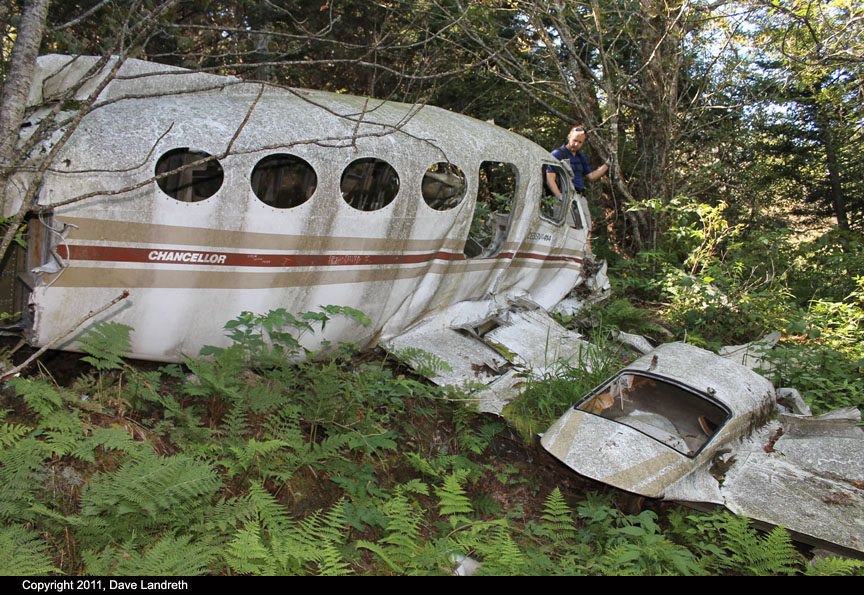
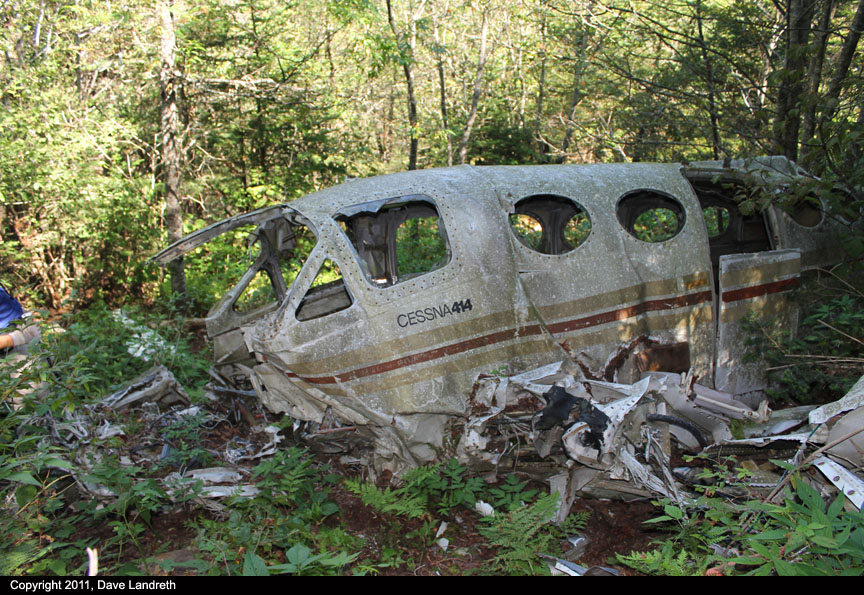
Crash of a Cessna 414 Chancellor in Rutland: 1 killed

Date & Time: Aug 24, 1984 at 1050 LT
Type of aircraft:
Operator:
Registration:
N18SM
Flight Type:
Survivors:
No
Site:
Schedule:
Worcester - Rutland
MSN:
414-0548
YOM:
1974
Crew on board:
1
Crew fatalities:
Pax on board:
0
Pax fatalities:
Other fatalities:
Total fatalities:
1
Captain / Total flying hours:
7010
Captain / Total hours on type:
1800.00
Aircraft flight hours:
1852
Circumstances:
The pilot was executing a second attempt for an instrument approach to runway 19, following a missed approach on the first attempt. The pilot last reported over the iaf, 9 miles north of the airport. The aircraft collided with a mountain at an elevation of 1,700 feet and 5 miles south of the airport. The wreckage was oriented on a 190° magnetic heading and near the extended centerline of runway 19. The mda for the approach is 1,680 feet msl. The map is a climbing right turn to 5,000 feet direct to the iaf. The airport is surrounded by mountains. The landing gear and flaps were found extended. Examination of the aircraft disclosed on evidence of malfunction. Both occupants were killed.
Probable cause:
Occurrence #1: in flight collision with terrain/water
Phase of operation: approach
Findings
1. (f) weather condition - low ceiling
2. (f) terrain condition - high terrain
3. (f) terrain condition - mountainous/hilly
4. (c) ifr procedure - not followed - pilot in command
5. (c) missed approach - not performed - pilot in command
Final Report:

Crash of a Cessna 414A Chancellor in Winchester: 4 killed

Date & Time: Jul 5, 1984 at 0905 LT
Type of aircraft:
Registration:
N59DB
Flight Phase:
Survivors:
No
Schedule:
Fort Wayne - Atlanta
MSN:
414A-0260
YOM:
1979
Crew on board:
1
Crew fatalities:
Pax on board:
3
Pax fatalities:
Other fatalities:
Total fatalities:
4
Captain / Total flying hours:
650
Captain / Total hours on type:
200.00
Aircraft flight hours:
1164
Circumstances:
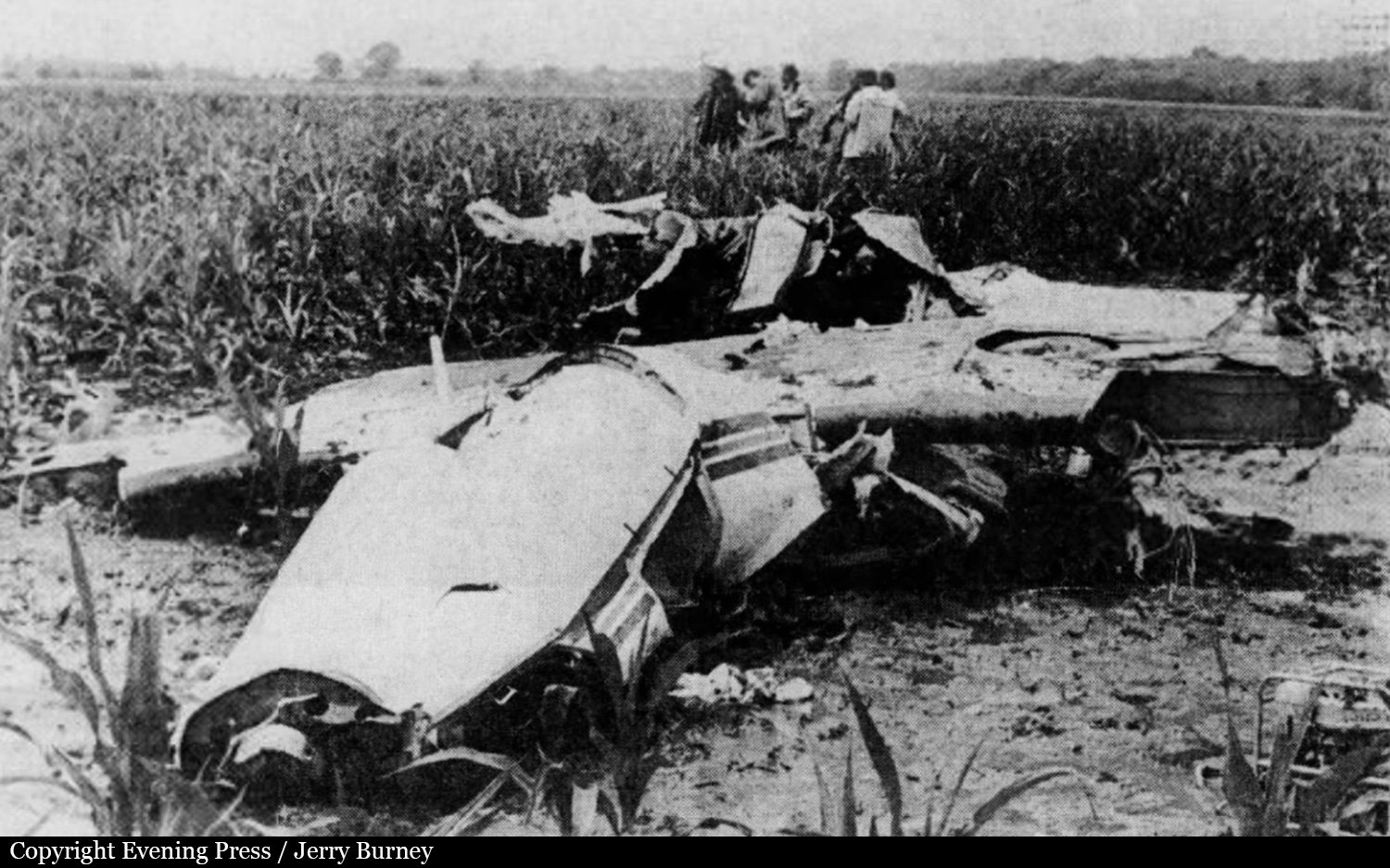
The aircraft entered an embedded thunderstorm after being advised by artc of several large areas of heavy precipitations in his area and along the vicinity of his flight path. The pilots response was that his aircraft radar showed no build-ups or returns. ATC allowed deviations at pilot's discretion according to the recorded taped conversation. The pilot continued his flight path and was lost on radar shortly thereafter in a descending right turn at 16,800 feet msl. Witnesses saw him exit the bottom of the cloud at about 1,000 feet agl. The wings were seen to separate from the fuselage. Other witnesses saw the fuselage descend inverted, minus the wings, empennage and engines, to impact in a corn field. The wreckage was scattered over an area 1 and 1/2 miles long and 1/2 mile wide. Witnesses who had observed the aircrafts preparations for departure described it as 'mass confusion' in the cockpit. The aircraft reportedly crept forward six times during an extended 10-15 minute checklist while the engines were running at a high rpm setting on a ramp with other aircraft and people around. All four occupants were killed.
Probable cause:
Occurrence #1: loss of control - in flight
Phase of operation: cruise - normal
Findings
1. (c) preflight planning/preparation - inadequate - pilot in command
2. (f) in-flight planning/decision - inadequate - pilot in command
3. (c) flight into known adverse weather - initiated - pilot in command
4. (f) weather condition - thunderstorm
5. (c) flight advisories - not followed - pilot in command
6. (f) visual/aural perception - pilot in command
7. (c) lack of total experience - pilot in command
----------
Occurrence #2: airframe/component/system failure/malfunction
Phase of operation: descent - uncontrolled
Findings
8. (c) design stress limits of aircraft - exceeded - pilot in command
9. (f) wing - separation
10. (f) flight control surfaces/attachments - separation
11. (f) engine assembly - separation
----------
Occurrence #3: in flight collision with terrain/water
Phase of operation: descent - uncontrolled
Findings
12. Terrain condition - open field
Final Report:

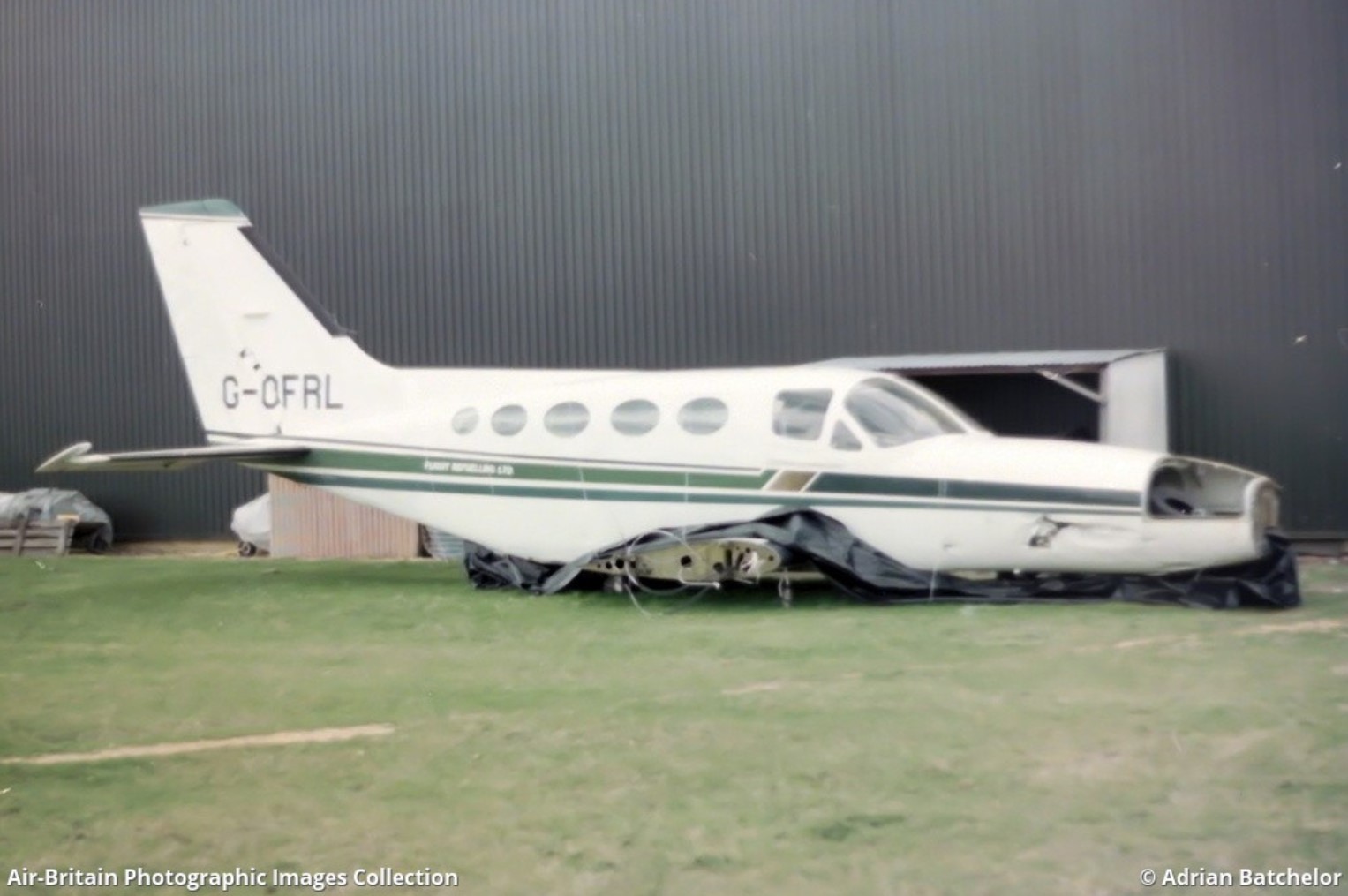
Crash of a Cessna 414A Chancellor II in Bournemouth

Date & Time: May 15, 1984 at 1427 LT
Type of aircraft:
Operator:
Registration:
G-OFRL
Flight Phase:
Flight Type:
Survivors:
Yes
Schedule:
Bournemouth - Bournemouth
MSN:
414A-0220
YOM:
1979
Region:
Crew on board:
2
Crew fatalities:
Pax on board:
1
Pax fatalities:
Other fatalities:
Total fatalities:
0
Captain / Total flying hours:
14800
Captain / Total hours on type:
1600.00
Circumstances:
After the second overshoot, the aircraft entered the circuit, and was cleared for a touch-and-go landing on Runway 17. The final approach was described as 'steep' and was flown with full (45°) flap. After a short ground run, the pilot under training opened the throttles, and. at about 80 knots, rotated the aircraft with the flaps still at the full (45 degree) setting. Shortly after becoming airborne, there was a loss of power, accompanied by vibration or buffeting; the aircraft yawed and rolled to the right, and the airspeed started to decay. The pilot under training then retracted the flaps to 30°, and, at this point, the instructor took control, closed the throttles, and landed the aircraft on the grass on a heading of about 200° magnetic. The aircraft than ran across the south western taxiway, through the airfield perimeter fence, across a public road, at which point the undercarriage collapsed, before finally coming to rest in an adjacent field. Both fuel tanks were ruptured by the impact with the fence posts, but there was no fire. The crew, who were uninjured, shut off the fuel cocks, switched off the electrics, and vacated the aircraft through the main entry door. The emergency services responded to this incident very quickly, and had arrived at the crash scene by the time the crew vacated the aircraft.
Probable cause:
A safe climb out could not be achieved following the complete loss of power from one engine just when the aircraft became airborne at a speed of about 80 knots with full flap extended. The commander was therefore left with no alternative but to land whilst it was still possible to control the aircraft.
Final Report:

Crash of a Cessna 414A Chancellor in Mena: 2 killed

Date & Time: Feb 15, 1984 at 1656 LT
Type of aircraft:
Operator:
Registration:
N6815Z
Flight Type:
Survivors:
No
Schedule:
Addison - Mena
MSN:
414A-0648
YOM:
1981
Location:
Crew on board:
1
Crew fatalities:
Pax on board:
1
Pax fatalities:
Other fatalities:
Total fatalities:
2
Captain / Total flying hours:
10100
Aircraft flight hours:
411
Circumstances:
The aircraft was cleared for Mena NDB approach and to maintain 5,000 feet msl until established on the approach. Aircraft descended to 4,800 feet msl on approximately ground track of 040° to 030° after NDB passage. Aircraft then turned to a ground track of 116°. After 12 seconds the aircraft turned to a ground track of 350° during which the ground speed decreased to 93 knots. The aircraft descended to 4,600 feet msl with ground speed increasing to 140 knots. N68152 reported 'we've broken below - will cancel in just a moment.' Radar contact was lost with the aircraft descending to 3,000 feet msl on a heading of 304°. The wreckage was found 6 miles northwest of the airport at an elevation of 2,000 feet msl. The outbound approach heading is 080° with procedure turn heading of 125° and 305°. Reported winds aloft at 5,000 feet msl, 4,000 feet msl and 3,000 feet msl were 191° at 34 knots, 169° at 30 knots and 151° at 32 knots respectively. Both occupants were killed.
Probable cause:
Occurrence #1: in flight collision with object
Phase of operation: approach - faf/outer marker to threshold (IFR)
Findings
1. (f) compensation for wind conditions - not performed - pilot in command
2. (f) minimum descent altitude - not attained - pilot in command
3. (c) ifr procedure - not followed - pilot in command
4. (f) terrain condition - mountainous/hilly
5. (f) weather condition - low ceiling
6. (f) object - tree(s)
Final Report:

Crash of a Cessna 414A Chancellor in Waynesville: 2 killed

Date & Time: Nov 24, 1983 at 1755 LT
Type of aircraft:
Registration:
N6623C
Flight Phase:
Flight Type:
Survivors:
No
Site:
Schedule:
DuPage – Sylva
MSN:
414A-0033
YOM:
1978
Crew on board:
1
Crew fatalities:
Pax on board:
1
Pax fatalities:
Other fatalities:
Total fatalities:
2
Captain / Total flying hours:
2000
Captain / Total hours on type:
713.00
Aircraft flight hours:
73
Circumstances:
After departure at 1417 cst, radar track showed the aircraft climbing to and maintaining 7,600 feet until about 1733 est and 28-30 miles north of the Knoxville VOR. The aircraft then descended and crossed the snowbird VOR at about 6,700 feet. There were several up and down altitude excursions. After crossing snowbird VOR the aircraft turned south and again there were altitude excursions. The final radar contact was at 6,100 feet and about 1 mile from the crash site. The aircraft had impacted mountainous terrain at about 6,000 feet msl and 11 miles from the destination. Meteorological conditions at the crash site included low clouds and precipitation. The pilot's blood alcohol level was 0.4‰. Both occupants were killed.
Probable cause:
Occurrence #1: in flight encounter with weather
Phase of operation: cruise - normal
Findings
1. (f) weather condition - clouds
2. (f) weather condition - rain
3. (f) flight into known adverse weather - continued - pilot in command
----------
Occurrence #2: in flight collision with terrain/water
Phase of operation: cruise - normal
Findings
4. (f) light condition - dark night
5. (f) terrain condition - mountainous/hilly
6. (f) terrain condition - high terrain
7. (c) altitude - inadequate - pilot in command
8. (c) impairment (alcohol) - pilot in command
Final Report:

Crash of a Cessna 414 Chancellor in Aurora: 2 killed

Date & Time: Nov 22, 1983 at 1740 LT
Type of aircraft:
Operator:
Registration:
N7724N
Flight Type:
Survivors:
No
Schedule:
Reno - Denver
MSN:
414-0436
YOM:
1973
Location:
Crew on board:
1
Crew fatalities:
Pax on board:
1
Pax fatalities:
Other fatalities:
Total fatalities:
2
Captain / Total flying hours:
4414
Captain / Total hours on type:
1862.00
Aircraft flight hours:
1862
Circumstances:
During weather briefings the pilot was advised of icing conditions in the Denver area. While approaching the Denver area the pilot radioed 'can you get me down, it's a little bit icy up here.' The pilot was subsequently asked and was given a close turn onto the outer marker. The aircraft was observed to overfly the airport at about 500 feet agl. The pilot then acknowledge the missed approach instructions, and 1 minute later reported ...'lots of ice...' and '...i'm stalling out...' The pilot reportedly did not like to fly approaches to minimums and set the altitude alerter to an altitude above minimums as a safety margin. The pilot had logged 3.5 hours actual and 4.1 hours simulated instrument time, and 3 instrument approaches in the last 6 months. The aircraft's cg was 6 inches aft of the aft cg limit.
Probable cause:
Occurrence #1: in flight encounter with weather
Phase of operation: approach
Findings
1. (f) weather condition - icing conditions
2. (f) flight into known adverse weather - intentional - pilot in command
----------
Occurrence #2: loss of control - in flight
Phase of operation: missed approach (IFR)
Findings
3. (f) light condition - dark night
4. (f) weather condition - snow
5. (f) weather condition - low ceiling
6. (c) ifr procedure - improper - pilot in command
7. (c) decision height - not attained - pilot in command
8. (f) underconfidence in personal ability - pilot in command
9. (f) lack of recent instrument time - pilot in command
10. (f) missed approach - initiated - pilot in command
11. (c) wing - ice
----------
Occurrence #3: in flight collision with terrain/water
Phase of operation: missed approach (IFR).
Final Report:

Crash of a Cessna 414A Chancellor in Marion

Date & Time: Aug 22, 1983 at 2200 LT
Type of aircraft:
Registration:
N5ER
Flight Phase:
Survivors:
Yes
Schedule:
Marion - Raleigh
MSN:
414A-0037
YOM:
1978
Crew on board:
2
Crew fatalities:
Pax on board:
2
Pax fatalities:
Other fatalities:
Total fatalities:
0
Captain / Total flying hours:
16372
Captain / Total hours on type:
1571.00
Aircraft flight hours:
1582
Circumstances:
During the takeoff run, at 85 knots, the aircraft hit a bump and the pilot stated his forward vision was obstructed by water on the windshield. He instinctively pulled back on the controls and become airborne. He lost sight of the right side set of runway lights and was reportedly flying 'blind.' The aircraft drifted left into trees and came to rest in shallow water in a backwater area 150 feet north of the departure end of runway 10. Many of the runway lights were either not operating or were obstructed. No lights in the last 1000 feet of the runway were both operating and unobstructed. The noaa airport/facility director contains a remark for the airport 'runway subject to flooding after very heavy rains.' This remark does not appear in the Jeppesen 'airport directory' that the pilot was using. After the accident the pilot stated he walked through the eastern end of the runway and found himself 'up to his ankles' in about 3 inches of water. All four occupants escaped with minor injuries.
Probable cause:
Occurrence #1: in flight collision with object
Phase of operation: takeoff - initial climb
Findings
1. (f) airport facilities,runway/landing area condition - water,glassy
2. (f) charts/other manuals - inadequate
3. (f) unsafe/hazardous condition warning - not identified - manufacturer
4. (f) airport facilities,runway edge lights - inadequate
5. (f) other airport/runway maintenance - inadequate - airport personnel
6. (f) notams - not issued - airport personnel
7. (c) preflight planning/preparation - inadequate - pilot in command
8. (c) unsuitable terrain or takeoff/landing/taxi area - selected - pilot in command
9. (f) light condition - dark night
10. (c) aircraft handling - inadequate - pilot in command
11. (c) visual/aural detection - pilot in command
Final Report:

Crash of a Cessna 414A Chancellor in Göteborg: 2 killed

Date & Time: Mar 18, 1983
Type of aircraft:
Operator:
Registration:
D-ILWP
Flight Type:
Survivors:
Yes
Schedule:
Hamburg - Göteborg
MSN:
414A-0080
Country:
Region:
Crew on board:
1
Crew fatalities:
Pax on board:
2
Pax fatalities:
Other fatalities:
Total fatalities:
2
Circumstances:
On approach to Göteborg-Landvetter Airport, the pilot encountered limited visibility due to fog. On short final, the airplane was too low and the right wing struck tree tops. The aircraft lost height and crashed in a wooded area located 250 meters to the right of the extended centerline. A passenger survived while both other occupants were killed.

Crash of a Cessna 414 Chancellor off Schlüttsiel

Date & Time: Nov 13, 1982
Type of aircraft:
Operator:
Registration:
D-IGHK
Flight Phase:
Flight Type:
Survivors:
Yes
Schedule:
Hamburg - Westerland
MSN:
414-0822
YOM:
1975
Country:
Region:
Crew on board:
1
Crew fatalities:
Pax on board:
3
Pax fatalities:
Other fatalities:
Total fatalities:
0
Circumstances:
While descending to Westerland-Sylt Airport on a flight from Hamburg, the pilot encountered engine problems caused by fuel issue. He reduced his altitude and ditch the aircraft off Schlüttsiel, about 35 km southeast of Sylt Airport. All four occupants were rescued while the aircraft was damaged beyond repair.

Crash of a Cessna 414A Chancellor on Mt Rosskopf: 7 killed

Date & Time: Aug 31, 1982
Type of aircraft:
Operator:
Registration:
D-ICPM
Flight Phase:
Flight Type:
Survivors:
No
Site:
MSN:
414A-0107
YOM:
1978
Country:
Region:
Crew on board:
1
Crew fatalities:
Pax on board:
6
Pax fatalities:
Other fatalities:
Total fatalities:
7
Circumstances:
The twin engine airplane departed Venice on a private flight, probably to West Germany. En route, the airplane struck the south side of Mt Rosskopf (1,132 meters high) located in Tyrol. All seven occupants were killed.