Country
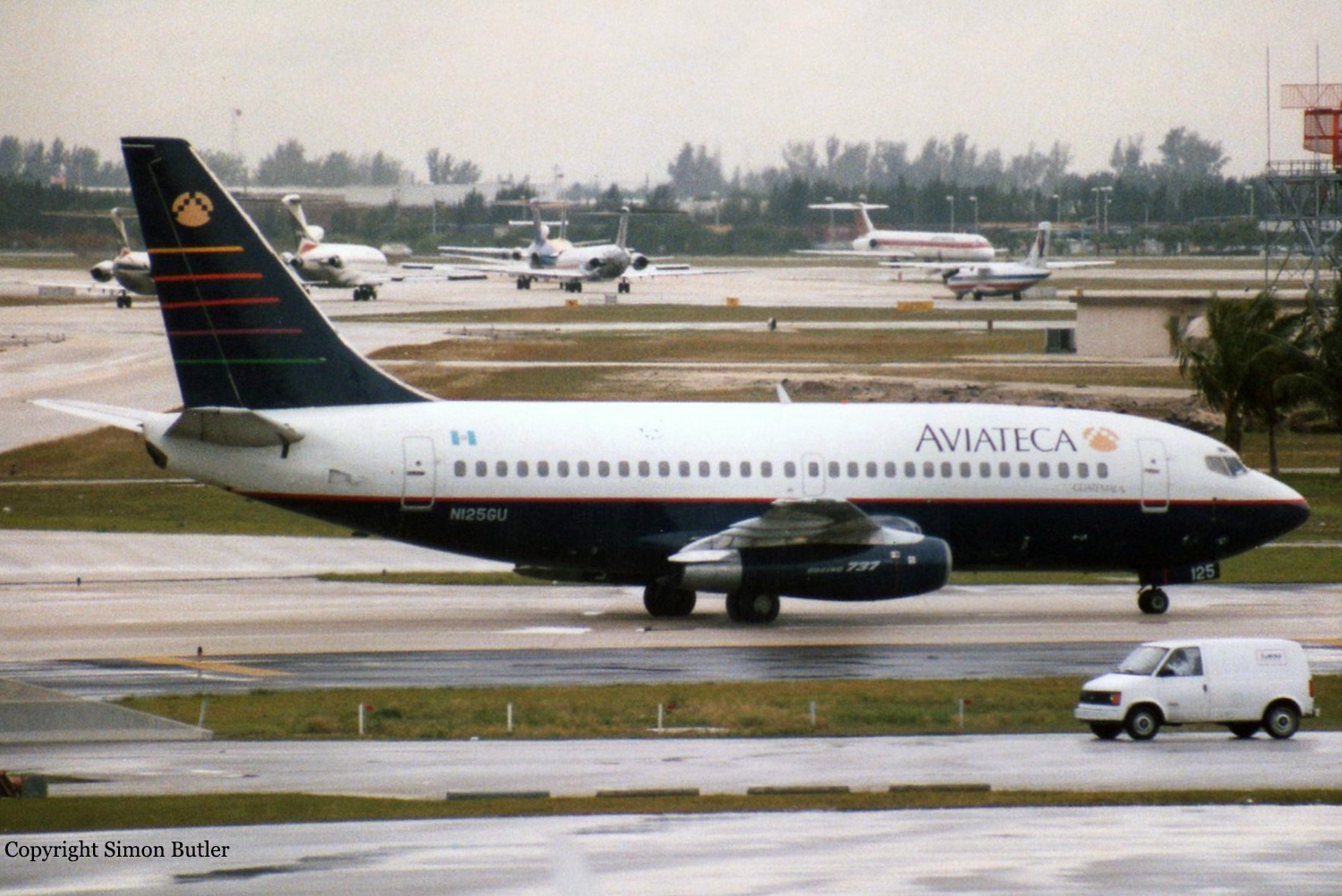
Crash of a Boeing 737-2H6 on Mt San Vicente: 65 killed
Date & Time:
Aug 9, 1995 at 2014 LT
Operator:

Registration:
N125GU
Survivors:
No
Schedule:
Miami – Guatemala City – San Salvador – Managua – San José
MSN:
23849
YOM:
1987
Flight number:
GU901
Crew on board:
7
Crew fatalities:
Pax on board:
58
Pax fatalities:
Other fatalities:
Total fatalities:
65
Aircraft flight hours:
16645
Aircraft flight cycles:
20323
Circumstances:
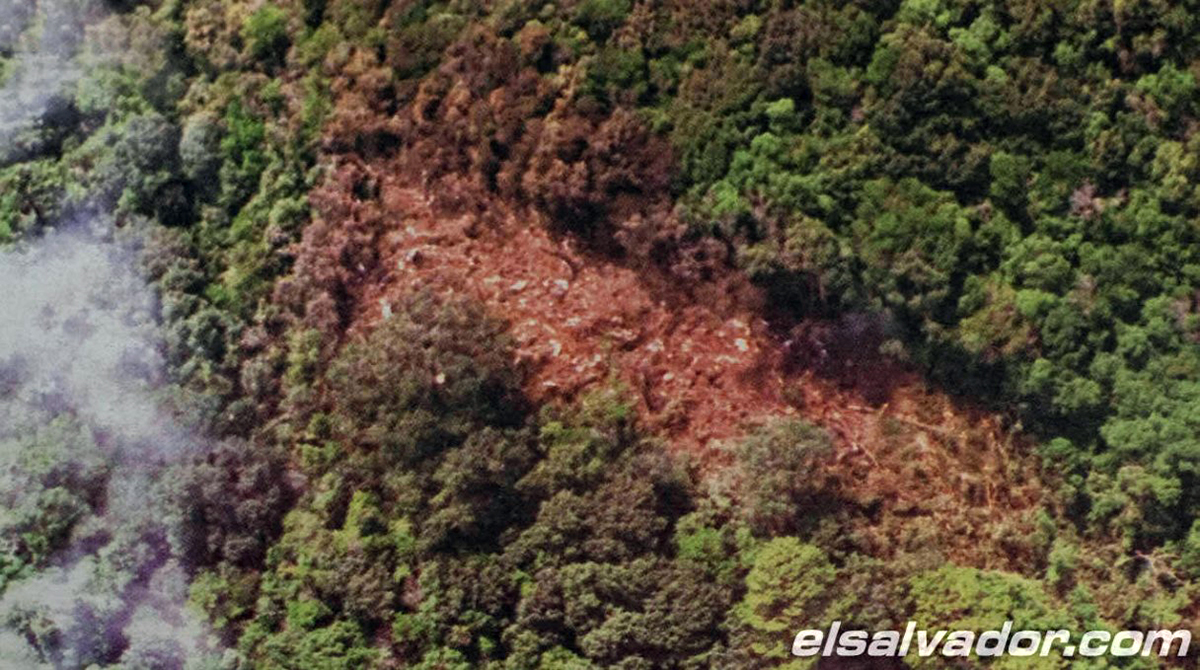
Following an uneventful flight from Guatemala City, the crew was cleared to start the descent to San Salvador-Comalapa Airport but encountered poor visibility due to the night and heavy rain falls. In thunderstorm activity, the crew was cleared to modify his route while descending to the airport. After being cleared to descend to 5,000 feet, the GPWS alarm sounded. The captain applied full power when the aircraft struck trees and crashed in a dense wooded area located on the Mt San Vicente (Chichontepec Volcano - 2,181 metres high), about 25 km northeast from runway 25 threshold. The aircraft disintegrated on impact and all 65 occupants were killed.
Probable cause:
The probable cause of the accident was the flight crew's lack of situational awareness in relation to the 7,159 foot obstruction, the flight crew's decision to descend below the MSA while deviating from a published transition or approach, and the ambiguity of position information between both the flight crew and the air traffic controller which resulted in the controller's issuance of an altitude assignment that did not provide terrain clearance. Contributing to the accident was the failure of the First Officer to direct his concern of reported positions to the Captain in a more direct and assertive manner and the failure of the controller to recognize the aircraft's reported position relative to obstructions and give appropriate instructions/warnings. An ineffective CRM program at Aviateca also contributed to the accident.
Final Report:
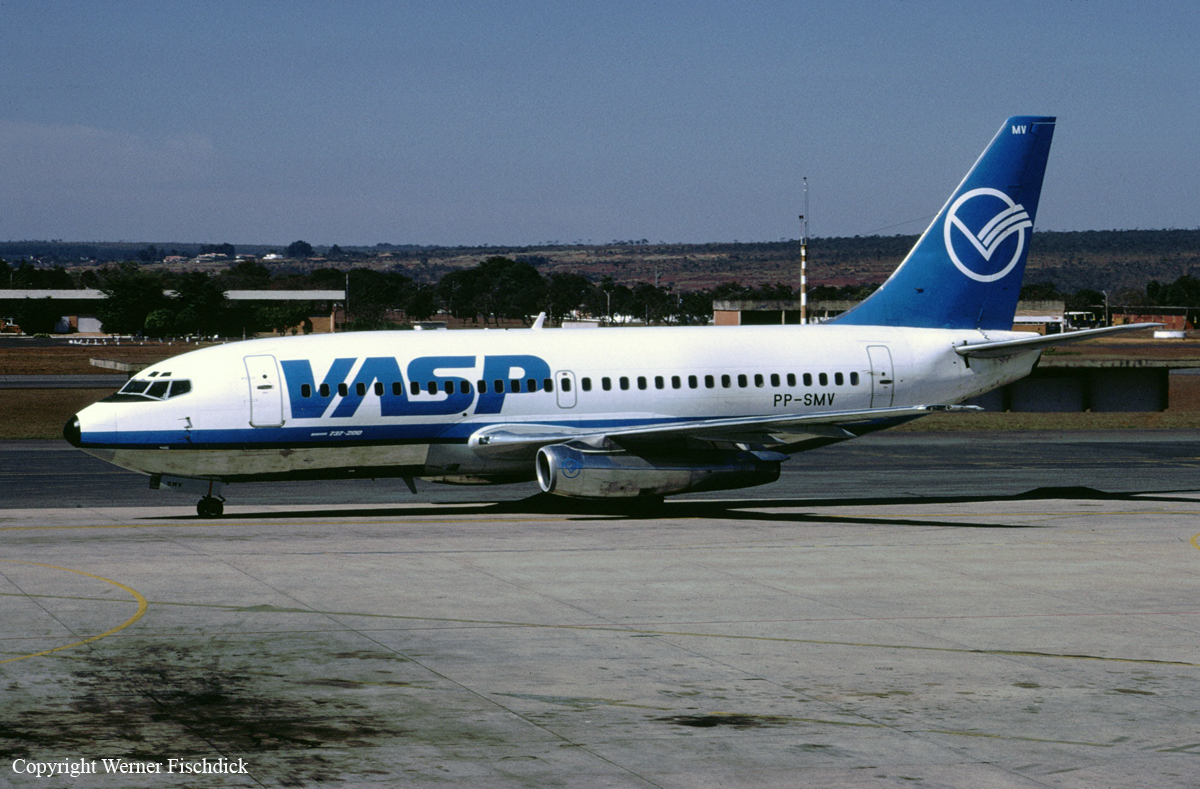
Crash of a Boeing 737-2A1 in São Paulo
Date & Time:
Feb 2, 1995 at 0008 LT
Operator:

Registration:
PP-SMV
Survivors:
Yes
Schedule:
São Paulo – Buenos Aires
MSN:
20968
YOM:
1974
Crew on board:
7
Crew fatalities:
Pax on board:
121
Pax fatalities:
Other fatalities:
Total fatalities:
0
Captain / Total hours on type:
6500.00
Copilot / Total hours on type:
2500
Circumstances:
Following a night takeoff from São Paulo-Guarulhos Airport, en route to Buenos Aires, the captain informed ATC about technical problems and was cleared to return for an emergency landing. The aircraft landed at a speed of 185 knots with flaps down to 15° on wet runway 09L. Unable to stop within the remaining distance, the aircraft overran, lost its undercarriage and came to rest 200 metres further. All 128 occupants were evacuated safely, among them two passengers were slightly injured. The aircraft was written off.
Probable cause:
It was determined that the n°3 leading edge flap actuator attachment fitting on the wing front spar had fractured due to corrosion. The actuator came away and caused the failure of some hydraulic lines and damage to the thrust control cables. Some 1981 Boeing Service Bulletins had not been complied with. One of these included the replacement of the aluminium leading edge flap actuator attachment fitting with a steel one; this had not been done. The following contributing factors were reported:
- Excessive workload on approach and landing due to the emergency situation,
- Poor approach planning,
- Lack of visibility due to the night,
- Poor crew coordination,
- Poor crew resources management,
- The crew forgot to lower the flaps electrically on approach, causing the speed to be 32 knots in excess,
- Poor aircraft maintenance and supervision,
- Failures in the supervision of the Company's operating sector.
- Excessive workload on approach and landing due to the emergency situation,
- Poor approach planning,
- Lack of visibility due to the night,
- Poor crew coordination,
- Poor crew resources management,
- The crew forgot to lower the flaps electrically on approach, causing the speed to be 32 knots in excess,
- Poor aircraft maintenance and supervision,
- Failures in the supervision of the Company's operating sector.
Final Report:
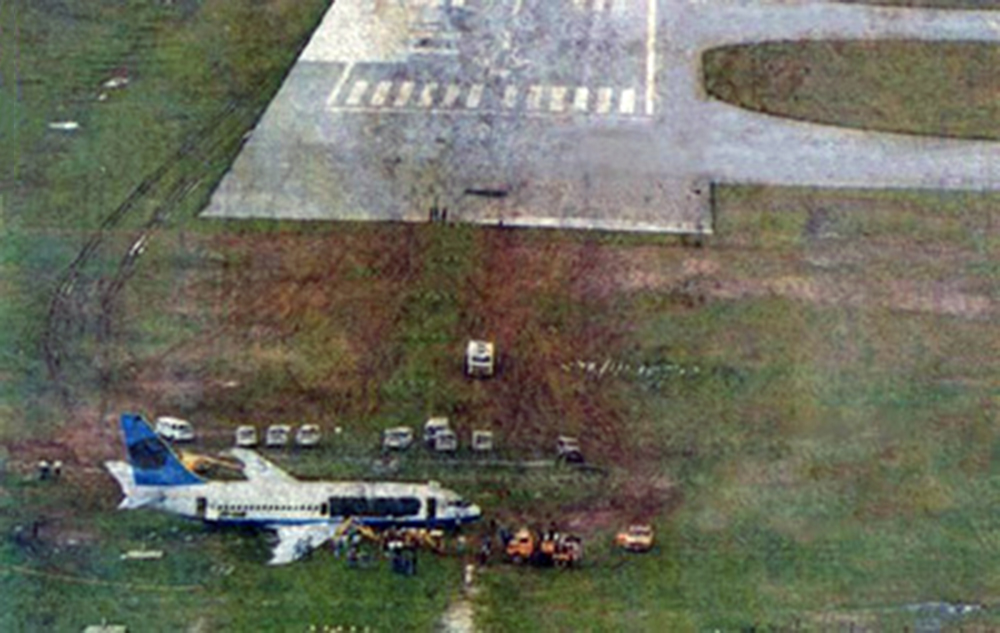
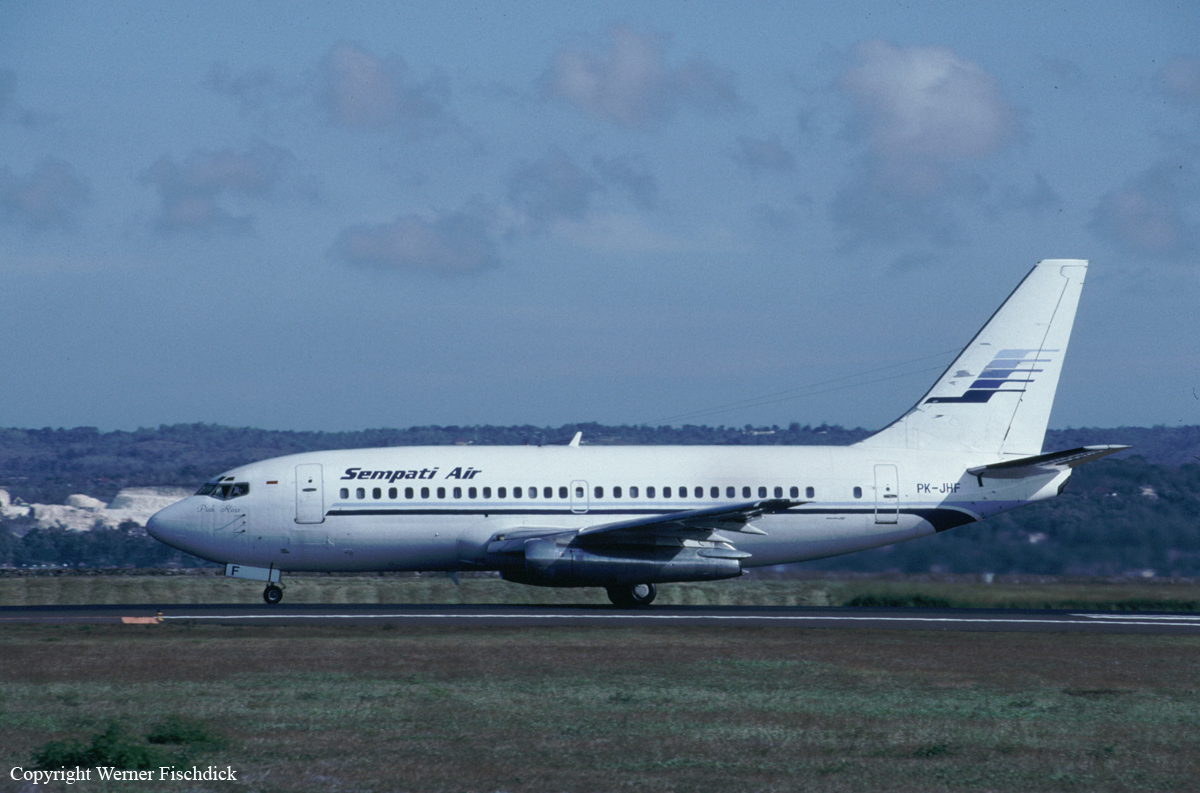
Crash of a Boeing 737-281 in Yogyakarta
Date & Time:
Jan 16, 1995 at 1930 LT
Operator:

Registration:
PK-JHF
Survivors:
Yes
Schedule:
Jakarta – Yogyakarta – Denpasar
MSN:
20508/287
YOM:
1971
Flight number:
SG416
Crew on board:
6
Crew fatalities:
Pax on board:
52
Pax fatalities:
Other fatalities:
Total fatalities:
0
Circumstances:
After landing on wet runway 09, the aircraft was unable to stop within the remaining distance. It overran, lost its nose gear and came to rest 100 metres further. All 58 occupants escaped uninjured while the aircraft was damaged beyond repair. A thunderstorm just passed over Yogyakarta Airport before the flight SG416 arrived from Jakarta and the approach was completed in a 30° flaps down configuration. Apparently, the braking action was poor.
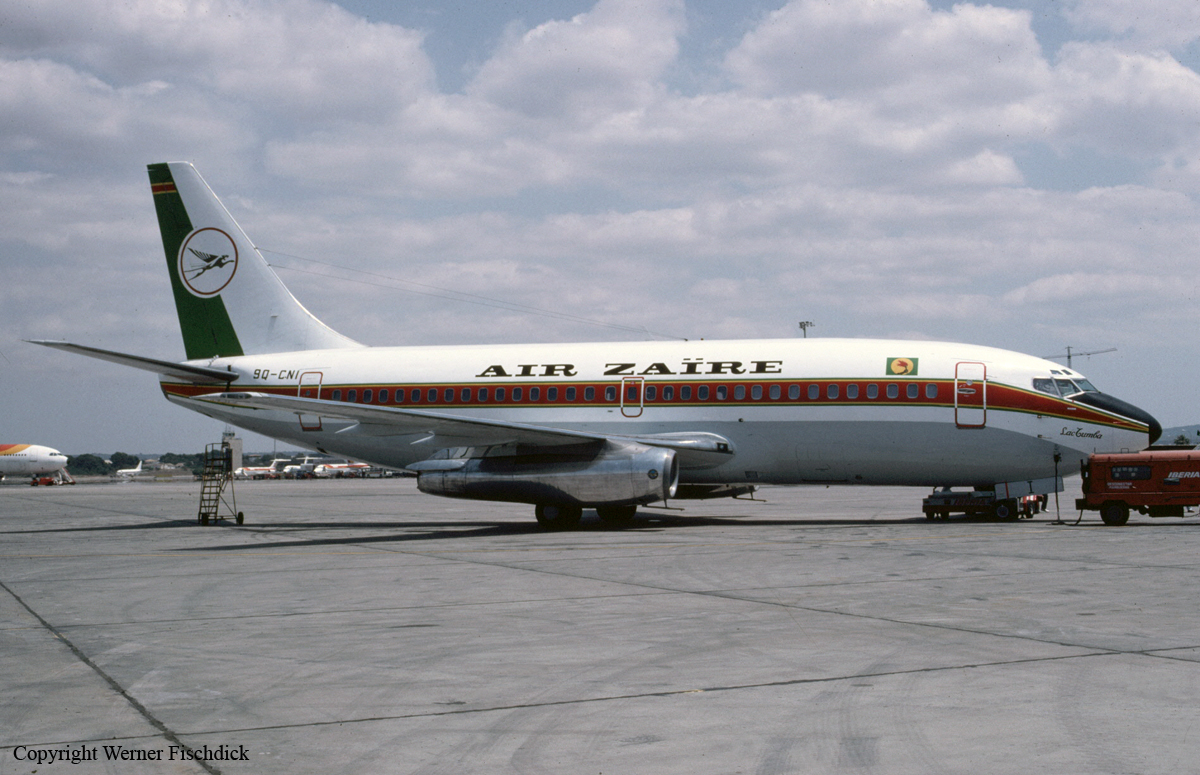
Crash of a Boeing 737-298C in Kinshasa
Date & Time:
Jan 2, 1995
Operator:

Registration:
9Q-CNI
Survivors:
Yes
MSN:
20793
YOM:
1973
Crew on board:
0
Crew fatalities:
Pax on board:
0
Pax fatalities:
Other fatalities:
Total fatalities:
0
Circumstances:
The approach to Kinshasa-N'Djili Airport was completed in poor weather conditions. For unknown reasons, the aircraft landed hard and nose first. Upon impact, the nose gear collapsed and the aircraft came to rest. There were no casualties but the aircraft was damaged beyond repair.
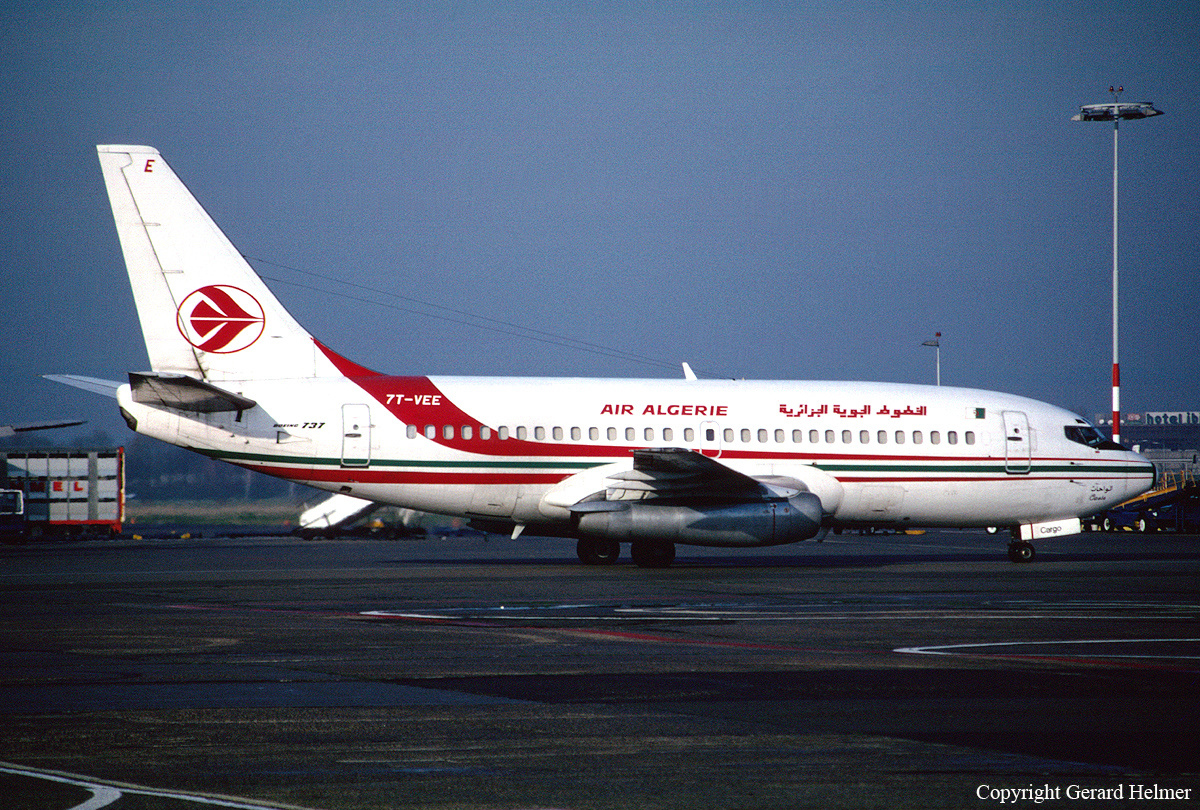
Crash of a Boeing 737-200 in Coventry: 5 killed
Date & Time:
Dec 21, 1994 at 0953 LT
Operator:

Registration:
7T-VEE
Survivors:
No
Schedule:
Algiers - Amsterdam - Coventry
MSN:
20758
YOM:
1973
Flight number:
AH702P
Crew on board:
3
Crew fatalities:
Pax on board:
2
Pax fatalities:
Other fatalities:
Total fatalities:
5
Captain / Total hours on type:
2187.00
Copilot / Total hours on type:
2055
Aircraft flight hours:
45633
Circumstances:
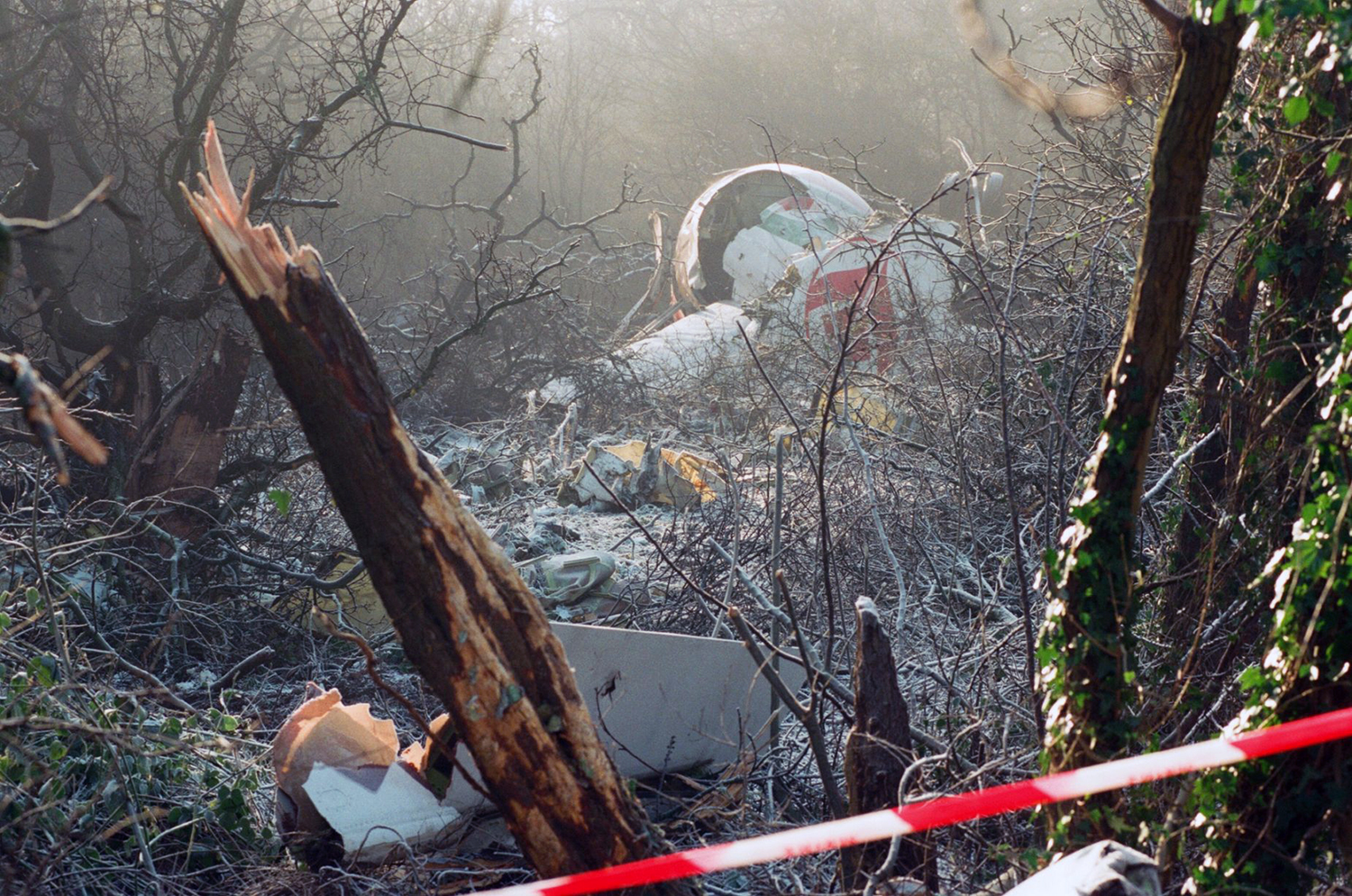
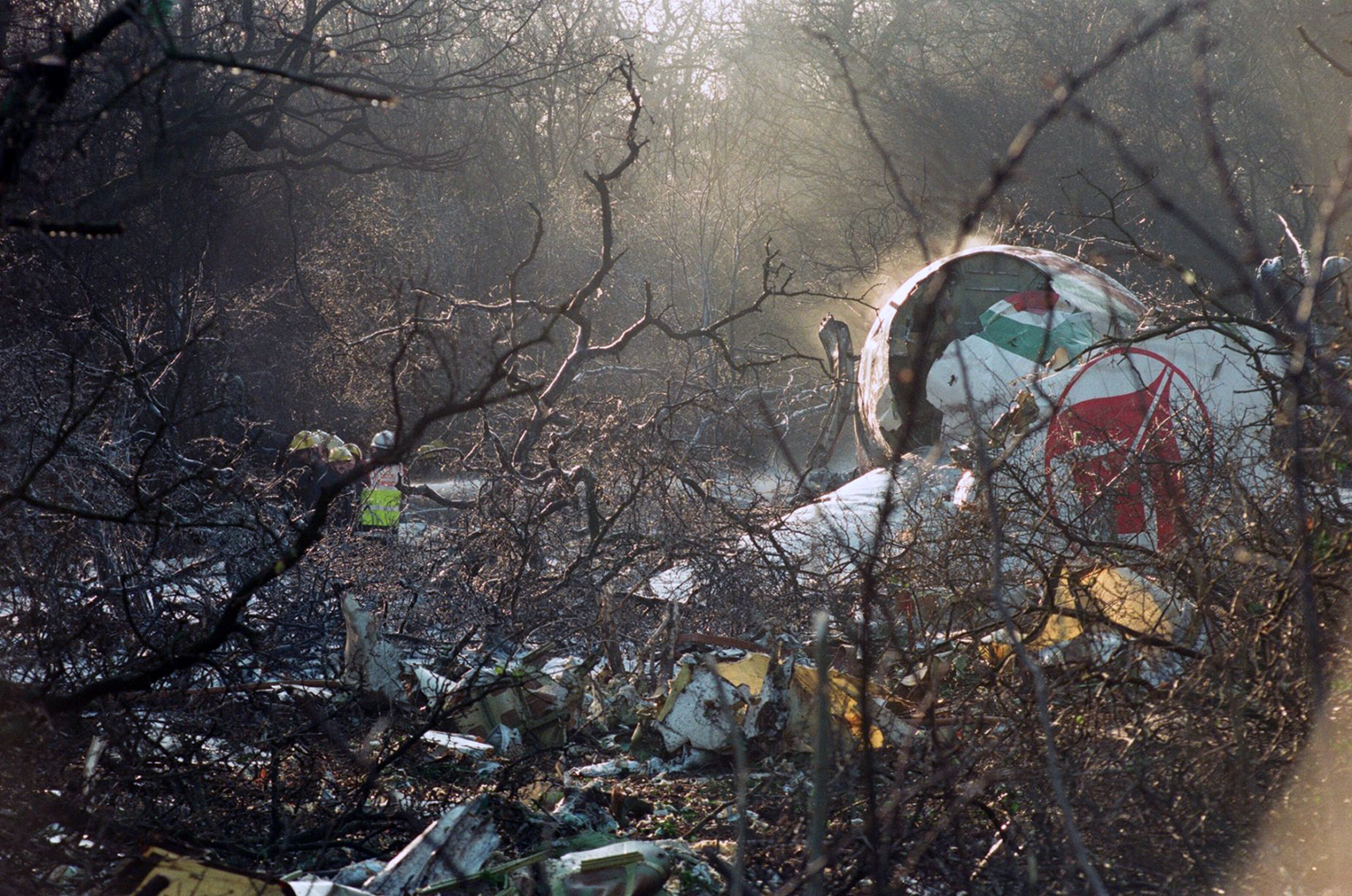
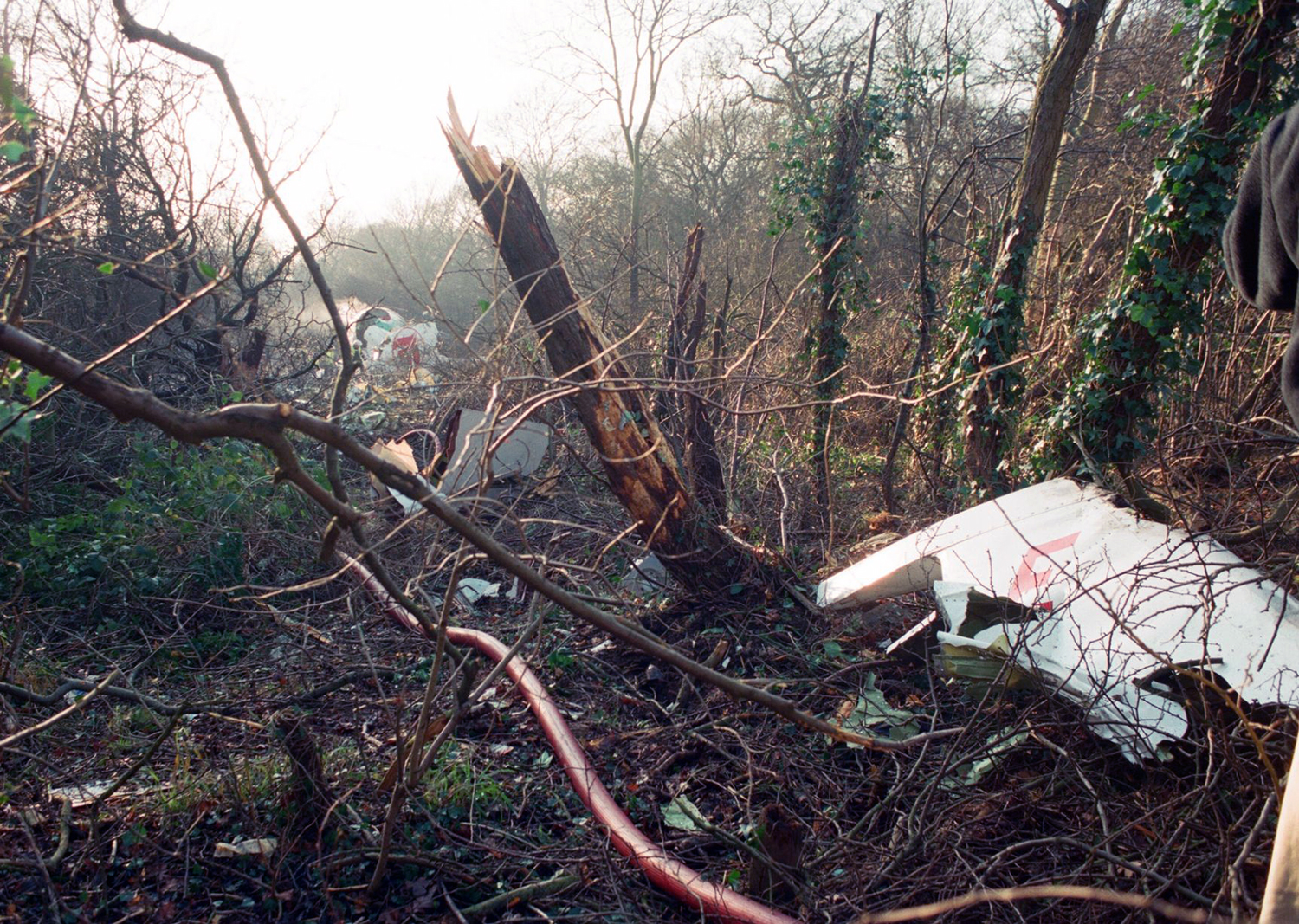
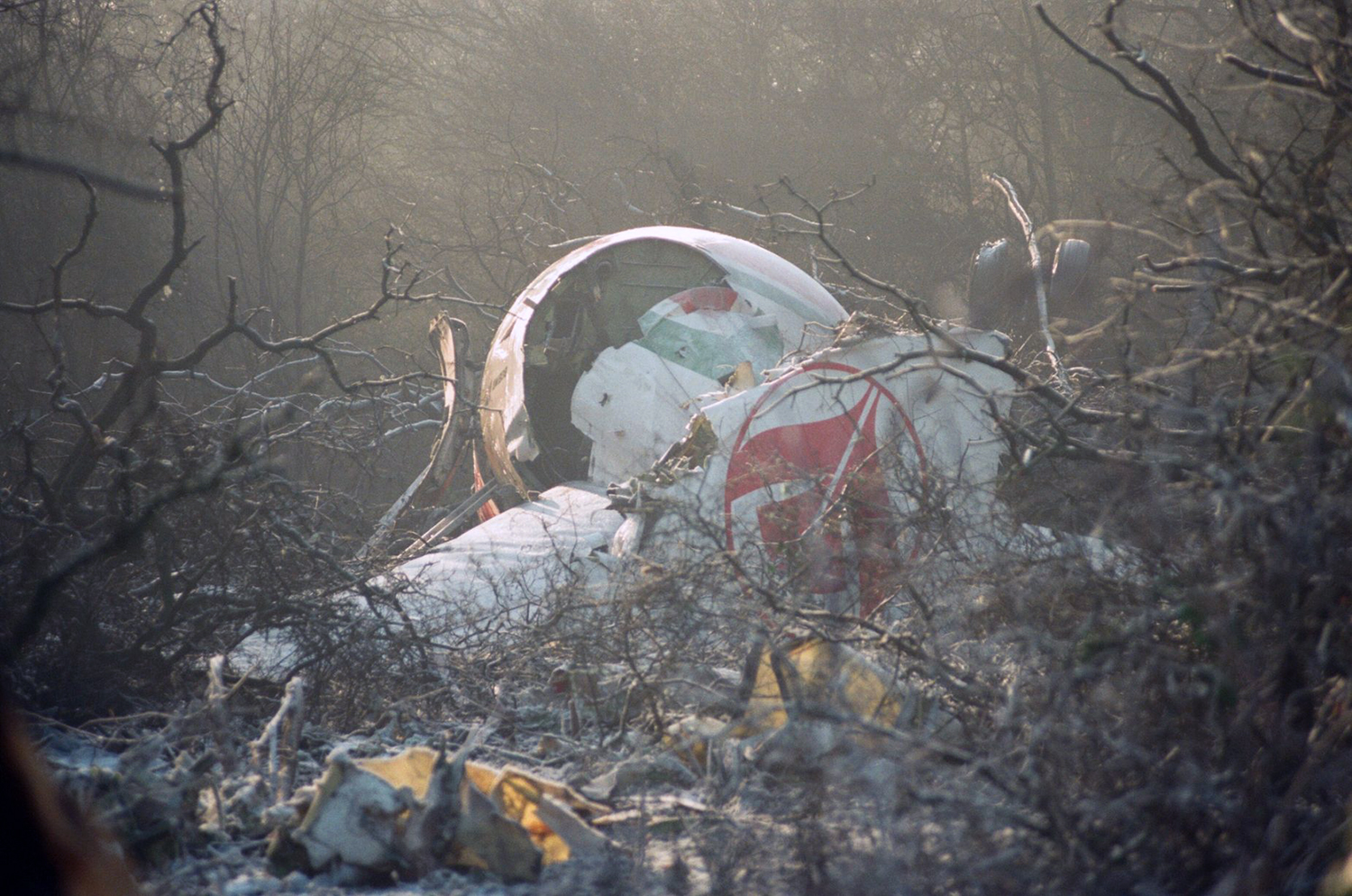
The Boeing 737, named "Oasis" was owned and operated by Air Algerie and had been leased by Phoenix Aviation in order to operate a series of live animal export flights from the UK to France and the Netherlands. On December 21, at 06:42 the plane departed from Amsterdam for a flight to Coventry. Weather at Coventry worsened and when arriving near Coventry, the RVR for runway 23 was 700 metres. The aircraft was not able to receive the Coventry runway 23 ILS as its dual navigation receiver system was not to an updated 40 channel ILS standard, so an SRA approach was flown. The radar guidance was completed at 0,5 miles from touchdown; the commander decided to discontinue the approach and execute a go-around. A holding pattern was then taken up at 07:44. When holding, the RVR further reduced to 600 m and the flight diverted to East Midlands to wait on the ground for weather improvement. The aircraft landed there at 08:08. At around 09:00 weather conditions improved to 1200 m visibility and an overcast cloud base at 600 feet. The flight departed East Midlands at 09:38 and climbed to FL40. Approaching Coventry, the crew received radar vectors for a runway 23 approach. After some initial confusion about the heading (the controller wanted the crew to turn left for 010°, while the crew understood 100°) the turn was continued to 260° and the SRA approach started at 12 miles from touchdown. The aircraft descended below the Minimum Descent Height (MDH) for the approach procedure and collided with an 86 feet high (291 feet ams) electricity transmission tower (pylon) which was situated on the extended centreline of the runway, some 1.1 miles from the threshold. The collision caused major damage to the inboard high lift devices on the left wing and the left engine. The consequent loss of lift on the left wing and the thrust asymmetry, caused the aircraft to roll uncontrollably to the left. When passing through a wings vertical attitude, the left wingtip impacted the gable end of a house. The aircraft continued rolling to an inverted attitude and impacted the ground in an area of woodland close to the edge of the housing conurbation. An intense fire ensued.
Probable cause:
The following factors were reported:
- The flight crew allowed the aircraft to descend significantly below the normal approach glide path during a Surveillance Radar Approach to runway 23 at Coventry Airport, in conditions of patchy lifting fog. The descent was continued below the promulgated Minimum Descent Height without the appropriate visual reference to the approach lighting or the runway threshold.
- The standard company operating procedure of cross-checking altimeter height indications during the approach was not observed and the appropriate Minimum Descent Height was not called by the non handling pilot.
- The performance of the flight crew was impaired by the effects of tiredness, having completed over 10 hours of flight duty through the night during five flight sectors which included a total of six approaches to land.
- The flight crew allowed the aircraft to descend significantly below the normal approach glide path during a Surveillance Radar Approach to runway 23 at Coventry Airport, in conditions of patchy lifting fog. The descent was continued below the promulgated Minimum Descent Height without the appropriate visual reference to the approach lighting or the runway threshold.
- The standard company operating procedure of cross-checking altimeter height indications during the approach was not observed and the appropriate Minimum Descent Height was not called by the non handling pilot.
- The performance of the flight crew was impaired by the effects of tiredness, having completed over 10 hours of flight duty through the night during five flight sectors which included a total of six approaches to land.
Final Report:
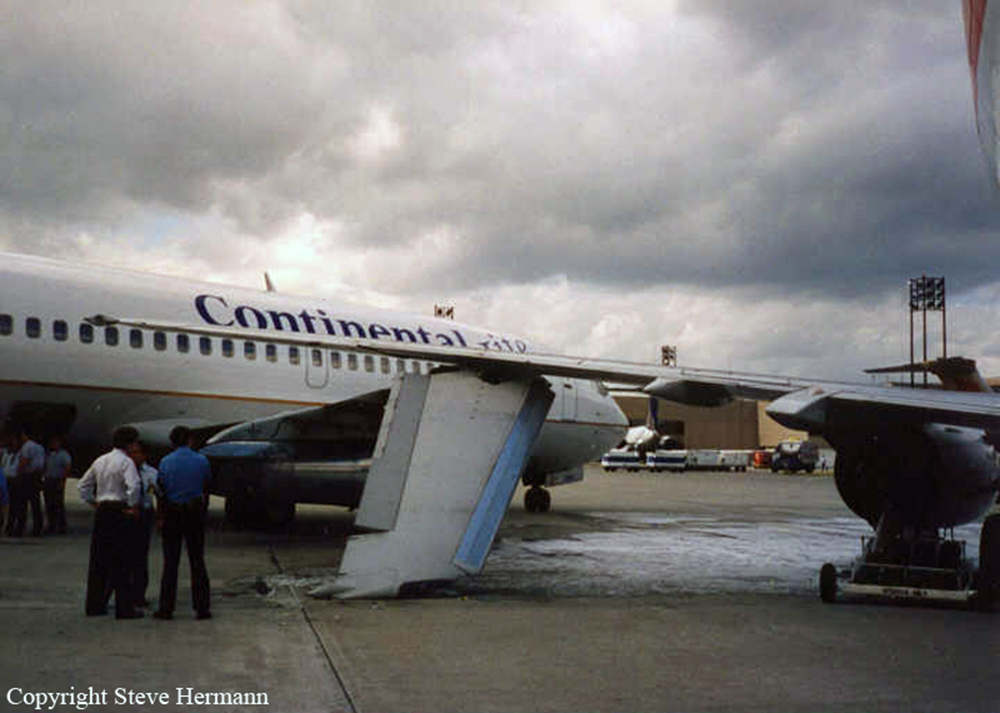
Ground accident of a Boeing 737-2C0 in Houston
Date & Time:
Nov 26, 1994 at 1102 LT
Operator:

Registration:
N11244
Survivors:
Yes
MSN:
20073
YOM:
1969
Crew on board:
2
Crew fatalities:
Pax on board:
0
Pax fatalities:
Other fatalities:
Total fatalities:
0
Circumstances:
Two technicians took over the airplane from the main Continental maintenance hangar to the gate 41. While approaching the gate, the right wing of the B737 collided with the left wing of a Continental Airlines Boeing 737-300 that was towed from the next gate. While the second B737 was slightly damaged, the right wing of the B737 registered was partially sheared off. There were no casualties but the aircraft was damaged beyond repair.
Probable cause:
Failure of maintenance personnel to follow the taxi checklist resulting in the hydraulic pumps not being turned on.