Crash of a Piper PA-61 Aerostar (Ted Smith 601P) in Lake Butler

Date & Time: Mar 15, 1990 at 2245 LT
Registration:
N7443S
Flight Phase:
Flight Type:
Survivors:
Yes
Schedule:
Jacksonville – Atlanta
MSN:
61-0063-117
YOM:
1970
Crew on board:
1
Crew fatalities:
Pax on board:
0
Pax fatalities:
Other fatalities:
Total fatalities:
0
Captain / Total flying hours:
4548
Captain / Total hours on type:
2024.00
Aircraft flight hours:
3234
Circumstances:
Shortly after leveling off at 14,000 feet the left engine quit. The pilot diverted to Tampa, and 34 minutes later the right engine quit. During the subsequent forced landing the airplane collided with the roof of a covered sidewalk and then trees. Teardown of the left engine revealed that the seal between the exhaust flange and turbocharger was not installed; bolt clamp was finger tight. Heat had melted wiring harness and magneto grounding leads insulation; both 'p' leads were grounded. Pilot stated that after losing the left engine he initiated a left tank to right engine crossfeed, and after 20 minutes of single engine flight in this configuration the right engine quit. Flight manual states to land as soon as possible in case of one engine failure. In addition, it warns that when flying on one engine and cross feeding fuel, absolute coordinated flight must be maintained to prevent unporting of the tank's fuel pickup tube when the tank is not full.
Probable cause:
Inflight failure of the left engine which was caused by inadequate maintenance and inspection by company maintenance personnel resulting in heat damaged magneto leads as a result of a missing exhaust flange-to-turbocharger seal. In addition, the inflight power loss of the right engine was caused by the pilot's failure to follow the procedures in the airplane operating handbook and land as soon as possible resulting in fuel starvation of the right engine. Darkness was a related factor.
Final Report:
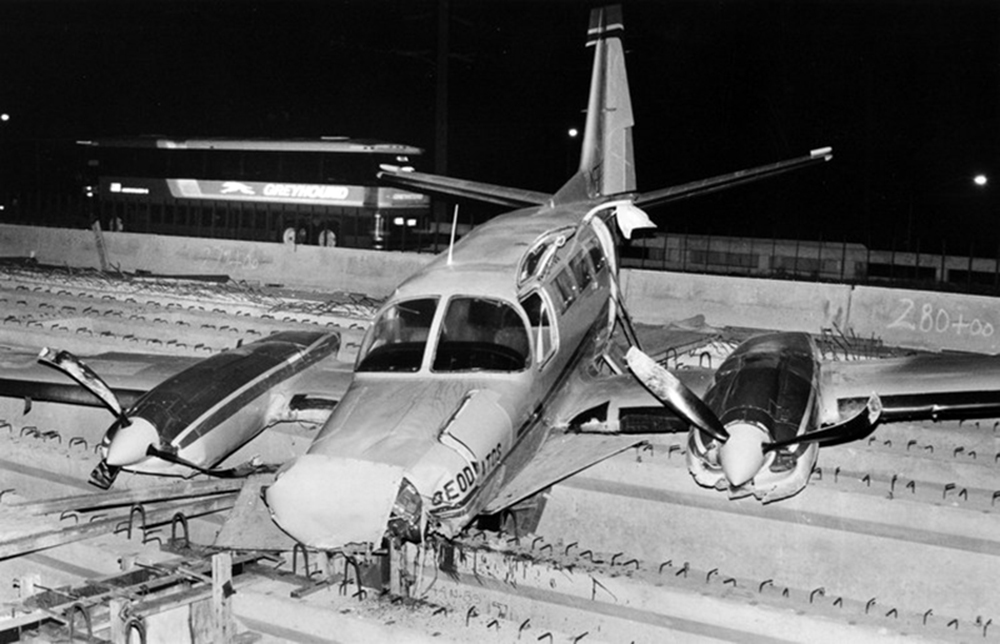
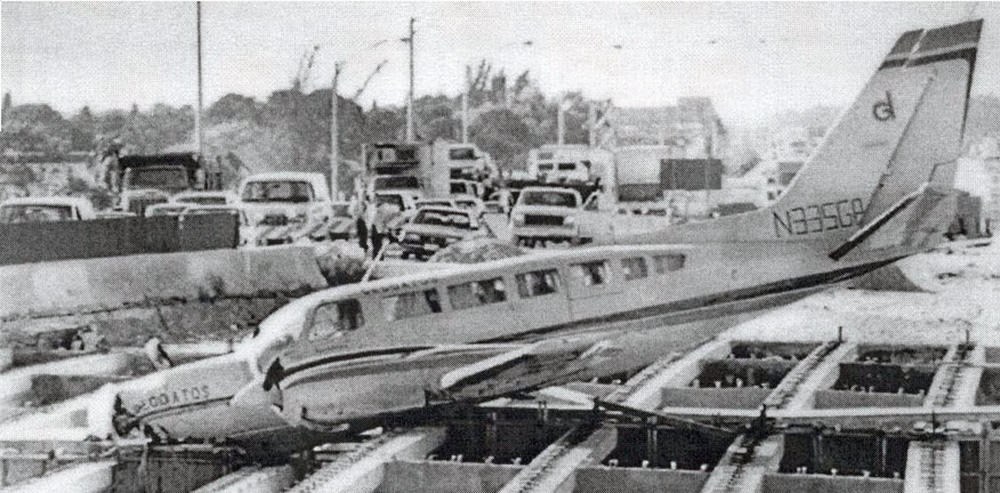
Crash of a Cessna 404 Titan II in Boca Raton

Date & Time: Jan 17, 1990 at 0009 LT
Type of aircraft:
Operator:
Registration:
N335GP
Flight Phase:
Flight Type:
Survivors:
Yes
Site:
Schedule:
Wilmington - Fort Lauderdale
MSN:
404-0009
YOM:
1976
Crew on board:
1
Crew fatalities:
Pax on board:
2
Pax fatalities:
Other fatalities:
Total fatalities:
0
Captain / Total flying hours:
1487
Captain / Total hours on type:
35.00
Aircraft flight hours:
3286
Circumstances:
While level after descending, the right engine quit. Pilot feathered the propeller, advised ATC, and was diverting to alternate when left engine quit. He positioned the left engine boost pump to high and low with negative results, but did not feather the propeller. Position of boost pumps, when engines quit, was not determined. Aircraft landed on overpass that was under construction. There was fuel leakage after accident due to aircraft damage. Fuel quantity was sufficient. Examination of aircraft revealed right engine flexible duct from turbocharger to plenum chamber separated due to loose clamp. Hose was installed and club prop installed for each engine run. Both engines operated normally. Induction air hose was pulled during right engine run. Engine ran rough due to excessive rich mixture. No determination could be made for the reason of the left engine power loss.
Probable cause:
Loss of power in the right engine due to a disconnected duct between the turbocharger and the plenum chamber. The reason for the loss of power in the left engine was not determined.
Final Report:

Crash of a Lockheed L-1329 JetStar II in Miami: 1 killed

Date & Time: Jan 6, 1990 at 1142 LT
Type of aircraft:
Operator:
Registration:
N96GS
Flight Phase:
Flight Type:
Survivors:
Yes
Schedule:
Miami - Dallas
MSN:
5068
YOM:
1965
Crew on board:
2
Crew fatalities:
Pax on board:
0
Pax fatalities:
Other fatalities:
Total fatalities:
1
Captain / Total flying hours:
12500
Captain / Total hours on type:
900.00
Aircraft flight hours:
8791
Circumstances:
Flight was a 3-engine ferry with the #4 engine shut down. During takeoff roll at V1 the #2 engine overheat light came on. According to the copilot the pilot reduced throttle slightly and continued the takeoff. After lift-off the pilot aborted the takeoff. The airplane could not be stopped on the remaining runway and collided with antennas, approach lights and a construction site 1,180 feet from the departure end of the runway. Postcrash exam of the 3 operating engines did not reveal any evidence of mechanical failure or malfunction. A failed resistor was found in the #2 engine electronic engine control (eec). This would cause the unit to over-schedule fuel to the engine resulting in hotter engine operating temperatures. Retarding the throttle would reduce fuel flow to within normal ranges for engine operation. Under conditions that existed at the time of the accident, the airplane would have a 3-engine rate-of-climb of 1,398 fpm, and a 2-engome rate-of-climb of 350 fpm. The captain was killed while the copilot was seriously injured.
Probable cause:
The pilot's improper decision to reject the takeoff after the airplane had passed V1 speed and lifted off the runway. A factor was a malfunctioning #2 engine electronic engine control which caused the unit to over-schedule fuel to the engine resulting in hotter operating temperatures.
Final Report:

Crash of a Piper PA-61 Aerostar (Ted Smith 601) in Orlando: 2 killed

Date & Time: Nov 30, 1989 at 2115 LT
Registration:
N6079H
Flight Phase:
Survivors:
No
Schedule:
Orlando – Marathon
MSN:
61-0734-8063358
YOM:
1980
Crew on board:
1
Crew fatalities:
Pax on board:
1
Pax fatalities:
Other fatalities:
Total fatalities:
2
Captain / Total flying hours:
3750
Aircraft flight hours:
962
Circumstances:
The pilot was cleared for takeoff on an IFR flight. After takeoff, the pilot did not contact departure control. A search was initiated and the aircraft was found near the departure end of runway 07. There was evidence the aircraft had impacted in a left wing down, nose low attitude. No preimpact part failure or malfunction of the aircraft was found. Both occupants were killed.
Probable cause:
Loss of aircraft control during takeoff for an unknown reason which resulted in a collision with the ground.
Final Report:

Crash of a Piper PA-60 Aerostar (Ted Smith 600) off Apopka: 2 killed

Date & Time: Nov 2, 1989 at 0845 LT
Registration:
N7526S
Flight Phase:
Flight Type:
Survivors:
No
Schedule:
Shreveport – Orlando
MSN:
60-0158-071
YOM:
1974
Location:
Crew on board:
1
Crew fatalities:
Pax on board:
1
Pax fatalities:
Other fatalities:
Total fatalities:
2
Captain / Total flying hours:
5400
Aircraft flight hours:
2509
Circumstances:
The air taxi aircraft departed Shreveport, LA, at approximately 0500 cst on an unscheduled, domestic, cargo flight. At about 0815 est, the pilot reported on company frequency that he was approximately 30 minutes from the destination (Orlando, FL). Subsequently, the aircraft crashed in the northwest part of Lake Apopka, approximately 15 to 20 miles west-northwest of the destination airport. A witness heard it crash, then saw parts from the aircraft, but did not see the actual impact. There was evidence the aircraft impacted in a shallow descent, while in a slight left wing low attitude, traveling at a relatively high speed. No preimpact part failure or malfunction of the aircraft or engine was found, though the aircraft was extensively damaged and some of the wreckage was not recovered from the lake. The Orlando weather was in part: 2,500 feet scattered, visibility 6 miles with fog and haze, wind from 350° at 4 knots. Both occupants were killed.
Probable cause:
Failure of the pilot to maintain altitude/clearance above the water, while proceeding over a lake and approaching the vicinity of the airport.
Final Report:

Crash of a Piper PA-61 Aerostar (Ted Smith 601) in Fort Myers: 1 killed

Date & Time: Nov 1, 1989 at 0205 LT
Registration:
N50TR
Survivors:
Yes
Schedule:
Miami – Fort Myers
MSN:
61-0382-225
YOM:
1977
Crew on board:
1
Crew fatalities:
Pax on board:
1
Pax fatalities:
Other fatalities:
Total fatalities:
1
Captain / Total flying hours:
1400
Aircraft flight hours:
1881
Circumstances:
The aircraft departed Miami at night on an on-demand, air taxi flight to Fort Myers, FL. During arrival at the destination, the flight encountered IFR conditions. The pilot obtained clearance for an ILS runway 06 approach and was told to report at the outer marker (om). At 0152:25 est, he reported to Miami center that he was over the om. This was his last transmission to an ATC facility. At about 0203 est, he made a transmission on unicom frequency to inform airport operations personnel that he could not get the approach lights to operate. He was asked if he had used the proper frequency and had keyed the mike the required number of times. The pilot indicated that he had properly keyed the mike; however, unicom personnel did not hear any keying of the mike except for 2 clicks. The aircraft contacted the ground in a nearly level attitude and with the gear extended, approximately 1.5 mile short of runway 06. It then skidded about 90 feet and hit a tree before coming to rest. No preimpact part failure/malfunction was found with the aircraft, engine or approach/runway lights. The 0149 est weather at Fort Myers was in part: sky obscured, visibility 1/4 mile with fog. While the pilot was seriously injured, the passenger was killed.
Probable cause:
Failure of the pilot to properly follow the IFR procedure and to identify the decision height. Factors related to the accident were: the adverse weather conditions, darkness, the pilot's lack of visual perception without the approach lights, and tree(s) in the accident area.
Final Report:

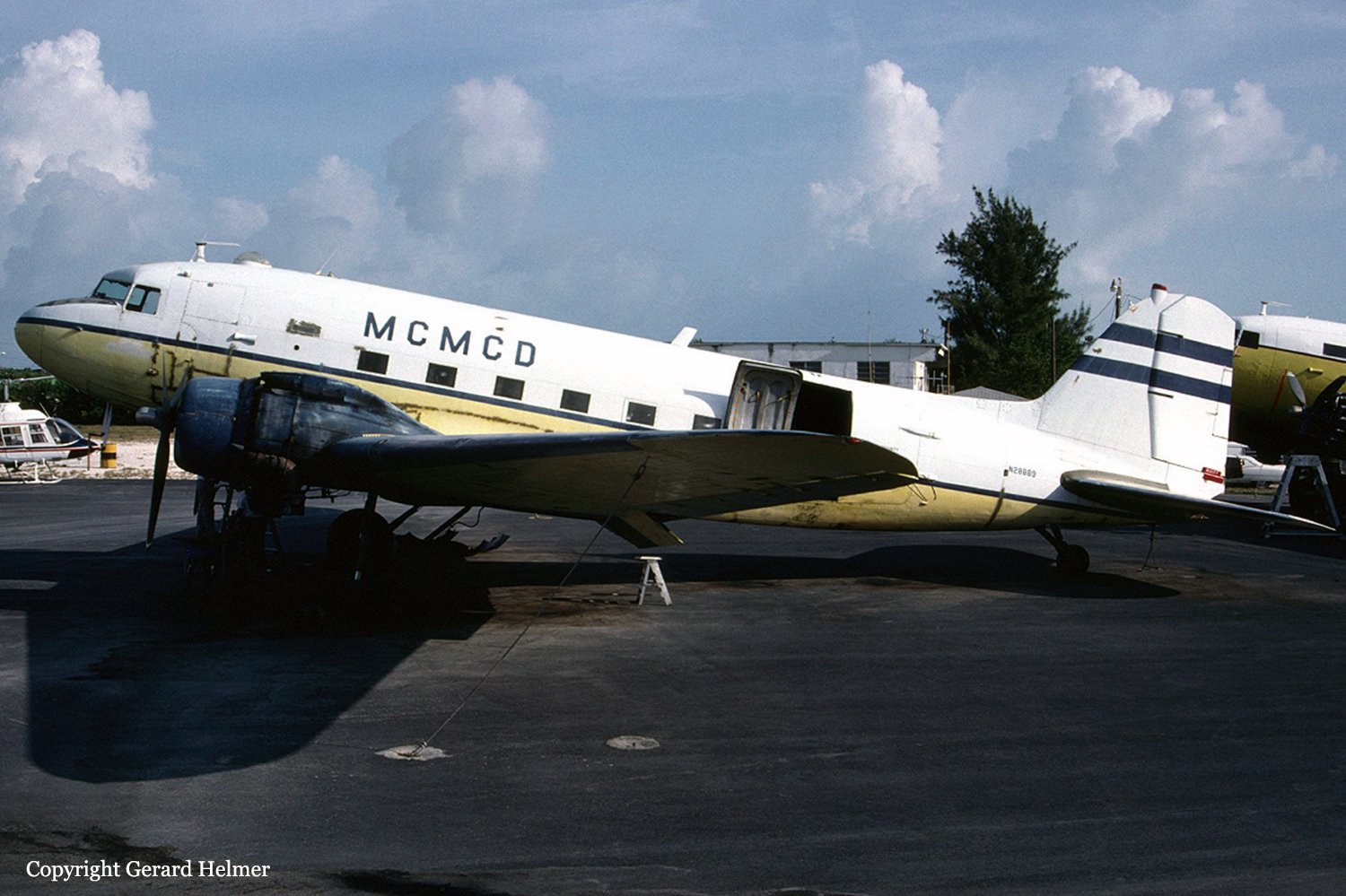
Crash of a Douglas C-47A-90-DL near Summerland Key: 2 killed

Date & Time: May 2, 1989 at 2030 LT
Operator:
Registration:
N28889
Flight Phase:
Survivors:
No
Schedule:
Marathon - Marathon
MSN:
20520
YOM:
1944
Crew on board:
2
Crew fatalities:
Pax on board:
0
Pax fatalities:
Other fatalities:
Total fatalities:
2
Captain / Total flying hours:
8165
Captain / Total hours on type:
1702.00
Aircraft flight hours:
10317
Circumstances:
The flight (a Monroe County Mosquito Control operation) began at about 1740 edt to conduct low altitude spraying. When it did not return, a search was initiated. At about 0245, the aircraft was found in a remote area on water key near the town of Summerland Key, FL. Evidence at the accident scene suggested the aircraft struck 40 feet high mangrove trees with the left wing as the pilots were making a procedure turn to start another spray run. No preimpact failure or malfunction of the aircraft or engines was found. There were no known witnesses, but the accident was estimated to have occurred at about 2030 edt. Sunset was at 1952 edt. About 22 miles southwest at Key West, the 1750 weather was in part: 1,500 feet scat, 10 miles visibility, wind from 330° at 10 knots. Aprx 85 miles north-northeast, the wind was from 100° at 11 knots. Both pilots were killed.
Probable cause:
The failure of the pilot-in-command to assure proper altitude and clearance was maintained above the terrain and trees. The trees and light condition at dusk were contributing factors.
Final Report:

Crash of a Beechcraft 200 Super King Air in Pensacola: 3 killed

Date & Time: Apr 10, 1989 at 1300 LT
Registration:
N30PC
Flight Phase:
Survivors:
No
Schedule:
Pensacola - Atlanta
MSN:
BB-702
YOM:
1980
Crew on board:
2
Crew fatalities:
Pax on board:
1
Pax fatalities:
Other fatalities:
Total fatalities:
3
Captain / Total flying hours:
14200
Captain / Total hours on type:
3000.00
Aircraft flight hours:
6351
Circumstances:
The aircraft was routinely flown to Pensacola to pickup a gulf power executive for a flight to Atlanta. The pax had 4 bags, 2 placed in the aft baggage area by the ground crew, the other 2 carried onboard by the pax. After takeoff the CVR recorded the pax stating that there was a fire. The fire in the aft cabin area was confirmed by the 1st officer. An emergency was declared to the personnel ATCT. Subsequently, the aircraft was seen descending out of the overcast streaming dark smoke behind it. The aircraft impacted an apartment complex and a post crash fire destroyed it. No evidence of a lightning strike, aircraft system malfunction, or incendiary device was found during the investigation. Forensic chemical tests showed traces of hydrochloric and sulphuric acid on pax articles but none on the cabin interior. Metallurgical exam of broken fuel line showed overload failure and post heat distress. The interior of the cockpit windows were severely sooted. The flight crew did not don available oxygen masks.
Probable cause:
An in flight cabin fire of undetermined origin, and smoke (toxic condition) in the crew compartment, which resulted in physical impairment of the flight crew.
Final Report:

Crash of a Piper PA-60 Aerostar (Ted Smith 600) in Jacksonville: 1 killed

Date & Time: Mar 22, 1989 at 2244 LT
Registration:
N77BR
Flight Type:
Survivors:
No
Schedule:
Atlanta – Jacksonville
MSN:
60-0600-7961193
YOM:
1979
Crew on board:
1
Crew fatalities:
Pax on board:
0
Pax fatalities:
Other fatalities:
Total fatalities:
1
Captain / Total flying hours:
2575
Captain / Total hours on type:
1250.00
Aircraft flight hours:
3891
Circumstances:
During arrival, the pilot was cleared for an ILS runway 07 approach. Also, he was advised of a DC-9 that was 4 miles ahead and was told to use caution for wake turbulence. As the aircraft was on final approach, it descended below the ILS glide slope and subsequently hit trees and crashed about 1.8 mile short of the runway. No preimpact part failure or malfunction of the aircraft or engines was found that would have resulted in an accident. Also, there were no reported problems with the ILS system and it tested normal after the accident. The pilot held a commercial pilot certificate which was good for single engine land aircraft; his multi-engine privileges were authorized as a private pilot, only. An NTSB performance study showed the aircraft was 2 minutes and 57 seconds behind the DC-9. Radar data indicated the aircraft did not exceed a bank angle of 32° and no excessive g-values were evident during the approach. The pilot, sole on board, was killed.
Probable cause:
Improper use of the IFR procedure by the pilot, his failure to maintain a proper glide path, and his failure to identify the decision height.
Final Report:

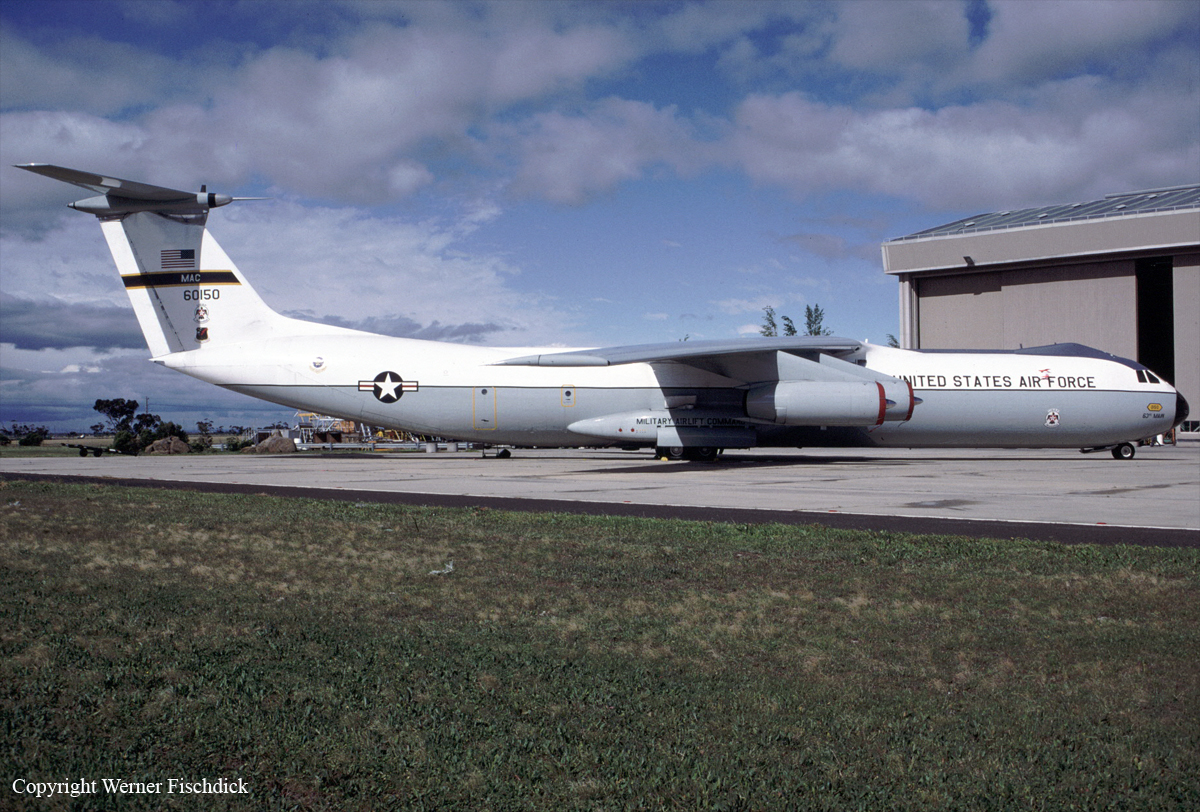
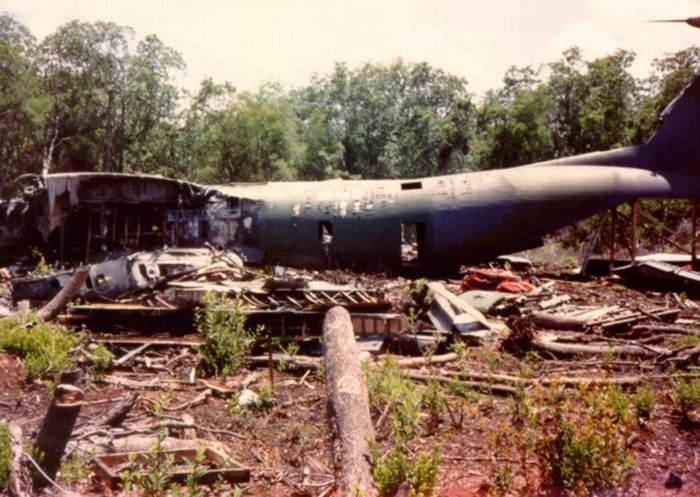
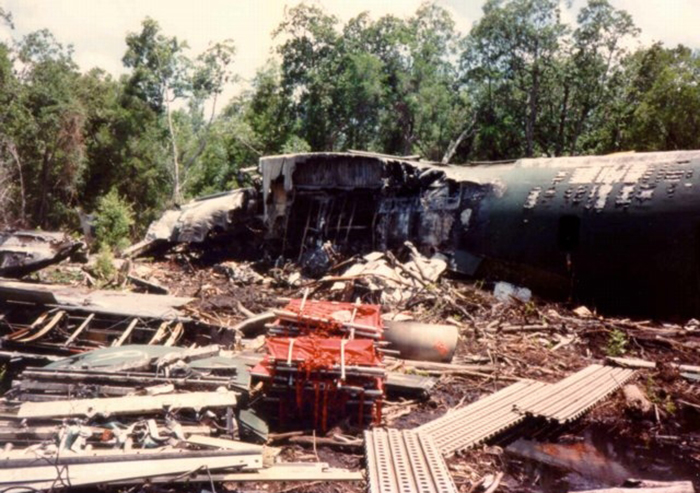
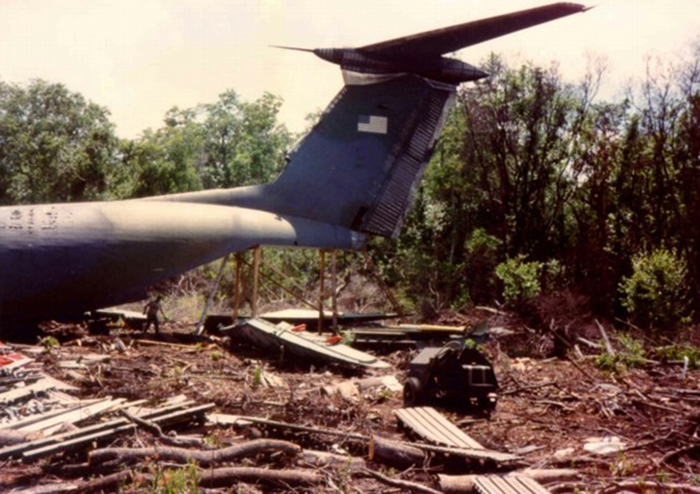
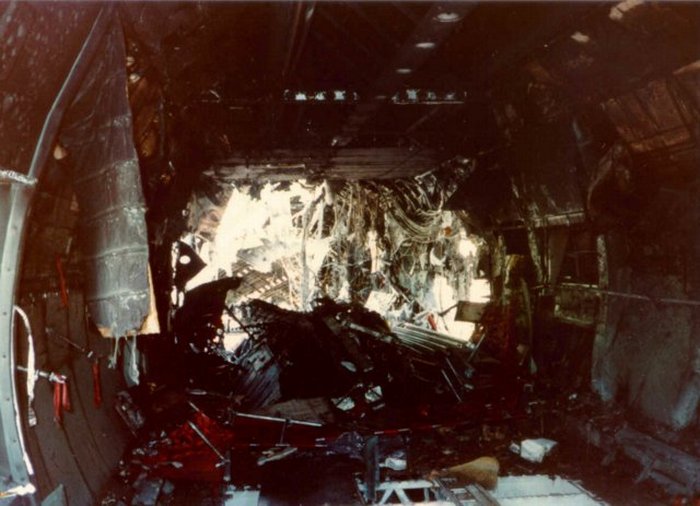
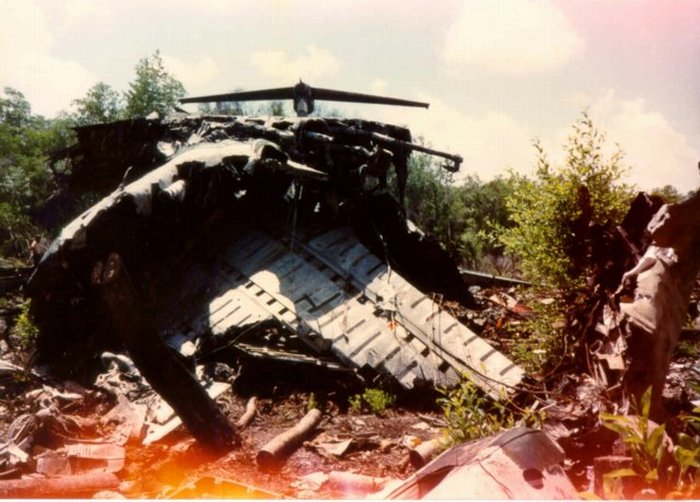
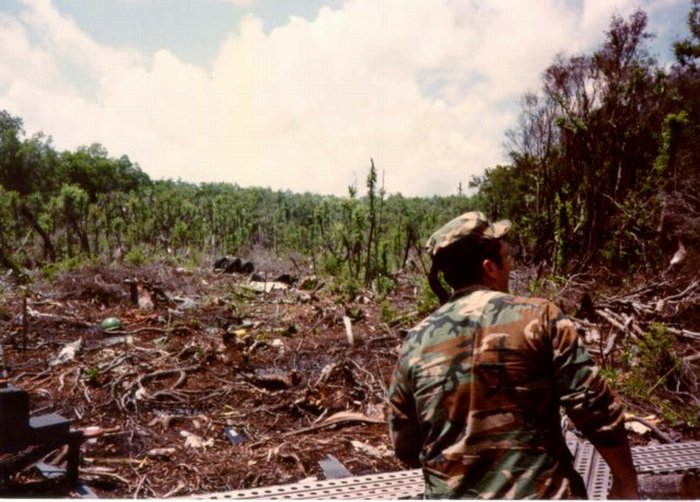
Crash of a Lockheed C-141B Starlifter at Hurlburt Field AFB: 8 killed

Date & Time: Feb 20, 1989 at 2000 LT
Type of aircraft:
Operator:
Registration:
66-0150
Flight Type:
Survivors:
No
Schedule:
Norton - Peterson Field - Hurlburt Field
MSN:
6176
YOM:
1966
Crew on board:
7
Crew fatalities:
Pax on board:
1
Pax fatalities:
Other fatalities:
Total fatalities:
8
Aircraft flight hours:
29148
Circumstances:
The C-141B departed Norton AFB for a flight to Hurlburt Field with an intermediate stop at Peterson Field near Colorado Springs. The crew had to return back to Norton due to a leaking comfort pallet. At the end of the second leg, the crew were confronted with thunderstorms covering the approach path for the ILS approach to runway 36 at Hurlburt Field, the primary instrument runway. The crew requested the TACAN approach to runway 18, which was an approach over swampy terrain. The aircraft entered a high rate of descent, causing the GPWS to sound. The copilot reset two GPWS warnings and the descent was continued below the Minimum Descent Altitude (MDA) of 345 feet agl. The airplane finally impacted terrain in a wings level, nose low attitude. All eight occupants were killed.
Probable cause:
Controlled flight into terrain.