Crash of a Cessna 340A in Orlando: 3 killed

Date & Time: May 1, 1987 at 1548 LT
Type of aircraft:
Registration:
N8716K
Flight Type:
Survivors:
No
Schedule:
Huntsville – Orlando
MSN:
340A-0629
YOM:
1978
Location:
Crew on board:
1
Crew fatalities:
Pax on board:
2
Pax fatalities:
Other fatalities:
Total fatalities:
3
Captain / Total flying hours:
2335
Captain / Total hours on type:
340.00
Circumstances:
The two aircraft, a Cessna 340A and a North American SNJ-4, collided in flight at approximately 3,000 feet msl over Orlando, FL in VMC with a visibility of 7 miles. Both aircraft were in contact with and being radar vectored by Orlando Approach Control. The Cessna 340 was in level flight and the SNJ was completing a right turn and still descending to 1,500 feet when the collision occurred. Both aircraft were operating under IFR flight rules with the Cessna 340 being vectored to runway 18R at Orlando-Intl (MCO) and the SNJ being directed to Orlando-Executive Airport (ORL). The accident occurred 7 miles northwest of ORL in the MCO Airport radar service outer area. During the vectoring, there was a lack of coordination between controllers during a transfer of control. The receiving controller failed to maintain radar target identification. There was also a lack of traffic advisories. The aircraft pilots were limited in their ability to see due to aircraft structure and relative positions to each other. After the collision, both aircraft crashed in uncontrolled descent. All four occupants in both aircraft were killed.
Probable cause:
Occurrence #1: midair collision
Phase of operation: cruise - normal
Findings
1. (c) crew/group coordination - not performed - atc personnel (dep/apch)
2. (f) radar, approach/departure - inadequate
3. (c) identification of aircraft on radar - inadequate - atc personnel (dep/apch)
4. (f) traffic advisory - not issued - atc personnel (dep/apch)
5. (f) visual lookout - inadequate - pilot in command
6. (f) visual lookout - inadequate - pilot of other aircraft
----------
Occurrence #2: in flight collision with terrain/water
Phase of operation: descent - uncontrolled
Final Report:

Crash of a Beechcraft 65 Queen Air off Key Largo

Date & Time: Mar 3, 1987
Type of aircraft:
Registration:
N822Q
Flight Phase:
Flight Type:
Survivors:
Yes
MSN:
LC-42
YOM:
1960
Crew on board:
1
Crew fatalities:
Pax on board:
0
Pax fatalities:
Other fatalities:
Total fatalities:
0
Circumstances:
The aircraft was found crashed in shallow water near Key Largo, FL. Attempts to locate the pilot or current operator were fruitless. The circumstances surrounding the crash and the cause are unknown.
Probable cause:
Occurrence #1: miscellaneous/other
Phase of operation: unknown
Findings
1. (c) reason for occurrence undetermined
2. (f) flt with inadequate en route/destination facilities - performed - pilot in command
----------
Occurrence #2: in flight collision with terrain/water
Phase of operation: landing
Findings
3. (f) terrain condition - water, glassy
Final Report:

Crash of a Beechcraft A100 King Air in Brooksville

Date & Time: Nov 8, 1986 at 0616 LT
Type of aircraft:
Operator:
Registration:
N78L
Survivors:
Yes
Schedule:
Brooksville – Miami
MSN:
B-167
YOM:
1973
Crew on board:
1
Crew fatalities:
Pax on board:
0
Pax fatalities:
Other fatalities:
Total fatalities:
0
Captain / Total flying hours:
7290
Captain / Total hours on type:
150.00
Aircraft flight hours:
5500
Circumstances:
The pilot stated that shortly after departure the cockpit filled with smoke. While returning for landing his visibility was reduced due to the smoke and ground fog. On landing roll the the aircraft ran off the left side of the runway, went through a cow fence and came to rest against a tree. A post crash fire erupted in the left wing area where a fence post punctured the wing and the aircraft was destroyed by the fire. The cause of the smoke in the cockpit could not be determined. The pilot, sole on board, escaped with minor injuries.
Probable cause:
Occurrence #1: airframe/component/system failure/malfunction
Phase of operation: climb - to cruise
Findings
1. (f) other system - smoke
2. (c) reason for occurrence undetermined
----------
Occurrence #2: forced landing
Phase of operation: descent - emergency
----------
Occurrence #3: on ground/water collision with object
Phase of operation: landing - roll
Findings
3. (f) weather condition - fog
4. (f) light condition - night
5. (f) other system - smoke
6. (c) visual lookout - not possible - pilot in command
7. Object - fence
8. Object - tree(s)
Final Report:

Crash of a Piper PA-61 Aerostar (Ted Smith 601P) in Jacksonville

Date & Time: Nov 4, 1986 at 2024 LT
Registration:
N8002J
Survivors:
Yes
Schedule:
Charleston – Naples
MSN:
61-0499-198
YOM:
1978
Crew on board:
1
Crew fatalities:
Pax on board:
1
Pax fatalities:
Other fatalities:
Total fatalities:
0
Captain / Total flying hours:
4180
Captain / Total hours on type:
2400.00
Aircraft flight hours:
2435
Circumstances:
While in cruise flight, the pilot noted that the left engine began losing power and oil pressure. He stated that he then shut down the engine and feathered the propeller. He declared an emergency and descended to land. While on final approach, he lowered the landing gear and selected full flaps to slow the aircraft. He stated the airspeed decayed and the aircraft began to roll and yaw to the left. Subsequently, it contacted the ground in a left wing low attitude, then partially cartwheeled before coming to rest. A post accident examination of the left engine revealed that a turbocharger oil seal had deteriorated & failed, allowing oil to escape through the turbocharger exhaust. There was evidence of the beginning of progressive failure of the turbocharger. Also, there were indications that the left propeller was not fully feathered and that it was windmilling at impact. The pilot believed that he may have moved the left prop control out of the feather position by mistake. Both occupants were slightly injured.
Probable cause:
Occurrence #1: loss of engine power (partial) - mech failure/malf
Phase of operation: cruise - normal
Findings
1. (f) lubricating system, oil seal - deteriorated
2. (f) lubricating system, oil seal - failure, partial
3. (f) fluid, oil - leak
4. (f) fluid, oil - starvation
5. (f) exhaust system, turbocharger - failure, partial
6. Propeller feathering - initiated
----------
Occurrence #2: loss of control - in flight
Phase of operation: approach - vfr pattern - final approach
Findings
7. Precautionary landing - initiated
8. (c) planned approach - improper - pilot in command
9. (c) propeller feathering - inadvertent deactivation - pilot in command
10. Gear extension - performed
11. (f) lowering of flaps - excessive - pilot in command
12. (c) airspeed (vmc) - not maintained - pilot in command
----------
Occurrence #3: in flight collision with terrain/water
Phase of operation: approach

Crash of a Piper PA-60 Aerostar (Ted Smith 600) in Tallahassee: 1 killed

Date & Time: Oct 2, 1986 at 1845 LT
Registration:
N217HM
Flight Type:
Survivors:
No
Schedule:
Tampa – Tallahassee
MSN:
60-0236-098
YOM:
1976
Crew on board:
1
Crew fatalities:
Pax on board:
0
Pax fatalities:
Other fatalities:
Total fatalities:
1
Captain / Total flying hours:
3500
Circumstances:
Witnesses stated seeing the aircraft enter a left downwind approach to runway 16, turn base to final normally then veer to the left of the runway in a nose high attitude and disappear behind a line of trees and crash approximately 500 feet east of runway 16. Post crash examination of the aircraft revealed the left engine was not producing power at the time of impact. Further examination revealed that the left engine fuel servo fuel mixture and idle speed settings were misadjusted. The pilot, sole on board, was killed.
Probable cause:
Occurrence #1: loss of engine power
Phase of operation: approach - vfr pattern - final approach
Findings
1. (f) fuel system, fuel control - other
----------
Occurrence #2: loss of control - in flight
Phase of operation: approach - vfr pattern - final approach
Findings
2. (f) in-flight planning/decision - poor - pilot in command
3. (c) directional control - not maintained - pilot in command
----------
Occurrence #3: in flight collision with object
Phase of operation: descent - uncontrolled
Findings
4. Object - tree(s)
Final Report:

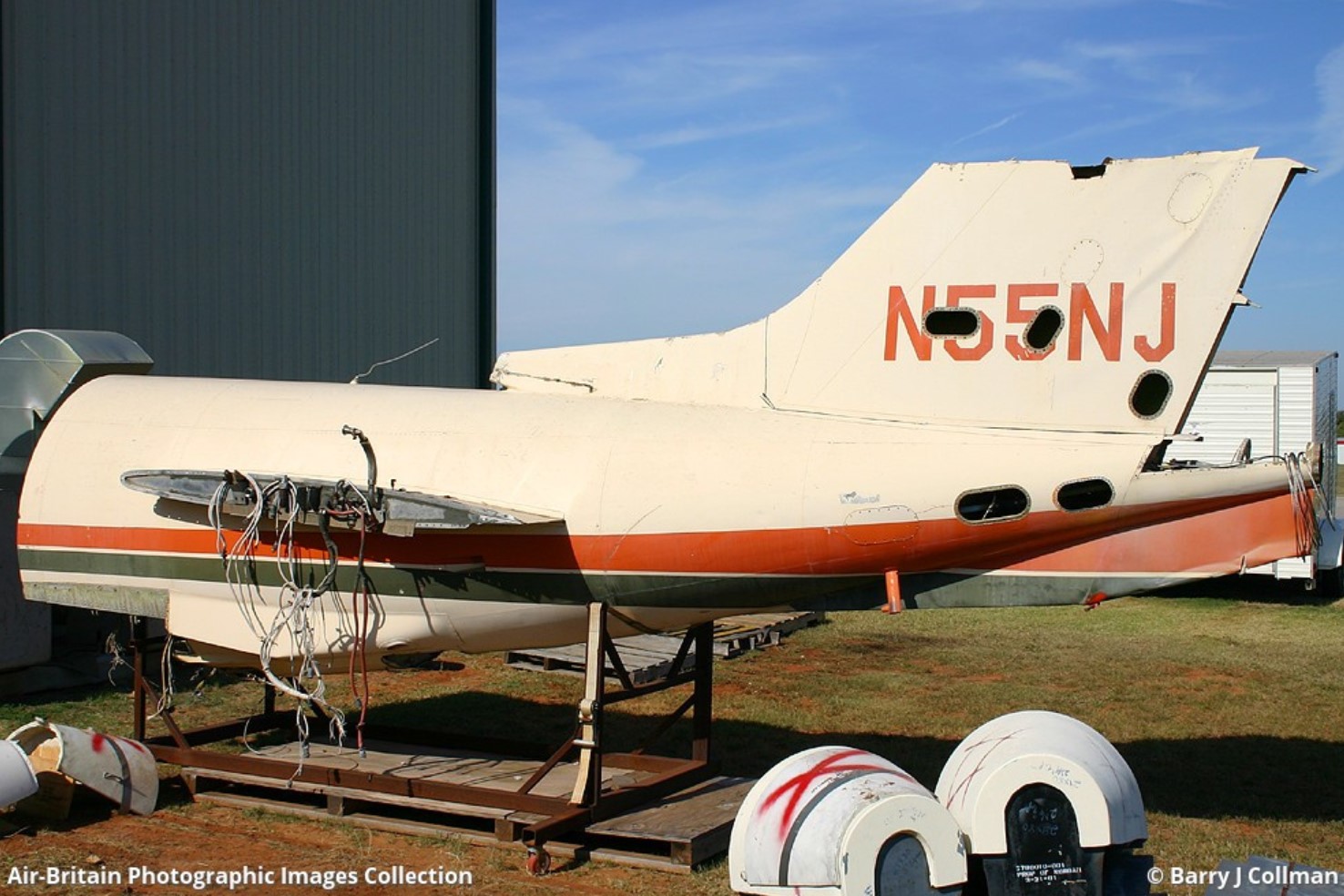
Crash of a Learjet 24 in North Perry

Date & Time: May 7, 1986 at 1800 LT
Type of aircraft:
Registration:
N55NJ
Flight Type:
Survivors:
Yes
Schedule:
North Perry - North Perry
MSN:
24-162
YOM:
1968
Crew on board:
2
Crew fatalities:
Pax on board:
2
Pax fatalities:
Other fatalities:
Total fatalities:
0
Captain / Total flying hours:
13325
Captain / Total hours on type:
2367.00
Circumstances:
The pilot stated he made a normal approach and landing but on rollout discovered he had no brakes. The aircraft traveled off the left side of the runway and collided with a fence surrounding a ballpark. Post crash examination of the hydraulic system revealed that the hydraulic reservoir was empty and the main accumulator and the thrust reverser accumulator had no air charge. All four occupants escaped uninjured.
Probable cause:
Occurrence #1: airframe/component/system failure/malfunction
Phase of operation: landing - roll
Findings
1. (c) hydraulic system, reservoir - low level
2. (c) aircraft preflight - poor - pilot in command
3. (c) maintenance, service of aircraft/equipment - improper - other maintenance personnel
----------
Occurrence #2: overrun
Phase of operation: landing - roll
----------
Occurrence #3: on ground/water collision with object
Phase of operation: landing - roll
Findings
4. Object - fence
Final Report:

Crash of a Piper PA-31-350 Navajo Chieftain in Florida City: 1 killed

Date & Time: Mar 14, 1986
Registration:
N49984
Flight Type:
Survivors:
No
MSN:
31-7552074
YOM:
1975
Crew on board:
1
Crew fatalities:
Pax on board:
0
Pax fatalities:
Other fatalities:
Total fatalities:
1
Circumstances:
The aircraft touched down on the top of a flood control dike approx 12 feet wide. The aircraft continued for about 1,336 feet before the left wheel slid off the dike where the dike makes a slight curve to the right. The left gear was torn from the aircraft as it left the dike. The left wing struck some heavy brush which rotated the aircraft 180°. The nose gear was torn from the aircraft and the right gear collapsed during the crash sequence. An exam of the aircraft revealed all cabin seats had been removed and the aircraft was gutted by fire. The aircraft's fuel caps were located on the ground next to the aircraft. An unidentified body was found about 835 feet north of the aircraft. No one has claimed ownership of the aircraft and the address of the registered owner is non-existent. The pilot, sole on board, was killed.
Probable cause:
Occurrence #1: on ground/water encounter with terrain/water
Phase of operation: landing - roll
Findings
1. (c) planning/decision - inadequate - pilot in command
2. (c) directional control - not maintained - pilot in command
----------
Occurrence #2: main gear collapsed
Phase of operation: landing - roll
----------
Occurrence #3: nose gear collapsed
Phase of operation: landing - roll
Final Report:

Crash of a Piper PA-31-310 Navajo in Moore Haven: 2 killed

Date & Time: Feb 17, 1986
Type of aircraft:
Operator:
Registration:
N7EA
Flight Phase:
Flight Type:
Survivors:
No
MSN:
31-117
YOM:
1968
Crew on board:
1
Crew fatalities:
Pax on board:
1
Pax fatalities:
Other fatalities:
Total fatalities:
2
Circumstances:
On February 17, 1986 the wreckage of N7EA along with the skeletal remains of two persons were found. The aircraft crashed into trees causing the separation of the outboard six feet of left wing and then continued crashing through more trees before colliding with the ground. The aircraft caught fire during the impact sequence and was completely destroyed by post crash fire. Fuel fittings and pumps used in aircraft fuel systems were found in the cabin area of the wreckage. Also the closure mechanisms for several military type duffle bags were found and only two seats were installed in the cockpit. Examination of the engines revealed both to be operable at the time of the accident. The date and time of the accident could not be determined. The origin and destination of the flight could also not be determined. The aircraft was last seen at the Fort Lauderdale-Executive Airport on 2/3/86.
Probable cause:
Occurrence #1: in flight collision with object
Phase of operation: maneuvering
Findings
1. (f) object - tree(s)
2. (c) preflight planning/preparation - inadequate - pilot in command
3. (c) in-flight planning/decision - improper - pilot in command
----------
Occurrence #2: in flight collision with terrain/water
Phase of operation: descent - uncontrolled
Findings
4. Terrain condition - high vegetation
Final Report:

Crash of a Cessna 340A in Dania: 2 killed

Date & Time: Feb 14, 1986 at 1205 LT
Type of aircraft:
Registration:
N1923E
Flight Phase:
Flight Type:
Survivors:
No
Schedule:
Fort Lauderdale - Fort Lauderdale
MSN:
340A-0671
YOM:
1978
Crew on board:
2
Crew fatalities:
Pax on board:
0
Pax fatalities:
Other fatalities:
Total fatalities:
2
Captain / Total flying hours:
911
Captain / Total hours on type:
873.00
Aircraft flight hours:
1600
Circumstances:
Shortly after takeoff on a check-out flight the aircraft was observed on crosswind leg to descend until impact. There was an extensive post impact fire. Witnesses heard the aircraft make a 'poof' type of noise just as the pilot radioed the control tower and stated that he was experiencing an emergency of unknown nature. The paper air filter element for the left engine exhibited the presence of oil, and the left side of the aircraft had evidence of oil spatter and streaking. Both occupants were killed.
Probable cause:
Occurrence #1: miscellaneous/other
Phase of operation: takeoff - initial climb
Findings
1. (f) lubricating system - leak
----------
Occurrence #2: in flight collision with terrain/water
Phase of operation: descent - emergency
Findings
2. (c) emergency procedure - not followed - pilot in command
3. (c) panic - pilot in command
----------
Occurrence #3: on ground/water collision with object
Phase of operation: landing - roll
Findings
4. (f) object - tree(s)
----------
Occurrence #4: fire/explosion
Phase of operation: landing - roll
Final Report:

Crash of a Piper PA-31T Cheyenne II in Jacksonville: 2 killed

Date & Time: Jan 9, 1986 at 2126 LT
Type of aircraft:
Registration:
N700CM
Flight Type:
Survivors:
No
Schedule:
Hampton - Jacksonville
MSN:
31-7820007
YOM:
1978
Crew on board:
1
Crew fatalities:
Pax on board:
1
Pax fatalities:
Other fatalities:
Total fatalities:
2
Captain / Total flying hours:
1710
Captain / Total hours on type:
100.00
Circumstances:
While being vectored for an ILS runway 07 approach, the pilot was told to maint 3,000 feet and advised he was following a Boeing 727. The minimum approach altitude before intercepting the ILS glide slope at the final approach fix/outer marker was 1,900 feet. As the aircraft was approaching the outer marker, the pilot was cleared for the approach and was handed off to the tower. After contacting the tower, the pilot was told to descend as published. At approximately that time, the tower controller and his supervisor discussed N700CM's altitude and proximity to the 727. The controller was going to discontinue the approach, but his supervisor suggested he wait and see if it would work out. Subsequently, N700CM crashed into trees approximately 5,800 feet short of the runway while descending in a wings level attitude. Radar data showed N700CM was well above the ILS glide slope when cleared for the approach. ATC procedures requested the aircraft to be below the glide slope before being cleared. Also, N700CM was approximately 2.57 miles behind the 727, but stayed well above the 727's flight path (and possible wake turbulence) until moments before impact. N700CM entered an excessive rate of descent before going below the glide slope. Both occupants were killed.
Probable cause:
Occurrence #1: in flight collision with object
Phase of operation: approach - faf/outer marker to threshold (ifr)
Findings
1. (f) weather condition - low ceiling
2. (f) weather condition - fog
3. (f) weather condition - rain
4. Radar separation - inadequate - atc personnel (dep/apch)
5. (f) instructions, written/verbal - improper - atc personnel (dep/apch)
6. (f) descent - delayed
7. (c) planned approach - improper use of - pilot in command
8. Missed approach - not issued - atc personnel (lcl/gnd/clnc)
9. (f) supervision - inadequate - atc personnel (supervisor)
10. (f) proper glidepath - not attained - pilot in command
11. (c) missed approach - not performed - pilot in command
12. (c) descent - excessive - pilot in command
13. (f) object - tree(s)
14. (c) decision height - improper use of - pilot in command
----------
Occurrence #2: in flight collision with terrain/water
Phase of operation: descent - uncontrolled
Final Report: