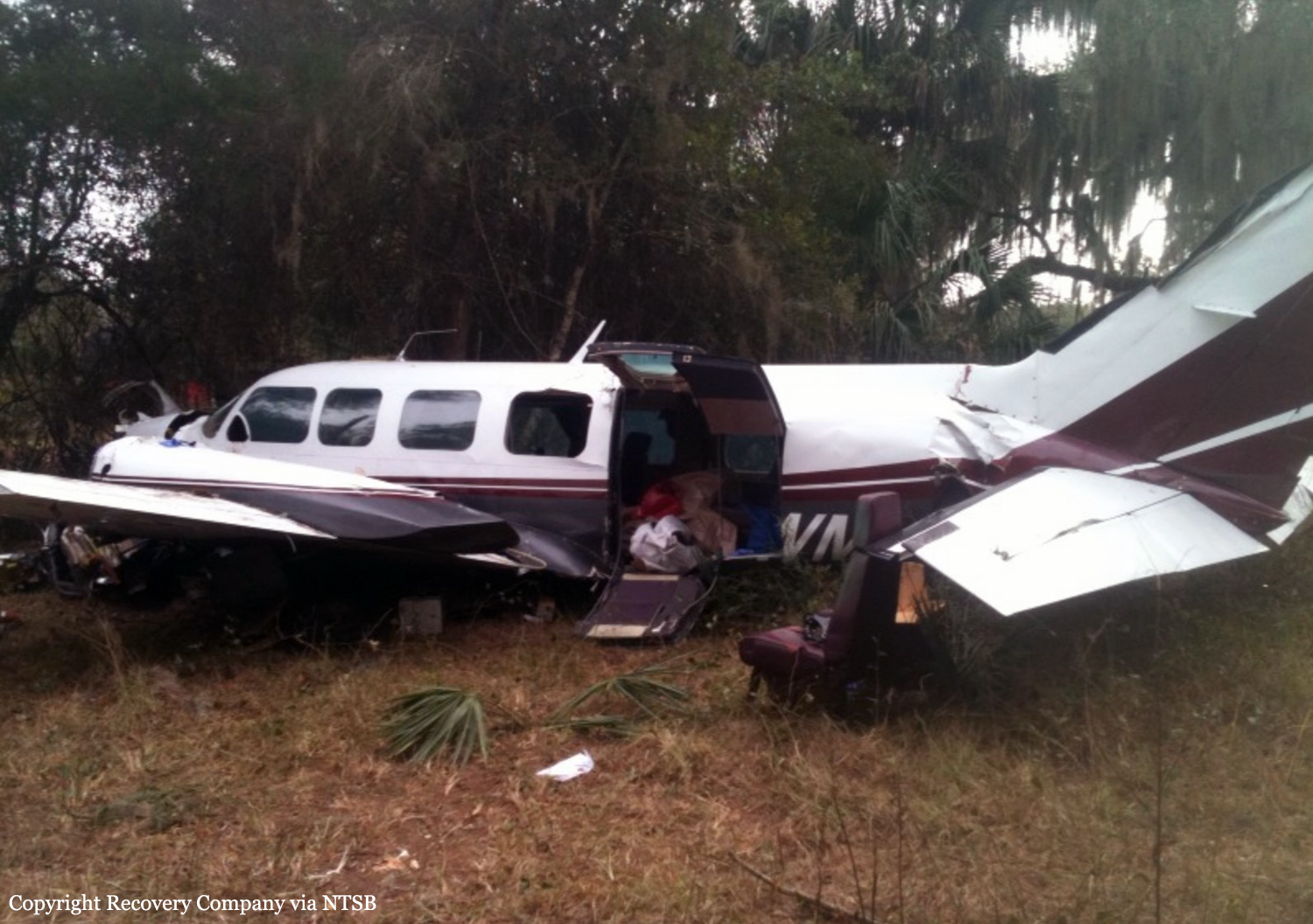
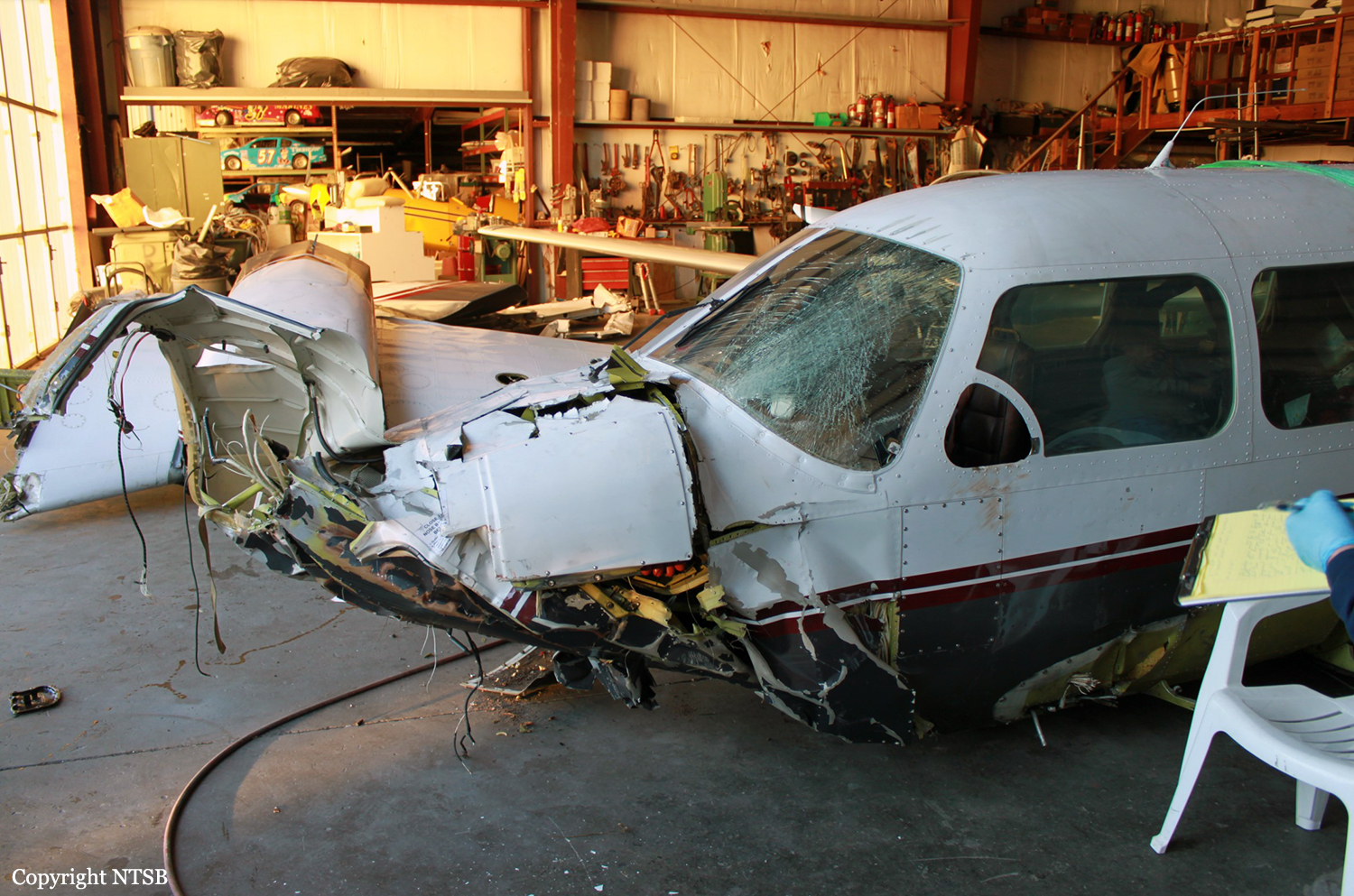
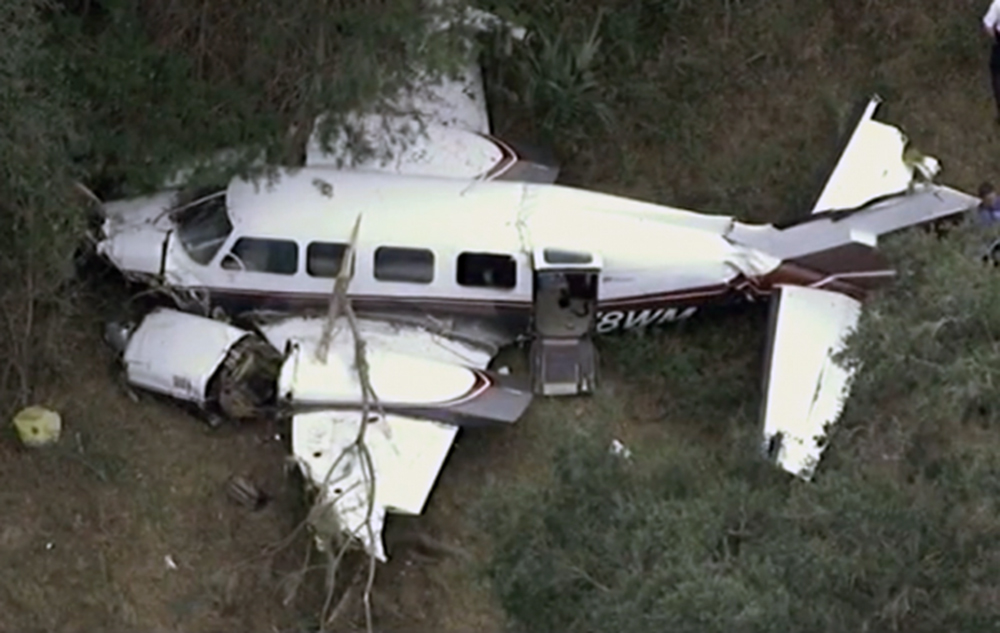
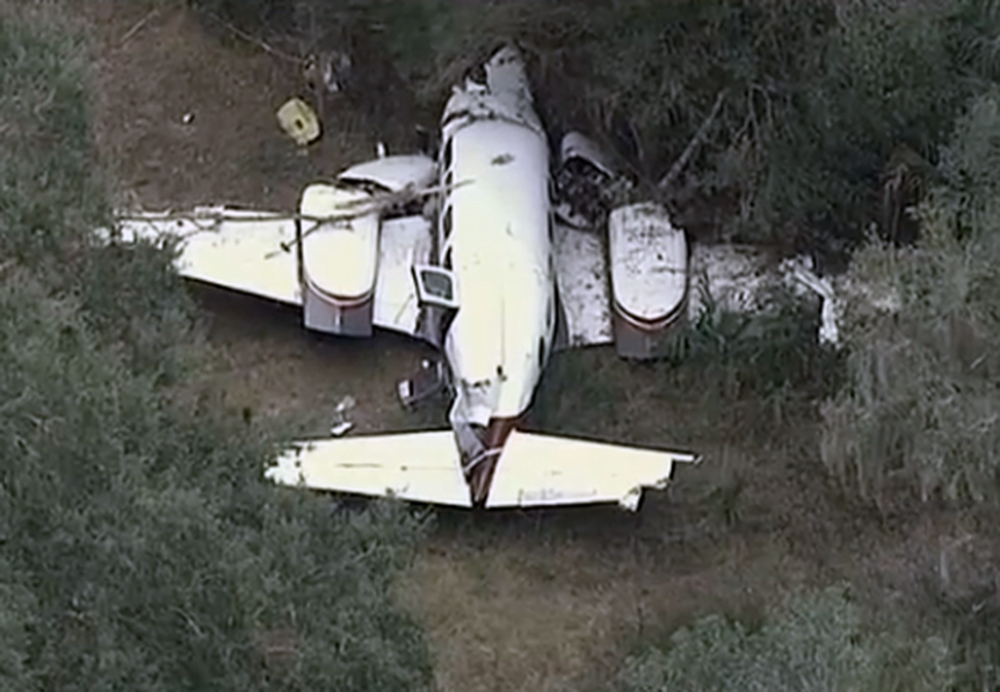
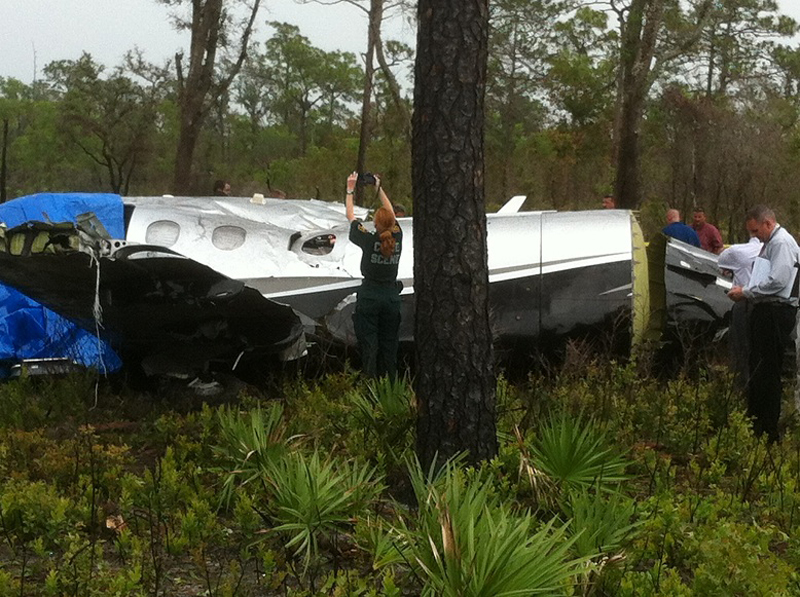
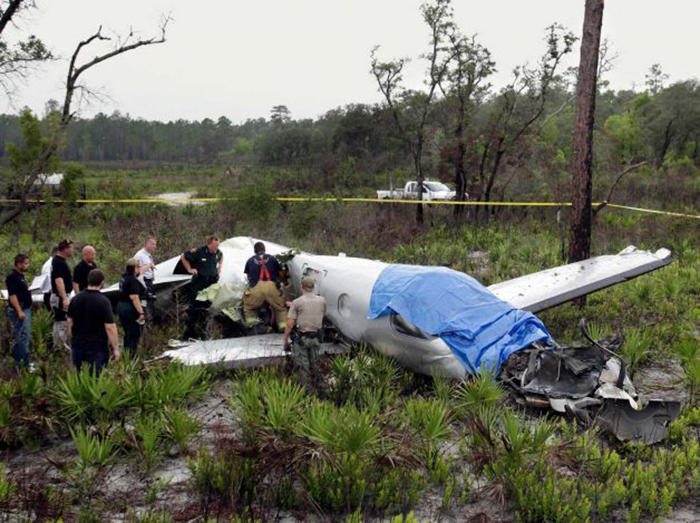
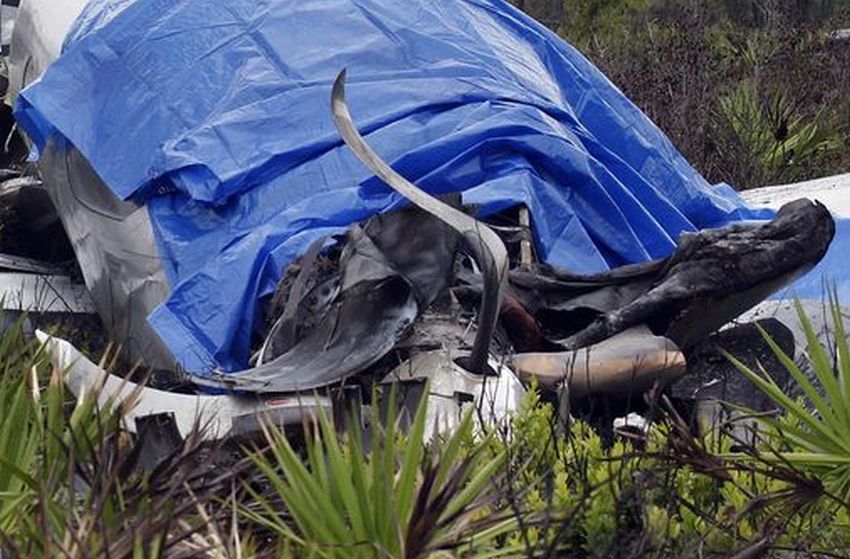
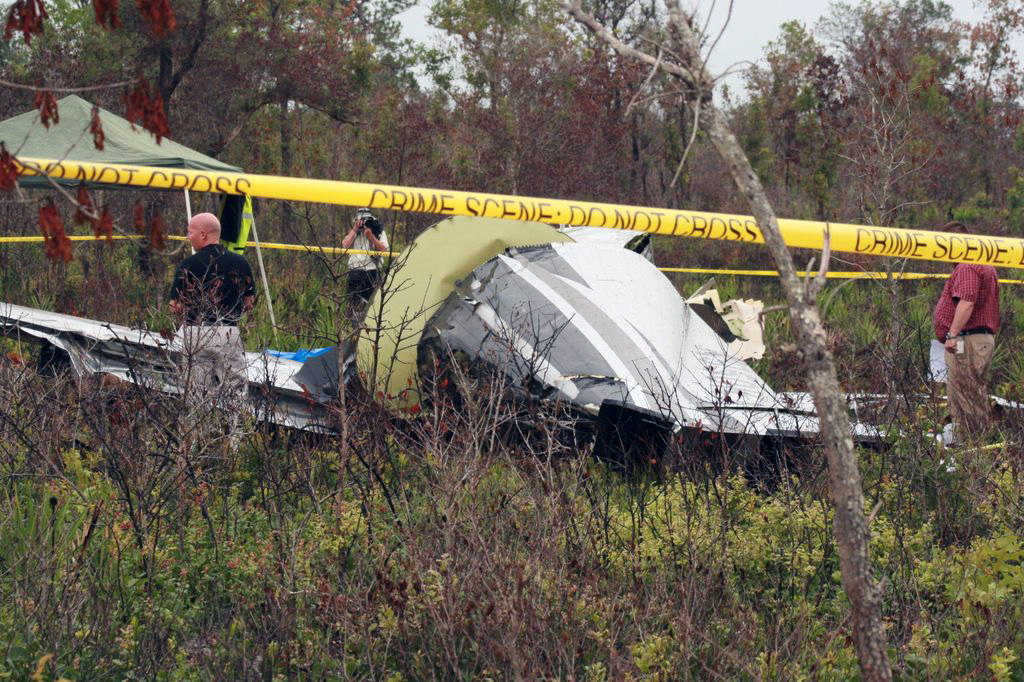
Crash of a Piper PA-31-350 Navajo Chieftain in Leesburg: 1 killed

Date & Time: Dec 24, 2012 at 1435 LT
Registration:
N78WM
Flight Type:
Survivors:
Yes
Schedule:
Crescent City - Leesburg
MSN:
31-7952047
YOM:
1979
Crew on board:
1
Crew fatalities:
Pax on board:
1
Pax fatalities:
Other fatalities:
Total fatalities:
1
Captain / Total flying hours:
3000
Captain / Total hours on type:
900.00
Aircraft flight hours:
4912
Circumstances:
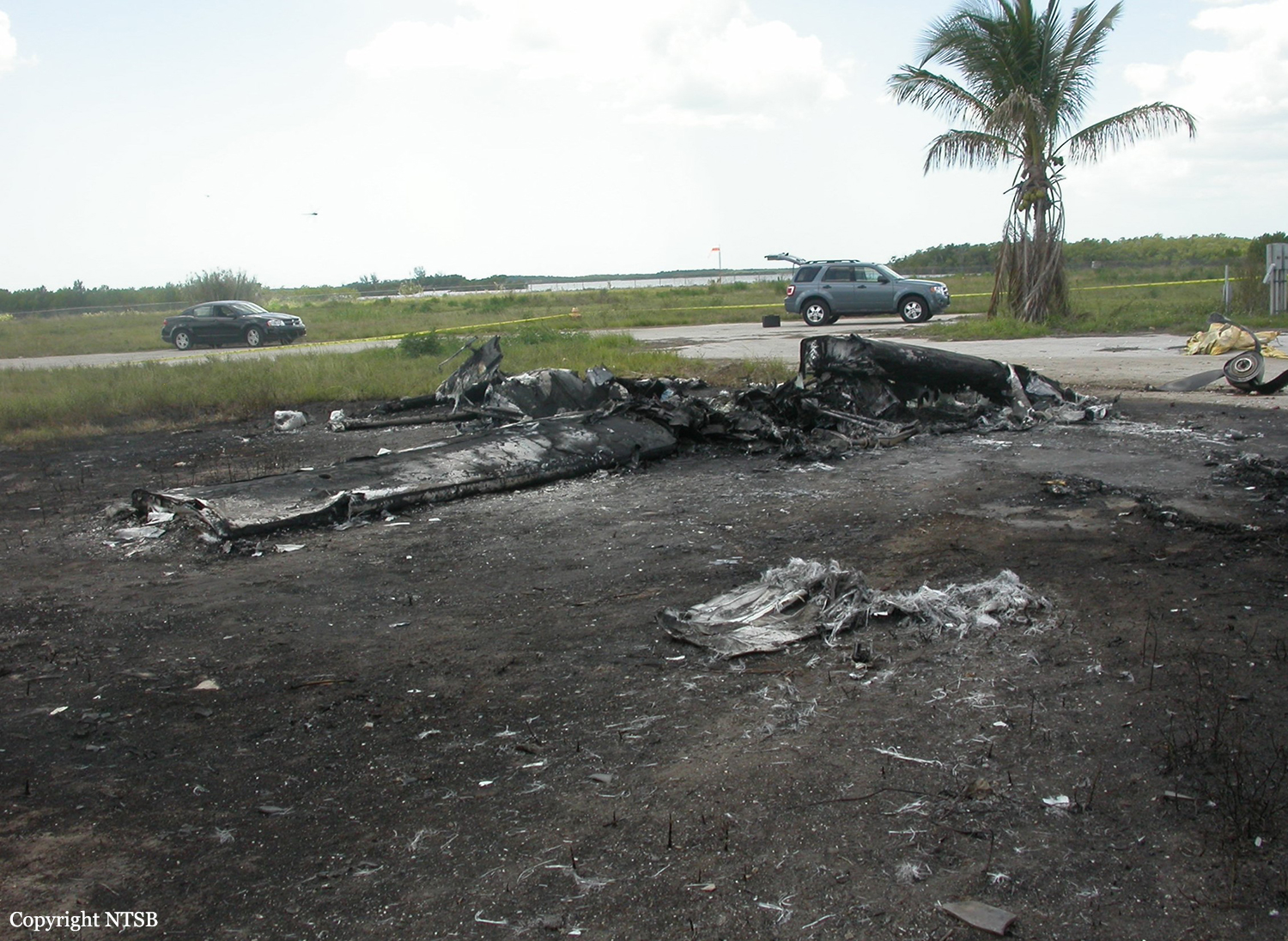
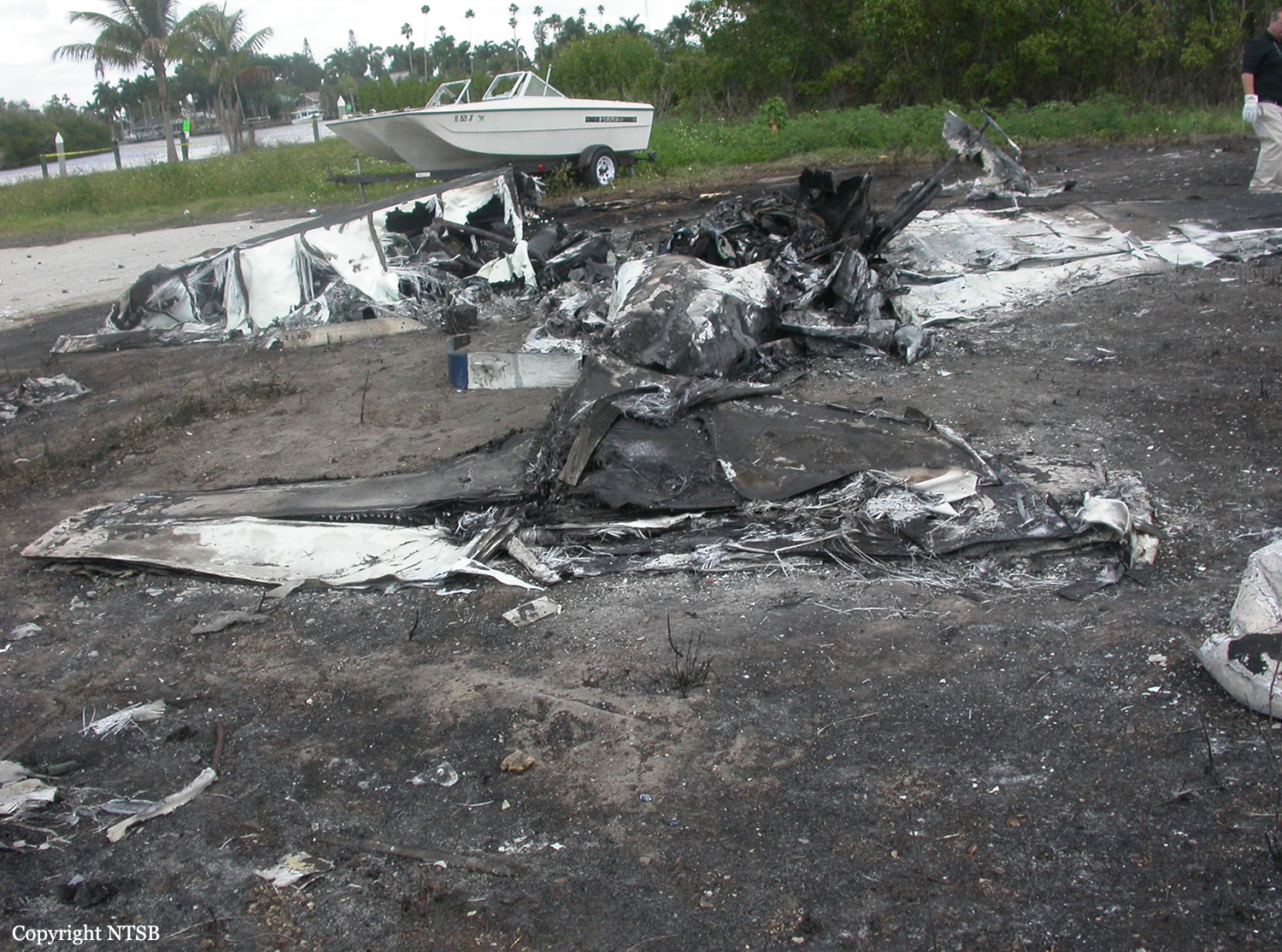
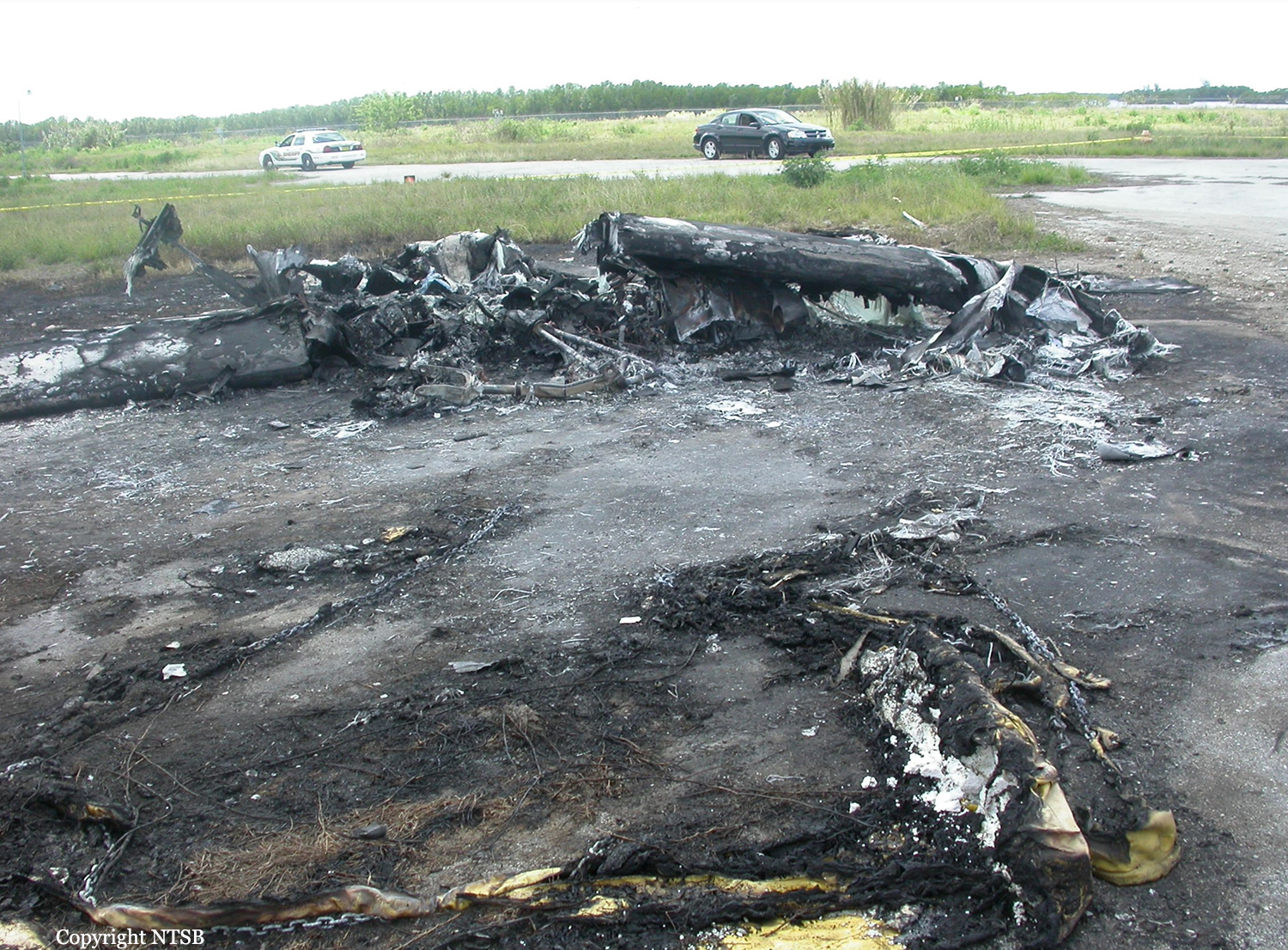
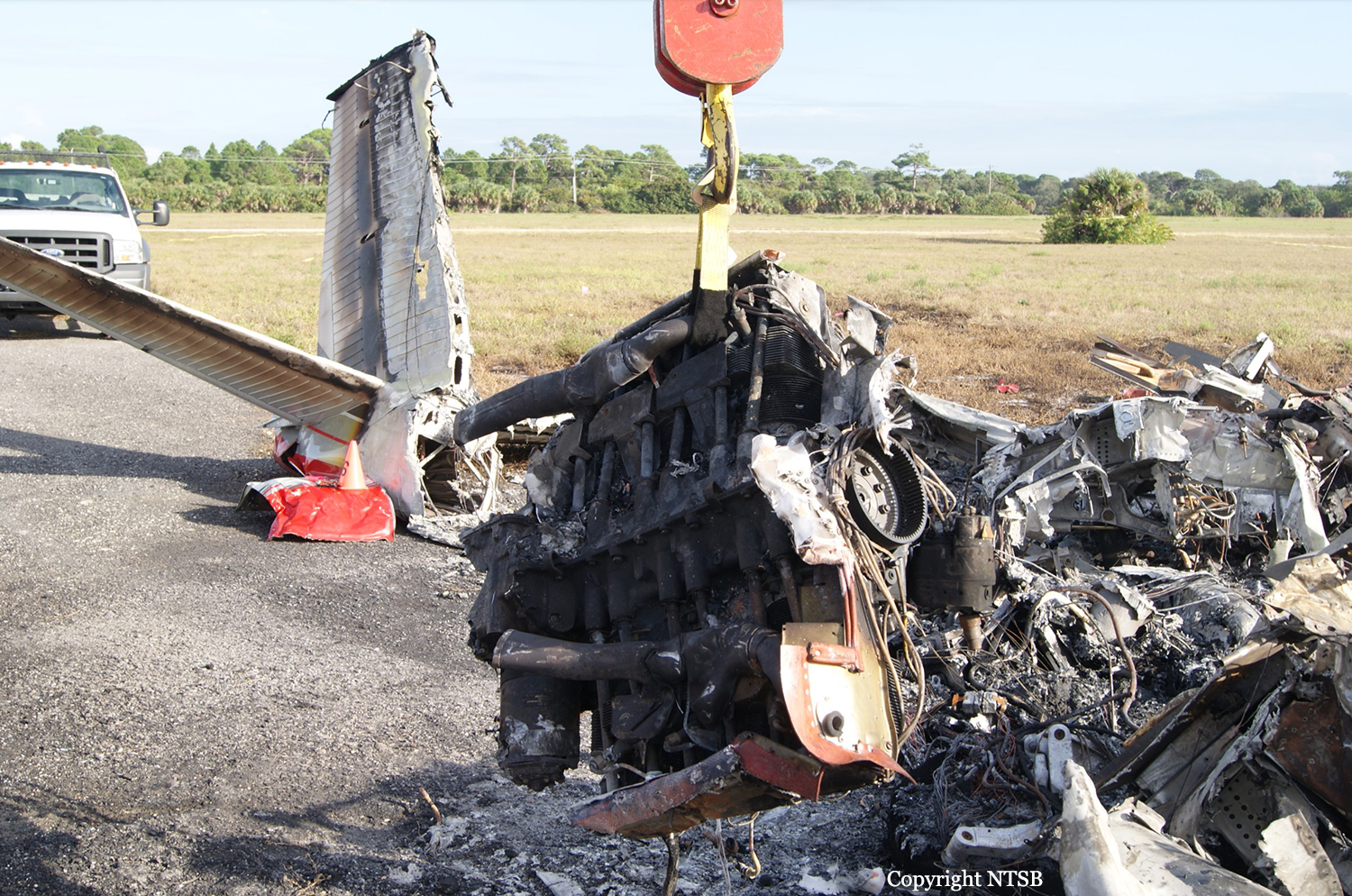
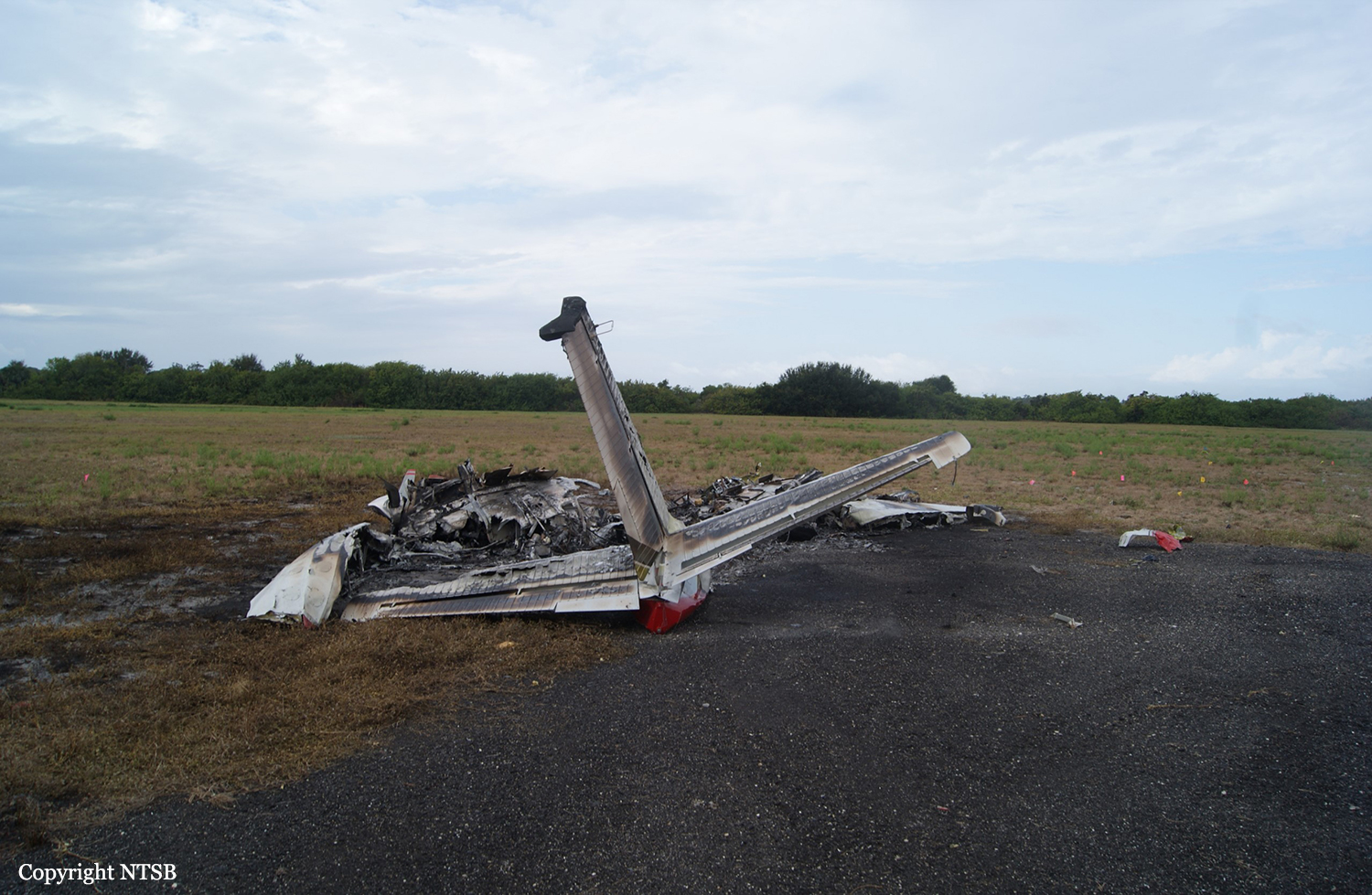
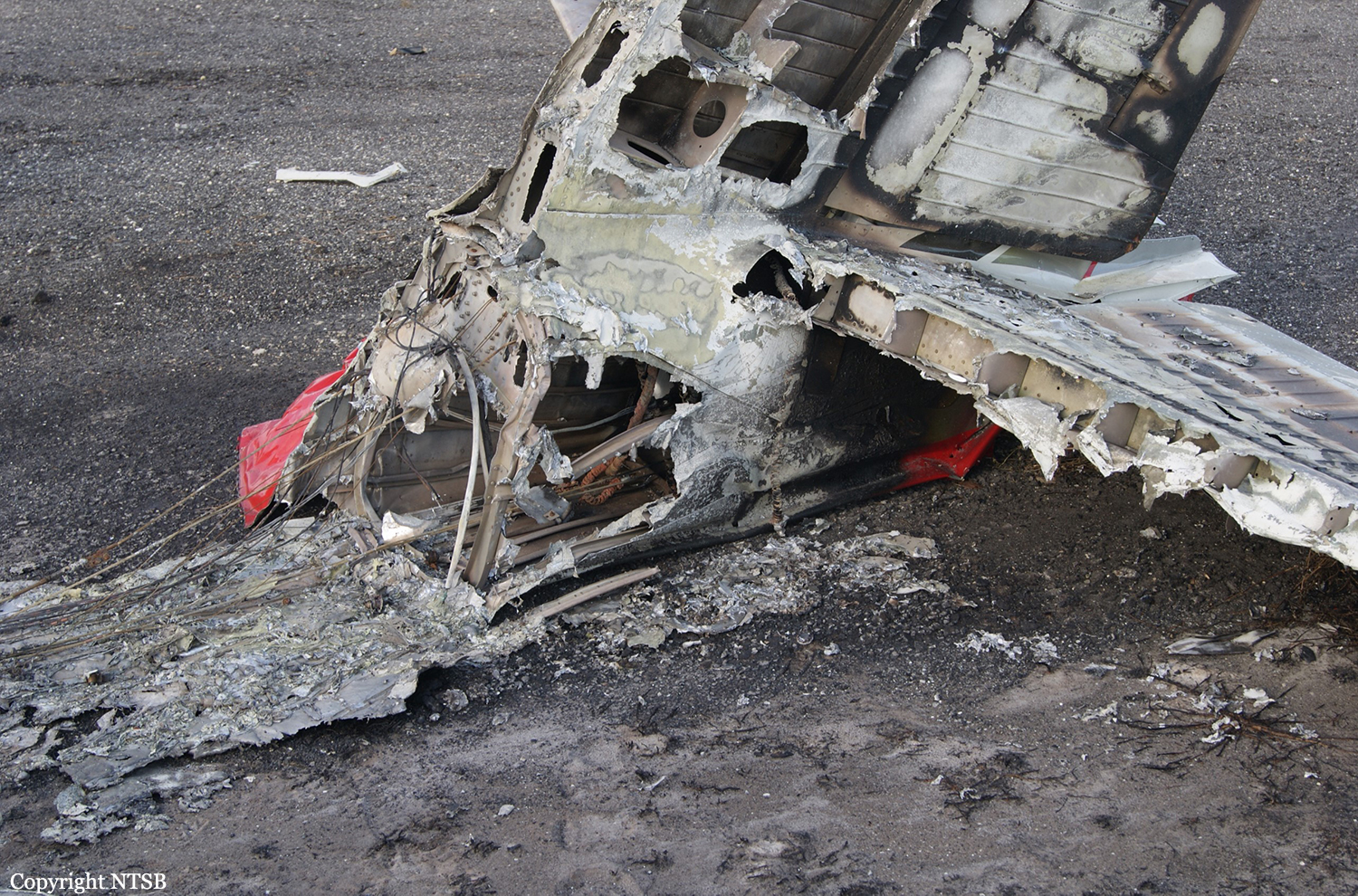
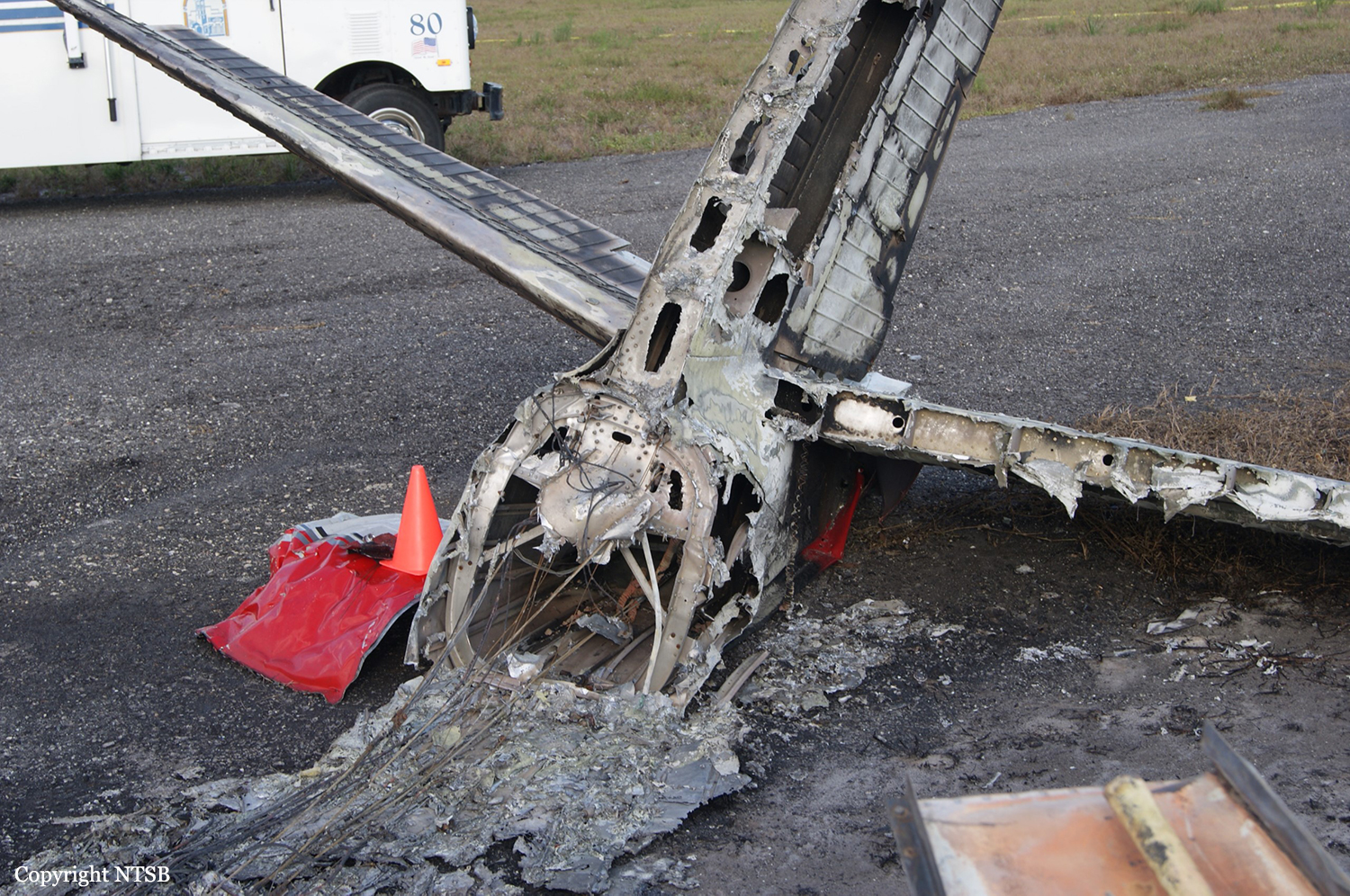
The pilot and the pilot-rated passenger were flying from their home, which was located at a residential airpark where no fuel services were available, to an airport located about 37 miles away. According to the passenger, shortly after departure, she queried the pilot about the airplane's apparent low fuel state. The pilot responded that one of the fuel gauges always indicated more available fuel than the other, and that if necessary they could use fuel from that tank. However, about 15 minutes after departure, the pilot advised air traffic control that the airplane was critically low on fuel. About 5 minutes later, both engines lost total power, and the airplane descended into trees and terrain. Examination of the airframe and engines after the accident confirmed that all of the airplane's fuel tanks were essentially empty, and that the trace amounts of fuel recovered were absent of contamination. Based on the autopsy and toxicology results, the pilot had emphysema, hypertension, dilated cardiomyopathy, and severe coronary artery disease; however, given that the passenger did not report any signs of acute incapacitation, and that the pilot did not communicate any medical issues to air traffic control, it does not appear that these conditions affected his performance on the day of the accident. The pilot did not report any chronically painful conditions to the FAA in his most recent medical certificate applications; however, postaccident toxicology tests indicated that the pilot was taking several pain medications (diclofenac, gabapentin, and oxycodone) and one illegal substance (marijuana). Based on the medications' Food and Drug Administration warnings, gabapentin and oxycodone may be individually impairing and sedating; their combined effect may be additive. The effects of the underlying conditions that necessitated the medication could not be determined. It is impossible to determine from the available information what direct effect the marijuana alone may have had on the pilot's judgment and psychomotor functioning; however, the combination of marijuana, oxycodone, and gabapentin likely significantly impaired the pilot's judgment and contributed to his failure to ensure the airplane had sufficient fuel to complete the planned flight.
Probable cause:
The pilot's inadequate preflight planning, which resulted in fuel exhaustion and a subsequent total loss of power in both engines during cruise flight. Contributing to the accident was the pilot’s use of prescription and illicit drugs, which likely impaired his judgment.
Final Report:

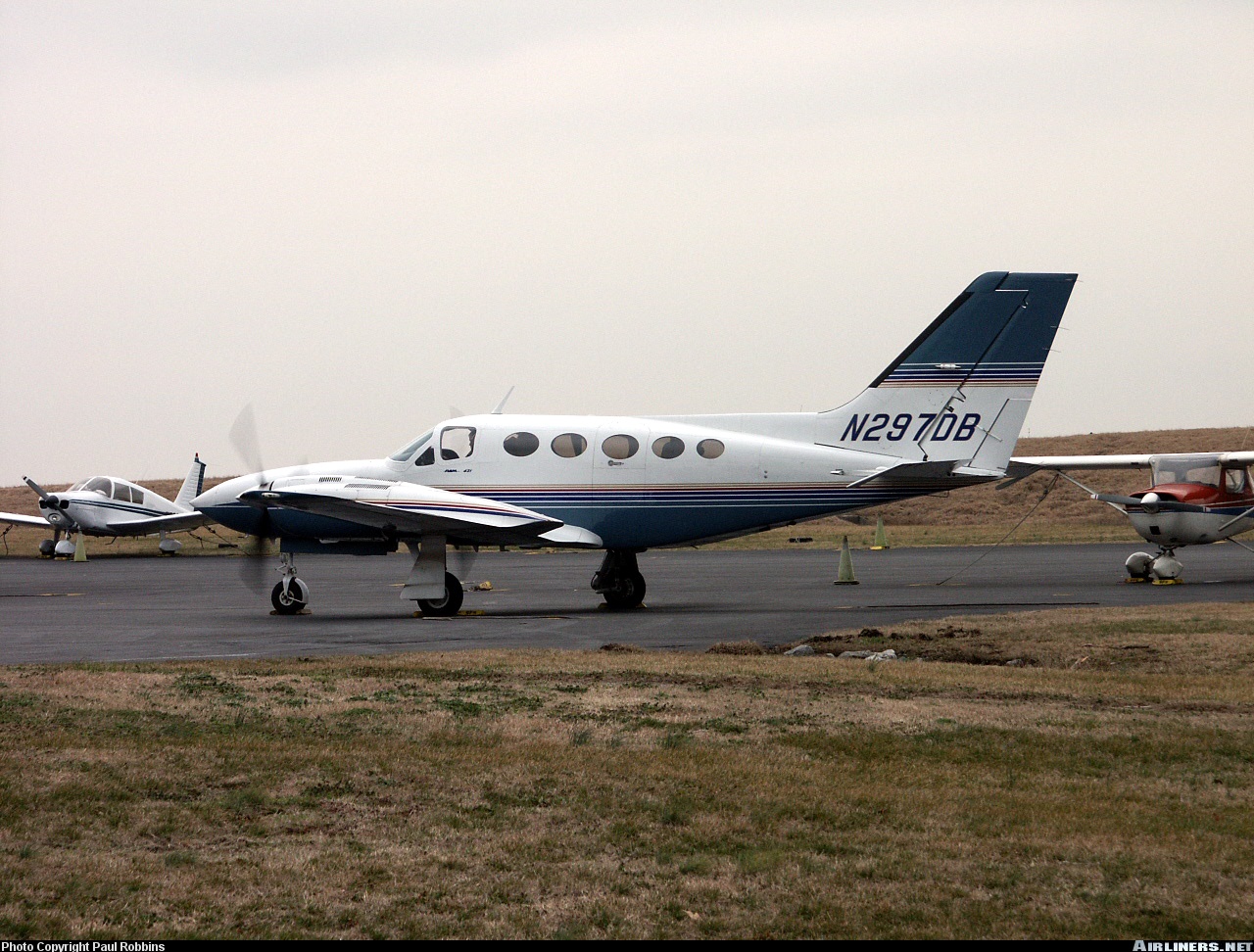
Crash of a Cessna 421C Golden Eagle III in Palm Beach County: 1 killed

Date & Time: Dec 8, 2012 at 1334 LT
Operator:
Registration:
N297DB
Flight Phase:
Flight Type:
Survivors:
No
Schedule:
Palm Beach County - Kendall
MSN:
421C-0826
YOM:
1980
Crew on board:
1
Crew fatalities:
Pax on board:
0
Pax fatalities:
Other fatalities:
Total fatalities:
1
Captain / Total flying hours:
1219
Captain / Total hours on type:
100.00
Aircraft flight hours:
7040
Circumstances:
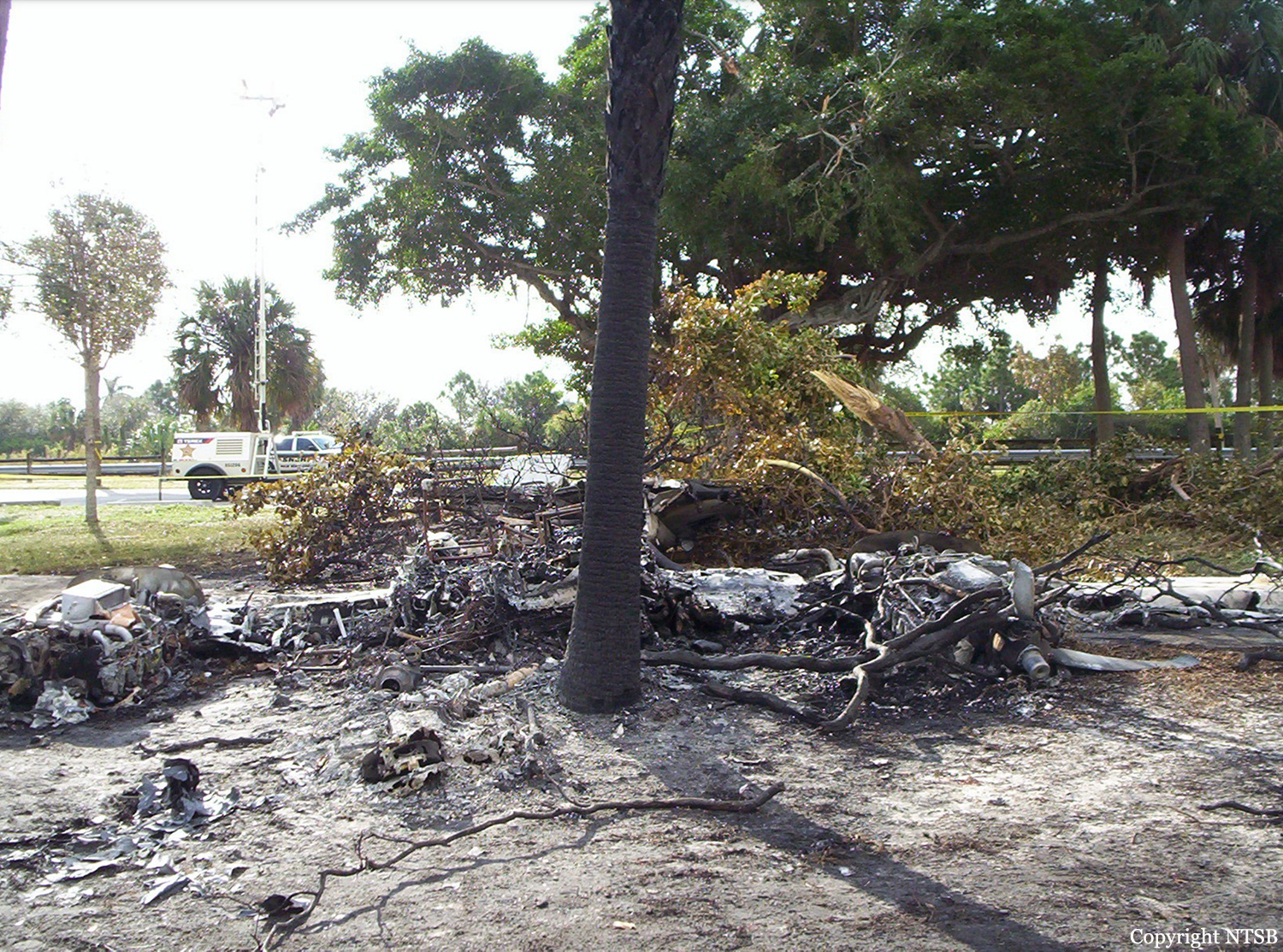
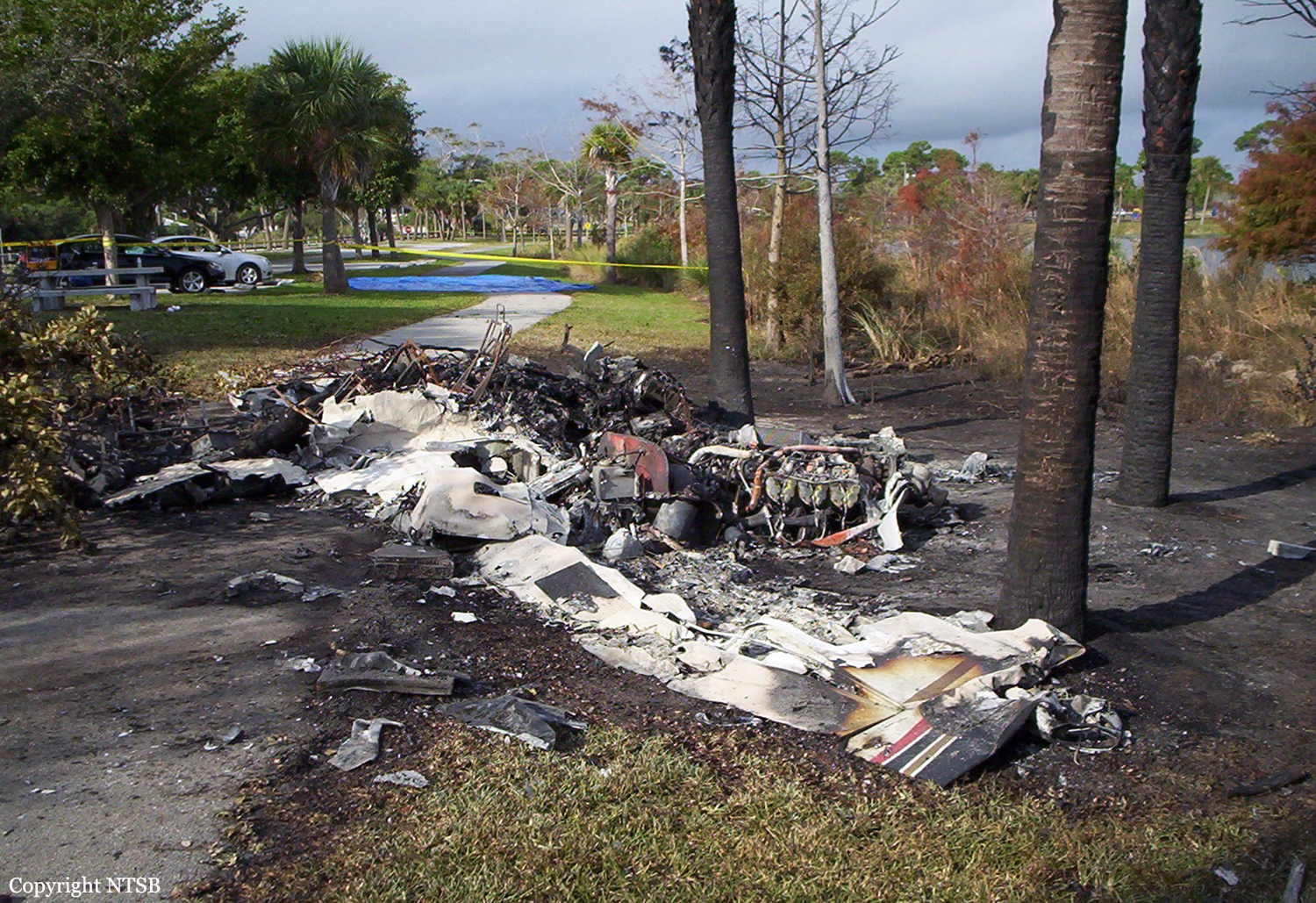
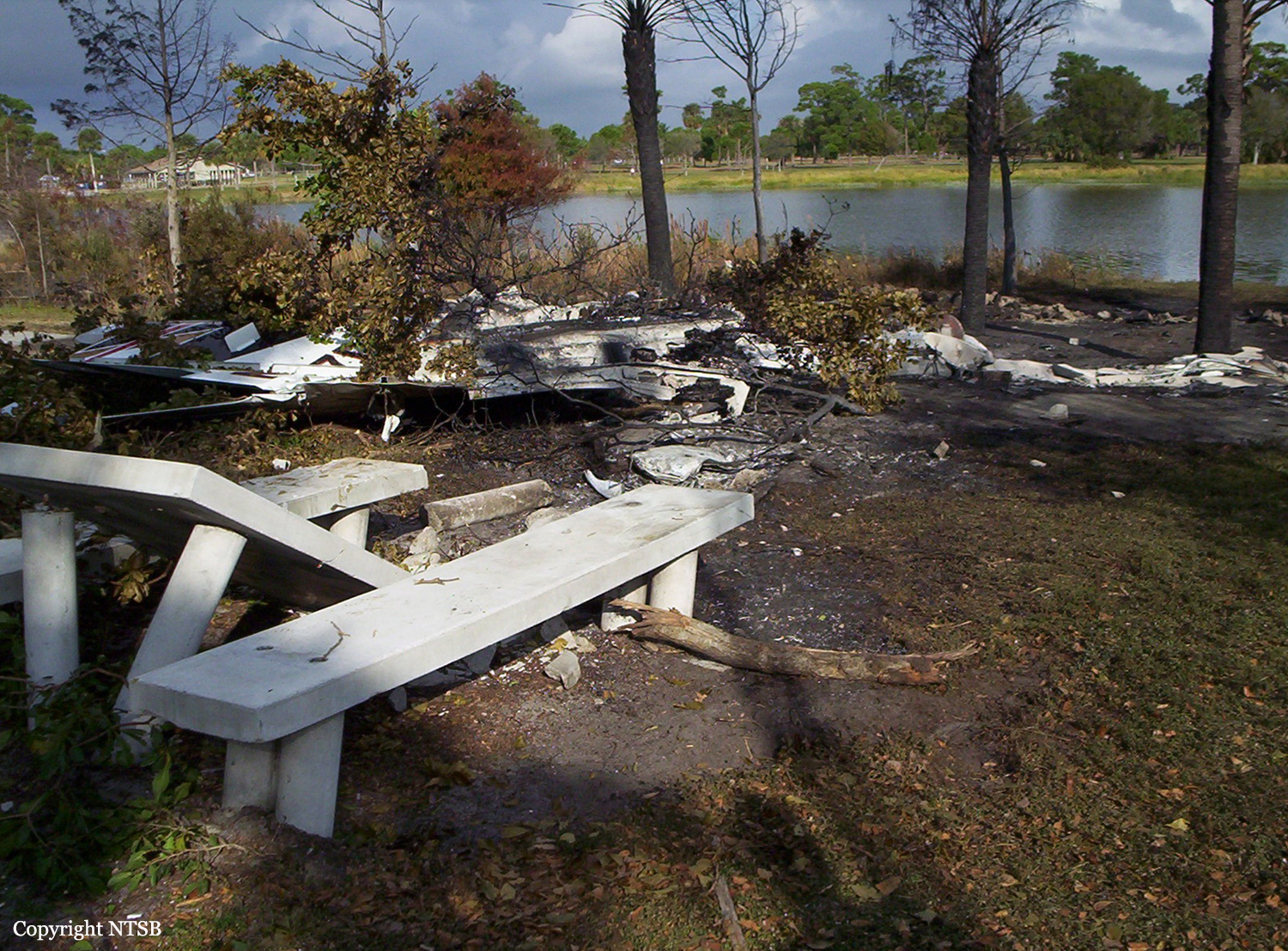
On December 8, 2012, at 1334 eastern standard time, a Cessna 421C, N297DB, operated by a private individual, was destroyed when it collided with trees and terrain following a loss of control after takeoff from North Palm Beach County Airpark (LNA), Lantana, Florida. The commercial pilot was fatally injured. Visual meteorological conditions prevailed, and no flight plan was filed for the personal flight, which was conducted under the provisions of Title 14 Code of Federal Regulations Part 91. The pilot took delivery of the airplane from a maintenance facility that had just completed an annual inspection and repainting of the airplane. According to the owner of the facility, who was a certificated pilot and an airframe and powerplant mechanic, the pilot completed the preflight inspection and the airplane was towed outside. The pilot started the airplane, but then shutdown to resolve an alternator charging light. Afterwards, the pilot stated that he planned to fly to Okeechobee, Florida, complete a few landings, and then continue to Miami. According to the mechanic, the pilot performed a ground run of the airplane for several minutes before taxiing to the approach end of Runway 3 for takeoff. The airplane lifted off about halfway down the runway and climbed at a "normal" rate. The mechanic then observed the airplane suddenly yaw to the left "for a second or two" and the airplane's nose continued to pitch up before rolling left and descending vertically, nose-down, until it disappeared from view. Several witnesses provided similar accounts to a Federal Aviation Administration (FAA) inspector and the local sheriff's department. One witness, a certificated flight instructor said, "The airplane just kept pitching up, and then it looked like a VMC roll."
Probable cause:
The pilot's failure to follow established engine-out procedures and to maintain a proper airspeed after the total loss of engine power on one of the airplane’s two engines during the initial climb. Contributing to the accident was the total loss of engine power due to a loss of torque on the crankcase bolts for reasons that could not be determined because of impact- and fire-related damage to the engine.
Final Report:

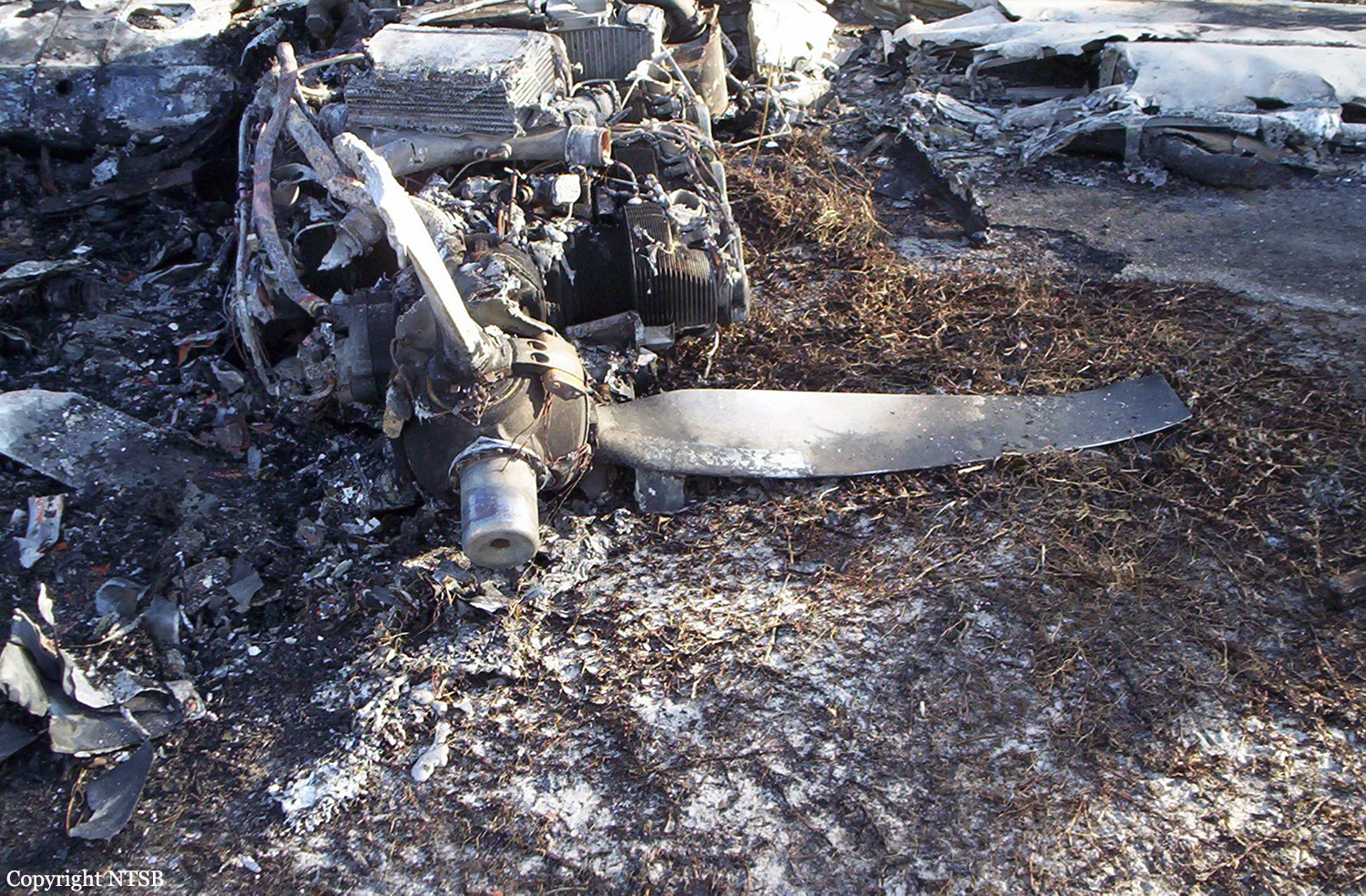
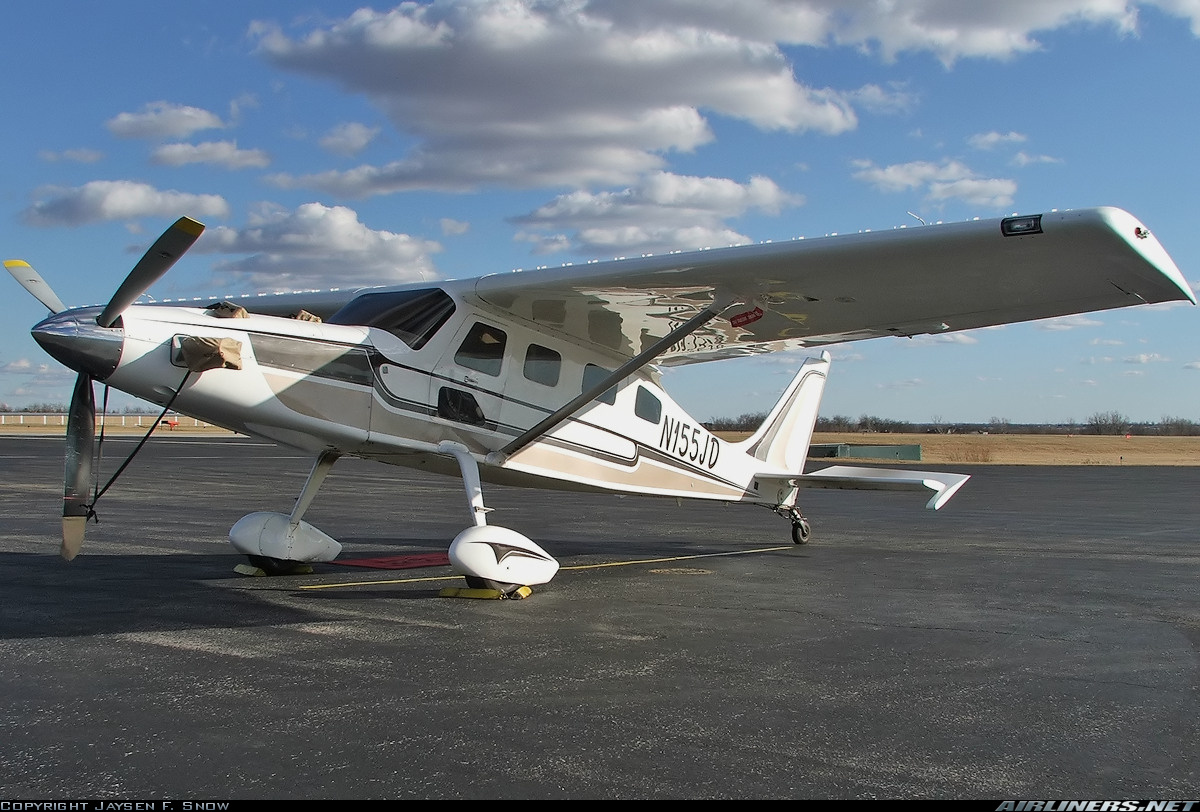
Crash of a Comp Air CA-8 in Merritt Island

Date & Time: Nov 28, 2012 at 1435 LT
Type of aircraft:
Operator:
Registration:
N155JD
Flight Type:
Survivors:
Yes
Schedule:
Merritt Island - Merritt Island
MSN:
998205
YOM:
2001
Crew on board:
1
Crew fatalities:
Pax on board:
1
Pax fatalities:
Other fatalities:
Total fatalities:
0
Captain / Total flying hours:
5569
Captain / Total hours on type:
102.00
Aircraft flight hours:
923
Circumstances:
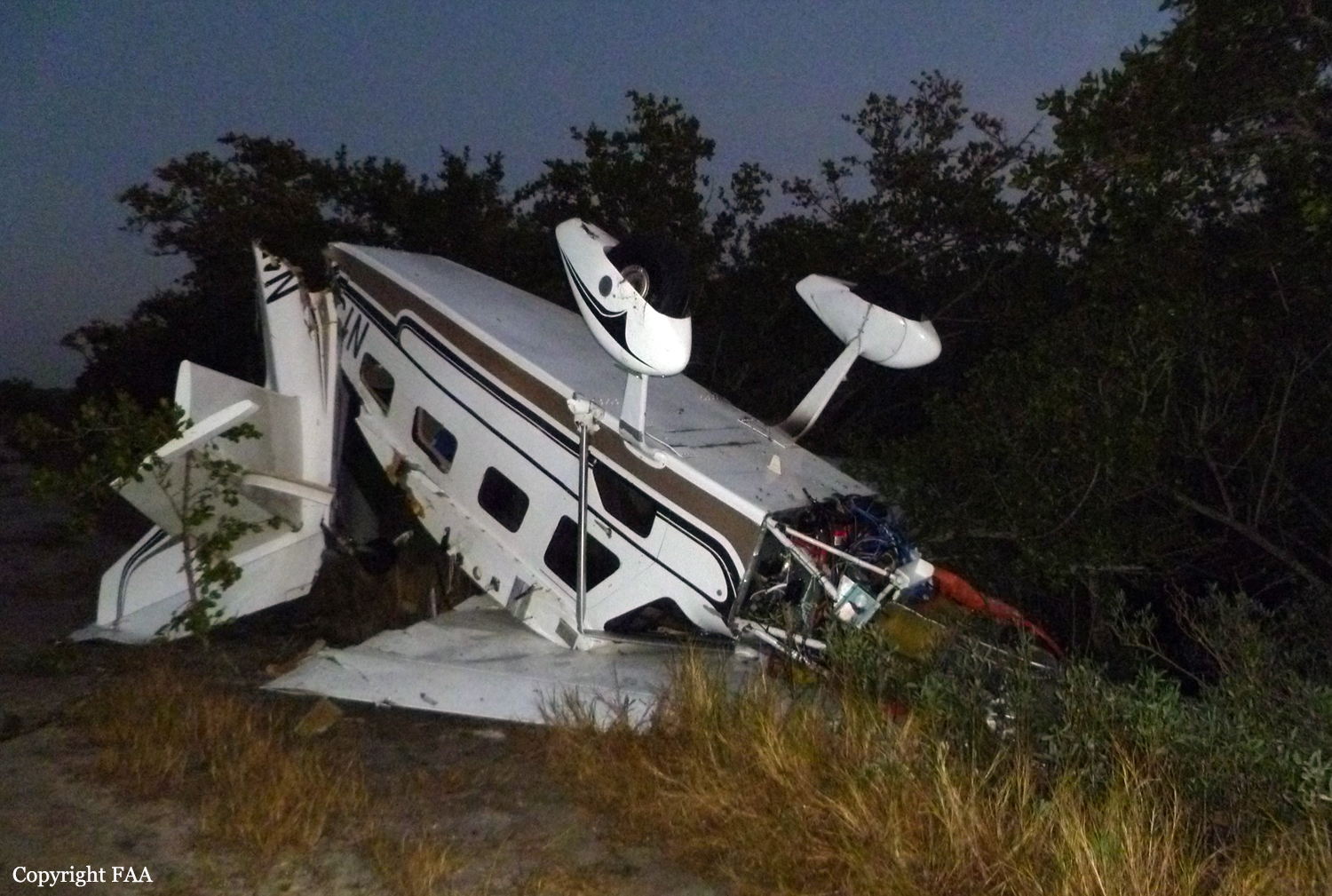
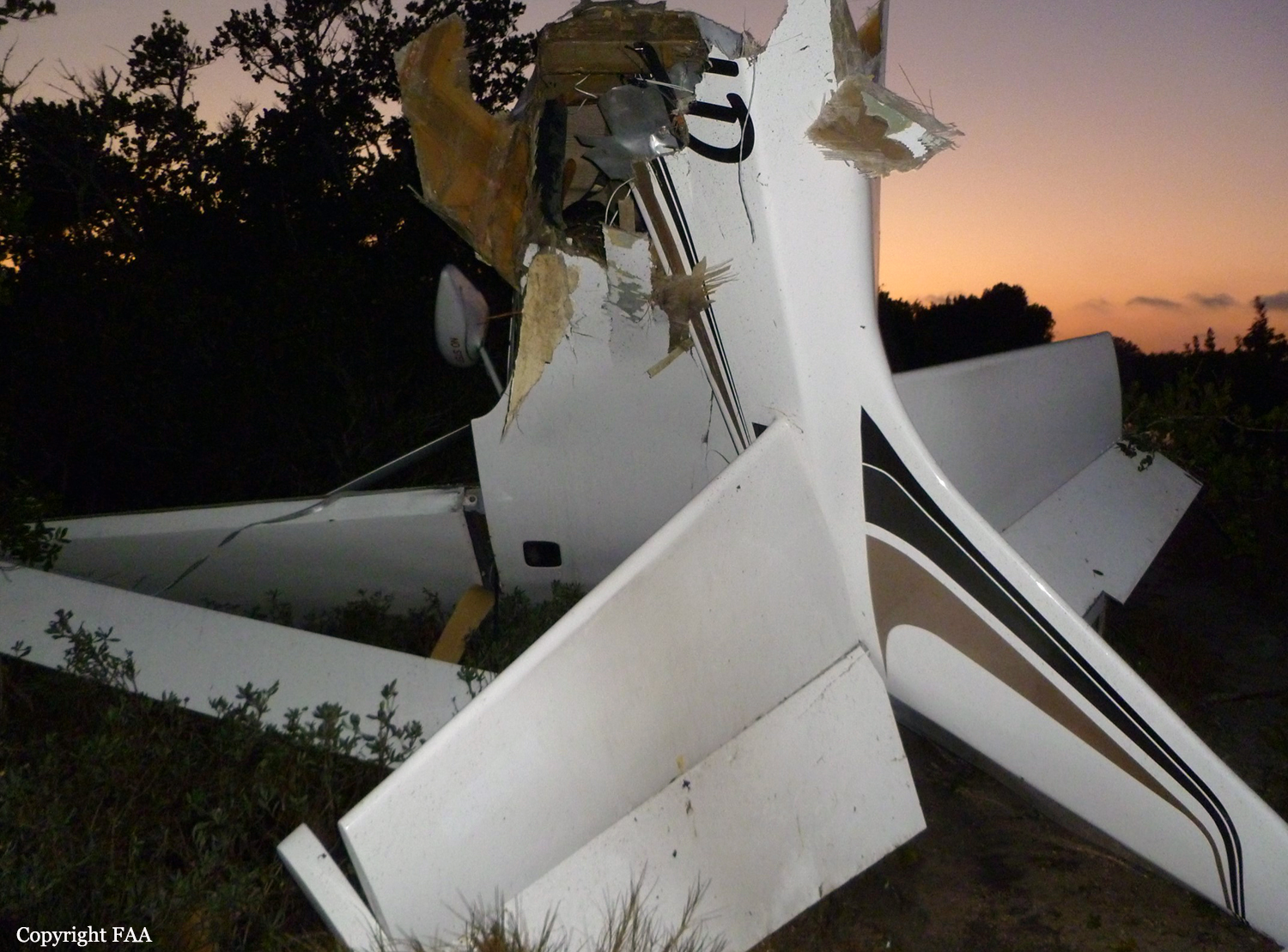
On November 28, 2012, about 1435 eastern standard time, an experimental amateur-built Comp Air 8 (CA-8), N155JD, operated by a private individual, was substantially damaged during a go-around, while attempting to land at the Merritt Island Airport (COI), Merritt Island, Florida. The certificated commercial pilot sustained serious injuries and a passenger sustained minor injuries. Visual meteorological conditions prevailed and no flight plan was filed for the personal flight that was conducted under the provisions of 14 Code of Federal Regulations Part 91. The pilot reported that he flew from Smithfield, North Carolina, to Marion, South Carolina (MAO), without incident. After refueling, he departed MAO for COI. While en route, approximately 150 miles north of Ormond Beach, Florida, the airplane began to experience a left rolling tendency, which required right aileron control inputs to counteract. He configured the fuel selector to the left fuel tank in an attempt to lighten the wing and compensate for the turning tendency; however, the force required to maintain directional control became greater as the flight progressed. The pilot subsequently entered the traffic pattern at COI for runway 29, a 3,601-foot-long, 75- foot-wide, asphalt runway. While maneuvering in the traffic pattern, full right aileron control was required to maintain straight and level flight, and only a slight relaxing of right aileron control was needed to turn left. The pilot had difficulty compensating for a northwest crosswind, which resulted in the airplane drifting to the southern edge of the runway. He performed a go-around and lined-up on the northern side of the runway 29 approach course for a second landing attempt, which again resulted in a go-around. When the pilot applied engine power, the airplane began to slowly roll to the left despite right aileron and rudder control inputs. He decreased engine power; however, the airplane's left wing struck the ground and the airplane flipped-over. The left wing, propeller, and empennage separated during the impact sequence. The airplane's flight controls were electrically actuated. On site examination of the airplane by a Federal Aviation Administration (FAA) inspector did not reveal any preimpact malfunctions, which would have precluded normal operation. The fuel tanks were compromised during the accident. The airplane's rudder, elevator, and aileron control servos were removed for further examination. According to the FAA inspector, the rudder and elevator control servos functioned normally; however, the aileron control servo sustained impact damage during the accident sequence and could not be tested. The six seat, high-wing, tail-wheel, turboprop airplane, serial number 998205, was constructed primarily of composite material and was equipped with a Walter M601D series, 650 horsepower engine, with an AVIA 3-bladed constant-speed propeller. According to FAA records, the airplane was issued an experimental airworthiness certificate on April 26, 2001. The airplane was purchased from one of the builders, by the commercial pilot, through a corporation, on September 30, 2012. At that time, the airplane had been operated for about 925 total hours and had undergone a condition inspection. The pilot reported about 5,570 hours of total flight experience, which included about 100 hours in the same make and model as the accident airplane. In addition, the pilot had accumulated about 23 hours and 5 hours in make and model, during the 30 and 90 days preceding the accident, respectively. Winds reported at an airport located about 8 miles southeast of the accident site, about the time of the accident, were from 340 degrees at 16 knots.
Probable cause:
The pilot's improper decision to continue a cross-country flight as a primary control (aileron) system anomaly progressively worsened. Contributing to the accident was an aileron control system anomaly, the reason for which could not be determined because the aileron control system could not be tested due to impact damage, and the pilot’s inability to compensate for crosswind conditions encountered during the approach due to the aileron problem.
Final Report:

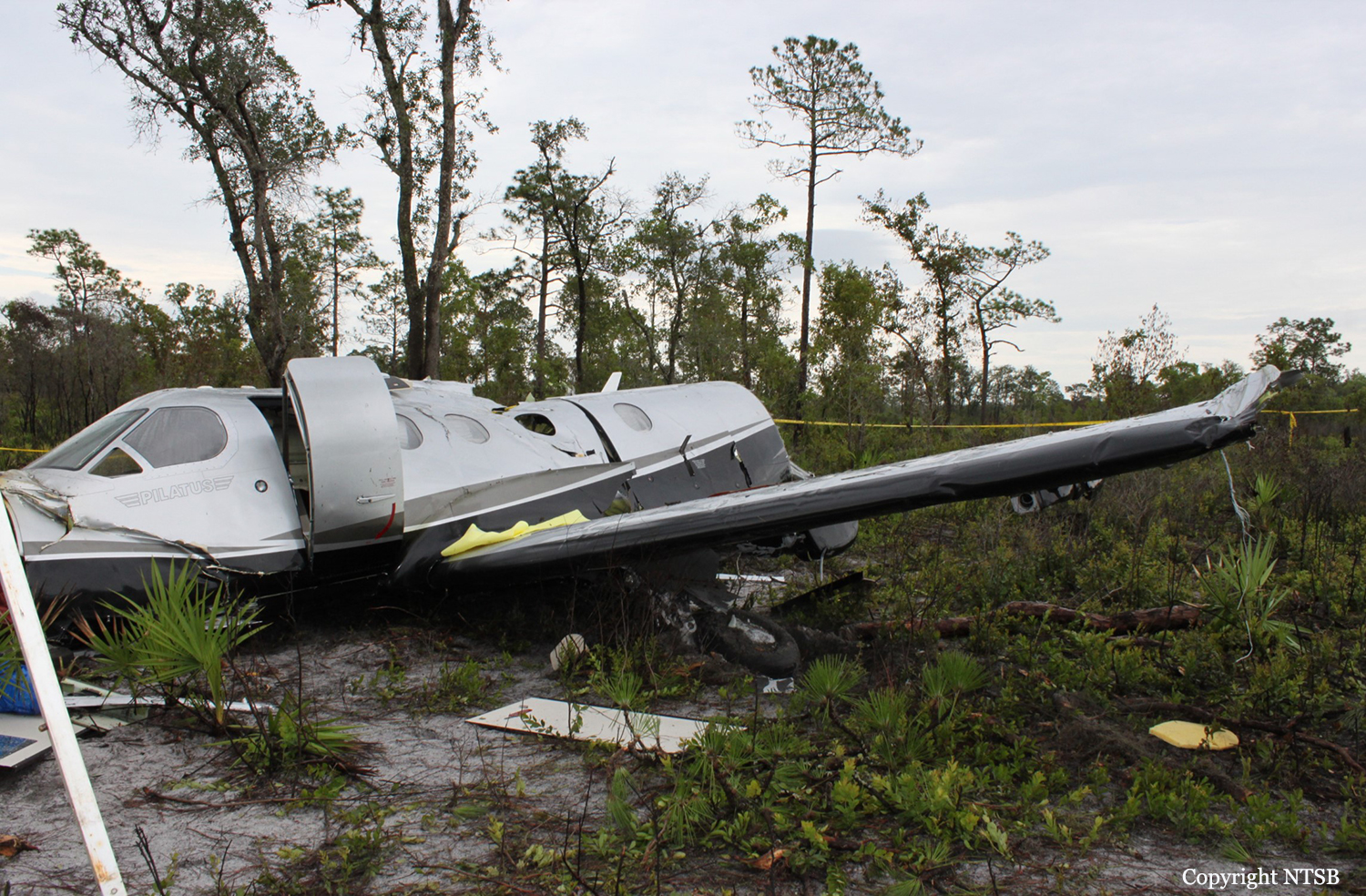
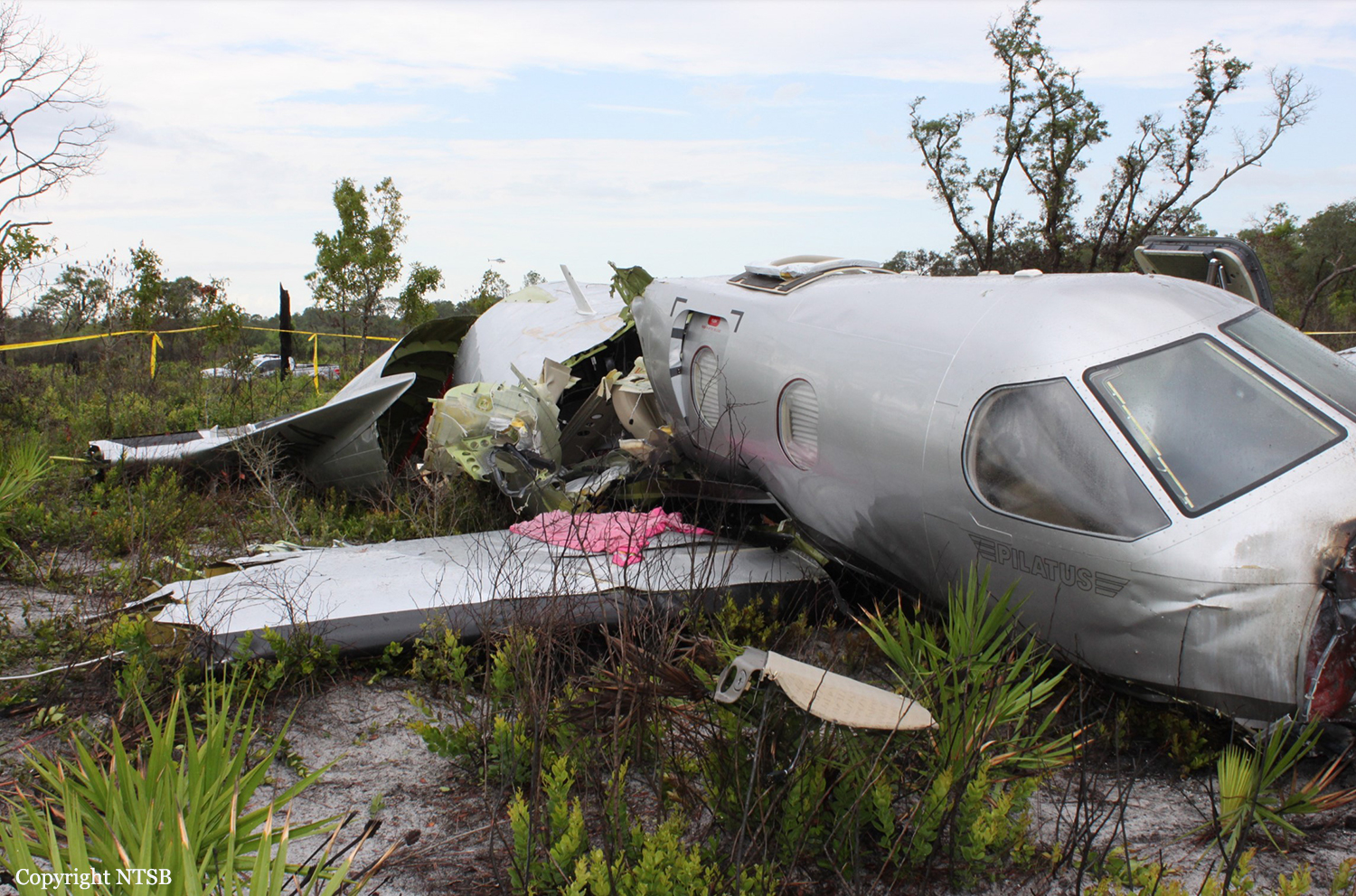
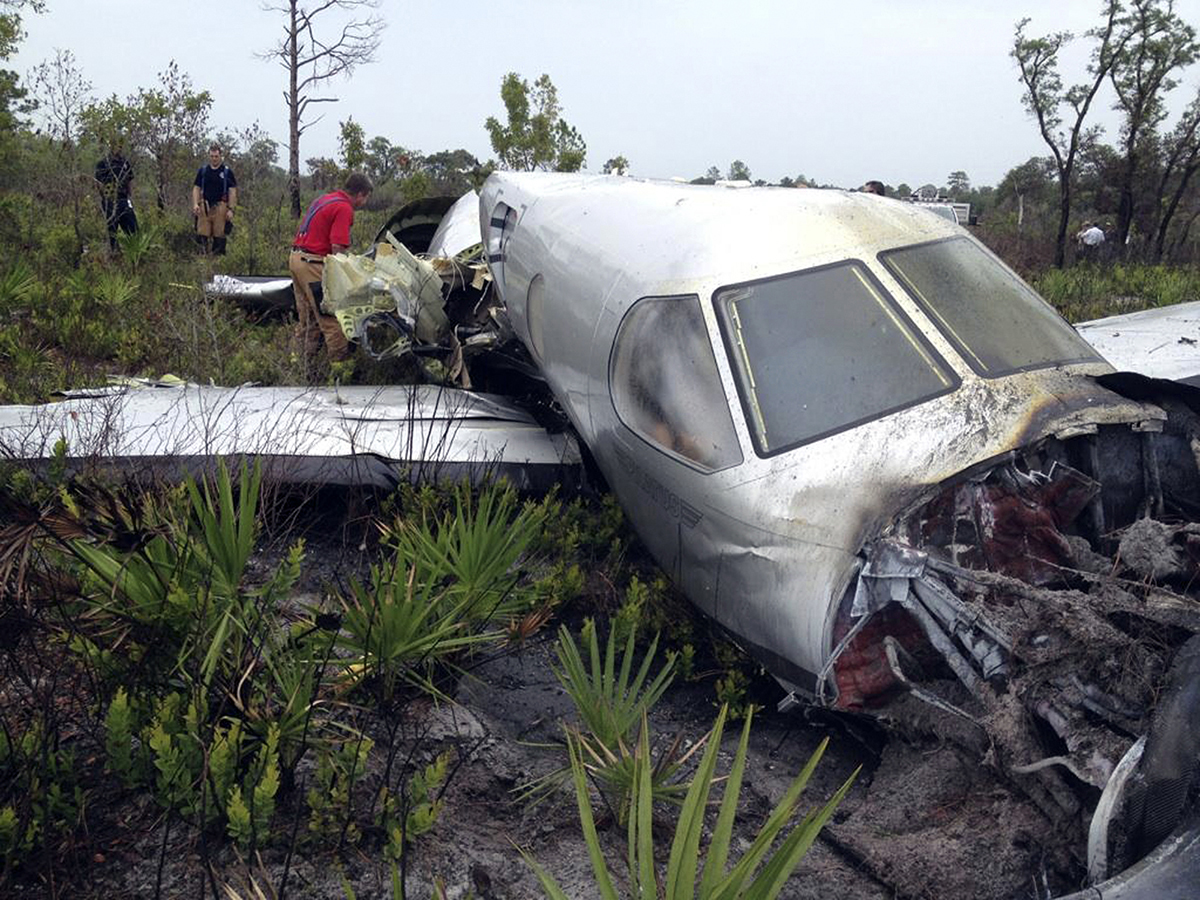
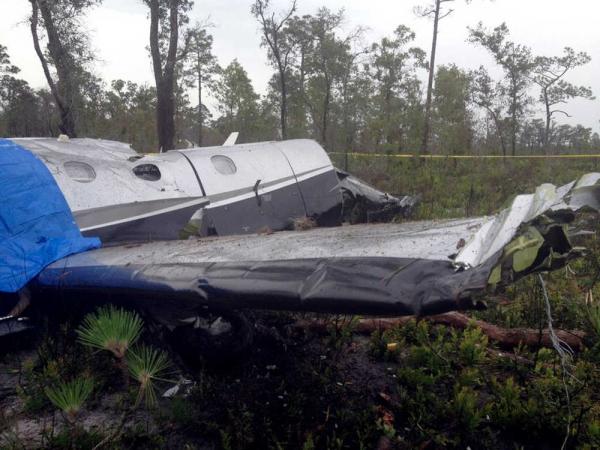
Crash of a Pilatus PC-12/47 in Lake Wales: 6 killed

Date & Time: Jun 7, 2012 at 1235 LT
Type of aircraft:
Registration:
N950KA
Flight Phase:
Flight Type:
Survivors:
No
Schedule:
Fort Pierce - Junction City
MSN:
730
YOM:
2006
Crew on board:
1
Crew fatalities:
Pax on board:
5
Pax fatalities:
Other fatalities:
Total fatalities:
6
Captain / Total flying hours:
755
Captain / Total hours on type:
38.00
Aircraft flight hours:
1263
Circumstances:
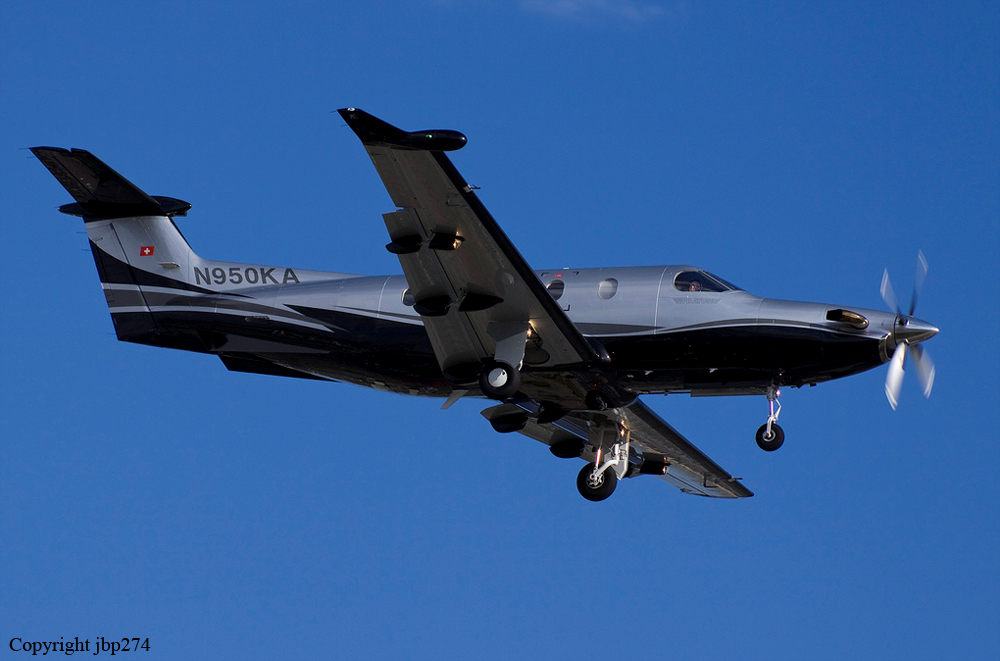
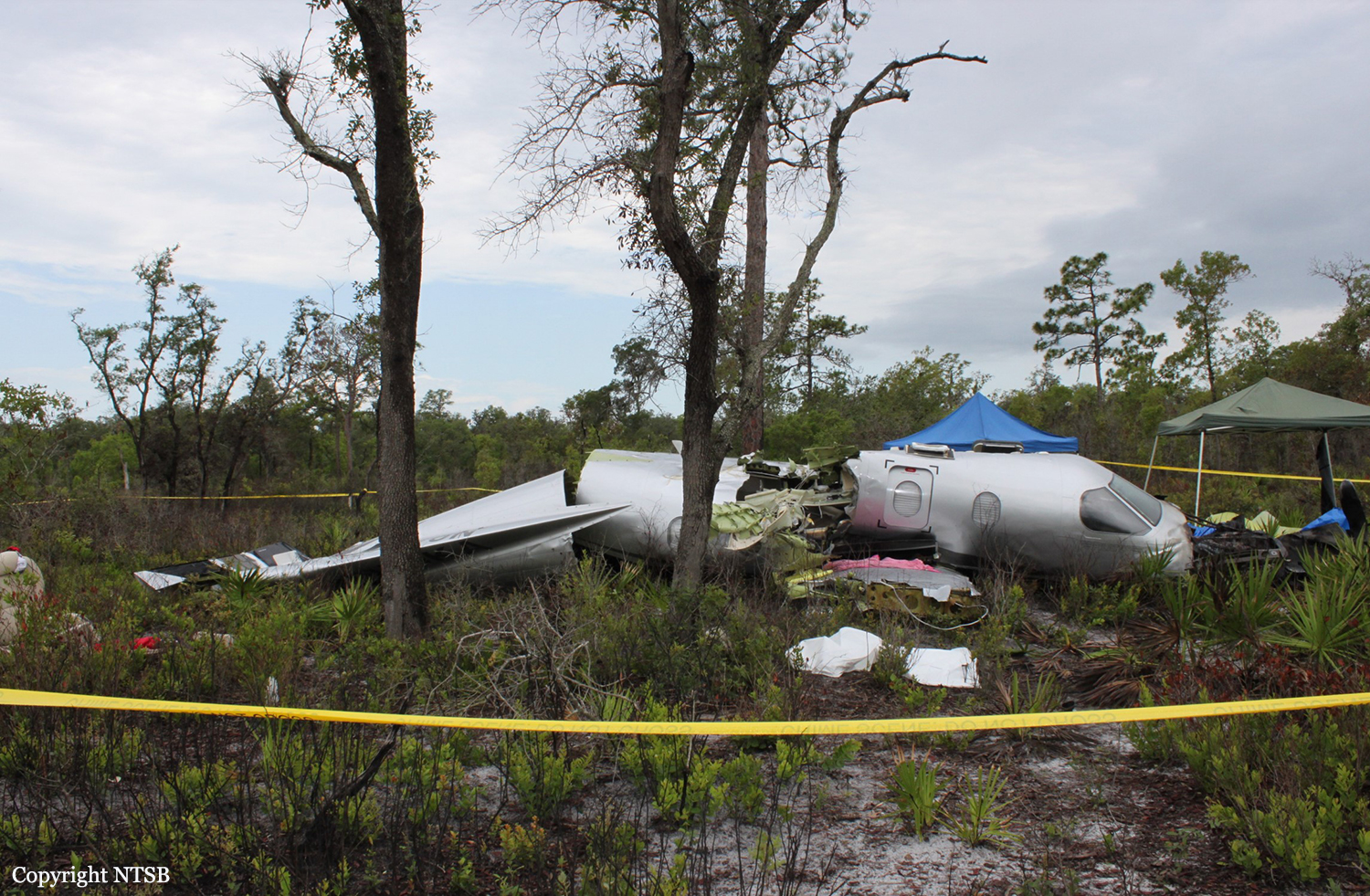
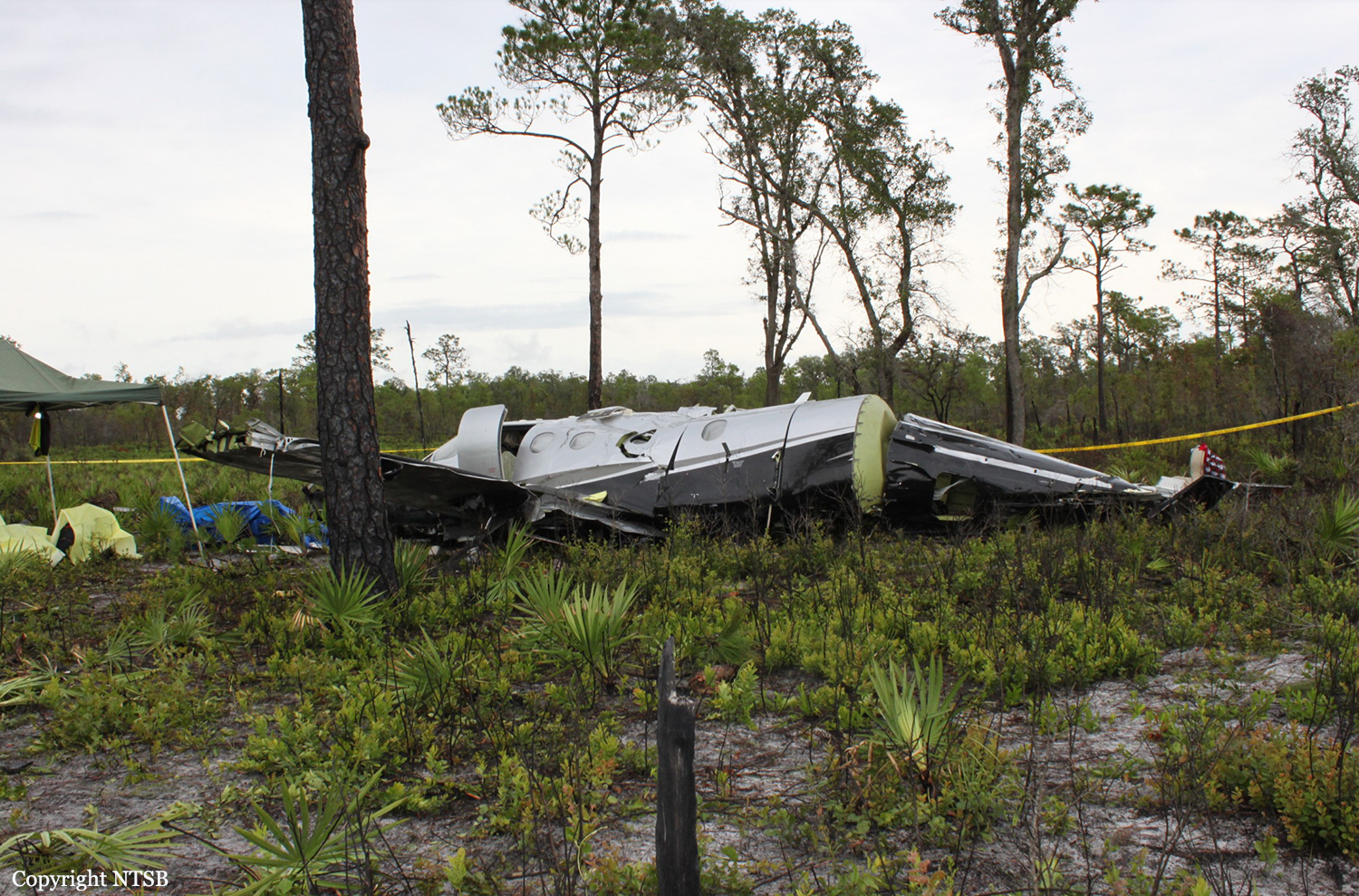
The airplane, registered to and operated by Roadside Ventures, LLC, departed controlled flight followed by subsequent inflight breakup near Lake Wales, Florida. Instrument meteorological conditions prevailed at the altitude and location of the departure from controlled flight and an instrument flight rules (IFR) flight plan was filed for the 14 Code of Federal Regulations (CFR) Part 91 personal flight from St Lucie County International Airport (FPR), Fort Pierce, Florida, to Freeman Field Airport (3JC), Junction City, Kansas. The airplane was substantially damaged and the private pilot and five passengers were fatally injured. The flight originated from FPR about 1205. After departure while proceeding in a west-northwesterly direction and climbing, air traffic control communications were transferred to Miami Air Route Traffic Control Center (Miami ARTCC). The pilot remained in contact with various sectors of that facility from 1206:41, to the last communication at 1233:16. About 6 minutes after takeoff the pilot was advised by the Miami ARTCC Stoop Sector radar controller of an area of moderate to heavy precipitation twelve to two o'clock 15 miles ahead of the airplane's position; the returns were reported to be 30 miles in diameter. The pilot asked the controller if he needed to circumnavigate the weather, to which the controller replied that deviations north of course were approved and when able to proceed direct LAL, which he acknowledged. A trainee controller and a controller providing oversight discussed off frequency that deviation to the south would be better. The controller then questioned the pilot about his route, to which he replied, and the controller then advised the pilot that deviations south of course were approved, which he acknowledged. The flight continued in generally a west-northwesterly direction, or about 290 degrees, and at 1230:11, while at flight level (FL) 235, the controller cleared the flight to FL260, which the pilot acknowledged. At 1232:26, the aircraft's central advisory and warning system (CAWS) recorded that the pusher system went into "ice mode" indicating the pilot had selected the propeller heat on and inertial separator open. At that time the aircraft's engine information system (EIS) recorded the airplane at 24,668 feet pressure altitude, 110 knots indicated airspeed (KIAS), and an outside air temperature of minus 11 degrees Celsius. At 1232:36, the Miami ARTCC Avon Sector radar controller advised the pilot of a large area of precipitation northwest of Lakeland, with moderate, heavy and extreme echoes in the northwest, and asked him to look at it and to advise what direction he needed to deviate, then suggested deviation right of course until north of the adverse weather. The pilot responded that he agreed, and the controller asked the pilot what heading from his position would keep the airplane clear, to which he responded at 1233:04 with, 320 degrees. At 1233:08, the Miami ARTCC Avon Sector radar controller cleared the pilot to fly heading 320 degrees or to deviate right of course when necessary, and when able proceed direct to Seminole, which he acknowledged at 1233:16. There was no further recorded communication from the pilot with the Miami ARTCC. Radar data showed that between 1233:08, and 1233:26, the airplane flew on a heading of approximately 290 degrees, and climbed from FL250 to FL251, while the EIS recorded for the same time the airplane was at either 109 or 110 KIAS and the outside air temperature was minus 12 degrees Celsius. The radar data indicated that between 1233:26 and 1233:31, the airplane climbed to FL252 (highest recorded altitude from secondary radar returns). At 1233:30, while at slightly less than 25 degrees of right bank based on the NTSB Radar Performance Study based on the radar returns, 109 KIAS, 25,188 feet and total air temperature of minus 12 degrees Celsius based on the data downloaded from the CAWS, autopilot disengagement occurred. This was recorded on the CAWS 3 seconds later. The NTSB Performance Study also indicates that based on radar returns between 1233:30, and 1233:40, the bank angle increased from less than approximately 25 degrees to 50 degrees, while the radar data for the approximate same time period indicates the airplane descended to FL249. The NTSB Performance Study indicates that based on radar returns between 1233:40 and 1234:00, the bank angle increased from 50 degrees to approximately 100 degrees, while the radar data indicates that for the approximate same time frames, the airplane descended from FL249 to FL226. The right descending turn continued and between 1233:59, and 1234:12, the airplane descended from 22,600 to 16,700, and a change to a southerly heading was noted. The NTSB Performance Study indicates that the maximum positive load factor of 4.6 occurred at 1234:08, while the NTSB Electronic Device Factual Report indicates that the maximum recorded airspeed value of 338 knots recorded by the EIS occurred at 1234:14. The next recoded airspeed value 1 second later was noted to be zero. Simultaneous to the zero airspeed a near level altitude of 15,292 feet was noted. Between 1234:22, and 1234:40, the radar data indicated a change in direction to a northeast occurred and the airplane descended from 13,300 to 9,900 feet. The airplane continued generally in a northeasterly direction and between 1234:40 and 1235:40 (last secondary radar return), the airplane descended from 9,900 to 800 feet. The last secondary radar return was located at 27 degrees 49.35 minutes North latitude and 081 degrees 28.6332 minutes West longitude. Plots of the radar targets of the accident site including the final radar targets are depicted in the NTSB Radar Study which is contained in the NTSB public docket. At 1235:27, the controller asked the pilot to report his altitude but there was no reply. The controller enlisted the aid of the flight crew of another airplane to attempt to establish contact with the pilot on the current frequency and also 121.5 MHz. The flight crew attempted on both frequencies but there was no reply. At 1236:30, the pilot of a nearby airplane advised the controller that he was picking up an emergency locator transmitter (ELT) signal. The pilot of that airplane advised the controller at 1237:19, that, "right before we heard that ELT we heard a mayday mayday." The controller inquired whether the pilot had heard the mayday on the current frequency or 121.5 MHz, to which he replied that he was not sure because he was monitoring both frequencies. The controller inquired with the flight crews of other airplanes if they heard the mayday call on the frequency and the response was negative, though they did report hearing the ELT on 121.5 MHz. The controller verified with the flight crew's that were monitoring 121.5 MHz whether they heard the mayday call on that frequency and they advised they did not. A witness who was located about 1.5 nautical miles south-southwest from the crash site reported that on the date and time of the accident, he was inside his house and first heard a sound he attributed to a propeller feathering or later described as flutter of a flight control surface. The sound lasted 3 to 4 cycles of a whooshing high to low sound, followed by a sound he described as an energy release. He was clear the sound he heard was not an explosion, but more like mechanical fracture of parts. He ran outside, and first saw the airplane below the clouds (ceiling was estimated to be 10,000 feet). He noted by silhouette that parts of the airplane were missing, but he did not see any parts separate from the airplane during the time he saw it. At that time it was not raining at his location. He went inside his house, and got a digital camera, then ran back outside to his pool deck, and videotaped the descent. He reported the airplane was in a spin but could not recall the direction. The engine sound was consistent the whole time; there was no revving; he reported there was no forward movement. He called 911 and reported the accident. Another witness who was located about .4 nautical mile east-southeast of from the crash site reported hearing a boom sound that he attributed to a lawn mower which he thought odd because it had just been raining, though it was not raining at the time of the accident. He saw black smoke trailing the airplane which was spinning in what he described as a clockwise direction and flat. He ran to the side of their house, and noted the airplane was still spinning; the smoke he observed continued until he lost sight. His brother came by their back door, heard a thud, and both ran direct to the location of where they thought the airplane had crashed. When they arrived at the wreckage, they saw fire in front of the airplane which one individual attempted to extinguish by throwing sand on it, but he was unable. The other individual reported the left forward door was hard to open, but he pushed it up and then was able to open it. Both attempted to render assistance, and one individual called 911 to report the accident. One individual then guided local first responders to the accident site. The airplane crashed in an open field during daylight conditions. The location of the main wreckage was determined to be within approximately 100 feet from the last secondary radar return. Law Enforcement personnel responded to the site and accounted for five occupants. A search for the sixth occupant was immediately initiated by numerous personnel from several state agencies; he was located the following day about 1420. During that search, parts from the airplane located away from the main wreckage were documented and secured in-situ.
Probable cause:
The failure of the pilot to maintain control of the airplane while climbing to cruise altitude in instrument meteorological conditions (IMC) following disconnect of the autopilot. The reason for the autopilot disconnect could not be determined during postaccident testing. Contributing to the accident was the pilot's lack of experience in high-performance, turbo-propeller airplanes and in IMC.
Final Report:

Crash of a Comp Air CA-8 in Everglades City: 1 killed

Date & Time: Apr 6, 2012 at 1645 LT
Type of aircraft:
Operator:
Registration:
N548SF
Flight Phase:
Flight Type:
Survivors:
No
Schedule:
Everglades City - Merritt Island
MSN:
0585552921
YOM:
2006
Crew on board:
1
Crew fatalities:
Pax on board:
0
Pax fatalities:
Other fatalities:
Total fatalities:
1
Captain / Total flying hours:
1208
Circumstances:
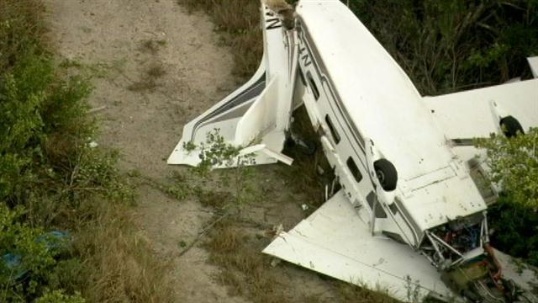
Witnesses observed the airplane depart the airport to the north and make an abrupt right turn at an altitude of about 150 feet. One witness, who was also a pilot, described the wings as “shimmying,” appearing as if the airplane stalled before it banked to the right in a nose-down attitude. The airplane crashed and was nearly consumed during the postcrash fire. A postaccident examination was conducted with no preimpact mechanical anomalies noted. Records indicate that the pilot built the airplane from a kit about 6 years before the accident. The pilot and airplane logbooks were not located during the investigation; therefore, the maintenance history for the airplane, and the pilot’s recent (and total) flight experience could not be determined. Postaccident toxicological testing revealed metabolites of the drug diazepam (Valium) in the pilot’s blood and urine. Valium is a prescription benzodiazepine classed as a central nervous system depressant and tranquilizer, used as a sleep aid and to inhibit anxiety. The amount noted in the pilot’s blood suggested he took the drug 12 to 24 hours before the accident, and, as a result, it would not have affected his performance.
Probable cause:
The pilot’s failure to maintain sufficient airspeed during the initial climb after takeoff, which resulted in an aerodynamic stall and loss of airplane control.
Final Report:

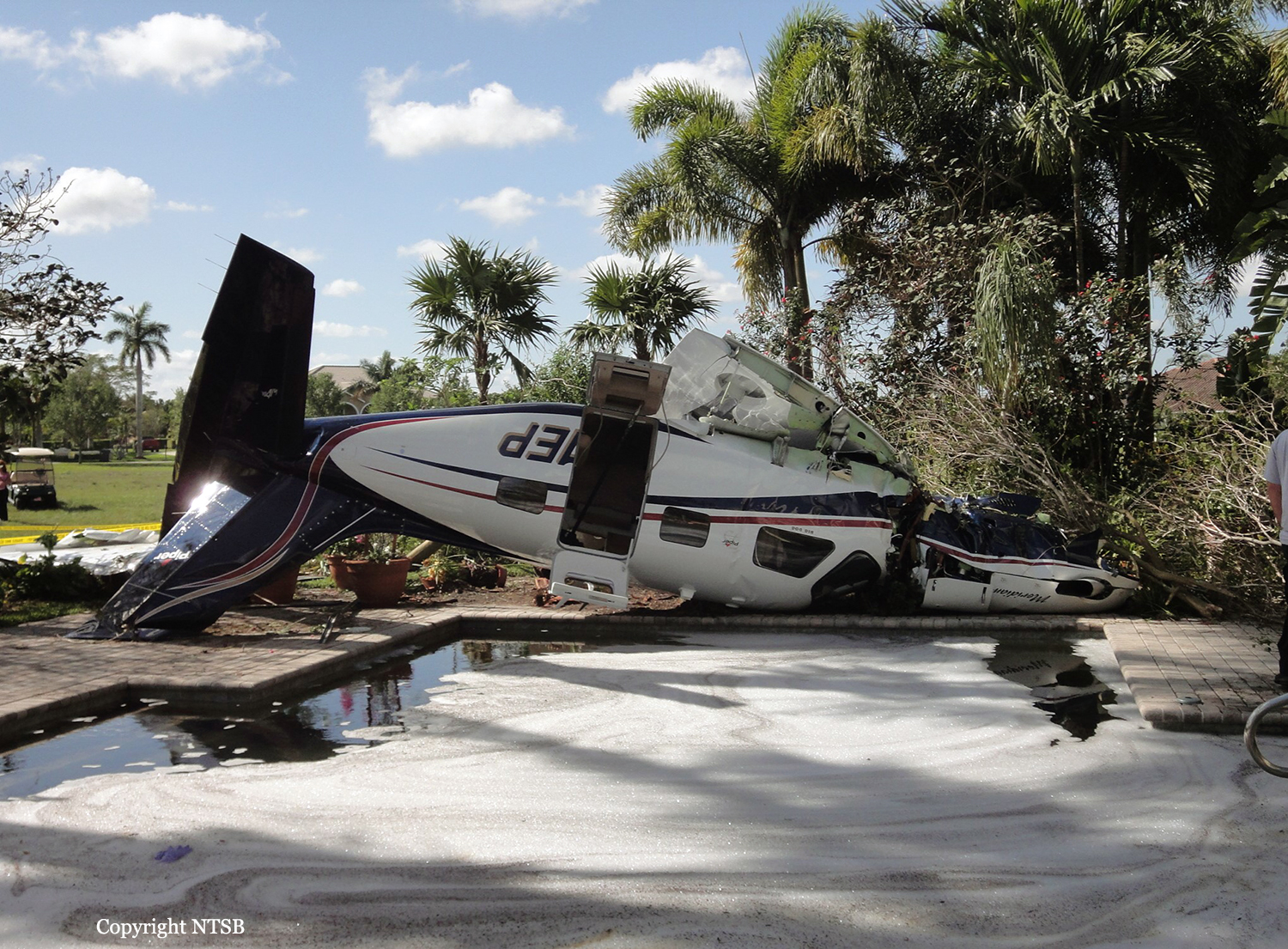
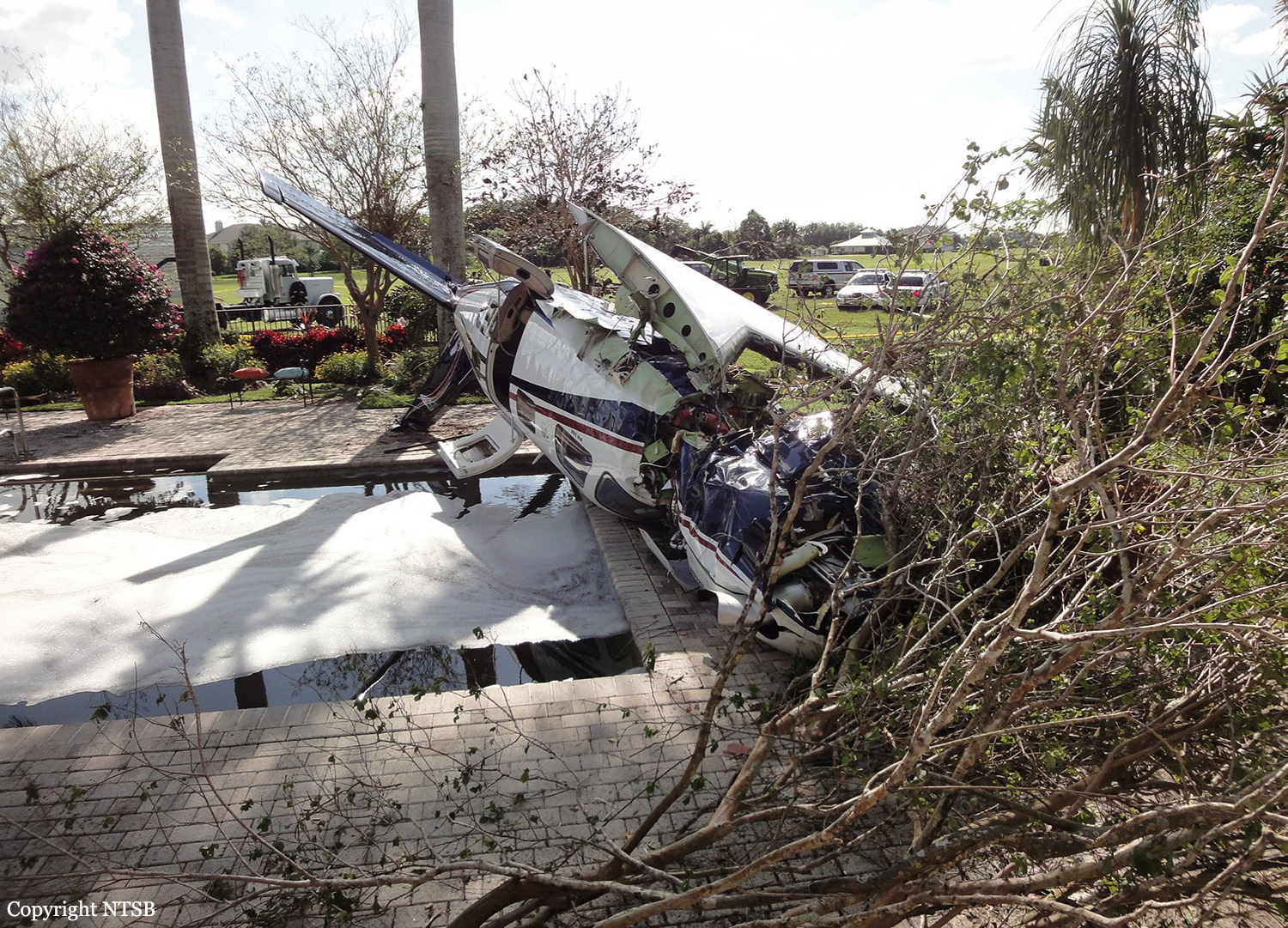
Crash of a Piper PA-46-500TP Malibu Meridian in Wellington

Date & Time: Mar 23, 2012 at 1745 LT
Operator:
Registration:
N21EP
Flight Phase:
Flight Type:
Survivors:
Yes
Schedule:
Wellington – Vero Beach
MSN:
46-97479
YOM:
2012
Crew on board:
1
Crew fatalities:
Pax on board:
0
Pax fatalities:
Other fatalities:
Total fatalities:
0
Captain / Total flying hours:
10651
Aircraft flight hours:
40
Circumstances:
A witness reported that the airplane veered left during the takeoff roll and headed toward a large ditch that surrounded the runway. It appeared that the pilot did not attempt to stop the airplane or abort the takeoff. The airplane continued toward the ditch, and, upon reaching the ditch's edge, the airplane rotated and reached an altitude of about 50 feet. The airplane's left wing collided with trees. The airplane rolled left and then right before stalling and crashing. The pilot stated that the airplane seemed to pull left on takeoff, possibly due to a right quartering tailwind, and that he did not realize where he was positioned on the runway. Examination of the airplane and engine did not reveal any preimpact anomalies that would have precluded normal operation.
Probable cause:
The pilot's failure to maintain directional control of the airplane during the takeoff roll, which resulted in a collision with a tree.
Final Report:

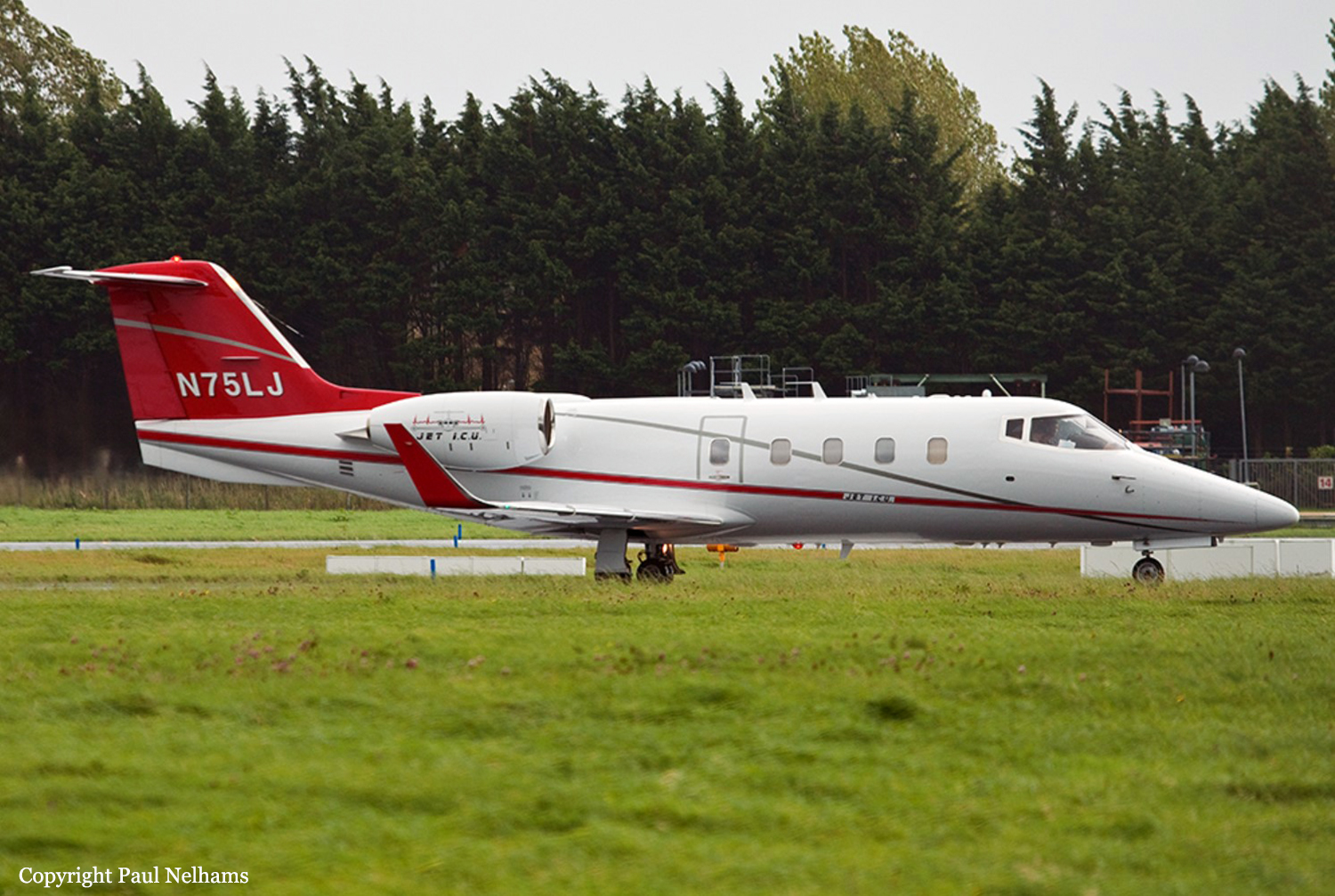
Crash of a Learjet 55 Longhorn in Brooksville

Date & Time: Feb 13, 2012 at 2200 LT
Type of aircraft:
Operator:
Registration:
N75LJ
Flight Phase:
Flight Type:
Survivors:
Yes
Schedule:
Brooksville - Houston
MSN:
55-065
YOM:
1982
Crew on board:
3
Crew fatalities:
Pax on board:
0
Pax fatalities:
Other fatalities:
Total fatalities:
0
Circumstances:
During the takeoff roll from runway 27 at Brooksville-Hernando County Airport, control was lost. The aircraft veered off runway and came to rest. All three crew members escaped uninjured while the aircraft was damaged beyond repair.
Probable cause:
NTSB did not proceed to any investigation regarding this incident.

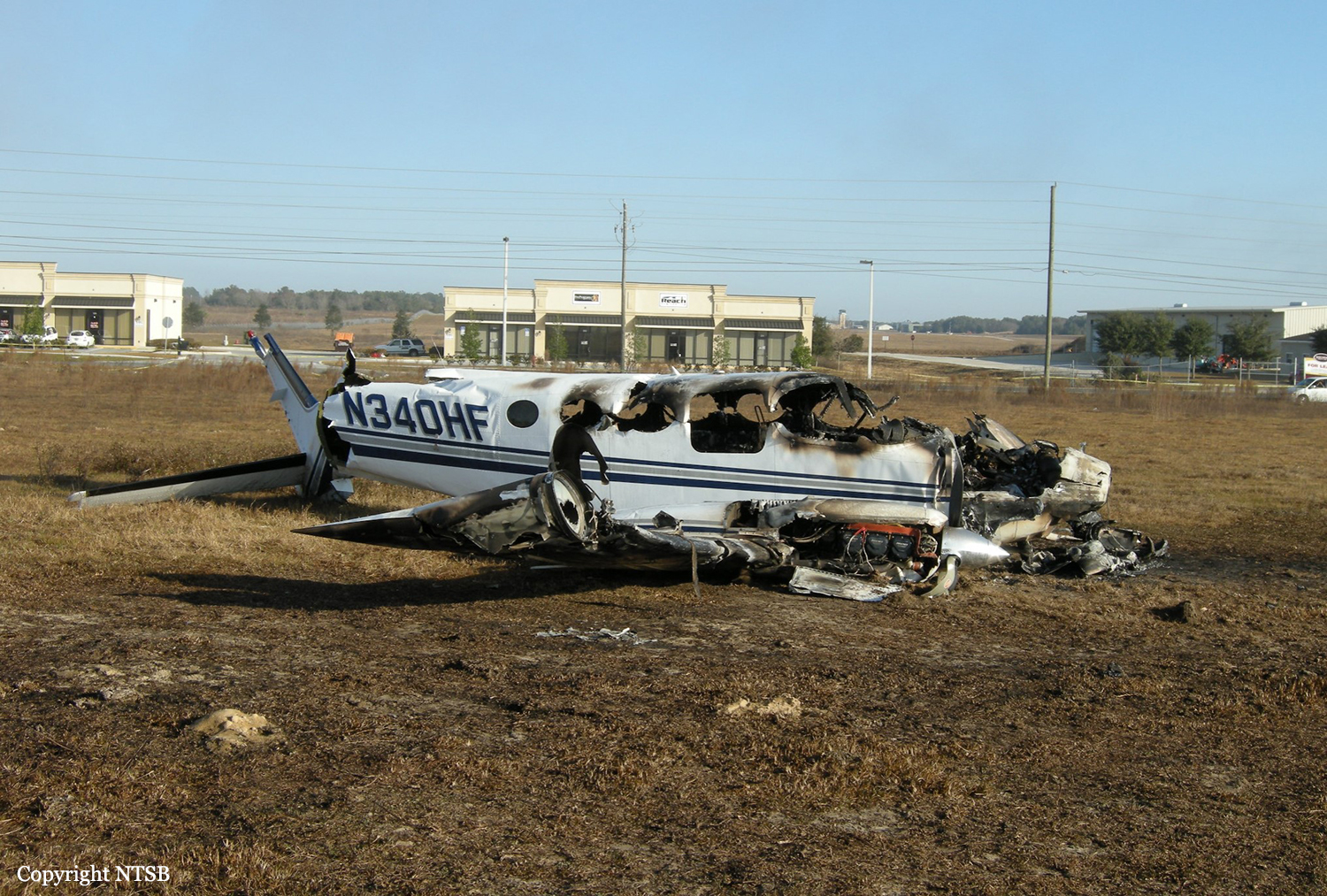
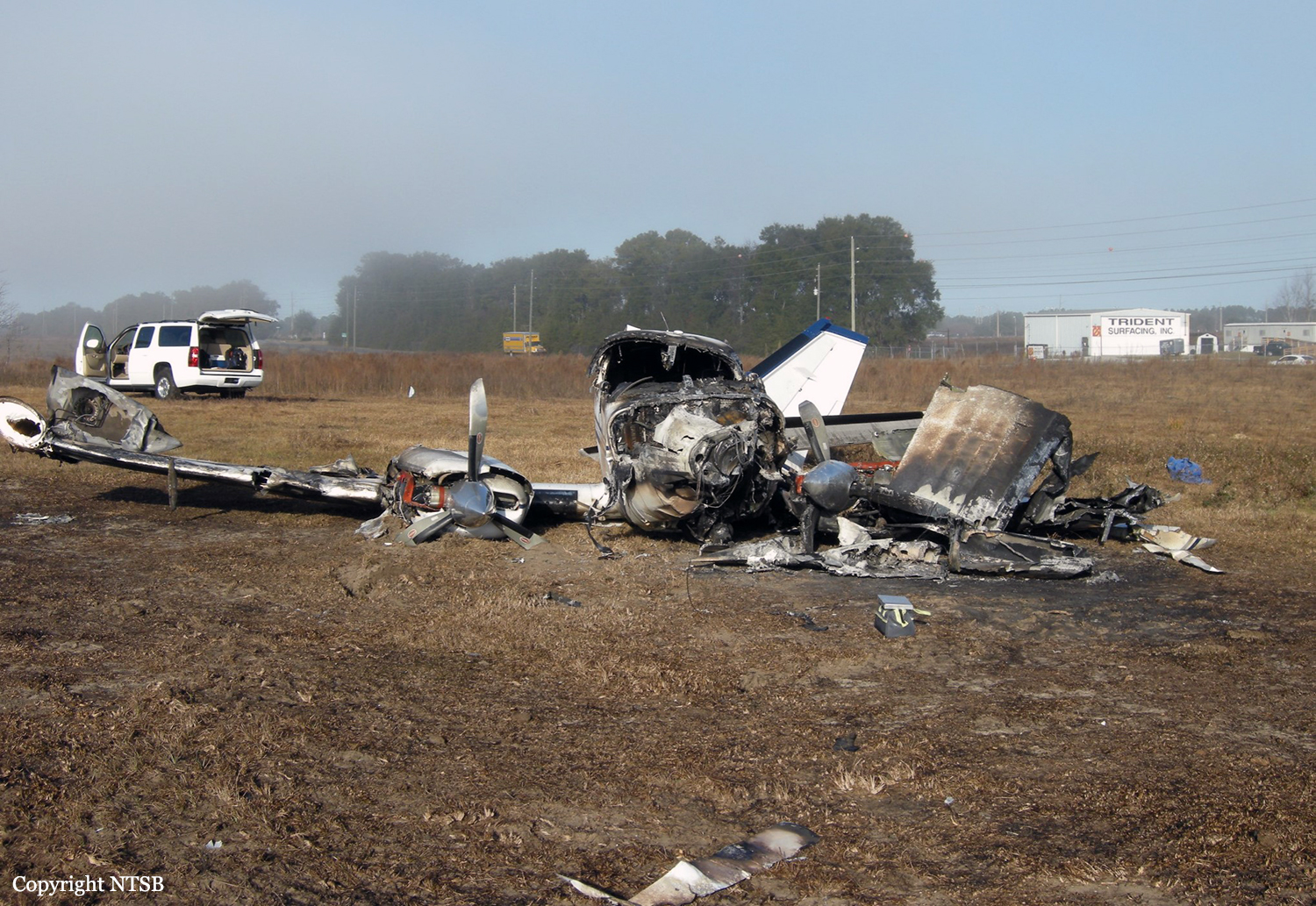
Crash of a Cessna 340A in Ocala: 1 killed

Date & Time: Jan 27, 2012 at 1227 LT
Type of aircraft:
Registration:
N340HF
Flight Type:
Survivors:
Yes
Schedule:
Macon - Ocala
MSN:
340A-0624
YOM:
1978
Location:
Crew on board:
1
Crew fatalities:
Pax on board:
1
Pax fatalities:
Other fatalities:
Total fatalities:
1
Captain / Total flying hours:
1048
Aircraft flight hours:
5057
Circumstances:
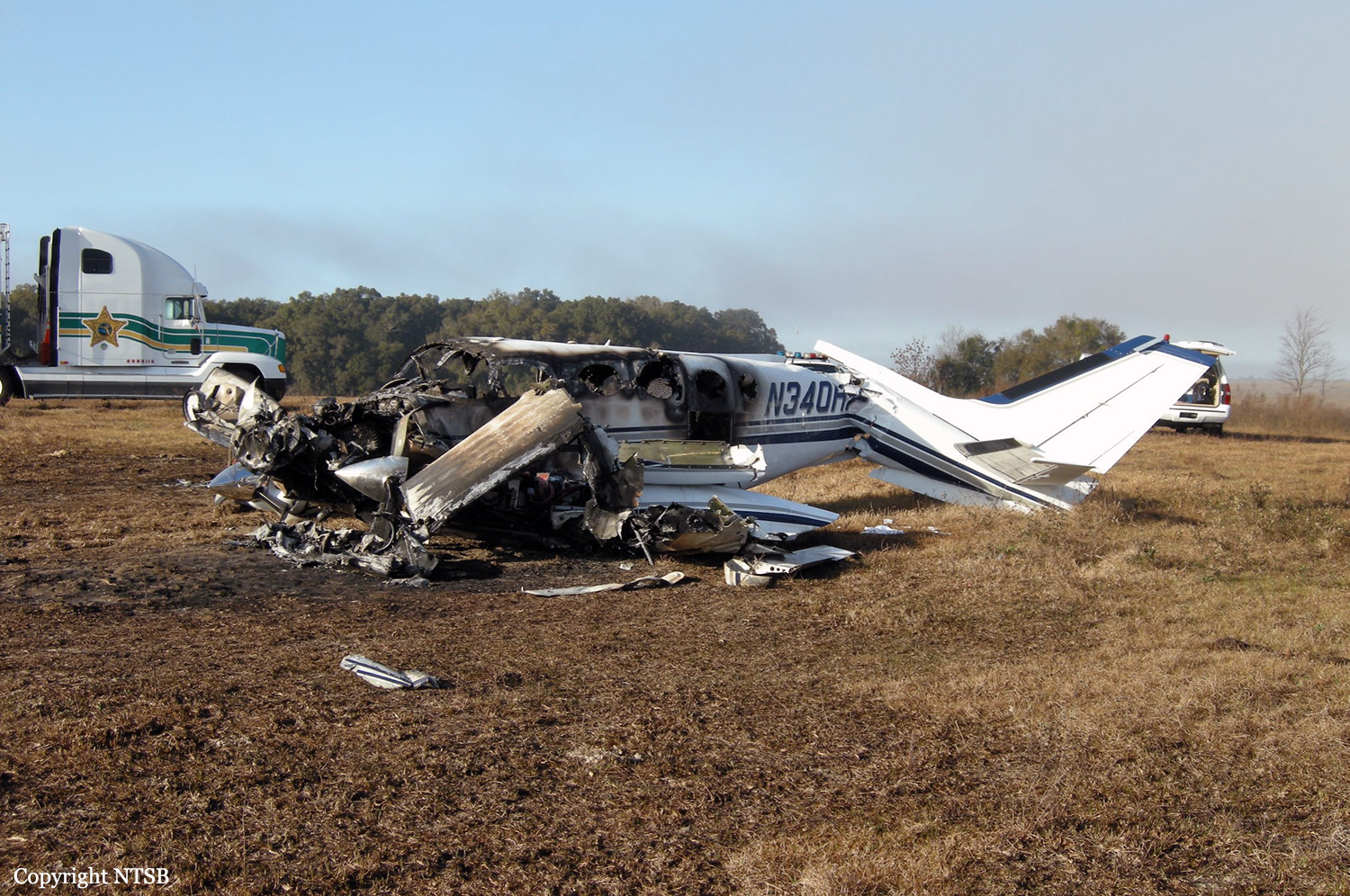
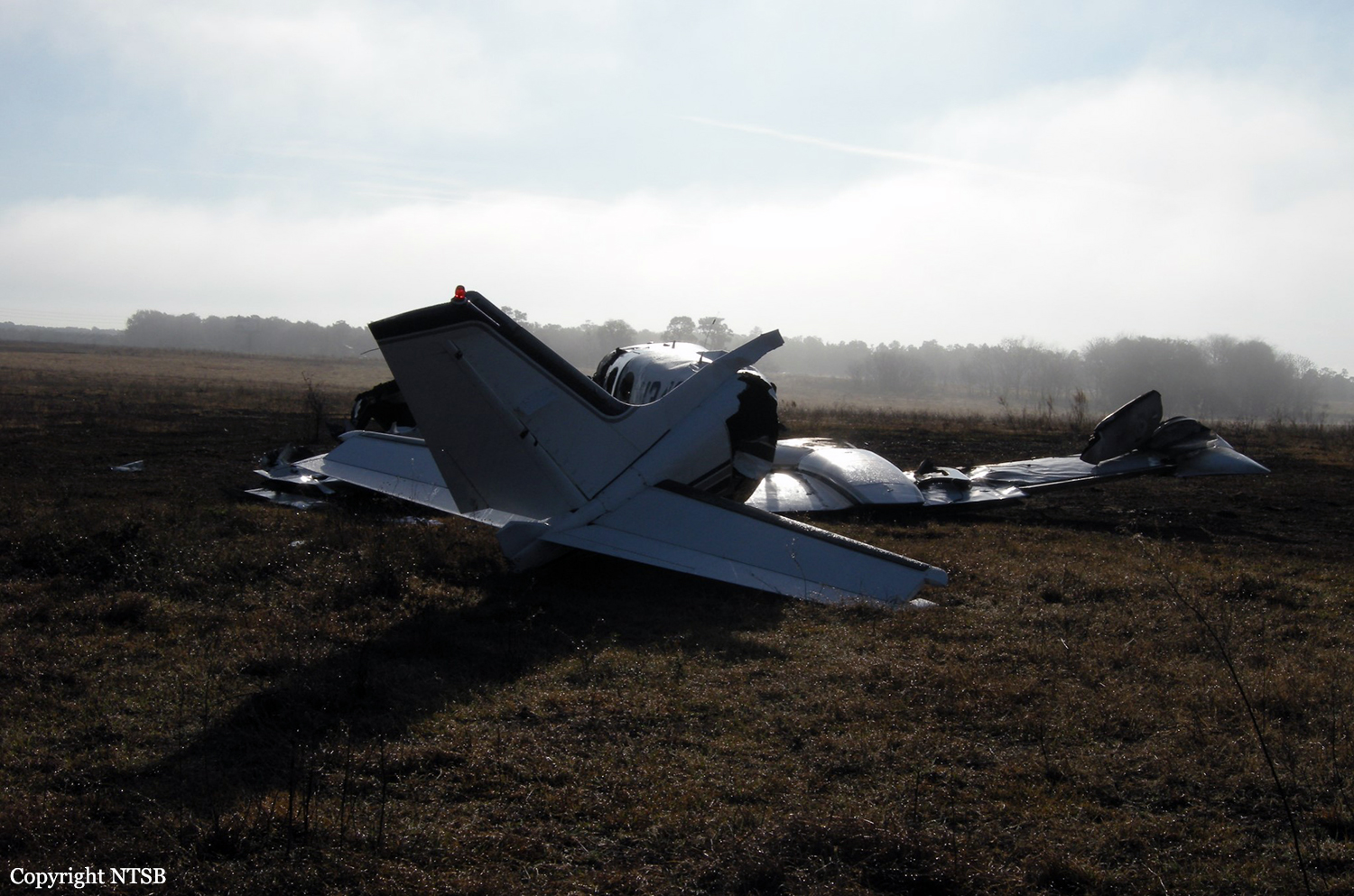
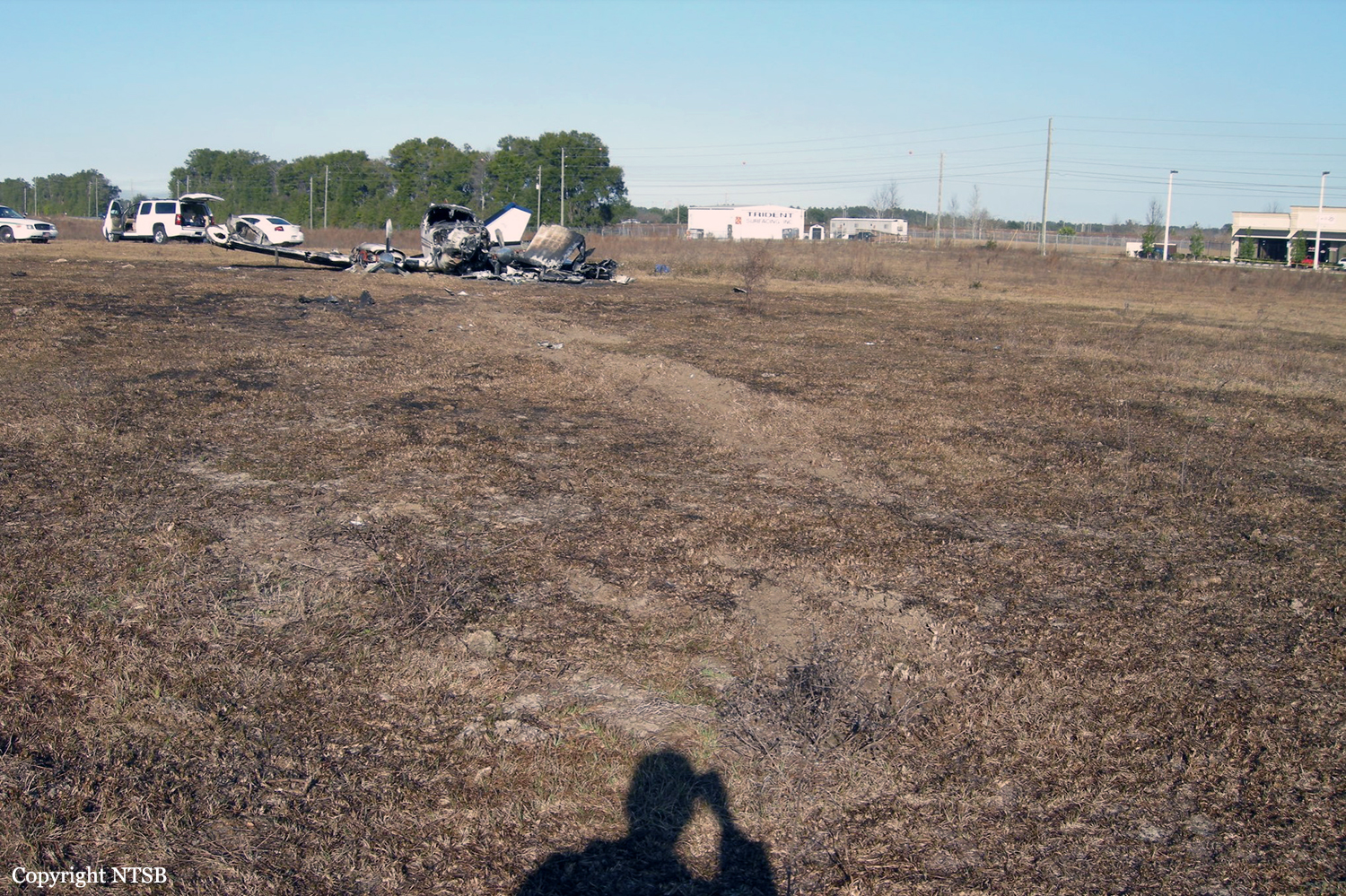
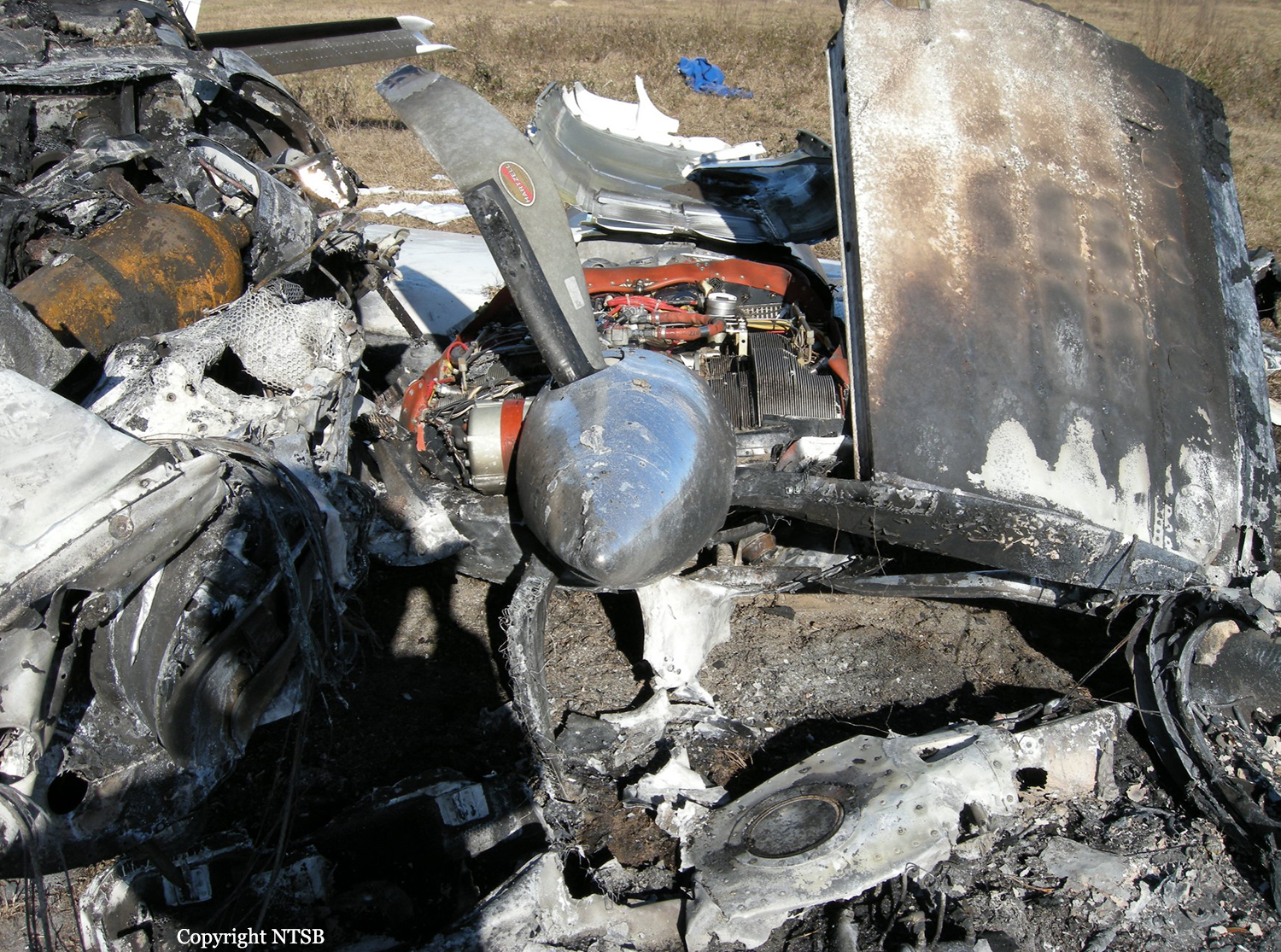
The pilot entered the left downwind leg of the traffic pattern to land to the north. A surface wind from the west prevailed with gusts to 15 knots. Radar data revealed that the airplane was on final approach, about 1.16 miles from the runway and about 210 feet above the ground. The airplane then crashed in a pasture south of the airport, in a slight left-wing-low attitude, and came to rest upright. The cockpit and cabin were consumed in a postcrash fire. The pilot's wife, who was in the aft cabin and survived the accident, recalled that it was choppy and that they descended quickly. She recalled hearing two distinct warning horns in the cockpit prior to the crash. The airplane was equipped with two aural warning systems in the cockpit: a landing gear warning horn and a stall warning horn. The pilot likely allowed the airspeed to decay while aligning the airplane on final approach and allowed the airplane to descend below a normal glide path. Examination of the wreckage revealed that the landing gear were in transit toward the retracted position at impact, indicating that the pilot was attempting to execute a go-around before the accident. The pilot made no distress calls to air traffic controllers before the crash. The pilot did not possess a current flight review at the time of the accident. Examination of the wreckage, including a test run of both engines, revealed no evidence of a pre-existing mechanical malfunction or failure that would have precluded normal operation of the airplane.
Probable cause:
The pilot's failure to maintain adequate airspeed and altitude on final approach, resulting in an impact with terrain short of the airport.
Final Report:

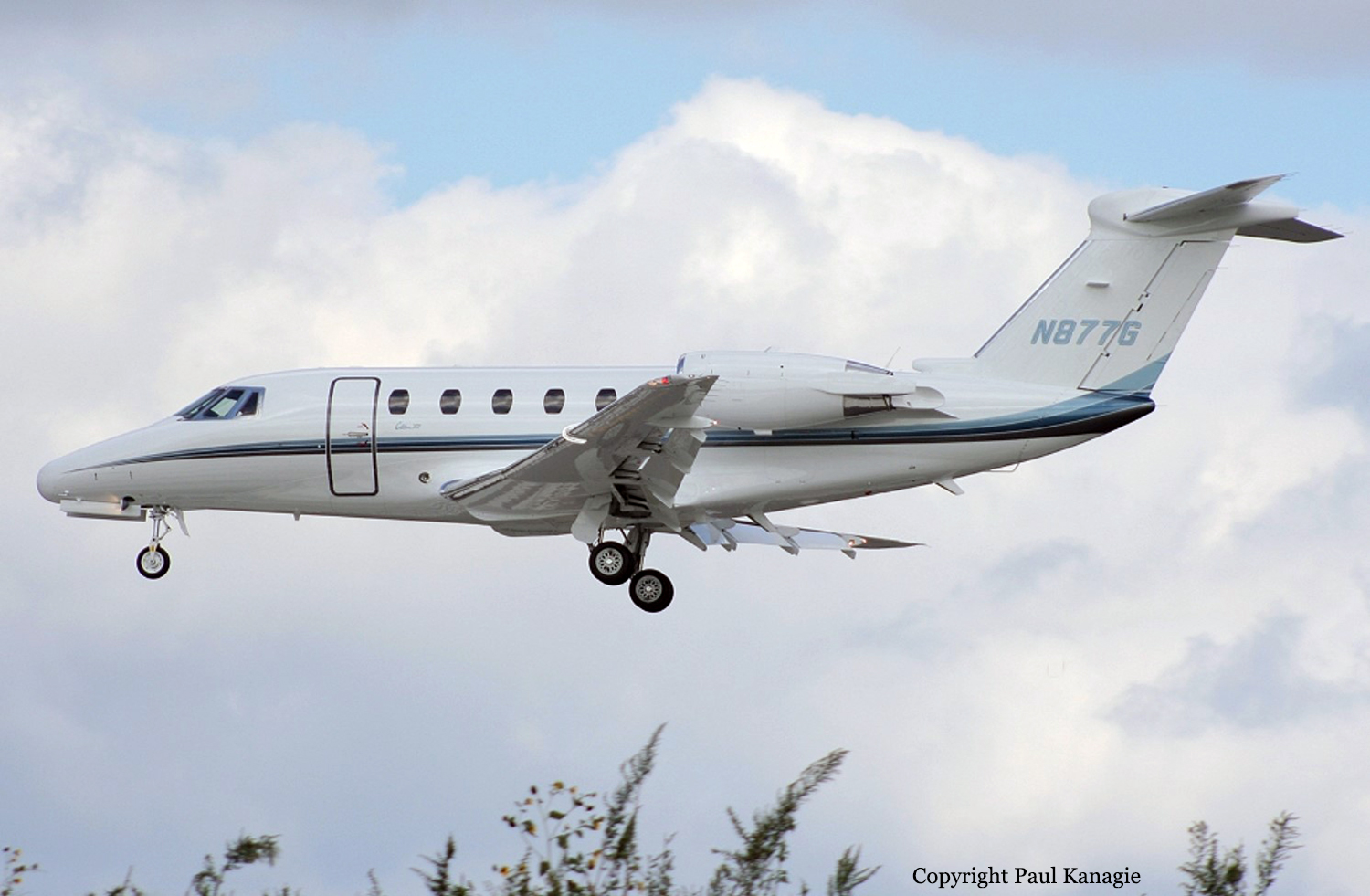
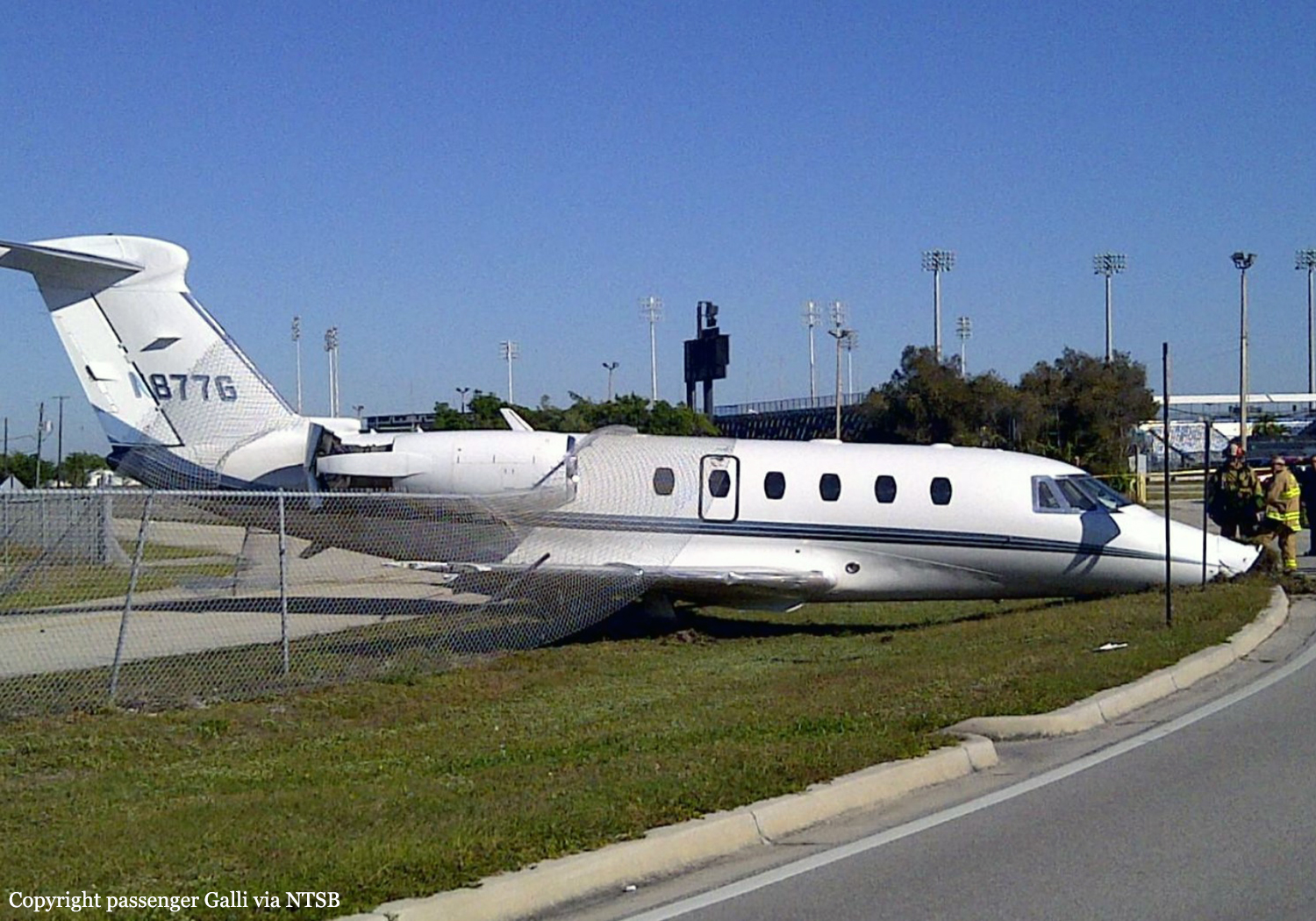
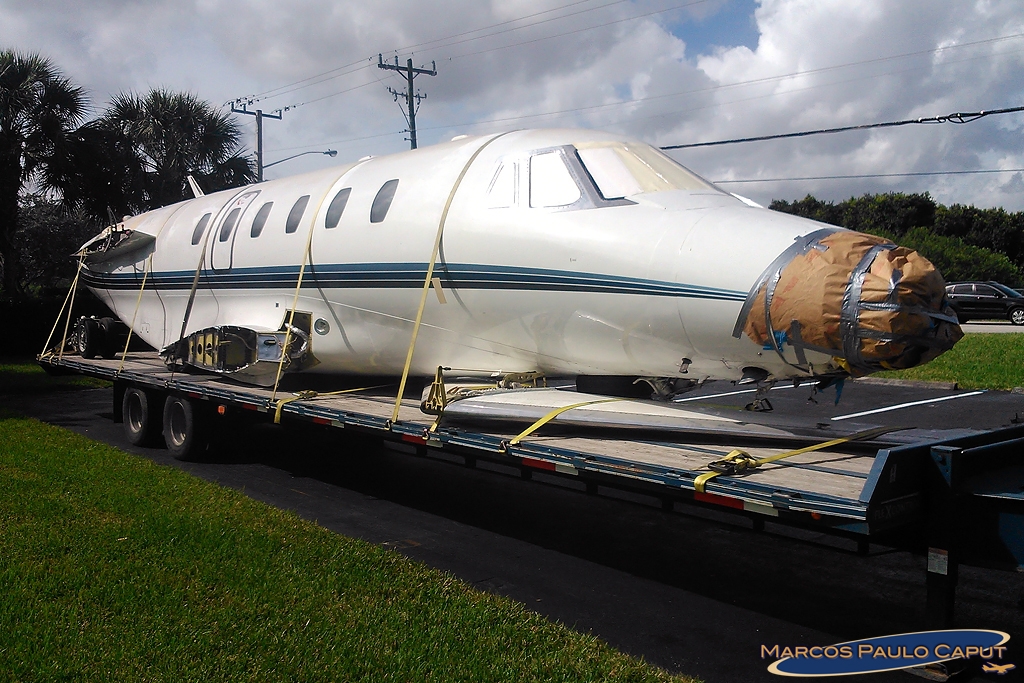
Crash of a Cessna 650 Citation VII in Fort Lauderdale

Date & Time: Dec 28, 2011 at 0951 LT
Type of aircraft:
Registration:
N877G
Flight Phase:
Flight Type:
Survivors:
Yes
Schedule:
Lauderdale – Teterboro
MSN:
650-7063
YOM:
1995
Crew on board:
2
Crew fatalities:
Pax on board:
6
Pax fatalities:
Other fatalities:
Total fatalities:
0
Captain / Total flying hours:
14950
Captain / Total hours on type:
190.00
Copilot / Total flying hours:
19000
Copilot / Total hours on type:
100
Aircraft flight hours:
5616
Aircraft flight cycles:
4490
Circumstances:
The crew stated that the preflight examination, takeoff checks, takeoff roll, and rotation from runway 26 were "normal." However, once airborne, and with the landing gear down and the flaps at 20 degrees, the airplane began a roll to the right. The captain used differential thrust and rudder to keep the airplane from rolling over, and as he kept adjusting both. He noted that as the airspeed increased, the airplane tended to roll more; as the airspeed decreased, the roll would decrease. The captain also recalled thinking that the airplane might have had an asymmetrical flap misconfiguration. Both pilots stated that there were no lights or warnings. As the airplane continued a right turn, runway 13 came into view. The captain completed a landing to the right of that runway, landing long and in the grass with a 9-knot, left quartering tailwind. The airplane then paralleled the runway and ran into an airport perimeter fence beyond the runway's end. The cockpit voice recorder revealed that the crew initially used challenge and reply checklists and that after completing the takeoff checklist, engine power increased. About 7 seconds after the first officer called "V1," the captain stated an expletive, and the first officer announced "positive rate." During the next 50 seconds, the captain repeated numerous expletives, an automated voice issued numerous "bank angle" warnings, and the first officer asked what he could do, to which the captain later told him to declare an emergency. There were no calls by either pilot for an emergency checklist nor were there callouts of any emergency memory items. Each of the airplane's wings incorporated four hydraulically-actuated spoiler segments. The outboard segment, the roll control spoiler, normally extends in conjunction with its wing aileron after the aileron has traveled more than about 3 degrees, and extends up to 50 degrees at full control wheel rotation. When the airplane was subsequently examined in a hangar, hydraulic power was applied to the airplane via a ground hydraulic power unit, and the right roll spoiler elevated to 7.9 degrees above the flush wing level. Multiple left/right midrange turns of the yoke, with the hydraulic ground power unit both on and off, resulted in the roll spoiler being extended normally, but still returning to a resting position of 7.8 to 7.9 degrees above the flush position. When the yoke was turned full right and left, whether the aileron boost was on or off, both wings' roll spoilers extended to their full positions per specifications; however, once the full deflection testing was completed, the right roll spoiler returned to 6.1 degrees above the flush position. A final yoke turn resulted in the roll spoiler being elevated to 5.5 degrees. The right wing roll spoiler actuator was subsequently examined at the airplane manufacturer, and the roll spoiler was found to jam. The roll spoiler actuator was disassembled, but no specific reason(s) for the jamming were found. The roll spoiler parts were also examined and no indications of why the actuator may have jammed were found. According to the flight manual, if any of the spoiler segments should float, moving the spoiler hold down switch to "Spoiler Hold Down" locks all spoiler panels down. The roll control spoilers may then be used in the roll mode by turning on the auxiliary hydraulic pump. Also, an "Aileron/Spoiler Disconnect" T-handle is available to release the tie between the ailerons and the roll control spoilers in the event of a jam in either system. When used, the pilot's yoke controls only the ailerons, and the copilot's yoke controls only the roll control spoilers. Although the jamming of the right spoiler initiated the event, the crew's proper application of emergency procedures should have negated the adverse effects. Memory items for an uncommanded roll include moving the spoiler hold-down switch to the "on" position, which was not done; the spoiler hold-down switch was found in the "off" position. (The captain thought that he may have had an asymmetrical flap configuration; however, if an asymmetry had been the initiating event, the flap system would have been automatically disabled and the flap segments would have been mechanically locked in their positions.) The aileron/spoiler disconnect T-handle was found pulled up, which the crew indicated had occurred when the first officer's shoe hit it as he evacuated the airplane. While pulling the aileron/spoiler disconnect T-handle would have been appropriate for a different emergency procedure to release the tie between the ailerons and the roll control spoilers in the event of a jam in either system, it would have actually hindered the captain's attempts to control the airplane in this case because it would have disconnected the left roll spoiler from the captain's yoke, making it more difficult to counter the effects of the displaced right roll spoiler. Although the crew indicated that the t-handle was pulled during the first officer's exit of the airplane, its position, safety cover, and means of activation make this unlikely. In addition, precertification testing of the airplane showed that even with the right roll spoiler fully deployed, as long as the pilot had the use of the left roll spoiler in conjunction with that aileron, the airplane should have been easily controlled.
Probable cause:
The crew's failure to use proper emergency procedures during an uncommanded right roll after takeoff, which led to a forced landing with a quartering tailwind. Contributing to the accident was a faulty right roll spoiler actuator, which allowed the right roll spoiler to deploy but not close completely.
Final Report:

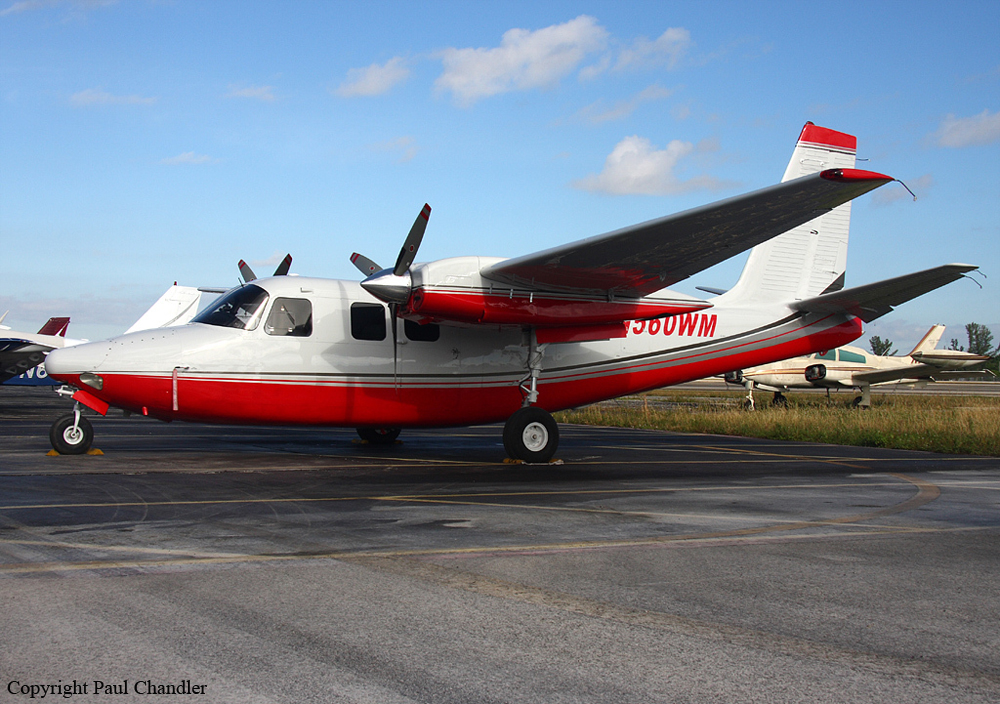
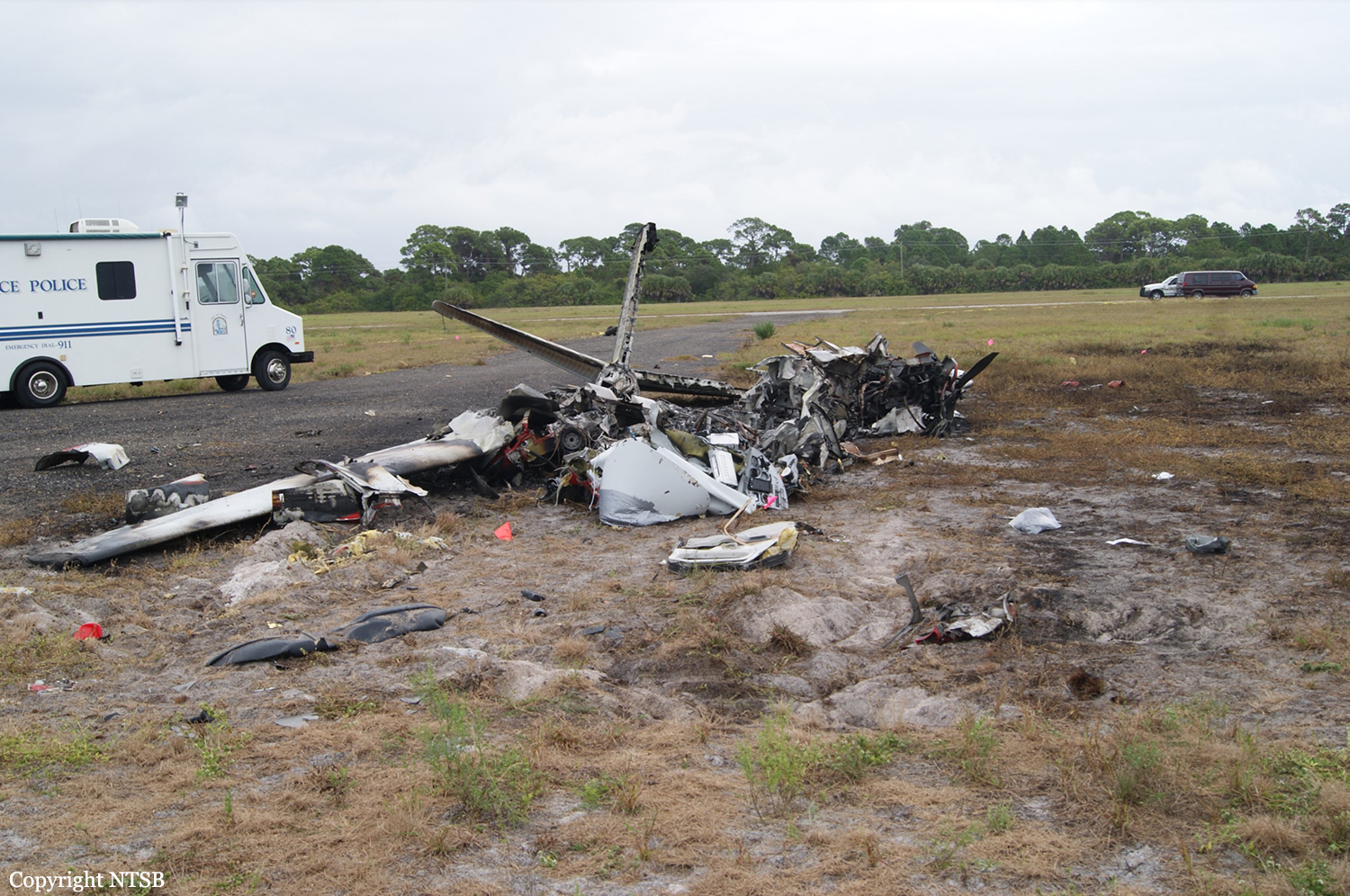
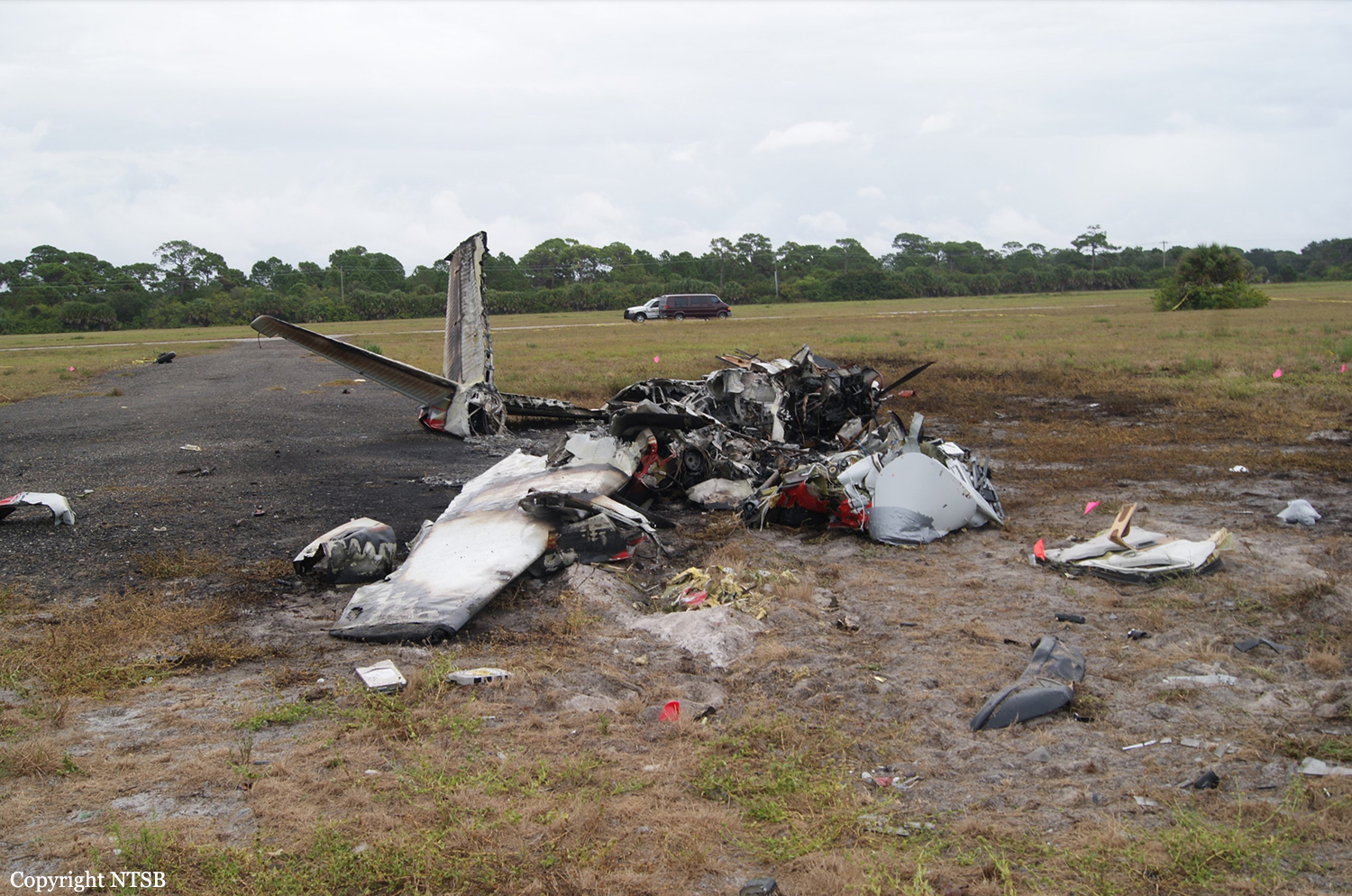
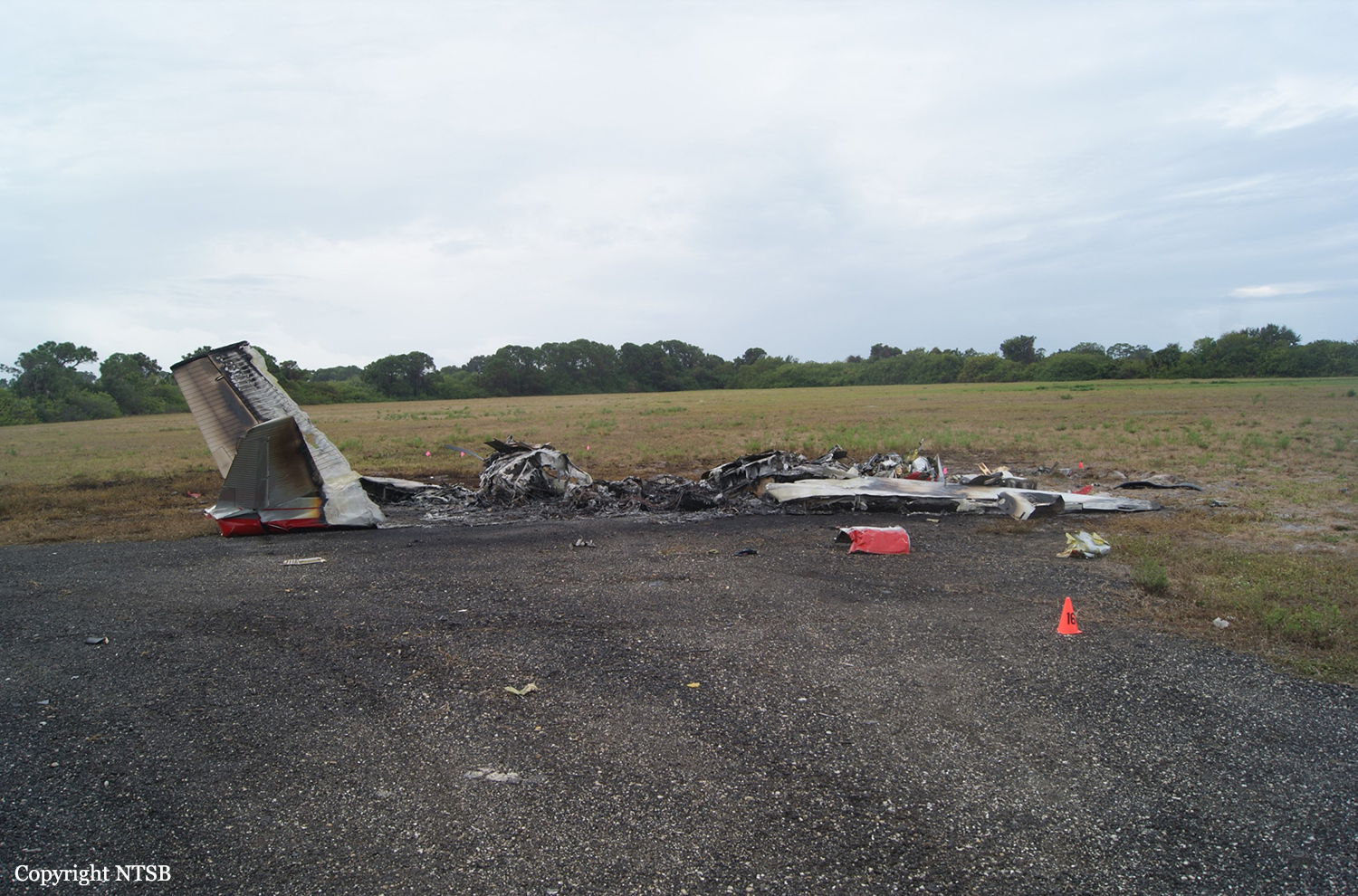
Crash of a Rockwell Aero Commander 560F in Venice: 1 killed

Date & Time: Dec 26, 2011 at 1406 LT
Operator:
Registration:
N560WM
Flight Type:
Survivors:
No
Schedule:
Venice - LaFayette
MSN:
560-1305-58
YOM:
1964
Location:
Crew on board:
1
Crew fatalities:
Pax on board:
0
Pax fatalities:
Other fatalities:
Total fatalities:
1
Captain / Total flying hours:
6000
Captain / Total hours on type:
1500.00
Aircraft flight hours:
5826
Circumstances:
The airplane departed and was climbing to an assigned altitude when the pilot informed an air traffic controller of a loss of engine power on the left engine. The pilot received radar vectors back to the departure airport and reported the airport in sight. There was no further communication with the controller. Review of radar data revealed that the airplane was about 825 feet from and 200 feet above the landing runway threshold. Seventeen seconds later, the airplane was at 100 feet above ground level and left of the intended landing runway. The last radar return was 5 seconds later, and the airplane was at 200 feet above ground level. A witness observed the airplane in the vicinity of landing runway. The airplane pitched straight up, stalled, spun to the left three times before it collided with the ground and caught fire. Postcrash examination of the airframe and flight controls revealed no anomalies. The left engine was disassembled and all connecting rods were intact except for the No.2 connecting rod. Metallugical examination of the connecting rod revealed that the bearing failed, most likely due to a progressive delamination of the bearing. Review of the airplane flight manual revealed a minimum of 300 feet of altitude is required to recover from power-off stalls with 7500 pounds at both forward and aft center of gravity. The stall speed with the landing gear and flaps up with 0 degree angle of bank is 83 miles per hour or 72 knots. The stall speed with the landing gear extended and the flaps down is 73 miles per hours or 63 knots.
Probable cause:
The pilot’s failure to maintain adequate airspeed during a single-engine approach, which resulted in an aerodynamic stall. Contributing to the accident was the total loss of power in the left engine due to a failed No. 2 connecting rod bearing.
Final Report: