Crash of a Douglas A-26C Invader on Mt Stoyoma: 2 killed

Date & Time: Aug 12, 1974
Type of aircraft:
Operator:
Registration:
CF-DFC
Flight Phase:
Flight Type:
Survivors:
No
Site:
MSN:
7111
YOM:
1941
Country:
Crew on board:
2
Crew fatalities:
Pax on board:
0
Pax fatalities:
Other fatalities:
Total fatalities:
2
Circumstances:
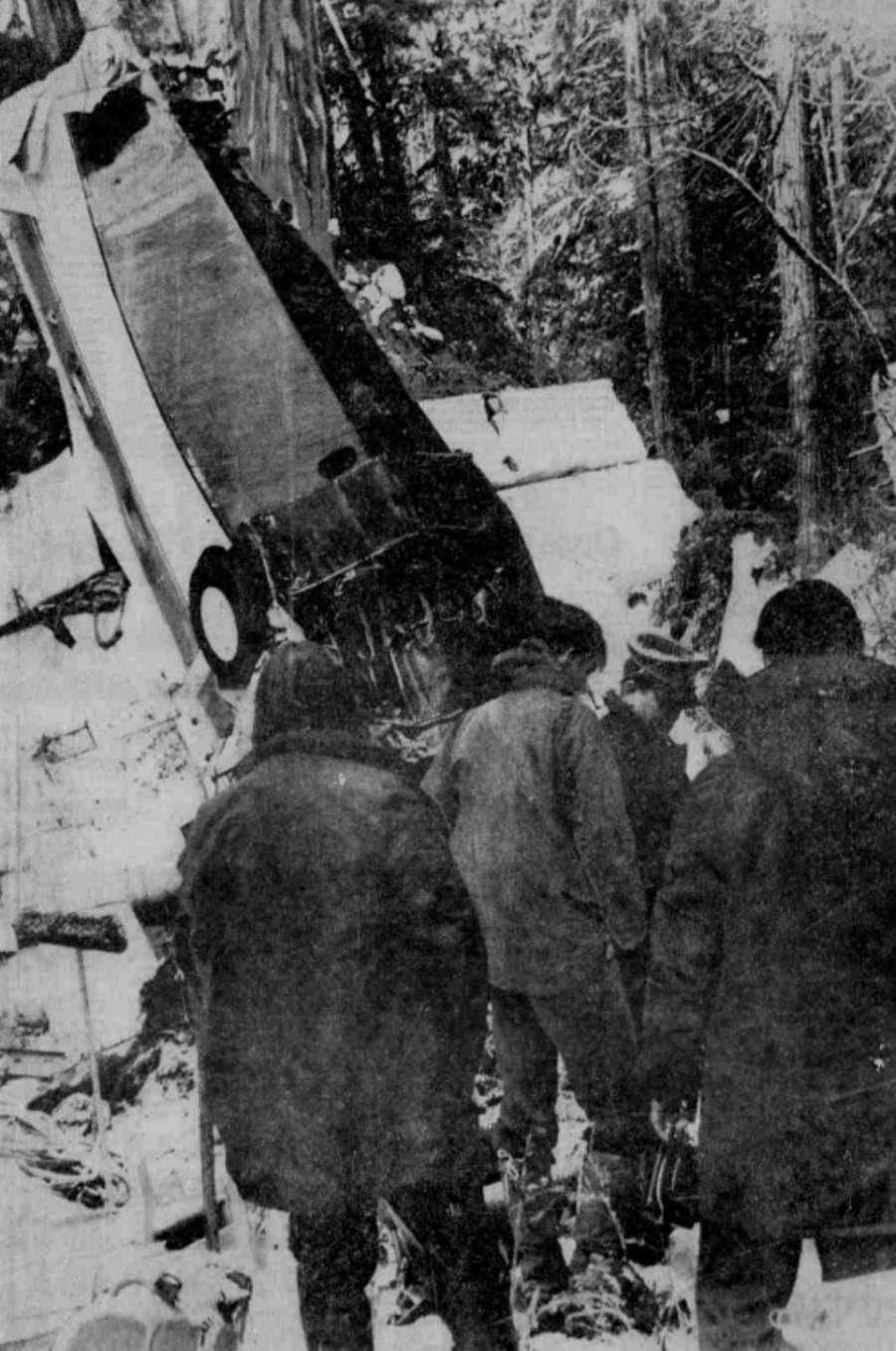
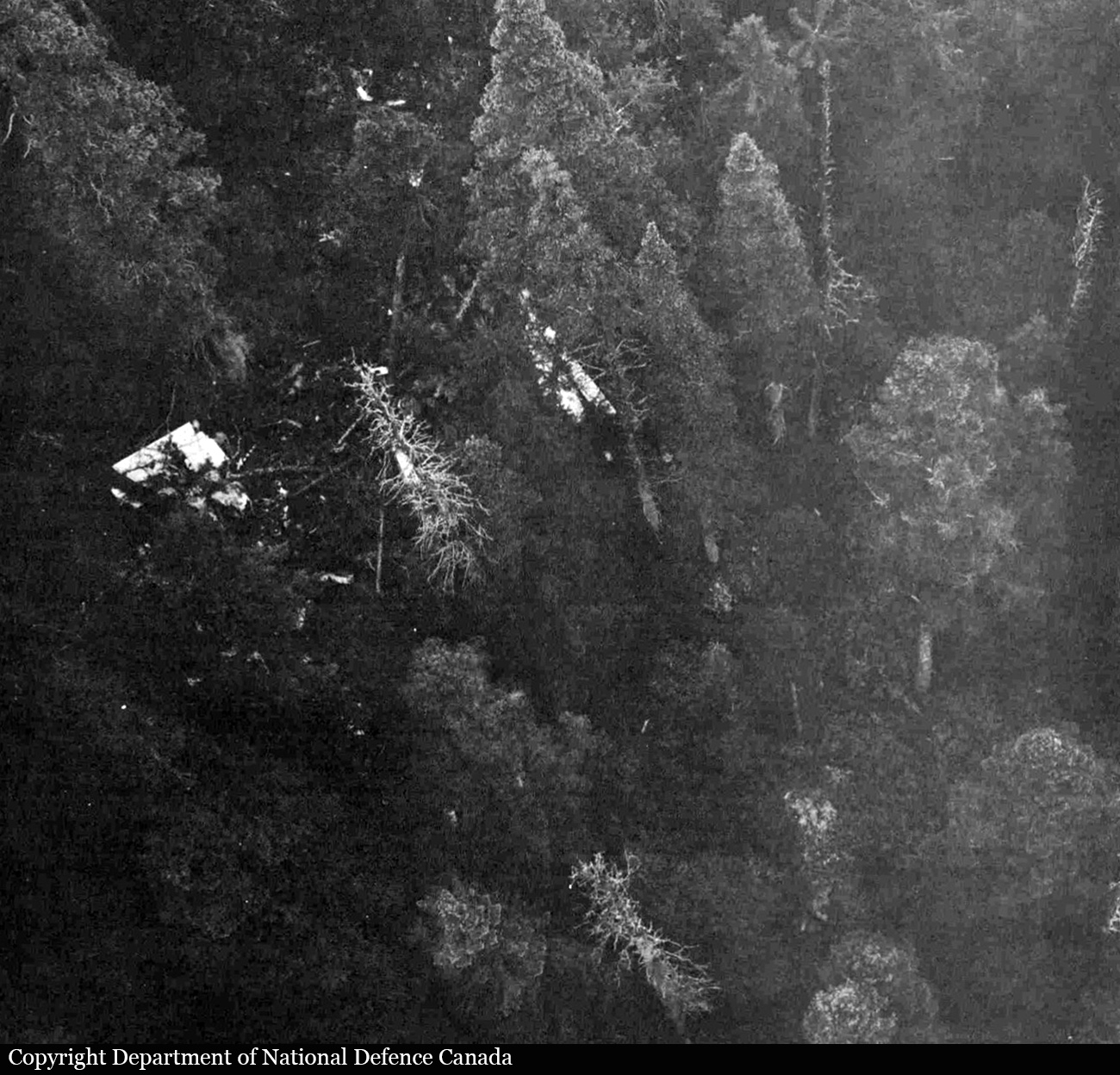
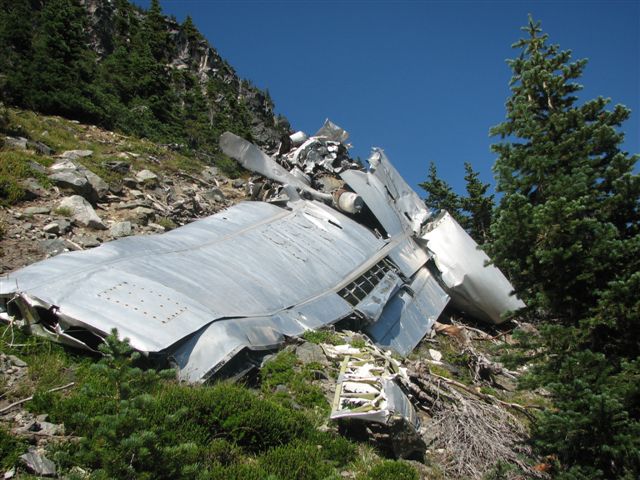
While engaged in a fire fighting mission, the twin engine airplane crashed on the slope of Mt Stoyoma located 97 km southwest of Kamloops. The wreckage was found two days later and both pilots were killed.
Crash of a Douglas DC-6B near Ashcroft: 3 killed

Date & Time: Aug 2, 1974 at 1625 LT
Type of aircraft:
Operator:
Registration:
CF-PWA
Flight Phase:
Flight Type:
Survivors:
No
Site:
Schedule:
Kamloops - Kamloops
MSN:
44698
YOM:
1955
Country:
Crew on board:
2
Crew fatalities:
Pax on board:
1
Pax fatalities:
Other fatalities:
Total fatalities:
3
Captain / Total flying hours:
9800
Captain / Total hours on type:
2740.00
Copilot / Total flying hours:
9500
Copilot / Total hours on type:
118
Aircraft flight hours:
39847
Circumstances:
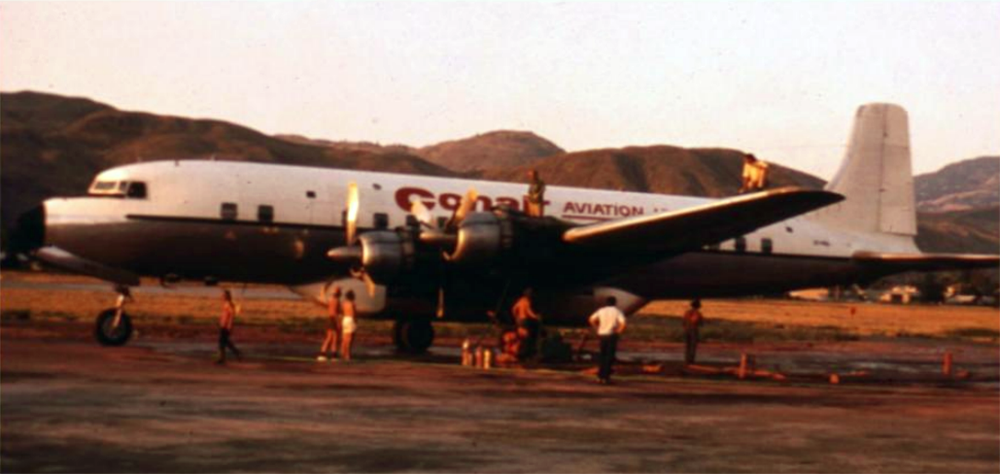
The airplane was engaged in a fire fighting flight. After being informed by 'Bird Dog' aircraft that initial fire bombing run approach was off target, the pilot commenced a climbing turn to the left towards rising terrain. After completing about 220° of the turn, the aircraft stalled, rolled sharply to the left and nose dropped steeply. The airplane struck the ground and was destroyed by fire and impact, some 8 miles east-southeast of Ashcroft, BC. The occupants consisted of two crew, the pilot-in-command and a second pilot, and one passenger, a mechanic, were killed.
Probable cause:
Prior to impact, the pilot-in-command informed 'Bird Dog' aircraft that he was in difficulty but failed to heed Bird Dog's advice to release his cargo of fire retardant.
The airplane lost speed in a low left climbing turn, apparently stalled, struck the ground with left wing low and nose down.
Final Report:

Crash of a Grumman G-73 Mallard in Prince Rupert: 3 killed

Date & Time: Mar 5, 1974
Type of aircraft:
Operator:
Registration:
CF-HPA
Flight Phase:
Survivors:
Yes
Site:
Schedule:
Prince Rupert - Masset
MSN:
J-7
YOM:
1946
Country:
Crew on board:
1
Crew fatalities:
Pax on board:
9
Pax fatalities:
Other fatalities:
Total fatalities:
3
Circumstances:
About two minutes after it took off from Prince Rupert seaplane base, the pilot initiated a turn when the airplane lost height and crashed onto a mountain slope located about 3 km southeast of Prince Rupert. The wreckage was found a day later and while seven occupants were rescued, three others, among them the pilot, were killed.

Crash of a Grumman CS-2F-3 Tracker near Telkwa: 4 killed

Date & Time: Sep 20, 1973
Type of aircraft:
Operator:
Registration:
12170
Flight Phase:
Survivors:
No
Site:
Schedule:
Sandspit - Patricia Bay
MSN:
DH69
YOM:
1960
Flight number:
Service 21
Country:
Crew on board:
4
Crew fatalities:
Pax on board:
0
Pax fatalities:
Other fatalities:
Total fatalities:
4
Captain / Total flying hours:
2187
Captain / Total hours on type:
1410.00
Copilot / Total flying hours:
1587
Circumstances:
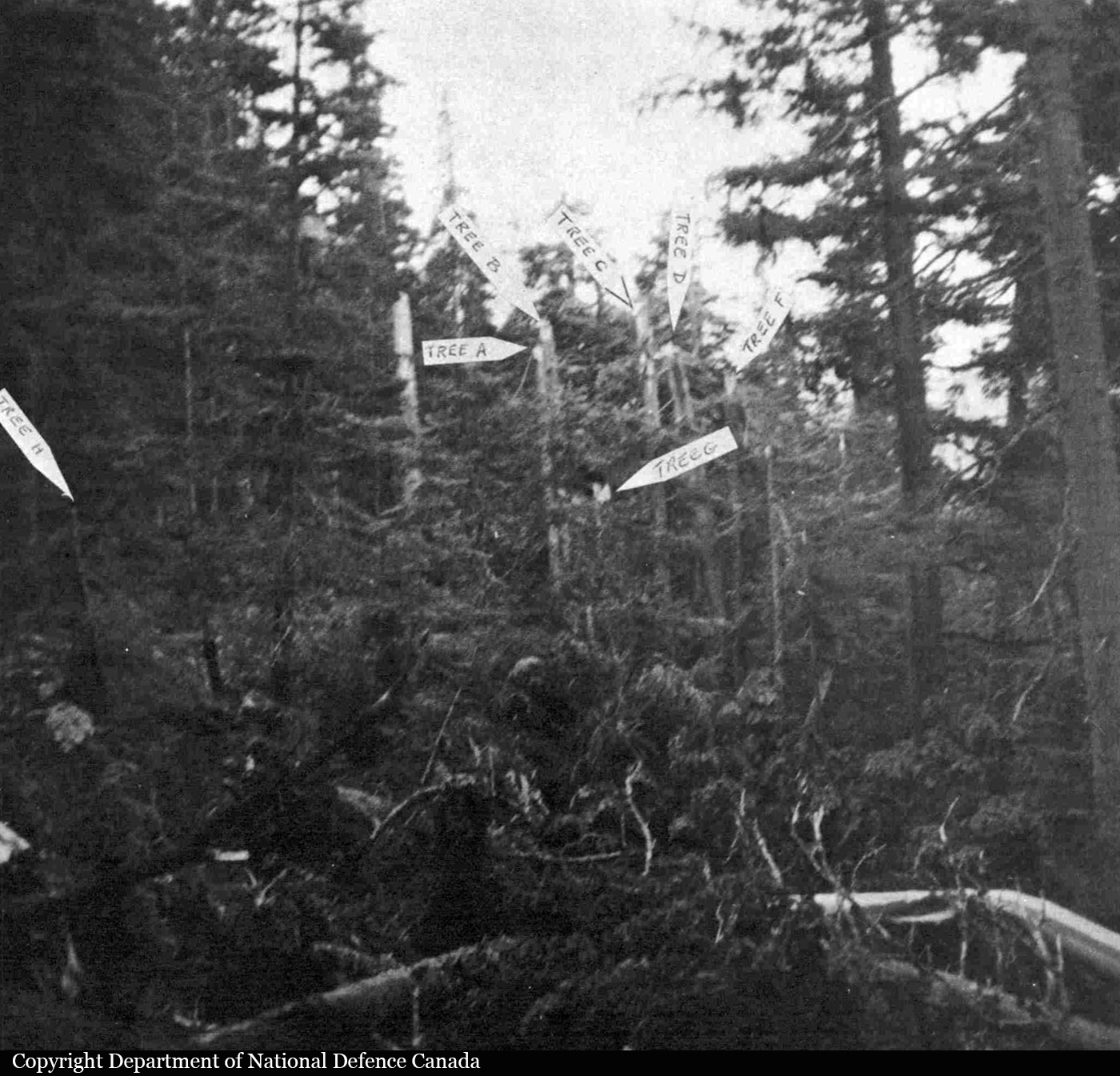
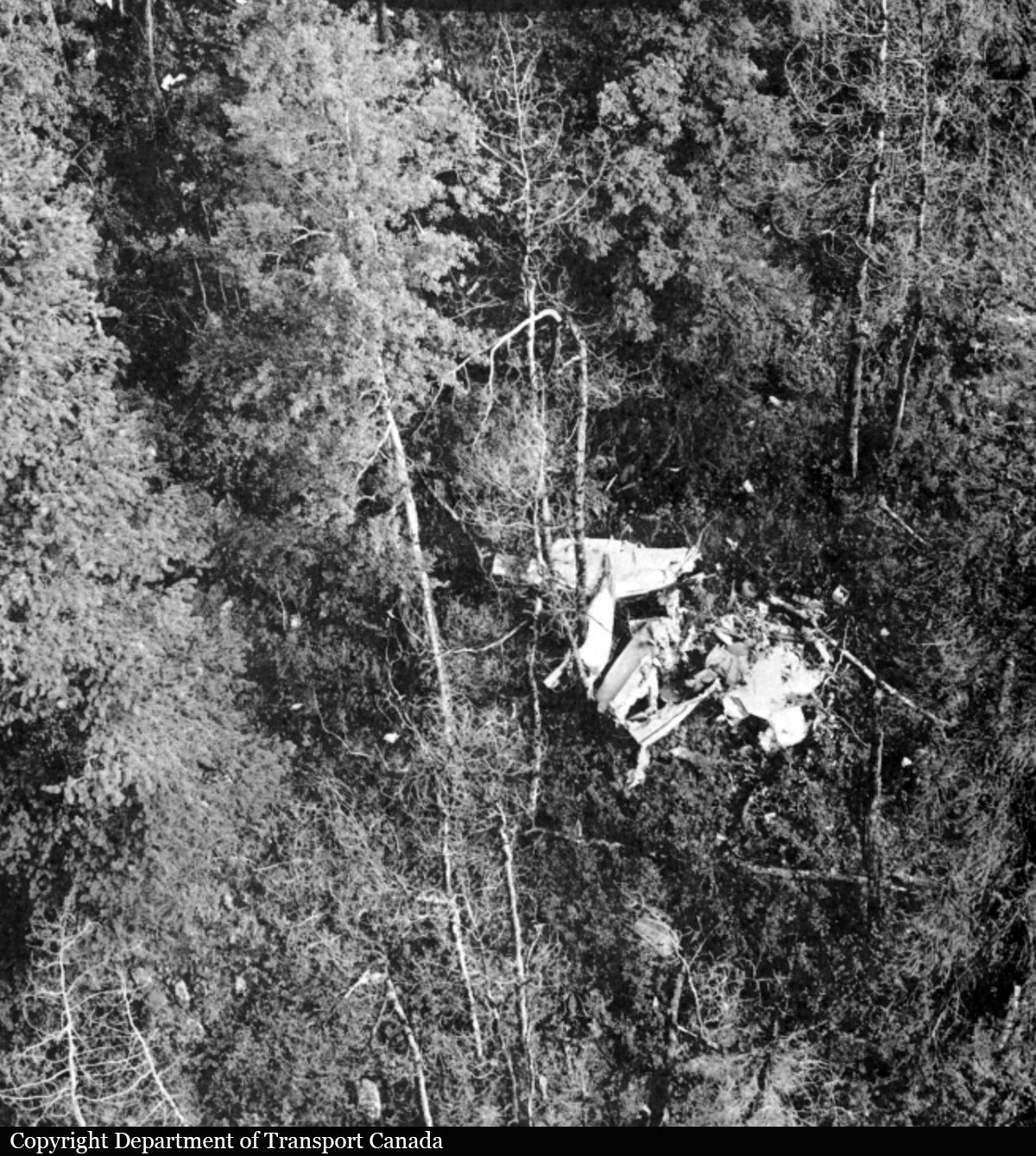
The airplane was dispatched in a SAR mission under callsign Service 21, searching for a missing Stinson 108. The crew departed Sandspit Airport at 1026LT with a routing via Terrace, Prince Rupert, Hazleton and Smithers before returning to Patricia Bay. At the end of the afternoon, while cruising in marginal weather conditions in a valley, the airplane contacted trees and crashed in a dense wooded area located near the Telkwa Pass, southwest of the city of Telkwa. The airplane disintegrated on impact and all four crew members were killed.
Crew:
Cpt L. T. Schaufele, pilot,
Cpt E. R. Bade, copilot,
Cpl J. R. J. Scammel,
Sgt S. W. Pye.
Probable cause:
The Board assessed the cause of the accident to:
Personnel - Pilot - Judgement.
When faced with a choice of continuing with a mission in unfamiliar mountainous terrain and uncertain VFR weather conditions, or discontinuing the mission when these flight conditions were encountered, he chose to continue and placed himself in a flight condition from which the chances of recovery were Significantly reduced. The motivation to continue with the mission and accept flight conditions below that which would normally be accepted given the same area and a different task is increased when personnel get involved in SAR and the possibility of saving life.
Environment - Weather/Terrain.
The combination of mountainous terrain and uncertain VFR weather conditions produced a marginal flight condition for the mission being performed.
Final Report:

Crash of a Cessna 421A Golden Eagle I on Mt Wartenbe: 6 killed

Date & Time: Jul 8, 1972 at 1020 LT
Type of aircraft:
Registration:
CF-XWI
Flight Phase:
Flight Type:
Survivors:
No
Site:
Schedule:
Edmonton - Chetwynd
YOM:
1968
Country:
Crew on board:
1
Crew fatalities:
Pax on board:
5
Pax fatalities:
Other fatalities:
Total fatalities:
6
Captain / Total flying hours:
14900
Captain / Total hours on type:
500.00
Aircraft flight hours:
930
Circumstances:
The twin engine airplane departed Edmonton Industrial Airport at 0730LT on an instrument flight plan do Dawson Creek, carrying engineers and employees from the Western Construction & Lumber Company en route to Chetwynd on a mining prospective program. The flight continued without incident to Dawson Creek, and after receiving descent clearance and becoming clear of cloud the pilot refiled a VFR flight plan to Chetwynd, BC. When the aircraft failed to arrive at its destination, an air ground search was initiated. Search aircraft picked up signals from a crash position indicator and located the accident scene on the south slope of Mt Wartenbe, approximately 10 miles east-southeast of its destination airstrip. The aircraft had struck trees at the 3,800 feet elevation, approximately 200 feet below the apex of the mountain ridge. The aircraft had been in a shallow descending turn to the right heading in an easterly direction at comparatively high airspeed at the time of impact. All six occupants were killed.
Probable cause:
The pilot attempted to maintain visual flight in poor weather conditions in close proximity of hazardous terrain. It appeared that after the pilot cancelled IFR at Dawson Creek, he was planning to maintain visual flight to his new destination, and did not take into account the close proximity of Wartenbe mountain. The investigation was unable to determine the exact flight path or circumstances surrounding the flight just before the crash. Aeromedical studies indicated that the pilot had an acute awareness of mortal danger for 10-15 seconds before impact.
Final Report:

Crash of a Dornier DO.28A-1S in Charlie Lake

Date & Time: Jun 15, 1971
Type of aircraft:
Operator:
Registration:
CF-PIY
Flight Phase:
Flight Type:
Survivors:
Yes
Schedule:
Charlie Lake - Redfern Lake
MSN:
3039
Country:
Crew on board:
1
Crew fatalities:
Pax on board:
5
Pax fatalities:
Other fatalities:
Total fatalities:
0
Circumstances:
Shortly after takeoff from Charlie Lake, the seaplane hit obstacles and crashed. All six occupants were injured and the aircraft was destroyed.

Crash of a De Havilland DHC-2 Beaver on Mt Kennedy: 4 killed

Date & Time: Mar 28, 1970
Type of aircraft:
Operator:
Registration:
CF-ABA
Flight Phase:
Survivors:
No
Site:
MSN:
315
YOM:
1952
Country:
Crew on board:
1
Crew fatalities:
Pax on board:
3
Pax fatalities:
Other fatalities:
Total fatalities:
4
Circumstances:
While searching mountainous terrain for a missing aircraft, the pilot entered a narrow mountain valley at low altitude. While attempting to round to come back out of it the aircraft struck a tall tree while in a 60° bank to the left. and crashed in flames and burned. Four Persons sustained fatal injuries.
Source: www.dhc-2.com

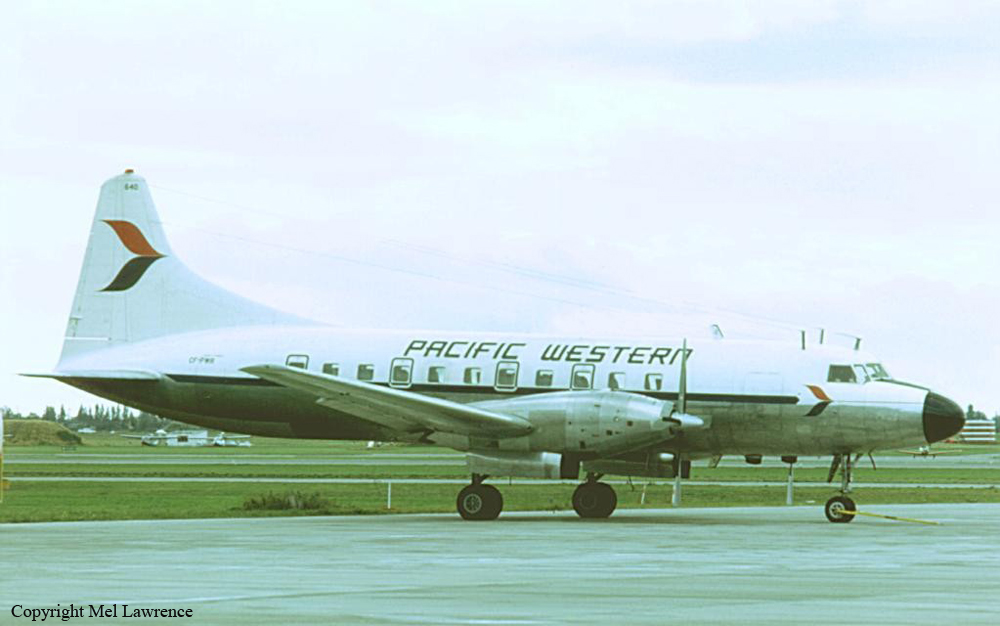
Crash of a Convair CV-640 in Campbell River: 4 killed

Date & Time: Sep 17, 1969 at 1709 LT
Type of aircraft:
Operator:
Registration:
CF-PWR
Survivors:
Yes
Schedule:
Vancouver - Campbell River
MSN:
440
YOM:
1965
Flight number:
PW627
Country:
Crew on board:
4
Crew fatalities:
Pax on board:
11
Pax fatalities:
Other fatalities:
Total fatalities:
4
Circumstances:
The Convair approached Campbell River with the weather just above minima (2-2,5 miles visibility, 400 feet broken ceiling and wind 110 degrees with gusts to 20 mph. The crew positioned the aircraft visually 2nm south of the airfield on a westerly heading preparatory to attempting an approach to the west. This would involve a right hand circuit flown above the broken south and west of the airport employing DME and ADF information. This improvised approach was not in accordance with published approach procedures under instrument conditions. After flying for 1 minute and 40 seconds the crew turned right. A few seconds after the captain expressed concern, the Convair struck a 1047 feet hill at 932 feet.
Probable cause:
Wrong approach configuration on part of the flying crew who failed to comply with the approved instrument approach procedure.

Crash of a Douglas DC-3B-202A in Malcolm Island

Date & Time: Jul 10, 1969 at 1025 LT
Type of aircraft:
Operator:
Registration:
N139D
Flight Phase:
Survivors:
Yes
Schedule:
Malcolm Island - Duluth
MSN:
2027
YOM:
1938
Country:
Crew on board:
3
Crew fatalities:
Pax on board:
22
Pax fatalities:
Other fatalities:
Total fatalities:
0
Captain / Total flying hours:
12900
Captain / Total hours on type:
2655.00
Circumstances:
The aircraft was engaged in a charter flight from Malcolm Island to Duluth and the crew expedited the takeoff procedure to clear the runway for another aircraft who was scheduled to land. During the takeoff roll, at a speed of 60-70 knots, the airplane began to swerve. It continued for about 1,500 feet before it veered off runway and came to a halt. All 25 occupants evacuated safely while the aircraft was considered as damaged beyond repair.
Probable cause:
It is believed the loss of control was caused by the fact that some of the locks were not removed before flight.

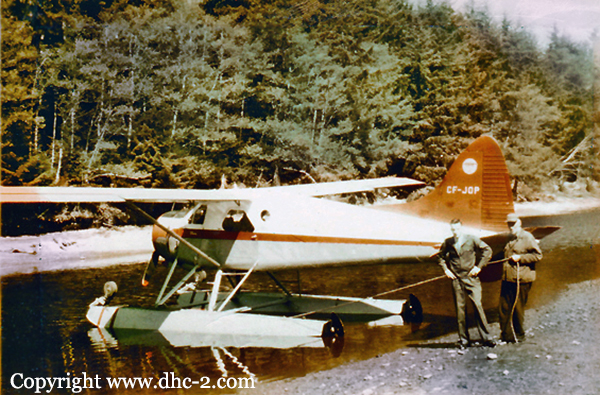
Crash of a De Havilland DHC-2 Beaver near Bull Harbour: 1 killed

Date & Time: Jun 6, 1969
Type of aircraft:
Operator:
Registration:
CF-JOP
Flight Phase:
Flight Type:
Survivors:
No
Schedule:
Port Hardy - Millbrook Cove
MSN:
1058
YOM:
1957
Country:
Crew on board:
1
Crew fatalities:
Pax on board:
0
Pax fatalities:
Other fatalities:
Total fatalities:
1
Circumstances:
The pilot departed Port Hardy at 0925LT on this float equipped Beaver on a mail flight to Millbrook Cove and other remote areas. As the airplane failed to arrive at destination, SAR operations were conducted but eventually suspended few days later as no trace of the aircraft nor the pilot was ever found. A partly burnt fuel gauge was found in the region of Bull Harbour on 16 June 1970 and it is believed it was part of the missing airplane.