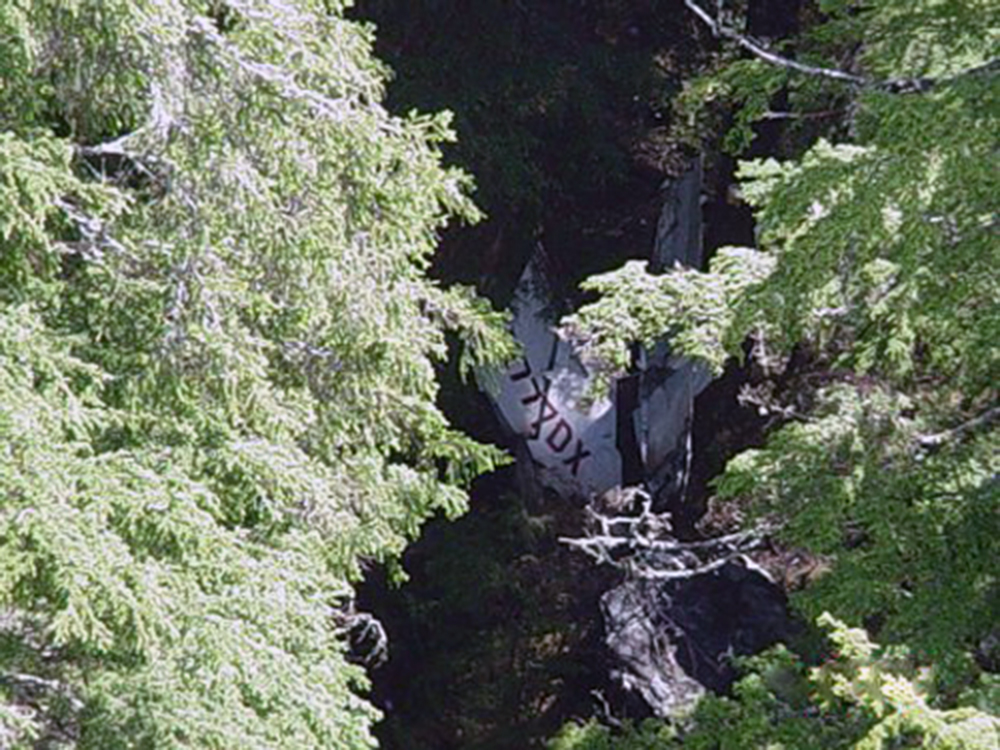
Crash of a Cessna 421C Golden Eagle III in Sitka: 5 killed

Date & Time: Jul 3, 2003 at 1600 LT
Operator:
Registration:
N777DX
Flight Type:
Survivors:
No
Site:
Schedule:
Prince Rupert – Anchorage
MSN:
421C-0048
YOM:
1976
Location:
Crew on board:
1
Crew fatalities:
Pax on board:
4
Pax fatalities:
Other fatalities:
Total fatalities:
5
Captain / Total flying hours:
9200
Aircraft flight hours:
7981
Circumstances:
The pilot of the twin-engine accident airplane was on an IFR flight plan in instrument meteorological conditions when the right side nose baggage door opened. The pilot expressed concerns to air traffic control about baggage exiting the compartment and striking the right propeller. He requested a diversion to the nearest airport with an instrument approach. The flight was diverted as requested, and was cleared for a non precision instrument approach to a coastal airport adjacent to mountainous terrain. The flight was authorized to a lower altitude when established on the approach. A review of the radar track information disclosed that the pilot did not fly the published approach, but abbreviated the approach and turned the wrong direction, toward higher terrain, north of the approach course. The airplane was discovered in mountainous terrain, about 1,100 msl, and 1.5 miles north of the approach course. The crash path was initially at a shallow angle in the treetops, until the airplane struck larger trees. Post accident inspection of the airplane disclosed no evidence of any preimpact mechanical problems, other than the baggage door, which was still attached to the airplane.
Probable cause:
The pilot's failure to follow IFR procedures by not following the published approach procedures, which resulted in an in-flight collision with terrain. Factors contributing to the accident were a low ceiling, and the pressure induced by conditions/events (the open baggage door).
Final Report:

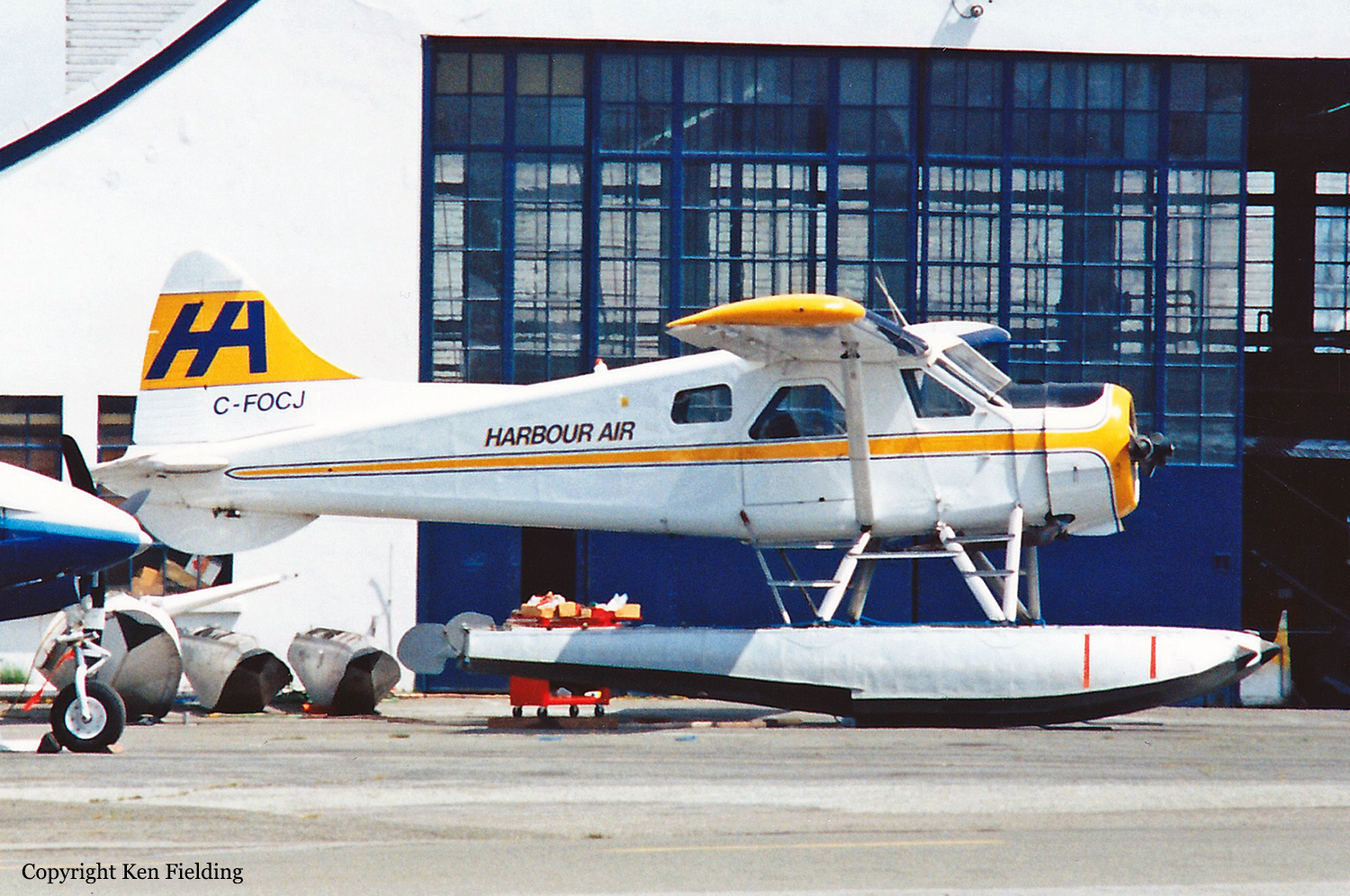
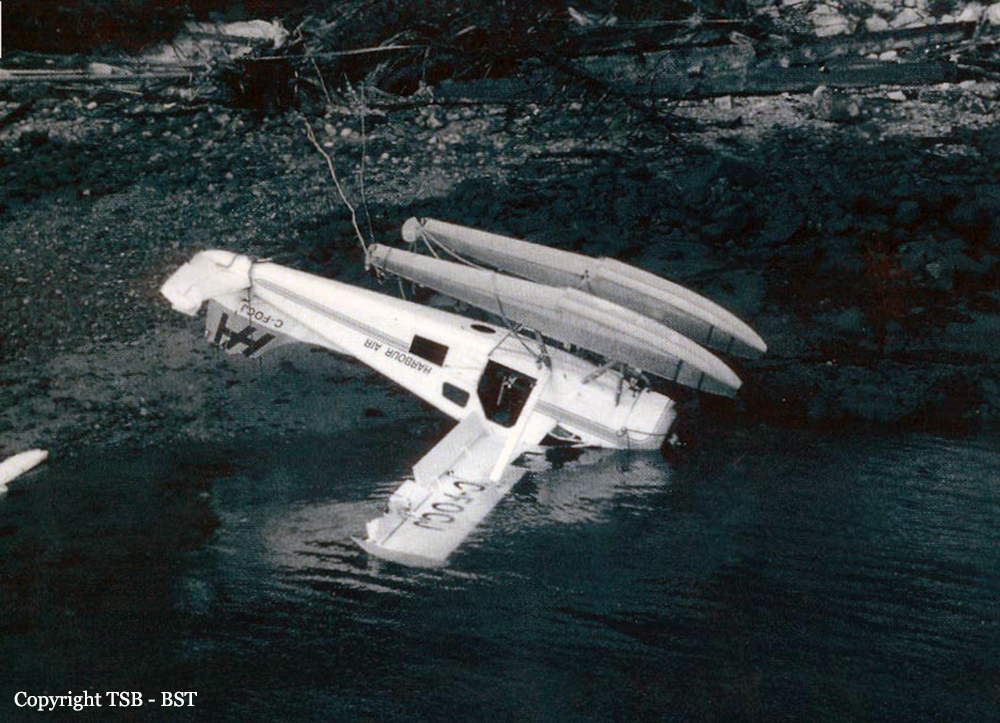
Crash of a De Havilland DHC-2 Beaver near Kincolith: 5 killed

Date & Time: Aug 4, 1998 at 1758 LT
Type of aircraft:
Operator:
Registration:
C-FOCJ
Survivors:
No
Schedule:
Prince Rupert - Kincolith
MSN:
39
YOM:
1949
Flight number:
H3709
Country:
Crew on board:
1
Crew fatalities:
Pax on board:
4
Pax fatalities:
Other fatalities:
Total fatalities:
5
Captain / Total flying hours:
1700
Captain / Total hours on type:
1250.00
Aircraft flight hours:
22369
Circumstances:
The float-equipped de Havilland DHC-2 Beaver, serial number 0039, departed Prince Rupert, British Columbia, at 1719 Pacific daylight time on a visual flight rules flight to Kincolith, British Columbia, with the pilot and four passengers on board. When the aircraft arrived at Kincolith at about 1750, witnesses watched it carry out three low approaches to the water landing area, each time descending to a few feet above the water before climbing away. On the fourth approach, at about 1758, the aircraft touched down, apparently in a controlled manner, and skipped on the water surface. The floats then dug into the water followed by the right wing, which was severed from the fuselage on water impact. The aircraft quickly overturned and came to rest inverted with only the bottom of the floats visible. Several members of the village community, who had been waiting for the aircraft on the Government Dock, rushed to the sunken aircraft in small boats but were unable to rescue the pilot or passengers inside the submerged cabin. The five occupants drowned in the accident, and the aircraft was substantially damaged.
Probable cause:
On touchdown, the float(s) struck the water and caused a flying attitude that the pilot could not control before the right wing dug in and the aircraft overturned. Contributing to the accident were conflicting wind and water conditions at the time of the occurrence.
Final Report:

Crash of a De Havilland DHC-3 Otter near Terrace: 2 killed

Date & Time: May 9, 1996 at 1430 LT
Type of aircraft:
Registration:
C-GDOB
Flight Phase:
Flight Type:
Survivors:
No
Site:
Schedule:
Ketchikan – Prince Rupert – Dawson Creek – Buffalo Narrows
MSN:
194
YOM:
1957
Country:
Crew on board:
2
Crew fatalities:
Pax on board:
0
Pax fatalities:
Other fatalities:
Total fatalities:
2
Captain / Total flying hours:
10000
Copilot / Total flying hours:
5000
Circumstances:
The single-engine, float-equipped DHC-3 Otter departed Ketchikan, Alaska, at 0905 Pacific daylight time (PDT) on 09 May 1996 with a pilot and co-pilot on board. They were on a visual flight rules (VFR) ferry flight to Dawson Creek, British Columbia, en route to Buffalo Narrows, Saskatchewan. After a refuelling stop and weather briefing at Prince Rupert, British Columbia, the aircraft departed eastbound along the published Telkwa Pass VFR route. When the aircraft did not arrive at Dawson Creek, it was reported overdue. The next day, an extensive search for the missing Otter was commenced and wreckage was located by search and rescue aircraft at 1930 PDT, 30 miles east of Terrace, in the Telkwa Pass. The aircraft had struck mountainous terrain and was destroyed. Both occupants were fatally injured.
Probable cause:
The absence of aircraft wreckage and documentation precludes an analysis of the technical aspects of this accident. This analysis, therefore, concentrates solely on the operational aspects. The high impact speed is indicative of either a loss of control followed by a rapid descent into terrain or controlled flight into unseen terrain. Given that the pilot reported encountering snow showers within 15 miles of the accident site, it is possible that the weather continued to deteriorate and may have adversely affected the pilot's ability to maintain visual contact with the terrain.
Findings:
1. The weight and centre of gravity of the aircraft at the last take-off were estimated to have been within the prescribed limits.
2. The pilot was certified, trained, and qualified for the flight in accordance with existing regulations.
3. Marginal visual weather conditions existed in the vicinity of the accident site.
4. It is possible that deteriorating weather affected the pilot's ability to maintain visual contact with the terrain.
Causes and Contributing Factors:
It was not determined why the aircraft struck terrain; however, it is likely that the contact occurred during conditions of reduced visibility.
Final Report:

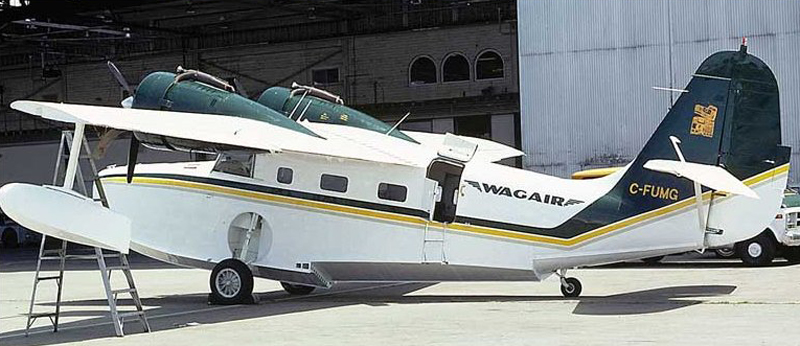
Crash of a Grumman G-21A Goose in Prince Rupert: 2 killed

Date & Time: Dec 4, 1993 at 1145 LT
Type of aircraft:
Operator:
Registration:
C-FUMG
Flight Phase:
Survivors:
Yes
Schedule:
Prince Rupert - Kincolith
MSN:
B145
YOM:
1945
Country:
Crew on board:
1
Crew fatalities:
Pax on board:
4
Pax fatalities:
Other fatalities:
Total fatalities:
2
Captain / Total flying hours:
12400
Captain / Total hours on type:
1600.00
Aircraft flight hours:
22683
Circumstances:
The Grumman G21A Goose (C-FUMG) departed from the Seal Cove floatplane base at Prince Rupert, British Columbia, on a charter flight to Kincolith. The aircraft carried one pilot, four passengers, and approximately 600 pounds of baggage and freight. This was the first flight of the day for the occurrence aircraft. Prior to take-off, the pilot contacted the Prince Rupert Flight Service Station (FSS)1 by radio and obtained local traffic and weather information. The aircraft took off from the water at approximately 1141 Pacific standard time (PST)2, and proceeded southbound, following the normal departure path. During the take-off and climb, one or both of the aircraft's engines did not sound as if they were operating normally. Shortly after take-off, the pilot radioed the company dispatcher at Seal Cove and reported that he was experiencing engine problems, and that he was returning to Seal Cove and would require assistance at the ramp. After the left propeller stopped rotating, the aircraft rolled to the left and descended steeply to the ground. The aircraft crashed into trees on a hillside, at an altitude of approximately 150 feet, approximately three nautical miles (nm)3 south of Seal Cove. The pilot and one passenger were fatally injured; the three other passengers received serious injuries. A search started approximately 45 minutes after the aircraft departed. The aircraft was discovered by a Coast Guard helicopter, which was able to rescue the survivors. The accident occurred during daylight hours at about 1145 PST, at latitude 54·17'N and longitude 134·14'W.
Probable cause:
The pilot encountered engine problems during the take-off and climb, and, after the left propeller was feathered, lost directional control of the aircraft. The aircraft rolled to the left, descended rapidly, and crashed to the ground.
Final Report:

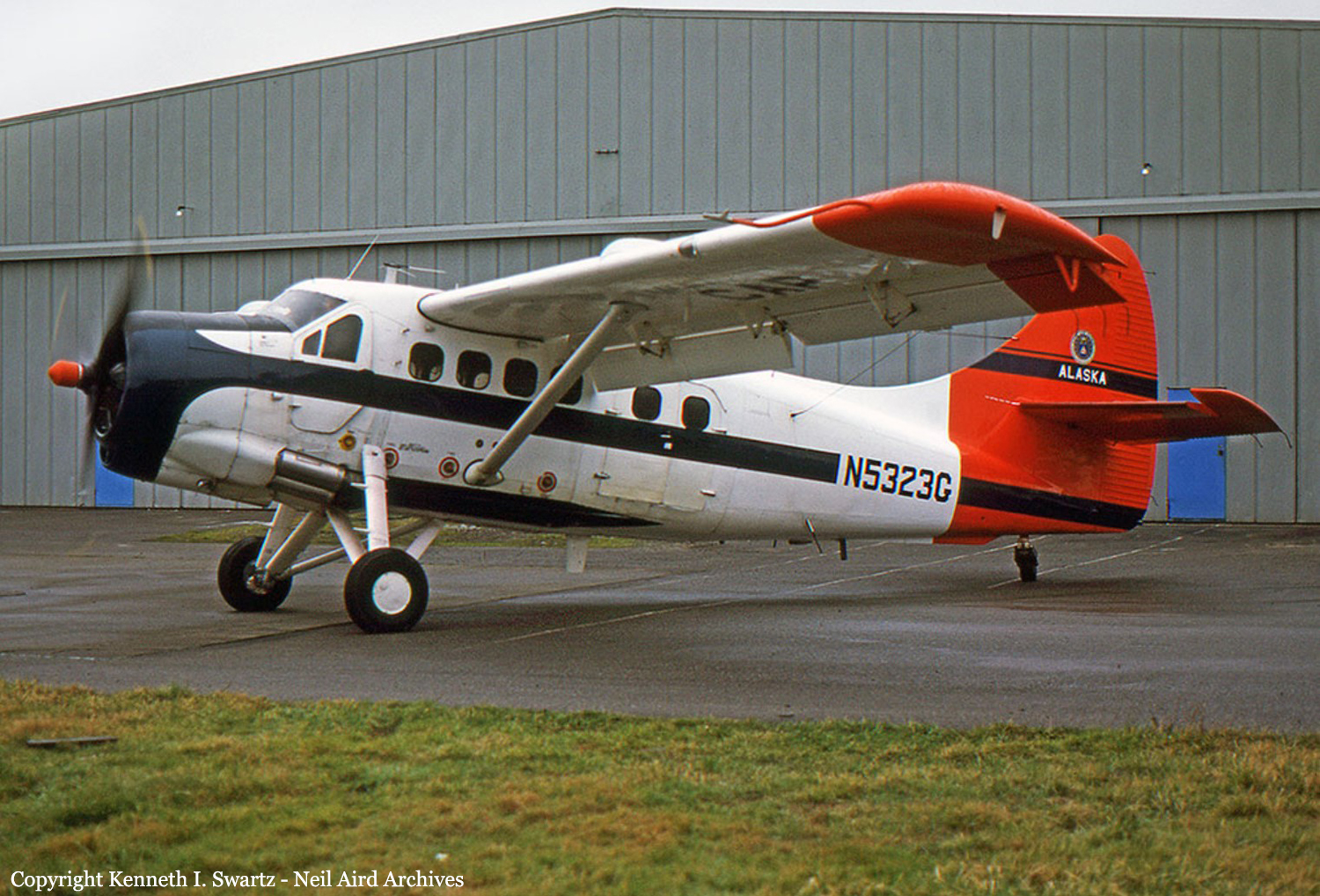
Crash of a De Havilland DHC-3 Otter in the Grenville Channel

Date & Time: Jun 8, 1989
Type of aircraft:
Operator:
Registration:
N5323G
Flight Phase:
Flight Type:
Survivors:
Yes
Schedule:
Phoenix – Port Hardy – Prince Rupert – Gustavus
MSN:
91
YOM:
1956
Country:
Crew on board:
2
Crew fatalities:
Pax on board:
0
Pax fatalities:
Other fatalities:
Total fatalities:
0
Circumstances:
The aircraft was on its way from Phoenix to Gustavus, AK, to be delivered to its new operator Glacier Bay Airways. On the leg from Port Hardy to Prince Rupert, while cruising at an altitude of 4,000 feet, the engine exploded and oil spread on the windscreen. The crew ditched the aircraft in the Grenville Channel and was quickly rescued. The aircraft sank and was not recovered.
Probable cause:
Engine explosion for unknown reasons.

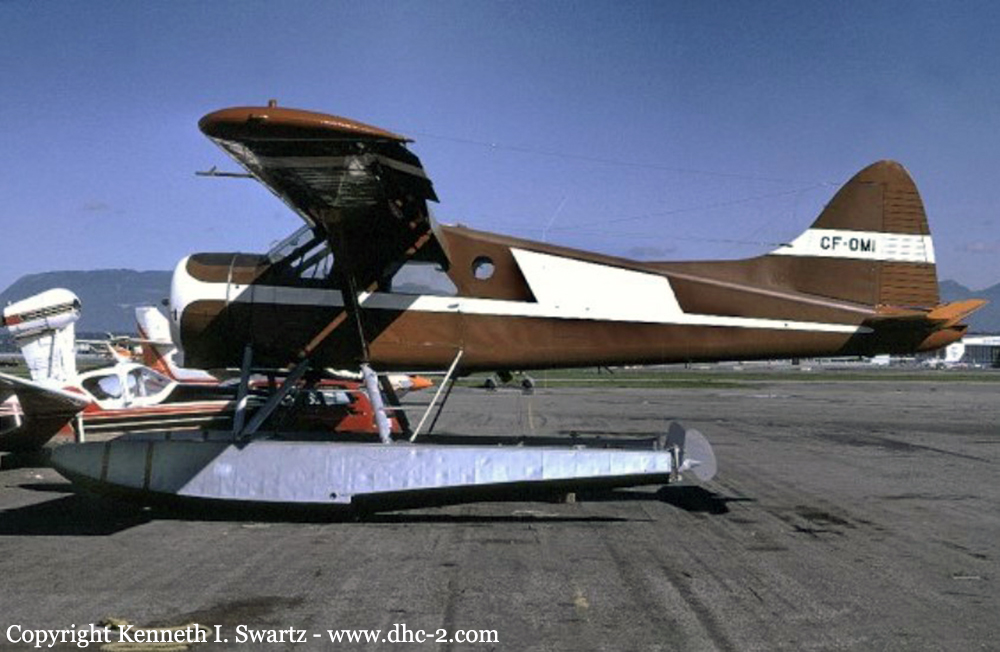
Crash of a De Havilland DHC-2 Beaver in Tow Hill: 1 killed

Date & Time: Sep 1, 1986
Type of aircraft:
Operator:
Registration:
C-FOMI
Flight Phase:
Survivors:
Yes
Schedule:
Masset - Prince Rupert
MSN:
1204
YOM:
1958
Country:
Crew on board:
1
Crew fatalities:
Pax on board:
3
Pax fatalities:
Other fatalities:
Total fatalities:
1
Circumstances:
En route from Masset to Prince Rupert, the pilot encountered low ceiling. While cruising at a very low altitude, the aircraft struck tree tops and crashed in a wooded area located about 25 km east of Masset. A passenger was killed while three other occupants were injured.
Probable cause:
The pilot was flying under VFR mode in IMC conditions. At the time of the accident, visibility was below minimums.

Crash of a Grumman G-21A Goose in Prince Rupert: 7 killed

Date & Time: Aug 30, 1979
Type of aircraft:
Operator:
Registration:
C-FUVJ
Flight Phase:
Survivors:
Yes
MSN:
B006
YOM:
1943
Country:
Crew on board:
2
Crew fatalities:
Pax on board:
8
Pax fatalities:
Other fatalities:
Total fatalities:
7
Circumstances:
The seaplane crashed in unknown circumstances in Prince Rupert. Three occupants were rescued while seven others were killed.

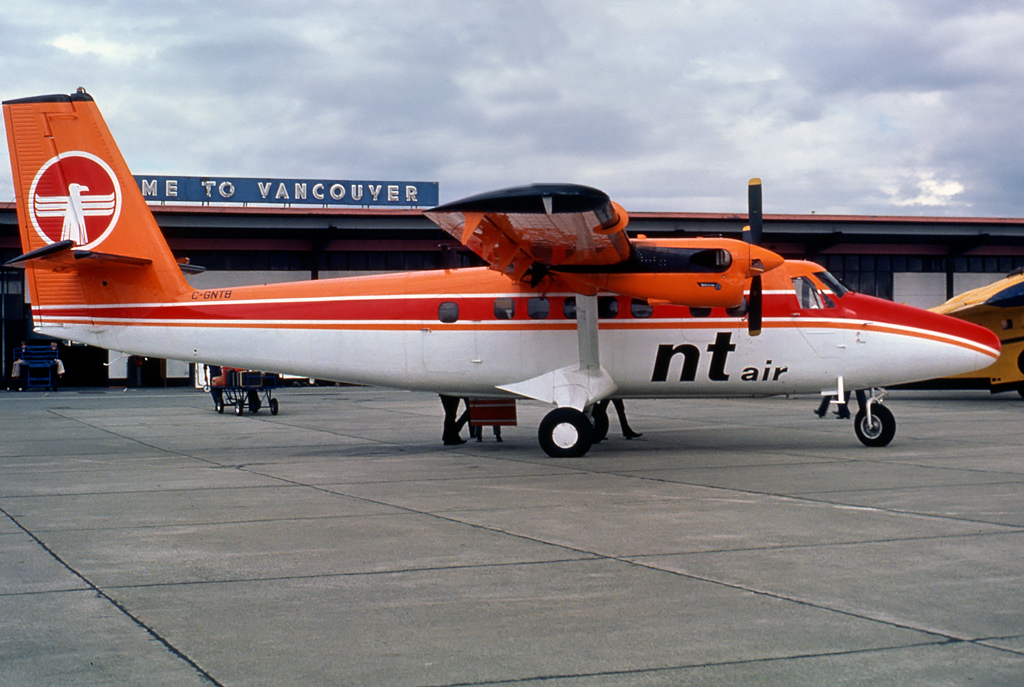
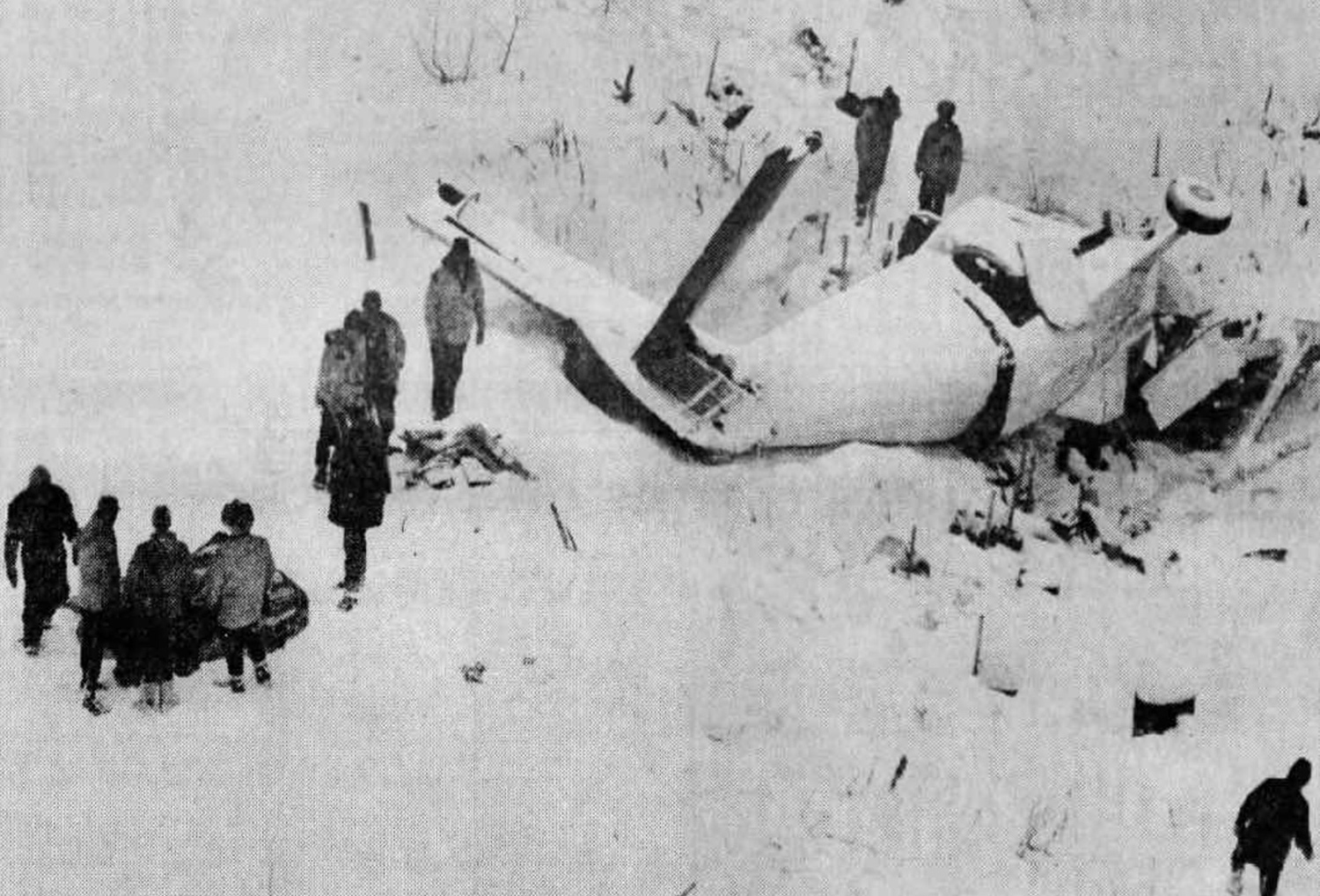
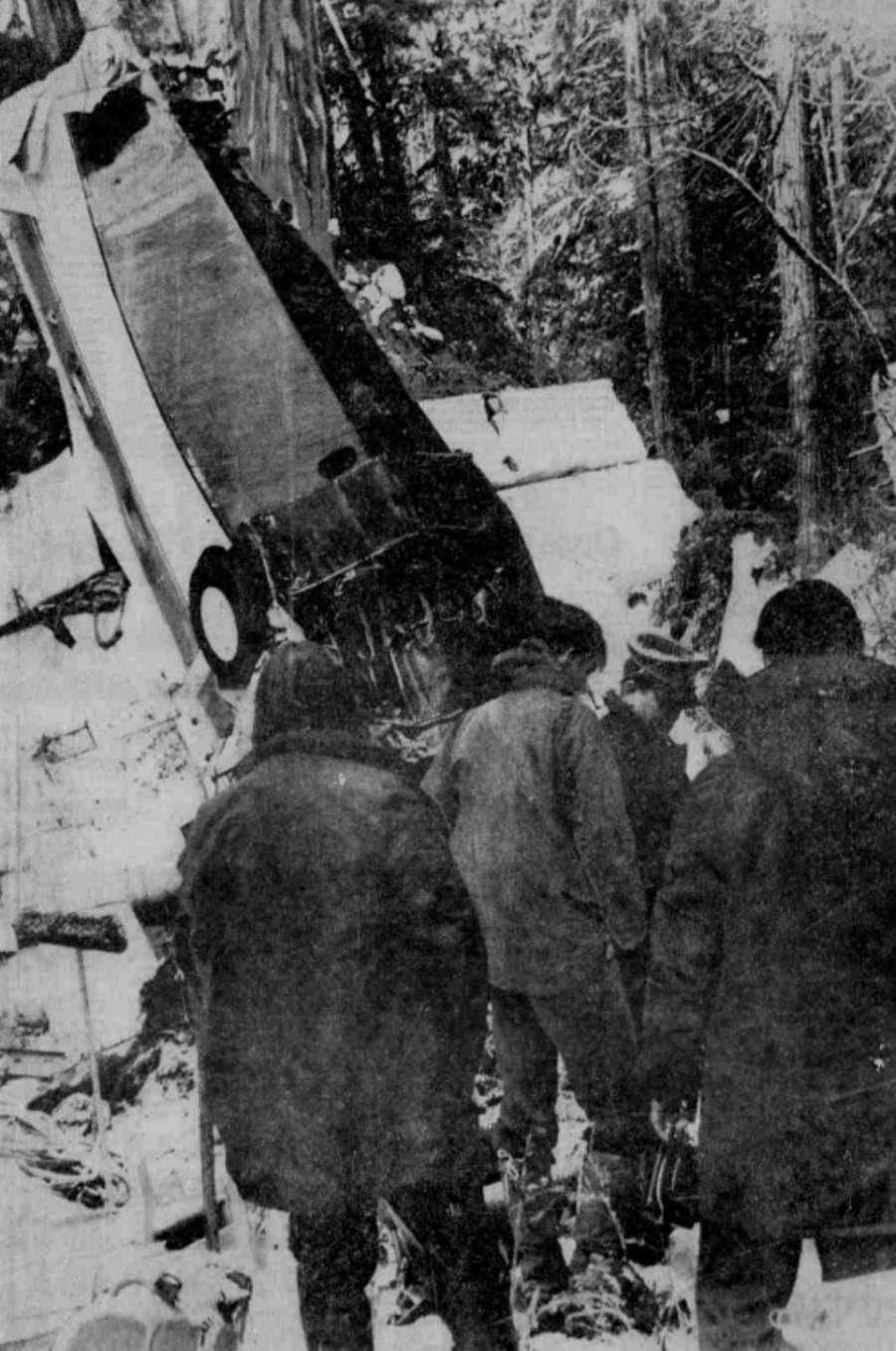
Crash of a De Havilland DHC-6 Twin Otter 300 in Terrace: 12 killed

Date & Time: Jan 14, 1977 at 1831 LT
Operator:
Registration:
C-GNTB
Survivors:
No
Schedule:
Prince Rupert – Terrace – Smithers – Prince George
MSN:
463
YOM:
1975
Flight number:
NT405
Country:
Crew on board:
3
Crew fatalities:
Pax on board:
9
Pax fatalities:
Other fatalities:
Total fatalities:
12
Captain / Total flying hours:
15000
Captain / Total hours on type:
3000.00
Copilot / Total flying hours:
760
Copilot / Total hours on type:
286
Aircraft flight hours:
1852
Circumstances:
The aircraft took off from Prince Rupert at 1654 PST enroute to Prince George with scheduled stops at Terrace and Smithers. At 0117 the pilot contacted Terrace Aeradio, said they were about 8 minutes away from the range and requested the weather. Terrace Aeradio issued the latest weather which indicated that the ceiling and visibility were below published minima for an approach and landing. At 0118 the Flight contacted Terrace Operations and advised that they would be overhead in 5 minutes and on the ramp 11 minutes later. At 0131 the Flight reported by the range inbound at which time a final wind check was given to the Flight and acknowledged. There was no further transmission from the aircraft. The Rescue co-ordination Centre was alerted at 0146 when it was evident the aircraft had no landed. A search was initiated and at 0515 the wreckage was found scattered along the eastern slope of Little Herman Mountain. The aircraft had crashed on the final approach track to the runway, 3 miles short of the threshold at latitude 54° 25' N longitude 128° 34' W. The airplane was destroyed and all 12 occupants were killed.
Probable cause:
The following findings were identified:
- The ceiling and visibility were reported to be below published minima for landing when the approach was initiated.
- The Flight crew carried out a non-standard abbreviated approach.
- The Flight crew descended below the published minimum altitude of 1,620 feet MSL.
- The Captain was at the controls throughout the approach. The approach was continued below the authorized minimum altitude for undetermined reasons.
Final Report:

Crash of a De Havilland DHC-2 Beaver near Prince Rupert: 3 killed

Date & Time: Sep 18, 1975
Type of aircraft:
Operator:
Registration:
CF-FHN
Flight Phase:
Survivors:
No
MSN:
47
YOM:
1949
Country:
Crew on board:
1
Crew fatalities:
Pax on board:
2
Pax fatalities:
Other fatalities:
Total fatalities:
3
Circumstances:
While cruising at low altitude, the single engine airplane struck tree tops, lost its left wing and crashed upside down in a wooded area located about 31 km southeast of Prince Rupert. All three occupants were killed.

Crash of a Grumman G-73 Mallard in Prince Rupert: 3 killed

Date & Time: Mar 5, 1974
Type of aircraft:
Operator:
Registration:
CF-HPA
Flight Phase:
Survivors:
Yes
Site:
Schedule:
Prince Rupert - Masset
MSN:
J-7
YOM:
1946
Country:
Crew on board:
1
Crew fatalities:
Pax on board:
9
Pax fatalities:
Other fatalities:
Total fatalities:
3
Circumstances:
About two minutes after it took off from Prince Rupert seaplane base, the pilot initiated a turn when the airplane lost height and crashed onto a mountain slope located about 3 km southeast of Prince Rupert. The wreckage was found a day later and while seven occupants were rescued, three others, among them the pilot, were killed.