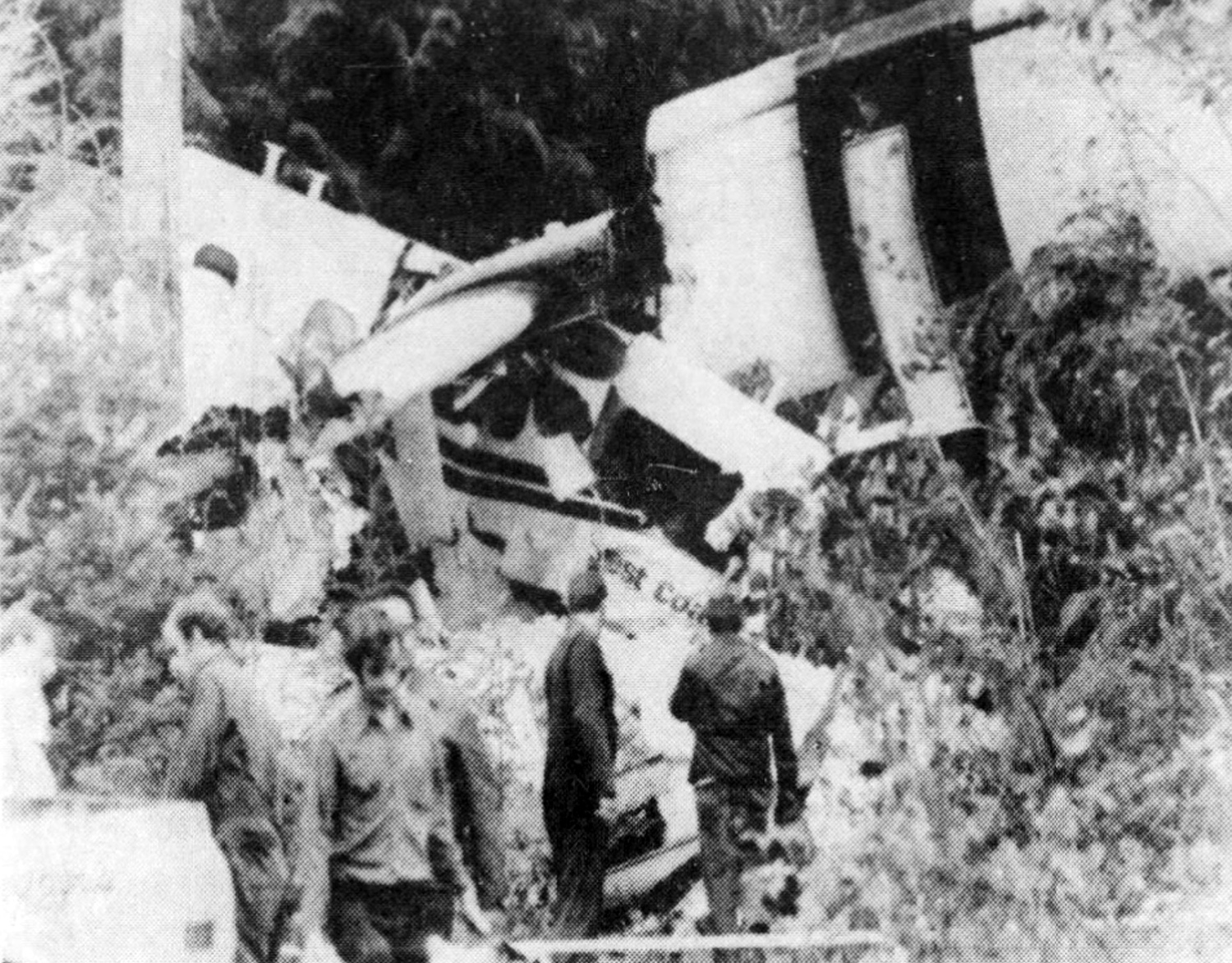
Crash of a De Havilland DHC-2 Beaver near Ocean Falls: 6 killed

Date & Time: Jul 30, 1981
Type of aircraft:
Operator:
Registration:
C-FYYU
Flight Phase:
Survivors:
No
Schedule:
Ocean Falls – Vancouver – Bella Bella – Klemtu – Ocean Falls
MSN:
1573
YOM:
1964
Country:
Crew on board:
1
Crew fatalities:
Pax on board:
5
Pax fatalities:
Other fatalities:
Total fatalities:
6
Circumstances:
The float-equipped aircraft departed Vancouver with a pilot and two passengers on board. The flight proceeded approximately 330 mi north to Bella Bella where one passenger deplaned. A further stop was made at Klemtu, 39 mi north of Bella Bella, where four passengers boarded for the final leg to Ocean Falls, 35 mi further east. The aircraft failed to arrive at Ocean Falls and search and rescue action was initiated. Eleven days later the aircraft was located in a bush area, 100 yards from shore, 6 mi short of Ocean Falls; all on board had perished in the crash. The flight had originated in Ocean Falls on the morning of the accident. Evidence indicates that the pilot had received less than 4 hrs rest the previous night. On arrival in Vancouver, after an approximate 3 hr and 15 min, direct nonstop flight from Ocean Falls, the aircraft’s fuel state was very low. During refuelling it was estimated the aircraft had only 4 gal of fuel remaining following the previous flight. After refuelling and emplaning of passengers, the aircraft departed for Bella Bella. The flight lasted 3 hrs. No additional fuel was added after departure from Vancouver, although a company agent queried the pilot about his fuel state prior to his departure from Bella Bella. The pilot indicated that he had enough fuel to complete the flight from Ocean Falls via Klemtu. The aircraft then proceeded to Klemtu, and was last heard from following departure from there. The aircraft’s total flight time from Vancouver to the accident scene was approximately 3 hrs and 30 min, 15 min longer than the original, direct flight from Ocean Falls to Vancouver.
Source: www.dhc-2.com
Probable cause:
Examination of the wreckage indicated that there was no preimpact damage of any kind. Damage to the aircraft was consistent with ground impact in a flat attitude with little forward velocity. No evidence of post-impact fire, or fuel was found at the crash site. The centre and rear fuel tank bays were undamaged but the forward bay had been punctured on impact. The fuel selector was found selected to the centre tank. Draining of the aircraft’s fuel system produced only 6 oz from the rear fuel tank sump. Damage to the prop indicated that it was not rotating on impact, however, examination of the engine showed that it would have been capable of producing power had fuel been available. From the evidence examined, it is concluded that while in normal cruise configuration, at a relatively low altitude, the aircraft’s engine stopped due to fuel exhaustion. While proceeding down slope toward a small inlet, in an apparent attempt at a forced landing, the aircraft entered a rapid descent in a flat attitude, consistent with the stall, and impacted the ground heavily. Most probably, this apparent stall occurred as a result of an attempt to stretch the glide.

Crash of a De Havilland DHC-2 Beaver in British Columbia

Date & Time: Apr 14, 1981 at 1200 LT
Type of aircraft:
Operator:
Registration:
C-FAWA
Flight Phase:
Flight Type:
Survivors:
Yes
MSN:
1430
YOM:
1960
Country:
Crew on board:
1
Crew fatalities:
Pax on board:
0
Pax fatalities:
Other fatalities:
Total fatalities:
0
Circumstances:
After takeoff from Fraser River, while in initial climb, the engine failed due to fuel starvation. The pilot turned steeply to avoid a bridge when the airplane struck a pylon, stalled and crashed. The pilot was injured.
Probable cause:
It was determined that the fuel selector was connected to the rear tank that was empty at the time of the accident.

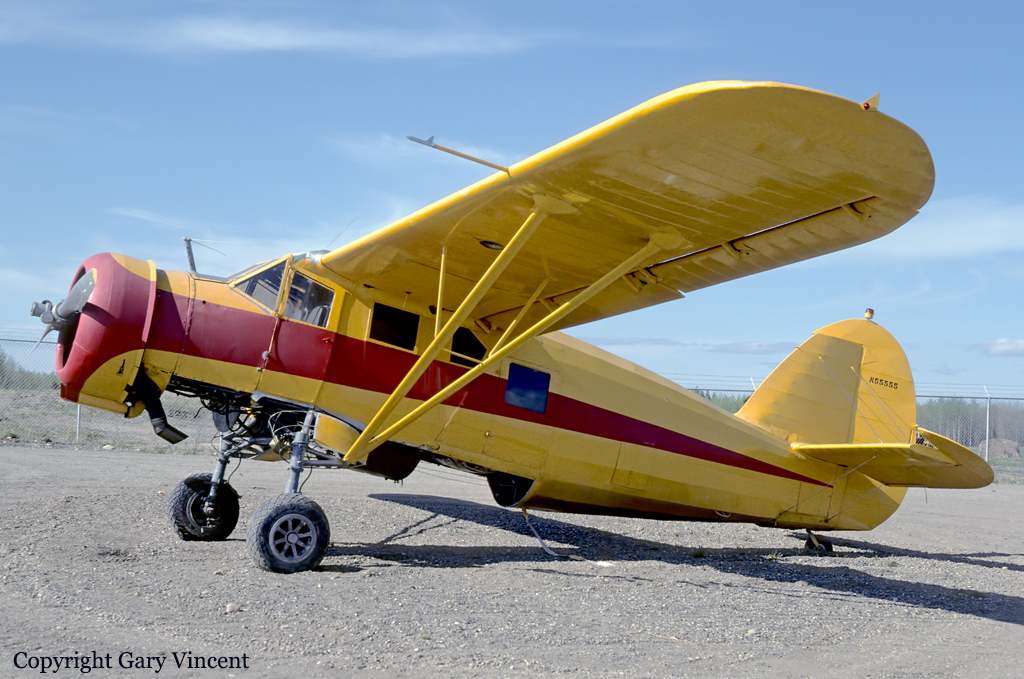
Crash of a Noorduyn UC-64A Norseman in Prince George

Date & Time: Apr 3, 1981
Type of aircraft:
Operator:
Registration:
N55555
Flight Phase:
Flight Type:
Survivors:
Yes
MSN:
228
YOM:
1943
Country:
Crew on board:
0
Crew fatalities:
Pax on board:
0
Pax fatalities:
Other fatalities:
Total fatalities:
0
Circumstances:
Crashed in unknown circumstances while taking off from Prince George, BC. There were no casualties.

Crash of a De Havilland DHC-3 Otter in Leo Creek: 3 killed

Date & Time: Nov 26, 1979
Type of aircraft:
Registration:
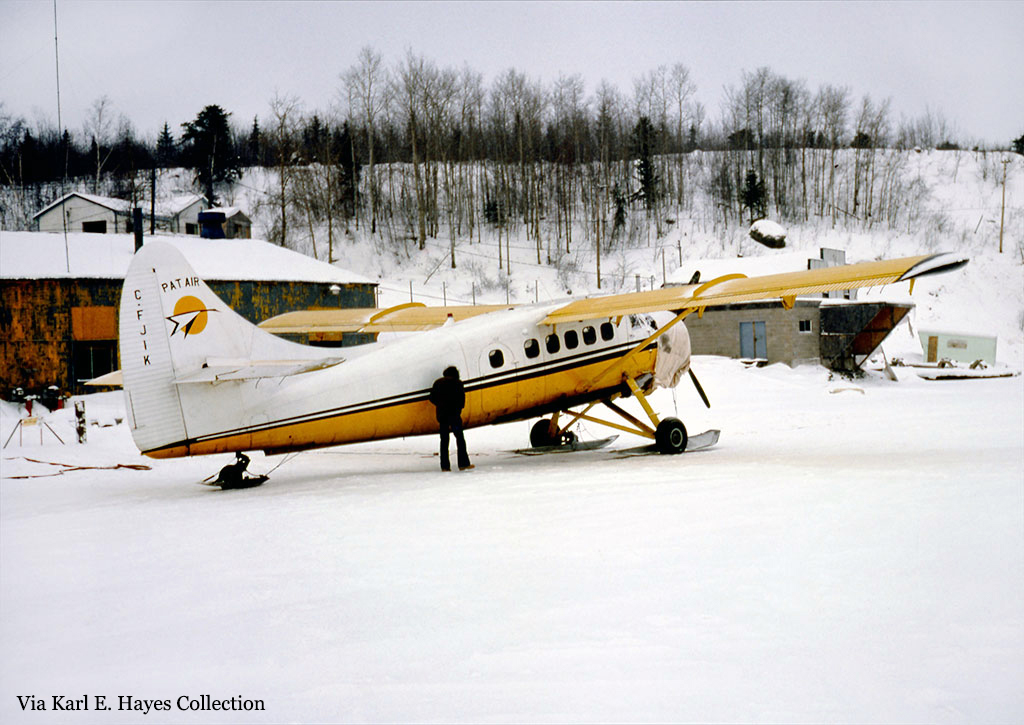
C-FJIK
Flight Phase:
Survivors:
Yes
Schedule:
Leo Creek - Smithers
MSN:
229
YOM:
1957
Country:
Crew on board:
1
Crew fatalities:
Pax on board:
3
Pax fatalities:
Other fatalities:
Total fatalities:
3
Circumstances:
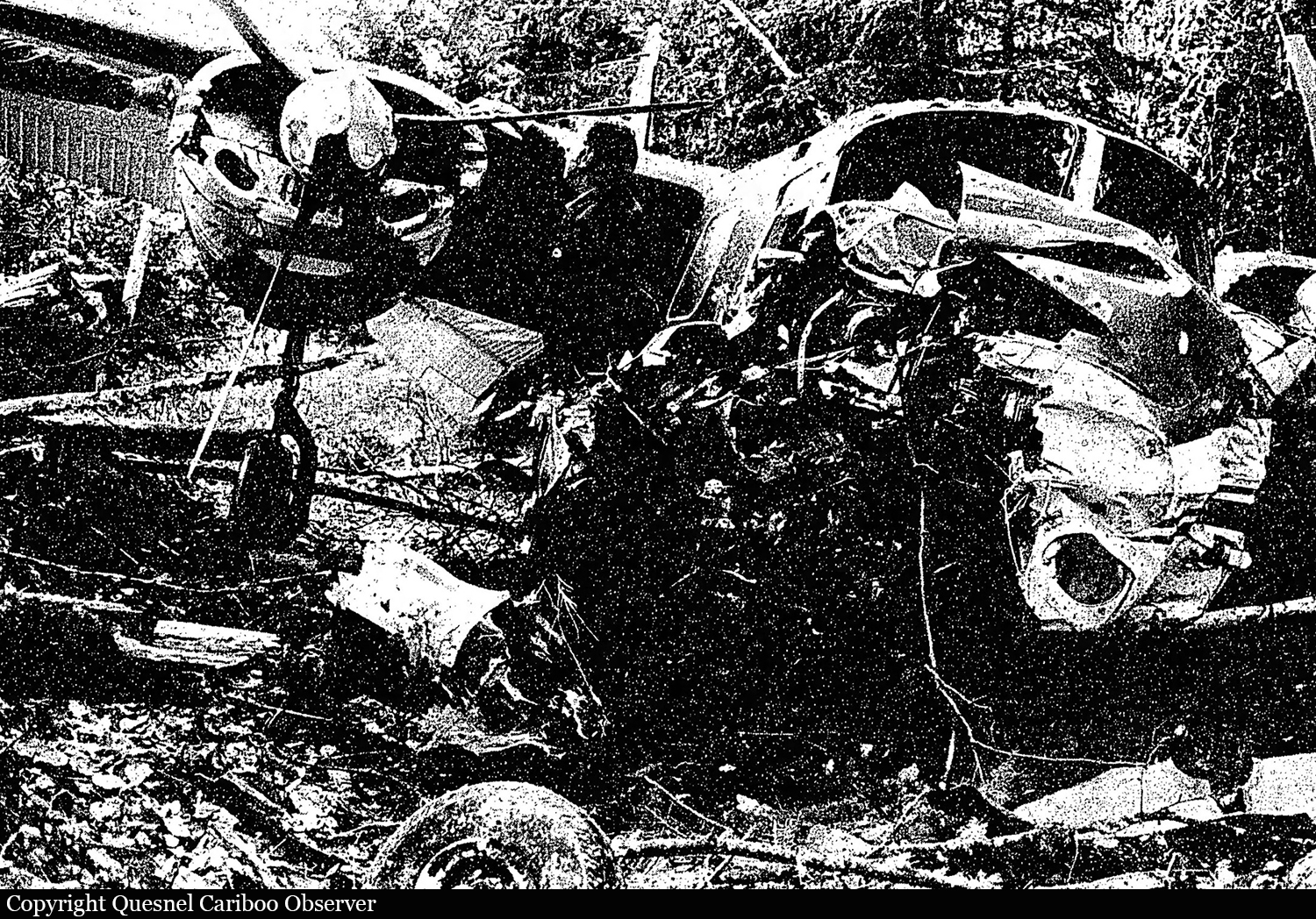
The Otter had been chartered to carry three passengers and a stove to a remote hunting and fishing lodge. On the return flight to Smithers, the environment conscious passengers elected to take their empty beer bottles with them, all 250 to 300 cases. One passenger was in the cockpit, the other two occupied the first row of seats and the rest of the aircraft was filled with empty beer bottles. Immediately after liftoff, the aircraft pitched to a steep nose-high attitude which the pilot was unable to prevent or correct. It then stalled and fell to the ground. A severe fuel-fed fire erupted on impact and gutted the aircraft. The pilot was thrown clear but the three passengers died in the fire. The pilot of the Otter was Emil Mesich, who was the owner of Smithers Air Service. The crash caused the company to cease trading and go into receivership. Pilot Mesich was then employed by Central Mountain Air Services Ltd., also based at Smithers. He was the pilot of Otter C-FDJA (459) of Central Mountain Air Services when it crashed near Smithers on 18th September 1982 and was sadly killed in that crash.
Source: Karl E. Hayes
Probable cause:
It was determined that there were no less than 4,773 bottles on board. A weight and balance calculation on this discovery indicated that the gross weight of the Otter was 637 pounds over the maximum, with the CofG 11,5 inches aft of the rear limit. Calculations made by DHC showed that an Otter will run out of elevator control with the CofG four inches aft of the rear limit. The pilot had estimated that a dozen bottles weighed 3 to 4 pounds when the true weight was 7 pounds.

Crash of a Rockwell Grand Commander 680E in Quesnel

Date & Time: Oct 16, 1979
Registration:
C-GFAC
Flight Phase:
Flight Type:
Survivors:
Yes
MSN:
680-0837-68
YOM:
1959
Country:
Crew on board:
1
Crew fatalities:
Pax on board:
0
Pax fatalities:
Other fatalities:
Total fatalities:
0
Circumstances:
The pilot encountered technical problems and decided to attempt an emergency landing in Quesnel. The aircraft was damaged beyond repair while the pilot, sole on board, was uninjured.

Crash of a De Havilland DHC-6 Twin Otter 200 in Sechelt: 2 killed

Date & Time: Sep 30, 1979 at 1300 LT
Registration:
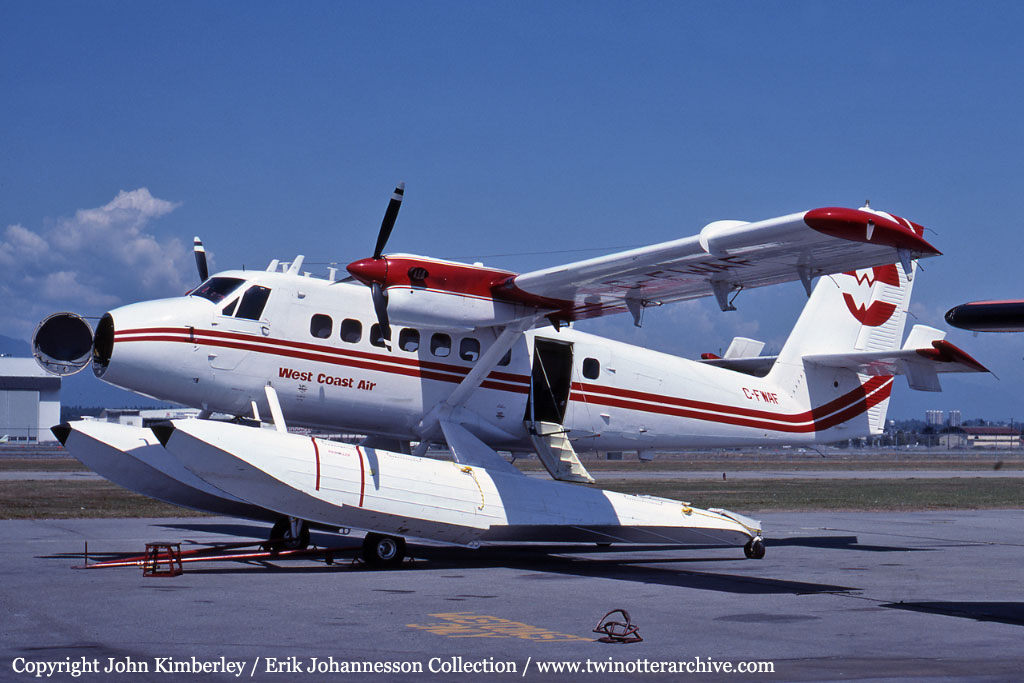
C-FWAF
Survivors:
Yes
Schedule:
Vancouver – Sechelt – Powell River
MSN:
122
YOM:
1968
Flight number:
106
Country:
Crew on board:
2
Crew fatalities:
Pax on board:
14
Pax fatalities:
Other fatalities:
Total fatalities:
2
Captain / Total flying hours:
10000
Captain / Total hours on type:
210.00
Copilot / Total flying hours:
700
Copilot / Total hours on type:
325
Aircraft flight hours:
13815
Circumstances:
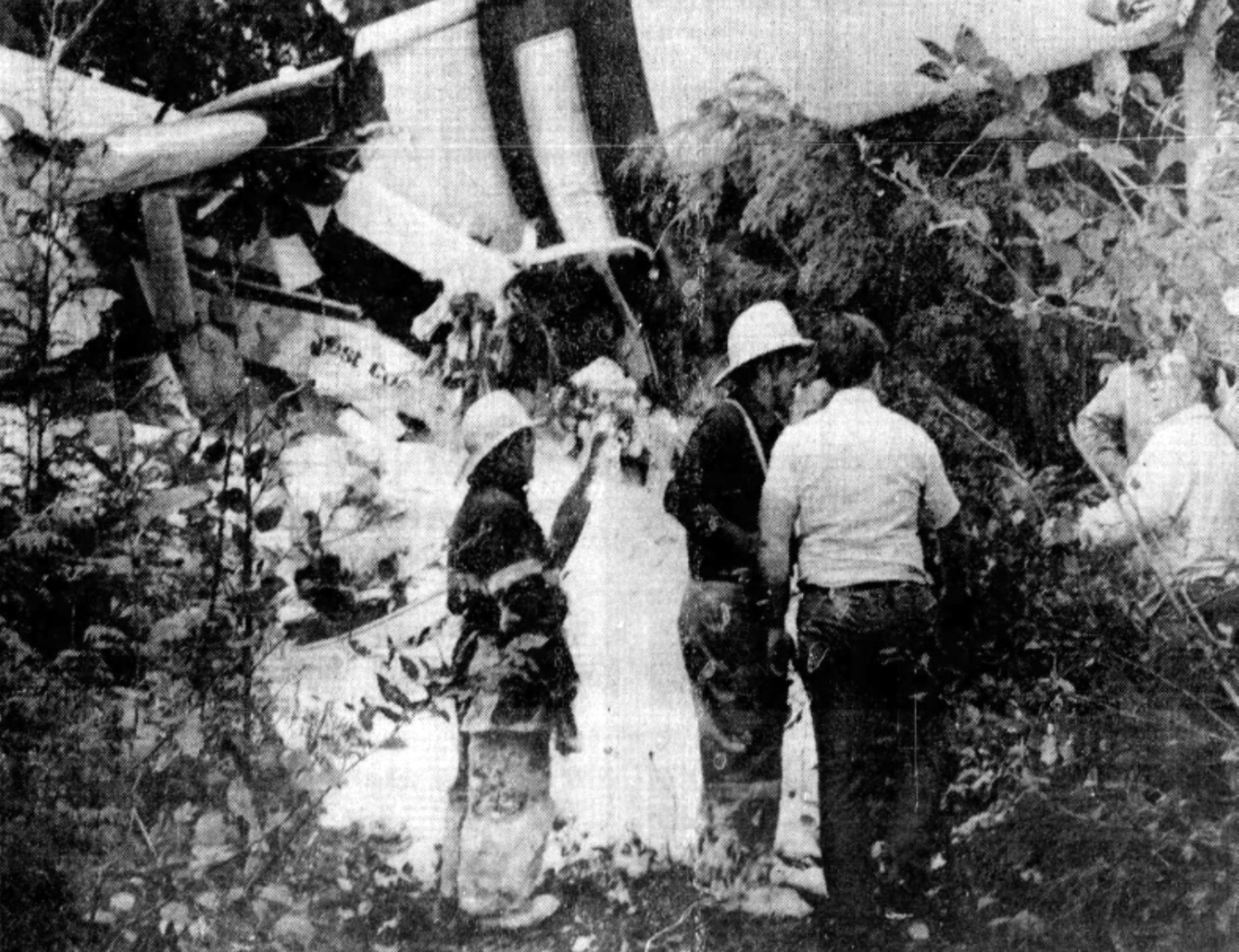
Flight 106 was a scheduled service from Vancouver to Powell River with an intermediate stop at Sechelt. The flight to Sechelt was uneventful. While approaching Porpoise Bay at Sechelt, at an altitude of 200 feet, the twin engine airplane rolled to the right in an angle of 90° then nosed down and crashed on the east shore of the bay, about 50 meters from the water. The captain and a passenger were killed while 14 other occupants were injured, four of them seriously.
Probable cause:
The following findings were identified:
- Under normal flight loads, the right hand aileron control rod of the aircraft (bellcrank to aileron push-pull rod) separated from the bellcrank end fitting due to an extensive stress corrosion crack.
- The failure of the right hand aileron control rod allowed the right aileron to float to an UP position, causing an asymmetric lift condition and consequent loss of control.
- At an altitude of about 200 feet on final approach the aircraft began a roll to the right which under the circumstances was uncontrollable, it descended and struck the ground with the right wing down 45°+5°.
- The specific visual inspection of aileron control rods was inadequate to detect stress corrosion cracking.
- Previous stress corrosion failures of flap control rods on aircraft of this type had led to corrective airworthiness action by the Department of Transport and the manufacturer. These measures however had not been applied to the aileron rods which are of similar construction.
Final Report:

Crash of a Britten-Norman BN-2A-7 Islander in Blinkhorn Point: 4 killed

Date & Time: Sep 18, 1979
Type of aircraft:
Operator:
Registration:
C-FZVV
Flight Phase:
Survivors:
Yes
Site:
Schedule:
Comox - Port Hardy
MSN:
238
YOM:
1971
Country:
Crew on board:
1
Crew fatalities:
Pax on board:
8
Pax fatalities:
Other fatalities:
Total fatalities:
4
Circumstances:
En route from Comox to Port Hardy, the pilot encountered poor weather conditions with limited visibility due to thick fog. The twin engine airplane struck tree tops and crashed on hilly terrain located in Blinkhorn Point, Victoria Island. Four passengers were killed while five other occupants were injured.
Probable cause:
Controlled flight into terrain.

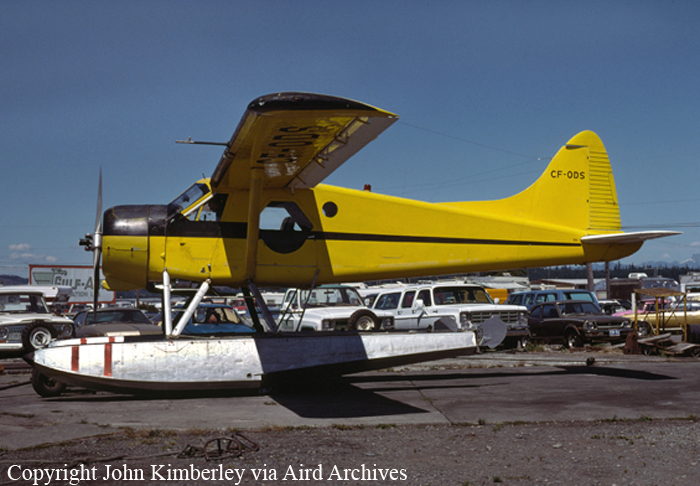
Crash of a De Havilland DHC-2 Beaver in Shoal Harbour: 6 killed

Date & Time: Sep 6, 1979
Type of aircraft:
Registration:
C-FODS
Flight Phase:
Survivors:
No
Schedule:
Shoal Harbour - Campbell River
MSN:
984
YOM:
1956
Country:
Crew on board:
1
Crew fatalities:
Pax on board:
5
Pax fatalities:
Other fatalities:
Total fatalities:
6
Circumstances:
The aircraft, with pilot and five passengers on board was being flown from Shoal Harbour to Campbell River. The flight was the scheduled service operated daily from Campbell River with several stops along the coast and returning to Campbell River. On arrival at Shoal Harbour dock area, the aircraft was docked and one passenger got on board. The aircraft taxied out for departure. The take-off was from the harbour in a south easterly direction. Shortly after the lift-off from the water, and at a height of 100 feet, the aircraft made a 180° turn to the left and dived into the ground at an angle of 30°. The crash site was just inside the tree line and approximately 50 feet from the water’s edge. The plane exploded on impact and burned. One passenger walked out from the wreckage seconds after the crash but died in hospital at Vancouver the same day. There were therefore no survivors.
Probable cause:
The exact cause of the accident could not be determined. As far as could be determined the aircraft was serviceable prior to impact.

Crash of a Grumman G-21A Goose in Prince Rupert: 7 killed

Date & Time: Aug 30, 1979
Type of aircraft:
Operator:
Registration:
C-FUVJ
Flight Phase:
Survivors:
Yes
MSN:
B006
YOM:
1943
Country:
Crew on board:
2
Crew fatalities:
Pax on board:
8
Pax fatalities:
Other fatalities:
Total fatalities:
7
Circumstances:
The seaplane crashed in unknown circumstances in Prince Rupert. Three occupants were rescued while seven others were killed.

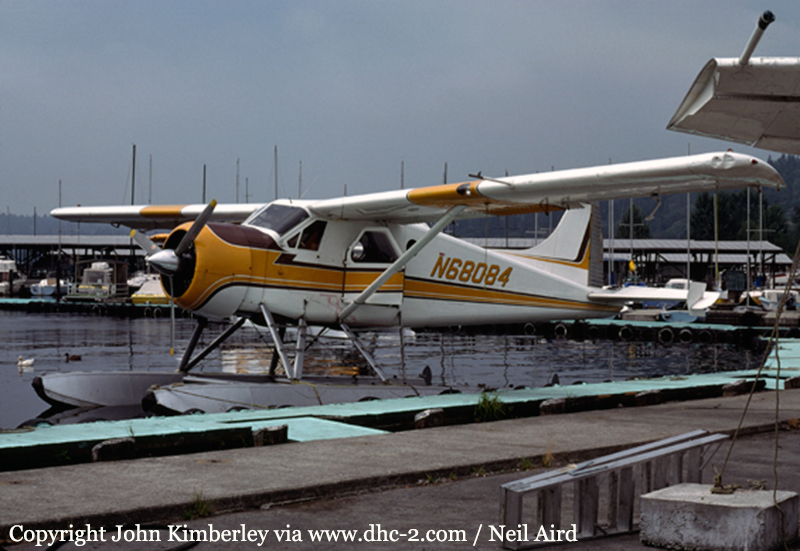
Crash of a De Havilland DHC-2 Beaver off Maurelle Island: 1 killed

Date & Time: Jun 11, 1979
Type of aircraft:
Operator:
Registration:
N68084
Flight Phase:
Survivors:
No
Schedule:
Stuart Island - Quadra Island
MSN:
912
YOM:
1956
Country:
Crew on board:
1
Crew fatalities:
Pax on board:
0
Pax fatalities:
Other fatalities:
Total fatalities:
1
Circumstances:
The pilot, sole on board, departed Stuart Island on a short flight to Quadra Island, located 39 km away. About five minutes after takeoff, the pilot lost control of the airplane that nosed down and crashed few hundred meters off Maurelle Island. The aircraft was destroyed and the pilot was killed.
Probable cause:
The exact cause of the accident could not be determined.