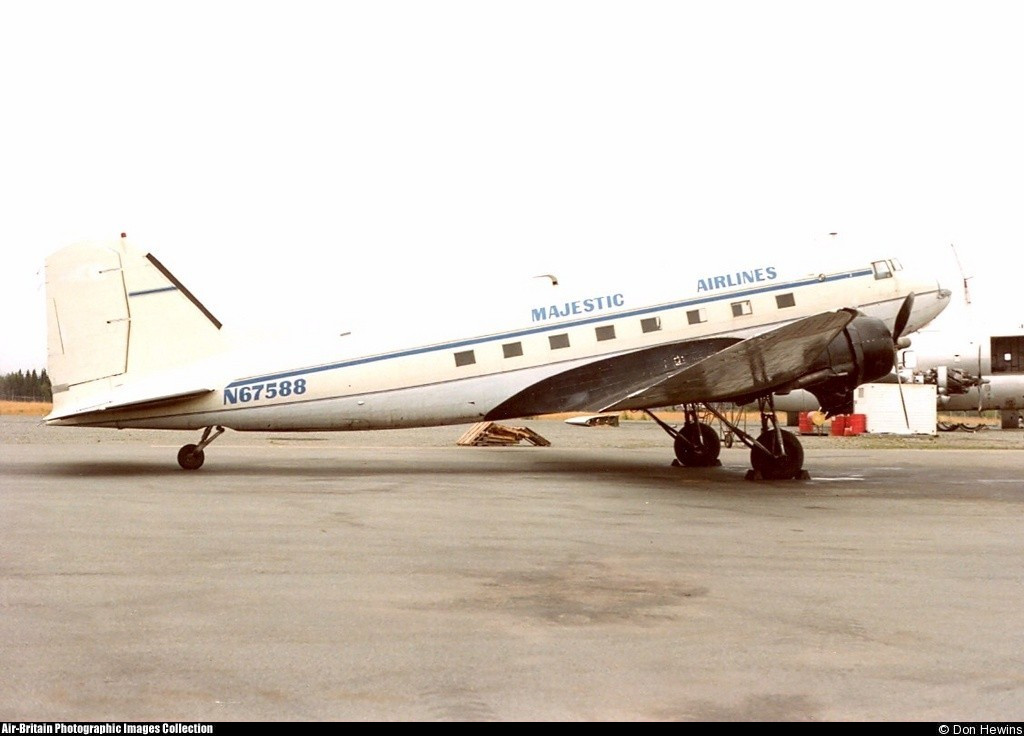
Crash of a Douglas C-47A-90-DL in Point McKenzie

Date & Time: May 24, 1998 at 0024 LT
Registration:
N67588
Flight Type:
Survivors:
Yes
Schedule:
Unalakleet - Anchorage
MSN:
20536
YOM:
1944
Crew on board:
2
Crew fatalities:
Pax on board:
1
Pax fatalities:
Other fatalities:
Total fatalities:
0
Captain / Total flying hours:
14000
Captain / Total hours on type:
7000.00
Aircraft flight hours:
34232
Circumstances:
The captain/operator, the first officer and one passenger, departed on a cross-country positioning flight. The airplane contained about 300 gallons of fuel. After 3.9 hours en route, the flight was cleared for a visual approach to the destination airport. During the approach, both engines lost power about 2,000 feet mean sea level. The pilot stated the right fuel tank was empty. He estimated that 50 to 60 gallons of fuel remained in the left fuel tank. While the airplane was descending toward an area of open water, he attempted to restart the engines without success. He then lowered the landing gear, and made a right turn toward a small airstrip, located about 5 miles northwest of the destination airport. The airplane touched down in an area of soft, marsh covered, terrain. During the landing roll, the airplane nosed down and received damage to the forward, lower portion of the fuselage. An inspection of the airplane by an FAA inspector revealed the left fuel tank contained about 1 inch of fuel. The right fuel selector was positioned on the right auxiliary fuel tank. The left fuel selector was positioned between the left main, and the left auxiliary fuel tanks.
Probable cause:
The pilot's inadequate in-flight planning/decision which resulted in fuel exhaustion and subsequent loss of engine power. A related factor was the soft, marshy terrain at the forced landing area.
Final Report:
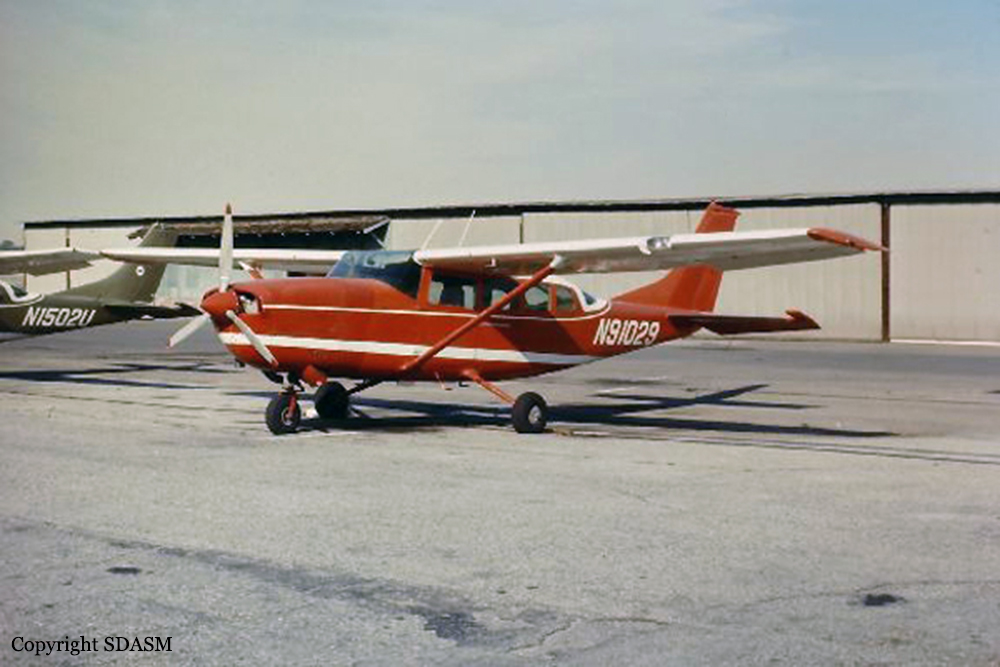
Crash of a Cessna T207 Skywagon in Homer: 1 killed

Date & Time: Feb 6, 1998 at 1245 LT
Operator:
Registration:
N91029
Flight Phase:
Flight Type:
Survivors:
No
Schedule:
Homer - English Bay
MSN:
207-0020
YOM:
1969
Location:
Crew on board:
1
Crew fatalities:
Pax on board:
0
Pax fatalities:
Other fatalities:
Total fatalities:
1
Captain / Total flying hours:
1358
Captain / Total hours on type:
48.00
Aircraft flight hours:
11192
Circumstances:
The certificated commercial pilot was departing on a 14 CFR 135 cargo flight. The airplane lifted off and climbed to about 200 feet. Instead of turning right toward the intended destination, the airplane began a left turn toward the runway. The angle of bank increased to about 45 degrees. The airplane then nosed down, and descended into snow covered terrain, about 200 yards north of the runway. Examination of the engine revealed the number six cylinder head was fractured, and slightly separated from the cylinder barrel. The area around the point of separation was blackened and oily. Similar discoloration was noted on the inside of the engine cowl. A metallurgical examination of the cylinder head revealed a fatigue fracture along a large segment of the thread root radius between the 5th and 6th threads. The engine's cylinder compression is part of the operator's approved airworthiness inspection program. The number six cylinder compression, recorded 121 hours before the accident, was noted as 60 PSI. The last engine inspection, 27 hours before the accident, did not include a record of the engine compression.
Probable cause:
A fatigue failure, and partial separation of the number 6 engine cylinder head assembly, the operator's inadequate progressive inspection performed by company maintenance personnel, and the pilot's inadvertent stall during a maneuvering turn toward an emergency landing area.
Final Report:
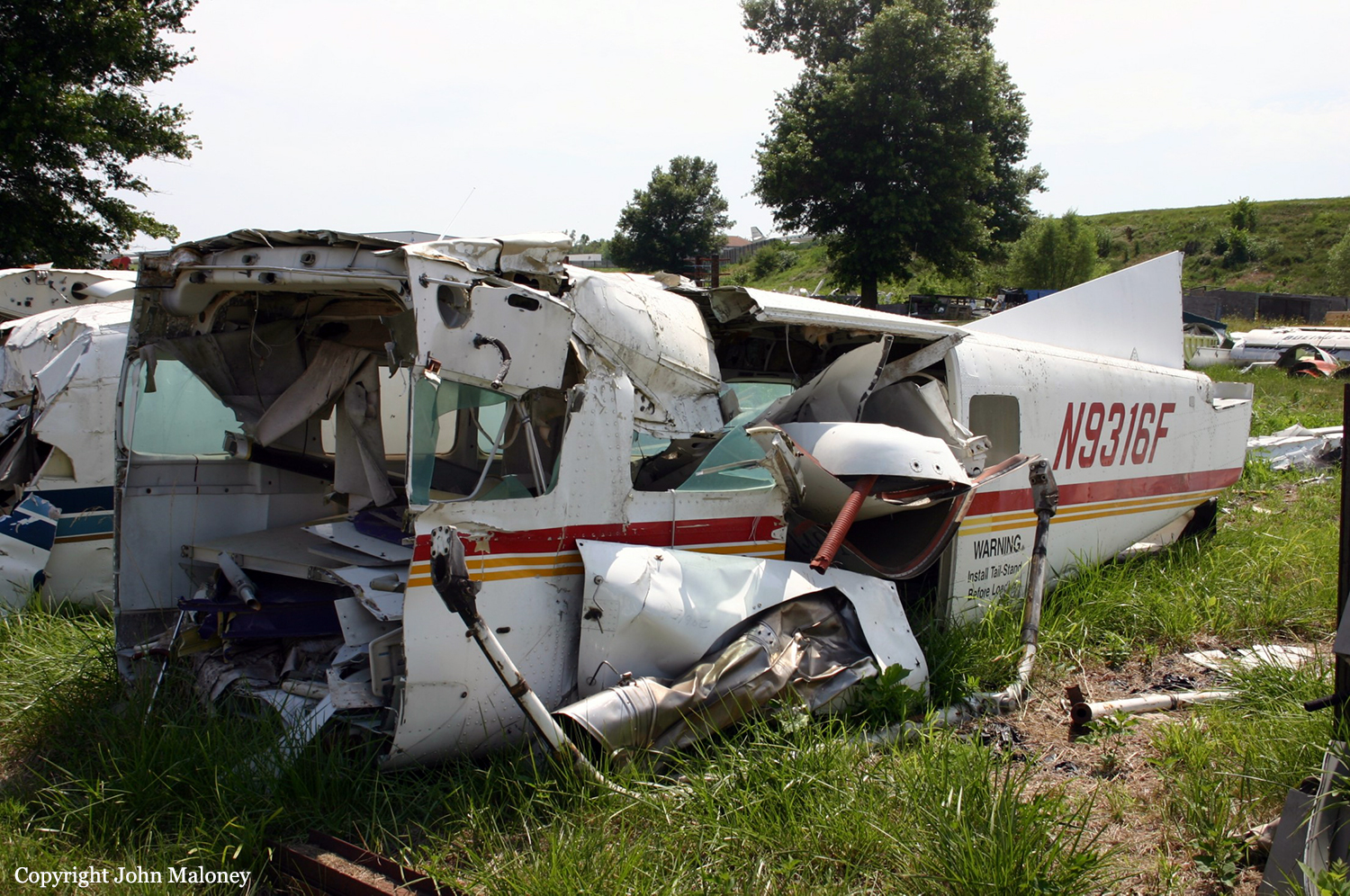
Crash of a Cessna 208 Caravan I in Port Heiden

Date & Time: Jan 30, 1998 at 1700 LT
Type of aircraft:
Operator:
Registration:
N9316F
Flight Type:
Survivors:
Yes
Schedule:
Port Heiden - Chignik
MSN:
208-0011
YOM:
1985
Crew on board:
1
Crew fatalities:
Pax on board:
0
Pax fatalities:
Other fatalities:
Total fatalities:
0
Captain / Total flying hours:
15000
Captain / Total hours on type:
4500.00
Aircraft flight hours:
13478
Circumstances:
The pilot departed in visual meteorological conditions of three to four miles visibility with high ceilings. He stated the airplane encountered freezing rain about five miles south of the airport while in cruise flight at 1,200 feet msl, and rapidly accumulated ice on the airframe, wings, and windshield. The pilot said he initially changed altitude in an attempt to exit the icing conditions. Ice accumulation continued, so he elected to return. While maneuvering to land at the airport, the airplane was unable to maintain altitude at full engine power. He said that any angle of bank resulted in the onset of pre stall buffet, so he decided to land on a frozen lake south of the airport. He said that the airplane did not reach the lake, 'mushed into the ground,' and during the flare/touchdown, the left wing stalled. The pilot did not have access to the official weather prior to departure. The National Weather Service contracted observer, made his observation from a location about five miles south of the official weather station at the airport. The FAA AWOS-3 was inoperative. Examination of the airplane after the accident revealed a 1/2 inch layer of clear ice covering all the upper and lower airfoil surfaces of the airplane, from leading edges to between 1/3 and 1/2 of the chords. All antennas were coated with approximately 1/2 inch of clear ice. The airplane was not equipped with ice protection equipment except for pitot heat and windshield heat.
Probable cause:
The pilot's inadequate in-flight decision resulting in airframe ice accumulation to the extent that degraded aircraft performance and insufficient airspeed occurred followed by a stall. Contributing factors were freezing rain and icing conditions.
Final Report:

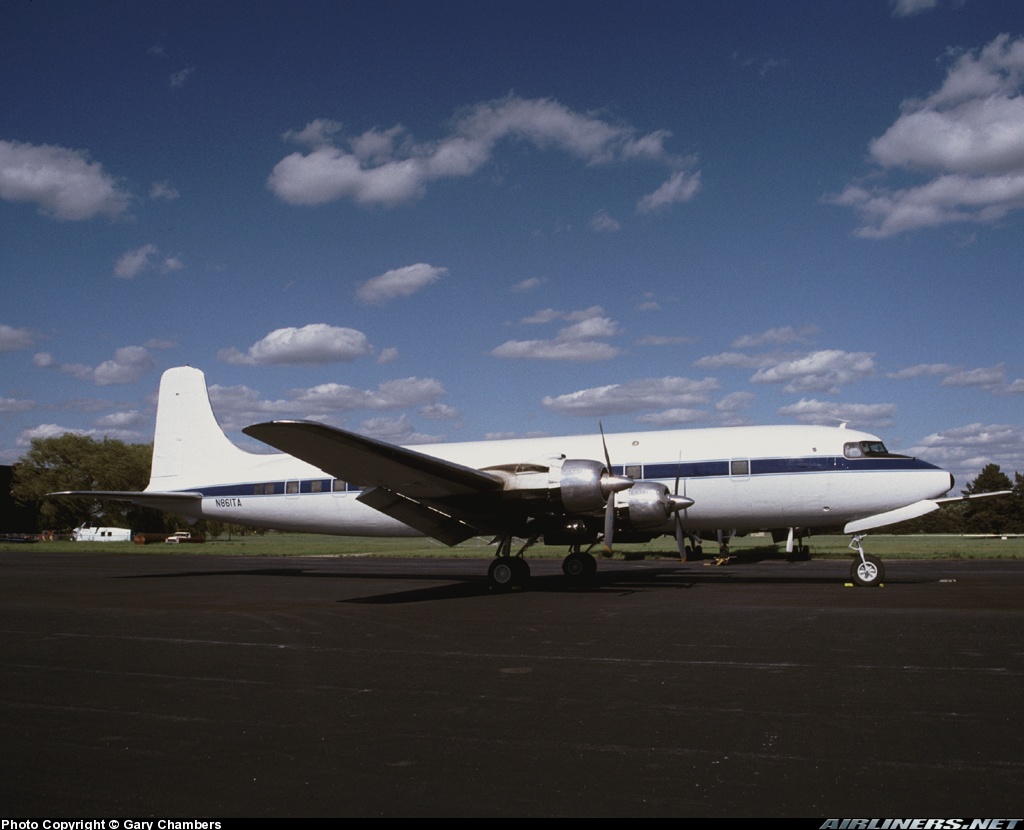
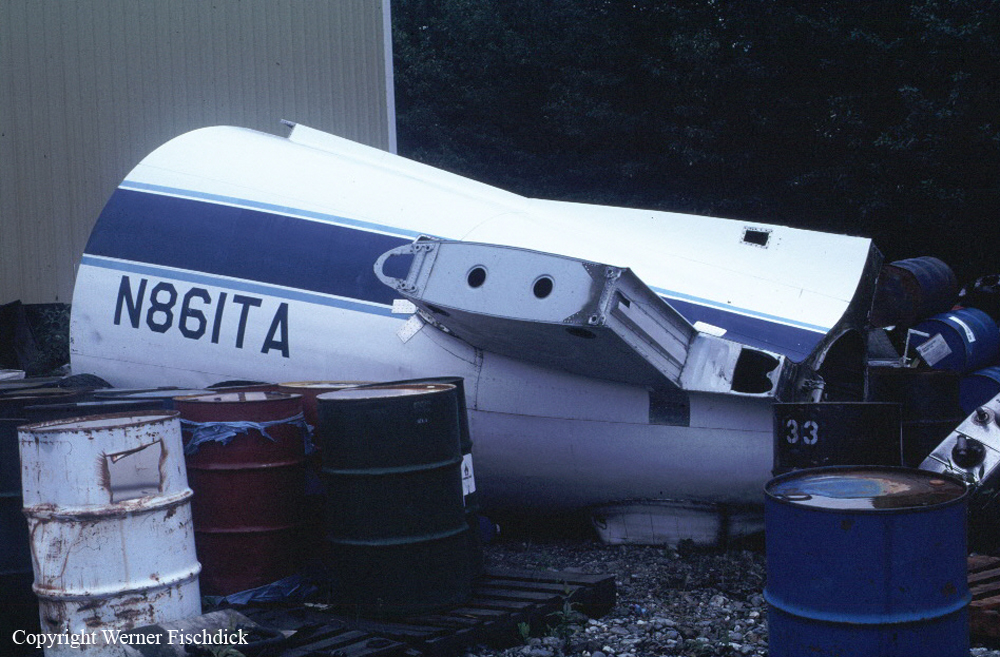
Crash of a Douglas DC-6B in Nixon Fork Mine

Date & Time: Jan 2, 1998 at 1526 LT
Type of aircraft:
Operator:
Registration:
N861TA
Flight Phase:
Flight Type:
Survivors:
Yes
Schedule:
Nixon Fork Mine - Palmer
MSN:
43522
YOM:
1952
Crew on board:
3
Crew fatalities:
Pax on board:
0
Pax fatalities:
Other fatalities:
Total fatalities:
0
Captain / Total flying hours:
27000
Captain / Total hours on type:
16000.00
Aircraft flight hours:
46626
Circumstances:
During the takeoff roll, while passing 45 knots indicated airspeed, ice formed between the inner and outer panes of the airplane's windshield, obscuring the crew's vision. The flight crew aborted the takeoff, the airplane drifted off the left side of the snow covered runway, and caught fire. The crew reported the airplane and windshield were cold soaked and the temperature was -10 degrees Fahrenheit. The windshield anti-ice system blows air from a combustion heater between the windshield glass panes. The air source for the heater, once the airplane has forward airspeed, is two leading edge wing scoops. The crew told the NTSB investigator that the taxi time was too short for the windshield to warm up, and that during the taxi, snow was circulated around the airplane and into the wing scoops.
Probable cause:
The ingestion of snow into the windshield anti-ice system, and the resulting obscured windshield which made runway alignment not possible. Factors associated with this accident were the cold windshield, the reduced performance of the windshield anti-ice because of the short taxi by the crew, and the insufficient information on the system provided by the manufacturer.
Final Report:

Crash of a Cessna 208B Grand Caravan off Barrow: 8 killed

Date & Time: Nov 8, 1997 at 0808 LT
Type of aircraft:
Operator:
Registration:
N750GC
Flight Phase:
Survivors:
No
Schedule:
Barrow - Wainwright
MSN:
208B-0504
YOM:
1996
Flight number:
HAG500
Location:
Crew on board:
1
Crew fatalities:
Pax on board:
7
Pax fatalities:
Other fatalities:
Total fatalities:
8
Captain / Total flying hours:
3500
Captain / Total hours on type:
200.00
Aircraft flight hours:
1466
Circumstances:
The pilot, who was also the station manager, arrived at the airport earlier than other company employees to prepare for a scheduled commuter flight, transporting seven passengers and cargo to another village during hours of arctic, predawn darkness. Heavy frost was described on vehicles and airplanes the morning of the accident, and the lineman who serviced the airplane described a thin glaze of ice on the upper surface of the left wing. The pilot was not observed deicing the airplane prior to flight, and was described by the other employees as in a hurry to depart on time. The pilot directed the lineman to place fuel in the left wing only, which resulted in a fuel imbalance between 450 and 991 pounds (left wing heavy). The first turn after takeoff was into the heavy left wing. The airplane was observed climbing past the end of the runway, and descending vertically into the water. No preimpact mechanical anomalies were found with the airplane or powerplant. The aileron trim indicator was found in the full right wing down position. Postaccident flight tests with left wing heavy lateral fuel imbalances, disclosed that approximately one-half of right wing down aileron control deflection was used to maintain level flight, thus leaving only one-half right wing down aileron control efficacy. Research has shown that frost on airfoils can result in reduced stall angles of attack (often below that required to activate stall warning devices), increases in stall speeds between 20% and 40%, asymmetric stalls resulting in large rolling moments, and differing stall angles of attack for wings with upward and downward deflected ailerons (as when recovering from turns).
Probable cause:
The pilot's disregard for lateral fuel loading limits, his improper removal of frost prior to takeoff, and the resulting inadvertent stall/spin. Factors involved in this accident were the improper asymmetrical fuel loading which reduced lateral aircraft control, the self-induced pressure to takeoff on time by the pilot, and inadequate surveillance of the company operations by company management.
Final Report:

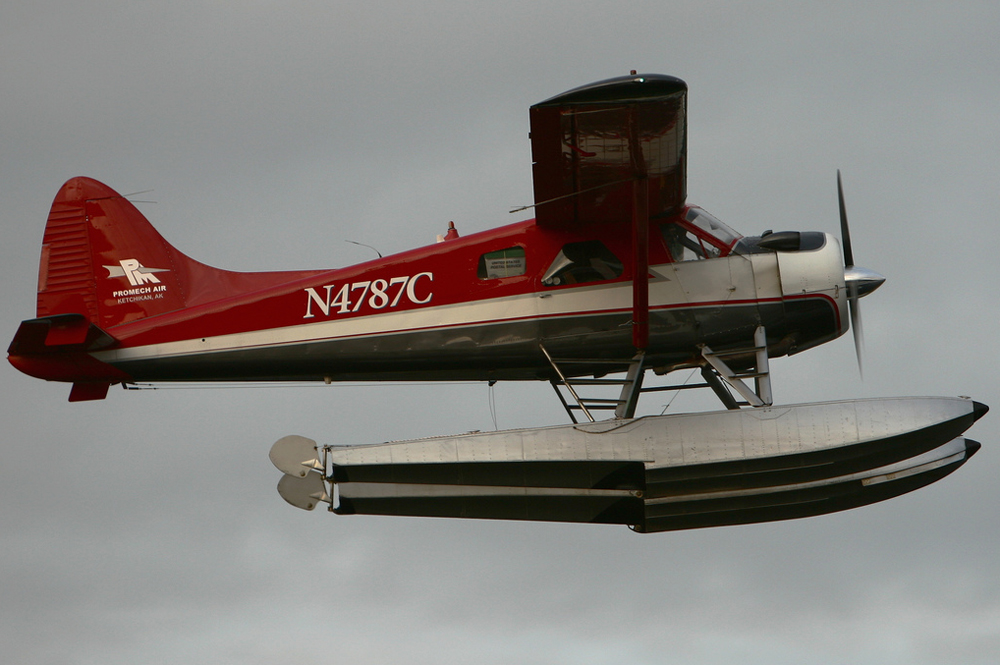
Crash of a De Havilland DHC-2 Beaver off Ketchikan: 1 killed

Date & Time: Sep 29, 1997 at 1747 LT
Type of aircraft:
Operator:
Registration:
N4787C
Flight Phase:
Flight Type:
Survivors:
No
Schedule:
Ketchikan - Ketchikan
MSN:
1330
YOM:
1959
Crew on board:
1
Crew fatalities:
Pax on board:
0
Pax fatalities:
Other fatalities:
Total fatalities:
1
Captain / Total flying hours:
2071
Captain / Total hours on type:
1200.00
Aircraft flight hours:
24267
Circumstances:
The float equipped airplane was observed taking off in light winds and calm water, and obtaining a steep climb and nose high attitude. Witnesses described hearing no reduction of engine noise from takeoff power to climb power. The airplane entered a steep left bank about 200 feet above the water, then rolled rapidly to the right and impacted at a steep angle into the water. The airplane had been modified with a Short Take Off and Landing (STOL) kit. Certification flight tests had determined that this modification eliminated aerodynamic warning of impending stalls, and therefore required an audible stall warning. Test results also required the addition of both a ventral fin, and horizontal stabilizer finlets, to meet directional stability certification. These tests determined that the least stable condition was in the takeoff flap configuration, during climb. The Supplemental Type Certificate (STC) for the modification required the ventral fin, and an audible stall warning system be installed. The manufacturer provided a marketing video, produced prior to the STC approval, which stated the stall warning system was not required in the U.S. The company indicated this tape was used for training, and was a basis for pilots routinely disabling the stall warning horn by pulling the circuit breaker. At the time of the accident, the airplane did not have the ventral fin installed, a takeoff flaps setting was selected, and the audible stall warning circuit breaker was in the pulled (disabled) position. The local FAA Flight Standards Office had inspected the accident airplane 14 times in the previous 29 months, and made no mention of the ventral fin not being installed.
Probable cause:
The pilot's excessive climb and turning maneuver at low altitude, the pilot's inadvertent stall, and the intentional operation of the airplane with the required stall warning system disabled. Factors associated with this accident were the pilot's overconfidence in the modified airplane's ability, the uninstalled ventral fin, inadequate compliance with the STC by the company, unclear information by the manufacturer, and inadequate surveillance by the FAA.
Final Report:

Crash of a Cessna 207A Skywagon neat Twin Hills: 1 killed

Date & Time: Sep 26, 1997 at 1306 LT
Operator:
Registration:
N9984M
Flight Phase:
Flight Type:
Survivors:
No
Site:
Schedule:
Manokotak - Togiak
MSN:
207-0774
YOM:
1984
Crew on board:
1
Crew fatalities:
Pax on board:
0
Pax fatalities:
Other fatalities:
Total fatalities:
1
Captain / Total flying hours:
7470
Captain / Total hours on type:
1000.00
Aircraft flight hours:
14089
Circumstances:
The flight departed with 180 pounds of cargo after deplaning a passenger. Three company pilots overheard the accident pilot report that he was 13 minutes from his destination. The overdue aircraft was located by company airplanes about 700 feet MSL, on the east (downwind) side of an 890 feet msl pass. The airplane impacted on a 330 degree heading and perpendicular to the axis of the canyon/pass (oriented east-west), in a flat attitude, with no ground scars leading to the wreckage. No anomalies were found with the airplane, and all blades on the propeller exhibited torsional twisting and leading edge gouging. A westerly wind of seven to nine knots existed and numerous pilots reported the mountain passes were not obscured by clouds. Photographs from the pilot's camera depicted views of the accident canyon, with the pass and accident site above the altitude from which the photographs were taken. These photographs contained the date of the accident. Numerous depressant and stimulant, over-the-counter cold and asthma medications were found in the pilot's flight bag. Toxicological tests detected several over-the counter medications used for cold and asthma symptoms with illness effect of distraction or sensory disturbance. As a result of the condition for which the drugs were ingested may have also played a role in the accident.
Probable cause:
Improper in-flight planning/decision by the pilot, and his failure to maintain sufficient altitude over mountainous terrain. Factors related to the accident were downdraft conditions, mountainous/hilly terrain, and the use of over-the-counter medications.
Final Report:

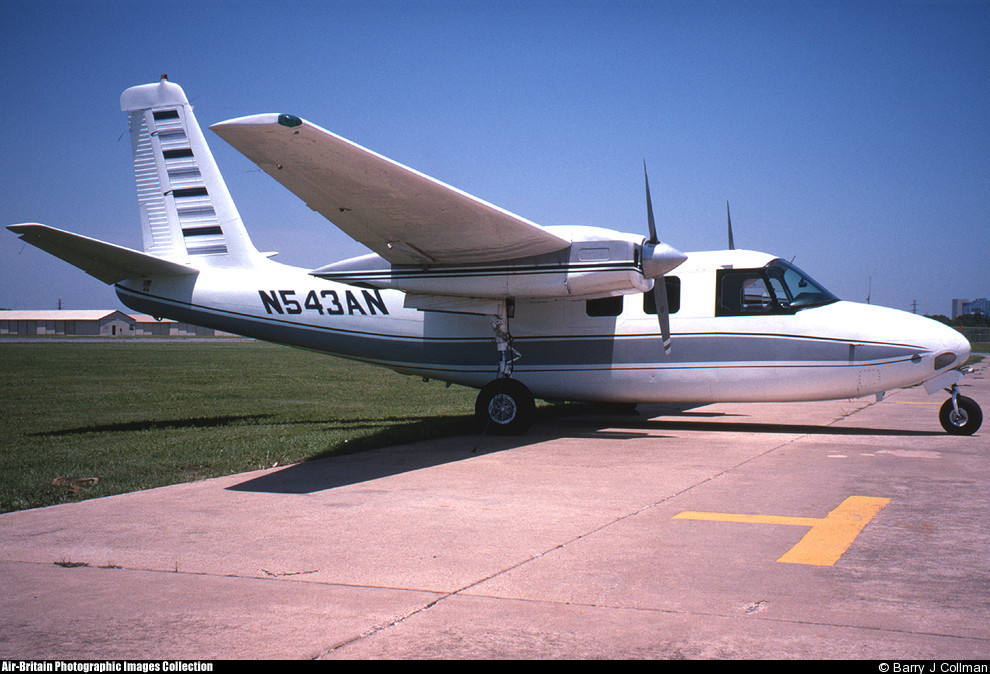
Crash of a Rockwell Aero Commander 500A in Ketchikan: 2 killed

Date & Time: Sep 6, 1997 at 1300 LT
Registration:
N543AN
Flight Phase:
Flight Type:
Survivors:
No
Schedule:
Wrangell – Everett
MSN:
500-908-17
YOM:
1960
Crew on board:
1
Crew fatalities:
Pax on board:
1
Pax fatalities:
Other fatalities:
Total fatalities:
2
Captain / Total flying hours:
2577
Captain / Total hours on type:
81.00
Aircraft flight hours:
6679
Circumstances:
The aircraft had an in-flight breakup when the left wing and tail section separated. Post accident inspection revealed a right engine main fuel supply line progressive rupture, only trace amounts of fuel in the fuel lines, and no rotational damage to the right engine. Pre accident, long term, fuel leak evidence surrounded the ruptured line. The right propeller was not feathered. The left wing D-tube rib at station 127 exhibited compressive buckling. Left wing fractures were upward, and horizontal stabilizer deformation was downward. During an actual loss of engine power in the airplane 17 months before this accident, the pilot had feathered the incorrect propeller. Both a mechanic, and an FAA safety counselor, who were familiar with the pilot, described him as able to be disoriented, and reliant on GPS for navigation. He had stated five months before the accident that he did not feel his instrument flying skills were proficient, and desired training. On the day of the accident, weather was visual meteorological conditions, with layered clouds above 2,200 feet mean sea level. The pilot stated to the FAA weather briefer that he wanted to make the flight under visual conditions. The flight route and altitude was unknown.
Probable cause:
The rupture of the right engine fuel supply line as a result of inadequate inspection by the pilot/mechanic, and the pilot's excessive pull up which resulted in exceeding the design stress limits of the airplane. Factors were the improper emergency procedures and failure to feather the propeller.
Final Report:

Crash of a De Havilland DHC-2 Beaver in Skwentna: 4 killed

Date & Time: Jul 5, 1997 at 0930 LT
Type of aircraft:
Registration:
N5164G
Flight Phase:
Survivors:
Yes
Schedule:
Anchorage - Chelatna Lake
MSN:
506
YOM:
1953
Location:
Crew on board:
1
Crew fatalities:
Pax on board:
4
Pax fatalities:
Other fatalities:
Total fatalities:
4
Captain / Total flying hours:
3350
Captain / Total hours on type:
2200.00
Aircraft flight hours:
13864
Circumstances:
The pilot boarded the 4 passengers and cargo (unsecured) for a chartered flight to a fishing lodge. The floatplane departed uneventfully. About 45 min. later, while cruising about 1,700 feet above rugged terrain and a river, the engine began to lose power and the floatplane descended. The pilot attempted a forced landing in a small lake that was 1,200 ft. in length and located about 1 mile west of the river. During the approach to landing, the airplane stalled and impacted swampy terrain at the lake's edge in a steep nose down attitude. An examination of the wreckage revealed that the no.1 engine exhaust pushrod had failed in fatigue just below the top (valve) ball end. Examination of the pushrod revealed that material had been pushed away from the rod during installation of the ball end. The fatigue crack may have initiated from a score mark produced by the installation. Pushrod life is reduced due to surface scratches. The life of the failed pushrod could not be determined. Insufficient information exists in the overhaul manual regarding pushrod life/inspection.
Probable cause:
A loss of engine power due to the fatigue failure of the no.1 exhaust push rod. Factors contributing to the accident were: insufficient information on pushrod inspection and overhaul from the manufacturer, unsuitable terrain available for landing, and the pilot's failure to maintain airspeed during the approach which led to an inadvertent stall.
Final Report:

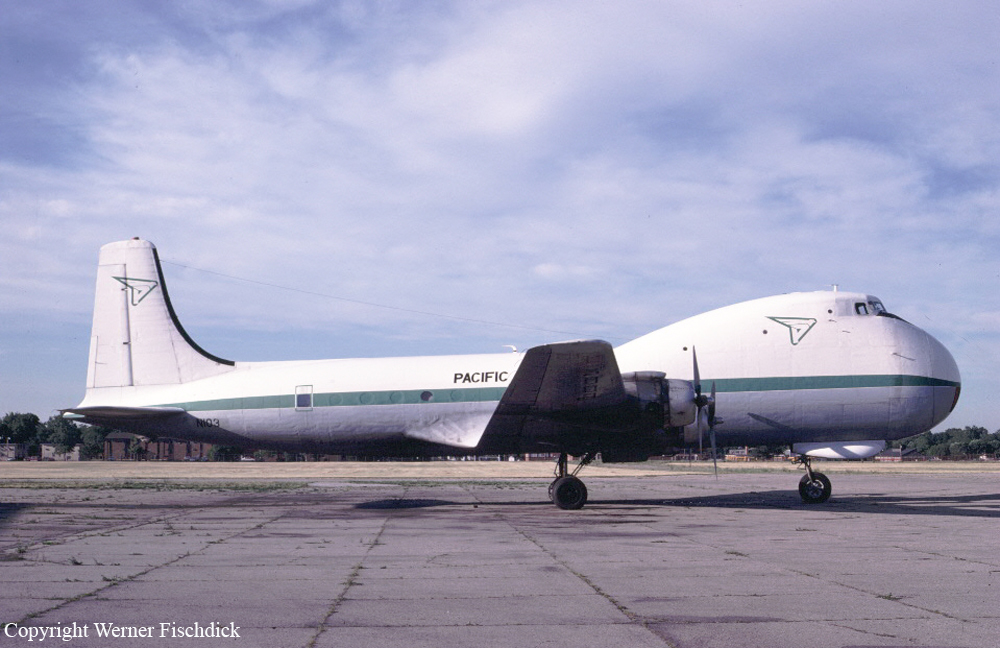
Crash of an Aviation Traders ATL-98 Carvair in Venetie

Date & Time: Jun 28, 1997 at 1618 LT
Registration:
N103
Flight Phase:
Flight Type:
Survivors:
Yes
Schedule:
Venetie - Fairbanks
MSN:
10273/4
YOM:
1943
Crew on board:
3
Crew fatalities:
Pax on board:
0
Pax fatalities:
Other fatalities:
Total fatalities:
0
Captain / Total flying hours:
20000
Captain / Total hours on type:
3000.00
Aircraft flight hours:
7145
Circumstances:
The air cargo flight had just off loaded its cargo at a remote site. Shortly after takeoff, the number two engine begin to run rough. The engine was shut down, and the propeller feathered. During the shutdown process, a fire warning light illuminated, and fire became visible near the number 2 engine. The crew activated both banks of engine fire extinguishers, but were unable to extinguish the fire. While on approach to an off-airport emergency landing site, the number two engine fell off and ignited a brush fire. The crew made a successful landing and ran away from the airplane. The airplane continued to burn and was destroyed by fire. The number 2 engine was not recovered or located.
Probable cause:
A fire associated with the number 2 engine for undetermined reasons.
Final Report: