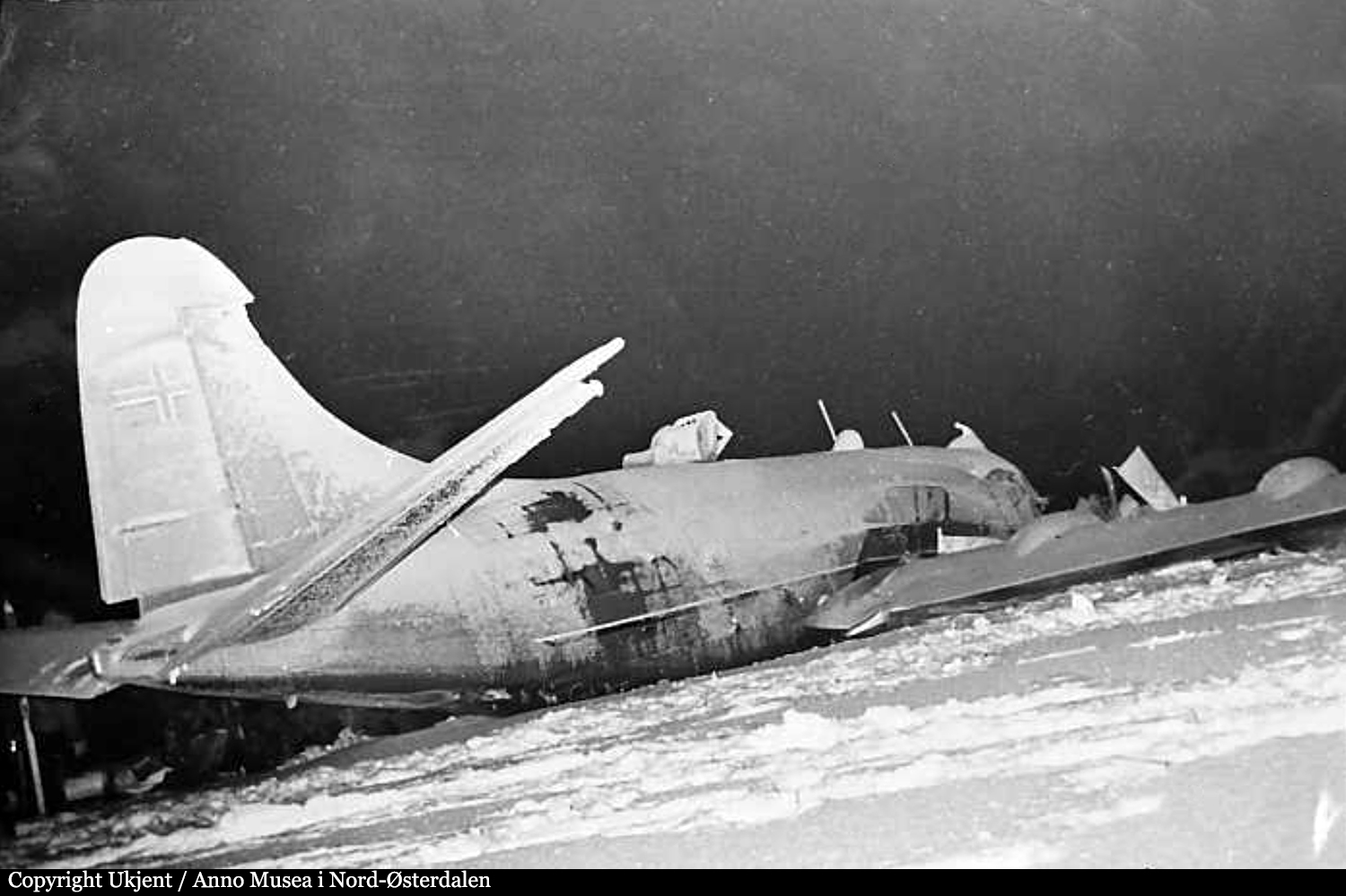
Crash of a Vickers 610 Viking 1B on Mt Taurus: 6 killed

Date & Time: Dec 13, 1956
Type of aircraft:
Operator:
Registration:
VK-500
Flight Phase:
Flight Type:
Survivors:
No
Site:
Schedule:
Amman – Beirut – Athens – London
MSN:
260
YOM:
1949
Country:
Region:
Crew on board:
2
Crew fatalities:
Pax on board:
4
Pax fatalities:
Other fatalities:
Total fatalities:
6
Circumstances:
The twin engine aircraft was performing a flight from Amman to London with intermediate stops at Beirut and Athens, carrying four high ranking officers of the Jordanian Air Force (Arab Legion Air Force) on behalf of the Jordanian Government, and two crew members. While overflying Turkey, the airplane hit the slope of a mountain located in the Taurus Mountain Range, about 30 km southwest of Karaman. As the airplane failed to arrive in Athens, SAR operations were conducted but eventually suspended few days later as no trace of the airplane nor the six occupants was found. The wreckage was eventually spotted in an isolated area six months later. All six occupants have been killed.
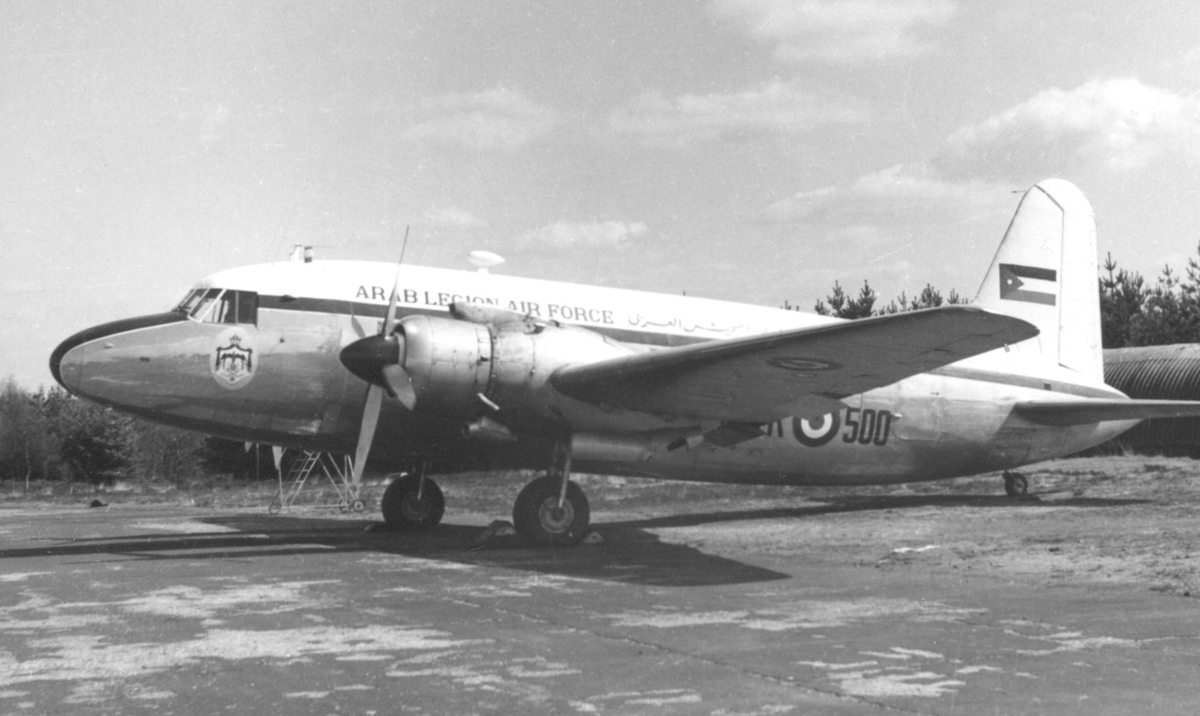

Crash of a Bristol 170 Freighter 31M in the Cameron Highlands: 8 killed

Date & Time: Dec 10, 1956
Type of aircraft:
Operator:
Registration:
NZ5901
Flight Phase:
Flight Type:
Survivors:
Yes
Site:
MSN:
12832
YOM:
1947
Country:
Region:
Crew on board:
3
Crew fatalities:
Pax on board:
6
Pax fatalities:
Other fatalities:
Total fatalities:
8
Circumstances:
While flying at an altitude of 4,000 feet on a supply mission, the airplane hit trees and crashed in a dense wooded area. The aircraft was destroyed and eight occupants were killed. As the airplane failed to return to its base, SAR operations were conducted and the wreckage was spotted in the afternoon. Rescuers were dropped off about 2,000 yards from the crash site but poor weather conditions hampered attempts to reach the wreckage which was eventually reached after three days only. The survivor walked away and was found alive twelve days later.

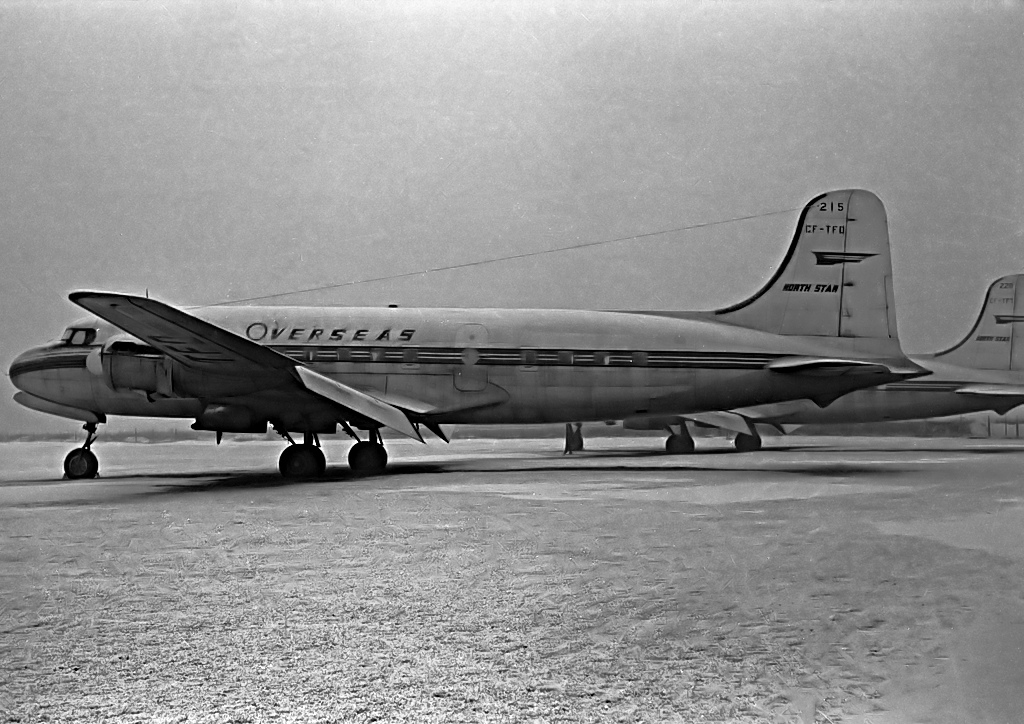
Crash of a Canadair C-4M2 North Star on Mt Slesse: 62 killed

Date & Time: Dec 9, 1956 at 1910 LT
Type of aircraft:
Operator:
Registration:
CF-TFD
Flight Phase:
Survivors:
No
Site:
Schedule:
Vancouver – Calgary – Toronto – Montreal
MSN:
128
YOM:
1948
Flight number:
TCA810
Country:
Crew on board:
3
Crew fatalities:
Pax on board:
59
Pax fatalities:
Other fatalities:
Total fatalities:
62
Circumstances:
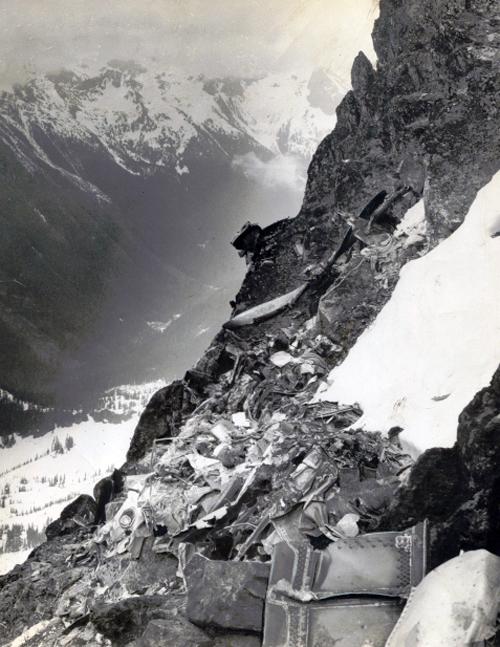
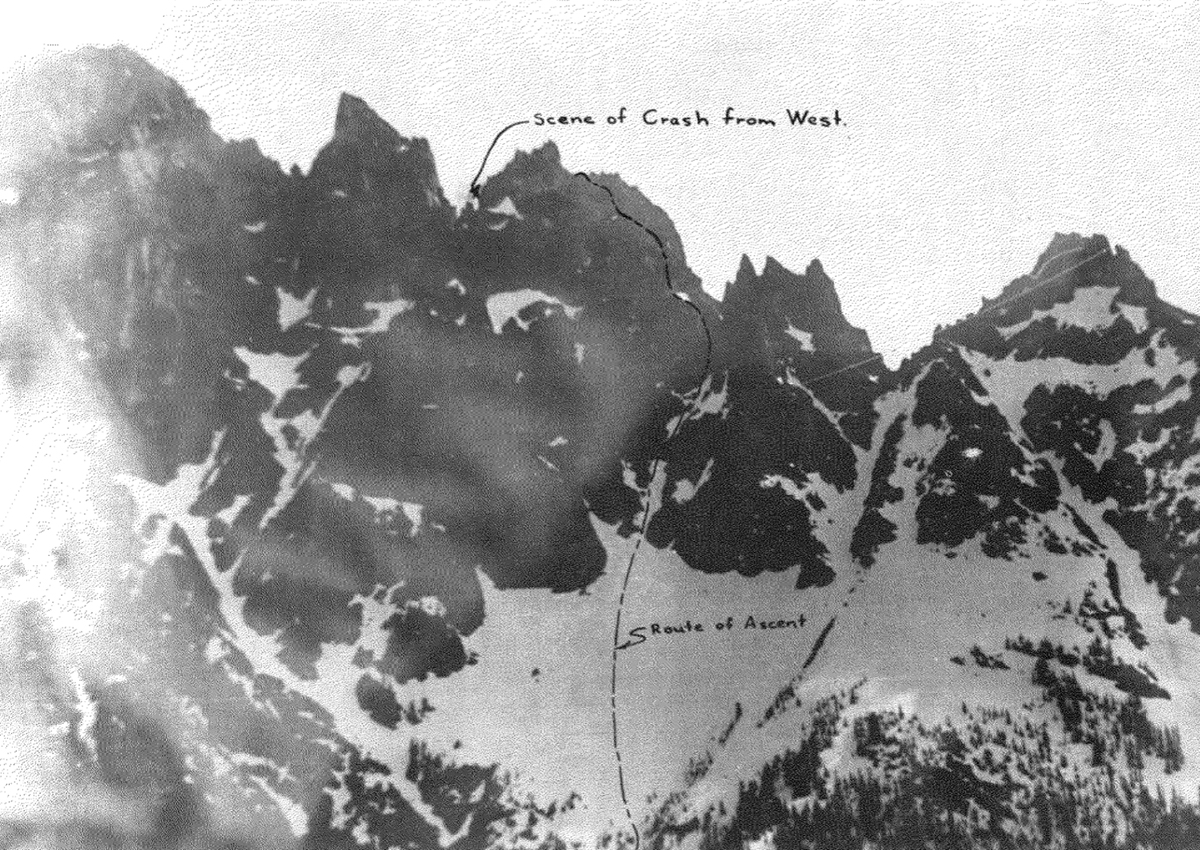
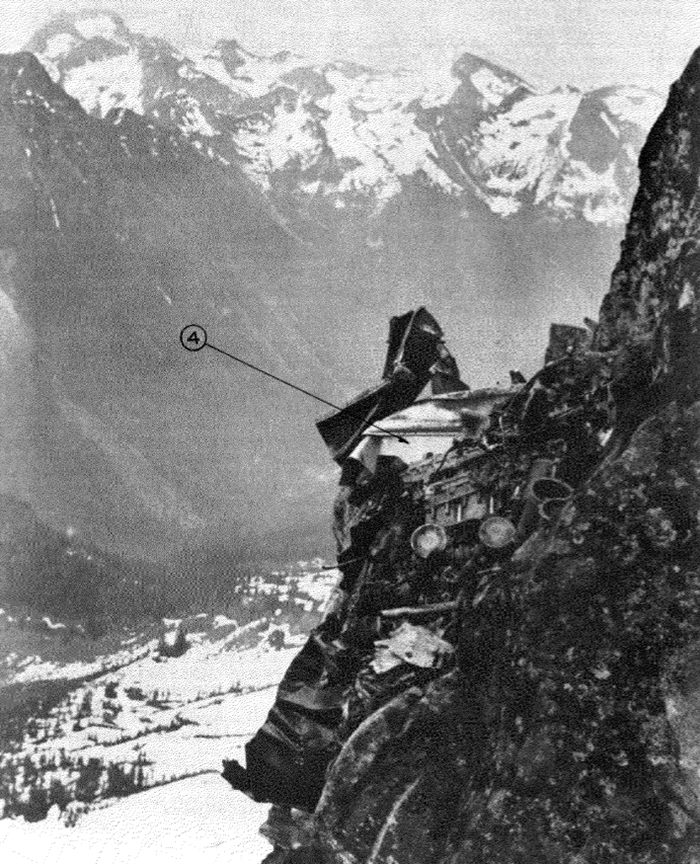
Flight 810-9 was a scheduled flight from Vancouver to Toronto. It carried a crew of 3 and 59 passagers. A cruising altitude of 19,000 feet was selected. The aircraft departed Vancouver at 1810 hours Pacific standard time on 9 December 1956 and was cleared by Air Traffic Control to Calgary Airport via Mud Bay, Abbotsford and Cultus Lake (Red 75 and Red 44). The flight made the normal position reports giving altitude and reported icing beginning at 16 000 feet, moderate turbulence 16 000 feet to 18 000 feet, heavy jolts at 19 000 feet and at 1848 requested clearance to 21 000 feet. At 1852, 810 reported a fire in No. 2 engine, that this engine had been shut down and that the aircraft was returning to Vancouver via Cultus and Abbotsford. Shortly afterwards the flight reported difficulty in maintaining height and requested clearance to descend on Green 1. The last altitude reported by Flight 810 was just above 15 000 feet which would be maintained if possible. At 191 0 hours Flight 810 reported passing Hope, the altitude was not given but clearance to descend to 10 000 feet was requested. ATC cleared 810 to cross the Vancouver range at 8 000 feet or above. Flight 810 acknowledged and this was the last radio contact. All through this latter part of the flight the tone of the voice in the radio transmission, as recorded on TCA tape, did not suggest undue concern by the crew of 810. Nothing more was heard of the aircraft until a part was dis- covered by mountaineers on 12 May 1957, when they .were climbing Mt Slesse, at approximately the 7 600-foot level, adjacent to the third highest peak.
Probable cause:
The cause for the aircraft being at an altitude low enough to strike Mount Slesse is undetermined, but there is a high probability that the aircraft, while flying on 3 engines, encountered either severe icing, turbulence, subsidence, or a combination of all three, or suffered some other difficulty of such a sudden or dire nature that the crew were unable to communicate with any agency or control the aircraft. For undetermined reasons the aircraft was not on Green Airway No. 1 to which it had been cleared by Air Traffic Control. The following factors contributed to the accident:
- Loss of engine power No. 2 engine shut-down, fire suspected,
- Existence in the area of known subsidence, severe turbulence, and moderate to severe icing probably in the lower levels.
Final Report:

Crash of a Lisunov LI-2 on Mt Gora Ioanna: 12 killed

Date & Time: Dec 9, 1956 at 0040 LT
Type of aircraft:
Operator:
Registration:
CCCP-L5033
Flight Phase:
Survivors:
No
Site:
Schedule:
Lavrentiya – Uelkal – Anadyr
MSN:
184 356 09
YOM:
31
Country:
Region:
Crew on board:
5
Crew fatalities:
Pax on board:
7
Pax fatalities:
Other fatalities:
Total fatalities:
12
Aircraft flight hours:
5333
Circumstances:
The aircraft departed Uelkal bound for Anadyr with seven passengers on board, a crew of five and 580 kg of various goods. While approaching Anadyr by night, the crew did not realized he was off course by eight km when, at an altitude of 720 meters, the airplane struck the slope of Mt Gora Ioanna (920 meters high) located about 35 km northeast of Anadyr. As the aircraft failed to arrive at destination, SAR operations were initiated and the burnt wreckage was found four days later on a 50° slope. The aircraft disintegrated on impact and all 12 occupants have been killed.

Probable cause:
Investigations were unable to determine the exact cause of the deviation. At the time of the accident, visibility was poor due to the night and clouds. The assumption that the aircraft was caught by downdraft was not ruled out.

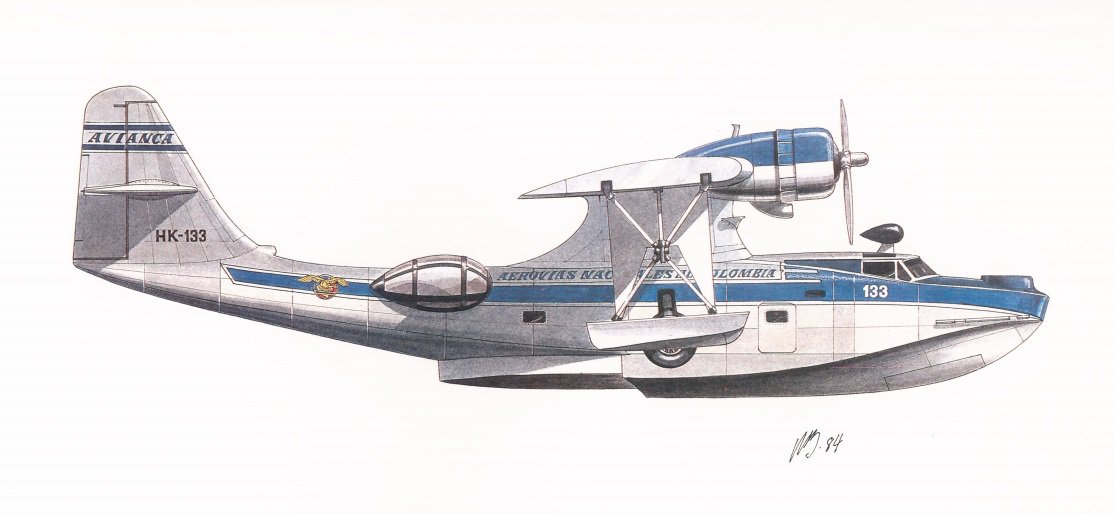
Crash of a Consolidated PBY-5A Catalina near Cáqueza: 14 killed

Date & Time: Dec 8, 1956 at 0705 LT
Type of aircraft:
Operator:
Registration:
HK-133
Flight Phase:
Survivors:
Yes
Site:
Schedule:
Bogotá – Medellín - Quibdó
MSN:
21998
YOM:
1943
Country:
Crew on board:
5
Crew fatalities:
Pax on board:
11
Pax fatalities:
Other fatalities:
Total fatalities:
14
Circumstances:
The aircraft departed Santa Cecilia Airport, Bogotá at 0647LT bound for Medellín and Quibdó, carrying a crew of 5 and 11 passengers. Take-off was made at a time when the airport was closed due to poor visibility. While flying on instruments a few moments after take-off, the starboard engine failed. The aircraft continued its flight over the Sabana de Bogotá for approximately 23 minutes, following which, while flying on a magnetic heading of approximately 280 degrees, it crashed violently (at approximately 0705LT) against the Quetame Hill located near Cáqueza, about 30 km southeast of Bogotá, at an elevation of 9,170 feet. The flight engineer and one passenger were injured while 14 other occupants were killed.
Probable cause:
The probable cause of the accident was a complete failure of the starboard engine due to the breakdown of the lubricating system. The following factors were considered as contributing:
- Recklessness of the pilot in taking off from a closed airport while aware of the poor weather conditions prevailing throughout the Sabana, a circumstance which prevented returning to the airport of departure when complete breakdown of the starboard engine occurred,
- The 1,506 kg overload of the aircraft above the maximum gross operating weight for Bogotá according to the performance curves of the aircraft,
- The adverse weather conditions prevailing from the moment of take-off until the moment of the accident,
- An error of judgment on the part of the Operations and Maintenance Sections of the Company in failing to provide for a test flight of the aircraft after the turbine section had been changed and in finding aircraft HK-133 airworthy for the purpose of a scheduled flight with passengers under such conditions,
- The lack of competent air traffic and weather authorities at Santa Cecilia airport in a position to check civil aviation regulations and to prohibit take off from a closed airport,
- Faulty internal organization within AIDA which should have defined exactly the duties of the Maintenance Superintendent, of the Maintenance Chief and of the Dispatcher,
- The failure of the Company to have available a spare engine which would have avoided carrying out such delicate repair work in a hasty manner.
Final Report:

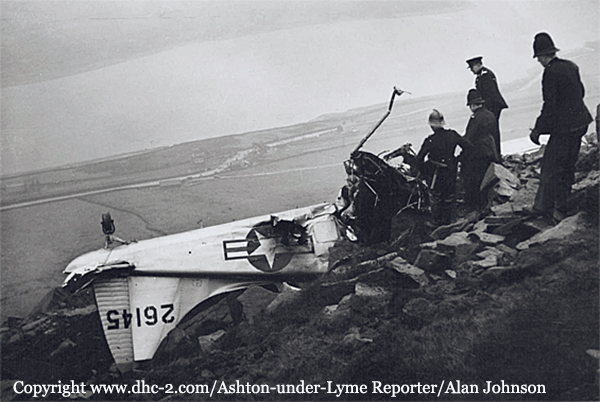
Crash of a De Havilland L-20A Beaver near Glossop: 2 killed

Date & Time: Dec 5, 1956
Type of aircraft:
Operator:
Registration:
52-6145
Flight Phase:
Flight Type:
Survivors:
No
Site:
Schedule:
Sculthorpe – Burtonwood
MSN:
539
YOM:
1953
Region:
Crew on board:
1
Crew fatalities:
Pax on board:
1
Pax fatalities:
Other fatalities:
Total fatalities:
2
Circumstances:
While cruising in marginal weather conditions from RAF Sculthorpe to RAF Burtonwood, the single engine aircraft struck a hill located near Glossop and was destroyed upon impact. Both occupants were killed.
Crew:
1st Lt John Rossman Tinklepaugh.
Passenger:
1st Lt Guy B. Waller.
Probable cause:
The accident was the consequence of an ATC error as the aircraft was misidentified by a GCA controller at RAF Burtonwood and guided against the mountain.

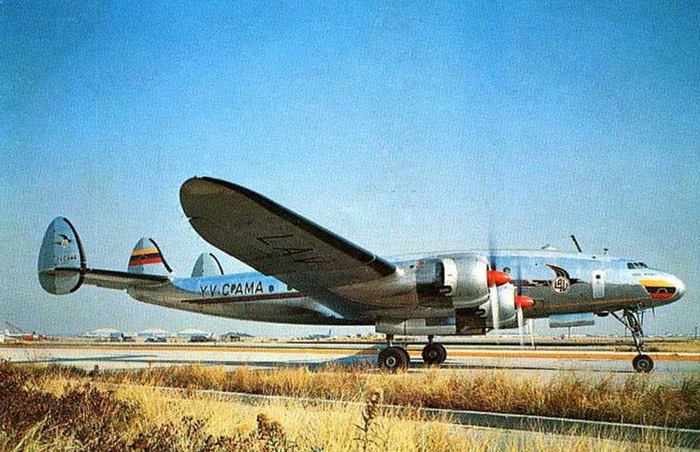
Crash of a Lockheed L-749-79-34 Constellation on Mt Naiguatá: 25 killed

Date & Time: Nov 27, 1956 at 0815 LT
Operator:
Registration:
YV-C-AMA
Survivors:
No
Site:
Schedule:
New York – Caracas
MSN:
2560
YOM:
1947
Flight number:
LV253
Country:
Crew on board:
7
Crew fatalities:
Pax on board:
18
Pax fatalities:
Other fatalities:
Total fatalities:
25
Circumstances:
YV-C-AMA, on scheduled flight 253, took off from Idlewild Airport, NY, for Maiquetía, Venezuela, on 26 November with 7 crew and 18 passengers aboard. The flight plan gave an altitude of 17 000 ft, and the duration of the flight was estimated at 9 hours 48 minutes, with Barcelona and Curaçao as alternate airports. The pilot transmitted two position reports, the first, 75 miles northwest of Maiquetía, at 17 500 ft at 0751 hours, and the second, 14 minutes later, 35 miles northwest of Maiquetía at 7 000 ft. No further communication was received from YV-C-AMA after it had been cleared to change to tower frequency. Following the failure to report to the control tower, the aircraft was repeatedly called on all Maiquetía Control Centre frequencies at 0815 hours, with negative results. A state of emergency was declared at 0835 hours, and it was later established that the aircraft struck the western slope of peak El Avila located in the El Avila National Park at an altitude of 6 702 ft, killing all 25 occupants.
Probable cause:
The instrument flight training manuals show that the Linea Aeropostal Venezolana has approved a procedure for entering Maiquetía in semi-IFR conditions. This procedure consists in maintaining a minimum flight level of 10 000 ft as far as the station (Miq 292.5), then turning north over this point and continuing on a 360° heading for 4 minutes followed by a standard let-down to 1 200 ft above sea level until contact is established, and a return to the aerodrome under VFR. It is obvious that the pilot -in-command did not fully comply with this procedure, and, after accumulating errors in estimating his speed, endeavored to make a direct approach which proved fatal because his altitude at the time of his last report was insufficient to cross the Avila mountain range against which the impact occurred.
Final Report:

Crash of a Vickers 607 Valetta C.1 in Cameron Highlands: 7 killed

Date & Time: Nov 23, 1956
Type of aircraft:
Operator:
Registration:
VX525
Flight Phase:
Flight Type:
Survivors:
No
Site:
YOM:
1950
Country:
Region:
Crew on board:
3
Crew fatalities:
Pax on board:
4
Pax fatalities:
Other fatalities:
Total fatalities:
7
Circumstances:
The crew was engaged in a supply mission to RAF troops based in the Cameron Highlands, on behalf of the 48th Squadron. En route, weather conditions deteriorated and the captain cancelled the dropping mission and elected to return to his base. At an altitude of 1,500 feet over mountainous terrain, he initiated a turn to the left when the aircraft stalled and crashed in a dense wooded area. The aircraft was destroyed upon impact and all seven occupants have been killed.
Crew:
F/O J. A. N. Selth, pilot,
F/O J. H. Witham, navigator,
Sgt K. L. Benton, air signaler,
Cpl J. E. Wellman, crew commander,
Dvr P. Studd,
Dvr F. J. Merrett,
Dvr E. Roberts.
Probable cause:
It is believed that the pilot did not realize his speed was insufficient while initiating a turn to the left, causing the aircraft to stall.

Crash of a Douglas C-49G-DO on Mt El Rucio: 36 killed

Date & Time: Nov 17, 1956 at 1645 LT
Type of aircraft:
Registration:
HK-385
Flight Phase:
Survivors:
No
Site:
Schedule:
Buenaventura – Cali
MSN:
1971
YOM:
1937
Country:
Crew on board:
3
Crew fatalities:
Pax on board:
33
Pax fatalities:
Other fatalities:
Total fatalities:
36
Circumstances:
The aircraft took off from Buenaventura at 1630LT on a return flight to el Guavito aerodrome, Cali. Expected time of arrival at Cali was 1700 hours. On board the aircraft were the pilot, a steward (who held no licence to act as such), a flight engineer (who on this occasion was acting as copilot), and 33 passengers. When 1700 hours passed with no sign of the aircraft's arriving at Cali, a search was initiated. The wreckage was located the same evening on the side of El Rucio mountain. The aircraft disintegrated on impact and all 36 occupants have been killed.

Probable cause:
The most probable cause of the accident was a flight on instruments at an excessively low altitude for the route. A lack of discipline on the part of the pilot was considered as a contributing factor.
Final Report:

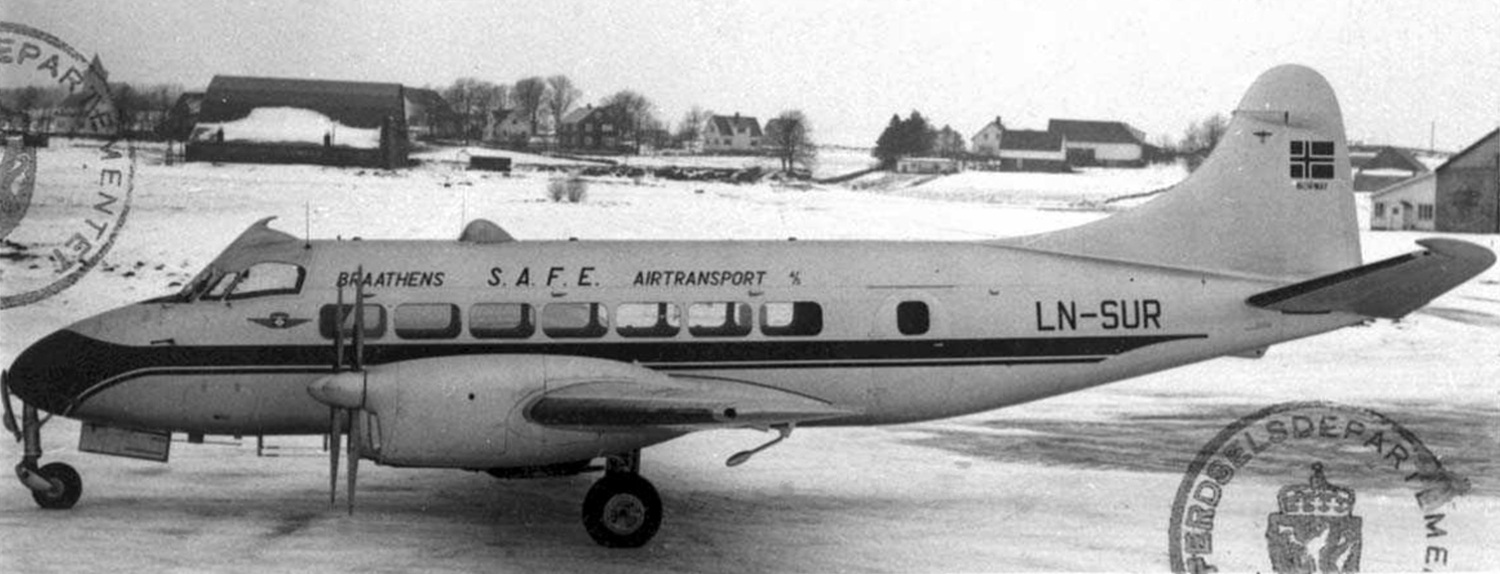
Crash of a De Havilland DH.114 Heron 2N on Mt Hummelfjell: 2 killed

Date & Time: Nov 7, 1956 at 0950 LT
Type of aircraft:
Operator:
Registration:
LN-SUR
Flight Phase:
Survivors:
Yes
Site:
Schedule:
Trondheim – Oslo
MSN:
14093
YOM:
1956
Country:
Region:
Crew on board:
2
Crew fatalities:
Pax on board:
10
Pax fatalities:
Other fatalities:
Total fatalities:
2
Circumstances:
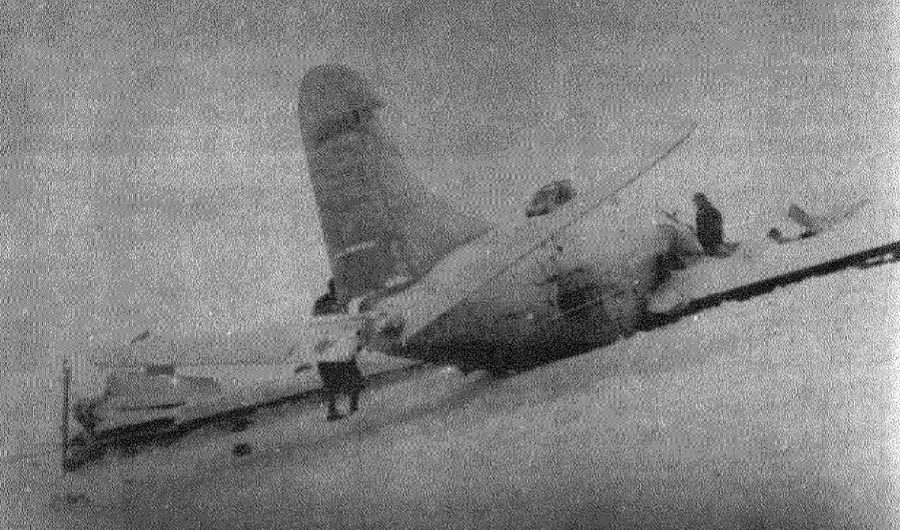
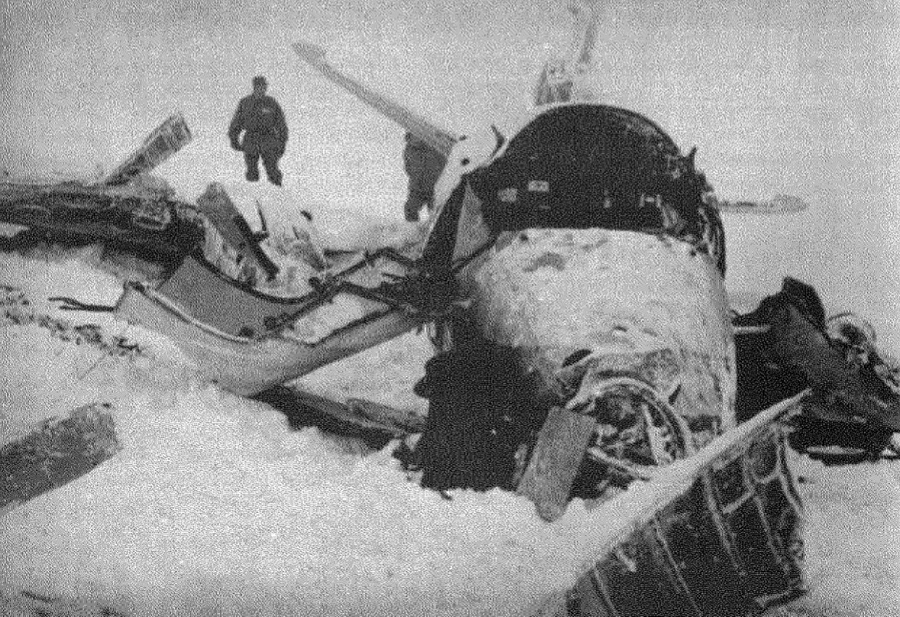
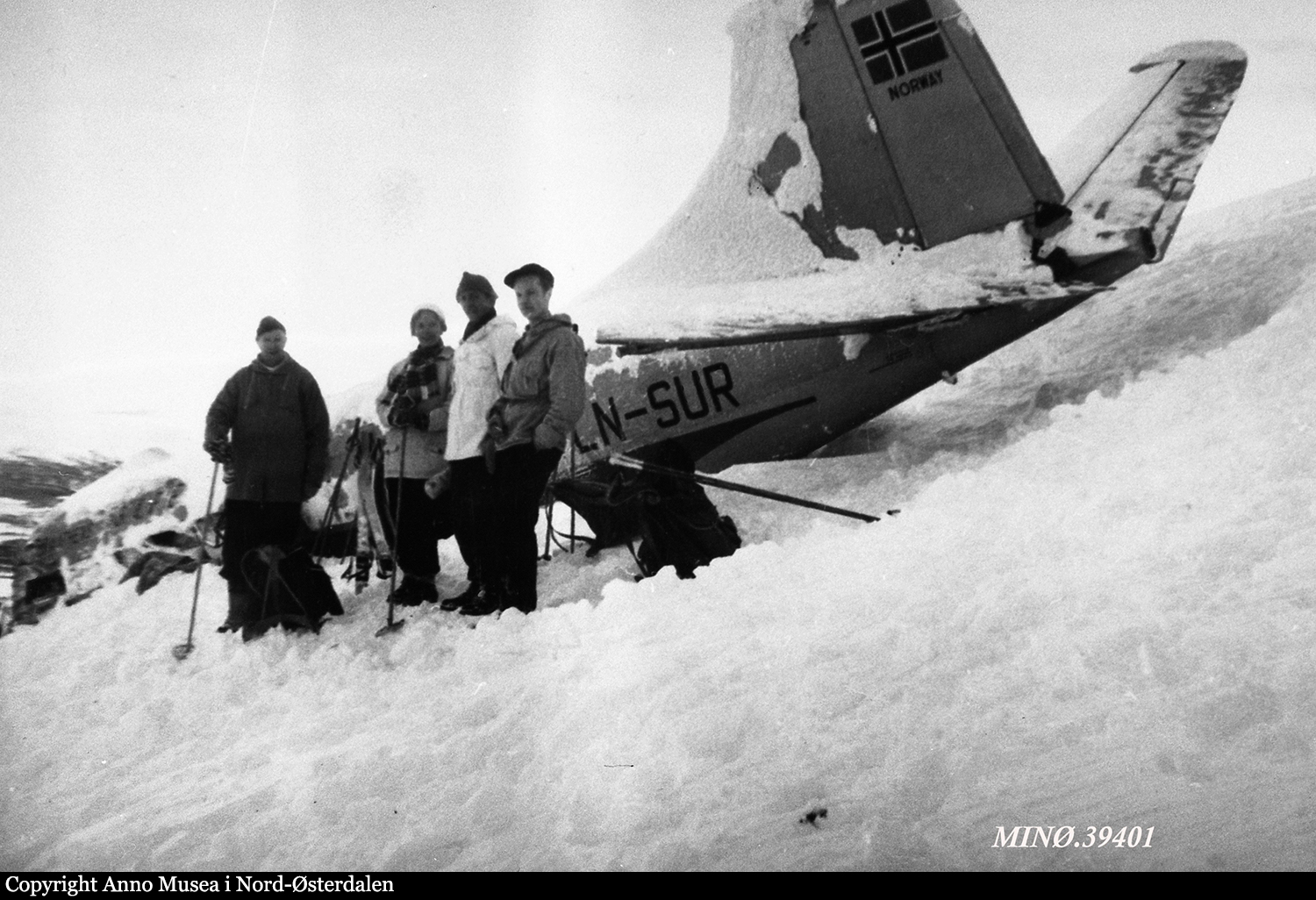
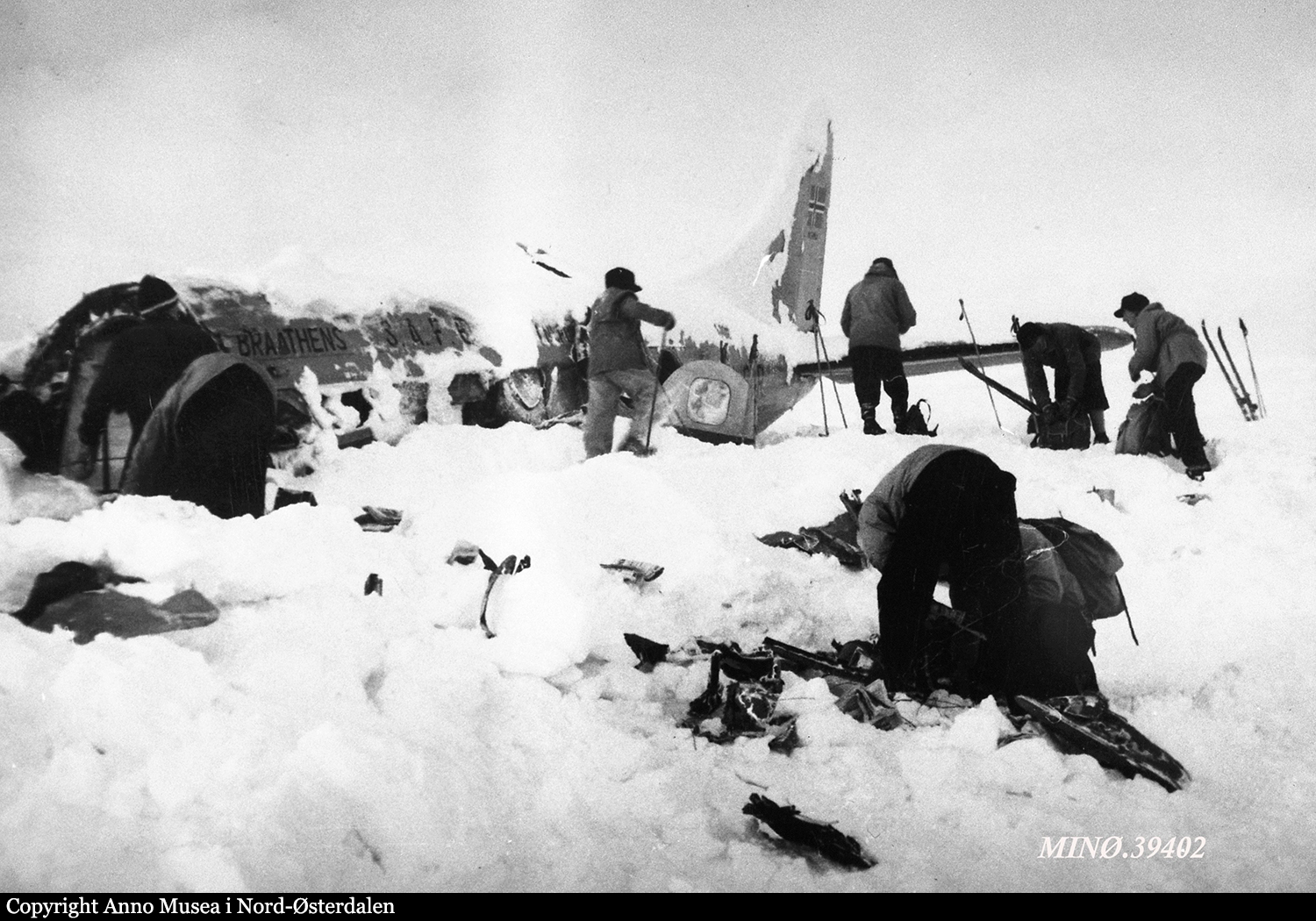
The aircraft departed Vaernes Airport, Trondheim, at 0830LT on a scheduled flight to Oslo, carrrying a crew of two and ten passengers. The aircraft entered clouds at 2,500 feet right after take-off and did not have visual contact with the ground thereafter. The copilot later stated that between Vaernes and Tolga when the aircraft reached cruising altitude, normal cruise power was set up but the resultant indicated airspeed was 20 knots below normal. The aircraft reported that at 0912 hours it had passed Tolga radio beacon at 8 000 feet (2,438 m), and that it was experiencing light icing. This was the last radio contact with the aircraft. From this point on it appears that the icing increased rapidly and the aircraft started to lose altitude, even though the de-icing system for wing and tail planes was in use. At 0925 hours it was decided to return to Vaernes Airport.The aircraft, when approximately abeam Tolga and to the east, altered its course 25 to 30 degrees northeast. This maneuver, carried out by the captain, was interpreted by the co-pilot to mean that he had decided to divert to Rhos. The controls were taken over by the copilot while the captain continued to try to establish radio contact with the ground on frequency 126,7 mc/s. No signals were picked up. At approximately 0950 hours the aircraft hit Hummelfjell at a height of approximately 1,350 metres. At the time of the crash the aircraft was in heavy fog, with cockpit window covered with ice to an extent which drastically reduced the crew's visibility. The force of the impact was somewhat reduced in that the aircraft touched down in a bowl in the terrain and made two bounces on the snow, which covered the mountain to a depth of 40 cm, before settling down. The captain and one passenger died instantly.
Probable cause:
The accident was due to the unusually heavy icing which the aircraft encountered. Severe downdraft immediately prior to the crash may have been a contributing factor.
Final Report: