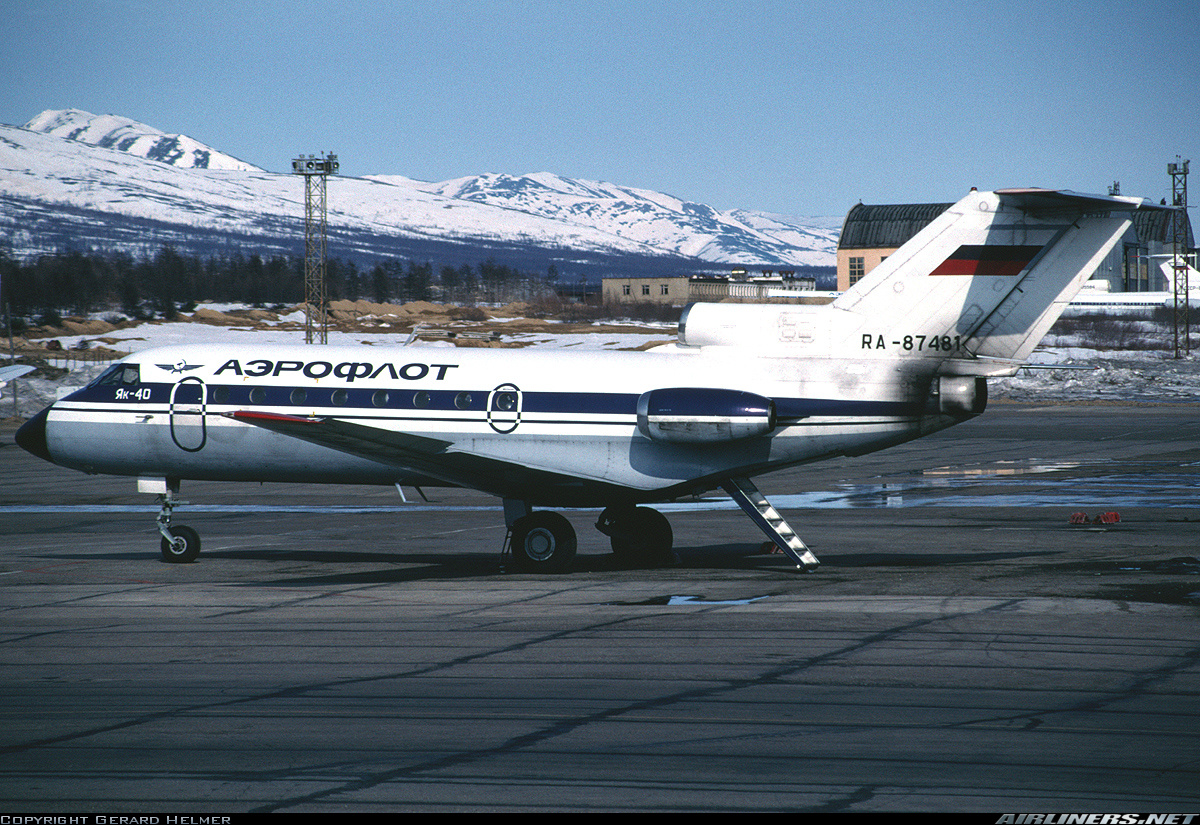
Crash of a Yakovlev Yak-40 in Tigil

Date & Time: Sep 23, 2001
Type of aircraft:
Operator:
Registration:
RA-87481
Survivors:
Yes
MSN:
9 44 09 38
YOM:
1974
Country:
Region:
Crew on board:
3
Crew fatalities:
Pax on board:
18
Pax fatalities:
Other fatalities:
Total fatalities:
0
Circumstances:
For unknown reasons, the aircraft landed hard and bounced several times before landing firmly. On touchdown, the nose gear collapsed and the airplane slid for few dozen metres before coming to rest. All 21 occupants escaped uninjured while the aircraft was damaged beyond repair.

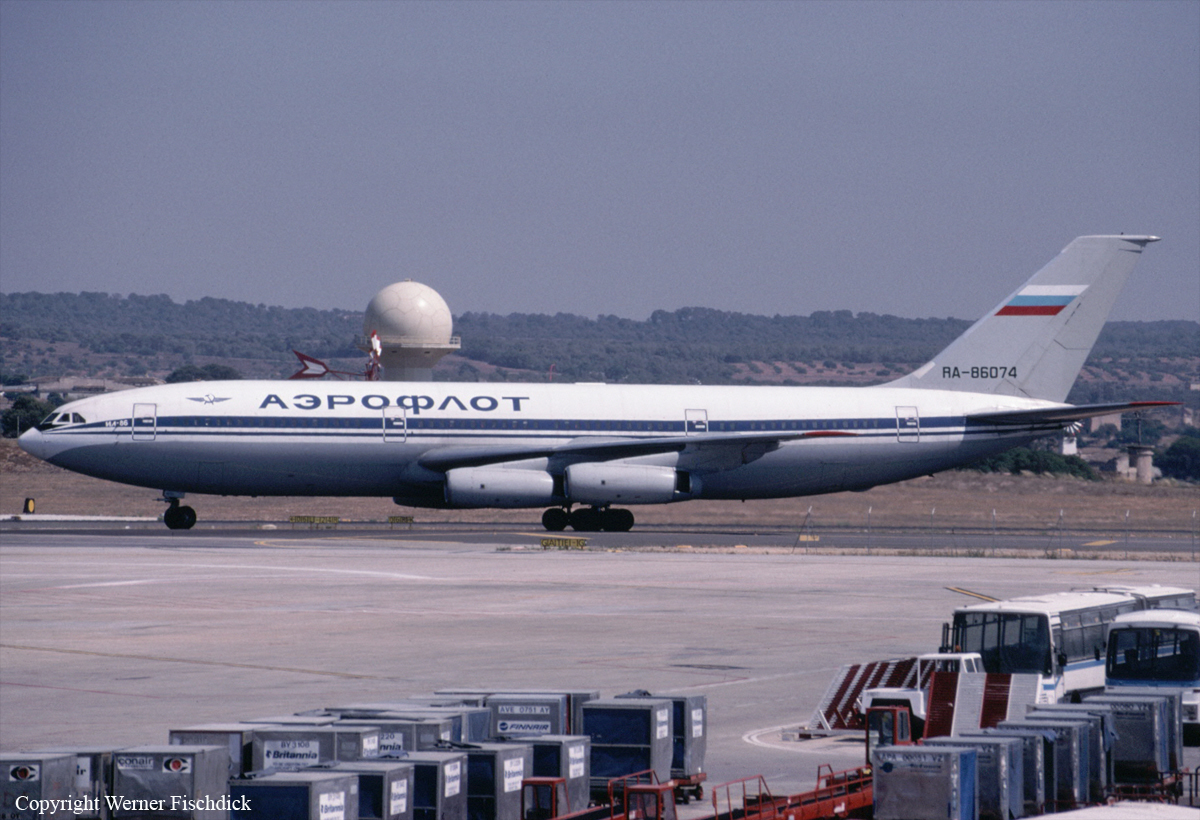
Crash of an Ilyushin II-86 in Dubai

Date & Time: Sep 21, 2001 at 2009 LT
Type of aircraft:
Operator:
Registration:
RA-86074
Survivors:
Yes
Schedule:
Moscow - Dubai
MSN:
51483205041
YOM:
1985
Flight number:
SU521
Location:
Region:
Crew on board:
15
Crew fatalities:
Pax on board:
307
Pax fatalities:
Other fatalities:
Total fatalities:
0
Aircraft flight hours:
23711
Aircraft flight cycles:
7132
Circumstances:
Following an uneventful flight from Moscow, the crew started a night approach to Dubai Intl Airport. Despite this was a non standard procedure, the captain requested that the landing gear circuit breaker be switched off so he could extend the flaps earlier and prior to gear extension. Later on approach, the flight engineer completed the checklist and mistakenly confirmed that gear were down after the crew forgot to turn the circuit breaker on again. The captain continued the approach without proceeding to a verification/confirmation that gear were down, causing the aircraft to land on its belly. It slid for few dozen metres and came to rest with both engines n°2 and 3 on fire as well as the rear part of the cargo compartment. All 321 occupants were evacuated safely while the aircraft was damaged beyond repair.
Probable cause:
Poor approach configuration on part of the crew and violation of published standard operational procedures. Lack of crew coordination and poor crew resources management were considered as contributing factors.

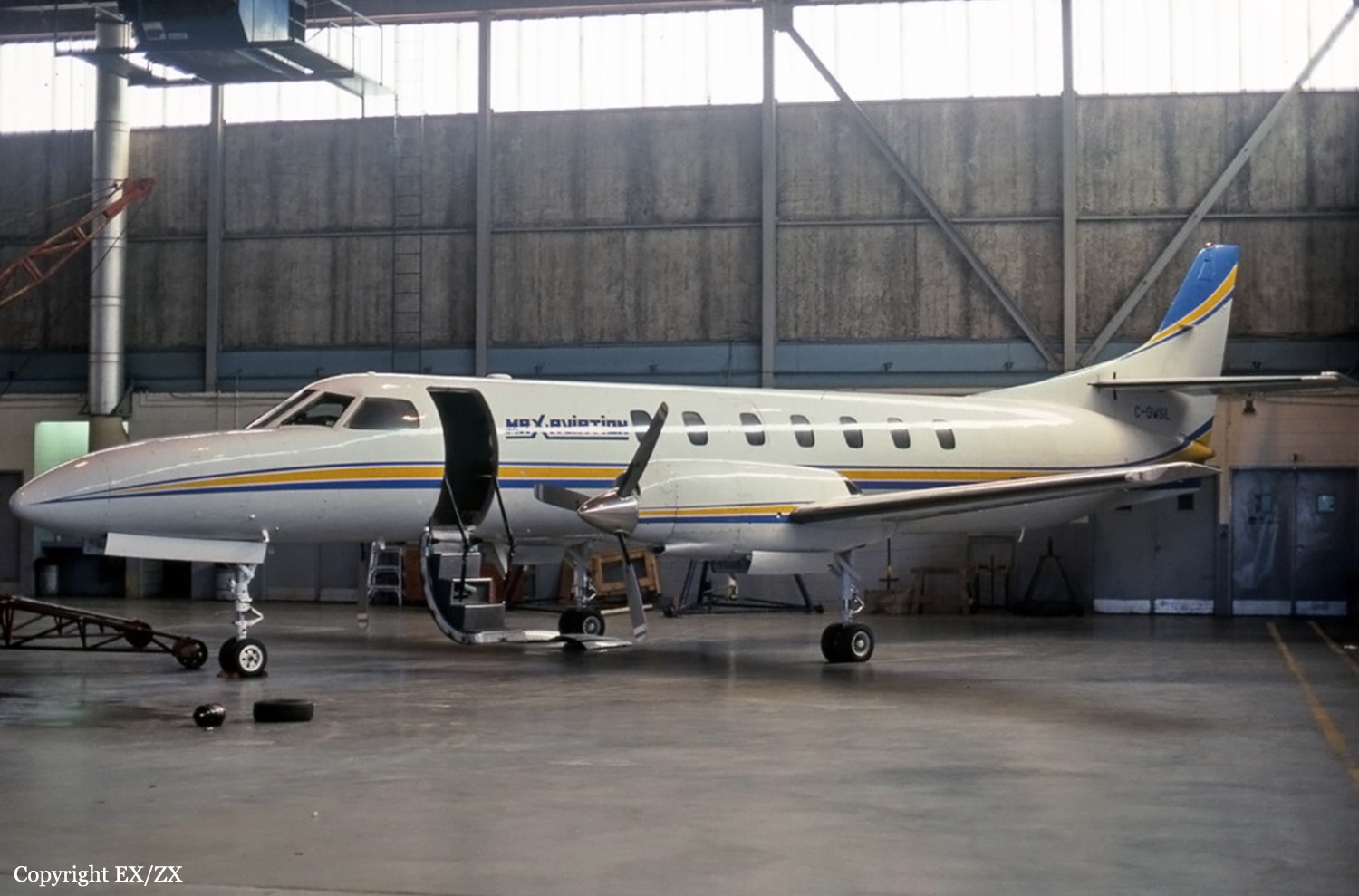
Crash of a Swearingen SA226AT Merlin IV in Kuujjuaq

Date & Time: Sep 20, 2001 at 1757 LT
Operator:
Registration:
C-GWSL
Flight Type:
Survivors:
Yes
Schedule:
Kangiqsualujjuaq – Kuujjuaq
MSN:
AT-028
YOM:
1975
Flight number:
MAX226
Country:
Crew on board:
2
Crew fatalities:
Pax on board:
0
Pax fatalities:
Other fatalities:
Total fatalities:
0
Circumstances:
The approach to Kuujjuaq-Fort Chimo Airport was stable but slightly below the VASIS descent profile. Just before the flare when power was reduced to idle, the crew was surprised by how rapidly the aircraft decelerated. Touchdown on the runway was hard. After the engines were shut down at the terminal, the crew noted structural deformations around the nose wheel attachment point and on the wings, where the deformations caused fuel to leak. Runway 31 slopes upward 1.3%. The landing was made at twilight, and the runway environment appeared very dark to the crew due to the lack of reflection from the gravel surface.

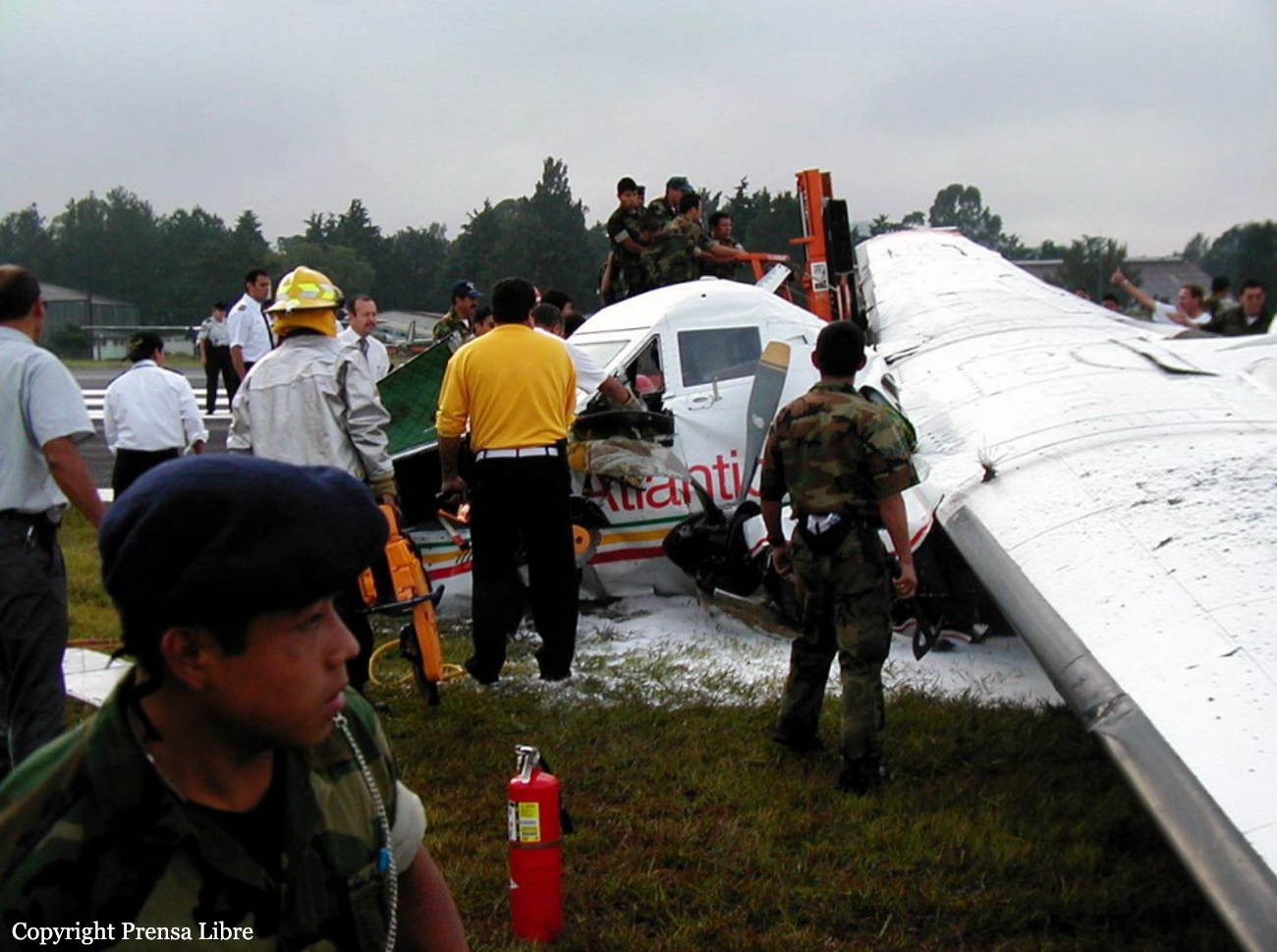
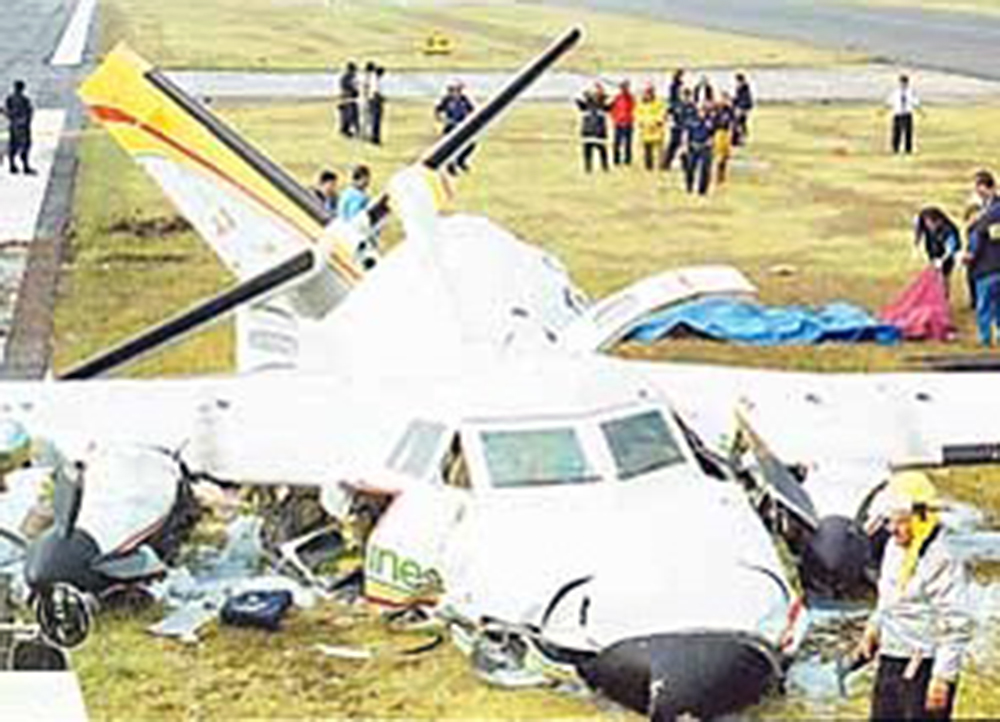
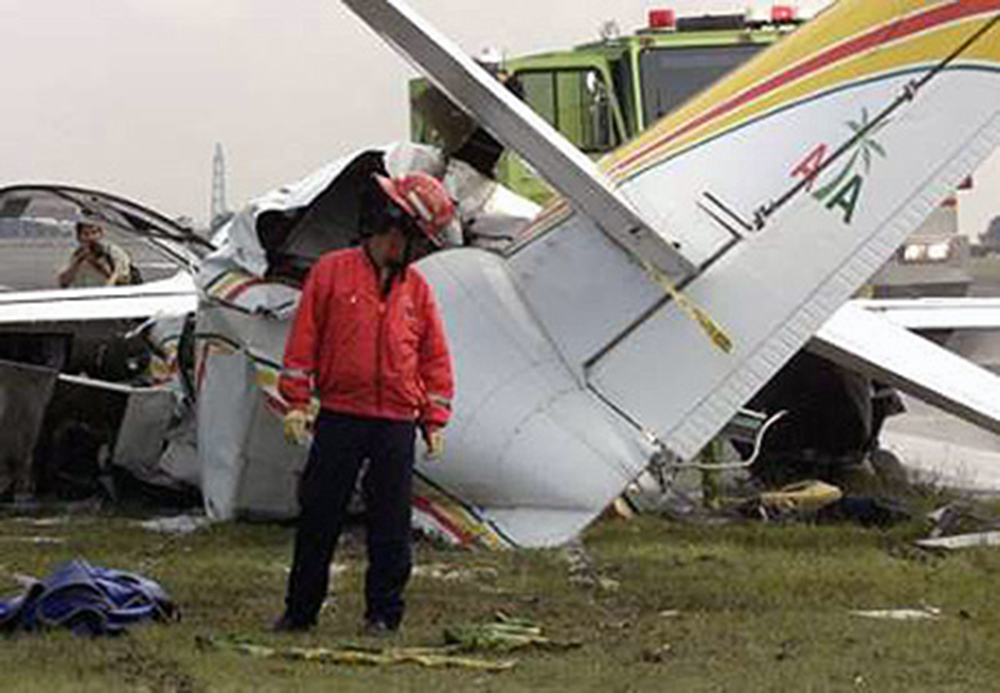
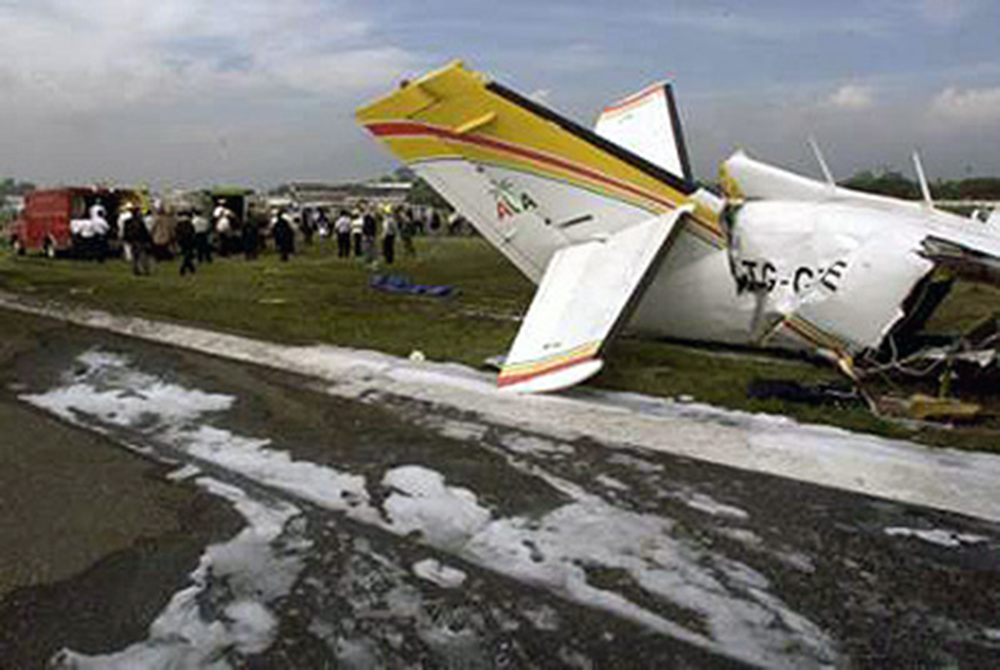
Crash of a Let L-410UVP-E in Guatemala City: 8 killed

Date & Time: Sep 18, 2001 at 0642 LT
Type of aircraft:
Operator:
Registration:
TG-CFE
Flight Phase:
Survivors:
Yes
Schedule:
Guatemala City – San Pedro Sula
MSN:
86 17 05
YOM:
1986
Flight number:
ATL870
Country:
Crew on board:
2
Crew fatalities:
Pax on board:
11
Pax fatalities:
Other fatalities:
Total fatalities:
8
Aircraft flight hours:
2467
Aircraft flight cycles:
4001
Circumstances:
After takeoff from runway 01 at Guatemala City-La Aurora Airport, while climbing to a height of 200 feet, the twin engine aircraft rolled left and right then stalled and crashed beside the runway, about 550 metres from its end. The copilot and four passengers were injured while eight other occupants including the captain were killed. The aircraft was totally destroyed.
Probable cause:
It was determined that the aircraft stalled during initial climb because the passengers seats were not properly allocated, causing the center of gravity to be outside the permissible limit. The following contributing factors were identified:
- The Atlantic Airlines company, at the date of the accident, did not have sufficiently trained administrative and operational personnel for a safe operation.
- The poor allocation of the passengers inside the cabin affected lift, causing the aircraft to stall. Due to its low height, it was impossible to expect a stall recovery. This shows that the aircraft collapsed completely without move on the ground and being destroyed by the weight of the engines and their wings that were full of fuel.
- Lack of crew training, especially the copilot who was not rated on this type of aircraft. Thus, he was not able to assist the captain in an emergency situation but only reading the checklist.
- The engines were operating normal at the time of impact and they were running in normal takeoff conditions.
- No evidence of mechanical failure was found.
- The accident shows that the aircraft was operating normally, but that due to aerodynamic circumstances, it entered a stall and crashed on the ground abruptly and uncontrollably.

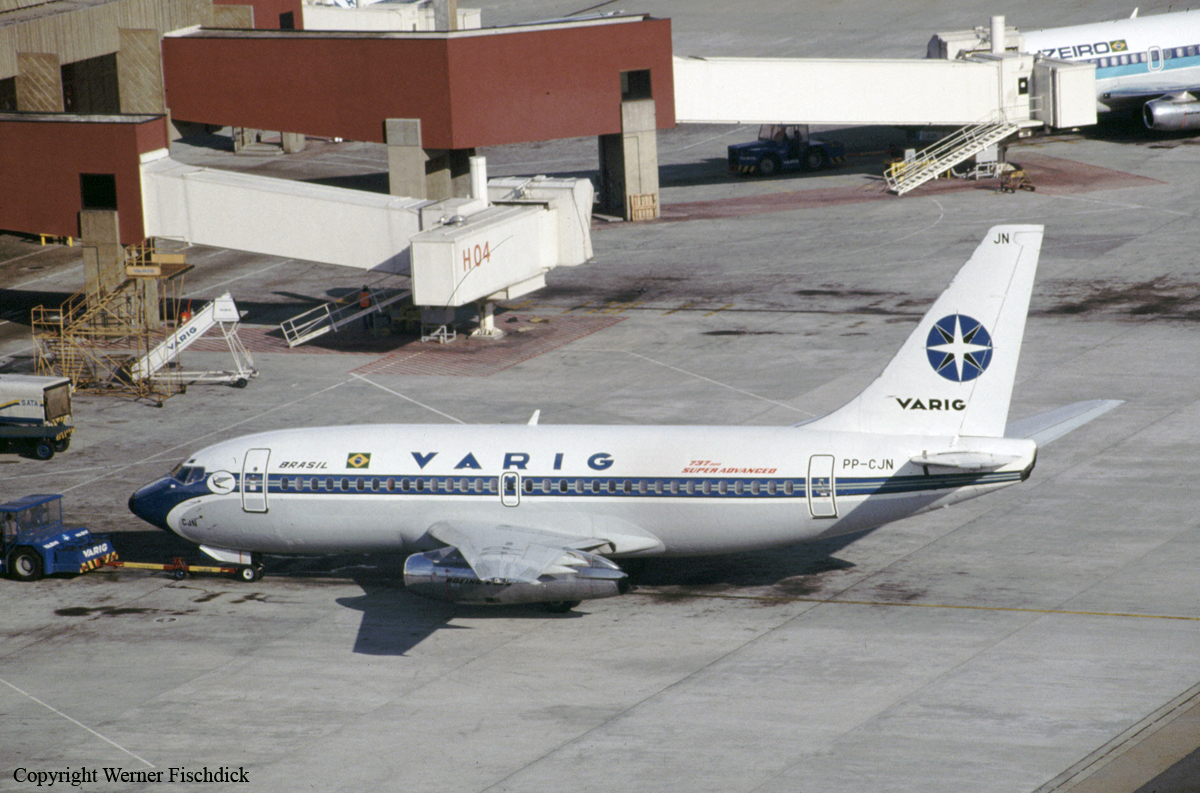
Crash of a Boeing 737-2C3 in Goiânia

Date & Time: Sep 16, 2001 at 1053 LT
Type of aircraft:
Operator:
Registration:
PP-CJN
Survivors:
Yes
Schedule:
São Paulo – Goiânia
MSN:
21012
YOM:
1974
Flight number:
RG2240
Location:
Country:
Crew on board:
5
Crew fatalities:
Pax on board:
62
Pax fatalities:
Other fatalities:
Total fatalities:
0
Aircraft flight hours:
68500
Aircraft flight cycles:
65500
Circumstances:
On final approach to Goiânia-Santa Genoveva Airport, the crew encountered poor weather conditions with a limited visibility due to rain. The aircraft landed about 500 metres past the runway threshold but as it was misaligned, the right main gear touched down on the left side of the runway. The crew attempted to steer the plane back onto the runway when the right main gear collapsed. The aircraft went out of control, lost its right engine then its nose gear and came to rest on the runway. All 67 occupants evacuated safely.
Probable cause:
Wrong approach configuration on part of the crew who continued the approach while the aircraft was not properly aligned with the runway centerline.

Crash of a Beechcraft 1900C in Saint John's

Date & Time: Sep 14, 2001 at 2118 LT
Type of aircraft:
Operator:
Registration:
C-GSKC
Flight Phase:
Flight Type:
Survivors:
Yes
MSN:
UB-27
YOM:
1984
Flight number:
SLQ621
Country:
Crew on board:
2
Crew fatalities:
Pax on board:
0
Pax fatalities:
Other fatalities:
Total fatalities:
0
Circumstances:
On take off from runway 11 at St. John's, the crew felt the nose of the aircraft rise to a high-pitch attitude. The aircraft climbed to about 150 to 200 feet, and was about to enter cloud when the crew reduced power. The crew lowered the nose, and force-landed the aircraft on the runway. The main gear, wings, engines and fuselage sustained substantial structural damage. Weather conditions at the time of the crash were reported as: winds 090° at 25 knots gusting to 35 knots, horizontal visibility 1/2 statute mile in light rain and fog, vertical visibility 100 feet, temperature 15° Celsius, dew point 15° Celsius, altimeter 29.31 Hg., pressure dropping.

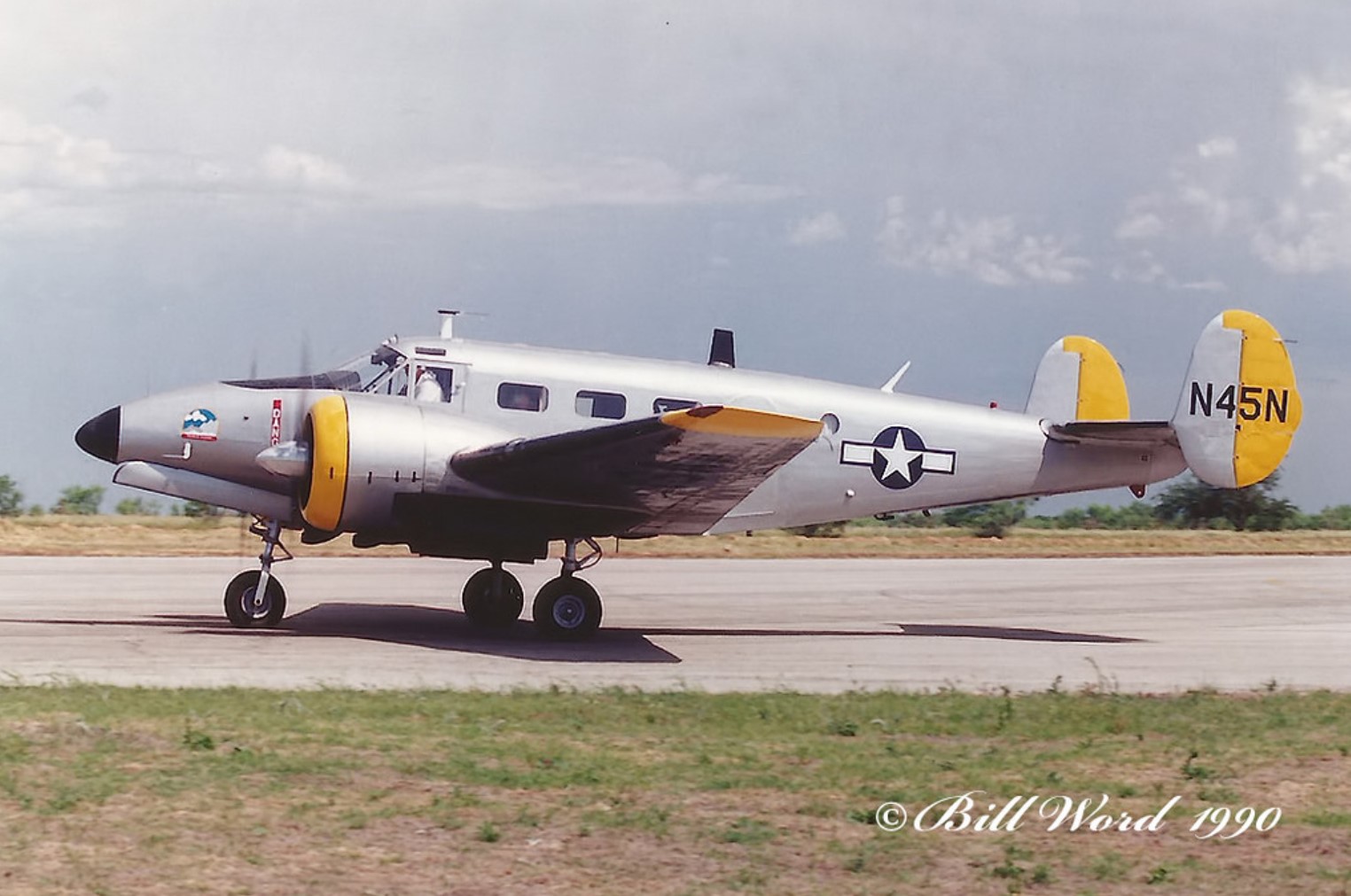
Crash of a Beechcraft UC-45-J Expeditor in Swan Lake: 3 killed

Date & Time: Sep 13, 2001 at 1735 LT
Type of aircraft:
Operator:
Registration:
N45N
Flight Phase:
Flight Type:
Survivors:
No
Schedule:
Swan Lake – Mayo
MSN:
5715
YOM:
1943
Location:
Country:
Crew on board:
1
Crew fatalities:
Pax on board:
2
Pax fatalities:
Other fatalities:
Total fatalities:
3
Captain / Total flying hours:
700
Captain / Total hours on type:
200.00
Circumstances:
The privately owned and operated Beech UC45-J was flying out of an outfitter's camp located near Swan Lake, Yukon Territory. The aircraft departed the clay-and-gravel strip for Mayo with one pilot, two passengers, luggage, and a reported load of 800 pounds of moose and caribou meat. The aircraft accelerated down the runway in a normal fashion, with the tail becoming airborne first. The aircraft left the surface of the runway and began a steep climb, followed by a yaw and bank to the left. The aircraft entered the Pleasant Creek valley off the end of the runway in a near-vertical, nose-down attitude. An explosion occurred, followed by a plume of smoke. Two persons immediately attempted to rescue the pilot and the passengers but discovered the aircraft partly submerged in the creek and engulfed in flames from the post-crash fire. There were no survivors.
Probable cause:
Findings as to Causes and Contributing Factors:
1. The meat was loaded into the aircraft on a slippery surface and not adequately secured.
2. The manner in which the meat was loaded and secured most likely allowed the load to shift to the rear of the cabin during take-off. This rearward shift resulted in the loss of pitch control and an aerodynamic stall from which the pilot could not recover.
Other Findings:
1. The aircraft's C of G was most likely at or aft of the aft limit before engine start.
Final Report:

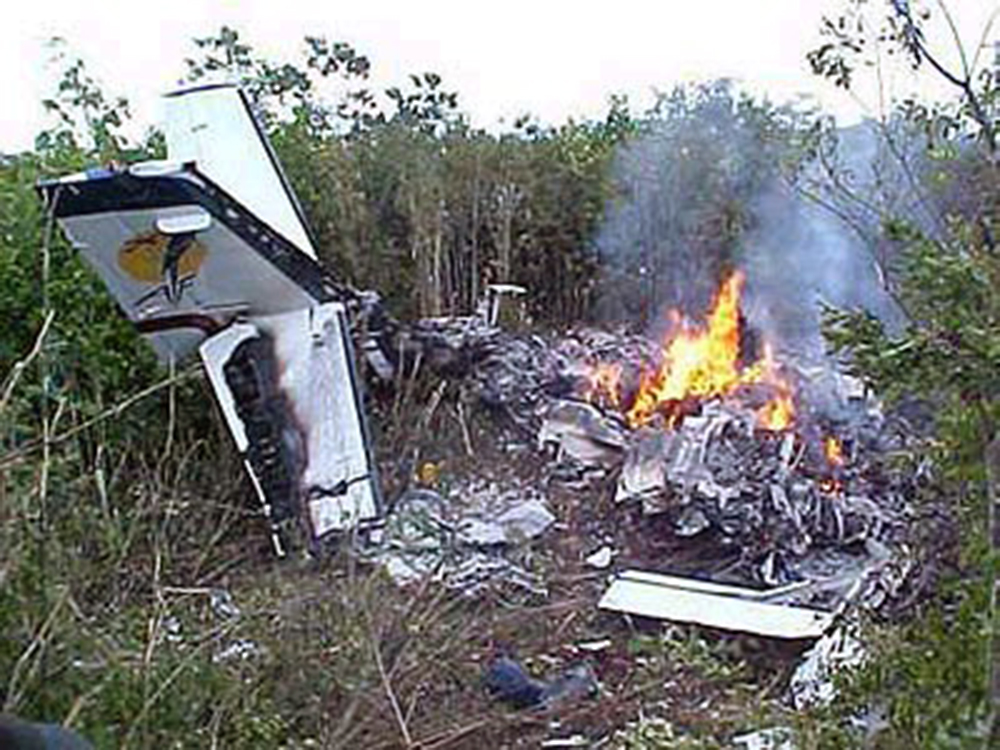
Crash of a Let L-410UVP-E in Chichén Itzá: 19 killed

Date & Time: Sep 12, 2001 at 1620 LT
Type of aircraft:
Operator:
Registration:
XA-ACM
Flight Phase:
Survivors:
No
Schedule:
Chichén Itzá – Cozumel
MSN:
89 24 01
YOM:
1989
Country:
Crew on board:
3
Crew fatalities:
Pax on board:
16
Pax fatalities:
Other fatalities:
Total fatalities:
19
Captain / Total flying hours:
7100
Copilot / Total flying hours:
1000
Aircraft flight hours:
1903
Aircraft flight cycles:
3654
Circumstances:
Shortly after takeoff from Chichén Itzá Airport runway 28, while climbing to a height of about 500 feet, the aircraft rolled to the right, stalled and crashed in a wooded area located about one km past the runway end, bursting into flames. The aircraft was totally destroyed by a post crash fire and all 19 occupants were killed, among them US and Canadian citizens and three Mexican, both pilots and a local tourist guide.
Probable cause:
It was determined that the aircraft rolled through 2,100 of the 2,800 metres of runway 28 and that the right engine failed while its propeller autofeathered. Investigations were unable to determine the exact cause of the right engine failure. Nevertheless, appropriate flight techniques were not applied by the crew.

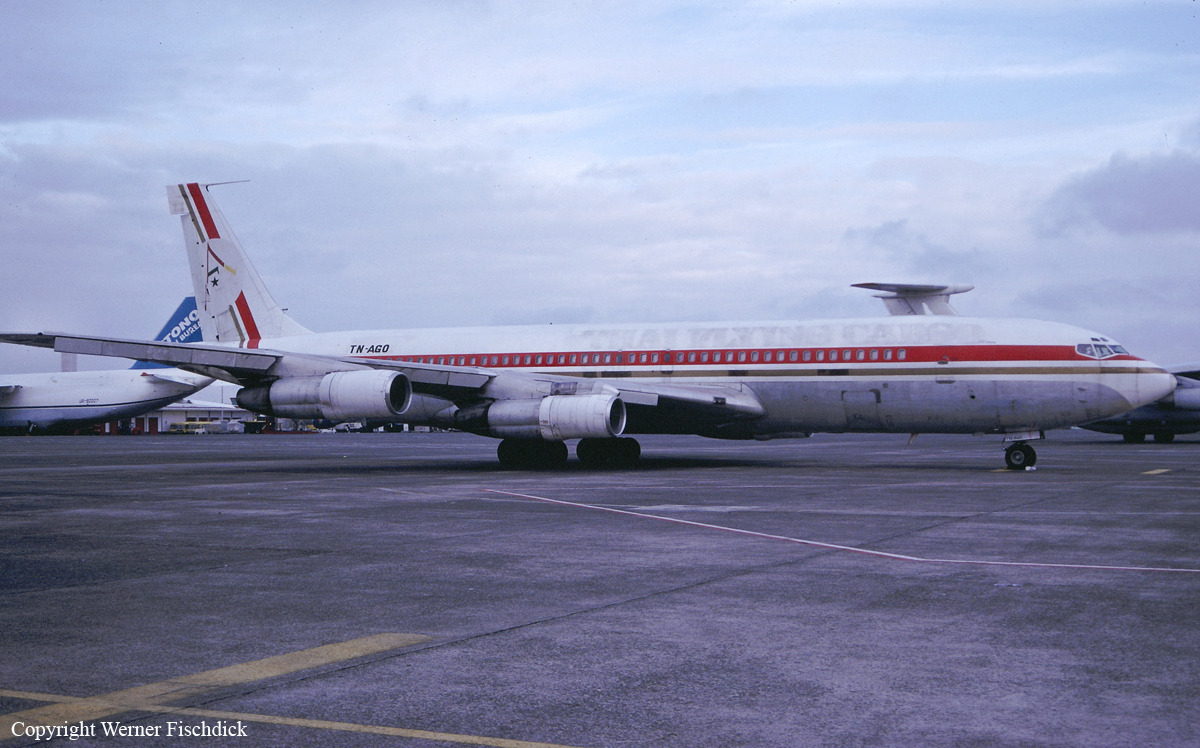
Crash of a Boeing 707-323C in Lubumbashi

Date & Time: Sep 7, 2001
Type of aircraft:
Operator:
Registration:
TN-AGO
Flight Type:
Survivors:
Yes
Schedule:
Lubumbashi – Kinshasa
MSN:
19519
YOM:
1967
Region:
Crew on board:
3
Crew fatalities:
Pax on board:
0
Pax fatalities:
Other fatalities:
Total fatalities:
0
Circumstances:
During the takeoff roll at Lubumbashi-Luano Airport, a deflector located on the right main gear failed. The crew continued the takeoff procedure and after liftoff, the right main gear could not be raised in its wheel well. Initially, the crew decided to continue to Kinshasa in a 'gear down' configuration but eventually decided to return to Lubumbashi for a safe landing. After touchdown, the aircraft deviated to the right of the runway centerline then veered off runway and came to rest in a ditch. All three crew members escaped uninjured while the aircraft was damaged beyond repair.

Crash of a Piper PA-31-350 Navajo Chieftain in Reading: 1 killed

Date & Time: Sep 5, 2001 at 1313 LT
Operator:
Registration:
N8PK
Flight Phase:
Flight Type:
Survivors:
No
Schedule:
Reading – Montgomery
MSN:
31-8152141
YOM:
1981
Crew on board:
1
Crew fatalities:
Pax on board:
0
Pax fatalities:
Other fatalities:
Total fatalities:
1
Captain / Total flying hours:
3230
Captain / Total hours on type:
20.00
Aircraft flight hours:
6204
Circumstances:
After takeoff, the pilot reported "an engine problem," but did not elaborate. A witness on the ground saw that the left engine was trailing smoke, but the engine was still operating, and did not sound like it was "missing". When asked by the tower controller if he required assistance, the pilot answered "no". The controller cleared the pilot for left traffic to a landing, and provided the current weather. There were no further transmissions from the pilot. Smoothed radar tracking data revealed that the airplane turned toward a left downwind, and leveled off at 1,400 feet msl (about 1,050 feet agl) and 156 knots. During the next 14 seconds, the airplane descended to 1,100 feet and increased airspeed to 173 knots. Then radar contact was lost. Witnesses observed the airplane variously in a right snap roll and a left wingover, followed by a sharp dive to the ground. The airplane had just undergone maintenance. During maintenance, unused oil was found in the left engine cowling, which the pilot admitted he had previously spilled. Following maintenance, the pilot was observed adding 3 additional quarts of oil to the left engine. The engine oil dipsticks were calibrated on both sides, with each side pertaining to the oil level in a specific engine. The side for the right engine was calibrated to read 1 3/4 quarts lower than the left engine. The airplane's wreckage was fragmented. No evidence of mechanical defect was found, nor was there any evidence of an extreme out-of-trim condition. There was also no evidence of engine failure, detonation, or pre-impact failure. The pilot held an airline transport pilot certificate. He reported 3,210 hours of flight time to the operator, and had recently been cleared to fly the airplane on 14 CFR Part 91 flights. The flight to the maintenance facility was the pilot's first solo flight in the airplane. An autopsy of the pilot revealed the presence of a prostate adenocarcinoma; however, according to his physician, the pilot was unaware of it.
Probable cause:
The pilot's loss of control for undetermined reasons, which resulted in a high speed dive to the ground.
Final Report: