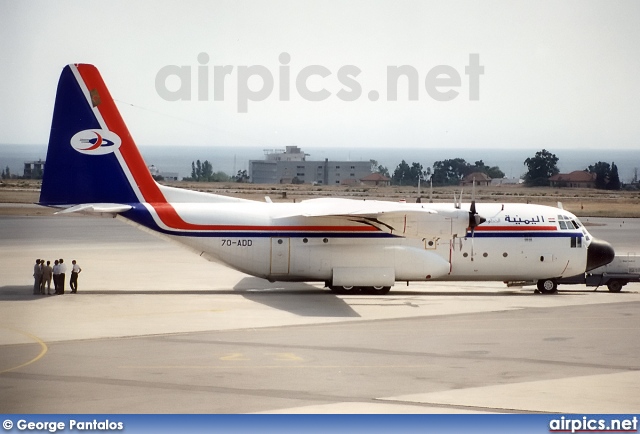
Crash of a Lockheed C-130H Hercules in Sanaa

Date & Time: Nov 18, 2010
Type of aircraft:
Operator:
Registration:
7O-ADD
Flight Type:
Survivors:
Yes
MSN:
4827
YOM:
1979
Country:
Region:
Crew on board:
0
Crew fatalities:
Pax on board:
0
Pax fatalities:
Other fatalities:
Total fatalities:
0
Circumstances:
After landing at Sanaa Airport, the four engine aircraft veered off runway and came to rest, bursting into flames. All occupants escaped uninjured. The fire was quickly extinguished but the aircraft was damaged beyond repair.

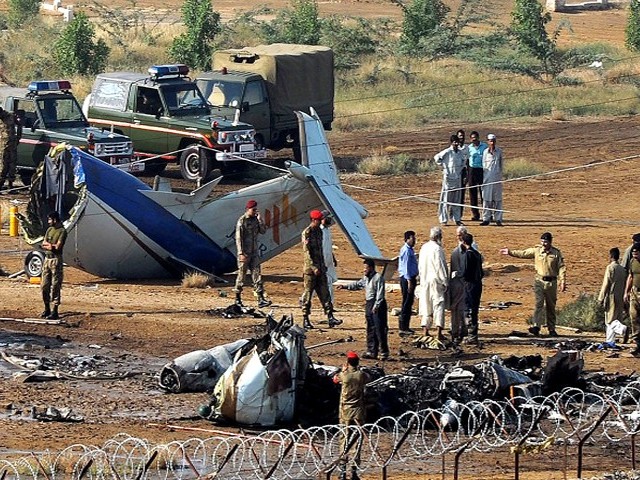
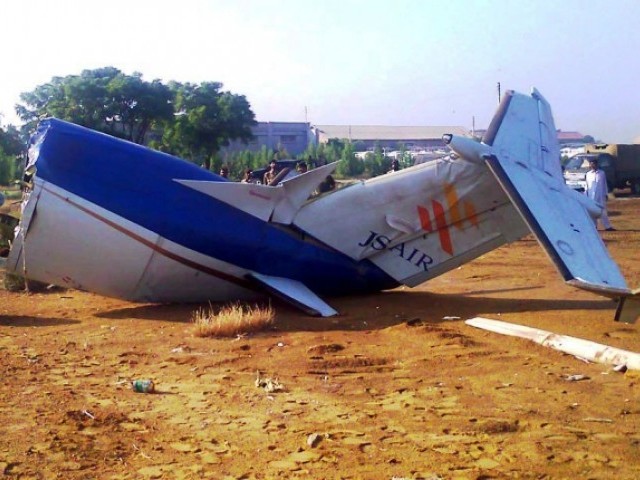
Crash of a Beechcraft 1900C-1 in Karachi: 21 killed

Date & Time: Nov 5, 2010 at 0706 LT
Type of aircraft:
Operator:
Registration:
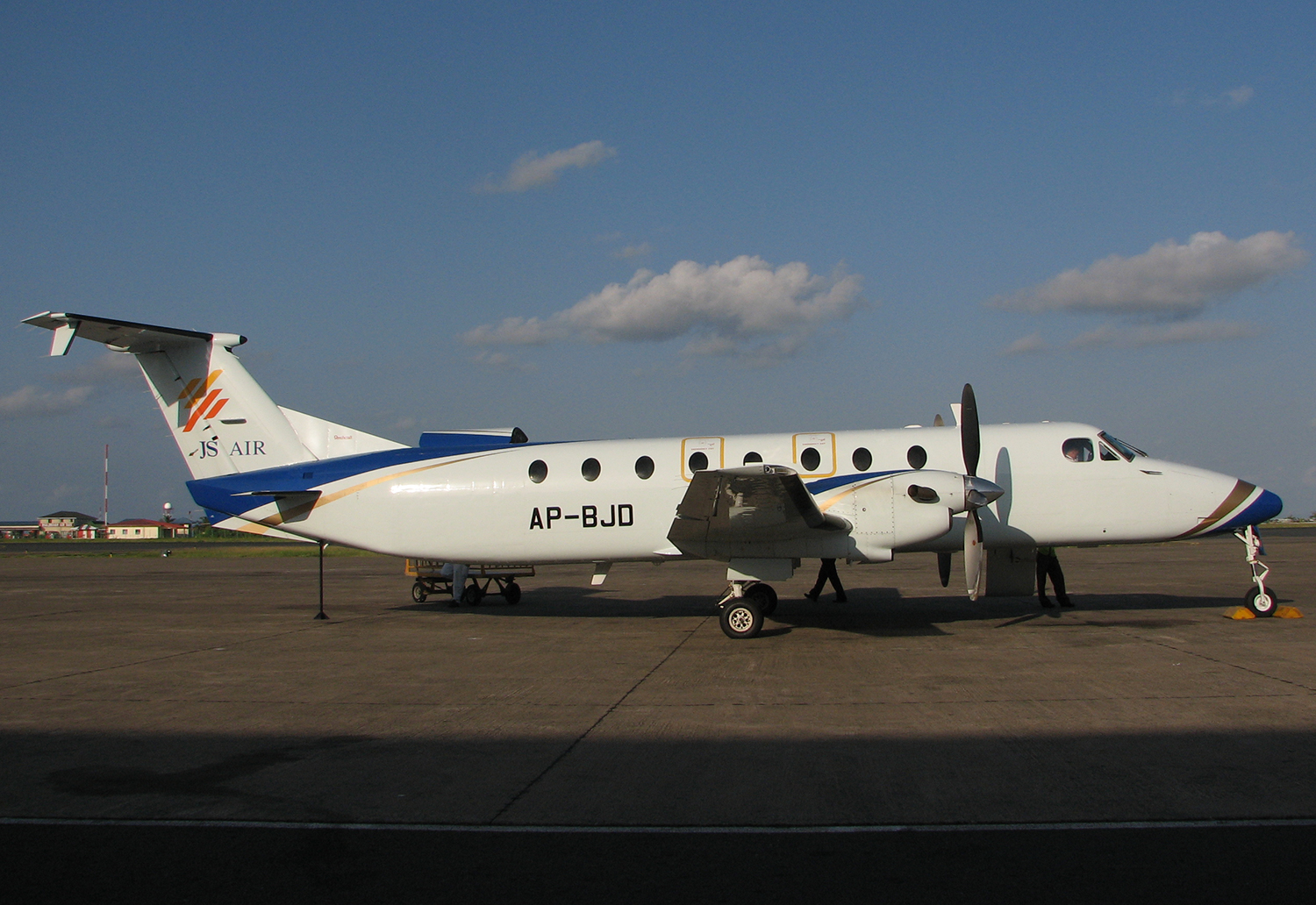
AP-BJD
Flight Phase:
Survivors:
No
Schedule:
Karachi - Bhit Shah
MSN:
UC-157
YOM:
1991
Country:
Region:
Crew on board:
2
Crew fatalities:
Pax on board:
19
Pax fatalities:
Other fatalities:
Total fatalities:
21
Captain / Total flying hours:
8114
Captain / Total hours on type:
1820.00
Copilot / Total flying hours:
1746
Copilot / Total hours on type:
1338
Aircraft flight hours:
18545
Aircraft flight cycles:
24990
Circumstances:
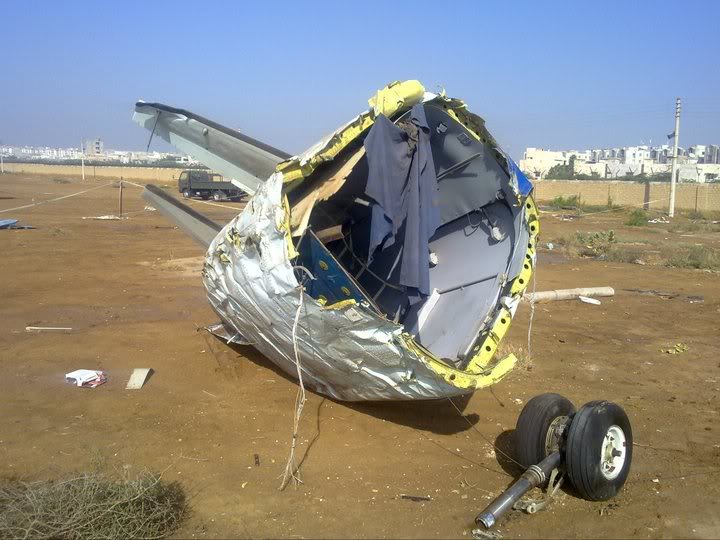
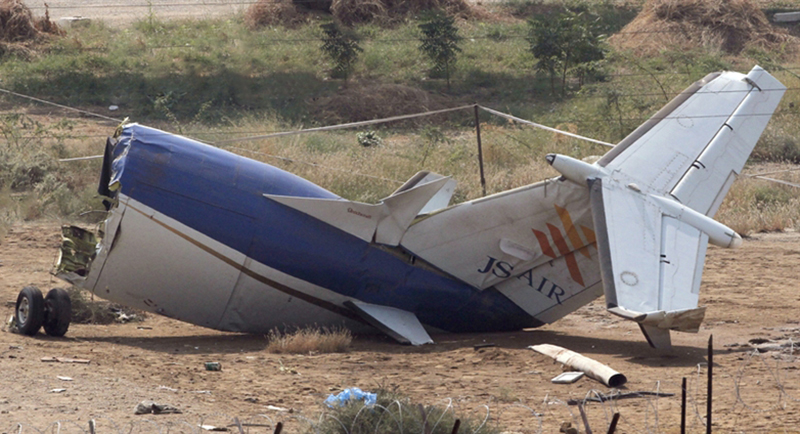
0C-1 aircraft Reg # AP-BJD was scheduled to fly chartered flight from Jinnah International Airport (JIAP), Karachi to Bhit Shah Oil Fields to convey 17 employees of M/s Eni company including one foreign national from Italy. The flight crew included two cockpit crew ie Captain and First Officer (FO), one JS (Air) ground crew (technician) and one Airport Security Force staff. The Mishap Aircraft (MA) took off from JIAP, Karachi at 02:04:31 UTC. The reported weather was fit for the conduct of ill-fated flight to Bhit Shah Oil Fields. After takeoff aircraft experienced Engine No 2 abnormal operation and cockpit crew decided to land back at JIAP Karachi after calling right hand downwind for runway 25R. While joining for right hand downwind for 25R the mishap aircraft could not sustain flight and crashed at a distance of around 1 nm from runway 07R beginning JIAP, Karachi. All souls (21) onboard got fatally injured as a result of aircraft ground impact and extensive post impact ground fire.
Probable cause:
Detailed investigation and analyses of the examinable evidence confirmed that the aircraft had developed some problem with its Engine No.2 (Right) immediately after takeoff which was observed by the cockpit crew as propeller feathering on its own. No concrete evidence could be found which would have led to the engine’s propeller malfunction as observed. The only probable cause of propeller feathering on its own could be the wear & tear of the beta valve leading to beta system malfunction. However, this anomaly at the most could have led to the non availability of one engine and making a safe landing with a single engine since the aircraft was capable of landing with a single engine operation. Some of the actions by the cockpit crew before takeoff and subsequent to the observed anomaly in the Engine No.2 were not according to the QRH / FCOM which aggravated the situation and resulted into the catastrophic accident.
The following factors contributed to the accident:
The aircraft accident took place as a result of combination of various factors which directly and indirectly contributed towards the causation of accident.
The primary cause of accident includes, inappropriate skill level of Captain to handle abnormal operation of engine No 2 just after takeoff, failure of cockpit crew to raise the landing gears after experiencing the engine anomaly, execution of remedial actions by FO before the attainment of minimum safe altitude of 400 ft AGL resulted in non conformance and non compliance of cockpit crew to OEM recommended procedures to handle such situations.
The lack of situational awareness and CRM failure directly contributed towards ineffective management of the flight deck by the cockpit crew.
The contributory factors include inadequate cockpit crew simulator training monitoring mechanism both at operator and CAA Pakistan levels in respect of correlation of previous / current performance and skill level of cockpit crew during the simulator training sessions along with absence of conduct of recurrent / refresher simulator training between two annual simulator checks in accordance with ICAO Annex-6 guidelines and CAA Pakistan (applicable ANOs) requirements for specific type of aircraft in a year.
Final Report:

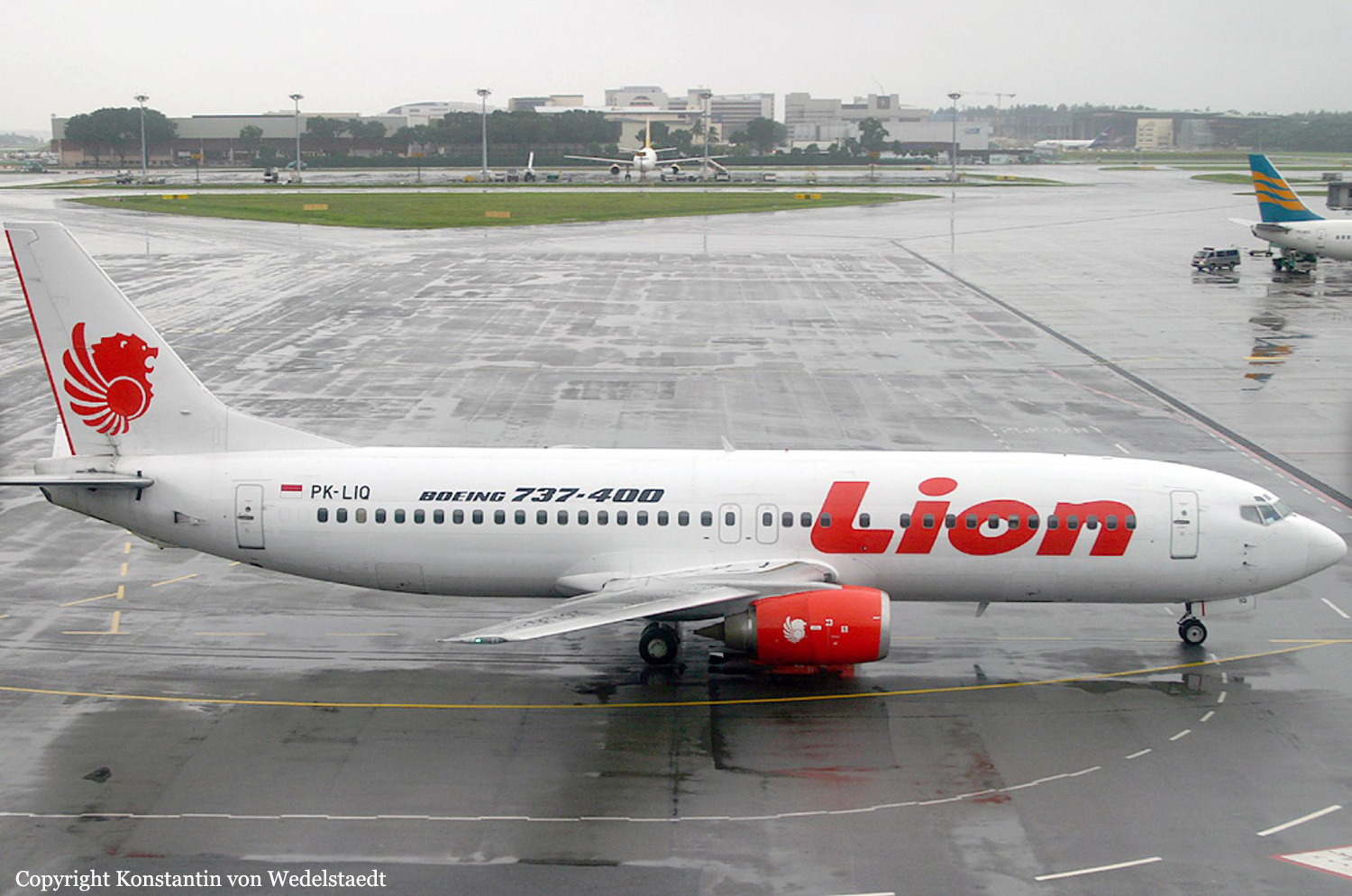
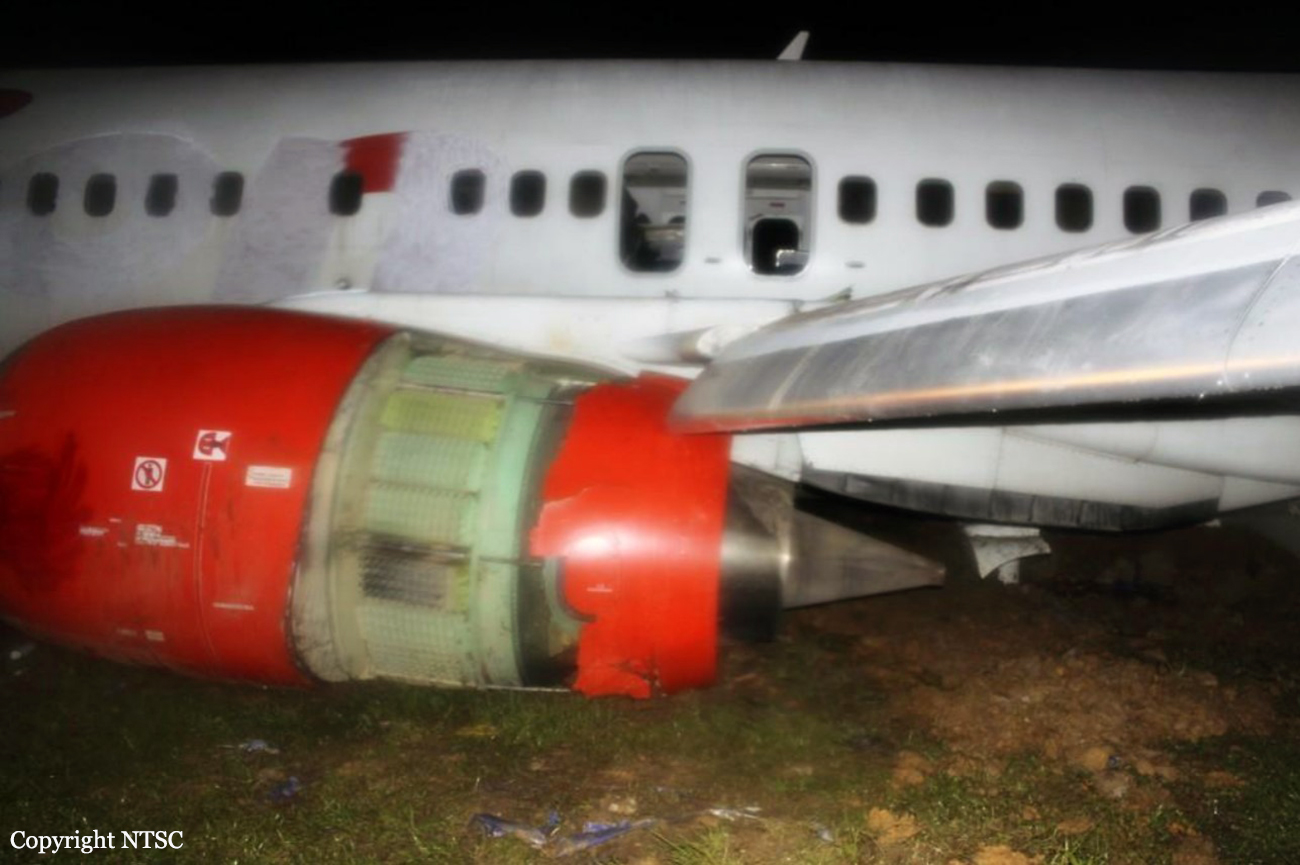
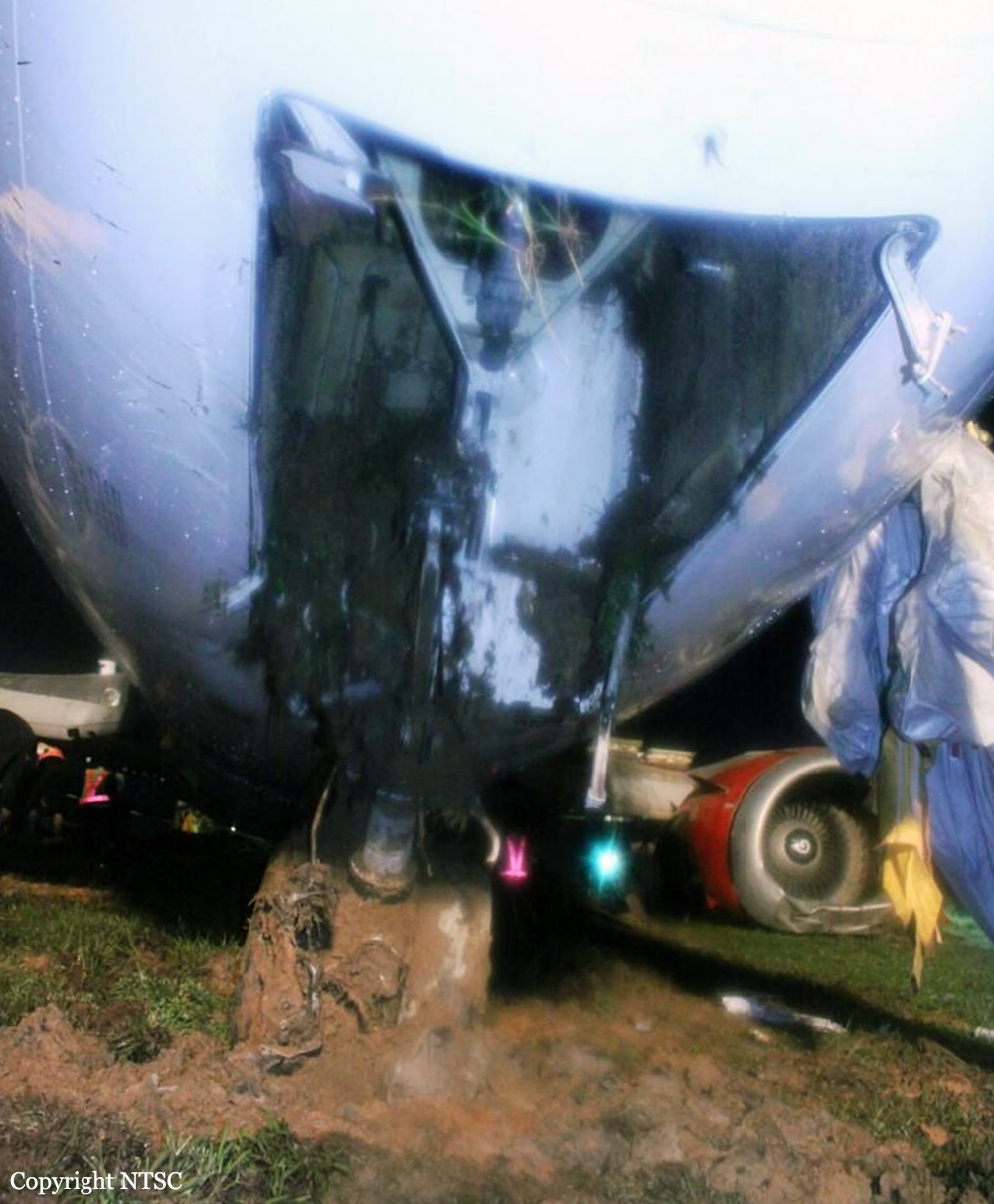
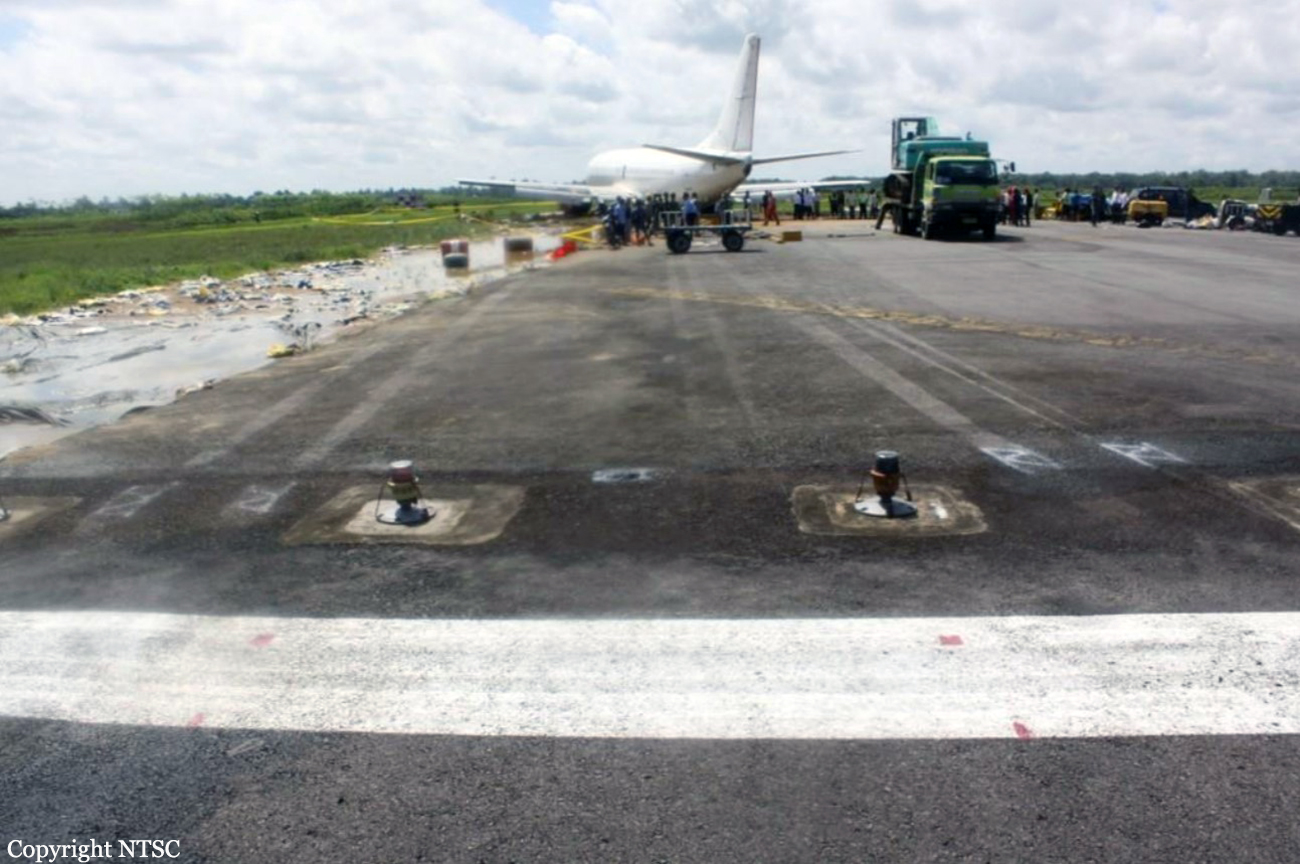
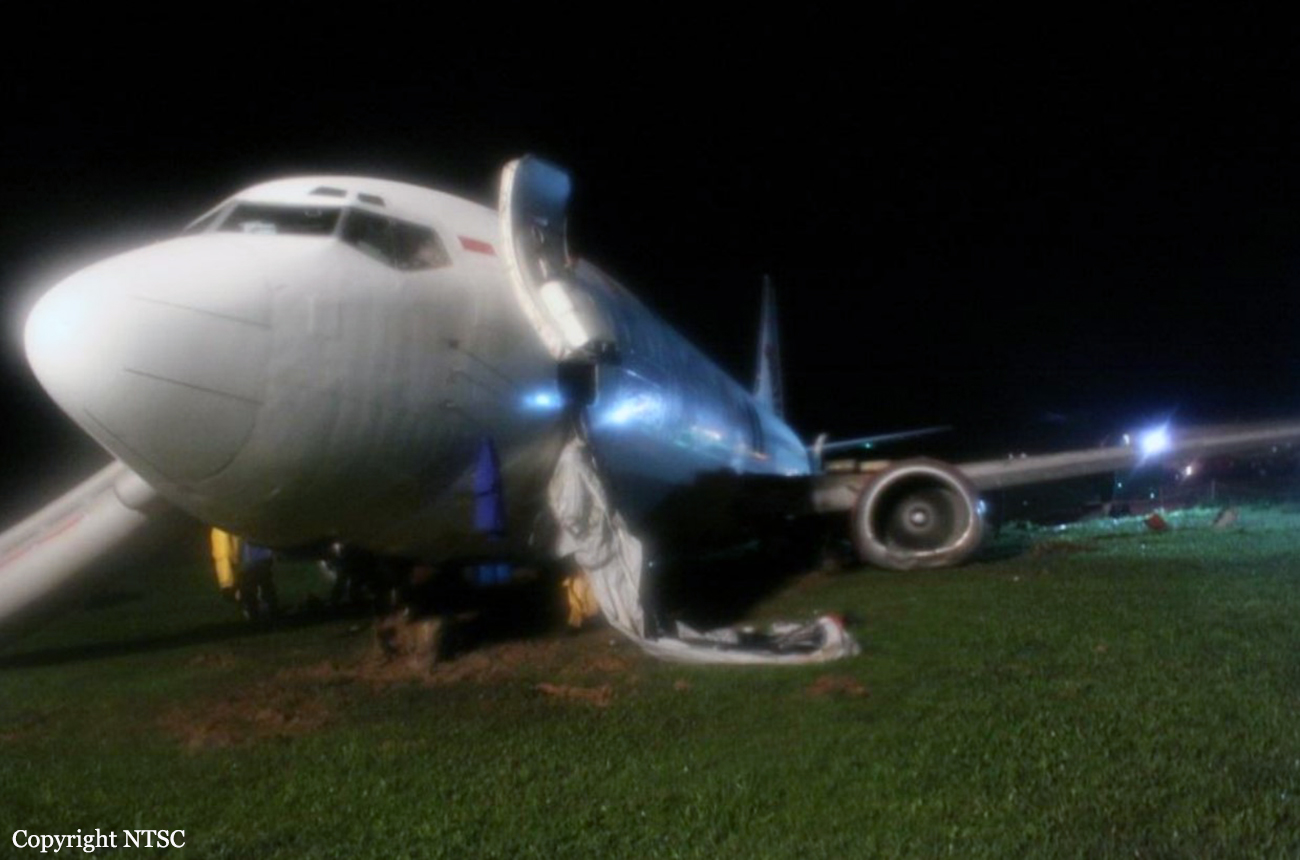
Crash of a Boeing 737-4Y0 in Pontianak

Date & Time: Nov 2, 2010 at 1118 LT
Type of aircraft:
Operator:
Registration:
PK-LIQ
Survivors:
Yes
Schedule:
Jakarta – Pontianak
MSN:
24911/2033
YOM:
1991
Flight number:
JT712
Country:
Region:
Crew on board:
6
Crew fatalities:
Pax on board:
169
Pax fatalities:
Other fatalities:
Total fatalities:
0
Captain / Total flying hours:
8190
Copilot / Total flying hours:
656
Aircraft flight hours:
49107
Aircraft flight cycles:
28889
Circumstances:
On 2 November 2010, a Boeing Company B737-400 aircraft, registered PK-LIQ, was being operated by Lion Mentari Airlines on a passenger schedule flight with flight number JT 712. This flight was the first flight for the crew and was scheduled for departure at 09.30 LT (02.30 UTC). On board the flight was 175 person included 2 pilots and 4 flight attendants and 169 passengers consisted 2 infants and one engineer. The pilots stated that the aircraft had history problem on the difficulty of selection the thrust reversers and automatic of the speed brake deployment. This problem was repetitive since the past three months. The aircraft pushed back at 0950 LT (0250 UTC). During taxi out, the yaw damper light illuminated for two times. The pilot referred to the Quick Reference Handbook (QRH) which guided the pilot to turn off the yaw dumper switch then back to turn on. Considered to these problems, the pilot asked the engineer to come to cockpit and asked to witness the problem. The aircraft departed Soekarno Hatta International Airport, Jakarta at 1012 LT (0312 UTC) with destination of Supadio Airport, Pontianak. The Pilot in Command acted as pilot flying (PF) and the Second in Command acted as pilot monitoring (PM). The flight to Pontianak until commenced for descent was uneventful. Prior to descend, the PF performed approach crew briefing with additional briefing included review of the past experiences on the repetitive problems of thrust reversers which sometimes hard to operate and the speed brake failed to auto deploy. Considering these problems, the PF asked to the PM to check and to remind him to the auto deployment of the speed brake after the aircraft touch down. During descend, the pilot was instructed by Pontianak Approach controller to conduct Instrument Landing System (ILS) approach for runway 15 and was informed that the weather was slight rain. On the initial approach, the auto pilot engaged, flaps 5° and aircraft speed 180 knots. After the aircraft captured the localizer at 1300 feet, the PF asked to the PM to select the landing gear down, flaps 15° and the speed decreased to 160 knots. The PF aimed to set the flaps landing configuration when the glide slope captured. When the glide slope captured, the auto pilot did not automatically follow the glide path and the aircraft altitude maintained at 1300 feet, resulted in the aircraft slightly above the normal glide path. The PF realized the condition then disengaged the auto pilot and the auto throttle simultaneously, and fly manually to correct the glide path by pushing the aircraft pitch down. While trying to regain the correct the glide path, the PF commanded for flaps 40° and to complete the landing checklist. The flap lever has been selected to 40°, but the indicator indicated at 30°. Realized to the flaps indication, the PF asked the landing speed for flaps 30° configuration in case the flaps could not move further to 40°. When aircraft altitude was 600 feet and the pilots completing the landing checklist, the PM reselected the flap from 30° to 40° and was successful. The pilots realized that the aircraft touched down was beyond the touchdown zone and during the landing roll the PF tried to select the thrust reverser but the levers were hard to select and followed by the speed brake failed to automatic-deploy. The pilots did not feel the deceleration, and then the PF applied maximum manual braking and selected the speed brake handle manually. Afterward, the thrust reversers successfully operated and a loud sound was heard prior to the aircraft stop. The Supadio tower controller on duty noticed that the aircraft was about to overrun the runway and immediately pressed the crash bell. The aircraft stopped at approximately 70 meters from the runway or 10 meters from the end of stop-way. The PIC then commanded to the flight attendants to evacuate the passengers through the exits. No one injured in this accident.
Probable cause:
The following factors were identified:
- Inconsistency to the Aircraft Maintenance Manual (AMM) for the rectifications performed during the period of the reversers and auto speed brake deployment problem was might probably result of the unsolved symptom problems.
- The decision to land during the un-stabilized approach which occurred from 1000 feet to 50 feet above threshold influenced by lack of crew ability in assessing to accurately perceive what was going on in the flight deck and outside the airplane.
- The effect of delayed of the speed brake and thrust reverser deployment effected to the aircraft deceleration which required landing distance greater than the available landing distance.
Final Report:

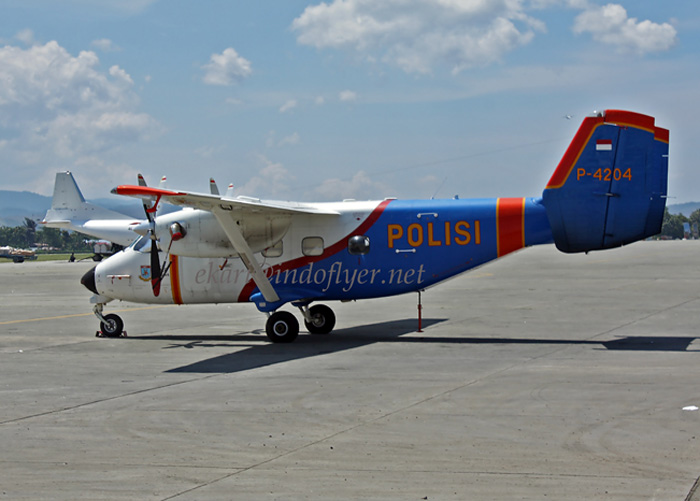
Crash of a PZL-Mielec M28-05PI Skytruck near Wami: 5 killed

Date & Time: Oct 27, 2010 at 1630 LT
Type of aircraft:
Operator:
Registration:
P-4204
Flight Phase:
Flight Type:
Survivors:
No
Schedule:
Nabire – Ambon – Ujung Pandang – Jakarta
MSN:
AJE003-07
YOM:
2004
Country:
Region:
Crew on board:
2
Crew fatalities:
Pax on board:
3
Pax fatalities:
Other fatalities:
Total fatalities:
5
Circumstances:
The twin engine aircraft departed Nabire Airport at 1555LT and was carrying three police officers and two pilots who were returning to Jakarta after they delivered aid to the victims of Wasior floods in West Papua. Two intermediate stops were scheduled in Ambon and Ujung Pandang (Makassar). En route, the aircraft crashed in unknown circumstances near Wami, most probably due to poor weather conditions. The wreckage was found a day later and all five occupants were killed.

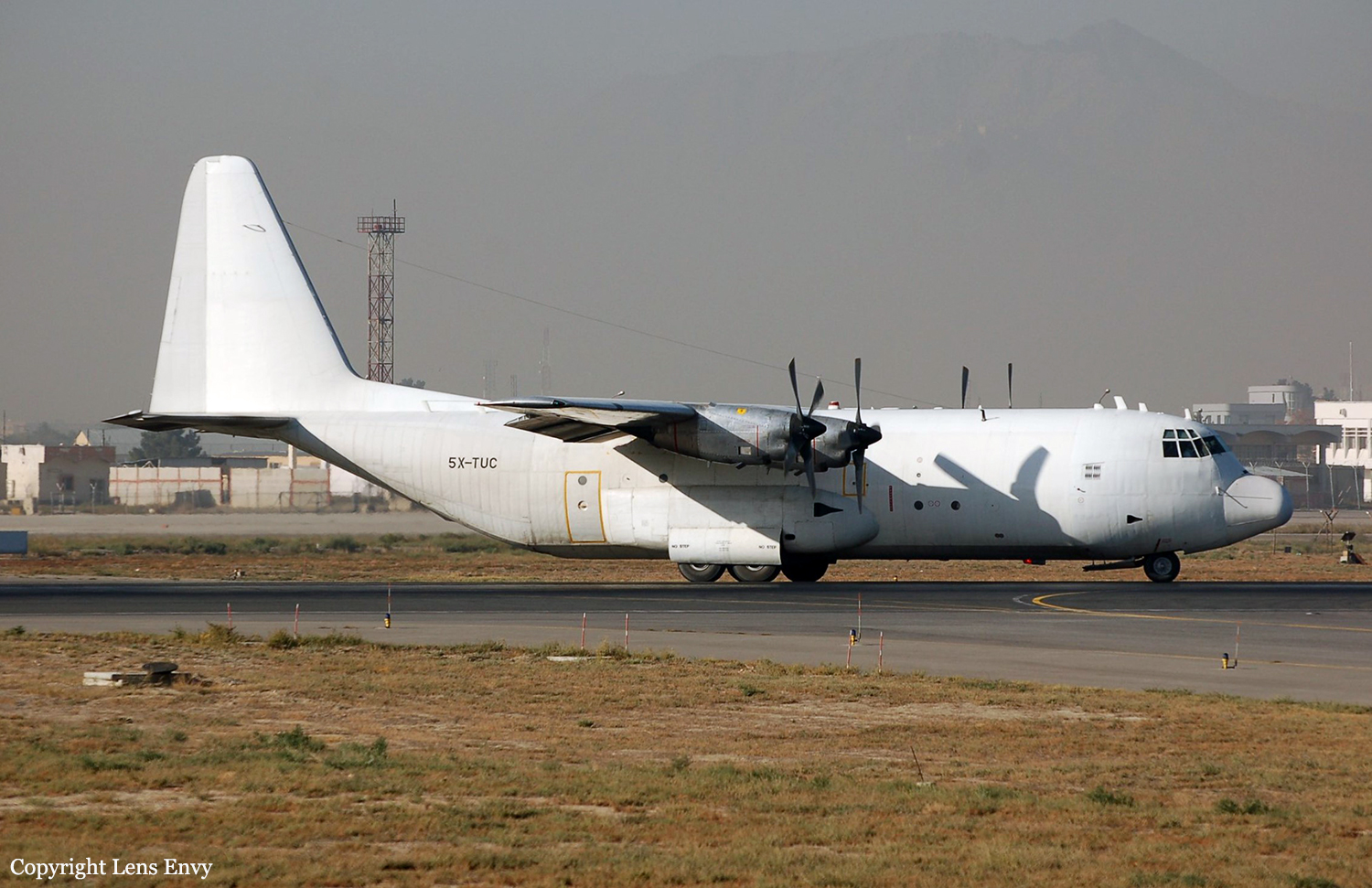
Crash of a Lockheed L-382E-20C Hercules near Kabul: 8 killed

Date & Time: Oct 12, 2010 at 1950 LT
Type of aircraft:
Operator:
Registration:
5X-TUC
Flight Phase:
Flight Type:
Survivors:
No
Site:
Schedule:
Bagram - Kabul
MSN:
4362
YOM:
1969
Flight number:
NCR662
Location:
Country:
Region:
Crew on board:
8
Crew fatalities:
Pax on board:
0
Pax fatalities:
Other fatalities:
Total fatalities:
8
Circumstances:
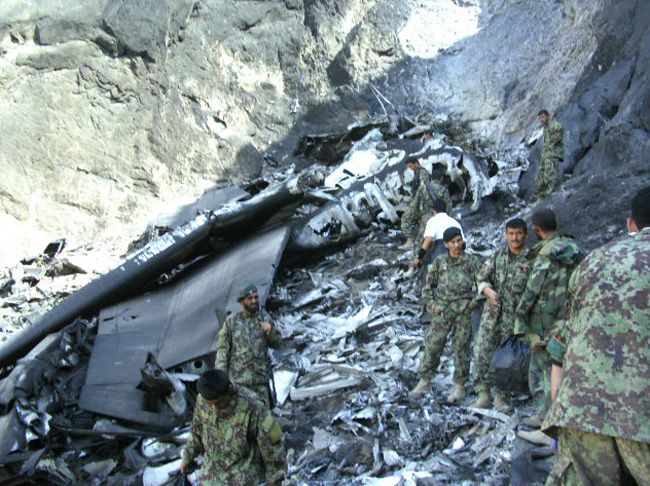
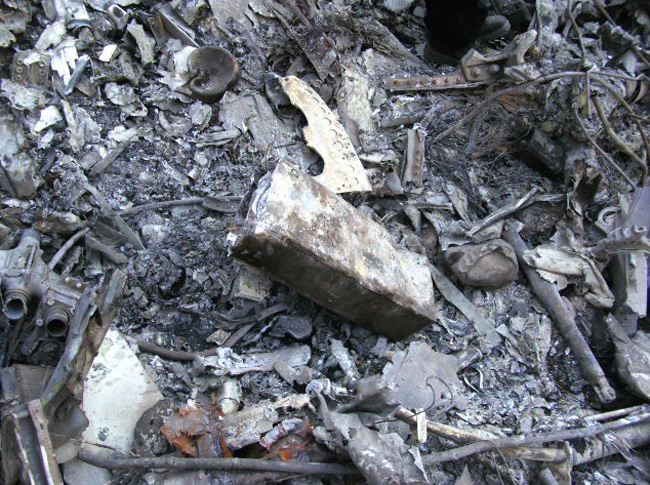
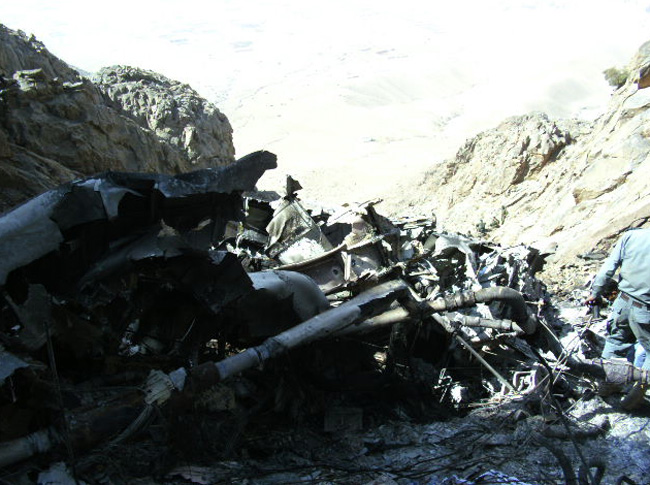
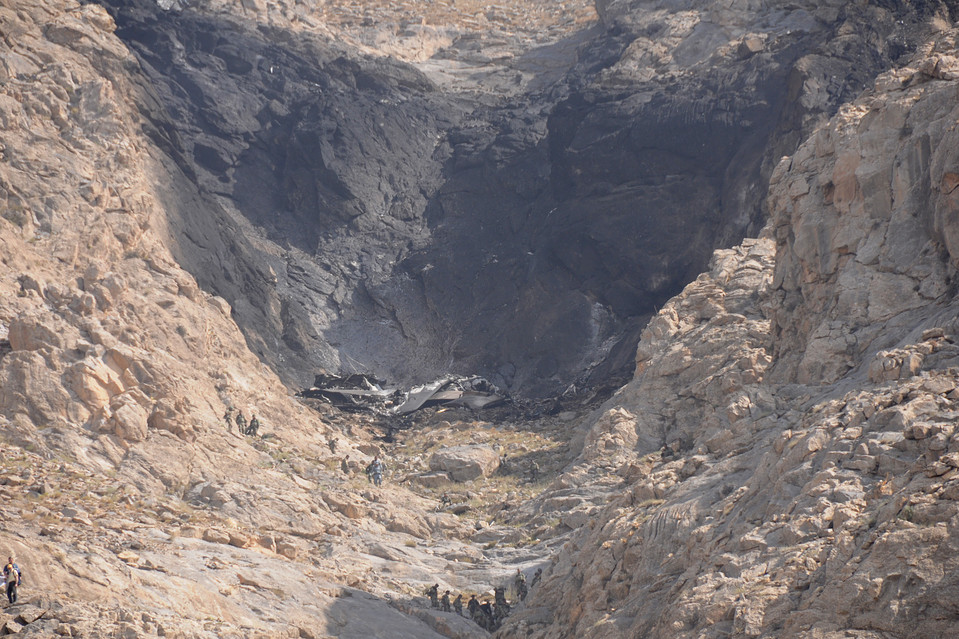
The four engine aircraft departed Bagram AFB on a short flight to Kabul, carrying 8 crew members and a load of various equipment on behalf of the NATO forces based in Pakistan. En route, while cruising by night, the aircraft impacted a rocky face located 30 km east of Kabul. The aircraft disintegrated on impact and all 8 occupants were killed.
Probable cause:
Controlled flight into terrain.

Crash of a Cessna 208B Grand Caravan near Kirensk

Date & Time: Oct 2, 2010 at 1024 LT
Type of aircraft:
Operator:
Registration:
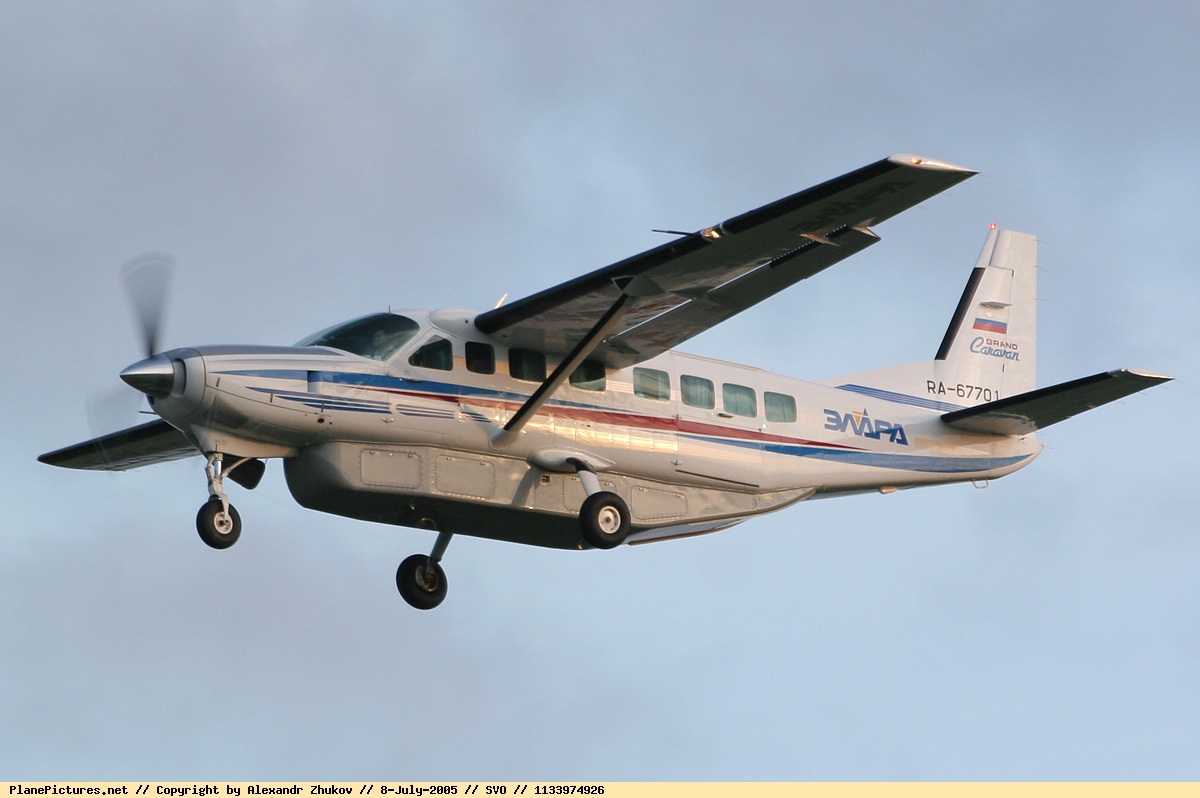
RA-67701
Flight Phase:
Survivors:
Yes
Schedule:
Lensk – Bratsk
MSN:
208B-0932
YOM:
2002
Country:
Region:
Crew on board:
2
Crew fatalities:
Pax on board:
7
Pax fatalities:
Other fatalities:
Total fatalities:
0
Captain / Total flying hours:
13358
Captain / Total hours on type:
4083.00
Copilot / Total flying hours:
4824
Copilot / Total hours on type:
757
Aircraft flight hours:
3203
Aircraft flight cycles:
1423
Circumstances:
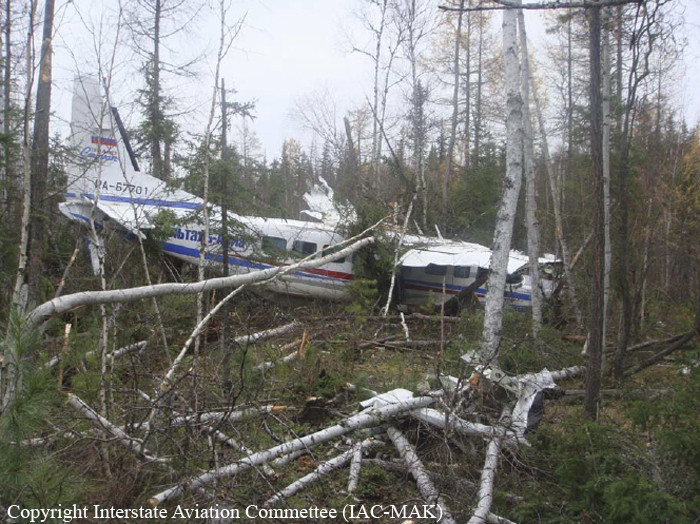
The single engine aircraft departed Lensk at 0813LT on a flight to Bratsk. While cruising at 4,200 metres over the cloud layer, the engine failed. The crew elected to divert to Kirensk Airport but was unable to maintain a safe altitude. Eventually, the captain attempted an emergency landing when the aircraft impacted trees and crashed in a wooded area located 37 km west of Kirensk. All nine occupants were injured and the aircraft was damaged beyond repair.
Probable cause:
Engine failure due to the damage of the bearings of the planetary gear from the first stage of the compressor, leading to vibration and destruction of the turbine. It is possible the damage to the bearings was caused by the presence of aluminium or silicon oxide. However, it was not possible to determinate the source of this contamination.

Crash of a Boeing 747-44AF near Dubai: 2 killed

Date & Time: Sep 3, 2010 at 1941 LT
Type of aircraft:
Operator:
Registration:
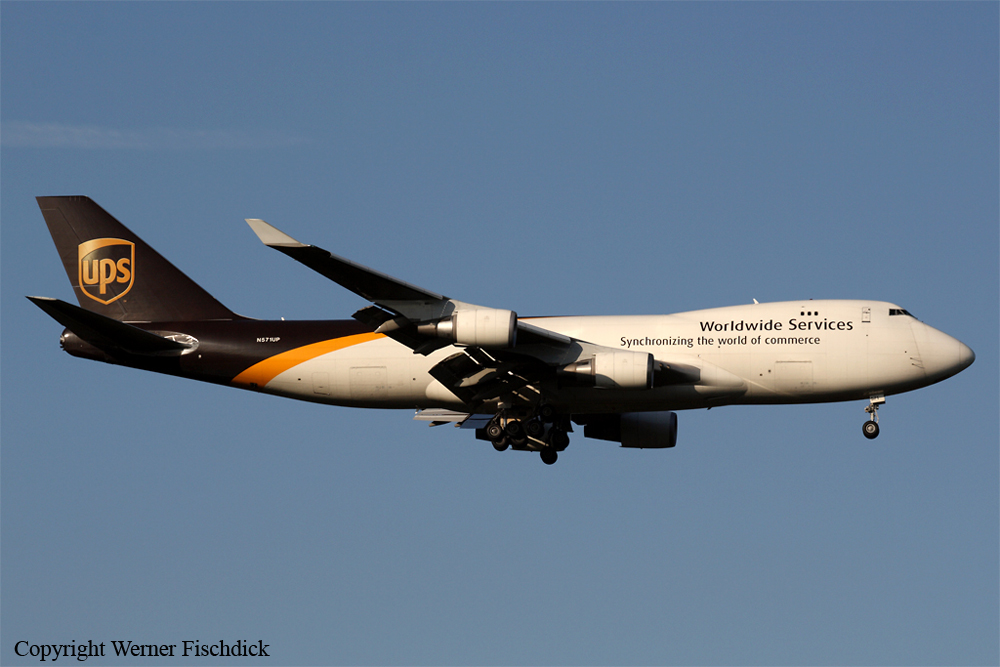
N571UP
Flight Type:
Survivors:
No
Schedule:
Hong Kong - Dubai - Cologne
MSN:
35668/1393
YOM:
2007
Flight number:
UPS006
Location:
Region:
Crew on board:
2
Crew fatalities:
Pax on board:
0
Pax fatalities:
Other fatalities:
Total fatalities:
2
Captain / Total flying hours:
11410
Captain / Total hours on type:
367.00
Copilot / Total flying hours:
6130
Copilot / Total hours on type:
78
Aircraft flight hours:
9977
Aircraft flight cycles:
1764
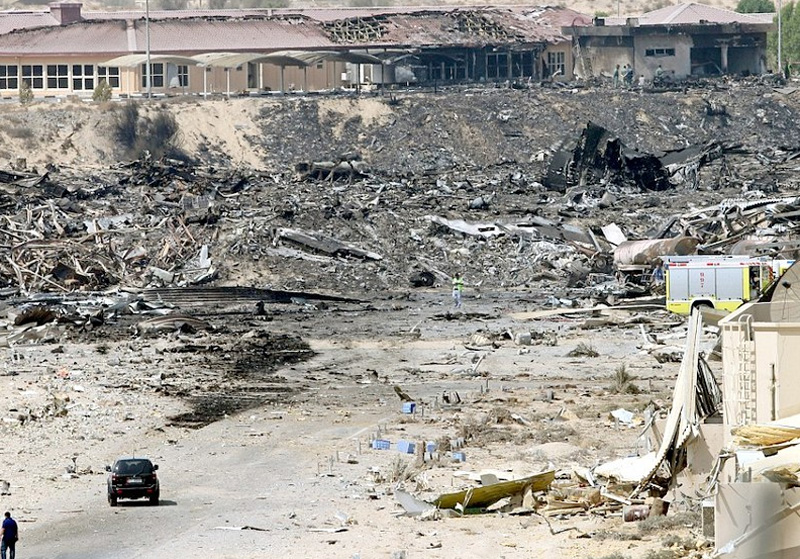
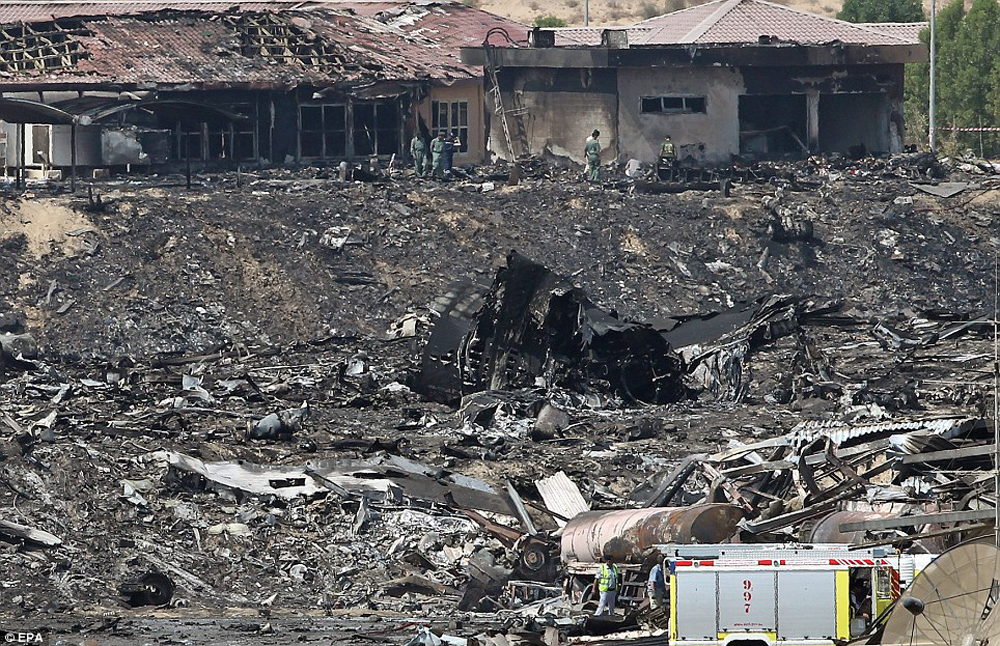
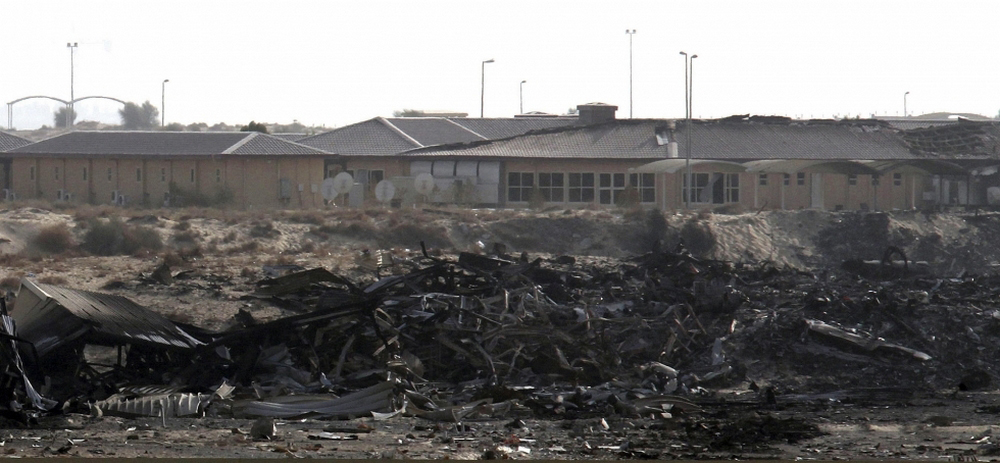
Circumstances:
The four engine aircraft was completing a cargo flight from Hong Kong to Cologne with an intermediate stop in Dubai with two pilots on board. One minute after passing the BALUS waypoint, approaching the top of climb, as the aircraft was climbing to the selected cruise altitude of 32,000 feet, the Fire Warning Master Warning Light illuminated and the Audible Alarm [Fire Bell] sounded, warning the crew of a fire indication on the Main Deck Fire - Forward. The captain advised BAE-C that there was a fire indication on the main deck of the aircraft, informing Bahrain ATC that they needed to land as soon as possible. BAE-C advised that Doha International Airport (DOH) was at the aircraft’s 10 o’clock position 100 nm DME from the current location. The Captain elected to return to the point of departure, DXB. The crew changed the selected altitude from 32,000 feet to 28,000 feet as the aircraft changed heading back to DXB, the Auto Throttle [AT] began decreasing thrust to start the decent. The AP was manually disconnected, then reconnected , followed by the AP manually disconnecting for a short duration, the captain as handling pilot was manually flying the aircraft. Following the turn back and the activation of the fire suppression, for unknown reasons, the PACK 1 status indicated off line [PACKS 2 and 3 were off], in accordance with the fire arm switch activation. There was no corresponding discussion recorded on the CVR that the crew elected to switch off the remaining active PACK 1. As the crew followed the NNC Fire/Smoke/Fumes checklist and donned their supplemental oxygen masks, there is some cockpit confusion regarding the microphones and the intra-cockpit communication as the crew cannot hear the microphone transmissions in their respective headsets. The crew configured the aircraft for the return to DXB, the flight was in a descending turn to starboard onto the 095° reciprocal heading for DXB when the Captain requested an immediate descent to 10,000 ft. The reason for the immediate descent was never clarified in the available data. The AP was disengaged, the Captain then informed the FO that there was limited pitch control of the aircraft when flying manually. The Captain was manually making inputs to the elevators through the control column, with limited response from the aircraft. The flight was approximately 4 minutes into the emergency. The aircraft was turning and descending, the fire suppression has been initiated and there was a pitch control problem. The cockpit was filling with persistent continuous smoke and fumes and the crew had put the oxygen masks on. The penetration by smoke and fumes into the cockpit area occurred early into the emergency. The cockpit environment was overwhelmed by the volume of smoke. There are several mentions of the cockpit either filling with smoke or being continuously ‘full of smoke’, to the extent that the ability of the crew to safely operate the aircraft was impaired by the inability to view their surroundings. Due to smoke in the cockpit, from a continuous source near and contiguous with the cockpit area [probably through the supernumerary area and the ECS flight deck ducting], the crew could neither view the primary flight displays, essential communications panels or the view from the cockpit windows. The crew rest smoke detector activated at 15:15:15 and remained active for the duration of the flight. There is emergency oxygen located at the rear of the cockpit, in the supernumerary area and in the crew rest area. Due to the persistent smoke the Captain called for the opening of the smoke shutter, which stayed open for the duration of the flight. The smoke remained in the cockpit area. There was a discussion between the crew concerning inputting the DXB runway 12 Left [RWY12L] Instrument Landing System [ILS] data into the FMC. With this data in the FMC the crew can acquire the ILS for DXB RWY12L and configure the aircraft for an auto flight/auto land approach. The F.O. mentions on several occasions difficulty inputting the data based on the reduced visibility. However, the ILS was tuned to a frequency of 110.1 (The ILS frequency for DXB Runway 12L is 110.126), the Digital Flight Data Recorder [DFDR] data indicates that this was entered at 15:19:20 which correlates which the CVR discussion and timing. At approximately 15:20, during the emergency descent at around 21,000ft cabin pressure altitude, the Captain made a comment concerning the high temperature in the cockpit. This was followed almost immediately by the rapid onset of the failure of the Captain’s oxygen supply. Following the oxygen supply difficulties there was confusion regarding the location of the alternative supplementary oxygen supply location. The F.O either was not able to assist or did not know where the oxygen bottle was located; the Captain then gets out of the LH seat. This CVR excerpt indicates the following exchange between the Captain and F.O concerning the mask operation and the alternative oxygen supply bottle location. The exchange begins when the Captain’s oxygen supply stops abruptly with no other indications that the oxygen supply is low or failing. Based on the pathological information, the Captain lost consciousness due to toxic poisoning. After the Captain left the LH cockpit seat, the F.O. assumed the PF role. The F.O. remained in position as P.F. for the duration of the flight. There was no further interaction from the Captain or enquiry by the F.O as to the location of the Captain or the ability of the Captain to respond. The PF informed the BAE-C controllers that due to the limited visibility in the cockpit that it was not possible to change the radio frequency on the Audio Control Panel [ACP]. This visibility comment recurs frequently during the flight. The Bahrain East controller was communicating with the emergency aircraft via relays. Several were employed during the transition back to DXB. The aircraft was now out of effective VHF radio range with BAE-C. In order for the crew to communicate with BAE-C, BAE-C advised transiting aircraft that they would act as a communication relay between BAE-C and the emergency aircraft. BAE-C would then communicate to the UAE controllers managing the traffic in the Emirates FIR via a landline, who would then contact the destination aerodrome at Dubai, also by landline. The crew advised relay aircraft that they would stay on the Bahrain frequency as they could not see the ACP to change frequency. All of the 121.5 MHz transmissions by the PF were keyed via the VHF-R, all other radio communication with BAE-C and the relay aircraft are keyed from the VHF-L audio panel. There are several attempts by the UAE’s Area Control [EACC] to contact the flight on the guard frequency in conjunction with aircraft relaying information transmitting on the guard frequency to the accident flight. The PF of the accident flight does not appear to hear any of the transmissions from the air traffic control units or the relay aircraft on the guard frequency. Around this time, given the proximity of the aircraft to the RWY12L intermediate approach fix, Dubai ATC transmits several advisory messages to the flight on the Dubai frequencies, for example DXB ARR on 124.9 MHz advise that ‘Any runway is available’. The Runway lights for RWY30L were turned on to assist the return to DXB. The Aircraft condition inbound as the flight approached DXB for RWY12L. The computed airspeed was 350 knots, at an altitude of 9,000 feet and descending on a heading of 105° which was an interception heading for the ILS at RWY12L. The FMC was tuned for RWY12L, the PF selected the ‘Approach’ push button on the Mode Control Panel [MCP] the aircraft captures the Glide Slope (G/S). The AP did not transition into the Localizer Mode while the Localizer was armed. ATC, through the relay aircraft advised the PF, ‘you're too fast and too high can you make a 360? Further requesting the PF to perform a ‘360° turn if able’. The PF responded ‘Negative, negative, negative’ to the request. The landing gear lever was selected down at 15:38:00, followed approximately 20 seconds later by an the aural warning alarm indicating a new EICAS caution message, which based on the data is a Landing Gear Disagree Caution. At 15:38:20 the PF says: ‘I have no, uh gear’. Following the over flight of DXB, on passing north of the aerodrome abeam RWY12L. The last Radar contact before the flight passed into the zone of silence was at 15:39:03. The flight was on a heading of 89° at a speed of 320 knots , altitude 4200 feet and descending. The flight was cleared direct to Sharjah Airport (SHJ), SHJ was to the aircraft’s left at 10 nm, the SHJ runway is a parallel vector to RWY12L at DXB. The relay pilot asked the PF if it was possible to perform a left hand turn. This turn, if completed would have established the flight onto an approximate 10 mile final approach for SHJ RWY30. The flight was offered vectors to SHJ (left turn required) and accepts. The relay aircraft advised that SHJ was at 095° from the current position at 10 nm. The PF acknowledged the heading change to 095° for SHJ. For reasons undetermined the PF selected 195° degrees on the Mode Control Panel [MCP], the AP was manually disconnected at 15:40:05, the aircraft then banked to the right as the FMC captured the heading change, rolled wings level on the new heading, the throttles were then retarded, the aircraft entered a descending right hand turn at an altitude of 4000 feet, the speed gradually reduced to 240 kts. The PF made a series of pitch inputs which had a limited effect on the descent profile; the descent is arrested temporarily. There then followed a series of rapid pitch oscillations. These were not phugoid oscillations, these were commanded responses where the elevator effectiveness decreased rapidly as the airspeed decayed and the elevators could not compensate for the reduced thrust moment from the engines to maintain level flight in a steady state. This was due to the desynchronization of the control column inputs and the elevators. At this point had the aircraft remained on the current heading and descent profile it would have intercepted the terrain at or near a large urban conurbation, Dubai Silicone Oasis. The PF was in VHF communication with the relay aircraft requesting positional, speed and altitude information. From this point onwards, approximately 50 seconds elapse prior to the data ending. The effectiveness of the pitch control immediately prior to the end of the data was negligible. The control column was fully aft when the data ended, there was no corresponding elevator movement. The aircraft lost control in flight and made an uncontrolled descent into terrain.
Probable cause:
Probable causes:
- A large fire developed in palletized cargo on the main deck at or near pallet positions 4 or 5, in Fire Zone 3, consisting of consignments of mixed cargo including a significant number of lithium type batteries and other combustible materials. The fire escalated rapidly into a catastrophic uncontained fire.
- The large, uncontained cargo fire, that originated in the main cargo deck caused the cargo compartment liners to fail under combined thermal and mechanical loads.
- Heat from the fire resulted in the system/component failure or malfunction of the truss assemblies and control cables, directly affecting the control cable tension and elevator function required for the safe operation of the aircraft when in manual control.
- The uncontained cargo fire directly affected the independent critical systems necessary for crew survivability. Heat from the fire exposed the supplementary oxygen system to extreme thermal loading, sufficient to generate a failure. This resulted in the oxygen supply disruption leading to the abrupt failure of the Captain’s oxygen supply and the incapacitation of the captain.
- The progressive failure of the cargo compartment liner increased the area available for the smoke and fire penetration into the fuselage crown area.
- The rate and volume of the continuous toxic smoke, contiguous with the cockpit and supernumerary habitable area, resulted in inadequate visibility in the cockpit, obscuring the view of the primary flight displays, audio control panels and the view outside the cockpit which prevented all normal cockpit functioning.
- The shutdown of PACK 1 for unknown reasons resulted in loss of conditioned airflow to the upper deck causing the Electronic Equipment Cooling [EEC] system to reconfigure to “closed loop mode”. The absence of a positive pressure differential contributed to the hazardous quantities of smoke and fumes entering the cockpit and upper deck, simultaneously obscuring the crew’s view and creating a toxic environment.
- The fire detection methodology of detecting smoke sampling as an indicator of a fire is inadequate as pallet smoke masking can delay the time it takes for a smoke detection system to detect a fire originating within a cargo container or a pallet with a rain cover.
Contributing Factors:
- There is no regulatory FAA requirement in class E cargo compartments for active fire suppression.
- Freighter main deck class E fire suppression procedures which relay on venting airflow and depressurisation as the primary means of controlling a fire are not effective for large Class E cargo fires involving dangerous goods capable of Class D metal fire combustion.
- No risk assessment had been made for the failure of the cargo compartment liner based on the evolution of cargo logistics and associated cargo content fire threats, cargo hazards and bulk carriage of dangerous goods.
- The regulation standards for passive fire suppression do not adequately address the combined total thermal energy released by current cargo in a large cargo fire and the effect this has on the protection of critical systems.
- FAA and EASA regulatory requirements do not recognize the current total fire risk associated with pallets, pallet covers and containers as demonstrated by the NTSB/FAA testing.
- Class 9 Hazmat packing regulations do not address the total or potential fire risk that can result from lithium battery heat release during thermal runaway. Although non-bulk specification packaging is designed to contain leaks and protect the package from failure, the packaging for Class 9 does not function to contain thermal release.
- The growth rate of container and pallet fires after they become detectable by the aircraft’s smoke detection system can be extremely fast, precluding any mitigating action and resulting in an overwhelming total energy release and peak energy release rate for a standard fire load that cannot be contained.
- The course to return to Dubai required a series of complex radio communication relays due to the Pilot Flying’s inability to view and tune the radio transceivers.
- The relay communication between the Pilot Flying, relay aircraft and the various ATC stations resulted in communication confusion, incomplete and delayed communications, which contributed to the escalated workload and task saturation for the Pilot Flying.
- The Fire Main Deck non-normal checklist in the QRH was not fully completed by the crew or adhered to regarding the fire suppression flight level or land at nearest airport instruction.
- Task saturation due to smoke and multiple systems failures prevented effective use of the checklist by the crew.
- Communications between the ATCO units involved multiple stages of information exchange by landline and the destination aerodrome was not fully aware of the specific nature of the emergency, the difficulty that the Pilot Flying was experiencing or the assistance required.
- The Pilot Flying had not selected transponder code 7700, the emergency code, when radio communication with the destination aerodrome was not established.
Final Report:

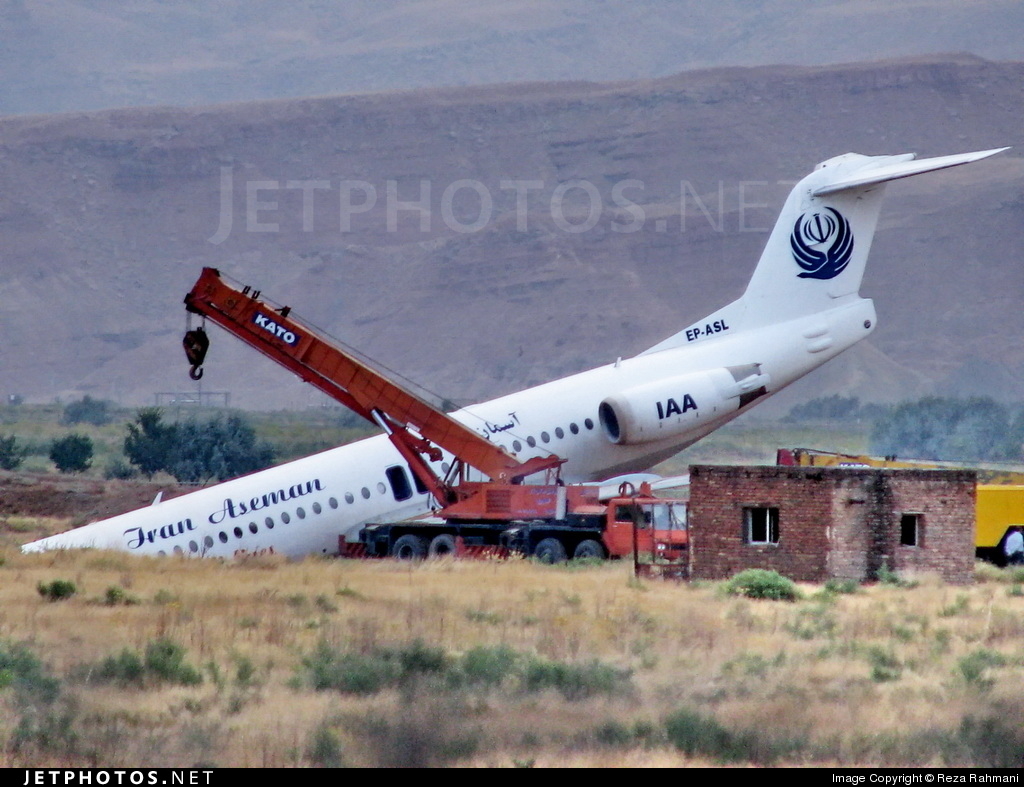
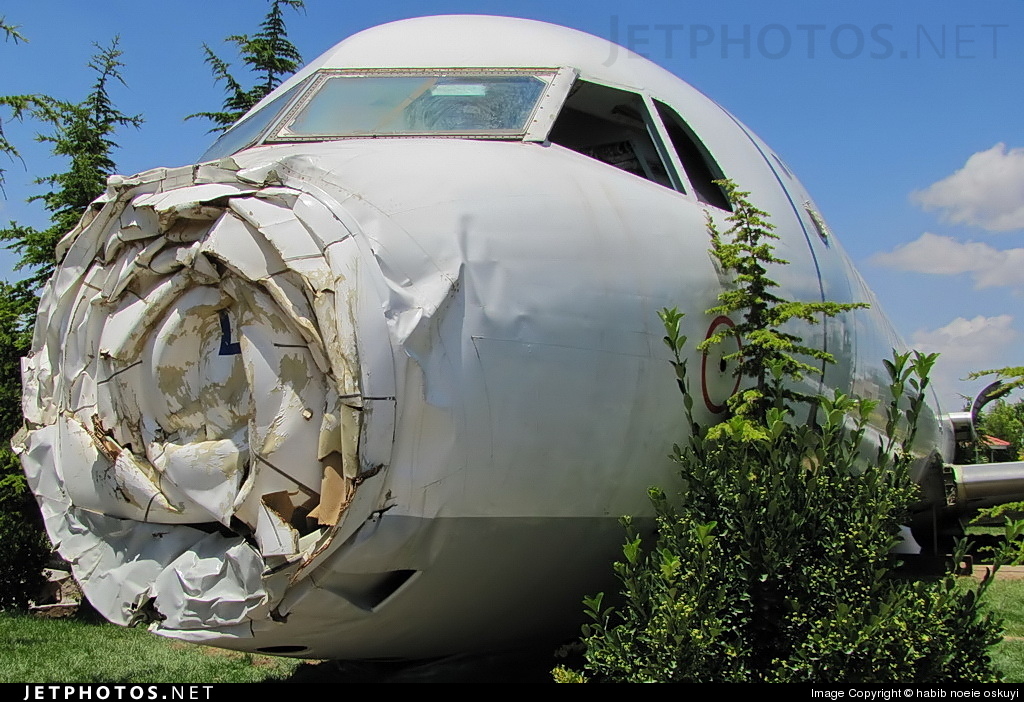
Crash of a Fokker 100 in Tabriz

Date & Time: Aug 26, 2010 at 2245 LT
Type of aircraft:
Operator:
Registration:
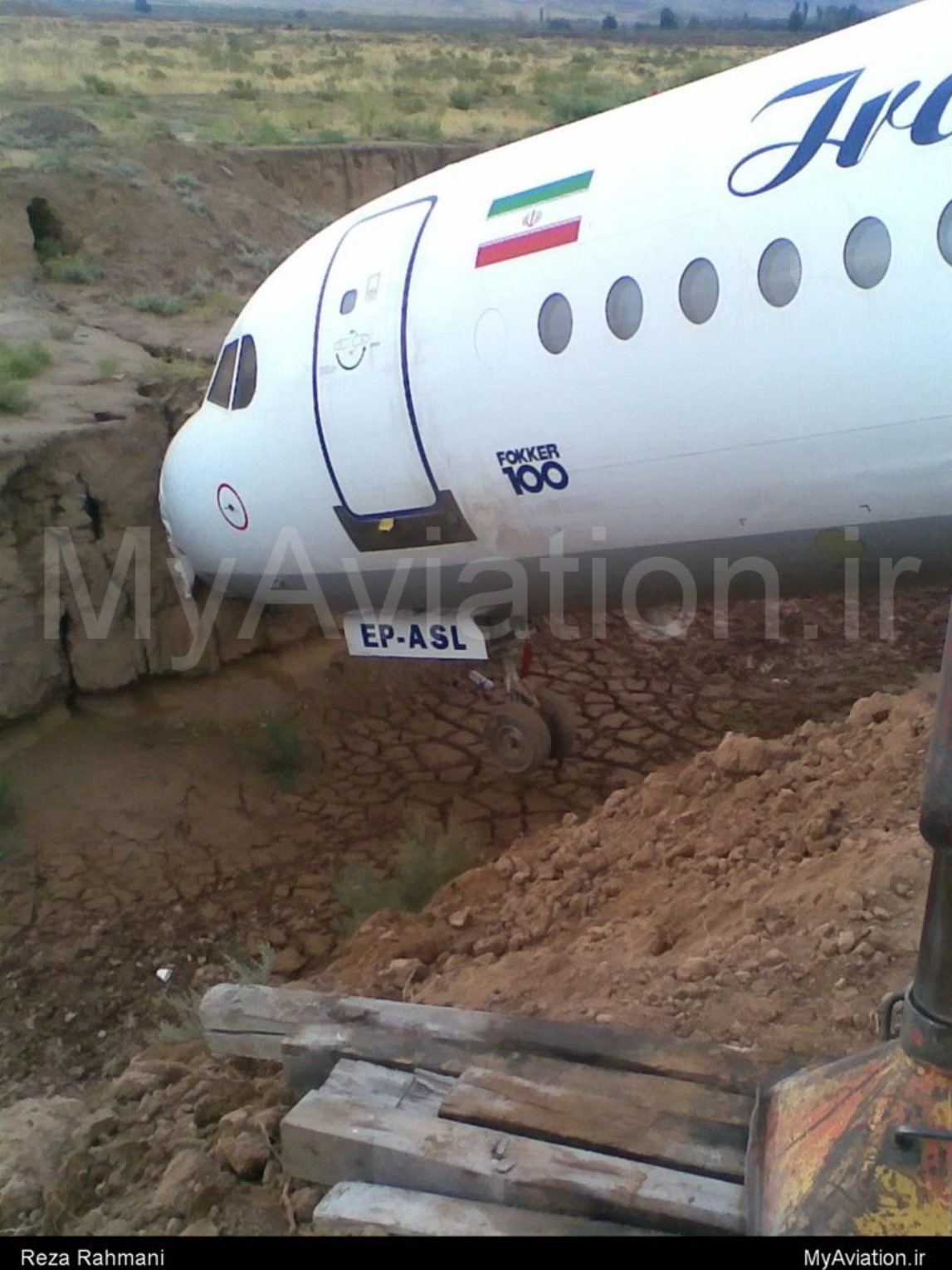
EP-ASL
Survivors:
Yes
Schedule:
Tehran - Tabriz
MSN:
11432
YOM:
1992
Flight number:
EP773
Country:
Region:
Crew on board:
7
Crew fatalities:
Pax on board:
103
Pax fatalities:
Other fatalities:
Total fatalities:
0
Circumstances:
Following an uneventful flight from Tehran, the crew started the descent to Tabriz and was informed by ATC that visibility was low due to heavy rain falls. After landing on runway 30R (3,556 metres long), the aircraft was unable to stop within the remaining distance. It overran and rolled for about 500 metres before coming to rest in a ditch. All 110 occupants were rescued, among them two passengers were slightly injured. The aircraft was damaged beyond repair as the nose was destroyed and the bulkhead severely damaged.
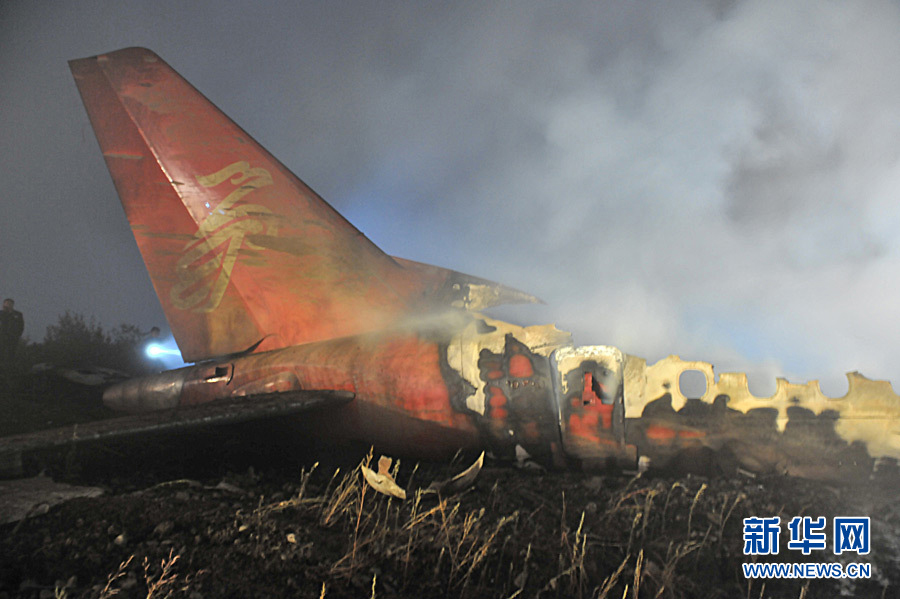
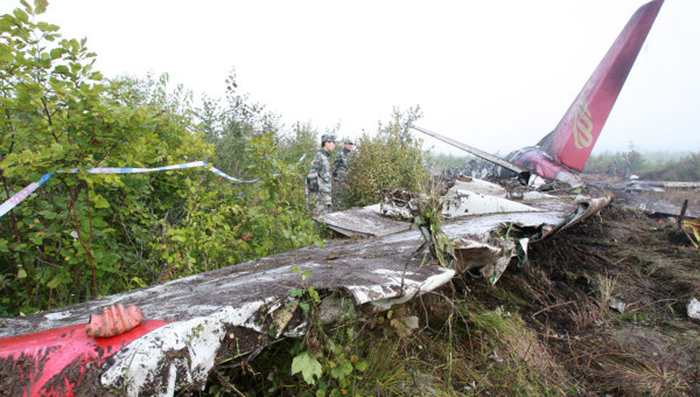
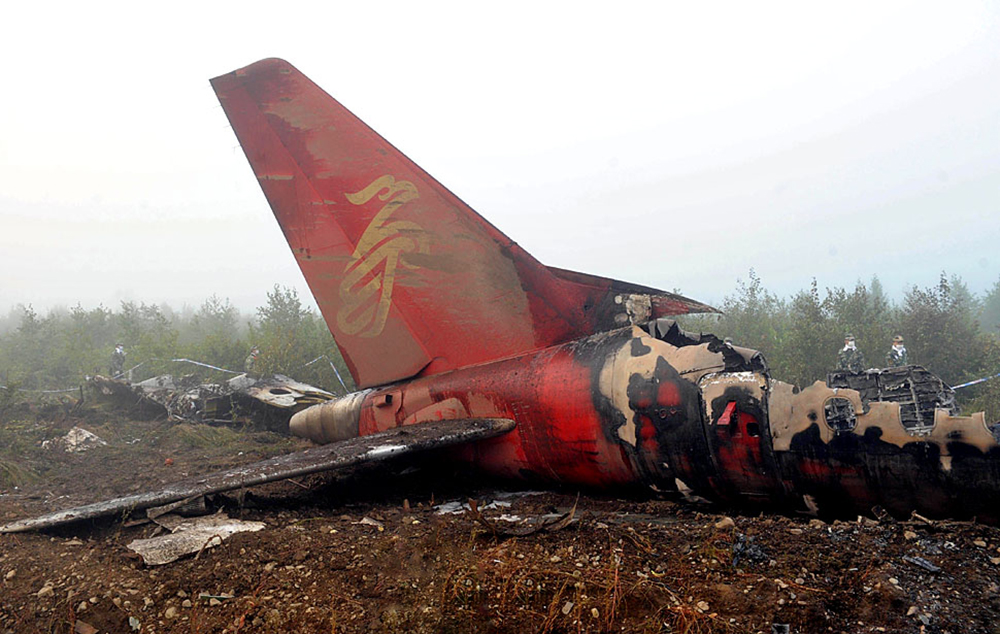
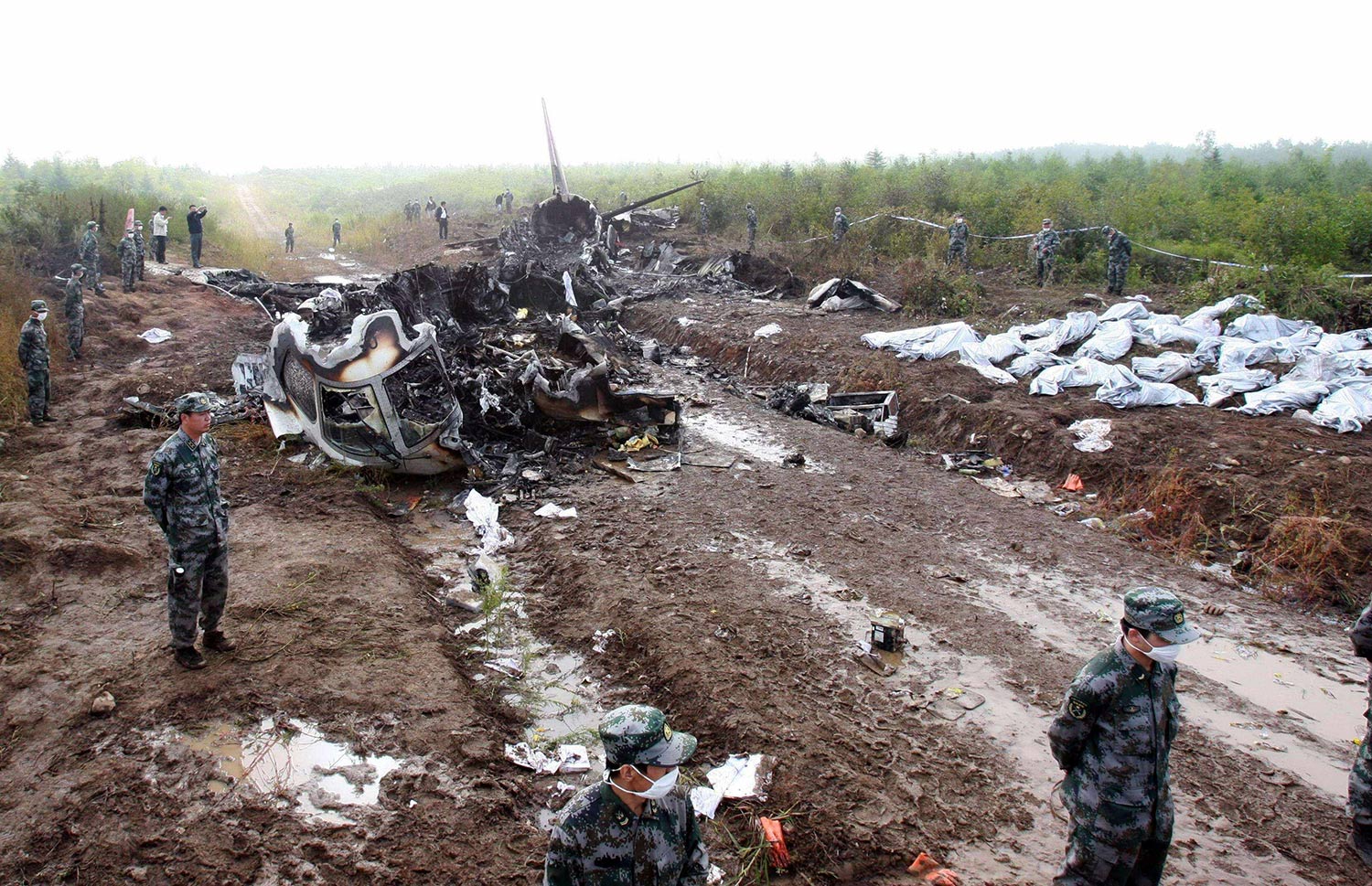
Crash of an Embraer ERJ-190-100LR in Yichun: 44 killed

Date & Time: Aug 24, 2010 at 2138 LT
Type of aircraft:
Operator:
Registration:
B-3130
Survivors:
Yes
Schedule:
Harbin - Yichun
MSN:
190-00223
YOM:
2008
Flight number:
VD8387
Country:
Region:
Crew on board:
5
Crew fatalities:
Pax on board:
91
Pax fatalities:
Other fatalities:
Total fatalities:
44
Aircraft flight hours:
5109
Aircraft flight cycles:
4712
Circumstances:
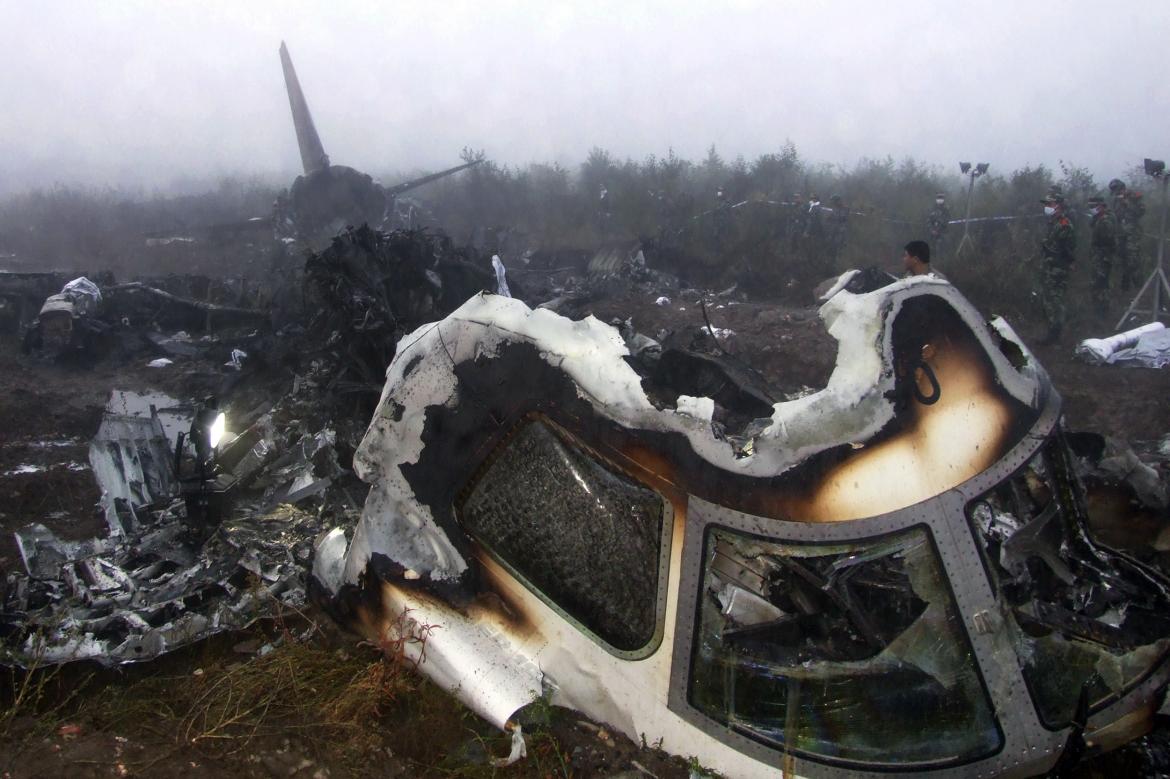
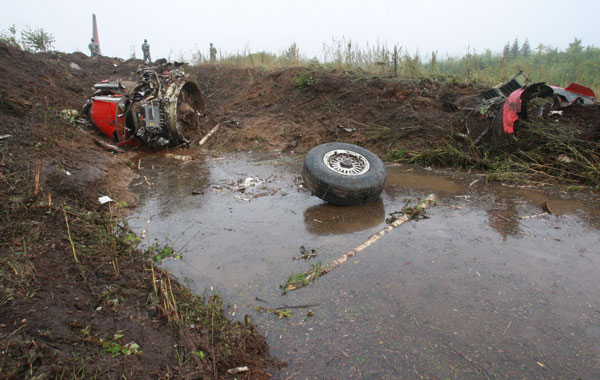
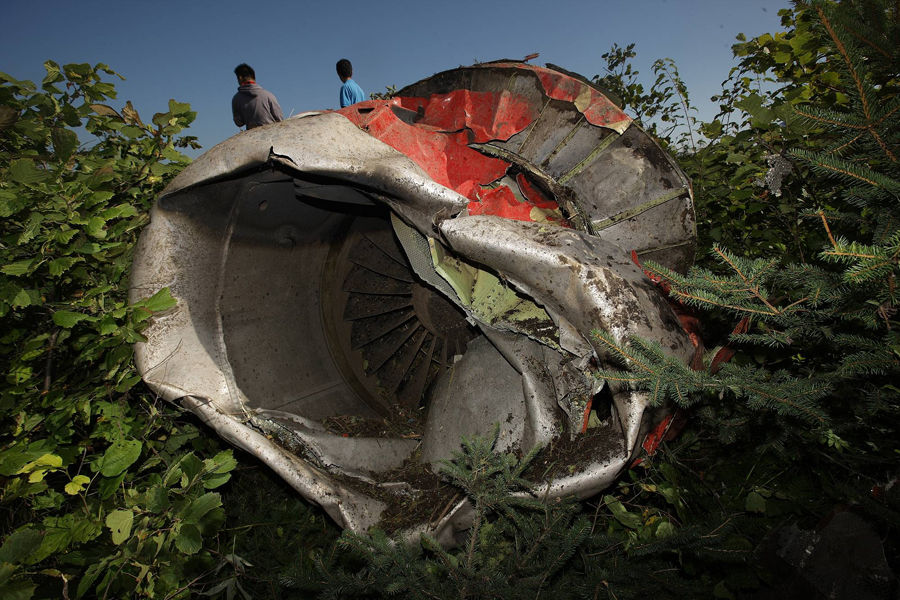
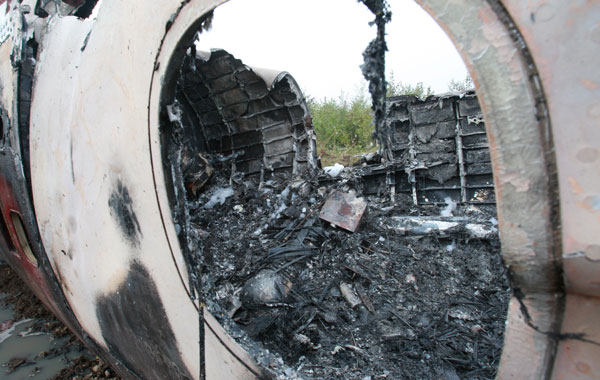
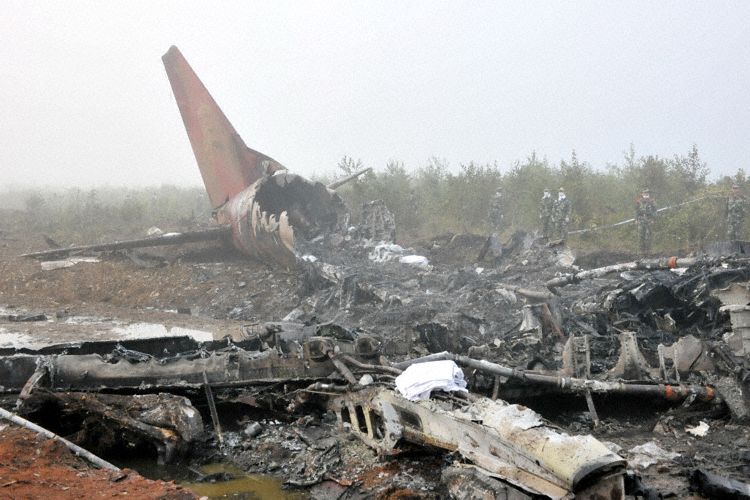
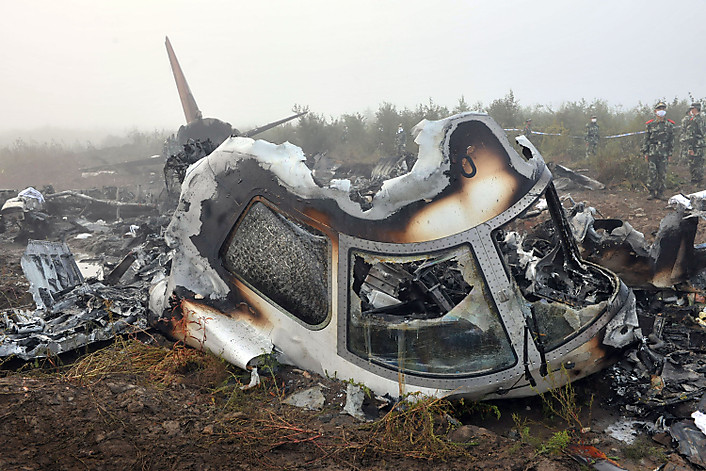
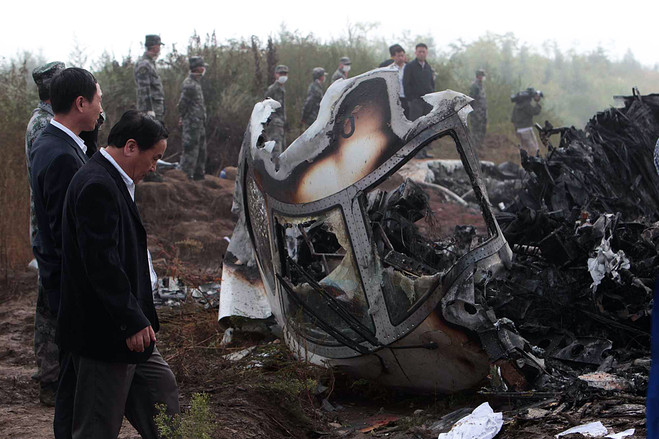
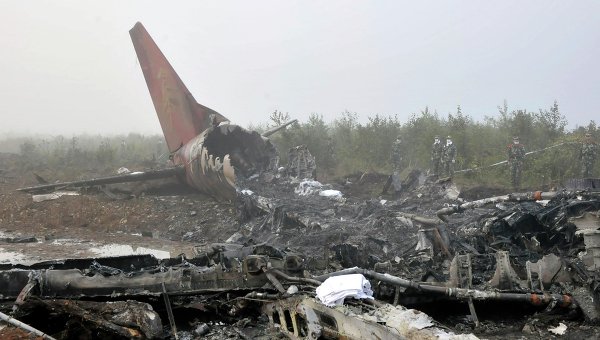
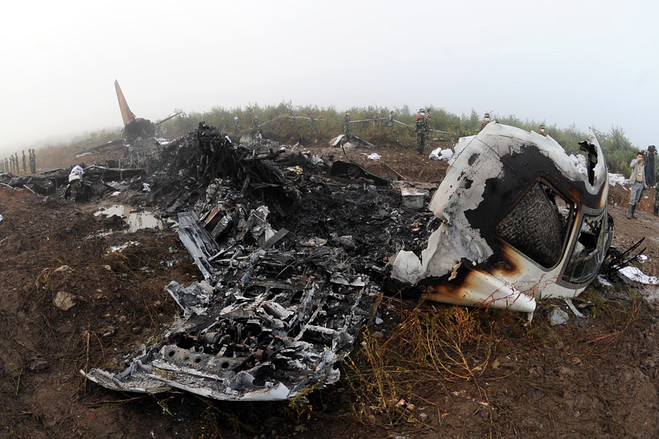
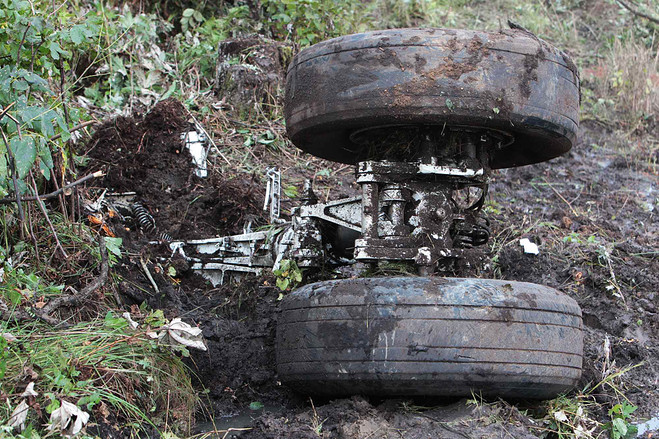
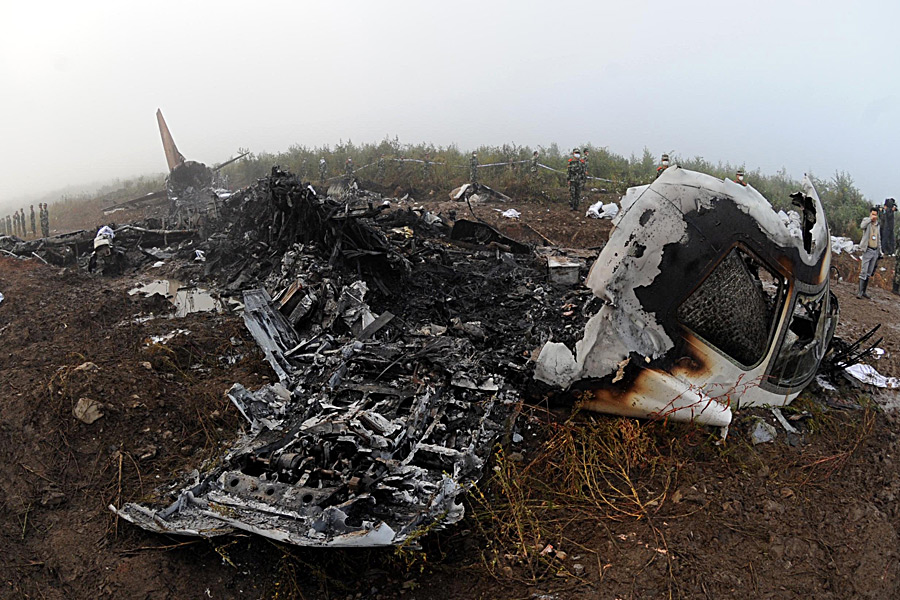
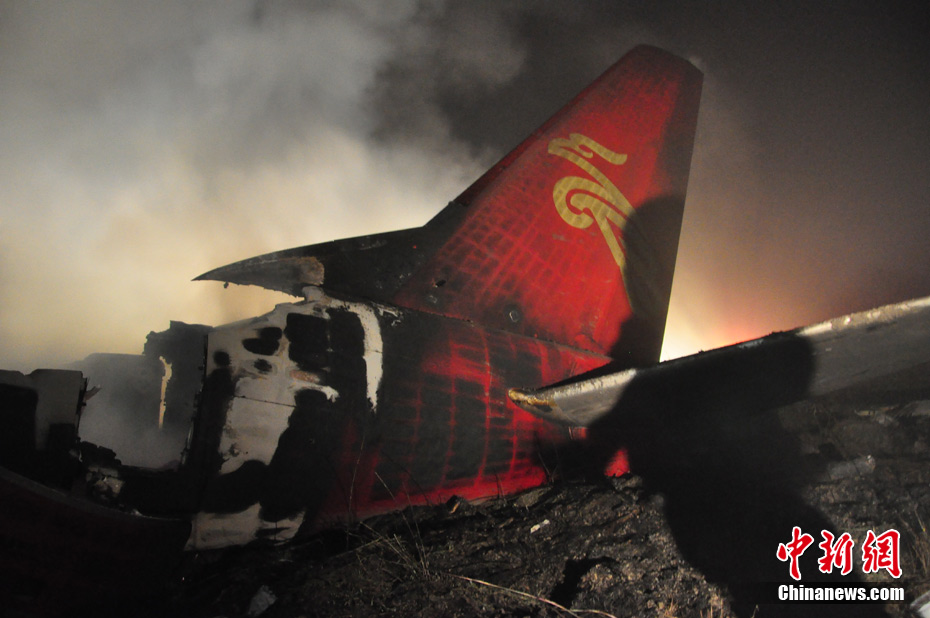
The crew started the approach in poor weather conditions with a visibility reduced at 2,800 metres. On short final, the aircraft was too low and the crew did not establish visual contact with the runway. The aircraft impacted ground 1,110 metres short of runway 30, slid and came to rest in flames 690 meters short of runway. 44 passengers were killed while the aircraft was destroyed by a post crash fire. First fatal accident involving an Embraer 190 and first accident at Yuchin Airport since it was open to traffic in 2009.
Probable cause:
- In violation of the airline's flight operation manual the captain attempted the approach to Yichun below required visibility. The airport reported 2800 meters of visibility while the manual required 3600 meters of visibility to begin the approach
- In violation of regulations by the Civil Aviation Authority the crew descended below minimum descent altitude although the aircraft was operating in fog and visual contact with the runway had not been established
- Despite the aural height announcements and despite not seeing the runway the crew continued the landing in the blind without initiating a go-around resulting in impact with terrain
Contributing factors were:
- The airline's safety management is insufficient:
* part of the flight crew arbitrarily implement the company's operations manual as the company does not follow up outstanding problems. Records suggest frequent deviations from approach profiles, i.e. deviation above or below glide slopes, excessive rates of descents and unstable approaches
* crew rostering and crew cooperation: Each of the crew was flying into Yichun for the first time despite the known safety risks at the airport, the communication and cooperation within the crew was insufficient, the crew members did not monitor each other in order to reduce human errors
* the airline's emergency training did not meet requirements, in particular the cabin crew training did not provide for hands on training on E190 cabin doors and overwing exits. Alternate means by the airline did prove ineffective and did not provide the quality China's Civil Aviation Authority requires thus leaving cabin crew unprepared to meet required cabin crew emergency response capabilities
- Parent company's Shenzhen Airlines oversight insufficient
* Shenzhen Airlines, after having taken over Henan Airlines in 2006, did not provide sufficient funding and technical support affecting the stability and safety of staff and quality management
* Air China, holding stock into Shenzhen Airlines, installed a safety supervisor but failed to address the safety management issues with Shenzhen and Henan Airlines
- No supervision by China's Civil Aviation Authority
* the license to operate the flight from Harbin to Yichun was granted without route validation and without safety management in violation of regulations
* to solve the lack of cabin crew flight attendants were certified although not meeting the relevant requirements for air transport operations
* the regional office of the Civil Aviation Authority did not communicate to their superiors that they had approved the domestic operation of the route from Harbin to Yichun permitting non-standard procedures
- China's Civil Aviation Authority safety management loopholes.