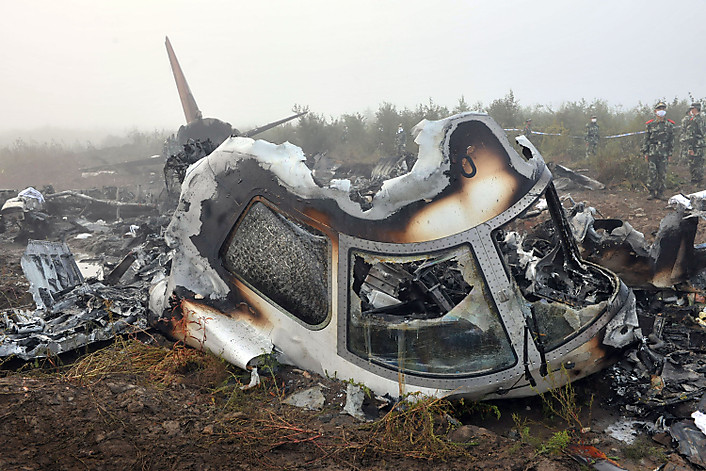
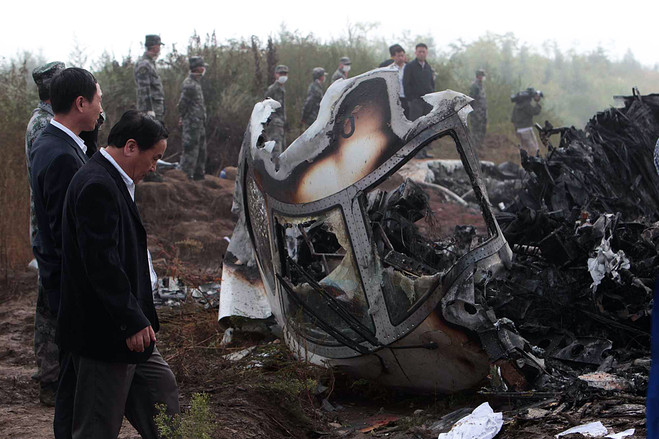
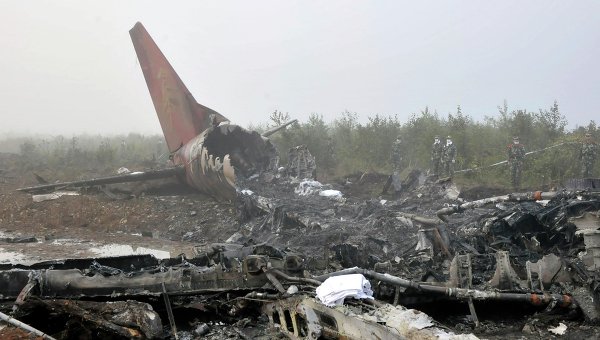
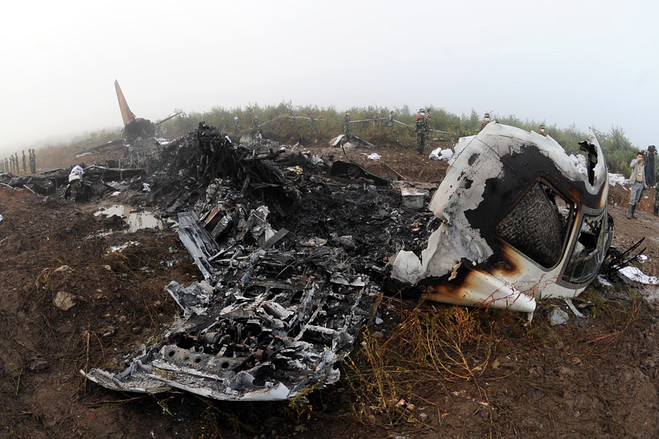
Crash of an Embraer ERJ-190-100LR in Yichun: 44 killed

Date & Time: Aug 24, 2010 at 2138 LT
Type of aircraft:
Operator:
Registration:
B-3130
Survivors:
Yes
Schedule:
Harbin - Yichun
MSN:
190-00223
YOM:
2008
Flight number:
VD8387
Country:
Region:
Crew on board:
5
Crew fatalities:
Pax on board:
91
Pax fatalities:
Other fatalities:
Total fatalities:
44
Aircraft flight hours:
5109
Aircraft flight cycles:
4712
Circumstances:
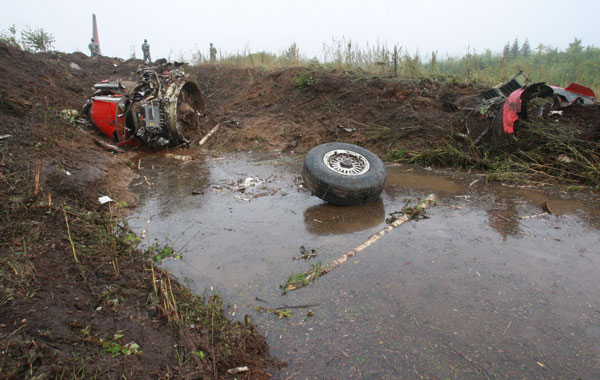
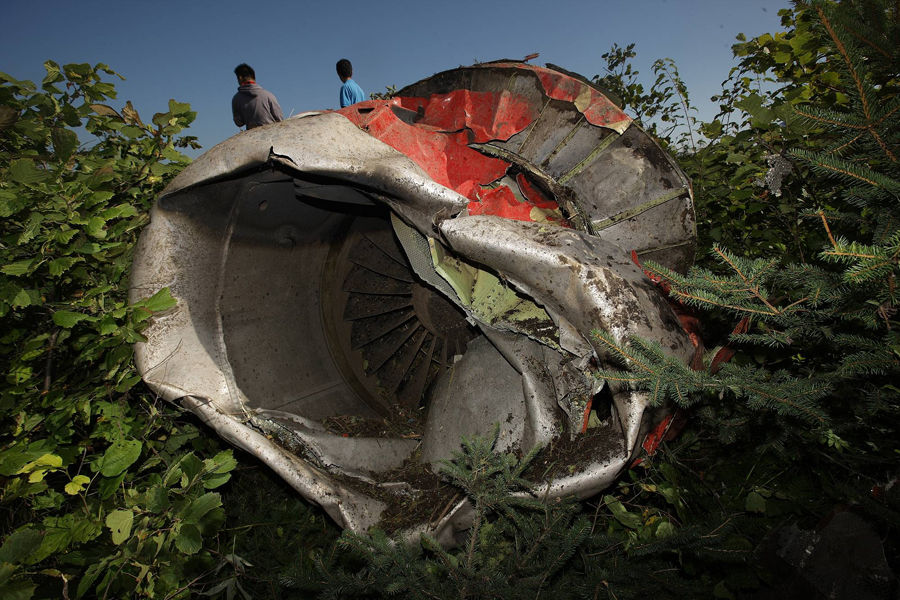
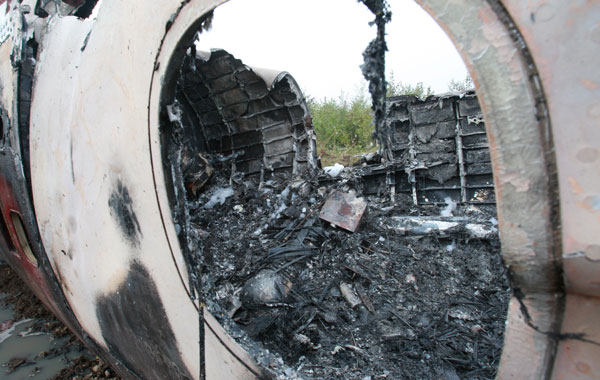
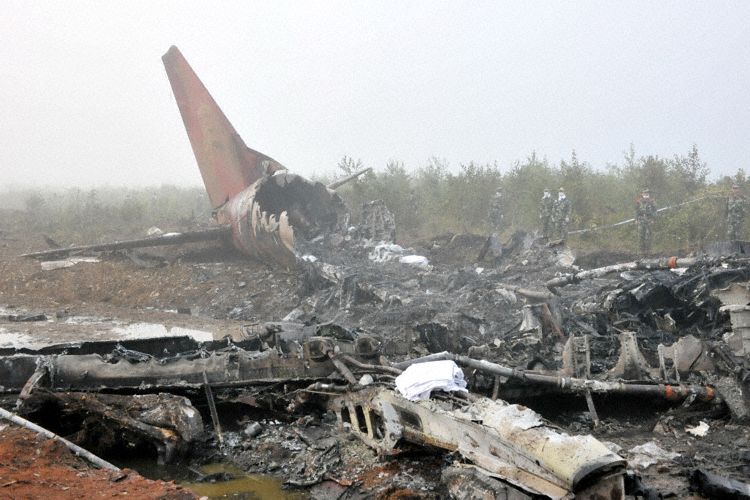
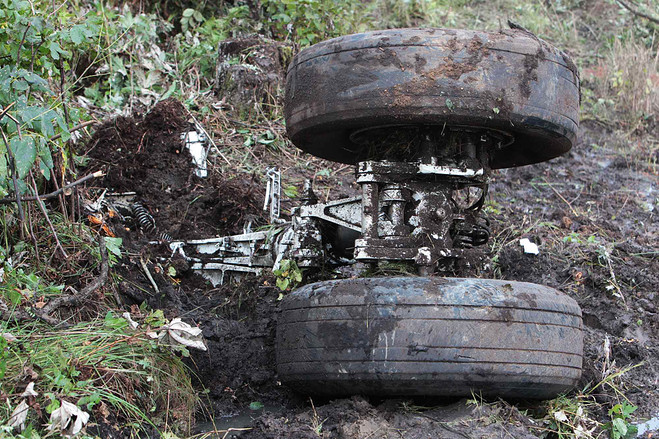
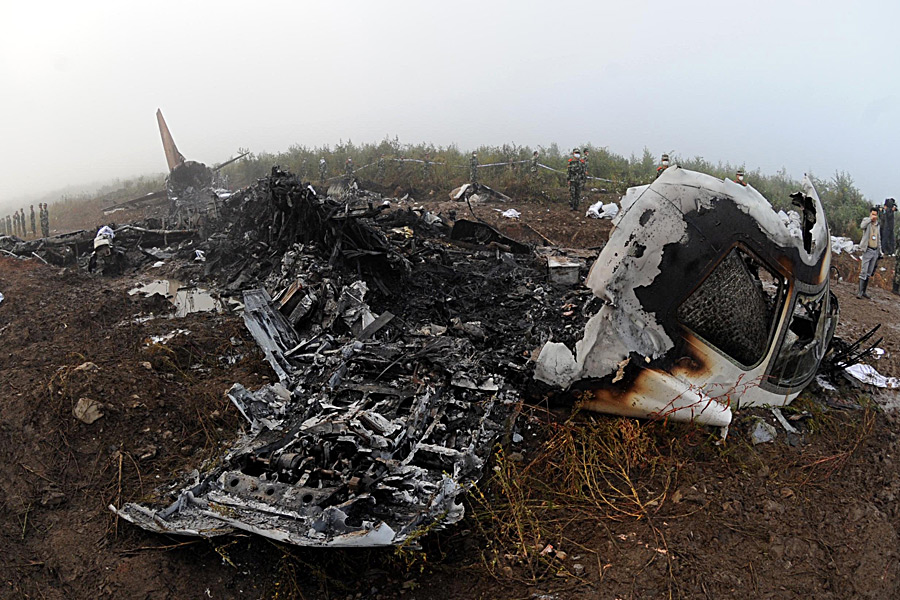
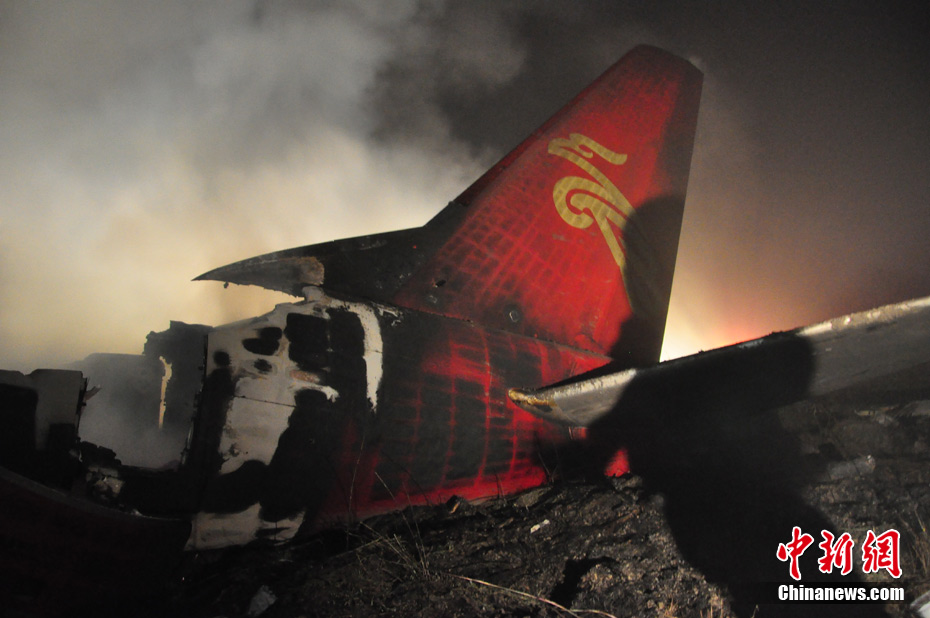
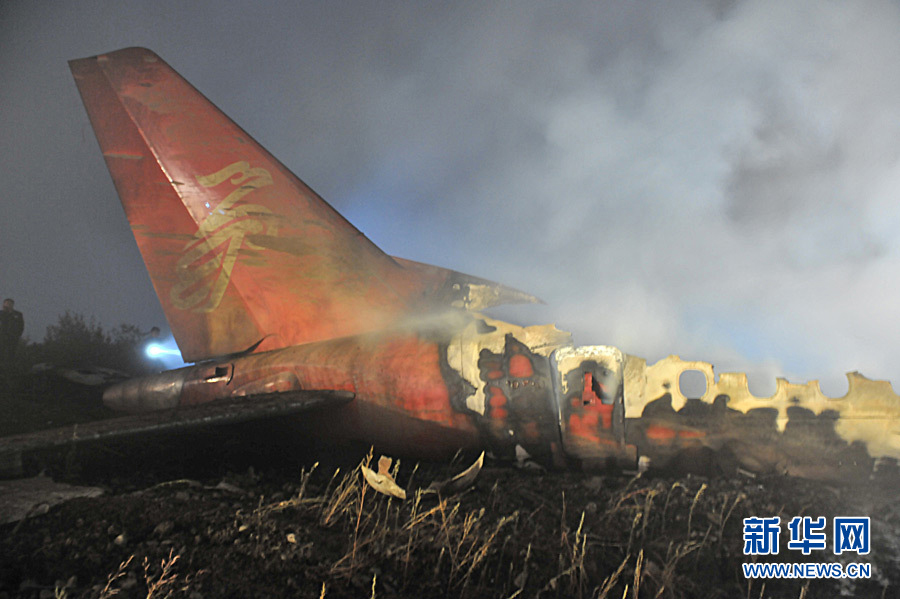
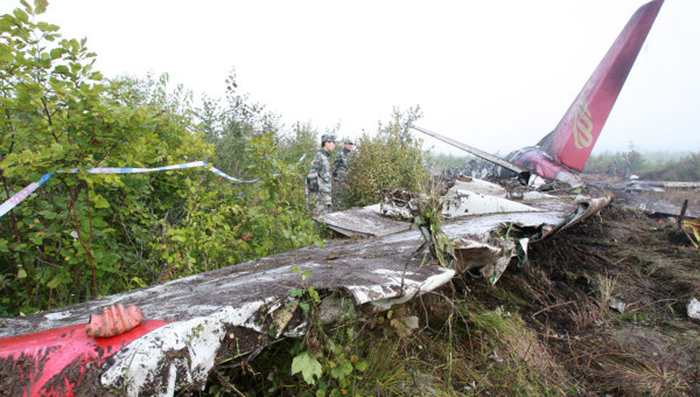
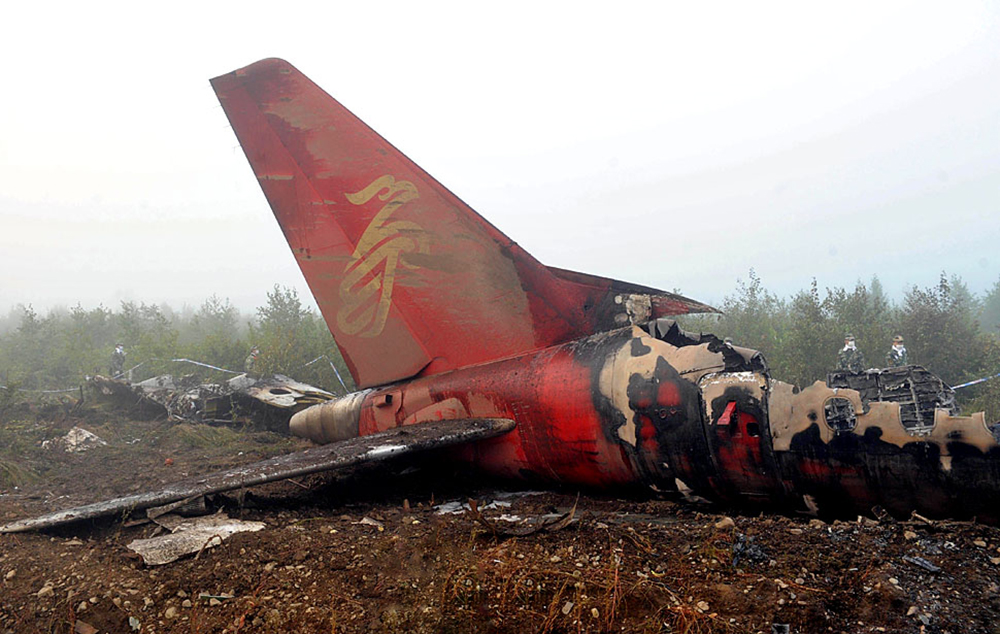
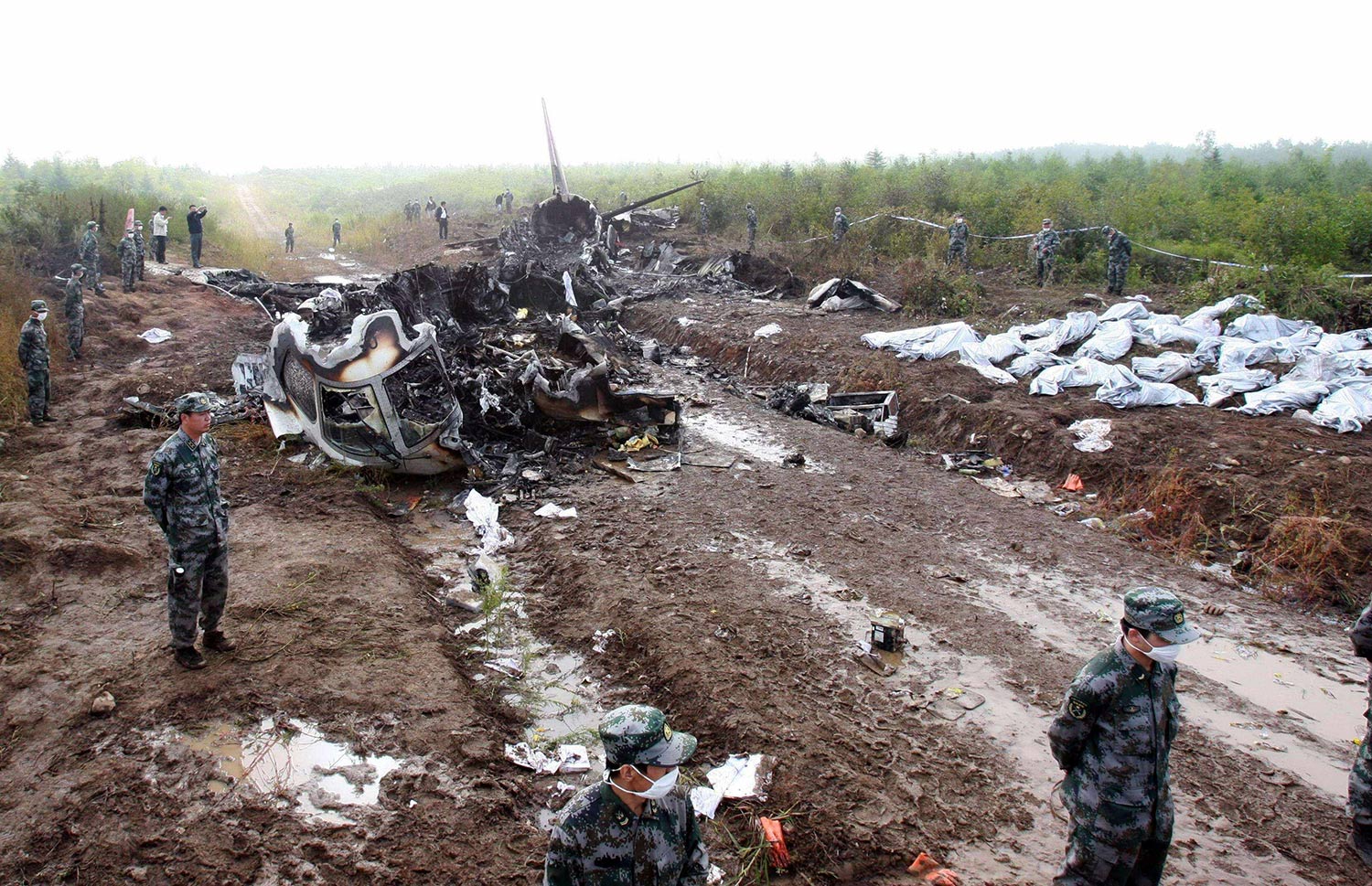
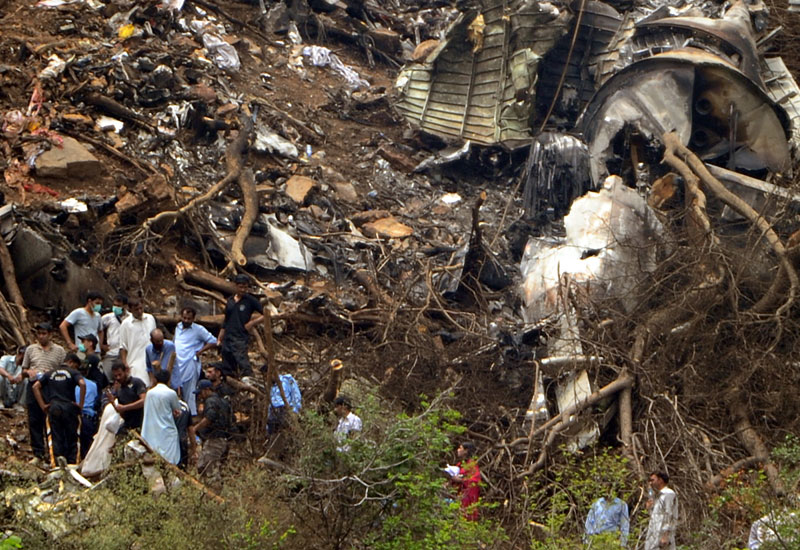
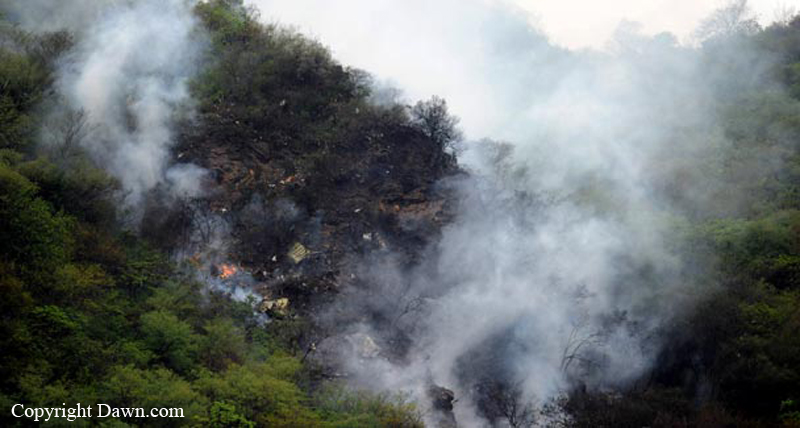
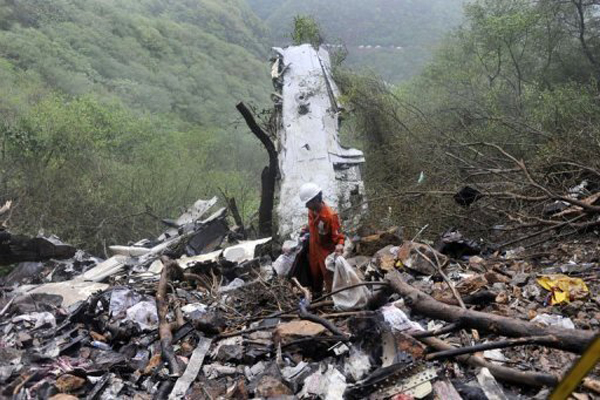
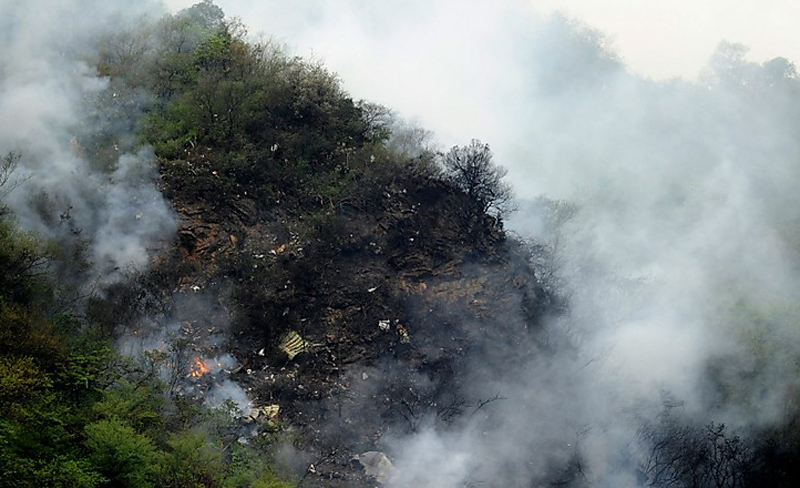
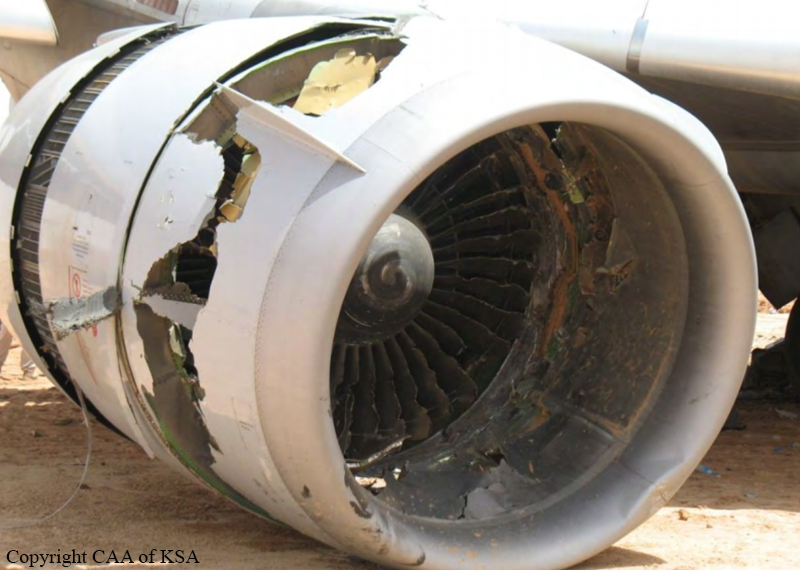
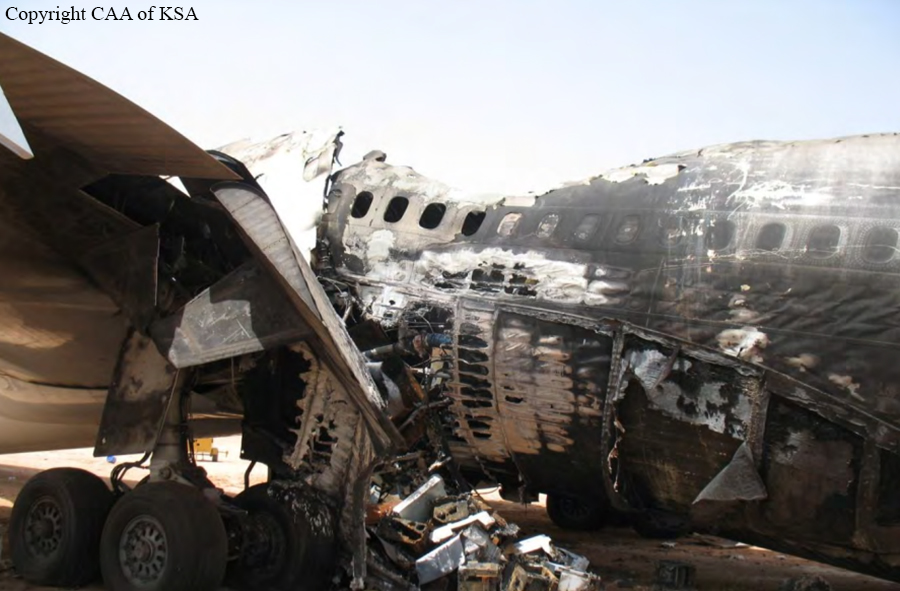
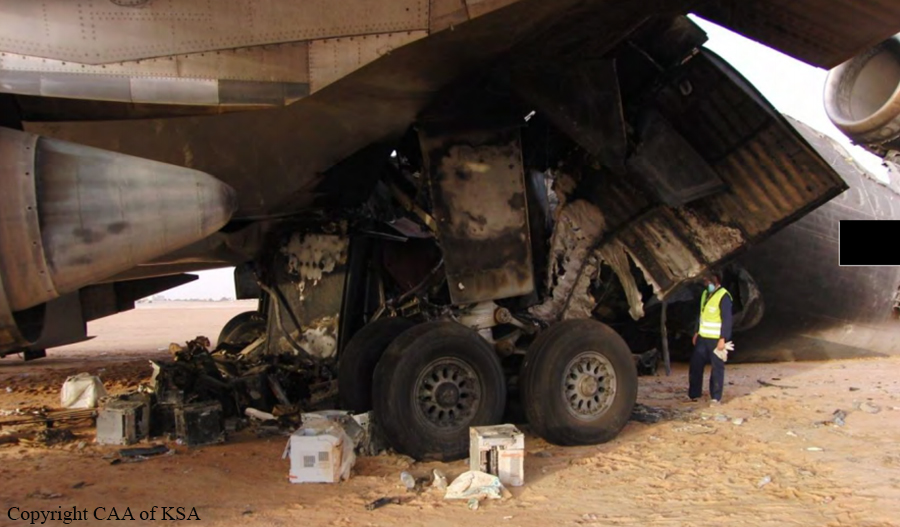
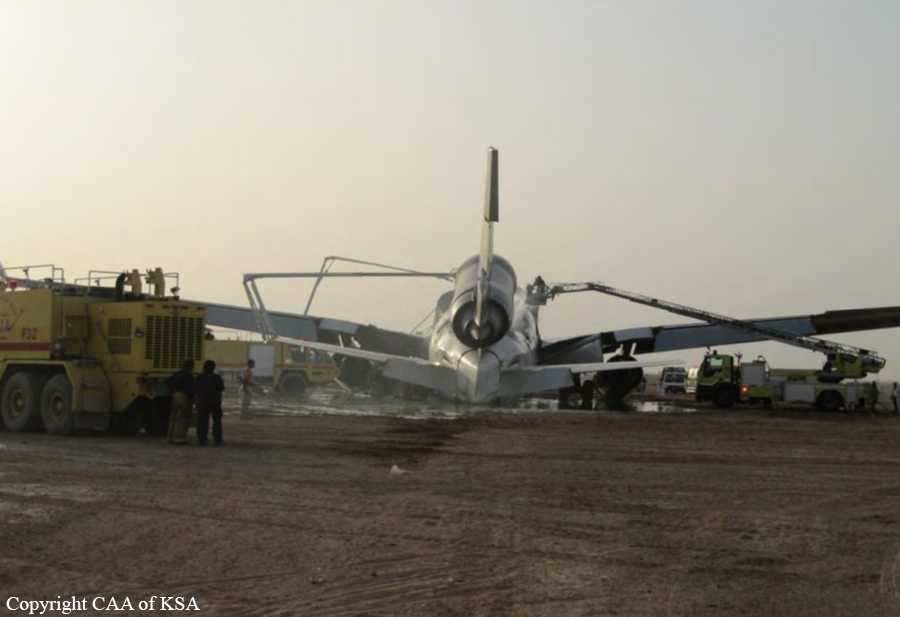
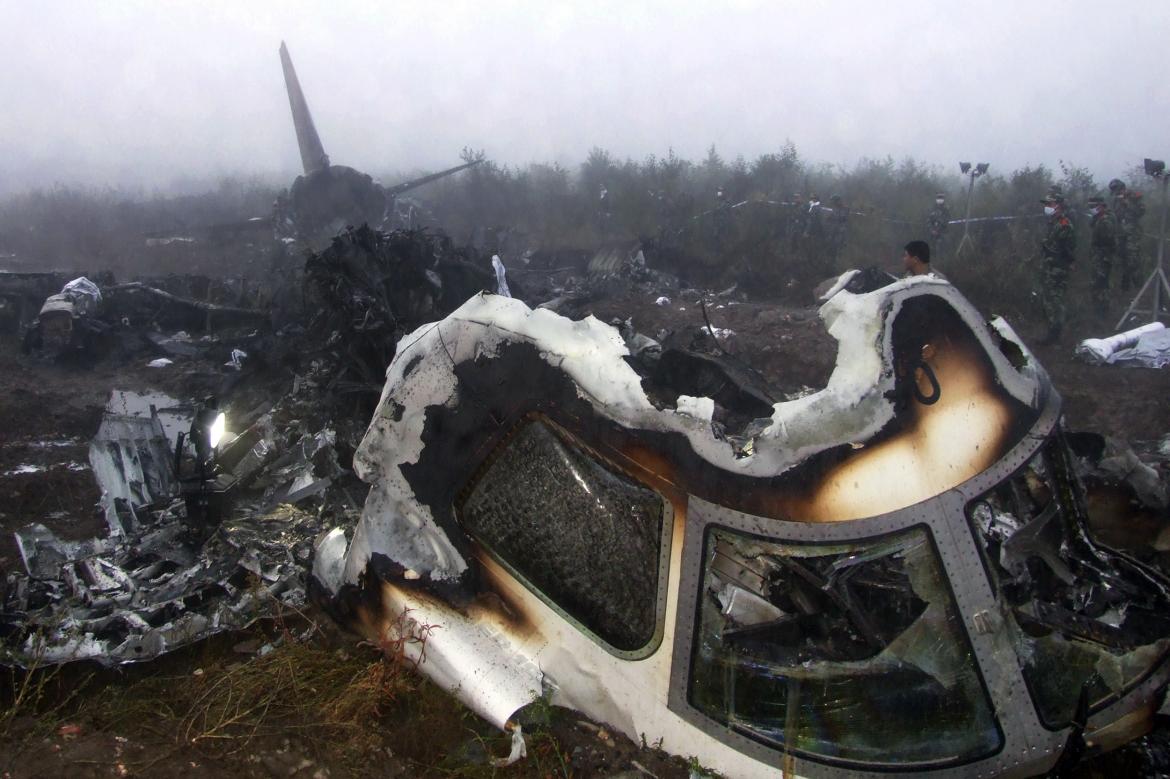
The crew started the approach in poor weather conditions with a visibility reduced at 2,800 metres. On short final, the aircraft was too low and the crew did not establish visual contact with the runway. The aircraft impacted ground 1,110 metres short of runway 30, slid and came to rest in flames 690 meters short of runway. 44 passengers were killed while the aircraft was destroyed by a post crash fire. First fatal accident involving an Embraer 190 and first accident at Yuchin Airport since it was open to traffic in 2009.
Probable cause:
- In violation of the airline's flight operation manual the captain attempted the approach to Yichun below required visibility. The airport reported 2800 meters of visibility while the manual required 3600 meters of visibility to begin the approach
- In violation of regulations by the Civil Aviation Authority the crew descended below minimum descent altitude although the aircraft was operating in fog and visual contact with the runway had not been established
- Despite the aural height announcements and despite not seeing the runway the crew continued the landing in the blind without initiating a go-around resulting in impact with terrain
Contributing factors were:
- The airline's safety management is insufficient:
* part of the flight crew arbitrarily implement the company's operations manual as the company does not follow up outstanding problems. Records suggest frequent deviations from approach profiles, i.e. deviation above or below glide slopes, excessive rates of descents and unstable approaches
* crew rostering and crew cooperation: Each of the crew was flying into Yichun for the first time despite the known safety risks at the airport, the communication and cooperation within the crew was insufficient, the crew members did not monitor each other in order to reduce human errors
* the airline's emergency training did not meet requirements, in particular the cabin crew training did not provide for hands on training on E190 cabin doors and overwing exits. Alternate means by the airline did prove ineffective and did not provide the quality China's Civil Aviation Authority requires thus leaving cabin crew unprepared to meet required cabin crew emergency response capabilities
- Parent company's Shenzhen Airlines oversight insufficient
* Shenzhen Airlines, after having taken over Henan Airlines in 2006, did not provide sufficient funding and technical support affecting the stability and safety of staff and quality management
* Air China, holding stock into Shenzhen Airlines, installed a safety supervisor but failed to address the safety management issues with Shenzhen and Henan Airlines
- No supervision by China's Civil Aviation Authority
* the license to operate the flight from Harbin to Yichun was granted without route validation and without safety management in violation of regulations
* to solve the lack of cabin crew flight attendants were certified although not meeting the relevant requirements for air transport operations
* the regional office of the Civil Aviation Authority did not communicate to their superiors that they had approved the domestic operation of the route from Harbin to Yichun permitting non-standard procedures
- China's Civil Aviation Authority safety management loopholes.

Crash of a Dornier DO228-101 near Kathmandu: 14 killed

Date & Time: Aug 24, 2010 at 0725 LT
Type of aircraft:
Operator:
Registration:
9N-AHE
Survivors:
No
Schedule:
Kathmandu - Lukla
MSN:
7032
YOM:
1985
Flight number:
AG101
Country:
Region:
Crew on board:
2
Crew fatalities:
Pax on board:
12
Pax fatalities:
Other fatalities:
Total fatalities:
14
Circumstances:
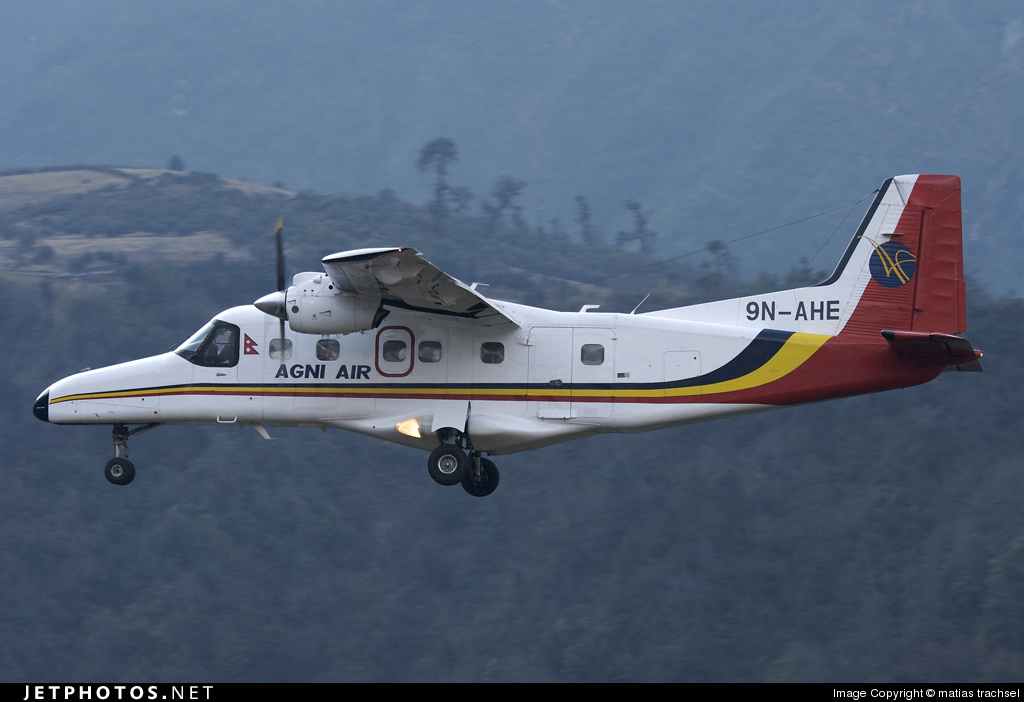
On approach to Lukla, the crew encountered poor weather conditions. Unable to locate the runway, he decided to divert to Simara Airport. Unfortunately, the visibility at Simara Airport was insufficient and the crew eventually decided to return to Kathmandu. While descending to runway 02, a generator failed. The crew did not declare an emergency, contacted his maintenance base and was unable to switch to the backup generator. Shortly after the crew elected to reset the battery system, the aircraft entered an uncontrolled descent and crashed in a rice paddy field. The aircraft disintegrated on impact and all 14 occupants were killed, among them 4 Americans, one British and one Japanese. The wreckage was found about 30 km southeast of Tribhuvan Airport.
Probable cause:
Loss of control on approach following the failure of a generator for undetermined reasons.

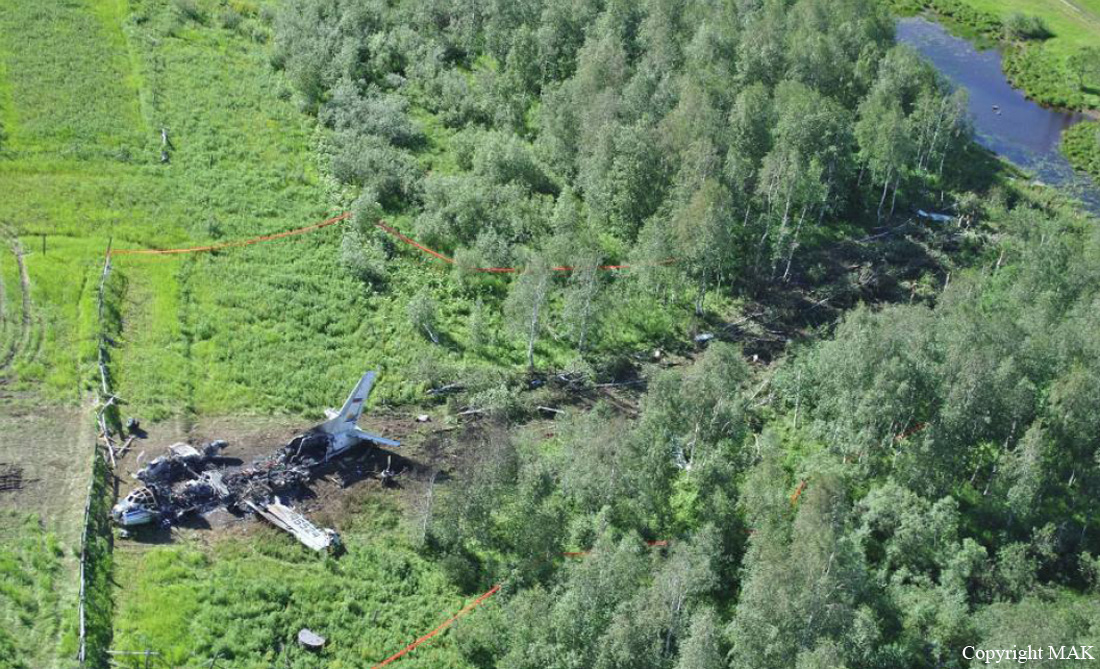
Crash of an Antonov AN-24RV in Igarka: 12 killed

Date & Time: Aug 3, 2010 at 0119 LT
Type of aircraft:
Operator:
Registration:
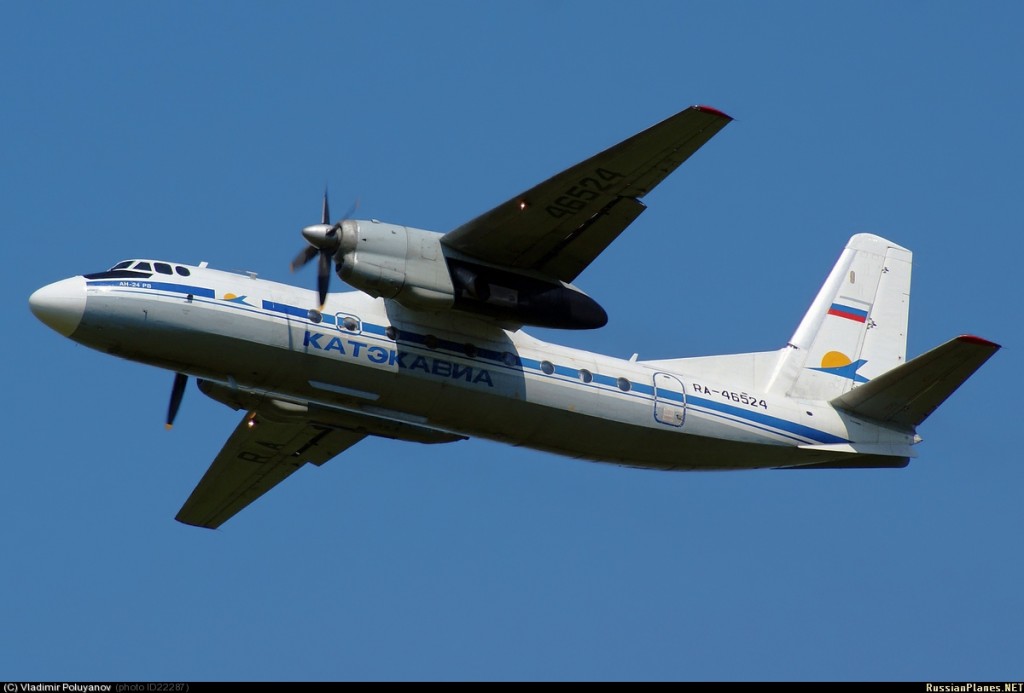
RA-46524
Survivors:
Yes
Schedule:
Krasnoyarsk - Igarka
MSN:
4 73 100 03
YOM:
1974
Flight number:
KTK9357
Country:
Region:
Crew on board:
4
Crew fatalities:
Pax on board:
11
Pax fatalities:
Other fatalities:
Total fatalities:
12
Captain / Total flying hours:
17250
Captain / Total hours on type:
14205.00
Copilot / Total flying hours:
5838
Copilot / Total hours on type:
2670
Aircraft flight hours:
53760
Aircraft flight cycles:
38383
Circumstances:
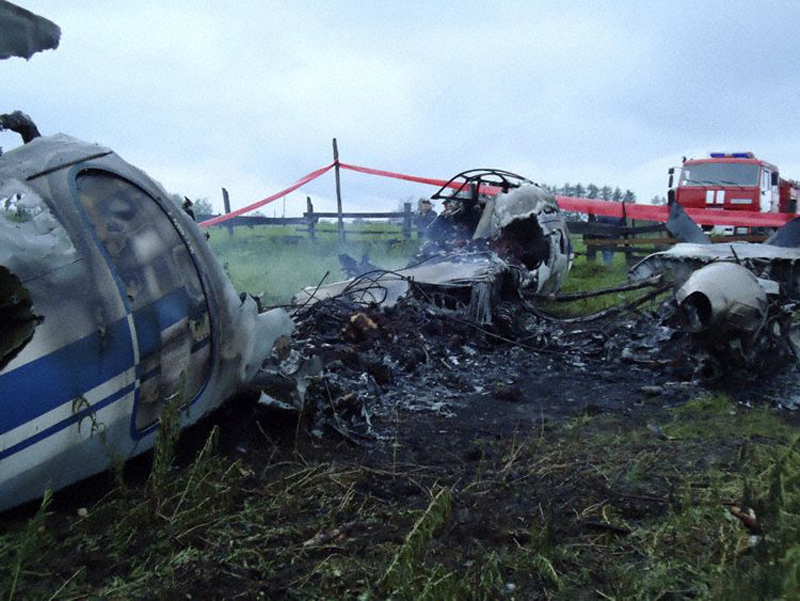
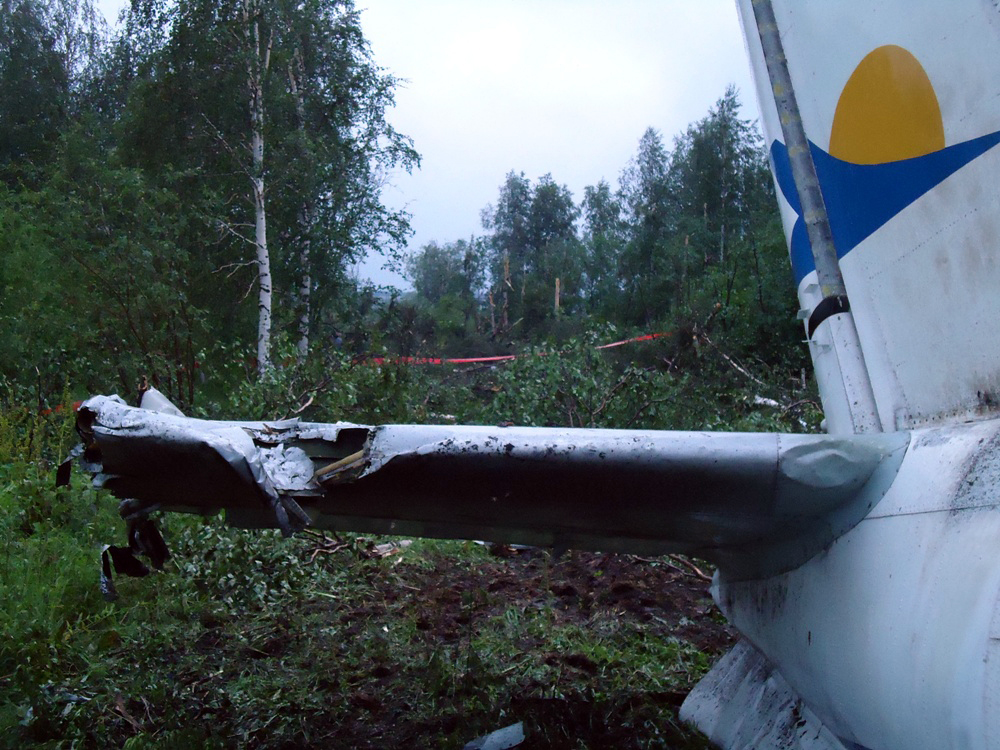
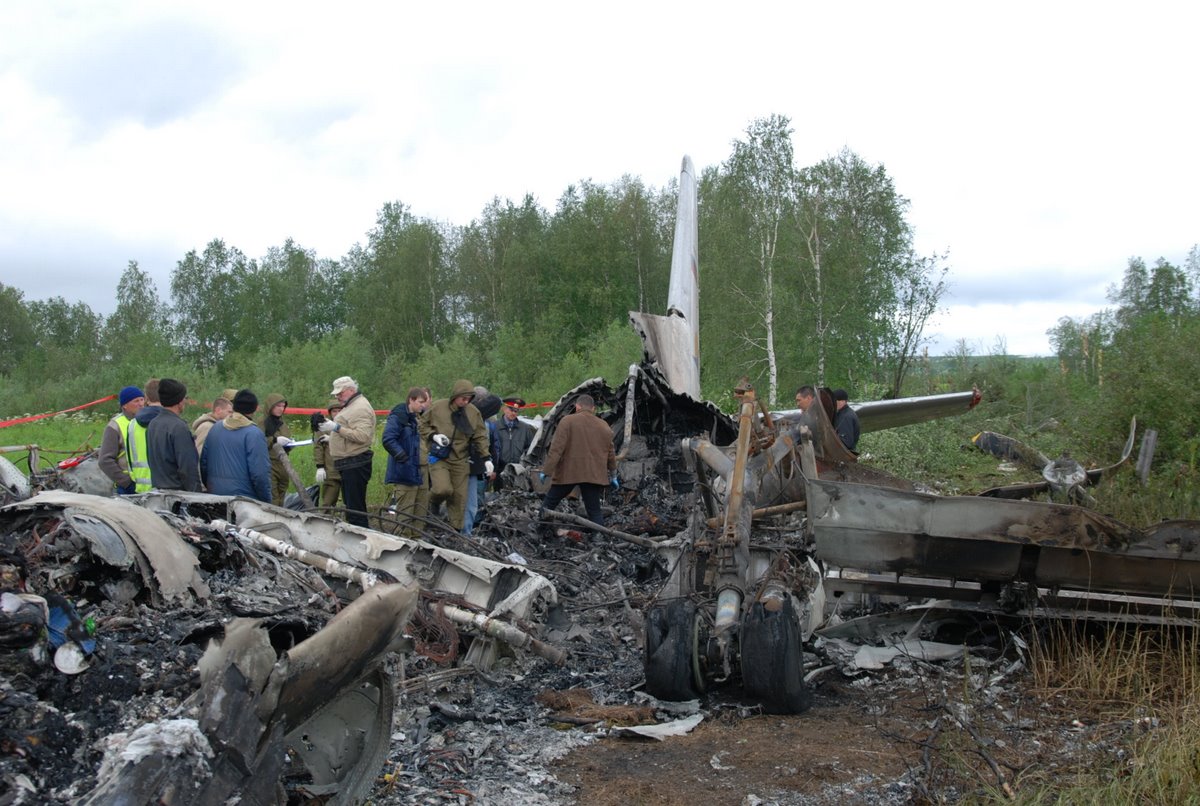
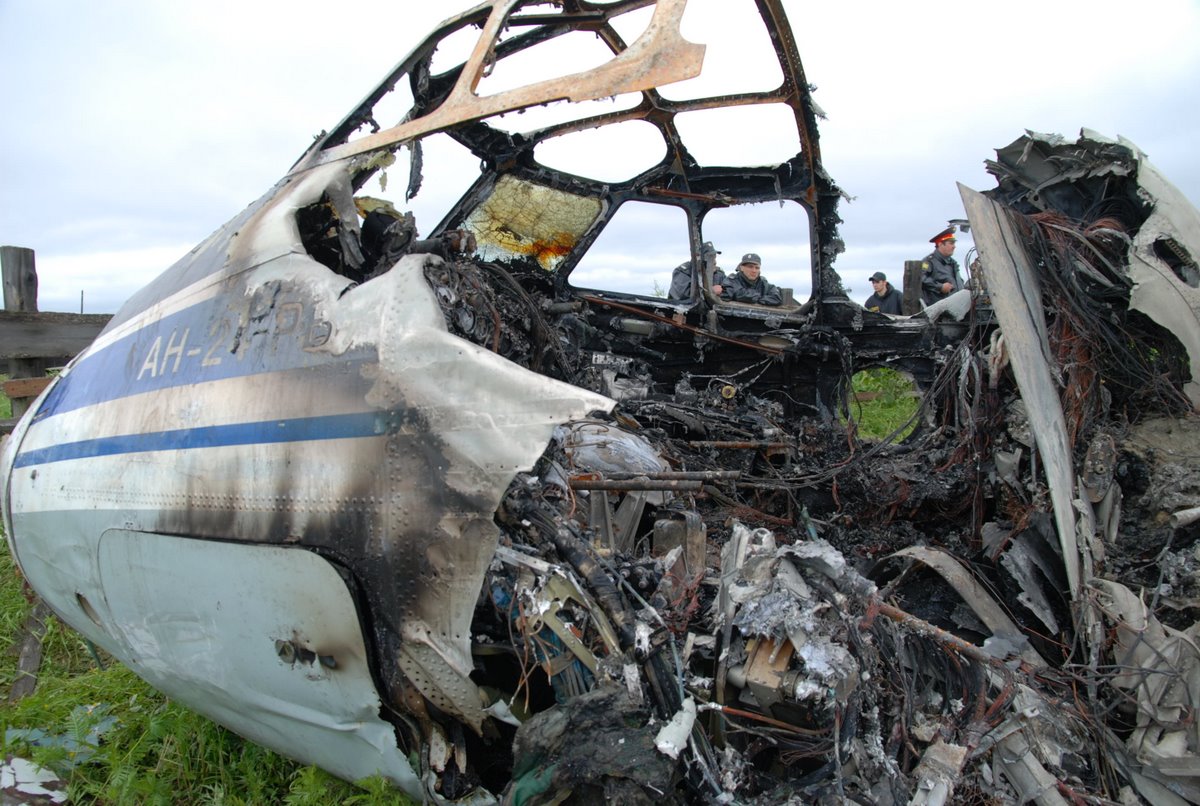
The aircraft departed Krasnoyarsk on a night schedule flight to Igarka, carrying 11 passengers and 4 crew members. On approach to Igarka Airport, the crew encountered poor weather conditions with a visibility below minimums due to fog. On final, the pilot-in-command was unable to establish a visual contact with the ground but continued the approach. The aircraft descended below the glide, collided with trees and crashed 477 metres short of runway 12 and 234 metres to the right of its extended centerline, bursting into flames. All 11 passengers were killed while all four crew members survived. The following day, the stewardess died from her injuries.

Probable cause:
Controlled flight into terrain after the crew descended in IMC conditions below the glide without visual contact with the ground. The following contributing factors were identified:
- The failure of the crew to initiate a go-around procedure,
- Incorrect weather forecast with regards to cloud ceiling, visibility and severe weather (fog),
- Inaccurate information about the actual weather on the glide path at the Middle Marker with course 117°, radioed to the crew 40 minutes before the accident.
Final Report:

Crash of an ATR72-212A in Manila

Date & Time: Jul 28, 2010 at 1515 LT
Type of aircraft:
Operator:
Registration:
RP-C7254
Survivors:
Yes
Schedule:
Tuguegarao – Manila
MSN:
828
YOM:
2008
Flight number:
5J509
Country:
Region:
Crew on board:
0
Crew fatalities:
Pax on board:
0
Pax fatalities:
Other fatalities:
Total fatalities:
0
Circumstances:
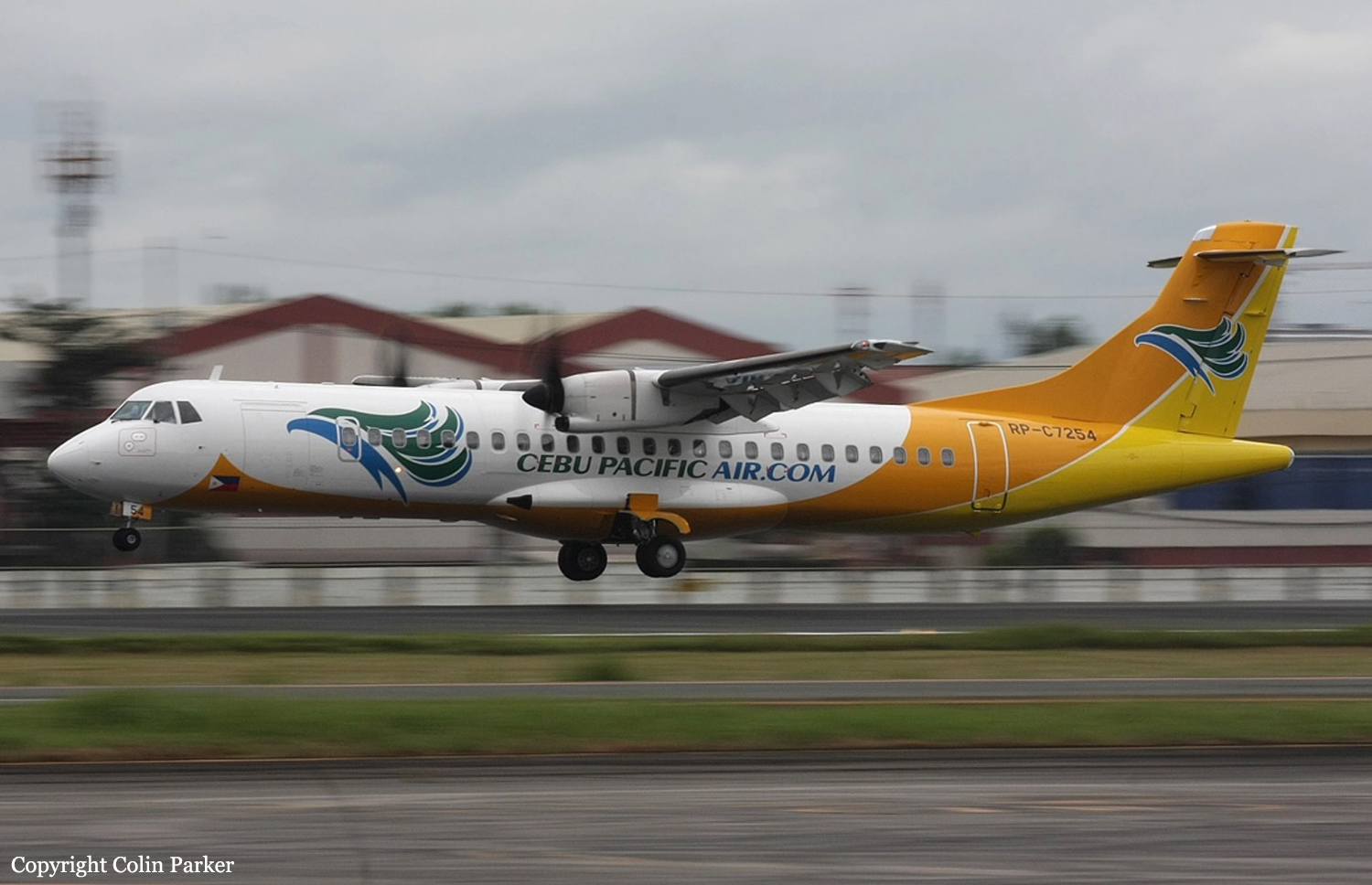
Cebu Pacific Air flight 5J509, an ATR 72-500, took off from Tuguegarao Airport, Philippines, bound for Manila-Ninoy Aquino International Airport. The first officer was the Pilot Flying (PF) while the captain was the Pilot Not Flying (PNF). Approaching Manila, the flight was under radar vector for a VOR/DME approach to runway 24. At 7 miles on finals the approach was stabilized. A sudden tailwind was experienced by the crew at 500 feet radio altitude (RA) which resulted in an increase in airspeed and vertical speed. The captain took over the controls and continued the approach. Suddenly, the visibility went to zero and consequently the aircraft experienced a bounced landing three times, before a go-around was initiated. During climb out the crew noticed cockpit instruments were affected including both transponders and landing gears. They requested for a priority landing and were vectored and cleared to land on runway 13. After landing the aircraft was taxied to F4 where normal deplaning was carried out. No injuries were reported on the crew and passengers.
Probable cause:
Primary Cause Factor:
- Failure of the flight crew to discontinue the approach when deteriorating weather and their associated hazards to flight operations had moved into the airport (Human Factor)
Contributory Factor:
- The adverse weather condition affected the judgment and decision-making of the PIC even prior to the approach to land. With poor weather conditions being encountered, the PIC still continued the approach and landing. (Environmental Factor)
Underlying Factor:
- As a result of the bounced landing, several cockpit instruments were affected including both transponders on board. One of the nosewheels was detached and all the landing gears could not be retracted. Further, the integrity of the structure may have been affected and chance airframe failure was imminent. With all of these conditions, the Captain still opted to request for a priority landing when emergency landing was needed.

Crash of an Airbus A321-231 in Islamabad: 152 killed

Date & Time: Jul 28, 2010 at 0941 LT
Type of aircraft:
Operator:
Registration:
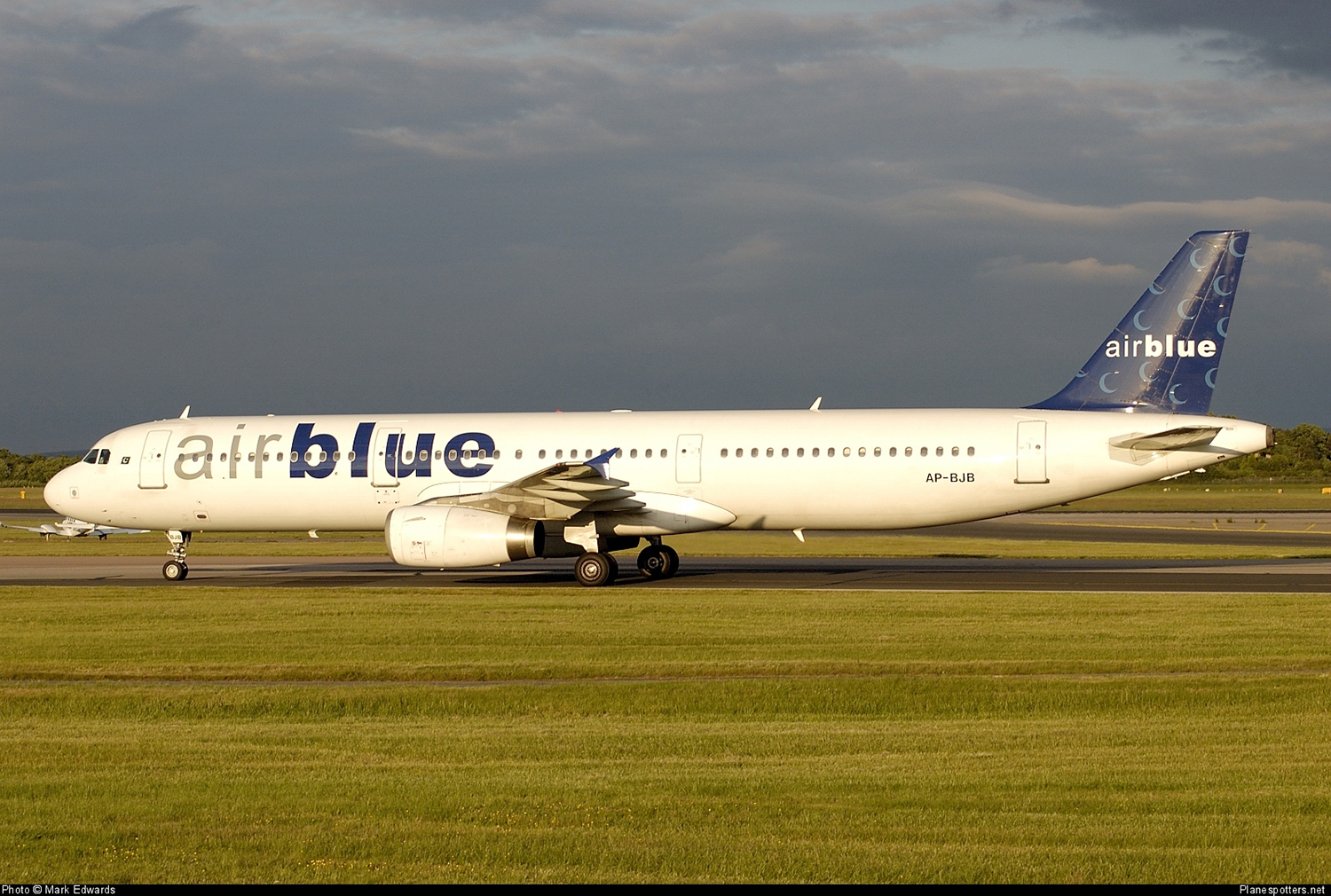
AP-BJB
Survivors:
No
Site:
Schedule:
Karachi - Islamabad
MSN:
1218
YOM:
2000
Flight number:
ABQ202
Country:
Region:
Crew on board:
6
Crew fatalities:
Pax on board:
146
Pax fatalities:
Other fatalities:
Total fatalities:
152
Captain / Total flying hours:
25497
Captain / Total hours on type:
1060.00
Copilot / Total flying hours:
1837
Copilot / Total hours on type:
286
Aircraft flight hours:
34018
Aircraft flight cycles:
13566
Circumstances:
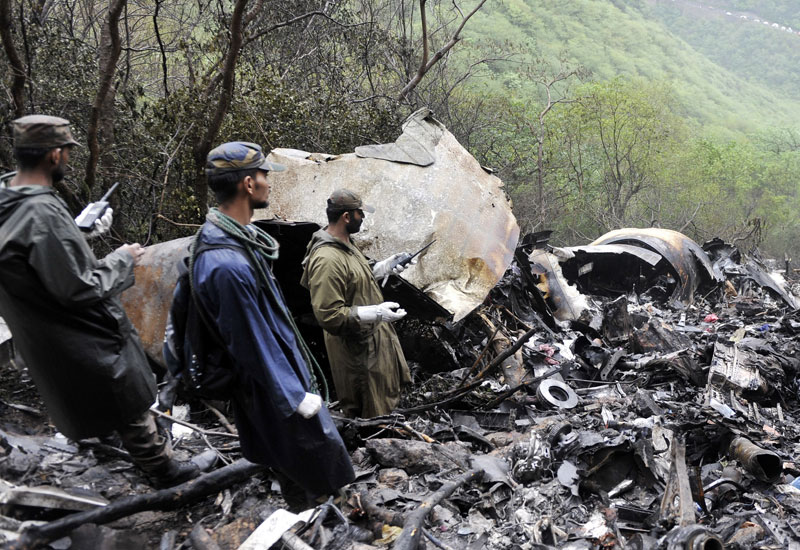
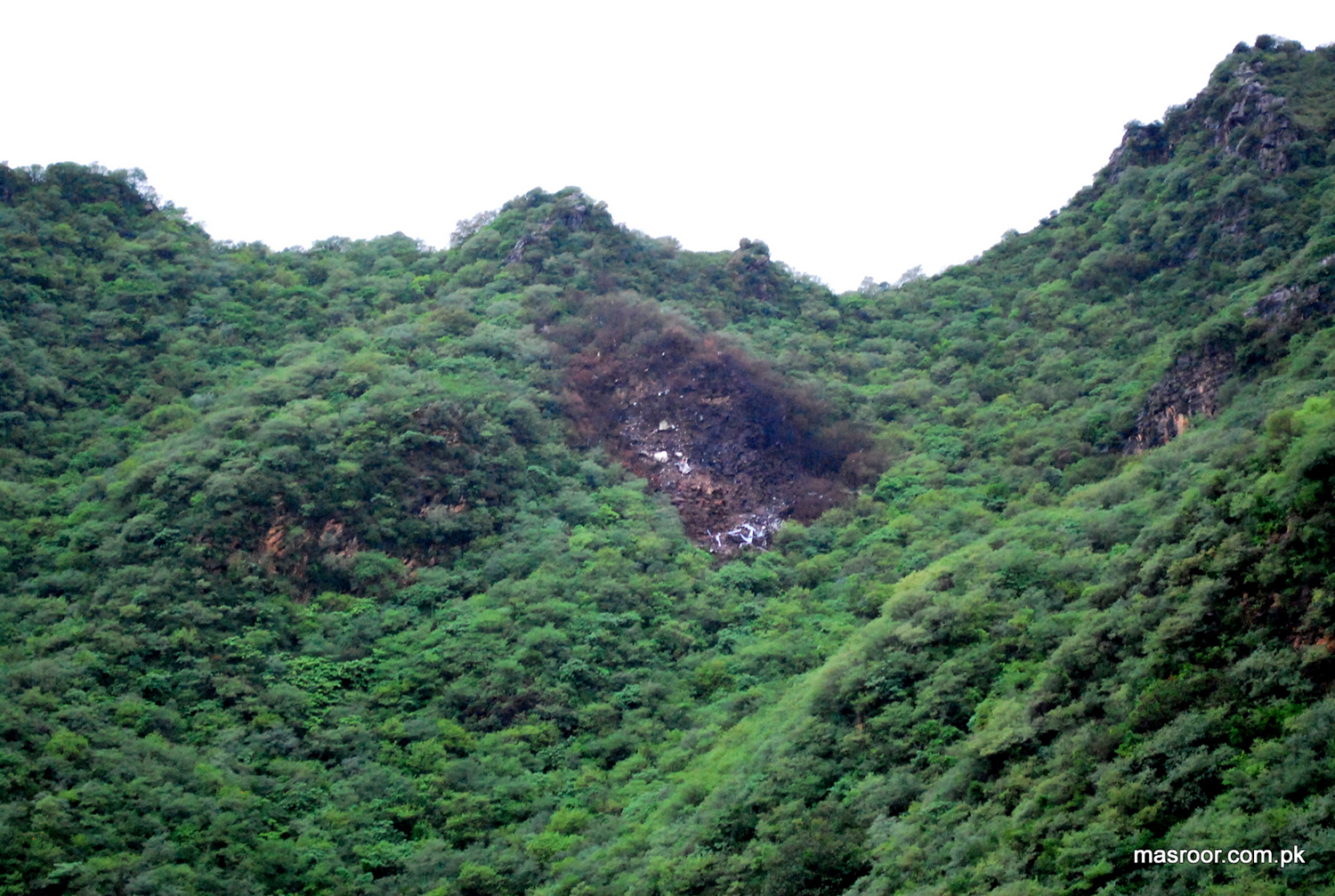
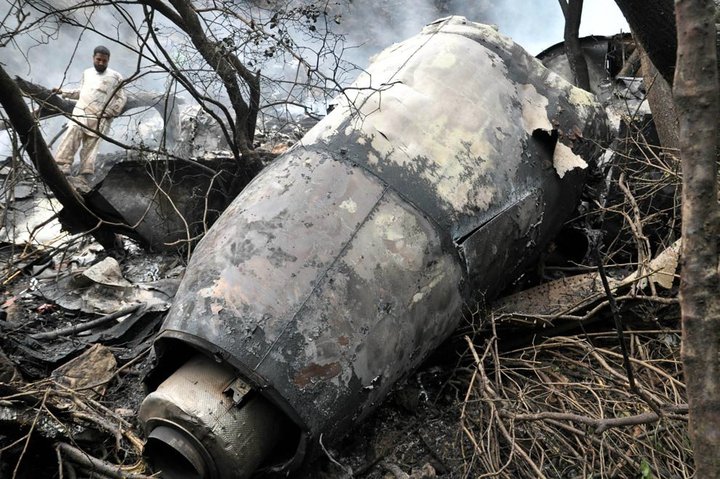
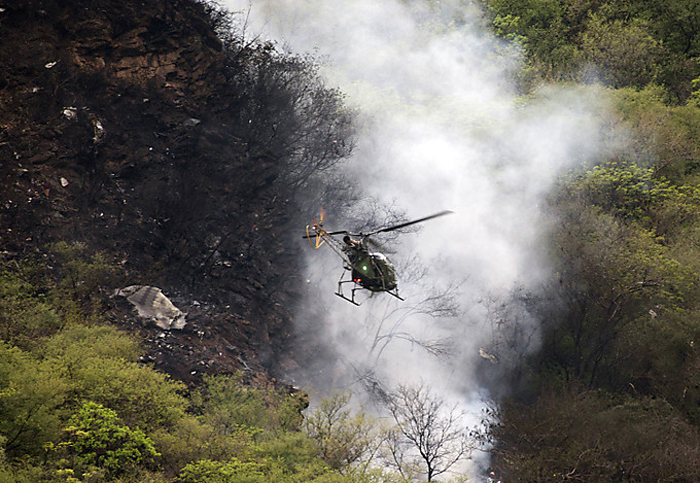
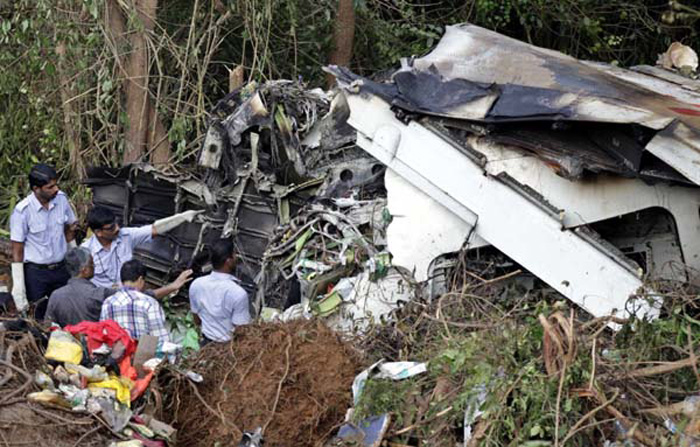
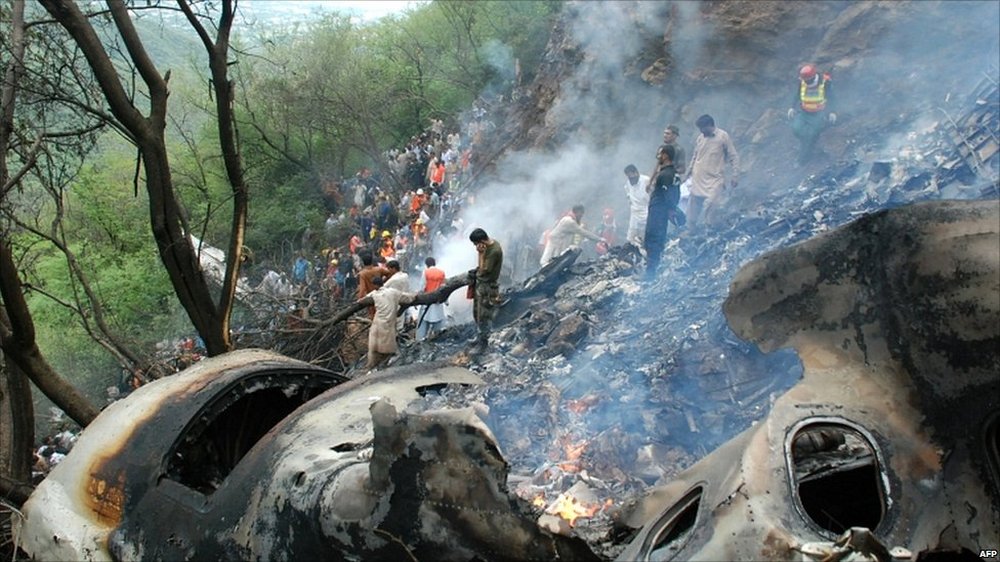
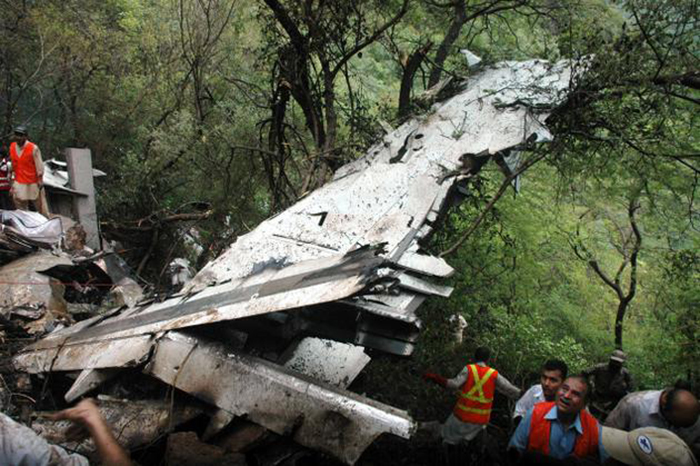
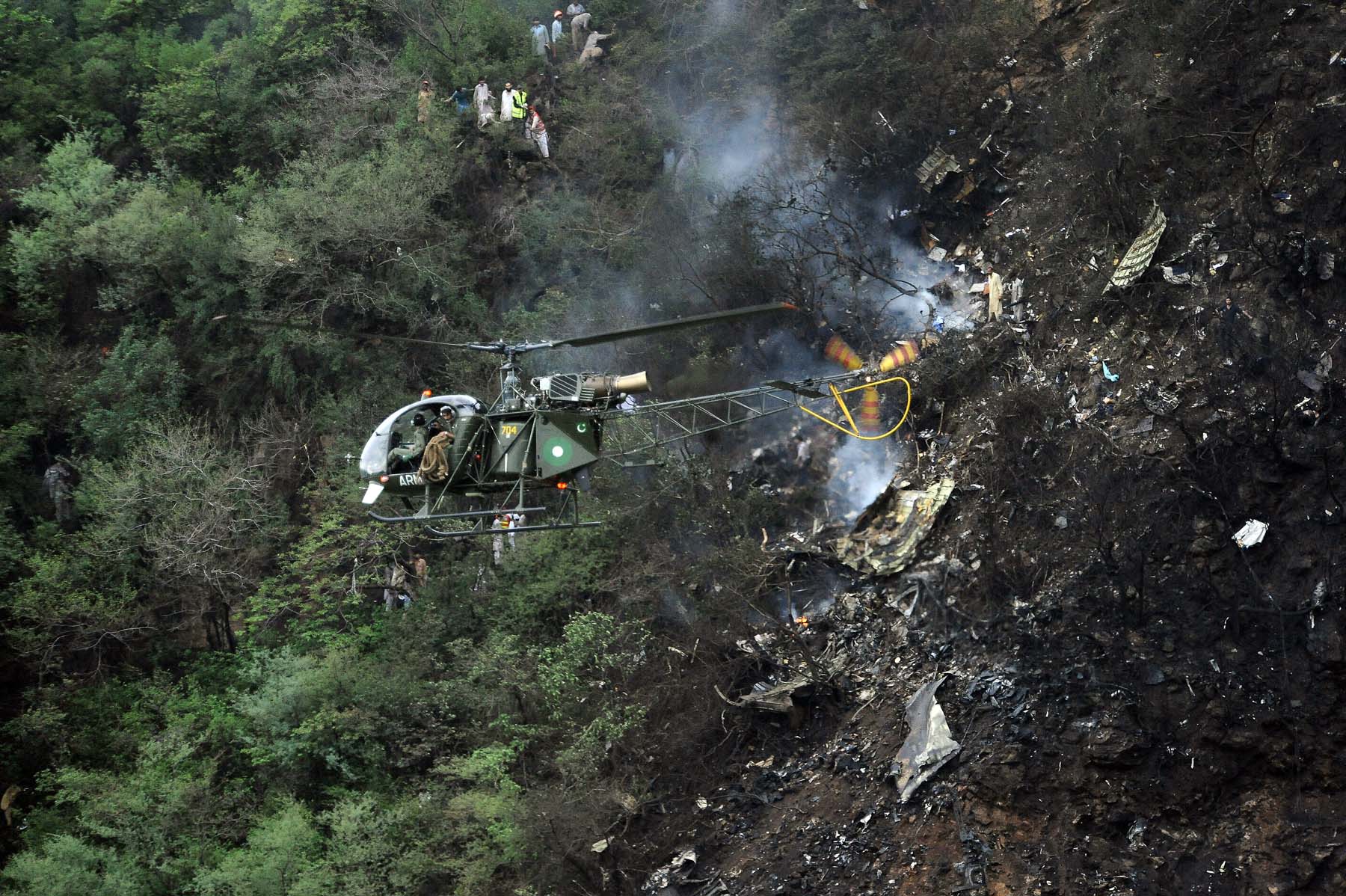
Flight ABQ202, operated by Airblue, was scheduled to fly a domestic flight sector Karachi - Islamabad. The aircraft had 152 persons on board, including six crew members. The Captain of aircraft was Captain Pervez Iqbal Chaudhary. Mishap aircraft took-off from Karachi at 0241 UTC (0741 PST) for Islamabad. At time 0441:08, while executing a circling approach for RWY-12 at Islamabad, it flew into Margalla Hills, and crashed at a distance of 9.6 NM, on a radial 334 from Islamabad VOR. The aircraft was completely destroyed and all souls on board the aircraft, sustained fatal injuries.
Probable cause:
- Weather conditions indicated rain, poor visibility and low clouds in and around the airport. The information regarding prevalent weather and the required type of approach on arrival was in the knowledge of aircrew.
- Though aircrew Captain was fit to undertake the flight on the mishap day, yet his portrayed behavior and efficiency was observed to have deteriorated with the inclement weather at BBIAP Islamabad.
- The chain of events leading to the accident in fact started with the commencement of flight, where Captain was heard to be confusing BBIAP Islamabad with JIAP Karachi while planning FMS, and Khanpur Lake (Wah) with Kahuta area during holding pattern. This state continued when Captain of the mishap flight violated the prescribed Circling Approach procedure for RWY-12; by descending below MDA (i.e 2,300 ft instead of maintaining 2,510 ft), losing visual contact with the airfield and instead resorting to fly the non-standard self created PBD based approach, thus transgressing out of protected airspace of maximum of 4.3 NM into Margallas and finally collided with the hills.
- Aircrew Captain not only clearly violated the prescribed procedures for circling approach but also did not at all adhere to FCOM procedures of displaying reaction / response to timely and continuous terrain and pull up warnings (21 times in 70 seconds) – despite these very loud, continuous and executive commands, the Captain failed to register the urgency of the situation and did not respond in kind (break off / pull off).
- F/O simply remained a passive bystander in the cockpit and did not participate as an effective team member failing to supplement / compliment or to correct the errors of his captain assertively in line with the teachings of CRM due to Captain’s behavior in the flight.
- At the crucial juncture both the ATC and the Radar controllers were preoccupied with bad weather and the traffic; the air traffic controller having lost visual contact with the aircraft got worried and sought Radar help on the land line (the ATC does not have a Radar scope); the radar controller having cleared aircraft to change frequency to ATC, got busy with the following traffic. Having been alerted by the ATC, the Radar controller shifted focus to the mishap aircraft – seeing the aircraft very close to NFZ he asked the ATCO (on land line) to ask the aircraft to immediately turn left, which was transmitted. Sensing the gravity of the situation and on seeing the aircraft still heading towards the hills, the Radar controller asked the ATCO on land line “Confirm he has visual contact with the ground. If not, then ask him to immediately climb, and make him execute missed approach”. The ATCO in quick succession asked the Captain if he had contact with the
airfield – on receiving no reply from aircrew the ATCO on Radars prompting asked if he had contact with the ground. Aircrew announced visual contact with the ground which put ATS at ease.
Ensuing discussion and mutual situational update (on land line) continued and, in fact, the ATC call “message from Radar immediately turn left” was though transmitted, but by the time the call got transmitted, the aircraft had crashed at the same time.
- The accident was primarily caused by the aircrew who violated all established procedures for a visual approach for RWY-12 and ignored several calls by ATS Controllers and EGPWS system warnings (21) related to approaching rising terrain and PULL UP.
Final Report:

Crash of an Antonov AN-12BP at Camp Dwyer AFB

Date & Time: Jul 28, 2010
Type of aircraft:
Operator:
Registration:
3X-GEQ
Flight Type:
Survivors:
Yes
MSN:
4 3 422 10
YOM:
1964
Country:
Region:
Crew on board:
6
Crew fatalities:
Pax on board:
0
Pax fatalities:
Other fatalities:
Total fatalities:
0
Circumstances:
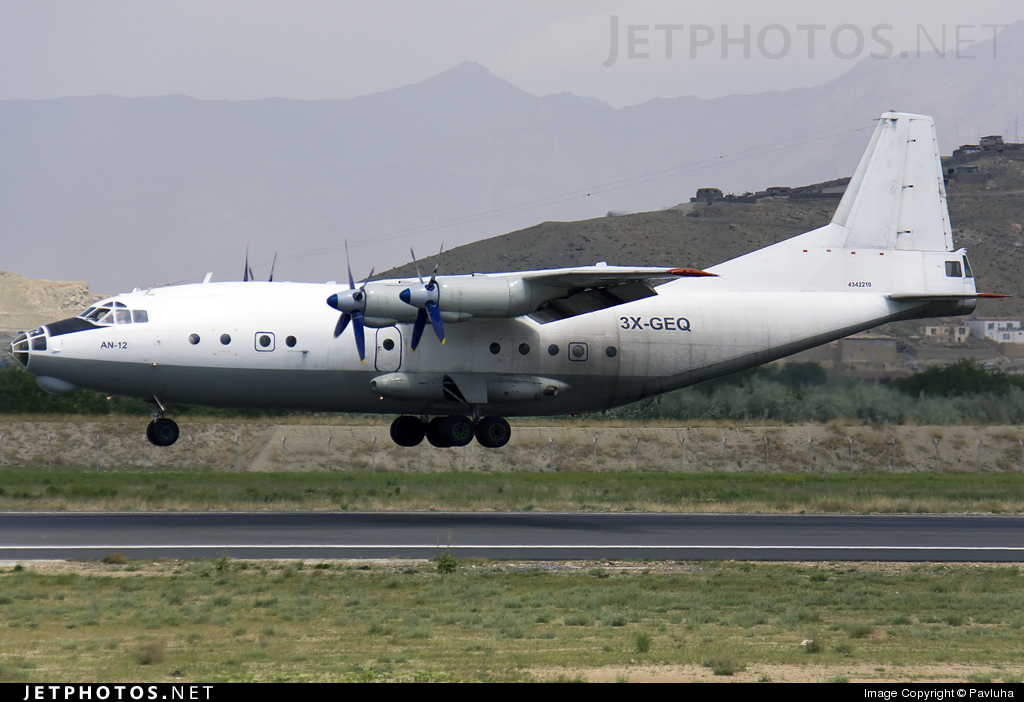
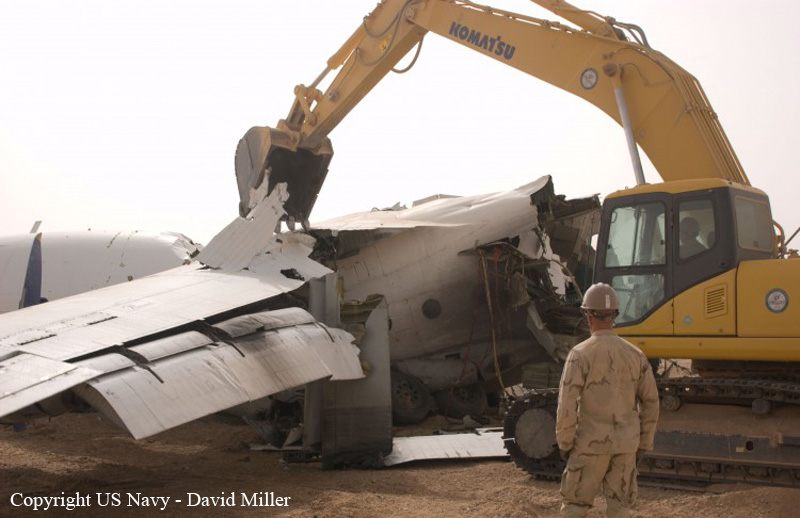
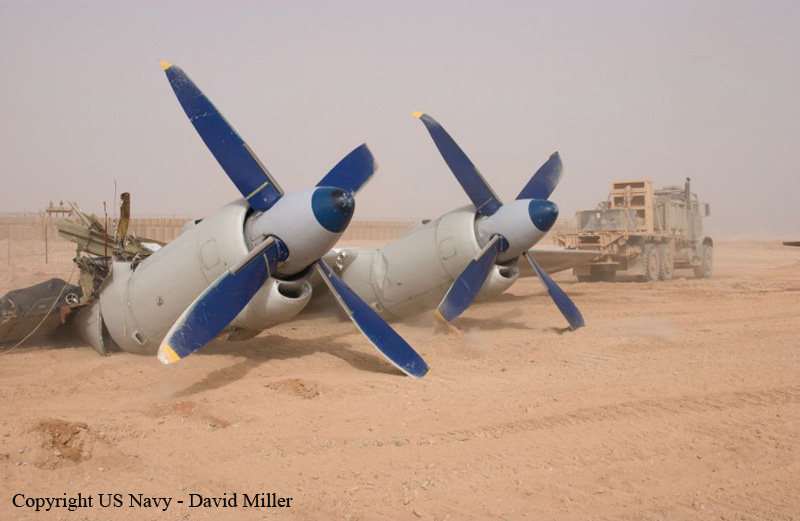
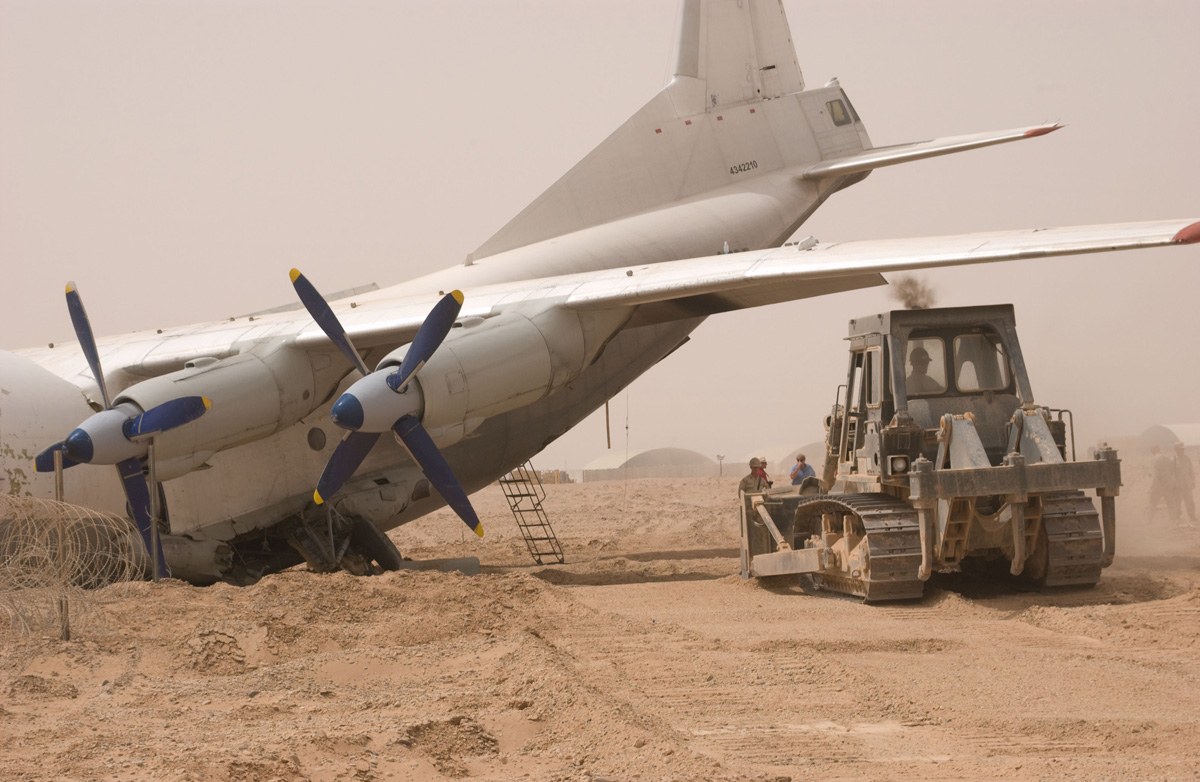
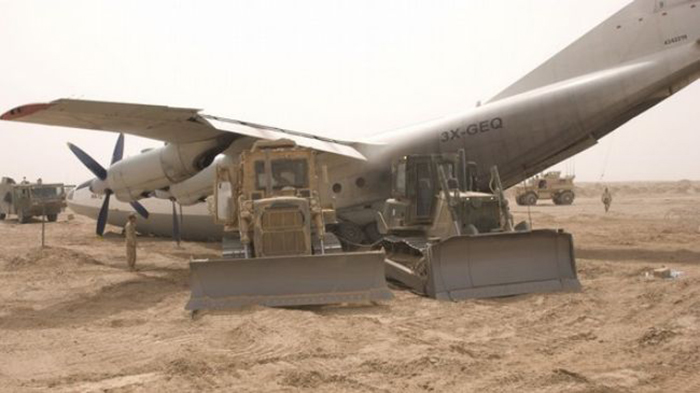
After landing at Camp Dwyer AFB (Forward Operating Base Dwyer) located in the Helmand Province, the aircraft went out of control, veered off runway, collided with a fence and came to rest into a ravine, broken in two. All six occupants were uninjured while the aircraft was damaged beyond repair. It was later dismantled by the US Air Force. The aircraft was carrying a load of fresh fruits and dairy products.

Crash of a McDonnell Douglas MD-11F in Riyadh

Date & Time: Jul 27, 2010 at 1138 LT
Type of aircraft:
Operator:
Registration:
D-ALCQ
Flight Type:
Survivors:
Yes
Schedule:
Frankfurt - Riyadh
MSN:
48431/534
YOM:
1993
Flight number:
LH8460
Country:
Region:
Crew on board:
2
Crew fatalities:
Pax on board:
0
Pax fatalities:
Other fatalities:
Total fatalities:
0
Captain / Total flying hours:
8270
Captain / Total hours on type:
4466.00
Copilot / Total flying hours:
3444
Copilot / Total hours on type:
219
Aircraft flight hours:
73247
Aircraft flight cycles:
10073
Circumstances:
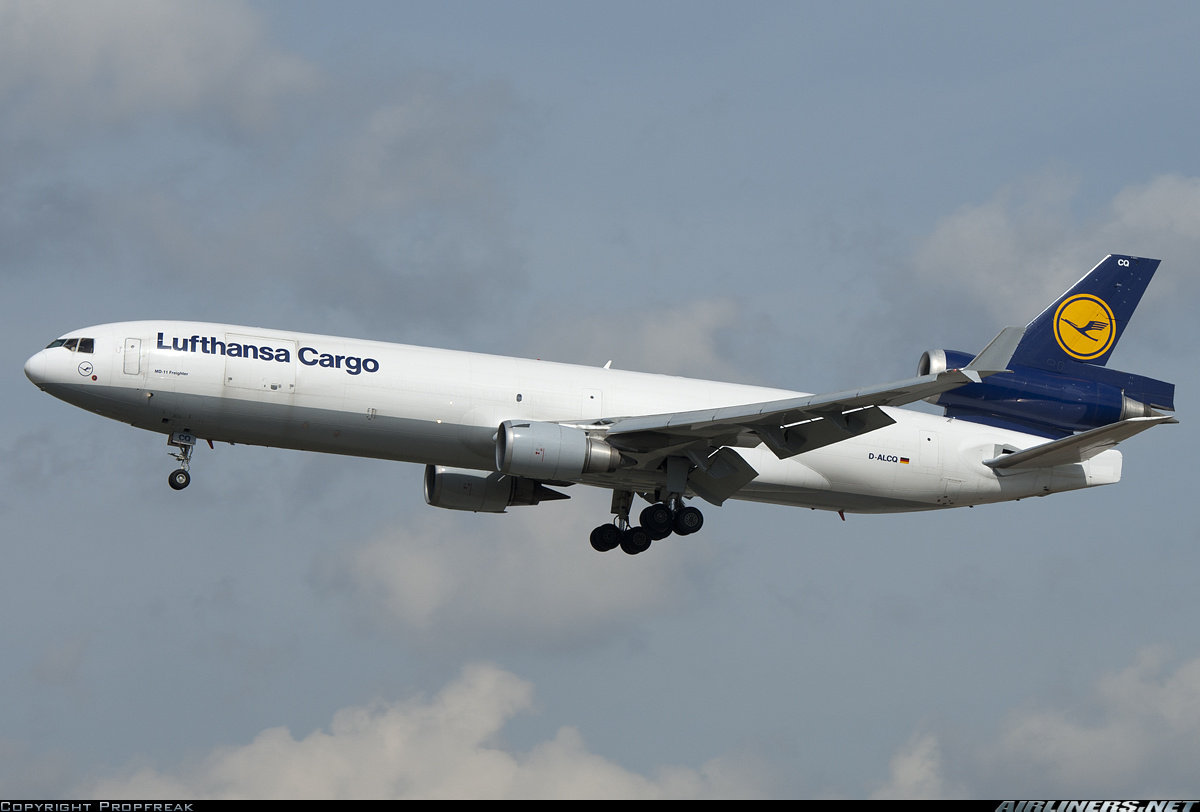
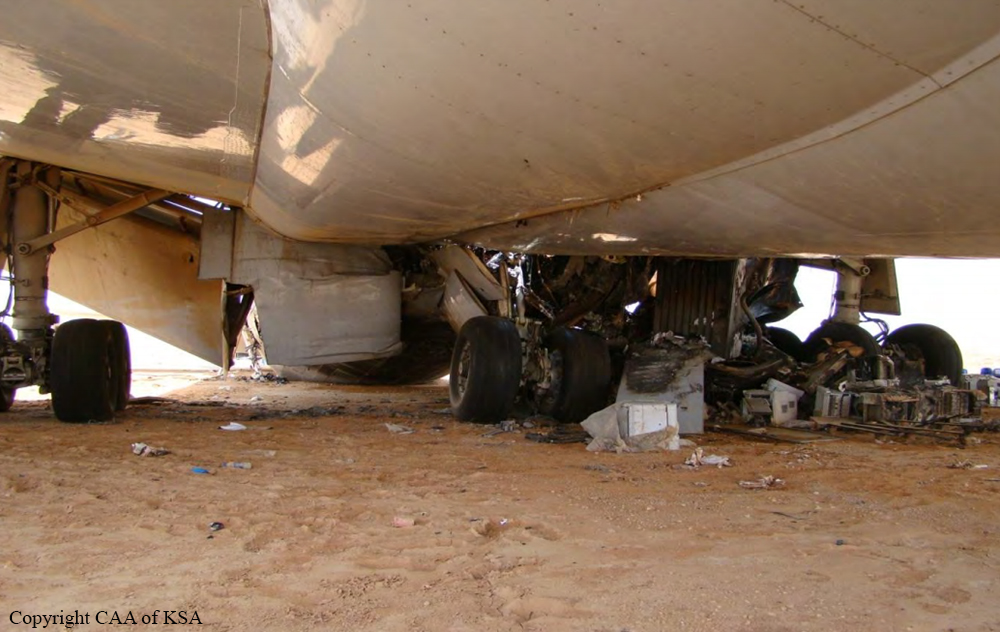
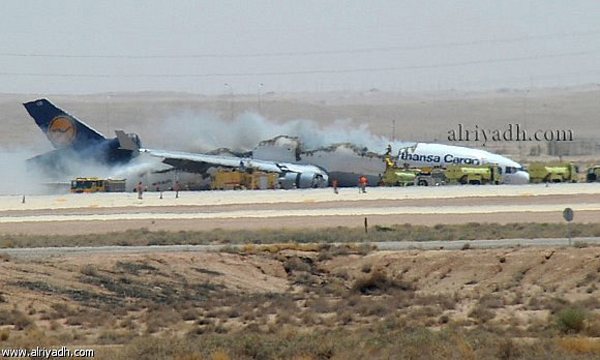
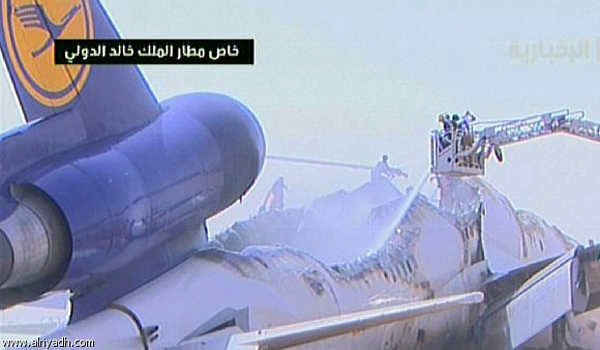
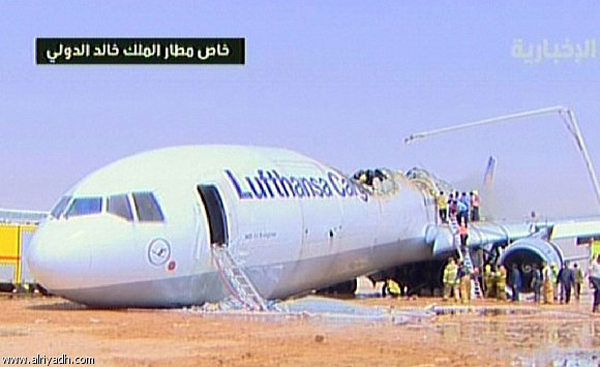
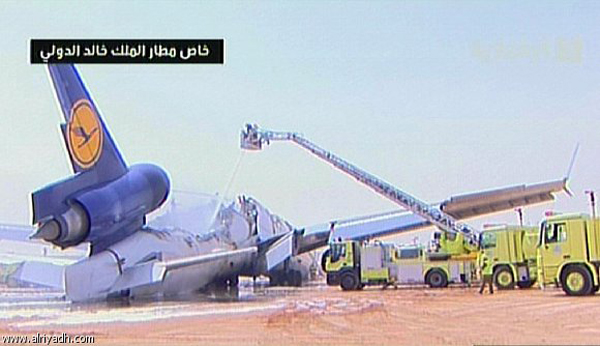
The airplane operated on Flight LH8460, a scheduled cargo service operating from Frankfurt (FRA) to Riyadh (RUH). It carried 80 tons of cargo. The accident flight departed Frankfurt about 05:16 local time (03:16 UTC), 2.5 hours later than originally scheduled due to minor maintenance issues. The accident flight was the first time the captain and first officer had flown together. The captain decided that the first officer, who had been employed with Lufthansa Cargo for 7 months and had not flown into Riyadh before, would fly the leg because he believed it would be an easy leg appropriate for the first officer. Cruise flight and approach to Riyadh were uneventful. The first officer indicated that he completed the approach briefing about 25 minutes before landing, calculating that he would use a flap setting of 35°, target 72 percent N1 rpm on final approach, expect a pitch attitude of about 4.5° on final approach, and commence the flare about 40 feet above ground level (agl). The flight was radar vectored to the instrument landing system of runway 33L, and the first officer flew the approach with a planned Vref of 158 knots. Convective conditions prevailed, with a temperature of 39°C and winds at 15 to 25 knots on a heading closely aligned with the landing runway. The aircraft was centered on the glide slope and localizer during the approach, until 25 seconds before touchdown when it dipped by half a dot below the glide slope. During that period, the indicated airspeed oscillated between 160 and 170 kt, centered about 166 kt. The ground speed was 164 kt until 20 sec. prior to touchdown, when it began to increase and reached 176 kt at touchdown. The flare was initiated by the first officer between 1.7 and 2.0 sec. before touchdown, that is: 23 to 31 feet above the runway. The main gear touchdown took place at 945 ft from the runway threshold at a descent rate of -13 ft/sec. (780 ft/min) resulting in a normal load factor of 2.1g. The aircraft bounced with the main gear reaching a maximum height of 4ft above the runway with the spoilers deployed to 30 degrees following main-wheel spin up. During this bounce, the captain who was the Pilot Monitoring (PM) pushed on the control column resulting in an unloading of the aircraft. The aircraft touched down a second time in a flat pitch attitude with both the main gear and nose gear contacting the runway, at a descent rate of -11 ft/sec. (660 ft/min), achieving a load factor of 3.0g. Just prior to this second touchdown, both pilots pulled on the control column, which combined with the rebound of the nose gear from the runway, resulted in a 14° pitch angle during the second bounce. Additionally, the spoilers reached their full extension of 60° following the compression of the nose gear strut during the second touchdown. During this second bounce, the main gear reached a height of 12 ft above the runway. Early in this second bounce, the captain pushed the control column to its forward limit and the elevators responded accordingly. Prior to the third and final touchdown, both pilots pulled back on the control column at slightly different times. Although the elevators responded accordingly and started to reduce the nose-down pitch rate, the aircraft was still pitching down at the third touchdown. During this third touchdown, the aircraft contacted the runway at a descent rate of -17 ft/sec (1020 ft/min), thus achieving a load factor of 4.4g. At this point, the aft fuselage ruptured behind the wing trailing edge. Two fuel lines were severed and fuel spilled within the left hand wheel well. A fire ignited and travelled to the upper cargo area. The captain attempted to maintain control of the aircraft within the runway boundaries. Not knowing about the aft fuselage being ruptured and dragging on the runway, the captain deployed the engine thrust reversers, but only the no. 1 and the no. 3 engines responded. The captain maintained directional control of the aircraft as best he could and requested the First Officer to declare a Mayday. The aircraft then went towards the left side of the runway as the captain attempted, without success, to maintain the aircraft on the runway. As the aircraft departed the runway, the nose gear collapsed and the aircraft came to a full stop 8800 ft from the threshold of the runway and 300 ft left from the runway centerline. The fuel to the engines was cut off and both pilots evacuated the aircraft by using the slide at the Left One (L1) door. The mid portion of the aircraft was on fire.
Probable cause:
Cause Related Findings:
1. The flight crew did not recognize the increasing sink rate on short final.
2. The First officer delayed the flare prior to the initial touchdown, thus resulting in a bounce.
3. The flight crew did not recognize the bounce.
4. The Captain attempted to take control of the aircraft without alerting the First Officer resulting in both flight crews acting simultaneously on the control column.
5. During the first bounce, the captain made an inappropriate, large nose-down column input that resulted in the second bounce and a hard landing in a flat pitch attitude.
6. The flight crew responded to the bounces by using exaggerated control inputs.
7. The company bounced-landing procedure was not applied by the flight crew.
Final Report:

Crash of an Antonov AN-12BP in Keperveyem

Date & Time: Jul 21, 2010 at 0932 LT
Type of aircraft:
Operator:
Registration:
RA-11376
Flight Phase:
Flight Type:
Survivors:
Yes
Schedule:
Keperveem - Komsomolsk-on-Amur
MSN:
02 348 206
YOM:
1972
Flight number:
KBR9236
Country:
Region:
Crew on board:
7
Crew fatalities:
Pax on board:
1
Pax fatalities:
Other fatalities:
Total fatalities:
0
Aircraft flight hours:
5136
Aircraft flight cycles:
3090
Circumstances:
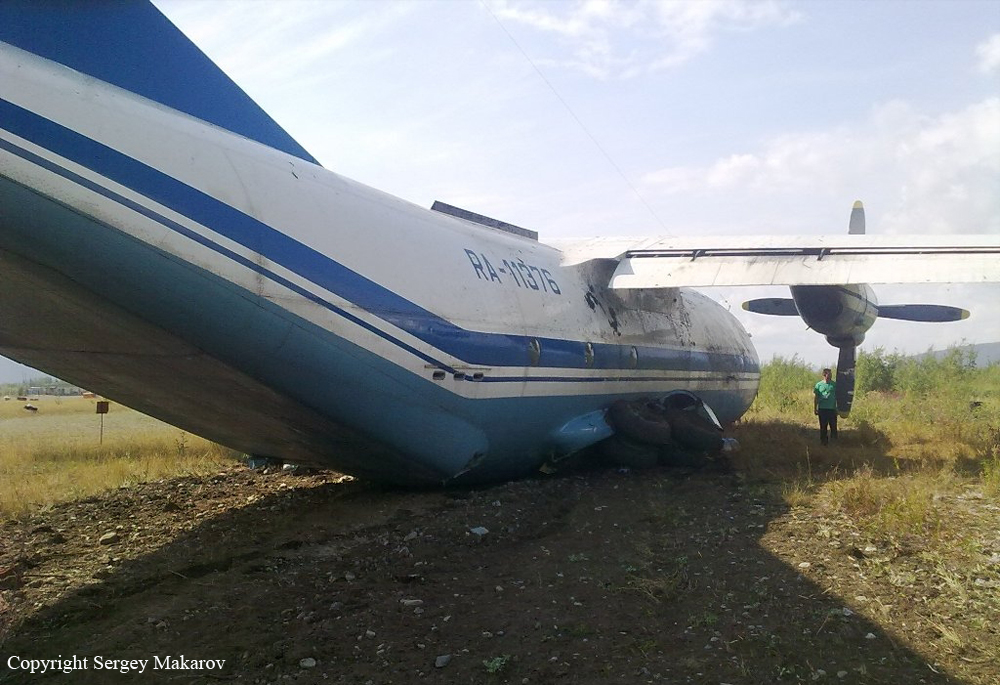
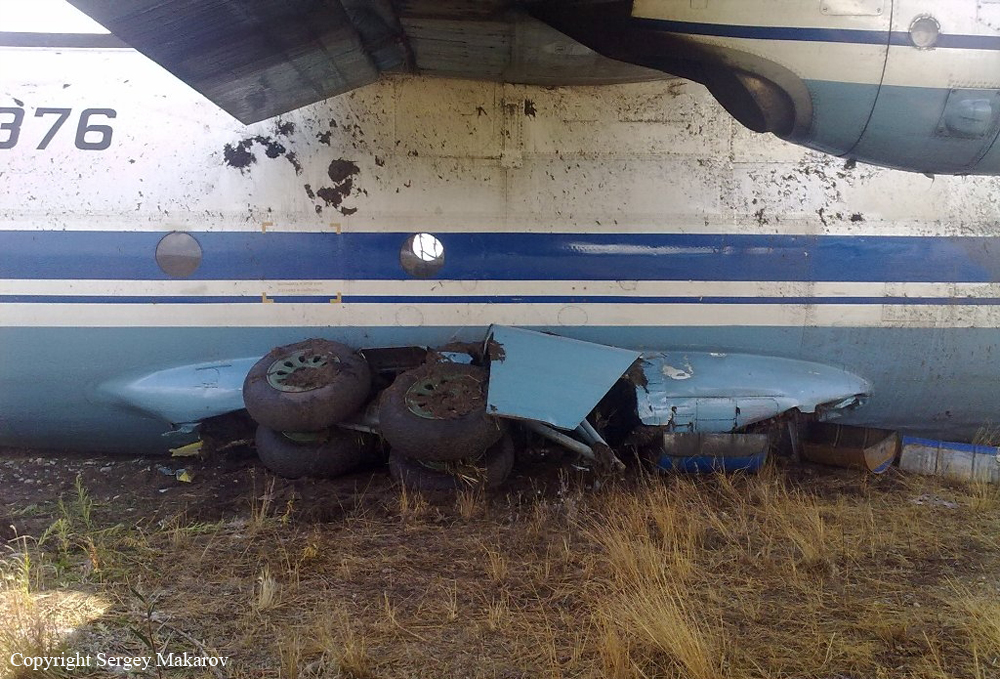
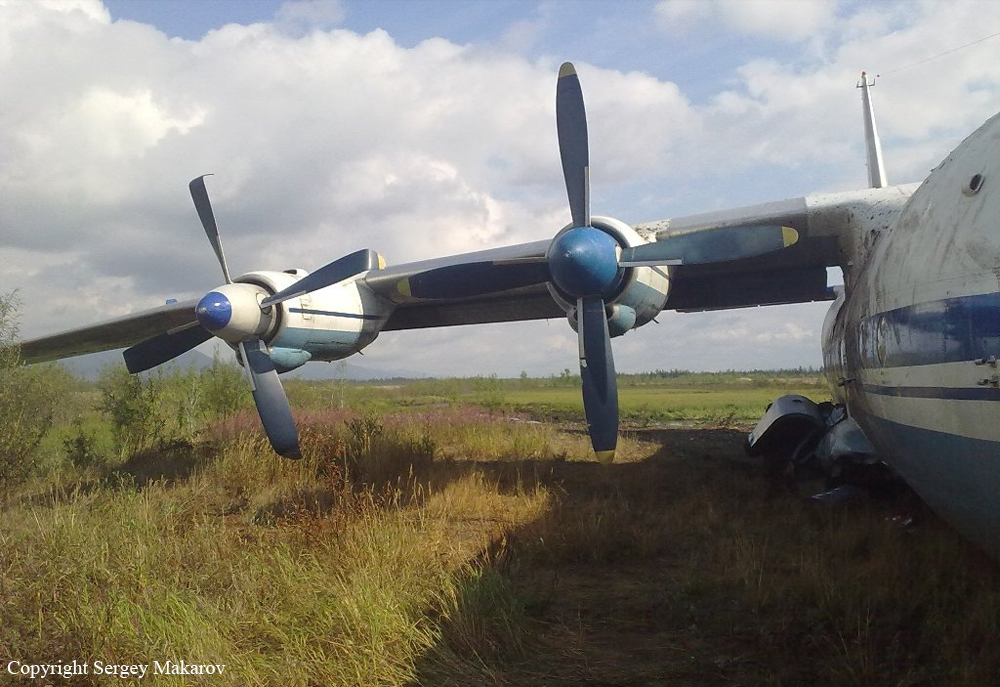
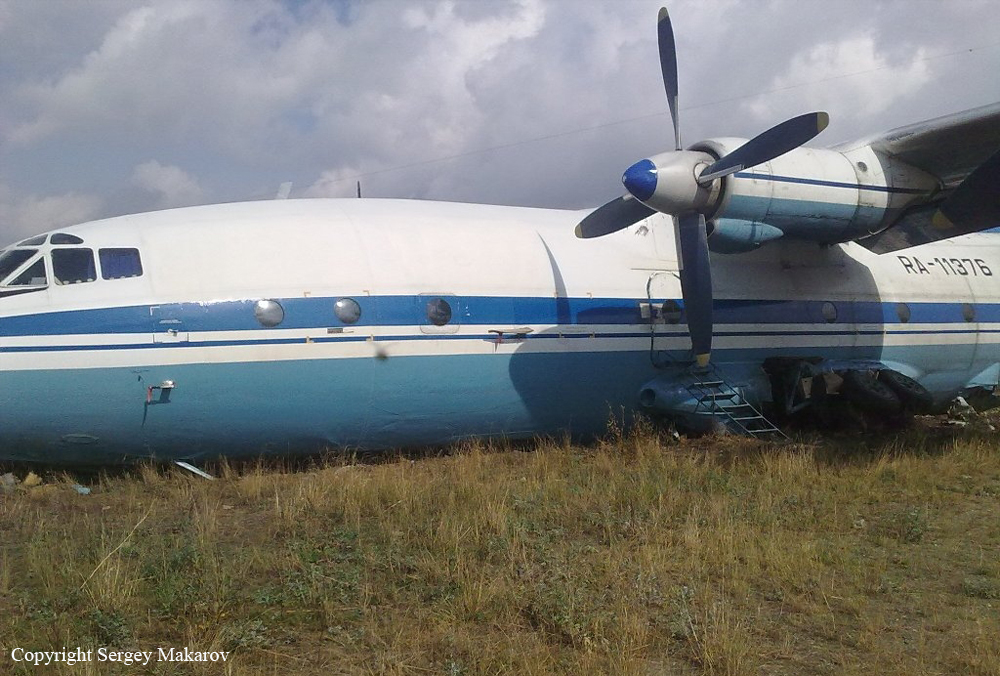
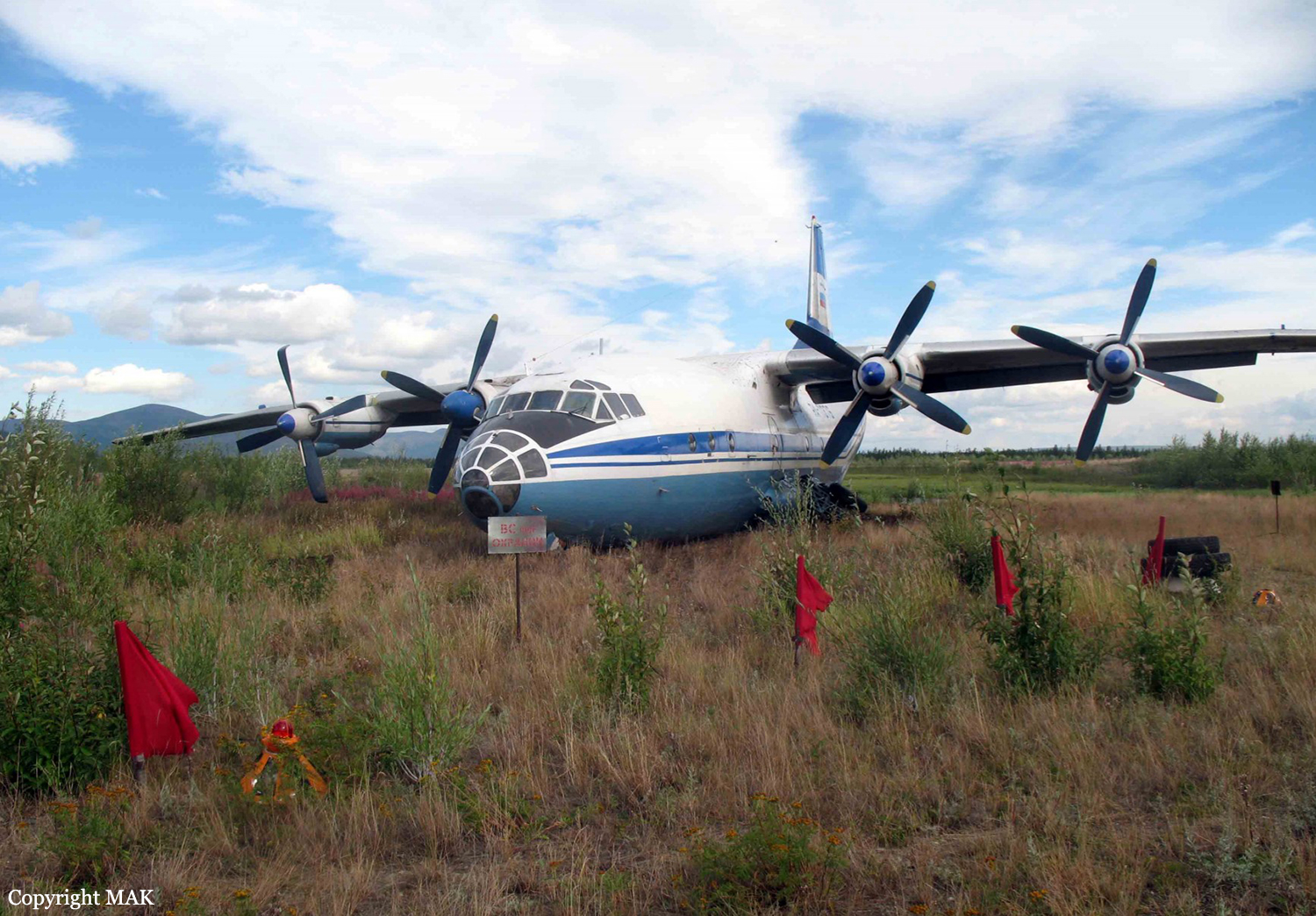
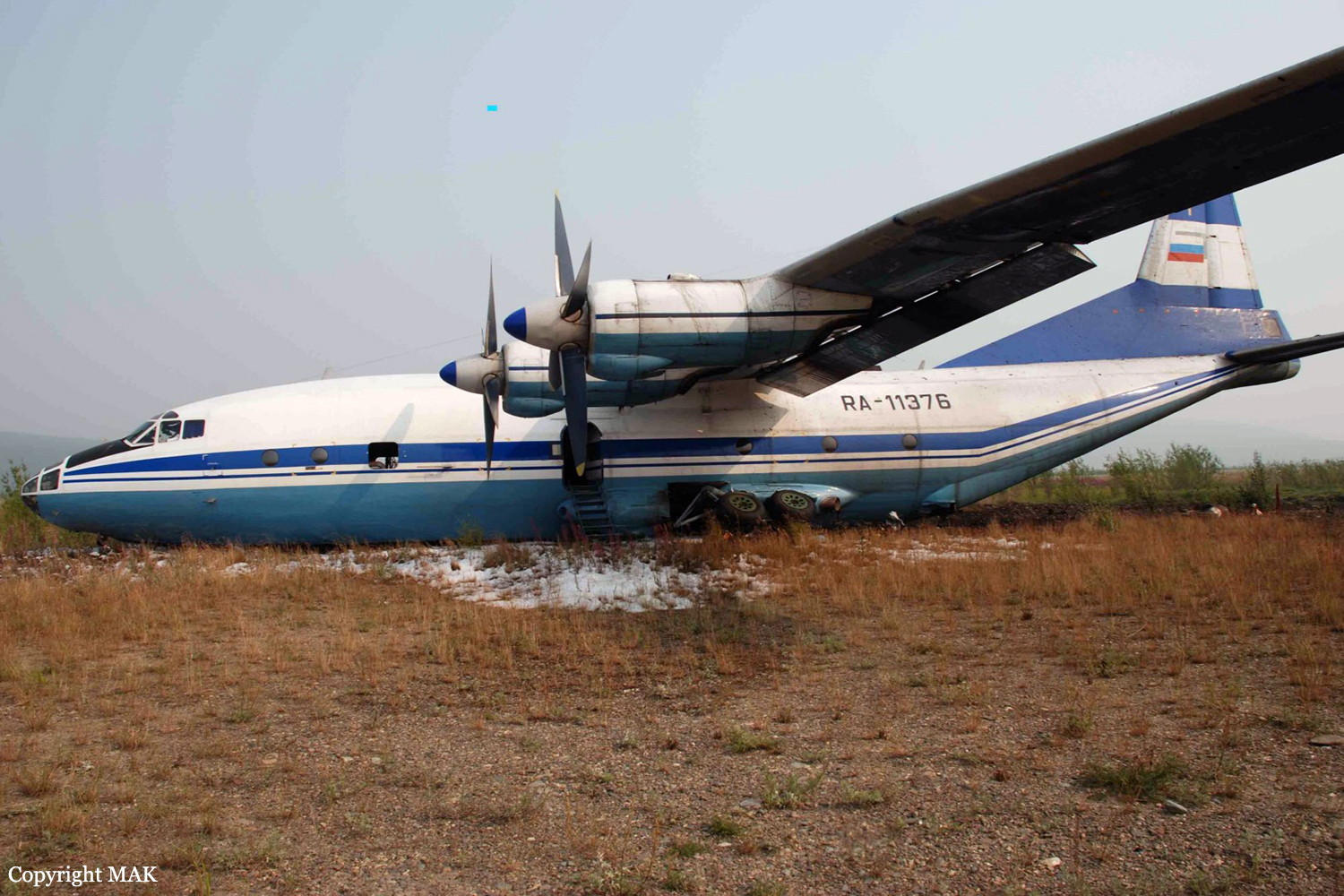
During the takeoff roll on runway 27 at Keperveyem Airport, the four engine aircraft deviated to the left, went out of control and veered off runway. It lost its undercarriage and slid before coming to rest 120 metres to the left of the runway and after a course of 880 metres. All 8 occupants escaped uninjured while the aircraft was damaged beyond economical repair.
Probable cause:
Loss of control during takeoff following the failure of the nosewheel steering system due to the malfunction of the VG15-2S switch. The captain failed to check the nosewheel steering system prior to takeoff, which was considered as a contributing factor.
Final Report:

Crash of a PZL-Mielec AN-2R near Voznesenskoye

Date & Time: Jun 27, 2010 at 1545 LT
Type of aircraft:
Operator:
Registration:
RA-62631
Flight Phase:
Flight Type:
Survivors:
Yes
MSN:
1G178-23
YOM:
1978
Country:
Region:
Crew on board:
2
Crew fatalities:
Pax on board:
1
Pax fatalities:
Other fatalities:
Total fatalities:
0
Captain / Total flying hours:
2643
Captain / Total hours on type:
2643.00
Copilot / Total flying hours:
645
Copilot / Total hours on type:
645
Aircraft flight hours:
3208
Circumstances:
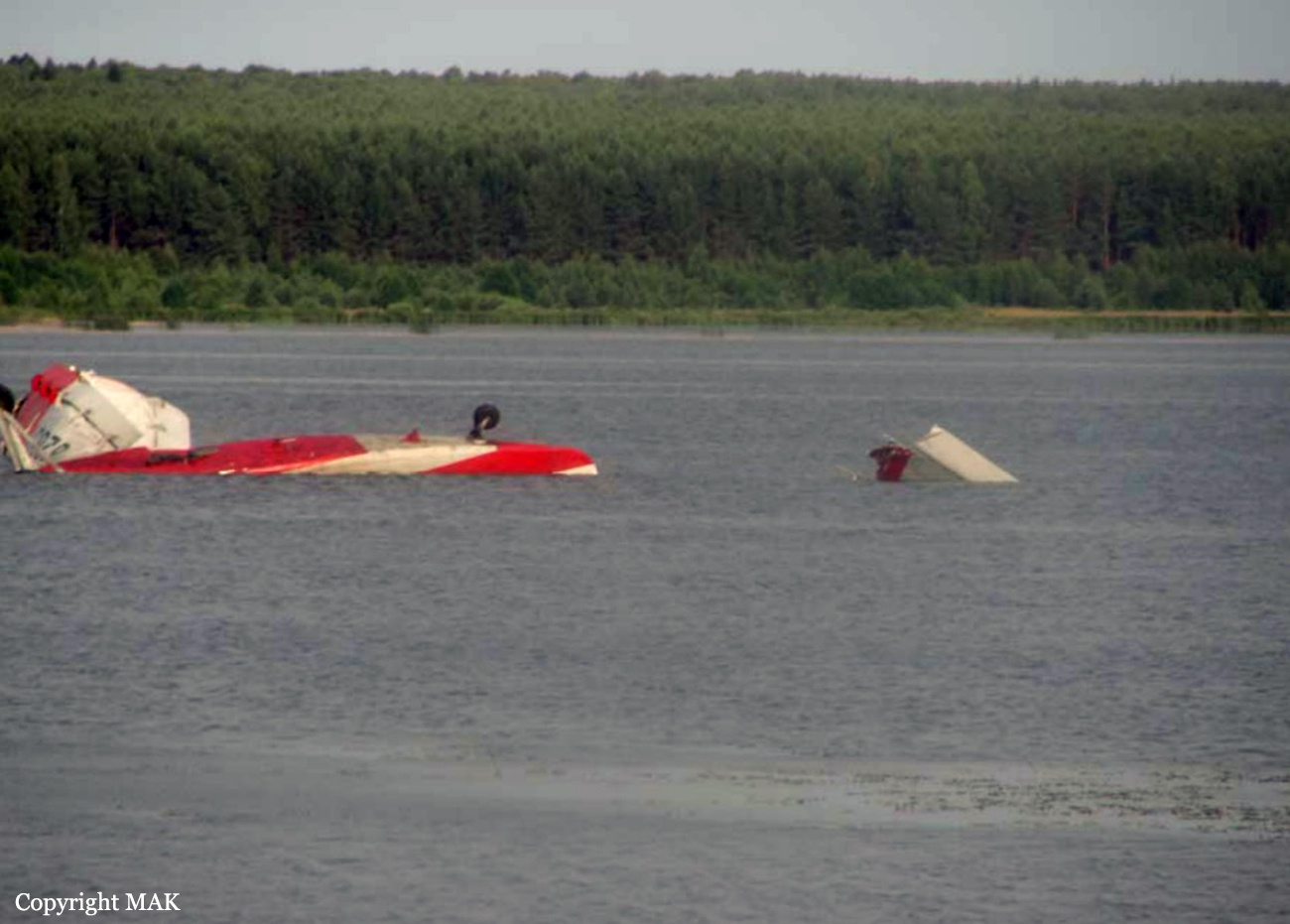
The crew was performing a survey flight while in a fire fighting program. In flight, the engine failed and the crew elected to make an emergency landing. The aircraft stalled and crashed in the Varnavka River. Both pilots and the passenger were injured while the aircraft sank and was damaged beyond repair.
Probable cause:
The accident was the result of a forced landing on the water surface due to unstable operation of the engine after a loss of power which was caused by the re-enrichment of the fuel-air mixture because of jamming of the needle valve of the left float chamber of the carburetor. The most probable reason for jamming of the needle valve of the left float chamber is its clogging by foreign particles that resulted from failure to comply with section 2.02.01.20 of the rules of maintenance of the AN-2 while performing 100-hour maintenance works due to lack of RTO requirements for mandatory compliance.
Final Report:

Crash of a PZL-Mielec AN-2R in Sarybulak: 2 killed

Date & Time: Jun 24, 2010 at 1730 LT
Type of aircraft:
Operator:
Registration:
UP-A0161
Flight Phase:
Flight Type:
Survivors:
Yes
Schedule:
Taiynsha - Sorochinskiy
MSN:
1G206-40
YOM:
1984
Country:
Region:
Crew on board:
3
Crew fatalities:
Pax on board:
0
Pax fatalities:
Other fatalities:
Total fatalities:
2
Circumstances:
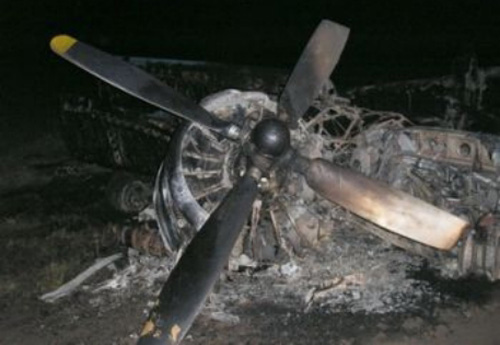
The crew was on a positioning flight for a crop-spraying mission in North Kazakhstan when he lost his orientation between the villages of Taiynsha and Sorochinskiy. He landed on a small field near the village of Sarybulak to establish his position. After takeoff with a slight tail wind, at a height of 15 metres, the pilot-in-command initiated a left turn when the left lower wing struck a tree. The aircraft stalled and crashed, bursting into flames. Both pilots were killed while the engineer was seriously injured. The aircraft was totally destroyed by a post crash fire.
Probable cause:
The following findings were identified:
- Takeoff from a limited area,
- Failure to take into account obstacles by the crew during takeoff,
- Incorrect selection of the take-off site;
- High outside air temperature and tailwind component.