Crash of an Ilyushin II-18V in Lukhovitsy

Date & Time: Jul 28, 1961 at 1740 LT
Type of aircraft:
Operator:
Registration:
CCCP-75766
Flight Type:
Survivors:
Yes
Schedule:
Lukhovitsy - Lukhovitsy
MSN:
181003405
YOM:
1960
Country:
Region:
Crew on board:
6
Crew fatalities:
Pax on board:
0
Pax fatalities:
Other fatalities:
Total fatalities:
0
Aircraft flight hours:
15
Aircraft flight cycles:
8
Circumstances:
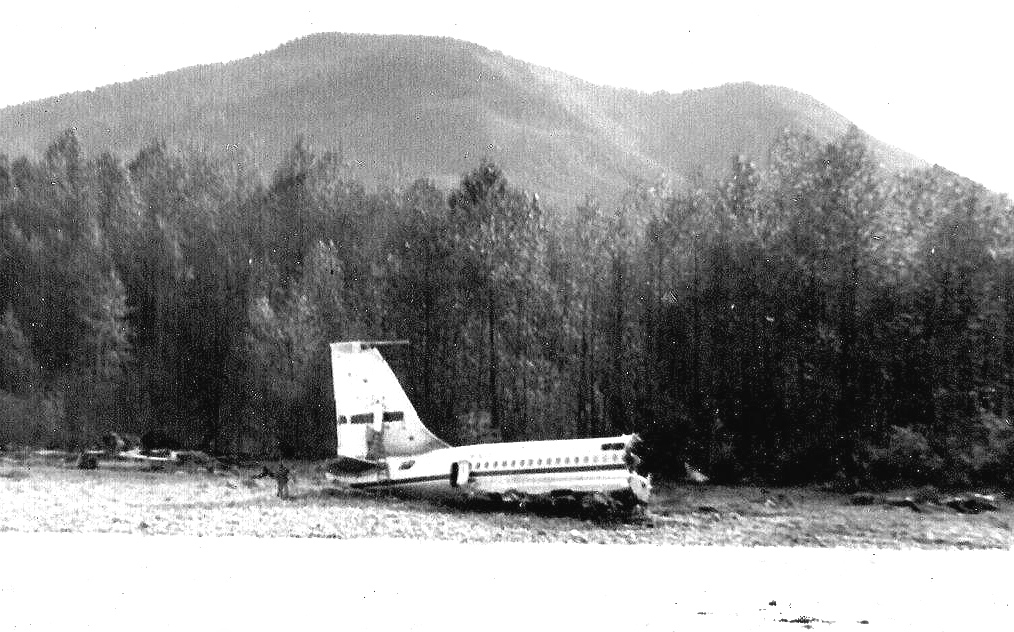
The crew was performing a local test flight at Lukhovitsy-Tretyakovo Airport. While completing a third turn on approach, the crew activated the feathering system on the engine number two. Shortly later, while an altitude of 80-100 meters, the airplane banked left, lost height and speed, stalled and struck the ground. On impact, the undercarriage were sheared off and the airplane slid for dozen yards before coming to rest with its left wing broken. All six crew members were unhurt while the aircraft was damaged beyond repair.
Probable cause:
Loss of control on final approach due to loss of thrust on engine number one after the propeller went into autorotation, causing negative thrust.

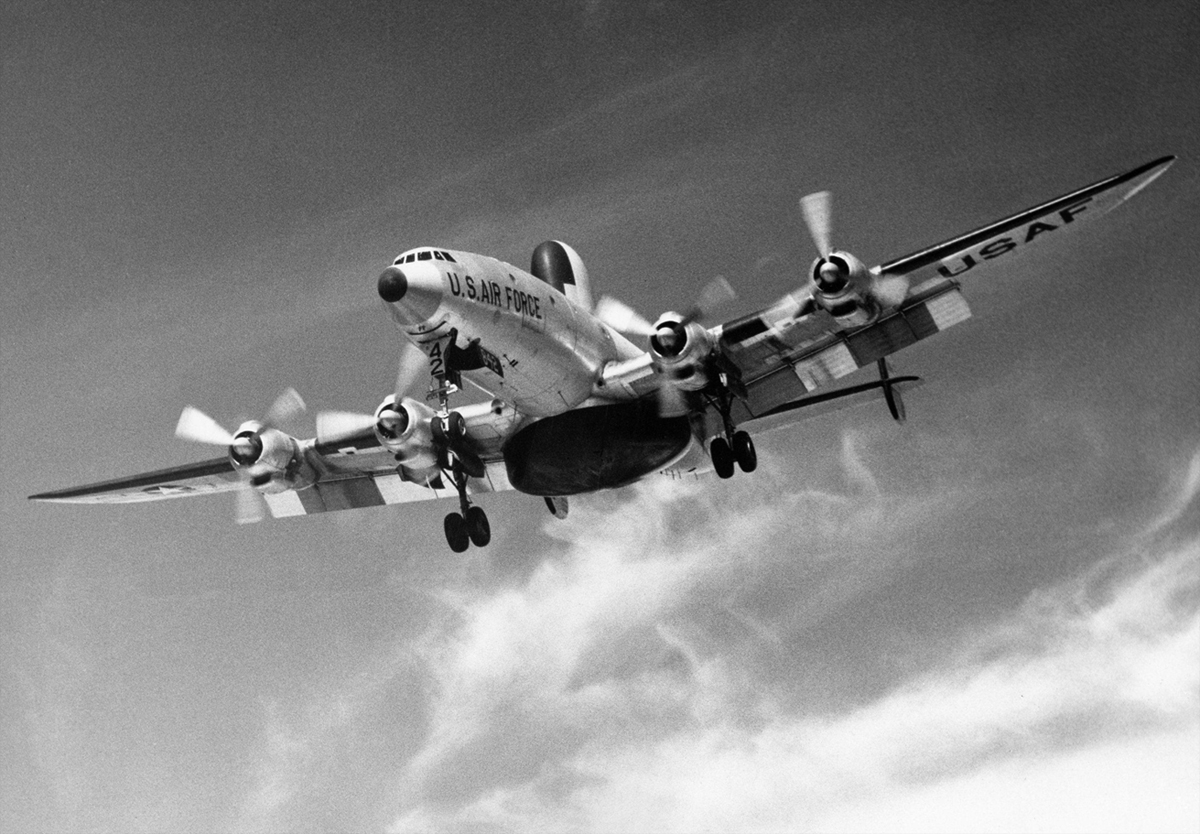
Crash of a Lockheed RC-121C Super Constellation near Marysville: 6 killed

Date & Time: Mar 22, 1961
Operator:
Registration:
51-3842
Flight Phase:
Flight Type:
Survivors:
No
Schedule:
McClellan - McClellan
MSN:
4118
YOM:
1953
Crew on board:
6
Crew fatalities:
Pax on board:
0
Pax fatalities:
Other fatalities:
Total fatalities:
6
Circumstances:
Crashed in unknown circumstances ten miles of Marysville while completing a test flight out from McClellan AFB. All six crew members were killed.

Crash of a Nord 2501D Noratlas in Vilkerath: 4 killed

Date & Time: Jan 23, 1961 at 0755 LT
Type of aircraft:
Operator:
Registration:
GB+119
Flight Type:
Survivors:
No
Schedule:
Cologne - Cologne
MSN:
103
Country:
Region:
Crew on board:
4
Crew fatalities:
Pax on board:
0
Pax fatalities:
Other fatalities:
Total fatalities:
4
Circumstances:
The crew was engaged in a local test flight out from Cologne-Bonn Airport after one of the engine has been changed the day prior to the accident. On approach by night, the aircraft was too low and struck power cable and electric pole before crashing in a snow covered field located in Vilkerath, 15 km east of the airport. The aircraft was destroyed and all four crew members were killed. There were icing conditions at the time of the accident.
Crew:
Cpt Helmut Wolf, pilot,
Wolfram Miss, pilot,
Erich Lauf, radio operator,
Rudi Wilker, mechanic.
Probable cause:
It is believed that the accident was the consequence of a wrong altimeter setting probably due to faulty information because the Pitot tubes were obstructed by ice.

Crash of a Douglas C-47-DL in Maiquetía: 3 killed

Date & Time: Dec 1, 1959 at 1111 LT
Operator:
Registration:
YV-C-AKU
Flight Phase:
Flight Type:
Survivors:
No
Schedule:
Maiquetía – Maiquetía
MSN:
4581
YOM:
1942
Country:
Crew on board:
3
Crew fatalities:
Pax on board:
0
Pax fatalities:
Other fatalities:
Total fatalities:
3
Circumstances:
The crew was in charge to perform a local test flight out from Maiquetía-Simon Bolivar Airport. Shortly after takeoff, while climbing, the crew informed ATC about technical problems with the right engine and obtained the permission to return for an emergency landing. Shortly later, the airplane crashed on Mt Playa Grande near the airport. The aircraft was destroyed and all three crew members were killed.
Probable cause:
The accident was caused by an overspeeding propeller followed by failure of the starboard engine.

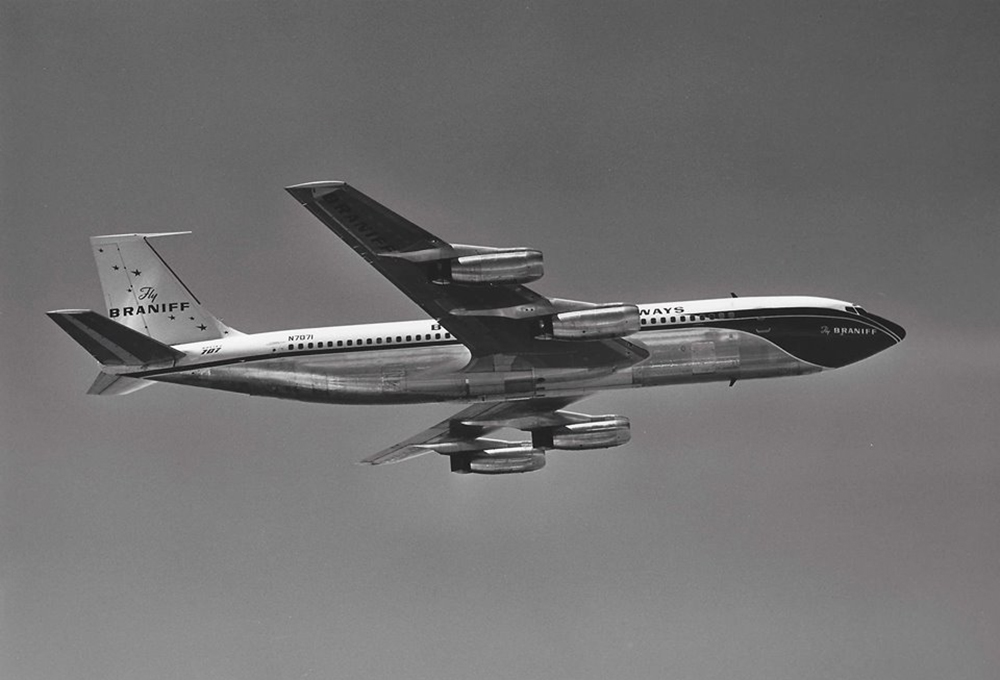
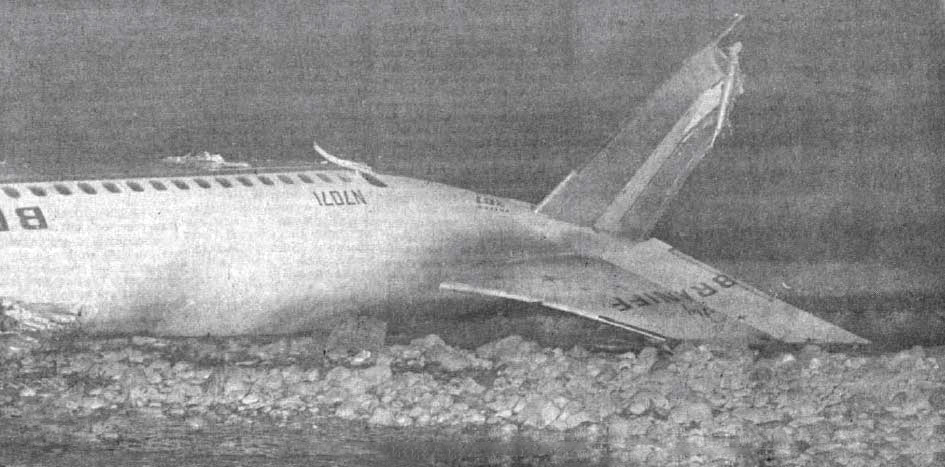
Crash of a Boeing 707-227 near Arlington: 4 killed

Date & Time: Oct 19, 1959 at 1620 LT
Type of aircraft:
Operator:
Registration:
N7071
Flight Phase:
Flight Type:
Survivors:
Yes
Schedule:
Seattle - Seattle
MSN:
17691
YOM:
1959
Crew on board:
8
Crew fatalities:
Pax on board:
0
Pax fatalities:
Other fatalities:
Total fatalities:
4
Captain / Total flying hours:
5015
Captain / Total hours on type:
369.00
Copilot / Total flying hours:
23563
Aircraft flight hours:
173
Circumstances:
A Boeing Airplane Company test pilot was acting as an instructor-pilot on a demonstration and acceptance flight prior to the aircraft being delivered to the customer. The company was also utilizing this flight time for flight instruction purposes in qualifying airline personnel in the aircraft. The instructor-pilot demonstrated several maneuvers, including Dutch Rolls, to a pilot-trainee, an airline captain who was making his first training flight training flight prior to checkout on the Boeing 707. The instructor-pilot initiated a Dutch Roll in which the roll-park angle of the aircraft reached 40 to 60 degrees. This bank angle is in excess of limitation set by the company for demonstration of his maneuver. The pilot-trainee, who was to make the recovery, rolled full right aileron control while the right rank was still increasing. The instructor-pilot immediately rolled in full opposite aileron. The airplane stopped its right roll at a point well past a vertical bank and then rolled to the left even more violently. Several gyrations followed and after control of the aircraft was regained, it was determined that three of the four engines had separated from the aircraft and it was on fire. The fire rapidly reduced controllability of the aircraft and an emergency landing was attempted, however, the aircraft struck trees and crashed short of the intended landing area because power on the engine remaining had to be shut down to keep the aircraft wings level. The aircraft was destroyed and four crew members were killed while four others were injured.
Probable cause:
The Board determines that the probable cause of this accident was the structural failures induced during an improper recovery attempt from a Dutch Roll which exceeded the angle-of-bank limits prescribed by the company.
Final Report:

Crash of a Vickers 648 Varsity T.1 near RAF Tangmere: 2 killed

Date & Time: Oct 19, 1959
Type of aircraft:
Operator:
Registration:
WF381
Flight Phase:
Flight Type:
Survivors:
No
Schedule:
Boscombe Down - Boscombe Down
MSN:
540
YOM:
1952
Region:
Crew on board:
2
Crew fatalities:
Pax on board:
0
Pax fatalities:
Other fatalities:
Total fatalities:
2
Circumstances:
The crew was involved in a test flight for an asymmetric safety speed assessment out from RAF Boscombe Down. At an altitude of 10,000 feet, the crew lost control of the airplane after applying full power on one engine in takeoff configuration. The aircraft stalled, dove into the ground and crashed in an open field. Both crew members were killed.

Crash of a Nord 2501D Noratlas in Oederquart: 4 killed

Date & Time: Sep 16, 1959 at 1422 LT
Type of aircraft:
Operator:
Registration:
GC+106
Flight Phase:
Flight Type:
Survivors:
No
Schedule:
Hamburg - Hamburg
MSN:
62
YOM:
1955
Country:
Region:
Crew on board:
4
Crew fatalities:
Pax on board:
0
Pax fatalities:
Other fatalities:
Total fatalities:
4
Circumstances:
The crew left Hamburg-Finkenwerder for a test flight. En route, in unclear circumstances, the airplane went out of control and crashed in flames in an open field located in Oederquart, Lower Saxony. The airplane was destroyed and all four crew members were killed.
Crew:
Johannes Nagel, pilot,
Horst Weihrauch, copilot,
Ulrich Doletzki, mechanic,
Werner Stegen, radio operator.

Crash of a Morane-Saulnier M.S.760 Paris I in Toulon: 3 killed

Date & Time: Apr 13, 1959
Operator:
Registration:
12
Flight Phase:
Flight Type:
Survivors:
No
Schedule:
Toulon - Toulon
MSN:
12
YOM:
1958
Country:
Region:
Crew on board:
3
Crew fatalities:
Pax on board:
0
Pax fatalities:
Other fatalities:
Total fatalities:
3
Circumstances:
The crew was engaged in a local test flight on behalf of the commission d’études pratiques d’aéronautique (CEPA). In flight, control was lost for unknown reason and the twin engine aircraft crashed near the airport, killing all three crew members.

Crash of a Baade 152 in Ottendorf-Okrilla: 4 killed

Date & Time: Mar 5, 1959 at 1355 LT
Type of aircraft:
Registration:
DM-ZYA
Flight Phase:
Flight Type:
Survivors:
No
Schedule:
Dresden - Dresden
MSN:
V1
YOM:
4
Country:
Region:
Crew on board:
4
Crew fatalities:
Pax on board:
0
Pax fatalities:
Other fatalities:
Total fatalities:
4
Aircraft flight hours:
1
Aircraft flight cycles:
1
Circumstances:
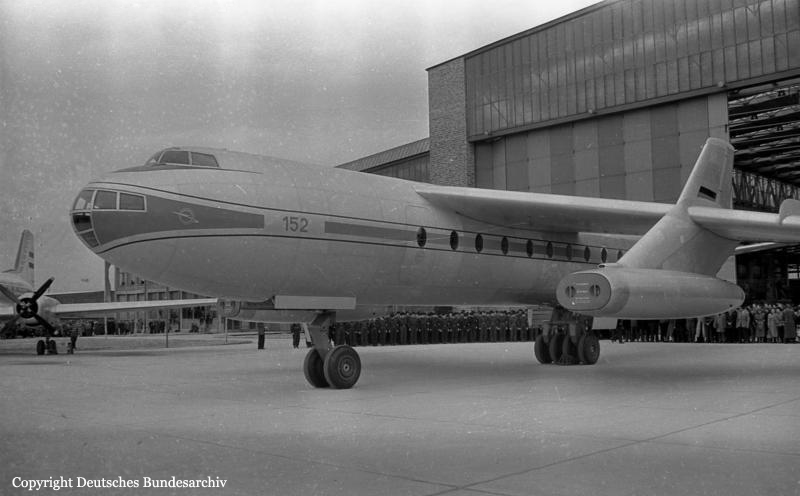
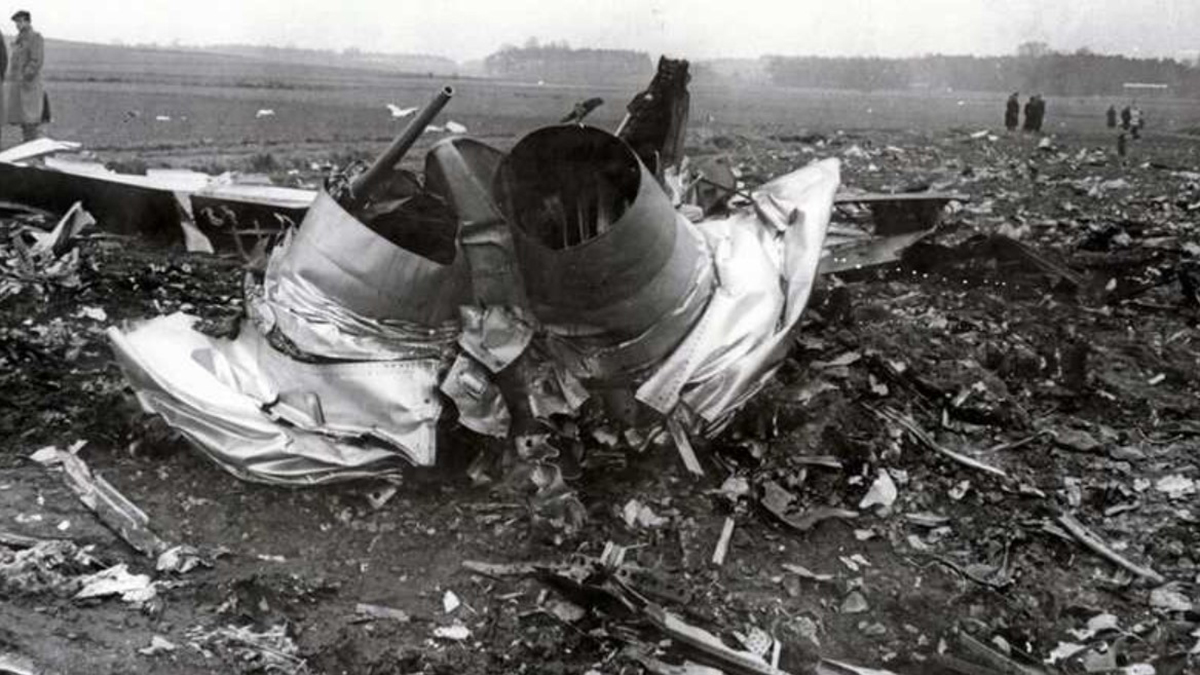
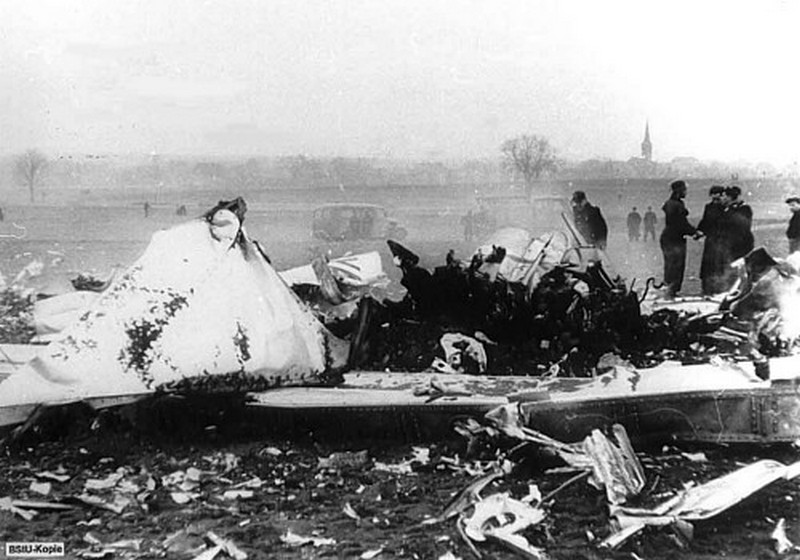
First prototype, the Baade 152 left Dresden-Klotzsche Airport at 1255LT for its second test flight with a crew of four. After several manoeuvres conducted at an assigned altitude of 6,000 meters (gear down), the crew was supposed to descent to 3,000 meters and to increase engine power to arrest the descent and to test the airplane's response to power settings. For unknown reason, the crew failed to follow the program and instead of increasing engine power, he contacted ground and requested permission for an unplanned low pass with gear and flaps up. While descending to the altitude of 600 meters, the aircraft's speed was close to stall value when the crew decided to lower the gear and to increase engine power. The four engines provided power for about 8 to 10 seconds went control was lost. The airplane entered a nose down attitude and plunged into the earth, crashing in a field by an angle of 70°. The aircraft disintegrated on impact and all four crew members were killed.
Probable cause:
It is believed the accident was the consequence of a pilot error but it was also determined that the loss of control was caused by the simultaneous failure of all four engines because they were not supplied with fuel during a high rate of descent. Investigations revealed on other flight tests that the engines were not properly supplied with fuel when the aircraft reached a nose-down angle equal or above 16°, which was considered as a design fault.

Crash of a De Havilland YAC-1 Caribou in Udora

Date & Time: Feb 24, 1959
Type of aircraft:
Operator:
Registration:
CF-LKI-X
Flight Phase:
Flight Type:
Survivors:
Yes
MSN:
3
YOM:
1959
Location:
Country:
Crew on board:
2
Crew fatalities:
Pax on board:
0
Pax fatalities:
Other fatalities:
Total fatalities:
0
Circumstances:
The crew was completing a test flight on this third model of the Caribou which should be delivered to the US Army. While flying in the vicinity of Udora, Ontario, the crew lost control of the airplane that dove into the ground and crashed in a field. Both crew members were seriously injured while the aircraft was destroyed.
Probable cause:
It is believed that the loss of control was the consequence of a partial failure of the tail.