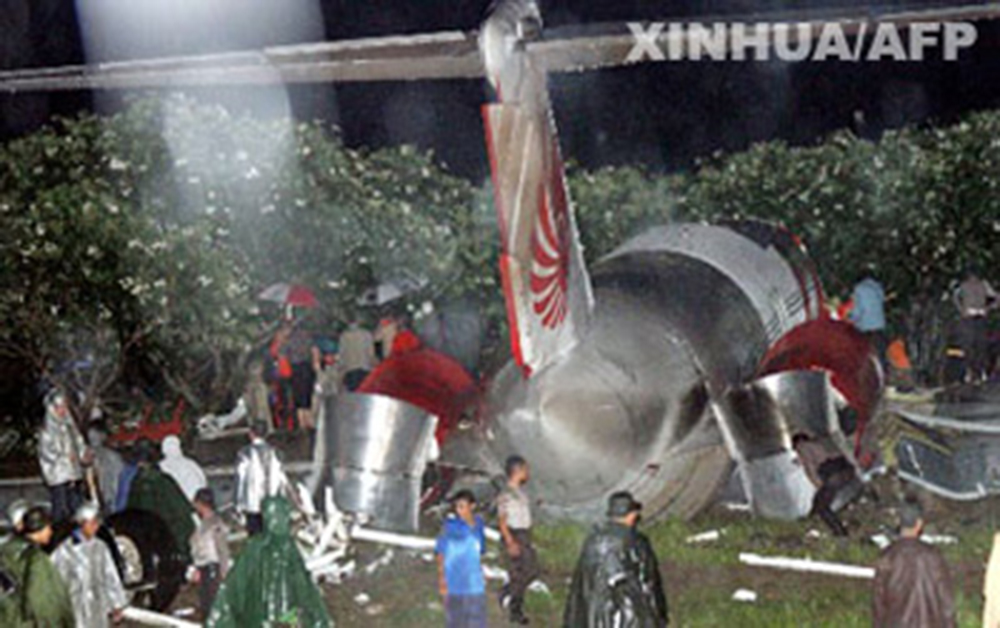
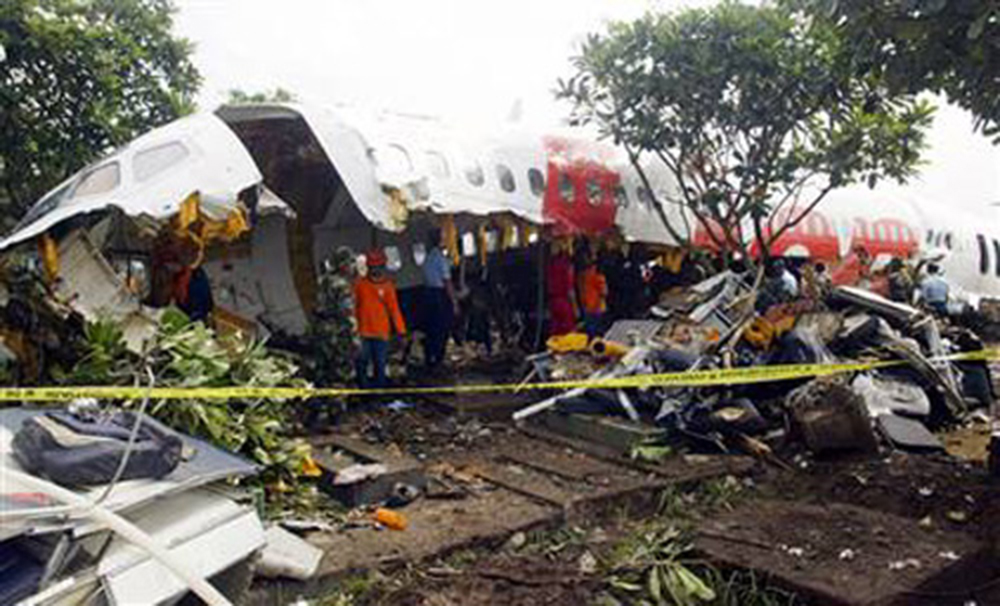
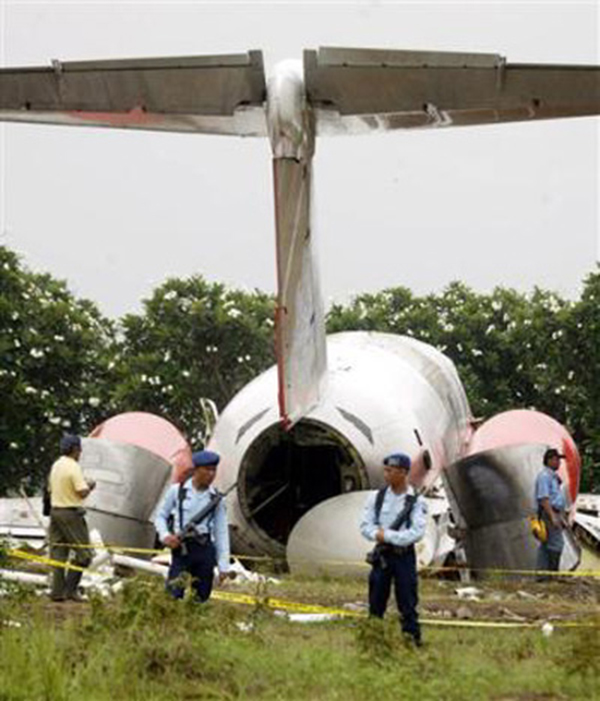
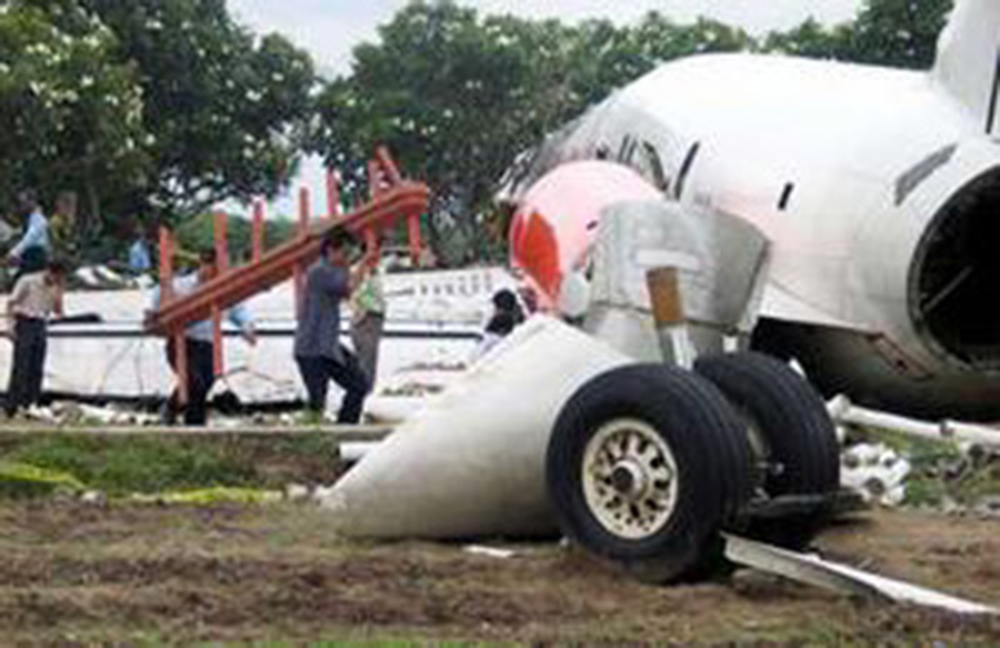
Crash of a Boeing 737-242 near Kabul: 104 killed

Date & Time: Feb 3, 2005 at 1515 LT
Type of aircraft:
Operator:
Registration:
EX-037
Flight Phase:
Survivors:
No
Site:
Schedule:
Herat - Kabul
MSN:
22075
YOM:
1980
Flight number:
KMF904
Location:
Country:
Region:
Crew on board:
8
Crew fatalities:
Pax on board:
97
Pax fatalities:
Other fatalities:
Total fatalities:
105
Circumstances:
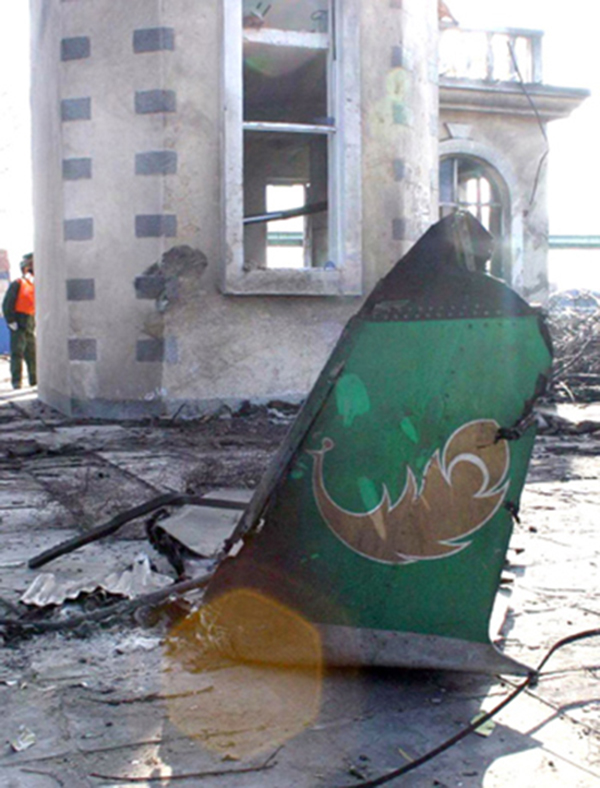
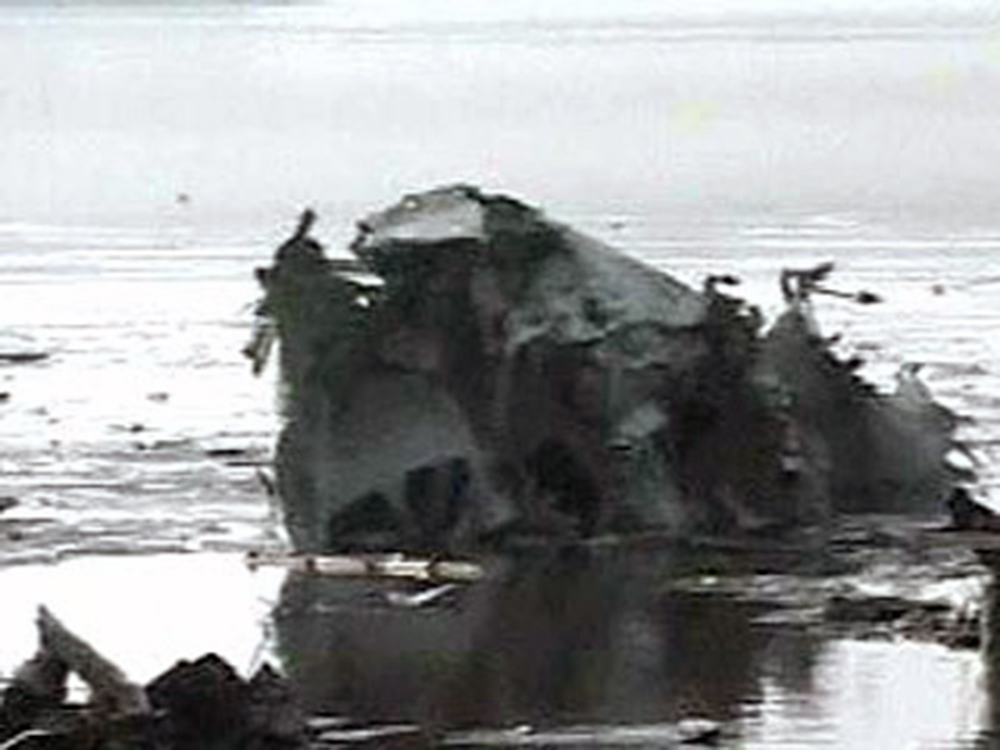
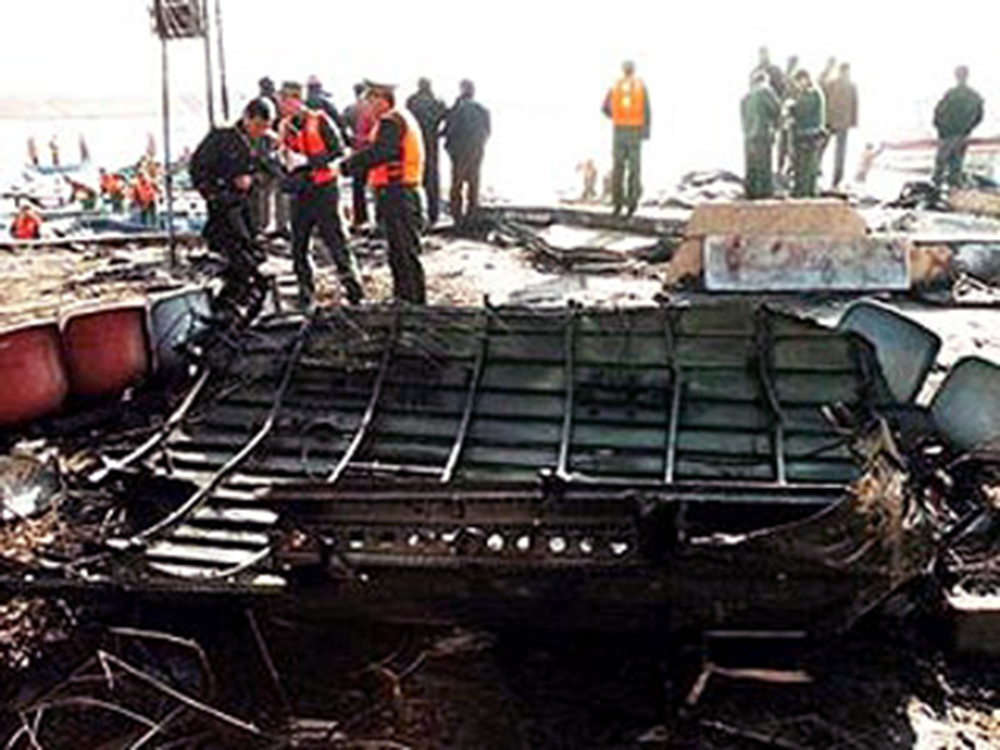
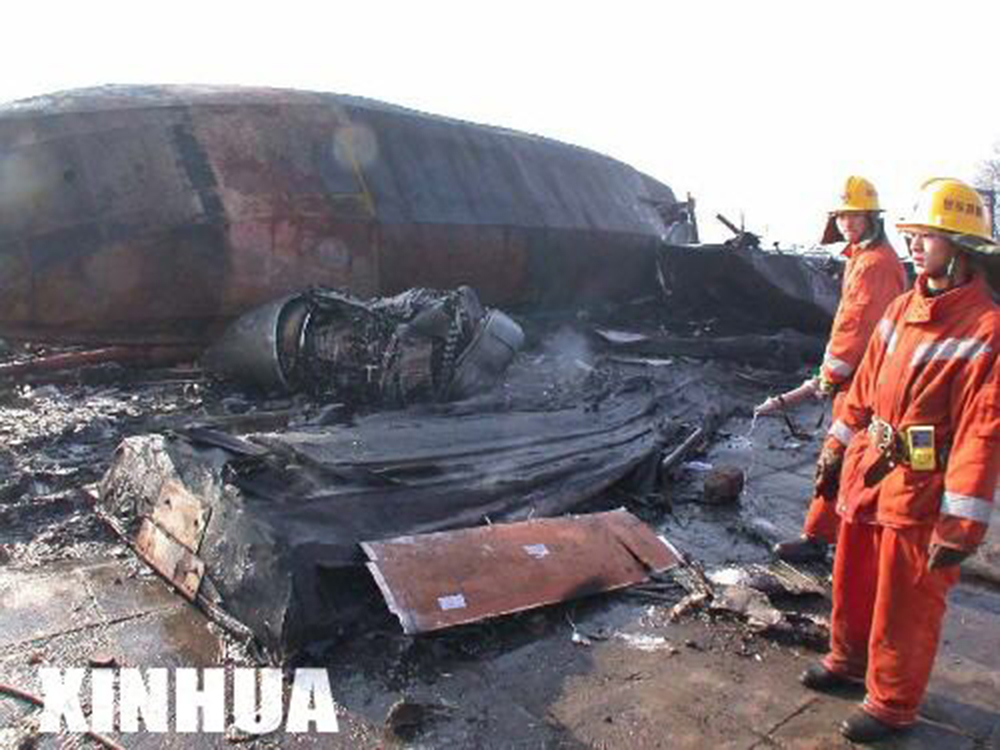
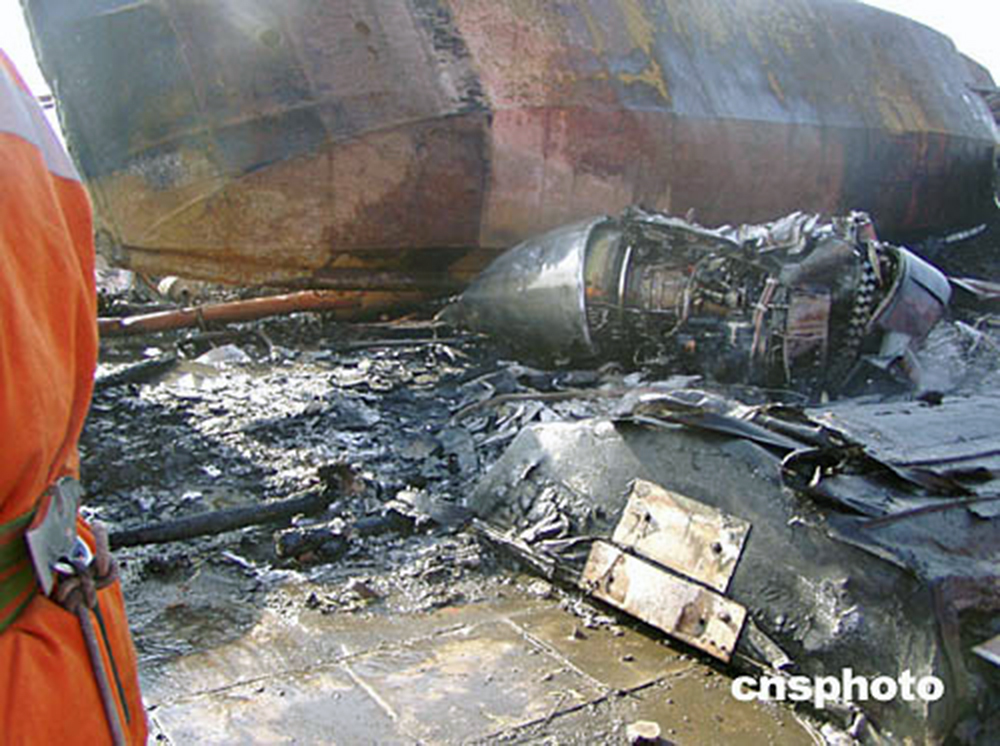
On February 3, 2005, a Boeing 737-242 aircraft (the "Aircraft") with Kyrgyz Republic registration EX-037, operated by Phoenix Aviation, was conducting Kam Air Flight 904 from Herat to Kabul. There were a total of 105 occupants on board the Aircraft, including eight crew members and ninety-seven passengers. The Aircraft was cruising at flight level 270 when it contacted Bagram Radar Approach Control ("Bagram") for descent and landing. The flight was normal until it failed to level at flight level 130 during the VOR/DME approach. At 1043:24 UTC, Bagram cleared the flight to descend at its discretion and to expect the VOR approach to runway 29. The prevailing weather was also passed on to the Aircraft. Visibility was reported 2 kilometers with snow, ceiling 2,200 feet broken. wind calm and altimeter setting QNH 1016. AT 1043:58 UTC, when the Aircraft was 35 miles west of the Kabul VOR. radar contact was established with Ba9ram. The Aircraft was advised by Bagram to cross the VOR at or above flight level 130 and cleared it for the VOR/DME approach to runway 29. At 1048:41 UTC the Aircraft reported flight level 130. Bagram again cleared the Aircraft for the VOR approach to runway 29 and advised the Aircraft to report procedure turn inbound. The crew replied that they would report proceeding inbound for the VOR approach to runway 29. This was the last transmission from the Aircraft. At about 1050:11 UTC, Bagram stated that radar contact had been lost with the Aircraft. Bagram and Kabul Air Traffic Control Tower attempted to locate the Aircraft through radar and radio communication, but were not successful. Search for the Aircraft was delayed and hampered due to a severe snowstorm in the region. The Aircraft was located approximately three days later by an International Security Assistance Force (ISAF) helicopter approximately 30 kilometers southeast of Kabul International Airport at N 36 27.900 E 69 30.185. The Aircraft was destroyed by force of impact from colliding with the mountain. All 105 occupants on board the Aircraft had received fatal injuries. Subsequently, all bodies were recovered and identified. The wreckage was found at the altitude of 9,960 feet (3,035 metres) on the summit of Mt Shapiri Ghar located about 30 km southeast of Kabul Airport.
Probable cause:
The accident occurred probably due to the premature descent by the aircraft below its minimum assigned altitude of 13,000 feet during approach in weather conditions below VFR requirements. The reason for descending below the minimum altitude could not be determined due to inadequate evidence. The investigation was severely affected due to non-availability of FDR and CVR data readouts. The investigation was finalized to the extent possible based on the limited evidence available. The investigation revealed that the aircraft did not proceed to the VOR as instructed by the air traffic controller and descended below the minimum assigned altitude prior to being established on any segment of the approach. As a result, the aircraft collided with a mountain. The cause of descending below the assigned altitude could not be determined due to inadequate data and evidence.
Final Report:

Crash of a Cessna 208B Grand Caravan near Colquiri

Date & Time: Jan 21, 2005 at 1000 LT
Type of aircraft:
Operator:
Registration:
CP-2412
Flight Phase:
Survivors:
Yes
Site:
Schedule:
La Paz - Sucre
MSN:
208B-0897
YOM:
2001
Country:
Crew on board:
2
Crew fatalities:
Pax on board:
10
Pax fatalities:
Other fatalities:
Total fatalities:
0
Circumstances:
The single engine aircraft departed La Paz-El Alto Airport at 0915LT on a schedule service to Sucre with 10 passengers and two pilots on board. About 45 minutes into the flight, the crew reported icing conditions. The aircraft lost height and crashed on the slope of Mt Huaricollo. All 12 occupants were rescued and the aircraft was destroyed.
Probable cause:
Loss of control following an excessive accumulation of ice/frost while flying in freezing fog conditions.

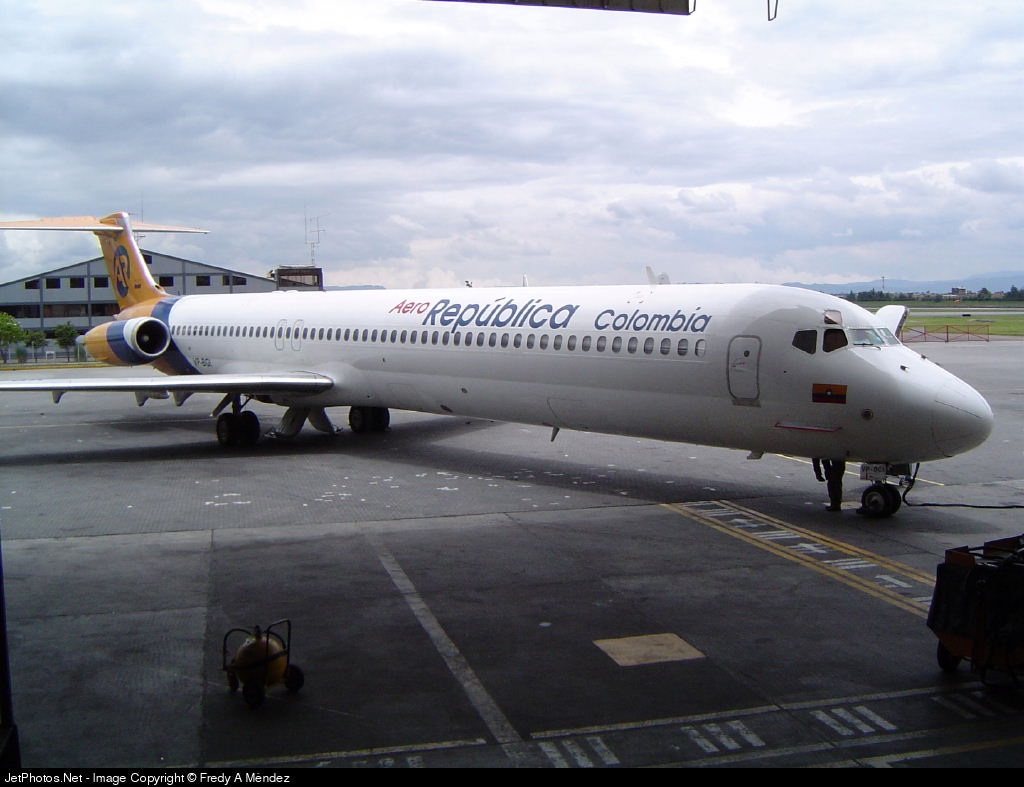
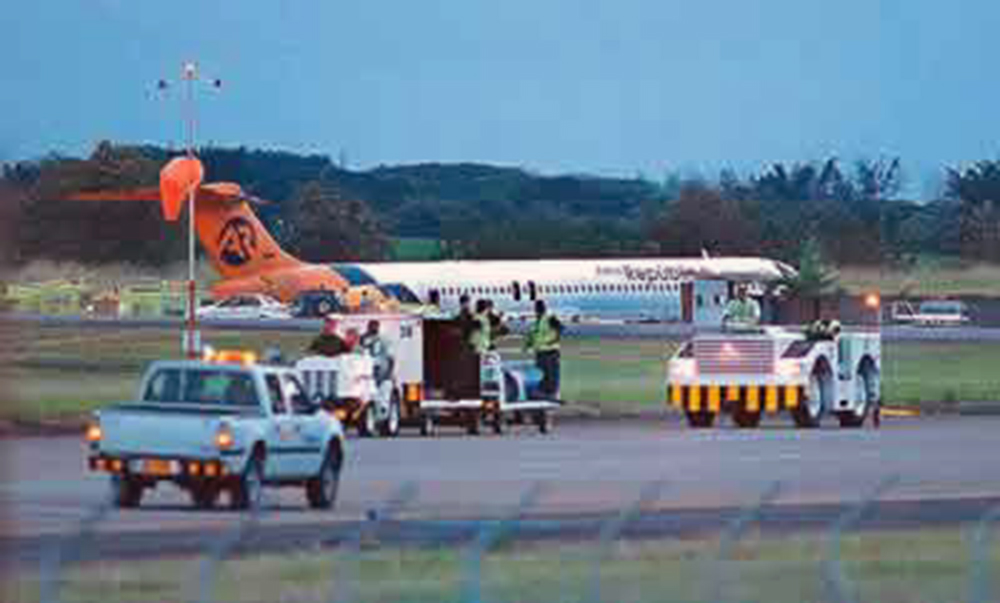
Crash of a McDonnell Douglas MD-83 in Cali

Date & Time: Jan 8, 2005 at 1548 LT
Type of aircraft:
Operator:
Registration:
VP-BGI
Survivors:
Yes
Schedule:
Cartagena – Cali
MSN:
49940
YOM:
1990
Flight number:
RPB7463
Country:
Crew on board:
6
Crew fatalities:
Pax on board:
164
Pax fatalities:
Other fatalities:
Total fatalities:
0
Aircraft flight hours:
41329
Aircraft flight cycles:
18037
Circumstances:
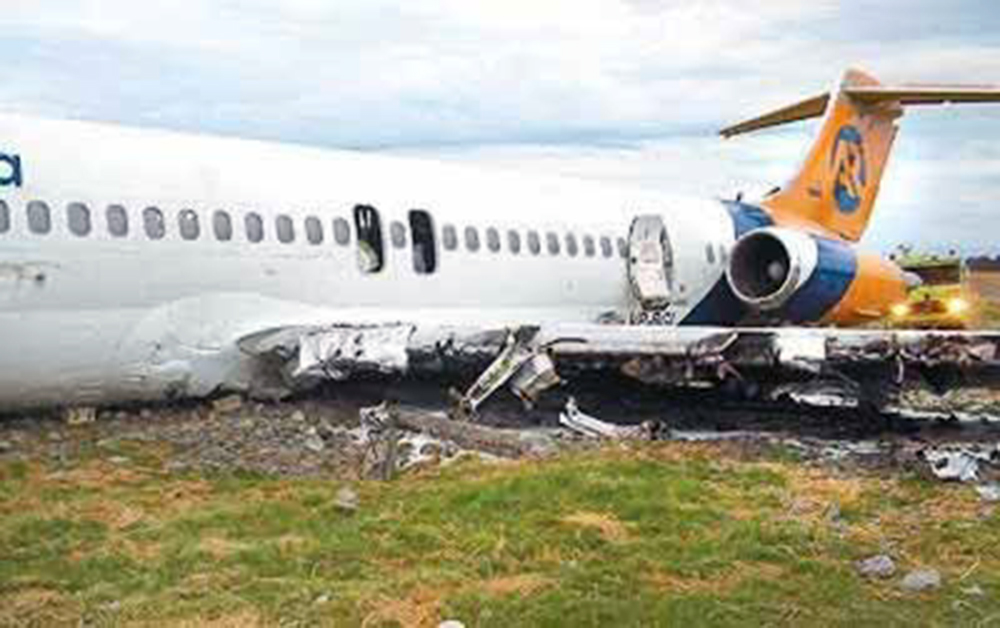
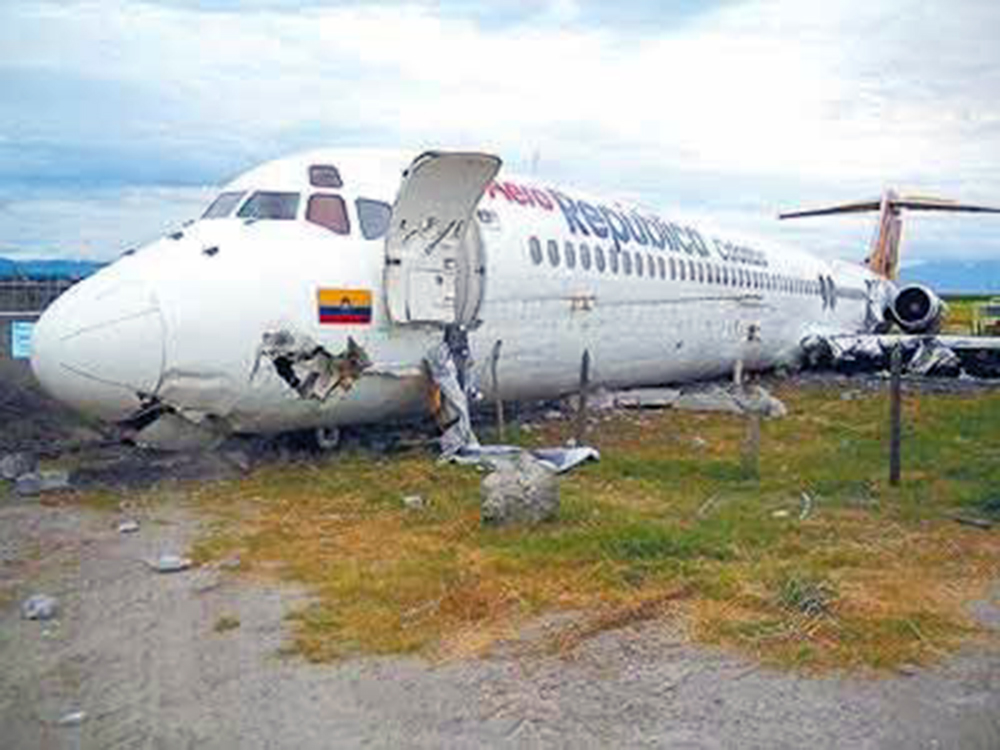
After landing at Cali-Alfonso Bonilla Aragón Airport, the aircraft encountered difficulties to decelerate properly. It overrun the runway 19 (which is 9,842 feet long), lost its undercarriage, collided with the perimeter fence and came to rest on its belly. Six passengers were slightly injured while all other occupants escaped unhurt. The aircraft was damaged beyond repair.
Probable cause:
The accident was caused by a chain of errors and mistakes which began by accepting and carrying out a hasty descent that led to the omission of key points in the checklist such as the arming of the spoilers, excessive descent rate and speed and a configuration that led to faulty placement of the aircraft on the runway in abnormal conditions and 862 meters from the normal touchdown point. These conditions caused a vibration of the right main landing gear that could not be controlled by the Shimmy Damper, allowing higher loads to the strength of the undercarriage, which broke.

Crash of a Partenavia P.68 off Puerto Villamil: 2 killed

Date & Time: Dec 21, 2004 at 1219 LT
Type of aircraft:
Operator:
Survivors:
No
Schedule:
Baltra Island - Puerto Villamil
Country:
Crew on board:
1
Crew fatalities:
Pax on board:
1
Pax fatalities:
Other fatalities:
Total fatalities:
2
Circumstances:
The twin engine aircraft departed Galapagos International Airport (Baltra Island) at 1200LT on a flight to Puerto Villamil Airport, Isabela Island, carrying one passenger and one pilot. At 1219LT, the pilot was cleared to descend to Puerto Villamil Airport when he lost control of the airplane that crashed in the sea. The wreckage was found few hundred metres offshore at 1655LT. Both occupants were killed. The accident occurred three minutes prior to landing.

Crash of a McDonnell Douglas MD-82 in Surakarta: 25 killed

Date & Time: Nov 30, 2004 at 1815 LT
Type of aircraft:
Operator:
Registration:
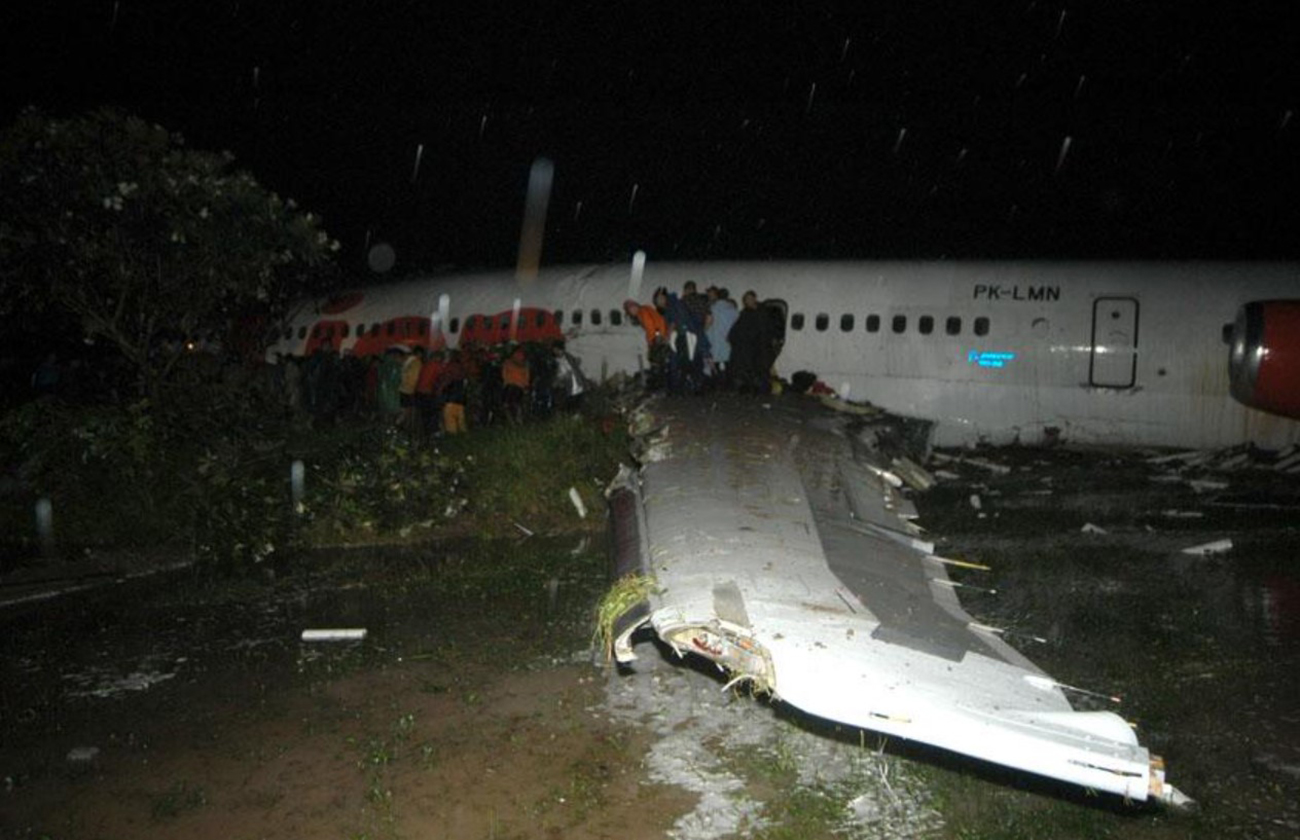
PK-LMN
Survivors:
Yes
Schedule:
Jakarta – Surakarta
MSN:
49189
YOM:
1984
Flight number:
JT583
Country:
Region:
Crew on board:
7
Crew fatalities:
Pax on board:
156
Pax fatalities:
Other fatalities:
Total fatalities:
25
Aircraft flight hours:
56674
Aircraft flight cycles:
43940
Circumstances:
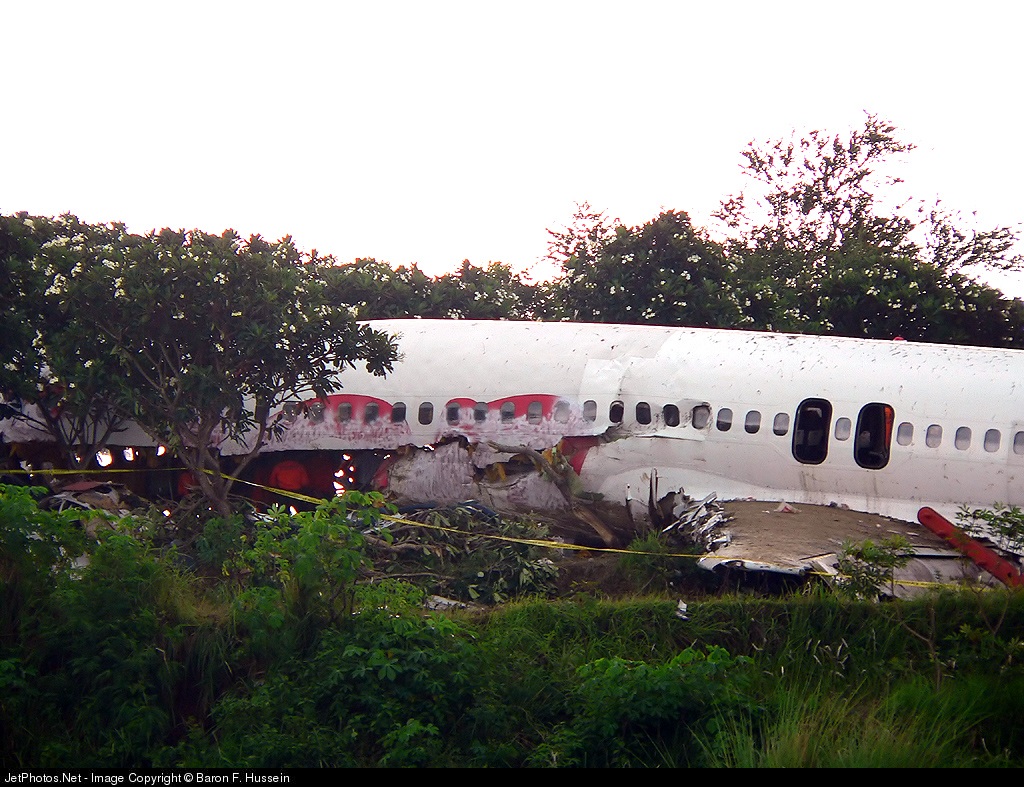
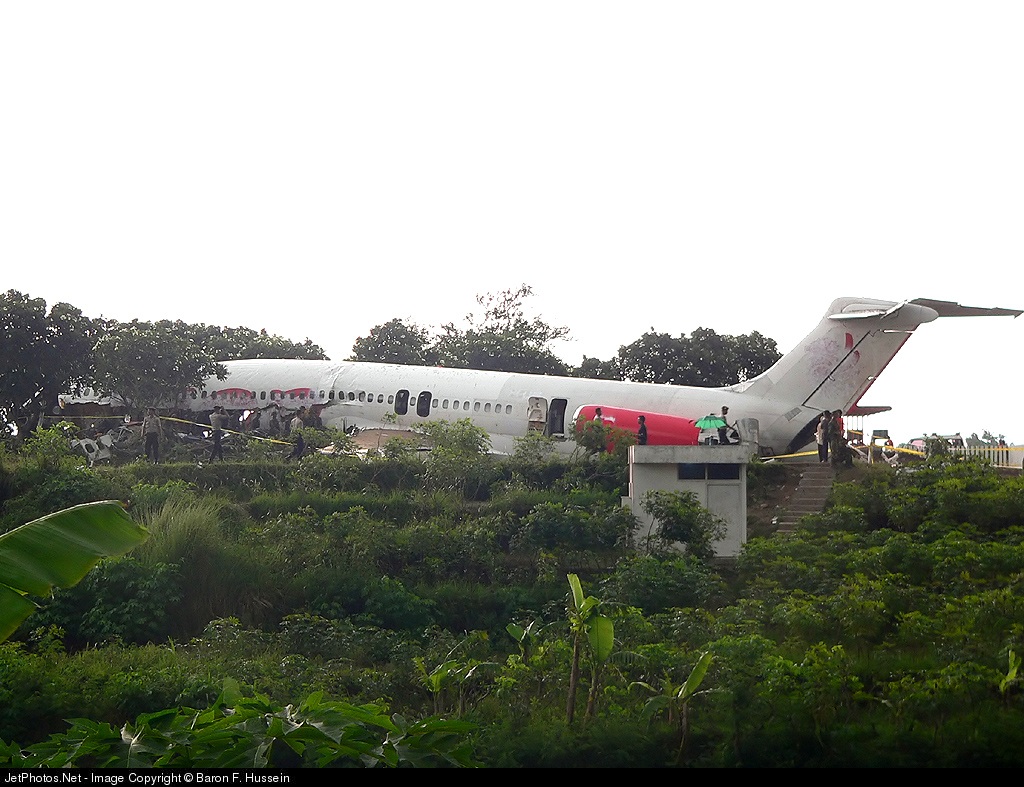
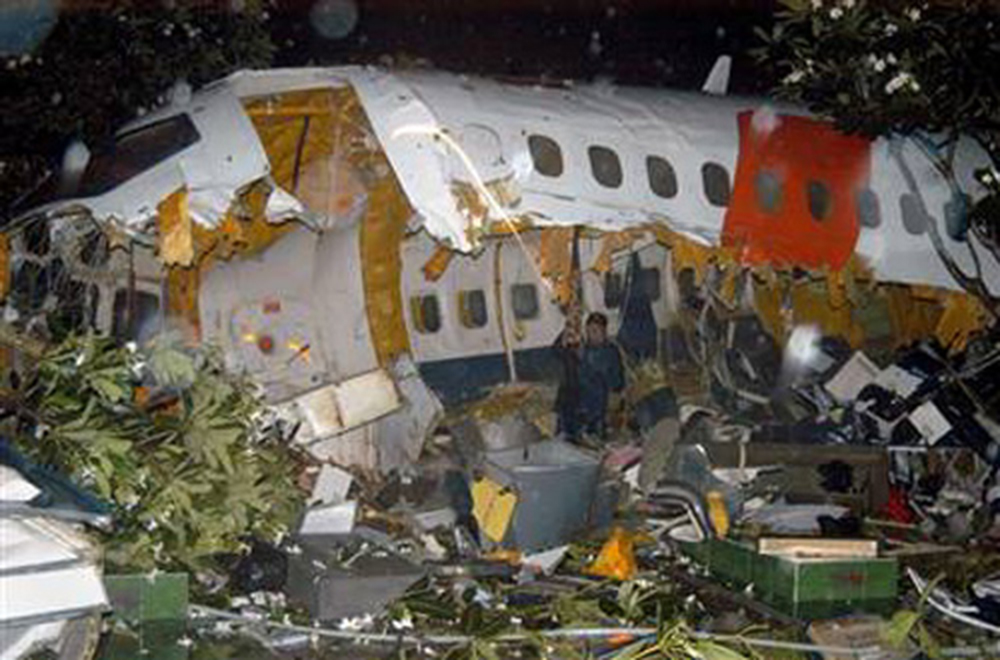
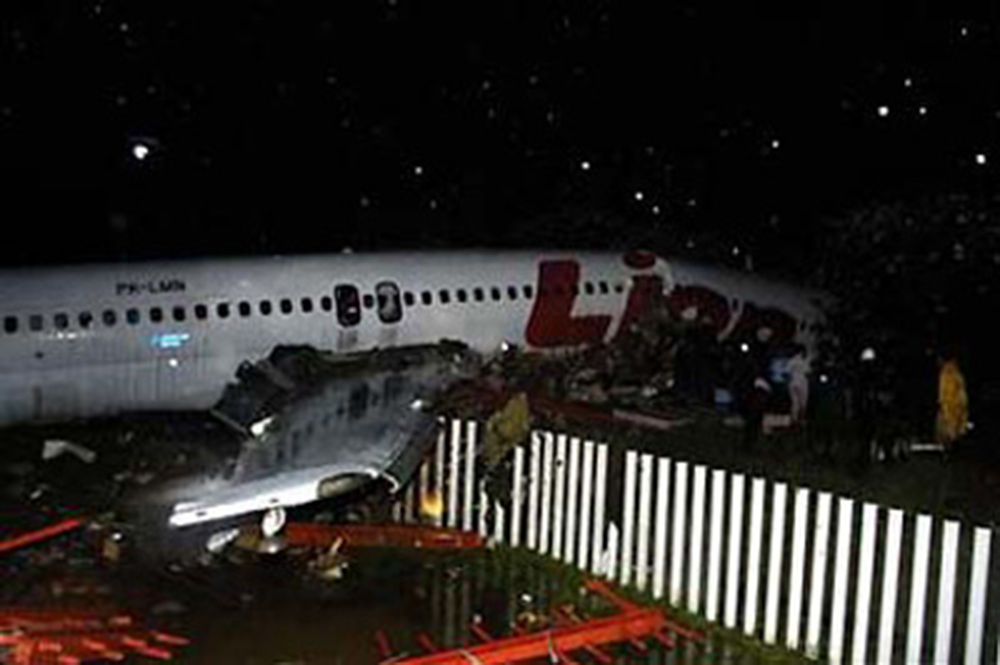
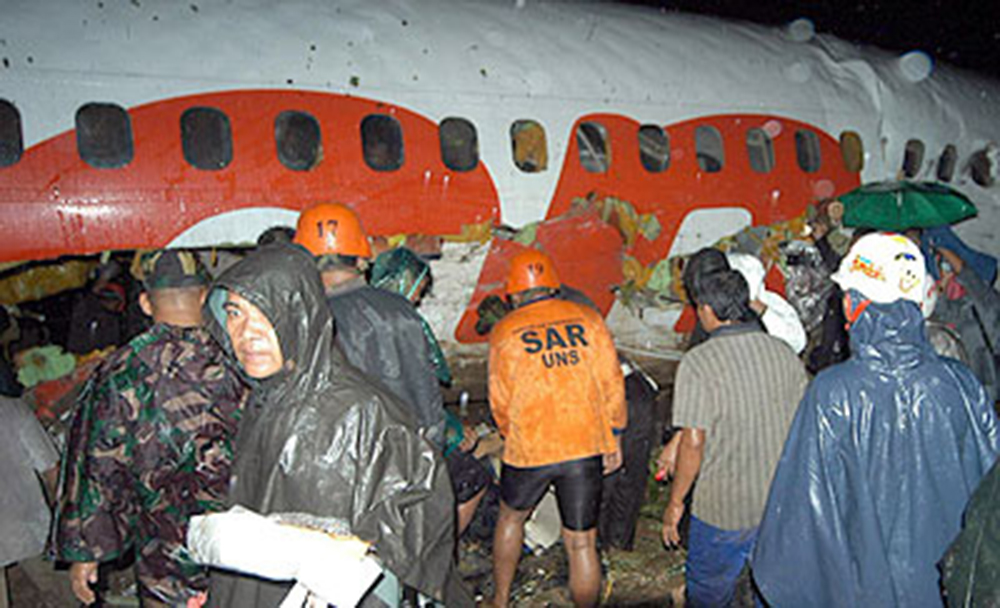
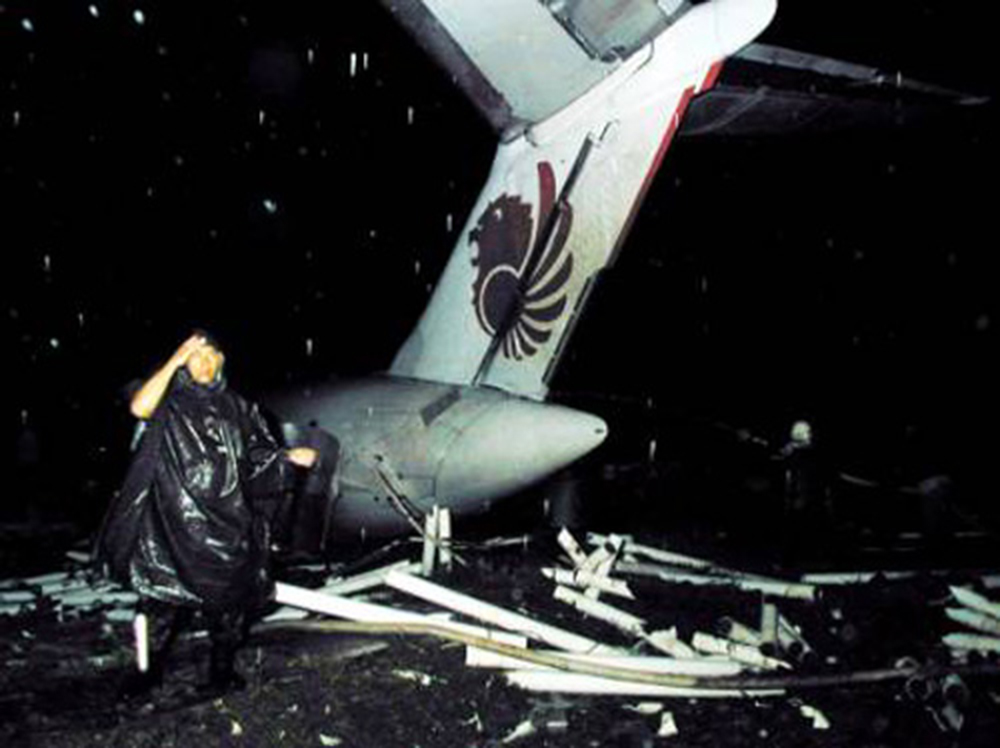
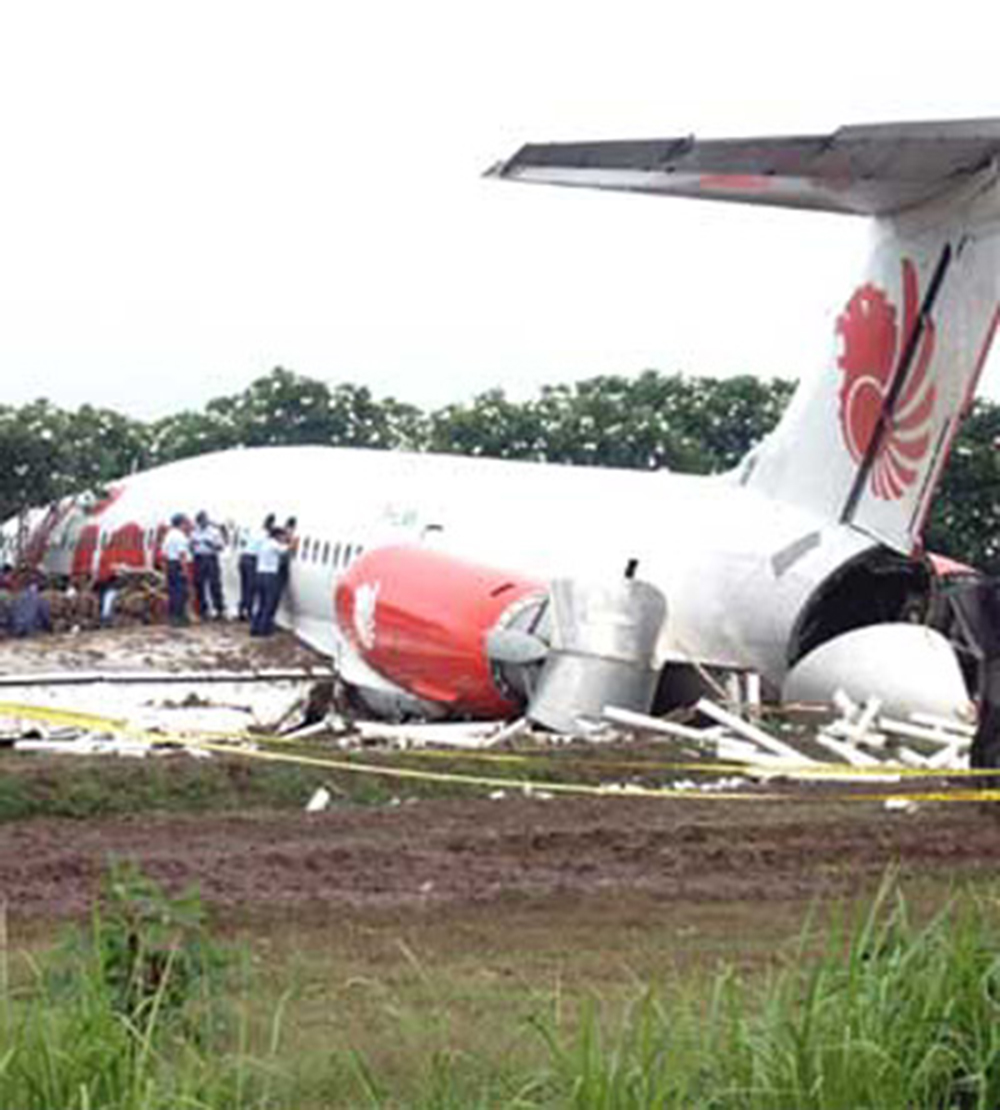
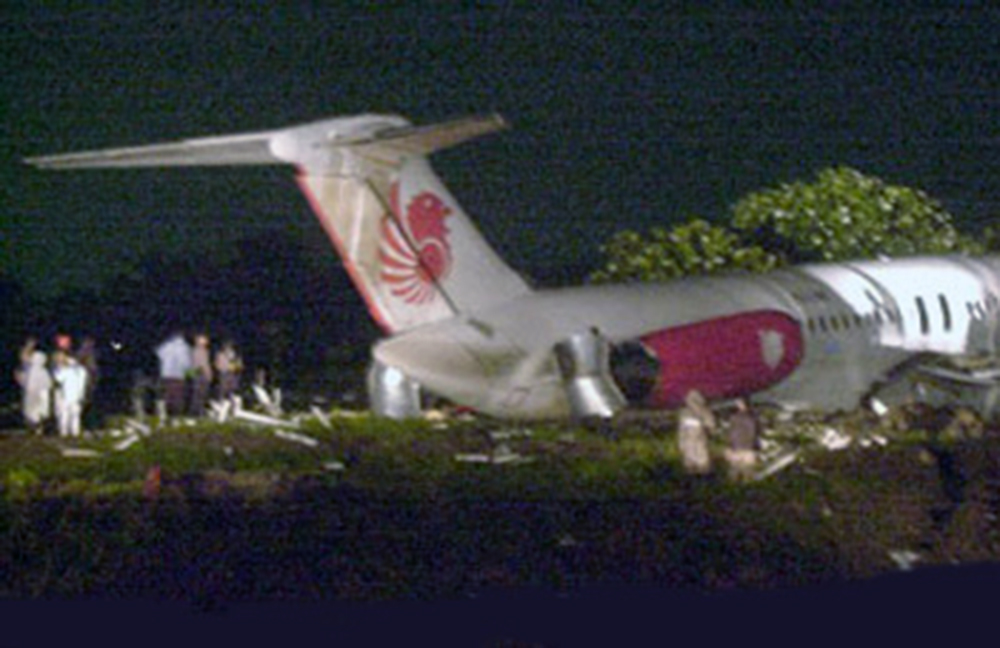
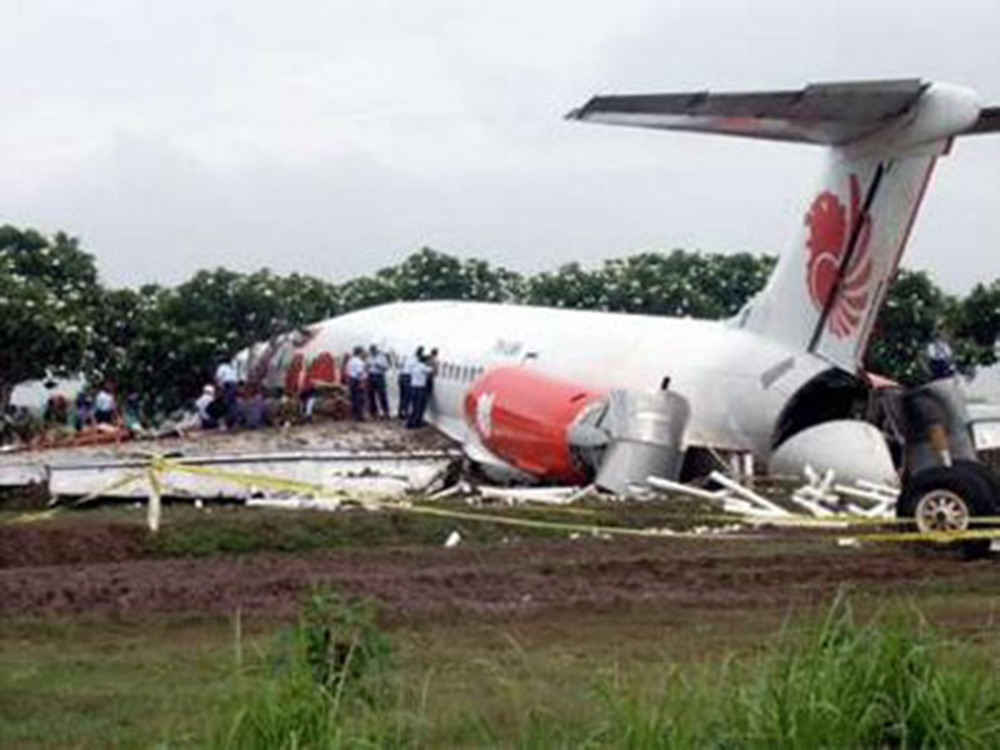
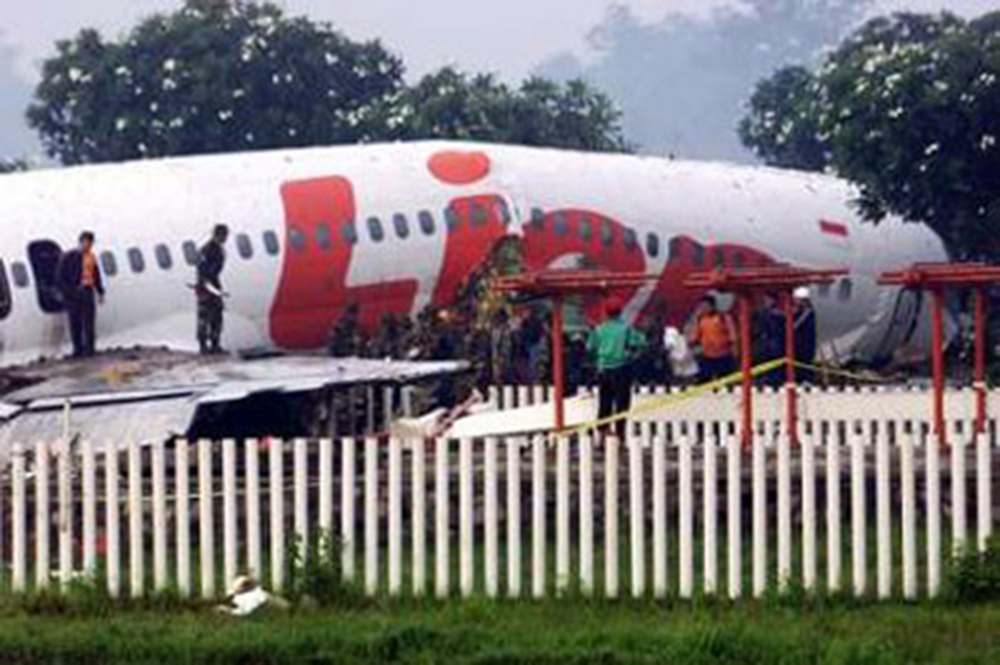
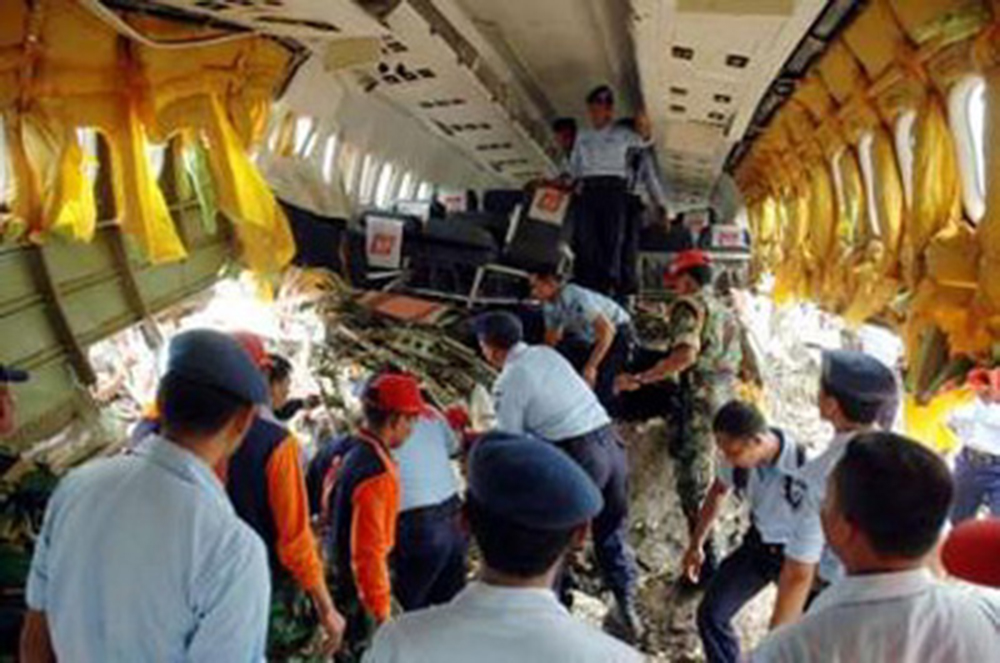
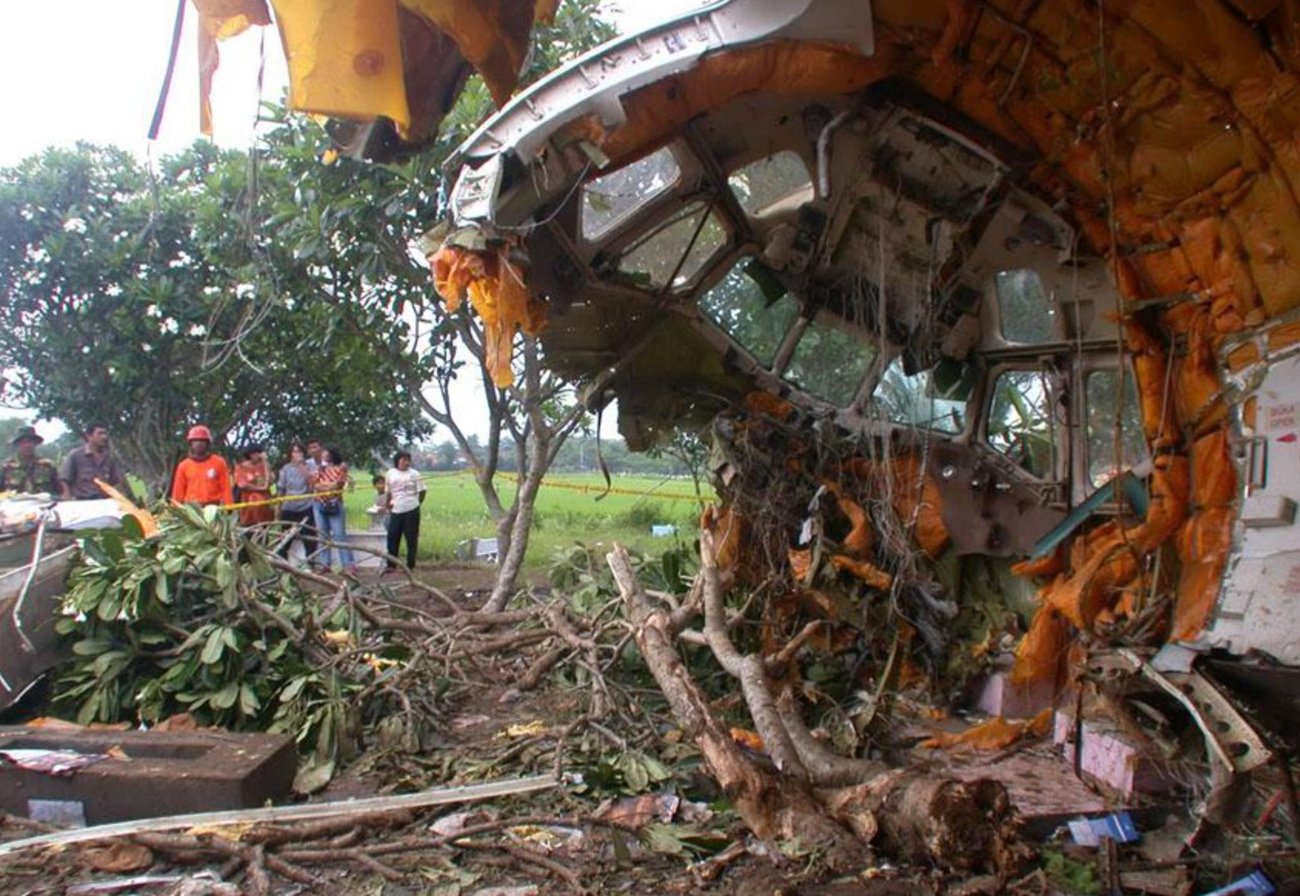
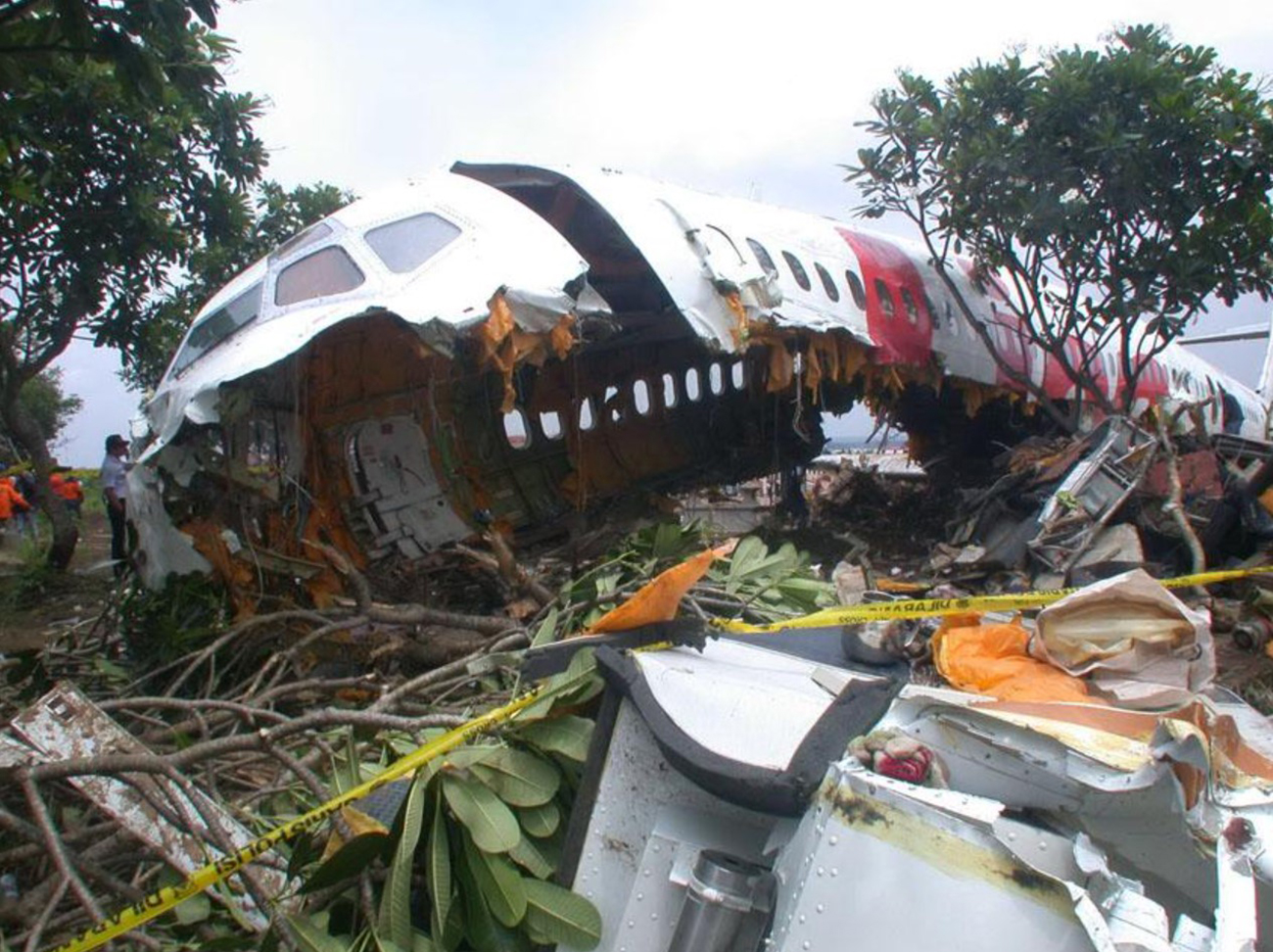
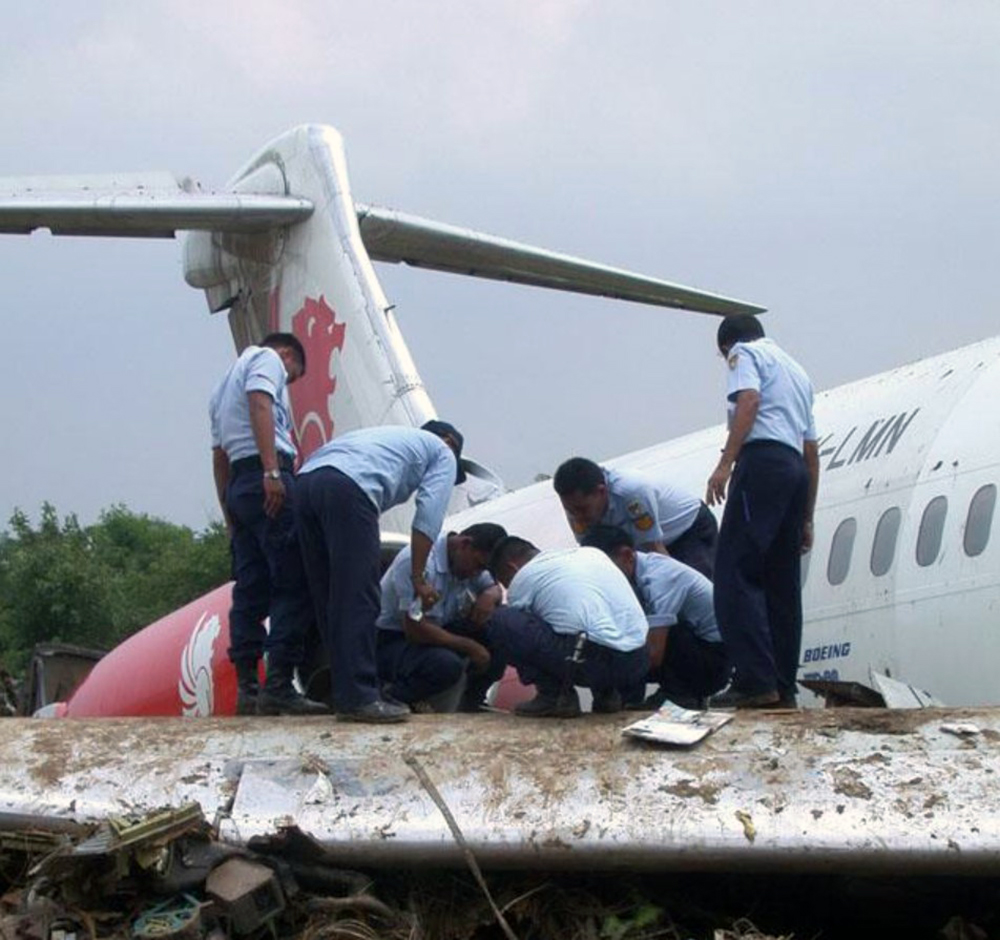
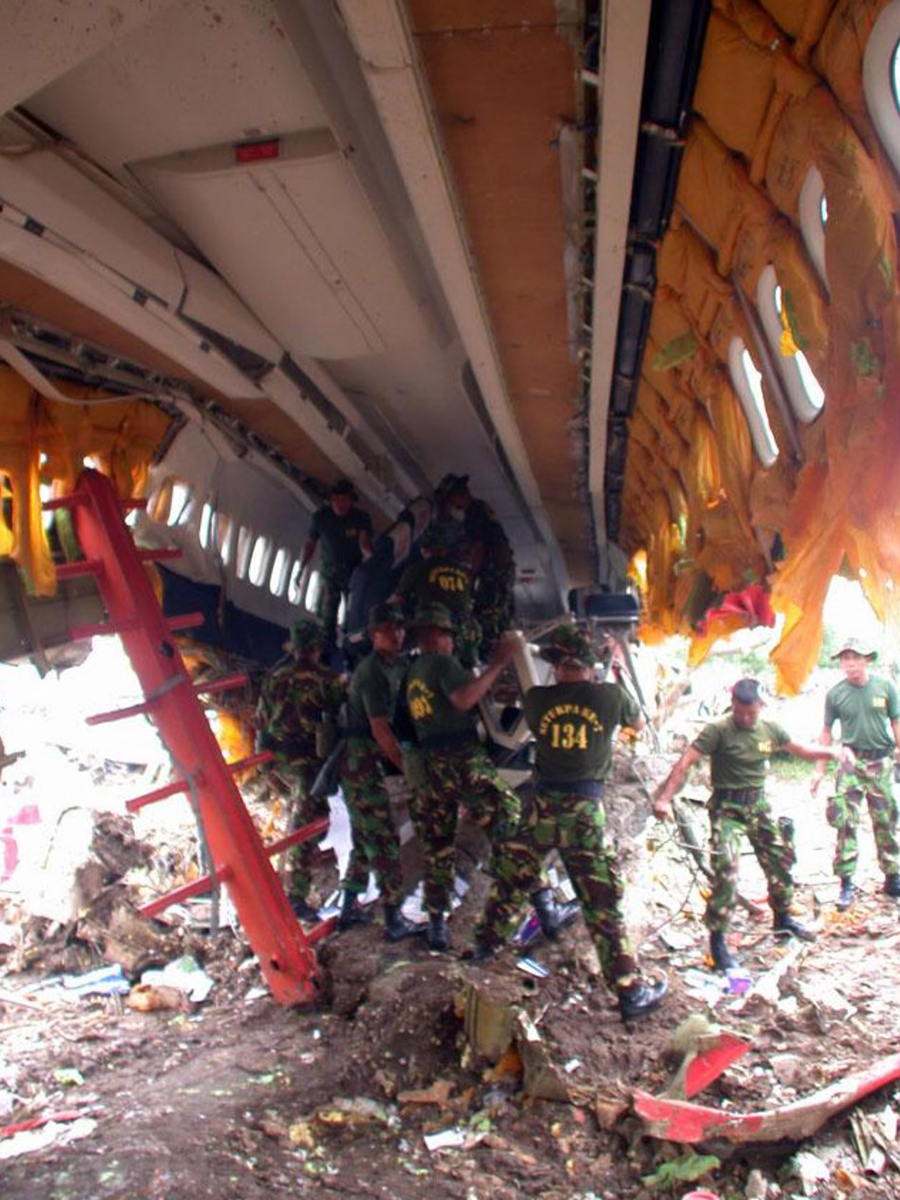
While descending to Surakarta-Adisumarmo Airport, the crew was informed about stormy conditions at destination with cumulonimbus and heavy rain falls over the airport with a ceiling at 1,500 feet. The approach was continued and after touchdown on runway 26, the crew started the braking procedure and activated the thrust reverser systems. ON a wet runway, the aircraft was unable to stop within the remaining distance. It overran, lost its undercarriage and slid for few dozen metres, collided with equipments of the localizer antenna, a fence and came to rest in a cemetery. Both pilots and 23 passengers were killed while 70 other occupants were injured. 68 occupants escaped unhurt. The aircraft was destroyed.
Probable cause:
The following findings were identified:
- About 3 mm of water was stagnating on the runway surface, reducing the braking action,
- The crew completed the landing procedure with a 13 knots tailwind component,
- Airbrakes deployed after touchdown but retracted few seconds later due to wrong position of the power levers,
- Power levers were not in idle position after touchdown but slightly forward, so the flight computer increased power,
- Heavy rain falls,
- The crew failed to initiate a go-around procedure.

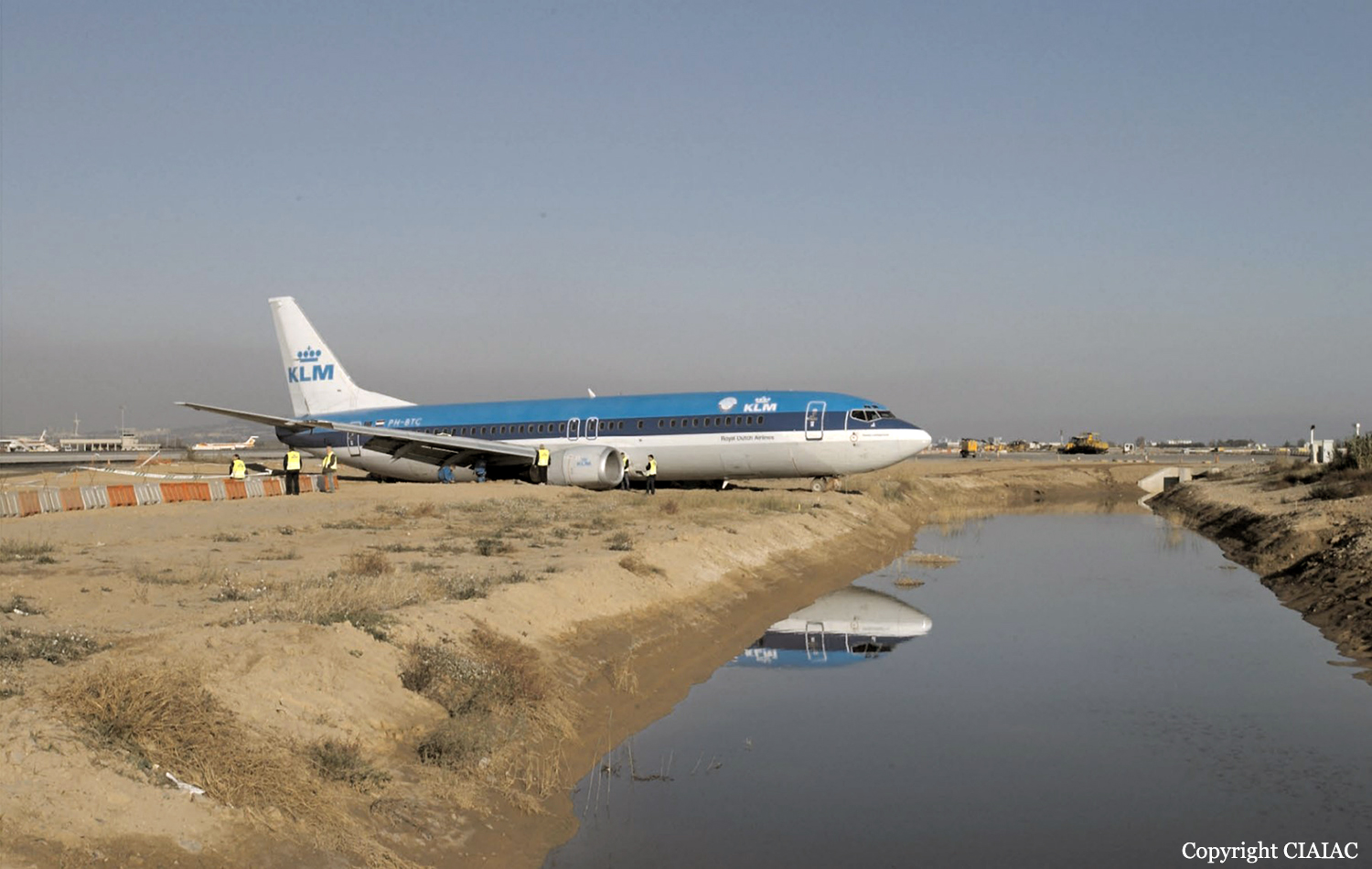
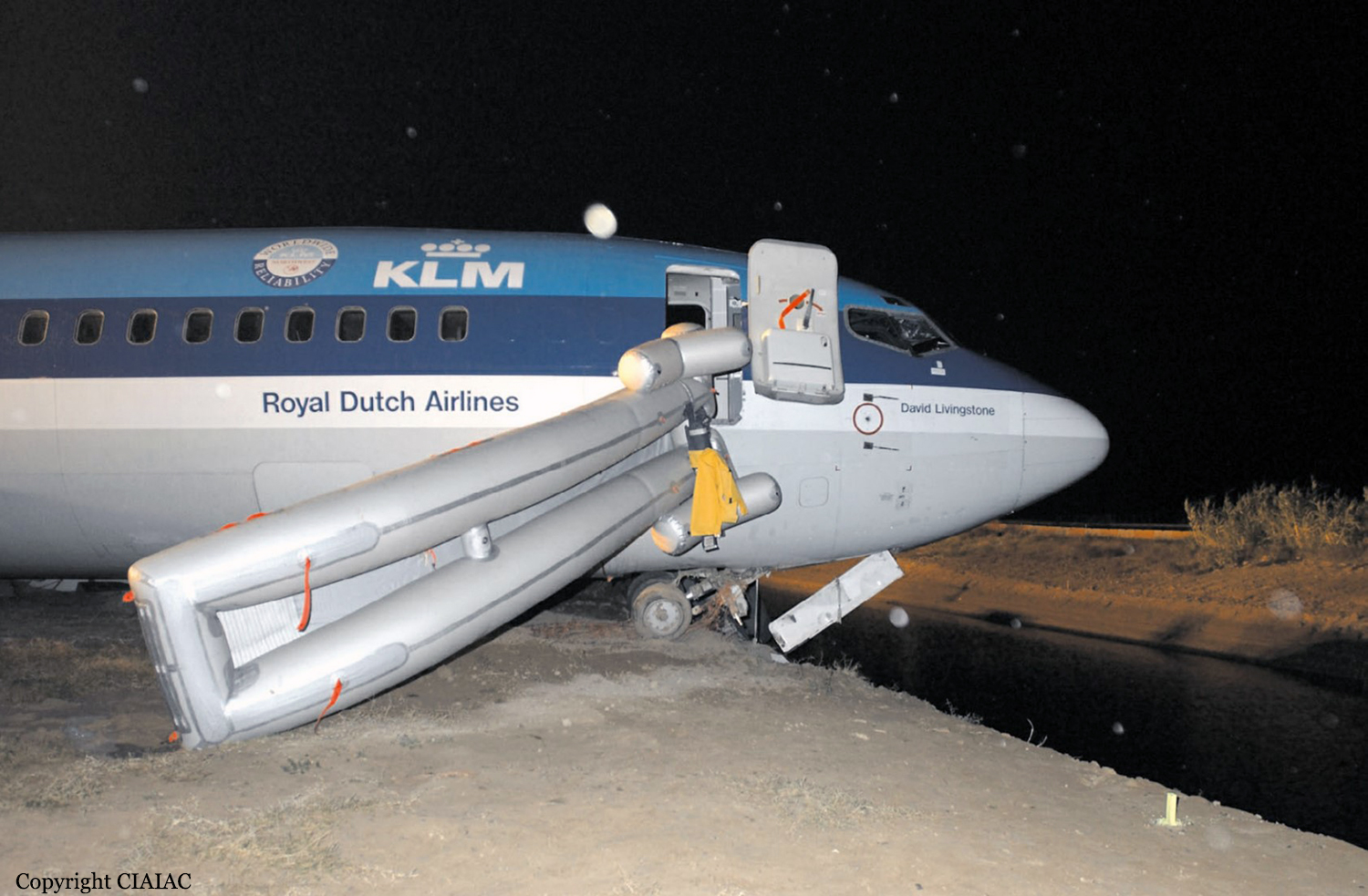
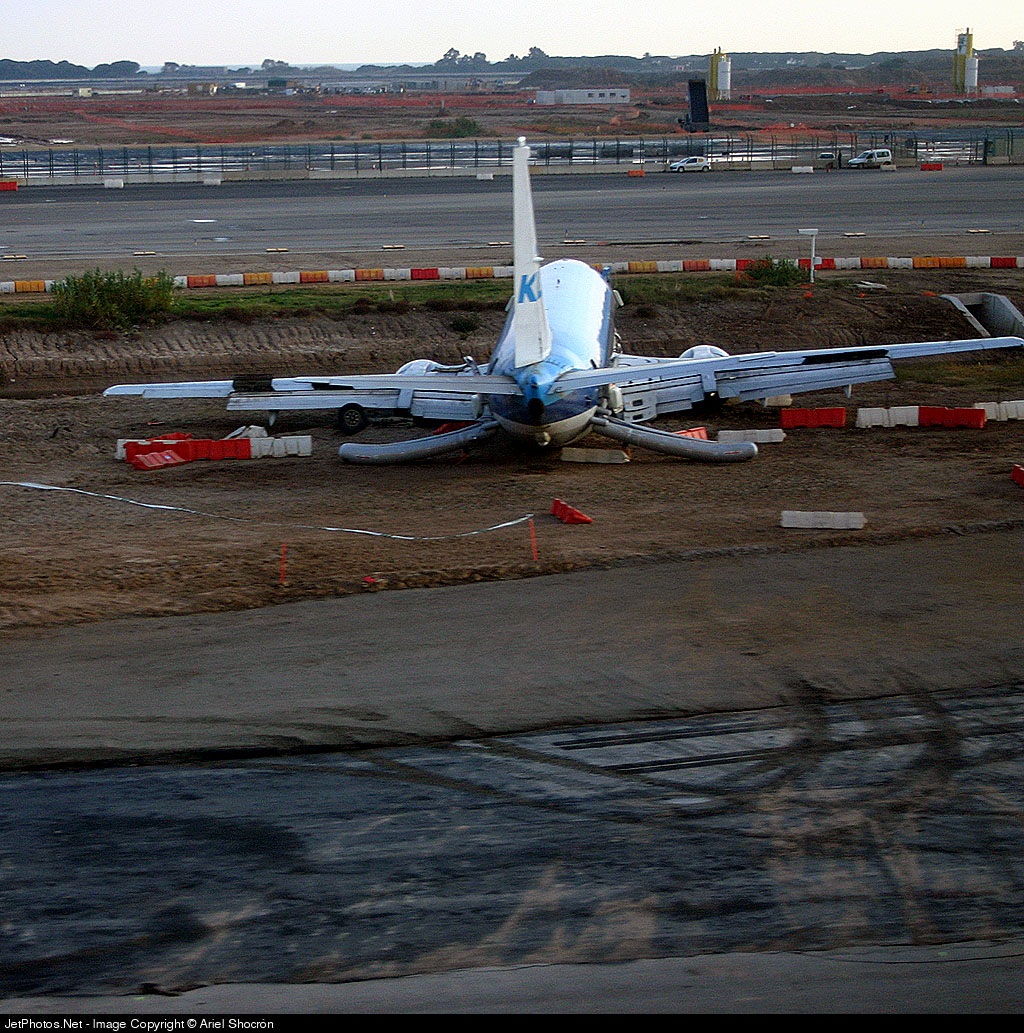
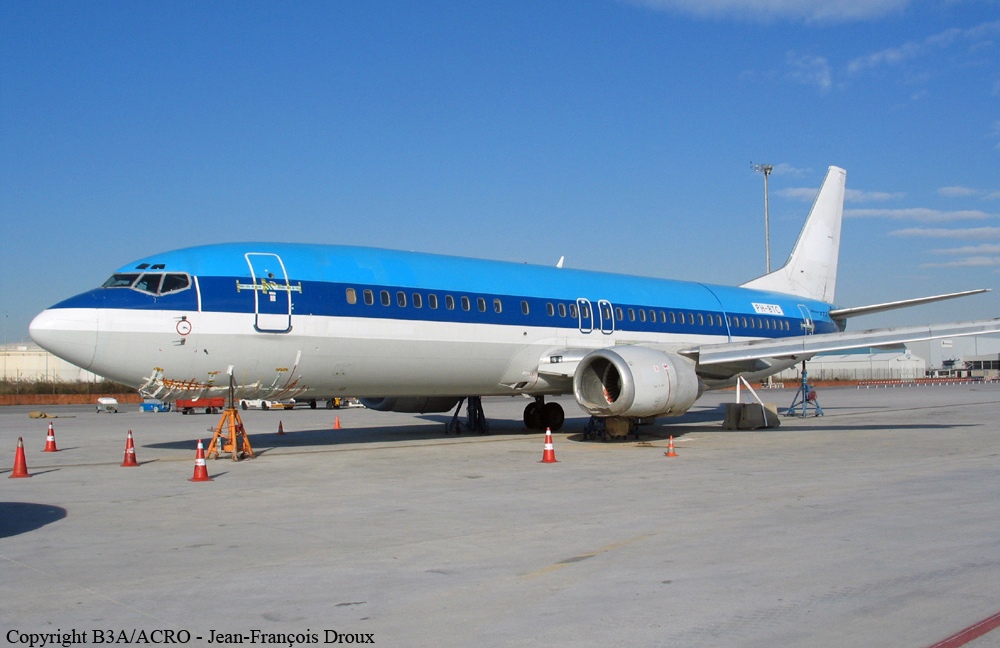
Crash of a Boeing 737-406 in Barcelona

Date & Time: Nov 28, 2004 at 1850 LT
Type of aircraft:
Operator:
Registration:
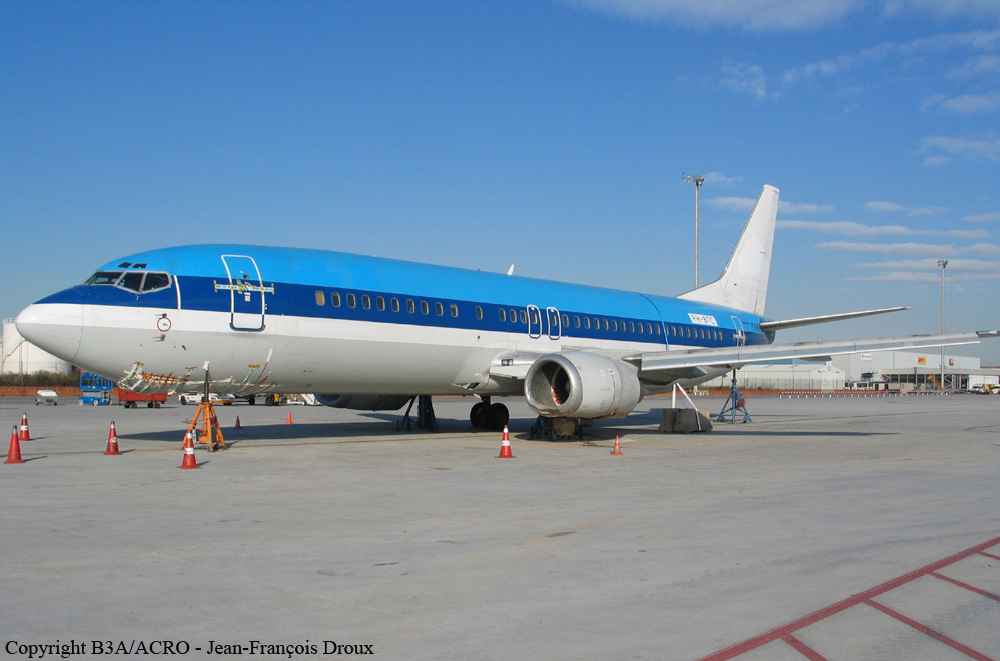
PH-BTC
Survivors:
Yes
Schedule:
Amsterdam – Barcelona
MSN:
25424
YOM:
1992
Flight number:
KL1673
Country:
Region:
Crew on board:
6
Crew fatalities:
Pax on board:
140
Pax fatalities:
Other fatalities:
Total fatalities:
0
Captain / Total flying hours:
5414
Captain / Total hours on type:
5414.00
Copilot / Total flying hours:
5117
Copilot / Total hours on type:
1543
Aircraft flight hours:
31756
Aircraft flight cycles:
22156
Circumstances:
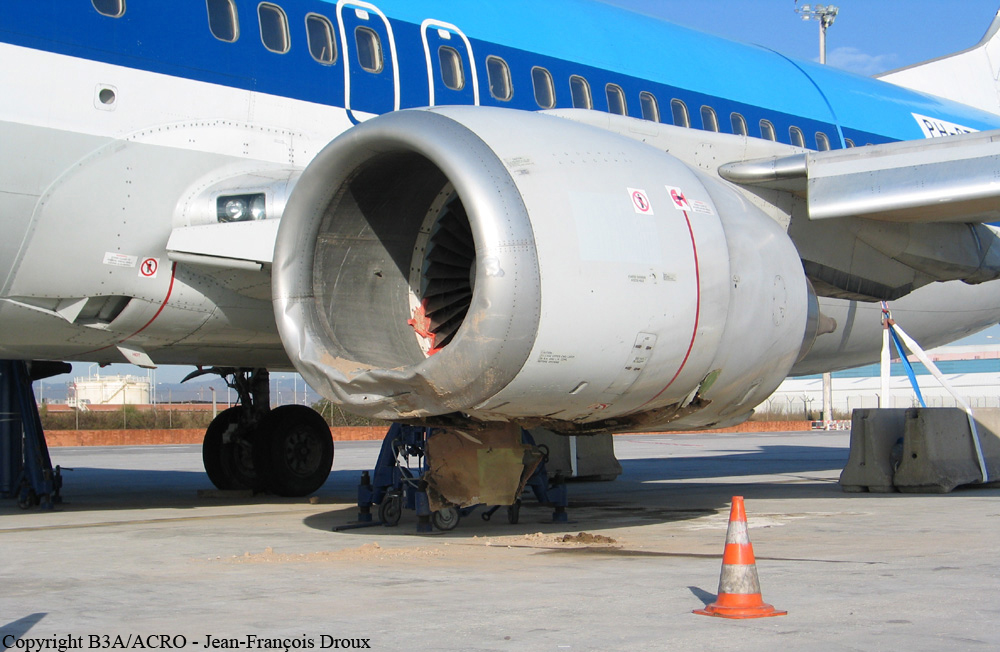
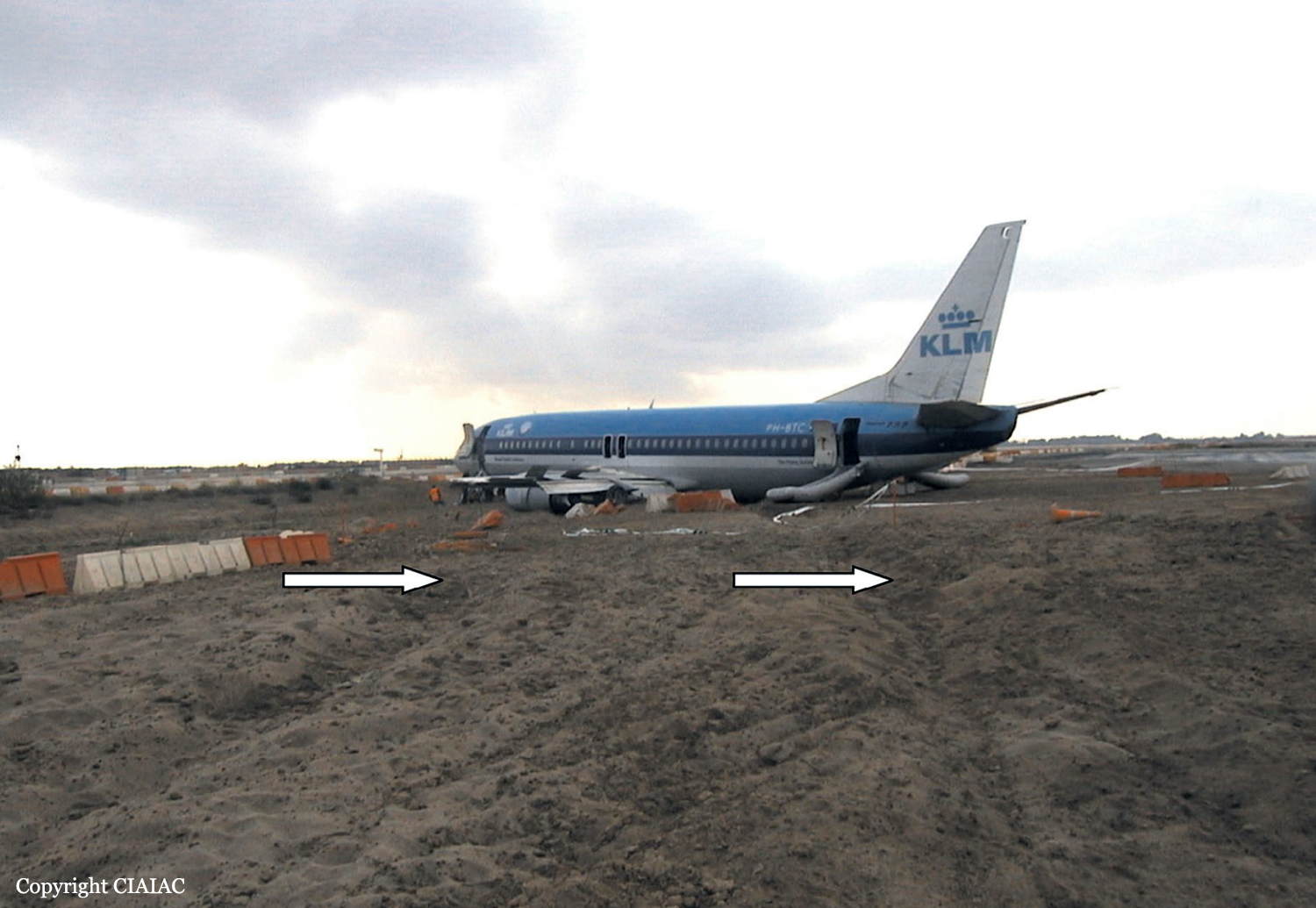
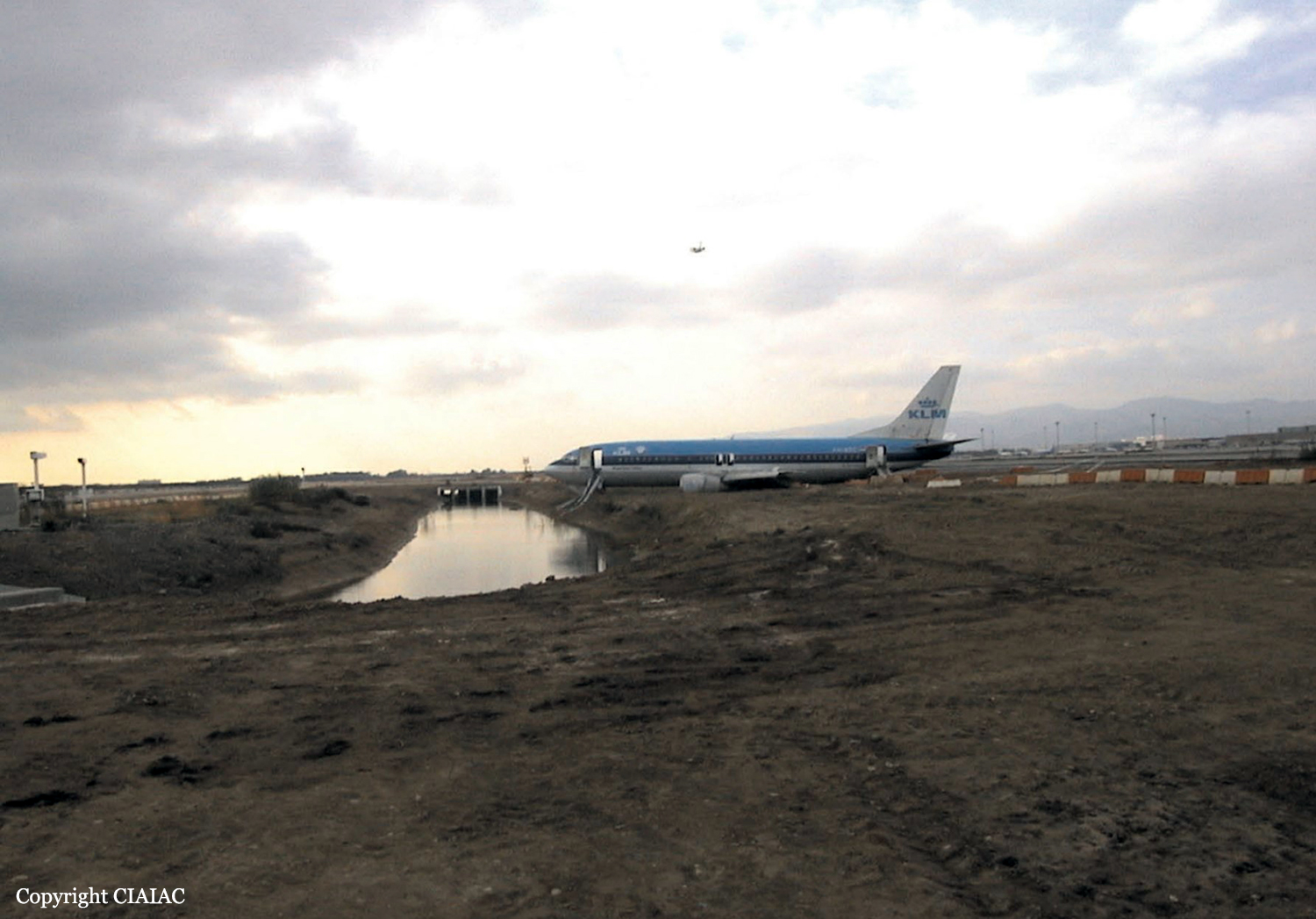
At 16:46 KLM Flight 1673 departed Amsterdam for Barcelona. Upon rotation from runway 18L the aircraft suffered a bird strike. A bird collided with the nose gear. The gear was retracted normally and there was no abnormal indication in the cockpit. The crew reported the impact to the ATC and the flight to Barcelona continued normally. The aircraft touched down on Barcelona's runway 25R. After touchdown of the nose landing gear, the aircraft started deviating to the left of the runway centreline. The veering to the left continued and the aircraft left the paved surface of the runway and went through an area of soft sand where some construction works were being carried out. The nose landing gear leg collapsed rearwards and the left main landing gear leg detached from its fittings shortly before the aircraft came to a stop close to the edge of a rain drainage canal. The final position of the aircraft was at a longitudinal distance of approximately 1606 m from runway 25R threshold, and at a lateral distance of approximately 84 m from the runway centreline.
Probable cause:
It is considered that the accident probably happened because during the takeoff a bird strike broke one of the cables of the nose wheel steering system of the aircraft and jammed the other, which made that the nose wheels were rotated to the left during landing, causing a veering to the left that could not be arrested by full rudder deflection as the aircraft decelerated. The subsequent application of brakes and other actions by the crew could not avoid that the aircraft went outside the runway surface. The damages to the aircraft were increased by the condition of the runway strip due to the airport construction works. Contributing to the breaking of the cable was the fact that it was severely worn locally. The wear could be traced back to the incorrect application of grease to the cable system during maintenance. Despite the training and experience of the flight crew, they were unable to quickly recognize the possible cause of the deviation of the aircraft and to keep the aircraft on the runway.
Final Report:

Crash of a Reims Cessna F406 Caravan II in Arusha

Date & Time: Nov 27, 2004 at 1618 LT
Type of aircraft:
Operator:
Registration:
5H-RAS
Flight Phase:
Survivors:
Yes
Schedule:
Arusha – Seronera
MSN:
406-0005
YOM:
1986
Country:
Region:
Crew on board:
1
Crew fatalities:
Pax on board:
6
Pax fatalities:
Other fatalities:
Total fatalities:
0
Captain / Total hours on type:
80.00
Circumstances:
The aircraft was taking off for a scheduled flight from Arusha to Seronera. At 12:15 hours the aircraft taxied from the apron to the threshold of runway 27 at which point take off for Seronera was initiated. The controller, who was handling the flight, said that the initial segment of the take off roll was normal. When the aircraft had covered about 500 metres he saw the left main landing gear collapsing and the aircraft swinging to the left of the runway. It continued to run on its belly pod on a grass hedge parallel to runway 27 and came to rest at the eastern edge of the apron. There was no fire and all the occupants deplaned without injuries. The aircraft sustained damage to propellers, the right wing, the fuselage and underside structure. The cargo pod in the belly was completely destroyed and its debris was scattered along the wreckage trail.
Probable cause:
There does not appear to be any defects in the aircraft, which could have contributed to this accident. The available evidence would point to premature rotation and premature retraction of the landing gear. Much of the pilot’s recent flying was on low speed aircraft. He had flown Cessna 208s and Twin Otters for many years. His experience on the Cessna 406 was 80 hours. In fact he had flown a Twin Otter only hours before switching to the Cessna 406.

Crash of a Canadair RegionalJet CRJ-200LR in Baotou: 55 killed

Date & Time: Nov 21, 2004 at 0820 LT
Operator:
Registration:
B-3072
Flight Phase:
Survivors:
No
Schedule:
Baotou – Shanghai
MSN:
7697
YOM:
2002
Flight number:
CYH5210
Country:
Region:
Crew on board:
6
Crew fatalities:
Pax on board:
47
Pax fatalities:
Other fatalities:
Total fatalities:
55
Circumstances:
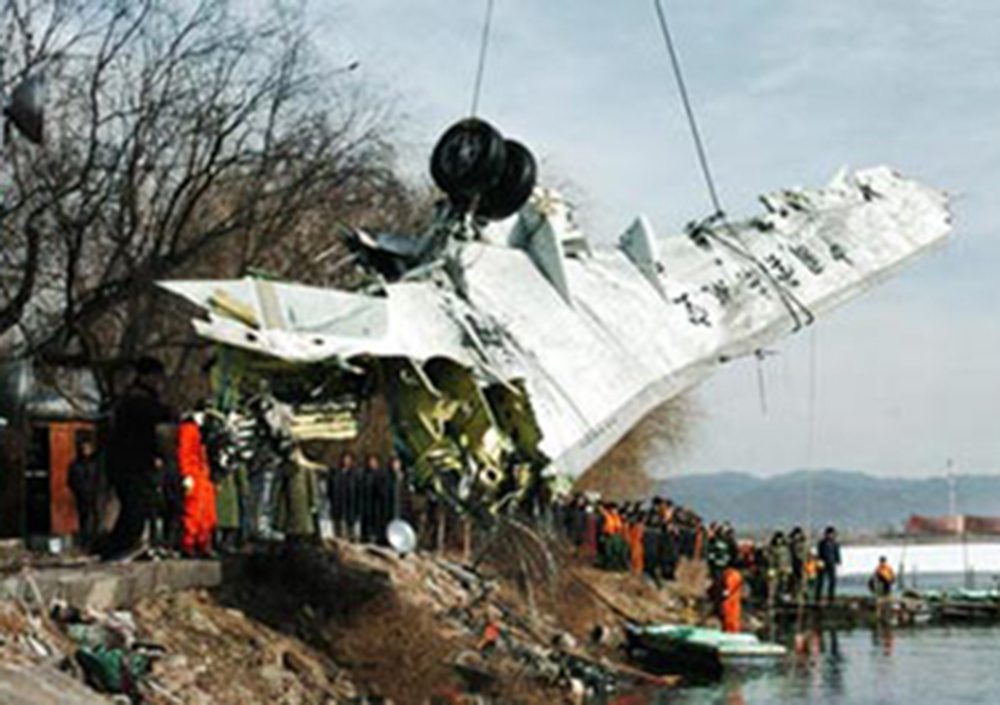
Shortly after takeoff from runway 13 at Baotou Airport, while in initial climb, the aircraft encountered difficulties to maintain a positive rate of climb. It stalled, collided with a small house and eventually crashed in the icy lake of the Nanhai Park. The wreckage was found about 2 km from the airport and all 53 occupants were killed as well as two people in the house.
Probable cause:
Loss of lift and subsequent stall after takeoff due to an excessive accumulation of ice and frost on wings, tail and fuselage. It was determined that the aircraft remained parked outside, on the ramp, all preceding night by negative temperature and that the crew failed to deice the airplane prior to takeoff.

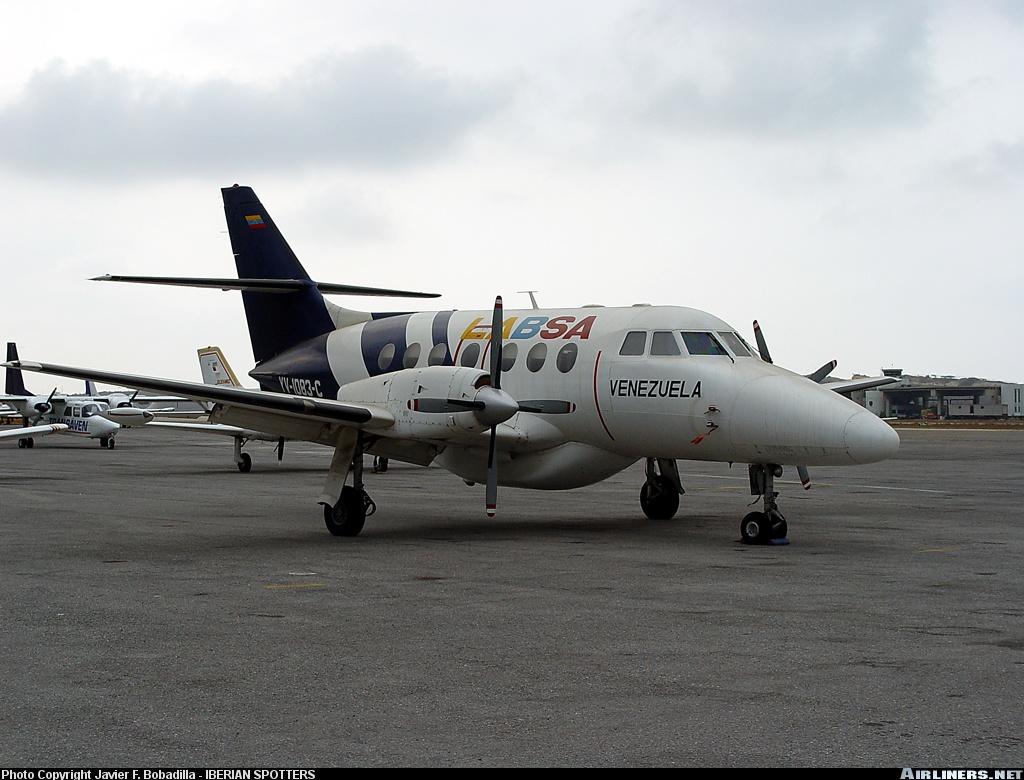
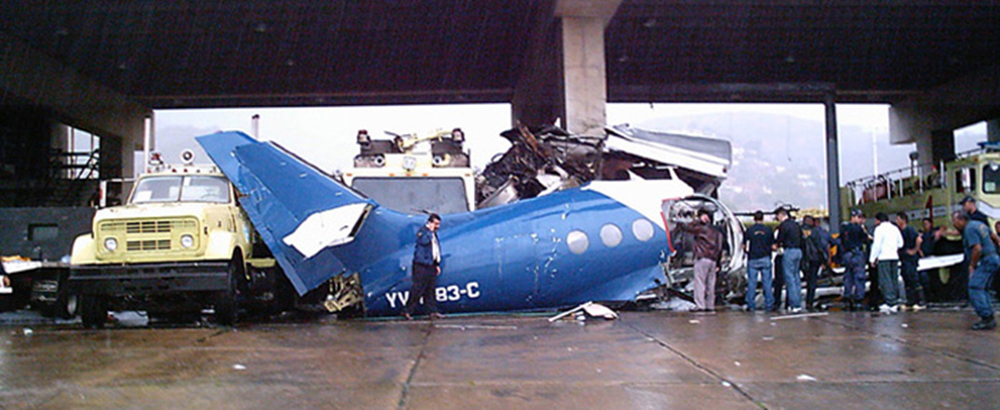
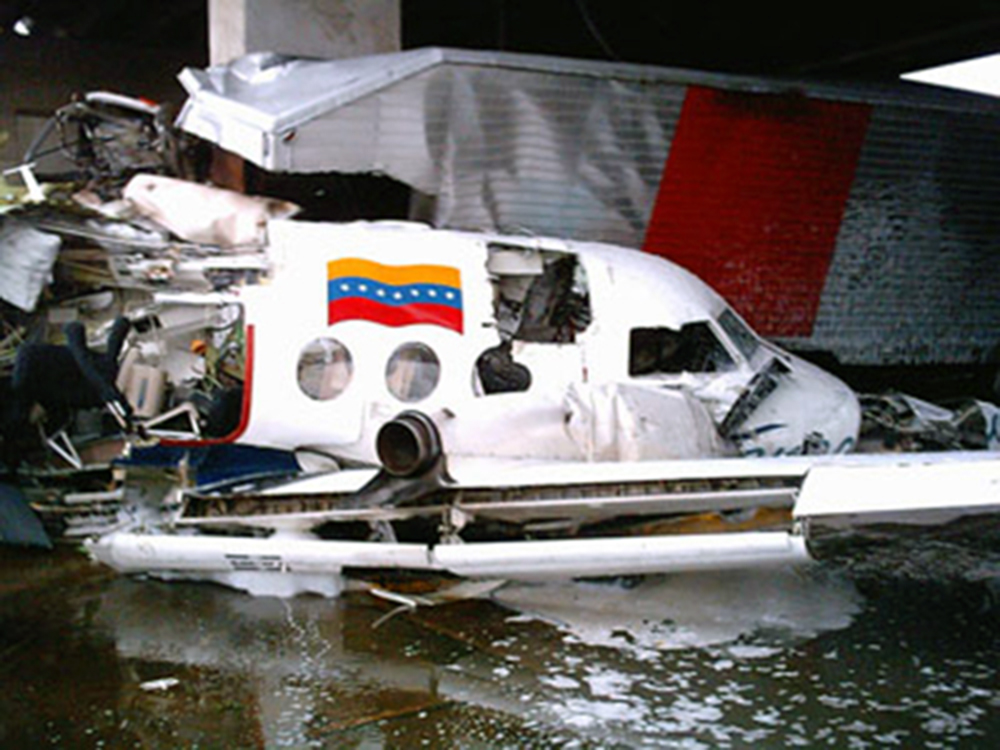
Crash of a BAe 3101 Jetstream 31 in Caracas: 3 killed

Date & Time: Nov 18, 2004 at 1302 LT
Type of aircraft:
Operator:
Registration:
YV-1083C
Survivors:
Yes
Schedule:
El Vigía – Caracas
MSN:
762
YOM:
1987
Flight number:
VNE213
Country:
Crew on board:
2
Crew fatalities:
Pax on board:
19
Pax fatalities:
Other fatalities:
Total fatalities:
3
Circumstances:
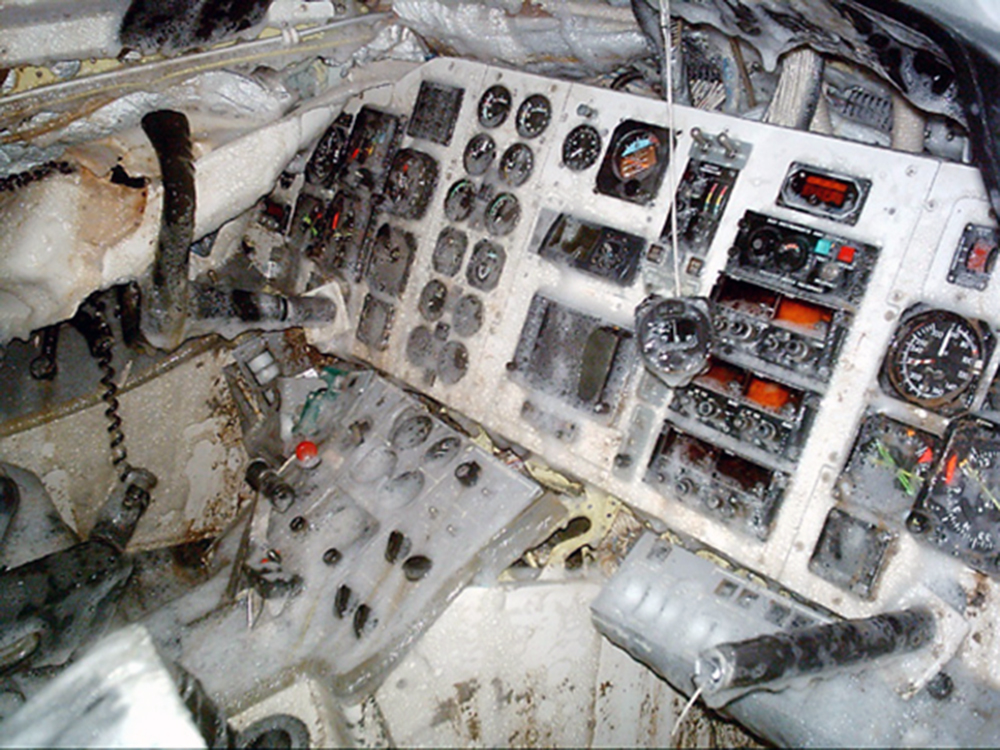
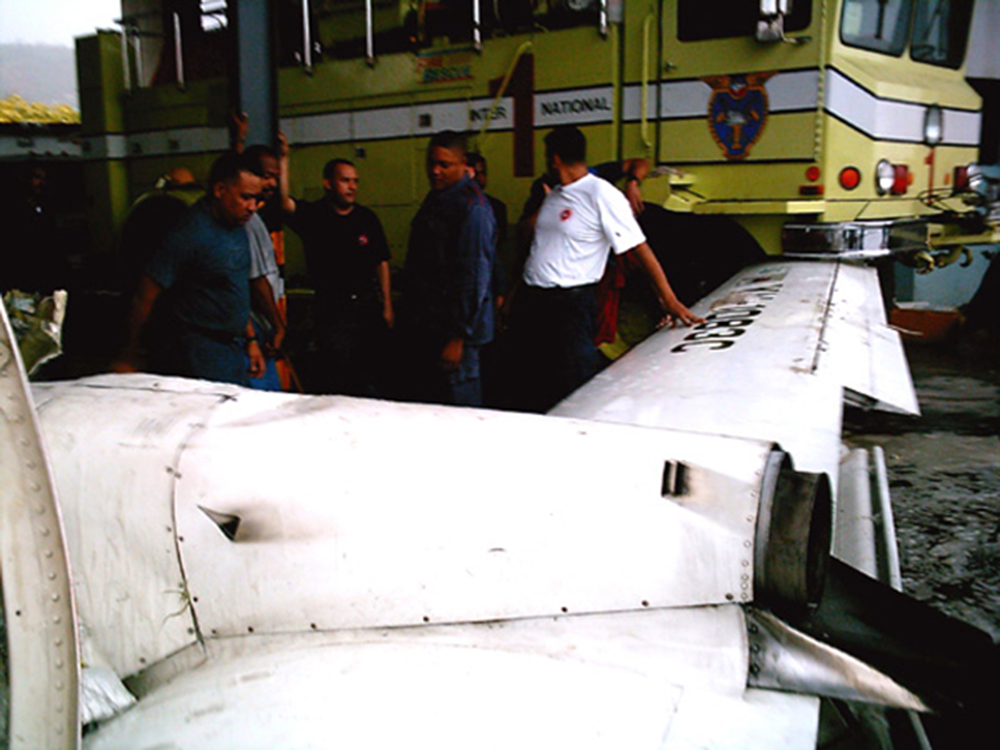
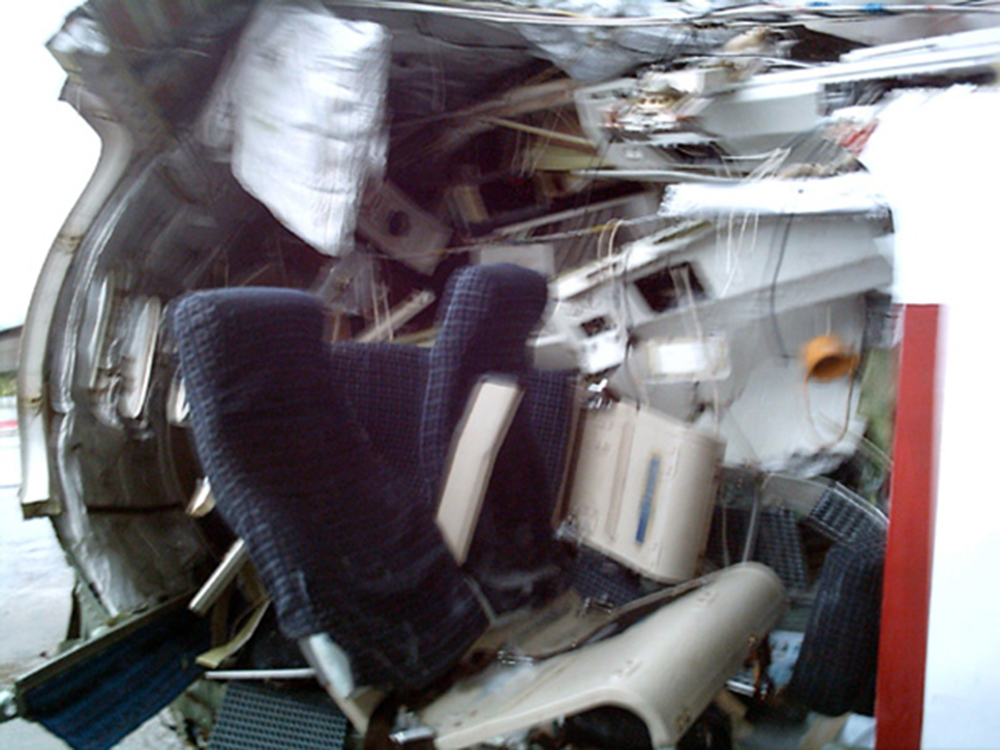
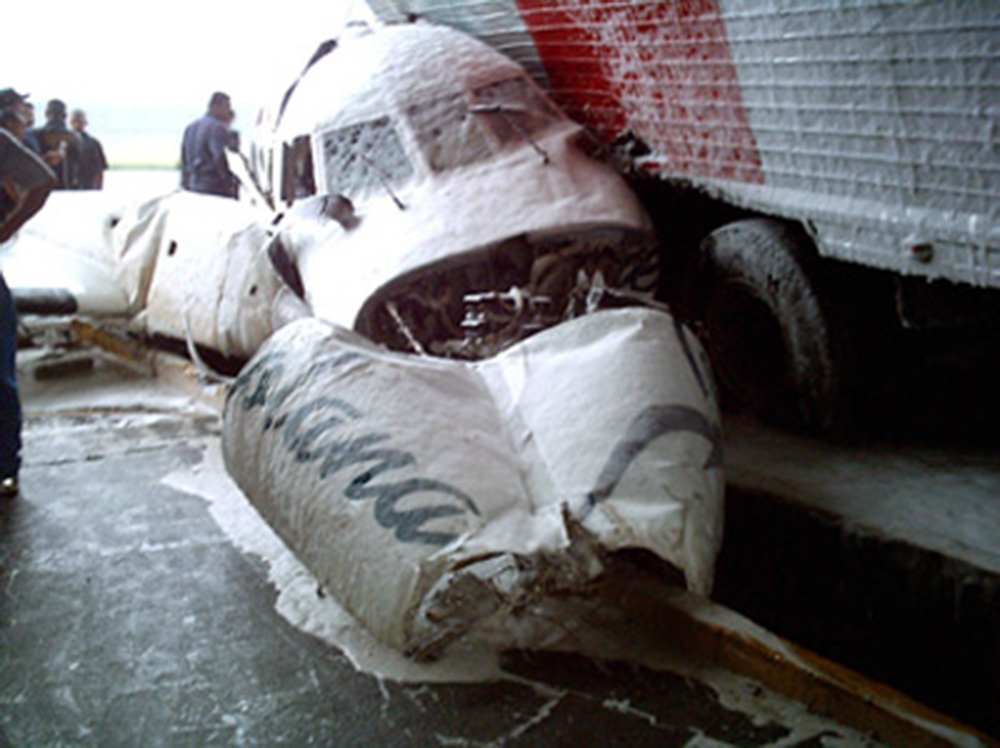
After landing on runway 09, the twin engine aircraft went out of control, veered off runway to the right and eventually collided with the fire station located between both runways 08 and 09 at Caracas-Maiquetía-Simón Bolívar Airport. Two female passengers were killed while 19 other occupants suffered injuries of various degrees. Few hours later, a third passenger died from his injuries. Weather conditions were poor at the time of the accident with heavy rain falls, and the runway surface was wet.

Crash of a Beechcraft 1900C off Nassau

Date & Time: Oct 22, 2004 at 1345 LT
Type of aircraft:
Operator:
Registration:
N79YV
Survivors:
Yes
Schedule:
Arthur’s Town – Nassau
MSN:
UB-41
YOM:
1985
Flight number:
SAC204
Country:
Crew on board:
2
Crew fatalities:
Pax on board:
8
Pax fatalities:
Other fatalities:
Total fatalities:
0
Captain / Total flying hours:
8000
Captain / Total hours on type:
112.00
Copilot / Total flying hours:
568
Copilot / Total hours on type:
178
Aircraft flight hours:
26397
Circumstances:
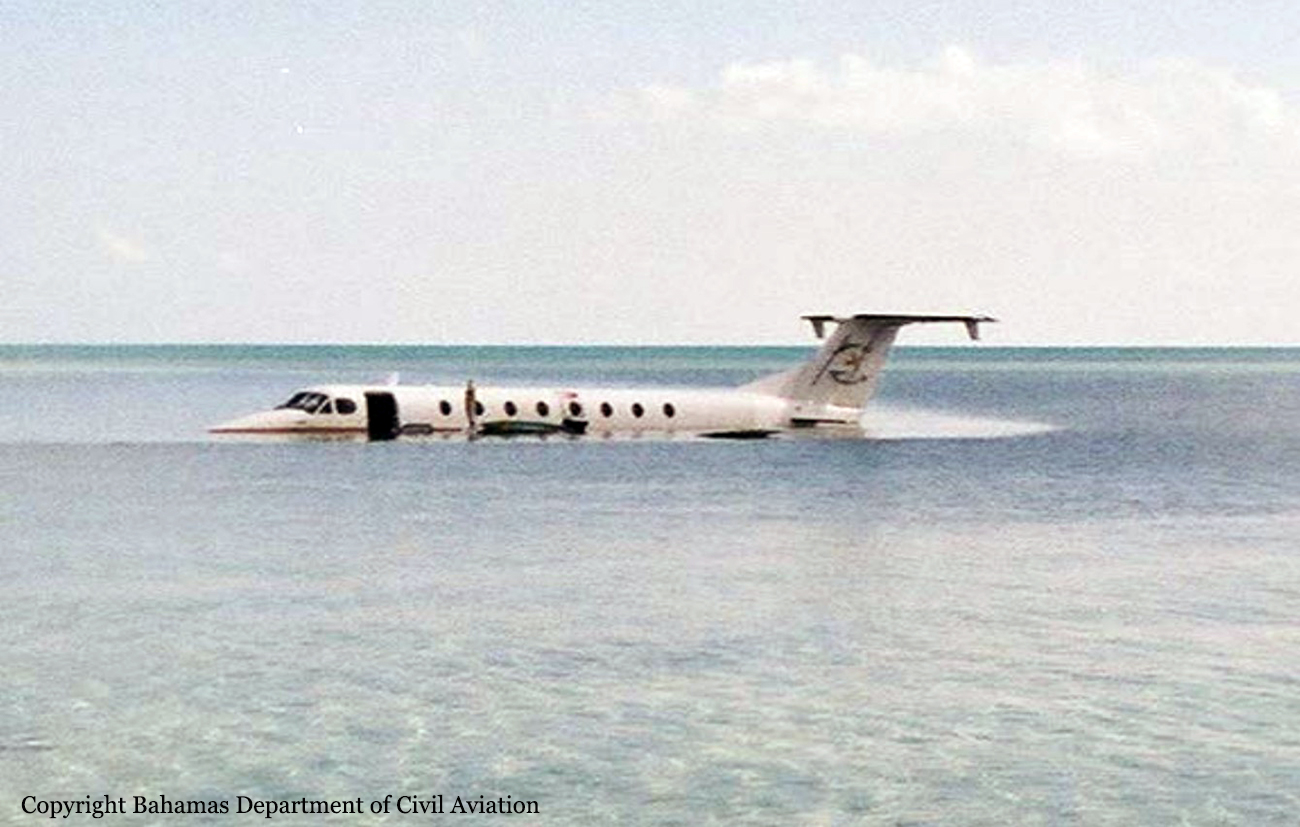
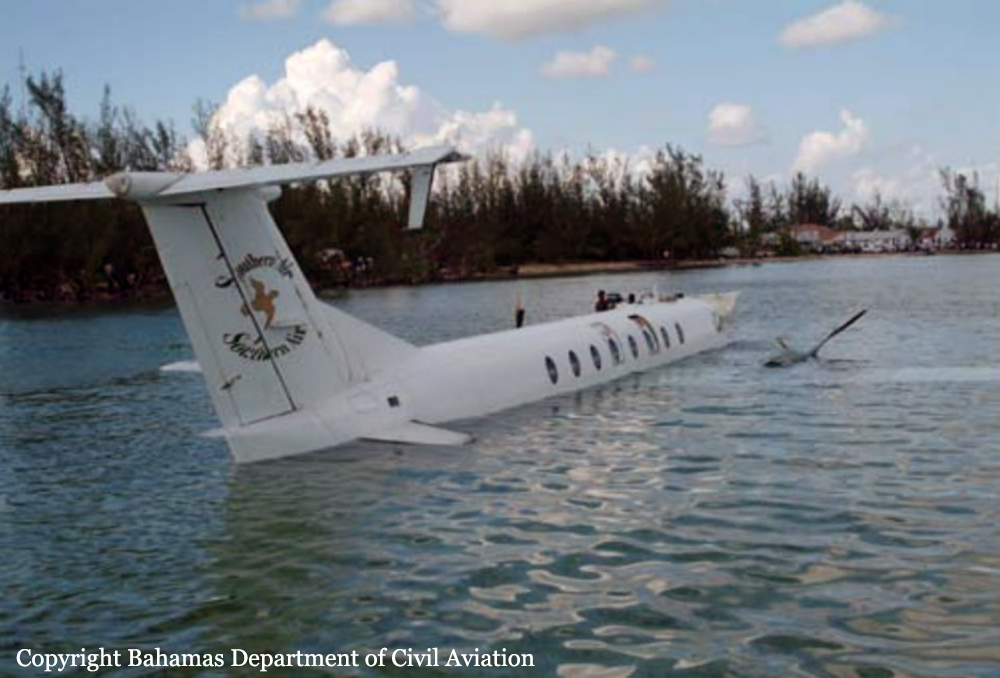
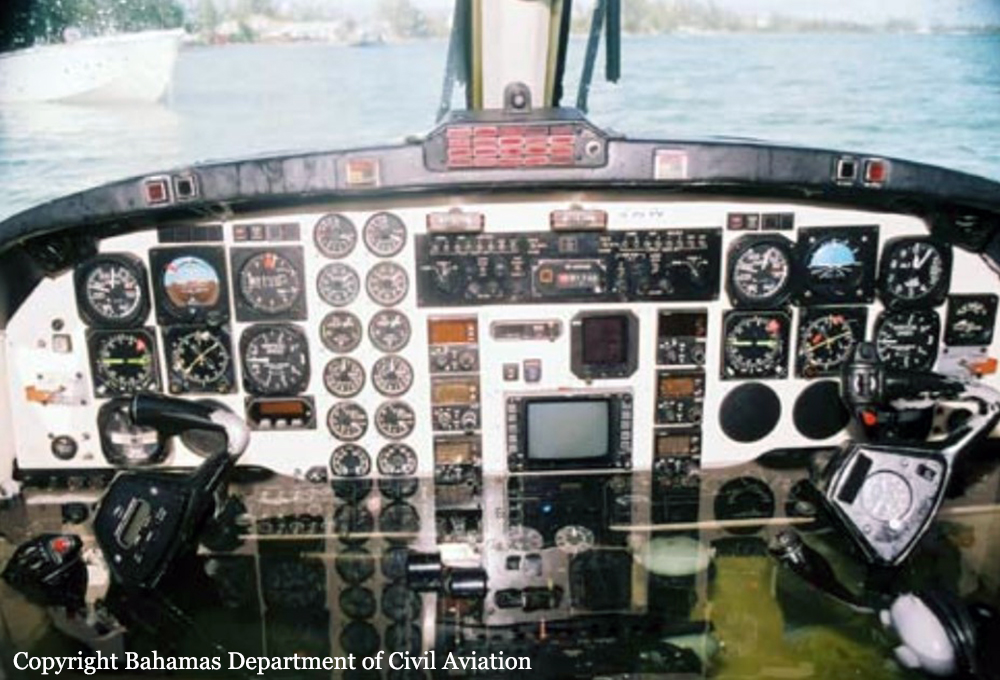
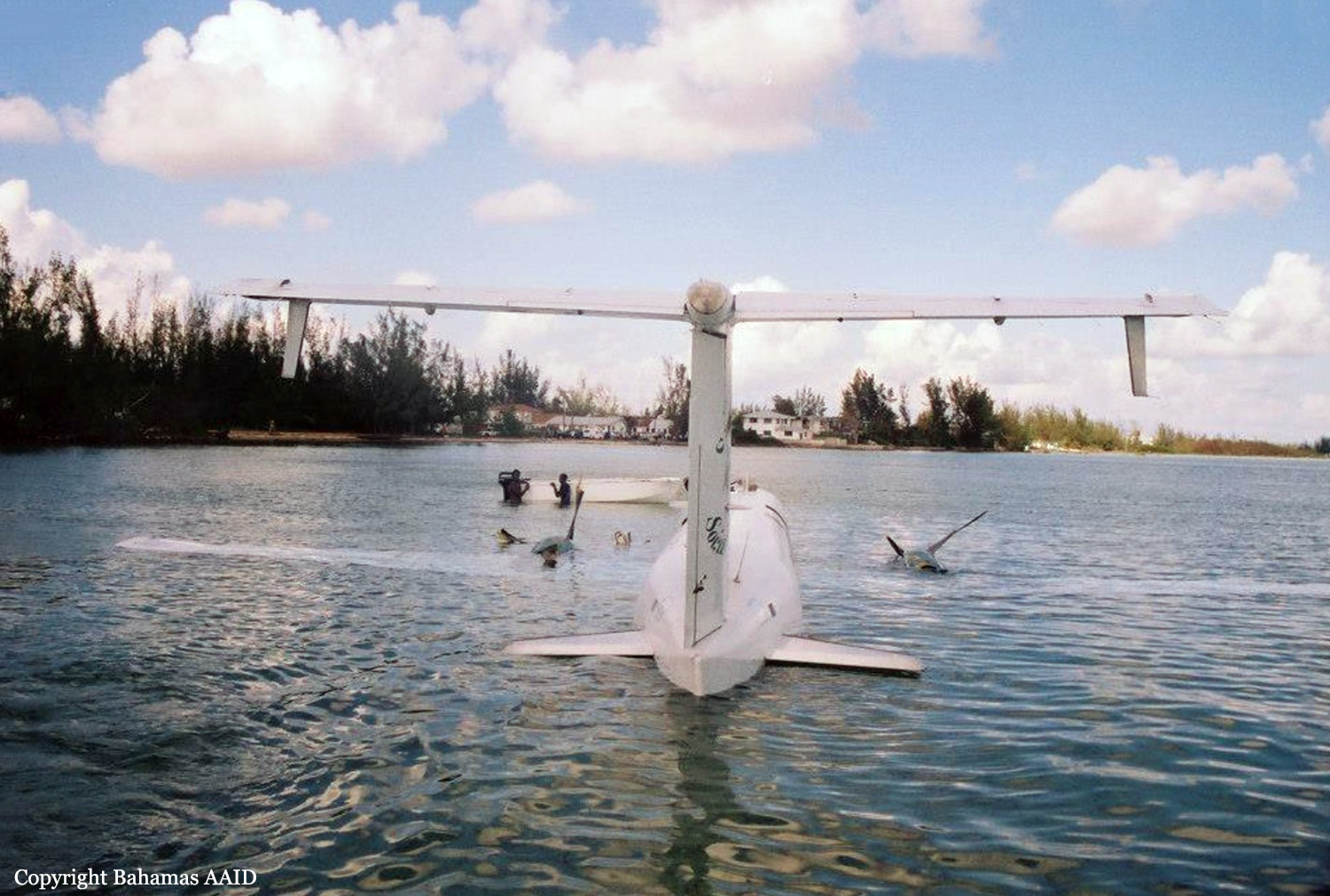
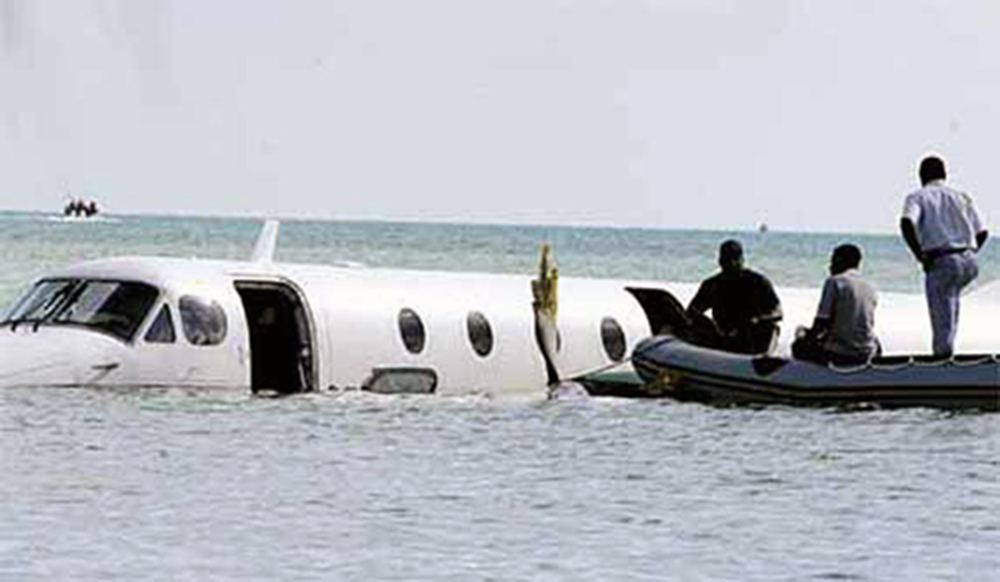
The occurrence of this accident was notified to the Flight Standards Inspectorate by the Nassau Control Tower. On October 22, 2004 about 1328 eastern daylight time (1828Z) a Beechcraft 1900C, N79YV registered to JODA LLC of Chesterfield Missouri, and operated by Southern Air Charter Limited of Nassau, Bahamas, was ditched. The accident occurred in approximately four (4) feet of water, approximately 82 yards off the southern shoreline of New Providence Island (6.98 nautical miles southeast of the Nassau International Airport). The State of Manufacture of the airframe and engines (United States) was advised of the accident on that day and invited to participate in the investigation. The NTSB as well as the FAA were also notified and subsequently made party to the investigation, as the aircraft was a United States registered aircraft operating on an approved United States 129.14 maintenance program. Visual Meteorological Conditions prevailed at the time and an outbound visual flight plan was on file. N79YV operated as a schedule air commuter on a domestic transport flight. The flight originated from Arthur’s Town, Cat Island Bahamas enroute to Nassau International Airport, Nassau, Bahamas. The airplane sustained substantial damage. The occupants of the aircraft consisted of eight (8) passengers and a crew of two (2). The Pilot in Command held an Airline Transport Pilot rating and the First Officer held a Commercial Pilot rating. Both crews were certificated by the Federal Aviation Administration, (FAA). No serious injuries or fatalities were reported.
Probable cause:
Failure of the right engine due to fuel exhaustion. No fuel was found in left or right collector tanks. On October 22, 2004 at 6:35 am, a total of 386 gallons of fuel was uplifted, which brought fuel total to 2800 pounds. A total of 3 flights were conducted lasting 29 minutes, 11 minutes and then 21 minutes (for a total of 61 minutes chock to chock time and a usage of 700 pounds of fuel) which brought fuel total down to 2100 pounds. On October 22, 2004 at 8:42am a further 146 gallons of fuel was uplifted. This additional 146 gallons brought fuel total back to 2800 pounds. No additional fuel slips were produced to show any further uplift of fuel. A total of 8 flights including the fateful flight were conducted with this 2800 pounds of fuel.
Final Report: