Crash of a Douglas C-47B-25-DK near Đà Nẵng: 27 killed

Date & Time: Nov 10, 1962 at 1437 LT
Operator:

Registration:
XV-NID
Survivors:
No
Site:
Schedule:
Huế – Đà Nẵng
MSN:
16074/32822
YOM:
1945
Country:
Region:
Crew on board:
3
Crew fatalities:
Pax on board:
24
Pax fatalities:
Other fatalities:
Total fatalities:
27
Captain / Total flying hours:
5711
Captain / Total hours on type:
4080.00
Circumstances:
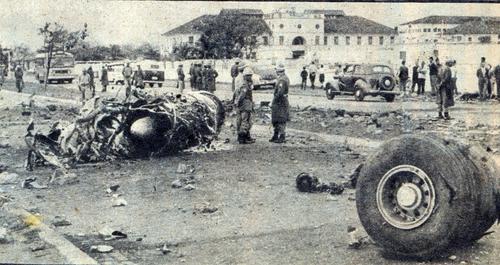
Air Vietnam DC-3, XV-NID, was on a scheduled domestic flight from Huế to Đà Nẵng. It took off from Huế at 1420LT with 3 crew and 24 passengers aboard. The air route from Huế to Đà Nẵng is over the sea and requires alterations of course along the route. After take-off XV-NID headed out to sea and at 1423LT it took the first course at an altitude of about 300 meters (1,000 feet). At 1426LT the aircraft requested and obtained permission from Huế ATC to change to the Đà Nẵng ATC frequency 113.1 Mc/s. Difficulty in establishing radio communications between the aircraft and Đà Nẵng was experienced up 1436LT. At that time XV-NId requested the weather conditions and the runway in use at Đà Nẵng. Đà Nẵng transmitted the information which was acknowledged by the aircraft with the statement that it would call when on the downwind leg of runway 35. Đà Nẵng then requested the aircraft's position and estimated time of arrival but received no reply. Further attempts to contact XV-NID were unsuccessful. The accident occurred at approximately 1437LT. On 13 November the wreckage of the aircraft was located on a mountain at an elevation of 550 meters (1,800 feet), 19,6 km north northwest of Đà Nẵng Airport. All 27 occupants have been killed.
Probable cause:
The accident probably resulted from a navigational error in adverse meteorological conditions.
Final Report:


Crash of a Douglas DC-7B in La Paz

Date & Time: Oct 29, 1962 at 1508 LT
Type of aircraft:
Operator:
Registration:
N51702
Flight Phase:
Survivors:
Yes
Schedule:
La Paz – Miami
MSN:
44702
YOM:
1955
Country:
Crew on board:
6
Crew fatalities:
Pax on board:
36
Pax fatalities:
Other fatalities:
Total fatalities:
0
Circumstances:
The four engine aircraft suffered an accident while taking off from La Paz-El Alto Airport, en route to Miami-Intl. The aircraft was written off while all 42 occupants were evacuated safely.

Crash of a Convair CV-440-62 Metropolitan in Seville: 18 killed

Date & Time: Oct 12, 1962
Operator:
Registration:
EC-ATB
Survivors:
No
Schedule:
Madrid – Barcelona – Valencia – Seville
MSN:
443
YOM:
1957
Country:
Region:
Crew on board:
4
Crew fatalities:
Pax on board:
14
Pax fatalities:
Other fatalities:
Total fatalities:
18
Circumstances:
While on final approach to Seville-San Pablo Airport, the crew was able to send a brief mayday message, reporting that the aircraft caught fire. Shortly later, the airplane went out of control and crashed onto a hill located 4 km short of runway threshold. The aircraft was destroyed by impact forces and a post crash fire and all 18 occupants were killed.

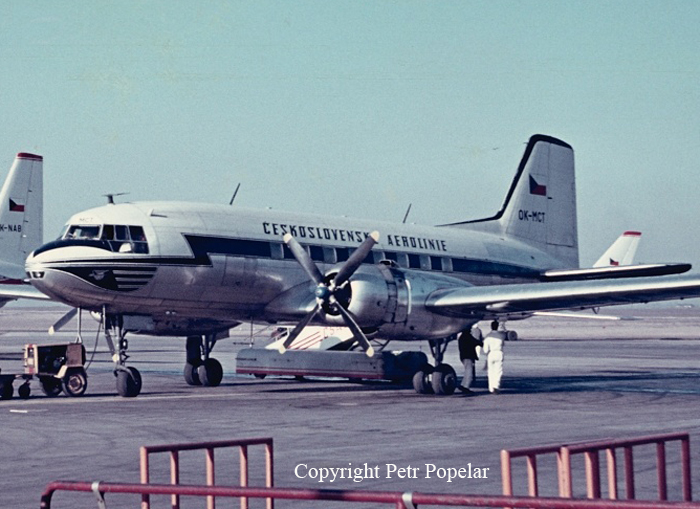
Crash of an Avia 14-32A in Brno: 13 killed

Date & Time: Oct 10, 1962 at 0857 LT
Type of aircraft:
Operator:
Registration:
OK-MCT
Survivors:
Yes
Schedule:
Bratislava – Brno
MSN:
908 071 03
YOM:
1958
Flight number:
OK306
Region:
Crew on board:
4
Crew fatalities:
Pax on board:
38
Pax fatalities:
Other fatalities:
Total fatalities:
13
Circumstances:
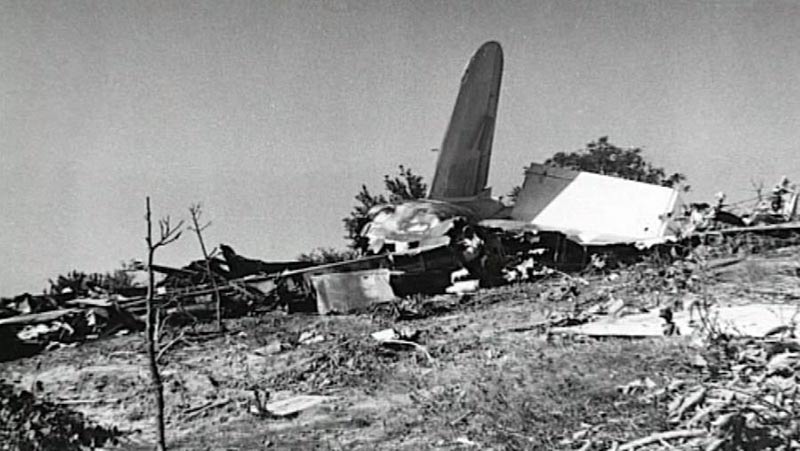
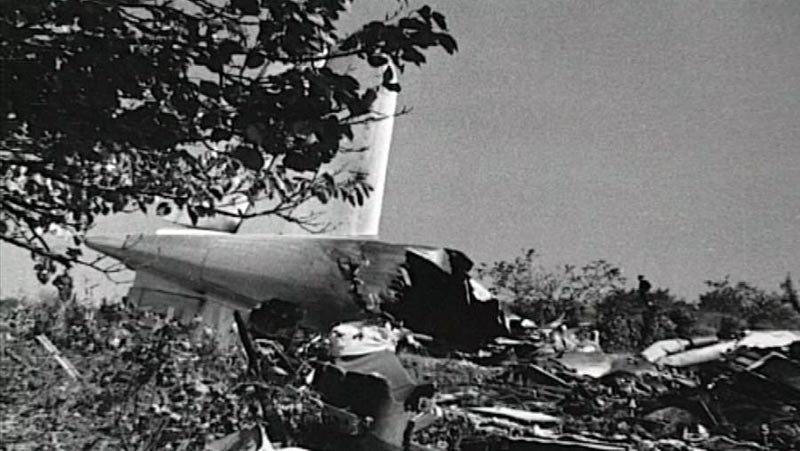
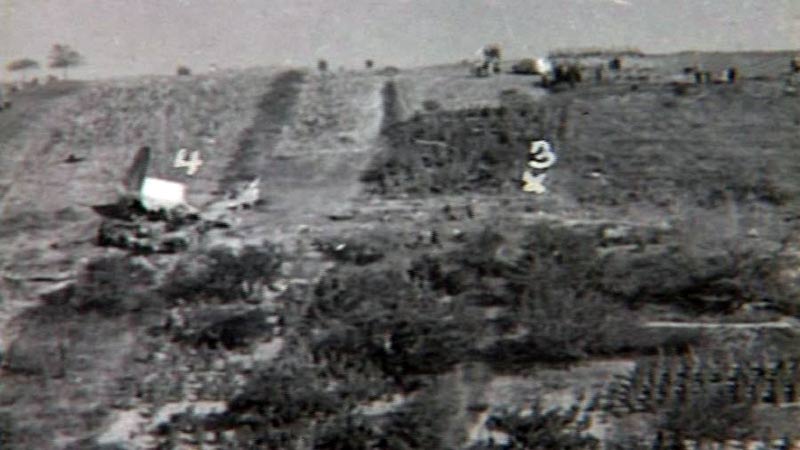
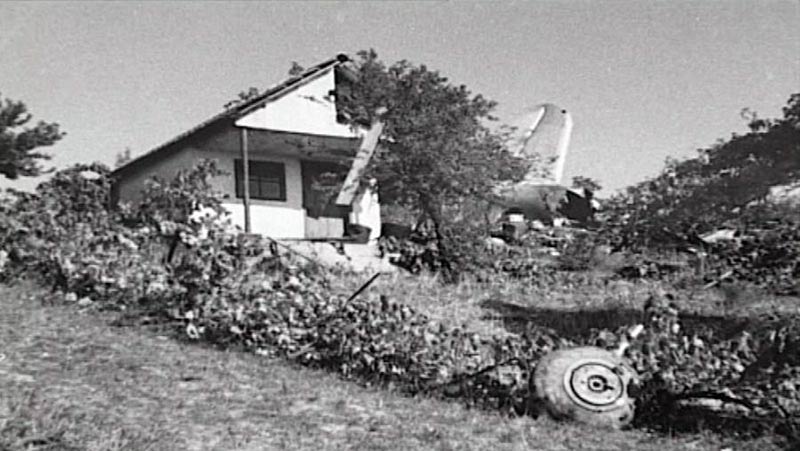
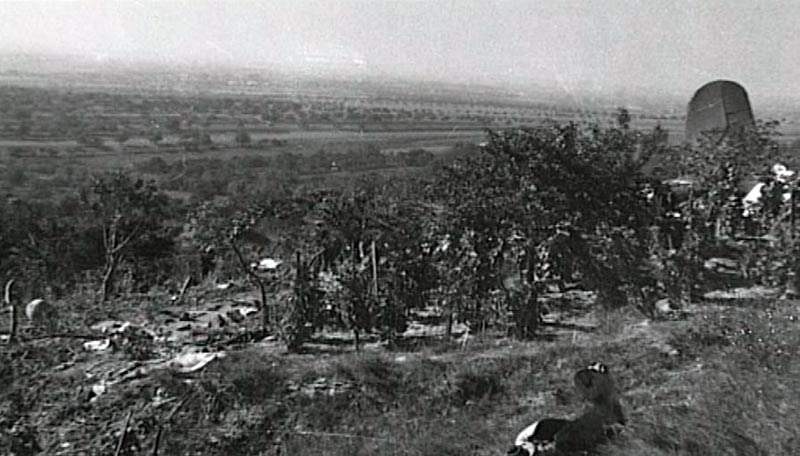
The approach to Brno was started in limited visibility due to marginal weather conditions. On final, the airplane struck the top of a hill and crashed by a house located near the village of Slavkov, about 6 km from the runway 28 threshold. The aircraft was destroyed upon impact and three crew members and ten passengers were killed, the rest of the occupants were injured, some of them seriously.
Probable cause:
It was determined that the crew miscalculated his position and started the descent prematurely, causing the aircraft to descent below the minimum descent altitude.

Crash of a De Havilland DH.89A Dragon Rapide in Entebbe: 1 killed

Date & Time: Oct 7, 1962
Operator:
Registration:
VP-KCJ
Survivors:
Yes
MSN:
6366
Location:
Country:
Region:
Crew on board:
1
Crew fatalities:
Pax on board:
4
Pax fatalities:
Other fatalities:
Total fatalities:
1
Circumstances:
On final approach to Entebbe Airport, the twin engine aircraft went out of control and crashed short of runway threshold. All four passengers were injured while the pilot was killed. It is believed he suffered a heart attack.

Crash of an Ilyushin II-14 near Chersky: 32 killed

Date & Time: Sep 18, 1962 at 0632 LT
Type of aircraft:
Operator:
Registration:
CCCP-61628
Flight Phase:
Survivors:
No
Site:
Schedule:
Magadan – Berelekh – Zyryanka – Chersky – Bilibino
MSN:
1460 009 29
YOM:
1956
Flight number:
SU213
Country:
Region:
Crew on board:
5
Crew fatalities:
Pax on board:
27
Pax fatalities:
Other fatalities:
Total fatalities:
32
Aircraft flight hours:
9868
Circumstances:
The crew was completing a flight from Magadan to Bilibino with intermediate stops at Berelekh, Zyryanka and Chersky. Due to poor weather at Bilibino, the aircraft, the crew and the passengers were grounded at Chersky for four days. Eventually, weather seemed to improve so the crew decided to depart Chersky in the morning of September 18. Few minutes after takeoff, the airplane entered a cloud area and while cruising at the altitude of 800 meters, it struck the snowy slope of Mt Belaya Strelka (975 meters high) located 46 km southeast of Chersky. The aircraft was destroyed by impact forced and a post crash fire and all 32 occupants were killed.
Probable cause:
The crew decided to modify his route without prior permission and continued the flight at an insufficient altitude in low visibility without any visual contact with the ground.

Crash of a Tupolev TU-104A near Kurun: 86 killed

Date & Time: Sep 2, 1962 at 2142 LT
Type of aircraft:
Operator:
Registration:
CCCP-42366
Flight Phase:
Survivors:
No
Schedule:
Moscow – Khabarovsk – Petropavlovsk-Kamchatsky
MSN:
8 66 011 03
YOM:
27
Flight number:
SU003
Country:
Region:
Crew on board:
7
Crew fatalities:
Pax on board:
79
Pax fatalities:
Other fatalities:
Total fatalities:
86
Aircraft flight hours:
4426
Aircraft flight cycles:
1760
Circumstances:
After departure from Khabarovsk-Novy Airport, the crew was cleared to climb to the altitude of 4,000 meters. Once this altitude was reached, ATC cleared the crew to continue to climb to 8,000 meters. While climbing to the altitude of 4,500 meters, the copilot was able to send a brief distress call, reporting severe vibrations and that control was lost. The airplane entered a dive and eventually crashed in a 50-60° nose-down attitude in a huge explosion some 15 km southwest of the village of Kurun, some 96 km northeast of Khabarovsk. The aircraft disintegrated on impact and all 86 occupants were killed.
Probable cause:
It was determined that the aircraft struck the ground in a 50-60° nose-down attitude, at high speed and on a slight left bank. Investigations were unable to determine the exact cause of the accident and the civil investigators were not authorized to access some documents that were classified. It is possible that a technical problem occurred with the autopilot or ailerons or elevators. The assumption that the aircraft may have been shot down by a surface-to-air missile shot by Soviet forces conducting an exercise from the Litovko Training Center was not ruled out.

Crash of a Douglas C-47A-30-DL on Mt Prenj

Date & Time: Aug 25, 1962
Operator:
Registration:
YU-ABH
Survivors:
Yes
Site:
Schedule:
Belgrade – Mostar
MSN:
9488
YOM:
1943
Region:
Crew on board:
4
Crew fatalities:
Pax on board:
28
Pax fatalities:
Other fatalities:
Total fatalities:
0
Circumstances:
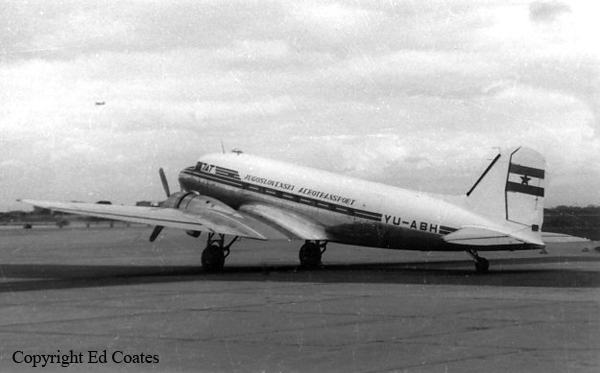
While descending to Mostar, the crew encountered engine problems. The captain reduced his altitude in an attempt to make an emergency landing. The aircraft crash landed on the slope of Mt Prenj located 28 km north of Mostar Airport and came to rest in flames. While all 32 occupants evacuated safely, the aircraft was destroyed by a post crash fire.
Probable cause:
Engine problems on approach.

Crash of a Douglas R4D-1 in Barrancabermeja: 19 killed

Date & Time: Aug 23, 1962 at 1557 LT
Type of aircraft:
Operator:
Registration:
HK-794
Flight Phase:
Survivors:
Yes
Schedule:
Barrancabermeja – Bucaramanga
MSN:
4551
YOM:
1942
Country:
Crew on board:
3
Crew fatalities:
Pax on board:
29
Pax fatalities:
Other fatalities:
Total fatalities:
19
Captain / Total flying hours:
9532
Captain / Total hours on type:
2007.00
Copilot / Total flying hours:
6295
Copilot / Total hours on type:
1500
Circumstances:
The DC-3 took off from Barrancabermeja runway 03 at 15:57. After 250 m the aircraft began veering to the left of the centreline and then swerved to the right. At 490 m into the takeoff, the DC-3 left the runway, corrected direction, crossed the centreline again and traversed the left-hand safety strip. The pilot corrected to avoid a collision with the T wind indicator and the aircraft entered the parking apron. The pilot applied full power as he altered direction to align with the aircraft parallel with the main runway. The starboard wing grazed the apron surface, and the aircraft bounced several times. The pilot decided to takeoff from the apron and attempted after a run of another 258 m to lift the aircraft without the necessary speed. The wingtip struck two helicopters (one of the two being a Hiller UH-12, HK-781E) on the ground, and the tail skid and cone struck a fuel tank at the edge of the apron. The aircraft cartwheeled 180° to port and fell into a depression 30 m deep and 120 m from the northern edge of the apron.
Probable cause:
The main cause of the accident was faulty piloting in the form of poor flight technique during take-off, with overcontrol of the aircraft throughout the 1169.70 m covered. The pilot used faulty judgement in trying to take-off outside the main runway 03 in use at the time. A contributing factor was faulty dispatching of the aircraft whose centre of gravity was outside the aft limit for take-off with maximum load at Barrancabermeja Airport.
Final Report:

Crash of a Douglas DC-8-33 in Rio de Janeiro: 15 killed

Date & Time: Aug 20, 1962 at 2208 LT
Type of aircraft:
Operator:
Registration:
PP-PDT
Flight Phase:
Survivors:
Yes
Schedule:
Buenos Aires – Rio de Janeiro – Lisbonne – Paris – Londres
MSN:
45273
YOM:
1960
Flight number:
PB026
Country:
Crew on board:
11
Crew fatalities:
Pax on board:
94
Pax fatalities:
Other fatalities:
Total fatalities:
15
Captain / Total flying hours:
13504
Captain / Total hours on type:
812.00
Copilot / Total flying hours:
14643
Copilot / Total hours on type:
223
Circumstances:
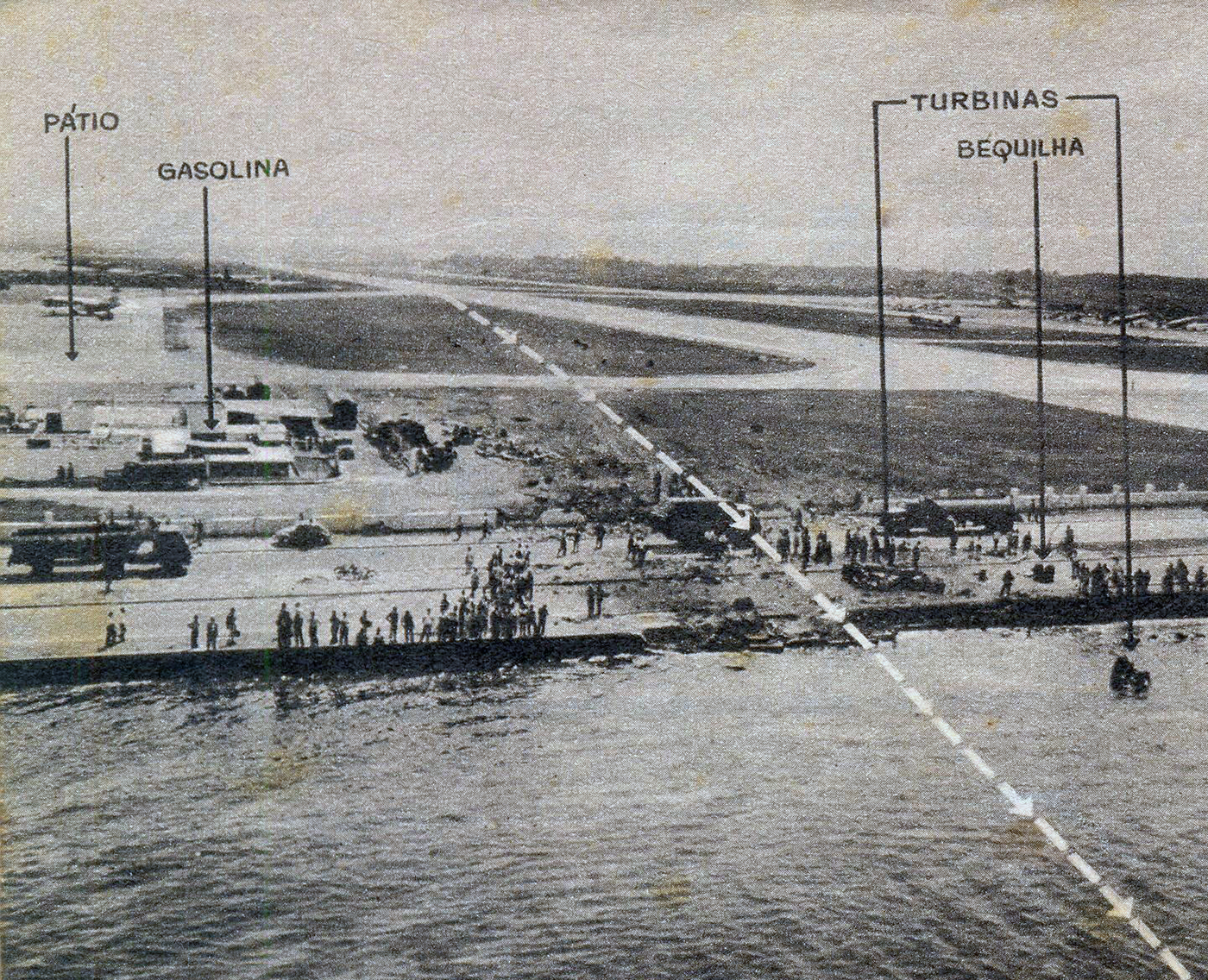
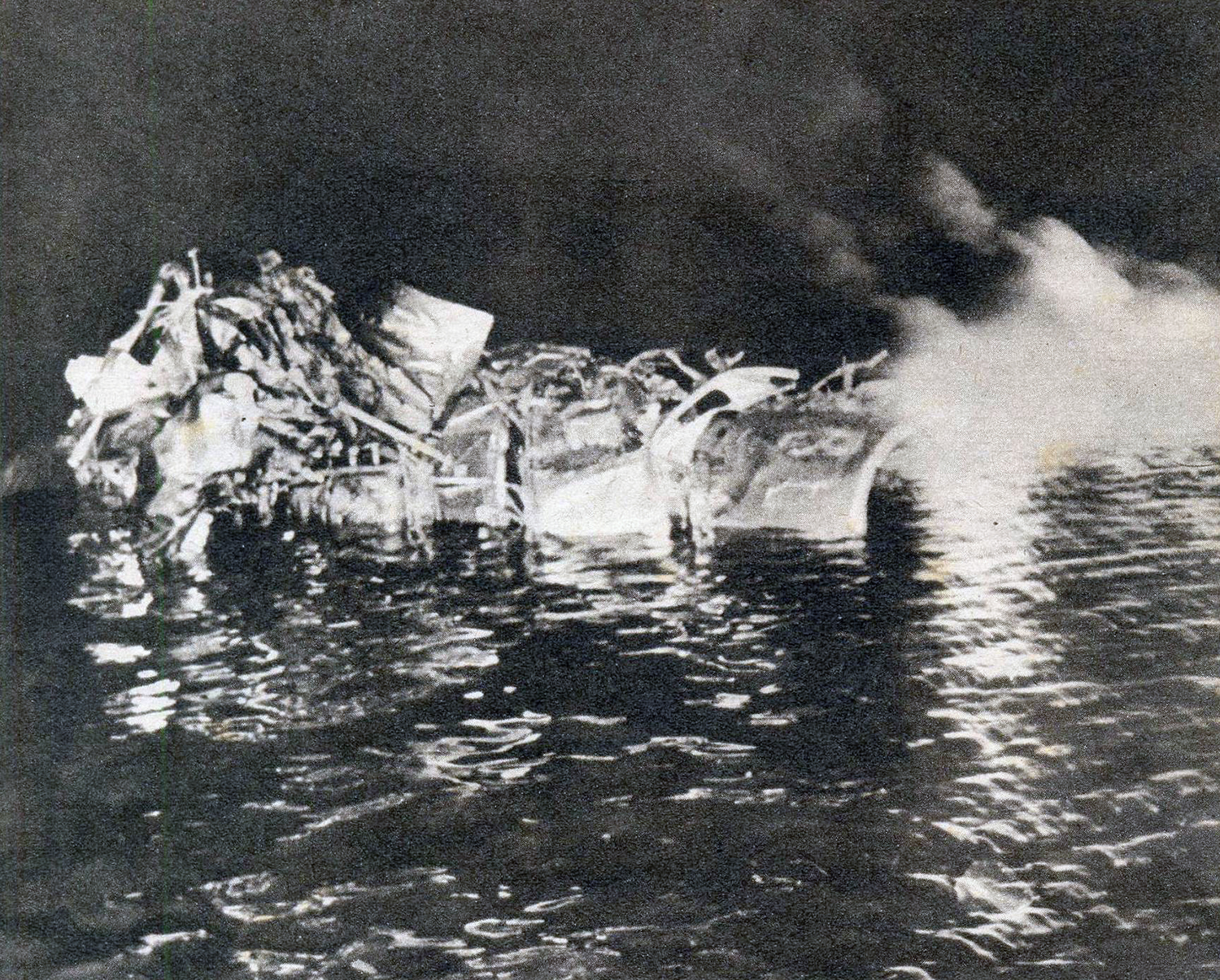
The aircraft was on a scheduled international flight from Buenos Aires to Rio de Janeiro (Galeao Airport) and Lisbon. It arrived at Galeao Airport following an uneventful flight. Another crew took over for the last segment of the flight. The takeoff run began at 2303 hours GMT from runway 14. The aircraft's acceleration appeared to be normal. The pilot-in-command declared that, at a speed between 100 and 135 kt (V1), he noted that the control column was too far back and pushed it forward. At this point the co-pilot released the controls, which is normally done when the aircraft reaches V1. It is believed that in fact an attempt to rotate the aircraft was made around 132 kt. The aircraft continued to accelerate normally. The co-pilot announced 148 kt, the rotation speed (VR), and the pilot pulled back on the control column. However, the aircraft did not respond, so he pushed it forward again. No indication of this rotation attempt was revealed by the flight recorder reading. He and the co-pilot then pulled back on the control column, however, the nose of the aircraft did not rotate since the pilot had already reduced power 14 seconds after reaching VR. Also, the tape reading indicated that the brakes were used for 5 seconds prior to any power reduction. The first marks of braking were found approximately 2300 m from the threshold. The pilot realized that the aircraft could not be stopped on the remaining portion of the runway so he turned the aircraft off the runway to the right and fully reduced power. The brakes were applied but not reverse thrust. Heavy and steady braking marks started 2600 m from the threshold. Of his own accord, the co-pilot applied full power for reversion and tried to operate the spoilers but could not do so because of the bumps The right wing lowered, dragging engines No. 3 and 4. The left wheels of the landing gear sank into the sand, and engines No. 1 and 2 also began to drag. All four engines lost their ejectors and reversion cones, causing the aircraft to accelerate. It continued moving at a high speed, hit the airport wall, crossed the adjoining highway, lost engines No. 1 and 2 and the left landing gear and finally came to rest in the sea. 50 m from shore. It drifted 100 m while floating and then sank to a depth of 8 m. There were no lights on board the aircraft when it came to a stop as the automatic emergency lighting system did not function. One cabin attendant used one of the two flashlights available. The darkness increased the panic and confusion. The passengers could not use the main door as an exit because it would open into the sea. They did not know where the emergency exits were. However, the exits were then opened and most of the passengers left the aircraft on the starboard side. The fact that the lour exits were all in the central part of the fuselage hampered the evacuation as the number of passengers (94) was considerable. The crew left the aircraft via the cockpit windows. No instructions had been given on emergency procedures and therefore the passengers and most of the crew did not take their life jackets with them when leaving the aircraft. Although the aircraft was equipped with six life rafts no crew member tried to use them. The aircraft drifted 330 feet downstream and submerged in 25 minutes. A crew member and 14 passengers were killed, 46 occupants were wounded and 44 were uninjured.
Probable cause:
The take-off was discontinued when the aircraft would not rotate at a speed of 175 kt because the stabilizer setting had switched from 3° nose-up to 1-3/4° nose-down. Contributing factors to the accident were the delayed decision of the pilot to abort the take-off and the incorrect compliance with the standard procedures used for emergency stopping.
Final Report: