Crash of an Antonov AN-2 in Kazan: 1 killed

Date & Time: Dec 19, 1962 at 0947 LT
Type of aircraft:
Operator:
Registration:
CCCP-15939
Survivors:
Yes
Schedule:
Kamskoye Ustye – Kazan
MSN:
1 149 473 08
YOM:
22
Flight number:
SU563
Country:
Region:
Crew on board:
2
Crew fatalities:
Pax on board:
12
Pax fatalities:
Other fatalities:
Total fatalities:
1
Aircraft flight hours:
4098
Circumstances:
While approaching Kazan on a flight from Kamskoye Ustye, the engine failed. Flying at low height and facing power cables, the captain decided to pass below the cables and to attempt an emergency landing on a highway. After touchdown, the airplane struck a metal slide and obstacles before coming to rest. Both pilots and three passengers were injured while nine other occupants were unhurt. The aircraft was damaged beyond repair. Six hours after the accident, the copilot died from his injuries.
Probable cause:
Engine failure in flight caused by the poor quality of the fuel which was contaminated.

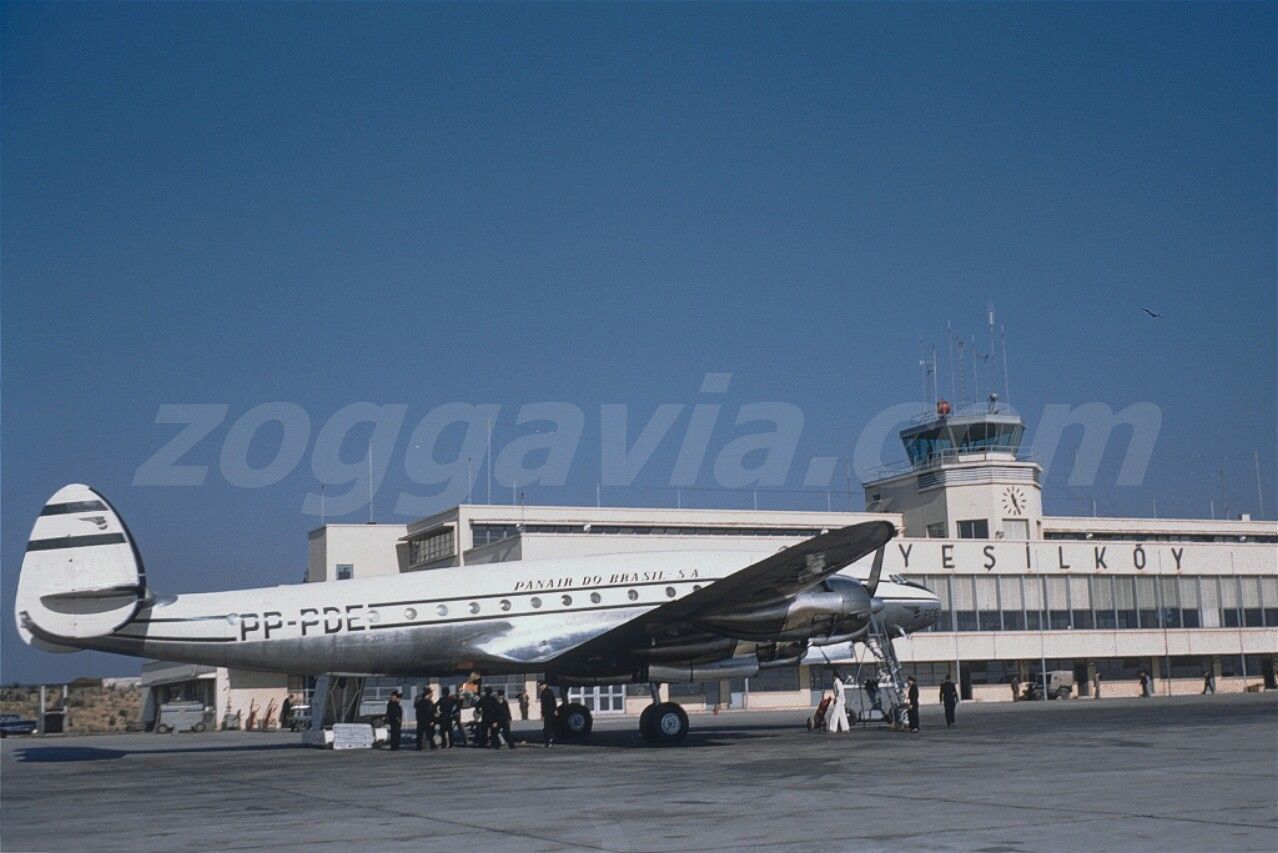
Crash of a Lockheed L-049-46-21 Constellation near Manaus: 50 killed

Date & Time: Dec 14, 1962 at 0020 LT
Operator:
Registration:
PP-PDE
Survivors:
No
Schedule:
Belém – Manaus
MSN:
2047
YOM:
1946
Location:
Country:
Crew on board:
7
Crew fatalities:
Pax on board:
43
Pax fatalities:
Other fatalities:
Total fatalities:
50
Circumstances:
The Panair Constellation departed Belém at 02:31 GMT for a 3-hour flight to Manaus-Ponta Pelada Airport. The plane followed the Amber 1 airway and contacted Manaus at 05:04, reporting six minutes out. At 05:19 the flight crew asked Manaus whether the plane's engines could be heard. Manaus replied negative and asked the reason for the question. Nothing more was heard from the flight, which appeared to have crashed 45 km from Manaus. The Constellation named 'Estevao Ribeiro Baiao Parente' was completely destroyed and all 50 occupants were killed.
Probable cause:
The cause of the accident was not determined.
Final Report:

Crash of a Douglas C-47-DL near Barrancabermeja: 24 killed

Date & Time: Dec 6, 1962 at 1640 LT
Operator:
Registration:
HK-437
Flight Phase:
Survivors:
Yes
Schedule:
Bucaramanga – Barrancabermeja
MSN:
4697
YOM:
1942
Flight number:
TX209
Country:
Crew on board:
3
Crew fatalities:
Pax on board:
23
Pax fatalities:
Other fatalities:
Total fatalities:
24
Captain / Total flying hours:
7000
Captain / Total hours on type:
2566.00
Copilot / Total flying hours:
1064
Copilot / Total hours on type:
331
Circumstances:
Flight 209 was a scheduled public transport flight from Bucaramanga to Barrancabermeja and was to return the same evening. The aircraft departed Bucaramanga at 1628 hoiurs and six minutes later the pilot reported crossing the Palonegro beacon and that the flight was proceeding normally. It was heading west at 4,500 feet and estimated its time of arrival at Barrancabermeja as 1650 hours. This was the last and only report received from the aircraft. The aircraft crashed sometime between 1640 and 1730 hours local time, in daylight. The aircraft crashed in a wooded area located 48 km east of Barrancabermeja and was destroyed. Both pilots, a stewardess and 21 passengers were killed, two others were injured.
Probable cause:
The accident was attributed to an error of judgement on the part of the pilot in trying to fly VFR in IFR conditions. The heavy rain prevented him from seeing trees with which he collided, and loss of control of the aircraft resulted.
Final Report:

Crash of a Douglas DC-7B in New York: 25 killed

Date & Time: Nov 30, 1962 at 2145 LT
Type of aircraft:
Operator:
Registration:
N815D
Survivors:
Yes
Schedule:
Charlotte – New York
MSN:
45084
YOM:
1956
Flight number:
EA512
Crew on board:
6
Crew fatalities:
Pax on board:
45
Pax fatalities:
Other fatalities:
Total fatalities:
25
Captain / Total flying hours:
15644
Captain / Total hours on type:
2700.00
Copilot / Total flying hours:
9042
Copilot / Total hours on type:
1610
Aircraft flight hours:
18411
Circumstances:
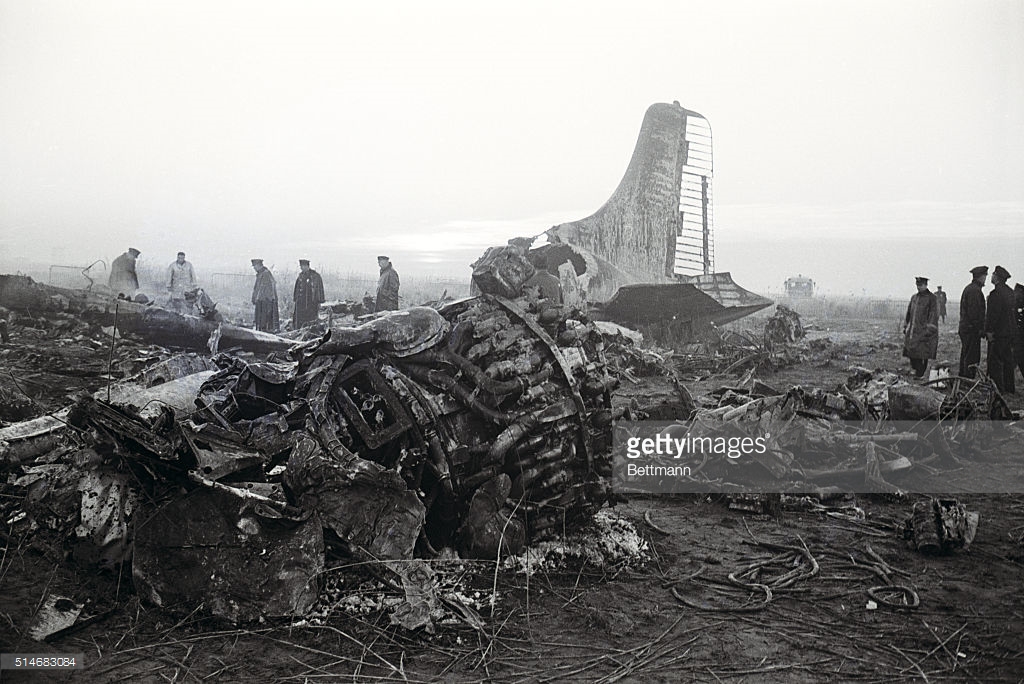
Eastern Air Lines Flight 512, a Douglas DD-7B, N815D, crashed during an attempted go-around following an instrument approach to runway 4R at New York International Airport, at 2145 e.s.t., on November 30, 1962 Of the 51 persons aboard, 21 passengers, 3 crew members and an additional crew member occupying the jump seat did not survive. Flight 512, regularly scheduled from Charlotte, North Carolina, non-stop to New York International Airport, entered a fog condition near the threshold of runway 4R. A go-around was initiated; however, the aircraft struck the ground in a slightly nose-high attitude and was virtually destroyed by impact and subsequent fire.
Probable cause:
The Board determines the probable cause of this accident was the technique employed by the crew during abandonment of the approach under fog conditions not adequately reported.
Final Report:

Crash of a Boeing 707-441 near Lima: 97 killed

Date & Time: Nov 27, 1962 at 0340 LT
Type of aircraft:
Operator:
Registration:
PP-VJB
Survivors:
No
Site:
Schedule:
Rio de Janeiro – Porto Alegre – Lima – Bogotá – Panama City – Mexico City – Los Angeles
MSN:
17906
YOM:
1960
Flight number:
RG810
Country:
Crew on board:
17
Crew fatalities:
Pax on board:
80
Pax fatalities:
Other fatalities:
Total fatalities:
97
Captain / Total flying hours:
13640
Captain / Total hours on type:
1641.00
Copilot / Total flying hours:
16304
Copilot / Total hours on type:
642
Aircraft flight hours:
6326
Circumstances:
A Boeing 707-441 passenger jet, operated by Varig, was destroyed when it crashed into the side of La Cruz Peak, near Lima, Peru. All 80 passengers and 17 crew members were killed. Flight RG810 departed Rio de Janeiro-Galeão Airport at 03:53 hours UTC on a scheduled flight to Los Angeles (LAX) with en route stops at Lima (LIM), Peru , Bogotá (BOG), Colombia, Panama City (PTY), Panama and Mexico City (MEX), Mexico. At 08:09 the flight reported to Air Traffic Control, Lima, at 36 000 feet, estimating Pisco at 08:13 and Lima-Callao Airport at 08:36 and requested permission to descend. Lima ATC advised of a DC-6, which had departed Lima at 07:35 and was also estimating Pisco at 08:13 when it would be cruising at 13500 feet. After passing Pisco at 08:13, the crew started their descent. At 08:19 hours RG-810 reached 26000 feet. Authorization was granted to continue descending for a straight-in approach to runway 33. At 08:24 it reported to Approach Control ten minutes from the station, at 15 000 feet, still in descent. By 08:30 hours it had reached 12000 feet over Las Palmas. As it was too high for a straight-in approach to runway 33, Approach Control suggested that it make a 360-degree turn over Las Palmas and report again overhead Las Palmas. The aircraft continued descending. It turned slightly right of its 330 degree heading, passing east of Lima Airport, then made a left turn and passed over Lima-Callao Airport. It continued turning until it was headed south, passing west of Las Palmas in order to initiate the outbound procedure from the ILS back course, and then made a 180 degree turn to intercept the ILS back course (327 degrees). However, it kept to the normal intercept course for almost three minutes before starting its turn to the north. Its heading was 333 degrees when it hit La Cruz Peak, about 8 miles east of the approach track of the Morro Solar ILS back course.
Probable cause:
A deviation, for reasons unknown, from the track prescribed for the instrument approach along the ILS back course of Lima-Callao Airport.
Final Report:

Crash of a Saab Scandia 90A-1 in Paraibuna: 23 killed

Date & Time: Nov 26, 1962 at 0909 LT
Type of aircraft:
Operator:
Registration:
PP-SRA
Flight Phase:
Survivors:
No
Schedule:
São Paulo – Rio de Janeiro
MSN:
107
YOM:
1951
Country:
Crew on board:
5
Crew fatalities:
Pax on board:
18
Pax fatalities:
Other fatalities:
Total fatalities:
23
Circumstances:
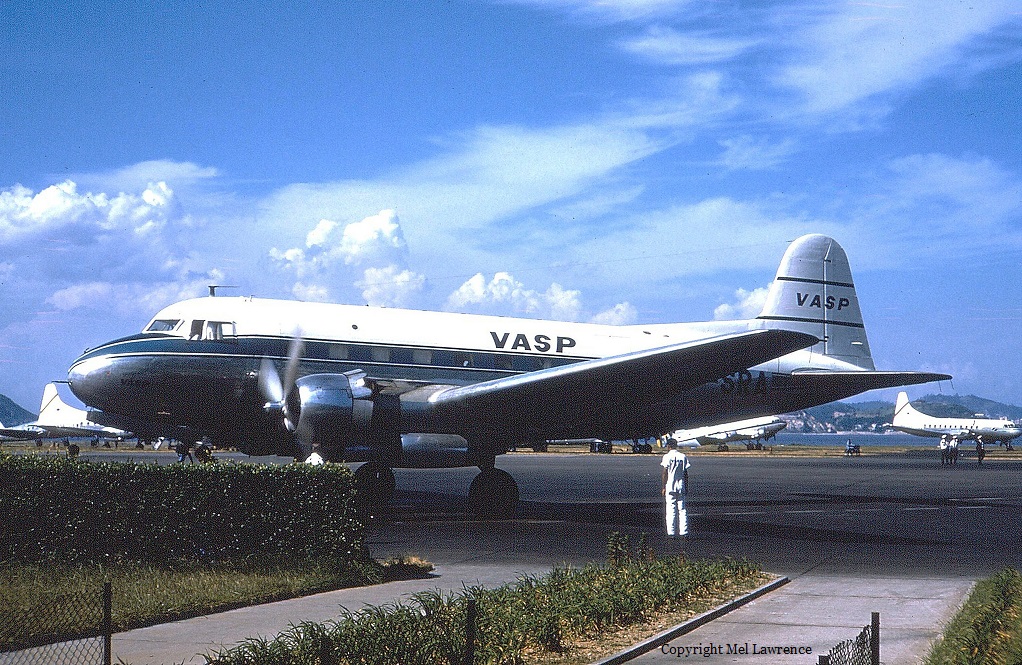
The Scandia aircraft was flying a scheduled domestic service from Congonhas Airport (São Paulo) to Santos Dumont (Rio de Janeiro). It left Congonhas at 1144 GMT on an instrument flight plan and was flying Airway AB-6 at the approved cruising altitude of 2,400 m. Five crew and 18 passengers were aboard. The flight advised of its progress en route and at 1203 hours was abeam São José dos Campos, estimating Ubatuba at 1214 hours. When it did not report Ubatuba as expected, an alert message was sent at 1242 hours. The Cessna had taken off from Santos Dumont at 1111 GMT en route to Campo de Marte in São Paulo. It was flying the same airway in the opposite direction on a VFR flight plan and carried 4 persons. Following its last contact with Santos Dumont it did not report its position. The alert phase was declared at 1251 hours, thirty minutes after its estimated time of arrival at Campo de Marte. It was learned later by the Inquiry that the sound of the two aircraft collided was heard, and eye witnesses saw them fall, at approximately 1209 hours.
Probable cause:
Both pilots failed to maintain adequate lookouts for other aircraft.
Final Report:

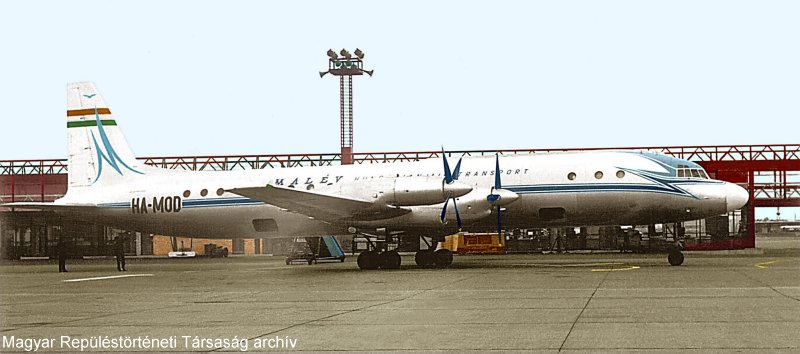
Crash of an Ilyushin II-18V in Paris: 21 killed

Date & Time: Nov 23, 1962 at 1410 LT
Type of aircraft:
Operator:
Registration:
HA-MOD
Survivors:
No
Schedule:
Budapest – Frankfurt – Paris
MSN:
180 0020 02
YOM:
1960
Flight number:
MA355
Country:
Region:
Crew on board:
8
Crew fatalities:
Pax on board:
13
Pax fatalities:
Other fatalities:
Total fatalities:
21
Captain / Total flying hours:
10380
Captain / Total hours on type:
1313.00
Copilot / Total flying hours:
4135
Copilot / Total hours on type:
733
Aircraft flight hours:
2363
Circumstances:
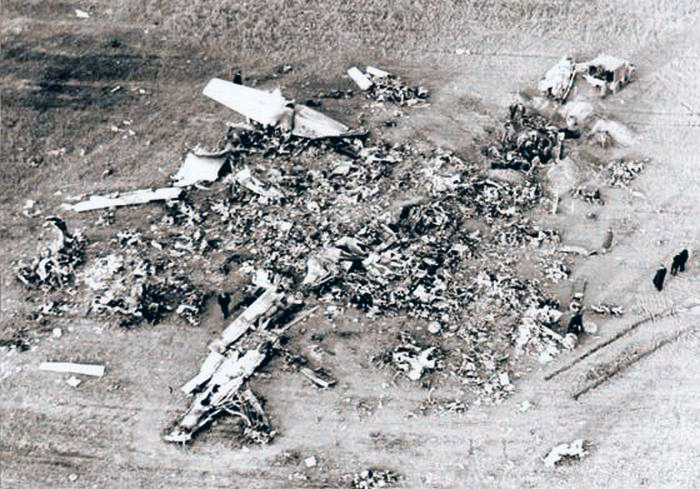
Malev Airlines Flight 355 was a scheduled international transportation service from Budapest to Frankfurt and Parts. The flight departed Budapest for Frankfurt at 0744 hours GMT. The crew reported to the Frankfurt meteorological office for briefing at 0950 hours when the pilot's attention was drawn to the frequent occurrences of log and stratus cloud, and the possibility of light icing in stratus cloud The crew remained in the meteorological office for two hours checking successive weather reports from Orly and Le Bourget Airports. There were 13 passengers and a crew aboard when the flight departed Frankfurt for Le Bourget with the pilot-in-command occupying the left-hand seat. The first radio contact with North Area Control Centre was made at 1332 hours when the flight reported it had passed over Luxembourg at 1331 hours at flight level 180 and estimated the next reporting point MY at 1335 hours. It was then Instructed to report over MY, CH and BE. From 1344:20 hours to 1355:20 hours the flight received progressive descent clearances down to 1800 feet. At 1348:50 when the aircraft reported over CH, it was instructed to proceed to BN. However, at 1354:40 when reporting approaching BN the controller stated that it was cleared to BE and not to BN. This was acknowledged by the aircraft without repeating the message. At 1356:10 hours the flight was cleared by Le Bourget Approach for final approach. At 1356:10 the controller asked the aircraft whether it was heading BE or UN. Ten seconds later the aircraft confirmed that it was heading for BN and was then requested again to proceed to BE. The aircraft was instructed to call when over BE and was advised that it was number 2 to land. Confirmation of the QNH (altimeter setting) was given to the aircraft, and it was cleared for final approach at 1359 hours. At 1401:40 Le Bourget Approach called the aircraft, and the aircraft reported on final and stated it would call "over BE". The controller gave the aircraft its position as 2 miles east of BE and asked the pilot if he was making an ILS approach. This was confirmed. At 1405:10 hours the aircraft contacted the tower and advised it would reach BE at 1800 feet and was making an ILS approach on runway 25. At 1405:30 hours the aircraft reported over BE. It should then have been in level flight with 15deg of flap, at about 500 m (1500 ft) and at a speed of 310-320 km/h. There was no further radio contact between the aircraft and the tower although the aircraft should have reported over the outer marker at approximately 300 m (900 ft). At 1421 hours the airport authorities were informed by the police that the aircraft had crashed about 8OO m beyond the outer marker and about 135 m to the right of the ILS centreline.
Probable cause:
The accident was the result of a stall during approach in the configuration landing gear extended, flaps 30°. At the time of impact the four engines were nearly at full power. The Board has not been able to establish the cause of this stall whose pattern, according to the data supplied by the Soviet experts, can only be compatible with a G-load manoeuvre. The Board has not been able to discover what caused the manoeuvre.
Final Report:

Crash of a Vickers 745D Viscount in Ellicott City: 17 killed

Date & Time: Nov 23, 1962 at 1224 LT
Type of aircraft:
Operator:
Registration:
N7430
Flight Phase:
Survivors:
No
Schedule:
Newark – Washington DC
MSN:
128
YOM:
1956
Flight number:
UA297
Crew on board:
4
Crew fatalities:
Pax on board:
13
Pax fatalities:
Other fatalities:
Total fatalities:
17
Captain / Total flying hours:
16230
Captain / Total hours on type:
5263.00
Aircraft flight hours:
18809
Circumstances:
United Air Lines Flight 297, a Vickers-Armstrong Viscount Model 745D, N7430, crashed in a wooded area six miles west-southwest of Ellicott City, Maryland, at approximately 1224 e.s.t., on November 23, 1962. All thirteen Passengers and a crew of four were fatally injured. Flight 297 was en route from Newark, New Jersey to Washington, D. C. The flight was operating at an assigned altitude of' 6,000 feet when it apparently penetrated a flock of Whistling Swans. At least two of these a were struck by the aircraft. One swan collided with the right horizontal stabilizer inflicting superficial damage only. The other bird punctured the left horizontal stabilizer, traveled through the structure, and dented the elevator as it egresses. The weakened structure failed in this area. rendered the aircraft uncontrollable, and resulted in, the aircraft striking the ground in a nose-low inverted attitude.
Probable cause:
The Board determines that the probable cause of this accident was a loss of control following separation of the left horizontal stabilizer which had been weakened by a collision with a Whistling Swan.
Final Report: