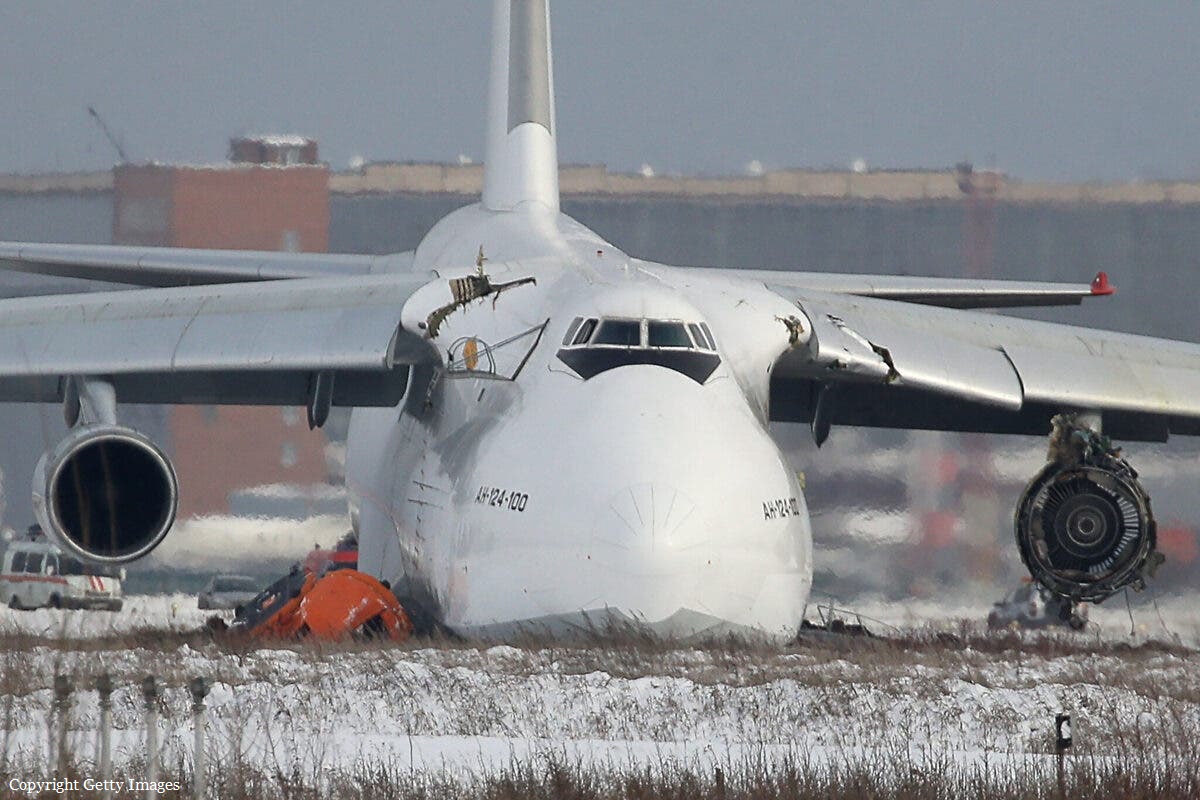
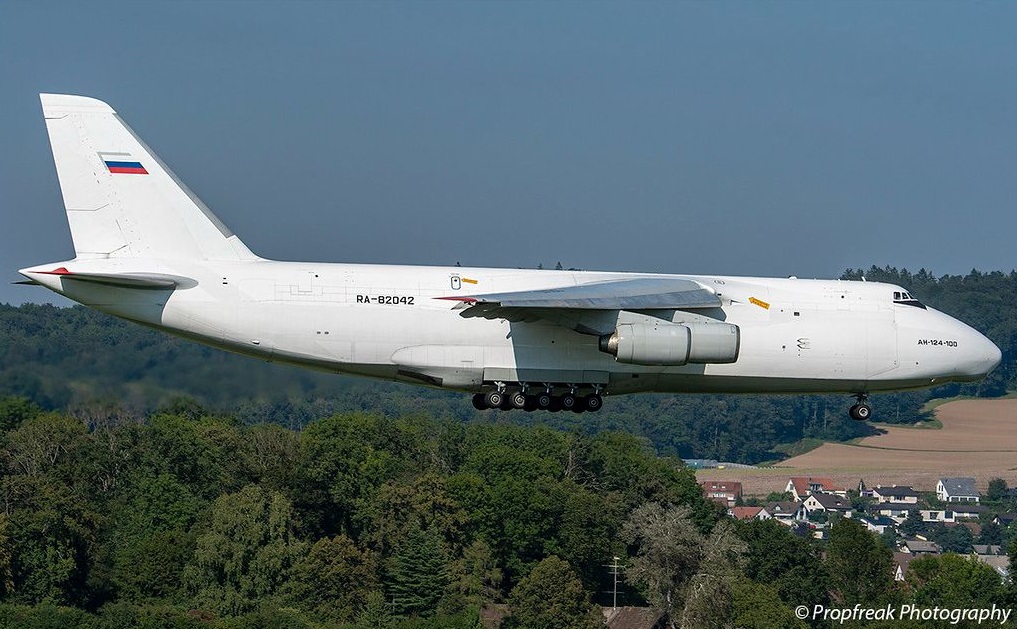
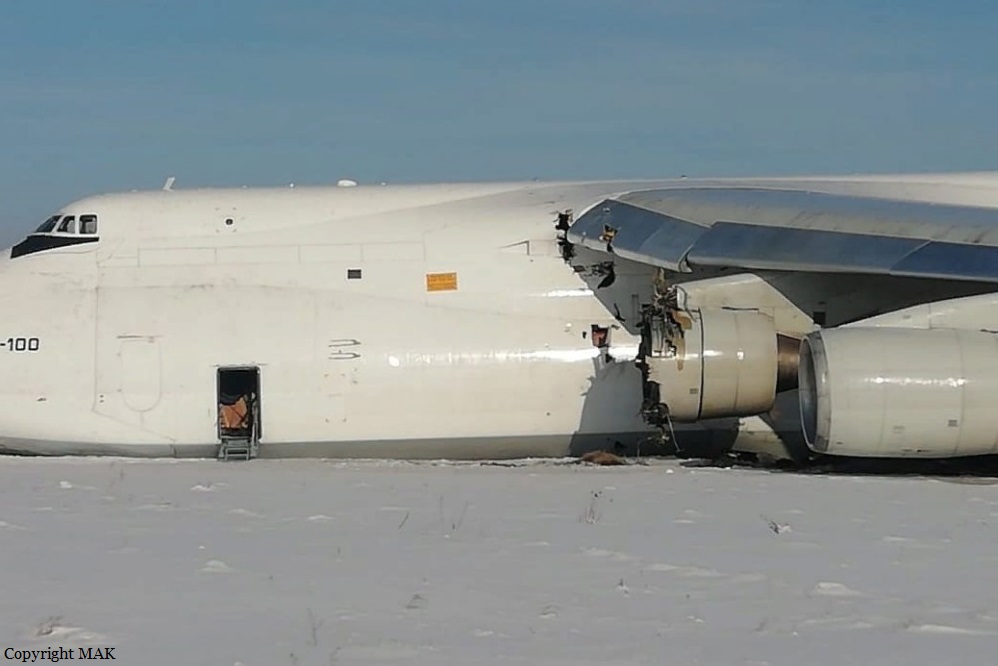
Crash of an Antonov AN-124-100 in Novosibirsk

Date & Time: Nov 13, 2020 at 1210 LT
Type of aircraft:
Operator:
Registration:
RA-82042
Flight Type:
Survivors:
Yes
Schedule:
Seoul - Novosibirsk - Vienna
MSN:
9773054055093
YOM:
1991
Flight number:
VI4066
Country:
Region:
Crew on board:
14
Crew fatalities:
Pax on board:
0
Pax fatalities:
Other fatalities:
Total fatalities:
0
Circumstances:
The four engine airplane departed Seoul-Incheon Airport on a cargo flight to Vienna, with an intermediate stop in Novosibirsk, carrying 14 crew members and a load consisting of 84 tons of automobile parts. Shortly after takeoff from runway 25 at Novosibirsk-Tolmachevo Airport, while in initial climb, a catastrophic failure occurred on the engine n°2. Several debris punctured the fuselage, damaging slats on both left and right side. As a result, radio communications were cut, the power supply failed and the thrust control on all three remaining engines dropped. The crew entered a circuit for an immediate return despite the aircraft was in an overweight condition for an emergency landing. After touchdown on runway 25 that offered an LDA of 3,597 metres, the crew started the braking procedure but the aircraft was unable to stop within the remaining distance. It overran, lost its both nose gears and slid in a snow covered field before coming to rest 300 metres further. All 14 occupants evacuated safely and the aircraft seems to be damaged beyond repair.
Probable cause:
Failure of the high pressure compressor disk on the engine n°2 during the takeoff procedure.
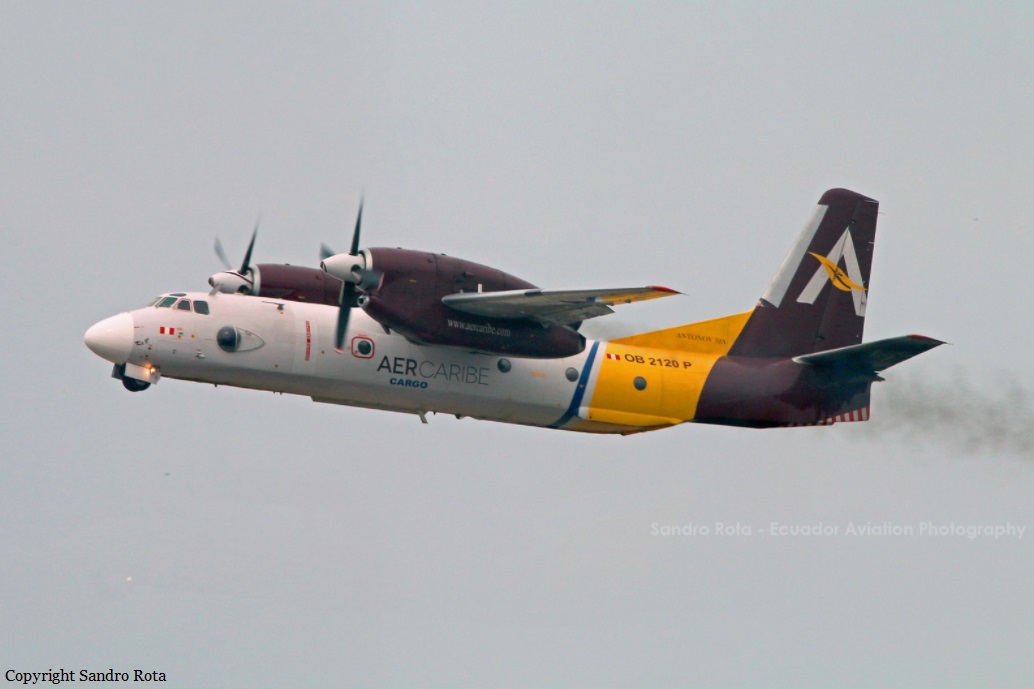
Crash of an Antonov AN-32A in Iquitos

Date & Time: Oct 14, 2020 at 1321 LT
Type of aircraft:
Operator:
Registration:
OB-2120-P
Flight Type:
Survivors:
Yes
Schedule:
Lima - iquitos
MSN:
18 05
YOM:
1989
Country:
Crew on board:
4
Crew fatalities:
Pax on board:
0
Pax fatalities:
Other fatalities:
Total fatalities:
0
Captain / Total flying hours:
5681
Captain / Total hours on type:
4530.00
Copilot / Total flying hours:
1366
Copilot / Total hours on type:
470
Aircraft flight hours:
9830
Aircraft flight cycles:
10893
Circumstances:
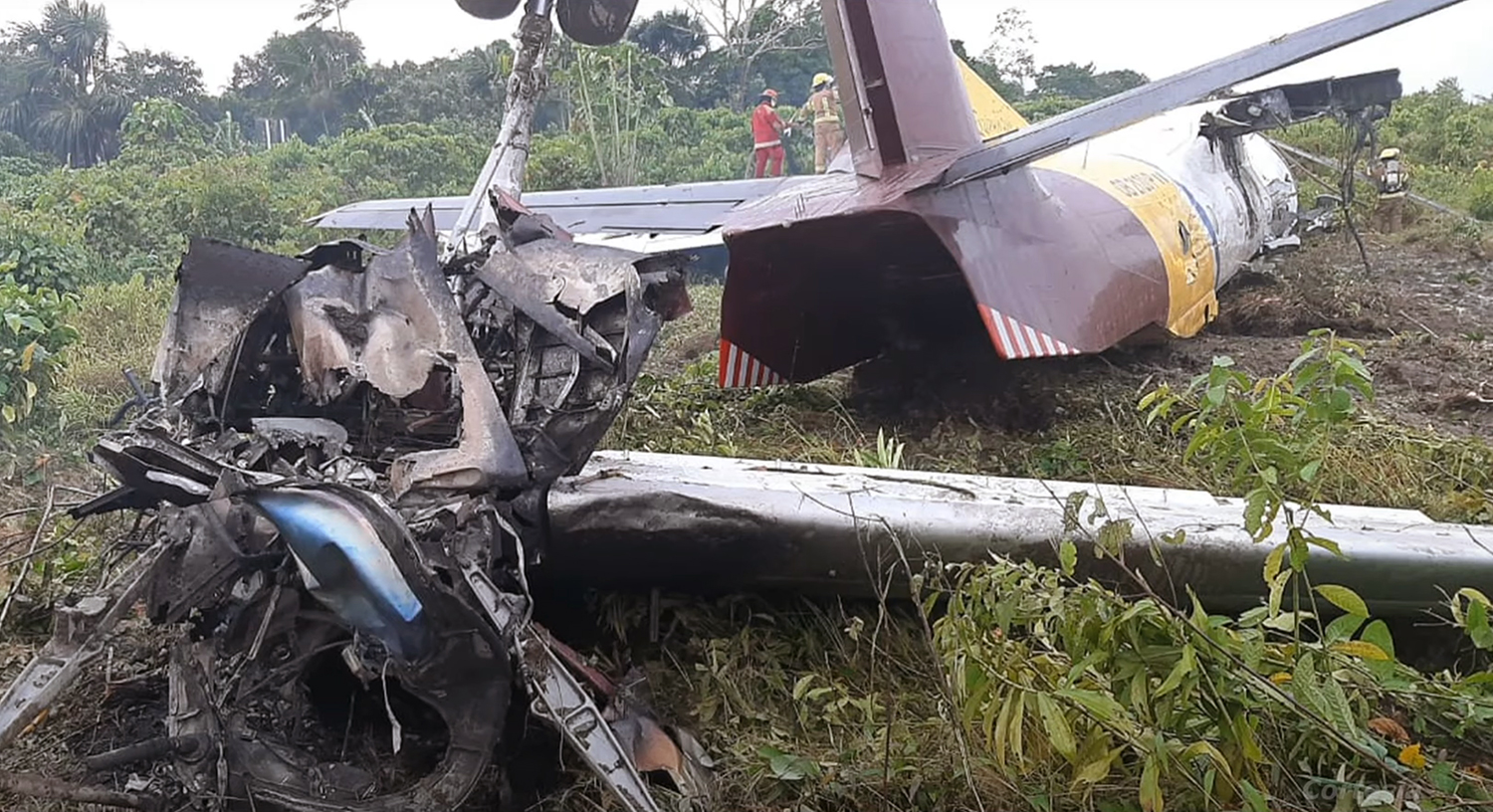
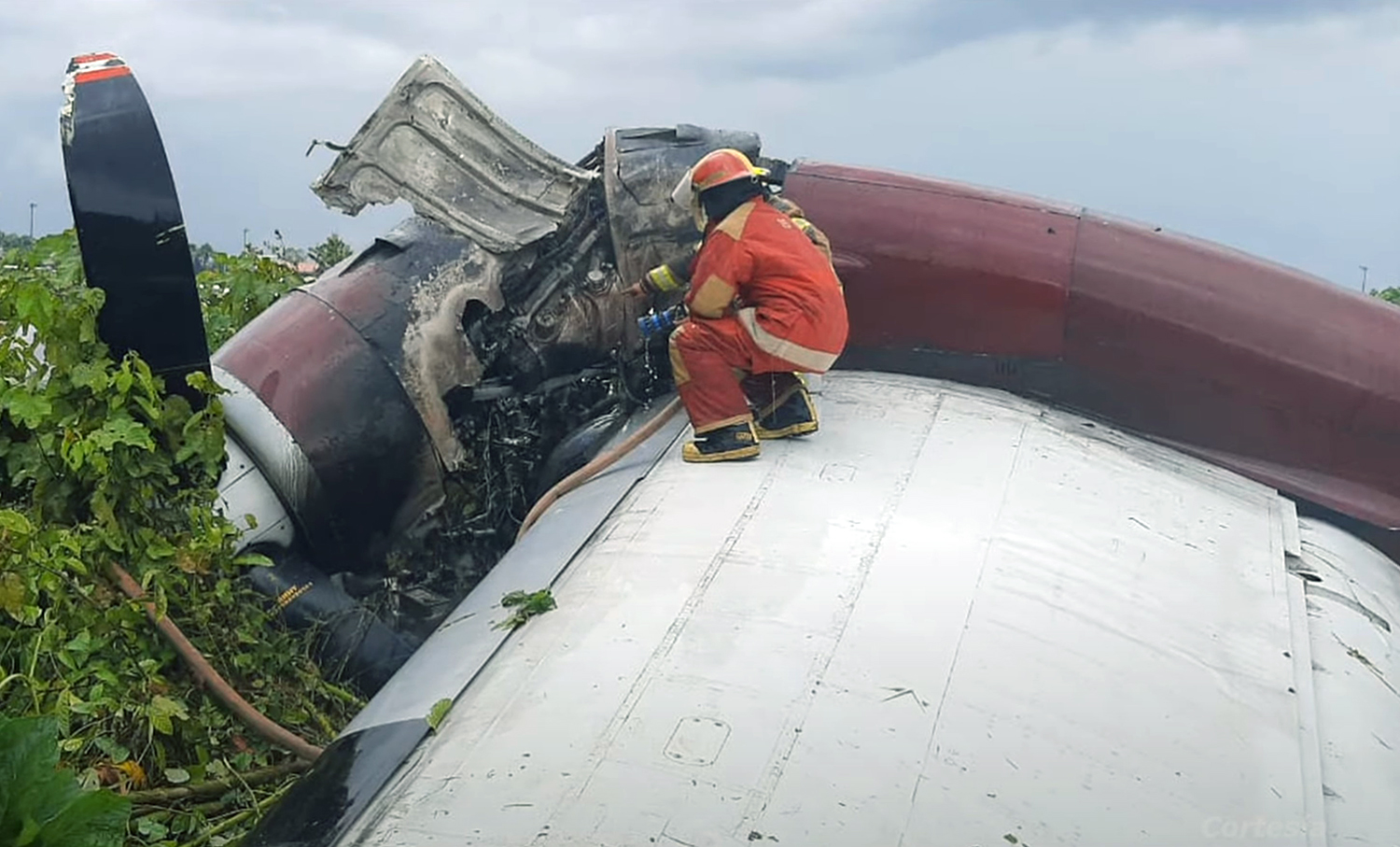
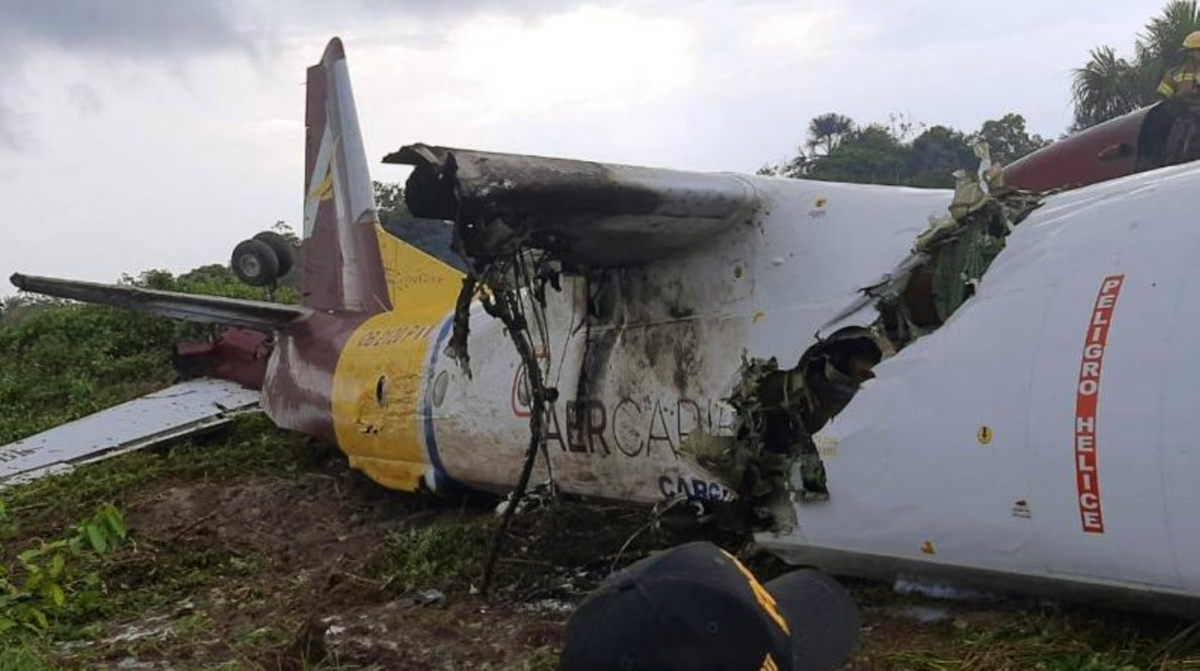
After touchdown on runway 06 at Iquitos-Coronel Francisco Secada Vignetta Airport, the aircraft went out of control and veered off runway to the left. It contacted trees and bushes, lost its right wing and came to rest 100 metres to the left of the runway, broken in two. A fire erupted but was quickly extinguished. All four crew members were slightly injured and the aircraft was destroyed.
Probable cause:
Runway Excursion due to loss of directional control of the aircraft after landing by disengaging the propeller stops for aerodynamic braking at a higher than established speed, which generated an uncontrollable leftward turning moment of the trajectory, due to asymmetric thrust of the propellers.
The following contributing factors were identified:
- Performing a landing on an Unstabilised Approach, not executing the established Go-Around procedure.

- Performing a failed landing due to asymmetric thrust of the propellers, not applying the procedure established in the Operator's QRH to shut down the failed engine.
- Probable failure of the KTA Fuel Regulator of the Automatic Engine Rotation Frequency and Power Regulation System, which blocked the reduction of the power of the N°2 engine to established operating regimes for the approach and landing.
Final Report:

Crash of a Douglas DC-4A in Yakataga

Date & Time: Oct 10, 2020 at 1544 LT
Type of aircraft:
Operator:
Registration:
N96358
Flight Type:
Survivors:
Yes
Schedule:
Kenai - Yakataga
MSN:
27284
YOM:
1944
Location:
Crew on board:
2
Crew fatalities:
Pax on board:
0
Pax fatalities:
Other fatalities:
Total fatalities:
0
Captain / Total flying hours:
17925
Captain / Total hours on type:
2163.00
Copilot / Total flying hours:
8832
Copilot / Total hours on type:
1964
Aircraft flight hours:
33718
Circumstances:
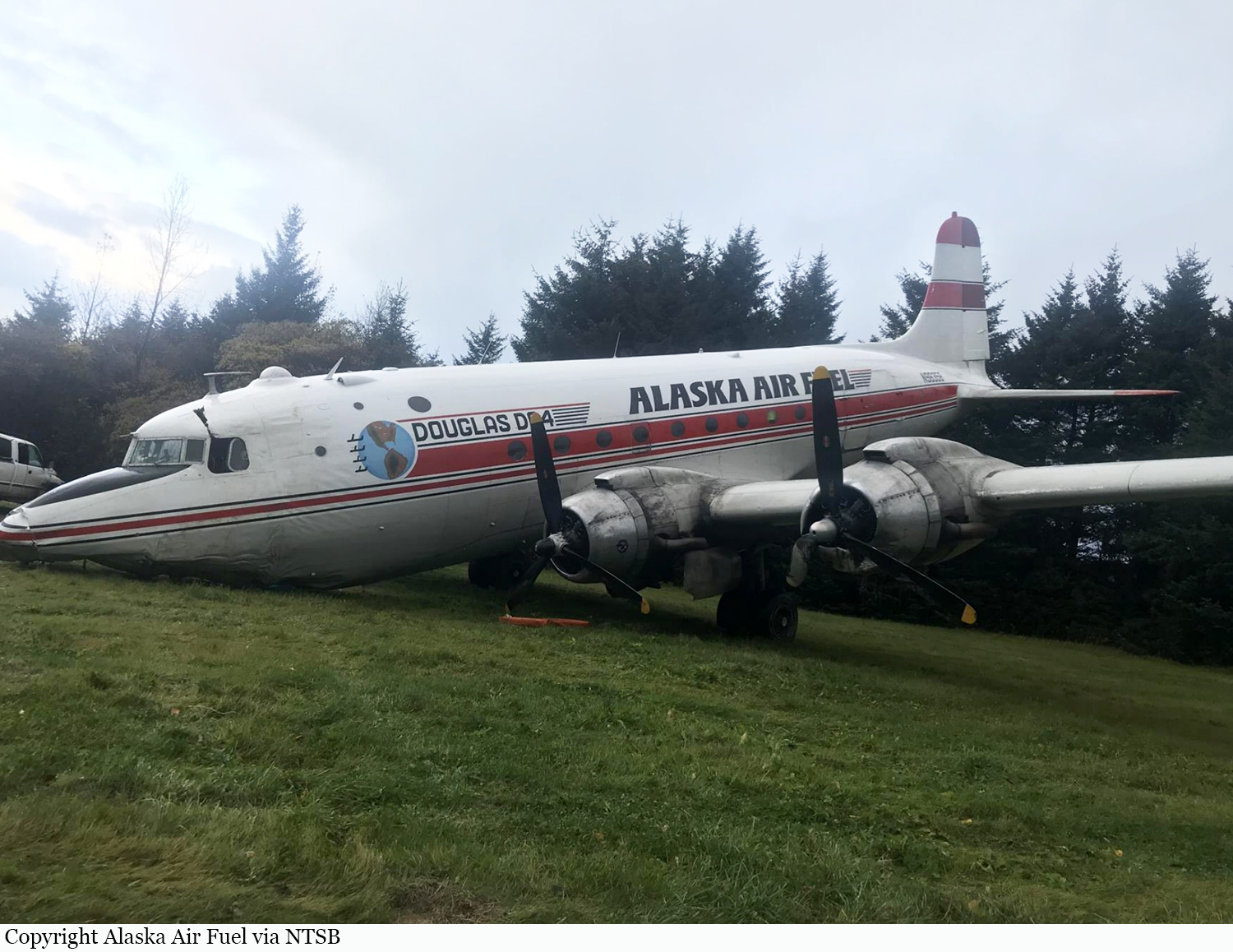
The commercial pilot reported that the flight had been delayed for “nearly 2 weeks due to rain” but that the company had contacted their customer, who was a local resident of the area, and he had reported that the landing grass airstrip was “currently dry” and that he was unaware of any NOTAMs reporting that the runway was closed. The pilot reported that, while landing the airplane on the airstrip, the braking action was “zero” along the entire length of the runway. Subsequently, while about 5 knots, the airplane overran the end of the runway, and the nose landing gear collapsed. The airplane sustained substantial damage to the forward fuselage. The pilot reported that there were no preaccident mechanical failures or malfunctions with the airplane that would have precluded normal operation. The pilot reported that, during a formal flight brief from a Federal Aviation administration (FAA) Flight Service Station (FSS), he and the copilot asked if there was “anything special going on down there” that they should be aware of” but that FSS personnel did not mention any NOTAMs stating that the runway was closed to heavy airplanes nor was it mentioned when they activated the flight plan. However, according to FAA FSS recordings, during the first conversation, the pilot did not ask for any NOTAMs for the airport. During the second conversation, the FSS asked the pilots if they needed any weather information or NOTAMs, and the pilots responded, “no,” and that they “were all good.” A NOTAM had been issued, which stated, in part, that the landing runway was closed to aircraft that weighed more than 5,000 lbs. The airport chart supplement remarks stated, in part, that “the runway was extremely soft when wet…Use of heavy aircraft over 4,000 lbs gross not recommended during fall, winter, & spring due to” soft field conditions and rutting.” The pilot reported that the airplane’s weight was about 62,568 lbs at the time of the accident.
Probable cause:
The pilots’ decision to land on a wet, soft runway, which resulted in the loss of braking action upon landing and a subsequent runway overrun and nose landing gear collapse.
Final Report:

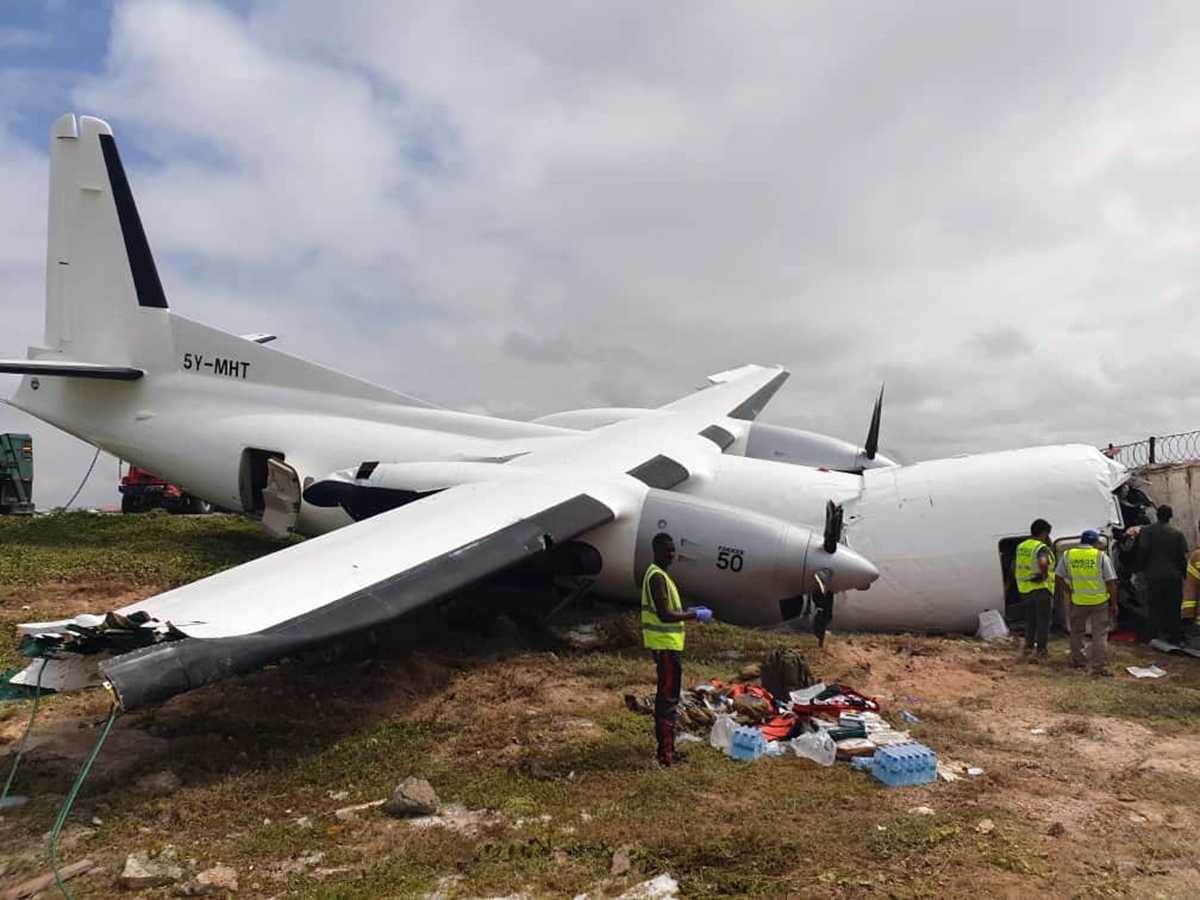
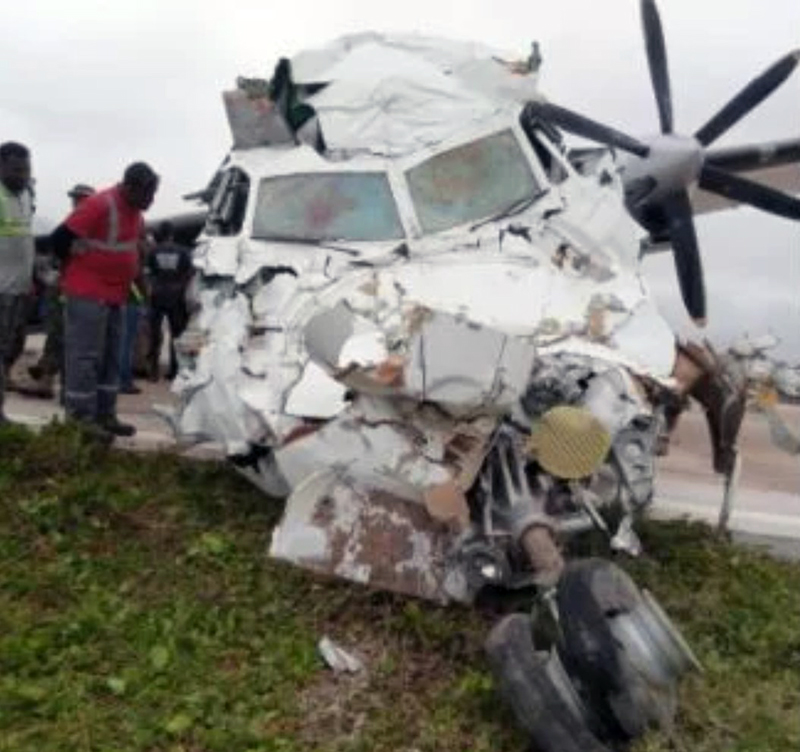
Crash of a Fokker 50 in Mogadishu

Date & Time: Sep 19, 2020 at 0755 LT
Type of aircraft:
Operator:
Registration:
5Y-MHT
Flight Type:
Survivors:
Yes
Schedule:
Mogadishu - Beledweyne
MSN:
20171
YOM:
1989
Country:
Region:
Crew on board:
4
Crew fatalities:
Pax on board:
0
Pax fatalities:
Other fatalities:
Total fatalities:
0
Captain / Total flying hours:
12000
Captain / Total hours on type:
5000.00
Copilot / Total flying hours:
2249
Aircraft flight hours:
37793
Circumstances:
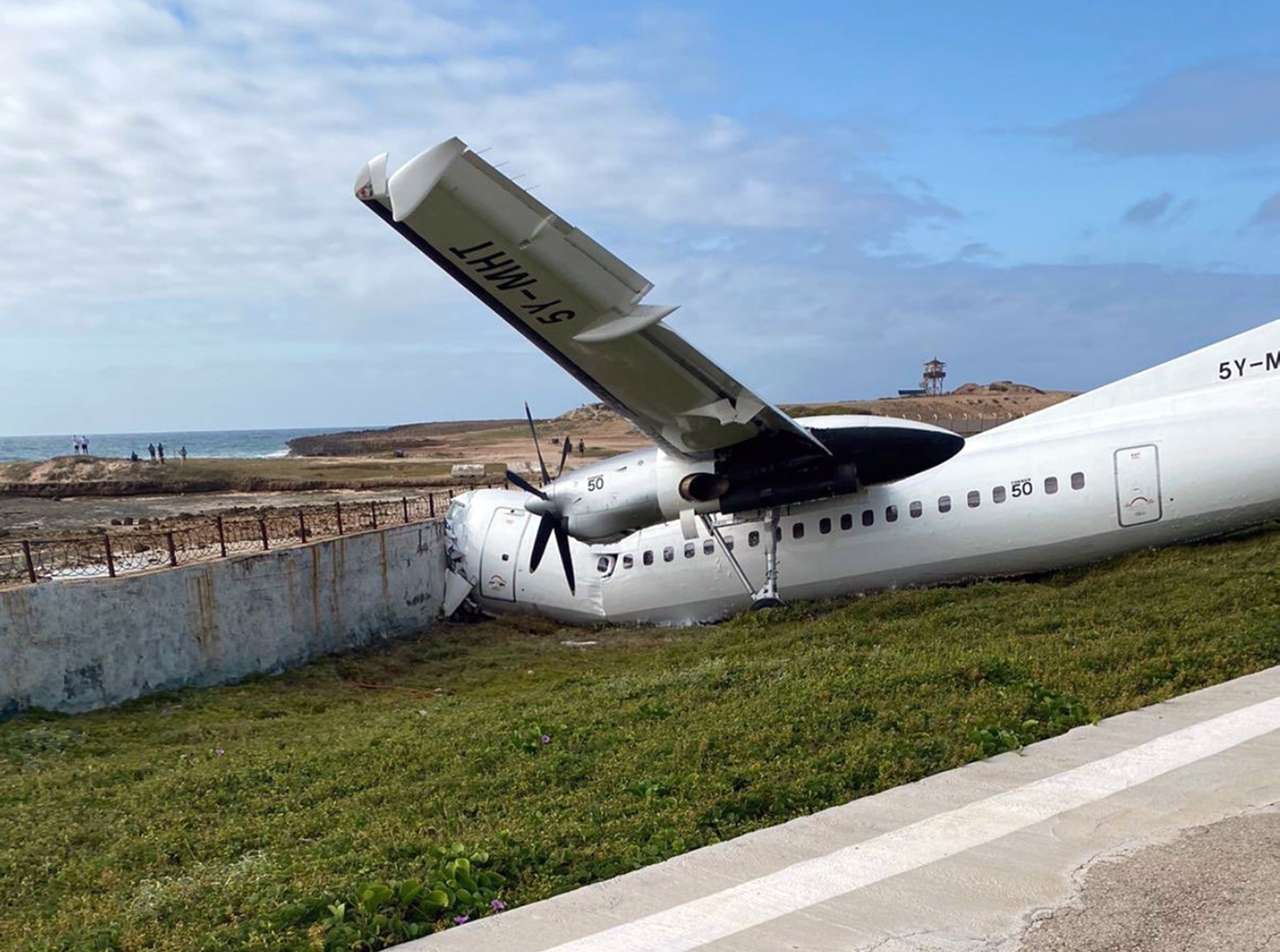
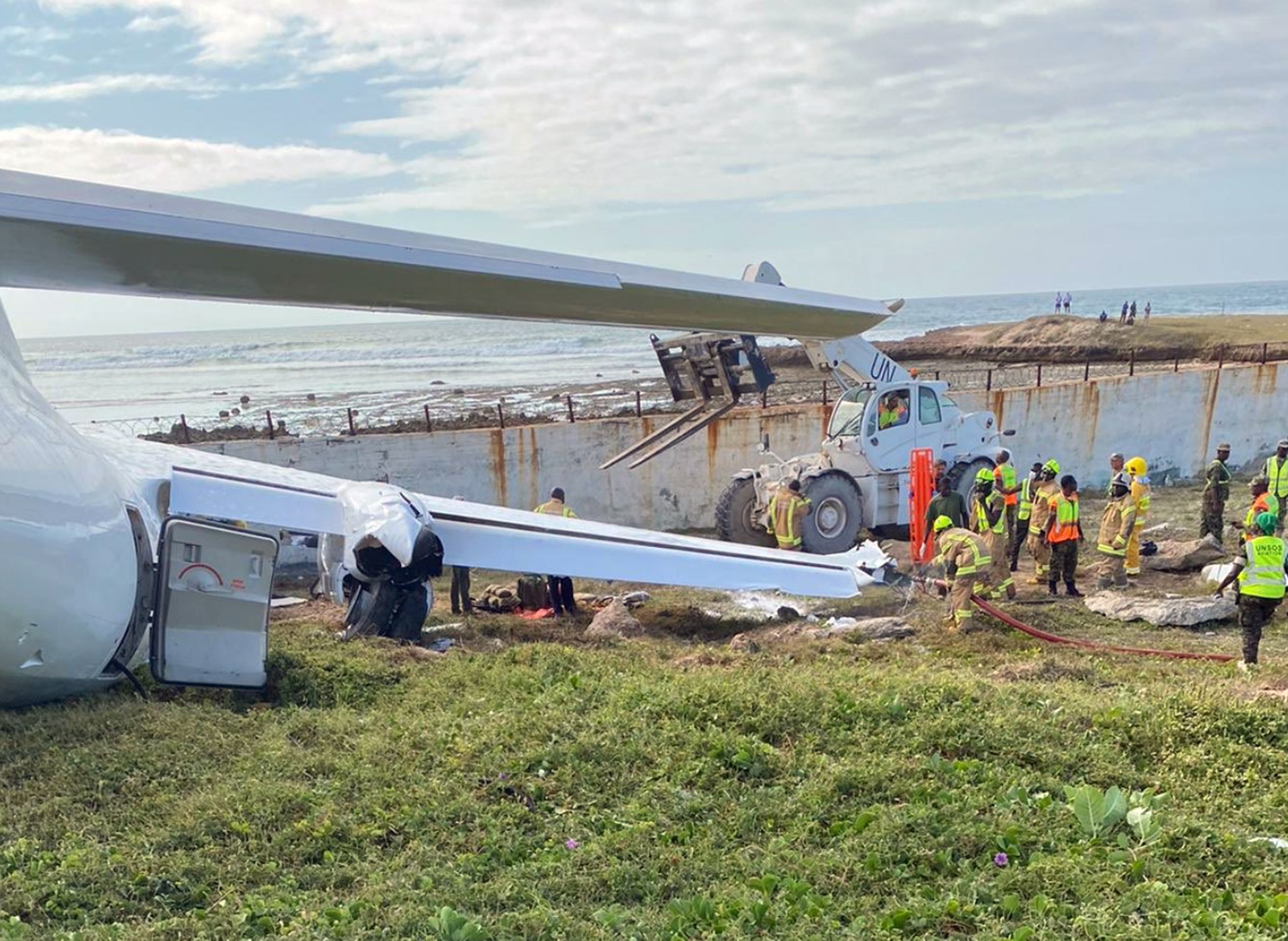
The aircraft departed Mogadishu-Aden Abdulle Airport on a cargo flight to Beledweyne, carrying four crew members and various goods on behalf of the AMISOM, the African Union Mission in Somalia. After takeoff, the crew informed ATC about hydraulic problems and was cleared to return. After touchdown on runway 05, the aircraft went out of control, veered off runway to the right and collided with a concrete wall. Two crew members were slightly injured while both pilots were seriously injured after the cockpit was destroyed upon impact.
Probable cause:
The following contributing factors were identified:
- The aircraft is considered not to be in an airworthy and serviceable condition,
- The root cause of the accident is the failure of hydraulic system,
- The contributory factor is lack of steering control and braking.
Final Report:

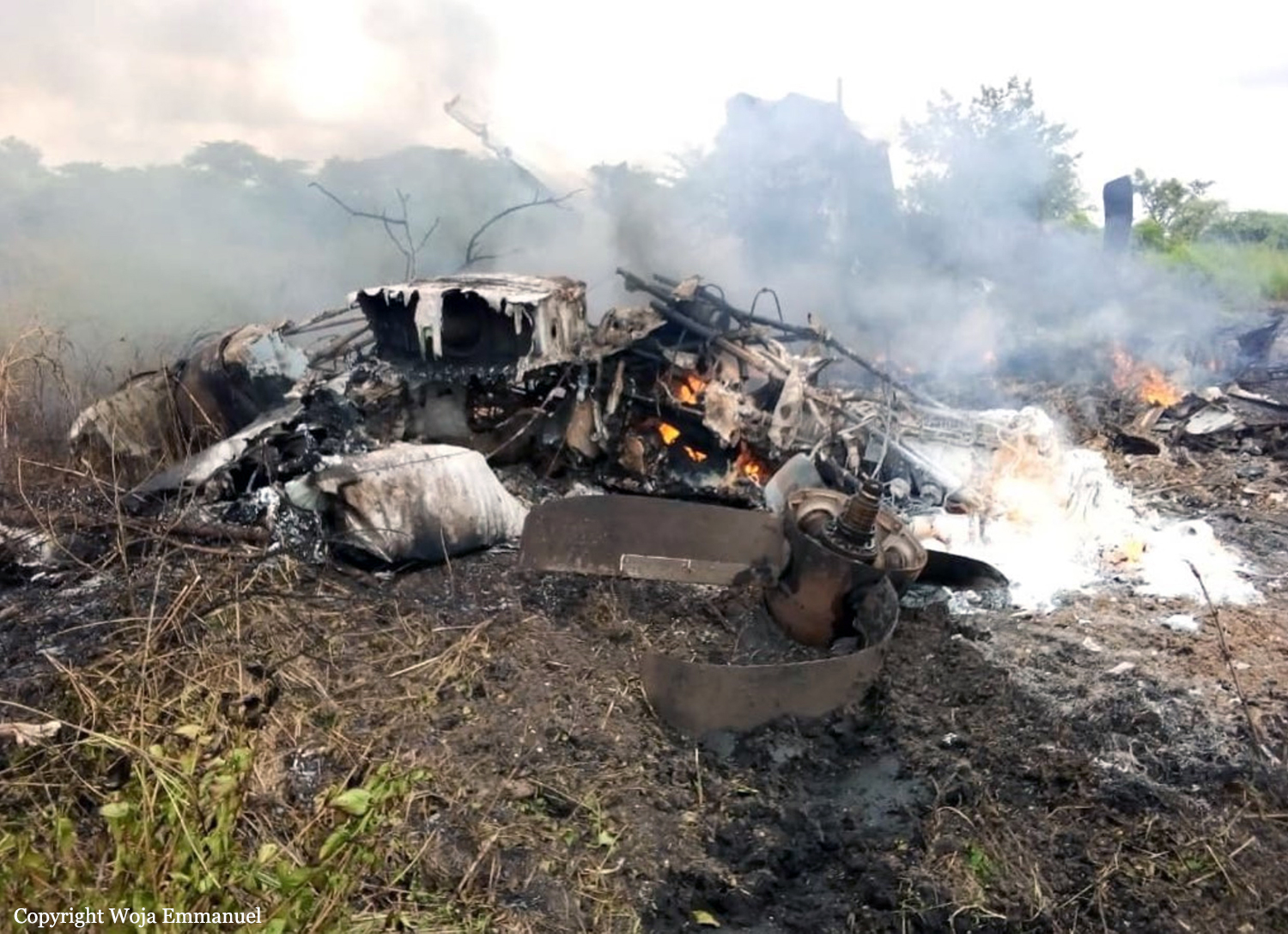
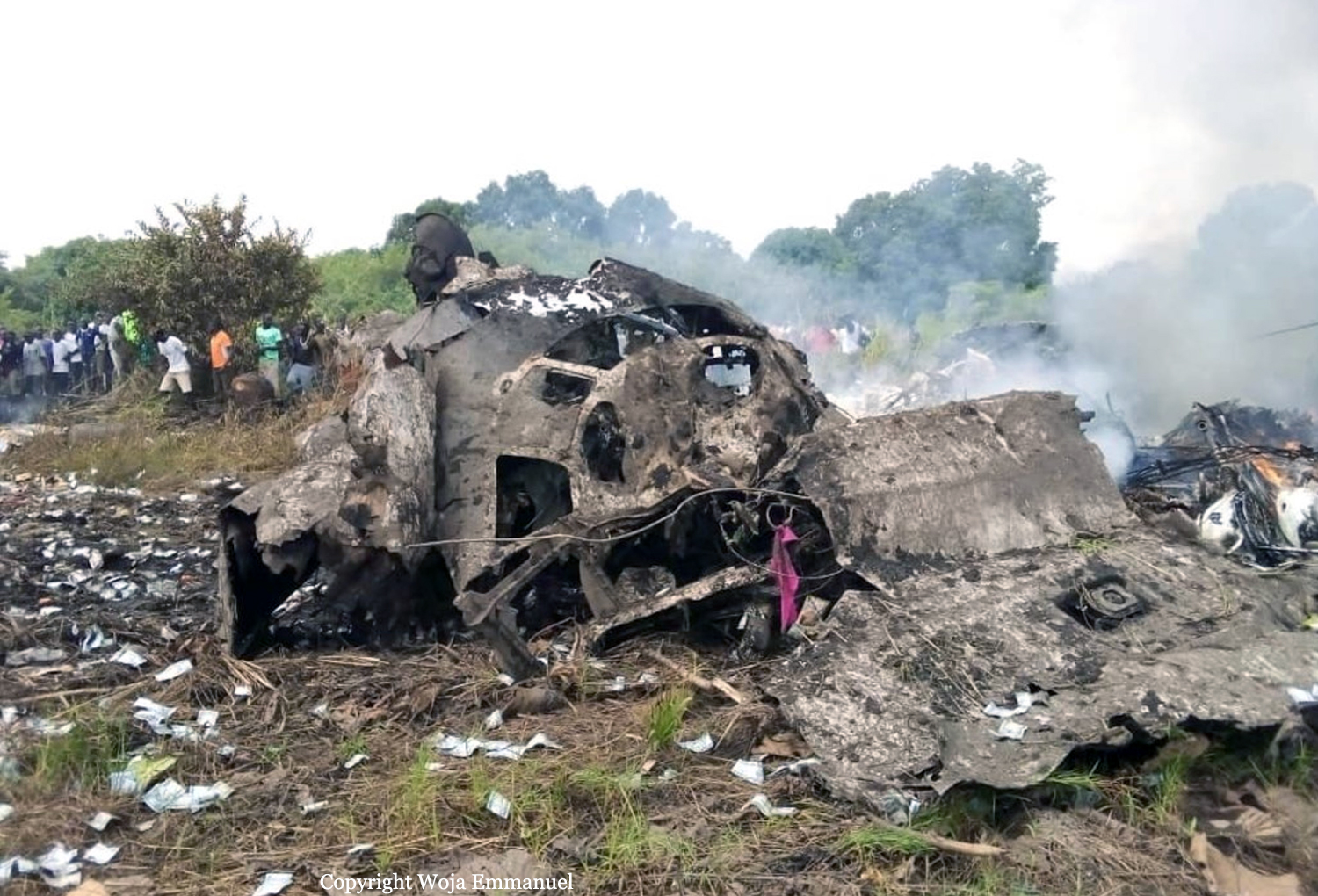
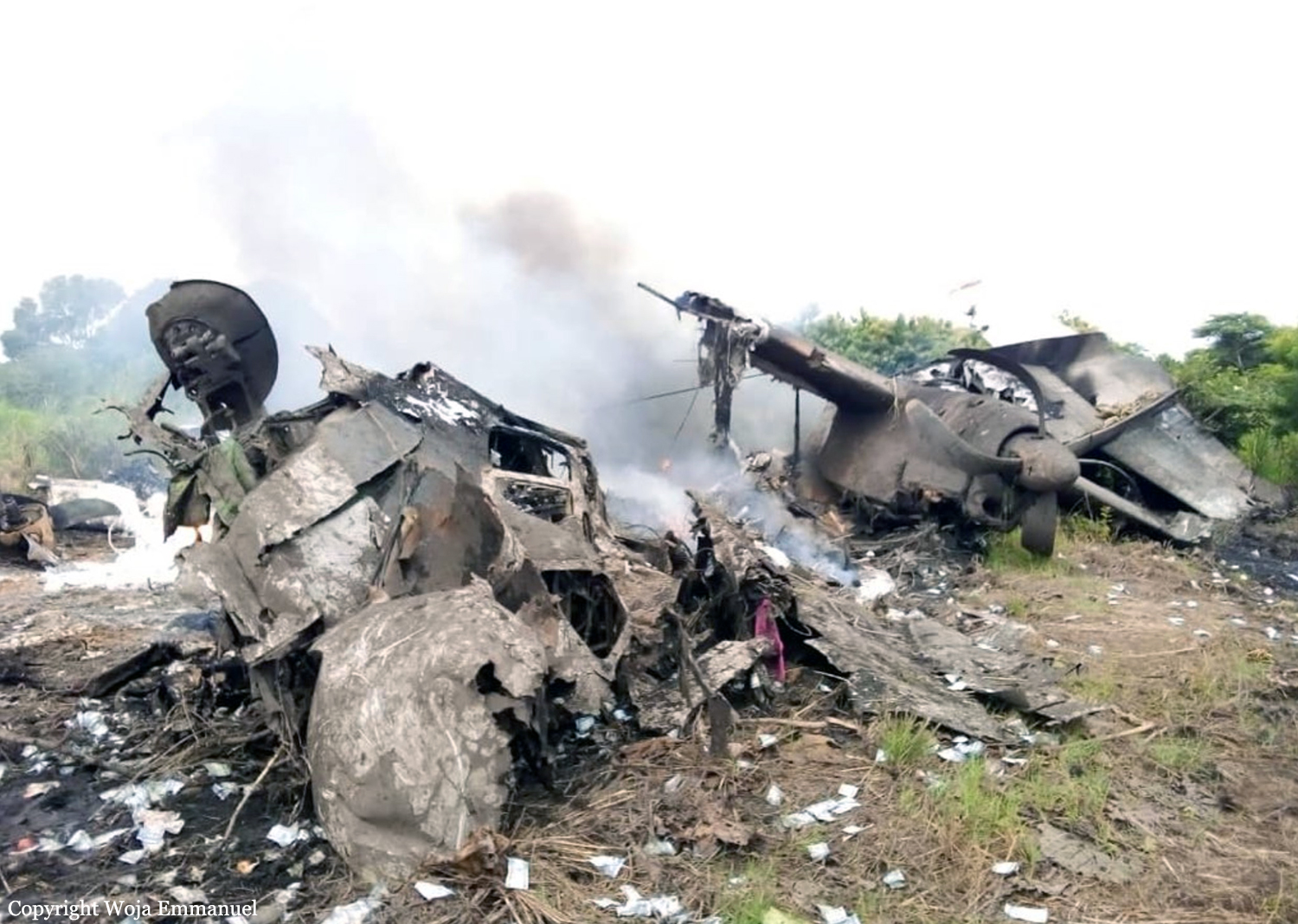
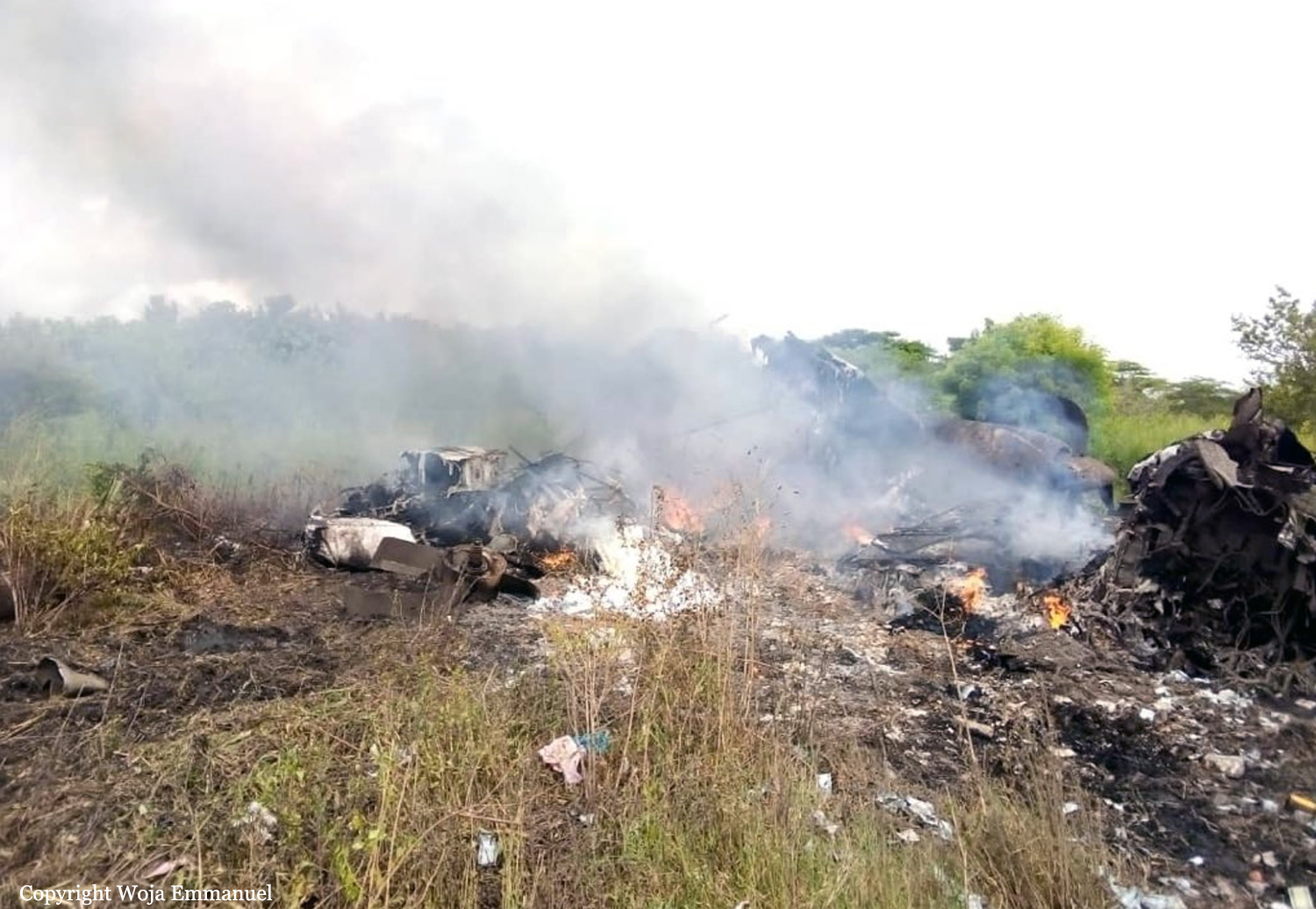
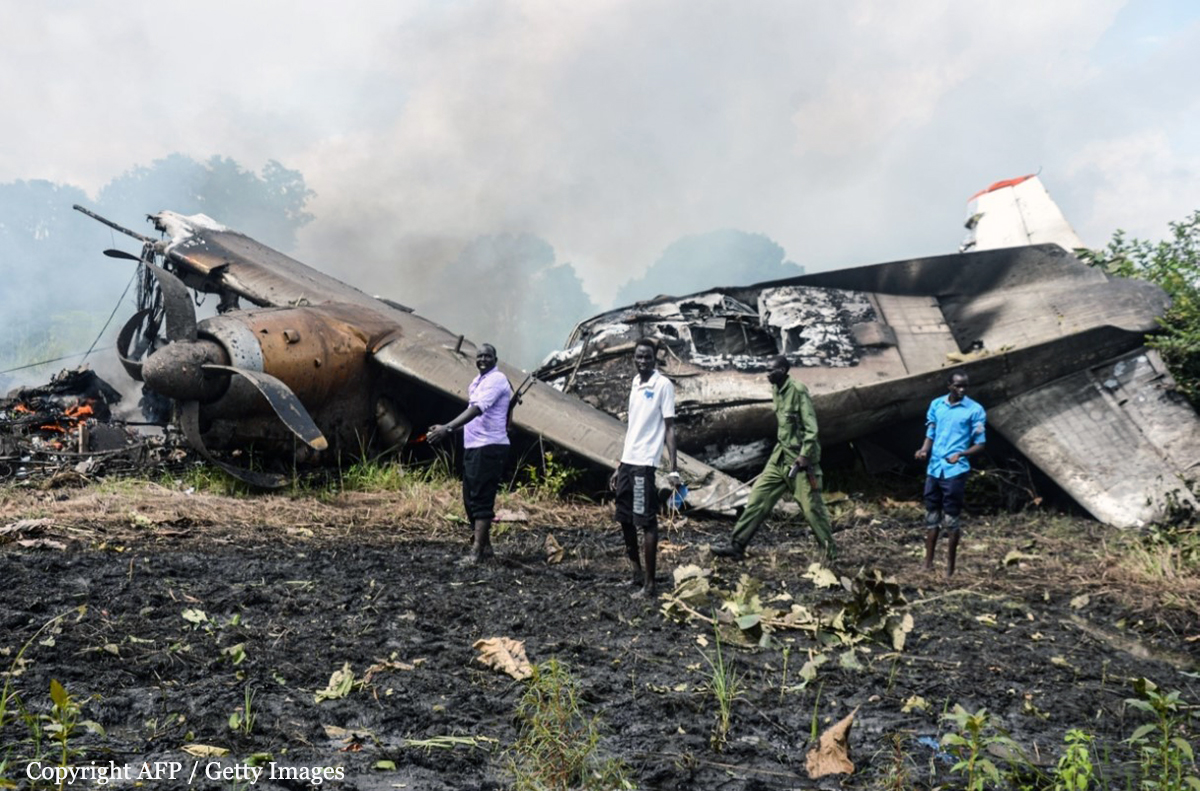
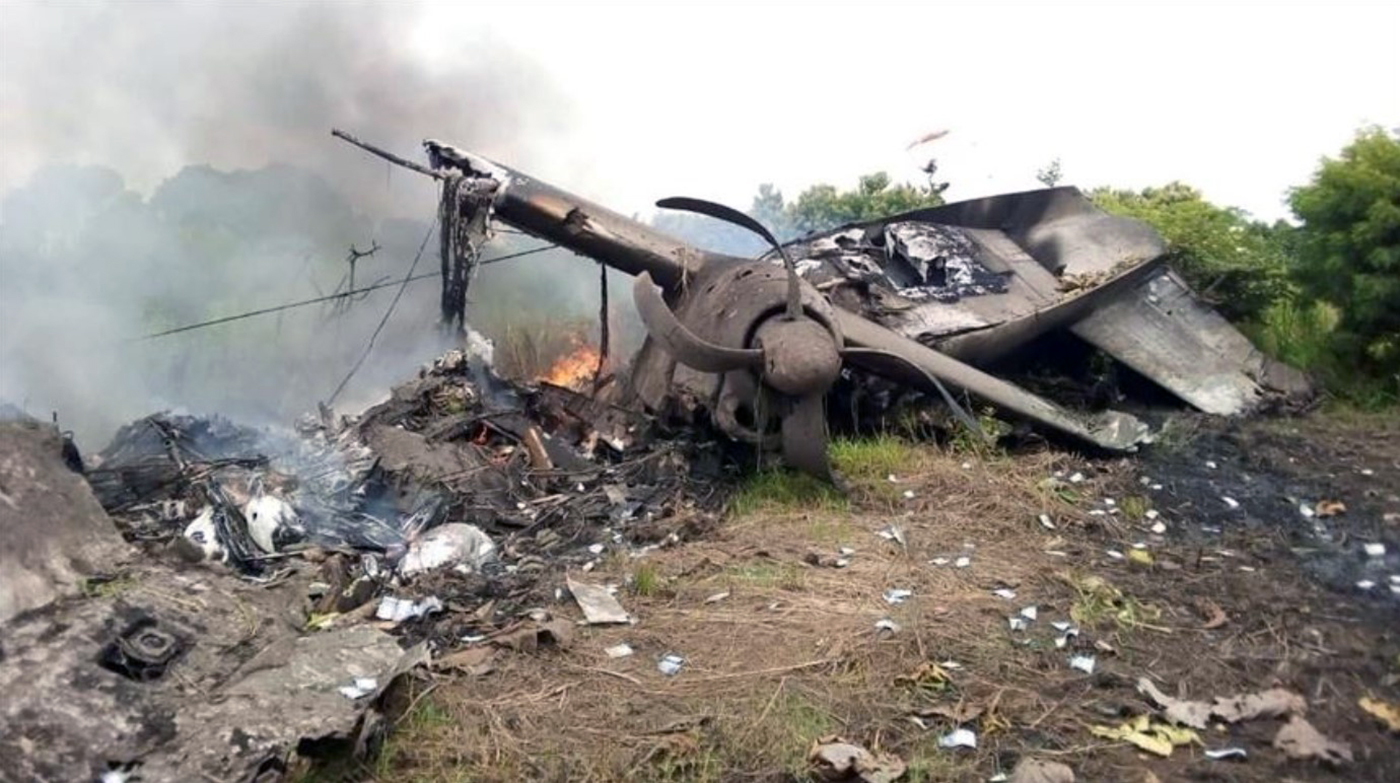
Crash of an Antonov AN-26 in Juba: 9 killed

Date & Time: Aug 22, 2020 at 0841 LT
Type of aircraft:
Operator:
Registration:
EX-126
Flight Phase:
Flight Type:
Survivors:
Yes
Schedule:
Juba - Wau - Aweil
MSN:
115 08
YOM:
1981
Country:
Region:
Crew on board:
3
Crew fatalities:
Pax on board:
7
Pax fatalities:
Other fatalities:
Total fatalities:
9
Circumstances:
Shortly after takeoff from Juba Airport runway 31, while climbing, the aircraft lost height and crashed in a prairie located near Referendom, about 4 km northwest of Juba Airport, bursting into flames. The aircraft was destroyed by impact forces and a post crash fire. A passenger was seriously injured while nine other occupants were killed. The aircraft was on its way to Aweil with an intermediate stop in Wau, carrying a load of foods and money for wages on behalf of the World Food Programme (WFP). It was reported that the aircraft was loaded with 8 tons of cargo while the maximum allowable would be 5,5 tons.
Probable cause:
The Commission of Inquiry into the accident with AN-26B aircraft operated by South-West Aviation Co. Ltd, registration number EX-126, concluded that the cause of the accident near Juba, Central Equatorial State, Republic of South Sudan, has not been established. However, the flight was operated by an aircraft without a valid Certificate of Airworthiness and by the crew of South-West Aviation Co. Ltd, which did not hold a valid Operator's Certificate.
Final Report:

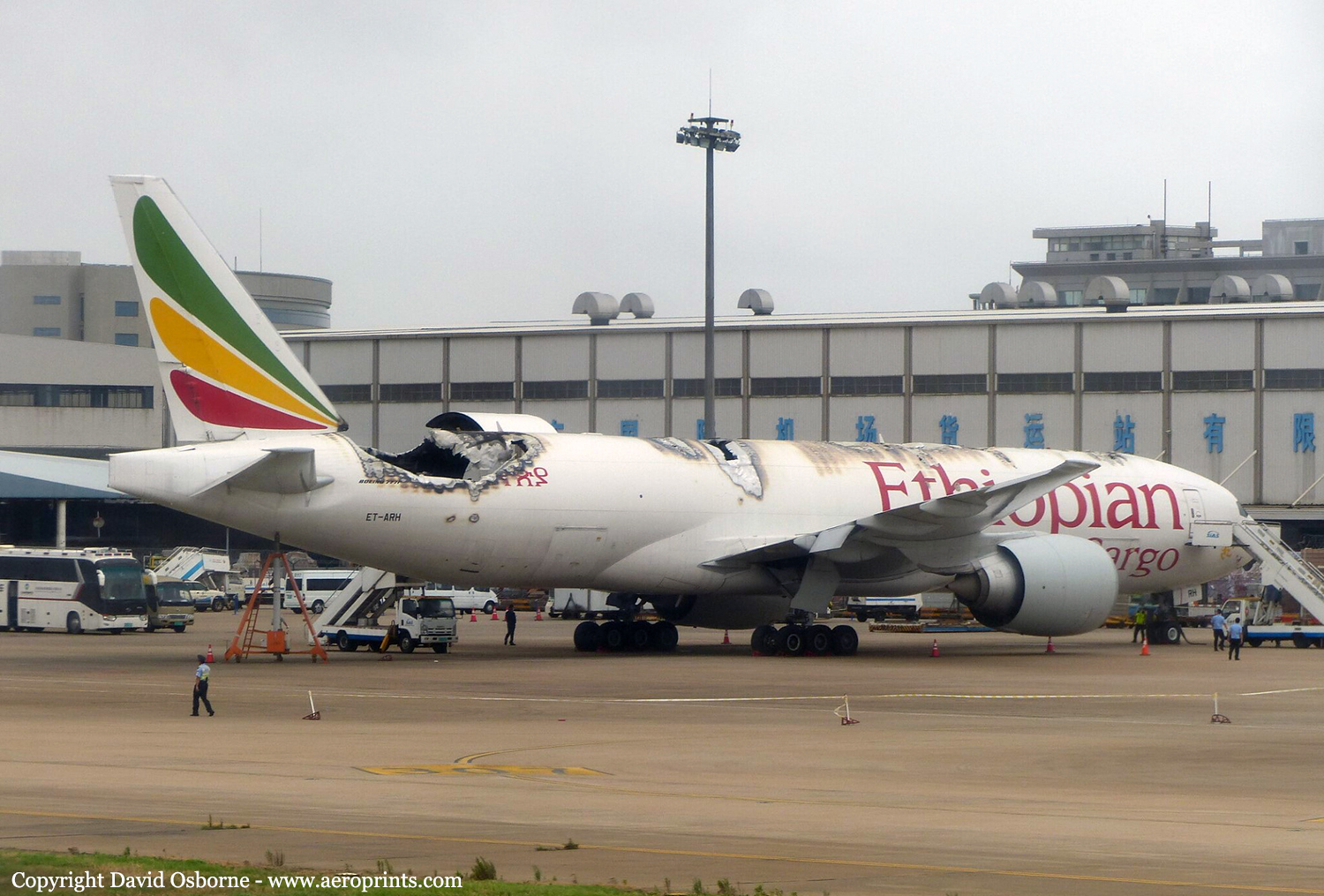
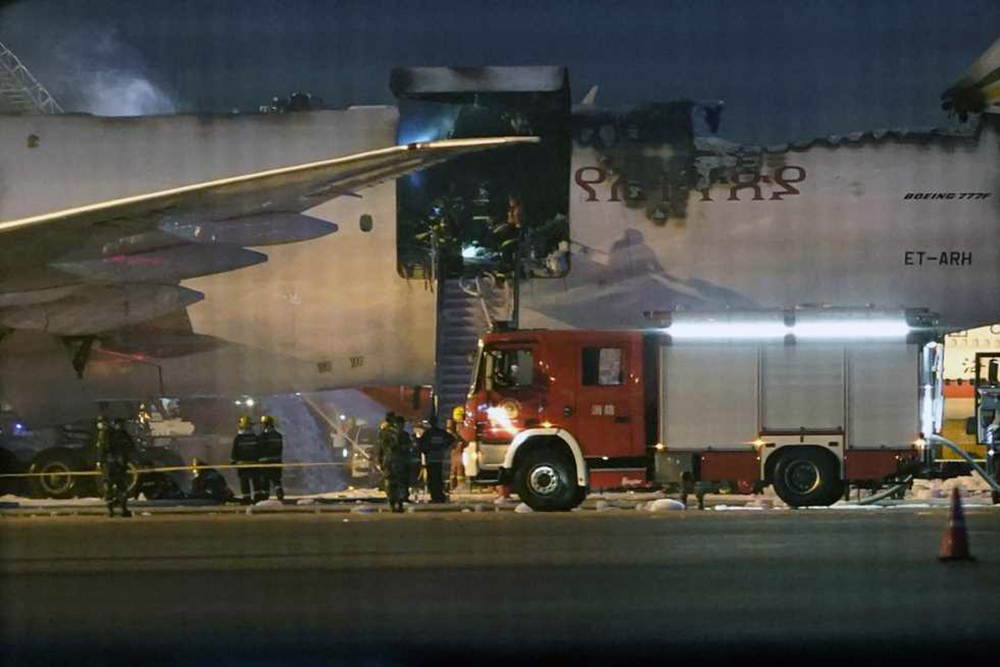
Ground fire of a Boeing 777-F60 in Shanghai

Date & Time: Jul 22, 2020 at 1520 LT
Type of aircraft:
Operator:
Registration:
ET-ARH
Flight Phase:
Flight Type:
Survivors:
Yes
Schedule:
Shanghai – Addis Ababa – São Paulo – Santiago de Chile
MSN:
42031/1242
YOM:
2014
Flight number:
ET3739
Country:
Region:
Crew on board:
2
Crew fatalities:
Pax on board:
0
Pax fatalities:
Other fatalities:
Total fatalities:
0
Captain / Total flying hours:
15000
Captain / Total hours on type:
3000.00
Copilot / Total flying hours:
2500
Copilot / Total hours on type:
1000
Aircraft flight hours:
26740
Aircraft flight cycles:
4286
Circumstances:
Parked at position 306 at Shanghai-Pudong Airport, the aircraft was prepared for a cargo service (flight ET3739) to Santiago de Chile with intermediate stops in Addis Ababa and São Paulo. At 1520LT, while being loaded, the crew contacted ground on the frequency and sent a mayday message, saying that a fire erupted in the cargo compartment. Fire brigade arrived quickly on the scene but the airplane was partially destroyed by fire and damaged beyond repair. Both pilots evacuated safely.

Probable cause:
The investigation team determined that the fire originated in the area of the aircraft's main cargo hold station STA1790-STA2129; the fire origin was at the right side of the main cargo hold at stations STA1916-STA2048 (main cargo hold PR position), with the most likely cause of the fire being the spontaneous combustion of chlorine dioxide disinfection tablets loaded in the main cargo hold under high-temperature and humid conditions, leading to the fire.
Final Report:

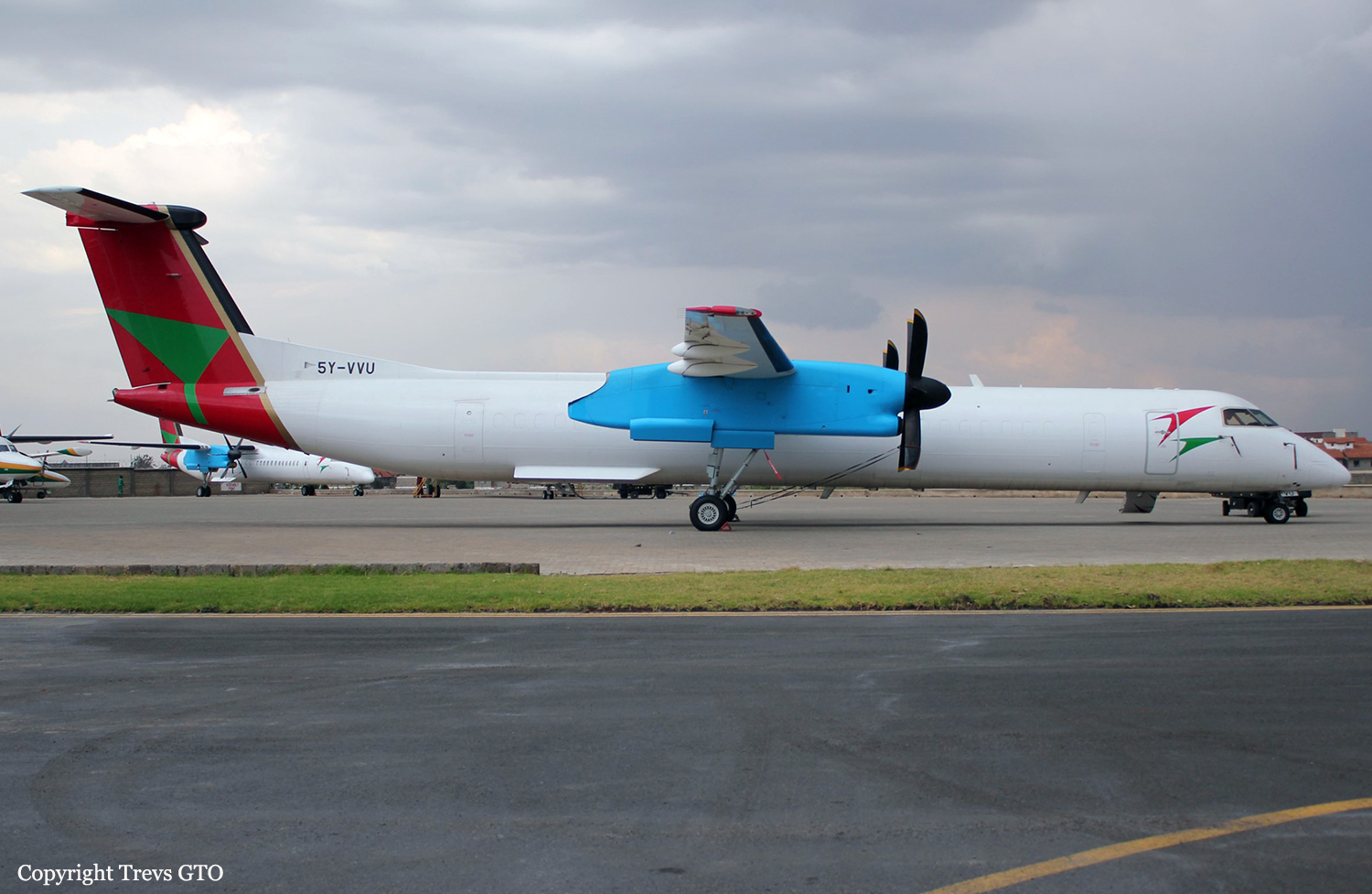
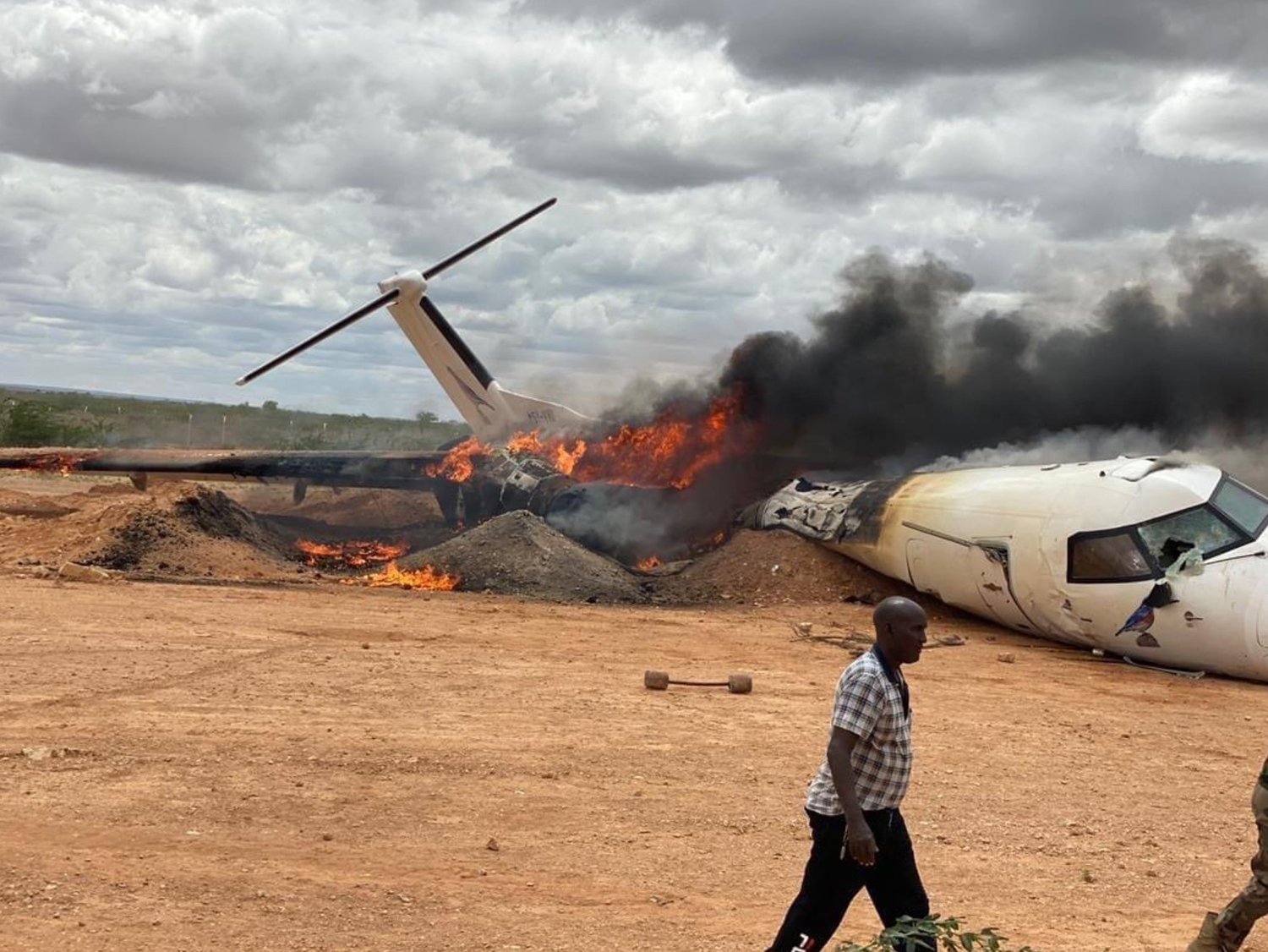
Crash of a De Havilland DHC-8-Q402 Dash-8 in Beledweyne

Date & Time: Jul 14, 2020
Operator:
Registration:
5Y-VVU
Flight Type:
Survivors:
Yes
Schedule:
Djibouti City – Beledweyne
MSN:
4008
YOM:
2000
Country:
Region:
Crew on board:
3
Crew fatalities:
Pax on board:
0
Pax fatalities:
Other fatalities:
Total fatalities:
0
Circumstances:
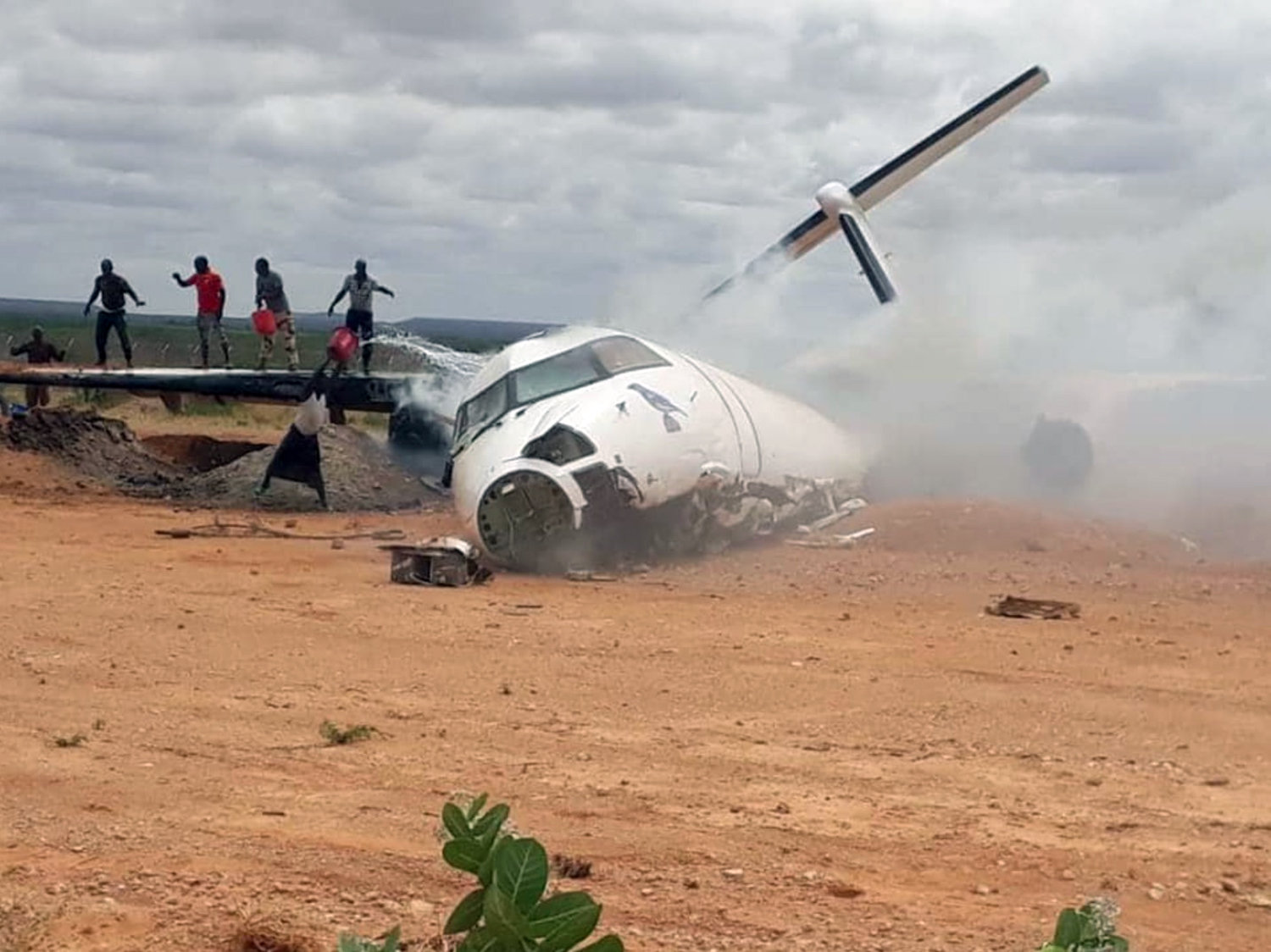
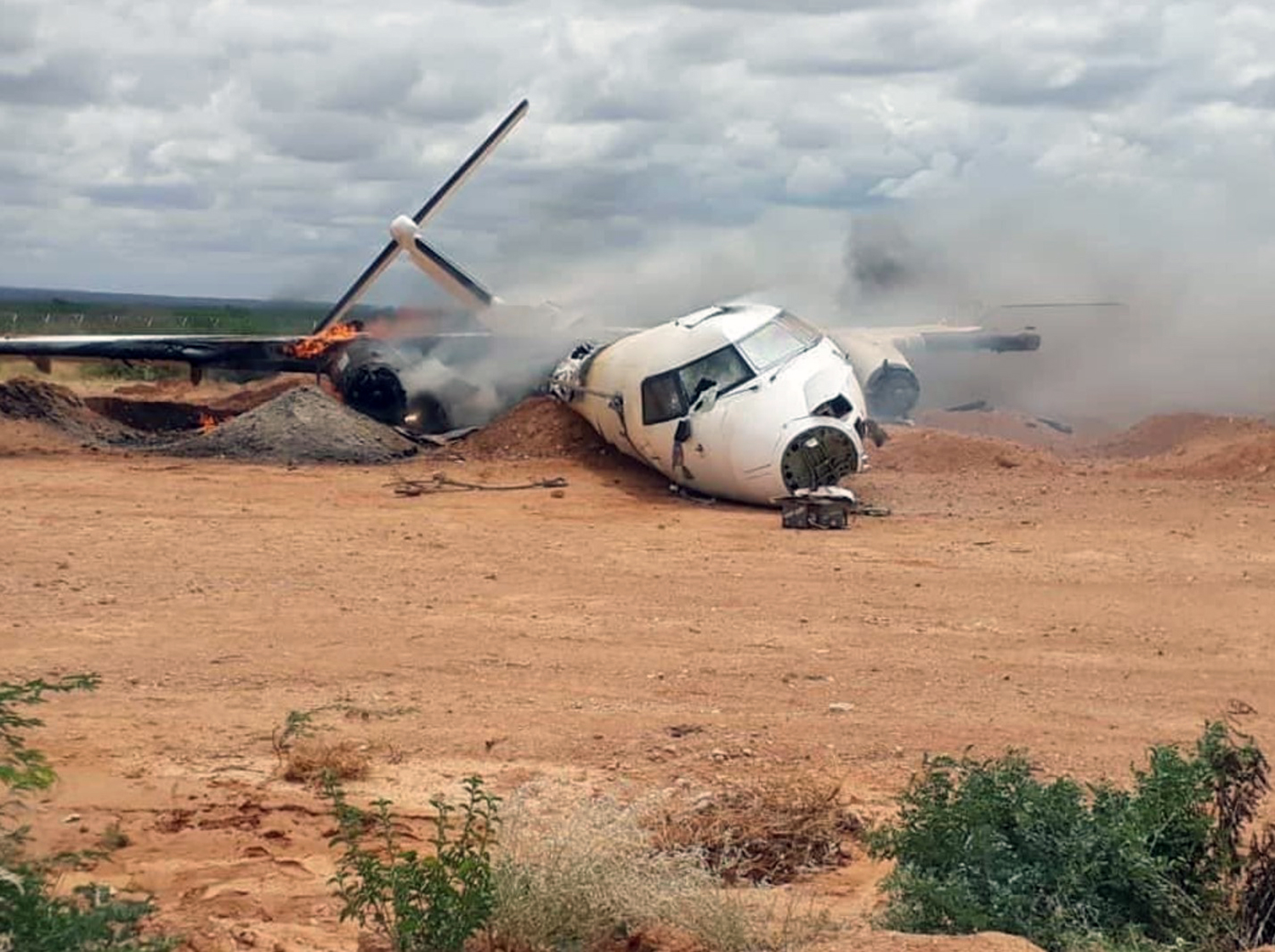
After landing at Beledweyne-Haji-Sheikh Mahmud Hasan (Ugas Khalif) Airport, the aircraft went out of control and came to rest against several earth mounds, bursting into flames. All three crew members managed to escape while the aircraft was destroyed by fire. The crew was completing a cargo flight from Djibouti City on behalf of the African Union Mission to Somalia (AMISOM) and it is believed that the aircraft was carrying food supplies.

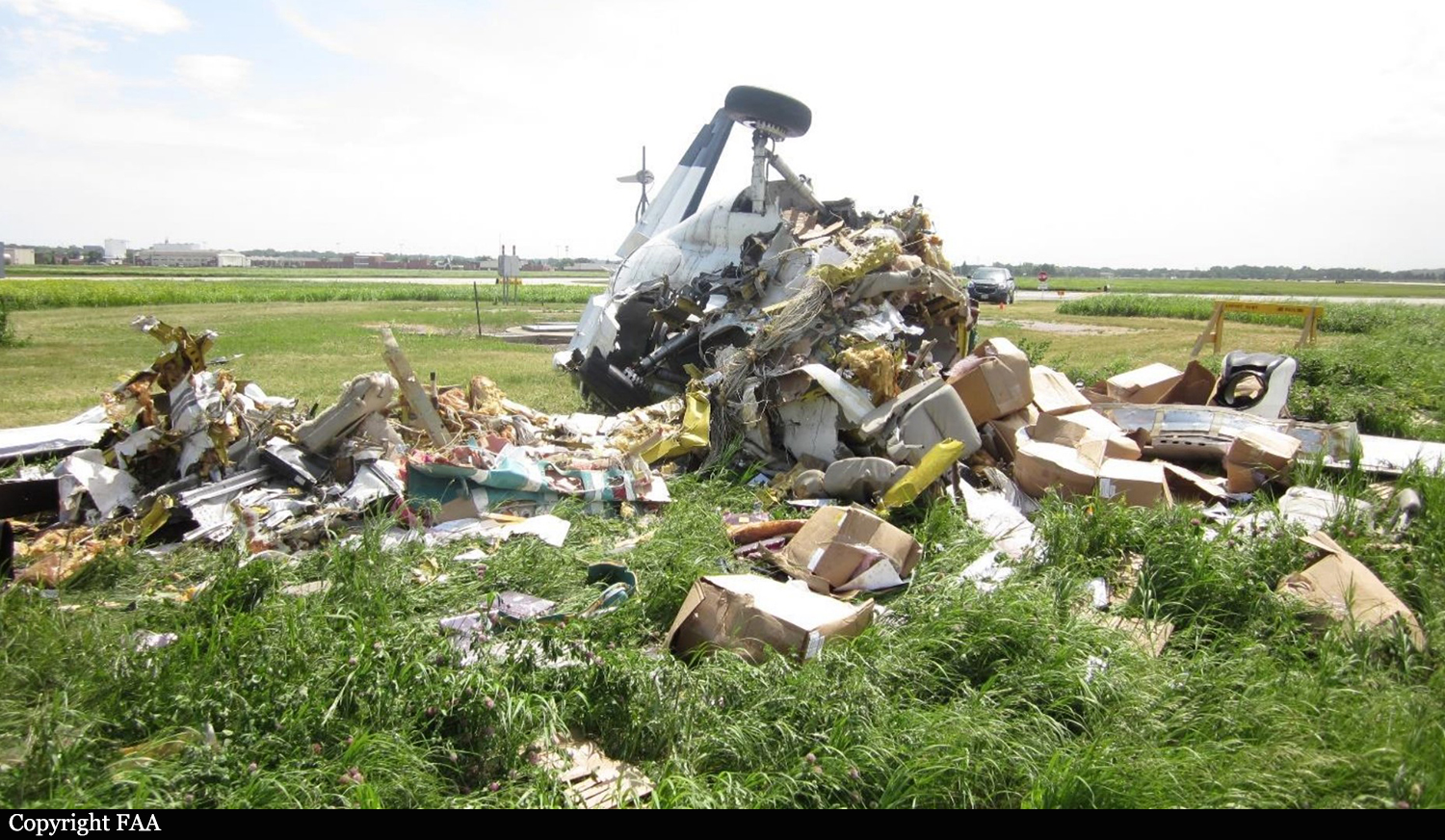
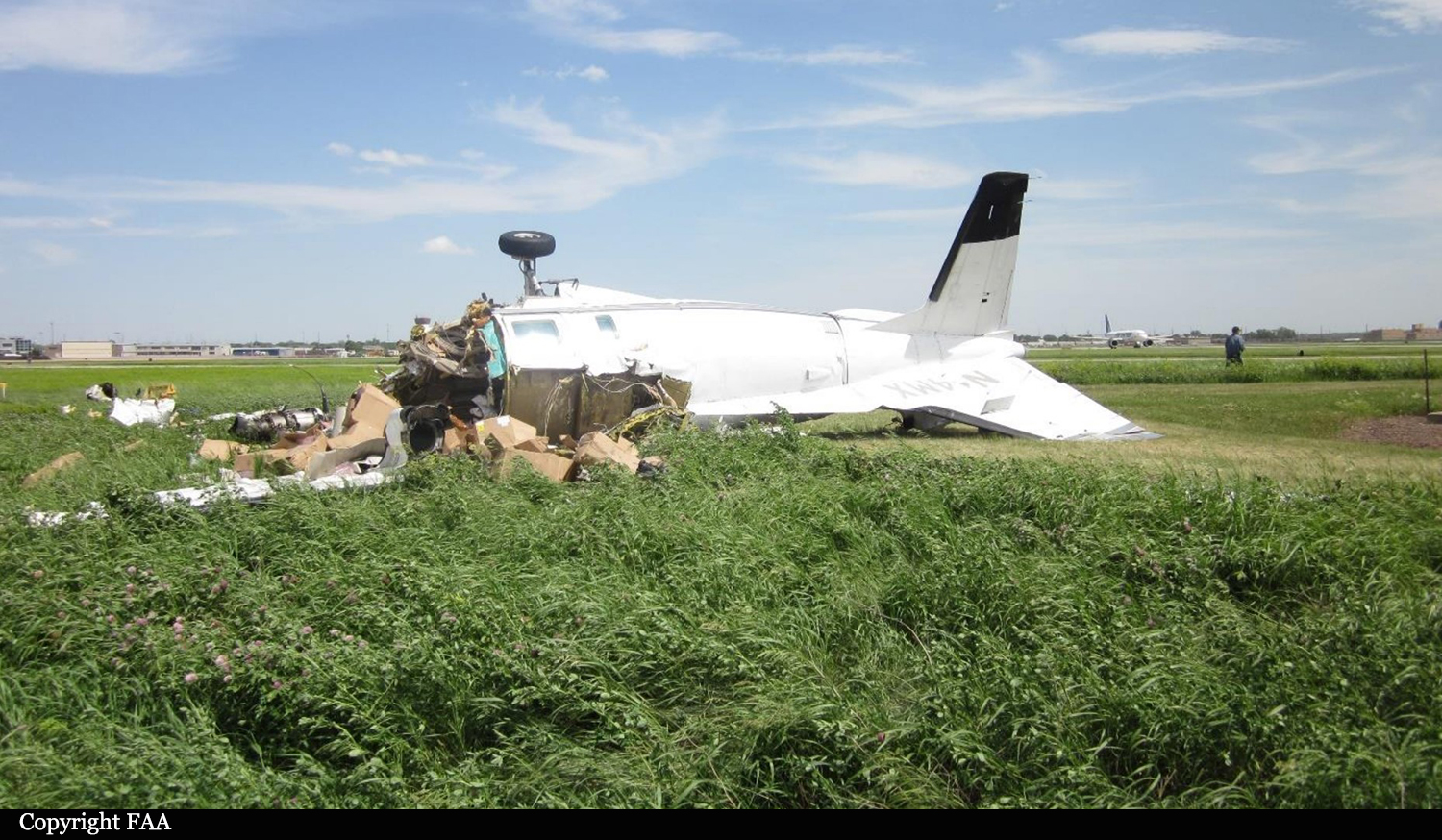
Crash of a Mitsubishi MU-2B-60 Marquise in Sioux Falls: 1 killed

Date & Time: Jun 7, 2020 at 0415 LT
Type of aircraft:
Operator:
Registration:
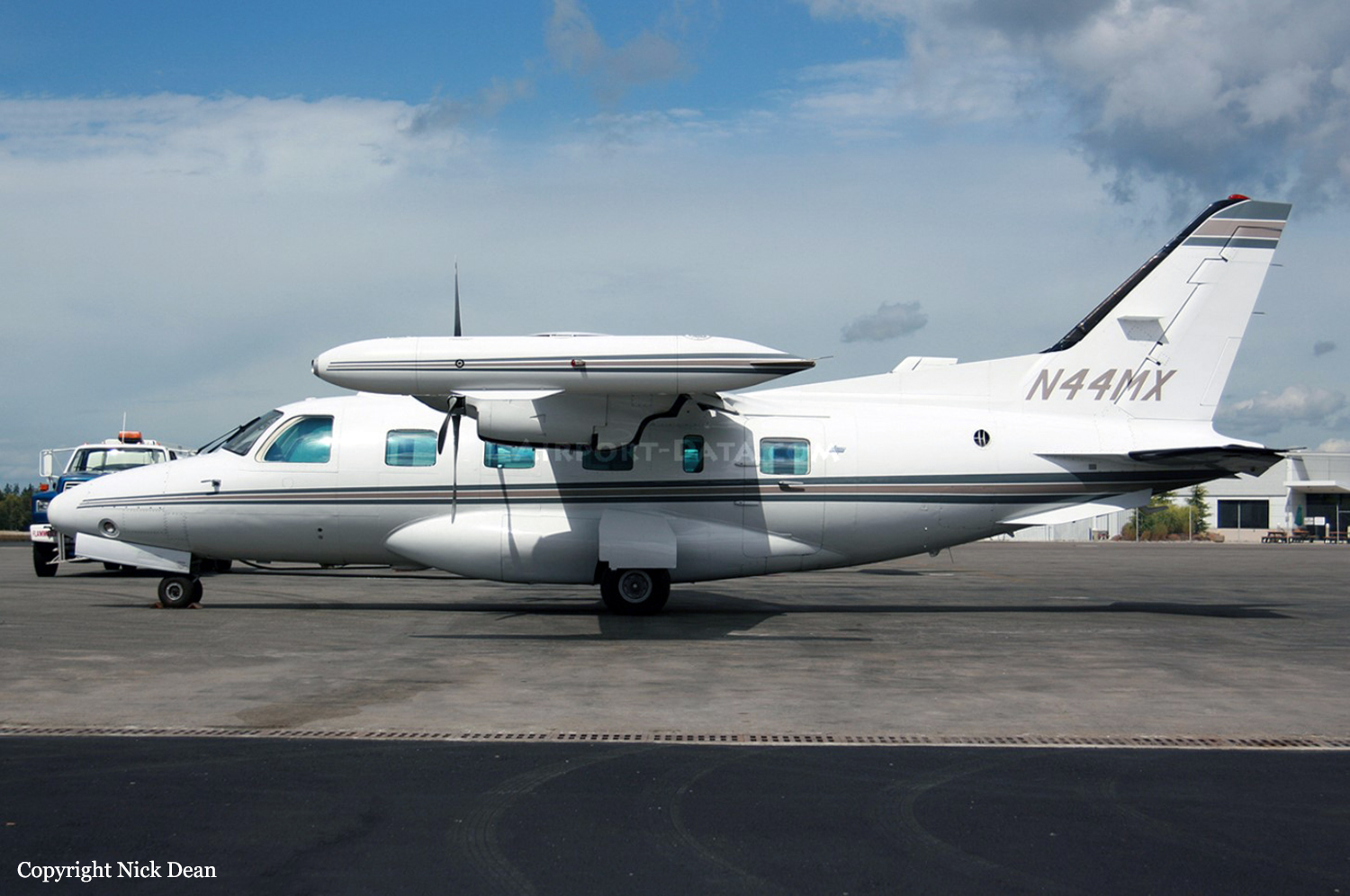
N44MX
Flight Phase:
Flight Type:
Survivors:
No
Schedule:
Everett – Huron - Kokomo
MSN:
1526
YOM:
1981
Flight number:
MDS44
Crew on board:
1
Crew fatalities:
Pax on board:
0
Pax fatalities:
Other fatalities:
Total fatalities:
1
Captain / Total flying hours:
22000
Captain / Total hours on type:
10900.00
Aircraft flight hours:
12104
Circumstances:
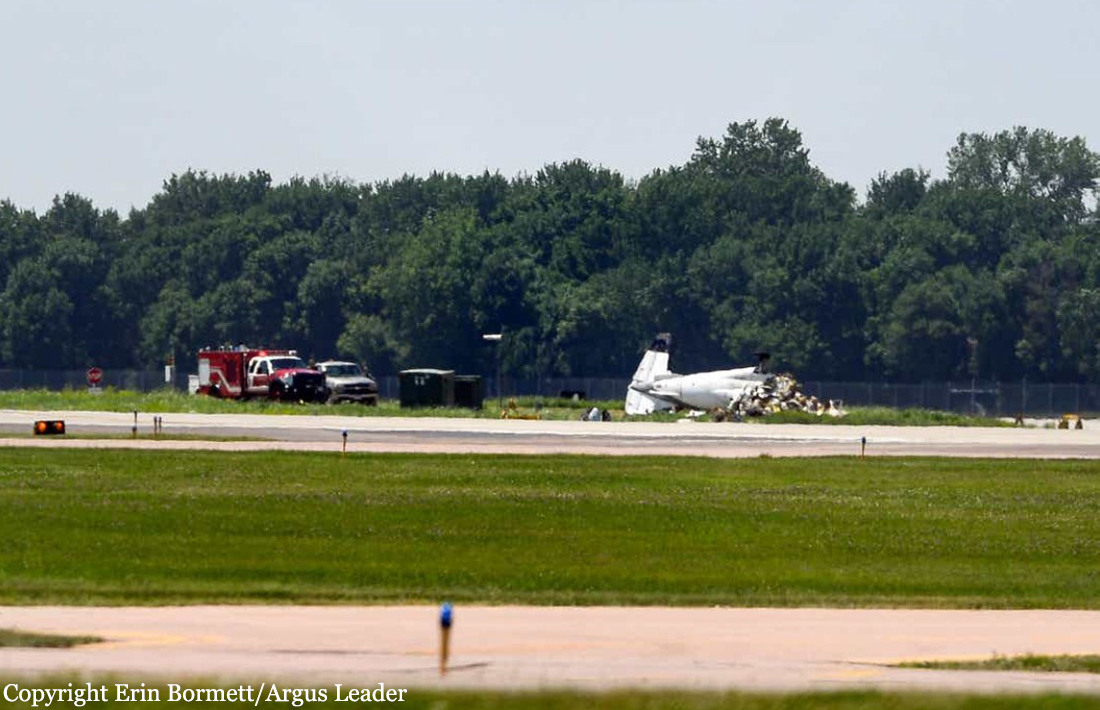
The pilot departed on a cross country flight in a turbine-powered, multiengine airplane at night and in visual meteorological conditions. Recovered GPS data revealed that as the airplane accelerated down the runway, it drifted to the right of the runway centerline. A video recording showed that shortly after takeoff, the airplane rolled right, the nose dropped, and the airplane impacted the ground. It came to rest on its left side with both wings separated and the fuselage was highly fragmented forward of the main landing gear. A post-accident examination of the airframe and engines found no mechanical malfunctions or anomalies that would have precluded normal operation. A witness that spoke to the pilot shortly before the accident flight stated that the pilot exhibited difficulty in completing some paperwork; however, no medical reasoning for this difficulty could be determined based upon the available evidence. The investigation determined that at the time of the accident the pilot had been on duty for about 19 hours and 20 minutes, which was contrary to duty and rest regulations. At his estimated arrival time into the destination, the pilot would have accumulated about 20 hours and 54 minutes of duty time. The investigation was unable to determine if the pilot took advantage of the opportunity for rest that existed during the day, and therefore could not determine if fatigue contributed to the accident. Investigators were unable to determine the reason for the loss of control on takeoff with the available information.
Probable cause:
The pilot’s failure to maintain control of the airplane during takeoff for reasons that could not be determined.
Final Report:

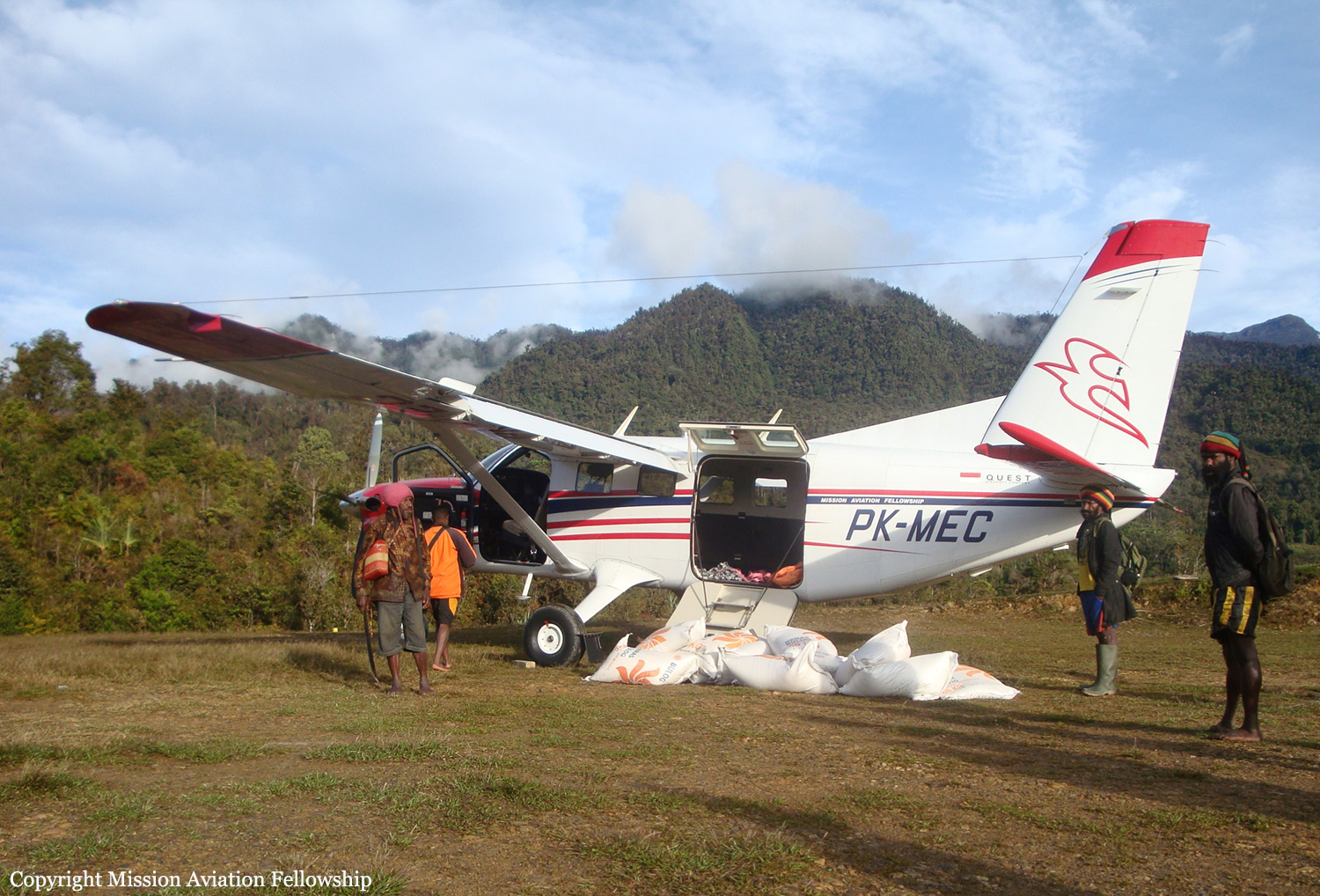
Crash of a Quest Kodiak 100 off Sentani: 1 killed

Date & Time: May 12, 2020 at 0628 LT
Type of aircraft:
Operator:
Registration:
PK-MEC
Flight Phase:
Flight Type:
Survivors:
No
Schedule:
Jayapura - Mamit
MSN:
100-0026
YOM:
2009
Country:
Region:
Crew on board:
1
Crew fatalities:
Pax on board:
0
Pax fatalities:
Other fatalities:
Total fatalities:
1
Captain / Total flying hours:
1357
Captain / Total hours on type:
185.00
Aircraft flight hours:
4707
Aircraft flight cycles:
9379
Circumstances:
On 12 May 2020, a Quest Kodiak 100 aircraft, registration PK-MEC, was being operated by Mission Aviation Fellowship (MAF) as a cargo flight from Sentani Airport (WAJJ), Jayapura, Papua with intended destination of Mamit Airstrip (WAVS) Tolikara, Papua. The pilot was the only person on board for this flight and the aircraft carried 694 kgs of cargo goods. At 0622 LT (2122 UTC), the pilot of PK-MEC aircraft requested clearance to the Sentani Tower controller to start aircraft engine and flying to Mamit at radial 241° with intended cruising altitude 10,000 feet. The Sentani Tower controller approved the request. At 0627 LT, on daylight condition, the aircraft took off from runway 12 of Sentani Airport, thereafter, the Sentani Tower controller advised to the pilot of PK-MEC to contact Jayapura Radar controller. At 0628LT, the pilot of PK-MEC declared “MAYDAY” on Jayapura Radar radio frequency. The Jayapura Radar controller tried to contact pilot of PK-MEC four times but no answer. At 0630 LT, the Jayapura Radar Controller requested the pilot of PK-RCE that was just took off from Sentani to visually observe the position of PK-MEC aircraft. Few minutes later, the pilot of PK-RCE reported to Jayapura Radar controller that some debris were seen on Sentani Lake and some boats were moving toward the debris location. The pilot of PK-RCE assumed that PK-MEC aircraft had crashed to the lake. The pilot fatally injured. The wreckages have been recovered including the Global Positioning System (GPS) data card.

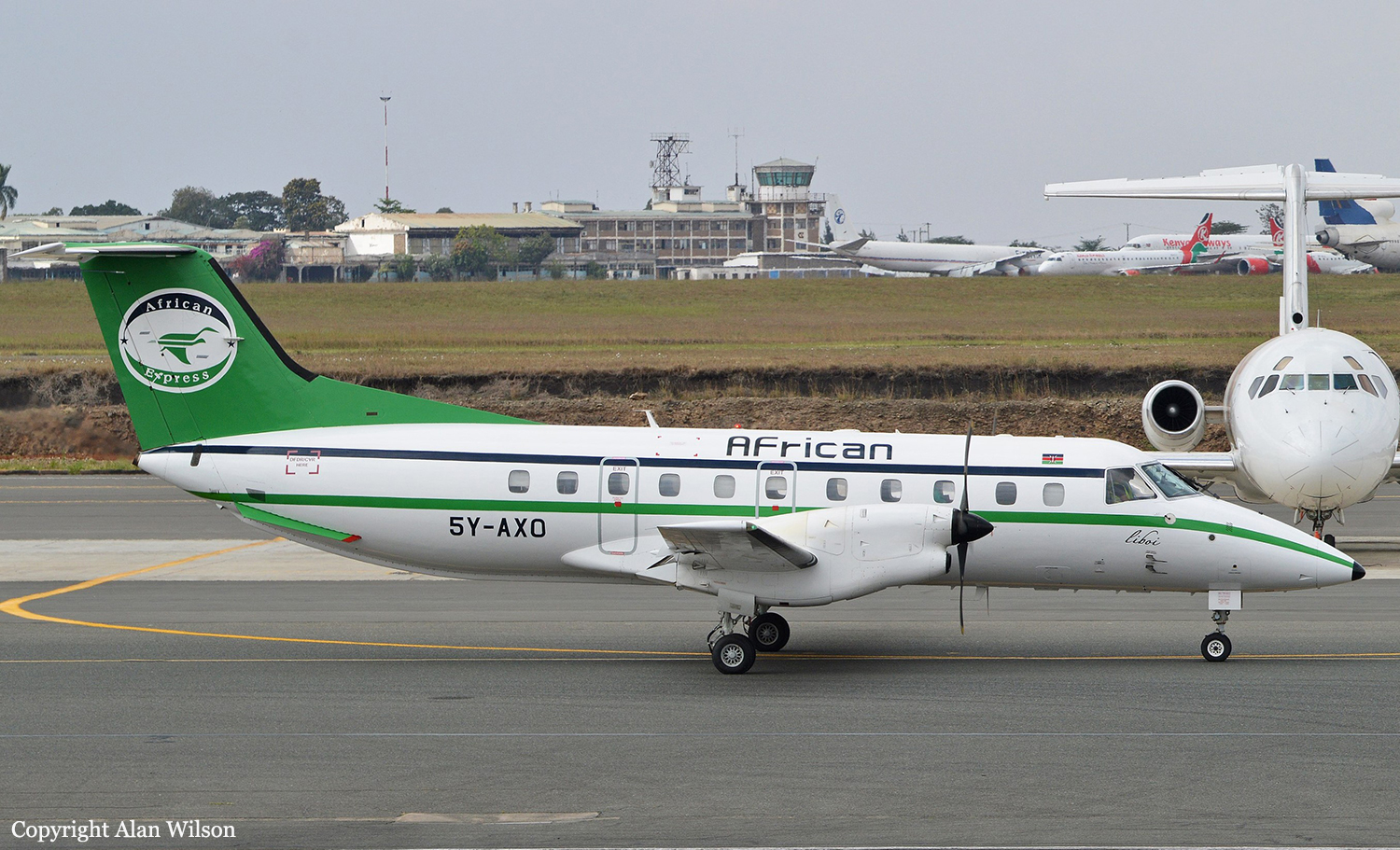
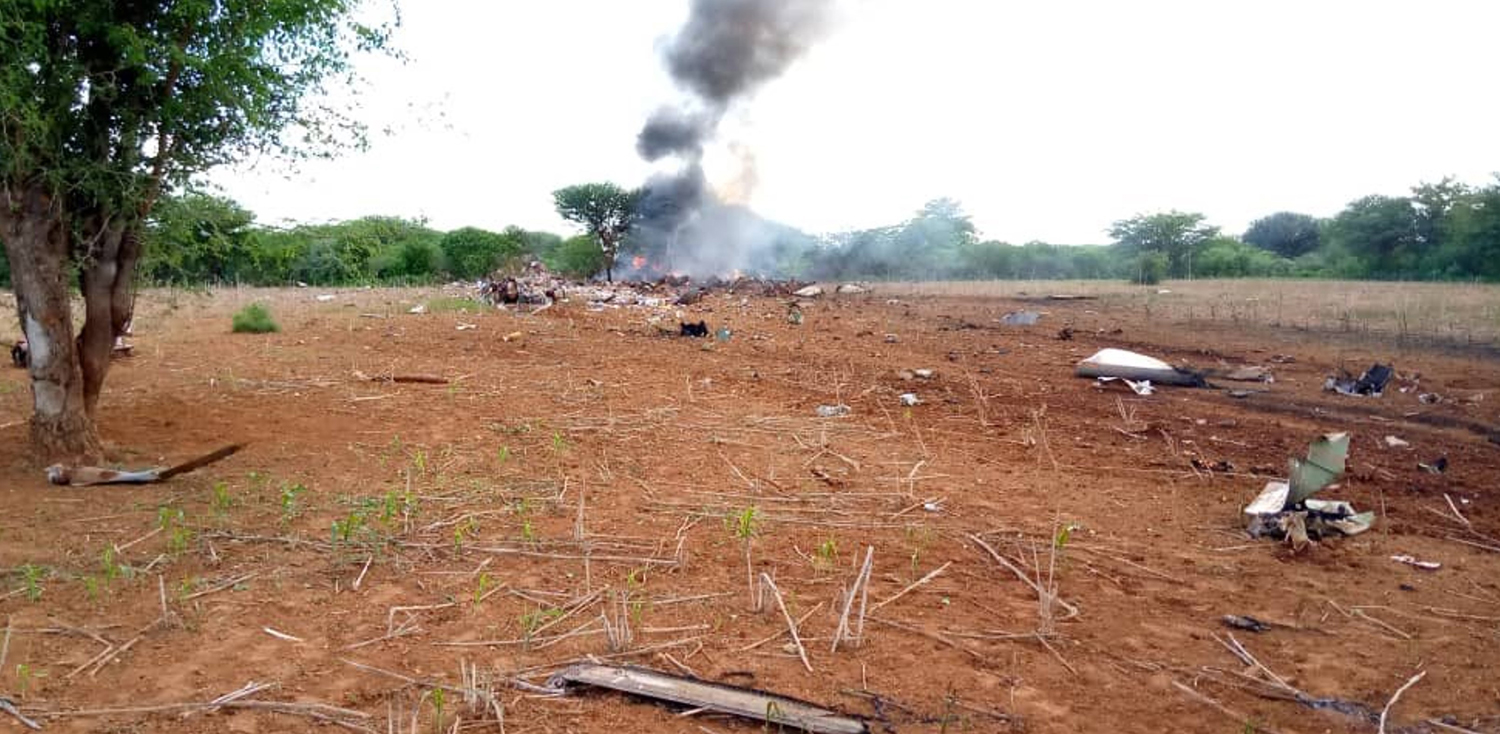
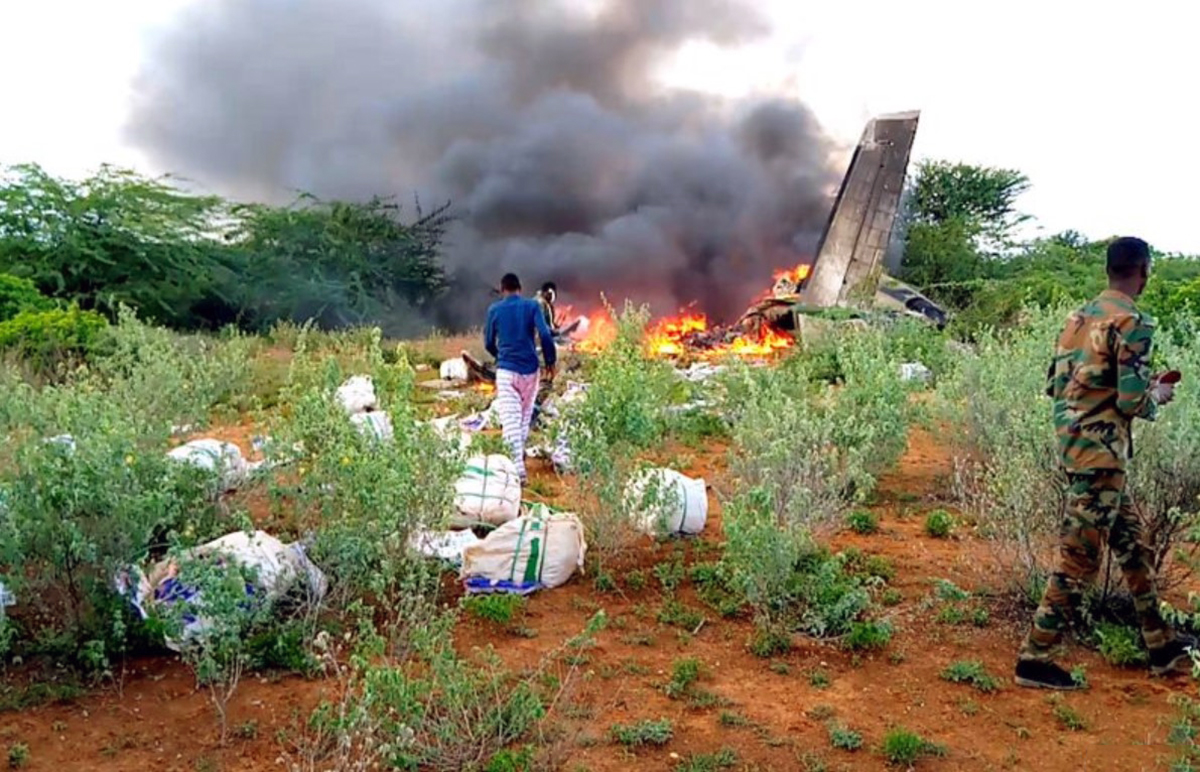
Crash of an Embraer EMB-120RT Brasília in Bardale: 5 killed

Date & Time: May 4, 2020 at 1545 LT
Type of aircraft:
Operator:
Registration:
5Y-AXO
Flight Type:
Survivors:
No
Schedule:
Mogadiscio – Baidoa – Bardale
MSN:
120-259
YOM:
1992
Country:
Region:
Crew on board:
2
Crew fatalities:
Pax on board:
3
Pax fatalities:
Other fatalities:
Total fatalities:
5
Circumstances:
On approach to Bardale Airstrip, the twin engine aircraft struck the ground and crashed 5 km from the airport, bursting into flames. The aircraft was totally destroyed and all five occupants were killed. The crew was enroute from Mogadiscio to Bardale with an en route stop in Baidao, carrying medical supplies and mosquito nets.
Probable cause:
When the aircraft was arriving at Bardale FOB, the usual direction is east-west, but the aircraft was flying from west-east to land over the base camp. Even though the troops did not shoot it down, the aircraft crashed on the ground and was apparently not ready not land. The troops concluded that the aircraft was suspected to be a suicide and trying to find the target to make suicide in the base camp because of the movement of the aircraft. Due to lack of communication and awareness, the aircraft was shot down and all five occupants (3 Kenyan and 2 Somali citizens) died. The incident was performed by a non-AMISOM troops of Ethiopia, which will require mutual collaborative investigation team from Somalia, Ethiopia and Kenya for determine the truth.
Final Report: