Crash of a Curtiss C-46D-15-CU Commando off Punta Arenas: 5 killed

Date & Time: Jul 18, 1968
Type of aircraft:
Operator:
Registration:
CC-CDI
Flight Phase:
Flight Type:
Survivors:
No
MSN:
33445
YOM:
1945
Country:
Crew on board:
3
Crew fatalities:
Pax on board:
2
Pax fatalities:
Other fatalities:
Total fatalities:
5
Circumstances:
Crashed in unknown circumstances into the Magellan Straits, killing all five occupants.

Crash of a Curtiss C-46C Super Commando near Gravatá: 3 killed

Date & Time: Jul 15, 1968
Type of aircraft:
Operator:
Registration:
PP-VBJ
Flight Phase:
Flight Type:
Survivors:
No
Site:
Schedule:
São Paulo – Recife
MSN:
33481
YOM:
1945
Country:
Crew on board:
3
Crew fatalities:
Pax on board:
0
Pax fatalities:
Other fatalities:
Total fatalities:
3
Circumstances:
While on a cargo flight from São Paulo to Recife, the airplane crashed in unknown circumstances in the Coelhos Mountain Range, near Gravatá. All three crew members were killed.

Crash of a Boeing 707-329C in Lagos: 7 killed

Date & Time: Jul 13, 1968 at 0400 LT
Type of aircraft:
Operator:
Registration:
OO-SJK
Flight Type:
Survivors:
No
Schedule:
Brussels - Lagos
MSN:
19211
YOM:
1966
Flight number:
SN712
Country:
Region:
Crew on board:
5
Crew fatalities:
Pax on board:
2
Pax fatalities:
Other fatalities:
Total fatalities:
7
Circumstances:
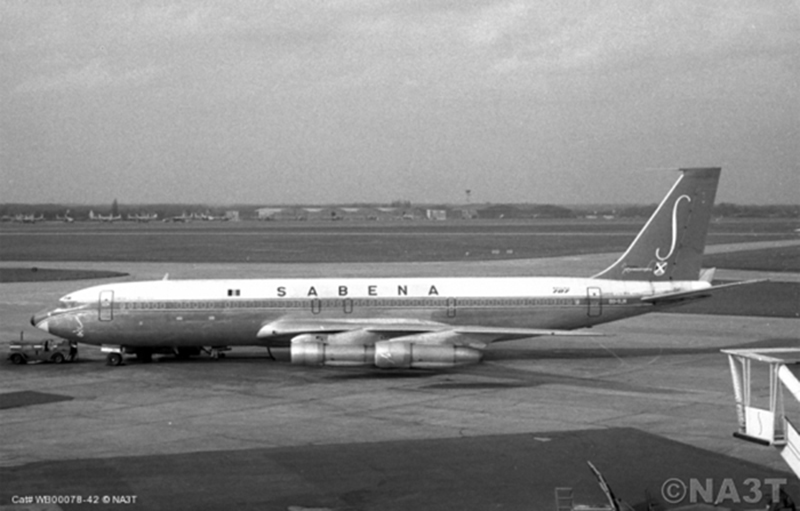
Flight SN712 was a non-scheduled international cargo flight from Brussels direct to Lagos on behalf of the Federal Government of Nigeria with 34 994 kg of cargo on board. No passengers were being carried. A flight plan was filed for a flight of 6 hours 9 minutes and the total endurance of the aircraft was stated as 8 hours 20 minutes. The designated alternate was Kano. The aircraft took off from Brussels at 2152 hours GMT on 12 July 1968 and routine radio reports were received during the en route phase of the flight. At 0325 hours R/T contact was made with Lagos approach control. The R/T transmissions with the aircraft have been identified as being almost certainly the voice of the co-pilot indicating that he was doing the R/T rhile the pilot-in-command was flying the aircraft. The aircraft gave an ETA at Lagos of 0355 hours and reported that it was at flight Level (FL) 330. A request was then made for the latest Lagos weather and the reply included the following information: wind: 210°/3 kt; visibility: 16 km; cloud: 5/8 stratocumulus 270 m, 7/8 altostratus 2 400 m, temporary thunderstorms, 118 cumulonimbus 2 000 ft; QNH: 1012 mb; temperature 24°. At 0327 hours the aircraft reported an ETA overhead Ibadan NDB of 0344 hours in response to a request for this information from Lagos. One minute later it reported that the Ibadan NDB did not appear to be operating. At 0336 the aircraft requested descent clearance. It was cleared to Lagos at FL60 and commenced the descent from FL330 at that time. Three minutes later the aircraft reported passing Ibadan and descending through FL275 but since it had reported earlier that the Ibadan NDB seemed not to be radiating it is not known how the position was determined. In reply Lagos approach stated that there was no delay in the approach and that the runway in use was 19. At 0341 hours, when the aircraft was about 50 miles north of. Lagos, it was recleared to 2 200 ft on a QNH of 1012 mb - and told to report field in sight. The flight recorder readout shows that shortly after this interchange the descent was interrupted while the speed decreased to a figure corresponding to the recommended maximum for landing gear extension and this speed was not exceeded for the remainder of the flight. Close study of the flight recording shows subsequent irregularity indicating that the automatic pilot was most probably disengaged at this stage of the flight. Subsequent to the speed reduction the rate of descent was re-established to approximately 2 000 ft/min and at 0350 hours the aircraft passed one mile to the east of Lagos airport whilst on a southerly heading at an altitude of 15 000 ft. The aircraft was heard flying over the airport at this time. The flight recorder indicates that a procedure turn was made to the south of the airport in the vicinity of the city of Lagos and at its conclusion there was a second interruption in the descent following which the airspeed remained below the maximum for 25° of flap. At 0354 hours the aircraft passed over the airport northbound at an altitude of 9 000 ft maintaining the average rate of descent of 2 000 ft/min for a further 2 1/2 minutes. At 0356 hours a procedure turn was commenced at an altitude of about 5 000 ft during which the rate of descent was reduced to 1 500 ft/min. The track of the aircraft between its passage over the airport northbound and the commencement of the final procedure turn is almost coincident with the outbound track of the published VOR approach procedure. At 0357 hours Lagos approach control was informed by the aircraft that it was in the procedure turn and requested to give the wind conditions. In reply control stated that the wind was calm and this was acknowledged. Shortly afterwards approach control instructed the aircraft to report runway in sight and this was also acknowledged. On completion of the procedure turn at an altitude of 1 400 ft (a height above the airport of 1268 ft) the airspeed was reduced from 190 kt to a little less than 160 kt and the rate of descent was reduced to 900 ft/min. The heading was stabilized on 197° M and at 0359 hours the aircraft asked for the runway lights to be put on maximum brightness. Approach control replied that the runway lights were on low intensity non-variable. A transmitter switch was then heard but there was no subsequent message from the aircraft before it crashed about 8 1/2 miles north of the airport approximately on the extended centre line of the runway. All the occupants were killed and the aircraft caught fire immediately and was burnt out. All seven occupants were killed.
Probable cause:
The accident was caused by the aircraft descending below its minimum safe altitude for reasons that have not been determined. The following findings were reported:
- The aircraft made an almost continuous descent from FL275 to the point of impact without an intermediate report being made of either its height or position between "passing IB beacon" and a point "on procedure turn" north of Lagos airport,
- The approach to land was made at night without ILS glide slope or marker beacon guidance,
- There was an absence of instructions regarding the monitoring of the altitude by the pilot not flying the aircraft and the cross checking of altimeters during an approach.
Final Report:
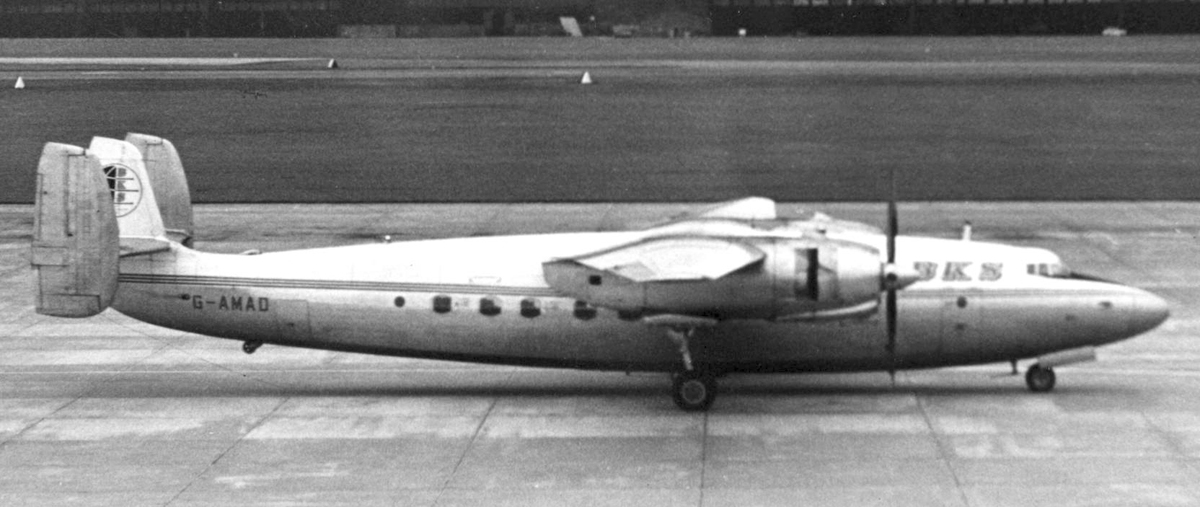
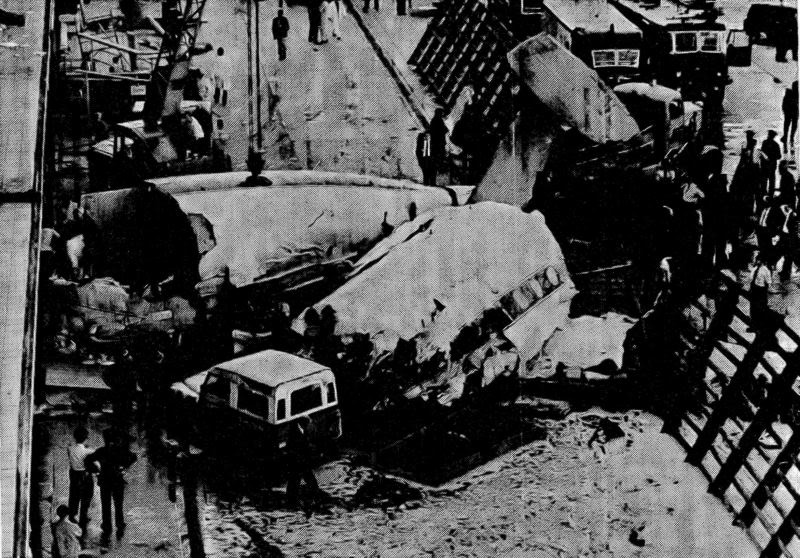
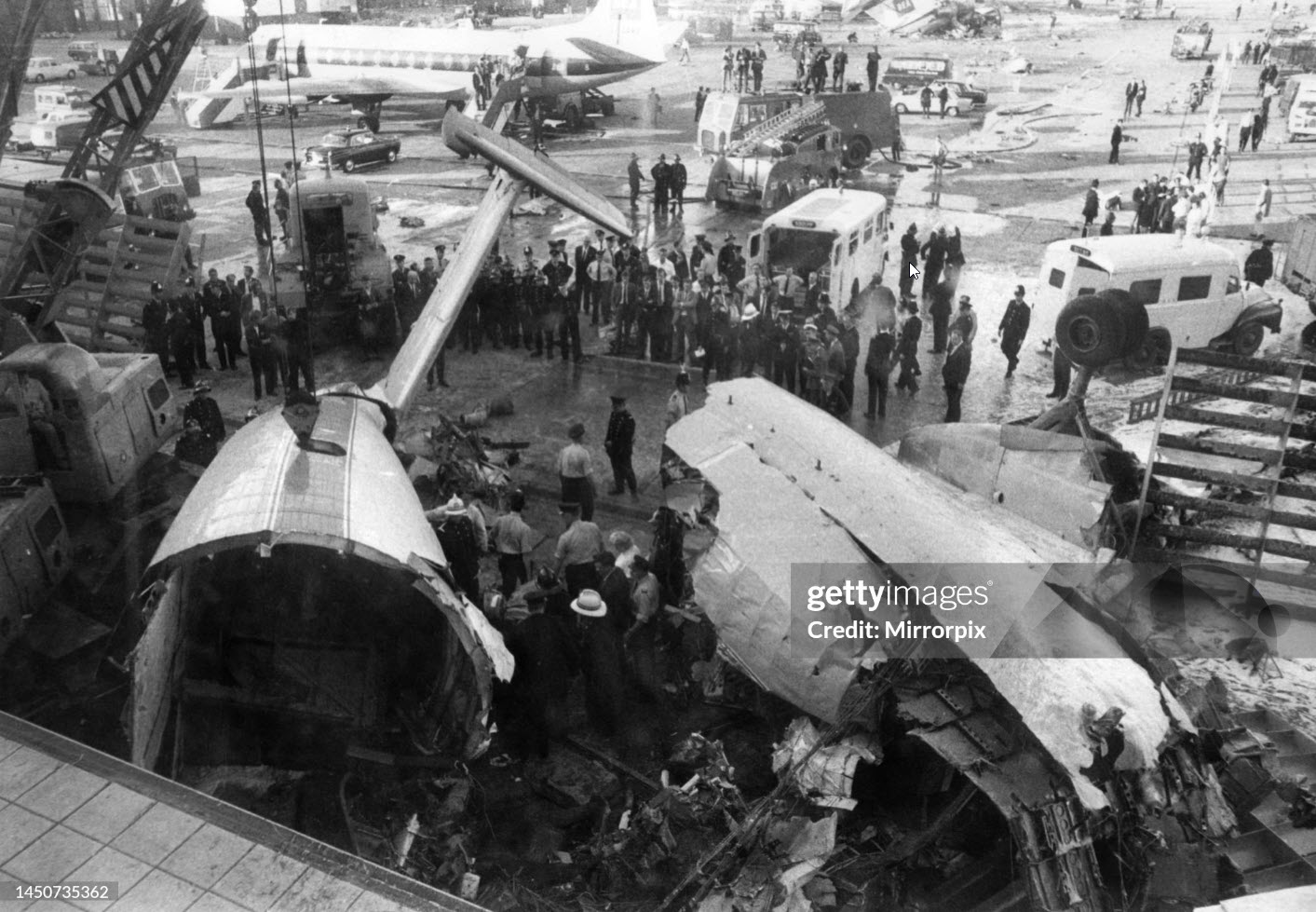
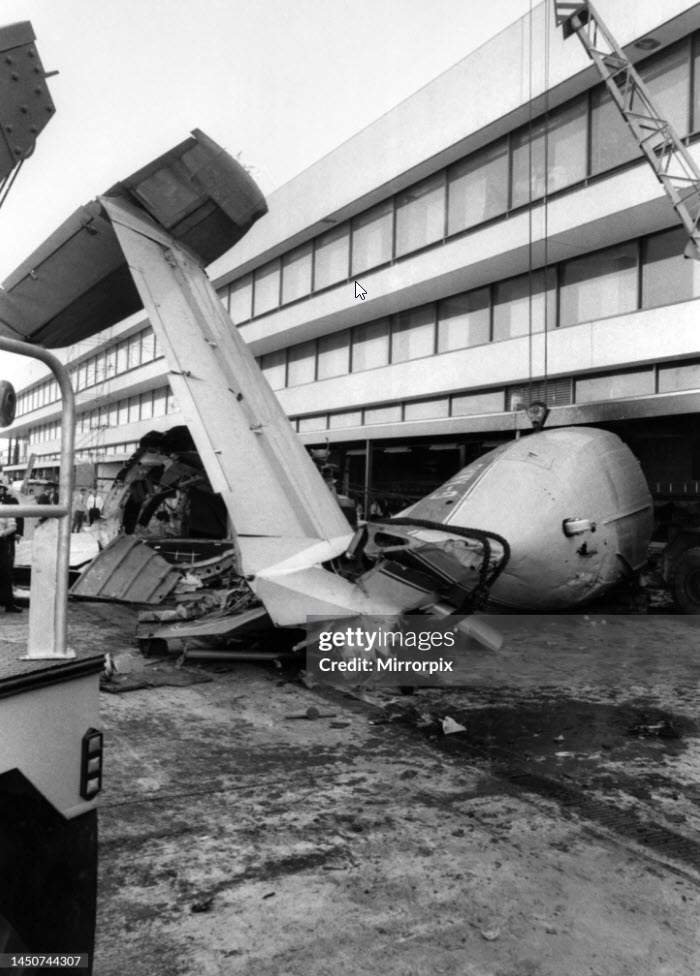
Crash of an Airspeed AS.57 Ambassador 2 in London: 6 killed

Date & Time: Jul 3, 1968 at 1728 LT
Type of aircraft:
Operator:
Registration:
G-AMAD
Flight Type:
Survivors:
Yes
Schedule:
Deauville - London
MSN:
5211
YOM:
1951
Flight number:
C6845
Region:
Crew on board:
3
Crew fatalities:
Pax on board:
5
Pax fatalities:
Other fatalities:
Total fatalities:
6
Captain / Total flying hours:
15338
Captain / Total hours on type:
4450.00
Copilot / Total flying hours:
609
Copilot / Total hours on type:
142
Aircraft flight hours:
22290
Circumstances:
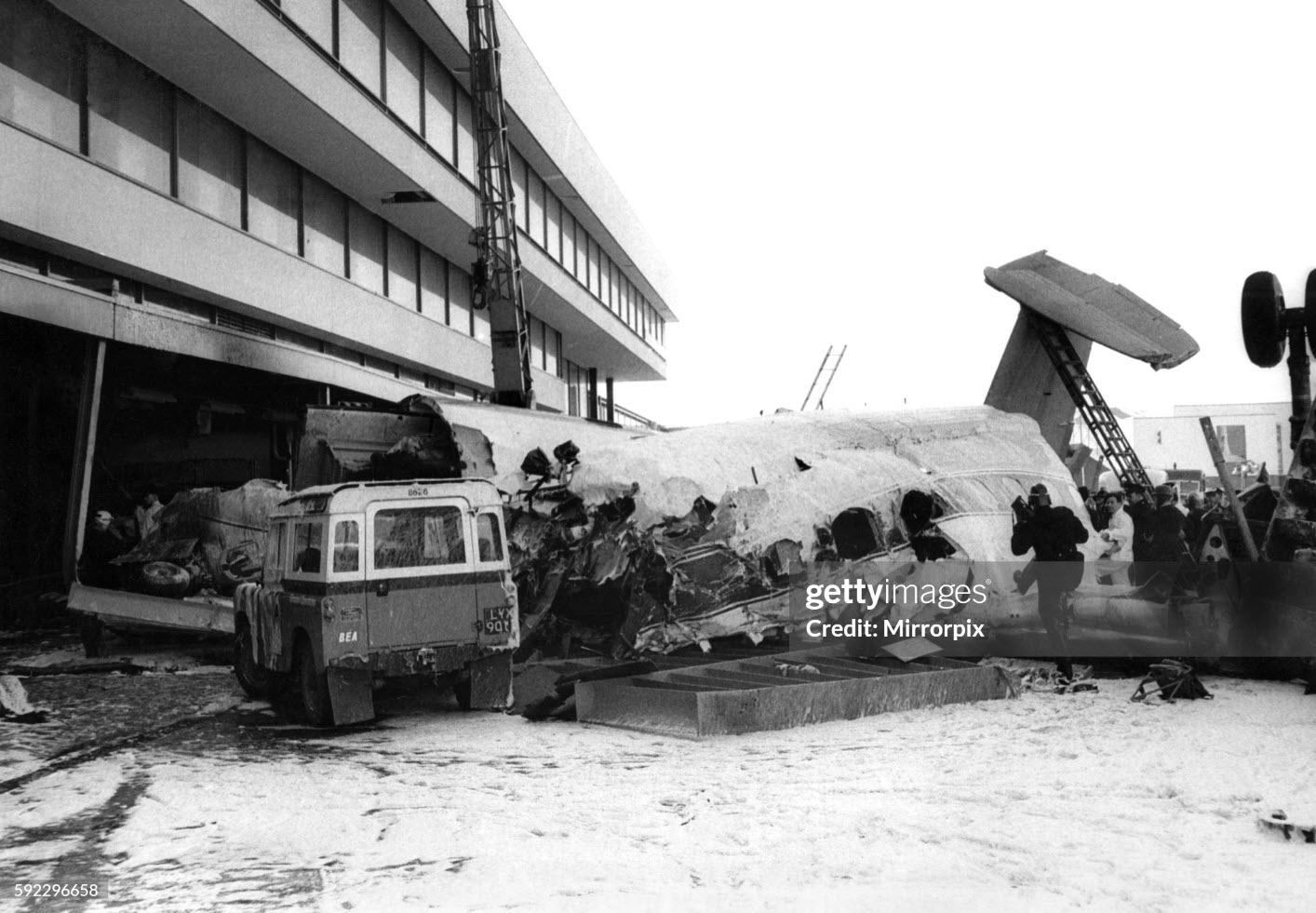
The aircraft left Deauville at 1535 hrs., on flight No. C.6845, and made an uneventful flight to London at flight level 70. It was cleared to land on runway 28 Right and at 1624 hrs, reported passing the outer marker inbound. The approach proceeded normally and the aircraft came into the view of air traffic control personnel in the tower when it was about 200 feet, and close to the airport boundary. It was then in a normal approach attitude. However, at a position near the threshold of runway 28 Right the port wing was seen to drop and the aircraft turned slowly to the left off the runway centerline. The bank increased and the port wing tip, followed by the port main wheels, touched the grass surface of the aerodrome. Witnesses near to the runway threshold heard engine power applied as if for an overshoot and the aircraft then became airborne again and with the bank further increasing, it flew towards the partly constructed No.I terminal building on the northeast side of the airport central area. Whilst still steeply banked it struck two British European Airways Trident aircraft, which were parked at a pier of the terminal building, and burst into flames. The aircraft then rolled on to its back and after demolishing a twelve foot high metal blast barrier came to rest against the ground floor of the terminal building between two of the embarkation piers. 27 people on the ground in the area received slight injuries, 2 people were seriously injured. Six occupants were killed while two others were killed as well as all eight horses. The Trident registered G-ARPT was also destroyed while the Trident registered G-ARPI was repaired.
Probable cause:
Failure of the port flap operating rod due to fatigue, permitting the port flaps to retract. This resulted in a rolling moment to port which could not be controlled.
Final Report:

Crash of a Douglas DC-7BF in Philadelphia

Date & Time: Jul 2, 1968 at 1811 LT
Type of aircraft:
Operator:
Registration:
N762Z
Flight Type:
Survivors:
Yes
Schedule:
Norfolk – Philadelphia
MSN:
44922
YOM:
1956
Crew on board:
3
Crew fatalities:
Pax on board:
0
Pax fatalities:
Other fatalities:
Total fatalities:
0
Captain / Total flying hours:
19616
Captain / Total hours on type:
7095.00
Circumstances:
The crew was completing a cargo flight from Norfolk to Philadelphia on behalf of the US Air Force. After touchdown on wet runway 09/27 at Philadelphia-Intl Airport, the crew encountered difficulties to decelerate properly. The four engine aircraft suffered hydroplaning then went out of control and veered off runway to the right. While contacting soft ground, the undercarriage collapsed and the right wing was torn off. The airplane came to rest in flames and was destroyed by a post crash fire while all three crew members escaped uninjured.
Probable cause:
The accident was the consequence of the following factors:
- The crew failed to maintain directional control,
- Improper operation of powerplant,
- Asymmetrical thrust reversal,
- Wet runway,
- Hydroplaning,
- Overload failure,
- Asymmetrical power applied during reversing phase of landing due to n° 1 prop circuit breaker deactivated.
Final Report:

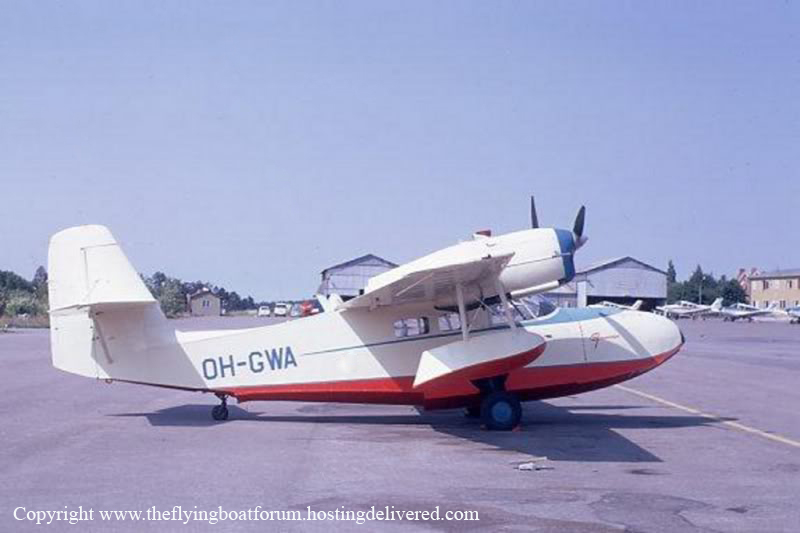
Crash of a Grumman G-44 Widgeon in Helsinki: 2 killed

Date & Time: Jun 28, 1968
Type of aircraft:
Operator:
Registration:
OH-GWA
Flight Phase:
Flight Type:
Survivors:
No
MSN:
1367
YOM:
1944
Country:
Region:
Crew on board:
2
Crew fatalities:
Pax on board:
0
Pax fatalities:
Other fatalities:
Total fatalities:
2
Circumstances:
Shortly after takeoff from Helsinki-Malmi Airport, while in initial climb, the airplane stalled and crashed in a huge explosion. Both crew members were killed.
Probable cause:
It was determined that the total weight of the aircraft was well above the MTOW.

Crash of a Fairchild C-123B-8-FA Provider in Na Khang

Date & Time: May 23, 1968
Type of aircraft:
Operator:
Registration:
655
Flight Type:
Survivors:
Yes
MSN:
20104
YOM:
1954
Country:
Region:
Crew on board:
4
Crew fatalities:
Pax on board:
0
Pax fatalities:
Other fatalities:
Total fatalities:
0
Circumstances:
On final approach to Na Khang Airport, the crew failed to realize his altitude was too low when the airplane struck a 50 cm high earth bank located 10 meters short of runway threshold. On impact, the undercarriage were torn off and the aircraft belly landed. All four crew members were uninjured while the aircraft was damaged beyond repair.

Crash of a Lockheed L-382B-5C Hercules in Macuma

Date & Time: May 16, 1968
Type of aircraft:
Operator:
Registration:
N9267R
Flight Type:
Survivors:
Yes
MSN:
4146
YOM:
1966
Country:
Crew on board:
6
Crew fatalities:
Pax on board:
0
Pax fatalities:
Other fatalities:
Total fatalities:
0
Circumstances:
The crew landed on a muddy airfield and the undercarriage sank in about 50 cm into soft ground before the aircraft came to rest. Timbers were placed under the wheels as a ramp. Engine power was used to move the aircraft when the engine n°1 prop struck the ground and disintegrated. Debris struck the engine n°2 and a fire erupted. The aircraft caught fire and was quickly destroyed while all six crew members were uninjured.

Crash of a Beechcraft D18 in Marshfield: 1 killed

Date & Time: May 15, 1968 at 0930 LT
Type of aircraft:
Operator:
Registration:
N1977D
Flight Phase:
Flight Type:
Survivors:
No
MSN:
A-824
YOM:
1952
Crew on board:
1
Crew fatalities:
Pax on board:
0
Pax fatalities:
Other fatalities:
Total fatalities:
1
Captain / Total flying hours:
13838
Captain / Total hours on type:
1348.00
Circumstances:
Shortly after takeoff, while in initial climb, both engines stopped simultaneously. The airplane stalled and crashed near the runway end. The aircraft was destroyed by impact forces and a post crash fire and the pilot was killed.
Probable cause:
Inadequate preflight preparation on part of the pilot who failed to realize there was no fuel in the tanks prior to takeoff, causing both engines to fail after rotation.
Final Report:

Ground collision of two Lockheed L-382B-1C Hercules in Ndola

Date & Time: Apr 11, 1968
Type of aircraft:
Registration:
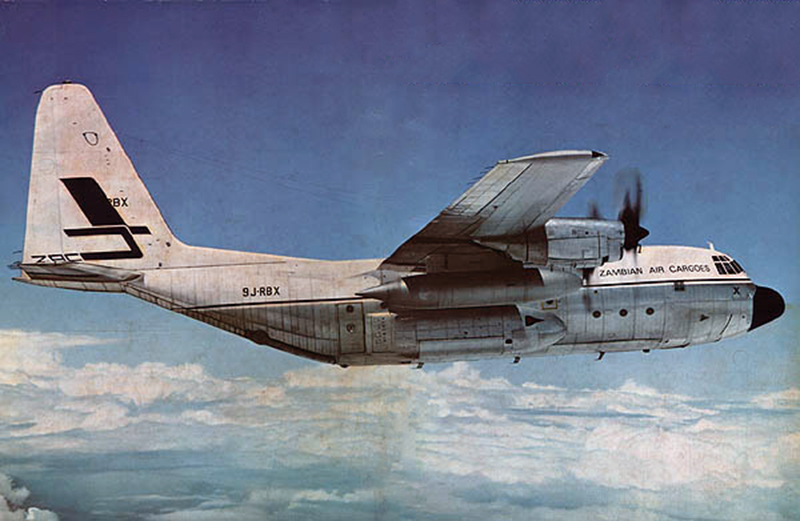
9J-RBX
Flight Phase:
Flight Type:
Survivors:
Yes
MSN:
4137
YOM:
1966
Country:
Region:
Crew on board:
0
Crew fatalities:
Pax on board:
0
Pax fatalities:
Other fatalities:
Total fatalities:
0
Aircraft flight hours:
4704
Circumstances:
While parked at Ndola Airport, the aircraft was struck by another Zambian Air Cargoes C-130 registered 9J-RCY. Following the collision, a fire erupted and both aircraft were destroyed. There were no casualties. 9J-RBX was empty at the time of the accident. For more details, refer to file 9J-RCY.
Probable cause:
The collision resulted from failure to halt the aircraft when it was decided to shut down No. 2 engine. A contributory cause was that the crew lacked a ready understanding of the mechanics of the aircraft hydraulic systems. The aircraft was not being operated in accordance with the requirements of the Certificate of Airworthiness and there was thug a contravention of Section 23(1) of the Air Navigation Regulations, Had permission been requested to operate in accordance with the R.A.F. Flight Reference Cards an the delivery Flight, it is probable that, after the cards had been studied and in view of the fact that the Captain was used ta operating in accordance with the cards, the necessary action would no doubt have been taken to authorise their use for the one flight.
Final Report: