Ground collision of two Lockheed L-382B-1C Hercules in Ndola

Date & Time: Apr 11, 1968
Type of aircraft:
Registration:
9J-RCY
Flight Phase:
Flight Type:
Survivors:
Yes
Schedule:
Cambridge - Benina - Entebbe - Ndola - Lusaka
MSN:
4109
YOM:
1966
Country:
Region:
Crew on board:
4
Crew fatalities:
Pax on board:
0
Pax fatalities:
Other fatalities:
Total fatalities:
0
Captain / Total flying hours:
9000
Captain / Total hours on type:
140.00
Copilot / Total flying hours:
8000
Copilot / Total hours on type:
800
Aircraft flight hours:
2339
Circumstances:
The aircraft departed from Cambridge, England, about mid-morning on 9 April 1968, and landed at Benina, where a night stop was made. The flight was continued on 10 April, with landings at Entebbe and Lusaka, where government-owned cargo was unloaded. On 11 April, the aircraft was due to be ferried to its normal base at Ndda, but the Air Turbine Motor (A.T.M) was found to be unserviceable. As the fault could not be ascertained and spares were not available, external power was used for initial engine start and all pre-taxi and taxi checks were carried out satisfactorily. On reaching the take-off holding point, reverse thrust checks were carried out and on returning to ground idle on No. 2 engine, the nacelle overheat light came on. On pulling the fire shut-off handle on No. 2 engine, the overheat light went out immediately. The Flight Engineer carried out a visual inspection of the engine and reported that there were no visible signs of fire. It was assumed that the overheat warning had been due to the tail wind and reverse thrust check, a possible occurrence under the prevailing conditions. A dry motorover was carried out to reduce Turbine Inlet Temperature (T.1.T) and a restart made. All indications were normal and a further reverse thrust check was carried out on engines 2 arid 3. All readinge were normal. The normal checks were carried out, engine run-up and pre-take-off checks made and the Captain briefed the crew regarding emergency in flight procedures. The take-off was completed and the flight to Ndola was without incident and, except for the A.T.M., all systems functioned normally. On approaching -Ndola, the "field approach check and the "pre-landing check" were carried out. According to the statement of the Flight Engineer, all.systems were normal. A normal landing was made, using reverse thrust on all four engines. Towards the end of the taxi run, the First Officer advised the Captain that: "Now we have no ATM". The Captain gave orders to cut engines 1 and 4 when on the perimeter track and the aircraft proceeded on engines 2 and 3. On reaching the parking area, a right turn was commenced to enter the area. Shortly after this point, both co-pilot and engineer claim to have advised the Captain that No. 2 engine nacelle overheat warning light was on. The Captain momentarily considered whether the warning was genuine or spurious, decided to accept that it was genuine and called for No. 2 "Fire T. Handle" to be pulled on No. 2 engine was then shut down. When No. 2 engine was shut down, the aircraft was being marshalled and was commencing a turn to the left and approaching a parked Hercules aircraft, 9J-RBX, approximately 100 ft ahead. It was the intention that aircraft 9J-RCY be parked alongside 9J-RBX. Aircraft 9J-RCY was approaching the port side of 9J-RBX at an angle of about 45°, and was in the final turn to park alongside 9J-RBX when steering and brake pressures became exhausted. The nose wheel castored, this being seen by the ground crew around 9J-RBX, and 9J-RCY straightened up and collided with the port wing of 9J-RBX, No. 3 engine propeller cutting through some 12 ft of the wing. Fire broke out immediately
Probable cause:
The collision resulted from failure to halt the aircraft when it was decided to shut down No. 2 engine. A contributory cause was that the crew lacked a ready understanding of the mechanics of the aircraft hydraulic systems. The aircraft was not being operated in accordance with the requirements of the Certificate of Airworthiness and there was thug a contravention of Section 23(1) of the Air Navigation Regulations, Had permission been requested to operate in accordance with the R.A.F. Flight Reference Cards an the delivery Flight, it is probable that, after the cards had been studied and in view of the fact that the Captain was used ta operating in accordance with the cards, the necessary action would no doubt have been taken to authorise their use for the one flight.
Final Report:


Crash of a Lockheed L-1049G Super Constellation in Panama City: 3 killed

Date & Time: Mar 30, 1968
Operator:
Registration:
HP-467
Flight Phase:
Flight Type:
Survivors:
No
MSN:
4678
YOM:
1957
Country:
Crew on board:
3
Crew fatalities:
Pax on board:
0
Pax fatalities:
Other fatalities:
Total fatalities:
3
Circumstances:
Shortly after takeoff from Panama City-Tocumen Airport, while in initial climb, the four engine stalled and crashed in a huge explosion near the runway end. The aircraft was destroyed and all three crew members were killed.
Probable cause:
The engine number three caught fire shortly after rotation and control was lost.

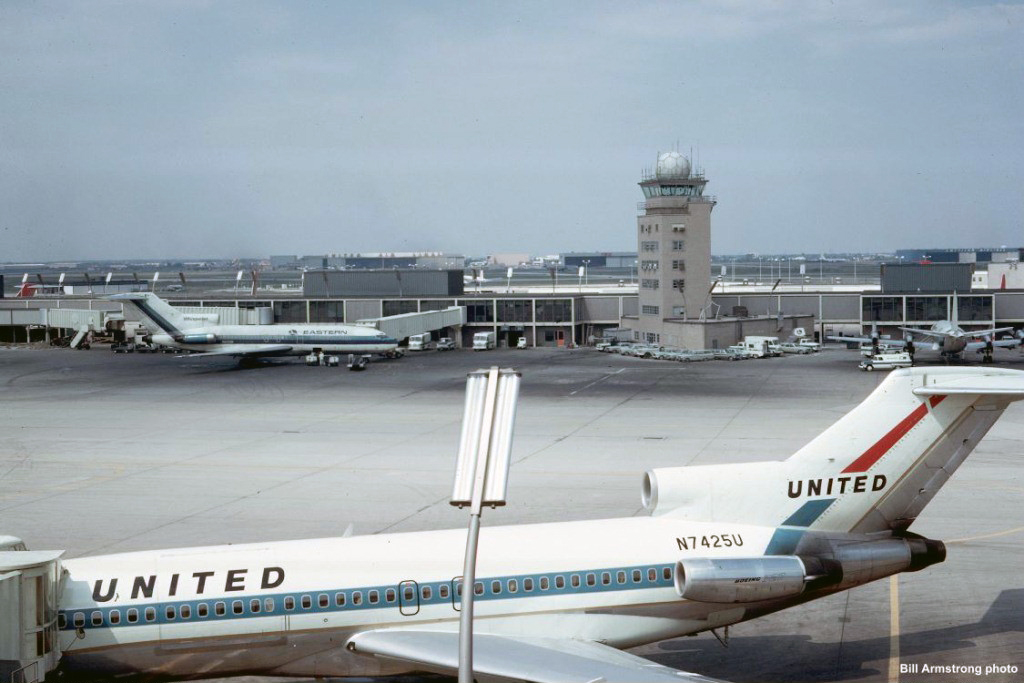
Crash of a Boeing 727-22C in Chicago

Date & Time: Mar 21, 1968 at 0353 LT
Type of aircraft:
Operator:
Registration:
N7425U
Flight Phase:
Flight Type:
Survivors:
Yes
Schedule:
Chicago - San Francisco
MSN:
19200/416
YOM:
1967
Flight number:
UA9963
Crew on board:
3
Crew fatalities:
Pax on board:
0
Pax fatalities:
Other fatalities:
Total fatalities:
0
Captain / Total flying hours:
10500
Captain / Total hours on type:
1033.00
Copilot / Total flying hours:
1280
Copilot / Total hours on type:
135
Aircraft flight hours:
2208
Circumstances:
The takeoff warning horn sounded shortly after commencing takeoff from runway 09R. The takeoff was continued as the crew tried to figure out what caused the warning. The horn ceased prior to reaching rotate speed. The stick shaker came on and thrust was added, but the aircraft failed to climb and the captain elected to discontinue the takeoff. The 727 settled back to the macadam shoulder off the right side of the runway and struck a ditch, coming to rest 1,100 feet beyond the runway end and 300 feet right of the extended centreline. The aircraft was destroyed by a post crash fire and all three crew members were injured. The flaps had been set at 2° instead of takeoff range of 5°-25°.
Probable cause:
The failure of the crew to abort the takeoff after being warned of an unsafe takeoff condition.
Final Report:

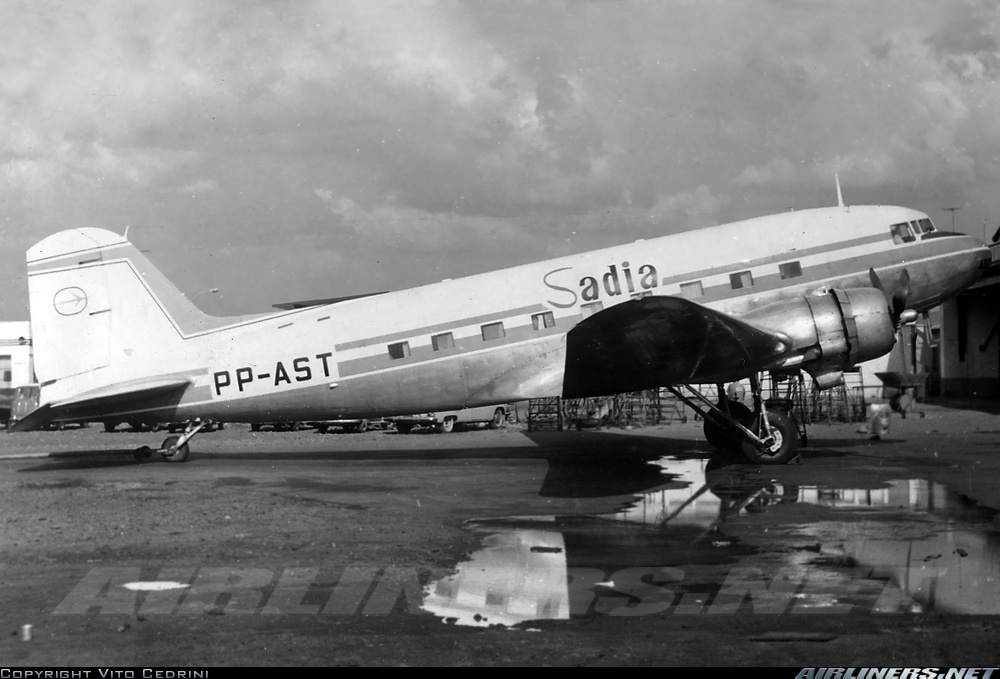
Crash of a Douglas C-47A-35-DL near Tacna: 4 killed

Date & Time: Mar 16, 1968
Operator:
Registration:
PP-AST
Flight Phase:
Flight Type:
Survivors:
No
Site:
Schedule:
Guayaquil – Arica
MSN:
9659
YOM:
1943
Location:
Country:
Crew on board:
4
Crew fatalities:
Pax on board:
0
Pax fatalities:
Other fatalities:
Total fatalities:
4
Circumstances:
While on a cargo flight from Guayaquil to Arica, the crew encountered marginal weather conditions when the airplane struck the slope of Mt Maldito (3,501 meters high) located in the region of Tacna, Peru. The wreckage was found a month later, on April 16. All four crew members have been killed.
Probable cause:
Controlled flight into terrain.

Crash of an Ilyushin II-14 on Mt Getantag: 5 killed

Date & Time: Mar 9, 1968 at 1120 LT
Type of aircraft:
Operator:
Registration:
CCCP-41840
Flight Phase:
Flight Type:
Survivors:
No
Site:
Schedule:
Tbilisi - Yerevan
MSN:
1470 015 04
YOM:
1957
Country:
Region:
Crew on board:
5
Crew fatalities:
Pax on board:
0
Pax fatalities:
Other fatalities:
Total fatalities:
5
Aircraft flight hours:
13441
Circumstances:
The airplane departed Tbilisi Airport at 1039LT on a cargo flight to Yerevan, carrying five crew members and a load of various goods for a total weight of 2,394 kilos. The assigned altitude of 3,000 meters was reached 17 minutes later and the crew continued to the south under VFR mode. The airplane passed over Idzhevan VOR at 1108LT and six minutes later, the crew was cleared to descent to 1,800 meters by the approach ATC. Between 1116LT and 1119LT, the crew reported twice that the weather conditions deteriorated with low clouds and requested the permission to return to Tbilisi under VFR at 3,000 meters. A minute later, while cruising at the altitude of 2,265 meters, the left wing struck the west slope of Mt Getantag. The airplane continued for 130 meters then crashed in flames. The flight engineer was seriously injured while four other occupants were killed. Few hours later, the only survivor died from his injuries.
Probable cause:
The accident was the result of a controlled flight into terrain caused by the violation of navigation rules on part of the crew who was flying under VFR mode in limited visibility and below the minimum prescribed altitude.

Crash of a Beechcraft E18S in Salisbury: 1 killed

Date & Time: Mar 2, 1968 at 0045 LT
Type of aircraft:
Registration:
N281FM
Flight Type:
Survivors:
Yes
MSN:
BA-116
YOM:
1955
Crew on board:
2
Crew fatalities:
Pax on board:
1
Pax fatalities:
Other fatalities:
Total fatalities:
1
Captain / Total flying hours:
5539
Captain / Total hours on type:
5.00
Circumstances:
While completing a regional cargo flight, the crew informed ATC about an in-flight fire and was cleared to divert to Salisbury-Rowan County Airport for an emergency landing. On approach, the aircraft went out of control and crashed in flames few dozen miles short of runway. The passenger and a pilot were seriously injured while the second pilot was killed.
Probable cause:
In-flight fire at rear of the instrument panel. The source of ignition could not be determined.
Final Report:

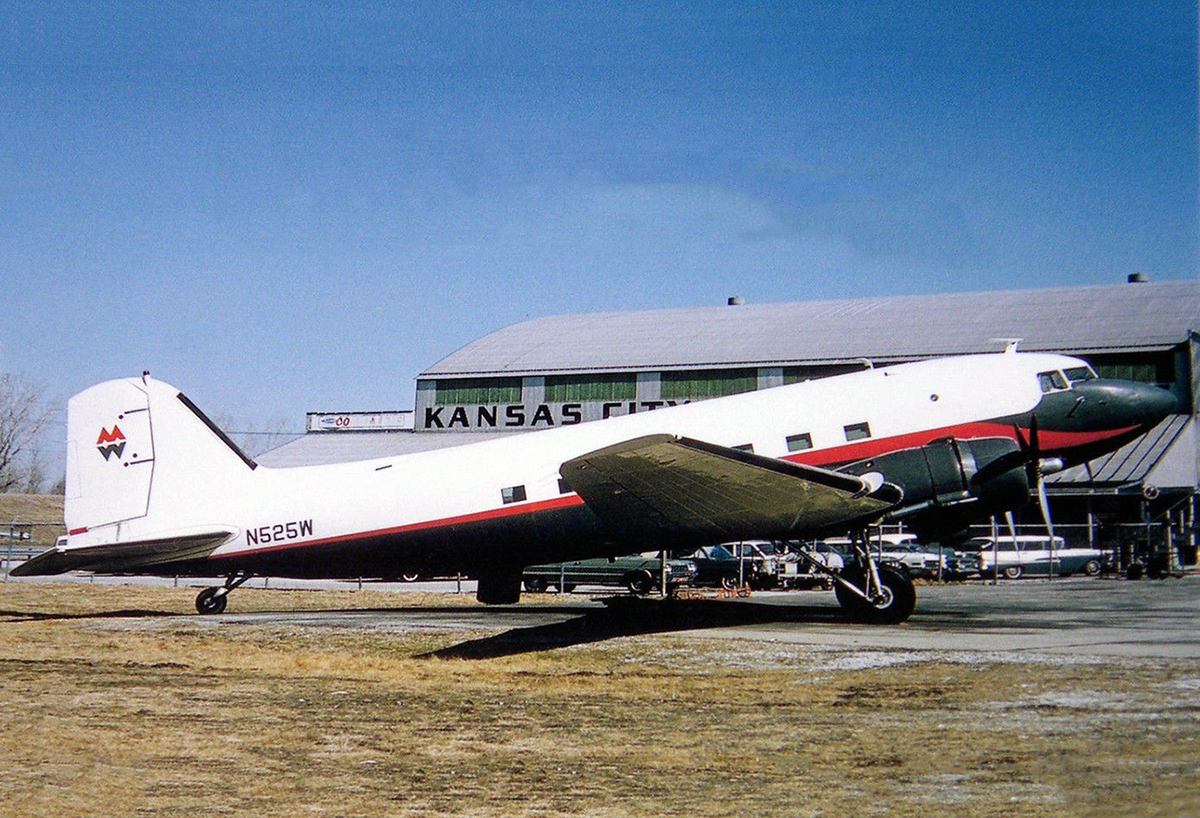
Crash of a Douglas C-47A-85-DL in Statesville

Date & Time: Feb 29, 1968 at 1345 LT
Registration:
N525W
Flight Phase:
Flight Type:
Survivors:
Yes
MSN:
20054
YOM:
1944
Crew on board:
2
Crew fatalities:
Pax on board:
2
Pax fatalities:
Other fatalities:
Total fatalities:
0
Captain / Total flying hours:
12000
Captain / Total hours on type:
150.00
Circumstances:
Shortly after takeoff from Statesville Airport, while in initial climb, the left engine failed. The pilot-in-command reduced power on the right engine and attempted an emergency landing in an open field. While all four occupants escaped uninjured, the airplane was damaged beyond repair.
Probable cause:
Improper operation of powerplant on part of the crew who failed to use anti-icing/deicing systems prior to takeoff. Icing conditions conducted to the icing of the carburetor and induction systems on the left engine that failed during initial climb. Takeoff was completed with reduced power.
Final Report:

Crash of a Rockwell Aero Commander 560 near Park City: 2 killed

Date & Time: Feb 23, 1968 at 1430 LT
Operator:
Registration:
N2784B
Flight Phase:
Flight Type:
Survivors:
No
Site:
MSN:
560-284
YOM:
1956
Location:
Crew on board:
2
Crew fatalities:
Pax on board:
0
Pax fatalities:
Other fatalities:
Total fatalities:
2
Captain / Total flying hours:
2385
Captain / Total hours on type:
86.00
Circumstances:
While performing a cargo flight, the crew encountered poor weather conditions. The captain decided to make a 180 turn to gain height when the twin engine aircraft struck the slope of a mountain located near Park City. The aircraft was destroyed upon impact and both occupants were killed.
Probable cause:
It was determined that the crew continued under VFR mode into adverse weather conditions. At the time of the accident, the visibility was reduced due to fog, rain and snow.
Final Report:

Crash of a Lockheed L-1049G-82-151 Super Constellation in Port Harcourt: 5 killed

Date & Time: Jan 21, 1968
Registration:
5T-TAC
Flight Type:
Survivors:
No
MSN:
4645
YOM:
1956
Country:
Region:
Crew on board:
5
Crew fatalities:
Pax on board:
0
Pax fatalities:
Other fatalities:
Total fatalities:
5
Circumstances:
On final approach to Port Harcourt Airport, the four engine aircraft crashed in unknown circumstances few hundred yards short of runway threshold. All five occupants were killed. They were completing a cargo mission on behalf of the Government of Biafra.

Crash of a Douglas DC-3 in Zifta: 4 killed

Date & Time: Jan 15, 1968 at 0754 LT
Type of aircraft:
Operator:
Registration:
SU-AJG
Flight Phase:
Flight Type:
Survivors:
No
Site:
Schedule:
Cairo - Beirut
Location:
Country:
Region:
Crew on board:
4
Crew fatalities:
Pax on board:
0
Pax fatalities:
Other fatalities:
Total fatalities:
4
Captain / Total flying hours:
5482
Captain / Total hours on type:
655.00
Copilot / Total flying hours:
3409
Copilot / Total hours on type:
543
Circumstances:
The aircraft was to perform a non-scheduled international cargo flight from Cairo to Beirut. Before departure the operator's chief of the ground operations shift informed the pilot-in-command of the aircraft that bad weather was prevailing both on the route Cairo to Beirut and at Beirut Airport, and that the weather conditions had been confirmed by the crew of another aircraft who had arrived from Beirut at 0200 hours local time. The pilot-in-command then went to the weather office and was again informed that the weather en route was very bad with low and medium altitude clouds, including some cumulonimbus extending from 550 m to 8 500 m, and that moderate to severe icing and turbulence within these clouds were highly probable. He was also informed that a SIGMET had been issued at 0115 hours (see 1.7 below). Back at the operator's ground operations office he obtained once more all necessary weather information, including copies of two SIGMETS issued by Cairo and Beirut respectively and decided to delay his departure until 0700 hours expecting some weather improvement. Although the aircraft had no de-icing equipment, it departed Cairo at 0721 hours and at 0735 hours the crew reported at EL 70 to Cairo Approach. Eight minutes later they reported over Zif ta Beacon at the same flight level and were then instructed by Cairo Approach to contact Area Control. At 0745 hours they contacted and informed Cairo Control that they would return to Cairo due to icing. Shortly thereafter they repeated that message adding that there was some ice accretion on the aircraft. This was the last message from the aircraft. At 1020 hours Cairo ACC received a message that the aircraft had crashed 5 km SE of A1 Mahalla-Al Kobra. All four occupants were killed.
Probable cause:
The accident was due to ice accretion on the lifting surfaces of the aircraft accompanied by moderate to severe turbulence, which resulted in loss of aircraft control by the pilot. When he tried to regain control over the aircraft the lifting surfaces were loaded beyond the approved design limits, which brought about the disintegration of main parts of the aircraft in the air, and its subsequent impact with the ground and the death of all members of the crew. Some of the contributing factors were as follows:
- The load of the aircraft exceeded the approved load by about 500 kg,
- The probable shifting of the cargo and the resulting effect on the aircraft's centre of gravity.
Final Report: