Crash of a Rockwell Grand Commander 690A in Kingston: 1 killed

Date & Time: Nov 12, 1974 at 1804 LT
Operator:

Registration:
N40MP
Flight Phase:
Flight Type:
Survivors:
No
Schedule:
Phoenix - Butte
MSN:
690-11116
YOM:
1973
Location:
Crew on board:
1
Crew fatalities:
Pax on board:
0
Pax fatalities:
Other fatalities:
Total fatalities:
1
Captain / Total flying hours:
2754
Captain / Total hours on type:
200.00
Circumstances:
While cruising by night at an altitude of 17,500 feet on a ferry flight from Phoenix to Butte, the twin engine airplane collided with a USAF General Dynamics F-111A Aardvark registered 67-0055. Following the collision, both aircraft entered a dive and crashed in flames near Kingston. The pilot of the Commander was killed while both military pilots were seriously injured.
Probable cause:
The collision occurred by night when the aircraft was not under radar contact with no control. It is understood that the F-111 crew had a rendezvous with the crew of a USAF Boeing KC-135 refueling plane for a night exercise but he mistook the Commander that was struck from the rear with a 0-10° angle.
Final Report:


Crash of a Rockwell Aero Commander 560 near Bicknell: 2 killed

Date & Time: Nov 2, 1974 at 1015 LT
Registration:
N867G
Flight Phase:
Survivors:
No
Site:
Schedule:
Milford - Grand Junction
MSN:
560-228
YOM:
1955
Location:
Crew on board:
1
Crew fatalities:
Pax on board:
1
Pax fatalities:
Other fatalities:
Total fatalities:
2
Captain / Total flying hours:
900
Captain / Total hours on type:
200.00
Circumstances:
En route from Milford (Utah) to Grand Junction, Colorado, the pilot encountered poor weather conditions with limited visibility due to clouds, snow falls and icing conditions. In cruising altitude, he lost control of the airplane that entered a dive and crashed in mountainous terrain located near Bicknell. The wreckage was found nine days later on November 11. Both occupants have been killed.
Probable cause:
Loss of control after the pilot continued VFR flight into adverse weather conditions. The following contributing factors were reported:
- Improper in-flight decisions or planning,
- Ice-propeller,
- Airframe ice,
- Low ceiling,
- Snow, blowing snow,
- Icing conditions, including sleet and/or freezing rain,
- Attempted flight in known icing conditions,
- Aircraft had no airframe-prop ice protection.
Final Report:

Crash of a Lockheed L-382B-14C Hercules in Old Man’s Camp: 4 killed

Date & Time: Oct 27, 1974 at 2336 LT
Type of aircraft:
Registration:
N102AK
Flight Phase:
Flight Type:
Survivors:
No
Schedule:
Fairbanks - Bettles - Dietrich Camp
MSN:
4234
YOM:
1967
Crew on board:
4
Crew fatalities:
Pax on board:
0
Pax fatalities:
Other fatalities:
Total fatalities:
4
Captain / Total flying hours:
9000
Captain / Total hours on type:
6200.00
Circumstances:
While flying to Bettles Airport by night and moderate turbulences, the airplane went out of control and crashed in an isolated area located in Old Man's Camp, about 31 miles southeast of Bettles Airport. The aircraft was totally destroyed and all four crew members were killed. They were completing a cargo flight from Fairbanks to Dietrich Camp with an intermediate stop in Bettles, carrying a load of 6,800 gallons of fuel.
Probable cause:
In-flight airframe failure following inadequate maintenance and inspection. The following contributing factors were reported:
- Engine structure,
- Separation in flight,
- Fatigue-fastener holes in lower hat section,
- Skin panels, n°3 engine compressor diffuser case,
- Right wing separated.
Final Report:

Crash of a Piper PA-31-310 Navajo in Altus: 2 killed

Date & Time: Oct 24, 1974 at 1930 LT
Type of aircraft:
Operator:
Registration:
N979L
Survivors:
Yes
Schedule:
Dallas - Lawton - Altus
MSN:
31-459
YOM:
1969
Location:
Crew on board:
1
Crew fatalities:
Pax on board:
3
Pax fatalities:
Other fatalities:
Total fatalities:
2
Captain / Total flying hours:
3080
Captain / Total hours on type:
103.00
Circumstances:
While descending to Altus Airport, the pilot encountered poor weather conditions with fog, low ceiling and rain showers. While approaching at an insufficient altitude, the airplane struck the ground and crashed few miles from the runway threshold. Two passengers were killed while two other occupants, among them the pilot, were injured.
Probable cause:
Controlled collision with ground on final approach following improper IFR operation. The following contributing factors were reported:
- Instruments misread or failed to read,
- Poorly planned approach,
- Fog,
- Low ceiling,
- Rain,
- ATC failed to provide radar vectoring as requested,
- Pilot descended below MDA.
Final Report:

Crash of a Cessna 414 Chancellor in Jackson

Date & Time: Oct 20, 1974 at 0653 LT
Type of aircraft:
Registration:
N414HC
Flight Phase:
Survivors:
Yes
Schedule:
Jackson - Plymouth
MSN:
414-0418
YOM:
1973
Crew on board:
1
Crew fatalities:
Pax on board:
0
Pax fatalities:
Other fatalities:
Total fatalities:
0
Captain / Total flying hours:
10235
Captain / Total hours on type:
600.00
Circumstances:
After takeoff from Jackson-Reynolds Field, the twin engine airplane encountered difficulties to gain height. It stalled then crashed near the runway end. The pilot was injured and the aircraft was damaged beyond repair.
Probable cause:
Inadequate preflight preparation on part of the pilot who failed to clean the aircraft prior to departure. The following contributing factors were reported:
- Failed to abort takeoff,
- Airframe ice,
- Ice on windshield,
- All upper surfaces of aircraft covered with approximately 1/4 inch - 3/8 inches of frozen snow,
- Hit ground nose high and left wing low.
Final Report:

Crash of a De Havilland DHC-2 Beaver in Kasaan: 5 killed

Date & Time: Oct 17, 1974 at 0850 LT
Type of aircraft:
Operator:
Registration:
N129WA
Flight Phase:
Survivors:
Yes
Site:
Schedule:
Kasaan - Coffman Cove
MSN:
1004
YOM:
1956
Location:
Crew on board:
1
Crew fatalities:
Pax on board:
6
Pax fatalities:
Other fatalities:
Total fatalities:
5
Captain / Total flying hours:
6275
Captain / Total hours on type:
4000.00
Circumstances:
The single engine airplane departed Kasaan in adverse weather conditions. After takeoff, it entered local fog when it struck tree tops and crashed on a hilly terrain. The pilot and a passenger were injured while five other occupants were killed.
Probable cause:
The pilot initiated flight in adverse weather conditions. The following contributing factors were reported:
- High obstructions,
- Fog,
- Visibility 1/4 mile or less,
- Entered local fog conditions shortly after takeoff.
Final Report:

Crash of a Beechcraft H18 in Iron Mountain: 1 killed

Date & Time: Oct 17, 1974 at 0151 LT
Type of aircraft:
Operator:
Registration:
N72FA
Flight Type:
Survivors:
No
Schedule:
Lansing - Iron Mountain
MSN:
BA-631
YOM:
1962
Crew on board:
1
Crew fatalities:
Pax on board:
0
Pax fatalities:
Other fatalities:
Total fatalities:
1
Captain / Total flying hours:
12345
Captain / Total hours on type:
4000.00
Circumstances:
During a night approach to Iron Mountain Airport, the pilot descended below the MDA when the twin engine airplane struck tree tops and crashed in a wooded area located few hundred yards short of runway threshold. The aircraft was destroyed and the pilot, sole on board, was killed.
Probable cause:
Collision with trees on a night approach following improper IFR operation. The following contributing factors were reported:
- Instruments misread or failed to read,
- High obstructions,
- Descended below clearance limit of 3,000 feet.
Final Report:

Crash of a Volpar Turboliner 18 in Lupine: 6 killed

Date & Time: Oct 1, 1974 at 2140 LT
Type of aircraft:
Registration:
N357V
Survivors:
No
Schedule:
Fairbanks - Lupine
MSN:
AF-680
YOM:
1954
Location:
Crew on board:
2
Crew fatalities:
Pax on board:
4
Pax fatalities:
Other fatalities:
Total fatalities:
6
Captain / Total flying hours:
11197
Captain / Total hours on type:
191.00
Circumstances:
On approach to Lupine Airstrip, the crew encountered poor weather conditions with low ceiling, fog and snow falls. On final, he decided to make a low pass and reduced his altitude when the airplane stalled and crashed. All six occupants were killed.
Probable cause:
The crew continued VFR flight into adverse weather conditions and failed to maintain flying speed. The following contributing factors were reported:
- Failed to follow approved procedures,
- Improper operation of powerplant,
- Airframe ice,
- Low ceiling, fog and snow falls,
- Icing conditions,
- Weather was given via radio by oil company radio operator,
- Over max takeoff and landing weight.
Final Report:

Crash of a Cessna 340 in Phoenix: 1 killed

Date & Time: Sep 27, 1974 at 1040 LT
Type of aircraft:
Registration:
N9950F
Survivors:
No
Schedule:
San Diego – Phoenix
MSN:
340-0177
YOM:
1972
Crew on board:
1
Crew fatalities:
Pax on board:
0
Pax fatalities:
Other fatalities:
Total fatalities:
1
Captain / Total flying hours:
3504
Circumstances:
On final approach to Phoenix-Sky Harbor Airport, the right engine failed. The pilot lost control of the airplane that lost height, struck power cables and crashed in flames onto a house. The pilot, sole on board, was killed and the aircraft was destroyed by a post crash fire.
Probable cause:
Engine failure caused by a mismanagement of fuel. The following contributing factors were reported:
- Failed to follow approved procedures,
- Fuel starvation,
- Failed to maintain flying speed,
- Improper emergency procedures,
- Inadequate preflight preparation,
- Failed to use checklist,
- High obstructions,
- Complete engine failure,
- Fuel selector on auxiliary tanks,
- Propeller not feathered.
Final Report:

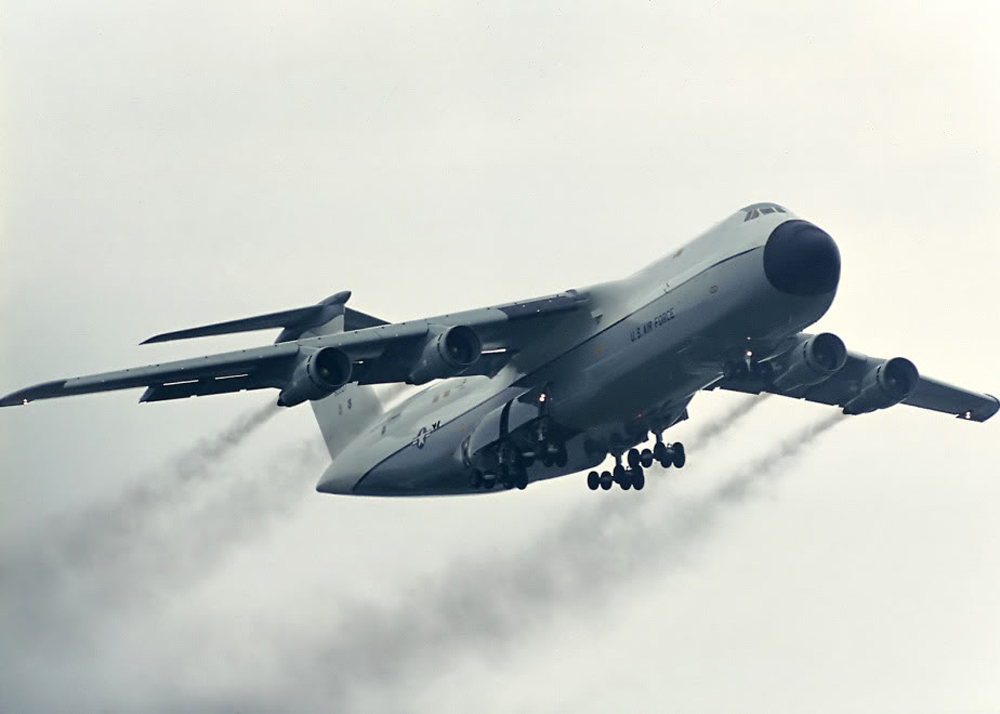
Crash of a Lockheed C-5A Galaxy in Clinton

Date & Time: Sep 27, 1974
Type of aircraft:
Operator:
Registration:
68-0227
Flight Type:
Survivors:
Yes
Schedule:
Altus - Altus
MSN:
500-0030
YOM:
1970
Crew on board:
5
Crew fatalities:
Pax on board:
0
Pax fatalities:
Other fatalities:
Total fatalities:
0
Circumstances:
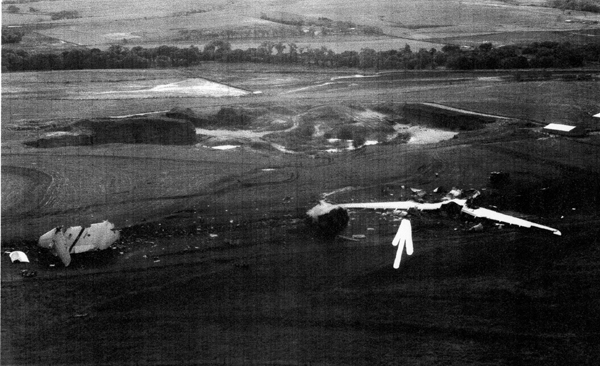
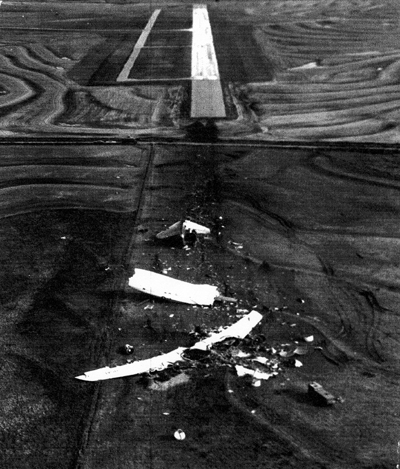
The crew departed Altus AFB in the day for a refueling training mission. En route, the pilot informed ground about technical problems and decided to divert to Clinton-Sherman Airport. For unknown reason, the crew mistook the airport and landed on runway 17 (4,300 feet long) at Clinton-Regional Airport. Unable to stop within the remaining distance, the airplane overran, lost its landing gear and came to rest in a field, broken in three. All five crew members were rescued while the forward section was destroyed by a post crash fire.
Probable cause:
An overheated brake ignited hydraulic fluid in the left aft landing gear well. The fire ignited tires and other components before burning through the keel beam and continuing into the right aft well. This was probably caused by a problem that occurred during taxiing at Altus AFB.